The Background
As was so often the case in his career, in September 1901, G.L. Norrman was compelled to justify his design choices to the dimwitted good ol’ boys of a local building committee.
Norrman had submitted plans in competition with 13 other architects for the Duval County Courthouse in Jacksonville, Florida, after the previous structure burned in the Great Fire of 1901.
Although Norman’s plan was publicly endorsed by five top officials, some members of the county commission reportedly objected to his proposal to finish the courthouse with stucco.
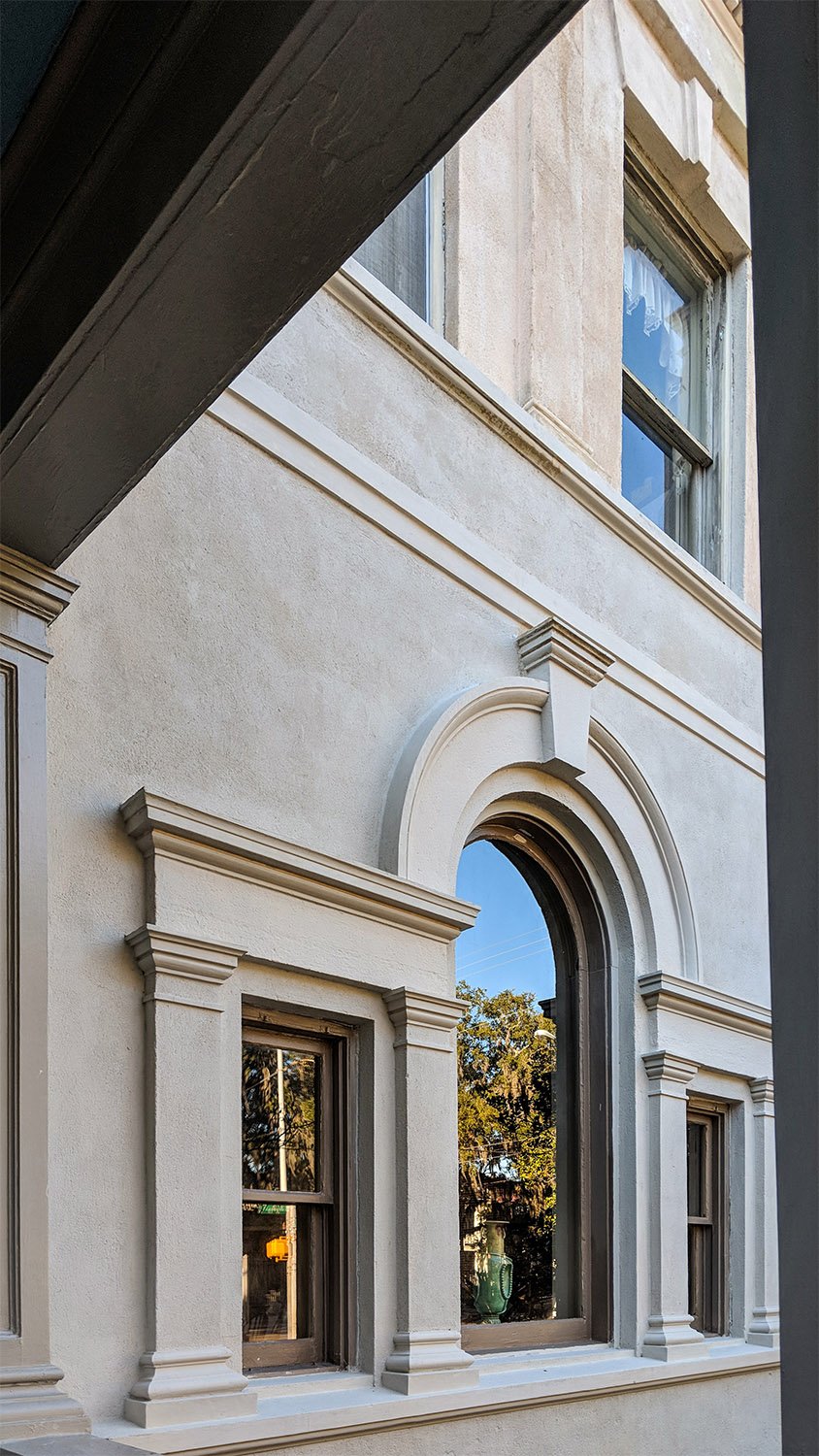
The objection now seems absurd given the ubiquitous Spanish-Mediterranean influence that would come to define the “Florida style”—by the 1920s, you’d be hard-pressed to find a single building in the state that wasn’t slathered in cheap stucco.
Norman used stucco extensively in his works from the late 1890s to the early 1900s, and, in response to the commission’s objections, he wrote a letter in which he deferentially offered to withhold the stucco finish from the structure, while also defending his preference for the material.
In the letter, Norrman charted stucco’s origins to ancient Rome, although he erroneously referred to the Pantheon as the Parthenon. Norrman also noted that the General Post Office and the U.S. Patent Office Building in Washington, D.C.—both designed by Robert Mills—were finished in stucco.
Norrman had to know that hick politicians in the Deep South wouldn’t give a shit about architecture in Europe or the North, though, too smugly consumed with playing God in their trashy little backwoods fiefdoms.
So he pulled out an old trick that often works on dick-measuring politicians—in Atlanta, anyway—insinuating that Jacksonville just didn’t measure up to other Southern cities: “All the old buildings of Charleston, Savannah and New Orleans are finished in stucco”, he explained.
Norrman’s effort was futile—the commission selected a fairly terrible plan designed by Rutledge Holmes, an unremarkable architect from Charleston who moved his practice to Jacksonville after the fire and lived in Florida for the remainder of his career.
Holmes, incidentally, shot himself to death in 1929, twenty years after Norrman did the same. Southern architects are a tragic lot.
The September 24, 1901, issue of The Evening Metropolis published Norrman’s letter to the Duval County commission in full.
Norrman’s remarks:
County Commissioners:
“Dear Sir—I have been informed that there is some objection to the stucco finish which I specified as in my judgment being the most suitable finish for the new court house. If it be true that there there is any such objection to my design, I would respectfully suggest that the stucco be left off, and that the brick work be finished in the usual manner without any stucco. By such omission you will save 60 cents per yard or about $2,100. At the same time you will please allow me to call your attention to the fact that the oldest and most noted buildings in existence have been finished with stucco. Notably among these are the Parthenon [sic] and St. Peter’s, in Rome, which have been built for 2,000 years. Stucco is used in Europe, especially on the continent, nearly exclusively. All of the old buildings in Mexico, and, in fact, nearly all the buildings erected by the early Spaniards, both here and in South America, as well as in Spain, are finished with stucco. All of this is well known to every educated architect and can be corroborated by your expert.
“In this country nearly all the old State houses and court houses of importance that were erected before the war, and which are now in tact [sic], are finished in stucco.
“The United States postoffice [sic] and the patent office in Washington are finished in stucco.
“All the above, I think is known to every builder of any ordinary information.
“All the old buildings of Charleston, Savannah and New Orleans are finished in stucco, and Mr. Flagler is going to finish his Palm Beach palace with stucco, because it is actually the best finish to use on a brick or concrete building.
“In my own practice I had been using stucco on buildings for the past twenty-five years, with very satisfactory results.”
Very respectfully,
G.L. NORRMAN2
References
- “Dwellings.” The Engineering Record, Volume 41, no. 12 (March 24, 1900), p. 287. ↩︎
- “Court House Plan Selected.” The Evening Metropolis (Jacksonville, Florida), September 24, 1901, p. 1. ↩︎