The Background
In April and May 1901, Wallace Putnam Reed wrote at least three similar articles about G.L. Norrman that were published in different newspapers throughout the Southeast. The first article is included below, written by Reed for his weekly column in The Savannah Press.
Here, Reed claimed Norrman was “A Swedish gentleman of aristocratic ancestry”, but that appears to be inaccurate.
All evidence indicates Norrman came from an ordinary middle-class family, and if he falsely presented himself as a descendant of Swedish nobility, it was entirely unnecessary—he was remarkable enough on his own merits.
Article Excerpt:
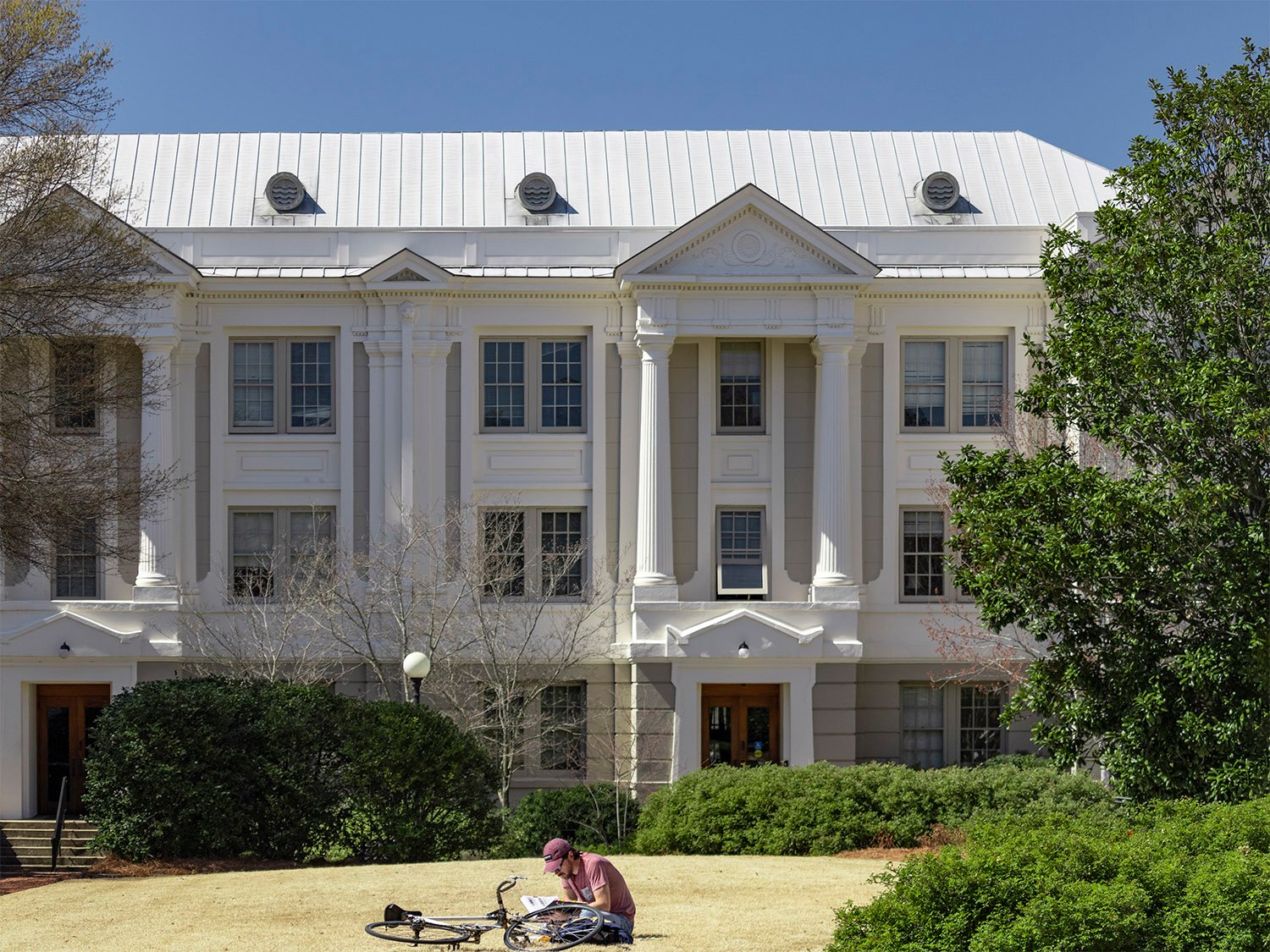
Mr. G.L. Norrman, the well known Atlanta architect, has a legion of friends in Savannah who will be delighted with his splendid designs for the State University dormitory and mess hall, which were the most notable illustrations in The Constitution the other day.
Mr. Norrman is in love with his profession. He is an original thinker, a scholar, and a traveler who has studied on their sites the best examples of the world’s ancient and modern architecture. When I do not find it convenient to spend a leisure hour in a big library I hunt up Norrman. He is a favorite with our brightest men, and the south is dotted with churches, public buildings, and residences which bear testimony to his skill and artistic taste.
This man is worth a column here if we had the time and space. A Swedish gentleman of aristocratic ancestry, he has made himself the master of our language, and few writers have his happy gifts of expression. Though comparatively a young man, he is a type of our old-fashioned gentleman in his notions of honor, chivalry, and personal responsibility. It is gratifying to me to see his name imperishably linked with our university. His work will help it in more ways than one.1
References
- Reed, Wallace Putnam. “Random Georgia Gossip.” The Savannah Press (Savannah, Georgia), April 27, 1901, p. 4. ↩︎