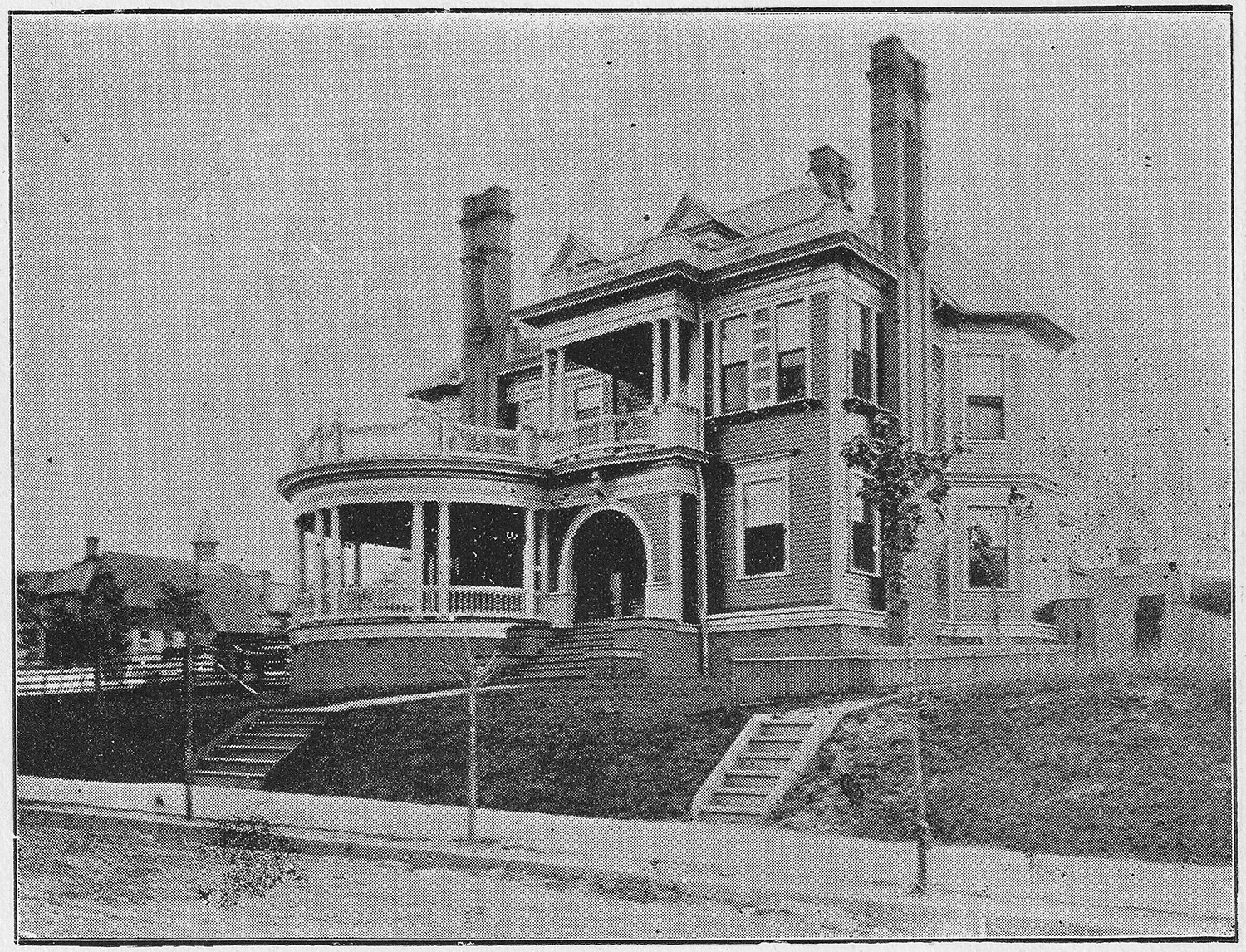
The Background
The following article, published by The Atlanta Journal in 1898, includes an illustration and floor plans of the Paul Romare Residence, built in 1892 and designed by G.L. Norrman.2 3
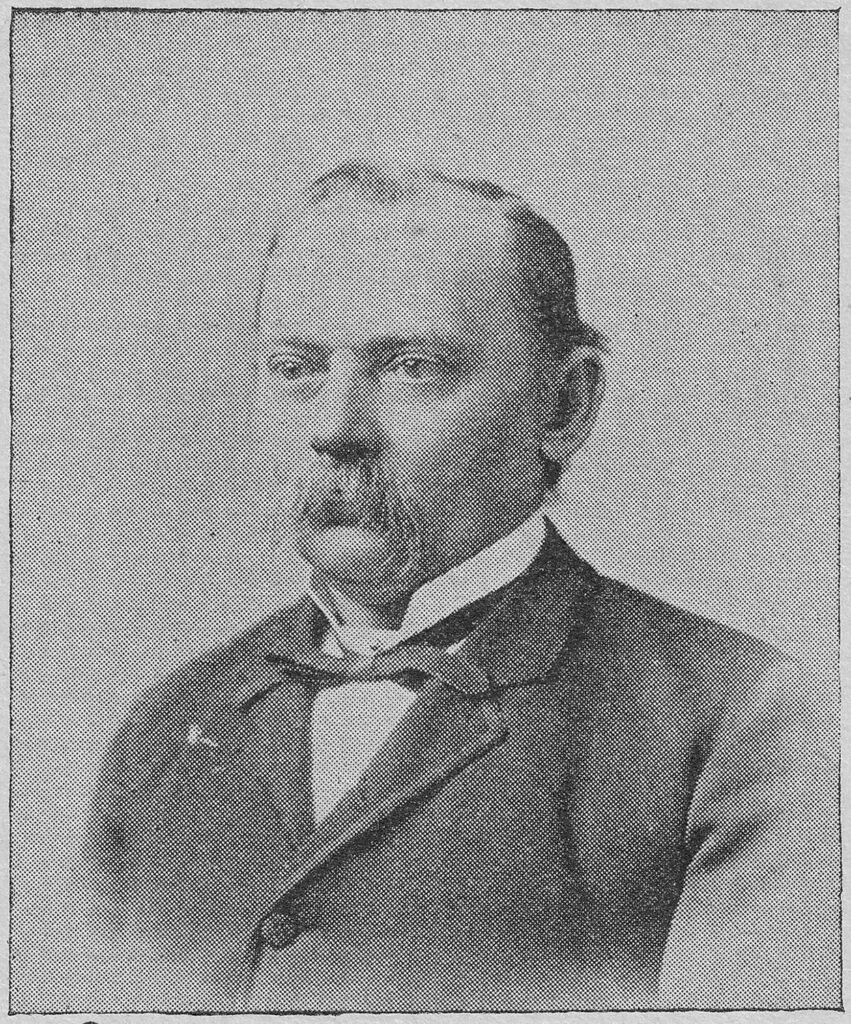
Like Norrman, Paul Romare (1828-1904,4 pictured here5)was also a Swedish immigrant.
Although Romare was 20 years older than Norrman,6 it appears the two men were close friends, as Norrman planned at least four projects for the Romare family over 21 years and also served as an honorary escort at Romare’s funeral.7 8
Romare and Norrman’s Connection
Romare began working at the Atlanta National Bank circa 1865 and steadily rose through the ranks, ultimately becoming the bank’s president in 1903.9 10 Like Norrman, he was also prominent in Atlanta society, and both men were members of the Capital City Club.11
Only 41 Atlantans in the 1890s were from Scandinavia,12 so Norrman and Romare likely bonded over their common heritage, if nothing else. However, the two men’s lives had many striking parallels.
Like Norrman, Romare was born and raised in southern Sweden, and both men became sailors: Romare left home at age 14 to serve as a cabin boy on a merchant ship captained by his father.
As a young man, Norrman reportedly left the Swedish Navy shortly after he quarreled with an officer. When Romare was 18, he abandoned ship after a fight with the captain, hiding in a friend’s closet in New York to evade the captain’s search.
Romare eventually immigrated to the United States through Charleston, South Carolina. From 1850 to 1864, he lived and worked in the Upcountry, including the towns of Gaffney and Chester, both of which were a short distance from Spartanburg, where Norrman began his practice a decade later.
Romare, incidentally, was apparently pronounced as “ROAM-a-ree”. And did I mention he secretly fathered a son with a Black woman in South Carolina?13
That was likely unknown in Atlanta, where Romare’s wife, Lucy, and their six daughters were popular social fixtures.
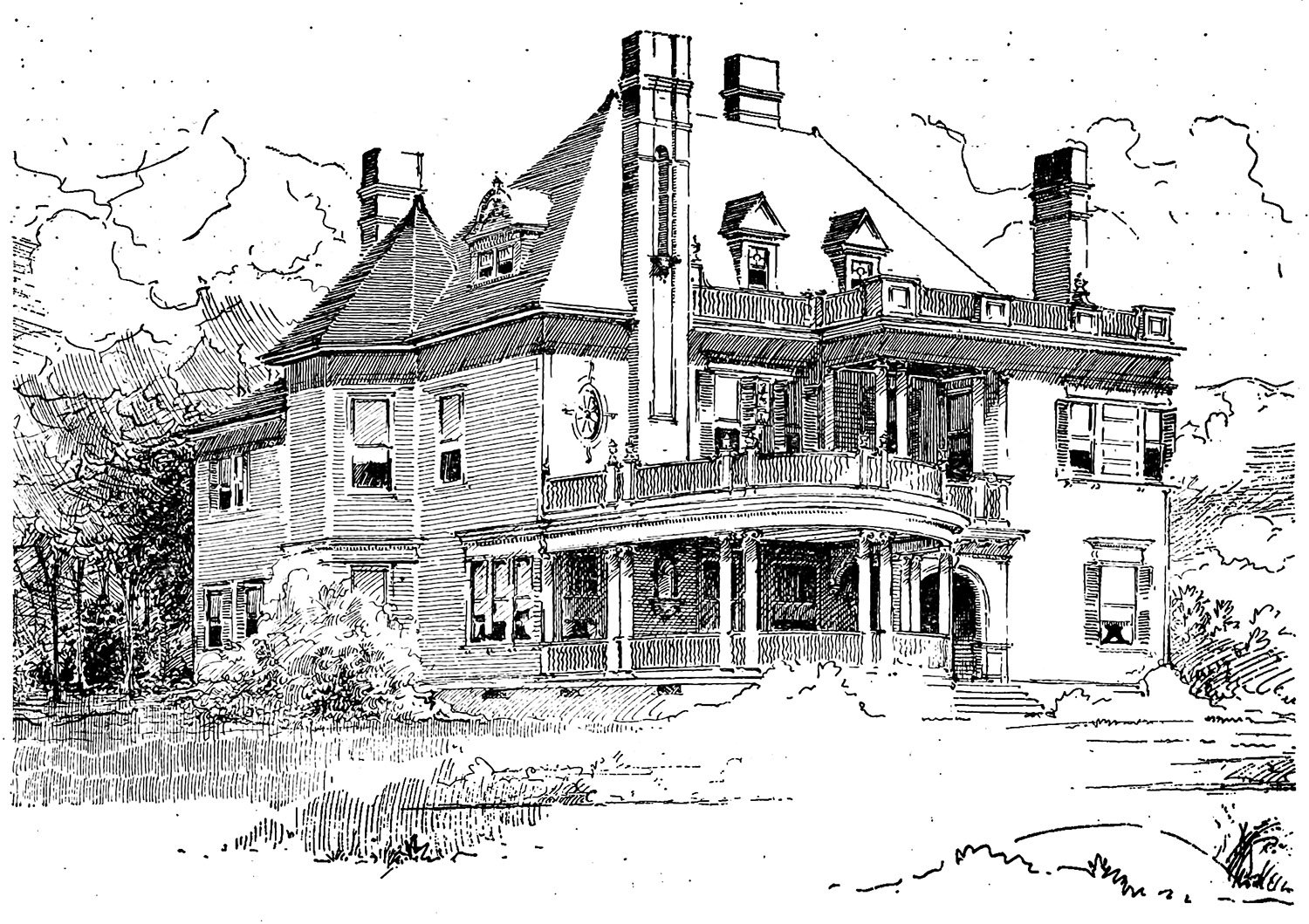
About the Residence
The house shown here was the second Norrman-designed residence for Romare and was built at 17 East North Avenue,15 on what is now the site of the Bank of America Plaza in Midtown Atlanta.
Location of Paul Romare Residence
However, the home was long gone before Bank of America, demolished between 1923 and 1925,16 17 18 and replaced by a car dealership in 1926.19 What else would you expect from Atlanta?
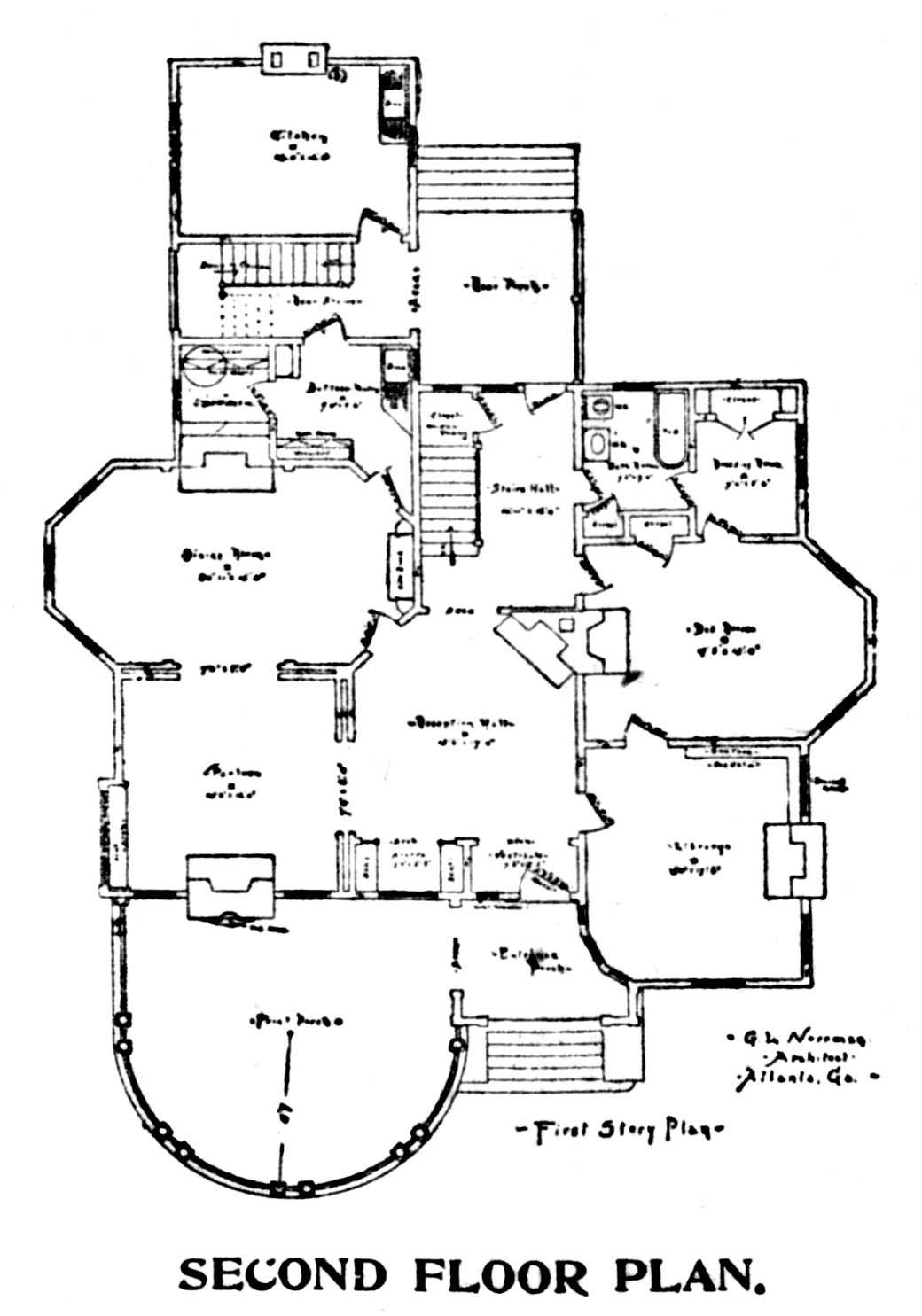
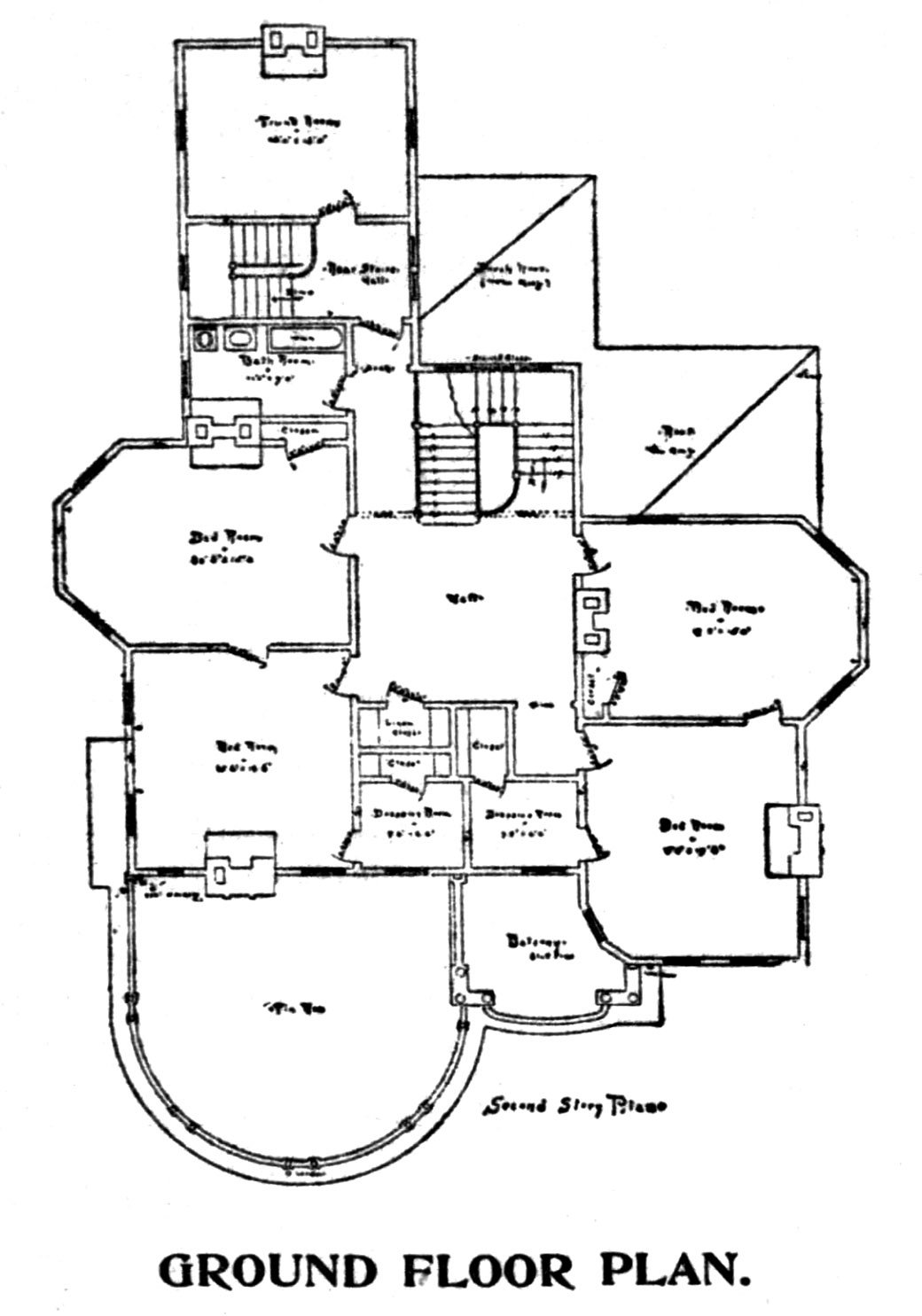
There are a few things to note about the floor plans shown below:
- The Journal mislabeled the first story plan as the “Second Floor Plan” and the second story plan as the “Ground Floor Plan”, because of course they did.
- The first story plan centered on a reception hall with a fireplace, an evolution of the living hall concept Norrman used in the 1880s, which can still be seen in the Edward C. Peters House and T.W. Latham House in Atlanta. For the Romare design, a separate stair hall was placed behind the reception hall. So many halls.
- There were two full bathrooms in the Romare house—one per floor. The first-floor bathroom was connected to both the main bedroom and the stair hall, apparently so guests could use it.
- Bedroom closets were still a novelty in 1892, and like most homes that had them, the closets in the Romare design were tiny. However, Norrman also included spacious“dressing rooms” with closets in three of the five bedrooms, undoubtedly designed for Romare’s wife and daughters.
- Typical of Norrman’s residential designs for wealthy clients, the service areas were well-defined and separate from the rest of the home. Servants would be expected to enter from the rear porch, and the kitchen and rear stairs were buffered from the dining room by a large butler’s pantry.
The Romare house was one of the better works from a short-lived period in Norrman’s career, circa 1892-1893, when he became particularly audacious and avant-garde in his residential designs, freely mixing classical, Colonial, Romanesque, and Palladian elements in striking combinations.
The approach didn’t always work—the C.D. Hurt Residence, for example, is an unholy mess—but it’s clear Norrman put his best effort into the Romare Residence, and the results speak for themselves. Vacker som en dag!
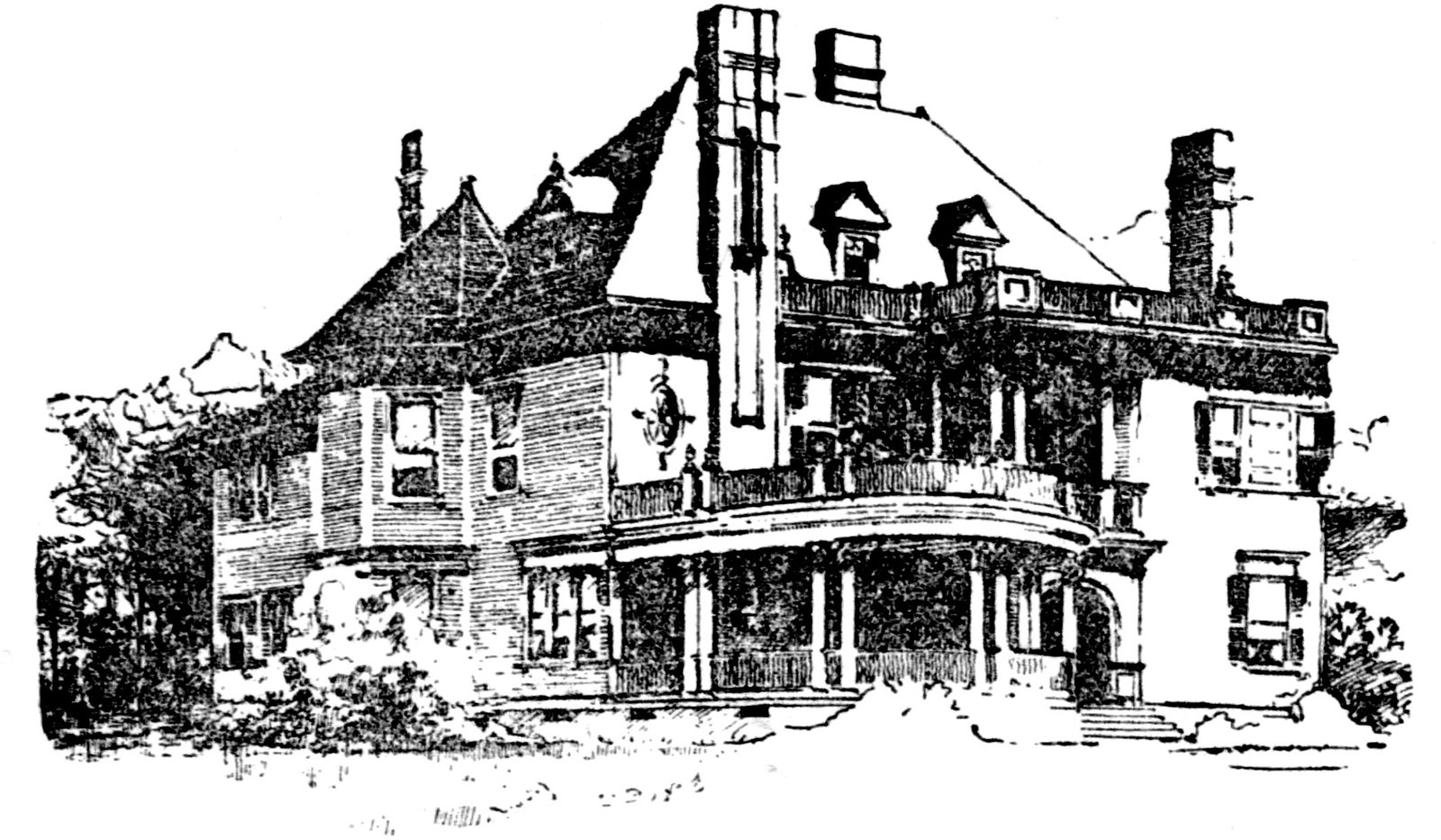
Journal’s Model Houses; Home of Paul Romare.
The above cut represents the residence of Mr. Paul Romare on North avenue. It was built from the plans of Mr. G.L. Norrman at a cost of $12,000, and is one of the best constructed and most comfortable residences in the city. The plan is not altogether of any conventional style, but the details are in that of the renaissance. The interior arrangement fully appears in the floor plans of the first and second stories. The interior finish of the lower story is of hard wood, built in special designs from detail plans by Mr. Norrman. The parlor is finished in sycamore and beautifully frescoed. The diningroom [sic], library and other rooms of the lower story are finished in oak. The details are in keeping with the general style shown in the details of the exterior.
The workmanship and material from foundation to roof are of the best, and the arrangement makes the residence one of the most comfortable in the city.
The house is fitted with the best modern appliances for comfort, including electric bells, etc., and everything of that kind.20
References
- Photo credit: Atlanta Homes: Attractiveness of Residences in the South’s Chief City. Atlanta Presbyterian Publishing Company (1901). ↩︎
- “The Home Builders”. The Atlanta Constitution, June 20, 1892, p. 8. ↩︎
- “My, How We Do Grow!” The Atlanta Constitution, September 21, 1892, p. 4. ↩︎
- “Paul Romare, Financier, Dead After Long Illness”. The Atlanta Journal, February 8, 1904, p. 2. ↩︎
- Photo credit: City of Atlanta: A Descriptive, Historical and Industrial Review. Louisville, Kentucky: The Inter-State Publishing Company (1893), p. 74. ↩︎
- “Mr. Paul Romare.” The Atlanta Constitution, February 12, 1893, p. 7. ↩︎
- “Funeral Notice.” The Atlanta Journal, February 9, 1904, p. 11. ↩︎
- “Romare To Rest In West View”. The Atlanta Constitution, February 9, 1904, p. 5. ↩︎
- “New President Will Be Romare”. The Atlanta Constitution, May 9, 1903, p. 6. ↩︎
- “Romare Made President Of Bank”. The Atlanta Journal, May 10, 1903, p. 1. ↩︎
- “The Club Reception.” The Atlanta Constitution, October 19, 1887, p. 2. ↩︎
- Mebane, Anne Fonvielle. (1967). Immigrant Patterns in Atlanta, 1880 and 1896 [Master’s thesis, Emory University], p. 48. ↩︎
- Historic Joplin » Paul Romare ↩︎
- Illustration credit: The Southern Architect, Volume 10, no. 11, September 1899, p. 10. ↩︎
- Insurance maps, Atlanta, Georgia, 1911 / published by the Sanborn Map Company ↩︎
- “Four Apartment Houses Purchased By Manget; Over $100,000 Involved”. The Atlanta Journal, January 26, 1923, p. 36. ↩︎
- “Atlanta Title And Trust Company Publishes Comprehensive Summary Of Atlanta Real Estate Information”. The Atlanta Journal, May 13, 1923, 8F. ↩︎
- “Property Transfers”. The Atlanta Journal, January 25, 1925, p. 8F. ↩︎
- “Contract Is Signed For $600,000 Home For Motor Agency”. The Atlanta Journal, January 7, 1926, p. 1. ↩︎
- “Journal’s Model Houses; Home of Paul Romare”. The Atlanta Journal, January 29, 1898, p. 10. ↩︎