The Background
Throughout 1898, The Atlanta Journal published a sporadic series of articles featuring floor plans and illustrations of “moderate cost” residential designs by Atlanta architects, including G.L. Norrman, Bruce & Morgan, C. Walter Smith, and others.
The series reflected the dire economic conditions at the time: following the Panic of 1896, the United States plunged into its second depression of the decade, and few Atlanta architects had substantial work from 1897 to 1898.
Just a few years earlier, it would’ve been unthinkable for the city’s top architectural firms to peddle their designs in a local newspaper, but desperate times demand humility.
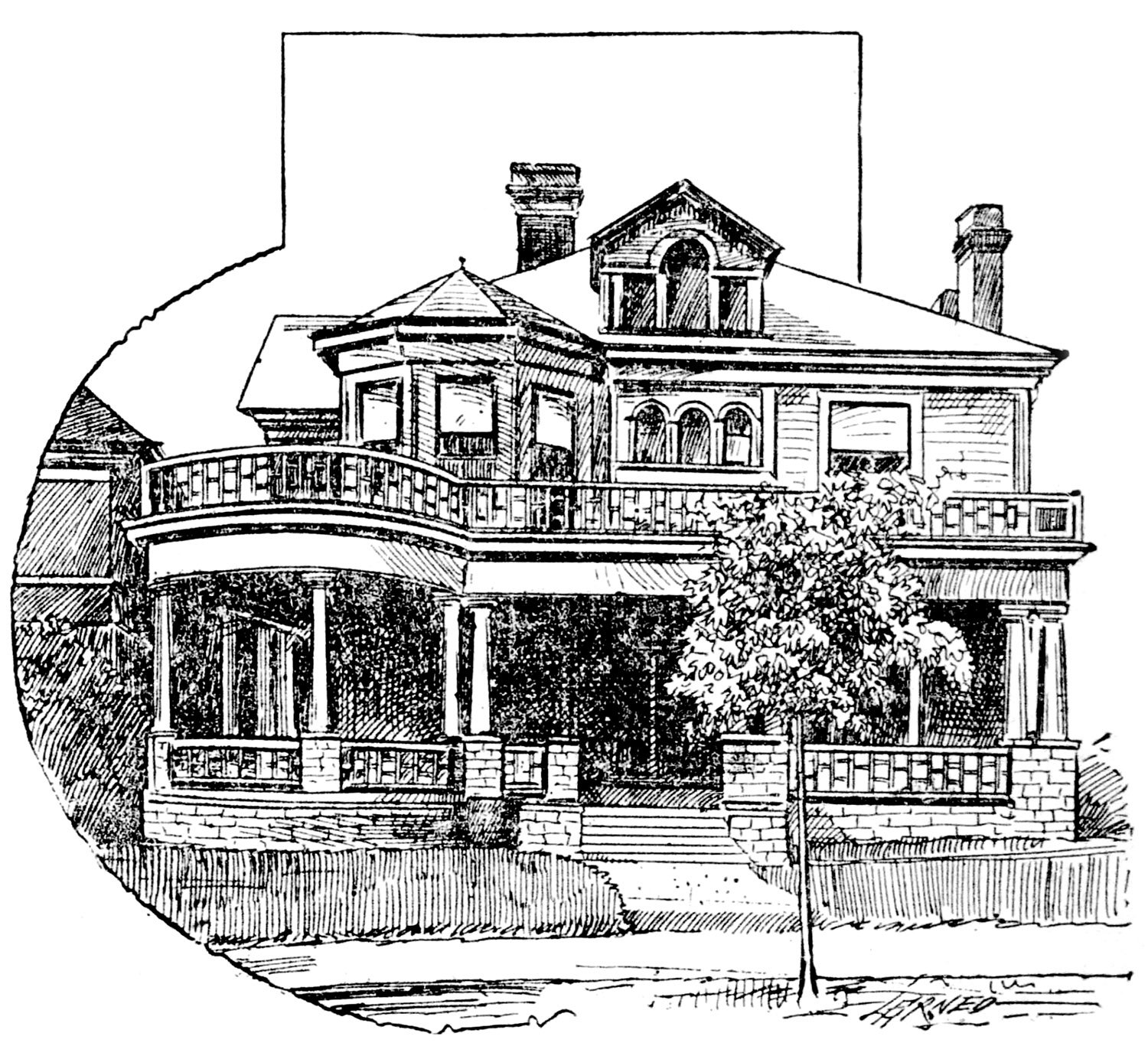
The first article is included here and was published in January 1898, featuring the James F. Meegan Residence, designed by Bruce & Morgan, then the Southeast’s largest architectural firm. The home was located at 23 West North Avenue1 2 (later 33 North Avenue NW) in what is now Midtown Atlanta.
Location of James F. Meegan Residence
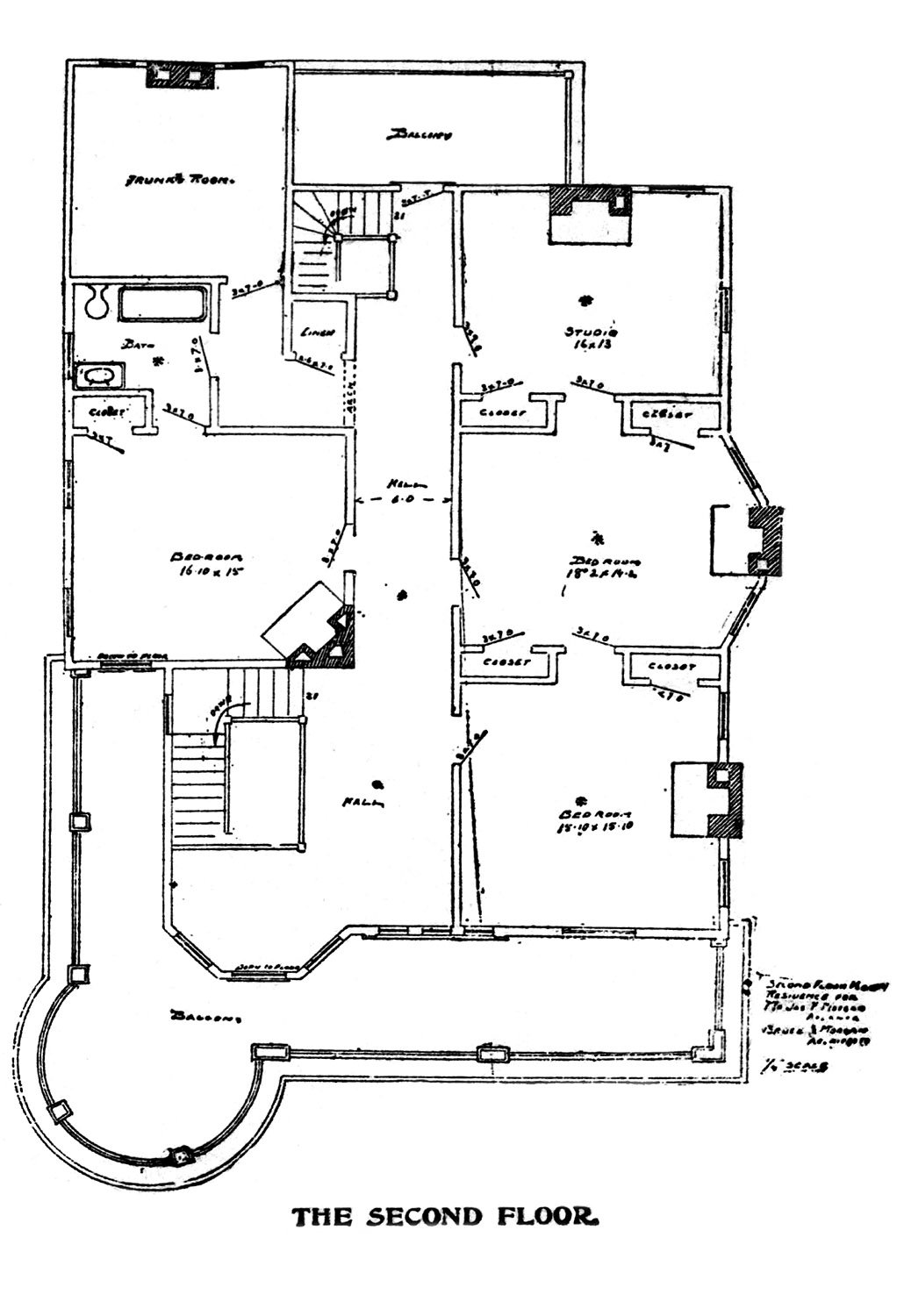
There are a few interesting aspects of the home’s plan:
- The rooms are arranged on either side of a central hallway that runs from the front to the back door, a standard 19th-century design that was fairly unfashionable by 1898. In the days before air conditioning, however, it was a highly practical design for circulating air throughout a home.
- There is only one full bathroom in the house, located on the second floor. A downstairs lavatory is tucked beneath the back stairs.
- Also note that only three of the five rooms on the second floor are designated as bedrooms—the other two are a “studio” and a “trunk room.”
The Colonial Revival-style home was demolished by 1927 and replaced by a one-story commercial building3 that still stands.
In fact, all eight homes featured in the Journal‘s series were demolished in the 20th century. Keep that in mind the next time you hear an Atlantan blame the city’s lack of historic buildings on Sherman.
Journal Hints on Home Building; Model Houses at Moderate Cost
First of a Series of Articles To Be Printed By The Journal on a Subject of Interest to All Who Contemplate Building.
Of the many New Year resolutions which are made in Atlanta in the early days of 1898, there will be none more deserving a speedy execution than the resolve which comes to every man sooner or later in life to build a home of his own.
The man who lives in other people’s houses until he might be expected to give up all idea of having one of his own, still preserves a place in his affections for the home which he will have constructed some day. This particular home will be different from any he has ever seen or occupied, and will be arranged to suit his individual fancy. In spare moments he will permit his brain to play upon the plans, adding various little touches here and there to enhance the beauty of the imaginary castle.
Before the days when home building was reduced to a science it was remarked that “fools build houses for wise men to live in,” but this has ceased to be true for many years. The builder is now considered the wisest man of the time.
In a great home city like Atlanta, where the ranks of home owners are very large, and are being constantly added to, there are always a vast number of people who are thinking of building. The man who wants to build a house for himself and his family feels more greatly interested in a cottage which will suit their needs than in a score of palatial sky-scrapers.
Despite various assertions to the contrary, the pleasures of home owning appeal as strongly to the city man as to his country cousin, for it is not only in the rural districts or little villages that pleasure is derived from seeing the little “children run to lisp the sire’s return, or climb his knee the envied kiss to share.”
In order to aid those who desire to construct homes, The Journal will present a series of plans by well known architects which will be found useful in crystalizing the thoughts of its readers. These plans will show houses which have actually been constructed in Atlanta within the past year.
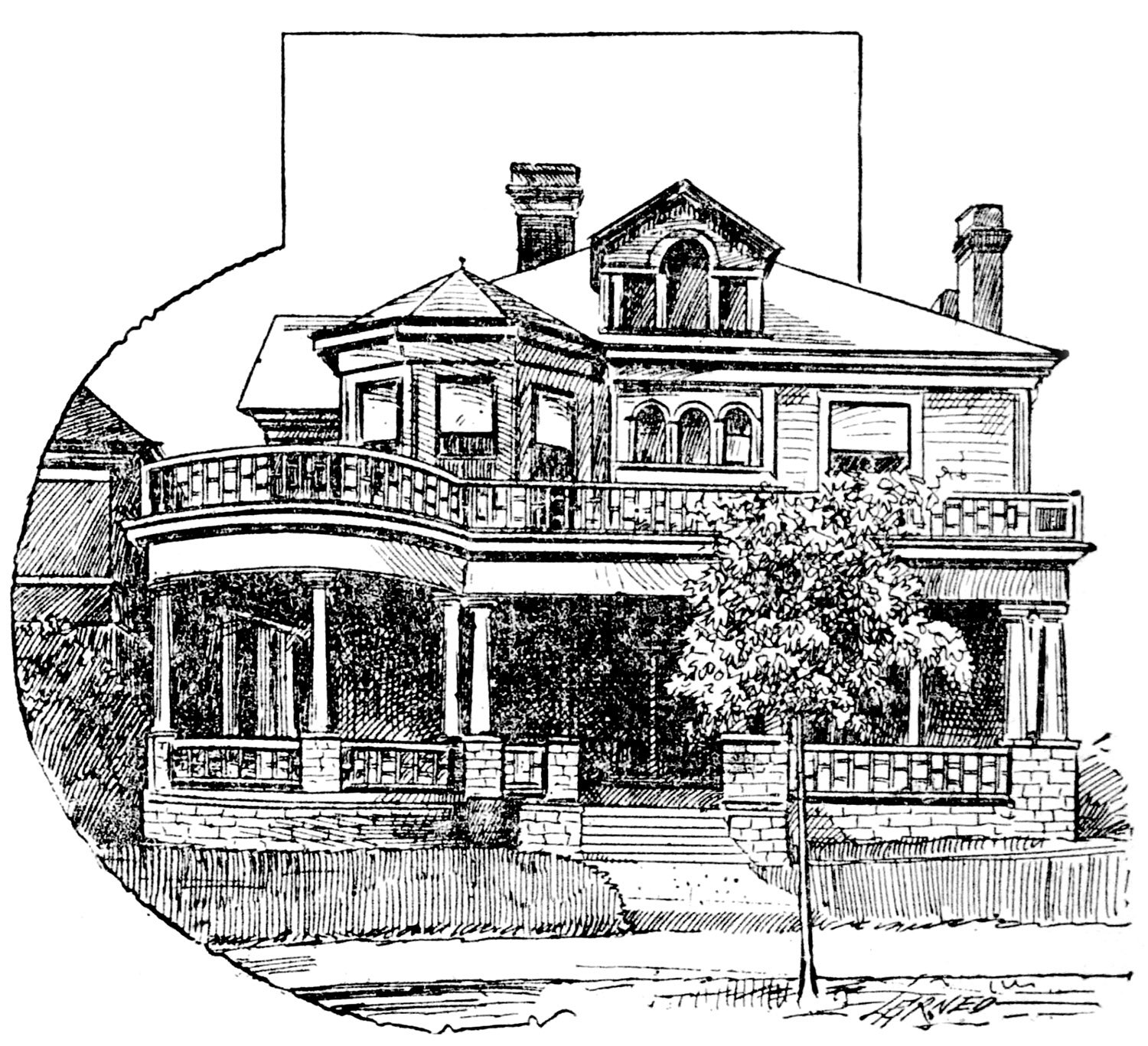
Accompanying this article are the front view and two floor plans of the residence of Mr. James F. Meegan, on North avenue. The house is one of the prettiest on that street, and since its erection last spring has been greatly admired. The plans are the work of Bruce & Morgan. The building was designed for a 50-foot lot. On the first floor there are the parlor, sitting room and library, on the right.
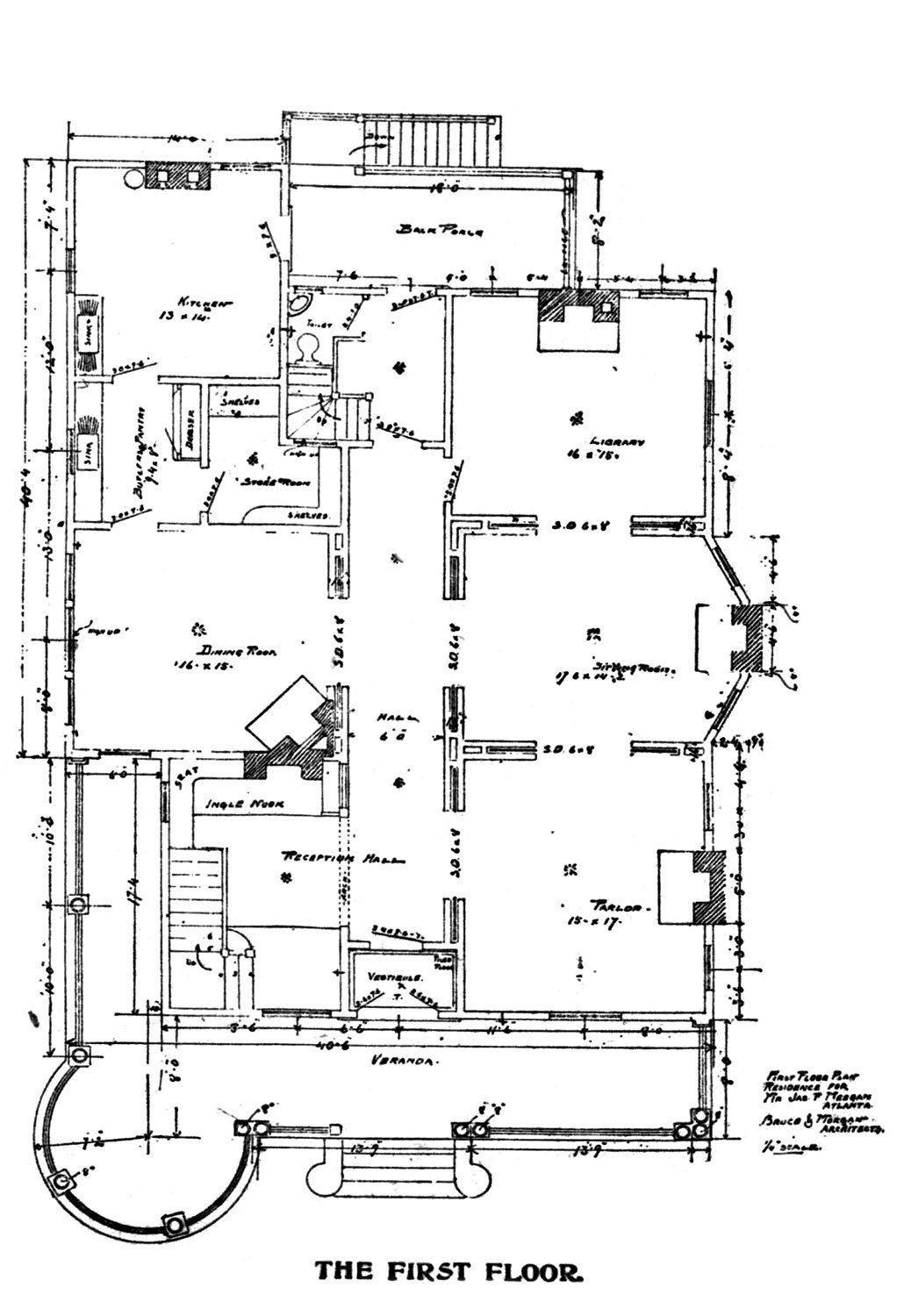
On the left are the reception hall, dining room and kitchen. Upstairs are two bedrooms and the studio on the right, while on the opposite side are a bedroom, bathroom and trunkroom.
The entrance gives a very pleasing effect with the reception hall and pretty stairway. The front veranda, with its circular finish on the corner, gives an artistic effect to the front.
All the rooms on the right of the hallway, down stairs, are arranged with sliding doors, so that all may be thrown together when it is desired. The dining room and kitchen are connected by a butler’s pantry, and adjoining the latter is a store room. The appointments in the kitchen, store room and pantry are admirably located for the convenience of the occupants.
Four of the upstairs rooms are provided with closets and dressing rooms. The bathroom, which is large and well fitted, is conveniently located.
The cost to construct this well appointed residence was $3,500.4
References
- Atlanta City Directory Co.’s Greater Atlanta (Georgia) city directory (1898). ↩︎
- Insurance maps, Atlanta, Georgia, 1911 / published by the Sanborn Map Company ↩︎
- “Leases Are Active In Realty Mart”. The Atlanta Constitution, March 20, 1927, p. 3C. ↩︎
- “Journal Hints on Home Building; Model Houses at Moderate Cost”. The Atlanta Journal, January 8, 1898, p. 3. ↩︎