The Background
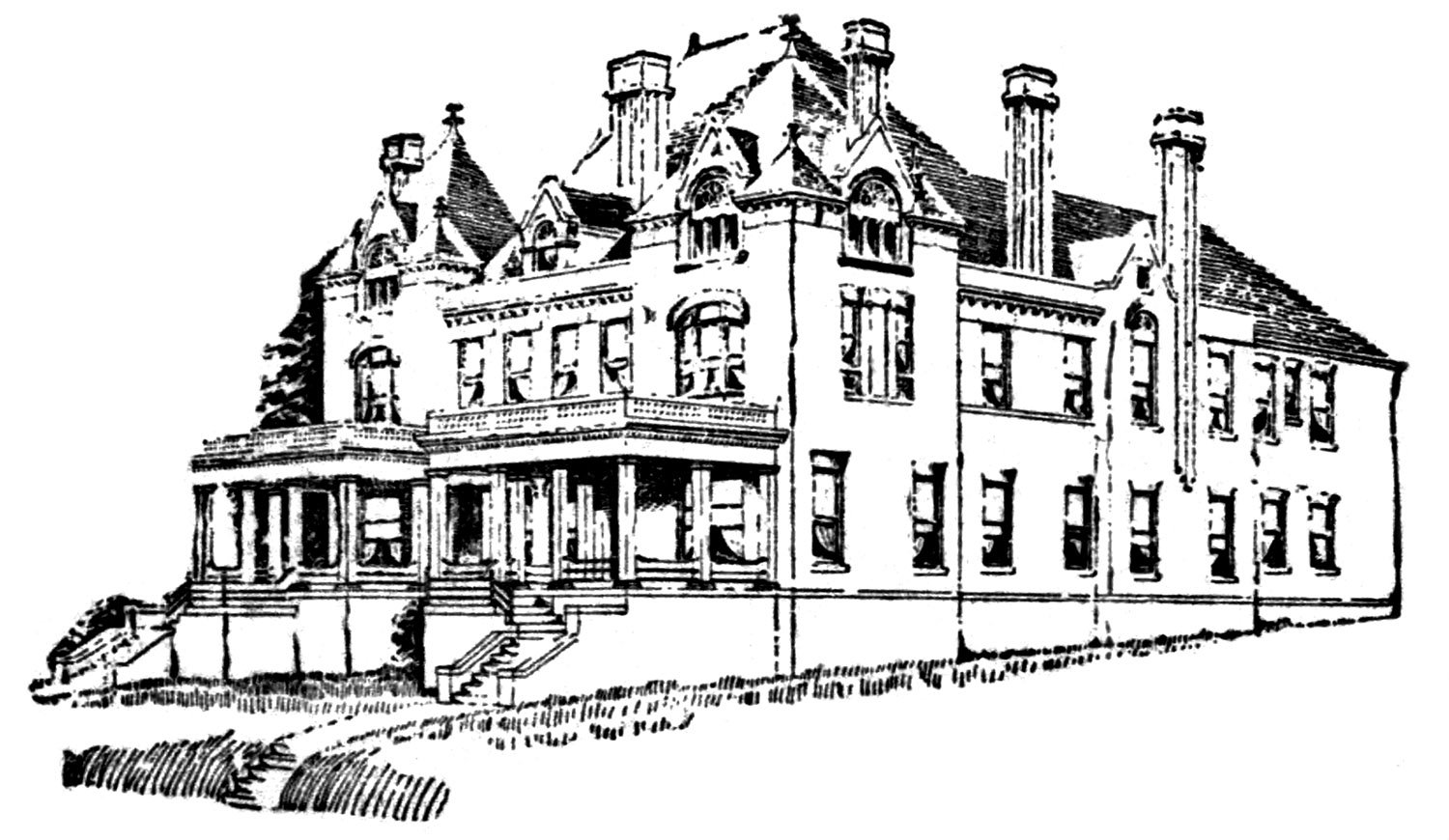
This is the seventh in a series of articles published in 1898 by The Atlanta Journal, featuring illustrations and floor plans of residences designed by Atlanta architects.
The article highlights a double apartment house owned by W.H. Brotherton and designed by Butt & Morris.
Location of W.H. Brotherton’s Double Apartment House
Tenement houses of this type were ubiquitous in Atlanta at the time, and were the immediate forerunners to the larger “apartment houses” that began appearing in the city at the turn of the 20th century.
Like the so-called “luxury” apartments of today, these homes were designed for image-conscious people of limited means who aspired to the appearance of wealth—a description that could easily apply to half of Atlanta.
No one was fooled by the conceit, of course, and despite a few “elegant” flourishes, the structures inevitably looked like crass, downscale imitations of costlier designs.
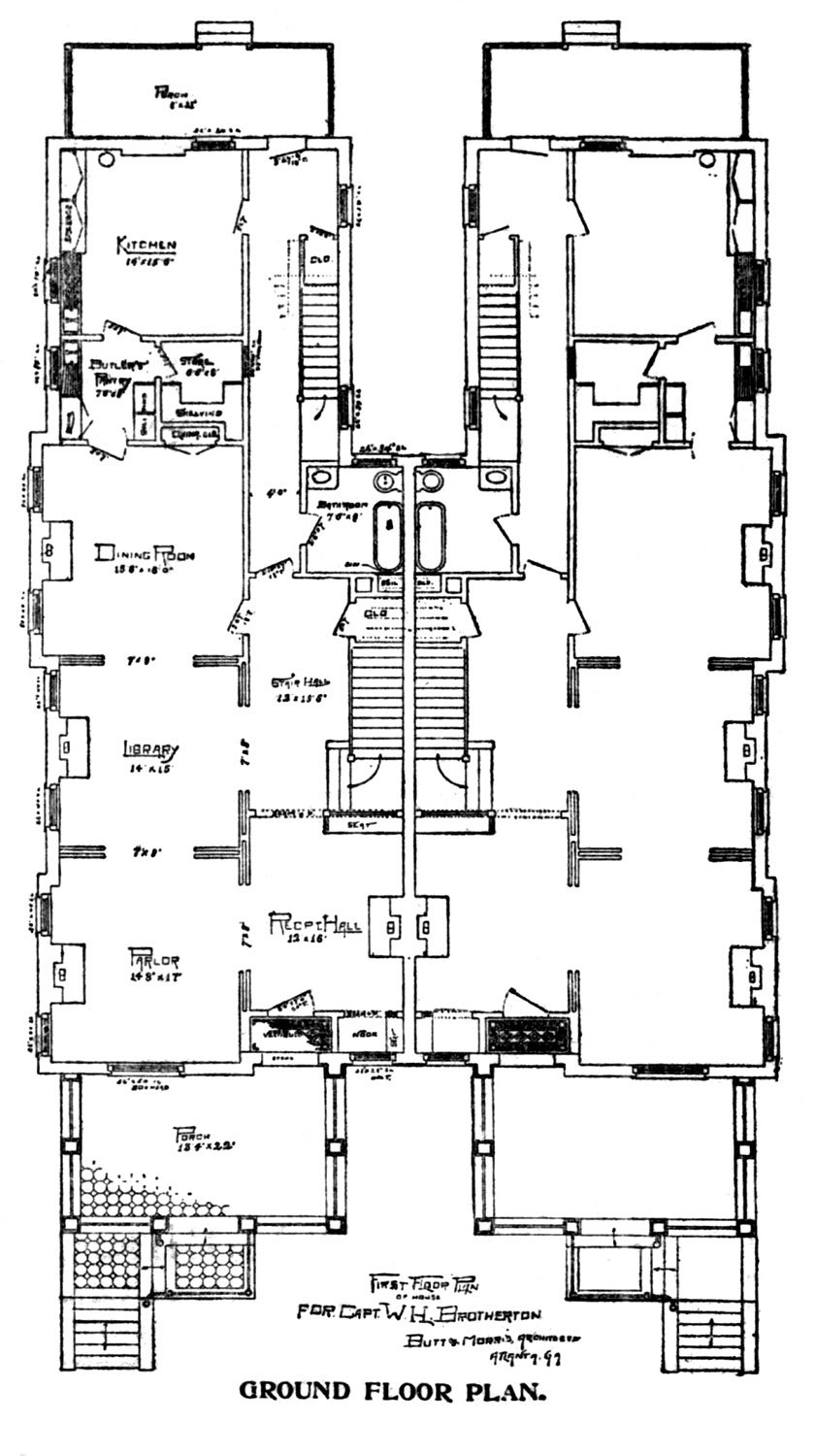
Only a ground-floor plan was published with the article, but it reveals a fairly straightforward design: each unit contains a parlor, library, dining room, and kitchen on the first level, and a separate reception hall and stair hall.
The plan included a “complete bath-room on each floor,” along with a small butler’s pantry and rear service stairs—the people who lived in such homes could usually only afford one or two servants.
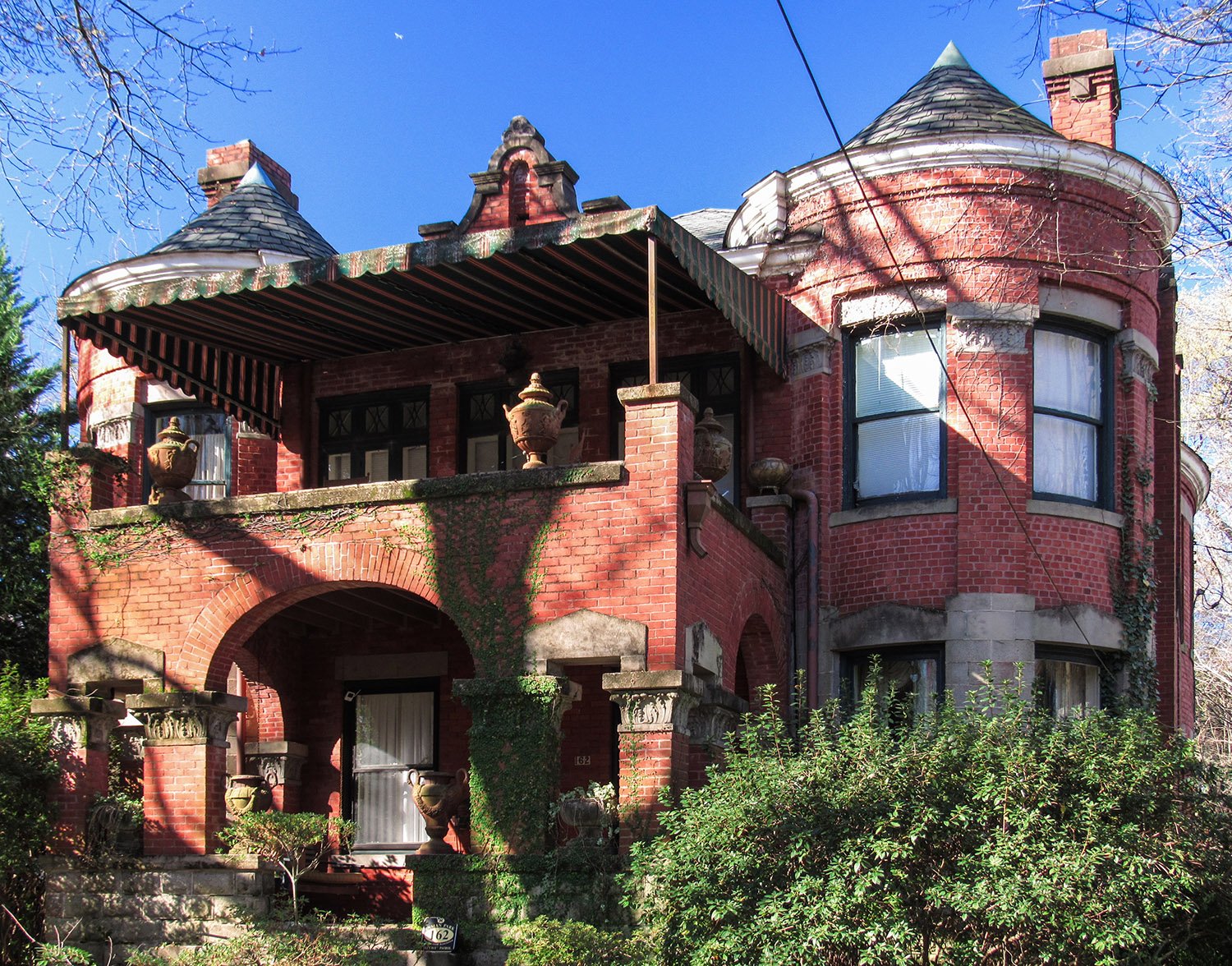
Built of pressed brick with granite trim, the duplex’s appearance was akin to Butt & Morris’s only significant work remaining in Atlanta: the George A. Floding Residence in Inman Park, built in 1907.1 2 Both designs are similarly atrocious.
Based on a vague location described in the building permit and the details provided in this article, it appears the Brotherton apartments were located at 382 and 384 Whitehall Street, on the southeast corner of Whitehall and Hood Street.3
The structure predictably became a boarding house in fairly short order,4 and was demolished in July 1927,5 replaced by—wait for it—a gas station.6
Captain William H. Brotherton’s New Whitehall Street House
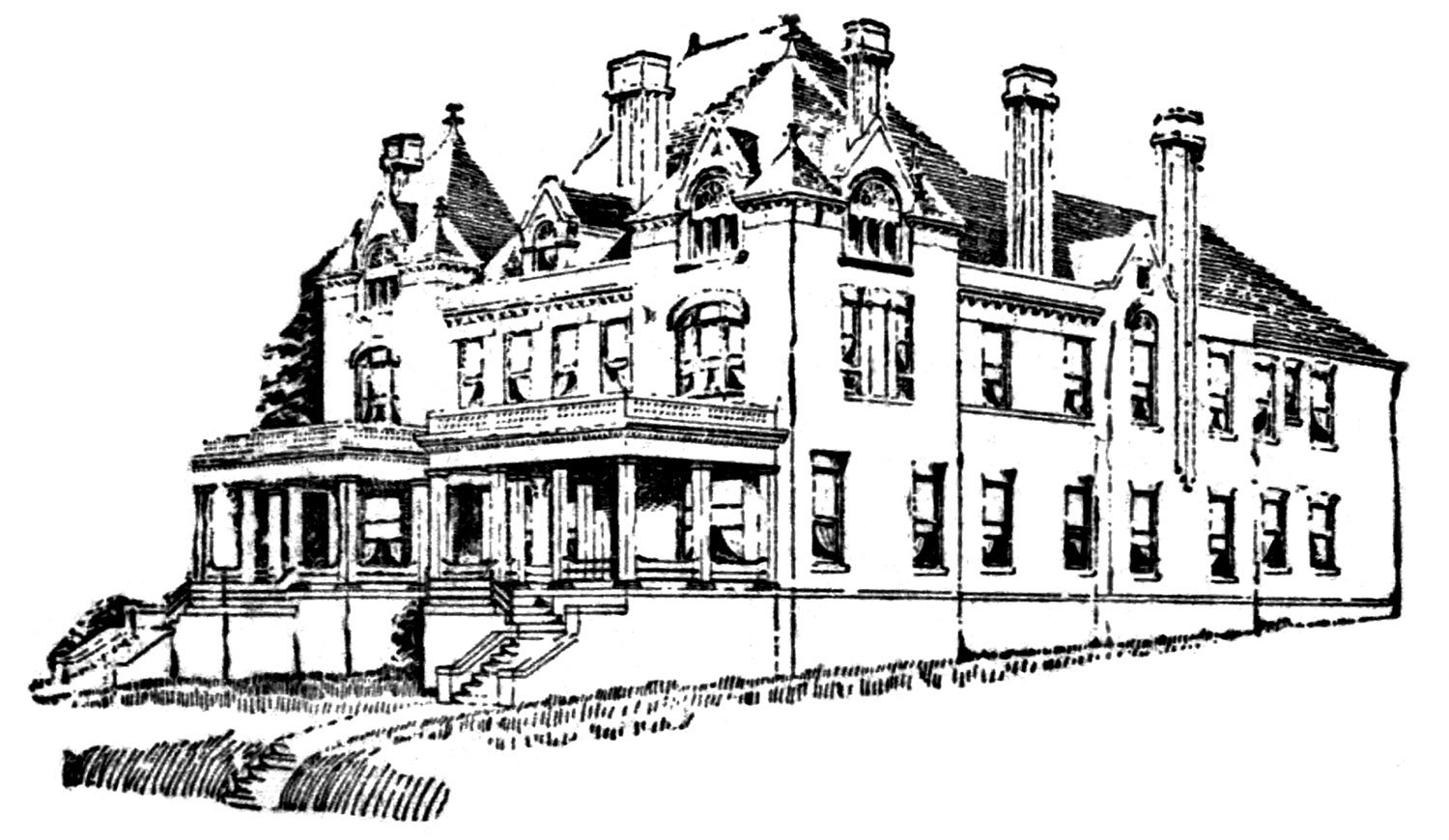
The above cut is an exact likeness of the new apartment house built by Mr. W. H. Brotherton on Whitehall street, between Windsor and Smith streets, upon which the finishing touches are now being applied.
The dwelling is a beauty in its style of architecture and is palatial in its appointments. It was built at a cost of $9,000.
It is a tenement house, consisting of ten rooms and spacious hall on each side. Besides the main rooms there are bath, linen and dressing rooms.
The exterior is built of pressed brick, with granite trimmings. The roof is of the very best slate. The verandas are very long, with a width of about 20 feet. Immense columns, built of pressed brick with granite capitols, support the roofs of the verandas. The ceiling of the verandas are of stamped iron, while the floors are of tile. The verandas are also fitted with beautiful iron balustrades.
The main front entrance is through an open vestibule, artistically panneled [sic] in oak. This leads into a large reception hall. The reception room, stair hall, reception hall and dining room are finished with 4 1/2-inch panneled [sic] wainscoting, with other decorations of modern design. These apartments, together with front and back parlors, make five apartments in all. They are conveniently connected with sliding doors. The passage from the dining room into the large, well arranged kitchen is through double swing doors. The back hall is conveniently reached from the front stair hall, kitchen or rear portches [sic]. The halls, pantries and bathrooms are wainscoted. The flooring is of the best grade.
The second floor consists of five large, well light [sic] chambers, with closets in easy reach. All the rooms but the kitchen are fitted with beautiful oak mantels with large plate glass. The hearths are built of tile. The plumbing fixtures are elegant in every respect. There is a complete bath-room on each floor, with all the modern appliances.
The plastering is three-coat finished in sand, and all the walls are beautifully tinted in delicate colors. The glass is first quality.7
References
- Application for Building Permit, September 20, 1907 ↩︎
- “Social Items”. The Atlanta Constitution, October 6, 1907, p. 4. ↩︎
- Insurance maps, Atlanta, Georgia, 1911 / published by the Sanborn Map Company ↩︎
- “Wanted — Boarders”. The Atlanta Journal, December 29, 1912, p. 11. ↩︎
- “Building Materials”. The Atlanta Constitution, July 3, 1927, p. 1C. ↩︎
- “Commercial Locations Still in Active Demand, Ewing Agency Reports”. The Atlanta Journal, July 24, 1927, p. 8D. ↩︎
- “Captain William H. Brotherton’s New Whitehall Street House”. The Atlanta Journal, March 19, 1898, p. 6. ↩︎