The Background
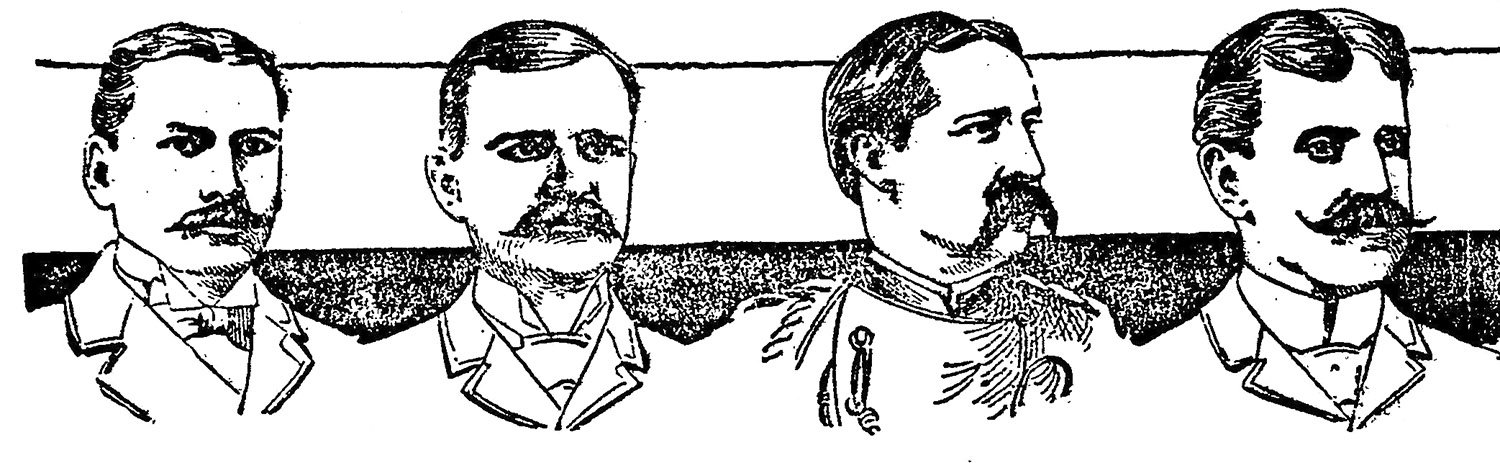
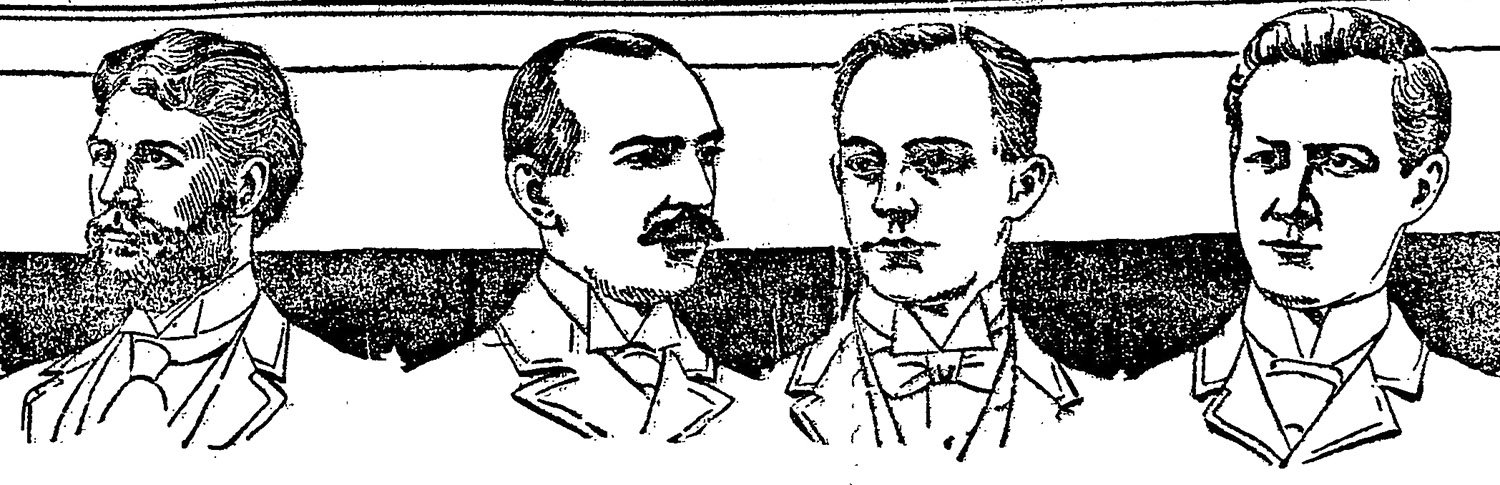
The following article, published in The Atlanta Constitution in 1896, named the city’s well-known “eligible bachelors” of the time—all White, of course—with accompanying illustrations.
The article’s conceit is based on an old Irish tradition called “Bachelor’s Day,” in which women were allowed to propose to men on February 29, a date that occurs only once every four years.
As the article points out, however, the leap year was skipped in 1900, so the next opportunity would have been eight years later, in 1904.
“The Atlanta maiden with half an eye for a good thing is reveling in the prospect,” the writer says of young ladies proposing to men— albeit in jest.
While restrictive attitudes toward women began loosening in the 1890s, it would have been considered highly improper—and was likely unheard of—for a woman to initiate a romance or marriage, particularly in the patriarchal stronghold of the Deep South.
“The idea of such a thing,” one woman shrieked to the reporter. “A woman never can make any advances to a man. I expect to be just as reserved as ever this year.”
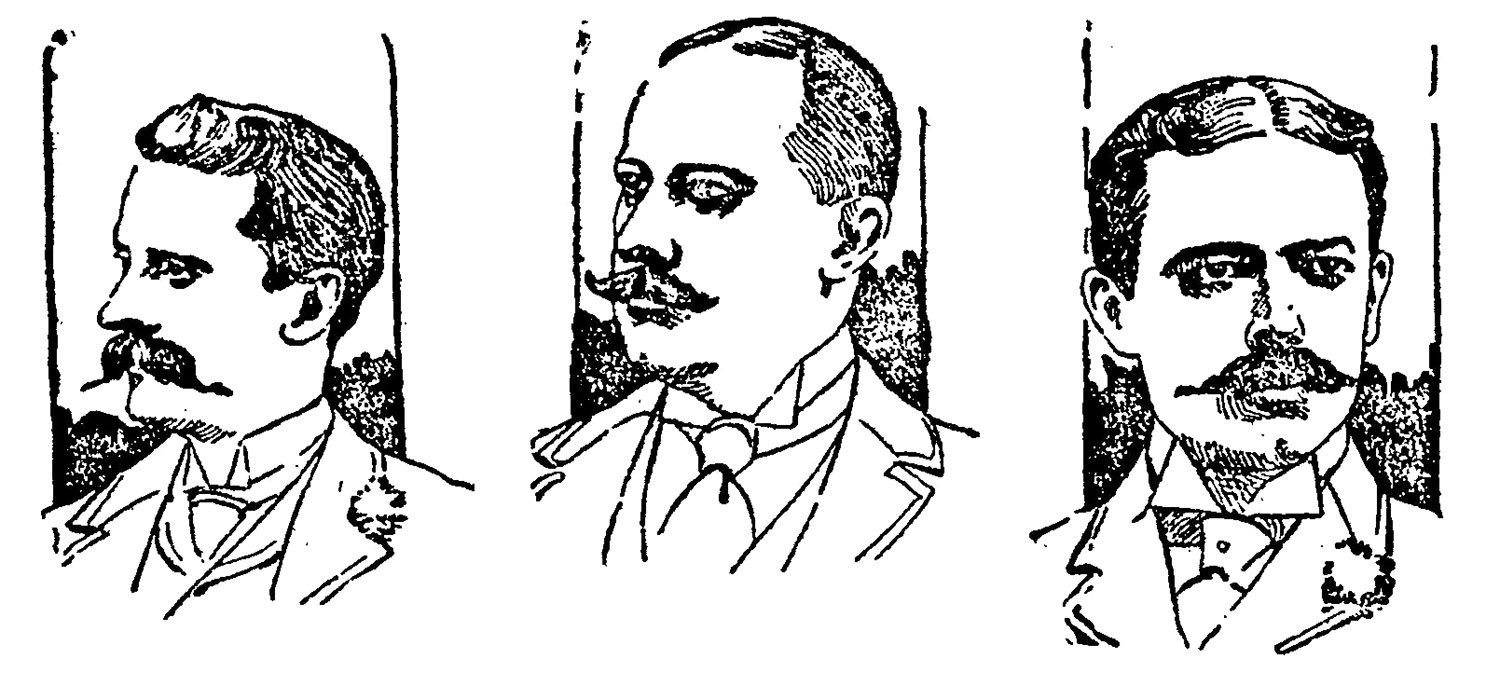
You have to wonder how many of the men named here were closeted homosexuals, or which ones were frequent visitors to Atlanta’s red-light district. I could certainly hazard some guesses based on the pictures.
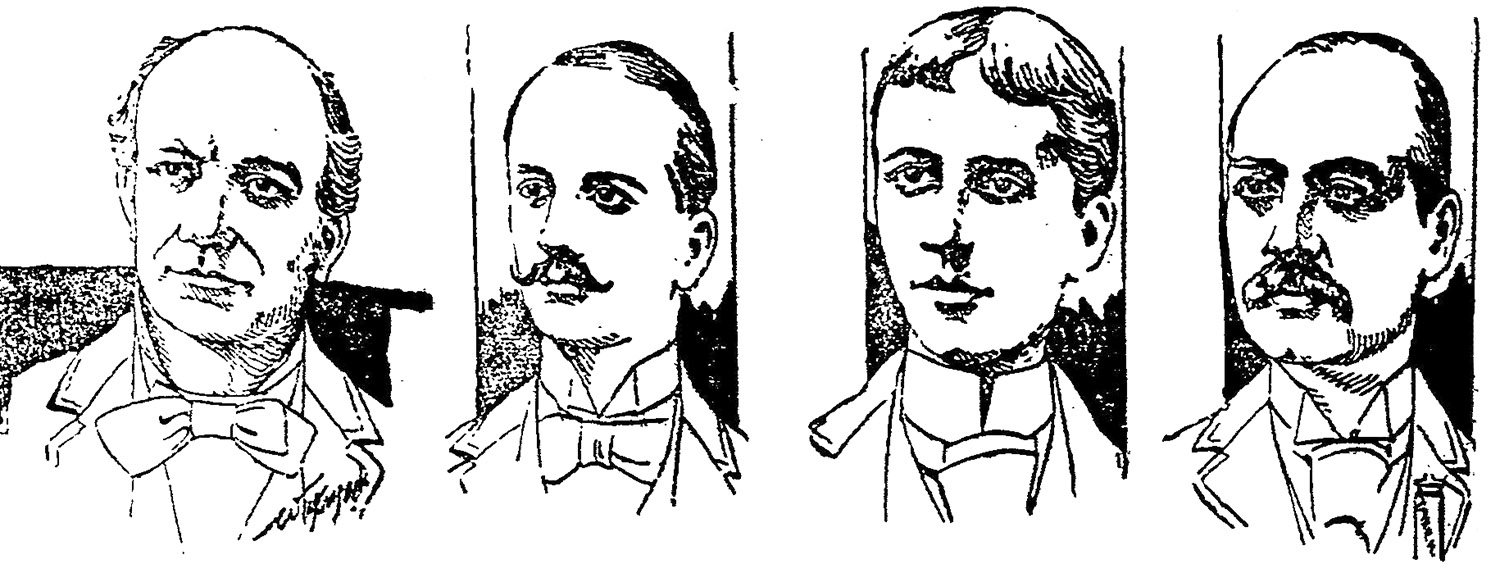
It’s also a little odd to see G.L. Norrman included in the list of eligible “young men”: he was 48 at the time and looked every day of it. Sorry, Godfrey.
This article is an odd, antiquated snapshot of an era whose traditions and values are so far removed from the current age that it’s almost baffling.
The writer (also a woman) frequently describes Atlanta’s “blushing bachelors” as “gallant” and “chivalrous,” and asks if a man is “obligated by chivalry to accept the offer of the first enamored maiden who throws herself at his feet?”
Her parting thought is that “…there are acres of younger men whose thoughts are just ripe for lovemaking.”
…It didn’t mean the same thing back then.
Atlanta’s Attractive Prizes for Leap Year Girls.
Splendid Gallery of Local Bachelors Who are the Legitimate Prey of Our Fair Maidens Who Feel Disposed to Take Advantage of the Year 1896.
Our blushing bachelors are in a state of modest agitation.
The timid ones are keeping themselves close, and the more coquettish and kittenish ones are giving themselves bewitching airs. They suspect the intentions of every pretty girl they meet and not wishing to inflict the pain of refusal not a few of them have had to discourage fair maiden suitors who have shown a decided preference for them.
How can they refuse the dear girls? Does leap year give man woman’s privilege of declining, or is he obligated by chivalry to accept the offer of the first enamored maiden who throws herself at his feet?
These unsettled questions are worrying our Atlanta bachelors and are responsible for much unhappiness among them.
For instance, Jack Slaton, one of the most charming of our local eligible, is in sore perturbation. Being a candidate, how can he refuse the young women? True, women cannot vote, but their influence upon those who do exercise the right of suffrage in this country is not inconsiderable.
Neither is Andy Calhoun enjoying his usual quiet.
“How can a fellow tell a girl that he loves another?” said he. “I wish next year was leap year.”
These gentlemen represent two sample instances of the feeling of unrest among our bachelors. Others are no less disturbed. Conscious of their charms they cannot see how it is possible for them to survive through the year and retain their gallantry. If they would be so fortunate–or unfortunate–as to pull through the year, they would enter upon the coming twelve months with reputations greatly impaired, and they would be cut and tabooed on every side.
The Atlanta maiden with half an eye for a good thing is reveling in the prospect. A fine field is before her. Eligibles of every kind and description are at hand. The bald-headed bachelor who has weathered many seasons and passed through more than one leap year unscathed, and who has never yet been melted into tenderness is plentiful. The younger eligible with less experience but not less invulnerability to women’s charms, but who are not without those engaging charms that make a man valuable in a woman’s eyes is also numerous in this city. Then the younger and fresher ones–the social yearlings–with neither experience nor power of resistance, impressionable youths with an eye for beauty and heart for love–there are armies of these–each waiting for some capturing maiden to come and bear him away. The spectacle must fairly dazzle the eyes of our Atlanta girls. Whole acres of young men, legitimate and desirable prey for pleading and matrimonially inclined young women–what a picture to delight the fancy!
The field is too full of eligibles. Too many of our young men stand as monuments to the philosophy that it is better to live alone than risk the heart in the chances of a modern love affair.
Just a glance at the list:
Fulton Coville, who is bravely and gallantly facing the leap year possibilities.
Judge John Berry, who, too chivalrous to reject a lady, has gone to Florida to escape offers, until his court will convene and occupy all his time.
Jim McKeldin, who never having been refused and never having refused, does not know how to say “no,” and belongs to the first comer.
Isham Daniel, who waits for leap year as a poet waits for spring, in the faith that it will some day bring him a prize.
Thomas B. Paine, who would as leave be captured leap year as any other time.
Andy Calhoun, who is in mortal fear that he will have to say “no” before the month of roses comes and sets him free. He is seriously thinking of putting an explanatory badge on himself to save himself and the young ladies’ embarrassment.
Will Black, who sees no reason why a young woman shouldn’t tell a man so if she loves him.
Hugh McKeldin, who, too modest to press his own claims upon the fairer portion of humanity, fondly hopes that the year will not pass without throwing some appreciative angel in his pathway.
James W. English, Jr., who is such a strong admirer of the other sex that he deems himself fortunate when they smile upon him–leap year or at any other time.
R.F. Shedden, who would like to know how the young woman would put the question.
Hugh Adams, whose popularity during ordinary years is so great as to make him the center of attack during the leap year.
Jim Nutting, who has such a general admiration and regard for the sex that he would gladly accept the first claimant.
Peter Grant, who will either learn to say “no” or be captured early in the year.
G.L. Norrman, who would refuse a lady nothing–not even his hand.
Lieutenant Oscar Brown, who was fighting Indians all through last leap year and is immensely pleased at the thought of what this year may bring him.
And a host of others. There are Lucius McClesky, Percy Adams, Alex Hull, Victor Smith, Preston Arkwright, Jack Slaton, Charles E. Harmon, Thomas C. Erwin, Frank Orme, Howell Peeples and an innumerable company of other attractive young men.
There’s a romance in every name. Each separate man is waiting for the right woman. They are not cynics and they are not certain but that leap year will settle the question for them. Some of them are rather inclined to encourage the leap year girl. Others are less courageous. They are afraid to risk themselves in the hands of a pleading woman.
There can be no prophesying as to the result of the year among our young men and young maidens. Early in the year–before the year begun, in fact–some of the young men put out the report that they were engaged. They industriously caused this rumor to gain circulation, hoping thereby to shut off the applicants for their hands. But the reports have been exploded and the young men stand convicted of base deception, deception in a cause in which there should be nothing but open and frank dealing. The young women have sworn to make the year a bitter one for these young men. The young women know they guilty offenders and they will make the suffer. The men may wreak a deadly vengeance themselves, however, by accepting some lovely suitor and insisting upon carrying the engagement to its culmination.
But on the whole the young men are not averse to leap-year love making. Be it said to their credit, they keenly enjoy the outlook. Most of them have rather put themselves in the way than out of the way of love making. If the young women want to propose they cannot complain that the young men have given them no opportunity. Nearly all of the young men have kept up their calls with the old regularity.
Jim McKeldin says the signs are propitious for a good year for the bachelors.
“I will not furnish any picture for publication,” he stated to The Constitution last week when called on, “because I do not wish it to gain too wide a circulation during leap year.”
The shrewd young women of two states are vieing [sic] with each other in their efforts to capture him. Tennessee and Georgia both want him and he says it’s a toss up between the two states as to chances at present.
Victor Smith is modest. He believes that all things–even proposals–come to him who waits, and while he has not been waiting as long as many of our eligible gentlemen, he hopes that the year will not be entirely unfruitful in a matrimonial way.
Then, there’s Mr. Harman–Charley Harman–whom the ladies all admire. He escaped the past two leap years through some miracle of misfortune which he alone can explain. The young ladies will not let him pass through this without severe trials. They are organized against him and the married ladies unwilling to see such a charming fellow in single harness, are in league with the younger ones. A steady and well-organized siege is to be laid to the heart of the able railroader and good fellow, and there’s not a doubt that he will surrender before the year ends.
And Tom Erwin–best of good fellows. Atlanta young women are too sensible to allow him to escape. If he is too busy running a bank to propose himself during the years that the privilege belongs exclusively to the men, the young ladies will not allow him to evade this year. He’s a marked man among the young ladies. It’s a question which one reaches him first and makes the strongest plea.
“Jim English is lovely,” exclaimed one of Atlanta’s fairest belles last week. “He’s such a good business man above all men. If I make any proposal this year it’ll be to him.”
And so I might go on ad infinitum. There are many that I have not mentioned but who the young ladies have their eyes on. They will not escape and only a lack of space prevents their mention here.
There is quite an array of young men. There are Joe Brown, Otis Smith, George Parrott, Mays Ball, Roger Elliott, Ulrich Atkinson, Harry Stearnes, Will Kiser, Quill Orme, ‘Gene Black, Alf Prescott, Walter Kilpatrick, Dr. Roy and many, many more. These young men, too, are legitimate prey for the leap year girls, and it is safe to prophesy that not a few of them will fall victims to the witchery of some maiden.
And the young women–what do they think about it.
The fairer portion of Atlanta has never yet settled the question whether it is quite the proper thing for them to propose. They say it is tradition, nothing more.
“I don’t suppose any nice girl even proposed to a man,” said one of Atlanta’s fairest maidens the other day. “The idea of such a thing. A woman never can make any advances to a man. I expect to be just as reserved as ever this year.”
And this idea seems all to prevalent. If the women will not exercise their privileges they have only themselves to blame. It is their right to make love to the men this year and the men, like Barkis, are willing. It is the woman’s fault if there is no lovemaking.
To the backward ones I would suggest that this opportunity will not occur again in eight years. The closing of the century cuts the dear girls out of one leap year, and it will be eight long summers before another chance will come to the women to make love to the men. So the young women had best look to their opportunities and improve them.’
A survey of the field here in Atlanta will show at a casual glance that the fair maidens have plenty of excellent timber to choose from. There is a fine army of eligible bachelors, pining and aching for the love and sympathy of some tender soul, and there are acres of younger men whose thoughts are just ripe for lovemaking.1
References
- “Atlanta’s Attractive Prizes for Leap Year Girls”. The Atlanta Constitution, March 8, 1896, p. 4. ↩︎