The Background
This is the ninth in a series of articles written for The Atlanta Journal in 1890 and 1891 by W.W. Goodrich, an architect who practiced in Atlanta between 1889 and 1895.
Here, Goodrich tells a fantastic and adventurous tale about a man living alone in an Oregon cave. Naturally, it’s complete bullshit.
Goodrich claims to have discovered the hermit, “alone, without a pet of any kind”, while scouting for a railroad, staying in his “cabin of logs”—just say log cabin, dammit.
Oddly hospitable for a recluse, the “most singular character” tells Goodrich that he fled to the remote Oregon wilderness from “a far-away eastern city” when a 22-year-old girl with whom he became infatuated refused him. Surely there are easier ways to deal with rejection.
Being an obsessive creep, the hermit was, of course, a devout Christian and, despite having no human contact, also somehow knew the ways and language of the Samish people—Goodrich, ever the expert on indigenous cultures, misspells it as “Simash”.
Goodrich gets to include more of the Chinook Jargon1 and nonsense words he was so enamored of, and like the title character of his earlier story, “Wyltwyck“, he also has the hermit recite the Lord’s Prayer. Thank God he didn’t publish it in full again.
Unlike “Wyltwyck”, this story is (mostly) intelligible, ending with the hermit escorting Goodrich by the arm through a series of canyons, a petrified forest, a waterfall, and a cave full of hieroglyphics and mummies, among other implausibilities.
Somehow, Goodrich still makes it sound boring.
A Strange Hermit.
A True Story Of An Old Man Out West
He is Visited by An Atlantan Man, Who Tells the Story of the Old Fellow–Crossed in Love, He Entirely Secludes Himself.
Written for the Journal.
On the north side of the glaciers of Mount Baker, winding its sinuous way about the mountain, the north fork of the Norksock opens out in a beautiful basin, and in this basin, at the foot of a lofty peak, its summit in perpetual snow and ice, lives a most remarkable hermit. In his cabin of logs he lives a solitary life. Alone, without a pet of any kind, he has chosen this fascinating spot as his abode on earth. He has converted this fertile basin into a most wonderful ranch, even running his trailing arbutis up the rugged rocks and fissures of the formation of the canyons sides, and projecting crags of the rocky cliffs. And all about were clinging vines and shrubs, beautiful fuchias, growing like trees, geraniums growing wild in a natural climate, calla lilies and other semi-tropical plants. The Japanese current of warm air continuously swept through this lovely canyon and kept it warm even during the most violent storms of further down the canyon. The gulf stream comes close to the shores of the states bordering on the Pacific slope, and while the mountains are in perpetual snow, the valleys and canyons will be robed in eternal green, with all nature robed in beautiful flowers and fragrant trailing vines, when but a few miles further away from the ocean will be the frigidity of winter. This old hermit was a most singular character, clothed in buckskin, with moose moccasins, a gray, grizzled beard and long, gray hair away down upon his shoulders. He was well educated, he used excellent language. We stayed in his cabin and partook of his generous hospitality. Seated in front of his 6×8 foot fire place, the dying embers gradually fading away like the green sunsets of this far away ranchman’s home, he soliloquized to himself, as he said, we were the first “Bostons” to visit his home, why we invaded the solitude of his mountain home. Simply in quest of a pleasurable outing, was our answer, and business pleasure. We informed him we were prospecting for this iron horse, and to find a trail for his swift-moving carriage from the east to the rapidly-improving west, or in other words we were looking over the land to lay out a line for a great railway across the mountains to the cities of the Puget Sound basin. At this he appeared in apparent anger, and rising to his feet, reproachfully suggested that as he had left civilization forever he did not want to be any nearer than he was. And, said he, we could not get through this canyon with a line on account of the vast expanse which he would prove to as in subsequent outings over the mountains, again seating himself. Nodding to the embers in the fire-place, he said:
“Many years ago I lived in a far-away eastern city; I was valedictorian of my class. I studied for my ministry. In my seminary course I frequently preached in rural districts. One day at the seminary I received an invitation to go to a certain place and remain with an elder as his guest over the Sabbath. In his family were several children. His eldest daughter, a beautiful girl of 22, the very personification of all that is pure and truthful, led the choir. Somehow I did not sleep that night. Strange sensations would rack my vision. Was I in love? The Sabbath dawned with a perfect day and was spent as a Sabbath should be. I returned to the seminary. In a few weeks I was again invited to preach in that same place, and was the guest of the same elder. Before leaving on the first of the week, as I stayed purposely to know my fate, I was flatly refused.”
His head dropped over on his bosom, and the tears welled up into his eyes and rolled down upon his cheeks, “refused,” soliloquizing, “refused.”
He got up and walked out into the beautiful moonlight to calm his emotions. I had nearly fallen asleep in my hollowed-out log chair when he returned.
“Did I say I was refused?”
“Yes, you said refused.”
“Well, I was refused; from that day to this no mortal soul knows where I am. I did not go back to the seminary, but going to New York I secured passage for ‘Frisco, dressed as a miner, and during the Frazier river excitement I came this way, and drifted into this beautiful spot, and here I intend to stay till death takes my soul to the God who created it, Sahale Tyee, as the Indians call the Great Spirit.”
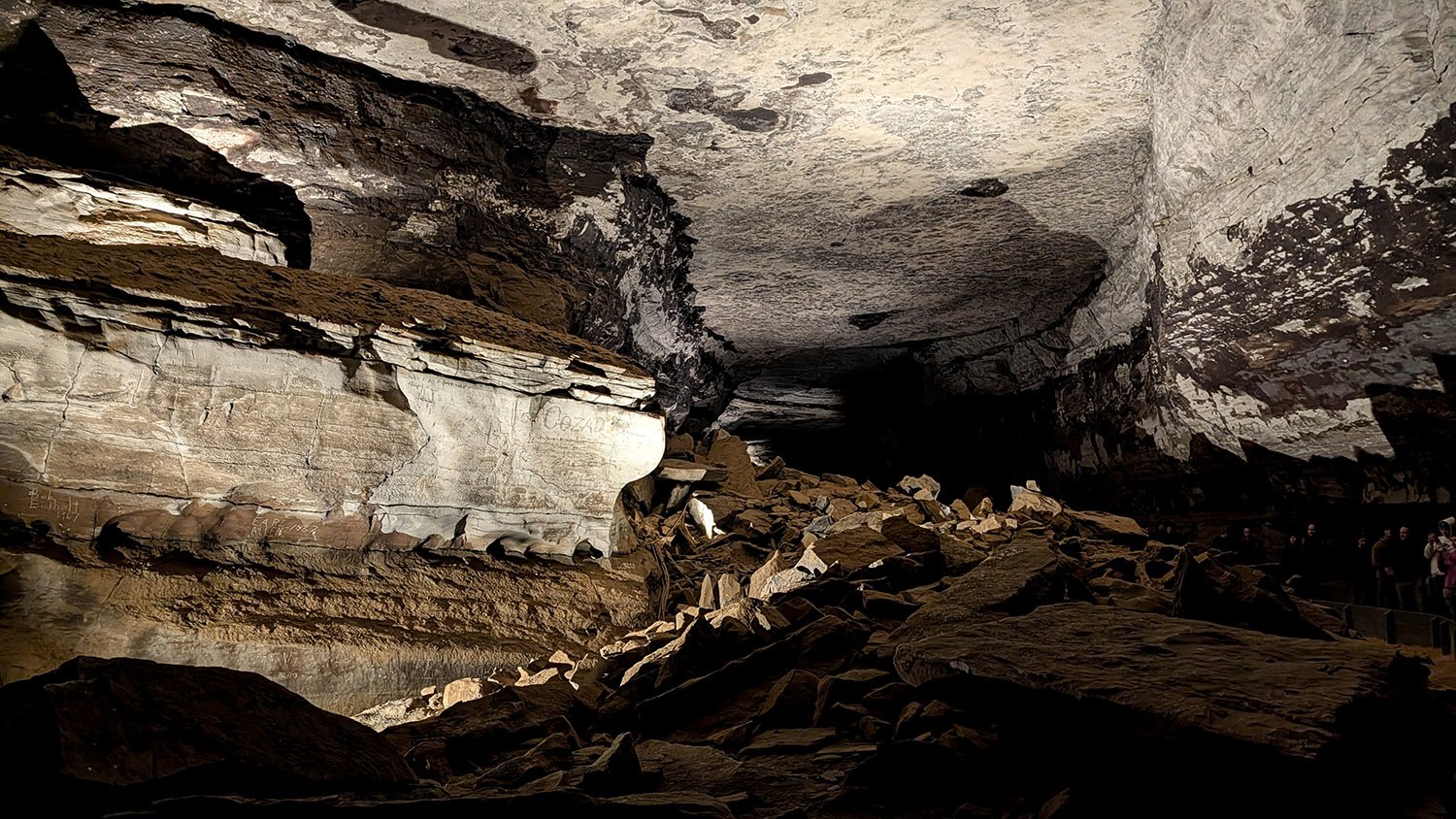
His conversation, acts and manners were extremely interesting. His logical conclusions of God, of the plan of salvation by the infinite Savior, were most edifying, but his mind on the score of his first and only love was unbalanced. And thus as a life of usefulness was a failure as far as his fellow men were concerned, what a power a loveable woman wields for good. The fire fly may be the light of her eyes, the glow worm the lamp to her feet, the song of the mocking bird cooing to its mate in its tenderest strains, the voices of love, but a man without the influence of a noble woman’s love and affection as his incentive to a future of an earnest lie. A useful life is a most pitiful wreck. Yes, a more complete wreck than an old hulk dismantled, water-logged, drifting about without sail, rudder or any power to avoid unseen rocks. He said she gave him no other alternative, no hope, no promise of a reconsideration of her flat refusal. She told him her refusal was final. He was a pitiful object, as his frame swelled with emotion, the gray and grizzled features of a once handsome man, now shunning his fellows and only wanting solitude. Crawling into our extemporized bunk, with several bearskins as a mattress, and our blankets for a covering, I was soon asleep. At early day break he called us to prayers, in a cave of several hundred feet in extent, with its stalagmites and stalactites glittering and sparkling with the many rays of the rising sun, was a beautiful, natural auditorium. At one end farthest from the entrance, which was like a roman arch, was a natural stone pulpit of gold bearing quartz, with wire-gold seamed through it in filmy threads. The side walls and ceiling were like the pulpit. Thin veins of native silver were interlaced with the gold. Ascending his pulpit, in front of which we stood, he called upon “Sahale Tyee” in an ardent, earnestness that was effecting, and forcibly reminded us of many famous pulpit orators of the present day, from whose lips we have intently and interestedly listened.
He rendered “Rock of Ages, Cleft for Me” with excellent effect, the sound of his voice resonant with melodious purity and symphony. We stood the service through, resting against a stalagmite. His sermon was brief, probably not to exceed 20 minutes, but the situation was so novel it did not seem 5 minutes. He dismissed us with the Lord’s prayer in the Simash [sic] dialect. Kloshe Kahkiva with excellent fervency, was rendered with a subdued melody of expression. Taking my arm in his own we walked about the cave. The beautiful tracery of native gold and silver, as nature wrought with her own hands, was a marvel of perfection. A treasure hunter would here find a “markook” house rich in the precious metals. Seeking, the air, he took me up the canyon at right angles with his own, There is a smaller one up which we wandered for a mile. Here the canyon pinched together with another one at right angles, crossing the stream, which was far down beneath us, on a fallen tree of immense proportions. On the other side he said, “Look again at that tree.” By the action of silification or some other process of nature it had become transformed into agate. Its length was about two hundred feet, about one hundred and twenty-five feet spanning the perpendicular gorge of the canyon. In places the bark adhered, but where the bark had fallen away the fiber had become transparent and the jasper colors of red, yellow and emerald are distinctly discernable. The ring circles, which can be seen in all trees, in this leviathan of the forest appear plainly, like the colors in polished onyx. It was, when alive, a giant spruce, which grew alongside the canyon it now bridges.
The Indians, when in need of obsidian, for arrow points, came to this spot, where quantities of it can be had for the taking. This is not the only tree that has become petrified, there are many more lying about in different positions, showing the remarkable chemical action of nature and her laboratory. High up above this natural bridge over the canyon, from out the side of the rocky wall, a large stream of water comes gushing out of the ace wall of the canyon was if it were a gigantic nozzle from some hoze, and falls perpendicularly a beautiful waterfall in the canyon below, resplendent with all the colors of the rainbow and sparkling like diamonds and before reaching the bottom of the water spreads out with the currents of the air into spray, the sport of the winds. It is a strange and weird sight. Perhaps in some remote period of time, long past, the bed of this river was where the water emerges, but an earthquake or volcanic upheaval had changed the face of nature, sinking and carrying the bed of the river hundreds of feet down or broken off its course, and leaving the water to pour out from its high up channel which was the original bed. The range of mountains about Mount Baker are rugged and terrifically rough like sawteeth, showing glacial abrasions and wearing way, rich veins of iron ore, anthracite and bituminous coal. Galena and copper are on every side. Turning at a sharp angle we came face to another cave, which we entered. On the sides were mummies, done up like the Egyptians, with peculiar heirogliphics [sic] all over the wrappings. The roof was quite high. The air was intensely cold in the center of the cave was a lake of unknown depth. No life anywhere. A ledge of gold quartz ran across the cave, disappearing in the lake. On a shelf at the rear were human bones and some pottery and obsidian points. Who these dead were, what race they were, no one knows; possibly Aztecs. Our guide did not comprehend in the slightest degrees the characters on the cases, and could give us no information. Suddenly he spoke in a loud, stentorian voice, and the sound was as the roar of artillery, the bombardment of numerous canon against metal plates, deafening and thunderous it seemed so suddenly as if all the canon of the entire service had been off in round after round in volley after volley. It was several minutes before the noise diminished enough to speak and be heard, so remarkable are the acoustics of this wonderful cave.
W.W. Goodrich2
References
- Gibbs, George. A Dictionary of the Chinook Jargon Language, or Trade Language of Oregon. New York: Cramoisy Press (1863). ↩︎
- Goodrich, W.W. “A Strange Hermit”. The Atlanta Journal, December 13, 1890, p. 3. ↩︎