The Background
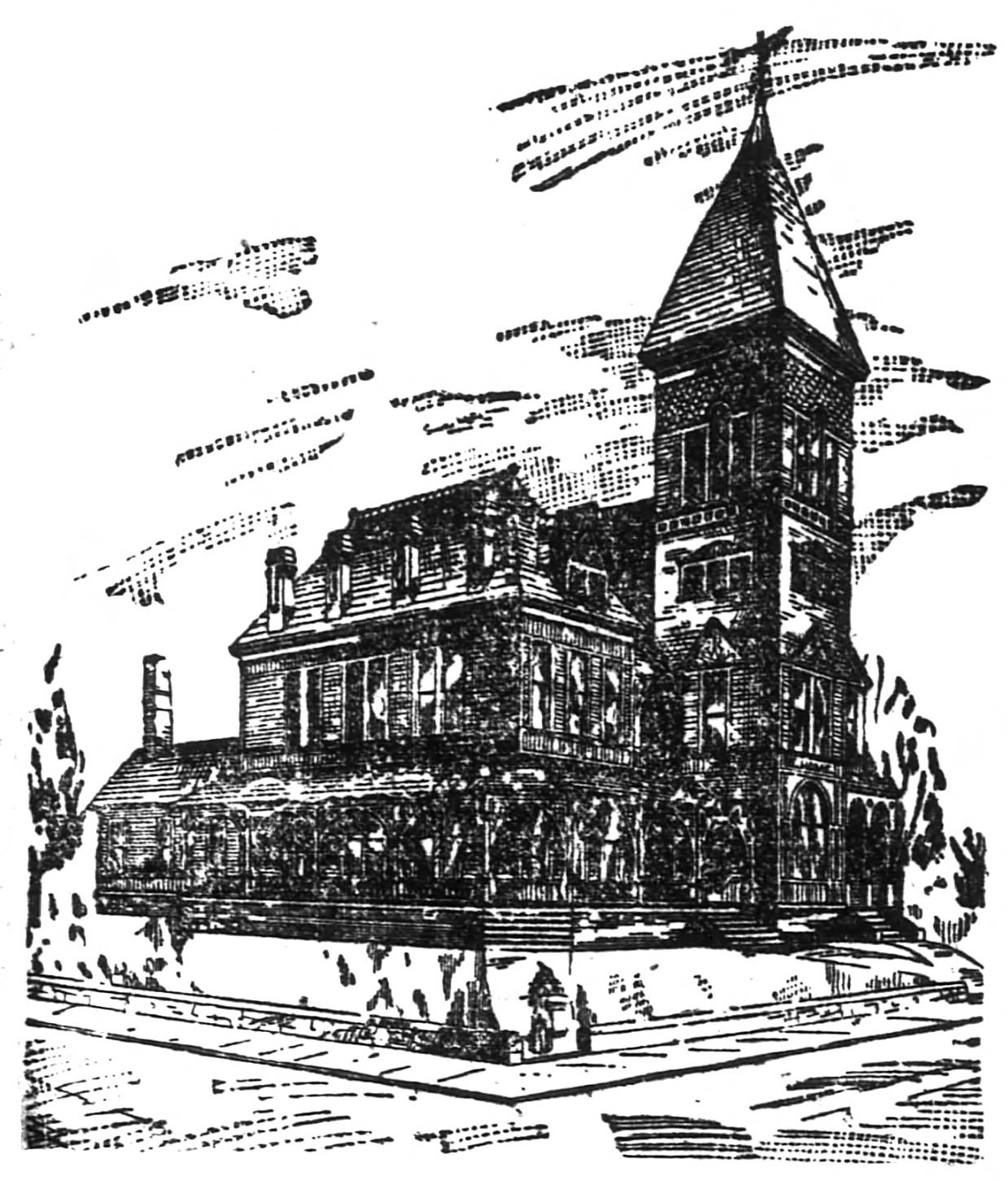
The following article was published in The Atlanta Constitution in December 1889 and discusses the proposed design for the Carrie Steele Orphans’ Home, prepared by Bruce & Morgan of Atlanta.
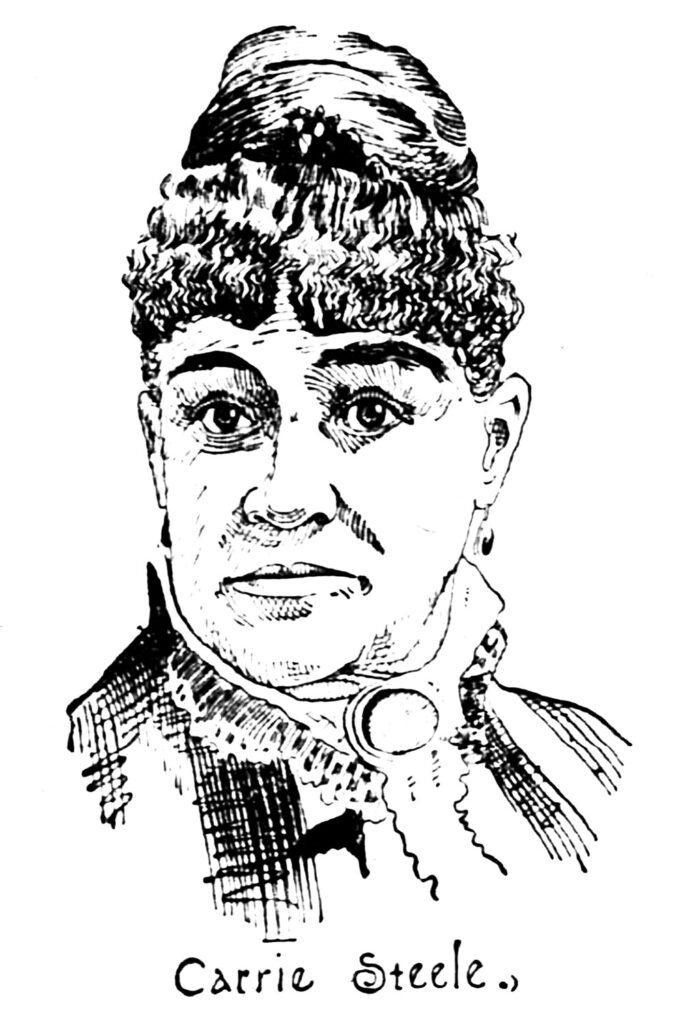
Carrie Steele Logan (pictured here1)was “well known and highly respected”2 in both the White and Black communities of Atlanta in the late 19th century. Born into slavery in 1829,3 she worked for many years as an attendant in Atlanta’s passenger depot,4 5 where she reportedly became distressed by the “little army of street vagrants who ran around the depot entrance.”
Steele ultimately quit her job, “impressed with the responsibility of rescuing the little tots that struggled for existence,” and according to the Constitution, “as she left the depot she led several homeless waifs to her home on Wheat street.”
In 1887, Steele began raising money to build an orphanage for Black children, which the Constitution described as a “praiseworthy work,” opining that:
“The home will do a vast amount of good in recovering from lives of vice and crime the little negroes who run around our streets ragged, friendless and homeless…”
Note that in this article, Albert Howell, one of the orphanage’s early supporters, claimed that the home would “take the little negro waifs and make good servants of them.”
Steele was a tenacious advocate for the project, pursuing every possible fundraising method. In 1888, she even published a book of anecdotes about her time working in Atlanta’s depot, titled Life and Adventures of Mrs. Carrie Steele, Stewardess Atlanta Depot, with proceeds funding the orphanage.6
Lacking land for the project, in 1889, Steele petitioned the City of Atlanta,7 8 which granted her a 99-year lease9 on a four- to five-acre parcel10 11 near the intersection of Fair Street and Flat Shoals Road (now the southeast corner of Memorial Drive SE and Holtzclaw Street SE).
Location of Carrie Steele Orphans’ Home
Steele reportedly “made many friends among the white people”,12 and it’s a testament to her reputation that the orphanage’s construction was funded by several of Atlanta’s wealthiest citizens, including Jonathan Norcross,13 who was, by all accounts, a miserly old asshole.
In March 1890, The Atlanta Journal said of Steele’s fundraising efforts:
“Almost all the prominent white people in the city have contributed something to the good cause, and to those who have not we desire to say that you could not contribute to a more laudable undertaking.”14
Construction on the orphanage began in July 1890,15 but because it had to be built in stages as funding permitted, the project was completed in May 1892.16 However, the final structure wasn’t the one designed by Bruce & Morgan.
The original design had apparently been dropped by May 1890, when Steele bought 30,000 bricks for the project17 18—note that the plan described and illustrated here was for a wood-frame building.
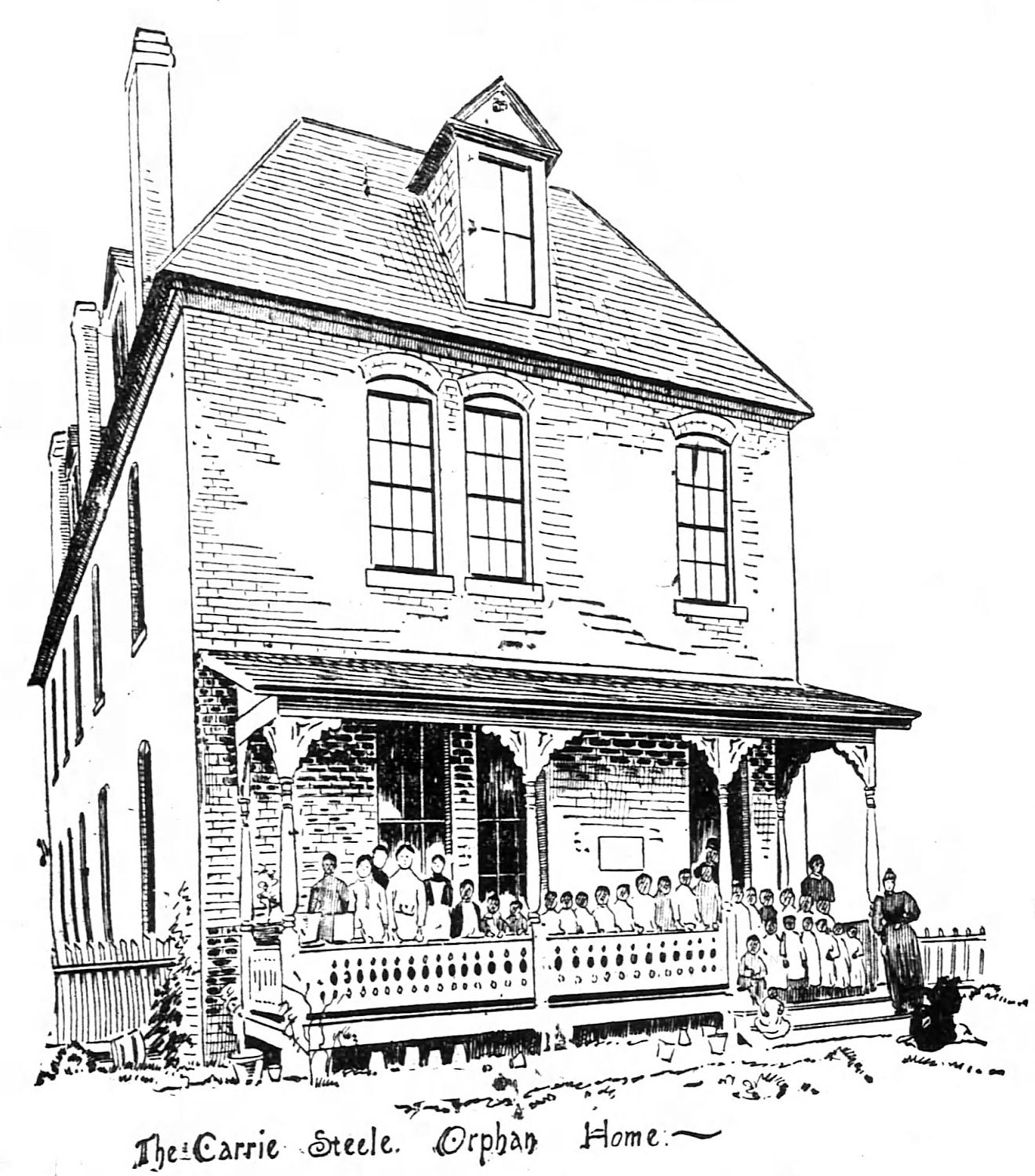
The plain brick structure that was ultimately built for the orphanage appears to have had no designer—or at least, not a good one.
Containing 13 rooms,20 the orphanage housed 36 children at its dedication,21 and by 1896, it sheltered 75 children between the ages of one and fifteen years old.22
In 1894, Steele told a reporter from the Constitution:
“If these were my own children I could not love them more than I do. They all look up to me as if I were their mother, and come to me with all their little troubles as if I always had a remedy for them. I have had a great many discouragements and trials, but when I look back over these years and see how the Lord has taken care of me and my children, I feel that I ought to be thankful.”23
Steele died in November 1900 at the age of 61, two months after a debilitating stroke.24 Her funeral was reportedly attended by 3,000 people,25 with the Constitution reporting that “the church was filled to overflowing and about half of the audience was composed of whites.” She was buried in Oakland Cemetery, the final resting place of Atlanta’s most distinguished citizens.
Steele’s husband managed the orphanage until he died in 1904,26 which continued operating under a succession of directors, notably Clara M. Pitts, who managed the home from 1919 to 1950.27
In 1928, the orphanage left its original property on Fair Street and moved to the Pittsburgh neighborhood in southwest Atlanta.28 Later renamed the Carrie Steele-Pitts Home, the orphanage moved to Fairburn Road in west Atlanta in 1964,29 where it remains in operation as the oldest black orphanage in the United States.30
For Negro Orphans.
The Good Work Which Carrie Steele Has Done.
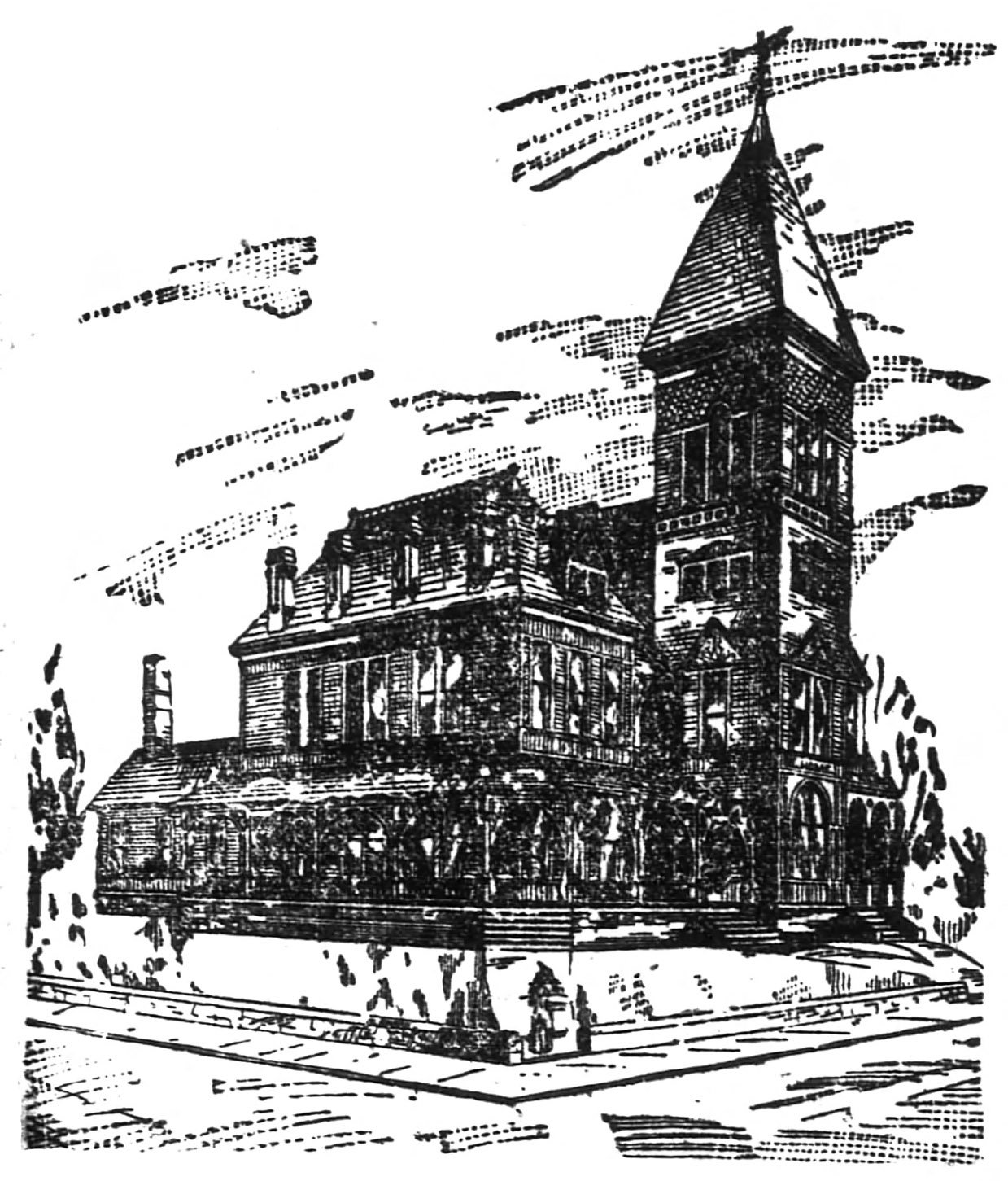
The Home As It Will Appear When Finished
— What a City Officer Has To Say About It — Other Notes of Interest.
“That’s the best investment Atlanta has ever made.”
Colonel Albert Howell was the speaker. As he made the remark he pointed to an architect’s drawing of the Carrie Steele Orphan home.
“Yes,” said Colonel Howell, “that is one of the most sensible charities ever inaugurated, and to one woman belongs the credit for its inception and the good work that has already been done. Carrie Steele is a good woman, and I know she deserves every success in this life work of hers. For it is a life-work. It is two years now since the project was conceived by Carrie, or rather since she gave up her position at the carshed that she might devote her whole time to this home. She has labored honestly and earnestly for its success, and she expects to devote the rest of her life to it.”
Colonel Howell has shown his faith by his works. It was through his influence as alderman that the lease on the four acres of city land, upon which the home will stand was extended from ten to ninety-nine years. And in all her efforts to secure city aid, Colonel Howell has been one of Carrie Steele’s most staunch supporters.
“It is a good thing for Atlanta as well as the state at large–this orphans’ home,” he said yesterday. “For it is the intention of the people interested in the home to take the little negro waifs and make good servants of them. The education they receive will all be in the direction of practical usefulness.”
The home will be located on the Flat Shoals road where Fair street will intersect it. This is about two and a half miles from the center of the city and is delightfully located.
The building, which, when completed, will look like the accompanying cut, will be a frame structure built in the most substantial manner. The building when finished which will contain, on the first floor an office and room for matron, with two school rooms, chapel and large dining room, with kitchen and laundry rooms, for teaching kitchen work. The second floor will contain dormitories, bath rooms, and all modern conveniences, and in every way adapted to the purposes for which it is intended. The plans were prepared by Messrs. Bruce & Morgan, and preparations are being made for commencing the work at once.
It is the intention of the projector to start with one wing, and use that for the purposes of the home. Then as the years go by and the home gets well started, the building will be completed.31
References
- Illustration credit: “Training The Colored Children”. The Atlanta Constitution, June 7, 1896, p. 3. ↩︎
- “The Colored Orphans’ Home.” The Atlanta Constitution, June 9, 1889, p. 3. ↩︎
- Carrie Steele Logan: A ‘Mother’ to Atlanta’s Orphans | Atlanta History Center ↩︎
- ibid. ↩︎
- “Carrie Steele Gets Married.” The Atlanta Journal, February 16, 1889, p. 2. ↩︎
- “Carrie Steele’s Book.” The Weekly Telegraph (Macon, Georgia), March 6, 1888, p. 8. ↩︎
- “The City’s Finances.” The Atlanta Journal, January 21, 1889, p. 1. ↩︎
- “Local Law Makers.” The Atlanta Constitution, January 22, 1889, p. 5. ↩︎
- “The City Fathers”. The Atlanta Constitution, November 19, 1889, p. 3. ↩︎
- “The Carrie Steele Orphan Home.” The Atlanta Constitution, July 2, 1889, p. 8. ↩︎
- “Home For Colored Orphans.” The Atlanta Journal, May 9, 1890, p. 3. ↩︎
- “Carrie Steele Died Last Night”. The Atlanta Constitution, November 4, 1900, p. 7. ↩︎
- “The Atlanta Orphan Home.” The Atlanta Journal, February 13, 1890, p. 3. ↩︎
- “Atlanta Orphan Asylum.” The Atlanta Journal, March 12, 1890, p. 4. ↩︎
- “Foundations Laid”. The Atlanta Journal, July 4, 1890, p. 1. ↩︎
- “City Notes.” The Atlanta Constitution, May 2, 1892, p. 5. ↩︎
- “Home For Colored Orphans.” The Atlanta Journal, May 9, 1890, p. 3. ↩︎
- “The Good Work of Carrie Steele”. The Atlanta Constitution, May 10, 1890, p. 4. ↩︎
- “Training The Colored Children”. The Atlanta Constitution, June 7, 1896, p. 3. ↩︎
- “The Colored Orphans.” The Atlanta Journal, August 16, 1892, p. 5. ↩︎
- “The Colored Orphans’ Home.” The Atlanta Constitution, June 21, 1892, p. 10. ↩︎
- “Training The Colored Children”. The Atlanta Constitution, June 7, 1896, p. 3. ↩︎
- “Her Own Work.” The Atlanta Constitution, April 15, 1894, p. 23. ↩︎
- “Short Items Of Local Interest”. The Atlanta Constitution, November 7, 1900, p. 9. ↩︎
- “What The Negro Is Doing”. The Atlanta Constitution, November 11, 1900, p. 4. ↩︎
- “Josiah Logan, Well-Known Negro, Died Tuesday”. The Atlanta Constitution, November 16, 1904. ↩︎
- Scott, Stanley S. “Groundbreaking Exercises For Children’s Home Sunday”. Atlanta Daily World, February 15, 1964, p. 7. ↩︎
- “New Home for Carrie Steele Colored Orphanage To Be Dedicated Wednesday”. The Atlanta Constitution, May 27, 1928, p. 19 A. ↩︎
- Scott, Stanley S. “Groundbreaking Exercises For Children’s Home Sunday”. Atlanta Daily World, February 15, 1964, p. 7. ↩︎
- Carrie Steele Logan: A ‘Mother’ to Atlanta’s Orphans | Atlanta History Center ↩︎
- “For Negro Orphans.” The Atlanta Constitution, December 1, 1889, p. 15. ↩︎