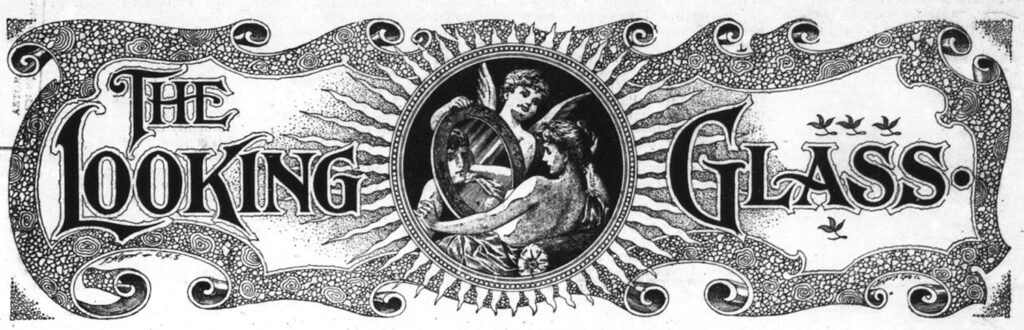
The Background
The following article was published in The Looking Glass on January 22, 1898, and provides what it describes as “an appalling list of openly avowed Atlanta bachelors” at the time, including G.L. Norrman (1848-1909).
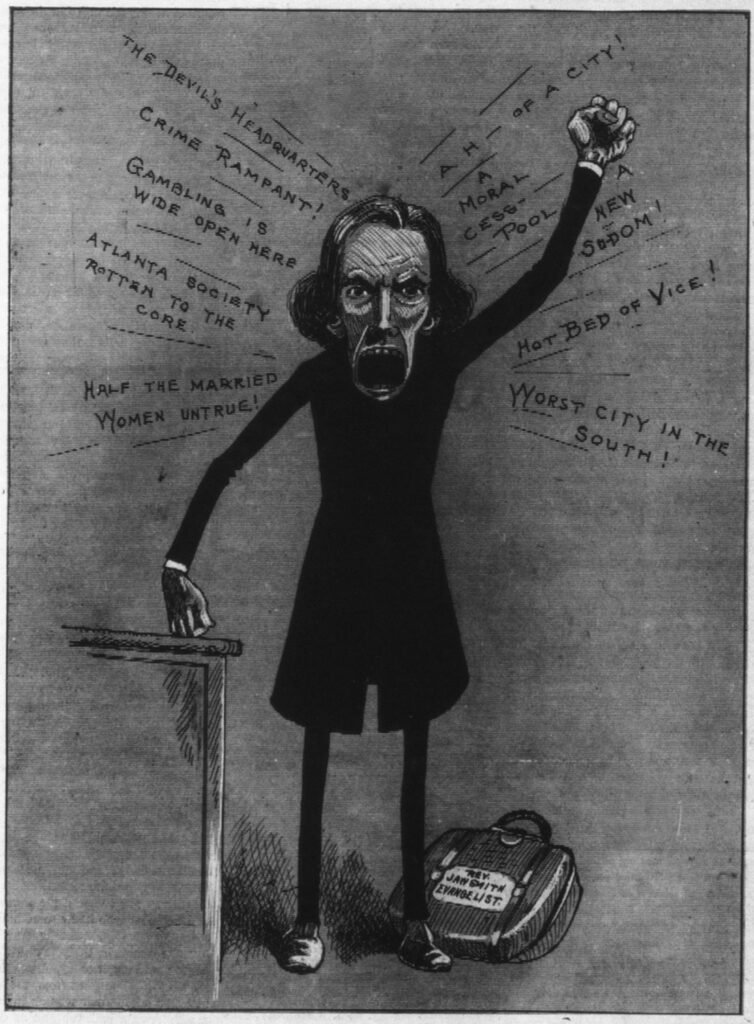
The Looking Glass was a short-lived but notorious tabloid newspaper published weekly in Atlanta from 1895 to 1898, and it’s safe to say that pretty much everyone in the city read it, even if they’d never admit to it.
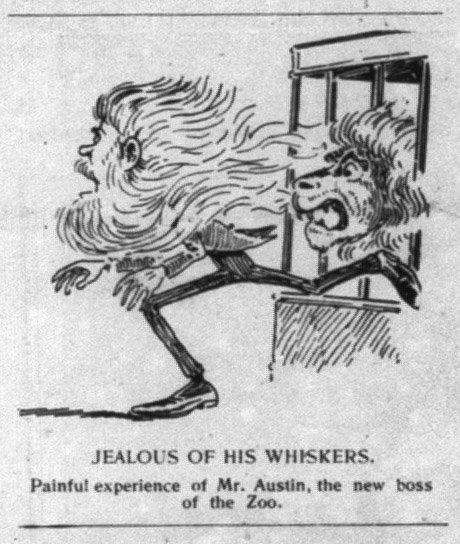
Chock-full of photographs, oversized illustrations, and comic sketches, The Looking Glass was a visual feast compared to the drab pages of The Atlanta Constution and The Atlanta Journal, but what made made the publication so sensational was that it regularly dished on the lurid exploits of what it referred to as “Atlanta’s 400” — a sarcastic swipe at the city’s wealthiest citizens, inspired by the Four Hundred of New York.
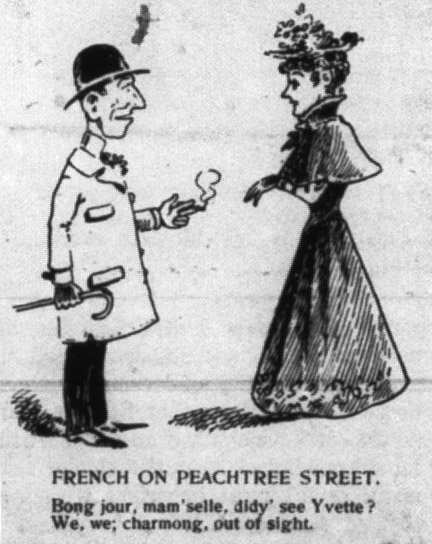
The members of Atlanta society who were regularly fawned over in the pages of the Constitution and the Journal were mercilessly mocked in The Looking Glass, with irresistible blind items that laid bare their infidelity, divorces, drug and alcohol addictions, and bankruptcies — among other social embarrassments.
Absolutely no one who was anyone in Atlanta was spared byThe Looking Glass, which scandalously pushed against every conceivable social taboo of the time — it even had an illustration of a nude woman on its banner.
A few random excerpts will give you an idea of why the newspaper was so popular:
“The interesting rumor that a naked man was in the habit of parading the neighborhood of Grant Park has caused great excitement in the vicinity…”1
“There is a certain high building in Atlanta, the roof of which furnishes an excellent coigne of vantage from which to survey the surrounding country. It is reached–the roof, I mean–by a ladder like flight of stairs leading up from a loft, and it is quite a common thing for lady visitors to repair thither to enjoy the superb view. The offices on the several floors of the building contain a good many young men who are no better than young men usually are, and some of them lately made the discovery that the fair visitors, ascending and descending, like the angels in Jacob’s dream, formed a series of living pictures quite eclipsing anything ever seen on the stage. One of the discoverers owns a hand camera, and with the aid of this instrument he has perpetuated the delectable vision in a number of different views”2
“One of the numerous divorce cases which will be heard at the ensuing term of the Superior Court will in all probability develop a little story which contains about as many elements of the dramatic as are usually to be found in a single passage of every-day life… Some time ago the husband began to suspect (or so he claims) that his wife was taking more interest than she should in a certain friend of the family who was a frequent visitor at the domestic hearth… he proceeded to lay a trap for his friend and his spouse…”3
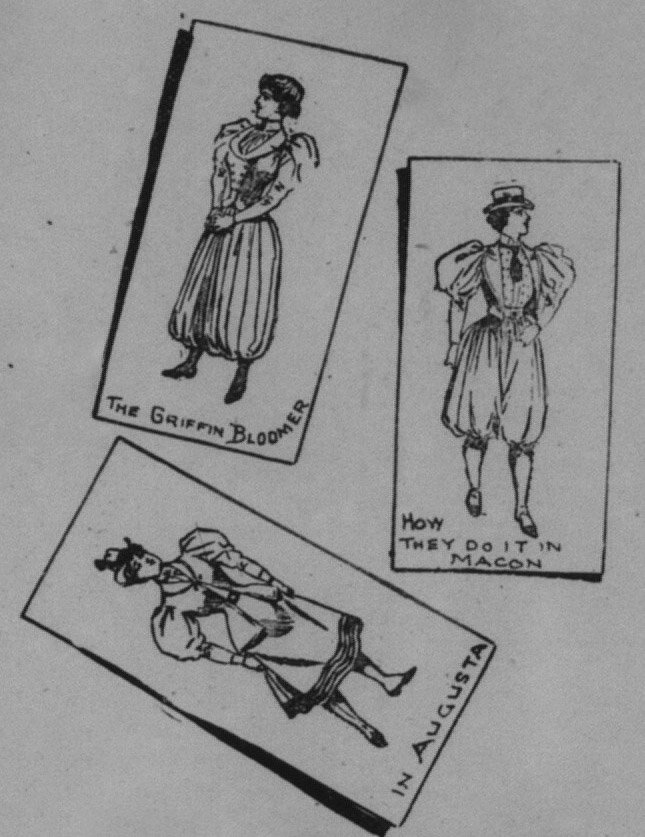
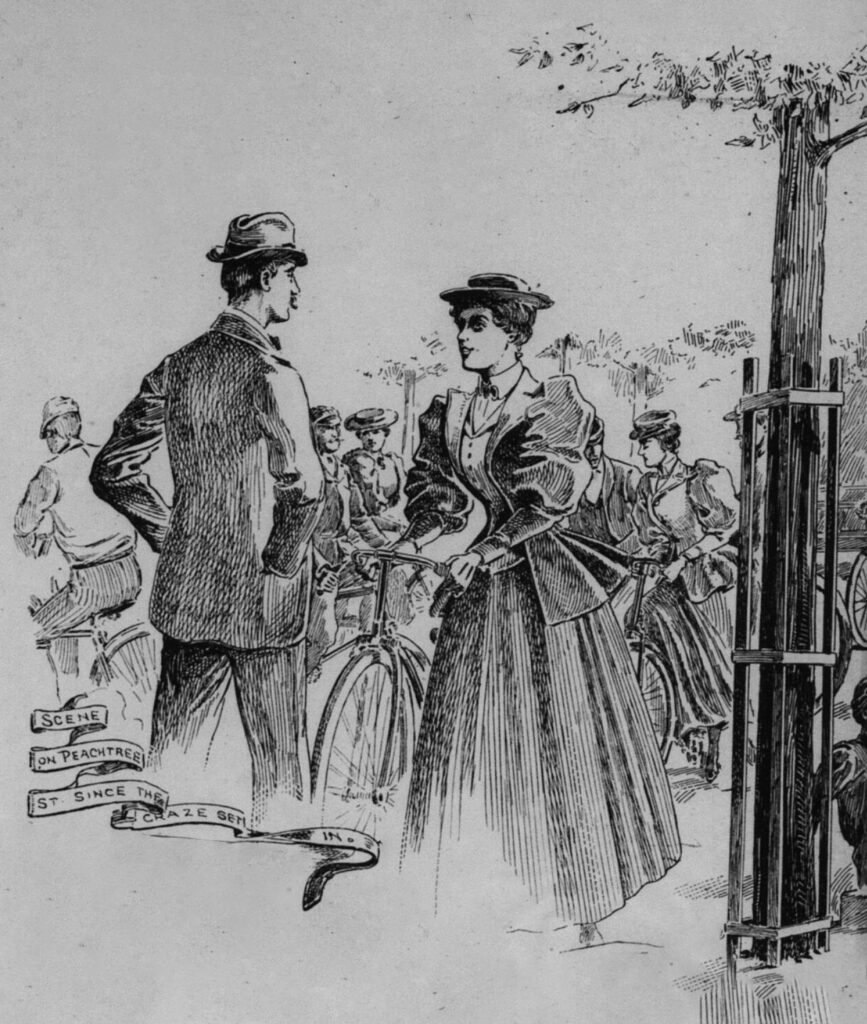
“That there is a prejudice against bloomers is not to be denied, but The Looking Glass begs to doubt whether it is a puritanical prejudice. The objection is not ethical it is aesthetic. Bloomers are unpopular and generally reviled, not because they are immoral, but because they are ugly. They are a clumsy and ineffectual compromise between the graceful, comfortable and artistic knickerbockers and the flapping skirt, and alike all compromises, reproduce the bad points of both extremes, without their redeeming qualities.
“A woman may be as shapely as Venus and as graceful as a fawn, but nothing will prevent her from looking like a guy the moment she thrusts her legs into a pair of meal sacks. A very loose nether garment, gathered in at the ankles, and superabundantly wide at the hips, is inherently grotesque, and neither youth nor beauty can save it from provoking a smile.”4
That’s right, your ancestors were whores and perverts, too.
Needless to say, the tone of the following article is quite tongue-in-cheek, and the pseudonymous writer, a.k.a. “The Spinster”, writes about the Atlanta “men who have long been given up as hopeless by even the most persistent of the managing mammas.”
Many of the “confirmed bachelors” listed here are also named in a somewhat similar article published in the Constitution two years earlier (see “Atlanta’s Attractive Prizes for Leap Year Girls“), and I suspect the writer of each was the same.
But of course, The Looking Glass was much more provocative, and this article may have been at least a partial outing of some of the city’s closeted gay men at the time — God knows Atlanta is still full of them.
Certainly, some of the phrasing here appears to be euphemistic: Jim Nutting is described as the most “impregnable man in bachelordom”, Hugh Boyd Adams is compared to an “old maid”, and Oscar Brown is said to be “one of the most incorrigible of the entire lot”.
As always, history provokes more questions than it provides answers.
ALL THE GIRLS GIVE ‘EM UP.
Atlanta’s Brigade of Confirmed Bachelors, Young and Old.
Men Who Are Useful in Society, but Who Have Long Since Ceased to Be an Object of Solicitude on the Part of Designing Mammas–An Interesting Roster.
I have noticed that the LOOKING GLASS has from time to time commented on the scarcity of marriages in Atlanta society and has suggested several reasons why this state of affairs exists. Chief among then, if I remember correctly, was the assertion that a majority of our young men look askance at matrimony because they are too poor to properly maintain a wife.
So far as this theory goes it is correct, but it does not entirely cover the ground. I have studied the situation carefully and have come to the conclusion that the idea of matrimony, aside from the necessary additional expense which it entails, is becoming more and more distasteful to society men. Each year the free-to-come-and-go life of the clubs absorbs more and more of our really eligible bachelors, and they are irreclaimably lost so far as the girls and their mammas are concerned.
One has only to look at the appalling list of openly avowed Atlanta bachelors–men who have long been given up as hopeless by even the most persistent of the managing mammas–to realize that I am right. Many of these men are entirely eligible, so far as money, good looks and intellect are concerned, but they are regarded as absolutely incorrigible. They dance attendance on the debutantes of each succeeding season, go to all the different functions and eat the dinners of anxious mammas–but they don’t marry. Neither does anyone expect them to marry; they have been in the swim for years and occupy a distinct place which they have made for themselves. However, such men are extremely useful members of society; they can always be depended upon to accept an invitation or keep an engagement, and they invariably put themselves out to make the debutantes have a good time.
Sam Hall was a typical specimen of the class of which I am speaking. He was seen everywhere, knew every one worth knowing, was an undoubted authority on matters of social import, and led a cotillion gracefully. But who ever seriously thought Sam would marry?
Another confirmed bachelor who has departed from our midst, and who has seen the alternate hope and despair of scores of girls, is Tom Paine. For a number of years he was regarded more or less seriously, and if half I hear is true, he had some very narrow escapes. But he was eventually given up as an irreclaimable, and all hopes of leading him to the altar were abandoned.
At present Jim Nutting enjoys the distinction of being the most impregnable man in bachelordom. Jim has been in society since the time when man’s memory runneth not to the contrary. He has seen scores of his old flames led to the alter, and even assisted in the capacity of best man; on many of these occasions he has stood godfather to countless infants, but if he ever allowed the idea of matrimony to cross his mind, he dismissed it immediately.
Bob Shedden has caused many a heart to beat high in anticipation of the momentous question, but the question was like the letter in the popular ballad–it never came.
Hugh Boyd Adams is another man who has taken the veil, and who would not exchange his home at the club for any consideration. He is as punctilious about his social obligations as an old maid, but if you suggested matrimony to him he would stamped like an untamed broncho at the approach of an express-train.
Godfrey L. Norrman is thoroughly wedded to his books and his artistic pursuits, and never gives marriage a second thought–at least, so he says.
Daniel Rountree has all but dropped out of society, and is applying himself to his profession to the exclusion of all other matters. He is young, rich and good-looking, but he is apt to die in single blessedness.
George Stearns is still young, but he is fast falling in line with the other confirmed bachelors and it is pretty safe to say that he will never marry.
Gordon Kiser is one of the few ideal society men we have left. He has made society a study, and devotes a good deal of time to it, but he is generally regarded as not at all likely to exchange his present contented existence for one beset with doubts and fears. The girls have counted him out of the running.
There was a time when John Ryan was the subject of a good deal of solicitation among enterprising mothers, but they have long since given up trying to hook him and have turned their attention to other directions.
Lieutenant Oscar Brown is an enthusiastic clubman and popular diner-out, but he is also one of the most incorrigible of the entire lot.
Our other confirmed bachelors might be catalogued thus: Harry English, Frank Orme, Charley Ryan, Robert Ryan, John J. Eagan, Fred J. Paxon, Lucius McClesky, Will Black, Peter Grant, Jack Slaton, Isham Daniel, Jim McKeldin, Reuben Hayden, Walter Kirkpatrick and Henderson Hallman.
The Spinster.7
References
- The Looking Glass (Atlanta), May 15, 1897, p. 9. ↩︎
- The Looking Glass (Atlanta), July 8, 1895, p. 9. ↩︎
- The Looking Glass (Atlanta), January 30, 1897, p. 8. ↩︎
- The Looking Glass (Atlanta), June 29, 1895. ↩︎
- The Looking Glass (Atlanta), February 27, 1897, p. 1. ↩︎
- “The Bicycle Craze Among Atlanta’s 400.” The Looking Glass (Atlanta), July 13, 1895. ↩︎
- “All the Girls Give ‘Em Up”. The Looking Glass (Atlanta), January 22, 1898, pp. 2-3. ↩︎