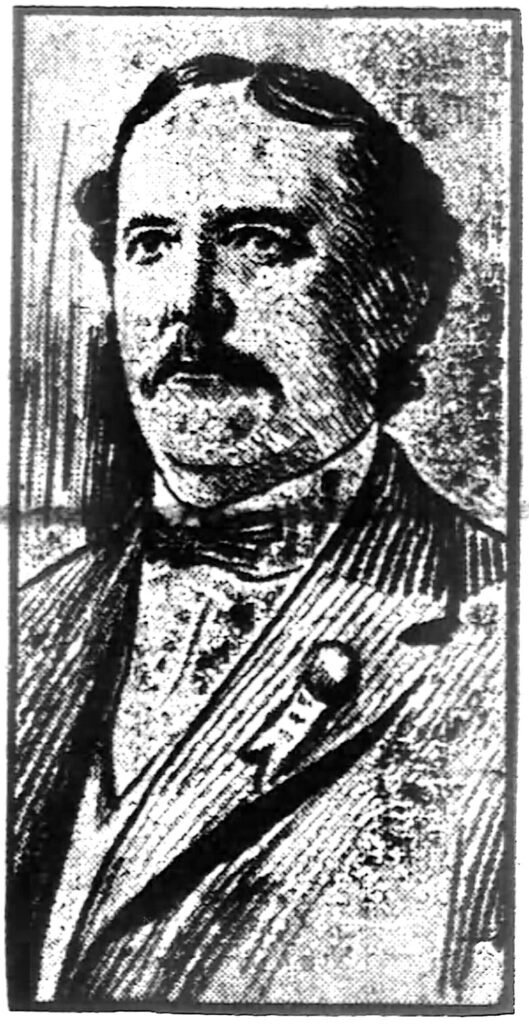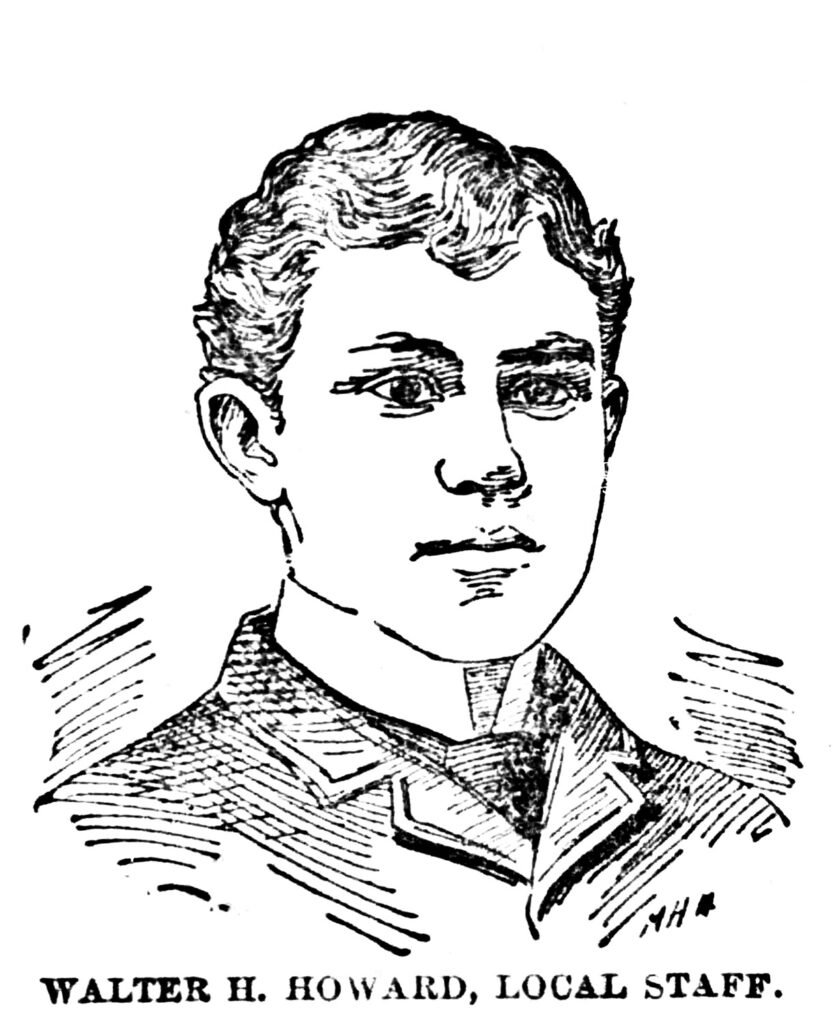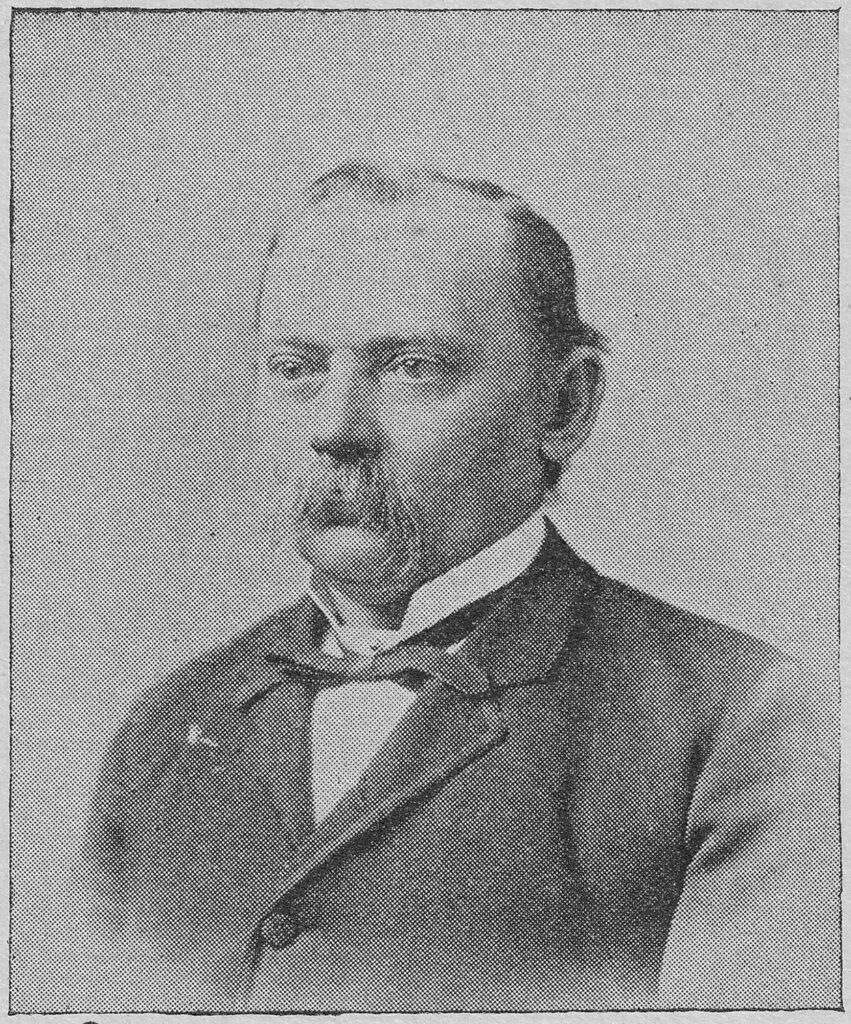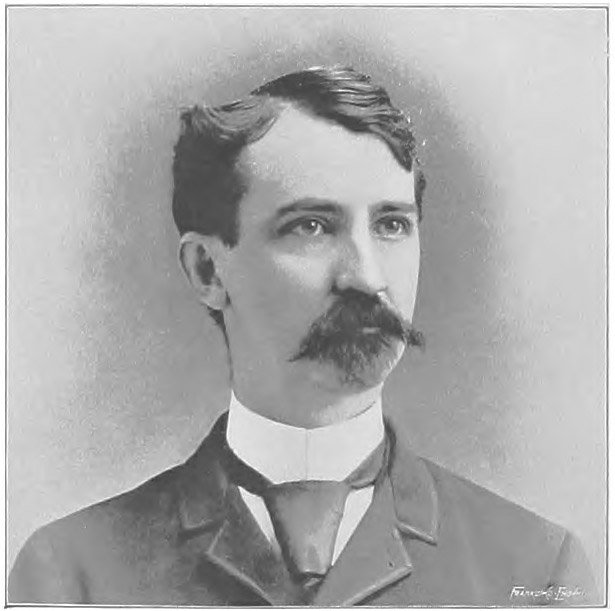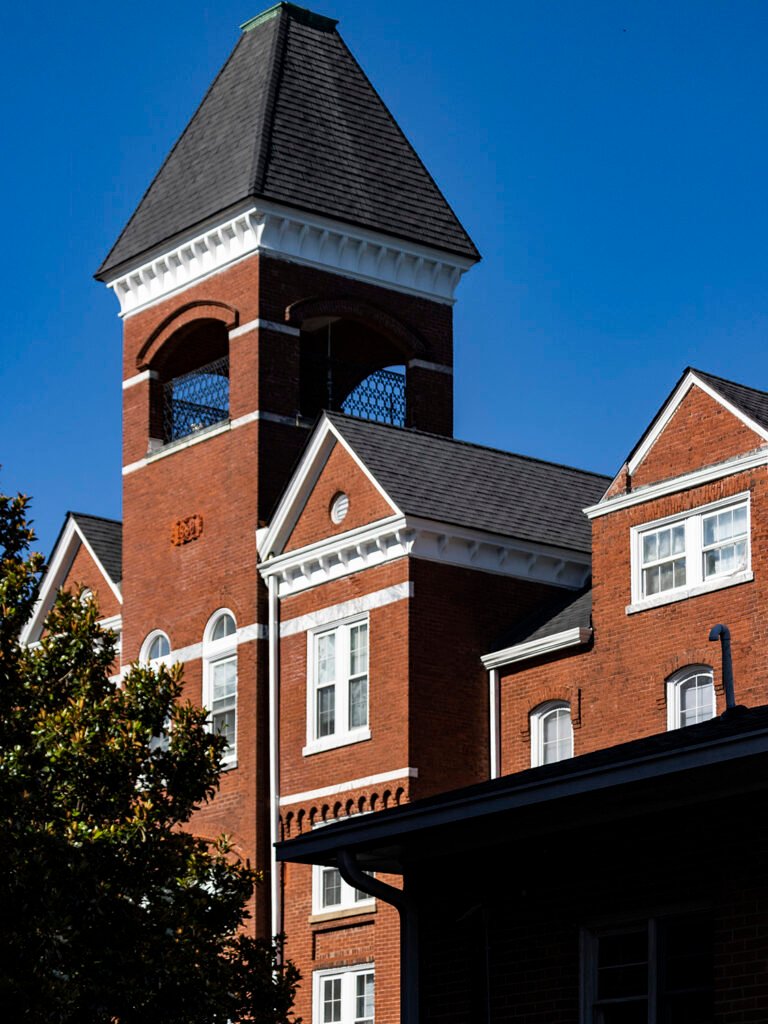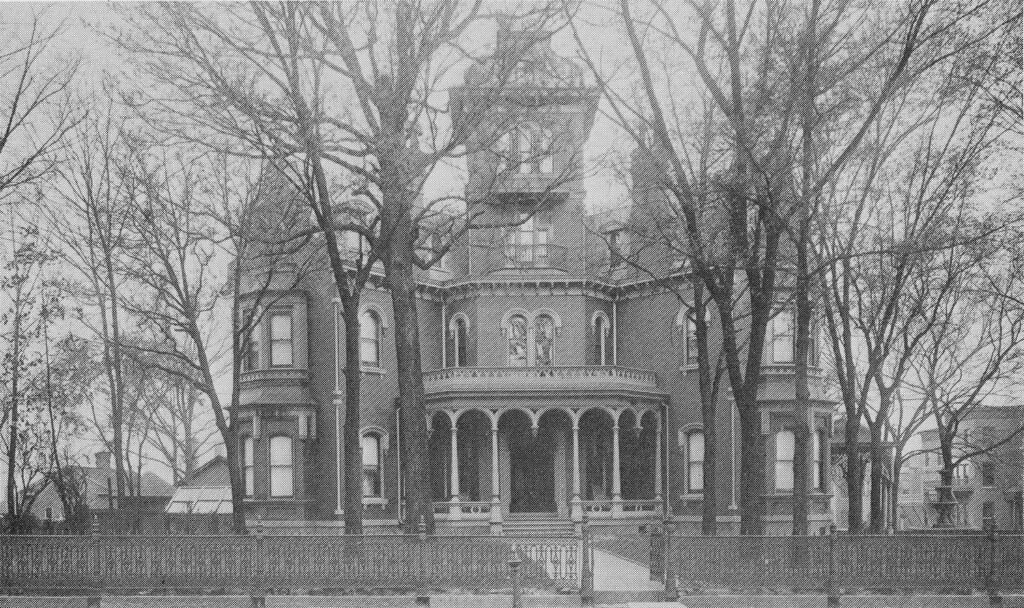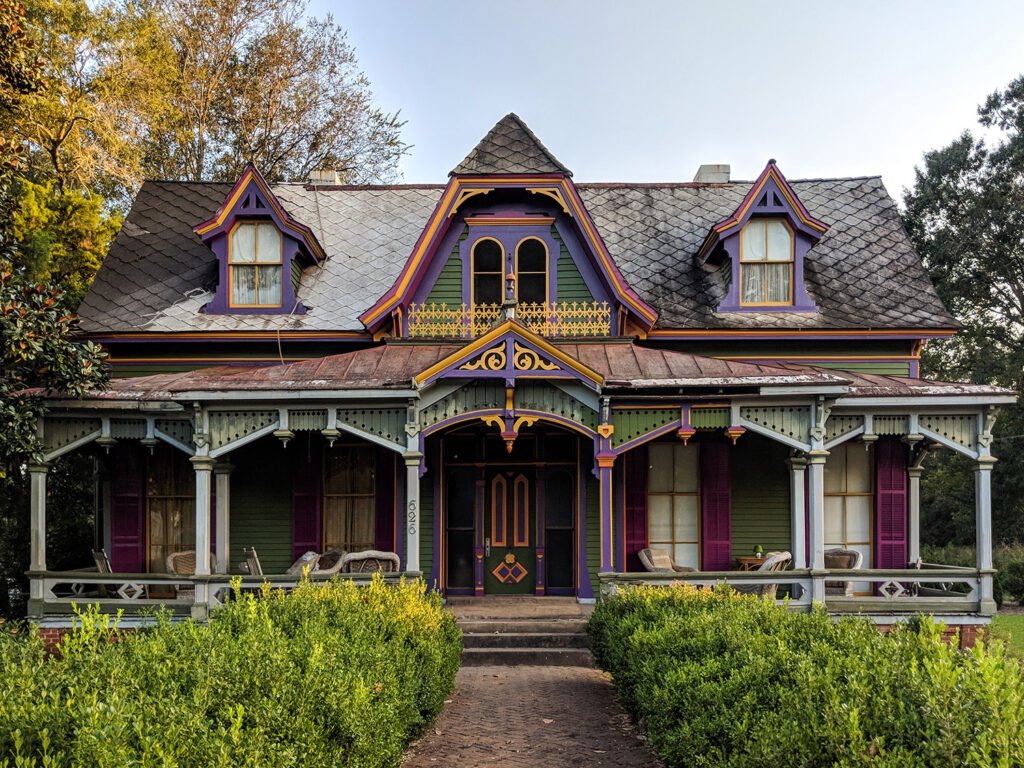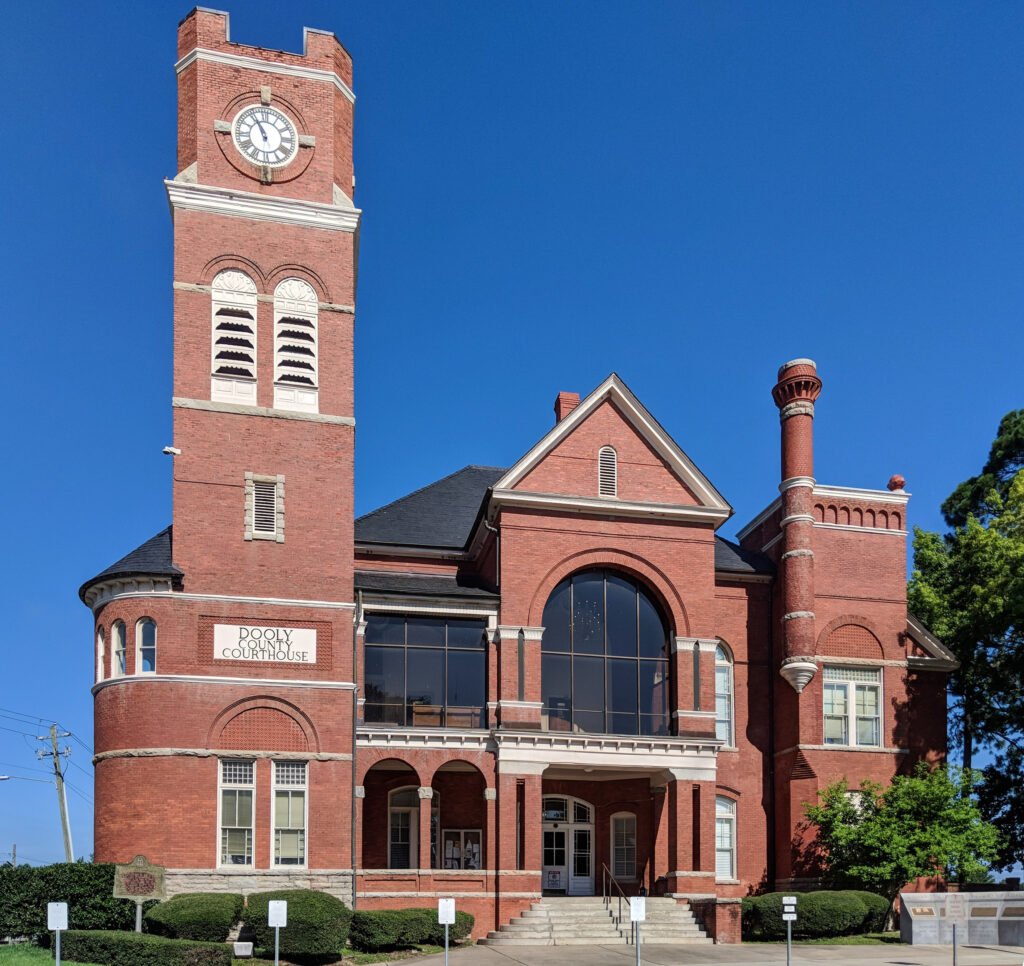
From left to right: Peter Grant, Jim Nutting, Oscar Brown, Lucius McCleskey
The Background
The following article, published in The Atlanta Constitution in 1896, named the city’s well-known “eligible bachelors” of the time — all white, of course — with accompanying illustrations.
The article’s conceit is based on an old Irish tradition called “Bachelor’s Day,” where women were allowed to propose to men on February 29, which typically occurs every 4 years.
As the article points out, however, the leap year was skipped in 1900, so the next opportunity would have been 8 years later, in 1904.
From left to right: Reuben Arnold, J.W. English, Jr., Fulton Coville, John M. Slaton
“The Atlanta maiden with half an eye for a good thing is reveling in the prospect,” the writer says of young ladies proposing to men — albeit in jest.
While restrictive attitudes toward women began loosening in the 1890s, it would have been considered highly improper — and was likely unheard of — for a woman to initiate a romance or marriage, particularly in the patriarchal stronghold of the Deep South.
“The idea of such a thing,” one woman shrieked to the reporter. “A woman never can make any advances to a man. I expect to be just as reserved as ever this year.”
From left to right: Isham Daniel, Thomas C. Erwin, Thos. B. Paine
You have to wonder how many of the men named here were closeted homosexuals, or which ones were frequent visitors to Atlanta’s red-light district. I could certainly hazard some guesses based on the pictures.
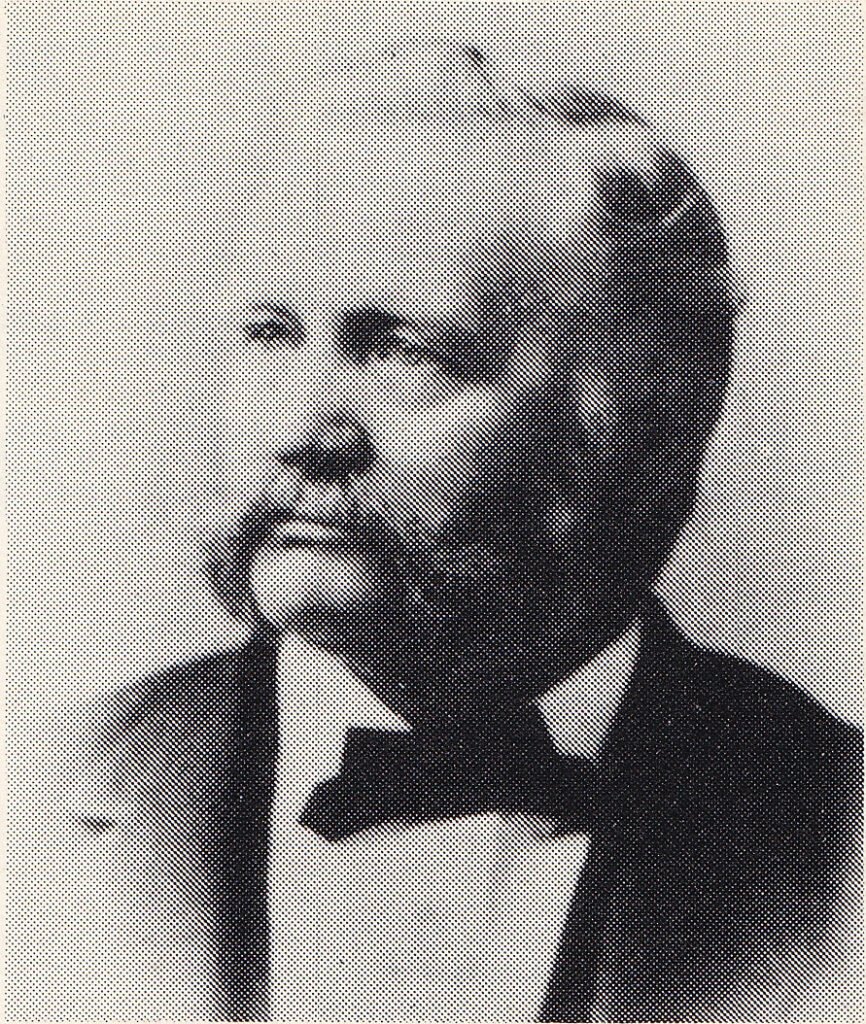
It’s also a little odd to see G.L. Norrman included in the list of eligible “young men”: he was 48 at the time and looked every day of it. Sorry, Godfrey.
From left to right: G.L. Norrman, Will H. Black, R.F. Shedden, A.E. Calhoun
This article is an odd, antiquated snapshot of an era whose traditions and values are so far removed from the current age that it’s almost baffling.
The writer (also a woman) frequently describes Atlanta’s “blushing bachelors” as “gallant” and “chivalrous”, and asks if a man is “obligated by chivalry to accept the offer of the first enamored maiden who throws herself at his feet?”
Her parting thought is that “…there are acres of younger men whose thoughts are just ripe for lovemaking.”
…It didn’t mean the same thing back then.
Atlanta’s Attractive Prizes for Leap Year Girls.
Splendid Gallery of Local Bachelors Who are the Legitimate Prey of Our Fair Maidens Who Feel Disposed to Take Advantage of the Year 1896.
Our blushing bachelors are in a state of modest agitation.
The timid ones are keeping themselves close, and the more coquettish and kittenish ones are giving themselves bewitching airs. They suspect the intentions of every pretty girl they meet and not wishing to inflict the pain of refusal not a few of them have had to discourage fair maiden suitors who have shown a decided preference for them.
How can they refuse the dear girls? Does leap year give man woman’s privilege of declining, or is he obligated by chivalry to accept the offer of the first enamored maiden who throws herself at his feet?
These unsettled questions are worrying our Atlanta bachelors and are responsible for much unhappiness among them.
For instance, Jack Slaton, one of the most charming of our local eligible, is in sore perturbation. Being a candidate, how can he refuse the young women? True, women cannot vote, but their influence upon those who do exercise the right of suffrage in this country is not inconsiderable.
Neither is Andy Calhoun enjoying his usual quiet.
“How can a fellow tell a girl that he loves another?” said he. “I wish next year was leap year.”
These gentlemen represent two sample instances of the feeling of unrest among our bachelors. Others are no less disturbed. Conscious of their charms they cannot see how it is possible for them to survive through the year and retain their gallantry. If they would be so fortunate–or unfortunate–as to pull through the year, they would enter upon the coming twelve months with reputations greatly impaired, and they would be cut and tabooed on every side.
The Atlanta maiden with half an eye for a good thing is reveling in the prospect. A fine field is before her. Eligibles of every kind and description are at hand. The bald-headed bachelor who has weathered many seasons and passed through more than one leap year unscathed, and who has never yet been melted into tenderness is plentiful. The younger eligible with less experience but not less invulnerability to women’s charms, but who are not without those engaging charms that make a man valuable in a woman’s eyes is also numerous in this city. Then the younger and fresher ones–the social yearlings–with neither experience nor power of resistance, impressionable youths with an eye for beauty and heart for love–there are armies of these–each waiting for some capturing maiden to come and bear him away. The spectacle must fairly dazzle the eyes of our Atlanta girls. Whole acres of young men, legitimate and desirable prey for pleading and matrimonially inclined young women–what a picture to delight the fancy!
The field is too full of eligibles. Too many of our young men stand as monuments to the philosophy that it is better to live alone than risk the heart in the chances of a modern love affair.
Just a glance at the list:
Fulton Coville, who is bravely and gallantly facing the leap year possibilities.
Judge John Berry, who, too chivalrous to reject a lady, has gone to Florida to escape offers, until his court will convene and occupy all his time.
Jim McKeldin, who never having been refused and never having refused, does not know how to say “no,” and belongs to the first comer.
Isham Daniel, who waits for leap year as a poet waits for spring, in the faith that it will some day bring him a prize.
Thomas B. Paine, who would as leave be captured leap year as any other time.
Andy Calhoun, who is in mortal fear that he will have to say “no” before the month of roses comes and sets him free. He is seriously thinking of putting an explanatory badge on himself to save himself and the young ladies’ embarrassment.
Will Black, who sees no reason why a young woman shouldn’t tell a man so if she loves him.
Hugh McKeldin, who, too modest to press his own claims upon the fairer portion of humanity, fondly hopes that the year will not pass without throwing some appreciative angel in his pathway.
James W. English, Jr., who is such a strong admirer of the other sex that he deems himself fortunate when they smile upon him–leap year or at any other time.
R.F. Shedden, who would like to know how the young woman would put the question.
Hugh Adams, whose popularity during ordinary years is so great as to make him the center of attack during the leap year.
Jim Nutting, who has such a general admiration and regard for the sex that he would gladly accept the first claimant.
Peter Grant, who will either learn to say “no” or be captured early in the year.
G.L. Norrman, who would refuse a lady nothing–not even his hand.
Lieutenant Oscar Brown, who was fighting Indians all through last leap year and is immensely pleased at the thought of what this year may bring him.
And a host of others. There are Lucius McClesky, Percy Adams, Alex Hull, Victor Smith, Preston Arkwright, Jack Slaton, Charles E. Harmon, Thomas C. Erwin, Frank Orme, Howell Peeples and an innumerable company of other attractive young men.
There’s a romance in every name. Each separate man is waiting for the right woman. They are not cynics and they are not certain but that leap year will settle the question for them. Some of them are rather inclined to encourage the leap year girl. Others are less courageous. They are afraid to risk themselves in the hands of a pleading woman.
There can be no prophesying as to the result of the year among our young men and young maidens. Early in the year–before the year begun, in fact–some of the young men put out the report that they were engaged. They industriously caused this rumor to gain circulation, hoping thereby to shut off the applicants for their hands. But the reports have been exploded and the young men stand convicted of base deception, deception in a cause in which there should be nothing but open and frank dealing. The young women have sworn to make the year a bitter one for these young men. The young women know they guilty offenders and they will make the suffer. The men may wreak a deadly vengeance themselves, however, by accepting some lovely suitor and insisting upon carrying the engagement to its culmination.
But on the whole the young men are not averse to leap-year love making. Be it said to their credit, they keenly enjoy the outlook. Most of them have rather put themselves in the way than out of the way of love making. If the young women want to propose they cannot complain that the young men have given them no opportunity. Nearly all of the young men have kept up their calls with the old regularity.
Jim McKeldin says the signs are propitious for a good year for the bachelors.
“I will not furnish any picture for publication,” he stated to The Constitution last week when called on, “because I do not wish it to gain too wide a circulation during leap year.”
The shrewd young women of two states are vieing [sic] with each other in their efforts to capture him. Tennessee and Georgia both want him and he says it’s a toss up between the two states as to chances at present.
Victor Smith is modest. He believes that all things–even proposals–come to him who waits, and while he has not been waiting as long as many of our eligible gentlemen, he hopes that the year will not be entirely unfruitful in a matrimonial way.
Then, there’s Mr. Harman–Charley Harman–whom the ladies all admire. He escaped the past two leap years through some miracle of misfortune which he alone can explain. The young ladies will not let him pass through this without severe trials. They are organized against him and the married ladies unwilling to see such a charming fellow in single harness, are in league with the younger ones. A steady and well-organized siege is to be laid to the heart of the able railroader and good fellow, and there’s not a doubt that he will surrender before the year ends.
And Tom Erwin–best of good fellows. Atlanta young women are too sensible to allow him to escape. If he is too busy running a bank to propose himself during the years that the privilege belongs exclusively to the men, the young ladies will not allow him to evade this year. He’s a marked man among the young ladies. It’s a question which one reaches him first and makes the strongest plea.
“Jim English is lovely,” exclaimed one of Atlanta’s fairest belles last week. “He’s such a good business man above all men. If I make any proposal this year it’ll be to him.”
And so I might go on ad infinitum. There are many that I have not mentioned but who the young ladies have their eyes on. They will not escape and only a lack of space prevents their mention here.
There is quite an array of young men. There are Joe Brown, Otis Smith, George Parrott, Mays Ball, Roger Elliott, Ulrich Atkinson, Harry Stearnes, Will Kiser, Quill Orme, ‘Gene Black, Alf Prescott, Walter Kilpatrick, Dr. Roy and many, many more. These young men, too, are legitimate prey for the leap year girls, and it is safe to prophesy that not a few of them will fall victims to the witchery of some maiden.
And the young women–what do they think about it.
The fairer portion of Atlanta has never yet settled the question whether it is quite the proper thing for them to propose. They say it is tradition, nothing more.
“I don’t suppose any nice girl even proposed to a man,” said one of Atlanta’s fairest maidens the other day. “The idea of such a thing. A woman never can make any advances to a man. I expect to be just as reserved as ever this year.”
And this idea seems all to prevalent. If the women will not exercise their privileges they have only themselves to blame. It is their right to make love to the men this year and the men, like Barkis, are willing. It is the woman’s fault if there is no lovemaking.
To the backward ones I would suggest that this opportunity will not occur again in eight years. The closing of the century cuts the dear girls out of one leap year, and it will be eight long summers before another chance will come to the women to make love to the men. So the young women had best look to their opportunities and improve them.’
A survey of the field here in Atlanta will show at a casual glance that the fair maidens have plenty of excellent timber to choose from. There is a fine army of eligible bachelors, pining and aching for the love and sympathy of some tender soul, and there are acres of younger men whose thoughts are just ripe for lovemaking.1
References
“Atlanta’s Attractive Prizes for Leap Year Girls”. The Atlanta Constitution, March 8, 1896, p. 4. ↩︎
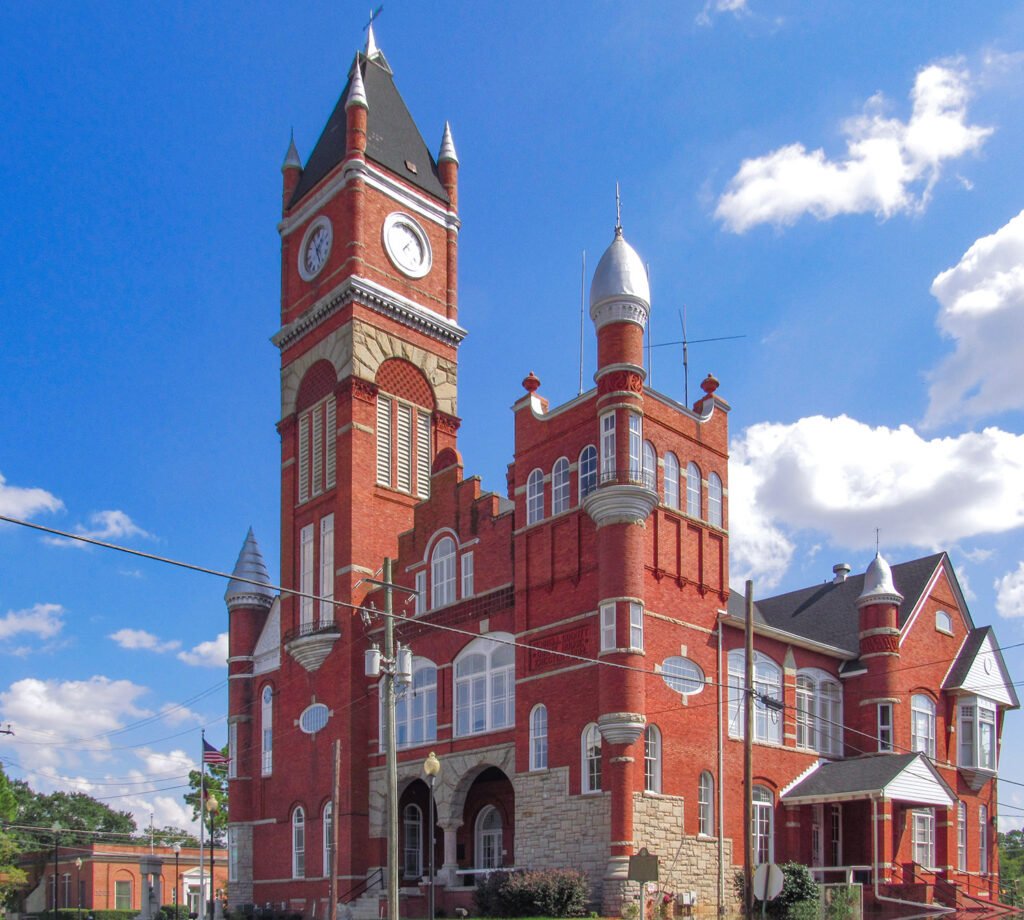
Bruce & Morgan. Butts County Courthouse (1898). Jackson, Georgia.123East elevation of Butts County CourthouseNortheast corner of Butts County Courthouse
References
“Notice to Contractors.” The Atlanta Constitution, June 8, 1897, p. 11. ↩︎
“Butts’ New Courthouse.” The Atlanta Constitution, September 14, 1897, p. 5. ↩︎
Henri Jova of Jova Busby Daniels. Carnegie Pavilion (1997). Hardy Ivy Park, Atlanta.1
Atlanta is typically willy-nilly when it comes to the persistent destruction of its own history, but occasionally, some brave preservationists can snatch a few scraps from the rubble for posterity.
Such was the case in 1977, when the city’s Carnegie Library, built in 1902, was demolished for the Central Library. However, a local architect, A. Burnham Cooper, convinced the city to save the building’s marble facade, carefully dismantling and numbering the pieces before they were dumped at the Old Atlanta Prison Farm.2
Ackerman & Ross with J.H. Dinwiddie and Bleckley & Tyler.345Carnegie Library (1902, demolished 1977). Atlanta. Illustration from an undated postcard published by the Albertype Co.
In the lead-up to the 1996 Olympics, when Atlanta was desperately trying to sell itself as a city with a legitimate cultural legacy — failing quite spectacularly, I might add — the idea was hatched to dust off the old library columns to form a centerpiece for Downtown’s new Hardy Ivy Park.6
South elevation of Carnegie Pavilion
Tapped for the project was Henri Jova, one of Atlanta’s better 20th-century architects, who designed this fine Postmodern structure from the 8 bays of the historic building’s Beaux-Arts facade.
The project wasn’t completed in time for the Olympics,7 but instead debuted the following spring,8 and today it stands as one of the few distinctive public monuments in the city.
East elevation ofCarnegie PavilionNorth elevation of Carnegie PavilionWest elevation of Carnegie PavilionSouth elevation of Carnegie PavilionFrieze on the south elevation of Carnegie PavilionFrieze on the west elevation of Carnegie PavilionFloor of Carnegie Pavilion
References
“Carnegie Pavilion dedicated”. The Atlanta Journal, April 10, 1997, p. B6. ↩︎
Fox, Catherine. “Building on History”. The Atlanta Journal-Constitution, January 26, 1996, p. E1. ↩︎
“Carnegie Library Commission Awarded To Ackerman & Ross”. The Atlanta Constitution, December 23, 1899, p. 1. ↩︎
“Will Begin Work Next Week”. The Atlanta Constitution, May 8, 1900, p. 12. ↩︎
“Local Talent Is Secured”. The Atlanta Constitution, February 22, 1902, p. 7. ↩︎
John C. Portman ofEdwards & Portman. Atrium of Regency Hyatt House Hotel (1967). Peachtree Center, Atlanta.12
“The most exciting hotel on earth is open now in Atlanta,” proclaimed ads for the Regency Hyatt House (later Hyatt Regency Atlanta) in May 1967. 3
That wasn’t an exaggeration — when it first debuted, the fantastic Space-Age design of the Hyatt’s 22-story atrium was considered groundbreaking, and brought more press attention to Atlanta than the city had received in decades.
Seemingly overnight, the status of the hotel’s designer, John Portman (1924-2017), was elevated from that of a run-of-the-mill Atlanta architect to an internationally recognized architect, developer, and urban planner — whether that reputation was deserved is another matter.
View of the original atrium design of the Regency Hyatt Hotel. Atlanta. Photograph from an undated postcard published by GA Scenic South Co., of Pell City, Alabama.
As a product of Atlanta, Portman was, more than anything, a shameless self-promoter, and for years, he was widely credited as the inventor of the atrium hotel concept, which couldn’t be further from the truth.
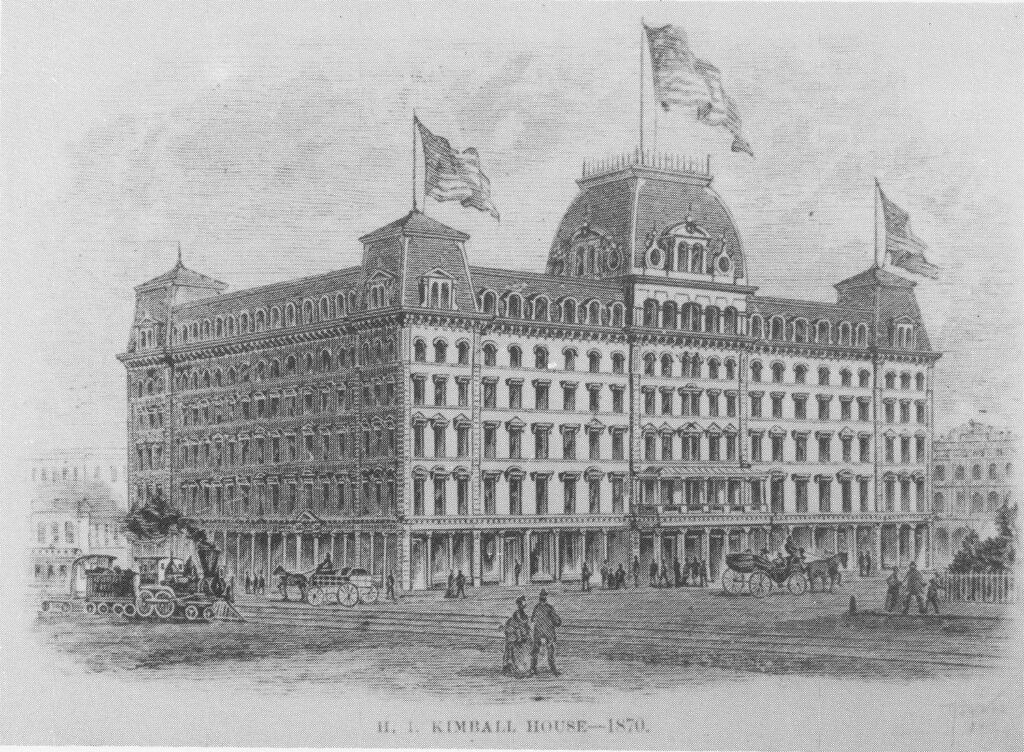
Atlanta’s own Kimball House Hotel, designed by L.B. Wheeler and completed in 1885, was centered around a 7-story central atrium,4 a concept G.L. Norrman replicated at a smaller scale in both the Printup Hotel in Gadsden, Alabama, and the Windsor Hotel in Americus, Georgia.
The Windsor, incidentally, is the oldest-surviving atrium hotel in the United States, having opened two months before Denver’s Brown Palace Hotel,56 which was also built around an atrium.
I’ll give Portman this much: he redefined the atrium concept for the 20th century, and the Hyatt was the first modern atrium hotel when it debuted, but that was 60 years ago — it’s not so modern now.
Looking down at the atrium of Hyatt Regency Atlanta(altered)
When I visited Atlanta for the first time at the age of 9, I saw the Hyatt atrium while most of its original 1960s elements were still intact. As a child, it was a revelatory experience: I was instantly obsessed with Portman’s designs and determined to someday move to Atlanta to become an architect.
Then I grew up.
My assessment of Portman’s work has drastically changed with age and experience: his narcissistic, inward-facing designs that shunned the urban environment have permanently maimed Downtown Atlanta, and his prioritization of spectacle and bullshit over substance and service is all too typical of the city’s hollow nature.
Portman’s reputation in the United States diminished from the 1980s onward, and like many of the 20th-century American architects who were much-hailed in their time, his work is being rapidly — and justly — forgotten.
Looking up at the atrium of Hyatt Regency Atlanta
Atlanta gave lip service to Portman’s legacy in his later years, even as many of his works in the city were either demolished or gutted of their original character — the Hyatt among them. The hotel’s atrium is now a bland, sterile shell of its former self, and the uninformed visitor would never guess it was once considered revolutionary.
Ironically, other cities have done a better job of preserving Portman’s work than his own hometown. San Francisco’s Embarcadero Center and Hyatt Regency, for instance, still retain their original flavor.
But in Atlanta’s relentless drive to be the newest and best — and it never succeeds at either — the city’s developers compulsively destroy every shred of fabric that even hints of being old.
Portman was among the worst offenders in that regard, so it’s only fitting that his work, too, is now being dismantled. No loss, really.
References
Portman, John C., and Barnett, Jonathan. The Architect As Developer. New York: McGraw-Hill (1976). ↩︎
“Regency Opens a Showplace”. The Atlanta Journal and The Atlanta Constitution, June 25, 1967, 3-R. ↩︎
Advertisement. The Atlanta Journal, May 30, 1967, p. 5-A. ↩︎
“The New H.L. Kimball”. The Atlanta Constitution, May 1, 1885, p. 1. ↩︎
Morgan & Dillon. All Saints’ Episcopal Church. Midtown, Atlanta.12
References
“History of All Saints’ Parish and Church Just Complete”. The Atlanta Constitution, April 8, 1906, p. 2. ↩︎
“All Saints’ Episcopal Church Will Be Formally Opened This Morning With Beautiful And Impressive Service”. The Atlanta Journal, April 8, 1906, p. S1. ↩︎
A.C. Bruce of Bruce & Morgan. Walnut Street Christian Church (1886-1976). Chattanooga, Tennessee.1
The Background
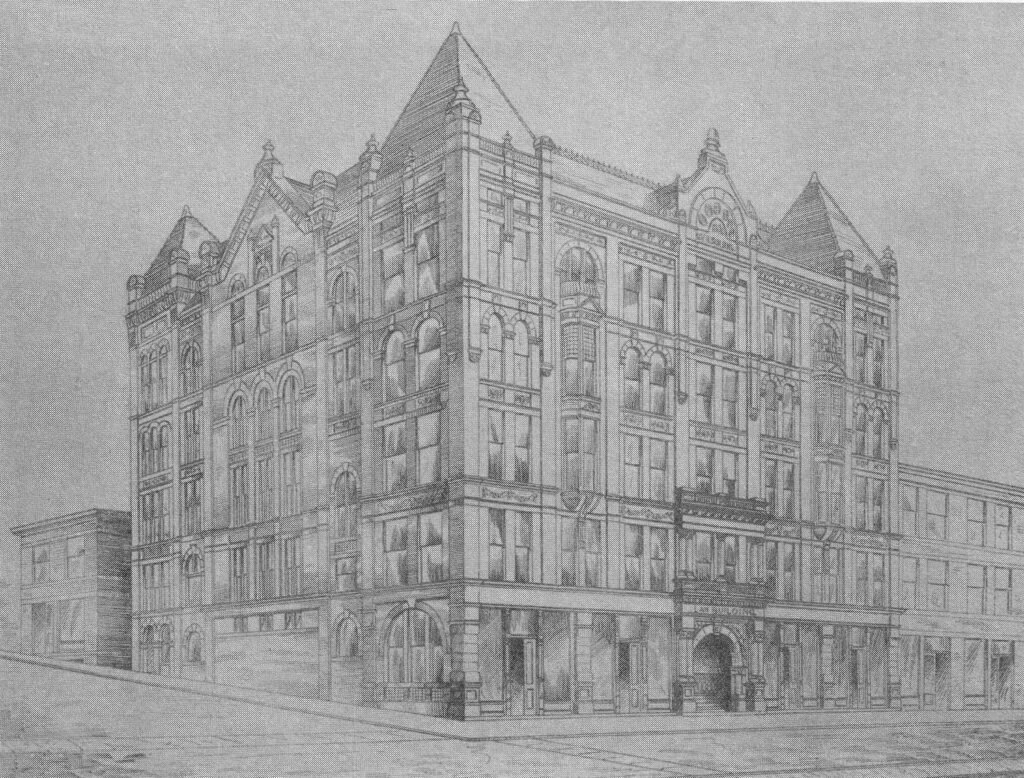
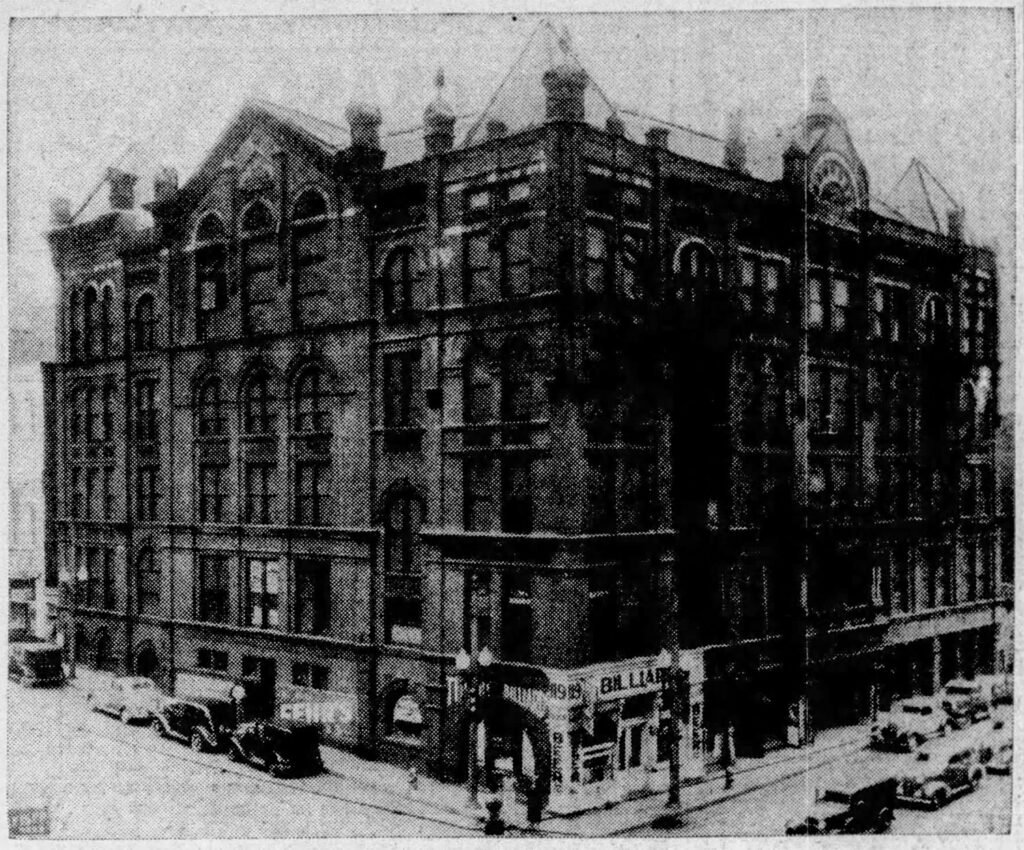
The following article waspublished in TheChattanooga Daily Times and details the plan and construction of the Walnut Street Christian Church in Chattanooga, Tennessee, built in 1886 and designed byA.C. Bruceof Bruce & Morgan. The building was demolished circa 1976.
Bruce was raised in Nashville, Tennessee, and began his practice in Knoxville, Tennessee. When he later partnered with T.H. Morgan in Atlanta, the firm continued to secure considerable work throughout eastern Tennessee, including, as the article notes, Chattanooga’s Hamilton County Courthouse and First Presbyterian Church, both demolished.
Location of Walnut Street Christian Church
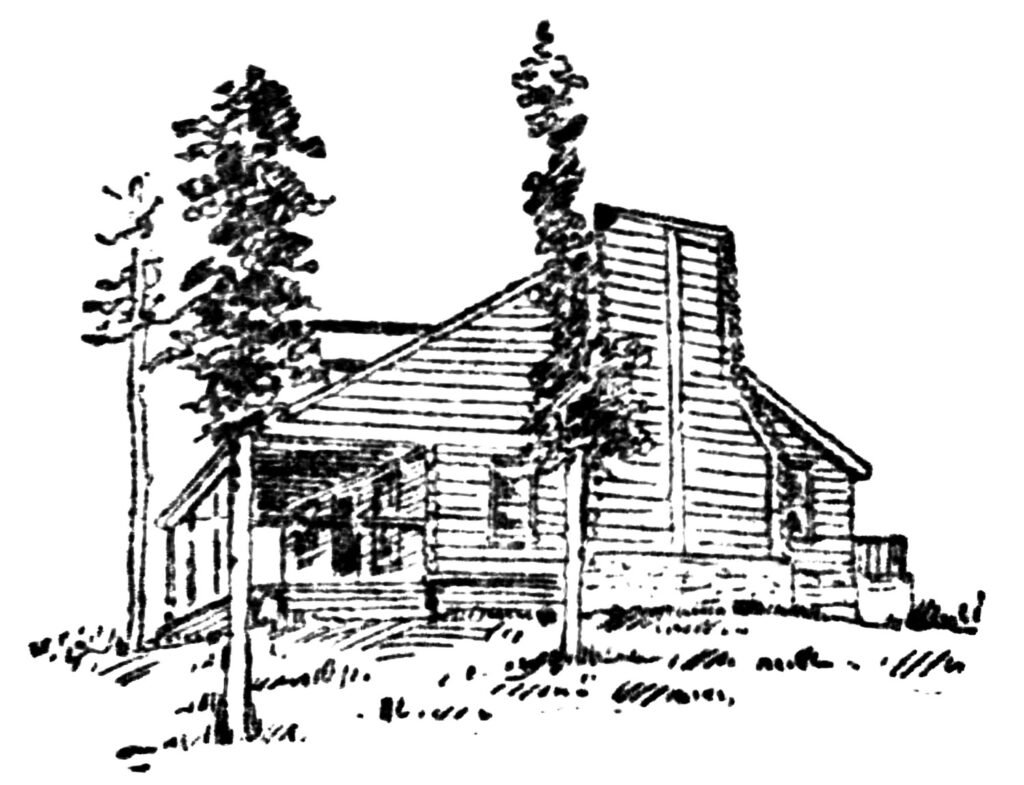
The design of the tidy Gothic-style church, shown in the illustration above, is typical of Bruce, who consistently struggled to balance solids and voids in his compositions. Note that the doors and windows appear just a little too large for the overall massing: Bruce frequently drew doors and windows out of scale.
The Walnut Street Christian Church occupied this building until 1910, when the congregation moved half a block to the former First Presbyterian Church, becoming Central Christian Church.23
The old Christian Church building was then sold to the local chapter of the Knights of Pythias organization, who converted it into a meeting hall.4 Based on fire maps, the structure’s original 85-foot-high steeple5 was removed at some point,6 likely during this renovation.
In 1923, the building was sold again to the neighboring Newell Sanitarium,7 which converted it into a 10-room annex circa 1925.8 It appears the former church — altered at least twice — remained at 709 Walnut Street9 until the construction of the neighboring Downtown General Hospital, which opened in July 1976.10 The hospital’s parking lot replaced the building.
I won’t lie: This is a dead-boring article that reads a lot like those Old Testament books with endless lists of names and dry histories — the ones Christians pretend to read, if they read the Bible at all.
To make it easier to find, I’ve highlighted the portion about the building’s design in tasteful lavender. You’re welcome.
The New Christian Church to be Dedicated Today.
Handsome Brick Structure on Walnut Street Between Seventh and Eighth Streets.
History Of The Church.
Its Organization, Struggles, Work and Final Great Success–Full Roster of the Membership
During the winter of 1879, A. Teachout of Cleveland, O., came to this city to spend some months, and being an earnest Christian, he sought out some men and women of his own “faith and order,” and induced them to engage with him in an effort to begin the work in this city which has culminated in their house today, and the happy and memorable occasion which will there be celebrated. Among this little band who were brave enough to make such a beginning, may be mentioned Lucius DeLong and wife, N.P. Nail, R.S. Kendrick and wife, and W.C. Carter and wife.
Arrangements were made by them to invite Dr. W.H. Hopson, of Louisville, Ky., to preach a series of sermons in this city. Accordingly Dr. Hopson came and preached for about a week in the old Southern Methodist church, which stood at the corner of Eighth and Market, where Loveman’s new building stands. Dr. Hopson concluded his services in James Hall. In some respects, this was a notable meeting. Large crowds waited upon the preaching and the immediate results were ten accessions by obedience of the gospel: Bradford Post and wife, Fred H. Phillips, B.H. Ferguson and wife, James Nichols, Mrs. Webb and three others.
Before leaving the city Dr. Hopson effected a temporary organization and A. Teachout was appointed Elder of the church. From the time of organization regular meeting were held in a hall or other place within their reach. The worship of God has therefore been steadily maintained ever since.
THE SUNDAY SCHOOL
was established about 1878. Probably its first Superintendent was Weston F. Burch, of Missouri,–a man of rare worth never to be forgotten by those who knew him. His successors in that office have W.C. Carter, G.B. Woolworth, R. W. Andrews and the present incumbent, D.W. Chase, who has brought the school to unprecedented prosperity.
The school undertook to pay for the eight stained windows in the auditorium and will succeed. The children and the teachers of the school have paid to the building fund about $400 during the past two years besides paying their own current expenses and are ready to be among the first today to make pledge for liquidating the indebtedness. There is also a lively Mission Sunday School under the care of Charles Caldwell and Charles R. McCall, which has started during the last spring, which will bear its share of the responsibility.
THE PREACHERS
who have served the church have been A. Allison, Geo. W. Abell, J.R. Biggs, F.M. Hawkins, Dr. A.G. Thomas, A.S. Johnson, D.T. Beck and T.D. Butler. In a brief history such as this aims to be, many names which are entitled to honorable mention are likely to be overlooked. This is unavoidable and should not be construed by partial friends as intentional.
The local organization of the Christian Womens’ Board of Mission, which has done a large share of the work of raising money for this new house, as it had done for the very eligible lot upon which it stands, is largely due to Mrs. G.B. Woodworth for its establishment and successful management, though no year of its existence has been crowned with such prosperity as the present, under the active and indefatigable Presidency of Mrs. Eva Wilkinson.
The following have served the church as its Elders: A. Teachont [sic], N.P. Nail, B. Post, L.S. Barret, Isaac Strickle and G.B. Woodworth.
The Deacons have been: L. DeLong, Fred H. Phillips, S.J. Graham, Jno. A. Graham, A.B. Phillips, W.T. Lucas, J.R. Hays, R.W. Andrews, B. Post and Geo. B. Woodworth and D.W. Chase.
Up to the 1st of September, 1884, much had been done by this active and devoted people. They had secured the lot they now occupied and nearly paid for it, and they had made an appeal to the Home Missionary Society of the church in America to help them to sustain regular preaching. An arrangement was completed by which their present pastor, T.D. Butler, came among them, and the work at once began to advance vigorously. The new house, which is to be opened today, was started, and a systematic series of operations pursued by which financial help was received. To this end Mr. Butler has traveled much in Tennessee, Kentucky, Ohio, Indiana, Illinois and Missouri, and has raised nearly $2,500 in cash, and has secured loans to the amount of $1,500 on safe and advantageous terms. In addition to this, the spiritual needs of the church have been amply supplied, and more than a hundred members added to the membership. The lot furnishes only a narrow margin beyond the walls, but the house stands 75×50 feet, with a first-class basement. Here are two rows of graceful iron columns, supported by a substantial footing of stone, and thes [sic] in turn adequately support the floor of the auditorium. We reach the main room by spacious steps, which lead into a vestibule of ample size, having a door on the right which opens into the pastor’s room–as on the left you pass into the gallery above, which has a capacity of nearly 100 people–or below into the commodious school and prayer meeting room. The auditorium is furnished with neat pews from the Excelsior Furniture Co., Cincinnati, O., and cathedral glass windows from the Robert Mitchell Furniture House, Cincinnati. Beneath the rostrum is a baptistery [sic], with all the modern appliances, and on either side are the robing rooms to be used by candidates for baptism and for other purposes. On the whole this is one of the neatest, best furnished and most convenient churches in the city.
The plans and specifications for this church were generously donated by A.C. Bruce, Esq., of Bruce & Morgan, Architects, Atlanta, Ga.–the architect of the court house and the First Presbyterian church.
THE CONTRACTORS.
Stone work, Trout & Coxon; brick work, J.F. Wright; slate and galvanized iron, J.C. Banks & Co.; roof and tower, R.D. Whitice; carpenter work, W.M. Cosby and R.W. Andrews; gas fitters, Lookout Plumbing Company and plumbing by H.A. McQuade.
The building committee has been Isaac Strickle, D.W. Chase, G.B. Woodworth, R.W. Andrews, W.M. Cosby and John A. Graham.
The Trustees are Lucius Delong, President; D.W. Chase, Secretary and Treasurer; Bradford Post, G.B. Woodworth, M.M. Caldwell.
The present organization of the church is: Thomas D. Butler, Pastor; Official Board, G.B. Woodworth, Chairman; B. Post, D.W. Chase, John A. Graham, A. B. Phillips, W.M. Cosby, L. DeLong, G.M. King, J.T. Lynn.
[LIST OF CHURCH MEMBERS — too long and boring to repeat here.]11
References
“The New Christian Church to be Dedicated Today.” The Chattanooga Daily Times (Chattanooga, Tennessee), August 8, 1886, p. 8. ↩︎
“Dr. Boswell In His New Pulpit”. The Chattanooga News (Chattanooga, Tennessee), January 3, 1910, p. 2. ↩︎
“Reasons For Their Faith”. The Chattanooga Daily Times (Chattanooga, Tennessee), January 3, 1910, p. 3. ↩︎
“New Home Of Keystone Lodge”. The Chattanooga News (Chattanooga, Tennessee), January 8, 1910, Magazine Section, p. 4. ↩︎
This small commercial building on the southeast corner of Edgewood Avenue and Courtland Street in Downtown Atlanta would have been demolished long ago if it hadn’t served briefly as the first Coca-Cola bottling plant in the city. For that reason, the structure was designatedas a National Historic Landmark in 1983.1
Located at 125 Edgewood Avenue SE, the property is rare in Atlanta for maintaining the same numeric address for its entire existence. Local historians have long claimed the building was constructed in either 1890, 1891, or 1892. However, it’s well documented that the structure was built in 1889 and occupied in January 189023 — Atlanta is appallingly ignorant of its own history.
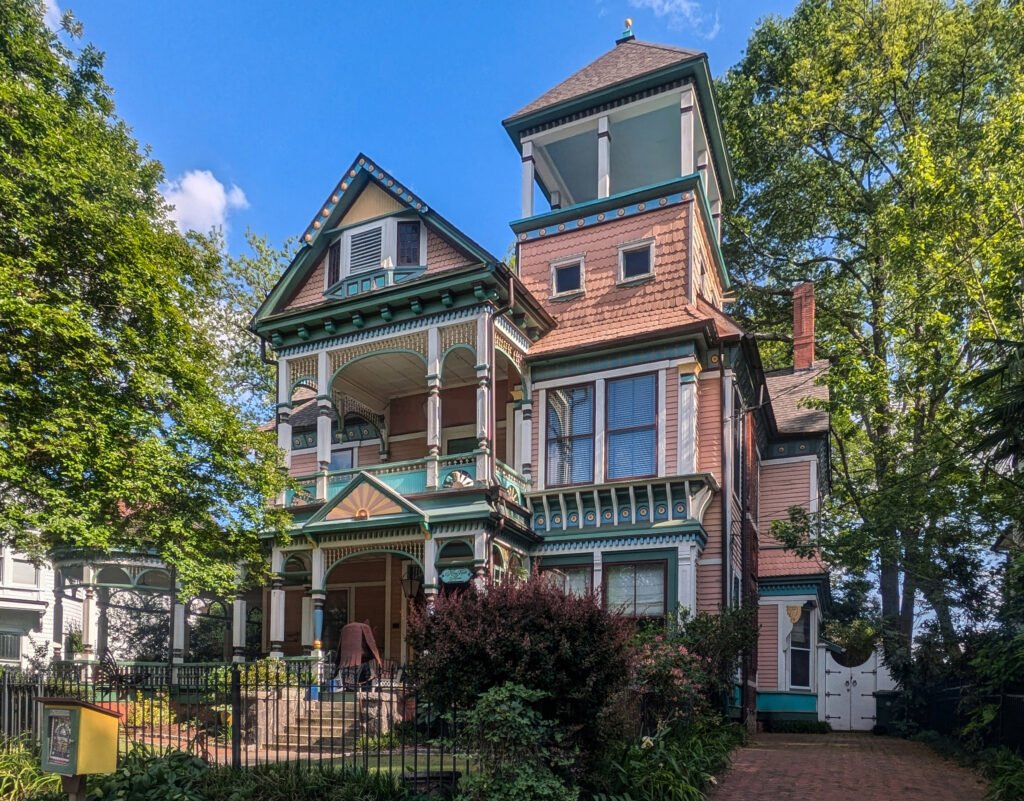
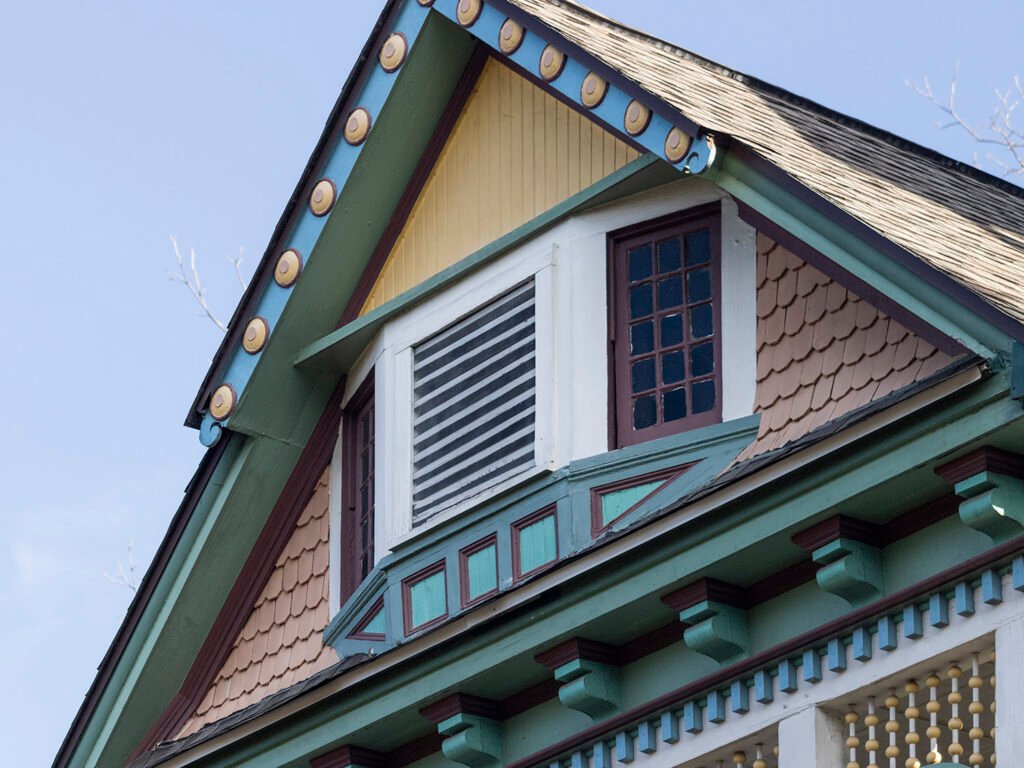
The building consists of two floors over a full basement,45 and is eclectically styled, incorporating Romanesque and Queen Anne elements. The exterior is covered in red brick with light granite trim, and the interior encompasses less than 6,000 square feet. While the architect is not officially known, all evidence indicates that G.L. Norrman was the designer.
The Design
Anyone with an eye for his work would quickly observe that the overall design and massing of 125 Edgewood Avenue are characteristic of Norrman, and many specific elements also suggest his involvement:
The oval window in the north gable was used by Norrman in multiple projects around the same time, including the Samuel McGowan House (1889) in Abbeville, South Carolina; the Atlanta & Edgewood Street Railway Shed (1889) and 897Edgewood Avenue (1890) in Inman Park, and most notably, the nearby Exchange Building (1889, pictured below).
Chimneys with tapered tops were a trademark element of Norrman’s in the 1880s and 1890s, and the same chimney designs were used in his 1889 plan for the H.M. Potts House (demolished) in Atlanta’s West End.
The central chimneystack on the north side of the building serves as a focal point to visually balance the elevation’s two incongruent halves — this was a common technique used by Norrman in his compositions.
A terracotta scroll bracket on the central chimneystack is of the same design as those used in Norrman’s designs for the Windsor Hotel (1892) in Americus, Georgia, and the Edgewood Avenue Grammar School (1892) in Atlanta.
The stepped gables on the north and west sides of the building were incorporated in Norrman’s design for the nearby Exchange Building and later used on the Windsor Hotel.
The Romanesque granite column on the northwest corner of the ground floor is a smaller version of one used in Norrman’s design for the Printup Hotel (1888) in Gadsden, Alabama.
The porch on the west side of the building uses the same posts with curved brackets seen in Norrman’s design for the E.A. Hawkins House (1890) in Americus, Georgia, and the house at 897 Edgewood Avenue in Inman Park.
The fish-scale shingles used in both the turret and balcony were incorporated into Norrman’s designs for the McGowan House, and the T.P. Ivy House (1895) in Atlanta, among others.
The most obvious design clue is the square turret on the building’s northwest corner, which is a duplicate of one Norrman used in the H.M. Potts House the same year.6
G.L. Norrman. H.M. Potts House(1889, demolished). West End, Atlanta.7
The Background
The building at 125 Edgewood Avenue was one of at least three commercial spec structures built along Edgewood Avenue by Joel Hurt‘s East Atlanta Land Company — it appears Norrman designed all of them.
Norrman was a preferred architect for Hurt in the late 1880s and early 1890s, with four confirmed projects for Hurt’s companies and family, and four additional structures that can be attributed to him. He was also one of the opening-day tenants in Hurt’s Equitable Building (completed in 1892 and demolished in 1971), occupying a suite of offices on the top floor.8
The full list of Norrman’s completed projects for the Hurt companies and family follows:
Exchange Building, completed 18899 and demolished 19391011 – intersection of Edgewood Avenue and Gilmer Street, Atlanta [Map]
Commercial building, completed 1892 and demolished 1939 – 161-165 Edgewood Avenue, SW corner of Edgewood and Piedmont Avenues, Atlanta [Map] – design attributed to Norrman
Three spec houses for the East Atlanta Land Company
Thomas W. Latham House, completed 1889 – 804 Edgewood Avenue NE; Inman Park, Atlanta [Map]
Edgewood Avenue House, completed 1890 – 897 Edgewood Avenue NE; Inman Park, Atlanta [Map]
Euclid Avenue House, completed 1890 – 882 Euclid Avenue, Inman Park, Atlanta [Map]
Atlanta & Edgewood Street Railway Shed, completed 1889 – 963 Edgewood Avenue NE; Inman Park, Atlanta [Map] – design attributed to Norrman
C. D. Hurt House, completed 1893 – 36 Delta Place; Inman Park, Atlanta [Map] – design attributed to Norrman
G.L. Norrman. Exchange Building (1889, demolished 1938). Atlanta.12
The Beginning of Edgewood Avenue
The East Atlanta Land Company created Edgewood Avenue to serve as the main artery from Atlanta’s commercial districtto the company’s suburban residential development, Inman Park.13
Joel Hurt was, by all accounts, a miserable bastard. He was also filthy rich, so of course, he felt entitled to receive whatever he wanted, running to the local press — often his sympathetic friends at TheAtlanta Constitution — to whine petulantly when local leaders didn’t bow to his incessant demands.
In 1886, Hurt and his associates began pestering the city council to widen and extend an existing road called Foster Street,1415161718 which ran from Atlanta’s Calhoun Street (later Piedmont Avenue) to the foot of Hurt’s 75-acre property near the Air-Line Railroad (later Belt Line Railroad).
Hurt also wanted the city to extend Foster Street from Calhoun Street westward to Ivy Street (later Peachtree Center Avenue), connecting it with another thoroughfare called Line Street (later Hurt Plaza), ending at the Five Points intersection in the center of the city.
Part of what made the scheme so contentious was that Hurt demandedthe city of Atlanta use eminent domain to remove homes and buildings along the route.
The city council initially rebuffed Hurt’s proposal in June 1886,19 but mysteriously reversed course and approved it in August 1886.2021 Hurt formed the East Atlanta Land Company the following year, with the expressed intention of developing his 75-acre estate and “building a street car line down Foster Street to the Boulevard and on through this suburban property.”22
Hurt’s demands for the project kept growing, and following nearly two years of discussion and revisions, the City of Atlanta and the East Atlanta Land Company finally settled on a deal, the details of which are too tedious to elaborate on.
Ultimately, both parties funded the construction of the street, while Hurt agreed to give ownership to the city, which, in turn, agreed to condemn any property or building along the route that Hurt’s company couldn’t purchase or remove through its own negotiations with property owners.232425262728
As the project was underway, Foster Street was renamed Edgewood Avenue, which the Constitution described as “A Pretty Street with a Pretty Name…And the Men Who Made It Are Also Very Pretty, Etc. Etc.”29 So much for objective journalism.
It should come as no surprise that the area cleared for Edgewood Avenue was largely inhabited by poor and Black residents, a foreshadowing of Atlanta’s widespread clearance of low-income areas for freeways in the 1950s and 60s, the largest act of wholesale destruction in the city’s history (no, it wasn’t Sherman).
For their part, local newspapers had nothing but praise for Hurt’s project. In 1888, the Constitution predictably gushed:
“The objectionable houses that stood on Line Street have been torn down and now Edgewood avenue runs over the very spot where they once stood. The tearing down of these old houses and removing them from the heart of the city is an act the city should thank the company for.”31
“Objectionable houses,” incidentally, was a polite euphemism for brothels.
The Macon Telegraph was a little more explicit, explaining that the brick houses on Line Street “were once notorious resorts”, and that “the inmates [have] been required to move on to Collins Street” (later Courtland Street),32 which became Atlanta’s red-light district.
In a speech from September 1888, Hurt revealed the extent of the clearance:
“We have conducted negotiations with one hundred and thirty two property owners … it has been necessary to condemn the properties of about thirty parties. It has been necessary to move ninety buildings…We have destroyed $70,000 worth of brick and stone buildings alone.”33
Buried in the same speech was the following note:
“There are four properties of private individuals and one of the Atlanta street railroad company, extending slightly in the street, and at these points work has been delayed because of legal difficulties.”34
If Hurt’s description feels conveniently sanitized, a lawsuit filed by a property owner on Edgewood Avenue hints at the true contentious nature of the project.
In September 1888, Dennis F. O’Sullivan sued the East Atlanta Land Company for its seizure and destruction of his property on Edgewood Avenue.35 O’Sullivan alleged that the company “took forcible possession of [his] premises, moved two of his houses a considerable distance…and then filled in a strip of land…making it higher than the other part of his property, so that water collects there as in a basin.”
O’Sullivan additionally sued the City of Atlanta, because he claimed that he was “prevented by interfering from the police.” Cops defending monied interests? Shocker.
By the time Edgewood Avenue formally opened on September 26, 1888,36 the East Atlanta Land Company owned most of the property along the 2-mile route, which was accurately described as “the only perfectly straight street of any length in the city,”37 running from Five Points to Inman Park.
Hurt’s Atlanta & Edgewood Street Railroad Company (better known as the A&E) became the first electric street railway in Georgia when it debuted on August 22, 1889.38 Running on double tracks, the “new-fangled street car”39 glided at a cool 18 miles per hour40 along Edgewood Avenue, which city workers finished paving with Belgian block just four days earlier.41
North elevation of 125 Edgewood Avenue
Construction and History
Two weeks before the trolley’s debut, the building permit for 125 Edgewood Avenue was issued in early August 1889, with construction supervised by B.R. Padgett,42 a prolific contractor who in later years marketed himself as an architect (he wasn’t). Construction on the projectwas swift, with only four months from the date the permit was issued to the building’s opening.
Joel Hurt regularly employed convict labor in his civic projects, and chain gangs loaned by Fulton County were used in the construction of Edgewood Avenue.43 However, Hurt’s nearby Exchange Building was built with paid day labor,44 and 125 Edgewood was likely completed in the same manner.
Even if convicts didn’t work on the building, its distinctive red-clay bricks were almost certainly manufactured by the Chattahoochee Brick Company near Atlanta, which also ran on forced prison labor.45
OpenHouse
Hanye Grocery Companywas 125 Edgewood’s first tenant, opening on the ground floor in January 1890. Advertising itself as “The Prettiest Store and most Complete Grocery House in the South”, and “the finest this side of Baltimore, without any exaggeration”, the store purportedly offered “the finest fancy and domestic goods”.46
The store’s owner was R.M. Hanye, who moved his grocery business from a smaller space on Decatur Street. “I cordially invite the ladies to visit my grocery in the magnificent new brick building…”, Hanye proclaimed in newspaper ads.47
The new store was described as “palatial” by The Atlanta Journal, which noted the “three handsome double entrances” and marveled that “A person can enter the door at one end of the store and walk to the other end, taking a good view of the entire stock, and come out at the further entrance on the same street (Edgewood avenue.)”48
Unique for Atlanta, the building was designed so that the business proprietor could reside in the residential space above the store, accessed from Courtland Street by the porch built halfway between the first and second floors.
The concept even received national attention: An 1890 article in Architecture and Building mentioned Norrman’s similar design for the nearby Exchange Building, reporting, “A novel scheme for utilizing a triangular corner lot was evolved by Mr. Norrman, giving two residences over a store.”49
In 125 Edgewood, it appears the second-floor living space consisted of two large rooms and a bathroom, which were quickly divided into one-room apartments, based on a description in a 1896 advertisement.50 According to city directories from 1890 and 1891, Hanye both lived and worked in the building,5152 although future tenants in the retail space lived off-site.
The Hanye Grocery Company was officially incorporated in July 1890,53 with Joel Hurt listed as one of the owners.54A hand-painted sign advertising the grocery is still faintly visible on the east side of the building, although it has long outlasted the business.
R.M. Hanye sign on the east elevation of 125 Edgewood Avenue
In 1891, the Hanye Grocery Company reincorporated itself — without Hanye or Hurt — as the Atlanta Grocery Company,55 which closed by 1893, replaced by Hosch & Son grocers.56 In 1894, the space was occupied by yet another grocery, operated by Mrs. F.A. Holleran.57
From 1895 to 1898, 125 Edgewood Avenue housed Star Grocery, operated by John M. Waddill,585960 and in 1895, the building also briefly contained a photography studio operated by Hugh Schmidt.6162 In 1899, the building was vacant.63
The essential problem with the building’s location was already apparent in 1890, when Hanye’s ads stressed that his store was “Only three minutes’ ride on the Atlanta and Edgewood electric cars.”64It wassimply too far from the heart of Atlanta’s commercial district, primarily centered 3 blocks west at the intersection of Whitehall, Decatur, and Marietta Streets.
The East Atlanta Land Company clearly hoped that the building’s tenants would capture the business of trolley riders shuttling to and from Inman Park, yet, despite a wide-scale promotional blitz, early home sales in Inman Park were anemic.
Many of the giant spec houses planned by Atlanta’s leading architects sat empty for years or were rented out before Inman Park was swallowed up by the encroaching city and filled with smaller, cheaper homes in the early 20th century.
Peachtree Street remained the preferred address of the city’s elite for at least 20 years after Inman Park’s opening, and for the old-money families of Atlanta (whatever that meant in a 53-year-old city), the suburb could only have been viewed as a gauche, far-out enclave for the nouveau riche.
Stepped gable on the north elevation of 125 Edgewood Avenue
The Coca-Cola Year
Beginning circa April 1900,65the Dixie Coca-Cola Bottling Company occupied 125 Edgewood for about 8 months, a tenancy so short-lived that the company’s presence isn’t even listed in city directories from the time, although newspaper classified ads confirm it.
One such ad requested: “Three boys about 17 to do rough light work; must be hustlers and willing to work cheap.”66 No comment necessary.
Typical of most Atlanta enterprises, Coca-Cola’s origins are shady and convoluted, but the product first debuted in 1886 as a medicinal tonic at Jacobs’ Pharmacy on Marietta Street, and steadily gained regional and national popularity as an alternative to alcohol when Atlanta and other cities began dabbling in prohibition. “The proper use of it will make a drunken man sober,” the ever-truthful Constitution claimed.67
In 1898, Coca-Cola opened new headquarters one block east of 125 Edgewood Avenue at the intersection of Edgewood and College Street (later named Coca-Cola Place), with a 3-story brick building designed by Bruce & Morgan and owned by the East Atlanta Land Company. 68697071
An important distinction to make is that it wasn’t the Coca-Cola Company that operated from 125 Edgewood Avenue, but an entirely separate bottling company licensed to distribute Coca-Cola’s product in the Southeast.72
Contrary to Coke’s corporate mythmaking, the company has long been a stodgy, insular, and conservative entity with a flair for empty self-promotion — not unlike Atlanta itself. In Coca-Cola’s early years, the beverage could only be purchased at soda fountains, and the company’s president, Asa G. Candler, didn’t see the value in bottling his product.
In 1899, Candler reluctantly agreed to grant bottling rights to J.B. Whitehead and B.F. Thomas, who subsequently established the Dixie Coca-Cola Bottling Company to distribute the soda throughout the Southeast. Starting their first bottling plant in Chattanooga, Tennessee, the men then opened a second plant at 125 Edgewood in Atlanta.73
In 1900, Coca-Cola reportedly sold 51,147 gallons in Atlanta 74 — that appears to be separate from the product bottled at 125 Edgewood, and it’s unclear how much was distributed from the building, but it couldn’t have been substantial. The plant’s output was limited by the size of its marketing territory, which was reportedly measured by how far a mule team could travel in a day.75
By January 1901, the Dixie Coca-Cola plant vacated 125 Edgewood and moved to 35 Ivy Street.76
In truth, Coke’s connection with 125 Edgewood is barely worth noting, but Atlanta has destroyed so much of its history that it has to cling to whatever remnants it can to pretend it has a cultural legacy beyond hype, moneymaking, and oppression.
After Coca-Cola
It’s also unclear when the East Atlanta Land Company sold 125 Edgewood, but with the failure of Inman Park and other projects, coupled with the severe financial depression of the mid-to-late 1890s, the company shed its assets in multiple auctions over the next decade.
Hurt seemingly lost interest in the company as he threw his energy and attention into the management of the Atlanta Consolidated Street Railway Company, formed in 1891 by the merger of the A&E and 5 other street railway companies,7778 as well as the establishment that same year of the bank that would become the Trust Company of Georgia.79
The East Atlanta Land Company auctioned off the bulk of its Edgewood Avenue commercial property in 1903 80818283— including its property on Exchange Place and the Coca-Cola headquarters84 — followed by a final sale of its remaining assets in 1906.8586878889 It appears that 125 Edgewood was likely sold in 1903, as the property wasn’t listed in the 1906 auction.90
Looking at 125 Edgewood Avenue from the northeast
For the next 20 years, 125 Edgewood hosted a revolving door of short-lived businesses:
In December 1901, a grocery store operated by a man named Charles with the last name of either Charalambedis, Charalambitis,91or Charalampe92 declared bankruptcy, selling a “stock of groceries and fixtures…including counters, show cases, and two soda founts…”93
In May 1902, an entirely different grocery store, operated by I. Goldberg, also declared bankruptcy, selling its stock of “staple and fancy groceries fresh and in good condition, show cases, computing scales, coffee mill and other fixtures usually belonging to such business”.94
In 1903, the space was occupied by L.C. Johnson and Company, described as “retail grocers and restaurant”.95
In 1904, a cigar business owned by Henry I. Palmer was listed at the address.96
In October 1904, a drug store at the location went into receivership, selling off “one stock of drugs and fixtures, stock bottles and show cases, one soda fount and all attachments; also one carbonator, filler, and Crown machine, almost new”. The store was advertised as “A splendid opportunity for a live young man.”97
A drug store operated by George C. Mizell operated at the address in 1905.98
In 1906, the ground floor of the building was occupied by Central Pharmacy, with Virgil A. Jones, a barber, on the second floor.99 In January 1906, a “12-syrup soda fount, A1 condition, cheap, if sold at once”, was advertised at the address.100
Central Pharmacy was still in business in 1907, operated by Henry F. Askam, although the barber shop was replaced by a “pressing club” operated by John R. Thomason.101
By 1908, Central Pharmacy had become the Askam & Alford pharmacy, operated by Askam with N.E. Alford.102 The business was again called Central Pharmacy in 1909.103
In 1909, J.B. Peyton applied for a transfer of a near-beer license at the address from J. Bigler.104 Georgia enacted Prohibition in 1907, so saloons at the time only served non-alcoholic beverages. Ahem.
Peyton’s saloon was still in operation in 1910, occupying the ground floor,105 but Peyton transferred the license to George N. Weekes in December 1910.106 That year, the top-floor apartment was occupied by two men: James Lindsey and William T. Culbreath.107
In 1911, the structure was owned by the Adair family’s local real estate empire, and a building permit was issued for $220 in fire damage repair.108
In 1912, the building housed another saloon, operated by William T. Murray.109
From 1913 to 1916, a saloon and pool room operated by Louis Silverman was located in the building,110111112113
In 1917, the Turman & Calhoun real estate company advertised the building’s “clean storeroom”, noting it was “within three minutes of Peachtree”.114
Directories from 1918 list the building space as vacant,115 but by August of that year, the building housed the Atlanta Screen and Cabinet Works, owned by J.W. Biggers.116
In 1920 and 1921, the space was occupied by a dry goods store operated by Harris Roughlin.117118
In 1922, the Mazliah & Cohen dry goods store operated in the space,119 and by 1923, it had been replaced with a dry goods store owned by Joe Horwitz.120
In 1924, a “well-established millinery business” at the address was listed for sale.121
Ground floor window on the northeast corner of 125 Edgewood Avenue
The Briscoe-Morgan Murder-Suicide
The ground-floor space at 125 Edgewood was occupied by B. and B. Clothing Company122 — a store owned by J.W. Biggers of Atlanta Screen and Cabinet Works fame — when it was the scene of a murder-suicide in 1924.123124
On August 7, 1924, Fannie Briscoe, a 36-year-old saleswoman at the business, was shot to death by W.R.L. Morgan, a 52-year-old insurance salesman who had reportedly been in a relationship with Briscoe. Immediately after killing her, Morgan turned the pistol around and shot himself in the head, “falling dead at Mrs. Briscoe’s feet.”125
The scene was witnessed by a man repairing his tire outside the store, who reported that Briscoe screamed “Don’t do that! Don’t do that” in the moments before she was killed.126
Newspapers at the time described a typical Atlanta romance: Briscoe had divorced her first husband and was separated from her second when she began a relationship with Morgan. The two “became infatuated with each other” and lived together in an apartment on Pryor Street, but had recently broken up.127
A police investigator explained that “Morgan’s mind seemed to have become somewhat unbalanced following this separation and he became deeply depressed at times.”128
Three letters found in Morgan’s pocket addressed various aspects of post-mortem business, with such tedious and clichéd phrasing as: “I am tired of life. The world has gone back on me.”
Apparently fond of morose prose, Morgan left another letter in his apartment, in which he moaned: “Fannie Briscoe is the cause of it all. I can’t stand the way she has done me. That’s all. Good by to all.”129
Even in death, Atlantans are narcissistic and boring.
Stepped gable on the west elevation of 125 Edgewood Avenue
Crime and Seediness
Early claims that Edgewood Avenue would “attract the rich and fashionable to live upon it”130 were pure Atlanta bullshit, and while never a prestige address, it’s clear that 125 Edgewood quickly became just as seedy and crime-ridden as the properties demolished for the street’s construction a few years earlier.
Recall that in 1889, the “inmates” of the former Line Street had simply been pushed over to Courtland Street, so of course, the location was destined to draw an unsavory element.
In October 1906, the building’s second floor was raided by police for housing an illegal gambling establishment. Twelve men were arrested during a game of poker,131 in which “it was found necessary to break in one or two doors”, according to the Journal, which added: “it is said that Sergeant Lanford swung a sledge hammer like a veteran blacksmith.”132
In 1916, Louis Silverman, the proprietor of a pool room and saloon in the building, was ordered to appear in court for allowing minors to play,133 apparently leading to the closure of the business.
In 1924, less than a month after the murder-suicide, the B. and B. Clothing Company was robbed of a satin dress.134
In 1925, the space housed a store operated by Morris Jackson, which was robbed in an overnight burglary that resulted in the loss of 15 dozen pairs of hosiery, 13 shirts, 12 pairs of suspenders, and 23 necklaces.135
In September 1928, the building was occupied by the Atlas Dry Goods Store when it was robbed again — this time of 20 dresses. 136 Three months later, the store’s “show window” was smashed in during an overnight robbery attempt.137
One 1982 article from the Constitution said of the property: “There is even evidence to suggest that, at one down-at-the-heels juncture in its past, the second story was a house of ill repute disguised as a boarding home.”138 The mind boggles.
Squared corner turret on 125 Edgewood Avenue
Occupants in the Mid-20th Century
Following the 1924 murder-suicide, 125 Edgewood hosted a few more short-lived businesses, although occupancy at the location stabilized through mid-century:
In October 1925, a “candy kitchen, fully equipped” was auctioned off at the location.139
In December 1925, a restaurant owned byO.G. Hughes operated from the building, where his 2-year old son was severely scalded by a pot of boiling water.140141
The Warner Heating and Plumbing Company operated from the building, circa 1930-1936.142143
A shop selling “sandwiches and drinks, doing nice business” with “low rent” was advertised in the Business Opportunities section of theConstitution classifieds in 1935.144
The Shepard Decorating Company was owned by Virgil W. Shepard, who bought the building from the Metropolitan Life Insurance Company in 1939145 and operated the business at the location until 1951.146147148
Brown Radio Sales & Service, a Philco dealership, operated at 125 Edgewood from 1952 to 1969.149150
Ground floor window on the north side of 125 Edgewood Avenue
Reassessment
After years of neglect, in 1966,151the Atlanta Baptist Association purchased 125 Edgewoodwith plans to demolish it, but when Georgia State University identified the property as one it intended to include in its campus expansion plans, the organization instead kept the building to sell to the university.152
While it waited for Georgia State to purchase the property, in 1969, the association opened theBaptist Student Union at 125 Edgewood.153 You gotta stash the kids somewhere, right? What started as a temporary tenancy became the building’s longest occupancy.
Georgia State abandoned its plan to purchase 125 Edgewood circa 1976, when the building was nominated to the National Register of Historic Places.154
In 1978, the building was additionally nominated as a National Historic Landmark. The Historic Preservation Section of Georgia’s Department of Natural Resources submitted the nomination,155 citing the building’s connection to Coca-Cola, although the company’s executives — esconced in their dreary concrete fortress on North Avenue — apparently wanted nothing to do with it.
“The Coca-Cola people weren’t overjoyed by the nomination,” recalled a historian from the DNR, adding: “Perhaps they didn’t want such a tacky little building representing them.”156
A Coca-Cola spokesperson responded with bland corporate diplomacy: “I don’t think we would object to it being on the list, but I don’t think we would have pushed it either.”157 Is it any wonder Atlanta never saves a damn thing?
Second-story windows on the north elevation of 125 Edgewood Avenue
Constricted by the building’s new historic designations, the Atlanta Baptist Association decided to renovate 125 Edgewood, which by the early 1980s was in a visible state of disrepair but described as “extremely sound.”158
Photographs from 1976 reveal the many alterations that occurred over the years: the building’s brick facade had been painted, the corner windows on the ground floor were boarded over, and the original porch and balcony had been removed.
“One of the things about the building is that it looks like it’s not occupied,” explained one of the student union’s leaders. “You can walk by and think no one’s here.”159
A renovation and expansion plan was completed in 1980 by Cavender/Kordys Associates Inc.,160 a small architectural firm from nearby East Point, Georgia.161 The firm estimated the project would cost $475,000, and the association began a fundraising campaign to pay for it.162
By 1987, the renovation had yet to begin, and the building’s structural integrity had so deteriorated that it was reported to the United States Congress as a Threatened National Historic Landmark.163
Renovation and Addition
Renovation on 125 Edgewood finally proceeded in 1989,164165 including a reconstruction of the porch and a shortened version of the second-floor balcony, using a 1893 photograph of the building as a design reference.166
The building’s windows were replaced with recreations of the originals, the paint was removed from the brick, and the broken chimneystack on the north side was rebuilt.
For the modern addition, a small, unobtrusive wing was attached to the south side of the building, designed with matching brick and granite stringcourses to complement the historic structure while providing the student union with extra space.
The project restored the building’s outer shell, but no attempt was made to restore the interior to its former appearance — the original stairwells were ripped out, walls were removed to create open meeting space, and the ceilings were covered in standard 1980s acoustic tile.
A 2003 update to the building’s landmark nomination form explained that the renovation, combined with 100 years of previous interior changes, had “altered the original floor plan to where it is virtually indiscernible.”167
Reconstructed porch on the west elevation of 125 Edgewood Avenue
Return to Dilapidation
Atlanta abhors maintaining its historic buildings — or anything, for that matter — and in the early 21st century, 125 Edgewood again shows signs of long-term neglect.
Visible issues in 2025 included a broken window in the corner turret covered with a flimsy tarp, rotting wood on the porch and balcony, missing shingles, and a mysterious dark stain running down the side of the porch. Images from the same year revealed the interior’s dilapidated state, including major flooding in the basement.168
Nearly 60 years after it moved into the building, in December 2024, the BCM at Georgia State (formerly the Baptist Student Union) vacated 125 Edgewood,169 and the property was placed for sale, marketed as ‘one of the last “true” relatively untouched Victorian mansions left downtown’,170 an erroneous statement in every conceivable fashion. The building is currently abandoned.
An Uncertain Future
As of 2026, the future of 125 Edgewood Avenue is anything but certain.
The building’s National Historic Landmark status doesn’t amount to much, as proven by Atlanta University Center’s Stone Hall (1882), also designed by Norrman and designated as a National Historic Landmark. Abandoned in 2003, Stone Hall has been heavily vandalized and in a state of rapid deterioration for years, with no meaningful funding or plans to return it to viable use.
Because 125 Edgewood is designated as a City of Atlanta Landmark, the structure is well protected from demolition,171 but it’s unclear how the building could be suitably repurposed, as it’s too small and poorly positioned for a public-facing business.
Parking at the location is also limited, and Atlantans value their vehicles more than their lives, so if a business isn’t within feet of cheap, abundant parking, it has no chance of survival.
The building appropriately sits on the route for the revived Atlanta Streetcar, although that, too, doesn’t count for much. Atlanta’s streetcar is an absolute failure of a vanity project that’s barely used by anyone — that is, if it’s even running at all.
The one certainty about the property is this: despite its unique design and historic significance, 125 Edgewood has never been a good place for a business.