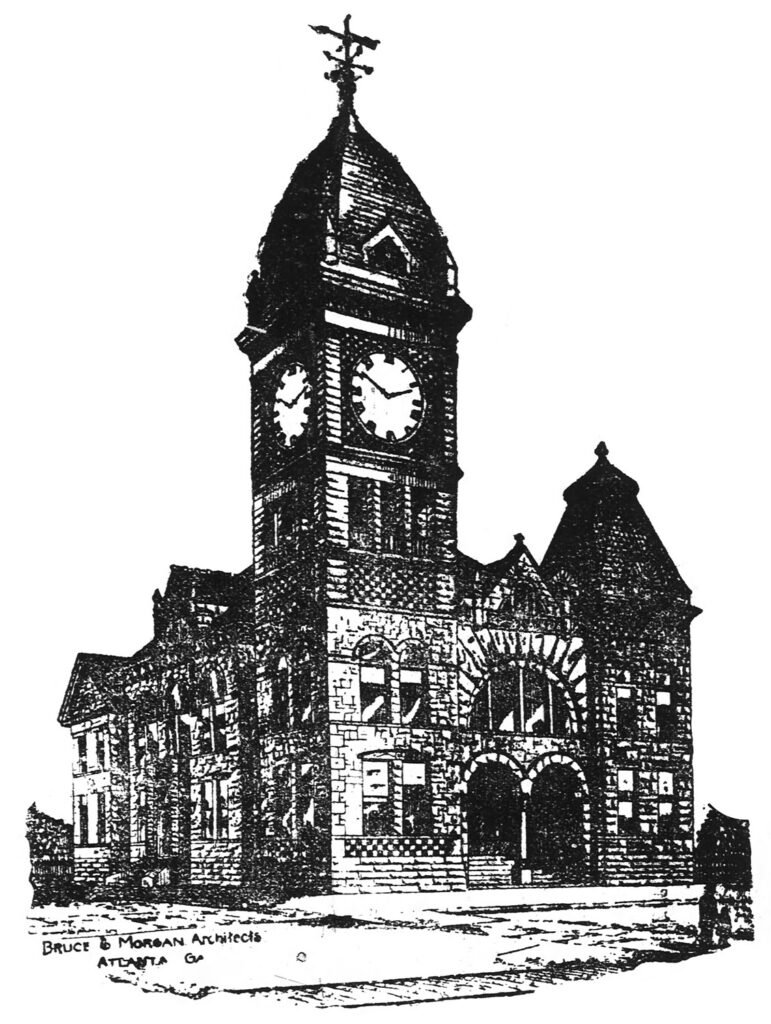
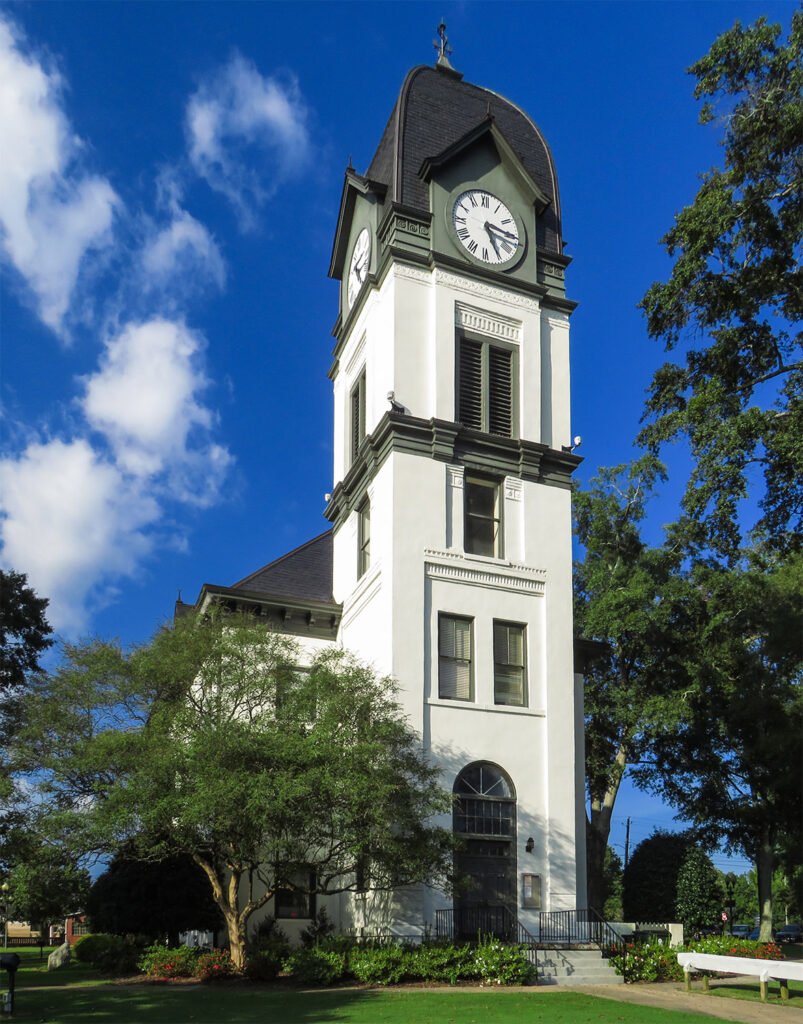
Bruce & Morgan. Cherokee County Courthouse (1892-1895). Murphy, North Carolina.
The Background
The following article was published in The State Chroniclein 1890, and includes an illustration and description of the Cherokee County Courthouse in Murphy, North Carolina, designed byBruce & Morgan.
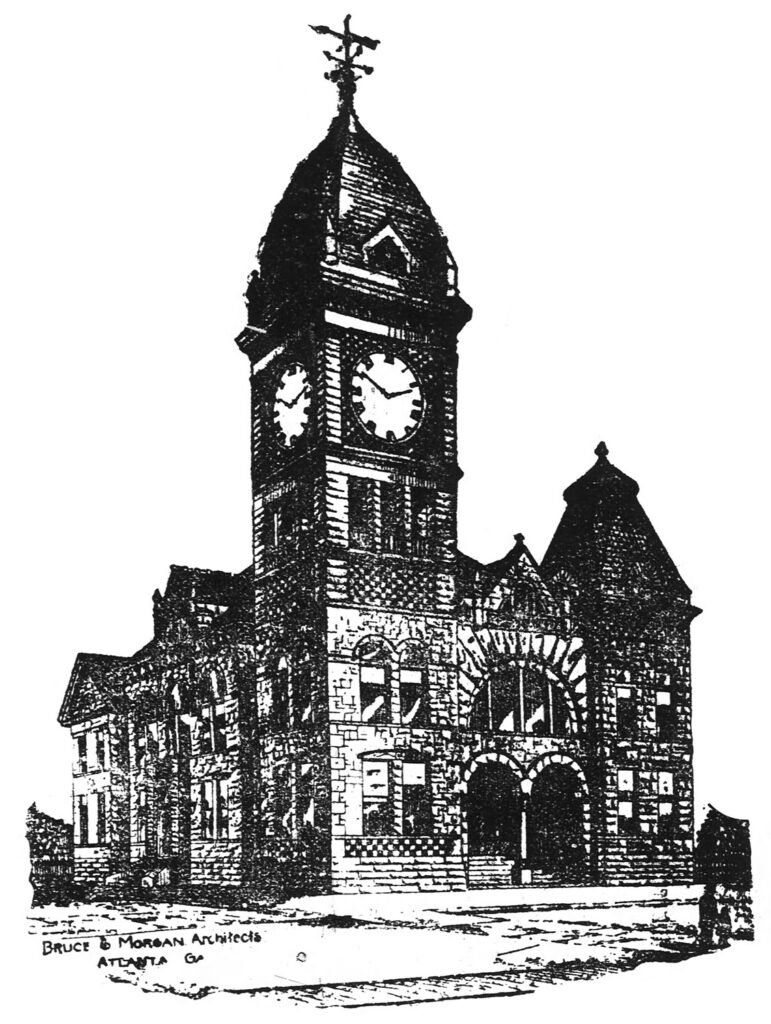
A vernacular interpretation of the Romanesque Revival style, the building depicted in the illustration appears to be a competent effort by A.C. Bruce, and an updated version of his plan for the Newton County Courthouse in Covington, Georgia, completed in 1884.
The only questionable elements in the otherwise cohesive composition are the odd pediment and oversized half-round window above the entrance portico. This wasn’t an exceptional design, by any means, but generally well-proportioned and tastefully executed.
Location of Cherokee County Courthouse
The article states that the county’s leaders were unsure whether the courthouse should be built of brick with marble trimmings or “an entire marble face,” a preposterous question for a rural jurisdiction in the Deep South.
Marble was so cost-prohibitive in the late 19th century that even Atlantans couldn’t afford it as a primary building material, much less the inhabitants of a dirt-poor county in the hills of Carolina.
Unsurprisingly, the finished courthouse was primarily built with pressed brick, while the foundation and steps were composed of marble.1 The initial cost of the project was reported as $21,5002 by one source and $22,5753 by another, but other reports estimated it at $40,000.456
It’s difficult to find a definitive date for the building’s completion, but the cornerstone was laid in July 1891,7 and most sources state it was finished in 1892, which would be a reasonable timeframe.
Despite this article’s claim that the courthouse would “stand the storm of ages”, the building was destroyed by fire on December 13, 1895,8 less than four years after its completion, although the outer walls were left intact.9
In early 1896, Bruce & Morgan were hired as architects for the building’s replacement,10 and it appears they essentially replicated the previous design.
The rebuilt courthouse was also destroyed by fire on January 16, 1926,1112and replaced with an entirely new structure.1314
So much for it being “a monument for centuries to come.”
Murphy’s New Court House.
The State Chronicle is glad to be able to present to its readers to day a picture of the new Court House which the Commissioners and Magistrates of Cherokee county have decided to erect at Murphy. It will be a handsome building and an ornament to the town and county, as well as its best advertisement. It is to have a face and trimmings of marble quarried from the Cherokee county quarries. Marble of almost every shade of color is found in Cherokee, and the Western North Carolina Railroad runs in such close proximity to the marble as to enable parties to load it directly from the quarries into the cars. A marble Court House will advertise this marble better than an hundred agents and an hundred newspapers. The Commissioners and Magistrates have not exactly determined whether it shall have an entire marble face, and have advertised for bids with the marble face and only with marble trimming. But they have decided to build it, and it is a decision in which the entire State is interested. It shows that we are going forward. As the Murphy Bulletin well and truly put it: “The Court House will stand the storm of ages and retain its original beauty and magnificence.” The Commissioners and Magistrates have acted wisely, and the Chronicle rejoices that a spirit of faith in the glorious future of their county has been present with them. This marble Court House will be a monument for centuries to come of the wisdom of the men now living in Cherokee.15
“Cherokee County Court House Swept By Disastrous Fire for Second Time In History, Damage Believed $100,000.” The Sunday Citizen (Asheville, North Carolina), January 17, 1926, p. 20. ↩︎
“Cherokee Courthouse Is Destroyed By Fire”. The Charlotte News (Charlotte, North Carolina), January 16, 1926, p. 1. ↩︎
“Cherokee County Court House Swept By Disastrous Fire for Second Time In History, Damage Believed $100,000.” The Sunday Citizen (Asheville, North Carolina), January 17, 1926, p. 20. ↩︎
“Start Plans For Cherokee Courthouse”. The Asheville Times (Asheville, North Carolina), January 22, 1926, p. 18. ↩︎
“New Courthouse Will Be Built In Cherokee County”. Salisbury Evening Post (Salisbury, North Carolina), January 28, 1926, p. 6. ↩︎
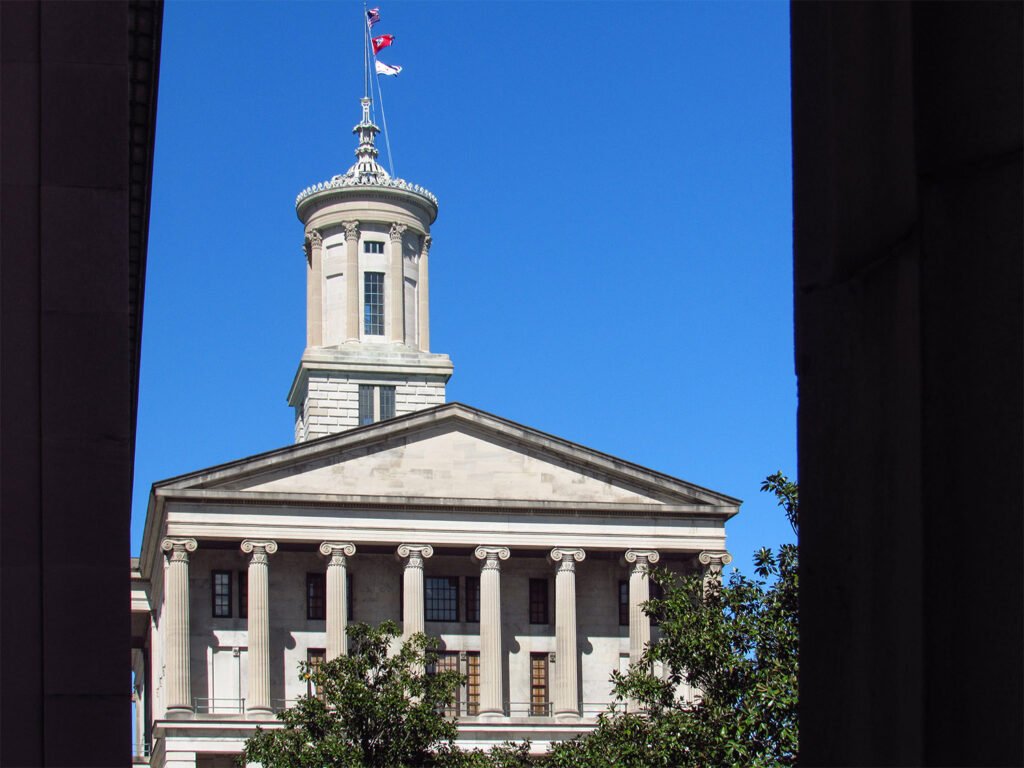
William Strickland. Tennessee State Capitol (1859). Nashville, Tennessee.
The Background
A.C. Bruce (1835-1927) was a founding partner ofBruce & Morgan, the most prolific architectural firm in Atlanta and the Southeast in the late 19th century.
The following article was written by Bruce in 1896for the Southern Trade Review, a short-lived business journal that was published in Nashville between 1896 and 1897.12 The article was then reproduced in the Nashville Banner, and now, reproduced here.
In the article, Bruce provides a brief history of the antebellum architects of Nashville, where he grew up and trained in the profession before establishing a solo practice in Knoxville, Tennessee,3 later moving to Atlanta in 1879.4
Although the article mentions several local Nashville architects, Bruce had particularly high praise — and justly so — for William Strickland, a Philadelphia architect who designed the Greek Revival style Tennessee State Capitol (1859) and the Egyptian Revival style First Presbyterian Church (1851), both of which survive and are among the better buildings in a city that is fairly lacking in quality architecture.
Bruce was 61 years old when he wrote this article, and apparently relied entirely on memory, so there are some understandable errors to note:
H.M. Akeroyd — Bruce repeatedly misspelled his last name as “Akeroid” — moved from Nashville to Augusta, Georgia, not New York, where he died in October 1867.56
The original Louisiana State Capitol (1852) was designed by James H. Dakin, not Adolphus Heiman.7
The article also mentions P.J. Williamson‘s design for the Deaf and Dumb Asylum in Knoxville, Tennessee, without noting that Bruce himself designed a 1873 addition for the building,8 which still survives.
Nashville’s Builders
Of Early Days And Something About Them.
The First Professional Architect Was Col. Adolphus Heinan–William Strickland, Who Planned the State Capitol–Other Men of Note.
(A.C. Bruce, in Southern Trade Review.)
After reading the very interesting letter of W.C. Smith, architect on the subject of “Architecture in the South,” I thought possibly that your paper, as a technical journal, would like to know something about Nashville’s older architects, who directed the building operations in the 40’s and early 50’s. Although of a local nature, it may be interesting to some of your readers and bring to their minds some of the incidents long since passed.
Being reared in the building business by my father, who was for many years a well-known contractor, and for thirty-five years a resident of Nashville, my early impressions of architecture were directed to its studies by coming in contact with the leading, I believe, the only architects, professionally as such, at that time. I will mention first Mr. James Hughes, who no doubt is still remembered by many of the older citizens. The old bank buildings, many of which have been either torn away or remodelled [sic], were planned and built by him. He could be seen daily on the corner of Union and Cherry streets–and the Public Square and College street–with a neat roll of paper under his arm, possibly some newly made drawing. Among his first work was the Second Presbyterian Church on North College street, ministered to at that time by Rev. Dr. Lapsley. A few years later he built the present Catholic Church on the corner of Cedar and Summer streets, which up to this time is a fine study of church architecture, with a very effective treatment in Italian style, which fully characterized all his important work. About the same time he built the old Commercial Hotel, on the corner of Cedar and Cherry streets.
One of the masterpieces of his church work was the magnificent church built by the Christian Church during the pastorate of the Rev. Jesse B. Ferguson, on Cherry street, between Cumberland alley and Church street. It was burned to the ground in a few years after building. Many of his elegant country residences are yet standing in Davidson, Maury and Giles Counties, beautiful examples of the Southern palatial homes found in nearly every important city in the South, so truly spoken of in Mr. Smith’s paper when he said: “The most of the buildings, therefore, were, up to within a few years of that period, designed by builders, and were to a great extent modelled after the old Colonial work, indicating a more refined taste and a more thorough knowledge of the principles of design than is to be found in much later work.”
Many of the older citizens remember the old McNairy residence, which stood on the corner of Cherry and Church streets, once used for the postoffice, those large, fluted columns, the dentilled entablature, heavy projecting cornices. It was one of the finest and best buildings of that day. In the march of progress it had to give way for the new present occupied by the The Nashville American Printing Company. For many years Mr. Hughes directed the architecture of the city as the leading architect and builder. He died in Nashville sometimes in the 50’s.
Contemporary with Mr. Hughes there came from New Orleans the first professional architect to locate in Nashville, Col. Adolphus Heiman (afterward Gen. Heiman, killed in the civil war in Mississippi), whose skilled hand designed many of the public educational structures about Nashville, and many of its residences. A fine piece of his work can be seen in the old collegiate Gothic building on the University grounds, South Nashville. I think he also built the Atheneum at Columbia and the old Shelby residence now in the limits of East Nashville, but at that time a far-off country residence. He also planned the jail built in the ’50’s, the first insane asylum near Nashville and was the architect and engineer for the first suspension bridge. I have been told that Col. Heiman was the architect of the State capitol of Louisiana, at any rate it bears a strong resemblance to his work about Nashville. Many private residences were also designed by him. He was a graduate of a Prussian school of engineering and architecture. Col. Hughes graduated from the work bench after years of architectural study and practical application, each masters of the profession in their day.
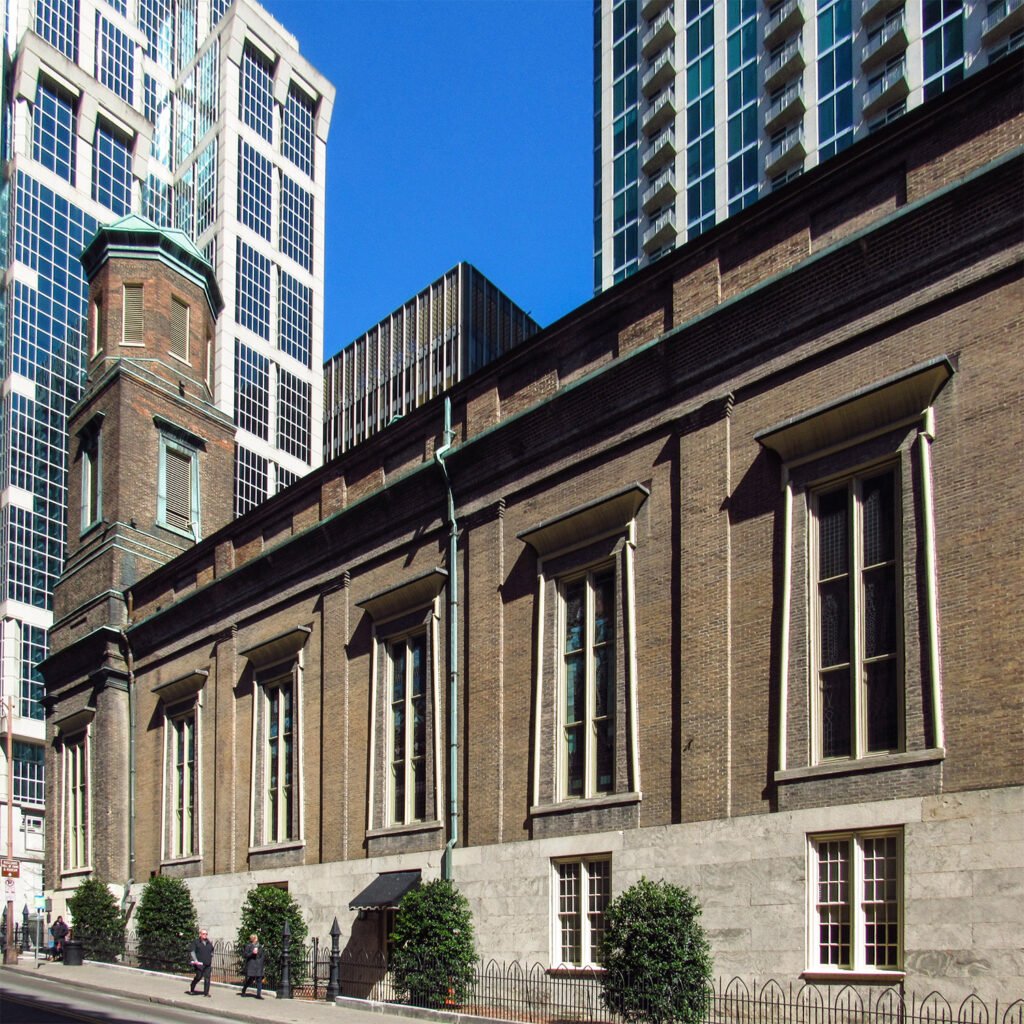
William Strickland. West elevation of First Presbyterian Church (1851).Nashville, Tennessee.9
Nashville was growing in wealth and population, a new State capitol was to be erected, finer buildings were being proposed, and the capitol commission called William Strickland, a prominent architect from Philadelphia, to build the capitol. He came and his monument stands yet on Capitol Hill, one of the finest proportioned architectural structures in the United States, the pride of every Tennessean. Many other noted structures built by him are yet standing, principally the First Presbyterian Church, corner of Summer and Church streets, designed in the Egyptian style of architecture with its peculiar details carried out both in its exterior and interior treatment. None but a master hand in architecture would have suggested such a radical change in church architecture as he made in the Presbyterian Church design. The massive Kirkman residence on the corner of Summer and Cedar streets was one of his most artistic designs, elaborately worked out in every detail regardless of cost.
I remember when a boy going in the building with one of the workmen to look at the elaborate ornamental plaster work, which I think was done by men imported for that work and to carry out his special designs. After a few years work in Nashville he, too, passed away and was buried in a catacomb prepared in the erection of the capitol for his body. I remember well attending the funeral services of this distinguished architect this month forty-two years ago.
Shortly after the death of Mr. Hughes and Mr. Strickland there came to Nashville an old English stair-builder, Mr. Samuel Moore, with his son Joseph, who, being expert workmen in the building lines, soon found work with a leading contractor in that day, Mr. Jesse Warren, who did so much in the building up of Nashville. The young man, Joe, as he was familiarly called, soon took the lead in directing the architectural work, and shortly became a partner under the firm name of Warren & Moore. Business increased, still greater demand for architectural services were required by the wealthy citizens, and the above firm sent to New York and engaged the services of Mr. H.M. Akeroid [sic], a professional architect of ability and experience. Soon his chaste and ornate designs were seen on many important streets, elaborate carvings, massive columns and arches altogether different in style from his predecessors above mentioned. His work showing an educated style peculiar to the English school, from which he had just graduated, and throughout his architectural career in Nashville he kept up with the advanced ideas of his clientage, producing the best architectural effects in all his studies. (Allow me to say here that under Mr. H.M. Akeroid [sic] I received much valuable instruction and gratuitous teaching, which impressed me with the study of architecture in addition to my practical training to follow architecture as a profession, and I am satisfied that whatever success I have had in the twenty-five years of practice was, in a measure, due to the advice of him whom I am ever pleased to remember most pleasantly.) After a few years, Mr. Akeroid [sic] returned to New York, and, I think, died there.
During the stay of Mr. Akeroid [sic] in Nashville the demand for wood carving was greatly increased, and a young, artistic workman, gifted with the pencil and skilled in the execution of elaborate designs of carving, was found in the person of W.K. Dobson. His training had been along the lines of architectural carving; we soon seen [sic] in him an architect of exquisite design and practical training, which fitted him for the successful work and extensive practice he enjoyed in Nashville for a number of years. I can only mention a few of the finer pieces of his work. The St. Cecilia Academy, in North Nashville, many of the older school buildings and of Nashville’s handsomest storehouses erected in the later 50’s were the result of his handiwork.
Many of the citizens will remember Nashville’s first Exposition, held in the year 1880, erected on the corner of Broad and Vine streets, where the custom-house and postoffice now stand, from design by Mr. Dobson. Many other important structures throughout the city are yet standing to attest his skill and ability. Several years before the war, Mr. P.J. Williamson came to Nashville, and, being experienced in the profession, soon entered upon a large and extensive practice, erecting many of the handsomest and most costly buildings during that period, principally the Deaf and Dumb Asylum at Knoxville, Tenn., the Blind Asylum at Nashville and a number of the recent church edifices throughout the city. Soon after his arrival a partnership was entered into with himself and Mr. Dobson under the firm name of Dobson & Williamson, and continued for a number of years. Mr. Dobson moved to Texas, and Mr. Williamson has, I think, retired from active practice, making way for the younger men who now hold the architectural business of the city in its present metropolitan advancement. It is not my purpose to speak of them, as that will be left to some one in the twentieth century to write of them as I have attempted to do of those in this letter.10
References
“Southern Trade Review.” Nashville Banner (Nashville, Tennessee), February 14, 1896, p. 1. ↩︎
“An Attractive Publication.” The Times (Richmond, Virginia), May 5, 1897, p. 5. ↩︎
“A.L. Jonas, Surveyor” (advertisement). April 14, 1870, p. 2. ↩︎
“Mr. A.C. Bruce.” The Chattanooga Daily Times (Chattanooga, Tennessee), January 7, 1879, p. 2. ↩︎
“Death of Mr. H.M. Akeroyd.” The Vincennes Weekly Western Sun (Vincennes, Indiana), December 21, 1867, p. 3. ↩︎
A.C. Bruce (1835-1927) was a founding partner ofBruce & Morgan, the most prolific architectural firm in Atlanta and the Southeast in the late 19th century.
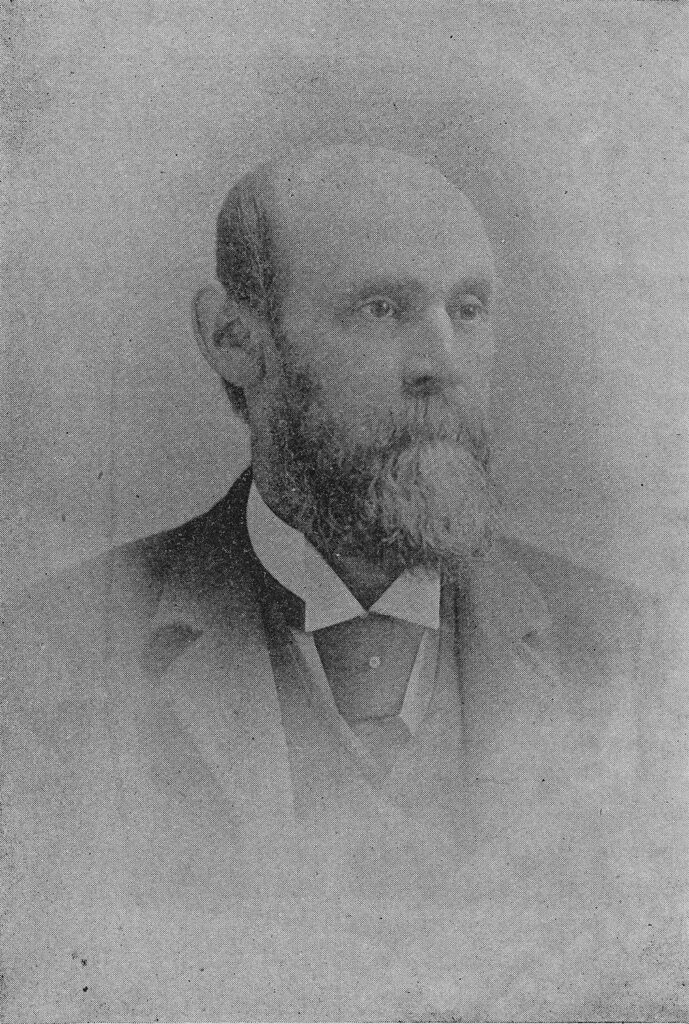
Bruce (picture here1) was born in Fredericksburg, Virginia, and raised in Nashville,2 and although he had no formal architectural education, he claimed to have trained under H.M. Akeroyd,3 a British-born architect who practiced in Nashville from 18554 to 1867.5
The son of a contractor,6 Bruce started a carpentry business in 1865,7 and in 1870, he moved to Knoxville, Tennessee, where he began billing himself as an architect.8
In 1879, he moved to Atlanta to partner with W.H. Parkins,9 Atlanta’s first professional architect, in the short-lived firm of Parkins & Bruce. Finally, in 1881, Bruce partnered with his longtime draughtsman, T.H. Morgan.1011
One of only 5 architectural firms in Atlanta in 1881,12Bruce & Morgan quickly established the largest and most successful practice in the Southeast, producing hundreds of government, commercial, and residential structures across every state in the region for the next 23 years.
The sheer volume and rapidity of their output ensured a certain consistency of design: their buildings were rarely great, but seldom terrible either.
Bruce & Morgan. Renovation and expansion of the Fayette County Courthouse (1888). Fayetteville, Georgia.1314
Past historians postulated that Bruce primarily handled design duties while Morgan attended to business affairs. However, I’ve found ample evidence that Morgan also consistently designed projects, if not to the same extent as Bruce — at least in the firm’s early years.
By the time Bruce & Morgan began producing Atlanta’s first skyscraper office buildings in the late 1890s, Morgan had clearly become the lead designer,151617 and when Bruce retired from the firm in 1904, Morgan partnered with John R. Dillon for the successor firm, Morgan & Dillon, which continued until 1935.18
Bruce’s initial retirement was brief, and from 190519 to 1908, he joined with A.F. N. Everett in the firm of Bruce & Everett,20 specializing in churches and school buildings, although he also continued to design homes and apartment houses.
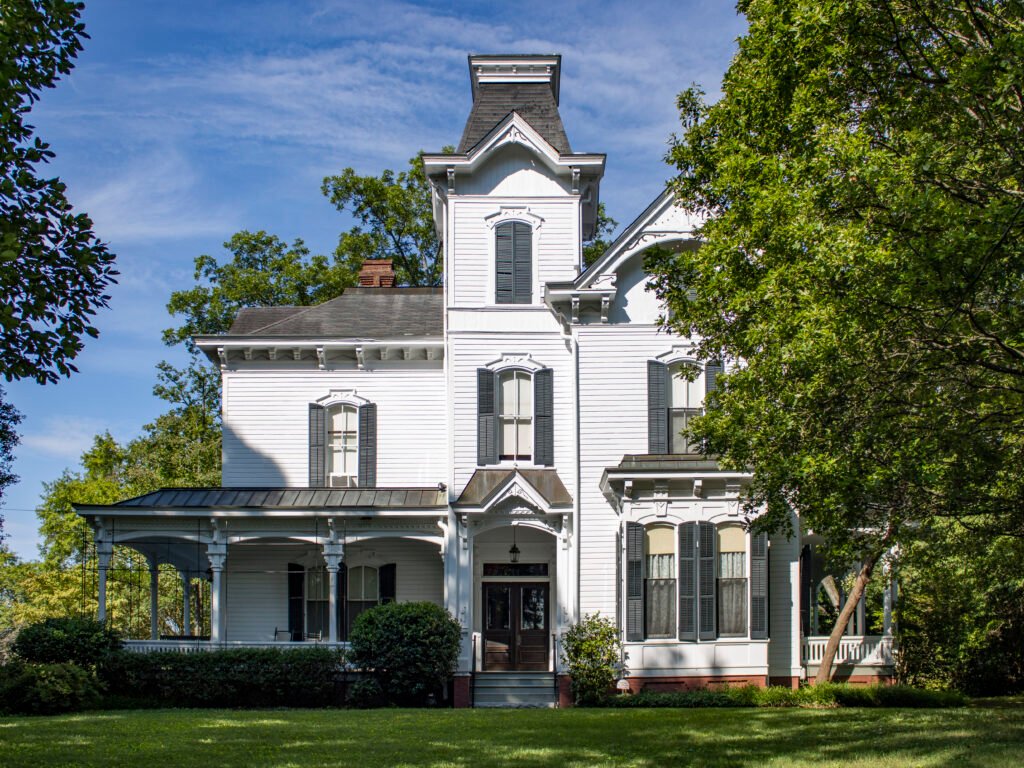
Public buildings were always Bruce’s forte, however, and it’s no surprise that many of his residential projects look suspiciously similar to his designs for county courthouses.
While he never exceeded the limits of his vernacular training, Bruce was a competent designer who admirably attempted to evolve with changing tastes. The residue of his Italianate designs from the 1860s and 70s still appeared in his work from the 1880s into the early 20th century, but he made good-faith efforts at more sophisticated styles like the Romanesque and Classical Revival, if not always successfully.
Bruce rarely produced any writing of significance, and you’ll find nothing especially revelatory in this short letter published in The Southern Architect journal in February 1893. The journal, incidentally, was founded by T.H. Morgan in 1889.22
Here, Bruce shares a common lament among architects of the time, criticizing people who attempted to design their own homes instead of hiring a professional.
Since architects were the journal’s primary audience, Bruce was essentially preaching to the choir, and while it may have been more effective to share his sentiments in a public newspaper like The Atlanta Constitution, he was clearly a shrewd businessman who took pains to avoid offending potential clients.
Compared to another of Atlanta’s leading architects of the era, G.L. Norrman — whose tendency toward brash public outbursts made him a lightning rod for disputes (and undoubtedly affected his business) — Bruce & Morgan were skilled diplomats who rarely attracted controversy. Note that Bruce even discreetly signed the letter with his initials only: A.C.B.
There’s a reason he had the top firm.
“I Am My Own Architect”
The expression “I am my own architect,” is frequently used by men and women who are about to undertake the erection of a residence, either in the city or country.
People who are guilty of indulgence in this form of vanity may be divided into two classes. The first are those who, as they express it, draw their own plans and employ an architect only for the purpose of designing the elevations and other “unimportant” matters. They are frank enough to confess that, while they have large ideas, their ability as draughtsmen is not worth mentioning. They disdain to cultivate such mere mechanical skill.
The second class comprise those gifted individuals who are able to draw the entire set, which are handed over to the unfortunate builder securing the contract.
In reality the tragedy of the transaction does not fall upon the builder, whose life is made miserable during the work, but upon the neighbors and residents of the locality, before whose horror-stricken faces are constructed the hideous exteriors that result necessarily from the barbaric practice of the fine art. How much better would the building look if designed by a skillful architect in charge of the work?