Category: L.B. Wheeler

  • “Style and Fashion” (1885) by L.B. Wheeler

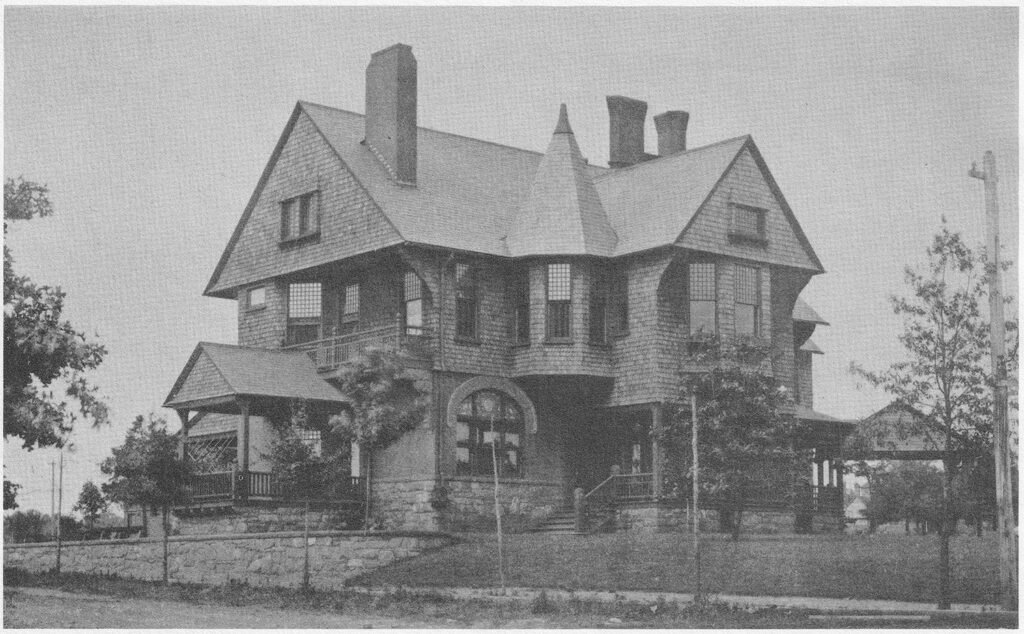
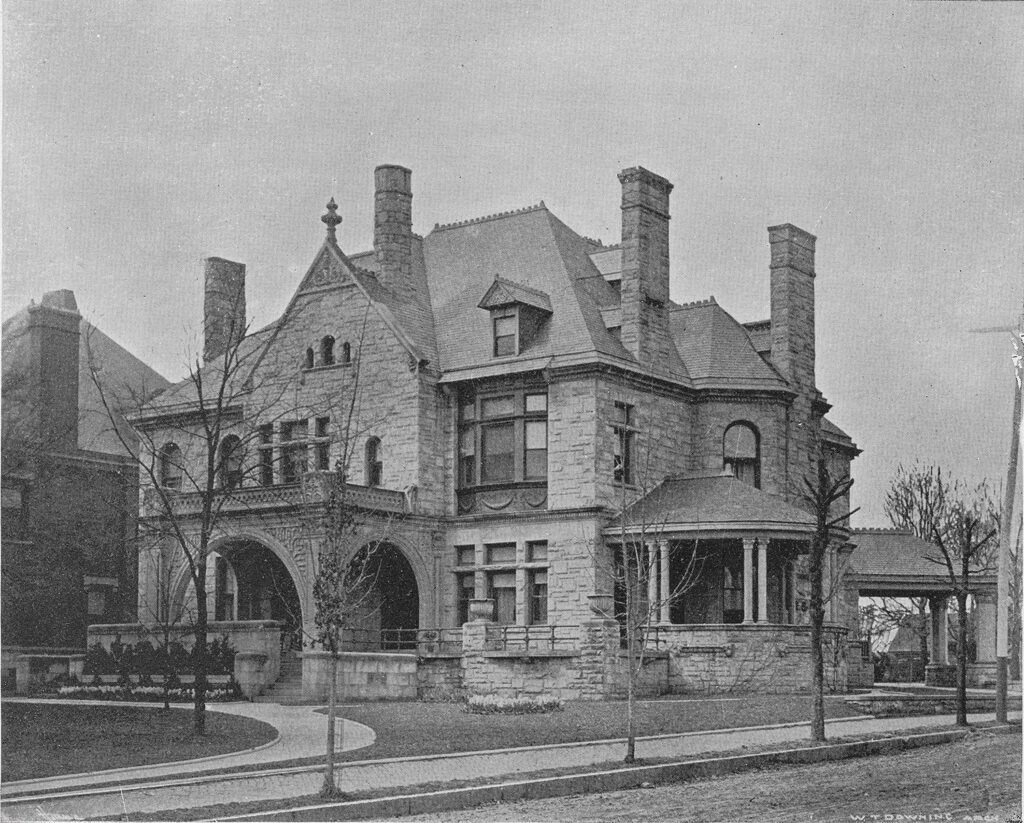
    L.B. Wheeler and W.T. Downing. S.M. Inman House (1890, demolished 1946). Atlanta.1 2 3 Vintage photograph by W.T. Downing.4

    The Background

    This is the third in a series of 5 articles on home decoration written by L.B. Wheeler (1854-1899), an architect who practiced in Atlanta from 1883 to 1891. The articles were published in The Atlanta Constitution in December 1885 and January 1886.

    Here, Wheeler spoke in harsh terms of fickle fashionistas who fretted over building their homes in the latest style, imploring his readers to consider “the length of the period for which we expect to build, which shall, in all probability, be for the remainder of our lives”.

    That advice would have fallen on deaf ears in 1880s Atlanta, where the nouveau riche changed houses like their soggy underwear (from the humidity, of course), hopping from one new residence to the next every few years, each one inevitably more overwrought and gaudy than the last.

    Atlanta has always been a parade of bullshit and spectacle, and Wheeler could have only had the houses of Peachtree Street in mind when he spoke of “a museum in which we store all sorts of unnatural curiosities and uninteresting bric-a-brac…overloaded with superficial ornaments in strained and unnatural attitudes, posed with a smirk before the audience like a ballet dancer awaiting applause.”

    Wheeler mourned for the “lack of character, simplicity, refinement…” and other timeless attributes missing in late 19th-century architecture, a sentiment echoed by other Atlanta architects of the era — notably, G.L. Norrman, who later shared his own acerbic remarks about the city’s homes, although Wheeler was even more caustic here.

    The irony is that Wheeler proved himself quite willing to satiate the whims of Atlanta’s elite. Photographic evidence abounds of the many ostentatious residences of his design, a legacy continued by his protege, W.T. Downing, who spent years littering the city with garish mansions, most of them mercifully destroyed in the 20th century.

    It was as true then as it is today: If you have to be wealthy, for God’s sake, develop a little taste to relieve us of your affliction.


    Style and Fashion

    By L.B. Wheeler, Architect of the New H.L. Kimball House.

    December 27, 1885

    The prevailing style of architecture and the probable length of its fashionable existence, is to those contemplating the building of a home, often a question of serious disturbance. If we will think for a moment of the length of the period for which we expect to build, which shall, in all probability, be for the remainder of our lives, it would seem that the folly of following the dictation of an unreasoning fashion, which is constantly changing, would be apparent. If you are sure the style of your house is sanctioned by judgment and reason, you need have no fear in violating fashion’s decrees. 

    There is a prevailing impression that an architectural style consists of a set of forms–a sort of architectural clothing–to be used as fancy dictates. But the forms of a style, apart from its principles, which are its soul and life, are no more a style than the wooden image in front of a cigar store is a man. Taste, climate, materials, social conditions, wealth and various other circumstances, have given rise, in different countries and at different periods of time, to certain methods and principles of design, the application of which, in the erection of the monuments and buildings of those countries and periods have created certain architectural forms, which have been systematized and called styles. The frequency with which we see buildings dressed in these various styles without any regard to applicability, scattered along our thoroughfares like a great international masquerade, in which, by the way, some of the costumes are very curious, shows there must either be very great differences in the climate, social conditions and the nature and duties of materials on adjoining lots, or else there is a lamentable state of education in regard to the fitness of things.

    Have you ever realized the possibilities of beauty to which our modern streets are susceptible? The great picture galleries that might be made of them! What charming pictures of social and domestic life could be arranged along their sides!

    In the pictures of the artist the hills and foliage, the green meadows and even the sky are of paint: in ours they may be living, breathing realities possessing thousands of beauties inimitable. With such materials, what ought we not to accomplish, and what have we done? 

    Instead of making of our cities living pictures, expressing refinement, purity and nobility, we make of them a museum in which we store all sorts of unnatural curiosities and uninteresting bric-a-brac. The great faults of our modern architecture are lack of character, simplicity, refinement, delicacy, tenderness, beauty, grandeur, picturesqueness, homeliness, and sentiments, the expression of some one of which has been the endeavor of every good work erected by man. The designer’s highest purpose seems to be the representation of prettiness, novelty, and the demonstration of wealth, and even in this he fails–without any perception of the laws governing composition of the artistic susceptibilities of the materials used. His attempts to impart prettiness result in fantastic buildings, overloaded with superficial ornaments in strained and unnatural attitudes, posed with a smirk before the audience like a ballet dancer awaiting applause. Novelty which could formerly have been obtained by designing something more absurd than ever had been done before, would have been quite in his line and easy of accomplishment. If the field had not been so well filled by his contemporaries, that now a thing to be novel must necessarily be good–something quite beyond his powers. To demonstrate the possession of wealth he loads his building with starring ornaments, breaks everything up and fills every blank space with an inappropriate ornament. His universal recipe for producing repose, breadth and refinement in his composition, attaches his building to a tower of much grandeur, and no use whatever, and completes a building which, if it were not too large, would make a very good toy savings bank–a nice one with a tower handle. The exterior of a building should be the simple and natural clothing of the interior, and should express its character and purpose above all things. Truth is essential and means the correspondence of the representation with the facts. There should be no shams about the building. Nothing is as vulgar as the imitation by a cheap material of one more valuable. It deceives no one and creates on discovery an impression similar to that produced by the use of paste diamonds and bogus jewelry. The humblest materials used honestly, in positions suited to their functions, may be made beautiful, and in certain places their services are indispensable. It is by the arrangement of the materials and not their value that a house is made attractive. You might build a house of gold with diamond windows which would be very ugly and perfectly useless.

    There should be no unnecessary towers, dormers, gables, windows, or other features which, by their presence, imply that they are there for a practical purpose which they do not fulfill. Features used in this way are not ornaments; they are architectural lies. What would you think of a man who covered himself with glass eyes and wax roses to make himself beautiful? They would not be more ridiculous than are some of the excrescences which are put upon many of our buildings and not unlike them in effect. Some people are blind to beauty, as others are to color. It is a defect in their natures like the want of a musical ear. These with many others who from fear of criticism, thoughtlessness, indolence, ignorance, and a meek desire to follow, however distantly, in the footsteps of wealth, are guided in matters of taste almost exclusively by the dictates of fashion; and even in their devotion to so sordid a government they are often imposed upon, receiving some very bitter doses, sweetened with a few of the detail of a prevailing style which, to their unsophisticated palate, has the flavor of the genuine article. If the motives in which fashion has its origin and the sources from which it springs were thoroughly understood it would have numerous less worshipers than now. Nature’s fashions never change. The leaves of the trees come in spring with the summer winds and gay troops of young flowers and in the autumn put on their gorgeous mourning as they have ever done. It would puzzle the oldest inhabitant to remember a change in the fashion of man, still our fashions are changing constantly. It must be either because there is no beauty in them or we fail to discover or appreciate it. We should learn to understand beautiful things and love them for their inherent beauties and not bondage our likes and dislikes to popular fancy. There would be no objections to the edicts of fashion if they were good and right; but the fact that a thing to be fashionable must be sanctioned by the majority is when we think that on matters requiring special knowledge, the majority are never right, almost enough to condemn it without further evidence. Fashion is a common bait thrown by the tradesmen to allure the wary dollars from our pockets. What could be expected from such a motive? A high standard of merit endeavoring to elevate and purify the public taste? No. The fisher with such a bait would go hungry for dollars. He must throw something more palatable to the multitude. So he fits up something nice, new and bright, calls it the latest style and fills his basket with dollars. This latest style is a very popular bait. The later it is the better. “There are no old masters now.” In this advertising age of ours every lecture-play-musical composition and every product of the manufacturer is an improvement upon its predecessor, and he who waits for perfection “is like the rustic who waited for the river to run by.”5

    References

    1. “Eight Millions More.” The Atlanta Constitution, April 13, 1890, p. 7. ↩︎
    2. “A Handsome Residence”. The Atlanta Constitution, April 19, 1890, p. 4. ↩︎
    3. Furniss, Jim. “New York Firm Plans Store Here”. The Atlanta Constitution, August 21, 1946, p. 1. ↩︎
    4. Atlanta Homes: Attractiveness of Residences in the South’s Chief City. Atlanta: Atlanta Presbyterian Publishing Company. ↩︎
    5. Wheeler, L.B. “Style and Fashion.” The Atlanta Constitution, December 27, 1885, p. 4. ↩︎
  • “Halls” (1885) by L.B. Wheeler

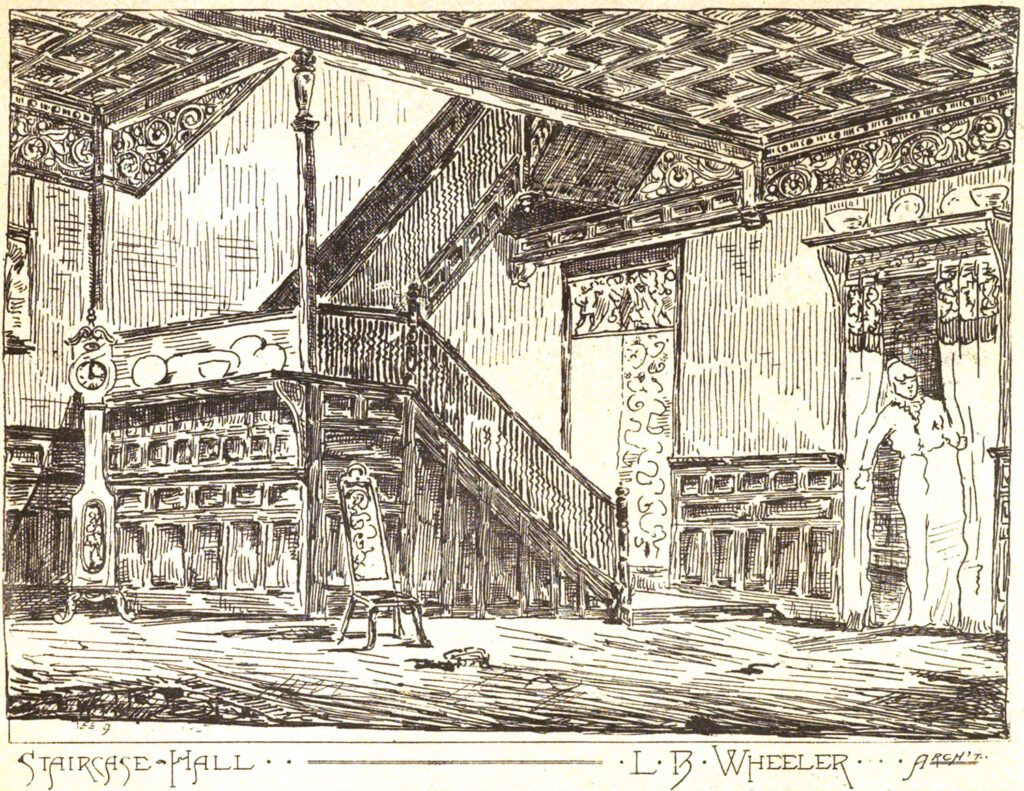
    L.B. Wheeler. Staircase Hall (1882).1

    The Background

    This is the second in a series of 5 articles on home decoration written by L.B. Wheeler (1854-1899), an architect who practiced in Atlanta from 1883 to 1891. The articles were published in The Atlanta Constitution in December 1885 and January 1886.

    Here, Wheeler charted the origin of residential halls to Anglo-Saxon living rooms and criticized their “modern offspring” of the 19th century: “long, narrow, uncomfortable stair choked strips of passage”, which he characterized as “depressing”.

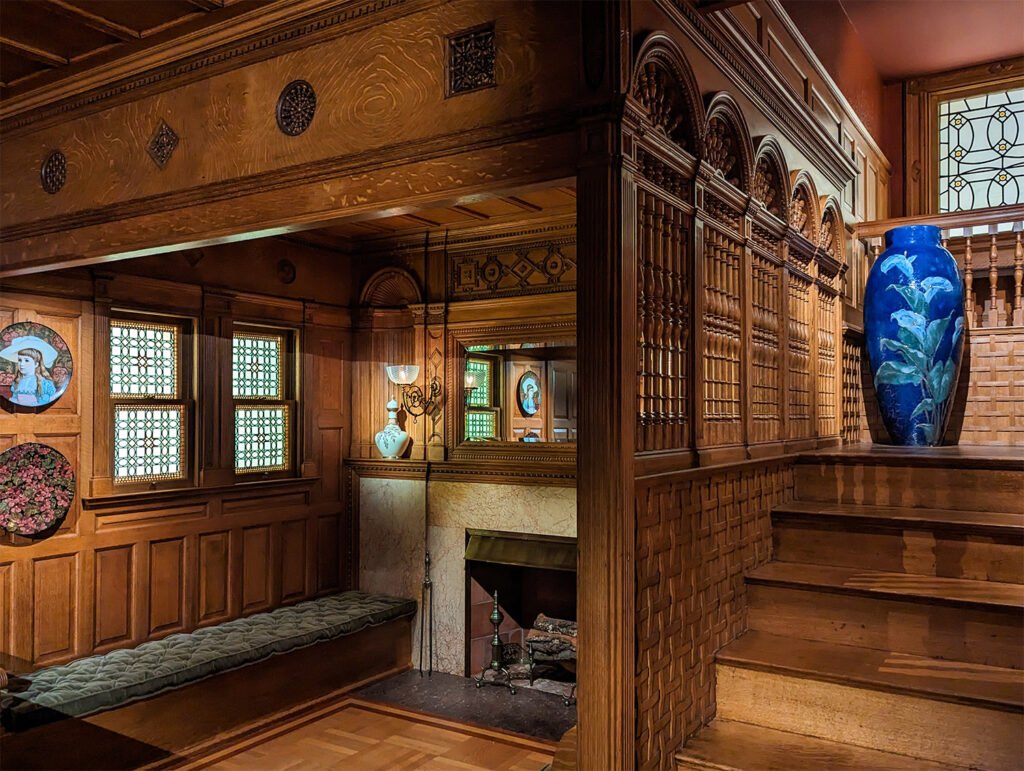
    His description of a well-arranged central hall with a fireplace, stairs, and seating surrounded by a cluster of smaller rooms was the “living hall” concept introduced by McKim, Mead & White of New York in the 1870s. A fine example is their stair hall from the Metcalfe House (pictured below), on view at the Metropolitan Museum of Art.

    McKim, Mead & White. Stair Hall from the Metcalfe House (1884). On exhibit at the Metropolitan Museum of Art, New York.2

    Having previously practiced in New York, Wheeler would have been very familiar with the living hall concept, as indicated by an 1882 illustration of a similar “staircase hall” he designed (pictured at top).

    The concept was still quite new in Atlanta, however, likely introduced to the city by G.L. Norrman with his design for the Edward C. Peters House in 1883. By the end of the 1880s, pretty much every home of consequence in Atlanta had a large, fashionable hall as its nucleus.

    In this article, Wheeler also took the opportunity to argue for the judicious use of stained glass windows, and admonished people who furnished their halls with uncomfortable seats for “errand boys and servants… suited to their condition in life…” Wheeler described such accommodations as “giving a stone when no bread was asked for…”

    Spoken like a true New York radical.


    Home Decoration.

    Halls.

    By L.B. Wheeler, Architect of the Kimball House.

    December 13, 1885

    The germ of our modern hall probably found its origin in the hall or living room of the Anglo Saxon. This hall was a large room with wooden walls and earthen floor in which lived, dined and caroused lord, lady, guest and serf alike, and where at night they lay down upon their straw filled sacks to sleep, arranged according to their rank. The only decorations of this room were the variously dyed and figured cloths hung upon the walls and against which, when not required for purposes of war and pillage, were frequently hung the arms and armor of its occupants.

    The only furniture besides the chairs, which were for the exclusive convenience of those high in rank, were the benches, in which during the day were stored the beds used at night. The fireplace was the center of the room and the fire of logs, around which the shivering occupants gathered as the winds rattled the osier shutters and the rain beat upon the thatched roof and clay covered walls, poured forth constantly its curling wreaths of smoke which lingered loitering among the guests before ascending to the roof and taking a final leave of the dried meats and other stores, as it passed out at the gables.

    Although not what would now be considered habitable the old saxon hall had an air of homeliness and hospitality about it which is seldom possessed by its modern offspring.

    The hall, like the host, should greet you hospitably. What is more depressing than an introduction into one of the long, narrow, uncomfortable stair choked strips of passage, with rooms arranged in a row on either side, which, through modern courtesy is sometimes called hall, and which, whatever its width, is but a passage still? A well arranged hall is a great source of ventilation and heat, it should be a bond uniting the rooms in a complete and harmonious suite. The rooms so connected may be made much smaller than would otherwise be necessary, could not their dimensions, when occasion requires, be increased by uniting one with the other.

    Halls are frequently used as sitting and reception rooms and when the floors are of hardwood are very serviceable for dancing. The furniture usually consists of a table, chairs, umbrella stand and hat rack, etc., all of which should be suited to their purposes, and not used for show. If you have no use for a piece of furniture, you may feel perfectly safe in rejecting it. Furniture is not made like pictures and statuary, to be looked at, but for use.

    Hall chairs and seats should be comfortable. The necessity for this caution was suggested upon hearing a dealer in furniture explaining to one of his customers who had objected to a hall seat because it was uncomfortable. That it was for the service of errand boys and servants to whom we should offer in courtesy while awaiting our convenience a seat and temporary shelter from the inclemency of the weather and that such a seat should be suited to their condition in life and did not need to be comfortable. What kindness, what rare courtesy, that offers to the unfortunate under the guise of hospitality, aesthetic uncomfortableness, this is giving a stone when no bread was asked for. All that is necessary to make furniture comfortable and useful is a little thought expended upon its design. The staircase should be broad and ample with spacious landings, having short and easy flights leading in agreeable directions to the stories above. Upon this general arrangement of the staircase depends its effect, be it either of elegance, grandeur or inviting hospitality and no amount of unnatural twisting or torturing of rail or balusters or ludicrous imitation of massiveness or lavish display of cheap ornamentation can rectify a mistake originally made in this respect. Swans are not hatched from goose eggs; nor do lace and ribbons make an ugly form beautiful, although lace and ribbons may in their place be very attractive ornaments. The hall should be well lighted, not necessarily by stained glass windows. Nature seen through transparent plate or even crystal sheet is sometimes nearly as beautiful as stained glass. That this is not generally comprehended, is to be judged from the frequency with which we see really beautiful, natural scenery blotted out with much care and great cost by the use of those crude and violent contrasts of color so abundantly produced by some of our manufacturers. Stained glass, like jewels, should be used very sparingly, and unless, as with a picture, it is genuine art work, it had better not be used at all.

    Its effects are so powerful that they challenge attention before everything else and if on inspection they fail to support their pretentions to consideration, the impression is very disappointing and likely to mold our opinion in regard to the remainder of the room and its contents. Of course it is unnecessary to state that a piece of coloring, which must necessarily be so powerful as that of stained glass, if used in any quantity, must become the key or point of cumulation of any composition in which it may be placed and should be suited to its position. It is well to assure ourselves before accepting our own judgment on these matters that we are not color blind. Many persons, who little suspect it are deficient in their perception of color and to produce an impression on them it is necessary to use some very striking combinations. The delicate and harmonies of one of Tiffany’s masterpieces, would not be perceptible to them. The eye usually requires considerable education before it is able to distinguish and appreciate delicate, refined and subtle combinations of color. The selection of stained glass should be left to a competent artist. As to the story or sentiment expressed and its fitness for its place, we may possibly be judges, but unless we have some special knowledge we had better suspend further judgment. The small sketches displayed by the agents of manufacturers are commonly no indication of the finished work. They are often made by parties who have nothing what ever to do with their execution. Stained glass, like any other art work, requires in its execution the application of the artist’s own powers.

    Where it is desired in the arrangement of a suite of rooms that each should produced its proper effect upon the beholder, it is of importance that the best should be reserved for the last. The proof of the wisdom of this course may be drawn from our own personal experience.

    After eating honey, sugar seems less sweet. One picture will destroy the effect of another. The skillful tradesman shows his best goods last, and after the loud rolling of thunder, even the lion’s roar seems mild.

    Many people get too much thunder in their halls. Their principal idea of artistic composition being to arrange everything so that the beholder will be perfectly overcome upon his entrance into the hall; the result being that the hall overpowers and destroys the effect of every other room in the house and leaves none of those pleasant little surprises, which in a carefully studied design unfold themselves gradually to the interest and delight of the beholder.

    If possible, a hall should have a fireplace–a good, generous and serviceable one–and in a pleasant and suitable position; not one of the little, narrow, useless things caged and squeezed into some remote place or corner, simply because its species are fashionable. Hall, home and fireplaces seem to be inseparable. How the very names kindle the imagination and sets memory wandering among her long forgotten stores, awakening pleasant reminiscences of long ago. An old house, moss-covered and gray, a sweep or road suddenly appearing beneath the hoary maples, guarding the decrepit gate, and as suddenly disappearing at the foot of the hill, only to be seen again in sudden flashes from behind mounds of green meadow and red and white farms, as it passes on to mingle in the gray confusion of distant meadow, farm and forest. And with it and a part of all the wind, which, sweet with the odor of the new fallen hay, flows gently up the hill and over the tangled grass of the lawn, enclosing the old house in its tender robe or coolness, penetrating every crevice, stealing in at the windows, and whispering to the lilacs and gooseberry bushes as it passes away, rustling secrets of the old hall within.

    The old hall with its quaint mahogany staircase peeping out from behind the figured curtains, and leading away into the unfathomable mystery of tottling childhood. The oaken-timbered ceiling grown dark with age. The wainscoted walls, the generous fireplace, with its andirons of brass always so bright, and which in the long winter evenings were so serviceable, retaining in place the blazing forelog. The high shelf above the fireplace, and its brass candelabra, awakening with their prismatic reflectors strange fancies in the mind of imaginative youth, and over all the hospitable red chimney, which on Christmas day poured forth far above the misty gray trees its curling wreaths of welcome.3

    References

    1. Tuthill, William B. Interiors and Interior Details. New York: William T. Comstock (1882), Plate 8. ↩︎
    2. McKim, Mead and White Stair Hall | The Metropolitan Museum of Art ↩︎
    3. Wheeler, L.B. “Home Decoration. Halls.” The Atlanta Constitution, December 13, 1885, p. 18. ↩︎

  • “Decoration and Furniture” (1885) by L.B. Wheeler

    L.B. Wheeler. Clarence Knowles House (1886, demolished after 1933).1 2 3 4 5 6Atlanta.7

    The Background

    This is the first in a series of five articles on home decoration written by L.B. Wheeler (1854-1899), an architect who practiced in Atlanta from 1883 to 1891. The articles were published in The Atlanta Constitution in December 1885 and January 1886.

    Here, Wheeler introduced the series and pontificated in a somewhat circuitous manner on the origins and meaning of taste, the fickle nature of fashion, and ill-proportioned rooms, among other things.

    However, it appears his main objective for the article was to rant about that most contentious of topics: wallpaper. Wheeler offered choice words on the subject and invoked the name of William Morris, an influential British textile designer, to argue against the “cheap, flashy appearance” of gold in wallpaper.

    It truly was the Gilded Age.


    Home Decoration.

    The First of a Series of Interesting Papers.

    By L.B. Wheeler, Architect of the New H.I. Kimball House.

    It seems to me that if a knowledge of the truths and principles, the observance of which are essential to the production of all good decorative to other art work, could become general, it would greatly raise the standard of excellence in those productions. It is my purpose, from time to time, to offer through The Constitution suggestions for thought upon the following subjects: Halls, fireplaces, yards and fences, convenience and arrangement of rooms, carpets, tapestries, bricabrac, furniture, style, fashion, etc. If any interest is thereby awakened in those subjects, and a desire for their further investigation created, my object will have been accomplished.


    L.B. WHEELER

    Decoration and Furniture.

    It is essential that the arrangement, decoration and furniture of a room should be suitable for its purposes. However beautiful a room or an object may be in itself, if it fails to accomplish the purpose for which it was intended, it is a failure.

    It would seem that practical application of truth so plain must be universal, but when we look around us, we find chairs which are uncomfortable to sit upon; rooms without suitable places for furniture, fireplaces so arranged that the back of the shivering applicant for warmth, receives a constant draught; sitting rooms, where the colors should be quiet and unobtrusive, the walls, forming a harmonious background for the occupants, and for the objects of interest and beauty that accumulate in such a place, having walls covered with paper, ablaze with Dutch gold, glaring red and black, thus forcing itself upon our notice, to the exclusion of all that is truly beautiful, refined and modest in the room.

    Gold is very seldom used in the best designed papers. It is not introduced by William Morris into more than half a dozen of all the beautiful papers designed by him, and in these in such a manner that you are scarcely conscious of its presence. Gold, when it becomes too conspicuous in a design, gives it a cheap, flashy appearance, very objectionable in most of the papers used in house decoration; the figure is so strong that it destroys the effect of whatever is brought into contact with it or relieved against it: the colors are too bright and too many, and they are seldom harmonious; the general effects obtained, unless large quantities of Dutch gold are used, being some dirty gray. The tones, with a few exceptions, are never good and positive. The patterns are still worse, made without any regard to fitness of effect or the nature of the materials and processes at command. Attempts are frequently made to imitate nature, where the representation of some vine, flower or leaf is attempted you will probably find most of the laws which govern the direction of growth in nature and ornament violated.

    Where figure subjects are aspired to, the results compare very favorably with the chromo-lithographic work on the bills heralding the approach of traveling shows. With such material at command, without any knowledge training, study or experience, their only stock in trade being their supposed inheritance of what is called good taste; “something with which, by the way, every true American is abundantly provided, and in which his neighbor is sadly deficient” it is not surprising that so many fail in the attempt to make their homes attractive and beautiful.

    Many persons have selected beautiful papers for the walls, a lovely pattern for the frieze, but somehow when they were sent home and put up, the effect was not just what was expected, in fact it was disappointing, and their attempt at decoration proved a failure. They have yet to learn that colors, forms and objects are of as much importance, and require as great skill in their introduction and arrangement in a room as they do in a picture. Very few would think themselves capable of creating a work of art or making a change for the better in an existing one, yet they would not hesitate to destroy the effect of a beautiful room by the introduction of some inharmonious object or color.

    The contents of our homes are usually chosen because we like them, but when we think of the effect fashion has upon our likes and dislikes, that the thing we thought perfectly beautiful last year, is perfectly hideous this year, how our so-called good taste is constantly changing, it is simply a matter of different influences brought to bear upon an immature education.

    When we think of this, would it not be wise to use a little more judgment and less taste in the selection of things of so much importance to our welfare and happiness as the furniture and decoration of our homes? A form or color that is beautiful once is beautiful forever.

    Who ever tires of the masterpieces of art, Beethoven‘s symphonies, or the scenes and beauties of nature familiar from childhood? Rather does not the pleasure derived from these things increase with continued acquaintance? That some people are more susceptible to the influence of the beautiful than others, and that they acquire more readily, though, perhaps unconsciously, an education from the objects by which they are surrounded, is true, but the value of this education depends upon their opportunities for observation. The definition of taste, according to the common conception, is this:

    Taste is an inherited faculty to judge of the right and wrong a thing, about which we know nothing. The reputation of having this faculty, is often very cheaply obtained. The frequent and persistent assertion of your opinion upon matters of art, a month’s trip to to Europe, the ability to copy a few flowers indifferently well with the assistance of a teacher, or the having been connected in some distant way with art, perhaps a dealer in art materials, giving one a clear title to judge of the masterpieces in architecture, sculpture, painting, music and poetry.

    Among a few of the mistakes made by amatures [sic] is the common one of failing to pay proper regard to the proportions of a room. Owing to the almost universal custom of making the ceilings of our homes a uniform height, regardless of the dimensions of the rooms, it happens that very few rooms only are of agreeable proportions. As it is of the first importance to the effect of a room that its proportions should be pleasing, this opportunity should be taken to correct any errors originally made in this respect by a proper arrangement of the decorations.

    If we look around us we shall find this very seldom done. Rooms already too small are made to appear still smaller, by using too large and strong a pattern upon the walls, and by the introduction of clumsy excrescences in the finish and furniture. Ceilings, which are too high, are made to look still higher, and when too low to appear still lower, and many other mistakes are made by the failure to use the numerous expedients available for correcting such faults in the arrangement of decorations.

    The walls are often so light in color that objects hung upon or relieved against them have a spotty appearance, destroying all repose and breadth of effect. Sometimes the effect produced is gloomy and cheerless, owing to the absence of a principal light where the general tone is dark.

    In selecting wall papers those patterns which are pronounced or peculiar should be avoided. When we go into our neighbors’ houses and find the walls covered with a novel and striking paper, we come away with the impression that the paper in Mrs. So-and-So’s house is beautiful. Our admiration is somewhat dampened when on the day following we find the same paper at another friend’s, and by the time we have seen it in several different houses, it affects us as being very commonplace. This feeling is in direct proportion to the power with which the paper first challenged our attention.

    As manufacturers produce large quantities of each design, and frequently dispose of them to the same dealers, we take considerable risk in using those of a striking and novel design.

    L.B. WHEELER8

    References

    1. Lyon, Elizabeth A. Atlanta Architecture: The Victorian Heritage, 1837-1918. The Atlanta Historical Society (1976). ↩︎
    2. “Holding Her Own.” The Atlanta Constitution, August 8, 1886, p. 9. ↩︎
    3. “Handsome Church for Ponce de Leon”. The Atlanta Constitution, January 4, 1914, p. 1. ↩︎
    4. “The Real Estate Field”. The Atlanta Journal, January 4, 1915, p. 13. ↩︎
    5. “The Real Estate Field”. The Atlanta Journal, January 17, 1915, p. H5. ↩︎
    6. “Wanted Boarders” (advertisement). The Atlanta Journal, May 8, 1933, p. 17. ↩︎
    7. Photo credit: Atlanta in 1890: The Gate City. The Atlanta Historical Society, Inc. Macon, Georgia: Mercer University Press, 1986. ↩︎
    8. Wheeler, L.B. “Home Decoration.” The Atlanta Constitution, December 6, 1885, p. 13. ↩︎
  • L.B. Wheeler in Anniston, Alabama

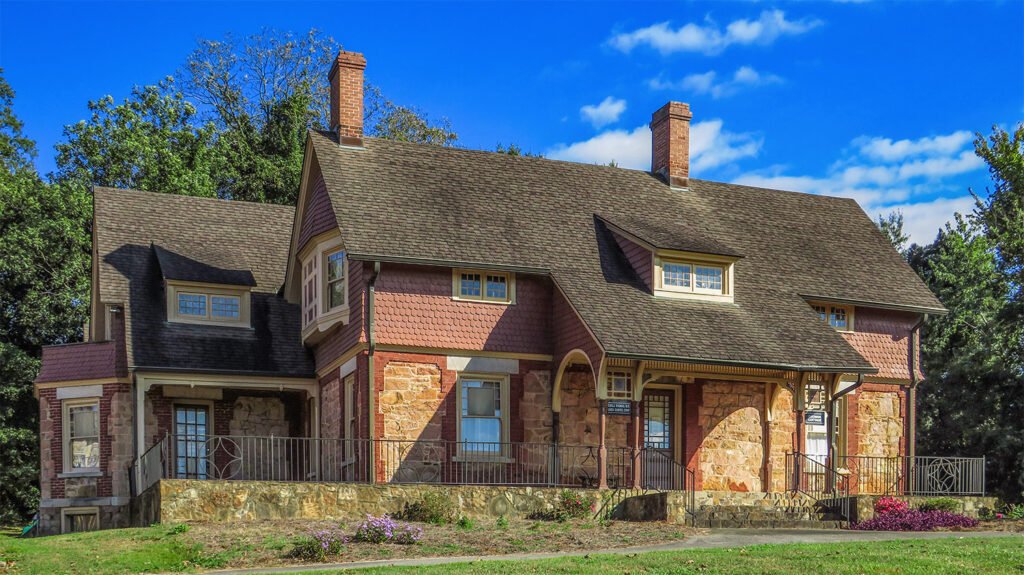
    L.B. Wheeler. Crowan Cottage (1886). Anniston, Alabama.

    Lorenzo B. Wheeler (1854-1899), professionally known as L.B. Wheeler, was an architect who practiced in Atlanta from 1883 to 1891. Of his many projects in Atlanta, only his interior design work for the Edward C. Peters Residence (1883)1 2 may still survive, although it’s unclear how much of that can be credited to him and not the home’s architect, G.L. Norrman.

    Wheeler came to Atlanta from New York in 1883 to design the Kimball House Hotel,3 the first atrium hotel in the city and possibly the United States (no, Atlanta, it wasn’t the Hyatt Regency).

    L.B. Wheeler. Kimball House Hotel (1885, demolished 1959). Atlanta. Illustration from an undated postcard published by Adolph Selige Publishing Co.

    Before his time in the Southeast, Wheeler worked with Hugh Lamb from 1877-1881, and a handful of buildings by Lamb & Wheeler still survive in New York.

    In Atlanta, Wheeler first partnered with H.I. Kimball,4 owner of the Kimball House, a prototypical Atlanta huckster who marketed himself as an architect and engineer — he was neither.

    Wheeler was the first Atlanta architect to specialize in interior design. In the 1880s, much of his work involved decorating Peachtree Street mansions, including many designed by other architects. In 1885 and 1886, he wrote a series of articles on home decoration for The Atlanta Constitution, which will be published here soon.

    In 1885, Kimball & Wheeler partnered with W.H. Parkins, Atlanta’s first legitimate architect.5 One surviving work from the Kimball, Wheeler & Parkins firm remains: the Randolph County Courthouse (1886) in Cuthbert, Georgia, primarily credited to Parkins.6

    Kimball left the firm in 18867, and Parkins & Wheeler were associated for a brief period between 1886 and 1887,8 with one project from the firm surviving: the Oglethorpe County Courthouse (1887) in Lexington, Georgia, also credited to Parkins.9

    Wheeler practiced independently from 1887 to 1890, and while he wasn’t an exceptional designer, his work was a little more skillful and interesting than most Atlanta architects of the era. His designs demonstrated an understanding of national architectural trends, and it appears he was particularly influenced by the work of H.H. Richardson.

    In the late 1880s, Wheeler secured extensive work in several Alabama boomtowns, and 2 homes in Anniston, Alabama, are the only known extant works from his solo period.

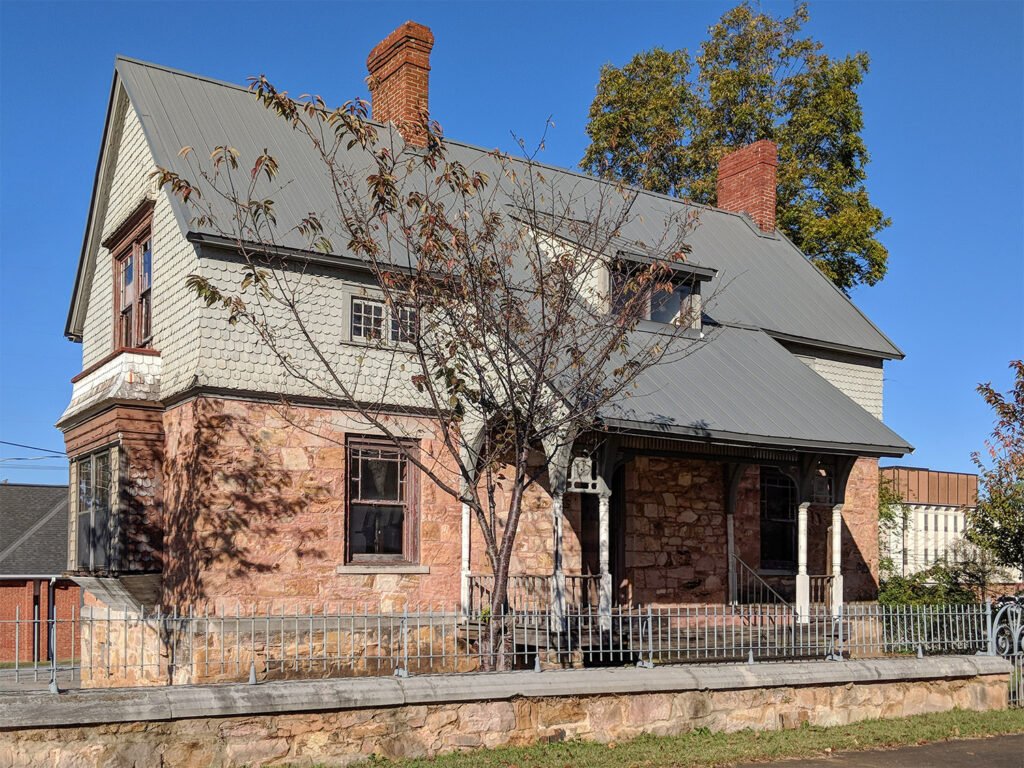
    Crowan Cottage10 (1886, pictured above) and Noble Cottage (1887, pictured below) are a pair of picturesque Queen Anne-style residences designed for Samuel Noble. Despite the homes’ nearly identical designs, Crowan Cottage has been ludicrously attributed to Stanford White,11 who never designed a damn thing in the Southeast.

    L.B. Wheeler. Noble Cottage (1887). Anniston, Alabama.

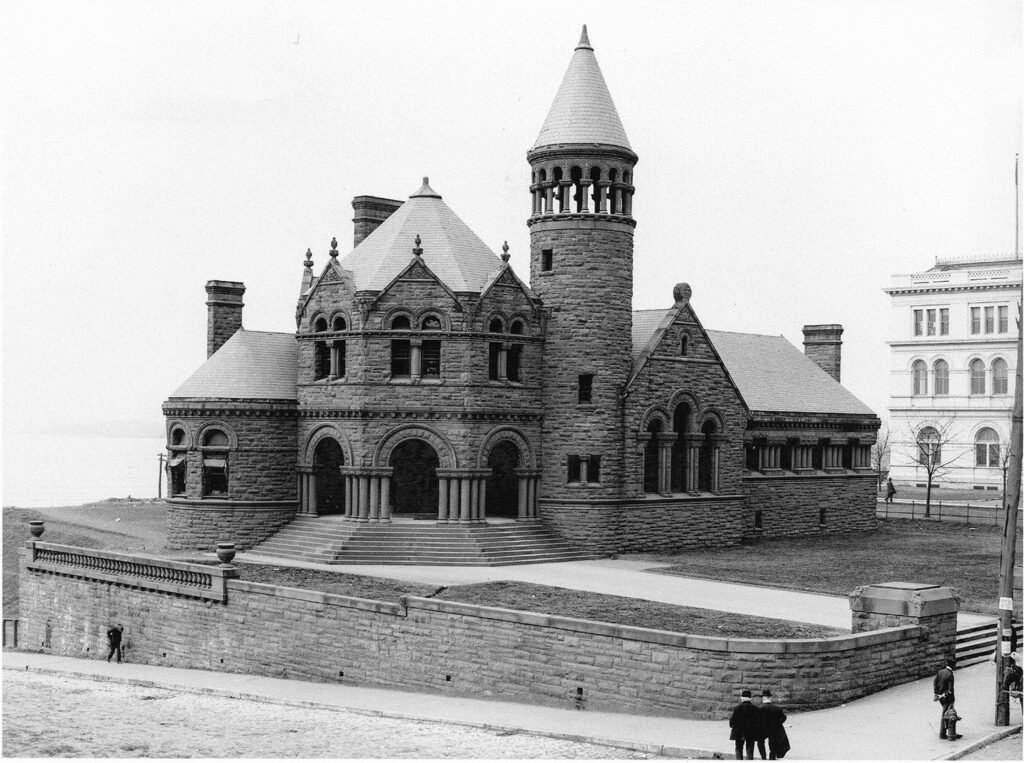
    Wheeler relocated to Memphis, Tennessee, in early 1891,12 shortly after securing the commission for the Cossitt Library 13 14(1893, demolished 1958), a beautiful Romanesque creation that could easily be considered his finest work.

    L.B. Wheeler. Cossitt Library (1893, demolished 1958). Memphis, Tennessee.

    Wheeler’s former assistant, W.T. Downing,15 operated in Atlanta as Wheeler & Downing from 1891 to April 1892,16 17 18 finishing up Wheeler’s incomplete projects.19 Downing easily filled the void left by Wheeler and was one of Atlanta’s most prominent architects until he died in 1918.

    By 1894, Wheeler had moved to St. Louis, where he worked in two different partnerships20 21 22 before seemingly disappearing from the public eye by 1898. Following a brief illness, he died at his father’s home in Connecticut at the age of 45,23 with his death barely noted in newspapers outside of Atlanta.

    Described as “quiet and reserved”, Wheeler reportedly owned many “rare and very expensive” books, with his library said to be “the finest collection of architectural works in the South.” After his death, The Atlanta Constitution claimed:

    “His room at the Kimball contained only two chairs, his bed and a dresser, but it was so crowded with books that one experienced difficulty in moving about.”24

    It somehow seems fitting that so few traces of Wheeler’s work remain.

    References

    1. “Some New Buildings”. The Atlanta Constitution, July 12, 1885, p. 9. ↩︎
    2. “Southern Architecture”. The Atlanta Journal, January 1, 1886, p. 1. ↩︎
    3. “Mr. Kimball’s Projected Suburb”. The Atlanta Constitution, October 21, 1883, p. 8. ↩︎
    4. ibid. ↩︎
    5. “A Card.” The Atlanta Constitution, March 19, 1885, p. 5. ↩︎
    6. “Personal.” The Atlanta Journal, March 18, 1886, p. 4. ↩︎
    7. “Notice.” The Atlanta Constitution, July 1, 1886, p. 8. ↩︎
    8. “Notice of Dissolution.” The Atlanta Constitution, April 1, 1887, p. 5. ↩︎
    9. “Personal.” The Atlanta Journal, March 18, 1886, p. 4. ↩︎
    10. National Register of Historic Places Inventory – Nomination Form – Noble Cottage ↩︎
    11. National Register of Historic Places Inventory – Nomination Form – Crowan Cottage ↩︎
    12. Morgan, Thomas H. “The Georgia Chapter of The American Institute of Architects”. The Atlanta Historical Bulletin, Volume 7, No. 28 (September 1943): p. 148. ↩︎
    13. “To Begin Work.” The Memphis Daily Commercial, April 6, 1890, p. 5. ↩︎
    14. “Another Big Building.” Memphis Avalanche, September 13, 1890, p. 1. ↩︎
    15. Morgan, Thomas H. “The Georgia Chapter of The American Institute of Architects”. The Atlanta Historical Bulletin, Volume 7, No. 28 (September 1943): p. 148. ↩︎
    16. “Eight Millions More.” The Atlanta Constitution, April 13, 1890, p. 7. ↩︎
    17. “A Handsome Residence”. The Atlanta Constitution, April 19, 1890, p. 4. ↩︎
    18. “Professional Cards.” The Atlanta Constitution, April 3, 1892, p. 7. ↩︎
    19. Morgan, Thomas H. “The Georgia Chapter of The American Institute of Architects”. The Atlanta Historical Bulletin, Volume 7, No. 28 (September 1943): p. 148. ↩︎
    20. “Dissolution Notices”. St. Louis Daily Globe-Democrat, October 2, 1894, p. 7. ↩︎
    21. “Another Big Sky Scraper.” St. Louis Post-Dispatch, December 8, 1895, p. 20. ↩︎
    22. “The Holland Building.” St. Louis Daily Globe-Democrat, February 9, 1896, p. 30. ↩︎
    23. “Death of Mr. L.B. Wheeler”. The Atlanta Constitution, March 7, 1899, p. 2. ↩︎
    24. ibid. ↩︎