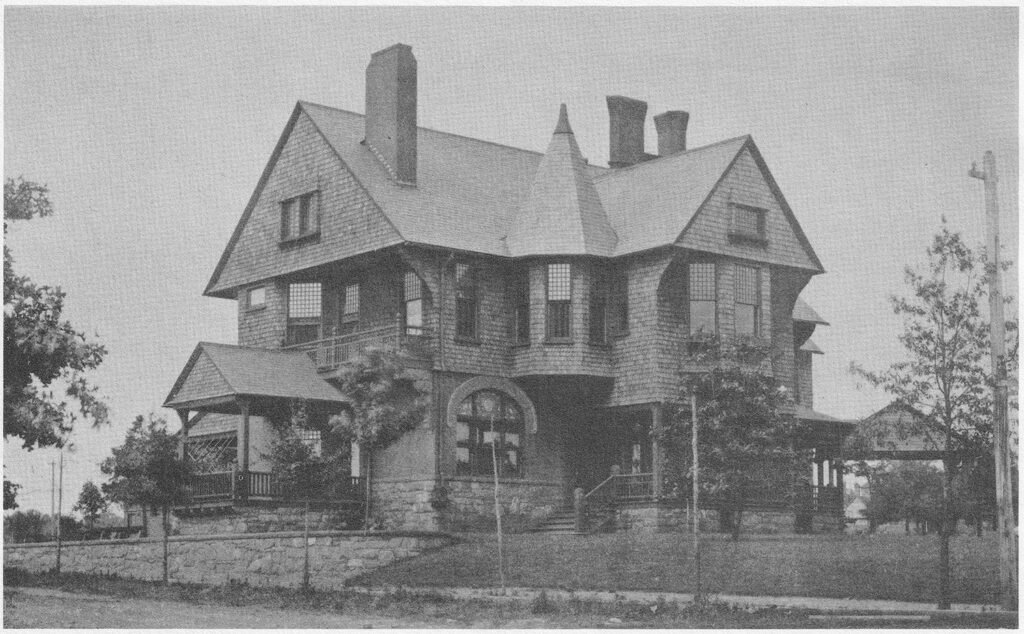
Category: Architects of Atlanta and the Southeast

  • In the Words of G.L. Norrman: On a Sea Wall for Galveston, Texas (1900)

    The Background

    Following the 1900 Galveston hurricane, which became the deadliest natural disaster in U.S. history, G.L. Norrman opined that the Texas port city should build a seawall, his comments appearing in Wallace Putnam Reed‘s column for The Macon Telegraph on September 20, 1900.

    If it sounds like Norrman was familiar with Galveston, there’s a reason: he likely emigrated to the United States through the Port of Galveston in 1874,1 and it’s possible that he worked in the city or elsewhere in Texas as a draftsman before starting his practice in South Carolina.2

    As a result of the hurricane, Galveston did indeed build a seawall.

    Norrman’s remarks:

    “Galveston should have a sea wall. Holland is below the ocean, and yet it is efficiently protected by dykes. Galveston is six feet above the sea, and a wall is feasible.

    “Then the buildings should be of a substantial, storm-proof character. People should prepare proper safeguards and not charge every disaster to Providence.”3

    References

    1. “An Educated Architect”. The Atlanta Journal, December 17, 1892, p. 9. ↩︎
    2. Withey, Henry F. and Withey, Elsie Rathburn. Biographical Dictionary of American Architects (Deceased). Los Angeles: New Age Publishing Co. (1956), p. 448. ↩︎
    3. Reed, Wallace Putnam. “Atlanta Street Talk.” The Macon Telegraph (Macon, Georgia), September 20, 1900 ↩︎

  • In the Words of G.L. Norrman: On Prohibition (1899)

    The Background

    A recurring theme of G.L. Norrman‘s career was his vocal opposition to the prohibition of alcohol, at a time when the temperance movement was in full force in the United States, and many cities and states attempted to ban its sale and production.

    Atlanta enacted prohibition in July 1886,1 reportedly prompting Norrman to return to practice for a brief time in Greenville, South Carolina,2 which had not yet passed a similar law, although nearby Spartanburg had in 1884 — by just 4 votes.3 4

    Prohibition was incredibly unpopular in Atlanta, and the city’s business leaders loudly complained that it made them lose money. In November 1887, as Atlantans prepared to vote for a repeal of the law, The Atlanta Constitution asked the city’s architects if they had designed any commercial buildings since prohibition began. None had. Norrman reported:

    “In response to your inquiry, I can say that I have no store building on hand to be erected in Atlanta, nor have I had for two years. I had some drawings made for five stores, two years ago, but they were not built, as the owner did not think it would pay to build them after prohibition started here.”5

    Three days after Norrman’s remarks, a reported 15,000 Atlantans took to the streets in protest against prohibition,6 and the next day, voters overwhelmingly voted to end the ban.7

    The threat of prohibition loomed again in 1899, when the Georgia House of Representatives approved a measure proposing a statewide ban,8 prompting Norman to write the following letter to The Atlanta Journal, published on December 2, 1899.

    The attempt at statewide prohibition in Georgia failed a few days later,9 10 but ultimately succeeded in 1907, 13 years before prohibition was enacted nationwide.

    Norrman’s remarks:

    “In answer to some requests for my opinion about the prohibition bill, I will say that I think it is too much ado about nothing.

    It is morally wrong to confiscate property, or to debar people from using the comforts and luxuries of life in moderation on account of a few drunkards.

    “If school boys, church members, prohibitionists, club men and legislators, or anybody else if they should get drunk, were taken to the station house and well whipped, there would rarely, or ever, be and drunkenness.

    “‘The punishment should always fit the crime.’ So disgraceful behavior deserves disgraceful punishment.

    “Prohibition practically confiscates a great deal of capital which is now used in a legal and proper manner, while whipping drunkards instead of petting them would only queer the business of the professional revivalist. The only business that would be seriously affected by such a law is that of the temperance lecturer. He would necessarily have to go out of business less than six months after such a law went into effect, for the lack of stock in trade. After that time, if there should be any drunkards left, they would keep so quiet that he could hardly pick out enough to arouse any emotion, even in the most sentimental of sentimentalists.”

    G.L. Norrman11

    References

    1. “Closed Up”. The Atlanta Constitution, July 1, 1886, p. 1. ↩︎
    2. Morgan, Thomas H. “The Georgia Chapter of The American Institute of Architects”. The Atlanta Historical Bulletin, Volume 7, No. 28 (September 1943): p. 146. ↩︎
    3. “Local Option Elections”. Edgefield Advertiser (Edgefield, South Carolina), December 4, 1884, p. 2. ↩︎
    4. “Death Struggle With Saloons In Former Days of Spartanburg”. Spartanburg Weekly Herald, February 6, 1906, p. 6. ↩︎
    5. “Here Are the Facts”. The Atlanta Constitution, November 22, 1887, p. 5. ↩︎
    6. “15,000 People”. The Atlanta Constitution, December 4, 1884, p. 1. ↩︎
    7. “It Is Wet”. The Atlanta Constitution, November 27, 1887, p. 10. ↩︎
    8. “The Prohibition Bill Passed the House By Vote of 93 to 65”. The Atlanta Journal, November 22, 1899, p. 5. ↩︎
    9. “Prohibition Bill Killed in the Senate; Vote 26-14”. The Atlanta Journal, December 8, 1899, p. 1. ↩︎
    10. “Senate Kills Willingham Bill By Emphatic Vote of 26 to 14”. The Atlanta Constitution, December 9, 1899, p. 1. ↩︎
    11. “(Communicated.)” The Atlanta Journal, December 2, 1899, p. 5. ↩︎
  • In the Words of G.L. Norrman: On the Attainment of Education and Culture (1899)

    G.L. Norrman. Sixteenth Street School (1893). Columbus, Georgia. Illustration drawn by W.L. Stoddart.1

    The Background

    In June 1899, The Atlanta Constitution launched “The Constitution‘s Home Study Circle”, consisting of long-form printed lectures on a variety of subjects, with the promise of “instruction and general culture for those who make the most of its benefits”.

    Upon announcement of the program, G.L. Norrman wrote the Constitution to express his tentative approval, as seen in this letter “From Mr. G.L. Norrman.”, published on June 8, 1899.

    Norrman’s remarks:

    ‘The “Home Study Circle” is on the right line. I am not familiar with the details of your plan, but a glance at your course of free lessons for your readers convinces me that they will be of great value to those who will give them proper attention. Education and culture cannot be purchased in job lots, nor picked up in the road, but some systems and methods are easier and more attractive than others, and I think that your scheme of popular instruction is a good one, and will be appreciate by hosts of old and new readers.’

    Very sincerely,

    G.L. NORRMAN2

    References

    1. American Architect and Building News, vol. 38, no. 883 (November 26, 1892). ↩︎
    2. “From Mr. G.L. Norrman”. The Atlanta Constitution, June 9, 1899, p. 4. ↩︎
  • In the Words of G.L. Norrman: On Huntsville, Alabama (1899)

    G.L. Norrman. Bienville Hotel (1900, demolished circa 1969). Mobile, Alabama.

    The Background

    The June 13, 1899, edition of The Atlanta Journal published remarks from G.L. Norrman about Huntsville, Alabama, where he had just returned “from a business visit”.

    Norrman may have visited that area in connection with plans for the renovation of the Lauderdale Court House in nearby Florence, Alabama, which was awarded days later to Golucke & Stewart of Atlanta.1

    It’s unclear if Norrman ever completed any work in Huntsville or North Alabama, although he designed multiple projects in Anniston and Gadsden, Alabama, in the late 1880s, and briefly considered moving his practice to Birmingham, Alabama in late 1899, when he was designing the Bienville Hotel (pictured above) in Mobile, Alabama.

    The spring he refers to here is the Big Spring in downtown Huntsville.

    Norrman’s remarks:

    “I like Huntsville very much. It’s a pretty, thrifty little town—the people there dress well and seem to be prosperous and the streets are full of elegantly dressed, handsome ladies.

    “A great stream of water, twenty-odd feet broad, gushes from rock to the tune of over a million gallons a minute. It is a most refreshing sight— this spring. This hot weather a man can almost keep cool who carries around a picture of the Huntsville spring in his mind.”2

    References

    1. “$5,000 To Be Spent”. The Florence Herald (Florence, Alabama), June 22, 1899, p. 1. ↩︎
    2. “Loitering In the Lobbies”. The Atlanta Journal, June 13, 1899, p. 3. ↩︎
  • In the Words of G.L. Norrman: On the Meaning of “Civilization” and “Christian Community” (1899)

    George E. Walker. Trinity Episcopal Church (1860). Abbeville, South Carolina.1 2

    The Background

    On May 1, 1899, The Atlanta Constitution published this short letter from G.L. Norrman in its “Topics About Which the People Are Talking” column.

    Norrman’s own views of Christianity and society were already well-documented in his pamphlet Architecture As Illustrative of Religious Belief and as a Means of Tracing Civilization, and here he suggested that the newspaper interview people on their definition of the terms “civilization” and “Christian community”.

    The note includes an outdated and offensive term referencing people of color.

    Norrman’s remarks:

    In all countries, where moral and social systems similar to our own prevail, two expressions are in use among all sorts and conditions of men, to which each individual man seems to give his own interpretation. These terms are used in the kitchen and in the parlor; in squalid hovels and in the most elaborate apartments; we hear them in the barroom, at the bar of justice and behind jail bars. From press and pulpit they are heard continually, and fanatics for ages have made zealous use of them while kindling cruel bonfires for the immolation of their fellow creatures. Politicians use them as a means of catching votes; trades people to sell goods; promotors of all sorts to float their schemes. Sometimes they are used by learned professors and sometimes by ignorant field negroes. The expressions I have reference to are ‘civilization’ and ‘Christian community.’ I think it would be interesting to a large number of your subscribers to read definitions of these terms from people of various pursuits and various intellectual attainments.”3

    References

    1. Trinity Episcopal Church and Cemetery, Abbeville County – SCDAH ↩︎
    2. Restoring Abbeville’s Trinity Episcopal Church – South Carolina Public Radio ↩︎
    3. “Topics About Which the People Are Talking”. The Atlanta Constitution, May 1, 1899, p. 4. ↩︎

  • In the Words of G.L. Norrman: On Music Critics (1899)

    In the Words of G.L. Norrman: On Music Critics (1899)

    The Background

    Following G.L. Norrman‘s previously published remarks about Moriz Rosenthal, The Atlanta Journal received several indignant letters rebuking his criticism. After his first performance sold out,1 Rosenthal then held a second concert in Atlanta,2 which was attended by a reader of the newspaper, identified only as “M.E.C.”

    In a letter published on February 24, 1899, “M.E.C.” gave a rapturous review of the concert in ridiculously florid terms, while also swiping at Norrman. The pertinent quotes:

    • “I had occasion several weeks ago to refer with indignation to the kind of stuff a morning paper was serving us as musical criticism.”
    • “But why should we expect every artist to have in the highest degree every attribute of other artists: A man may be an excellent architect, and yet know very little about music.”3

    Always eager to have the last word, Norrman shot back with another letter, which was published on February 27, 1899. Norrman liberally quoted M.E.C.’s own words, and also took the opportunity to mock the Christian Science movement — keep in mind, he was still overseeing the construction of Atlanta’s Christian Science church at the time.4

    G.L. Norrman. First Church of Christ Scientist (1899, demolished). Atlanta.5

    It’s probable that “M.E.C.” was Sue Harper Mims, the leader of Atlanta’s Christian Science church, a stuffy old society woman with whom Norrman regularly traded barbs.

    Norrman’s remarks:

    To the Editor ofThe Journal:

    “I never realized until Friday, when reading the criticism on Rosenthal by “M.E.C.” the amount of delicate perception that is necessary to be a musical critic. It requires such a delicacy of perception as to be able to distinguish a half expressed passion from an expressed passion, or from an unexpressed passion. A critic who can comprehend the “half expressed passion of a Chopin” can undoubtedly comprehend “the intellectual profundity of Schumann.” A person who is endowed with such spiritual light might almost be capable of preaching a Christian Science sermon or write poetry for a young ladies’ literary society.

    “To an ordinary person whose spiritual understanding does not extend beyond what is expressed, music, architecture or any other art is a fine art only when it is a vehicle for conveying emotions. When art is used for any other purpose it is merely a handicraft. So an acrobatic performance with the fingers on a piano is itself no more of a fine art than is an acrobatic performance with the toes on a tight rope.”

    G.L. NORRMAN6

    References

    1. “Atlanta To Have Fair”. The Macon Telegraph (Macon, Georgia), February 16, 1899, p. 2. ↩︎
    2. “Rosenthal’s Second Concert.” The Atlanta Constitution, February 16, 1899, p. 5. ↩︎
    3. “Music”. The Atlanta Journal, February 24, 1899, p. 5. ↩︎
    4. “The First Christian Science Church Built Here Will Be Dedicated Today”. The Atlanta Constitution, April 2, 1899, p. 4. ↩︎
    5. ibid. ↩︎
    6. “Criticism of a Critic.” The Atlanta Journal, February 27, 1899, p. 4. ↩︎
  • In the Words of G.L. Norrman: On Music Criticism (1899)

    In the Words of G.L. Norrman: On Music Criticism (1899)

    The Background

    G.L. Norrman was a man of forceful and contrary opinions that often riled the ruling class of Atlanta, a pretentious pack of lying dullards who couldn’t face the truth if their lives depended on it.

    What no doubt baffled them the most about Norrman was that he could fully articulate his objections in a defined and intelligent manner, of which most people are simply incapable.

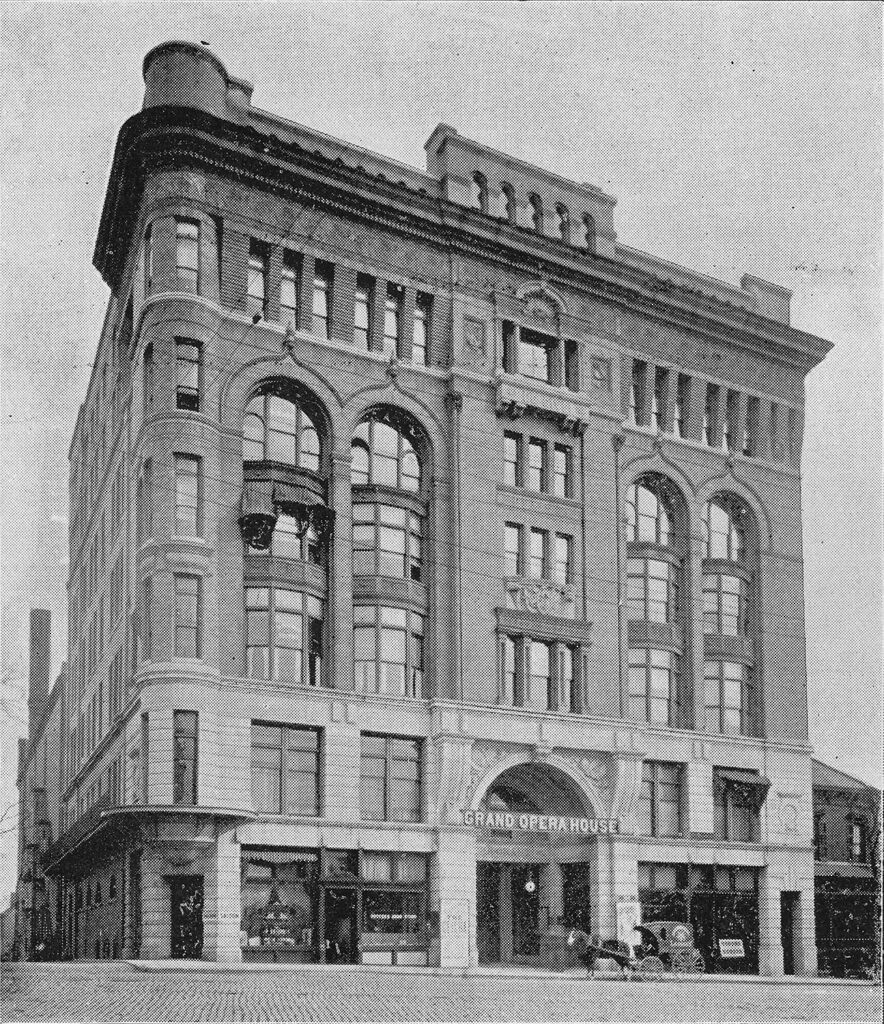
    In February 1899, the Atlanta Concert Association hosted a concert at Degive’s Grand Opera House by the Polish pianist Moriz Rosenthal, who was popularly referred to by his last name only.1

    Rosenthal was internationally famous, and his appearance in a backwater like Atlanta was considered a cultural milestone for the city.

    The newspapers were expectedly fawning of Rosenthal’s performance, but a reporter from The Atlanta Journal got an earful when he asked Norrman for his thoughts on Rosenthal, which were published on February 17, 1899, in the “Loitering in the Lobbies” column.

    The comments include multiple references to 19th-century performers, and appropriate informational links have been provided. However, there is scant information online about Joseph Denck (1848-1916), a pianist from Columbia, South Carolina who primarily performed in the Southeast.

    Norrman’s remarks:

    “Yes, I heard Rosenthal, and while I do not profess to be a musical critic I don’t mind saying how he impressed me.

    “I think his technique was very good—but that his selections were poor. I am backed up by an Atlanta musician who is far above the average, in fact, almost a professional. You see, Rosenthal played last night nothing that is familiar even to the average musician much less the great body of his audience. Indeed, as a popular success his entertainment was a dead failure. Now, if he had played a few selections even from such composers as Rossini, Beethoven, Wagner, I could have followed him much better. But, as it was, I could hardly follow him at all—and, of course, the great body of his auditors could not enjoy his playing.

    “It would have been far better if he had played selections from composers more familiar to people of average musical culture and thrown in popular airs for the benefit of the great majority of his audience who could have understood them. As it was these people simply sat there got nothing for their money.

    “Perhaps there were a dozen or so persons in the audience who really enjoyed the performance. Still I couldn’t prove even this. If the bringing of Rosenthal here was to arouse an interest in music and help the people to understand it, I can’t see exactly how this object was accomplished.

    “Say, for instance, that the majority of his hearers were up in the multiplication table of music, so to express it, and I am satisfied that such was not the case—how could they even then be expected to make a long leap and understand and enjoy the calculus of music he undoubtedly gave. For his selections were all of the highest, the most difficult grade, ultra scientific and classical.

    “So, in my view, his performance was not only a failure from a popular standpoint, and was not even a success judged from the plans of average and even above the average musicians and people of musical culture.

    “For my own part, I much prefer Mr. Joseph Denck as he played a few years ago. He has a marvelous touch and always played selections from composers more or less familiar to music lovers, and his playing of popular music is exquisite. Yes, as Denck played a few years ago, when I last heard him. I like him better than Rosenthal. He is not only a wonderful pianist, but knows how to please the average musicians and the people better than Rosenthal, judged by his performance last night.”

    Reporter: How does Rosenthal compare with Padarewski?

    “He’s about as good, I think. I never thought Paderewski such a miracle of a musical genius as some people did. I saw nothing about him to lose my head over. He’s very fine, no doubt, but so is Rosenthal, I suppose—

    “But admit that Rosenthal was as fine as fine can be Wednesday night. What does it amount to him if we cannot follow him?

    “It is not good taste in a pianist to be ever so fine if his audience don’t know it—can’t take in his fineness. Just as it would not be good taste for a person to speak Greek in a parlor full of people if nobody present understood the language.

    “I am no musical critic, but I try to take a common sense view of Rosenthal, and am backed up in what I have said by a musician of far more than average ability in musical matters. We were discussing Rosenthal after his performance and found that our views coincided concerning his recital.”2

    References

    1. “Rosenthal’s Coming Great Social Event As Well As Musical”. The Atlanta Journal, February 15, 1899, p. 7. ↩︎
    2. “Loitering In the Lobbies”. The Atlanta Journal, February 17, 1899, p. 10. ↩︎
  • In the Words of G.L. Norrman: On Kissing, Again (1898)

    In the Words of G.L. Norrman: On Kissing, Again (1898)

    The Background

    Attitudes toward sex were rapidly changing in the late 19th century, and 1898 was a banner year for kissing controversies.

    Richmond P. Hobson was a dashingly handsome Navy lieutenant from Alabama who became a national celebrity when he was captured and held as a prisoner of war after sinking the Merrimac steamship in the Spanish-American War.

    Following his release, Hobson went on a national tour, which was attended by throngs of admiring young girls, and in August 1898, he stopped in Atlanta to give a lecture at the Governor’s Mansion,1 2 which G.L. Norrman apparently attended.

    A week after his Atlanta visit, Hobson visited Long Beach, California, where he was approached by Emma Arnold of St. Louis, visiting with a group of a dozen friends. Arnold brazenly asked Hobson for a kiss — to which he agreed. Arnold then proceeded to kiss each of her female friends to share Hobson’s kiss with them.3

    The resulting scandal fueled a press flurry that lasted for months, and it launched Hobson’s status as an early sex symbol. Hobson kissed hundreds of girls for the remainder of his tour, which newspapers began dubbing “Hobson’s kissing tour”. At one event in Chicago, he reportedly kissed 163 women, followed by another in Kansas City where he broke his record by kissing 417.4

    Incidentally, the famous Mrs. Kingsberry of Atlanta defended Hobson as a “nice manly fellow, and modest, too”, placing blame for his kissing escapades on the loose young women who flocked to him. “All young girls are enthusiastic hero worshipers!” she wrote. “Poor young fellow!” she added. “To think of marching up to 400 Kansas women and kissing 267 of them! What horrors!”5

    As controversy swirled over Hobson’s incident with “the Long Beach girl”, Norrman wrote the following letter to The Atlanta Constitution, which was published on August 14, 1898.

    “Patriotism and Kisses”

    Editor Constitution

    “Lieutenant Hobson, in a short talk at the governor’s mansion, remarked to the effect that too much ado was made over the incident of the Merrimac, claiming that all our seamen would cheerfully embrace every opportunity of serving the country.

    “From Miss Arnold’s explanation of the incident of the kiss I infer that she is equally modest and generous and gives every girl in the country credit for a desire of embracing the same opportunity of showing, with a merry smack, her appreciation of the heroism on the Merrimac.”

    G.L. Norrman

    Atlanta, August 12th.6

    References

    1. “Hobson Here; Will Lecture”. The Atlanta Journal, August 2, 1898, p. 1. ↩︎
    2. “Great Reception Given Lt. Hobson”. The Atlanta Journal, August 3, 1898, p. 5. ↩︎
    3. “How Miss Arnold Got Hobson’s Kiss”. The Atlanta Constitution, August 12, 1898, p. 9. ↩︎
    4. “Hero Hobson’s Kissing Tour Through the Wild West”. The Atlanta Journal, December 22, 1898, p. 4. ↩︎
    5. “Lieut. Hobson’s Kissing Tour As Viewed By Mrs. Kingsberry”. The Atlanta Journal, December 24, 1898, p. 4. ↩︎
    6. “Patriotism and Kisses”. The Atlanta Journal, August 14, 1898, p. 16. ↩︎
  • In the Words of G.L. Norrman: On Cursing (1898)

    In the Words of G.L. Norrman: On Cursing (1898)

    The Background

    In 1898, Randolph Guggenheimer, president of the City Council of Greater New York, instituted an ordinance that prohibited swearing in public places and imposed a $10 fine on a person for each curse word they uttered.1

    The ordinance was widely mocked by the press and deeply unpopular with New Yorkers,2 and the council repealed it in less than three weeks.3

    On August 2, 1898, The Atlanta Journal published the opinions of well-known Atlantans on New York’s “anti-damn” ordinance and whether it could be replicated in Atlanta, in an article titled: ‘”Antidamn” Law For Us?” G.L. Norrman — once a sailor, mind you — was naturally opposed.

    As a representative piece of Atlanta journalism, the article repeatedly misspelled Guggenheimer’s name as “Gurgenheimer”.

    Norrman’s remarks:

    Curse words I regard merely as adjectives used to express strong feeling. They simply emphasize what a man says and those toward whom they are applied always understand that what is said is meant. These adjectives are sometimes very useful in business, because some people persist in refusing to understand what you mean unless you emphasize it with them. These adjectives should be regulated arccording to the people with whom you are talking.

    “To illustrate: If a lady comes into the office and proves to be disagreeable, I simply excuse myself—say that I am too busy, or words to that effect: but if a book agent or lightning rod man or life insurance drummer comes in, I tell him to go to hell. I don’t believe that Mr. Gurgenheimer’s [sic] law can be enforced to advantage in New York City. My experience with New Yorkers is that you often have to emphasize your language very emphatically in talking even to them. In fact, I believe that more emphasis is needed in New York than Atlanta because it’s a larger place. Of course, I don’t think, for a moment that the ‘anti-damn’ laws could be enforced in Atlanta. Its enforcement would seriously interfere with business.

    “I admit that these adjectives are not elegant, but they form the most forcible way in which one can express himself.”4

    References

    1. “Public Profanity Must Stop.” The Rome Daily Sentinel (Rome, New York), July 21, 1898, p. 4. ↩︎
    2. “He Is Acting As The Mayor.”. The Daily Standard Union (Brooklyn, New York), August 1, 1898, p. 8. ↩︎
    3. “The Board of Aldermen”. The New York Times, August 17, 1898, p. 12. ↩︎
    4. ‘”Antidamn” Law For Us?’. The Atlanta Journal, August 2, 1898, p. 5. ↩︎