Category: W.W. Goodrich

  • W.W. Goodrich on Henry W. Grady (1891)

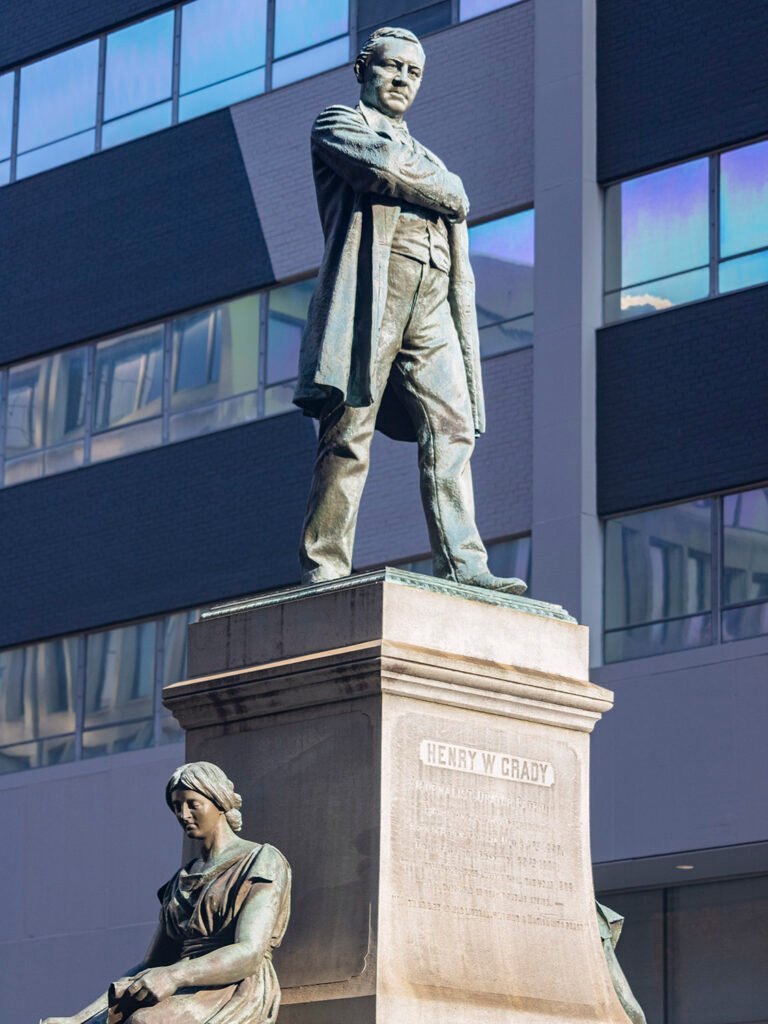
    Alexander Doyle. Henry. W. Grady Monument (1891). Atlanta.

    The Background

    Henry W. Grady (1850-1889) was the editor of The Atlanta Constitution in the 1880s, as well as the originator and chief proselytizer of “The New South” mythology that Atlanta still clings to as gospel.

    If anyone in post-Civil War America was unaware of Grady’s conception of the New South, he considered it his life’s mission to indoctrinate them, criss-crossing the United States and preaching his message of a resurgent South in a series of public speeches.

    Grady’s big idea was to decrease the Southeast’s economic reliance on agriculture and attract industry to the region with cheap labor, envisioning Atlanta as its epicenter.

    The city and mythology soon became synonymous, and Atlanta developed a reputation as a progressive, “wide-awake” metropolis in a region that had long been viewed as backward and rural.

    The vision of the New South was anything but progressive, however, and Grady was simply regurgitating the stale promises of capitalism with a Southern twang.

    He was also an avowed white supremacist who lamented the region’s “Negro problem,” which is to say, that Black people existed at all. Among some of Grady’s choice remarks on the subject is this subtle proclamation:

    But the supremacy of the white race of the South must be maintained forever, and the domination of the negro race resisted at all points and at all hazards, because the white race is the superior race.1

    In other words, the New South was to be built on the same old bullshit as the Old South.
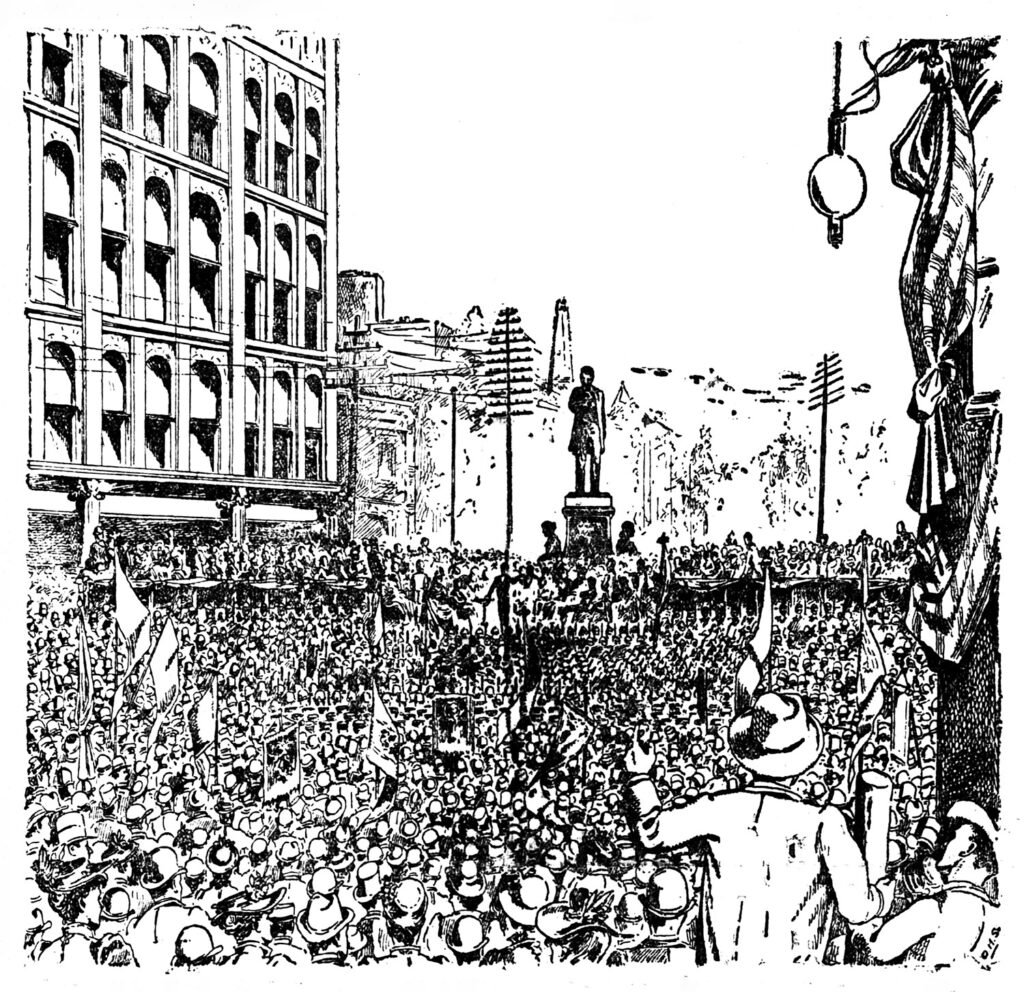
    Illustration of the unveiling of the Henry W. Grady Monument, October 21, 18912

    Americans love to deify racist orators, and when Grady suddenly died in December 1889, he was immediately beatified by white Atlantans as some patron saint of the city. A movement quickly grew to erect a monument to him, and in March 1890, a local committee accepted the design for a bronze statue sculpted by Alexander Doyle.3

    The Henry Grady monument was unveiled in a lavish public ceremony on October 21, 1891,4 which the Constitution predictably covered as if it were the event of the century, claiming that crowds in attendance ranged from 25,000 to 50,000 people,5 no doubt greatly exaggerated since the city’s population was less than 70,000 at the time.6

    A monument to Grady wasn’t enough, however, and for decades the city slapped his name on various streets and buildings, including Grady Memorial Hospital and Grady High School in Midtown. The high school finally dropped his name in 2021,7 but the hospital remains “Grady”, and it’s hard to imagine a world in which Atlantans would ever call it anything else.

    The Grady monument was erected at the intersection of Marietta and Forsyth Streets, and during the 1906 Atlanta race massacre, it served as an altar for the bodies of three Black men murdered by an angry white mob.

    As the Constitution told the story:

    One of the worst battles of the night was that which took place around the postoffice. Here the mob, yelling for blood, rushed upon a negro barber shop just across from the federal building.

    “Get ’em. Get ’em all.” With this for their slogan, the crowd, armed with heavy clubs, canes, revolvers, several rifles, stones and weapons of every description, made a rush upon the negro barber shop. Those in the first line of the crowd made known their coming by throwing bricks and stones that went crashing through the windows and glass doors.

    Hard upon these missiles rushed such a sea of angry men and boys as swept everything before them.

    The two negro barbers working at their chairs made no effort to meet the mob. One man held up both his hands. A brick caught him in the face, and at the same time shots were fired. Both men fell to the floor. Still unsatisfied, the mob rushed into the barber shop, leaving the place a mass of ruins.

    The bodies of both barbers were first kicked and then dragged from the place. Grabbing at their clothing, this was soon torn from them, many of the crowd taking these rags of shirts and clothing home as souvenirs or waving them above their heads to invite to further riot.

    When dragged into the street, the faces of both barbers were terribly mutilated, while the floor of the shop was met with puddles of blood. On and on these bodies were dragged across the street to where the new building of the electric and gas company stands. In the alleyway leading by the side of this building the bodies were thrown together and left there.

    At about this time another portion of the mob busied itself with one negro caught upon the streets. He was summarily treated. Felled with a single blow, shots were fired at the body until the crowd for its own safety called for a halt on this method, and yelled “Beat ’em up. Beat ’em up. You’ll kill good white men by shooting.”

    By way of reply, the mob began beating the body of the negro, which was already far beyond any possibility of struggle or pain. Satisfied that the negro was dead, his body was thrown by the side of the two negro barbers and left there, the pile of three making a ghastly monument to the work of the night, and almost within the shadow of the monument of Henry W. Grady.

    So much for the city too busy to hate.

    The Grady statue still stands at the intersection of Marietta and Forsyth Streets in Downtown Atlanta, but it’s easy to overlook. In June 1996, it was moved 10 feet from its original spot for greater visibility,8 but it remains surrounded on both sides by a canyon of glass and steel buildings that casts the monument in near-constant shadow — that’s probably for the best.

    When the statue was unveiled in 1891, W.W. Goodrich felt the need to offer his thoughts on the subject — because of course he did — with remarks to the Constitution that should be viewed with great skepticism, given his well-noted propensity for lying.

    In the following article excerpt, Goodrich claims to have had “several conversations” with Grady — “in his sanctum,” no less –and acts as if the two men were intimate friends.

    Let’s do some quick math here: Goodrich came to Atlanta in September 1889,9 and Grady died on December 23, 1889, after a month-long bout of pneumonia, during which time he also took extended trips to New York and Boston.10

    Would a no-name newcomer from California have been able to engage in “several conversations” with Grady in under 3 months? I have serious doubts.

    Here, Goodrich also compares Grady to Abraham Lincoln, with whom he was apparently quite enamored [see also: “The President and the Bootblack“], sharing an apocryphal tale about Lincoln that he undoubtedly pulled straight from his ass.

    And on that note, we won’t be hearing much more of Goodrich’s bullshit for a while. Thank God.


    Article Excerpt:

    All during the day, and away into every night, there is a group around the Grady statue. Yesterday it was surrounded all day by men, women and children, who were studying the bronze figure. As late as 10 o’clock last night there were at least twenty people in front of the statue, gazing at it.

    Mr. W.W. Goodrich, the architect, says:

    Looking upon that face in living bronze, studying its points of character, the many thoughts of the several conversations I had with him pass in review before my memory. Shortly after making Atlanta my home, I called upon Mr. Grady in his sanctum. Always courteous, cordial, and painstaking in a marked degree, to make a stranger at home, in his beloved city, was he to every one. He never referred to the past, but that he predicted from out of it would arise in the south, in this favored region, the grandest lives of our future republic. He predicted that the mighty forces of science would hereabout establish those appliances of labor that would elevate the new south above her most rosy anticipations.

    “And why not,” said Mr. Grady to me once, “about us all are the minerals, inexhaustible, that are used in manufacturing enterprises. Our fields give us the raw material for our spindles to manipulate, our firesides are aglow with fuel from nearabout, our food products can all be raised here, our climate cannot be excelled, our transportation facilities place us speedily in all the markets of the world. Again, the active hands behind all this are young men who were boys after the surrender. From bank presidents down to humble vocations, our young men are the leading spirits.”

    And whilst I listened to the speeches of Mr. Clark Howell and his co-laborers, at the unveiling ceremonies last Wednesday, I could not help but think of Mr. Grady’s remarks: “Our young men are back of it all, and are the active hands in the forwarding of all this remarkable prosperity and progress.”

    Atlanta is peculiarly a city of young men. Their influence is felt on every hand, in every vocation, trade or profession. The brainy young men are back of it all, of all this wonderful and real prosperity, of all this great progress, and the future greatness of our city can be ascribed to the young men. And Mr. Grady was a young man. His addresses show the fire of youth with the mannered culture of experience. The young men of the new south are her bone and sinew, the coming giants in the political arena. The star of empire, for solid practical government, that government of the people, for the people, and by the people, that government of genuine Americans for Americans, is here in the south. From my observation, I verily believe there is more Americanism in the south than in all the rest of the country put together; and more love of American institutions for what they have been, for what they are and for what they will be in the future.

    Mr. Grady admired the character of Lincoln, and with emotion remarked that the south lost her best friend when Mr. Lincoln died. He stated that Washington and Lincoln were the two greatest men of the world. And Governor Hill, in his remarkable eulogy of Mr. Grady, at the unveiling ceremonies, likened Washington, Lincoln and Grady as the three greatest men of our country.

    Having occasion to visit Philadelphia during the early part of the war, Mr. Lincoln and Mr. Seward were in a car with several distinguished confederate soldiers on parole. These gentlemen were personally known to Mr. Lincoln and Mr. Seward, and as they chatted together in a most cordial manner, one of the confederate officers said: “Mr. President, what think you of the war?” Grasping the subject instantly, Mr. Lincoln asked:

    “General, what do you think of the old flag?” The general’s color instantly turned and he did, not answer. Rising from his seat across the aisle he paced up the car and back to Mr. Lincoln’s seat and finally replied: “Right there was the south’s mistake.” “Yes,” said Mr. Lincoln, “had the south come north with the old flag, there would have been no war.”

    I asked Mr. Grady is he had ever heard of the above conversation. He said that he had from one of the generals who was with Mr. Lincoln at that time. He stated the general’s name, and this same general was a very prominent man in the confederacy, and also stated that Mr. Lincoln’s remark about the old flag, was the truth.

    Referring to this conversation, at a subsequent interview, Mr. Grady said: “There as one distinct thought that occurs to me, and that is this, Mr. Lincoln was peculiarly a man of the masses, and not of the classes.” Mr. Grady was a man of the masses, and not of the classes, and therein he was like Mr. Lincoln. His strong position with the masses made his paper, The Constitution, to be read by untold thousands all over the country, who saw in the new south that future of prosperity and progress that was typical in Mr. Grady’s greatness of heart, and of which he was the prime mover and its unflinching champion.11

    References

    1. Life and Labors of Henry W. Grady. Atlanta: H.C. Hudgins & Co. (1890), p. 186. ↩︎
    2. The Atlanta Constitution, October 22, 1891, p. 1. ↩︎
    3. “The Grady Monument”. The Atlanta Constitution, March 6, 1890, p. 3. ↩︎
    4. “In Living Bronze.” The Atlanta Constitution, October 22, 1891, pp. 1-2. ↩︎
    5. ibid. ↩︎
    6. Biggest Cities in Georgia – 1890 Census Data ↩︎
    7. Midtown High School (Atlanta) – Wikipedia ↩︎
    8. “Grady Moved By Olympics”. The Atlanta Journal-Constitution, June 14, 1996, p. E1. ↩︎
    9. “Comes Here to Live.” The Atlanta Constitution, September 18, 1889, p. 4. ↩︎
    10. “Henry Grady Dead!” The Atlanta Constitution, December 23, 1889, p. 4. ↩︎
    11. “Etched And Sketched.” The Atlanta Constitution, October 26, 1891, p. 4. ↩︎
  • “Incongruities of Modern Architecture” (1893) by W.W. Goodrich

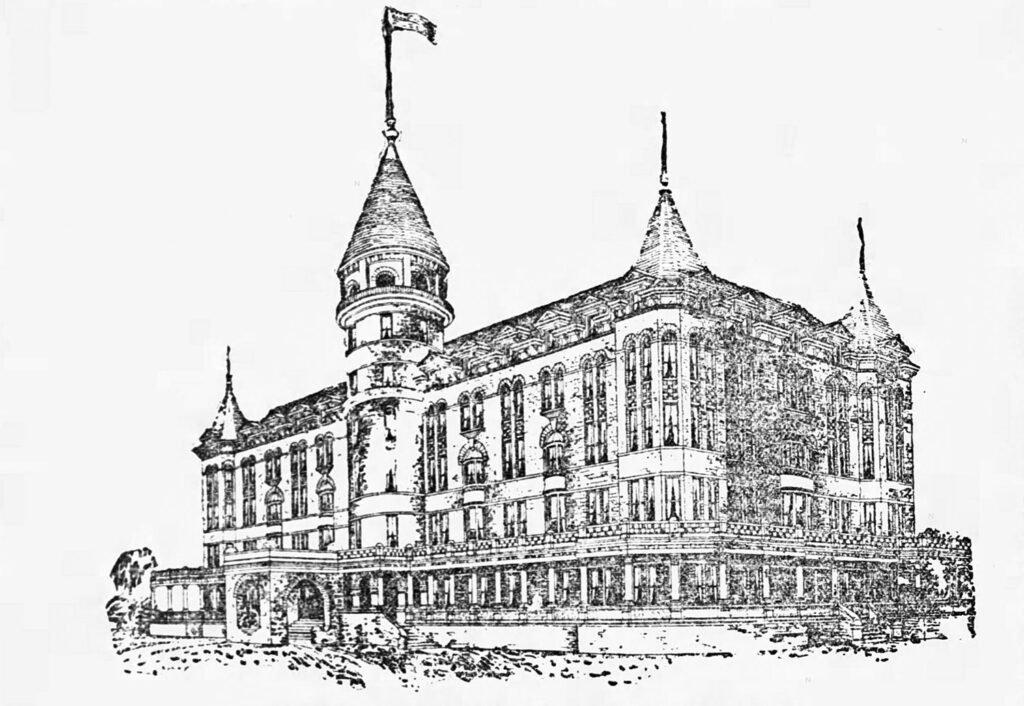
    W.W. Goodrich. Proposed design for Kennesaw Mountain Hotel. Kennesaw, Georgia (unbuilt).1

    The Background

    The following article was published in The Southern Architect in 1893 and written by W.W. Goodrich, an architect who practiced in Atlanta between 1889 and 1895.

    The Southern Architect was a monthly trade journal conceived and initially published by Thomas H. Morgan of Bruce & Morgan, patterned after national architectural publications like The American Architect, which gave scant coverage to work in the Southeast, likely because the region’s architecture was — on the whole — terrible.

    Speaking to an audience of his peers, Goodrich echoes many familiar complaints shared by professional architects in the late 1800s, when the industry was almost entirely unregulated, and any builder, carpenter, or cabinet-maker could call themselves an architect, copy a building plan from a pattern book, and pass it off as their own.

    In a region as vainglorious as the Deep South, where the appearance of wealth and the illusion of status have long been valued over character and substance, the grotesque and excessive designs of substandard architects in the 19th century were not only admired but prized.

    Here, Goodrich places the blame for bad architecture squarely on the clients, mocking the poor taste and ludicrous sense of entitlement that have always defined the newly monied. And although he specifically avoids mention of Atlanta (“Every city is cursed with it”, he notes), surely his chief inspiration was the city’s insufferable nouveau riche — and really, there is no other riche in Atlanta.

    At the time of this article’s publication, Goodrich’s practice in Atlanta was waning, and he’d no doubt experienced his fill of the city’s empty boasting and repellent arrogance — although he was pretty full of shit himself.

    Goodrich’s acerbic, cutting language in this article contrasts sharply with the facile, fawning tone he affected in earlier articles for The Atlanta Journal, more closely resembling the embittered words of another Atlanta architect, G.L. Norrman.

    Indeed, the picture painted by Goodrich is bleak: The legitimate architect is resigned to tossing his ideas in the trash, while “Mr. Newrich” demands “another incongruous architectural absurdity that the architect is not responsible for, and should not be blamed for.”

    And thus is Atlanta architecture in a nutshell.


    Incongruities of Modern Architecture.

    There are no incongruities in the designs of modern architects, no fallacious fancies. In writing about modern architects I mean those only who are genuine members of the profession; “Educated for the Profession.” I do not include any one in the noble profession of architecture who is an architect and builder – or one who furnishes designs from books and periodicals.

    That there are incongruities in the designs and in the buildings of the so-called “architects and builders” goes without question.

    Shameful examples are on every hand of the “architect and builder’s” botch work.

    Every city is cursed with it, glaring at the observer at every turn. Any one can detect the carpenter or mason architect. The carpenter architect puts on his facades all the turned work, all the scroll work, all the ornamental work, so-called, that he can possibly get on, i.e., gingerbread work. He will put on domes in unheard of places, towers that look like pigeon houses or children’s playhouses perched upon a roof, straddle of a ridge, or perched in a valley, and in out of the way places.

    Any ornamentation that his untutored mind imagines is to him a work of art, and readily finds a resting place on his buildings. An utter lack of harmony, of symmetry and of sympathy is in all his work from cellar to attic, while the real architect is blamed for the unprofessional hideousness of the wood butcher.

    The mason architect runs riot on arches that will not carry the load and the thrust flattens them so that they fall by their own weight; arches that gravitate to the ground.

    Then there is the civil engineer who sets himself up as an architect without any architectural study whatever. His designs and buildings look like railroad roundhouses or car shops, massive as the pyramids.

    I admit the foundation of architecture, “the science of construction,” is engineering, but I do not admit that the ornamental, the harmony of detail, the grouping of mass, the blending of the line between earth and sky is engineering. “It is the music of the soul,” that infinite inspiration of the imagination, that looks in and through all that is beautiful and weaves the warp and woof of the soul’s fancy into a creation; that compels all to know that a master brain has left the imprints of a genius, of a glorious creation, that is a monument for all time to come. To inspiration this creation is simplicity itself, quiet dignity in material, color, form and construction. “A babe can comprehend it.” The simple vine, the color of the lily, the structural construction of canes, the grouping of mass, where weight is required to be sustained, these are the interesting points of the study of the architect.

    He does not look after false effects to incorporate them into his building. He avoids them, he shuns them. His whole ambition is to blend his material that the effect shall be an architectural symphony at once attractive but not false, in the which the object is subservient to the client’s demand and the cash account used to the best advantage, so that there shall be no waste.

    Clients are solely to blame for all the incongruities of modern architecture, in nearly every instance.

    Mr. Newrich or Mrs. Struckile wants a home. It must excel in sublimity the palaces of the world; it must be the most picturesque and distinguished home in the city; the most exquisite charm of the avenue. Mr. T. Square is called upon for designs. He is recognized as an expert and a gentleman of large experience, thoroughly up in his profession. His charges are the regular institute ones, “which all gentlemen should adhere to” without exception.

    The newly rich client says: I want so and so – it is my taste; I want my plan like this; at which Mr. T. Square, with his keen discernment of men and things from long practice with an extensive clientele, and with an eye to the etiquette of his most noble calling, says, such and such things won’t work out, won’t harmonize, are not in good taste, are of bad form, and won’t make a pleasing whole, and will be exceedingly incongruous. And he shows the client the utter lack of sense in the client’s demands and wishes, “of course in a gentlemanly way.”

    “But, Mr. T. Square, it is my money that pays for what I want, and if you won’t work up my ideas and build as I want, I can get some one that will.”

    Poor Mr. T. Square; his professional standing conflicts with his bread and butter; he hates to create a botch, yet his family must have bread; either lose the job, or do work that his very sensitive soul shrinks from touching because he knows that he is and will be held responsible for an incongruous blemish on his architectural escutcheon.

    His ability is unquestioned, his record is proof against all vilification, but if he erects the building he will be held responsible for an architectural monstrosity, an incongruous mass. Alas! Others will do it if he won’t, and he quietly puts his views in the wastebasket and is dictated to by Mr. Newrich, and the consequences are another incongruous architectural absurdity that the architect is not responsible for, and should not be blamed for.

    W.W. Goodrich2

    References

    1. “Kennesaw Mountain.” The Atlanta Journal, February 4, 1892, p. 5. ↩︎
    2. Goodrich, W.W. The Southern Architect , Vol. 4, no. 11 (September 1983), p. 317. ↩︎

  • “Innate Savage Goodness” (1893) by W.W. Goodrich

    Agostino Iacuri. Housewarming (2013). Reynoldstown, Atlanta.1

    The Background

    The following article was published in The Atlanta Journal in 1893and written by W.W. Goodrich, an architect who practiced in Atlanta between 1889 and 1895.

    Here, Goodrich provides what absolutely no one asked for: his critique of an article called “Mutual Aid Among Savages” by Peter Kropotkin, a 19th-century Russian anarchist philosopher.

    Per usual, Goodrich couldn’t even be bothered to spell the man’s name right, repeatedly referring to him as Kraptokine. And no, he wasn’t being clever here: crap didn’t appear in the American vernacular until after World War I.2

    As Goodrich recounts in disbelief, Kropotkin had the audacity to suggest that “the savage races are equal if not superior to civilized peoples in innate goodness and common honesty.” Not that Goodrich knew anything of honesty.

    His tutting, condescending lectures are too tedious to counter at this point, but I must call attention to one obvious hypocrisy: “Everybody does not live with his head in a moral fog like the average Russian nihilist”, Goodrich loftily proclaims.

    So says the man arrested for check fraud and larceny in multiple states. Was his head not in a moral fog when he pretended to be insane in a Los Angeles jail?

    No doubt to prove how cultured he was, Goodrich had to rattle off a list of every tribal group imaginable, using terms that are mostly outdated and offensive today, and nearly all misspelled — no surprise.

    It’s also not surprising that Goodrich, who constantly mythologized Native Americans while calling for their genocide, again repeats his “Good Indian, dead Indian” sentiments here. Oh, and he also refers to women as “the weaker sex”.

    There’s truly nothing redeemable about this man.


    Innate Savage Goodness

    Comparisons of Civilization and Barbarians.

    A French Review’s Interesting Article.

    The Customs and Habits of the Different Races.

    In China Many of the Girl Children and Old and Infirm Men and Women Are Killed.

    Written for The Journal.

    Kraptokine has recently written an article for a French review with the object–not avowed, of course–of proving that the savage races are equal if not superior to civilized peoples in innate goodness and common honesty. His process of reasoning is to throw into relief the commendable qualities he finds even among the most debased tribes, like those of Australia, China and New Guinea, and efface or excuse their cruelty, their cannibalism and the inhuman practice so common in savage life of infanticide or the killing of relatives when they become too old and infirm to be longer useful. The Russian nihilist and philosopher is far from accepting the American theory so tersely expressed in the phrase, “Good Indian, dead Indian,” and if called upon to give his opinion would doubtless prove, at least to his own satisfaction, that the culture found in a Sioux or Apache community is far superior to that of which Boston is the presumed center. Though it cannot be fairly claimed that the opinions of a man who believes that the assassination of one or any number of individuals is justifiable as a political means are above suspicion, it may be interesting, from the standpoint of scholarship or ethnology to hear what he has to say on the subject.

    He begins with the bushmen, whom Lubbock describes as “the filthiest of animals,” but who have been found by Burchell and Moffat to be faithful to their promises, tenacious in returning a service rendered, and so attached to their offspring that when one of the children of the tribe is carried off the mother follows it into a state of slavery, leaving, of course, her other babes to be brought up (this detail is not added) the best way they can by the father.

    It is, perhaps, not perfectly logical to rely too strongly on the maternal instinct as a test of innate goodness, since man shares this quality with the lowest animals. It would not be difficult to find in works of natural history instances where a wild beast has in the same manner followed her young to bondage or certain death. Among the Hottentots and among the Fueggians, who live in the greatest degradation, it is the custom when any person is in the possession of a full meal to invite all persons to partake of it. Testimony is wanting to conclusively prove the universality of this custom, but even if it were as general as alleged it would simply show that this community of food is an absolute necessity, the supply of nourishment being intermittent, he who has enough for the day being able to be starving a few days later, and consequently dependent on those to whom he is at the moment seemingly generous.

    The practice at its best is a form of mutual assurance, and indicates rather a prudent foresight than innate goodness. The integrity and chastity of the Hottentots are commended by Kolben, an English writer, who says of them that they are the best and most amiable people on the face of the globe. Kraptokine adds that similar compliments are paid to the Otsiaks, Samoyedes, Esquimaux, Dyaks, Aleuts, Pajuans, and other tribes among the lowest in the social scale, not exceeding the Sioux, and the natives of Northeast Siberia, who resemble the Esquimaux. The enumeration will suggest some curious ideas to an American–that is to an American of the southern states–though the philanthropists of Boston and Philadelphia may see nothing abnormal in model like these held up for their imitation.

    Kraptokine lingers lovingly on the gentle qualities displayed by the native of Australia, China and New Guinea, in whom few travelers have hitherto found much to commend.

    He says of the Australians: “They are very indifferent regarding their food. They devour bodies horribly putrified and have recourse to cannibalism in time of famine. The sentiment of friendship is very strong among them. The weak are generally protected and the sick are cared for. They take care of the weak and sick, not abandoning them and never killing them. They are cannibals, but rarely eat members of their own tribe, unless it be the bodies of those that have been sacrificed. They prefer the flesh of foreigners.” There are here some delicate distinctions, the writer seeming to convey the idea that this abstinence from the flesh of friends and relatives is a noble trait. It is further to be noted that the weak are not always protected, while it is left to inference that the old are sometimes let to the tender mercies of wild beasts.

    Our philosopher reposes his faith in the savages of New Guinea on the testimony of one Bink, who says “that the Papuaus are gay and sociable and laugh a great deal.” Mr. Bink might have completed his phrase by adding “as do generally the inhabitants of the tropics.” He, however, goes on to say that they take care of the sick and old, never abandoning them and in no case killing them, unless it is sometimes a slave that has been sick a long time. Prisoners of war are sometimes devoured.

    Children are kindly treated and much loved. Old and feeble captives are put to death, the others are sold into slavery.

    They have no religion, no divinity, nor any supreme authority. They eagerly seek vengeance and pursue their enemies to the death.” But, who would have thought it “when they are well treated, they are very good,” which justifies their being held up to as models.

    After having visited the tropics Kraptokine turns his attention towards the poles, where he finds the Esquimaux a most gentle and lovable people, and the Aleuts, who are in many respects altogether remarkable. As the first, their characteristics are too well known to Americans to require discussion in this place. Though the Aleuts are nearer, we have not, it appears, perfectly learned to appreciate them. Our author who has drawn this information from the works of Russian missionaries describes them as of rare endurance of hardship, privations and severity of climate.

    Their code of morals is varied and severe. The perfect Aleut considers it shameful to fear inevitable death, to implore pardon of a rival, to die without having killed an enemy. He never caresses his wife no dances in the presence of other persons. He is a pattern of neatness, bathing himself every morning in the icy sea, and afterwards incoestly exposing himself on the verge in the costume of our first parents. In time of famine he gives his last decayed fish to his offspring, and feeds himself with its lingering order.

    The men do not communicate state secrets to their wives, the weaker sex seeming to share the garrulous foibles of a higher civilization. The children partake of the virtues of their elders, never fighting with one another with their fists but insulting one another’s mothers by saying that the boy’s mother doesn’t know how to sew, the Aleut woman being a very trivial being if she lacks this accomplishment.

    The circuitous way in which these facts are divulged to the people of the Atlantic coast through the medium of a Russian mission, a Russian nihilist and French review will not, it is hoped, detract from their interest or diminish their general utility. Also the Dyacks [sic] of Borneo, recognized by all who have known them as one of the most savage of peoples, though the young man cannot marry until he has brought in the head of an enemy, have most estimable qualities.

    It is not surprising after all this special pleading that Krapotkine should find excuses for infanticide, cannibalism and the killing of the old and useless in the hereditary customs and religious superstitions of savage tribes. But of what use is such a recapitulation? A resume of the noble instincts and the maternal tenderness of domestic animals or of wild beasts would be quite as valuable and prove quite as much. From savages we expect nothing, therefore every virtue they have astonishes. From civilization we expect every thing, and we estimate it by the distance it falls below absolute perfection. The logic in either case is faulty. The possession of the good quality, either in savage or in civilized beings, does not atone for the luck of all the rest. There was never a criminal so hardened or debased that he did not retain a lingering tenderness for his mother.

    The wild Bedouin of the desert receives and entertains with ostentatious hospitality for the night the chance traveler, or even his worst enemy, then waylays and slaughters him in the morning a mile from his tent. The reasoning of Krapotkine would make of this bandit and assassin a noble being, but fortunately, the common sense of humanity estimates differently and by higher standards. Everybody does not live with his head in a moral fog like the average Russian nihilist.

    W.W. GOODRICH3

    References

    1. Agostino iacurci ↩︎
    2. Thomas Crapper and the Word “Crap” – Tired Road Warrior ↩︎
    3. Goodrich, W.W. “Innate Savage Goodness”. The Atlanta Journal, May 6, 1893, p. 4. ↩︎

  • “Light in the Schools” (1893) by W.W. Goodrich

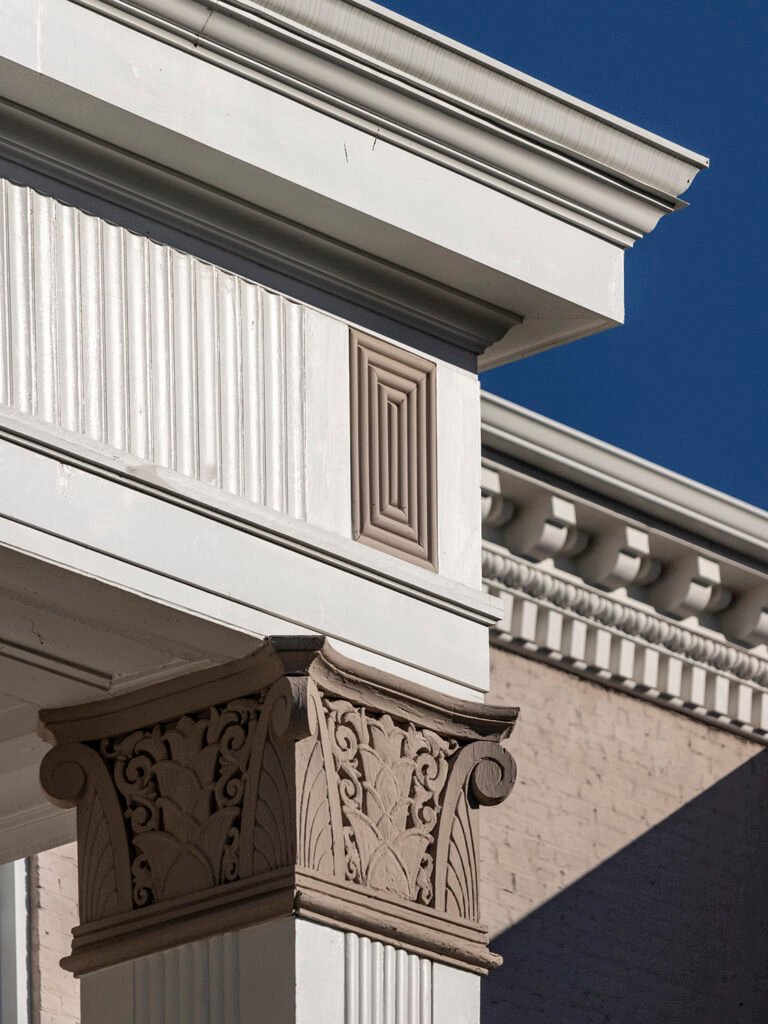
    W.W. Goodrich. Cornice and capital on Yonah Hall (1893). Brenau University, Gainesville, Georgia.

    The Background

    The following article was published in The Atlanta Journal in 1893, and written by W.W. Goodrich, an architect who practiced in Atlanta between 1889 and 1895.

    If Goodrich ever designed a classroom building during his time in Atlanta, there’s no record of it. His only known project for an educational institution in the Southeast is Yonah Hall, a dormitory and library at the Georgia Female Seminary1 2 3(later Brenau University) in Gainesville, Georgia.

    Goodrich also wasn’t an ophthalmologist, but that didn’t stop him from attempting to diagnose the cause of myopia and astigmatism in Atlanta’s children.

    “Atlanta today is inquiring the cause of its youth wearing glasses,” Goodrich writes. Were they, though? “Little boys and girls in our city are seen every day wearing glasses”, he continues, adding, “In the times of our grandparents, children wearing glasses were unknown and unheard of.”

    Citing “European oculists”, here Goodrich attributes vision problems in Atlanta’s students to a lack of northern light in their classrooms, and then provides a detailed description of an ideal school building of the early 1890s: built on a ridge, designed with a steel frame and fireproof materials (requiring “no insurance”, apparently), with a north light in the classrooms — “and only a north light”, he stresses.

    I won’t criticize Goodrich’s description too much — it’s more interesting than most of the things he wrote about. It’s also true that schools at the time were often designed so that their classrooms were primarily exposed to the softer, consistent tones of northern light, but that wasn’t always practicable due to site limitations.

    Note that Goodrich’s plan includes a “dynamo” to “furnish the light for dark days” — electric lighting was available, but was quite dim by modern standards, so architects still had to design schoolrooms to receive as much natural light as possible.

    In the 1880s and early 1890s, Bruce & Morgan of Atlanta were the indisputed leaders of school design in the Southeast, planning so many academic structures that in 1889, they even wrote a book about it: Modern School Buildings, which included full-page illustrations of their projects.4 If a copy of the book still exists, I’m unaware of it.

    Of the dozens of grade schools designed by Bruce & Morgan, only one remains in Union, South Carolina.5 However, most of their landmark college buildings still stand, such as the Main Building at Georgia Tech in Atlanta, Samford Hall at Auburn University in Alabama, and Agnes Scott Hall at Agnes Scott College in Decatur, Georgia. Only the buildings at Auburn University and Agnes Scott College are north-facing, but all of the firm’s school designs feature an abundance of oversized windows.

    In 1891, G.L. Norrman addressed the problem of school lighting with his plan for Atlanta’s Edgewood Avenue Grammar School. Built on a ridge with a north-facing front, the building was designed so that each of the 8 classrooms received sunlight from four sides, and as the Atlanta Journal reported of the plans: “Mr. Norrmann [sic] himself is so much in love with them that he has had them copyrighted.” He immediately repeated the Edgewood plan for theSixteenth Street School in Columbus, Georgia, and both buildings survive.

    In 1896, Norrman’s plan for the Anderson Street School in Savannah, Georgia, was reportedly selected, in large part, because all 12 of its classrooms received southern exposure.6 So much for that theory on northern light. The Anderson school plan was so successful that Norrman later duplicated it for both the 38th Street School and Barnard Street School in Savannah — all 3 buildings still exist.

    Goodrich praises his fellow Atlanta architects in this article, describing them as “men of rare discernment and practical intelligence” and commending their “beautiful school buildings”. Obviously, Goodrich was a bullshitter and ass-kisser, but he was right about one thing: Atlanta’s architects did design some beautiful school buildings.


    Light In The Schools.

    A Suggestion For The Board Of Education.

    The North Light Only Should Be Used.

    Mr. W.W. Goodrich Calls Attention to the Matter.

    What the European Governments are Doing for Protection and the Good Results Obtained.

    Written for The Journal.

    The public is at present more interested in schoolhouse sanitation, and the light in our public school rooms than in any other subject before our practical, everyday people, who have made Atlanta what she is and what she will be “in the glorious future.”

    Atlanta today is inquiring the cause of its youth wearing glasses. Myopic and astigmatic optics are of such frequent occurrence and of such everyday appearance on the streets that people have ceased to wonder at its cause or causes, and accept the fact as a matter of course, and pass the subject by as too frivolous to be thought of, or of too common place a subject to pay any attention to.

    The optic organism is of such a sensitive nature, and its development of such a wonderful use to everyone, that without good eyes anyone thus afflicted is indeed in a sad predicament. And yet, little boys and girls in our city are seen every day wearing glasses. In the times of our grandparents, children wearing glasses were unknown and unheard of.

    The subject being discussed must and should be first thought of your public school board, “yet that august body,” so far as the parents of the school children are aware, have never considered this subject at all. At least if they have, the school-room does not show it, and the astigmatic and myopic optics of many pupils are in contradistinction to good sanitary school measures and good optical schoolroom arrangements.

    “First”–A site for a schoolhouse should be on a ridge, so that the drainage shall fall on all sides.

    “Second,” the site should be a north light, and a north light only; each room should have a north light, and only a north light, and no other light from any other points of the compass, should enter a schoolroom than what comes from a direct line to the north star.

    “European oculists” have convinced their respective governments that to preserve the eyes of the present and future generations, only a north light will be admitted in a school room and in all class rooms whether in public or private room, and the governments of Europe have made laws to that effect. The effect of said laws has been to decrease optical diseases or malformations, to cure many old and chronic cases in children and to increase and restore the mental and physical health of all its youth, and to eradicate occult faults. Truly a wonderful blessing, more so than vaccination for smallpox. It is thus seen, that it is imperative upon the school board, to first consider that subject treated. And not let it go by without any consideration.

    Atlanta has beautiful school buildings, the architects of them are men of rare discernment and practical intelligence, graceful, classic detail, and ornament, that thrill the mind’s eye, and enrapture the soul, and inspire the whole being to do grand and great things for our city, rise uppermost in the pupil and student of both sexes.

    And they have a keener discernment to accomplish great tasks and to improve their minds by their study under the classic roofs and Roman detail and Spartan simplicity than is accomplished under any other order of architecture.

    Structural construction should be a thoroughly ventilated basement built of granite, cased with hollow tile, and plastered with the patent wall coverings inside.

    The superstructure, of pressed brick, terra cotta and marble trimmings, lined with hollow tile, plastered with patent wall coverings on the inside.

    The floor joists and studding of steel filled in with hollow tile, the studding plastered with patent wall covering in a light tint of bluish gray, the ceilings of pearl green.

    The floor covered with asphaltum over the hollow tile; “no wood at all” on the floors.

    The roof of steel, covered with slate. The windows should have plate glass, so that there will be no reflex curves and no distorted concave or convex surfaces.

    The sanitary arrangements should be in an annex and of the most scientific appliances with ventilating shafts. The ventilation should be by a fan and air shafts, a dynamo run by city service easily kept in order, constantly in motion, would change the air in each room in three minutes, and the dynamo could furnish the light for dark days, or for scientific laboratory work.

    The building entire heated by live steam, using direct in a coil in tanks in the basement for each room service, and conveyed upward by fan.

    It will be seen at a glance that our building is “fire proof”–no insurance, no nuisance by defective plumbing, and solid as the future of Atlanta. Her educated and practical architects can blend the requirements of hygiene with that nobles of all professions “American Architecture,” and Atlanta must be as she should be, the center from our which shall go the saying that she sets the face of the world.

    W.W. GOODRICH7

    References

    1. “A Great School for Gainesville.” The Atlanta Constitution, May 25, 1893, p. 3. ↩︎
    2. “An Elegant Building.” The Atlanta Journal, June 22, 1893, p. 1. ↩︎
    3. “Gainesville Gossip.” The Atlanta Constitution, June 23, 1893, p. 3. ↩︎
    4. “From Our Notebook.” The Atlanta Constitution, June 23, 1889, p. 17. ↩︎
    5. “The Graded School Building.” The Weekly Union Times (Union, South Carolina), June 19, 1891, p. 2. ↩︎
    6. “The New School Building.” The Morning News (Savannah, Georgia), February 12, 1896, p. 8. ↩︎
    7. Goodrich, W.W. “Light In The Schools.” The Atlanta Journal, April 17, 1893, p. 3. ↩︎

  • “Hints on Hygiene” (1893) by W.W. Goodrich

    The Background

    The following article was published in The Atlanta Journal in 1893, and written by W.W. Goodrich, an architect who practiced in Atlanta between 1889 and 1895.

    Like any self-respecting architect, Goodrich considered himself an expert on, well, just about everything. Here, he pontificates on the health and dietary habits of 19th-century Americans in a condescending and frequently offensive diatribe that begins by dismissing vegetarians as “fanatics” while also scolding “the rich” for “the excessive use of meats.”

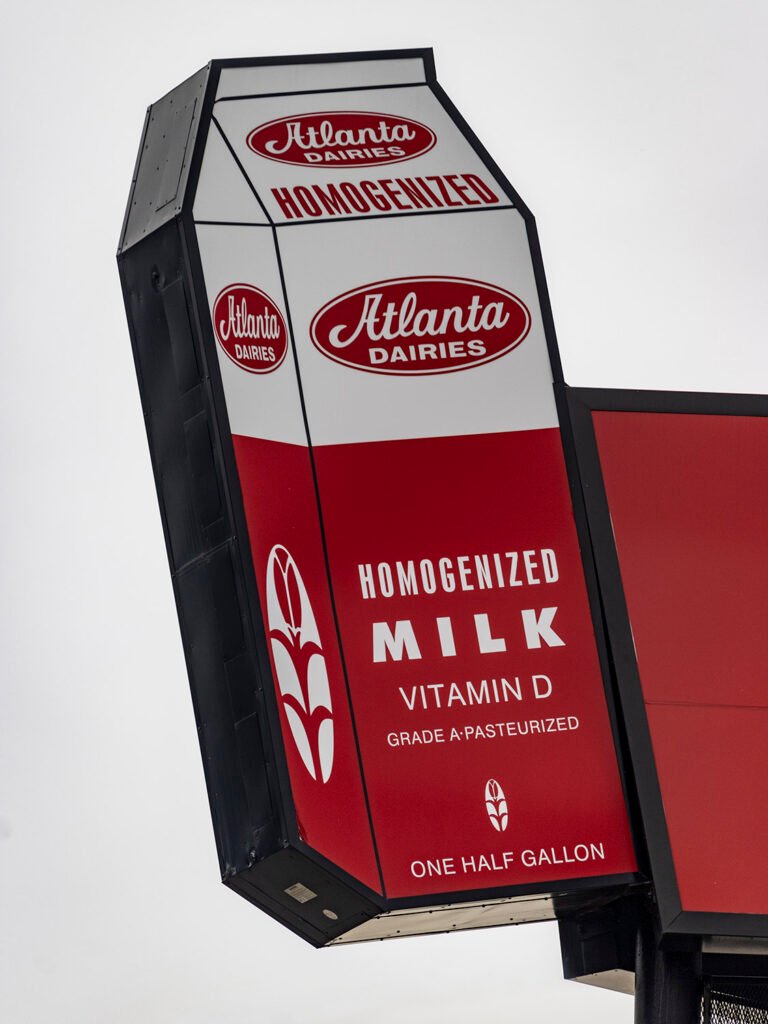
    Sounding every bit like a shill for the dairy industry, Goodrich spends the bulk of the article extolling the alleged benefits of drinking milk, with a string of dubious assertions unsupported by modern science. Everything from fever to liver failure could be cured with a “milk regimen” he explains, as practiced by “certain savage or semi-civilized tribes of pastoral habits.”

    Goodrich made these claims at a time when milk production was unregulated in the United States, and dairy manufacturers regularly tainted their products by dumping in everything from calf brains to formaldehyde, leading to the outbreak of multiple diseases and the poisoning deaths of thousands of Americans — primarily infants. Drink up!

    As Goodrich acknowledges, tuberculosis was frequently transmitted by bacteria found in unboiled milk, a danger well known to the public by the 1890s. Here, he advocates for the pasteurization of milk, a process that was not widely employed in the United States at the time, and would not be legally required until the early 20th century.

    Goodrich’s stated desire in this writing was “to infuse a little hygienic good sense into the average American” who only needed to “observe the laws of temperance.”

    And as for the people of Atlanta? “Nowhere in the world is self-restraint more necessary than in Georgia”, he explains, claiming that the hot and humid climate of the Southeast both “stimulates the appetite” and “render[s] digestion difficult”.

    Why ask a doctor for health advice when you can consult a third-rate architect?


    Hints on Hygiene

    Some Secrets of Good Health for Every Day Use by Everybody.

    Written for the Journal.

    If people knew how to eat and drink properly or were willing to confine themselves to articles of food suited to their digestion, and would just take the amount of exercise necessary to facilitate the digestion, the lives of the greater part of the human race would be indefinitely prolonged.

    There would have to be excepted from this sweeping assertion certain diseases – like those of throat and lungs – that cannot always be avoided, but which nevertheless in many cases can be limited in their ravages by prudence.

    The statement as made is a truism, and has been known to sensible persons since dawn of civilization and the origin of gormands and epicures. Some old Persian writer placed the whole secret of health in the ability to leave off eating before the appetite was entirely satisfied, and the wise men of Greece and Rome never ceased to preach similar truths, both by precept and example. These things they had learned, not from works on hygiene, which did not abound in ancient times, nor from family physicians, who were far from being plentiful as they are now but from simple observation.

    The apostles of a vegetable diet have usually been fanatics, but there has always been a grain of truth in their doctrines, for it is true that the greater part of diseases are caused, especially among the rich, by the excessive use of meats.

    It is only a few years since the nourishing qualities of milk and its hygienic value began to be properly appreciated. Everyone was aware that the young of the human race and of the lower animals using it as their only diet flourished and grew strong alike in bone and muscle.

    It appeared to be easily digested and seemed to contain all the elements that the body seemed to need, at least in the early stages of its growth. Adults – at least those in civilized countries – despised it and would have considered themselves doomed to an early death had they found themselves confined to a milk regimen. The same opinion, has, fortunately, not prevailed among certain savage or semi-civilized tribes of pastoral habits, who have maintained a healthy existence from time immemorial on milk and its products.

    Medical science, aided by chemistry, has for some years past been working a gradual change in these ancient prejudices.

    The chemists have discovered that milk contains all the elements necessary to make blood, bone and muscle. It adapts itself to the most difficult digestion.

    A man can live and enjoy perfect health on milk and its products alone, or his system find in it everything needful – fatty matter, caseine, albumen, and especially phosphate of lime for building up his bony framework. Doctors prescribe it for patient suffering from low fevers.

    If a person finds himself suffering from torpididty of the liver, or a tendency to indigestion let him drink milk freely, say two or three quarts a day, and abstain from meat, and he will almost invariably find himself cured speedily.

    It may be said of certain diseases of the liver and kidneys and of the dyspepsia that they have invariably been brought on by ignorance or disregard of the laws of hygiene, and no one need ever have them unless he is obliged to live in the tropics, or has by chance been so situated that the choice of his diet was beyond his control.

    It has been in all ages of the world been difficult to make any considerable number of human beings observe the laws of temperance in eating and drinking if the means of indulgence were at their disposal.

    It is much more difficult to infuse a little hygienic good sense into the average American of today than into the luxurious Roman in the time of Lucullus, and nowhere in the world is self-restraint more necessary than in Georgia, where the climate constantly stimulates the appetite, while at the same time certain latent qualities of the atmosphere seem to render digestion difficult.

    While milk in its perfect state is capable of such infinite service to the health, it has at the same time an extraordinary facility in transmitting diseases. A great part of that consumed in large cities is from cows kept in stables and fed often on unwholesome food.

    When tuberculosis diseases become too common among these animals the newspapers ventilate the matter and the health officers show a temporary activity, but the evil continues. It is more trying from the fact that diseased milk is largely used as nourishment for young children.

    If the purity of milk is suspected, however, it only needs to be remembered that the noxious germs it contains may be destroyed by boiling. In England, where milk is rarely boiled, there have been occasional local epidemics caused by the use of milk from diseased cows.

    In 1870 an epidemic of typhoid fever at Islington was propagated in this manner. Epidemics of croup and scarlatina have also in England been attributed to the same cause. The nutritive and hygienic qualities of milk and its tendency to transmit disease have for the last ten years been frequent subjects for discussion at the sessions of the Paris Academy of Medicine. The matter is sufficiently practical and important to attract the attention a little oftener of medical associations in America.

    W.W. Goodrich1

    References

    1. Goodrich, W.W. “Hints on Hygiene.” The Atlanta Journal, April 29, 1893, p. 1. ↩︎
  • “Atlanta’s Advancement” (1893) by W.W. Goodrich

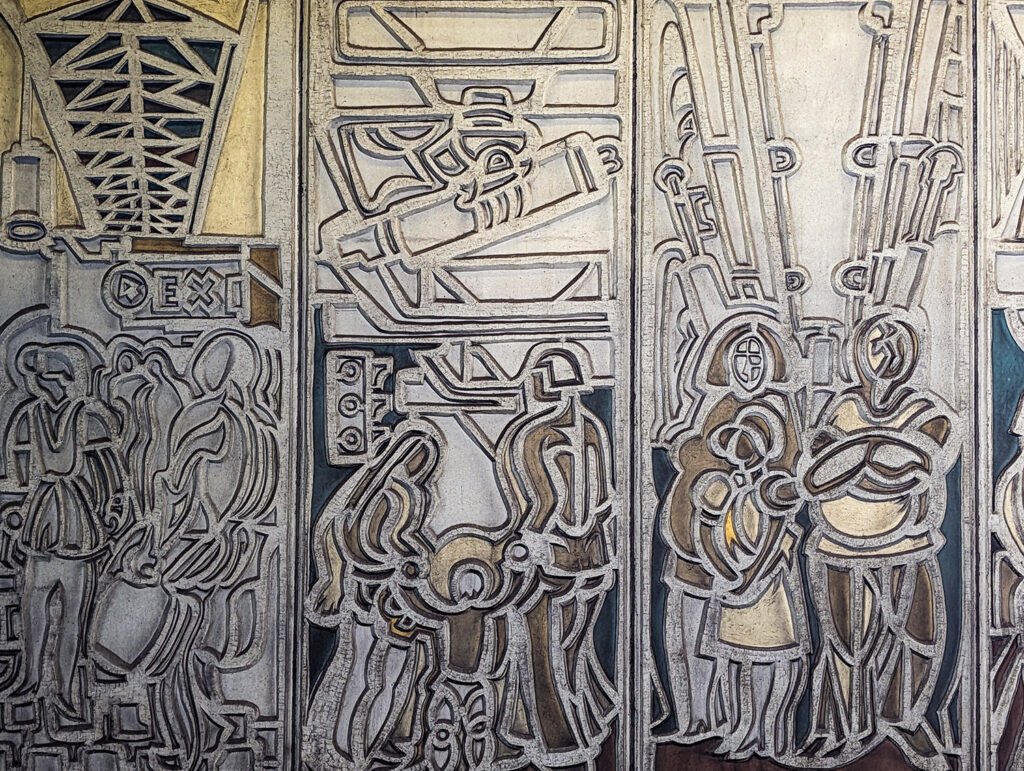
    Charlie Mitchell.Everyday MARTA Scenes (1982). Arts Center Station, Atlanta.1

    The Background

    The following article was published in the The Atlanta Journal in 1893 and written by W.W. Goodrich, an architect who practiced in Atlanta between 1889 and 1895.

    Atlanta has long been a mediocre city gagging on its own arrogance and self-importance, a characteristic that can be definitively traced to the 1880s, when Henry W. Grady turned the Atlanta Constitution into a daily mythmaking machine of endless puff pieces that touted the city in near-religious terms as the predestined savior of a resurrected “New South” that would soon rival the industrial centers of the North.

    So effective was the propaganda that to this day, deluded Atlantans — despite all evidence to the contrary — will avow that Atlanta is a “world-class city” poised to overtake New York, Los Angeles, or [insert city name here] at any moment. That moment, of course, never arrives.

    Here, Goodrich followed the template of hundreds of other gushing Atlanta promotional articles in the 1890s, starting with the subtle proclamation: “Atlanta is a phenomenal city.” He goes on to praise the city’s “master minds”, “great and grand monuments”, “charming homes” and “genuine” architects, concluding that Atlanta’s destiny was to be — wait for it — “the Chicago of the south”.

    This is an article stuffed with so many lies and embellishments that it can only be considered a humorous work of fiction, and Goodrich repeats many of the sentiments he expressed in his similar 1892 article, “Atlanta’s Unique, Composite and Attractive Architecture”.

    Goodrich no doubt hoped that stroking Atlantans’ egos would drum up business for himself: at the time of this article’s publication, the United States was in the throes of the Panic of 1893, which plunged the nation into an economic depression for over 4 years.

    Most Atlanta architects struggled greatly at that time, and many left the city altogether, including Goodrich, who in 1893 was already dividing his time between Atlanta and Norfolk, Virginia.2 3 Goodrich’s company still claimed some presence in the city in December 1894,4 but his final Atlanta newspaper advertisement was in February 1895.5 I doubt he was greatly missed.


    Atlanta’s Advancement

    Her Growth In Architecture Discussed.
    W.W. Goodrich Writes Interestingly.
    On the Beauties of the Homes of Atlanta.
    The Center of the Best Field for Building Materials in the Country – Artistic Home Adornment.

    Atlanta is a phenomenal city. The wonderful recuperative powers inherent in the master minds of this progressive city, has stood it many good turns in the past, and is at the front today, crowding out the pessimists, supplanting them and their narrow views, and erecting upon their small ideas great and grand monuments to a future as well as to this present generation.

    Beautiful homes, are all about, practical contentment assures that observer on every hand “that life is worth living,” and that Atlanta’s homes are models of rare elegance, bliss, “and homes, sweet home.”

    The best building materials to be had in the “known world” are all native to Georgia, the empire state of the south, and are all within a radius of fifty miles of Atlanta. These materials are to be seen everywhere “in this city of charming homes.” And none is too humble but that some one or more of Georgia’s native building materials are in its make-up and form an integral part of the harmonious whole of Atlanta’s homes, that are known far and wide as being the best and most carefully studied and constructed; and arranged in their entirety, more so than in any other city of our common country.

    The diversified forms of architecture are here blended.

    The many inventions for good health and labor saving appliances for the housewife are in every home.

    It is the progressive study of Atlanta’s architects. And many of them are educated, practical men, thoroughly versed in its many intricate ramifications to design for their clientele only that which will be an additional ornament to Atlanta’s excellent structural monuments, that so attract our northern and western friends, and they go from us to their own homes, with the most pleasing reminders of the hospitality of our southland, that each genuine architect, each real lover of his profession, who is so thoroughly imbued with his chosen calling banishes all other thoughts from his mind, and with his brother professional urges the many clients to use only native Georgia products, native Georgia labor, home industry and home labor, and thus imbued we have a style of architecture that is gradually being woven from the warp and woof of the past and present into a beautiful architectural mantle that so handsomely adorns Atlanta and her progress. Atlanta is thus garmented on every hand. The cottage homes of Atlanta and her beautiful suburbs are her pride. The thrift of a city is in its suburban population, because any city without suburbs is a dead, non-progressive affair, not worthy to be called even a village. The many suburbs are taking on metropolitan airs. Electrical lines are running and being planned to run everywhere.

    The sound of the hammer and the merry whiz of the saw erect the ear, all denoting progress, thrift and sturdy belief in the greatness of our claim that Atlanta is the magic city of the south, and that her destiny is to be, and will be, the Chicago of the south. With this belief each one of her thousands stand shoulder to shoulder – a steady, solid phalanx of veterans ready to battle for Atlanta’s future, Atlanta’s greatness and Atlanta’s grandeur.

    W.W. Goodrich6

    References

    1. MARTA’s Art Program – MARTA ↩︎
    2. “W.W. Goodrich & Co., Architects” (advertisement). Norfolk Virginian (Norfolk, Virginia), August 17, 1892, p. 2. ↩︎
    3. “The Passing Throng.” The Atlanta Constitution, January 8, 1893, p. 5. ↩︎
    4. “Bright Days Ahead”. The Atlanta Constitution, December 27, 1894, p. 5. ↩︎
    5. “Professional Cards.” The Atlanta Constitution, February 27, 1895, p. 7. ↩︎
    6. Goodrich, W.W. “Atlanta’s Advancement”. The Atlanta Journal, March 25, 1893, p. 1. ↩︎
  • “Atlanta’s Unique, Composite and Attractive Architecture” (1892) by W.W. Goodrich

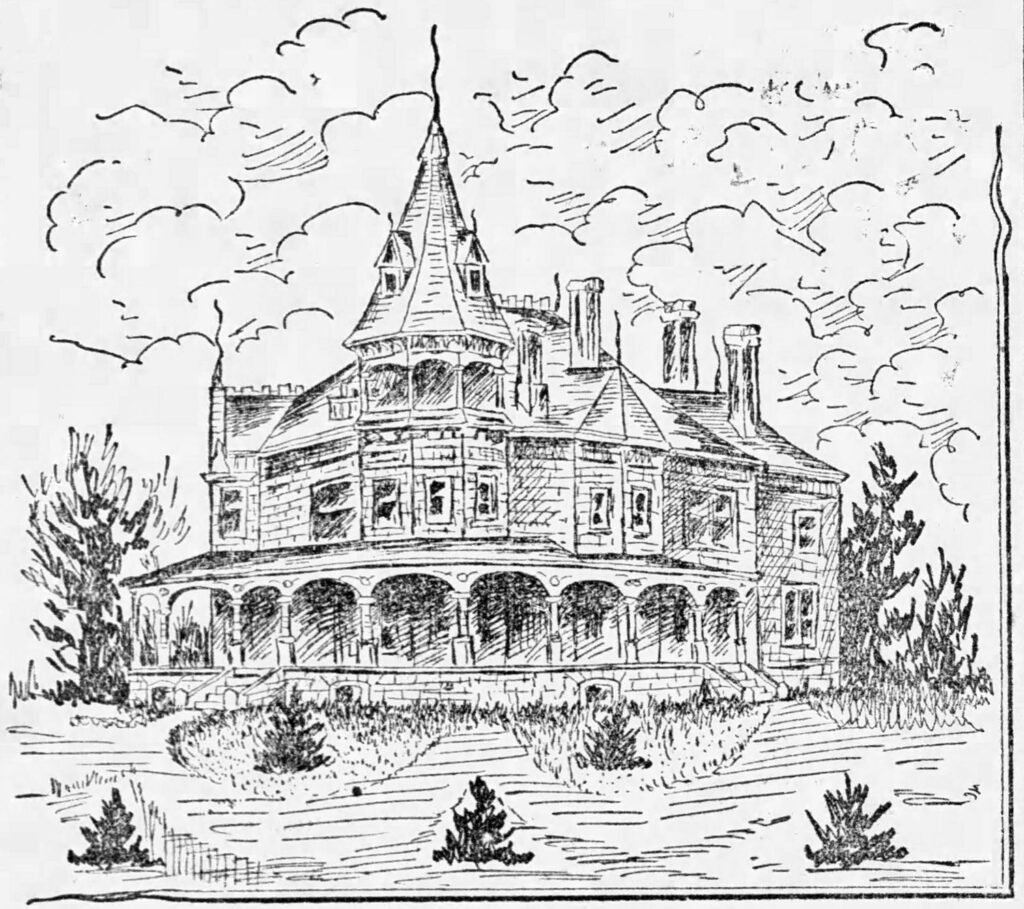
    W.W. Goodrich. E.F. Gould Residence (1891, burned January 28, 1918). Inman Park, Atlanta.1 2

    The Background

    The following article was published in the Manufacturers’ Record in 1892 and written by W.W. Goodrich, an architect who practiced in Atlanta between 1889 and 1895.

    Here, Goodrich engages in the sort of masturbatory civic boosting that Atlantans devour, describing the city in such gushing, over-the-top terms that the article could be easily mistaken for parody.

    That Goodrich saw fit to write this embarrassing concoction of lies and fantasy for a nationally distributed publication underscores how deeply Atlantans swim in their own illusion, convinced that they are somehow exceptional and superior to other cities.

    However, as any visitor in Goodrich’s time or now could attest, Atlanta is an aggressively mediocre city with scant culture and no distinguishable identity — the most defining feature is its population of conceited and ignorant inhabitants who loathe and despise each other while desperately seeking validation for their delusions of grandeur.

    Indeed, few cities are so blithely arrogant as Atlanta, with so little of substance to show for it: Atlanta is the child who demands praise for using the toilet; the man with an average penis who is convinced he has a sizeable endowment; the insecure teenager desperate to be seen as popular, unaware that absolutely no one thinks about them.

    Atlanta is a city built by frauds and liars, and Goodrich happened to be both. Before he arrived in Atlanta, he had a record of larceny and check fraud in Colorado, California, and Massachusetts,3 4 5 6 7 and many of the fantastical claims from his life story are easily disproven by the historical record.

    Keep that in mind when Goodrich describes Atlantans as “moral heroes”, refers to the city in utopian terms as a place where “democrats and republicans work harmoniously for the public good”, and compares the city’s antebellum architecture (no, Sherman didn’t burn all of it) to that of ancient Greece.

    Halfway through, the article turns into an advertisement for Georgia marble, a material so prohibitively expensive for use in construction that even the Georgia State Capitol was built with cheaper Indiana limestone.8

    Shortly before writing this article, Goodrich toured the Georgia Marble Company’s quarry,9 and he may have been an investor in the business. Goodrich was also the designer for two of the marble buildings he lists here: the Herald Publishing Company building and the R.F. Gould house in Atlanta’s Inman Park.10

    Goodrich concludes the article by praising the architecture of Atlanta, which then, as now, consisted almost entirely of artless, watered-down imitations of superior designs from better cities — often a decade or more out of fashion by the time Atlantans in their insecure posturing began demanding them.

    “Atlanta has no style of architecture”, Goodrich exclaims. “This shows the wisdom of her architects.” Or as G.L. Norrman more accurately described Atlanta architecture: “The prevailing style is no style at all.”9


    Atlanta’s Unique, Composite and Attractive Architecture.

    By W.W. Goodrich

    The hero rises above his environment, and ennobles mankind.

    The people of Atlanta are moral heroes, who have put themselves in touch with each other and with their countrymen of our common land.

    Here democrats and republicans work harmoniously for the public good, eschewing partisanship and striving in accord to upbuild a great city. Here is a charity between the vast political parties that commands admiration.

    The blending of opposite political forces and opinions and the burial of dead issues have brought Atlanta to the front, and built her wonderfully up.

    The architecture of Atlanta is progressive; from the simple taste of the artisan to the mansion of the rich is but a step, and the spirit of all, even the humblest, is to betterment. Under this universal inspiration Atlanta is surely marching to permanent superiority of architecture.

    Before the war architecture was a blending of the Jacobian and the Colonial, of which excellent examples are still extant, the fluted columns of the simple orders, in bold effrontery, giving a classic invitation to come in and hear the oratory of the old masters of that art, now almost extinct. Looking on these facades I almost imagine I am in the classic land of Greece, in the temples of the gods, listening to a Socrates.

    When Sherman destroyed Atlanta he little thought, probably, that a city would arise upon its ruins. Could he now look from the aspiring roof of the stately Equitable building he would see a grand metropolis on the wreck of old Atlanta, and on every hand majestic monuments of architects’ skill, and beautiful structural facades that fascinate the vision and compel the admiration of the most careless observer.

    The principal building material for architectural effect and artistic embellishment is from the Georgia Marble Co.’s quarries at Tate, Pickens county, Ga. This marble leads the world. It is the granular marble, that resists all atmospheric action, stands all strains and finishes in a superb and harmonious whole. And this marble can be used at no greater expense than the finer grades of pressed brick.

    Among the structures wholly or in part of Georgia marble are these:

    • Herald building, daily newspaper, entire front.
    • The R.F. Gould residence, wholly of marble, even the chimneys of this imperial stone, beautifully carved, and the heat and acids of the smoke do not tarnish the chimneys in the least.
    • The Equitable building, in part.
    • The Inman Building, in part.
    • The High building, in part.
    • The Aragon Hotel, in part.

    And there are many others wholly or in part marble throughout Atlanta.

    In all my experience with building stones Georgia marble gives me the greatest satisfaction for a perfect building material that will last and not be affected by heat or cold, nor the action of frost in freezing.

    I have seen the cities of the growing West spring up in a day, figuratively speaking. They have their set back, but Atlanta grows on, and no matter what the financial state of the land at large, she climbs higher with her sky scrapers.

    Her homes have more of architectural merit with each passing period or building construction. Each new house builder vies as never before to outdo his friend in home building and in home comforts. There is no accepted or popular pattern, no slavish imitation of any model, however liked, no wholesale adoption of architectural fashions, but a sturdy originality and independence of taste and idea that are always seeking and finding new effects and comforts.

    Atlanta has no style of architecture. This shows the wisdom of her architects. We see a picturesque blending of all styles, the best of all styles grouped in a myriad of beautiful and harmonious, but differing and exquisitely unlike wholes. Such a composite and yet symmetrical and attractive architecture was never before seen, the outcome of a growing architectural taste, and presenting with absolute freedom from copied uniformity a rare and delightful variety and originality of gems of architectural beauty.

    Every residence is different, and new combinations of grace and convenience constantly enrapture the eye.

    The democracy in architecture relieves the sky line, and in a wholesale innovation, wherein monotony is destroyed, a scenic effect is given to the streets and lawns that could not be obtained any other way, and that makes Atlanta the very ideal of architectural taste and loveliness.11

    References

    1. Illustration: “Pencil Sketch Of Marble Residence Of E.F. Gould”. The Atlanta Journal, April 21, 1891, p. 5. ↩︎
    2. “Edgewood Avenue House Is Destroyed By Fire”. The Atlanta Journal, January 28, 1918, p. 9. ↩︎
    3. “Held to Answer”. Rocky Mountain News (Denver), March 26, 1881, p. 2. ↩︎
    4. “Probably a Sharp Swindler”. Daily National Republican (Washington, D.C.), November 27, 1883, p. 3. ↩︎
    5. “An Old Fraud Heard From”. Los Angeles Herald, March 16, 1884, p. 4. ↩︎
    6. “A Worthless Check”. The Boston Herald, November 27, 1883, p. 1. ↩︎
    7. “Operation With Checks”. Boston Daily Advertiser, November 27, 1883, p. 8. ↩︎
    8. “The Capitol Contract”. The Atlanta Constitution, September 27, 1884, p. 7. ↩︎
    9. “A Delightful Excursion”. The Atlanta Constitution, February 20, 1892, p. 1. ↩︎
    10. “W.W. Goodrich & Co., Architects”. Norfolk Virginian (Norfolk, Virginia), August 17, 1892, p. 2. ↩︎
    11. Goodrich, W.W. “Atlanta’s Unique, Composite And Attractive Architecture.” Manufacturers’ Record, Vol. 22, no. 4 (August 26, 1892), p. 64. ↩︎
  • “Stand by the Manufacturers” (1892) by W.W. Goodrich

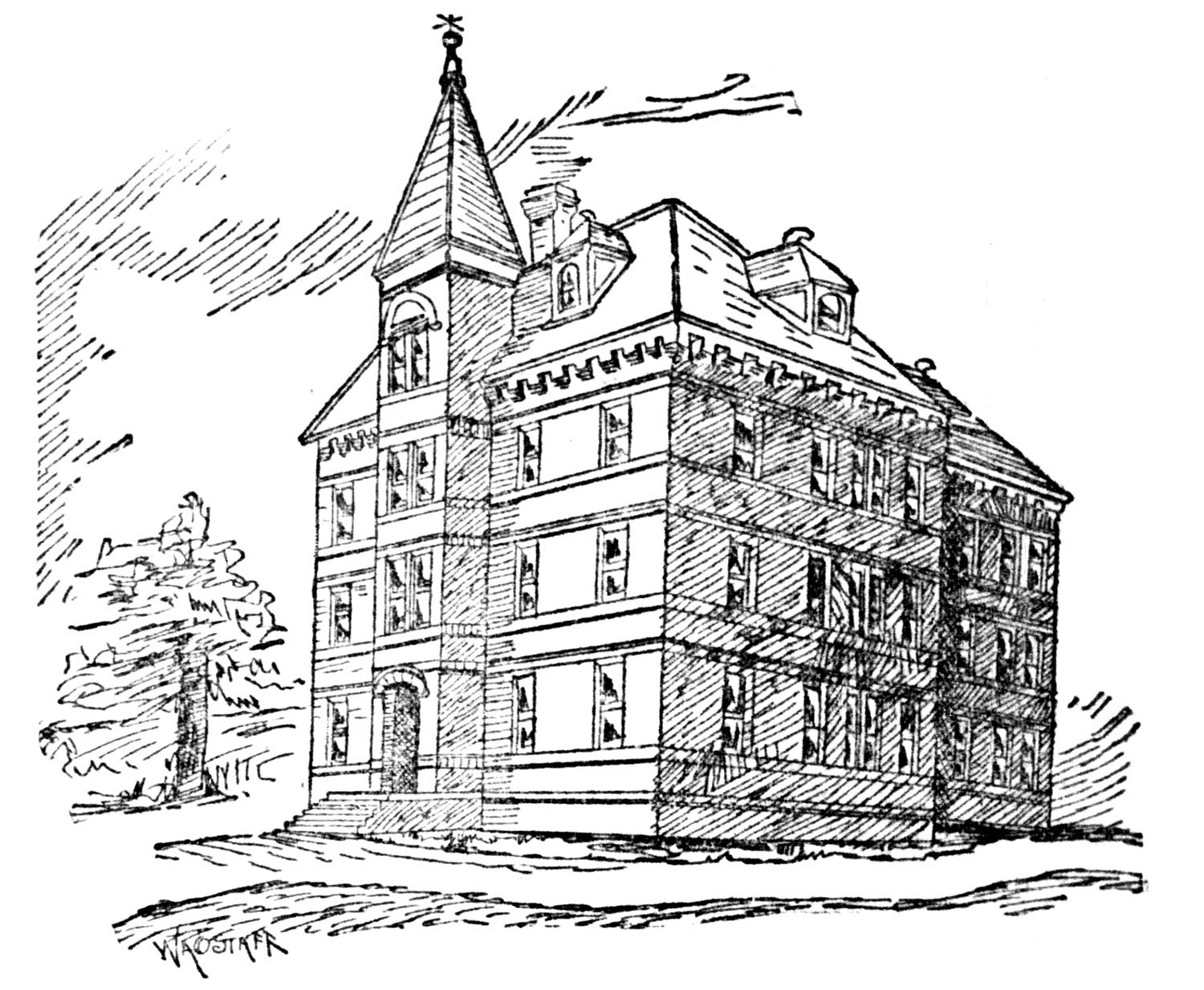
    J.K. Orr Shoe Company (1907). Sweet Auburn, Atlanta.1 2

    The Background

    Just six days after his previous letter to The Atlanta Constitution, W.W. Goodrich returned to bloviate about manufacturing.

    In the following letter, Goodrich suggested Atlanta could attract manufacturers by emulating “wide-awake” cities like Detroit, Denver, and… Rahway, New Jersey (yeah, I dunno), offering residents tax-exempt stocks in local companies and buying from those companies to the exclusion of outside markets.

    In a poorly constructed run-on sentence, he also opined that bringing industry to Atlanta would “solve the domestic labor problem”. And if his insinuation wasn’t clear enough, he added: “white artisan labor or factory help bring in their families, female help that would enter our homes and supplant the idle, shiftless race that is now a nuisance.” Lovely.

    Goodrich noted the “cassiterite or tin ore” in “North Temercal”, California, a place that apparently never existed — except in his delusional mind. Just as deranged was his parting vision of Atlanta as a city where “the fires of blast furnaces…should light up the horizon of the setting sun to illuminate the whole night away, only to welcome the rising sun, and be dissipated in the light of a cloudless day.”

    Have I mentioned lately how much I detest this despicable, fraudulent, lying, racist hack of a writer and architect?


    Stand by the Manufacturers.

    Editor Constitution–Your articles on manufacturing enterprises, that should be attracted and retained in Atlanta, and encouraged by Atlanta capital, is the uppermost subject in the minds of the leading business men. Mr. Kirkpatrick, of Bain & Kirkpatrick, a courteous gentleman with whom I have had frequent conversations upon this subject, and who is alive to the necessity of Atlanta’s present and future greatness, has spoken in no uncertain tones upon this wide-awake subject. Mr. Kirkpatrick, who is well read and versed in how to get manufacturers to locate, favors the plan adopted by all wide-awake cities, as Detroit, Denver, Rahway, Newark, Elizabethtown and the hosts of cities of Pennsylvania, Connecticut, Massachusetts, New York, Ohio and Indiana–this is, for the citizens to take stock, as far as possible, in all laudable enterprises, exempt them from taxation for a specified time, and buy from their half their goods to the exclusion of outside markets. In other words, protection to home enterprise, home capital and home industry.

    We have near us vast deposits of iron, coal and the fluxes. In North Temercal, Cal., in Dakota and elsewhere in the United States. We have unbounded supplies in cassiterite or tin ore. We can manufacture the iron here in Atlanta and cast the plates with American tin, and save as per enclosed article at least $25,000,000 annually that now goes abroad.

    One industry brings another. Atlanta would be the leading city of the south in everything attainable for the advancement of the body politic.

    Again the bringing of these various industries would solve the domestic labor problem, the white artisan labor or factory help bring in their families, female help that would enter our homes and supplant the idle, shiftless race that is now a nuisance.

    I am surprised at the lack of interest of some of the editorial fraternity, to the one thing needful for the supremacy of Atlanta as a commercial city. Why, sir, manufacturing enterprises should crown all the business of ingress into this city. The fires of blast furnaces, or rolling mills, of various shops from the making of a pin or needle to the turning out of a thoroughly well built locomotive, or a stationary engine, should light up the horizon of the setting sun to illuminate the whole night away, only to welcome the rising sun, and be dissipated in the light of a cloudless day.

    W.W. GOODRICH3

    References

    1. “New Plant Of J.K. Orr Shoe Co. Which Will Be Completed April 1”. The Atlanta Journal, January 28, 1907, p. 3. ↩︎
    2. “First Train Load Of Machinery Brought South For Shoe Factory”. The Atlanta Constitution, April 7, 1907, p. 5. ↩︎
    3. Goodrich, W.W. “Stand by the Manufacturers.” The Atlanta Constitution, July 19, 1892, p. 4. ↩︎

  • “He Endorses It” (1892)

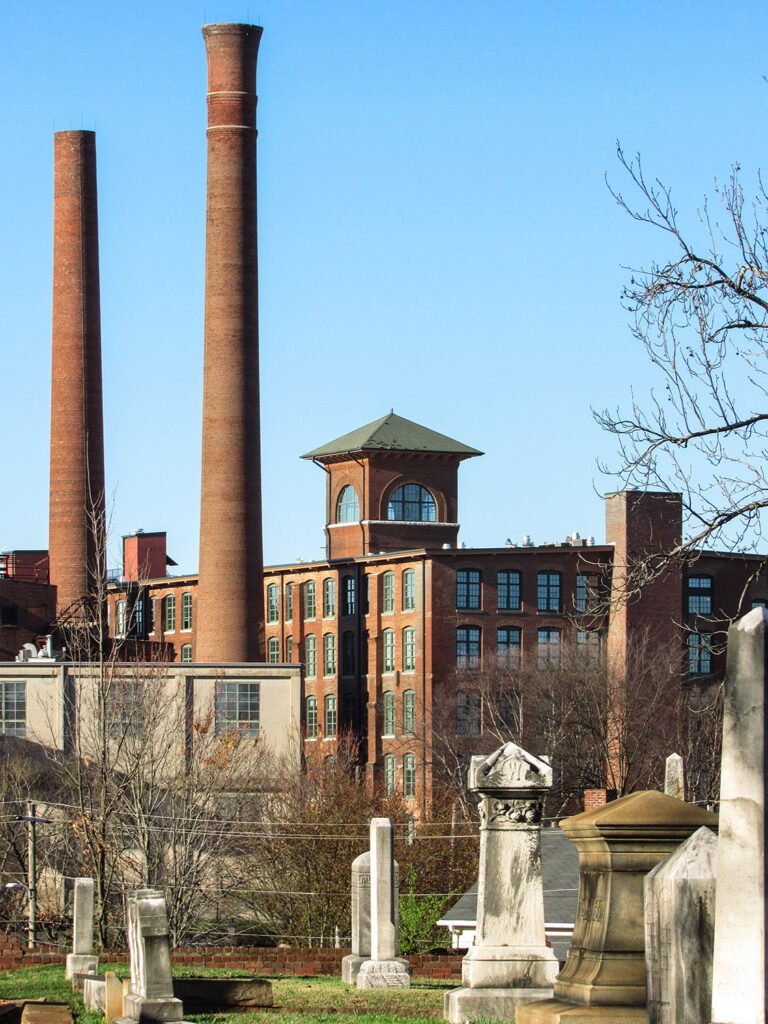
    Looking toward the former Fulton Bag and Cotton Mills from Oakland Cemetery, Atlanta.

    The Background

    In July 1892, The Atlanta Constitution published the following blurb titled “Why Not Come South?”, inviting “native Americans” of the northern states — by which they meant white people — to move to the Southeast:

    The Constitution wrote:

    There are several millions of well-to-do native Americans in the north and west who are dissatisfied with their environment.

    They are not millionaires and they are not paupers. They belong to the great middle class, owning their homes, and having money in the bank or invested in real estate and various enterprises.

    What these people want is security. They view with apprehension the little civil war at Homestead, and they remember the bloody riots of Pittsburg, the troubles at Spring Valley and Braidwood, Ill., Hocking valley, Brazil, Ind., and the Reading colleries, where the employers provoked disturbance and then shot down their laborers. Where will it all end? is the question asked by these law-abiding and peaceful people.

    Another element of dissatisfaction is the rigorous climate, which oppresses the Americans of today more than it did their more hardy ancestors. And still another grievance is the rapid influx of foreigners, many of whom belong to the anarchist element of Europe.

    We would say to these middle-class native Americans of the north and west that our great Piedmont region, and many other localities in the south, offer them health, happiness, peace and prosperity. They will find here a purely American population, with diversified industries, and all the conveniences and luxuries of civilization. They will find a progressive people who have forgotten the old war issues, and who are now engaged in developing their resources. And they will find cheap and productive lands, tempting business opportunities, a warm-hearted, hospitable people, and a land where there has never been a clash of arms between capital and labor, and where the reign of law is upheld by a conservative God-fearing people.

    But the race problem? Well, come down here help us settle it. We are willing to trust you. When you settle among us and see the situation as it is you will be on our side. Think it over. Abandon a section hampered by so many increasing disadvantages–give it up to the plutocrats and their serfs–give it up to the immigrant hordes who are turning it into another Europe with all of Europe’s worst evils and few of its good points. Southward ho! should be the cry, and if you are wise you will lose no time in seeking homes this favored garden of the gods!1

    The article was quite typical of the self-fellating promotional slop that filled Atlanta’s newspapers at the time, and while its language is perhaps a bit too coarse for the sensitive, modern palette that prefers its bullshit served in benign, fuzzy terms, it’s astounding how little has actually changed in 130 years.

    In a country founded and built by immigrants, Americans still fear a “rapid influx of foreigners”, with entire political campaigns built on stoking a collective terror over “immigrant hordes who are turning it into another Europe.”

    In the 1890s, the “anarchist element” that spurred labor strikes was the bogeyman, because God forbid workers have rights. Today, it’s the socialist element, because God forbid everyone has access to healthcare. Different century, same old tired nonsense.

    People from all parts of the United States have poured into the Deep South unabated since the mid-20th century, often blaming the “rigorous climate” from whence they migrated. More often than not, however, the driving reason is that they entertain utopian delusions of the Southeast as a place of “cheap and productive lands…where the reign of law is upheld by a conservative God-fearing people” and a “purely American population”.

    Instead, what the immigrant to the Southeast invariably finds is a sweltering shithole of empty promises, a land of angry and aggrieved infants who seek to control and dominate each other in the most insidious way possible: through gritted, syrupy smiles and passive-aggressive sneers, blasphemously evoking the name of Jesus to justify their satanic oppression. It’s not that cheap, either — especially in Atlanta.

    The Constitution‘s claim that the Southeast was “a land where there has never been a clash of arms between capital and labor” glossed over the fact that Atlanta and the region barely had any industry to speak of in the 1890s, and what little there was ran largely off prison labor2 3and other exploited workers, including women and children.

    For instance, in 1900, a federal commission visited the Fulton Bag and Cotton Mills (pictured at top), one of the city’s earliest manufacturers, and found a “deplorable condition of affairs”,4 including workers under the age of 12.5 Laborers worked 66 hours a week6 and were forced to live in “ramshackle structures”,7 complaining that “nearly the full amount of their wages was deducted for rent charges and charges at the company store.”8

    The Constitution‘s hand-waving dismissal of the “race problem” was also particularly galling: “When you settle among us and see the situation as it is you will be on our side.” Which is to say: you, too, will like white supremacy.

    Enter W.W. Goodrich, a pathological liar, criminal fraud, and prototypical carpetbagger, but still the kind of man the Constitution so eagerly desired — Caucasian.

    In the following letter, Goodrich praised the newspaper’s “magnificent article” and spoke in characteristically florid terms of “the middle class” that “patronize only what is American; they absorb only what is of American origin, and their garments are of only American products and American manufacture.”

    Now that both American industry and the American middle class are essentially nonexistent — sold out by American capitalists in favor of foreign sweatshops that run off forced labor and other exploited workers — his sentiments are laughably quaint.


    He Endorses It.

    Atlanta, July 11.–Editor Constitution: Your editorial on “Why Not Come South” is a magnificent article, that just enters as a wedge, separating the body artisan nee the pauper or spendthrift from the great middle class that saves and banks away for a rainy day. This middle class, so called are for and to man the welfare of the entire country, and more especially are they for the upbuilding of America and American institutions in preference to anything foreign. They patronize only what is American; they absorb only what is of American origin, and their garments are of only American products and of American manufacture. Please keep this line of thought of the editorial in today’s paper at the head of your columns, and you will do an invaluable service to our sunny south.

    W.W. GOODRICH9

    References

    1. “Why Not Come South?” The Atlanta Constitution, July 11, 1892, p. 4. ↩︎
    2. “Is A Body Blow At Convict Labor”. The Atlanta Journal, February 2, 1897, p. 3. ↩︎
    3. “Labor Men Wage War On Convict-Made Brick”. The Atlanta Constitution, February 3, 1897, p. 1. ↩︎
    4. “Industrial Commission Hears Plan Talk From Labor Men”. The Atlanta Constitution, March 21, 1900, p. 7. ↩︎
    5. “Investigation Ended; Commissioners Leave”. The Atlanta Journal, March 21, 1900, p. 8. ↩︎
    6. “Lack Of Facts In The Testimony Heard By Industrial Commission”. The Atlanta Constitution, March 22, 1900, p. 9. ↩︎
    7. “Industrial Commission Hears Plan Talk From Labor Men”. The Atlanta Constitution, March 21, 1900, p. 7. ↩︎
    8. ibid. ↩︎
    9. Goodrich, W.W. “He Endorses It.” The Atlanta Constitution, July 13, 1892, p. 4. ↩︎
  • “A Suggestion for a Home” (1892) by W.W. Goodrich

    W.W. Goodrich. Proposed design for Home for the Friendless (1890, unbuilt), Atlanta.1 2

    The Background

    People have always fucked each other, married or not. That was well understood in the late 19th century, but social standards at the time were often incongruent with reality, particularly for women.

    Although officially illegal, prostitution at the time was tacitly accepted as a fact of life, and every city of any size, including Atlanta, had a red-light district, with local officials turning a blind eye — likely because they were patrons.

    Pornography was available but not ubiquitous, so when the “fast young men”3 of Atlanta needed to get off, they were apt to visit the “disreputable houses” on Collins Street4 (later Courtland Street), of which the Atlanta newspapers spoke quite openly, and generally without judgment.

    Expectations for women were quite different, however. Contraception was non-existent, so if a girl slept with a man — or God forbid was raped — well, she was screwed in more ways than one.

    An unmarried pregnant woman was ostracized from the community, invariably shunned by her family, and often sent to a convent or “reformatory”, usually out of state.5 The man, of course, was free to live his life without consequence. Such were the good ol’ days to which some modern lunatics desire a return.

    Times were changing, however, and the 1890s saw a movement toward establishing local “homes” or “refuges” to rehabilitate “fallen women”, a euphemism that covered a broad range of women, including unwed mothers, rape victims, and prostitutes.

    In 1891, a group of Atlanta ministers proposed a Home for Fallen Women,6 7although the project was abandoned.8 A second attempt that year by a different group9 was opposed at every turn by residents who shrieked with moral outrage.10 11 12 13 14 The home was ultimately banned by city ordinance.15

    Moral objections against the home were flimsy because Atlantans have never possessed any morals. At least one honest resident had the balls to address the real issue: “A home for fallen women, or any other institution which would destroy the value of our property, will have a hard road to travel if it is forced on us.”16

    An anonymous “Reader” in The Atlanta Journal summed up the failure in April 1892:

    “The movement failed, it seemed, only for the reason that so many opposed the location wherever it was spoken of on account of the proximity of Christian homes.

    “Not a friendly word for that unfortunate class was said at the time that I remember by either of the newspapers of Atlanta or by any Christian man or woman.

    “If Christ had been among us and owned a lot he would have said:

    “‘Put it here.’ The spirit of the Nazarene rebukes such shabby pretense and stamps it ‘hypocrisy’”.17

    In June 1892, another “Home for Fallen Women” attempted to open on Formwalt Street in southwest Atlanta. The city council balked at the idea,18 the neighbors predictably raised hell,19 20 and the matter was ultimately dropped.21

    For whatever reason, W.W. Goodrich decided to wade into the matter, writing the following “suggestion” — he had so many of them — in The Atlanta Constitution.

    Here, Goodrich describes his idea of a “retreat” for “imprudent young women”, complete with a dormitory, hospital, school, chapel, and hothouses, where the women would become “experts and adepts in the raising of fruits and flowers”.

    “Consider the lilies of the field,” Goodrich quotes Christ. He then adds: “They could be paid commensurate with their dexterity”. I believe that’s from the Atlanta translation of the Bible.


    A Suggestion For a Home.

    Editor Constitution — Apropos of the location of a retreat for “imprudent young women,” please allow this suggestion, which has been tried with perfect success, and never failed to be the main spring out of which may be built a “retreat” that will not necessitate the upturned nostril of any sycophant at its close proximity.

    In the west, and in the foreign climes, a society for the benevolent reclamation of unfortunate young women has purchased a tract of land near to a city of easy access, and upon said tract has erected a dormitory, hospital, kitchen and dining rooms, a bathhouse, a schoolroom and chapel upon the grounds, were also built for the sole occupation and employment of these young women. Hothouses of different sizes and for different fruits, flowers, plants and arbor culture in general. The young women did all of the manual labor in raising, propagating and growing whatever was planted.

    An unlimited sale in this Atlanta market, at retail prices, is always at command for the products of such labor.

    Such a home for these helpless young women would be a noble charity; they would be self-supporting, self-sustaining and self-respecting, and they would have an occupation that they would not hesitate to embrace.

    They do not want sentiment; they do not want pity.

    They do want disinterested, noble, clear-cut charity, and in this enlightened age they have a right to anticipate it.

    When such a home is ready a special officer could go to the various stopping places of these young women, give them free of charge tickets for transportation to the retreat, invite them in a Christian, non-sectarian, unbiased manner to accept of the generous hospitality of the retreat, and I trow not but that they all would be only too glad to accept of so kind a proposition and of so good a home.

    They would become experts and adepts in the raising of fruits and flowers, and what is more enjoyable than seeing flowers grow and bloom? Consider the lilies of the field; they could be paid commensurate with their dexterity.

    The outline of this thought is from observation during my travels and is respectfully submitted to the noble minds who really with unostentation have the good of these unfortunate young women at heart.

    W.W. GOODRICH.22

    References

    1. “Plans Are Ready”. The Atlanta Journal, December 30, 1890, p. 1. ↩︎
    2. “Plans Ready”. The Atlanta Constitution, November 19, 1891, p. 2. ↩︎
    3. “Work Of The Courts”. The Atlanta Constitution, December 5, 1891, p. 9. ↩︎
    4. “She Was Robbed”. The Atlanta Journal, October 20, 1891, p. 1. ↩︎
    5. “That House of Refuge.” The Atlanta Constitution, November 13, 1891, p. 4. ↩︎
    6. “For Fallen Women”. The Atlanta Journal, April 6, 1981, p. 7. ↩︎
    7. “Raising The Fallen”. The Atlanta Constitution, April 7, 1981, p. 7. ↩︎
    8. “The Ministers Meet”. The Atlanta Constitution, September 8, 1891, p. 10. ↩︎
    9. “For Fallen Women.” The Atlanta Constitution, September 13, 1891, p. 21. ↩︎
    10. “For Fallen Women.” The Atlanta Journal, October 14, 1891, p. 6. ↩︎
    11. “Don’t Want It.” The Atlanta Journal, November 4, 1891, p. 3. ↩︎
    12. “Don’t Want It.” The Atlanta Constitution, November 5, 1891, p. 6. ↩︎
    13. “The Fallen Women”. The Atlanta Constitution, November 7, 1891, p. 9. ↩︎
    14. “That Refuge.” The Atlanta Journal, November 7, 1891, p. 3. ↩︎
    15. “The Mayor’s Name.” The Atlanta Constitution, November 8, 1891, p. 24. ↩︎
    16. ibid. ↩︎
    17. “The Idler’s Note Book”. The Atlanta Journal, April 27, 1892, p. 4. ↩︎
    18. “They Are Happy.” The Atlanta Constitution, June 7, 1892, p. 2. ↩︎
    19. “The Southsiders Object”. The Atlanta Journal, June 7, 1892, p. 3. ↩︎
    20. “They Will Oppose It.” The Atlanta Constitution, June 8, 1892, p. 9. ↩︎
    21. “That Liquor Law”. The Atlanta Constitution, June 21, 1892, p. 10. ↩︎
    22. Goodrich, W.W. “A Suggestion for a Home.” The Atlanta Constitution, June 10, 1892, p. 4. ↩︎