Category: W.W. Goodrich

  • “A Decorated House” (1890) by W.W. Goodrich

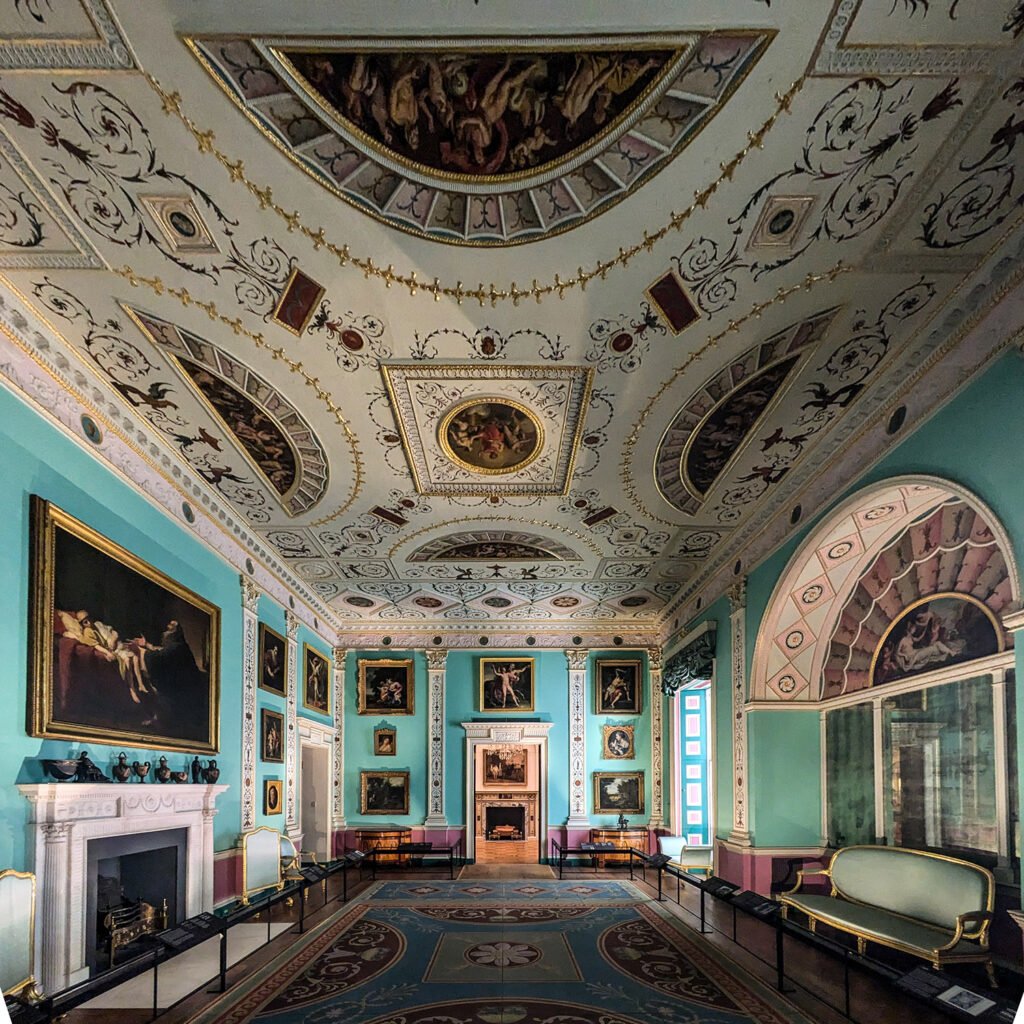
    Robert Adam. Drawing Room from Landsdowne House (1766-75). On exhibit at the Philadelphia Art Museum.

    The Background

    This is the eighth in a series of articles written for The Atlanta Journal in 1890 and 1891 by W.W. Goodrich, an architect who practiced in Atlanta between 1889 and 1895.

    In the heady and arrogant days of the Gilded Age, a popular notion among certain Americans was that the United States was the spiritual successor to ancient Greece. Here, Goodrich gives an exhaustingly detailed description of an upper-class residence decorated with a Greek-inspired motif that sounds hideous and overwrought in every way — although that could describe just about any interior design of the era.

    This article is similar to Goodrich’s earlier article “Pretty Homes” and is full of the pretentiously florid language, condescending assertions, and tedious run-on sentences that are the defining qualities of his writing.

    Goodrich paints an illustration of a “simple and noble” reception hall decorated in no less than 13 different hues, including “gold color with hue of blue verging on green”, “a subdued gold color composed of ochre, Venetian red and a little blue”, and “rich terra cotta inclining to gold”. An adjoining drawing room is described as including furniture and decorations made of wood and marble, “carved after the Grecian order”.

    Within a few years of this article’s publication, most Atlanta architects would cede the design of interior spaces to specialized decorating firms, and perhaps in anticipation of this emerging trend, Goodrich remarks that “It is the educated architect to whom should be left the composition of all rooms”, concluding rather dubiously that “coin cannot blind him from his duty”. All hail the honest and virtuous architect.


    A Decorated House.

    An Architect’s Idea of Beauty
    In the Decoration of a House.
    It Is the One Who Devotes Himself to the Study of What Is Beautiful That Knows the False Art From That Which is True.

    Written for the Journal.

    How the world has progressed since its awakening from its long inexplicable sleep of the Dark Ages! Let the peevish say what they will to the contrary; let them say that man has only been unearthing, so to speak, things of which nations long since passed from the face of the globe knew the uses – nay, had carried to a degree of perfection beyond our very conceptions; let them, if they please, in order to show their profundity, even quote from the Egyptian authority (Manetho) who says in substance that his country was settled some two hundred and seventy centuries before Herodotus, the “father of history,” had wandered among the broken shrines of its temple–that is to say, about twenty-seven thousand five hundred years before the Christian era, leaving it inferred that during that time the wonderful race had reached the highest elevation, morally, physically and scientifically, within the province of man, that is simplicity; and let them say, finally, that the very complexity of our boasted inventions proves our crudity and inferiority.

    But, be that as it may, the fact is, that by a gentle pressure on the little knob of the electric bell, I had the pleasure of having the door opened to me by a very pleasant mannered servant.

    As you enter through the vestibule doorway you find yourself in a corridor some twenty-four feet long by twelve wide. Midway between its rear exit and vestibule, and directly opposite the entrance to the parlor or reception room, is a mirror reaching from the thick-carpeted floor up to the cornice mouldings, the frame woodwork of which is exactly the same as that of the parlor door. On each side of this mirror is a doorway admitting into the drawing room in which are hung rich, heavy draperies that fall in easy folds to the floor. While the servant, with silver salver — on which was deposited my card – went to announce my presence, I took a look at my surroundings. I stood in a room about sixteen feet by twenty-four feet, furnished in a most complete manner, and showing at once that much attention has been bestowed in rendering it full of ease and comfort for visitors. A beautiful thick rug of eastern design and color left exposed the artistically inlaid border of the parquetry floor. Half a dozen chairs, simple in upholstery, occupied judicious positions. The two entrances already mentioned were hung on the inside with transparent portieres of exquisite Grecian pattern in gold and soft salmon and light peach blossom and a little blue, with appropriate fringes of the same colors. Originally fringes were nothing more than the tying in of bunches of the ragged edges of the taff to keep it from unraveling; to-day they are are used more as a means of ornamentation, but that is no excuse for their very often most absurd positions. In the centre of the rug, on a table of prima vara, which, like the general woodwork of the room, was beautifully carved after the Grecian order – was placed a shallow vase of dark green bronze, in which was a glass dish filled with charming fresh flowers whose fragrance filled the air. In the middle of the wall opposite the two entrances referred to was an elegant mantel in prima vara and black marble, enclosing a large fire-place, in which could be burned real logs or coal. A few, but wonderful specimens of handicraft in metal and in stone were tastefully distributed on the mantel-shelf, and a faultless mirror, enclosed in a graceful prima vara frame, by its true reflections, added to the pleasing aspect of the room. Connected with this room was a recess adjoining the vestibule, and of the same depth as it, with a large, cheerful window looking on the avenue. Two comfortable divans, facing each other, occupied the entire width of its walls. A rug similar to the other covered the floor. A slender black marble column of Grecian design stood in the center, supporting a vase the same as the one already described, and, like it, filled with beautiful fresh flowers. This charming recess was partly cut off from the drawing room by portieres in colors and design the same as those of the doorways.

    It is the educated architect to whom should be left the composition of all rooms, for he alone who devotes his life to the study of what is true and beautiful can discern the true from the false, the rich from the tinsel, and coin cannot blind him from his duty.

    There is a question often asked, and very seldom answered. “What is the proper manner in which to decorate a room?” First let us inquire, “For what is the room to be used?” Now, here is this reception hall. It is to be taken for granted that it is a room for the reception of all visitors, and especially of strangers–a room in which visits are not expected to take place. Intimate friends will linger but a moment, and then pass beyond; strangers or those calling on business will end their mission and then depart. I think that a room calculated for such a purpose is one in which nothing capable of bewildering a person’s mind should be allowed, that there should not be any ostentatious display of grandeur capable of filling one’s breast with timidity arising from such awe. Such is the room I am describing. Everything is quiet, flowing, gentle; in coloring, soft, cheerful, chase; in drawing, exquisite. But I do not mean that over-met with sharp, straight line. I mean that form constructed mainly on the lines of beauty, the anthers of a graceful flower. I do not mean the Greek ornamentation as shown in details in cheap prints, hastily seized upon by shallow decorators and reproduced on ceilings and walls, regardless of the fact that they have been copied from tombs and much less sacred places. I mean those exquisite compositions, the highest attainment of freehand drawing, such as a Phidias might have designed and a Pericles have admired.

    The ceiling of this room is of soft salmon color, composed of an admixture of gold ochre, Venetian red, and a little white. The four corners are ornamented with a beautiful composition made up of anthemions a little deeper in tone than the ceiling, filled in with gold and outlined with a subdued burnt sienna. An easy flowing border, treated in the same manner, and running parallel with the cornice, connects the corner one with the other. The center, or field of the ceiling, is figured with a small ornament of the same character, just strong enough to be seen, and tipped with gold. Below this is an upright cone separated from the ceiling by a moulding ornamented with a design constructed of the same figure mentioned, and colored with gold, gold color with hue of blue verging on green. The cone is in a subdued gold color composed of ochre, Venetian red and a little blue. Upon this is worked the same anthemions in a very good composition, a little heavier and bolder in color and design than are the corners on the ceiling. Under the cone is a moulding some four inches wide, modelled and treated as the one above it. The wall is a rich terra cotta inclining to gold, in which the same pigments – ochre, Venetian red and cobalt blue – are used, as in fact, they form the base of all the coloring of the room. About twenty-four inches below the cornice is a band of color a little darker than the wall, but of the same hue, upon which is painted a very artistically constructed border of the same color, deep terra cotta blue and gold metal, representing, like the rest, inlaid work outlined with burnt sienna.

    Such is the room which to me appears both simple and noble, and yet the whole painted decoration is constructed of one simple figure and three colors. About it there was no deceptiveness, no false effects. The closest scrutiny would fail to discover anything but the same beautiful curves and tapering anthemions. Is not this the secret of the power of Greek ornamentation? Is it not his very monotonous repetition of its favored ornament–brought to near perfection, no doubt, by centuries of re-production–that had the power to draw forth the sincere admiration of the more enlightened of mankind? Take any number of fragments or examples of pure Greek decoration, and you will discover the same principle maintained throughout. The masters who gave creation to such a mode of ornamentation surely did not aim at merely covering surfaces: their first thought was to produce an ornamentation which would imbue their countrymen with a true sense of refinement in design. What better models than those constructed of the natural lines of beauty could they have held up to them?

    W.W. Goodrich1

    References

    1. Goodrich, W.W. “A Decorated House.” The Atlanta Journal, November 8, 1890, p. 1. ↩︎
  • “Land of the Indian” (1890) by W.W. Goodrich

    The Background

    This is the seventh in a series of articles written for The Atlanta Journal in 1890 and 1891 by W.W. Goodrich, an architect who practiced in Atlanta between 1889 and 1895.

    Americans have an innate infantile tendency to mythologize that which they destroy, like the toddler who squishes a bug and then babbles endlessly about how pretty it was. The prime modern example is the suburbanites who herd into treeless residential developments named — take your pick: Oak Manor, Cherry Ridge, Deer Valley, or what have you.

    As they gaze over a barren landscape primped and manicured within an inch of its life, the ground drenched in cancerous chemicals to keep their exotic grasses artificially green and free of animal life, they lament their disconnect from nature and pine for a visit to the nearest state park.

    The same sort of nonsense was happening in the 19th century, when White Americans suddenly became fascinated by the culture of the native tribes whom they had all but eliminated through genocide, or — for those who are too delicate to face uncomfortable truths — “removal”.

    Goodrich gives his own opinion of the indigenous people here: “…they will never be quiet until the last one is made a good Indian, ‘that is a dead one.’” A charming human being, no?

    This article is a self-indulgent mess of a creative writing exercise, even for a cut-rate fabulist like Goodrich. Here, he describes the land around Mount Baker and the Nooksack River in what is now the state of Washington, although his descriptions are largely inaccurate.

    Goodrich also weaves in an “Indian legend” that appears entirely invented, throwing in bits of Chinook Jargon that are often incorrectly used and misspelled, and absurd names that could have been concocted by a child.

    The only accurate name is Nez Perces, a tribe whose territory originally encompassed 17 million acres in portions of what are now the states of Idaho, Montana, Oregon, and Utah. By the 1890s, the tribe had been confined to a reservation of about 750,000 acres in northern Idaho, which still exists today.

    Goodrich bounced around the Western territories for several years, and no doubt picked up bits and pieces of Native American lore — he certainly created lore of his own. In 1879, he moved to Denver,1 leaving Colorado in 1881 after he was arrested for check fraud and larceny.2

    He briefly practiced in Boise, Idaho, in 18823 before spending 6 months in Seattle,4 reappearing in San Francisco in 1883, where he presented himself as “recently from New York”.5 That same year, he was arrested in both Los Angeles and Boston for check fraud,6 7 8 before moving to Oakland, California, in 1885.9

    Given his brief stint in Washington, his reputation for falsity, and the flimsy claims made here, it’s likely that Goodrich never actually visited the places he described.

    Among the notable inaccuracies in this article:

    • This is Goodrich’s second use of the characters, “Queen Wyltwyck”, Boston and Pilchickanim. Wyltwyck, of Dutch origin, was the original name of Kingston, New York, where Goodrich may have been raised and practiced architecture from 187510 to 1878.11
    • The 365-foot natural bridge “of solid marble” on the Nooksack River never existed.
    • Nooksack Falls is 88 feet high, not 400 feet, as Goodrich claims.
    • The Tsiatko were considered forest spirits, not human ghosts.
    • “Nika tilakum” is a mangled spelling of the Chinook Jargon phrase Nika tilikum, meaning “my people”.
    • “Uyuck”, “Pilchikanin” appear to be entirely invented names.

    Other Chinook Jargon terms used in this article include:

    • Tyee – leader, chief
    • Sahale – mountain
    • Kloshe – good
    • Kloochman – woman
    • Markook – trading house or store12

    Goodrich also uses a word from Chinook Jargon that is now considered offensive and will not be reproduced here. The term has been replaced with the [omitted] tag.


    Land of the Indian.

    The Wonders of Nature That Abound
    In the Native Home of the Warrior
    Some of the Wonderful and Awe-Inspiring Scenery Viewed and Described by an Atlanta Man – One of the Indian Legends

    Written for the Journal.

    Wonders of nature face the traveler as he journeys over the lands of Queen Wyltwyck.

    On each hand there are certainly some of the greatest natural curiosities to be found on the earth.

    Forests of gigantic spruce, cedars and firs two and three hundred feet high, at three feet from the ground forty feet in circumference, is no uncommon sight.

    In the dense forests lie great mountain giant cedars that have grown to enormous heights, and by the fierce storms have fallen over, we have counted five growths thus lying across each other making a total thickness of forty-seven feet.

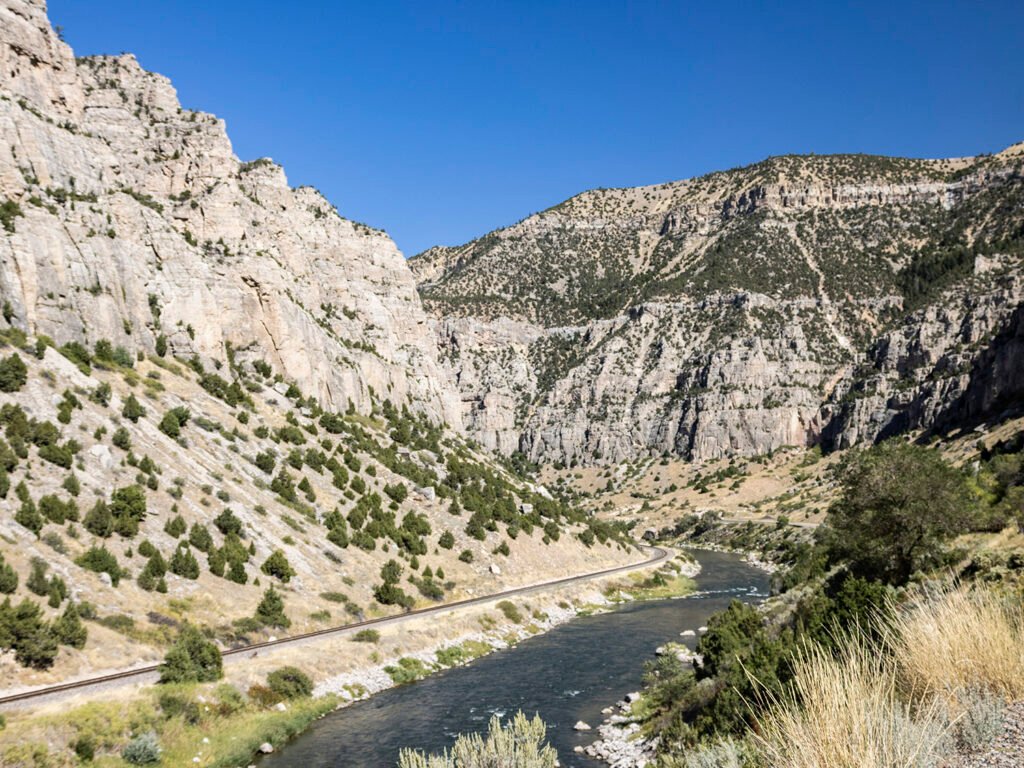
    There are several natural bridges spanning certain canyons which are almost true arches. A natural bridge across the Nooksack near Mt. Baker is far down in the canyon’s depths, and hence has seldom been seen by a white man. Gliding under it in a canoe, it is seen to be one massive arch, which is 365 feet across, and far below the arch runs the river of Buttermilk chuck. Among the ragged rocks and projecting crags it windows its circuitous way to the salt chuck.

    While above, rising in sheer perpendicular ascent, tower the granite cliffs of the canyon 2,000 feet or more in the air, showing seams of coal, iron, fluorspar, quarts carrying gold, galena carrying gray copper, with threads of native copper, inaccessible to man, but which can be found in the river’s bed. Beautiful agates, crystals and amethysts are everywhere in more or less profusion. Under each end of the arch are beautiful marble shafts, polished by the winds and drifting sands, of uncut native and natural art. The great architect of nature has here shown that the art of man is insignificant and puny in comparison to the wondrous works of Sahale Tyee. The bridge itself is of solid marble, of wondrous purity and richness. Below the bridge are the upper falls and rapids which take a plunge of nearly 300 feet in succeeding short falls, with a final plunge of 400 feet to the canyon some nine miles from the bridge, from which point the waters are placid for several miles.

    The Indians give the bridge a wide berth. They are extremely afraid of it. Tsiatko; at the merest mention of this word, they tremble in terror.

    A Kloshe [omitted] sought the bridge as a way across the canyon, and was never more heard from. She was a most beautiful squaw, brave and true. When the chilling blasts come through the canyon from above the bridge, and the winds whistle through the trees, they imagine they see her tsiatko, or ghost, walking across the span.

    A peculiarity of the apparition is that at from noon to about 1:30 p.m., clear, cold days, a shadowy figure does promenade always one way – from the east to the west. The apparition is only the sun’s rays reflecting on the smooth walls of the canyon, producing in a marked degree, almost a human form. Above the bridge to the glaciers the current is swift, with sunken rocks to swamp the canoe, should its handler not be careful. Salmon and trout are plentiful. The salmon are easily speared, and a salmon broil over a bed of coals is a delicacy that must be partaken of to be known in its intrinsic advantage over the false so-called modern cooking by grease of any kind. With a hard tack and a hat full of salmon berries it is a feast of natural and delicate food easily digested, and hungry for more is the dyspeptic’s actual cry. He soon finds his dyspepsia is a thing of the past, his insomnia has disappeared, and he can sleep like a log, figuratively speaking, that even the caterwauling of a mountain lion fails to awaken him from his sound sleep. And a mountain lion’s cry is not to be sneezed at, to use a street expression.

    Our guide Uyuck, a tall sinewy [omitted], with iron nerves that never flinched in mortal combat with man or beast, trembled as he beheld this majestic bridge, with its graceful sweep and arching curves.

    The arch itself is stupendous. A clear span, over the river from the top of the bridge to where it springs from the fall of the side wall is nearly one hundred feet, while its thinnest part at center of span in the center over the river is only eight feet, with a width for a foot-path only, and above the water nearly one thousand feet.

    The river below looks like a thread of frayed cotton flying in the winds, so great is the tossing about of the water in the center of the rapids. Truly a great view from the bridge. To the north, is Mount Baker, clad in eternal snow, its ever moving glaziers [sic] of ice glistening and flashing reflecting rays from peak to peak, from canyon to canyon, from range to range. To the east the Rocky Mountains; to the south the west Puget Sound region; to the west old ocean, pacific when it pleases. But in its bosom there lurks a danger that man cannot overcome. We have seen it quiet and restful, its long, gentle roll, upon which, with sportive play, leaped the fur seal, after its meal of salmon; the leopard seal after its prey; the great whale with jaws open, and rushing through the water, when of a sudden it closes its jaws and it has its catch of fish, as it spouts and sprays us with water. Again we have seen it in its anger, when its fury was let loose, and we, like the Indian, trembled at its majestic grandeur, and arching waves that over-topped our yard arms and descended upon our ship’s decks with a thunderous thud, that made every timber creak and tremble. Yes, we, too, have said “Sahale tyee, sahale tyee, nika tilakum.”

    Ascending the river still further toward the glaziers, our guide points out to us various points of interest.

    Upon a level plain, several years before, was fought an Indian battle of remarkable fierceness.

    The Nez Perces had crossed the range to avenge an insult, as they said. A Nez Perces buck had abducted a [omitted] Kloochman. In taking the female over the range to his tribe he was overtaken. His ears were cut off, and he was turned adrift to go to his tribe as he had come. The Nez Perces are a war-like people, and have caused Uncle Sam already many men and much money to keep them upon their reservation: but they will never be quiet until the last one is made a good Indian, “that is a dead one.” The chief of the Nez Perces sent over the range several hundred of his best warriors and fiercest fighters. They were met at this plain by the Queen of the Wyltwick tribe. With her eagle feathers in profusion and dressed in a lion’s skin, she led her bucks in person as Tyee Wyltwyck was sick nigh unto death. She left him at the Markook with Pilchickanin and Boston and the squaws and papooses. The fight raged for three days, day and night, and when the last of the Nez Perces was exterminated and she was triumphant, and her dead braves had been laid to rest upon the platforms of the dead that were hastily made, and not until then was there such an Indian dance for joy at the extermination of a foe, as the Rocky mountains before or since have ever seen. Her dead braves were mourned and wailed for at the sail house, incantations for their journey to the happy hunting grounds in successive eras of prosperity were prayed for, and after weeks of mourning and moons of wailing, all again was as quiet as the placid waters of the lake.

    W.W. Goodrich13

    References

    1. Advertisement. Rocky Mountain News (Denver), May 24, 1879, p. 2. ↩︎
    2. “Held to Answer”. Rocky Mountain News (Denver), March 26, 1881, p. 2. ↩︎
    3. “Architect”. Idaho Tri-Weekly Statesman (Boise, Idaho), March 14, 1882, p. 3. ↩︎
    4. Advertisement. Seattle Daily Post-Intelligencer, September 29, 1882, p.2. ↩︎
    5. “Brevities”. Seattle Daily Post-Intelligencer, July 25, 1883, p. 3. ↩︎
    6. “A Worthless Check”. The Boston Herald, November 27, 1883, p. 1. ↩︎
    7. “Operation With Checks”. Boston Daily Advertiser, November 27, 1883, p. 8. ↩︎
    8. “An Old Fraud Heard From”. Los Angeles Herald, March 16, 1884, p. 4. ↩︎
    9. “A New Architect”. Oakland Daily Evening Tribune (Oakland, California), July 23, 1885, p. 2. ↩︎
    10. Advertisement. The Daily Freeman (Kingston, New York), October 5, 1875, p. 1. ↩︎
    11. Advertisement. The Daily Freeman (Kingston, New York), December 9, 1878, p. 2. ↩︎
    12. Gibbs, George. A Dictionary of the Chinook Jargon Language, or Trade Language of Oregon. New York: Cramoisy Press (1863). ↩︎
    13. Goodrich, W.W. “Land of the Indian.” The Atlanta Journal, November 1, 1890, p. 3. ↩︎

  • “Wyltwyck” (1890) by W.W. Goodrich

    Pat Connell. Homage to St. EOM‘s Pasaquan (1996). Folk Art Park, Atlanta.1

    The Background

    This is the sixth in a series of articles written for The Atlanta Journal in 1890 and 1891 by W.W. Goodrich, an architect who practiced in Atlanta between 1889 and 1895.

    I’ll be blunt: this article is unreadable garbage.

    Here, Goodrich concocted a tale set in the state of Washington that begins with an ill-fated hunting excursion by “Wyltwyck, the haughty queen of the Nooksacks”.

    Wiltwyck, of Dutch origin, wasn’t the name of any Indigenous person in Oregon — it was the original name for Kingston, New York,2 where Goodrich may have been raised and practiced architecture from 18753 to 1878.4

    For a mythomaniac, Goodrich’s storytelling skills were atrocious: after reading this article multiple times, I still don’t know what the hell it’s about. My best guess is that he started writing one story, and when he couldn’t figure out how to advance the plot, decided to jam an entirely different one into it.

    As if the article weren’t incomprehensible enough, Goodrich packed it full of Chinook Jargon and outright gibberish. Terms like Sahale Tyee, Nika tilakum, and kloochman are accurate,5 but much of the text reads like the speech of a babbling toddler.

    Sample sentence: “Loved by the tribe and by her Ikt man kwon esum mit lite kopa ikt kloochman.” Da fuq?

    Despite his own grade-school writing ability, Goodrich audaciously derided the intelligence of Indigenous people, noting “the simplicity of [Wyltwyck’s] nature” and later referring to “the simple-minded Indian”.

    Goodrich also made the character of Wyltywk an adherent of Christianity — because of course he did — describing her recitation of the Lord’s Prayer to “the Great Jehovah, or Great Spirit”. As a compulsive liar and criminal fraud, you can be sure Goodrich was an exceptional Christian.

    Incidentally, the translation of the Lord’s Prayer is mostly accurate — Goodrich copied it from George Gibbs Dictionary of the Chinook Jargon.

    The only value in reproducing this article is to show the kind of pure bullshit that the United States has built its myths on — moronic fantasies spun by narcissistic infants who lack experiential knowledge and are desperate to prove their superiority by portraying other people as weak and inferior.

    If you think there’s a shred of truth in this cultus wauwau, grow up and read a history book.

    Goodrich used a word from Chinook Jargon that is now considered offensive and will not be reproduced here. The term has been replaced with the [omitted] tag, and trust me, it doesn’t make the article any worse.


    Wyltwyck.

    Written for the Journal.

    [Note.–For the definitions of the Indian words in this story, see the end of the article.]

    The cold, gray clouds were drifting over Mount Baker. Occasionally a rift in the moving mass of snow would reveal the glaziers in the canyons, and the rugged ridges of rock protruding from the ice in uneven peaks. The stillness of death reigned everywhere. Flake upon flake, at first floating silently by, would be raised from the crust to again mingle with the storm’s ever increasing determination to bury all surviving life under its revengeful mantle. Upon a projecting crag overlook a precipice, whose depth was many hundreds of feet, was Wyltwyck, the haughty queen of the Nooksacks. Tall, straight as an arrow, with knotted muscles, in silent determination she waited, with bow bent, the spring of the mountain lion, that terror of the northwest, which was crouched, ready to spring upon her as its victim for its evening meal. Cat-like, with stealth, crawling slowly, its hair raised and tail in gentle twirl, it crouched for a spring. Instantly was heard the hiss of the speeding arrow, straight and unerring. The beast had been hit in a vital part and was mortally wounded. It snaps at the arrow in its fury rolling over and over in the snow. The proud queen of the Nooksacks mockingly laughs, taunting it with expressions of ridicule that a [omitted] Kloochman should have dealt this noble beast in its own home its death blow. The snow is crimson from the warm blood of the beast; in its final agony it makes one desperate jump at the squaw, only to be met with the dagger’s blow, severing the jugular vein. The death dance over an enemy in all its peculiar quaintness and picturesqueness, in the solitude of the mountain’s fastness, with no mortal soul to witness the ceremony and in the storms of relentless fury, made the heart of Queen Nooksack bound with intense delight. Such is the Indian’s desire for solitude. Sahala Tyee, Sahala Tyee, Nika Tilakum Wyltwyck was alone, and in calling up on the Great Jehovah, or Great Spirit, she in the simplicity of her nature acknowledged the beneficience [sic] of God Almighty, as the saviour of the human soul, and for her safe return to her people Stepping to the edge of the precipice overlooking the deep recesses of the canyon, looking for salt chuck, as her bearing to the Boston, she realized she was lost and had become separated from her tribal relations in the hunt. With hands uplifted towards the unseen God, who lived upon the mountain top she prayed and in the fervency of her prayer and anguish the words echoed and re-echoed from peak to peak, from canyon to canyon, but the Lord’s Prayer never sounded sweeter to the Saviour nor came nearer the throne of grace than did the prayer of this lone Indian squaw several thousand feet above the sea Nepika Sahale Tyee Klaxta Mitlite Kopa sahale Koshe Kopa nesika tumtum mika mem. Kloshe Mika tyee Kopa Konaway tilikum Kloshe Mika tumtum Kopa illahe kahwka kopa sahale potlatch konaway sun neiska muckamuck pee kopet kumtuks konaway nesika mesache kahkwa nesika mamook kopa klaska spose mamook mesahche kopa nesika marsh siah kopa nesika konaway mesanche. KLOSHE KAHKWA.

    She had not eaten for many hours as her muckamuck was gone Hyas til Nika, and wrapping her pasee about her, she was soon asleep in the Tkope snass.

    The [omitted] Sail house was east of the Boston town of Nooksack on the Nooksack river at the foot of Mount Baker, whose great and majestic grandeur must been seen to be appreciated. On its sides are five glaziers moving constantly and steadily to the plains and valleys below, from under which are heard dense crunchings and loud reports and moans, caused by the ice and rocks gravitating to the lower levels and melting in a higher temperature. All of these sounds are a constant source of terror to the simple-minded Indian, who imagines these noises are devils and demons in mortal combat, each arrayed against the other, and that the smoke from the peak is caused by their firing their respective hells with each other’s bodies, as a burnt sacrifice to allay the wrath of the defeated chief devil, acknowledging that even devils have an affinity for some sort of a patched up friendship.

    The homes of these people were built of bark, skins and rifted cedar thatched with wild grasses. At the apex was an opening for the egress of smoke; their muck-a-muck was game dried and jerked. Salmon were speared, halved, salted and dried and then smoked. To soften them a pointed stick was run through the thick part of the tail and then the fish was pinned to the bed of the river under water to freshen and soften preparatory to cooking and eating, a sure and speedy way.

    They raised yesolth and few vegetables, and were a dreamy, superstitious and quiet people, only going on the warpath when repeatedly insulted, and never giving in till the foe were entirely wiped out of existence even to the last papoose.

    A Boston man came among them to purchase skins and barter for gold. He built a marmook and lived in simple style and readily took to the native ways. His goods were brought from Linden, the head of navigation in the [omitted] Canum. Tyee Wyltwyck, and his Queen were carefully and courteously treated, and their daughter, Pilchickanim, their only child, was a Hyas Kloshe Tenas Kloochman, the handsomest female of the several tribes with hosts of suitors. She was tall, stately, her piercing black eyes penetrating as an eagle’s, her long waving, straight black hair, fine as silk, trailing on the ground, a veritable queen, and set off with trinkets and jewelry of Boston made her a picture in nature never to be forgotten. Boston was envied by all the young bucks, and many a one was felled to the ground by Boston in fights with the girl’s lovers.

    With her cedar canoe she could out-race any two of the tribe, and many a deer and bear fell an easy victim to her arrow and spear-thrust as they swam the river. Boston loved Pilchickanim. His love was reciprocated by the girl in her Indian way–coy, shrewd and distant. His was love as only a Boston can–affection for this maid of the forest, in his manly Boston way. To see the two in her canoe as she speedily paddled the river with or against the current one would not suspect that the were lovers. She never betrayed an emotion, but when Boston was sick she nursed him back to life. When he was assailed by any of her tribe she fought like a mountain lion with her dagger. Her own tribal relations, and always routed the young bucks.

    The sun was setting over the salt chuck. Its brilliant rainbow colors now soft and subdued, rose and fell with the long rook of the ocean. From the northwest came that brilliant glare and with beautiful vibrations lurid and distinct of the auroborealis [sic]. The tribe were with the Tyee Wyltwyck at the Sail house, fearful of an impending fate, when into their midst walked Boston without hesitation. He addressed the chief, Nika Tikeh Malleh Pilchicknin. The Tyee arose and, brandishing his dagger, swore, never! Instantly Pilchicknin, with the stately bearing of her princely birth, advanced to the side of her lover, Boston. Ah, ha! ws Tyee Wyltwyck. The simple Indian ceremony was soon over, and with her husband, she went to live at the Markook house. Loved by the tribe and by her Ikt man kwon esum mit lite kopa ikt kloochman.

    The run of salmon had been light; game was scarce; the season had been too cold for yeosolth, and supplies at the Markook were at an ebb, when a great hunt was planned by the tribe, following up the Nooksack to the glaziers [sic], from under which the buttermilk chuck was constantly running. Suddenly a Hyas skookum cly Hyas mowich, the moose sank into the snow as a shower of arrows went hissing on their deadly mission. Tyee Wyltwyck rushed forward to end the career of the moose should it not have been killed by the arrows. But in the snow lay Queen Wyltwyck wrapped in a moose skin, unharmed. She had seen her people in search of her, and surmising that they would take her for a moose, as she was clothed in a moose skin, dropped in the snow. She had subsisted for several days on the moose, and brought the lion skin as a memento.

    W.W. GOODRICH

    DEFINITION OF INDIAN WORDS

    Sahala Tyee, Sahala Tyee (great Jehova or Great Spirit), mika tilikum (I want my tribe, I want to go to my people, literally).

    THE LORD’S PRAYER

    Nepika (our) sahale (Father) klaxta (who) mitlite (art) kopa (in) sahale (the spirit) kloshe (good) kopa (in) nesika (our) tumtum (hearts) mika (be thy) mem (name) kloshe (good) mika (thou) tyee (chief) kopa (among) konaway (all) tilikum (people) kloshe (good) mika (thy) tumtum (will) kopa (upon) iliahe (earth) kahkwa (as) kopa (in) sahale (the spirit) potlatch (give) konaway (every) sun (day) mesika (our) muckamuck (food) pee (and) kopet-kumtuks (remember not) konaway (all) nesika (our) mesache (sins) kahwka (as) nesika (our) mesache (sins) kahkwa (as) nesika (we) mamook (do) kopa (to) klaska (them) spose (that) mamook (do) mesahche (wrong) kopa (to) nesika (as) marsh (put away) siah (far) kopa (from) nesika (us) konaway (all) mesahche (evil). Kloshe kahkwa (amen).

    Hyas til nika (I am very tired). Tkope snass (the snow). Sail house (tent). Yesolth (corn). Pilchicanim (I want to marry you golden beauty). Hoyas skookum cly (a great shot). Hyas mowich (big horse). Tossee (blankets). Boston (a white man). Muckamuck (food). [omitted] canim (Indian canoe).6

    References

    1. Fox, Catherine. “Folk Art Parks Downtown”. The Atlanta Journal-Constitution, April 26, 1996, p. F1. ↩︎
    2. Kingston, New York – Wikipedia ↩︎
    3. Advertisement. The Daily Freeman (Kingston, New York), October 5, 1875, p. 1. ↩︎
    4. Advertisement. The Daily Freeman (Kingston, New York), December 9, 1878, p. 2. ↩︎
    5. Gibbs, George. A Dictionary of the Chinook Jargon Language, or Trade Language of Oregon. New York: Cramoisy Press (1863). ↩︎
    6. Goodrich, W.W. “Wyltwyck.” The Atlanta Journal, October 11, 1890, p. 7. ↩︎

  • Mining for Attention

    The Background

    The following anecdote, attributed to W.W. Goodrich, was published in The Atlanta Constitution just 9 months after Goodrich moved to Atlanta in 1889.1

    Nearly everything in this story about an Oregon gold rush town appears to be a lie. It’s plausible that Goodrich passed through the location at some point, but he couldn’t even get its name right.

    According to the Oregon Encyclopedia, Amelia City “boomed for a short time and quickly declined”, appearing on maps from 1876 to 1890. The article adds that the town’s “…peak population was likely a few hundred…”

    So much for Goodrich’s description of a “town of thirty thousand miners…”, including some who “…had not seen a baby in twenty years…” And surely with thirty thousand horny men around, the town’s two young women would have been popping out babies like firecrackers. Oh, c’mon, you know the “old lady” was really a madam.

    Even the story of Goodrich’s 1700-mile journey from Salt Lake City to Pendleton, Oregon, is a lie. In 1882, Goodrich lived for 6 months in Boise, Idaho,2 3 before moving to Seattle.4 That was when he could have passed through Amelia City, which was located on the route between Boise and Seattle, southeast of Baker City.5

    Incidentally, the distance between Salt Lake City and Pendleton, Oregon, is less than 600 miles, but who’s measuring?

    The only difference between an architect and a con artist is that an architect believes their own bullshit, and Goodrich seems to have straddled the fine line between the two his entire life, constantly running from one location to the next when his lies caught up with him, leaving scant architecture of merit in his wake.

    In 1890, the Deep South was virgin territory for Goodrich, and it was no doubt easier for him to get away with his tall tales at a time when the telegraph was the fastest mode of communication, and long-distance phone service was nonexistent.

    Travel to the other side of the country was also costly and precarious, and there would have been few people in a backwater like Atlanta who would have been familiar enough with the Far West to call Goodrich’s bluff. Still, you’d hope someone was astute enough to notice the ripe whiff emanating from his outlandish stories.

    Notes by the Wayside.

    Mr. W.W. Goodrich, the architect, has traveled very extensively. In 1882 he traveled seventeen hundred miles by private conveyance with his family, going from Salt Lake to Pendleton, Oregon. At Amelia, Oregon, he found a town of thirty thousand miners, and in the entire population there were but three women–an old lady and her two daughters.

    Mr. Goodrich had along his little baby six weeks old, and the baby created a sensation in the camps. Some of the miners had not seen a baby in twenty years, and they crowded about and handed the baby from one another.

    “If an artist could have painted the scene,” said Mr. Goodrich, “it would have been a most interesting picture. There were grizzly old miners with pistols in their belts and knives in their boots alternately crying and laughing as they passed the baby around. ‘God bless his little gizzard,’ said one fellow, as the tears streamed down his face.”6

    References

    1. “Comes Here to Live.” The Atlanta Constitution, September 18, 1889, p. 4. ↩︎
    2. “Architect.” Idaho Tri-Weekly Statesman (Boise City, Idaho), March 14, 1882, p. 3. ↩︎
    3. “Personal.” Idaho Tri-Weekly Statesman (Boise City, Idaho), September 19, 1882, p. 5. ↩︎
    4. “Architect & Sanitary Engineer.” (advertisement) Seattle Daily Post-Intelligencer, September 29, 1882, p. 3. ↩︎
    5. Amelia City – Oregon Encyclopedia ↩︎
    6. “Notes by the Wayside.” The Atlanta Journal, June 24, 1890, p. 3. ↩︎
  • “The President and the Bootblack” (1890) by W.W. Goodrich

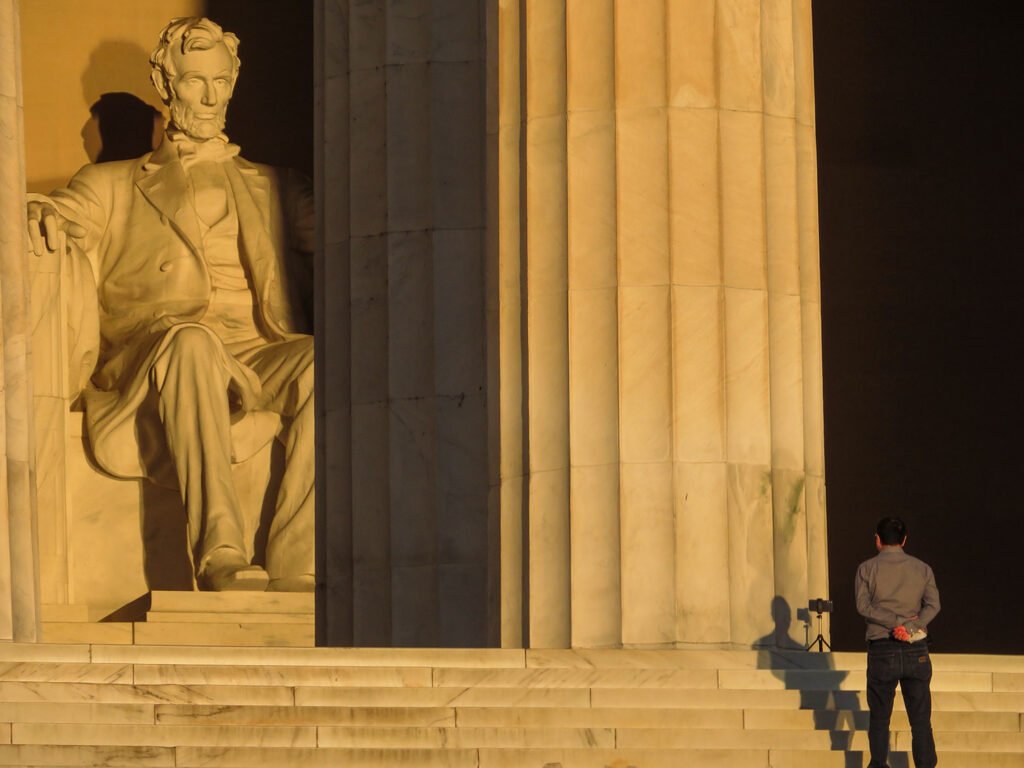
    Henry Bacon and Daniel Chester French. Lincoln Memorial (1922). Washington, D.C.

    The Background

    This is the fifth in a series of articles written for The Atlanta Journal in 1890 and 1891 by W.W. Goodrich, an architect who practiced in Atlanta between 1889 and 1895.

    Here, Goodrich tells a “true story” of an encounter with Abraham Lincoln in New York City during the Civil War, although the account is almost certainly fabricated.

    Goodrich was a pathological liar of some magnitude,1 2 3 and it appears that he largely invented his own biographical details, with implausible stories that became increasingly outlandish throughout his life. By the time of his death in 1907, Goodrich was described in one obituary as “a personal friend of President Lincoln”.4

    The truth, of course, was likely much more mundane. According to the 1860 census — just before the Civil War, and when Goodrich was 19 years old — a man of his name and age lived in what is now the Financial District of Manhattan, where he worked as an insurance clerk.5

    It’s doubtful that an insurance clerk who became an architect ever worked as a bootblack, and the odds that he met Abraham Lincoln are slim to none. Goodrich at least shows some grain of truth by referencing City Hall Park, which is the largest public space in the lower portion of New York.

    This fable is in the vein of other hagiographic tales about American “heroes” that were popular in the 19th century — the apocryphal story of young George Washington chopping down a cherry tree, concocted by Mason Locke Weems, is a prime example of the genre.

    This is not a prime example, however, as Goodrich was about as skilled at writing as he was at architecture.

    It may seem a little daring that an Atlanta architect would write such a glowing account of Lincoln for a Southern audience, but keep in mind that Atlantans in the New South era prided themselves on having swiftly moved on from the Civil War — or at least, that was the image the city’s leaders wished to project.

    The Old Southern hatred and ignorance remained just beneath the surface — and does so to this day — but this was, after all, the city that feted General Sherman for 3 days in 1879,6 fourteen years after he partially burned it.

    Still, Northern-born men like Goodrich who lived and worked in Atlanta in the years after the Civil War had to walk a careful line: Atlantans weren’t offended if a Northerner pledged allegiance to their homeland so long as that person gave a knowing wink to indicate that they, too, shared the cherished Southern values of racism and unmerited superiority.

    Look no further than Goodrich’s article entitled “Educational Advantages North and South”, published in The Southern Architect in 1892.

    As The Atlanta Constitution said of the article: “[Goodrich] views the negro as an incumbrance and a political nuisance, and hopes that the better elements of the north and west will seek homes here and stand by the Anglo-Saxon race.”7

    It should come as no surprise, then, that Goodrich’s story includes caricatured and infantilizing depictions of Black people, using offensive and stereotypical language. Two explicit racist terms will not be reproduced here and have been replaced with the [omitted] tag.


    The President and Bootblack.

    Characteristic Incident in the Life of Abraham Lincoln—A True Story.

    Written for the Journal.

    “Shine, sir! Shine Sir!” the usual cry of the bootblack trudging along day by day, half-starved, hope in a future better existence, where he can sit beside a table of generous roast beef, mashed spuds, the revivifying coffee, hot rolls and butter. How my memory goes back to those days when these good things were of the “sight and smell only.” A short time before the assassination of our Lincoln he visited New York City in company with that stern, hard-headed secretary of war, Stanton.

    I had seen the president on several occasions and knew him by sight, as Mr. Lincoln always, and all times, had a quiet, natural greeting for everyone; even the humblest child could approach him and be assured of a cordial and true gentlemanly greeting.

    As they were crossing City Hall park I ran up behind, and with sang froid, said “Shine, uncle, shine, sir?” Mr. Lincoln turned about with a bright, humorous smile, while the great war secretary, in half indignation, asked the president to come on, as time was precious, but Mr. Lincoln said, “Wait a moment, Mr. Stanton, let’s sit down.”

    Seating themselves at the west of the old city hall on a settee Mr. Lincoln was in the act of placing his right boot on my box, when behind me arose a cry: “Massa Lincum, let me shine of dem boots? Smug, you go away from dar, den Massa Lincum make me free. You poor white trash no bizzness shining my Massa’s boots.” A good argument, even from the “duke,” as we called the colored lad. My nickname was “Smug.” Mr. Lincoln afterwards remarked: “I will let you both shine; each can have a boot.” A crowd was gathering about us, of boot-blacks, errand boys, news boys and pedestrians, all anxious to know what was up, but all soon knew who the distinguished gentleman was, and with repeated cries from the less fortunate boys of “Go in Smug,” “I’ll bet on the duke,” and other phrases, we shined as best we could, Mr. Lincoln amusingly telling us that he’d bet on the hoss that won, and I’ll pay the boy that shines the best for both boots, patronizingly patting us on the back. When we had nearly completed our pleasant task Mr. Lincoln said: “Boys, I am going to tell you a story. I have just come up from the front. Have been down with General Grant, looking over the battle-fields, going through the hospitals;” and a great tear rolled down his cheek as he mentioned the brave boys, with legs and arms shot off, and the lonely graves of the unknown dead, and thinking of the anxious ones at home, who would never see their fathers, brothers and sons again. How vividly he portrayed the scene. Finally he said: “Several evenings since, as I sat in a tent door, in conversation with General Grant, a colored woman came by the guard, and in her arms were two little colored children saying, as she approached, ‘Massa Lincum, I’se hab twins, boff [omitted]. One I’se named arter you, and de udder arter Massa Washington. Dey’s boff de berry picture ob yous. Now, Massa Lincum, seeing as how yous ben so good ter de [omitted], and dat yous has made us free, and as my ole man is at de front, shouldering his musket fighting for yer, I’se gwine to ask yer to help dese [omitted] to something to eat,’” and suiting his action to his words he took out of his vest pocket two one dollar bills, and gave us each one, saying “you [omitted] look as though something to eat would not be amiss.”

    The boys gave Massa Lincum three cheers and a tiger. While I was putting up my brush and blacking, after receiving the bill, even before I was off the bended knee, he saw in box a book. “Smug, what is that book?” I reluctantly gave it to him. He looked at its well-worn leaves and read Robinson’s Algebra,” looking at me quizzically, saying to himself “Robinson’s Algebra.” “What are you doing with an algebra?” I hesitated about telling him, but his pleased look drew out my story. Only a poor, struggling student, working and striving under every opportunity and at whatever occupation to get an education that would prepare me for the future and that better my condition, and that by knowledge. He manifested much interest, promising to keep a weather eye on my future, and in parting said, “As your shine is well done, do everything else in like manner. and you will soon shine in something better.”

    W.W. Goodrich8

    References

    1. “Held to Answer”. Denver Rocky Mountain News, March 26, 1881, p. 2. ↩︎
    2. “Probably a Sharp Swindler”. The National Republican (Washington, D.C.), November 27, 1883, p. 3. ↩︎
    3. “An Old Fraud Heard From”. Los Angeles Herald, March 16, 1884, p. 3. ↩︎
    4. “Capt. Goodrich”. St. John’s Review (St. Johns, Oregon), February 15, 1907, p. 2. ↩︎
    5. United States Census, 1860, William Goodrich, 2nd District 7th Ward New York City, New York, New York, United States. ↩︎
    6. “Two Receptions”. The Atlanta Constitution, January 30, 1879, p. 1. ↩︎
    7. “Editorial Comment”. The Atlanta Constitution, May 14, 1892, p. 4. ↩︎
    8. Goodrich, W.W. “The President and the Bootblack.” The Atlanta Journal, July 5, 1890, p. 12. ↩︎
  • “Pretty Homes” (1890) by W.W. Goodrich

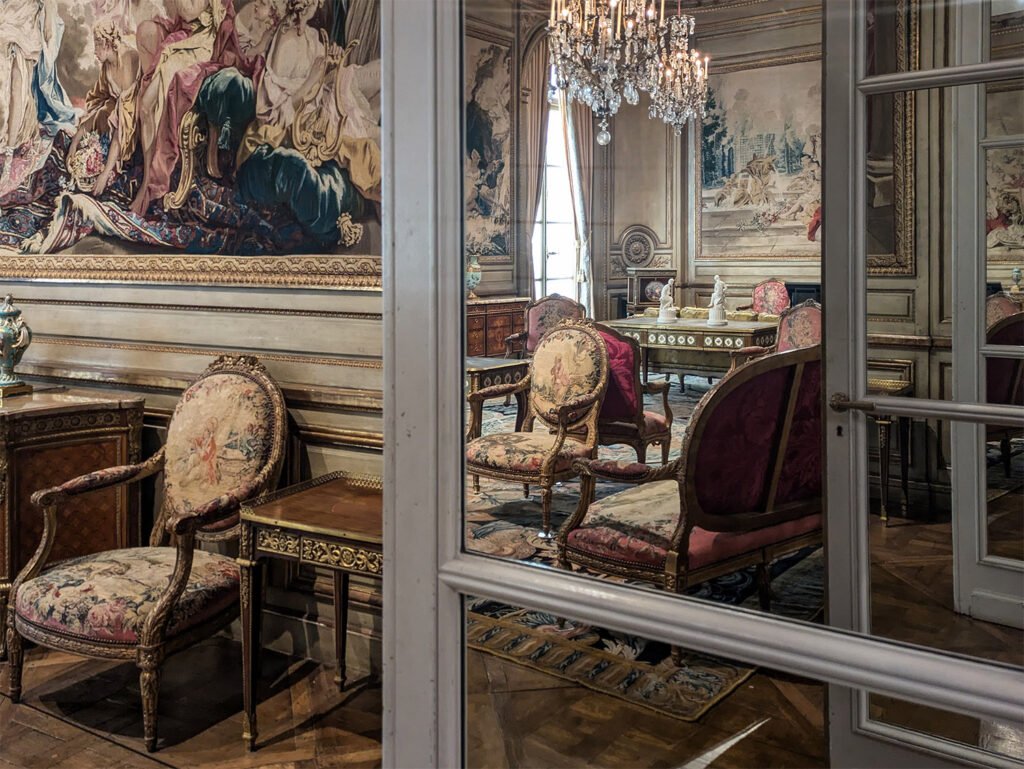
    Maison Carlhian. Drawing Room from a Town House: 901 Fifth Avenue, New York City (1923). On exhibit at the Philadelphia Art Museum.

    The Background

    This is the fourth in a series of articles written for The Atlanta Journal in 1890 and 1891 by W.W. Goodrich, an architect who practiced in Atlanta between 1889 and 1895.

    Aimed squarely at the upper-class audience who could afford the services of an architect, here Goodrich provided an exacting and plodding description of a hall and reception room decorated in the Colonial Revival style that was then becoming fashionable in Atlanta’s wealthiest homes.

    At the time, interior design as a dedicated profession was emerging in larger cities like New York and Chicago, but in Atlanta, it was still primarily the domain of architects — in particular, L.B. Wheeler and W.T. Downing were popular for their interior design skills.

    Goodrich affected a lofty and condescending tone typical of the era, when designers — usually men — lectured their readers — primarily women — on how to decorate their homes in a manner that was considered cultured, refined, and in “good taste”.


    Pretty Homes.

    A Chapter on Interior Decoration.
    A Roomy Reception-Room and Hall.
    An Article that Will Prove of Special Interest to the Ladies – Description of Beautiful Decorations for a Reception Room.

    Written for the Journal.

    Of the numerous styles of design applicable to the treatment of a reception room and hall the Colonial is one of the most pleasing, combining, as it does, the severe and studied simplicity of classic form with a delicate and distinctive grace and daintiness of detail. As one of the first principles of design is adaptability to requirements, the use to which the room is to be put should determine not only the practical essentials of convenience and utility, but also the impression which is to be made on the minds of its occupants by their surroundings, and this impression should coincide as nearly as possible with the thoughts and objects which will be uppermost in their minds. As such a room is devoted to the formalities of society, the treatment of its design should be formal and of studied simplicity. Any attempt at display or indulgence in eccentricities of design, either in wood finish, furniture, hangings or decorations, any violent or startling combinations of color, any pictures or bric-a-brac sufficiently conspicuous and out of keeping with their surroundings to attract immediate attention, would be evidences of bad taste and want of study in the effect of the whole.

    Our reception room should consequently be, more than any other room, a harmonious whole, a dream of perfection, for it is here that we declare our taste and education to the world. If it is otherwise, the conception has been a failure, and the visitors will not find that appropriate ease in their surroundings which the occasion demands. It is infinitely better to make no attempt whatever at treatment than to give cause for the ignorant presumption of the would-be critic. A rich, pleasing, and above all, general effect should be the first impression conveyed to the mind on entering the successfully treated reception room, the whole scheme being so carefully studied that no one thing should be given undue prominence, but everything should participate in and be subservient to the effect of the whole, and then this effect will have the “refinement and charm of a fascinating and cultivated woman dressed in perfect taste.” Great care should be taken to produce the exact shades of colors desired, and it is important that those selected should be becoming to the “mistress of the house”, for if otherwise, she will appear at a disadvantage and out of place with her surroundings just when she should feel and appear at her best The most satisfactory results can be obtained by the general use of one or two color at most, but these can be produced in two or more shades which, however, should vary but slightly. Many so-called reception rooms are used for various other purposes which would involve the consideration of other impressions to be expressed in the treatment of design, together with other practical essentials.

    Our room is about fifteen feet square, with the four corners rounded, and the wall coving into the ceiling with a curve of about nine inches radius, having no molding at either intersection with the flat surfaces. The inlaid floor is highly polished and has a border of prima vera and satin wood with the center in strips of the former wood two inches wide laid vertically in each wall, and mitering at angles.

    Prima vera is a beautiful golden yellow species of mahogany which is used on the Pacific coast for fine interior finish. The wood finish of the room is made in cherry, which is enabled with seven coats of a rich cream color and polished to a dull egg-shell gloss. Cherry is greatly superior to pine or white wood for enameling purposes, the grain being so close and the wood so hard that all moldings and detail, no matter how fine, are sharply and clearly produced, and the chances of denting or disfiguring in any way by constant use are greatly lessened. As the drawings show clearly the treatment of the woodwork, only a few general remarks are necessary to make them understood. All moldings and details are of the utmost delicacy, the sinking being but one-quarter of an inch.

    The carvings are mostly composed of acanthus leaf, rendered quite flat, with an extreme projection of but three-quarters of an inch, those of garlands only having conventionalized flowers and leaves, all executed with the utmost delicacy, edges being sharply and clearly defined, but in no case having a projection of more than one-sixteenth of an inch, the high light edges and surfaces being daintily touched with silver throughout. The portion of frieze over windows is a transom light of silver leaded pink and cream colored opalescent glass, on the same plane with walls of room; below this is a silvered rod, with rings for draperies. The walls are hung with a warm shade of rose pink silk, perfectly plain, in vertical pleats about four inches wide. This silk is secured in place by hooks and eyes, and can be taken down, cleaned and put back again with but very little trouble. Just below the wood cornice is a valance of the same silk, divided into sections by narrow pipes, placed at equal intervals, the head of each hanging down and being slightly crushed. The valance is cut to hang in slight creases, but its lower edge follows around the room in a perfectly straight line, and is bordered by a cream-colored silk fringe two and one-quarter inches wide, corresponding to the epistylium over doors and windows. Just back of this fringe is a silvered rod, supported by hooks screwed into the walls, its surface showing at intervals through the reticulations. The window draperies are heavy ones being of satin damask, in the same rose pink as the wall hangings, but a shade darker with cream colored silk fringes, tassels and linings. A pair of silk lace curtains and a sash lace on silver rods subdue the daylight to the desired tone. The ceiling cove and that portion of the walls above the cornice molding are treated in five coats of oil color on plaster, rendered in cloudy effect, commencing at the cornice, in rose pink, grading lighter toward the ceiling, and finally to a cream color beyond the ornament on ceiling, the clouding being in cream and pink, very light and filmy, and irregularly introduced. At the intersection of cove and ceiling are two strands of braid in carton pierre, forming a framework on which base the decoration. This braid comes down over the cove at intervals in two intertwining strands, and the intermediate spaces are filled by garlands of conventionally treated flowers and leaves, also produced in carton pierre, not over three-eights of inch in relief at great delicacy, both these and the braid being daintily silvered on high lights. Festoons of small discs hang above and below each garland, and acanthus buds and sprays spring from intermediate loops of the braid, flowing out onto ceiling and down into cove. The ornament is mostly cream in color, although where the clouding happens to be cream it has a very light pinkish tone, and in some places hardly distinguishable from the ground color; or, the whole treatment has a dreamy, atmosphere effect, impossible to describe, and must be seen to comprehend. All ornament is, of course, produced without any shadow or attempt at false relief, as under no circumstances whatever is such a treatment allowable. The furniture is like the finish, made in cherry and enameled in a rich cream color. It consists of the following pieces: A window seat about six feet long, having a cushion six inches thick and a large detached soft pillow, the edges of both being finished with a cord, which, on the cushion, is made into corner knots. A light divan five feet long, two arm chairs to match and two reception chairs complete the seating capacity of the room. The bottoms of all legs are shod with small silver boots, having casters on the front and rubber bearings on the back legs to prevent too free and easy a movement over the polished floor. All seats are upholstered plain, that is, not tufted, and the colorings are or figured silk tapestry, worked with bunches of flowers and leaves in delicate shades of dull blue, pink and green, on a light cream ground, the goods being mostly ground and showing very little of the other colors. There is a center table elliptical in shape, has silvered claw feet, and a Mexican onyx top of rich creamy tone. The cabinet has clear plate glass, with silvered leads in doors and sides, a French plate mirror back and three plate glass shelves, the piece being finished equally well both inside and out. All this furniture has the most delicate possible details of moldings and carvings, and is daintily lined and touched with silver throughout. Two large, white, bear skin rugs form the only floor covering.

    W.W. Goodrich1

    References

    1. Goodrich, W.W. “Pretty Homes.” The Atlanta Journal, June 21, 1890, p. 5. ↩︎

  • “Hints to Builders” (1890) by W.W. Goodrich

    The Background

    This is the third in a series of articles written for The Atlanta Journal in 1890 and 1891 by W.W. Goodrich, an architect who practiced in Atlanta between 1889 and 1895.

    The title of the article is misleading, as Goodrich provided no advice for builders here — they wouldn’t take it anyway. Instead, this article delves into the design of doors, porticos, and other building entries, which allowed Goodrich to whip out such fancy architectural terms as “pronaos” and “antæ”. He obviously read Vitruvius at some point.

    Goodrich’s writing style was overlong and overwrought, and you have to wonder how many people actually read this insufferably boring article when it was published — certainly not the newspaper’s editor or proofreader, as the article is chock full of typos and grammatical errors.

    Given his grandiose ramblings on the subject, you’d think Goodrich was some genius of architecture, but if you look at the quality of his work, it’s clear he was nothing more than a run-of-the-mill designer with delusions of grandeur.

    And that’s the nicest thing you’ll hear me say about him.


    Hints To Builders,

    A Chapter On Beautiful Entrances.

    Houses That Speak to Beholders.

    Tame, Flat and Uninteresting Building — Hospitable and Polite House –An An [sic] Article that will Prove Interesting to Journal Readers.

    Written for the Journal.

    Has anyone ever felt or been impressed by the character of an ignoble or imposing entrance. The insignificance and meanness of a narrow, cramped doorway is as certainly experienced as a sense of nobility and grandeur is awakened by the sight of a great cathedral. Not only, however, in edifices of public character such as these do we feel the influence of the entrance; we find that it impresses an important character on buildings of an official and private class. A small and insignificant entrance stamps the character on the building; in effect it says to every passer-by, “I am only intended for private use.” On the contrary, the wide doorway invites entrance, it proclaims to every observer free and unrestricted ingress, and it stamps the building with an hospitable character. No other feature of a building addresses itself more directly to the eye than the entrance. Every good architecture has a language of expression of its own; the modes by which it gives expressions are few, and may in a word be said to symbolize or represent corresponding qualities or emotions of the mind. Thus we can make a building look vapid and tame by flat treatment and want of vigorous features, or we can make it frown and strike terror to the beholder by massive treatment, bold projections, and overhanging cornices; we can give it an air of amusement and gloom by windowless walls and by severe details; and we can make a building hospitable and polite by harmonious arrangements of the features, wide apertures and ornamental details.

    This phonetic quality of architecture is as universal and as easily learned as the qualities of musical composition, or the varieties of rythm [sic] and harmony which expresses the grave and sprightly, the solemn and the frivolous. It has been said that an overture without words can express nothing; but all who can appreciate fine musical competitions know how eloquent and impressive certain passages are in appealing to the emotions and heart. In architecture likewise, though the differences of expression may be few, they are clearly pronounced, and the modes by which they are produced appeal with equal power to even the unlearned and artistic person. Thus we need not inform the least observant the effect that is produced of an excess of a paucity of openings in a building. A wide open fenestration expresses life and liveliness, large apertureless wall spaces gloominess and dullness. The most illiterate and least artistic can appreciate the difference between these conditions of building. The large paned windows of the modern villas as certainly express sprightliness and vivacity as the massive unpierced walls of a goal do gloom and austerity.

    The entrance doorway has always appeared to us to be an equally powerful means of obtaining character of a facade, making it inviting or hospitable, sullen or selfish, and it is worth while to consider it as a very important feature in design.

    There are several varieties of entrance; the most generally known may be broadly classed under the simple doorway, the projecting entrance and the recessed entrance. Of the second class, the porch or portico is a representation, and of the third, the open vestibule. Each of these kinds admits of many varieties, according to the style chosen and the purpose of the building. The style rather than the purpose of the building has been chiefly taken by architects as the only rule in the matter, and thus it happens that a few conventional modes of treating the entrance continue to be used, in total forgetfulness or in ignorance of what is demanded by purpose and expression. Of all forms of entrance perhaps no more noble or majestic can be found than the classic portico or pro-style arrangement in front of the cella; no meaner than the ordinary doorway in a flat wall. The classic and Italian architect never produced a more impressive entrance than the arrangement known as “in antis,” in which the temple of the building is entered through a pronaos or outer open covered space between two columns and the doorway. In the large and more important temples columns were placed in front of the antae, making a deeper covered space or portico. What is in classical nomenclature known as the “pronaos,” is, in Italial [sic] architecture, a kind of screened vestibule, recessed from the front wall. But as in other inventions of the ancients, modern architects frequently travesty this feature. They make it too shallow to be of value, or make it so small as to become ridiculous. The opening occupied by the columns between the antæ should bar some proportion to the facade, the larger the more dignified and impressive, it should form a convenient shelter from the weather, and should therefore be proportionately deep.

    To lay down any rules of size would be superfluous and misleading, for it is a feature that should be planned in conjunction with the internal walls of the vestibule or hall. In a public edifice, as a hall, size is of importance, though it would appear the dimensions of the portico is accounted a small matter, the subject being left to the accidents of planning rather than to destination. We often find public edifices with meagre entrances, and private villas with spacious porticos. If we look at mediæval [sic] edifices, we shall find the noblest of our cathedrals have imposing entrances. The grand triple portals of Amiens and Rheims [sic] are majestic works of sculptural architecture, depth being obtained partly be [sic] external projection, which is gabled, and partly by recess in the wall. The splay of the jambs and seried arch members filled with sculpture play a great part in giving apparent depth to the portal, a principle followed also by the mediæval architects, in diminishing the members, shafts and statues as they approached the plane of doorway. Height, too, was not sacrificed, the tympana are richly sculptured, and the apices of the outer arch mouldings reach to a full third of the height of facade. The entrances to our own cathedrals are less important features, but are largely obtained by recess in the thickness of the wall.

    Projecting porticos and porches form a notable kind of entrance, and their chief use is in obtaining external shelter and protection from the weather. Projecting arrangements forcibly express entrance, and are probably of all forms the least tractable in the hands of the architect. In towns they require the setting back of the building, and are, therefore, rather wasteful of area. The chief failure in this mode of expressing the entrance is the want of connection with the building. Unless the porch is designed with special reference to the elevation, it has the appearance of a clapped on adjunct, and this is the common weakness of the porch. From all we have said there a few rules to be observed which may be enumerated. First, the entrance should accord with the purpose of the building in size; second, in its architectural treatment and decoration it should express its function of access and shelter clearly, and its lines should be made to unite with those of the facade; third, a half projecting and half recessed entrance is more pleasing and desirable than a flat doorway. To these, a fourth principle should be added–that the external entrance should correspond with the internal arrangement. A wide entrance or portico should always have an inner vestibule or hall of similar width and importance; and sense of disappointment is otherwise at once felt on passing the external entrance and find a narrow hall within. Yet this is a very common fault in entrance designing which has been studied in elevation and not in plan. We often see porticos and porches stuck on, having no reference whatever to the internal walls. The walls of entrance internally are suddenly reduced to the width of a corridor, and the visitor at once realizes the deception practiced upon him of a counterfeit portico–having no connection whatever with the hall inside. In short, the vestibule and hall should be a continuance of the entrance, and it is better, to enlarge than diminish its width and to increase rather than lessen its architectural embellishment. The object for any entrance hall should be to invite the visitor, not to repel him, as he passes the threshold. It is a feature upon which the ablest architects of all ages have exercised their highest skill, and its treatment, both architecturally and decoratively, ought to be to conduct the visitor to the apartments, instead of by meanness or ostentation to arrest his footsteps, or to disappoint his expectations of the interior.

    W.W. Goodrich.1

    References

    1. Goodrich, W.W. “Hints to Builders.” The Atlanta Journal, June 7, 1890, p. 10. ↩︎

  • “Good Architecture” (1890) by W.W. Goodrich

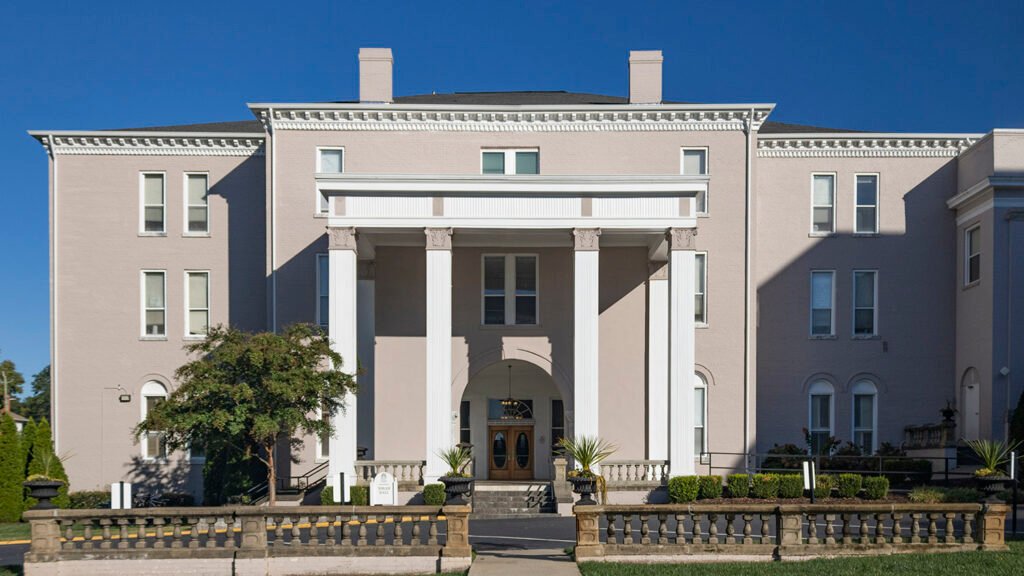
    W.W. Goodrich. Yonah Hall (1893). Brenau University, Gainesville, Georgia.

    The Background

    This is the second in a series of articles written for The Atlanta Journal in 1890 and 1891 by W.W. Goodrich, an architect who practiced in Atlanta between 1889 and 1895.

    In this article, Goodrich informed readers on the attributes of a qualified architect, at a time when the building industry was almost entirely unregulated — particularly in the Southeast — and anyone could market themselves as an architect regardless of training or experience.

    One of several Atlanta architects who publicly advocated for increased oversight of the profession, here he called for an examining body to register architects, which was not established in the state of Georgia until 1919.1 2 3 4


    Good Architecture,

    And Its Scientific Requirements.
    What Steps Are to Be Applied.
    An Able and Comprehensive Paper on the Qualifications of an Architect–Buildings Without Claim to Architectural Merit.

    Written for the Journal.

    It would not be very easy to draw the line between a qualified and unqualified architect, because it is hard to say what the conditions of successful architecture are. There are many who have achieved a professional reputation by name, but whose buildings are not remarkable for any high quality, either as works of art or as successfully planned structures. There are others who are not known to fame whose works, though small, bear the impress of artistic ability. But the question still remains, what are the tests of good architecture, where should the scientific requirements end and the artistic begin? And until these points are decided it will be hard to apply a rule. The practice of architecture cannot be gauged like that of law or medicine by the number of briefs or patients, which are more or less accurately the measures of successful practice, as the fact that one man designs and carries out more buildings than another becomes no test of the artistic qualification. The oftener a physician prescribes or a surgeon operates, the more skillful he becomes–so in the practice of law; but it cannot be said of the architect’s work. There are hundreds of buildings eminently successful as works of skillful arrangement and construction, but which have little claim to architectural merit. Works of this class imply the profession of faculties of a high order and technical skill, all of which may be acquired without any art function. We have abundant examples of cleverly-arranged offices, schools and hospitals, which are without any of the qualities which render them artistic or even agreeable. Other buildings can be named that exhibit every attribute of artistic beauty, wholly wanting in the utilitarian requirements. Which of these two classes belongs to the architect? Those who make good building essential will answer that the first of these descriptions fulfill the object of architecture, and they will be found to include the largest number of people. Usefulness and sound construction are the tests. Publican criticism of architects’ work has generally proceeded on these grounds. Like the reputation of a great man, the merits of a building are of slow discovery. It is the public test of fitness which approves or otherwise. Not one in a thousand can see anything in a handsome, elegant, or picturesque building to put it in the balance against fitness and convenience. Those qualities on paper may gain it for the premium; but the public are the first to find fault with insufficient or awkward arrangements, bad lighting, ventilation, and so on. They may admire a handsome elevation, but they estimate its value at an exceedingly low price. Like good poetry, architecture is understood only by the very few–those, we mean, who take a real pleasure in ordered arrangements, in picturesque handling of masses, in light and shadow. The popular admiration is not worth much when it comes to payment or a question of rates; fine architecture, like high class music or entertainments, sinks rapidly, and the real measure of appreciation or discernment is found to be very small. Fine art, then, being an intangible quality, is undervalued, and those who have to live by it are very few compared with those who deal with the more practical requirements of building. It follows that the architect’s qualifications will be estimated accordingly, and that they must be governed by the public demand. Hence the only successful condition of the architect is that he can accommodate himself to the times, not be too sensitive an artist, nor exacting in his tastes, but be a compliant man of business, a scientific builder.

    Our experience of the profession points to the necessity of making the architect primarily a skilled arranger and constructor. Skill in arrangement and construction, however, applies to a variety of buildings intended for a multiplicity of purposes, and one man can never have more than once or twice in his life the opportunity of designing any one special building. In short, the qualifications vary for almost every description of building, and an architect who has acquired skill as a house designer may have no aptitude for designing a school or church. We can only say that there is a certain knowledge and procedure necessarily common to both. How to set about a plan is the first step; for if a man knows how to proceed he can soon solve the problem of any new building that may be presented to him. The experienced architect of one class of work goes to work unconsciously upon a truly logical basis. He knows by heart the requirements, say of a school room–a large array of types or precedents are ready in his mind. His mind agrees on a few principles, as, for instance, the light must enter on the left, desks must be placed along this side, the proportion of the room is regulated by the desks, and he sketches out a plan jointly by the aid of these principles and the types he has stored in his memory. The inexperienced does not proceed in this manner. He seeks precedents, and sets to work copying or arranging something by their aid, but without reference to data. The work fails because it has not taken account of facts; precedents are useful, as they show deductions from facts, but useless unless the latter are known. From which considerations we gather that in planning we have first to discover all the requirements, about lighting and intercommunication, and then by a synthetic process from particulars to generals, to arrange a general form that shall satisfy those data. As the naturalist and scientific observer from observing particulars and their relations can deduce a law, so the architect, who has a new problem of arrangement to solve, formulates a plan. So the function of every room may be met and expressed.

    How to design a plan is one of the things the architect has learned. It is included in the course of his training. The statistics of plans are considered one of the primary attainments of the architect. We mean, by “statistics”, all those particulars derived from experience bearing upon dimensions, cubic space, light, positions of doors and fireplaces, seating accommodations, etc. Thus, in the design of a church, the statistics would include the proper distance between the backs of seats, space to each person. In the construction of a theater or concert hall the ascertained distance in front of, and laterally from, the stage or platform at which the human voice can be heard, the proportion of stage to auditorium, the “setting-up” of sections or “sighting” of the various parts of the house, the raking or stepping of the seats and fronts of the “circle” to the inacoustic curve, are among the facts which experience has established, and which cannot be departed from to any extent. The qualities upon which successful hearing depends, the requirements for fire construction, heating, and good ventilation, are among the main essentials of truthful architecture, and these are the points which the public considers they have a right to look for in the building designed by an architect. Many subtle and conflicting questions of construction arise out of the theory of acoustics–for instance, there are proper “lines” and setting-out of the seating and ceiling, the influence of ventilation, or the movement and direction of currents of air upon sound, the proper materials for the reinforcement of sound. When the day comes for registering the architect, one of the main purposes of the examining body will be to secure to each member a modicum of such applied science, to guarantee to the employer qualification in his architect shall put him far above the builder, who has learned construction empirically.

    In short, it is the scientifically-trained builder that the public expects. We hear a few say that the architectural tests will be of no avail, for the public will still employ the practical builder. Yes, very true. They will employ him if they cannot get one any better; but the object of future legislation will be to create an improved class of builders–men trained in science, and who are experts in its application to the practical wants of the day. It is for the coming architect to make himself one of these, first of all, so that he may hold his own against the untaught builder, who has only learned one way of doing his work–not always the best or the most economical in its results. Building, like all other trades, has fallen into a groove, out of which mere workshop influence will never raise it.

    W.W. Goodrich5

    References

    1. “Better Education Bills Are Passed”. The Atlanta Constitution, August 7, 1919, p. 5. ↩︎
    2. “Governor Appoints Board of Architects”. The Atlanta Constitution, September 28, 1919, p. 9. ↩︎
    3. “State Architectss [sic] Are Named by Dorsey”. The Atlanta Journal, September 28, 1919, p. B7. ↩︎
    4. Acts and Resolutions of the General Assembly of the State of Georgia 1919 [volume 1] ↩︎
    5. Goodrich, W.W. “Good Architecture.” The Atlanta Journal, May 27, 1890, p. 6. ↩︎

  • “On Housebuilding” (1890) by W.W. Goodrich

    W.W. Goodrich. Gable on W.W. Goodrich House (1890). Inman Park, Atlanta.

    The Background

    This is the 1st in a series of articles written for The Atlanta Journal in 1890 and 1891 by William Wordsworth Goodrich (1841-1907), professionally known as W.W. Goodrich, an architect who practiced in Atlanta between 1889 and 1895.

    Here, Goodrich argued for the employment of a competent architect when building a home, at a time when the building industry was almost entirely unregulated — particularly in the Southeast — and anyone could market themselves as an architect regardless of training or experience.

    Goodrich particularly emphasized the need for good quality plumbing — indoor plumbing was still an emerging technology available primarily to the wealthy, and dangerous and catastrophic plumbing failures caused by substandard materials and improper installation were common.


    On Housebuilding.

    Some Valuable Hints By An Architect.
    Points About How to Build a House
    Give Your Suggestions to an Architect and Trust Him With the Work–A Professional Man Knows More Than a Non-Professional.

    Written for the Journal.

    To the prospective home-builder, I would address this warning: You are about to build or add to your present domestic or business accommodations. Possibly you have had some experience in planning and construction. Remember a good architect will save far more than his commission, and there is no economy in dispensing with his services.

    The reason why houses are so ill-constructed, is not far to seek. The blame rests partly upon the builder, but a large share belongs to the owner’s ignorance of what is essential to a perfect house, or to his unwillingness to pay for it when pointed out by the architect.

    While the architect has a recognized superiority in matters of taste and design, he is also better fitted to direct the great variety of artisans employed about a house. It is common but mistaken custom to give this direction to a contractor or builder, who is usually a mason or carpenter, and who is not thorough in his own trade, while lamentably ignorant of the details of other men’s work, which he has to superintend. The solo interest of such a man is to get through each job as soon as possible and with the least trouble and outlay. He is the plumber’s worst friend, when he winks at the latter’s failure to do justice to the owner’s interest, while, as he has no comprehension of the importance of good plumbing, he takes no pains to secure it. The practice of sub-letting plumbing to such men or any lump contractor is very objectionable and all sanitary details should have the personal supervision of the architect. The same reasoning will apply in the case of other departments of house construction and proves the necessity of competent mechanics.

    Before undertaking any building or other like work it is always best to draw up a detailed specification, with plans, to ensure against errors or misunderstandings, which create disputes in settling accounts and to thus make it clear just what it is proposed to do, and what are the duties and obligations of all parties concerned. Detailed sketches and working plans will also be found useful, especially for explaining designs to persons not familiar with building operations. A building specification should be brief, concise, yet clear; but the terms should be specific, and particularly those relating to plumbing and drainage; the kind and character of each article or material named should be defined so as to prevent the substitution of an inferior article; and weight of pipes should be stated. And here it should be said that it is always safest and cheapest in the end to specify the best materials. The difference in first cost, for example, between (medium and heavy water supply or waste pipe or between) light and heavy lining for tanks or baths, is slight compared to the durability and safety of the better material. A chain is only as strong as its weakest link and the quality of material has a far more important bearing in plumbing than in other work. This is a matter of great importance and one in which owners are liable to be deceived. It is a common thing for unscrupulous plumbers to substitute light weight pipe, full of sand holes, where sound material is specified and there are no official tests for such material, only great watchfulness will guard against frauds of this kind. The rules of the New York board of health regarding the weight and quality of plumbing materials to be used in new houses may be consulted to advantage. In making contracts for plumbing it should be remembered that the lowest bidder may be the most expensive man in the end. No bid should be accepted at so low a rate that the mechanics who take the contract must either suffer loss or “scamp” the job and therefore be attempted to cheat at every step. Let the owner inquire about cost of materials and labor and make sure of his own protection that there is a living profit for the contractor, for he may be sure that the latter will “get even with him” in some way, and it is better that the owner should agree to pay a suitable price at the outset, than that his house should be ruined and the lives of its future occupants endangered by this common “penny wise” practice.

    Two facts should be especially borne in mind by property owners. First, that a great saving can be made by having their sanitary arrangements made right in advance, instead of correcting them afterwards; and secondly, that a house in first-class sanitary condition will bring a much higher price than another which has only ordinary drainage arrangements.

    When the house is building it is easy to run pipes in any direction, but when plastering has to be torn down and replaced, double expense is incurred. It is estimated that the difference between good plumbing and the average work of this kind does not exceed twenty-five percent of the original outlay.

    If a compromise must be made because the owner’s purse cannot afford the best plumbing, then let the amount of the work be reduced, not the quality. It is far wiser to be satisfied with one really good plumbing appliance than with two inferior articles. Get the best under any circumstances. Let all the materials be sound and durable, and do not get anything merely because it is cheap; above all, remember that the cost of replacing a worn out or flimsy fixture with a good one, is usually almost equal to the cost of putting in a first-class article in the beginning.

    The very first requisite before beginning to build a house, is to get good mechanics in every line of work.

    If it asked “how am I to know a good plumber from another”, I answer how are you to know a good doctor or lawyer or architect – simply by taking pains to inquire and by avoiding the too common delusion that the cheapest man is the best. The only safeguard, is to employ a mechanic of known good character who has a reputation to lose, and who will be guided by his interest and his probity to do only first class jobs. If the public will insist on having good plumbing they will get it. If a man persists in buying sour bread or diseased meat no one pities him. Why then should we condole with one who engages the first plumber who comes along, without asking the least pains to learn his capacity or honesty, and who in consequence gets cheated? It would be amusing, if it were not so tragic in its consequences, to hear the common complaints of the duplicity of plumbers. The burthen of the story is always the same: “He was a stranger, I trusted him implicitly, and he deceived me.” We answer, why then did you trust a stranger? Next time take warning and find out something about those whom you employ and you will obtain men as worthy of your confidence in this calling as in any other.

    Householders who are given to cursing the plumber will very often find, on examination, that their execrations would be more judiciously bestowed on themselves.

    Having selected a competent architect, let the owner make up his mind not to hamper him by needless interference. He should take every precaution to secure a trustworthy man, and after giving him general instructions, let him carry them out in his own way. If the architect knows his business he can teach his client more than the latter can teach him. Nothing is more absurd than for people to presume to tell specialists how to carry on their specialty. This is especially the case with sanitary matters, in which amateur opinions are almost certain to be wrong, and wherein a little knowledge is most dangerous. Mr. Eidlitz takes the true professional ground when he says that “an architect, who permits a layman to decide upon the merit of his work, to gauge it, correct it, accept or refuse it – has already given up his position as a professional man.

    W.W. Goodrich1

    References

    1. Goodrich, W.W. “On Housebuilding.” The Atlanta Journal, April 12, 1890, p. 16. ↩︎

  • W.W. Goodrich Residence (1890) – Inman Park, Atlanta

    W.W. Goodrich. W.W. Goodrich Residence (1890, altered). Inman Park, Atlanta.

    The W.W. Goodrich Residence, located at 177 Elizabeth Street NE in Atlanta’s Inman Park neighborhood, is the city’s only known extant work designed by William Wordsworth Goodrich (1841-1907), professionally known as W.W. Goodrich, an architect who practiced in Atlanta between 1889 and 1895.

    Firm biographical details for Goodrich are difficult to find, as he was, by all indications, a pathological liar who fabricated much of his backstory. He was born in New York1 and began practicing in Kingston, New York, circa 1875,2 before moving to Denver, Colorado, circa 1879,3 leaving in 1881 after he was arrested for check fraud and larceny.4

    In the 1880s, Goodrich spent short stints in Boise, Idaho;5 Seattle;6 San Francisco,7 and Oakland, California.8 In 1883, he was arrested in both Los Angeles and Boston for check fraud. 9 10

    Goodrich’s career in Atlanta was unremarkable, and based on his feeble attempt at the Eastlake style with his own home, he had equally mediocre design skills. Only 2 other works from Goodrich’s Atlanta years are known to survive: the Leslie Dallis Residence (1891)11 12 in LaGrange, Georgia, and Yonah Hall (1893)13 14 15 at Brenau University in Gainesville, Georgia, both uninspired designs.

    The Goodrich family didn’t stay long in this home, which was built in early 1890.16 17 18 In November 1891, the city marshal auctioned off the property for Goodrich’s failure to pay taxes,19 and the home was purchased by W.C. Hale.

    In 1893, Goodrich moved to Norfolk, Virginia,20 apparently relocated his practice to Baltimore around 1895,21 and finally ended up in Oregon by 1904,22 where he died in 1907. As one newspaper obituary said, in part: “…he had his faults, as all mortals have…”23

    A better storyteller than an architect — although he wasn’t good at either — Goodrich managed to get many of his outlandish tales published in newspapers, some of which will appear here in due time.

    W.W. Goodrich Residence, circa 189024

    References

    1. United States Census, 1850, William Goodrich, Harmony, Chautauqua, New York, United States. ↩︎
    2. Advertisement. The Daily Freeman (Kingston, New York), October 5, 1875, p. 1. ↩︎
    3. Advertisement. Rocky Mountain News, May 24, 1879, p. 2. ↩︎
    4. “Held to Answer”. Rocky Mountain News, March 26, 1881, p. 2. ↩︎
    5. “Architect”. Idaho Tri-Weekly Statesman, March 14, 1882, p. 3. ↩︎
    6. Advertisement. Seattle Daily Post-Intelligencer, September 29, 1882, p. 2. ↩︎
    7. “Brevities”. Seattle Daily Post-Intelligencer, July 25, 1883, p. 3. ↩︎
    8. “A New Architect”. Oakland Daily Evening Tribune, July 23, 1885, p. 2. ↩︎
    9. “A Worthless Check”. The Boston Herald, November 27, 1883, p. 1. ↩︎
    10. “An Old Fraud Heard From”. Los Angeles Herald, March 16, 1884, p. 4. ↩︎
    11. “Building in LaGrange.” The Atlanta Constitution, December 13, 1890, p. 3. ↩︎
    12. Downtown Walking Tour, Historic LaGrange, GA ↩︎
    13. “A Great School for Gainesville.” The Atlanta Constitution, May 25, 1893, p. 3. ↩︎
    14. “An Elegant Building.” The Atlanta Journal, June 22, 1893, p. 1. ↩︎
    15. “Gainesville Gossip.” The Atlanta Constitution, June 23, 1893, p. 3. ↩︎
    16. “Growing Atlanta.” The Atlanta Constitution, January 13, 1890, p. 4. ↩︎
    17. “The City In Brief.” The Atlanta Constitution, January 24, 1890, p. 5. ↩︎
    18. “Street Railroad Extension.” The Atlanta Journal, May 7, 1890, p. 5. ↩︎
    19. “City Marshal’s Sales”. The Atlanta Constitution, October 26, 1891, pp. 9-10. ↩︎
    20. Advertisement. Norfolk Virginian, April 4, 1893, p. 8. ↩︎
    21. “That Building Disaster.” The Sun (New York), August 14, 1895, p. 2. ↩︎
    22. Advertisement. The Oregon Daily Journal (Portland, Oregon), August 1, 1904, p. 13. ↩︎
    23. “Capt. Goodrich”. St. John’s Review (St. John’s, Oregon), February 15, 1907, p. 1. ↩︎
    24. Atlanta Historical Society. Atlanta in 1890: “The Gate City”. Macon, Georgia: Mercer University Press, 1986.  ↩︎