












Ok, so the world’s a little scary.
You gotta stick your neck out every once in a while, though.
And should you still keep plodding along quietly?
Shell yes!

Somehow, I managed to sneak away and have a rooftop lunch by myself. I’m sure I was exhausted by the morning’s work.
It was a sweltering afternoon, but the skies in Atlanta were crystal clear and haze-free—a rarity for July.
As I gazed at the Downtown skyline while I ate, this friendly bee landed on the cap of my Publix lemonade and feasted on the syrupy sweetness.
I didn’t object.
Photography may be an art, but it’s one of the lowest forms.
To me, all art is mental shit anyway, simply the waste of whatever a person’s mind has recently consumed, reeking with the stench of their own odious beliefs and illusions.
Photography, in particular, is such a flimsy, throwaway medium—a single moment in time captured, but like most moments, easily discarded and forgotten.
At a time when humans absorb a steady stream of images in every waking moment, the value of a single photograph is less than nothing.
It’s amusing how pretentious so many photographers are about their so-called craft—the most spectacular image may grab a person’s attention for a second or two, tops, before they scroll past and immediately forget it.
Your pretty picture isn’t important, and no one gives a shit about it but you.
Needless to say, I don’t identify as a photographer, and I’m certainly no artist. I’m not attaching my ego to that kind of nonsense.
I consider architectural photography to be the same as pornography. Just like all dicks and vaginas run together after you’ve seen a thousand of them, one building looks much like another after you’ve photographed your first few hundred.
A structure may look appealing in a certain light or at a particular angle, but few are truly exceptional, and I’m always delighted to find the standouts. Even then, they’re just buildings—decaying monuments to human fragility and arrogance, all shaped in the same basic forms.
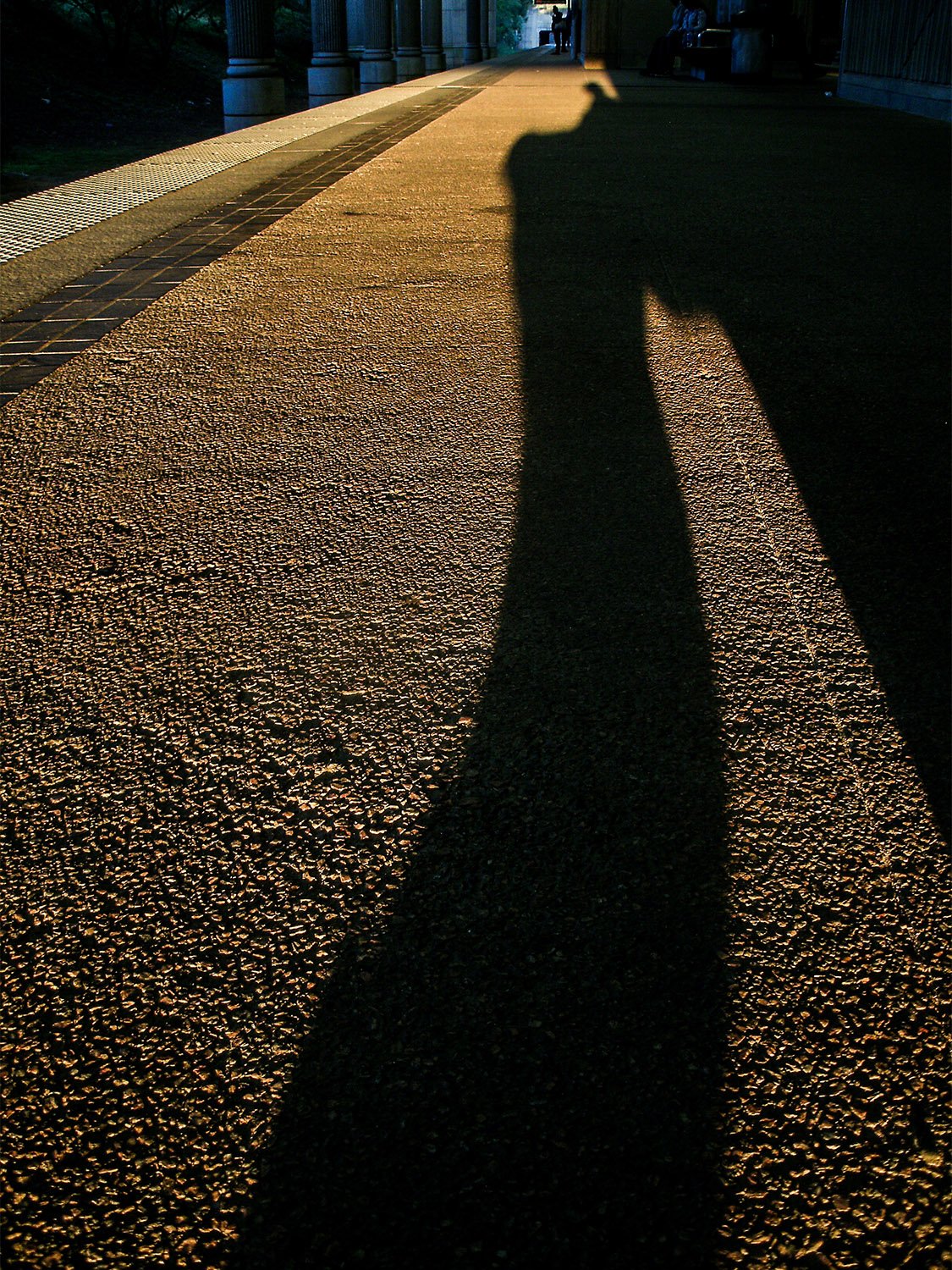
To me, photography is all about understanding light and shadow, and in order to be any damn good at capturing the light, you can’t be afraid to confront the shadow. Period.
I don’t have a mind for technicalities, and I don’t give a fuck about shutter speeds, Canon vs. Nikon, or whatever other wankery photographers obsess over to make themselves feel special.
For more than twenty years, I used cheap point-and-shoot cameras because that’s all I could afford. I was only able to buy a DSLR camera a few years ago, and it was one of the least expensive ones I could find.
Many of my pictures have been taken with a phone, especially interior shots, because God knows people freak out if you use a camera inside a building.
Nothing reveals the irrational stupidity of the human mind quite like photography. Snap a bunch of pics with a phone, and no one blinks an eye. Pull out an actual camera, and they suddenly think you’re a terrorist.
Photography long ago tapped into an anti-authoritarian streak that lay dormant in me, and over time, has magnified that rebellion into a defining personality trait.
I’ve been chased down too many times by power-hungry security guards and angry homeowners too dumb to understand that photography in public spaces is still perfectly legal in the United States—one of the few freedoms we have left in this dictatorial shambles we call a free country.
You’re gonna come after me in your car and threaten to call the police for taking pics of your ugly old house from the sidewalk? Like it isn’t all over Google Maps, Zillow, real estate websites, or the local tax assessor’s site, where I can see photos, floor plans, your full name, and how much you overpaid for that pile.
In fact, that’s how I plan my shots in advance—by carefully studying your house online. Trust me, I don’t want to have to fuck around outside your place any longer than necessary.
I’m only observing the facade of your house, which will likely outlast your insignificant carcass. Go console yourself by meditating on your property value, which is probably the only thing you have to show for your pathetic excuse of a life.
And don’t give me shit about how you’re scared because crime’s gotten so bad in your neighborhood—crooks are dumb as hell; they’re not out carefully taking pictures like it’s some insipid espionage film. I don’t indulge my fears, and I’m not entertaining your dark fantasies either.
It was particularly amusing in the years when Atlanta was busy trying to convince the world it was the new Hollywood (it wasn’t, and never will be). People who whored out their homes for some film production didn’t mind if a sex scene was shot in their bedroom, but got mad if a guy out front was taking pics with his little camera. Fuck off with that nonsense.
So far at least, the power-tripping theatrics I’ve encountered in the field have been exclusive to the Southeast, where the reigning mythology hasn’t shifted much from the slavery days—even in Atlanta, which cloaks itself in a progressive veneer but is essentially rooted in the same old top-down system of patriarchal control.
It’s only in the Deep South where I get the distinct feeling that people view public photography as some existential threat to their fragile little social order.
I can’t count how many times I’ve had to soothe some angry Southerner by smiling sweetly, pulling out the old drawl, and saying, “Oh, I’m so sorry,” accompanied by some groveling song-and-dance to sufficiently demonstrate that I know my place.
Then I just go back when they’re gone and finish the job.
On one of my first visits to New York, a cop walked up to me while I was photographing a building. Oh, great, here we go, I thought, and then he whipped out his phone and started showing me his own street photography.
Much of it has to do with the size of a place: in cities of actual consequence, where people’s lives are engaged in meaningful activity, no one even notices a guy with a camera.
It’s the dead podunk towns I dread the most, where people are in thrall to fear and have nothing better to do than to get up in your business—or threaten your life, as happened to me once when I returned to take pictures in the shithole where I grew up.
“I’ve got a gun on me,” big boy growled in that familiar twang I despise. Welcome back to hell, I thought.
Photography is lonely work, mentally demanding, physically exhausting, and I find little glory in it. I have no emotional attachment to it, but over time, the process has become a spiritual discipline for me, essentially a form of meditation.
In the best moments, I feel like I can capture a spark of the divine imagination, especially when the subject is one that my soul connects with—anything by G.L. Norrman, for example.
For better or worse, photography is one of the things I was put on this earth to do, and I’ll keep plugging away at it despite its attendant perils and frustrations.

Some people would consider Daisy fleabane a weed, since it tends to pop up uninvited in unexpected places.
But I’m a big defender of many so-called weeds, including fleabane, which is a member of the aster family and a favorite of native bees and small insects. It’s tough, easy to grow, and I think its dainty white-and-yellow flowers are pretty.
It’s a better sight on the summer landscape than some tropical plant that subsists on hose water and chemicals.
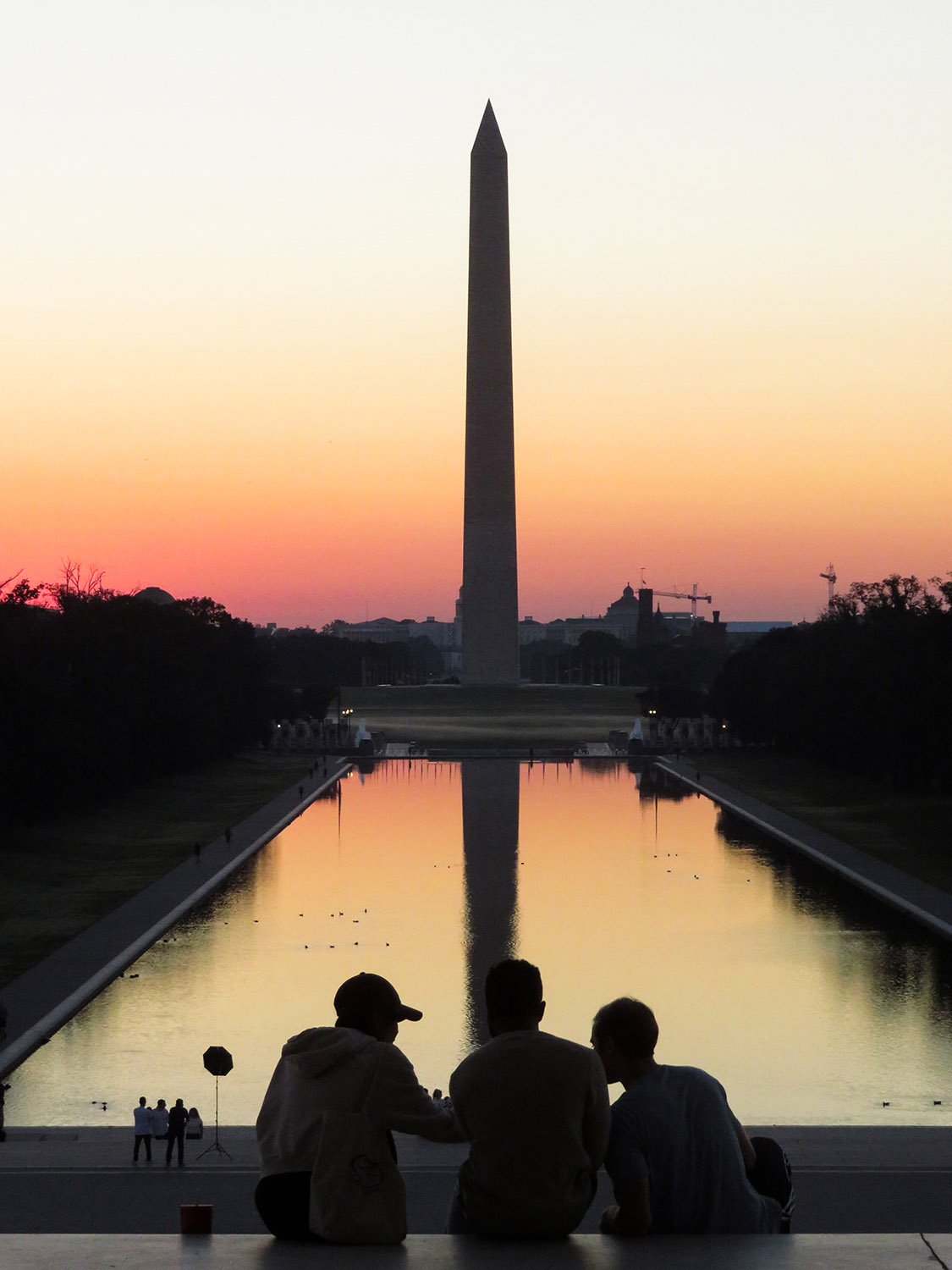
History may well remember it as the most arrogant and self-absorbed nation on earth—
A swarm of infantile ogres, decadent to the core and devoid of conscience or character,
Who pillaged and raped the land and murdered its inhabitants in their lust for wealth, power, and other illusions of their own manufacture.
Gasping for breath beneath piles of meaningless shit, they proclaimed their superiority,
Slathered like corn syrup with an insufferable self-righteousness that they convinced themselves was the very essence of God.
In fact, they knew nothing of the Divine and, in due course, revealed themselves to be the very demons they screamed so loudly of
Wagging their fingers at the world like toddlers on a playground, unaware that no one was listening to them.
Having grown lazy from cheap comfort and easy hate, their addictions rendered them dull, passive, and disengaged.
And when hardship finally came to them—as it does to all people—they were caught unaware, then collapsed under the weight of their own stupidity.
No longer did the world believe their lies or indulge them in their childish fantasies:
They were left to deal with their darkness, alone—
Forced by their own poor choices to evolve or wither, as so many have before them.
They may be nothing but a blip.



Some mornings, I wake up remembering a flurry of odd, seemingly unrelated moments from the past. A few came to mind today.
The first two were from my long-ago church days: same church, different pastors.
For some reason, the first pastor took a half-hearted interest in me, and in hindsight, it was a little odd. He was married to a woman, but his manner was notably effeminate.
Sometimes after a service, he’d invite me into his office and ask me how my week had been, how my family was doing, and dumb shit like that.
I was in my early 20s and fairly naive, but he never acted inappropriately—I just didn’t understand what his goal was.
I do remember that he was usually very distracted, and when I was in his office, he’d often be on the phone, working at his computer, or talking with other people in the room while I just sat there, silent and confused.
One time, he invited me into his office and absently rattled off the same old questions: “How ya been, man? How’s your mother?” As I started to answer, I noticed he wasn’t paying me a bit of attention.
Instead, he pulled out a giant checkbook from his desk and began writing a check for an amount that seemed obscene to my broke ass—at least in the high hundreds, if not more. I was making $7 an hour back then, so I took notice.
As he wrote the check, he was talking under his breath—whether to himself or both of us, I couldn’t tell, but it was loud enough for me to hear.
“Since the secretary’s not here, we’ll just forge it,” he said in a nonchalant, sing-song tone, scribbling her name on a check that obviously required the signatures of two different people.
I haven’t thought of that moment in probably 20 years. What the hell was I witness to? Well, besides a pastor committing check fraud.
Shortly later, the pastor left the church in a swirl of drama that had nothing to do with money—at least, not that I’m aware of. Churches are skilled at concealing such things, though.
The next pastor was the kind of slick con artist that populates pulpits everywhere. Looking back, there were a ton of red flags around him from the beginning.
When he came to the church, the “board of elders” (a.k.a. a group of successful businessmen) failed to tell the congregation that the dude resigned from his previous position after he was caught in a sleazy motel with the wife of one of his staff members. I learned that later from someone who attended his old church.
The guy was a smarmy piece of shit whose sermons were basically a string of hammy remarks and incredulous stories that he clearly pulled from the folds of his asshole.
He was great at crowd work, and I think he secretly wanted to be a comedian, but he was obviously sly enough to know that fleecing a flock was a steadier gig than working the comedy circuit.
When the pastor came to town, I’d just moved into my first apartment and didn’t own any furniture. Somehow, word got back to him that one of his congregants was in need, so he generously offered to loan me an air mattress he’d recently purchased.
“Try not to get it dirty, though,” he said as he handed me the box. “I’m returning it to Target in a couple of weeks for a refund, and I’m gonna tell them it wasn’t used.”
Needless to say, he was later forced to resign when he had an affair with one of the women in the congregation. I think he became a motivational speaker or some such huckster bullshit.
The one memory that sears my brain the most is from maybe seven or eight years ago. Early one Saturday morning, I was taking pictures in Downtown Atlanta and stopped inside the Marriott Marquis to piss.
The hotel was packed with attendees of a Christian conference, and appeared to be sold out.
I always get a cheap thrill from riding in the hotel’s glass elevators, so I stepped inside one, and behind me followed a tiny Asian girl—obviously a prostitute. When you live in Atlanta, you know what they look like. She was maybe five feet tall and appeared to be, at most, 16.
As the elevator shot up the atrium, the gears of my mind began turning: why the hell is a prostitute at a church conference?
The elevator opened at the 47th floor, and we both stepped out. She turned to the left, and I went to the right, secretly watching her from across the atrium.
She walked up to the double doors of one of the hotel’s executive suites and quietly knocked. One of the doors slowly opened just enough for her to slip inside, then quickly closed behind her.
I don’t know who she was about to fuck, but I can hazard a guess: probably some hot-shot pastor who was paid a small fortune to make an appearance there.
A few minutes later, I rode back down to the atrium level and, as I stepped off the elevator, I walked past a small group of teenagers, likely a church youth group.
A young girl, maybe 16, came running up to a guy who looked slightly older than the rest of them—maybe he was the youth pastor.
The girl’s face was flushed, and her eyes were glazed over as she babbled excitedly: “The most wonderful thing that could ever happen to a Christian has happened to me. I’ve been filled with the Holy Spirit and received the gift of tongues.”
I’m not even gonna touch the “speaking in tongues” and “filled with the Spirit” nonsense—that’s a rabbit hole best avoided.
I’d long left the church and Christianity behind at that point, but it sickened me to the core to witness faithful adherents at the bottom bleating and braying about God, utterly oblivious to the fact that, in that very moment, in the same building, one of their leaders was likely being serviced by an underage prostitute.
It also infuriated me to know that if the truth were revealed to them, about half would simply deny it, and the other half would excuse it with a wave of the hand. “God uses imperfect vessels,” “David lusted after Bathsheba and was a man after God’s own heart”, blah blah blah.
I was raised in the church and spent decades there—I know exactly how Christians have been conditioned to respond to a lack of integrity.
When a leader’s hypocrisy and deception are exposed, a few might shed performative tears and blubber something about repentance, but when the next lying sack of shit comes along, they’ll still fall at his feet in awe and reverence.
Many will immediately refute it and insist on living in tenuous fantasy, reasoning to themselves that their denial and self-deception are the substance of “faith.”
Often, a lack of integrity is met with a shrug or even tacit approval. Although few have the balls to admit it, most Christians love that their leaders are as disingenuous and deceitful as they are, dealing in darkness while claiming holiness.
It’s been disheartening, but not surprising, to watch the so-called Christians of the United States gaze admiringly at a convicted felon, pedophile rapist, con artist, compulsive liar, malignant narcissist, and all-around piece of shit—the absolute antithesis of Christ—and say, “Yep, that’s our guy!”
Not once, but twice, no less.
America’s toxic, bastardized version of Christianity is so far removed from the teachings of Christ that the nation’s so-called Christians wouldn’t recognize Jesus if he were standing in front of them. In fact, they would utterly revile him for his simplicity and purity of spirit—and his brown skin.
It’s become quite fashionable for American Christians to whine about Satan, demons, and spiritual attacks—an obvious narcissistic shortcut to absolve themselves of their own poor decisions and lack of moral conscience.
You’re the real demons, motherfuckers. Your choice to deal with darkness is your own and yours alone, and you delight in it. Grow the fuck up and admit it.
Nor is the phenomenon exclusive to Christians: The citizens of the United States are, on the whole, a dishonest and duplicitous people who despise truth, subsist on catastrophic fantasy, and hide behind a veneer of moralizing self-righteousness that is repulsive and exhausting.
As an American, I’ve learned to ignore everyone’s words because they mean jackshit. Everyone’s lying to themselves and each other, and the more you bleat about your little titty-baby theories and claim moral superiority, the more I know you’re a blithering, willful idiot—it’s just that simple.
Years of disillusionment have taught me to scrutinize a person’s actions carefully. It’s the tiny decisions we make that reveal everything about our character, and I promise you, every choice we make, no matter how small, is being watched and evaluated. That’s the shit we’re being judged on—not our meaningless beliefs.
What I look for now in my fellow humans is even a shred of integrity. Sadly, I find little of it.
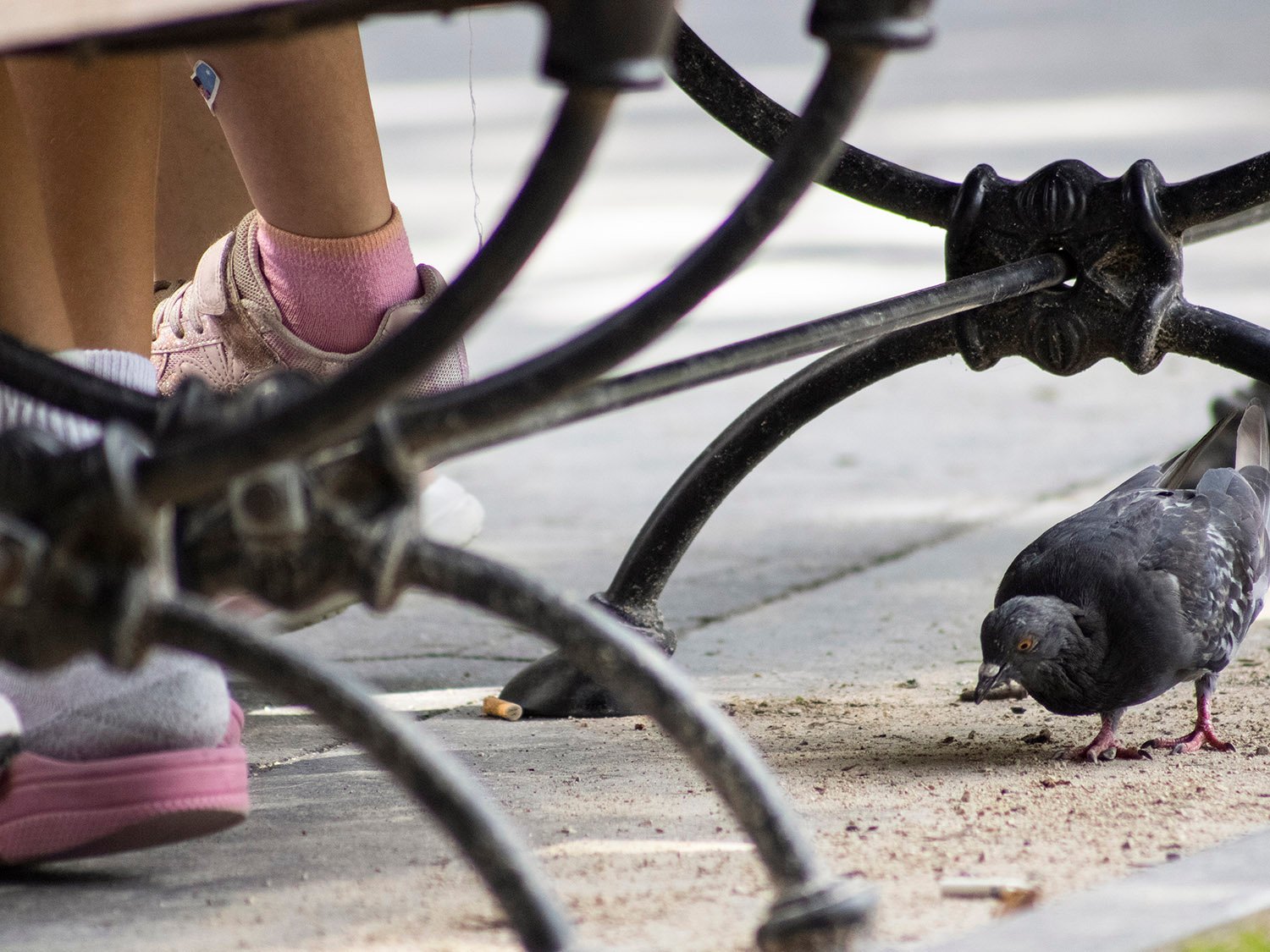
Picture the scene: A warm summer afternoon in Washington Square Park, lounging on a bench with a slice of pizza, probably on my way to watch an indie film.
The air was heavy and lethargic, and the sounds of the city were muffled by the trees, except for the shrieks of nearby children running around the splash pad.
While I was reviewing the day’s pics on my camera, I looked over and spotted this little scavenger helping itself to a snack off the ground.
Glad someone is keeping this place clean, I thought.