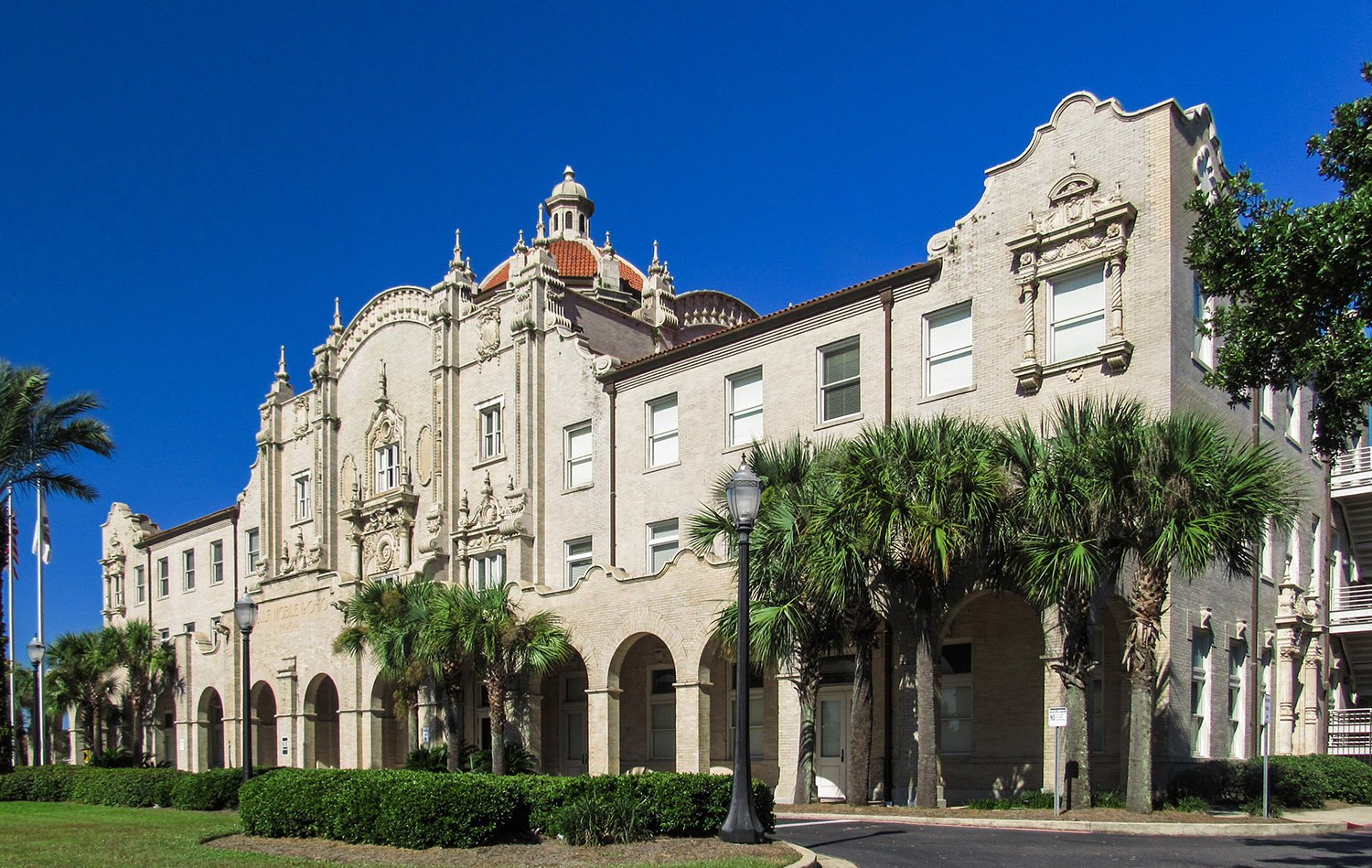
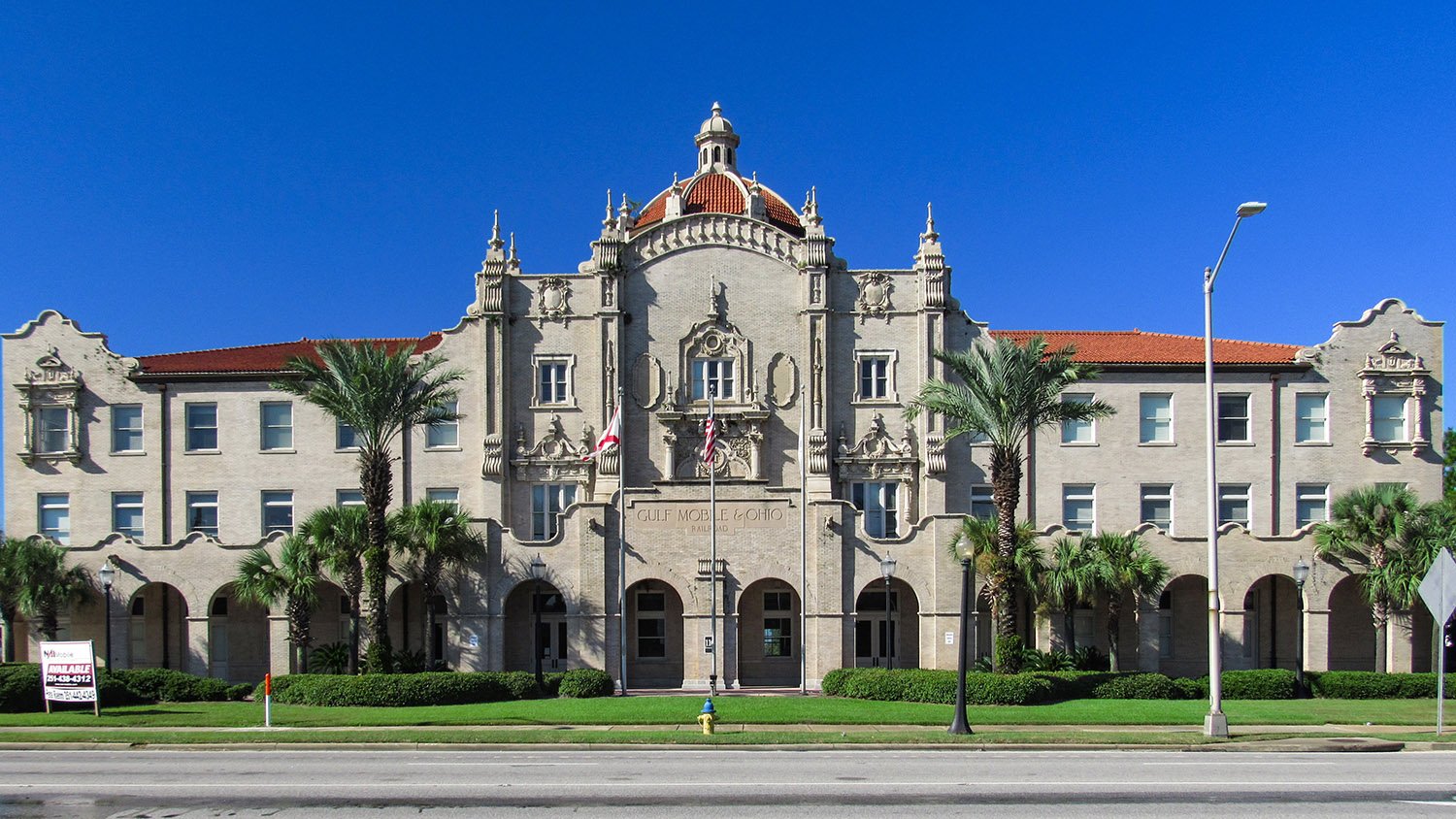
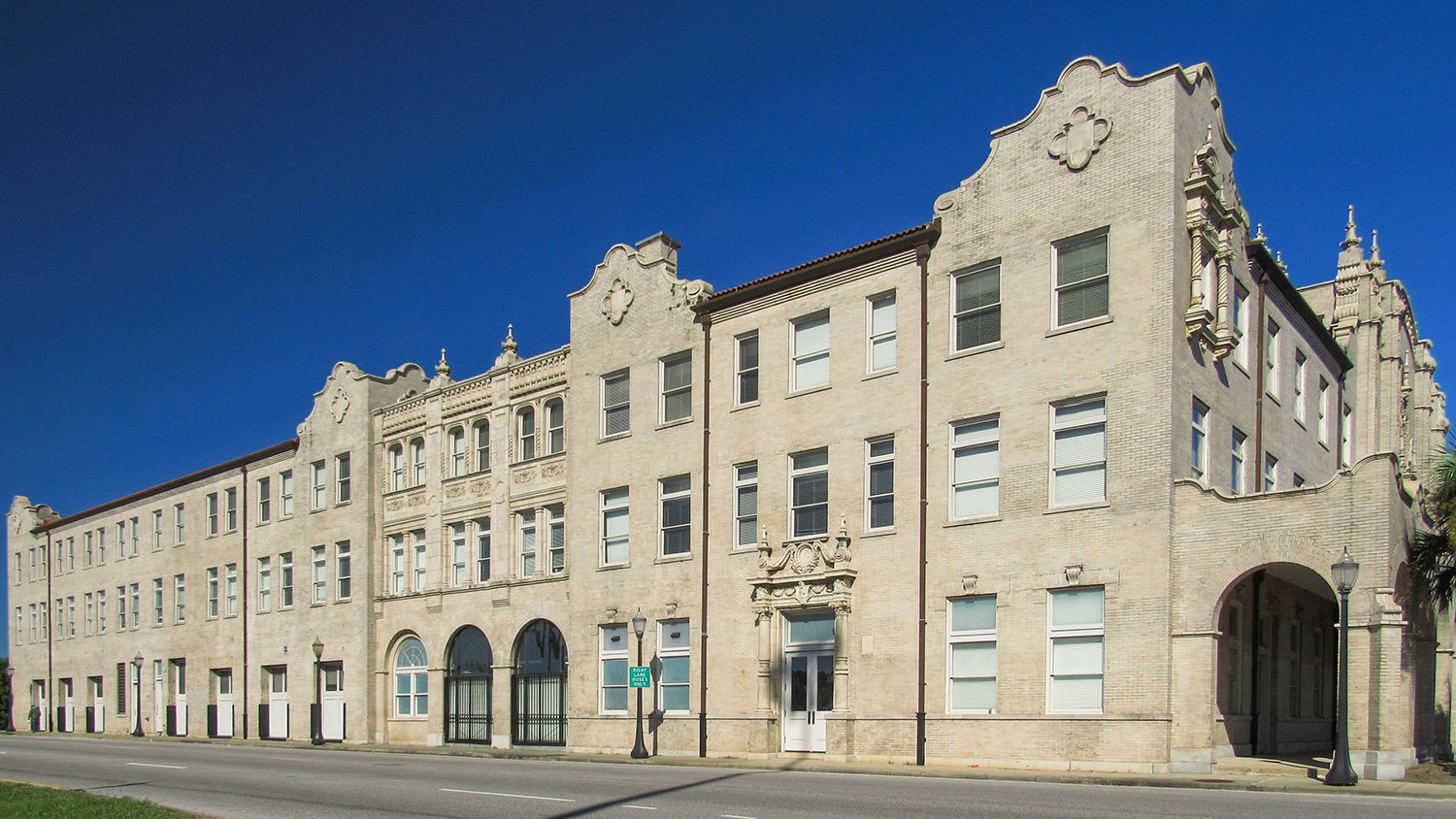
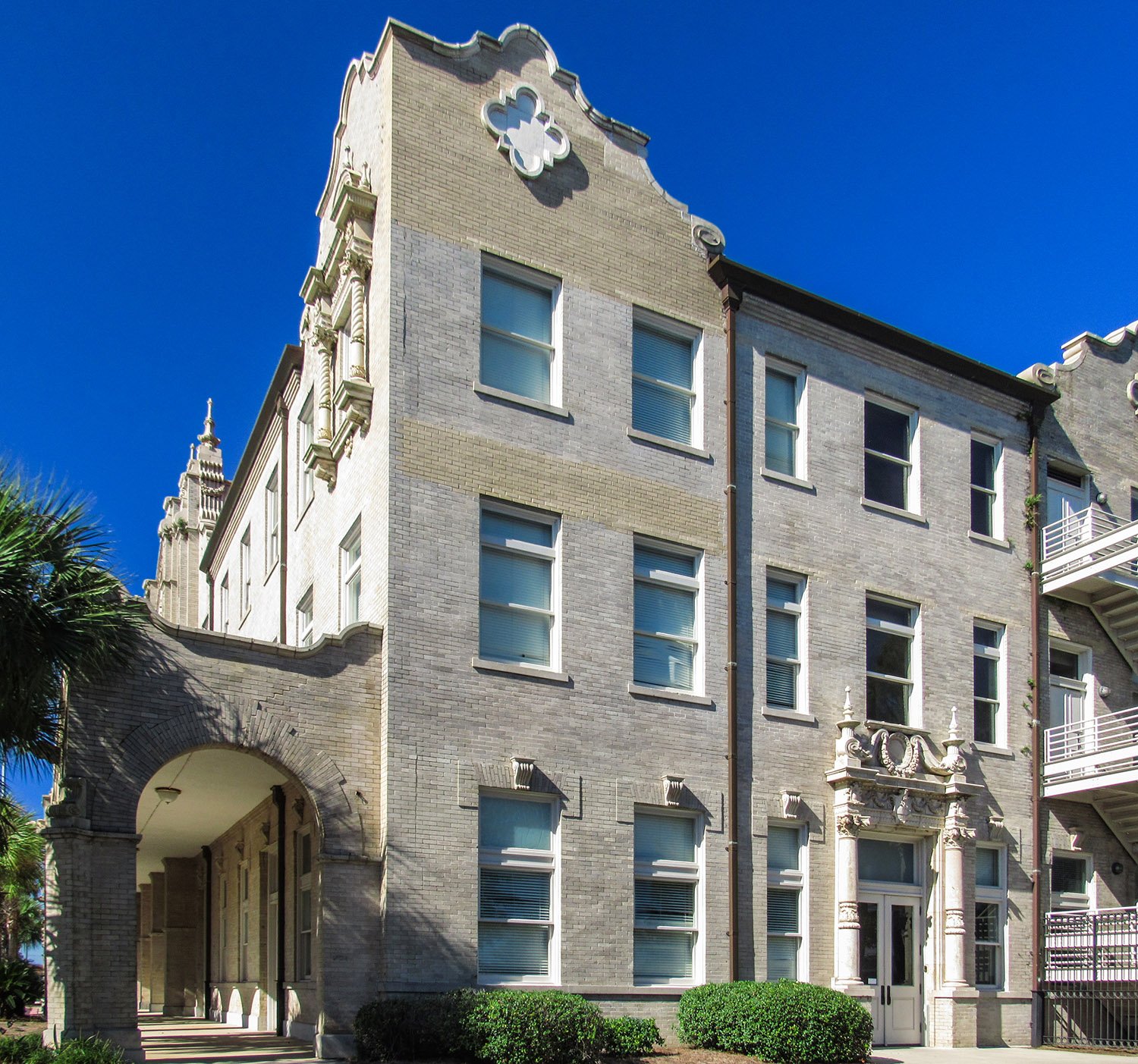
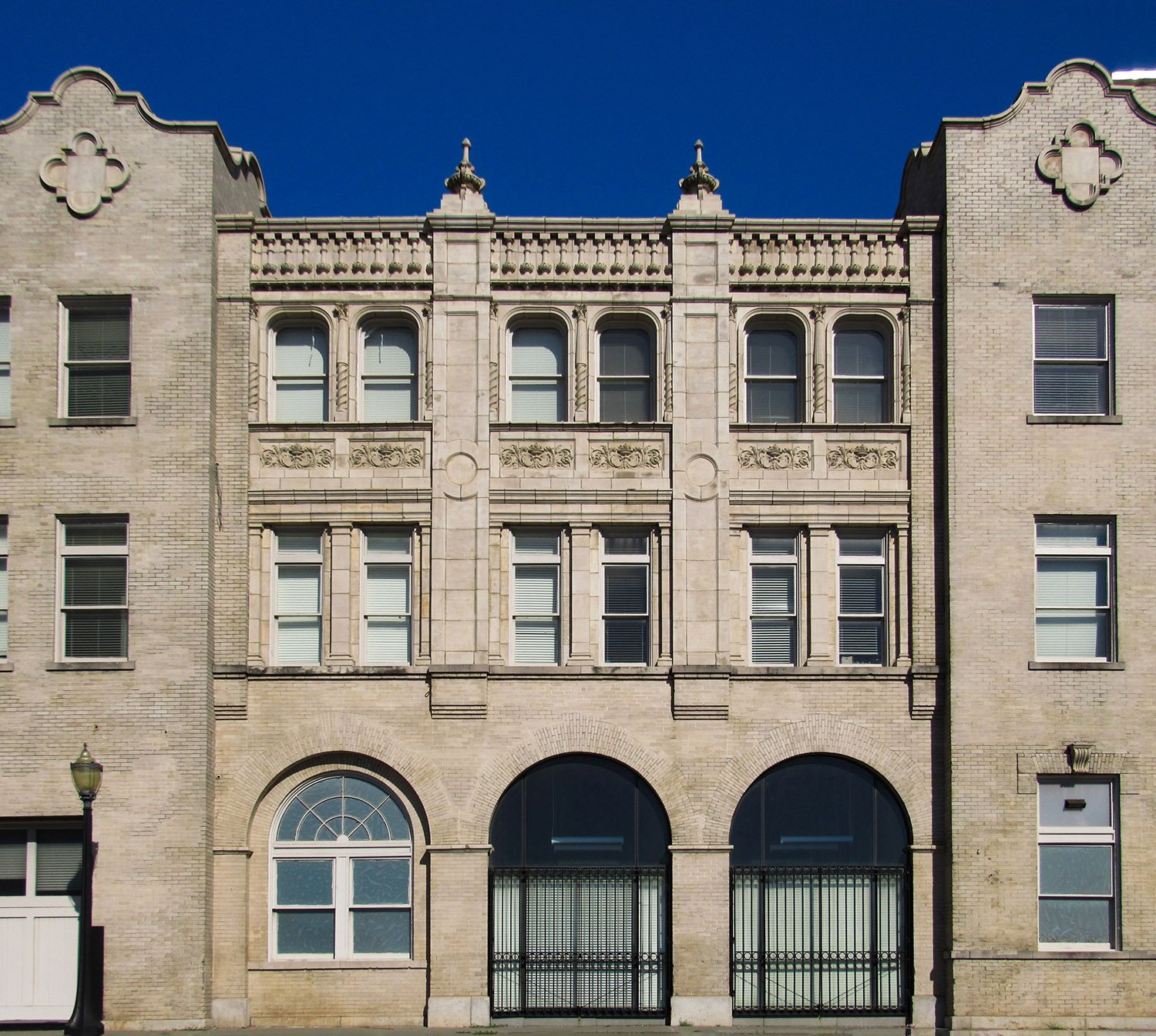
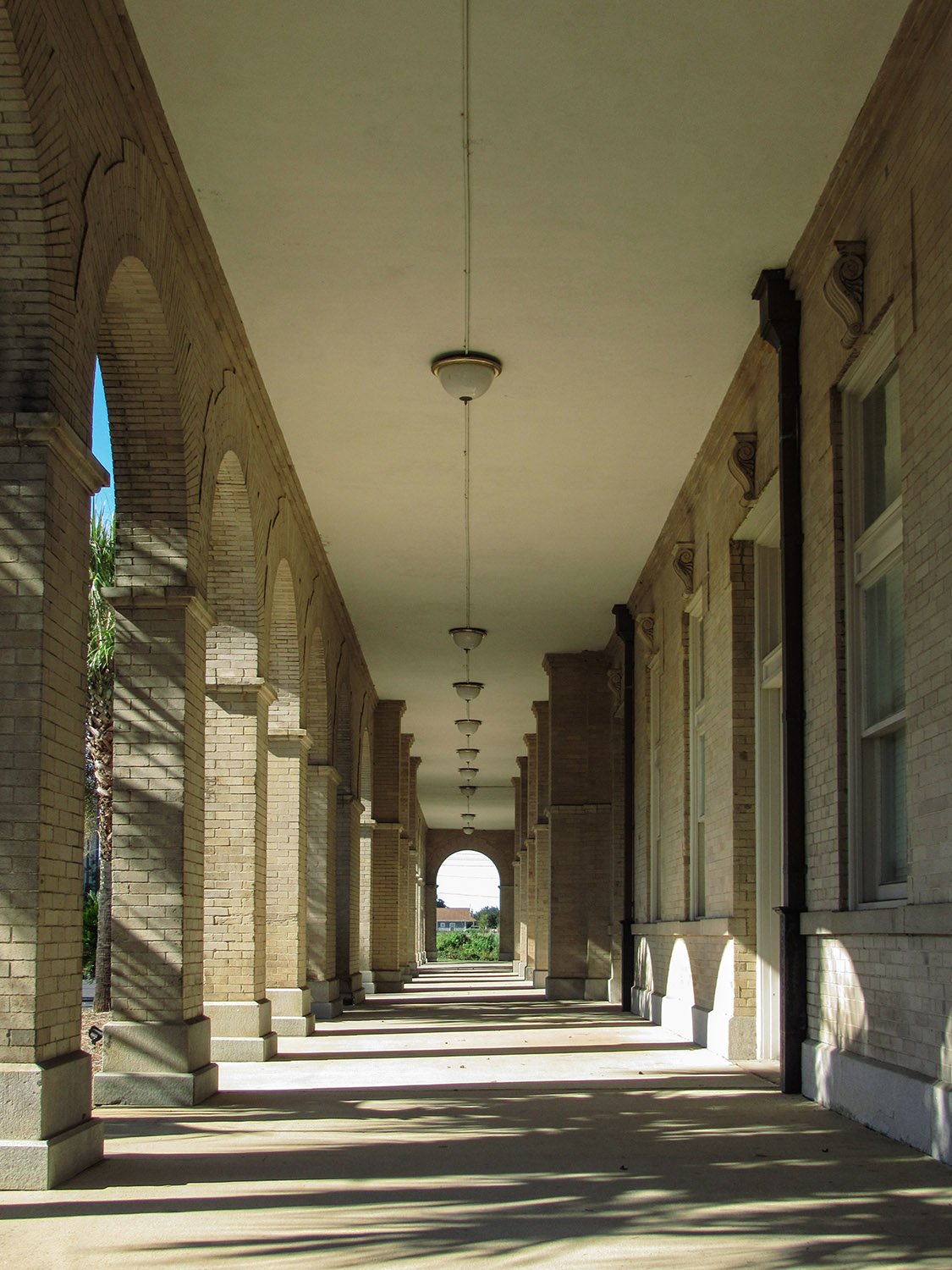
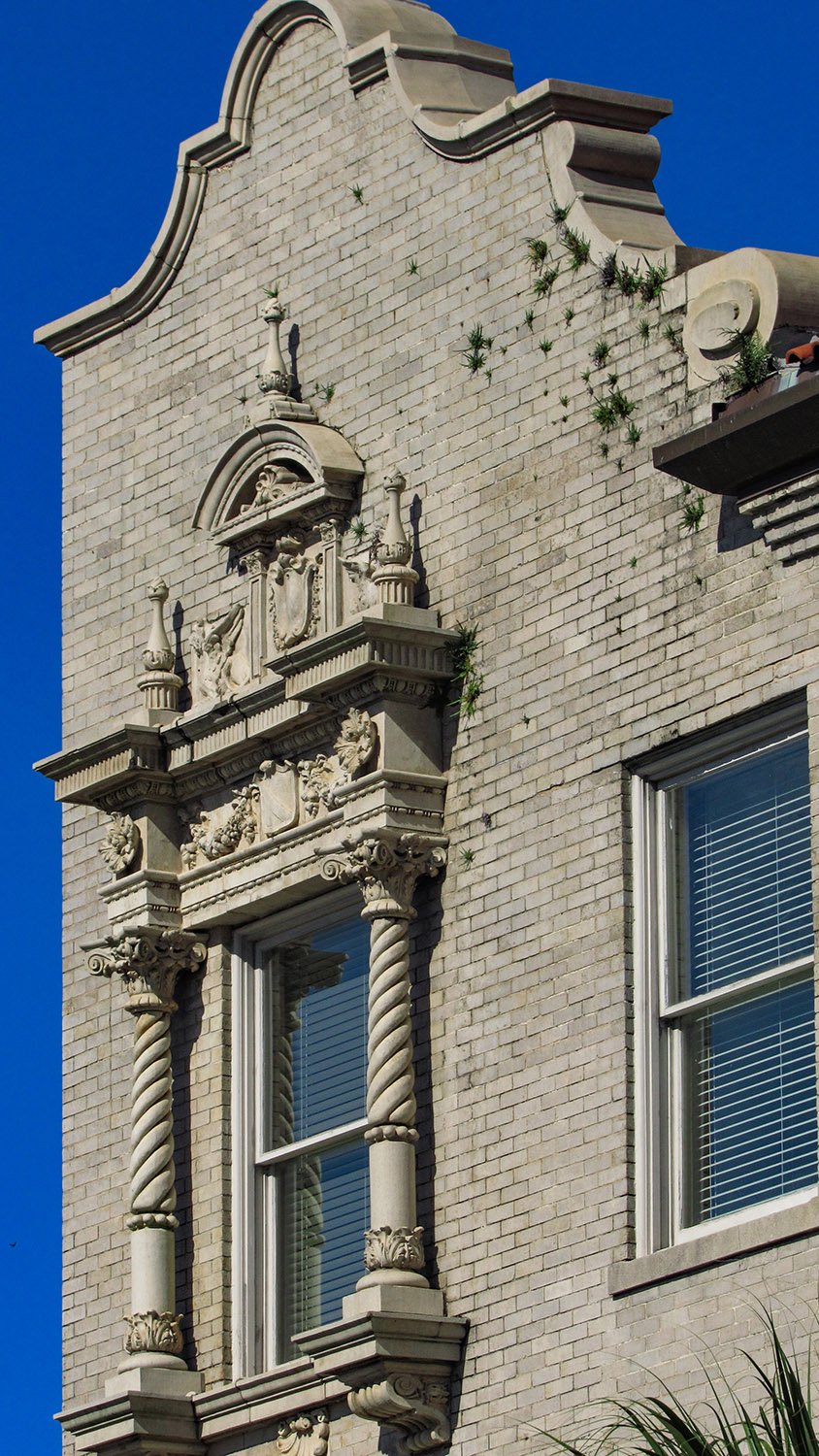
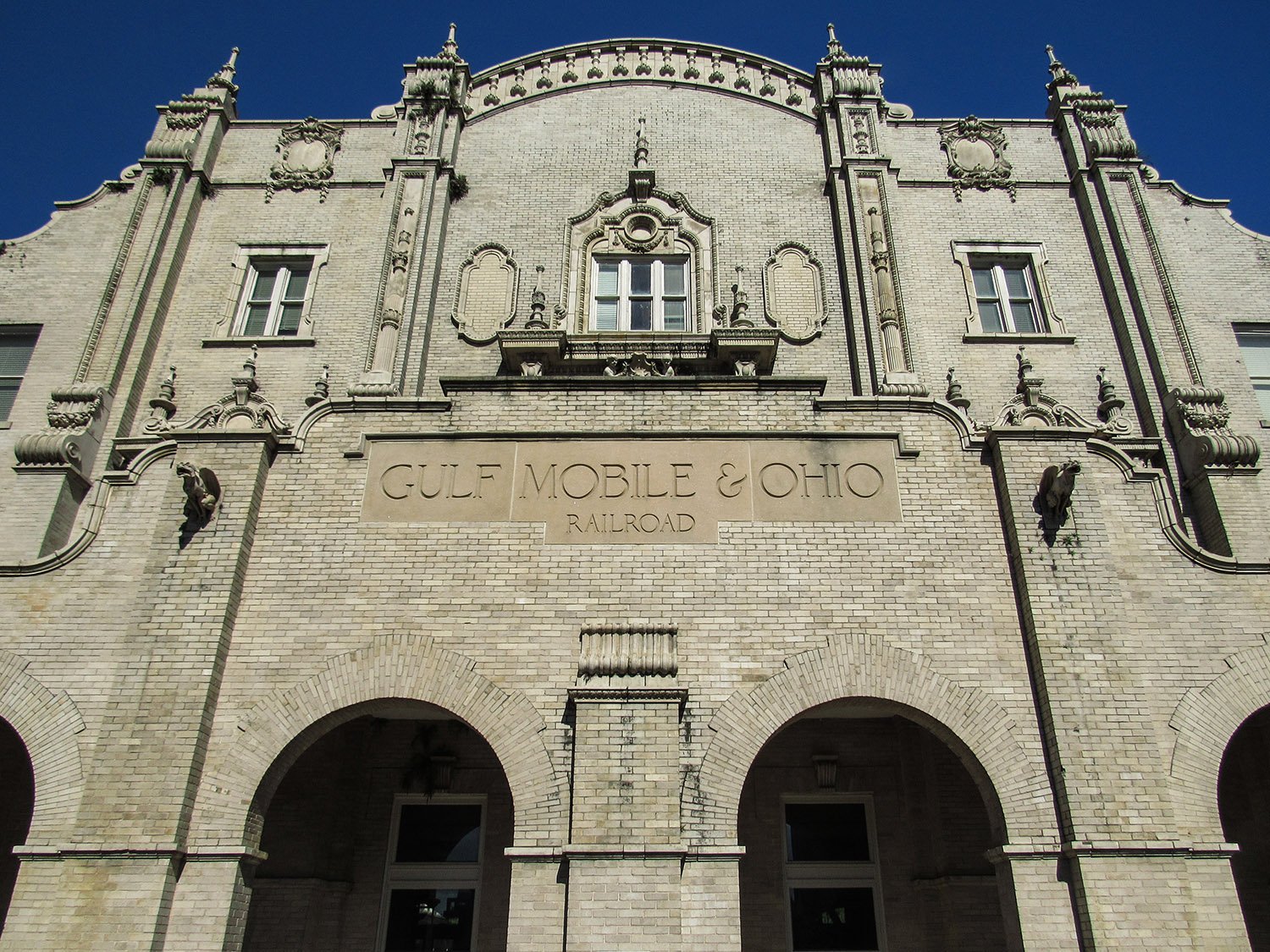
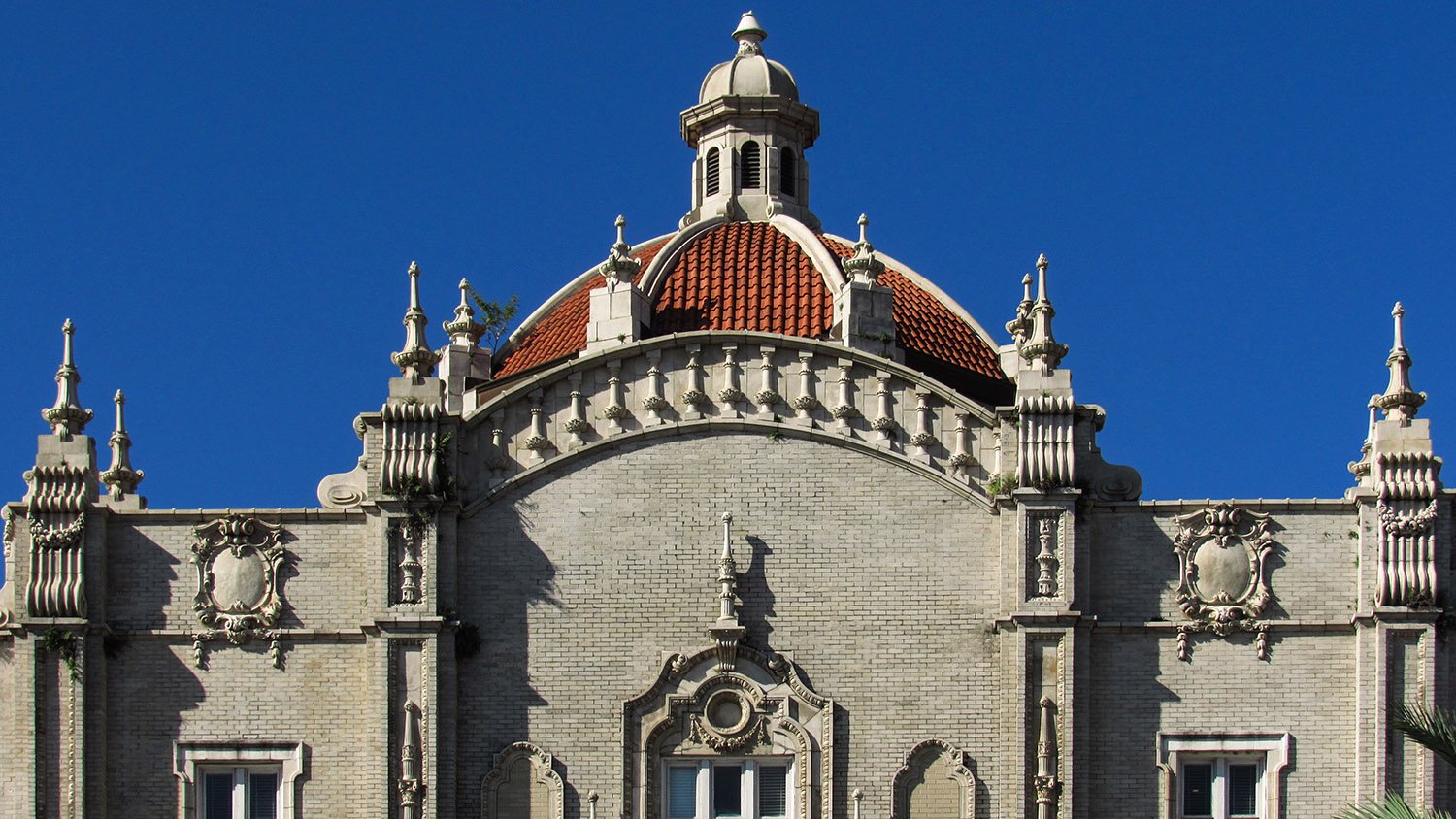
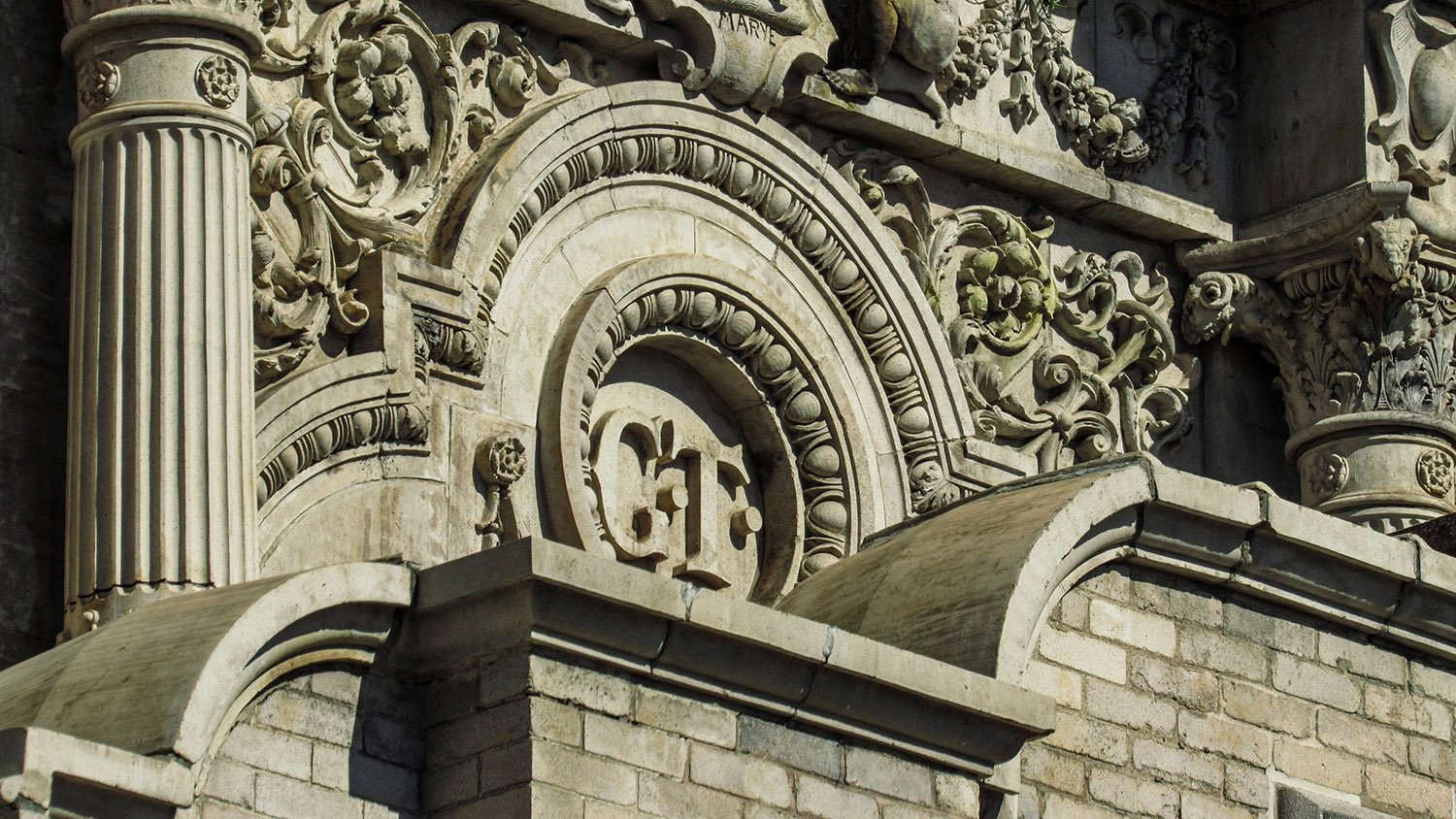
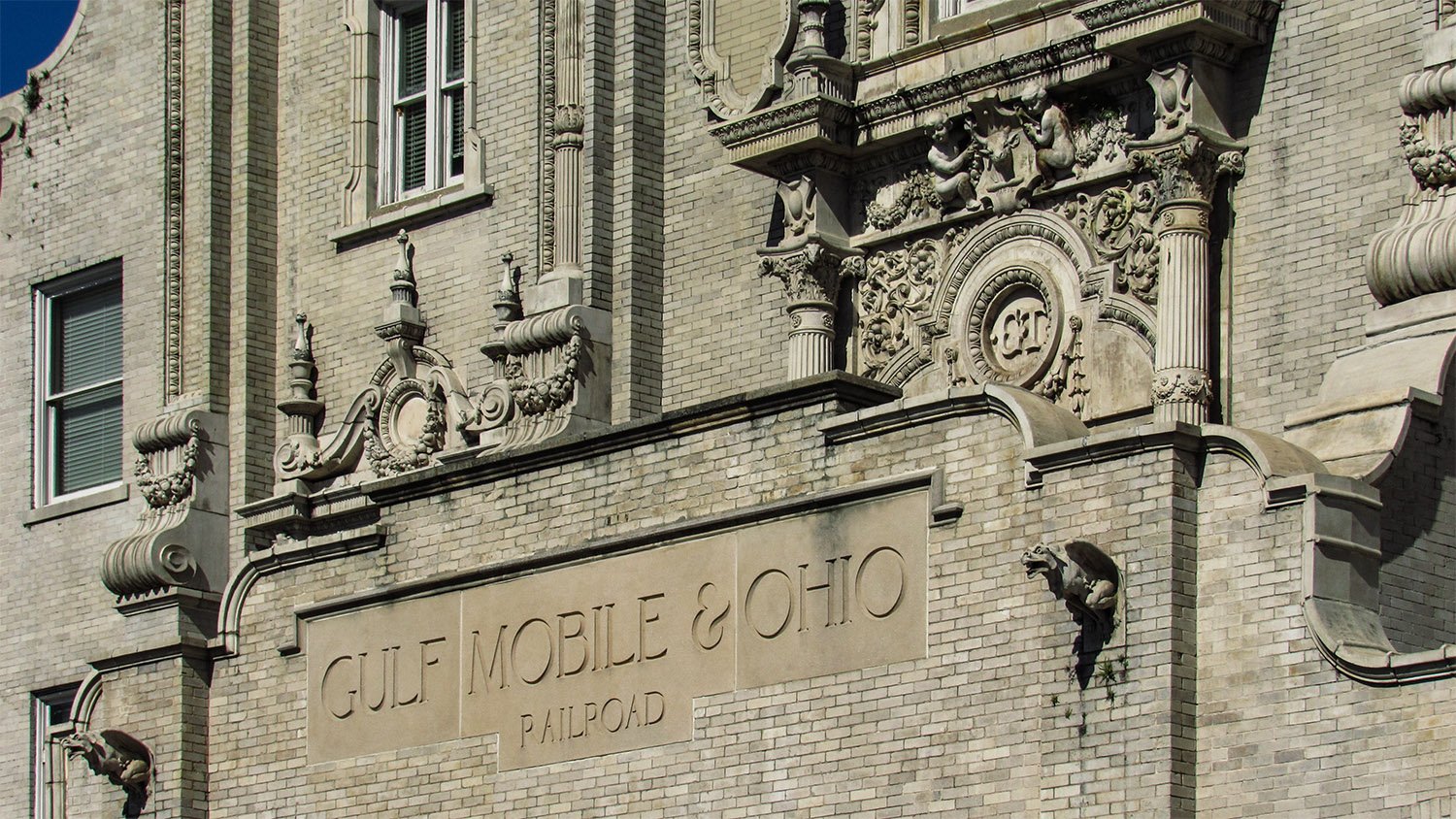
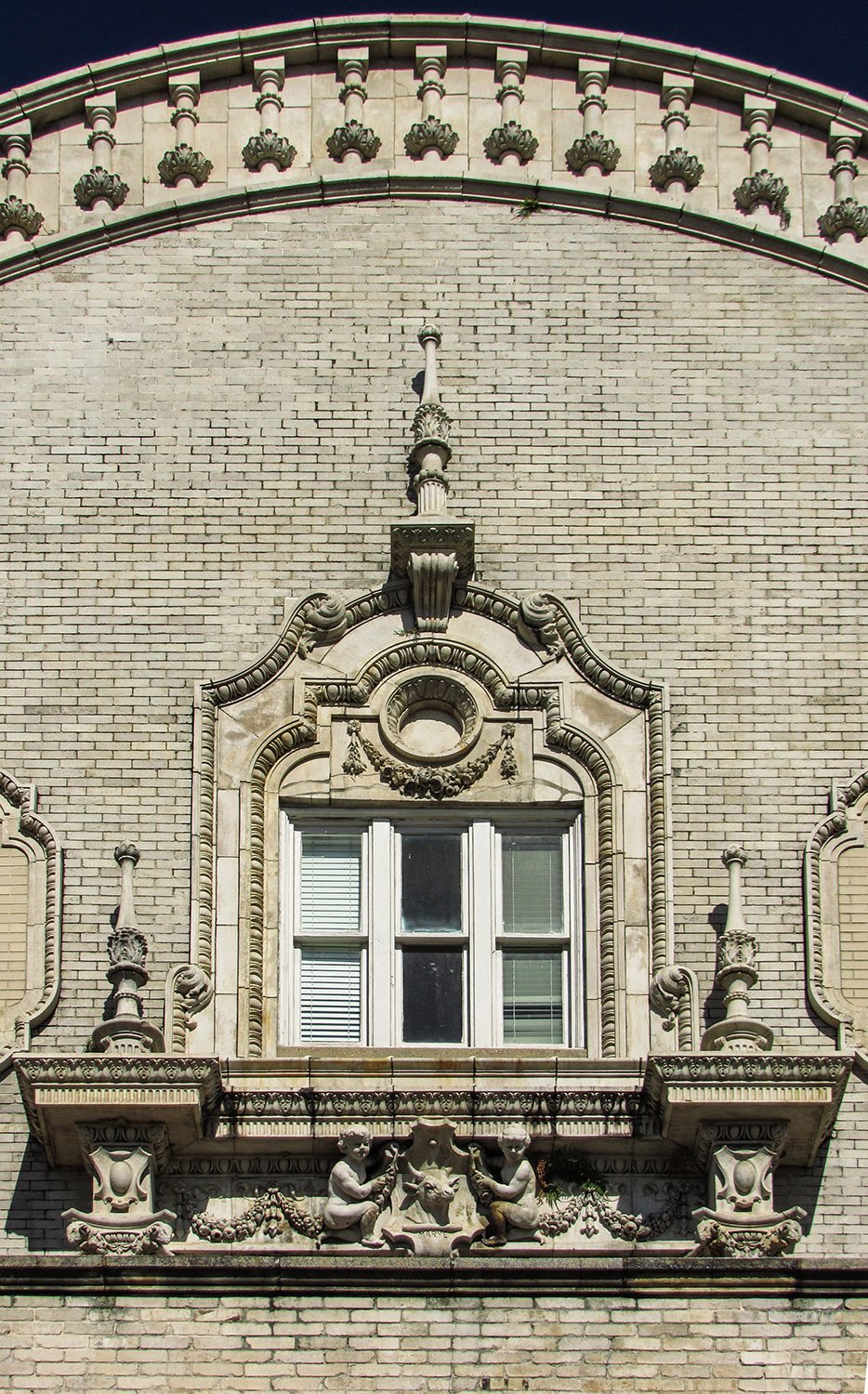
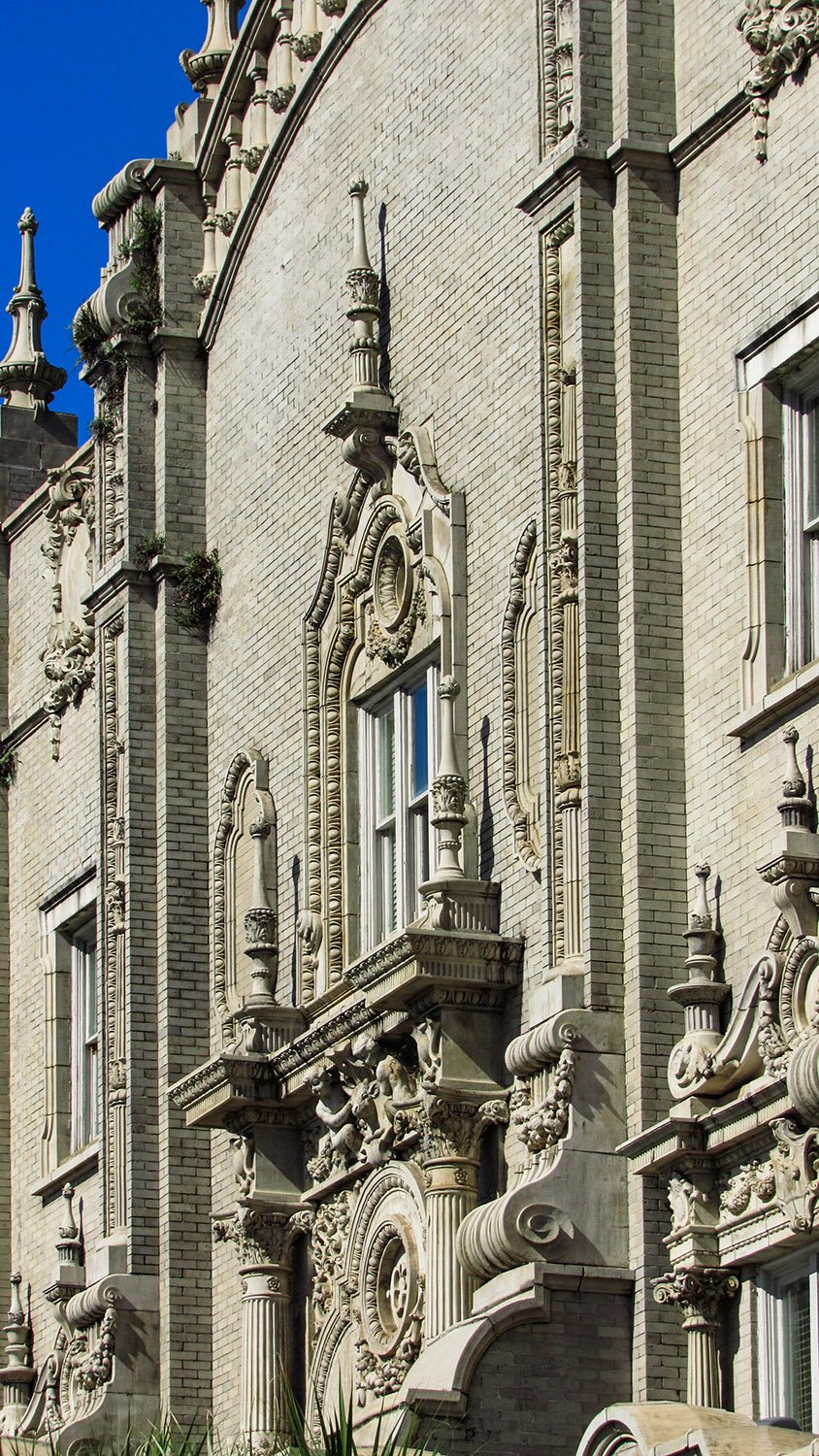
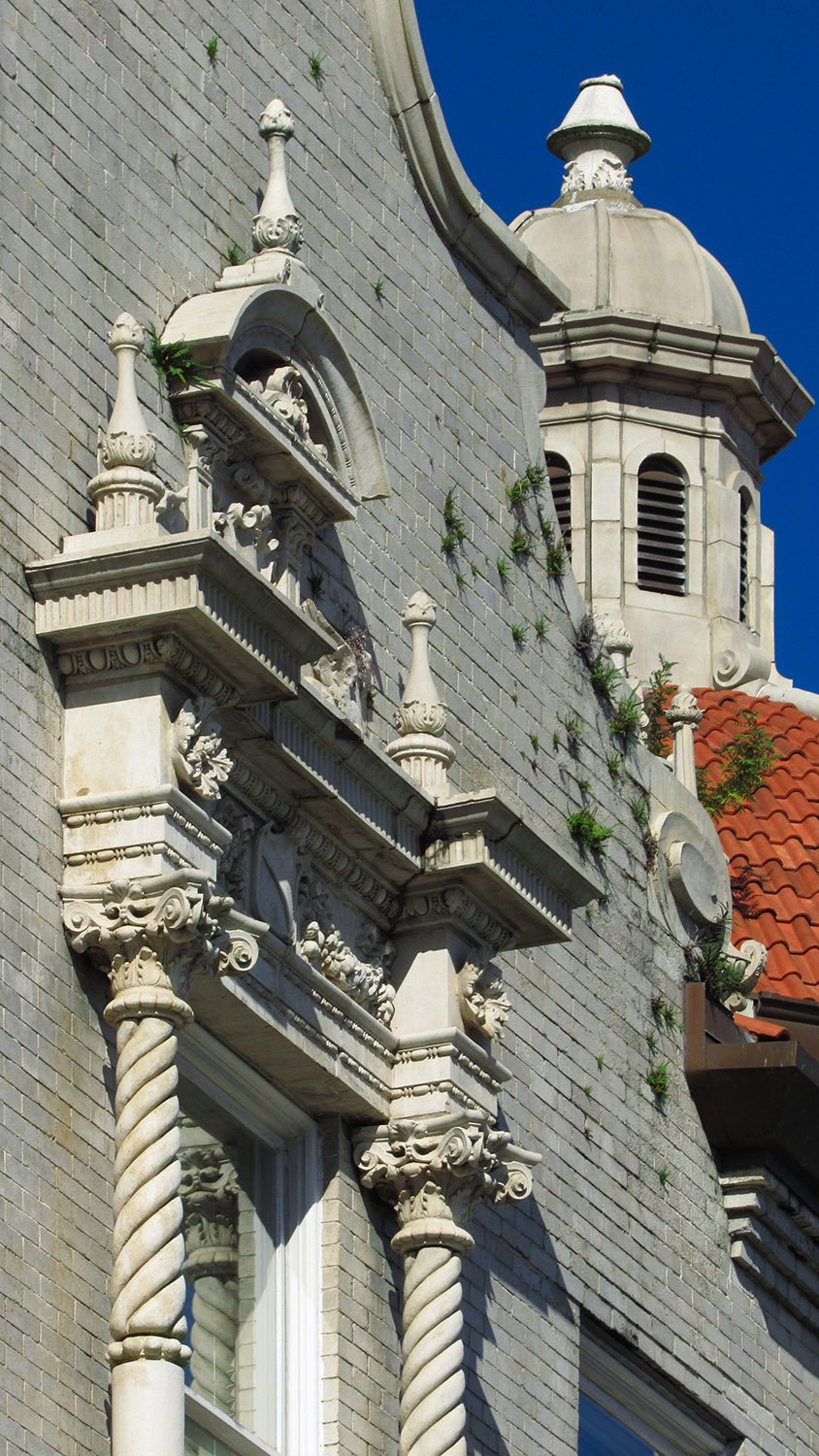
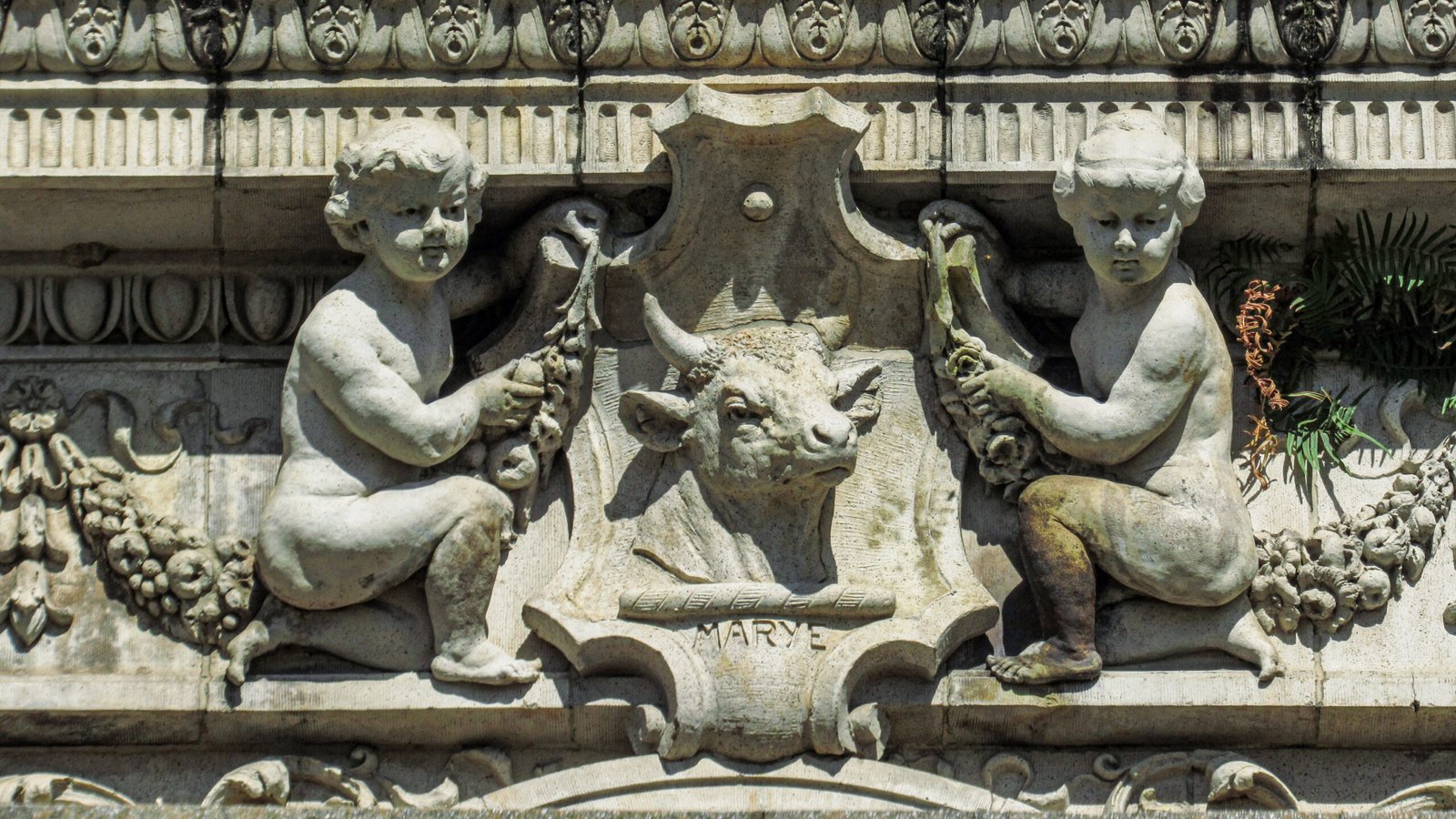
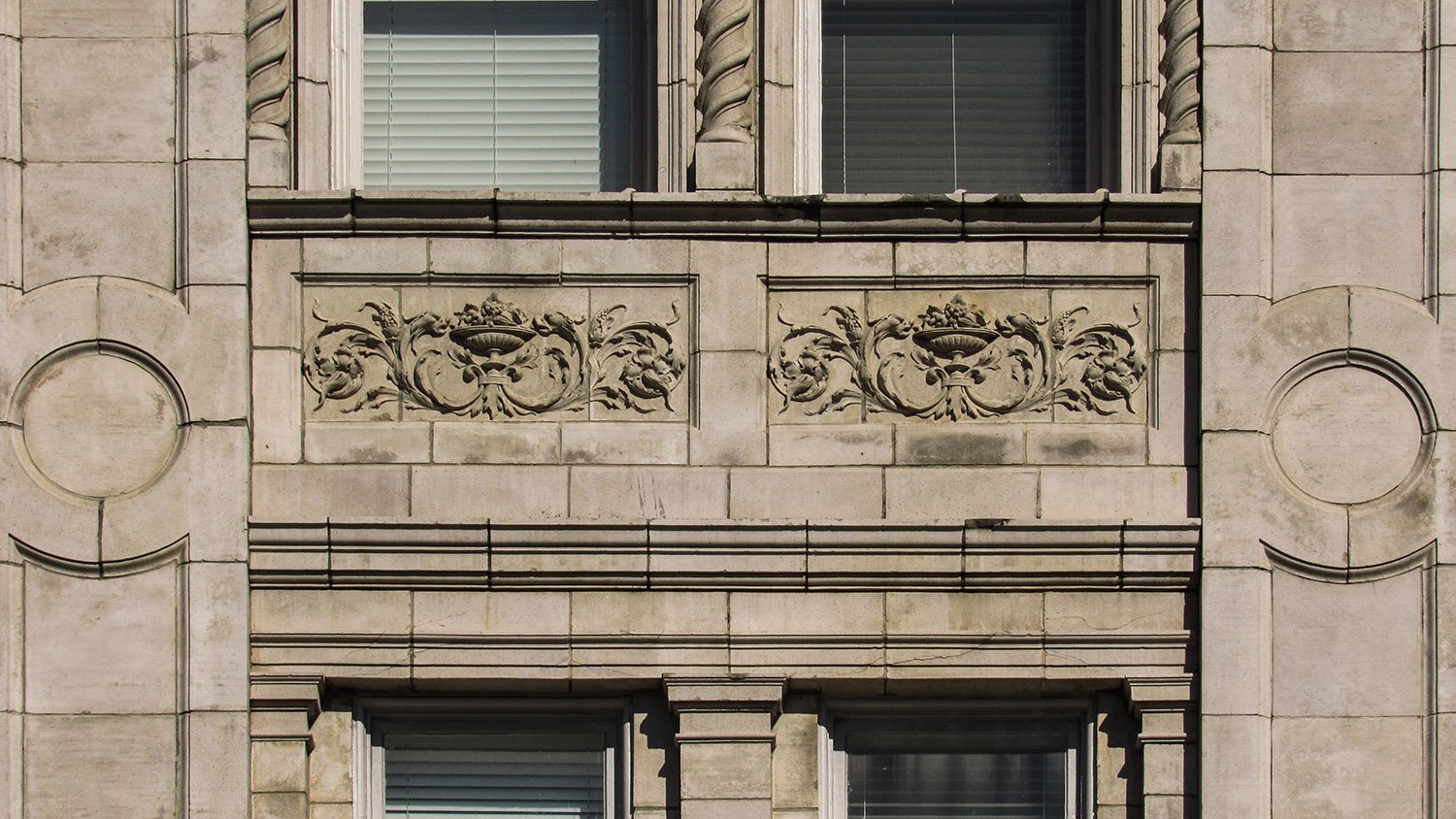
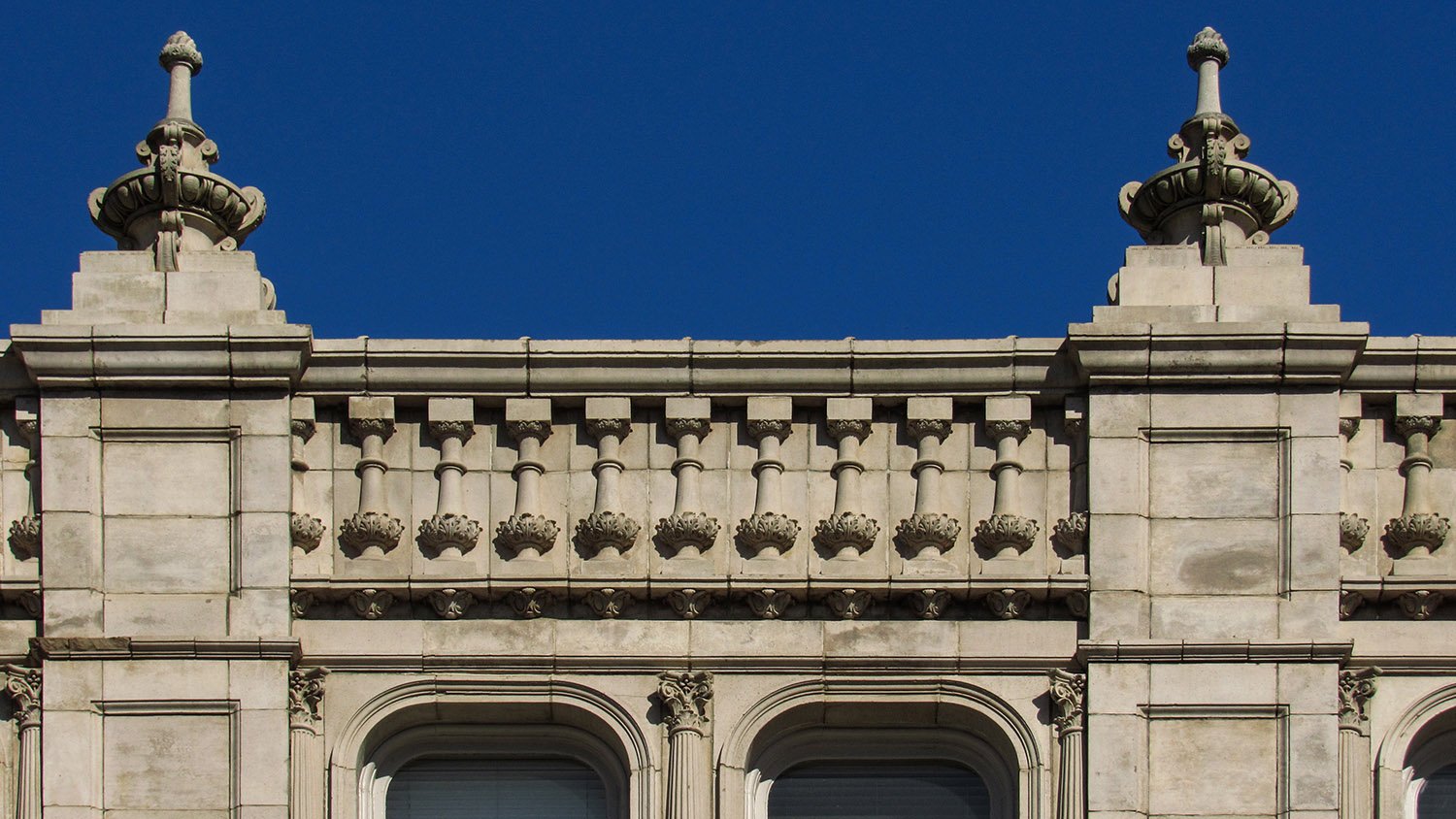
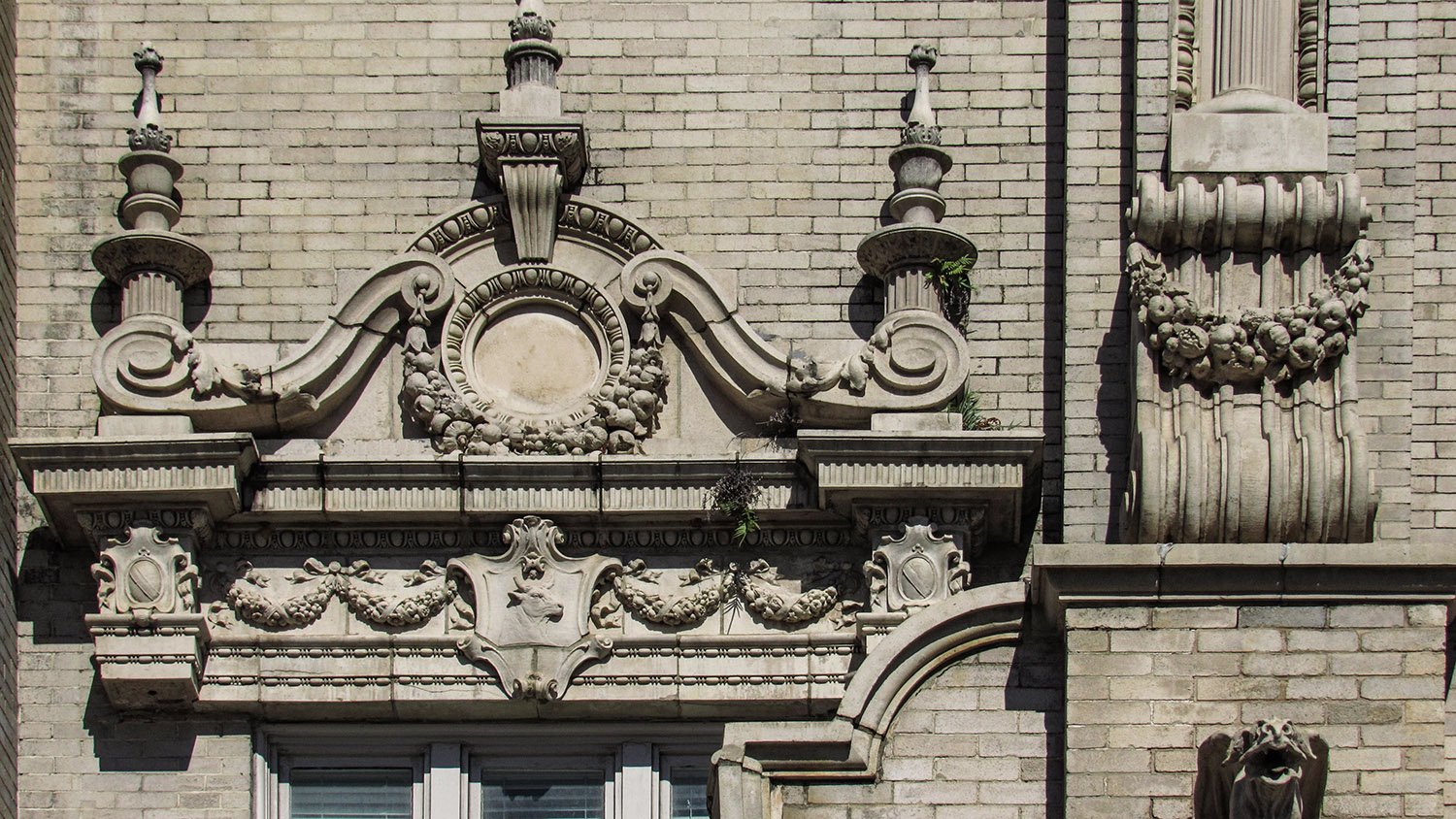
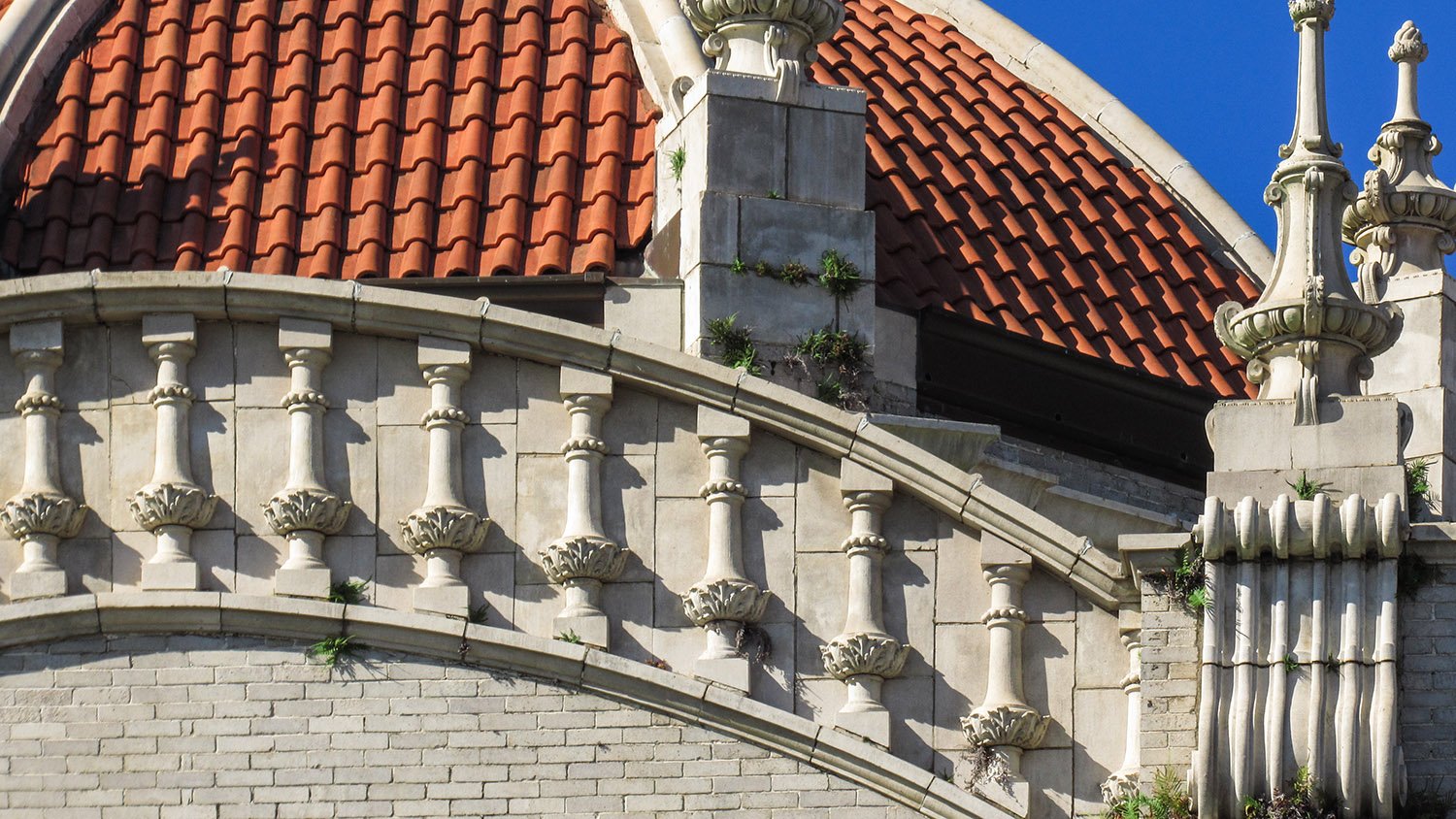
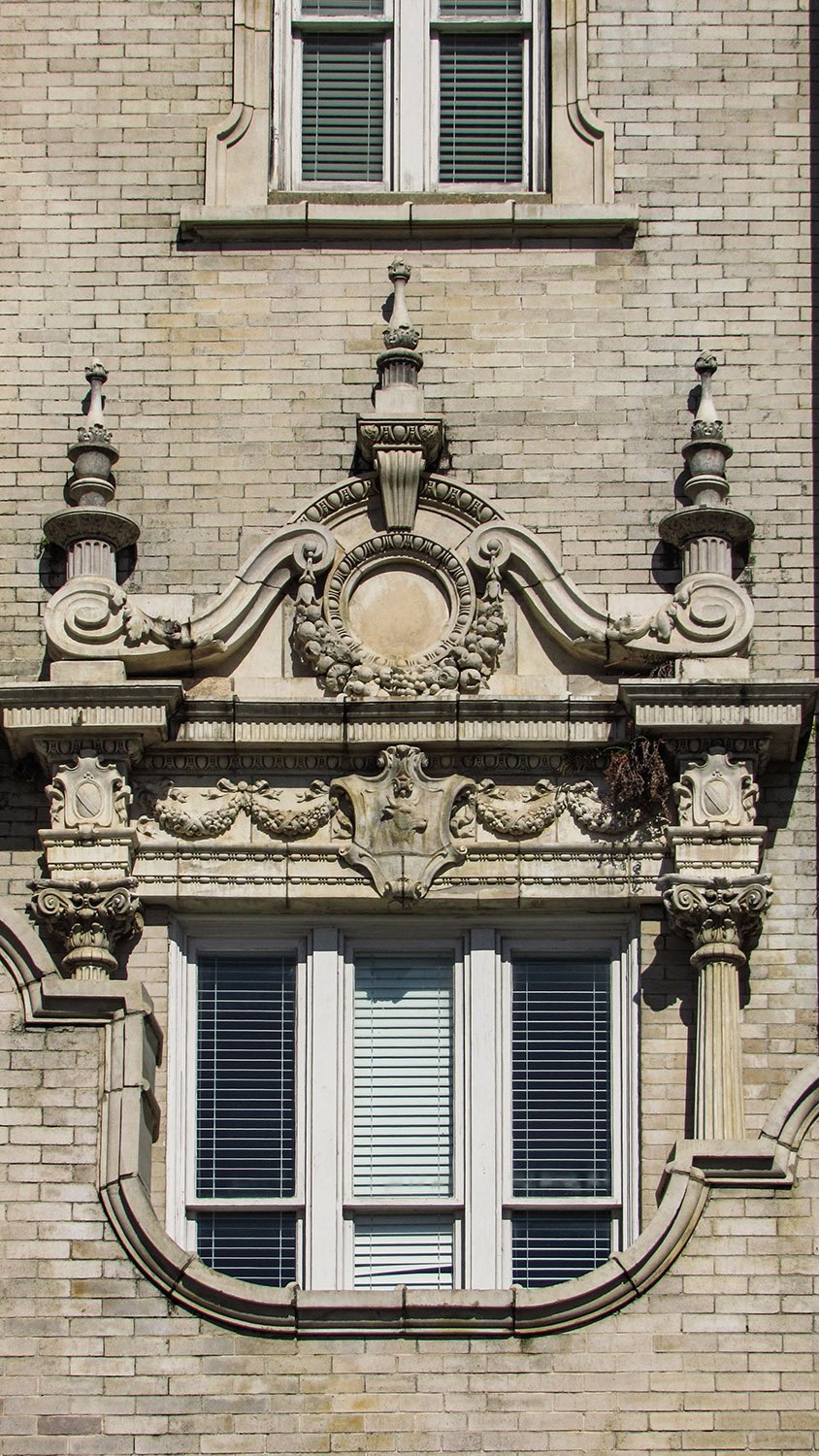
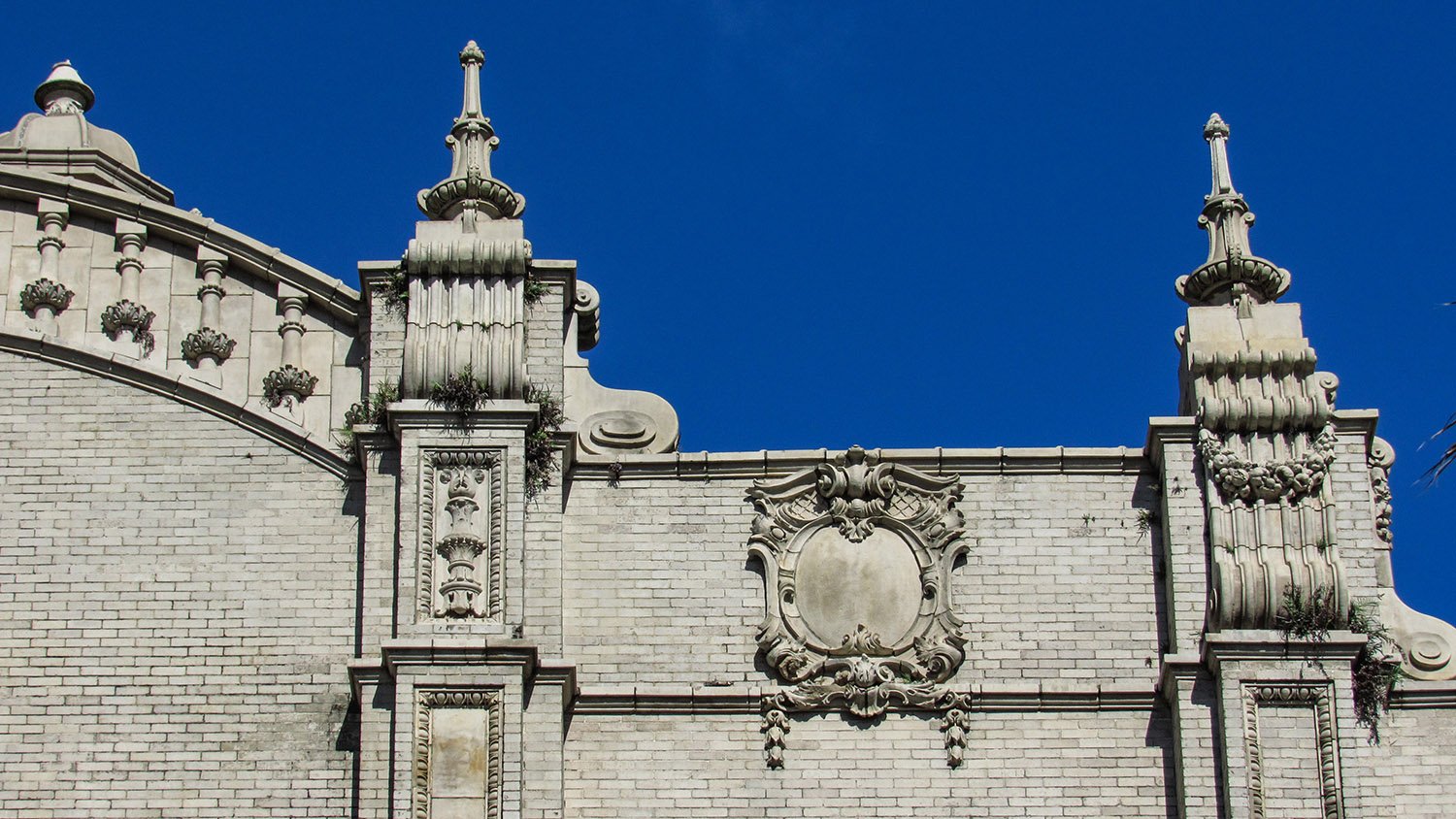
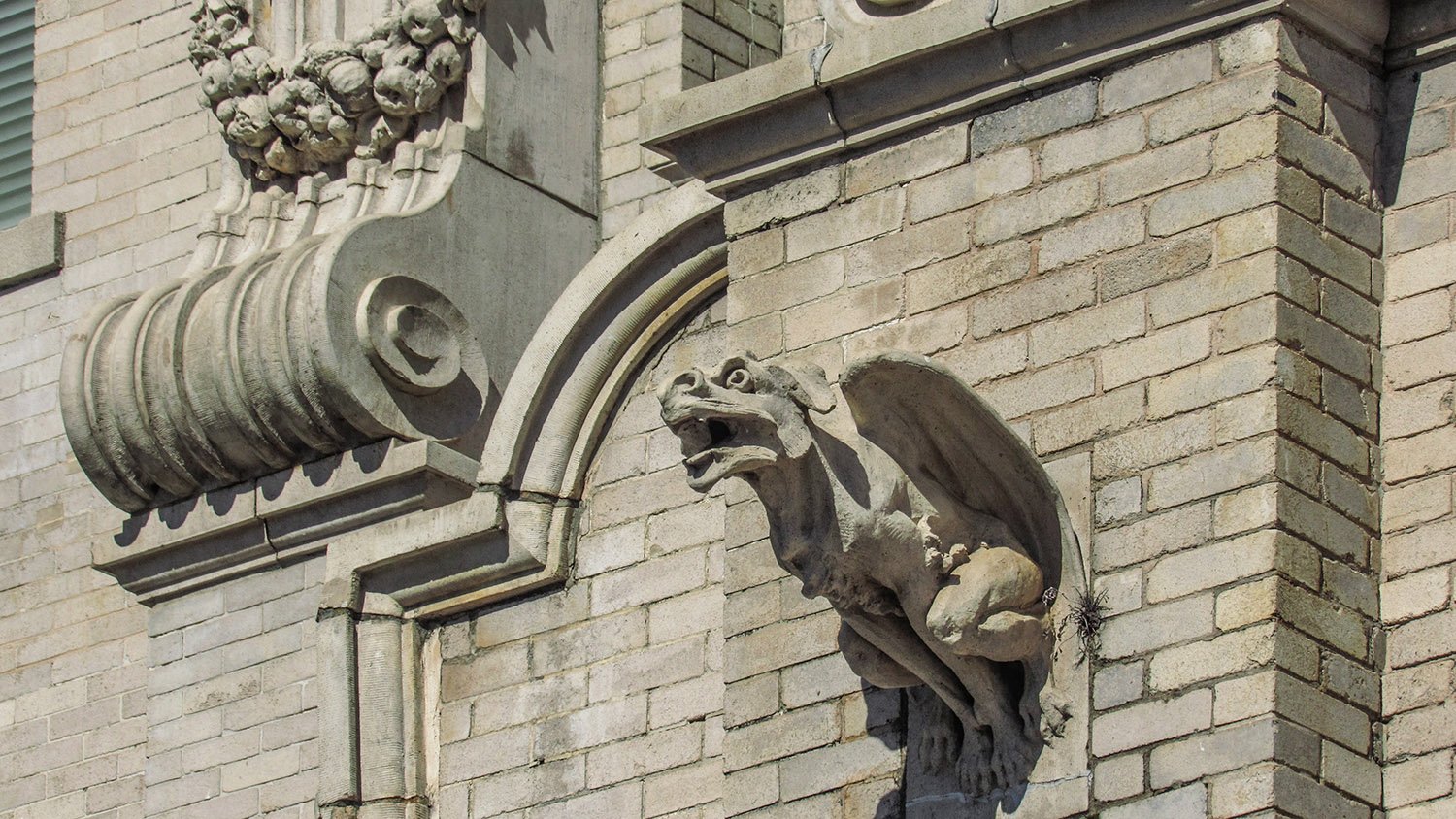
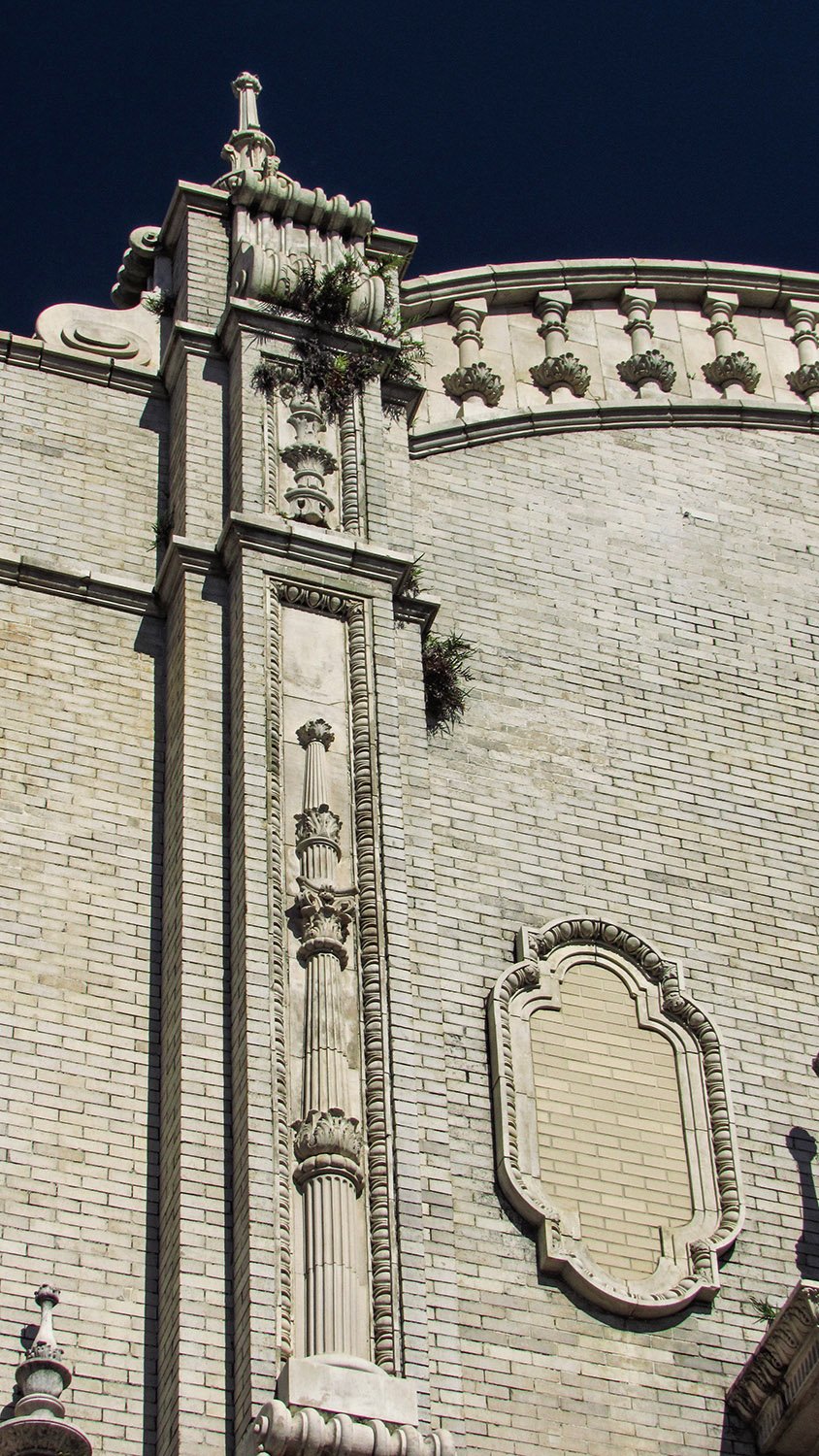
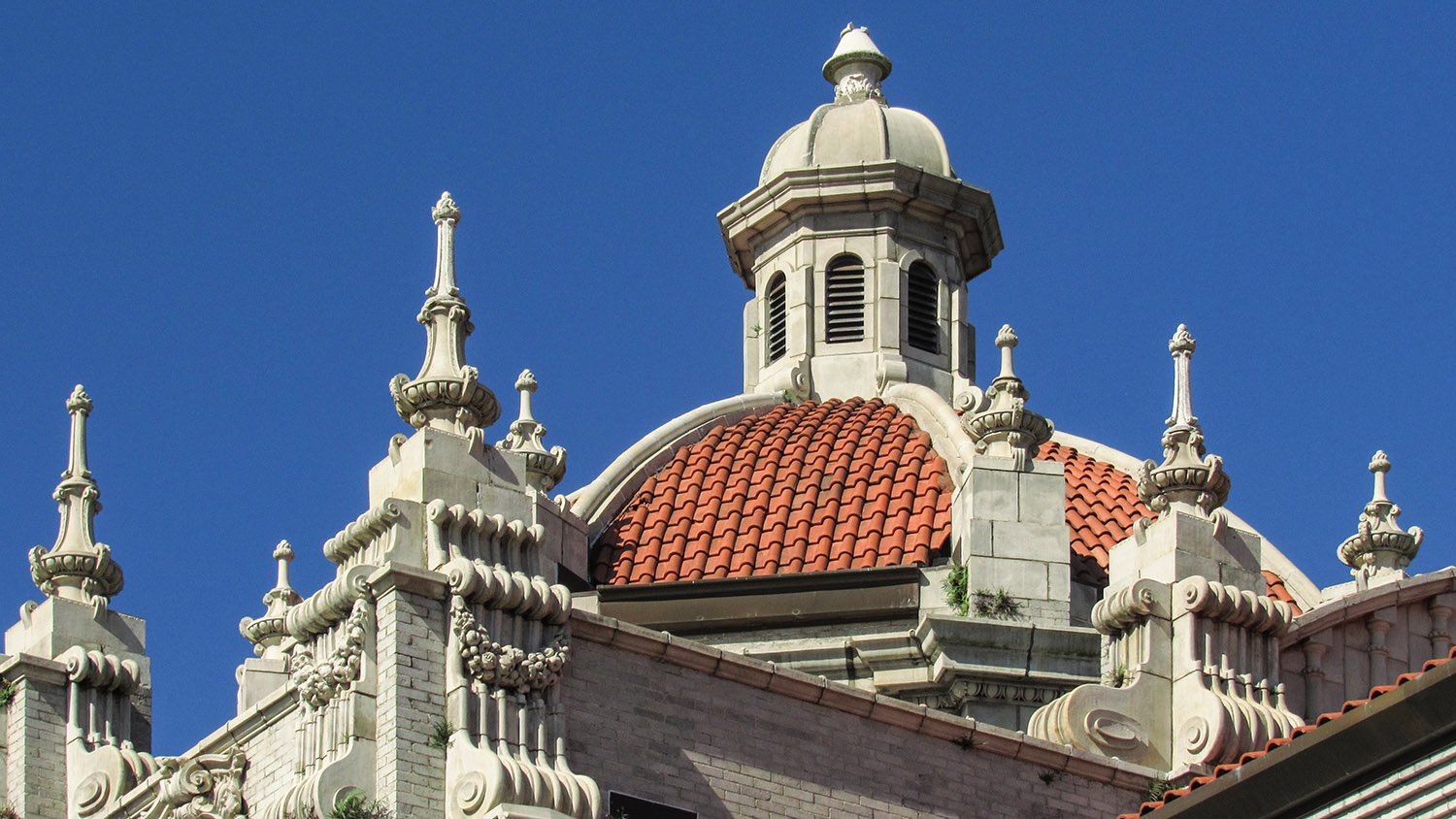
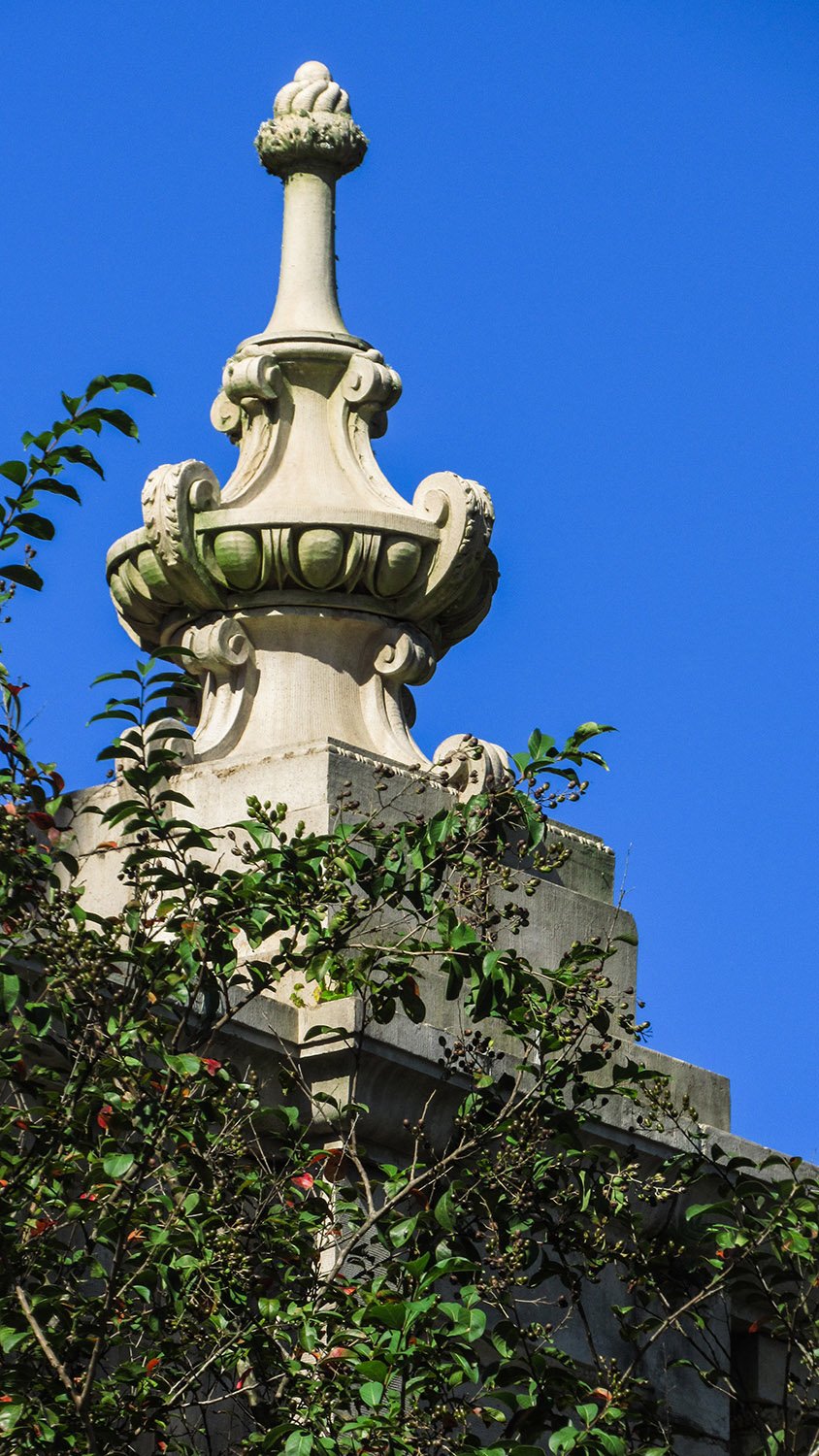
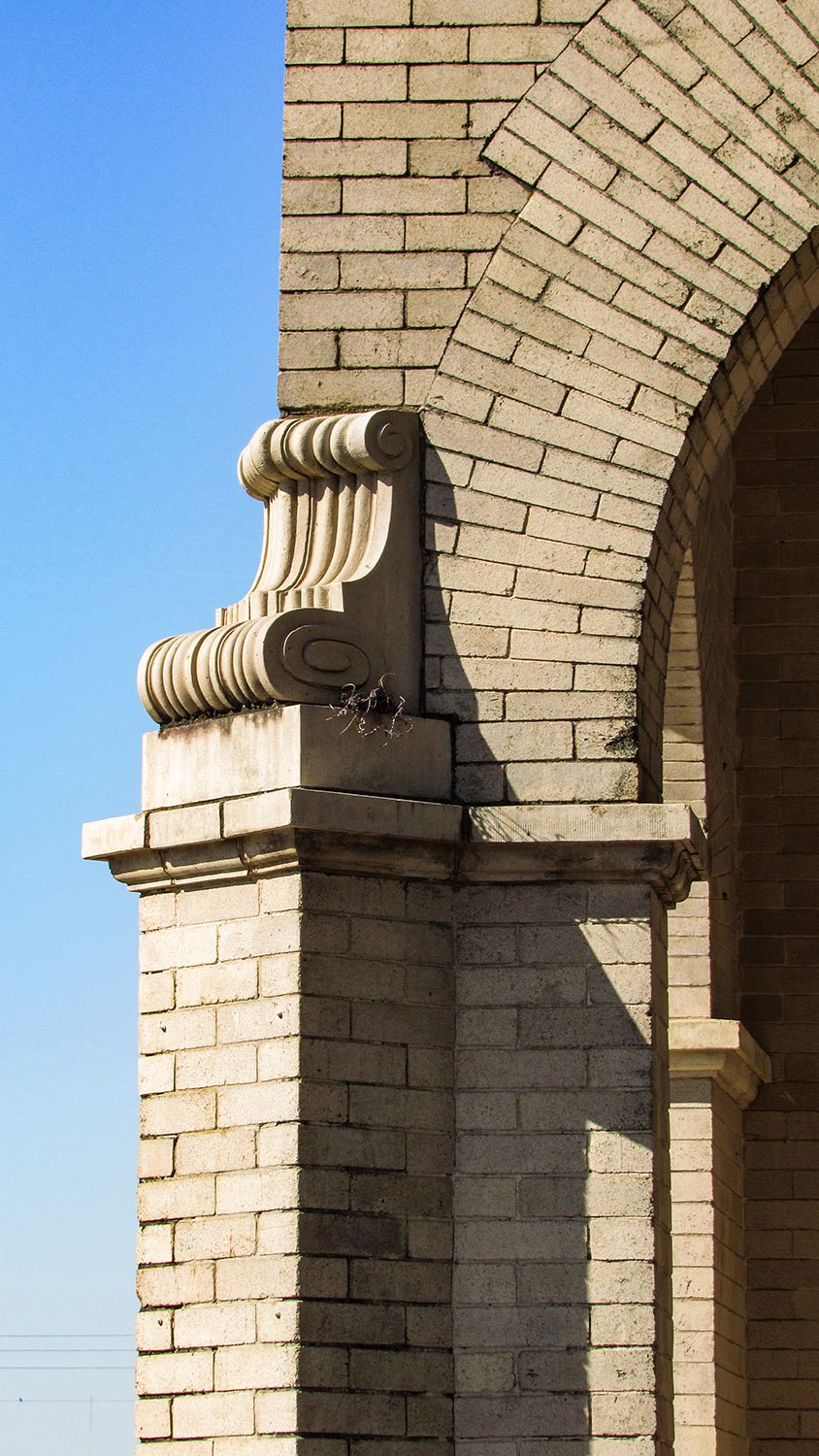
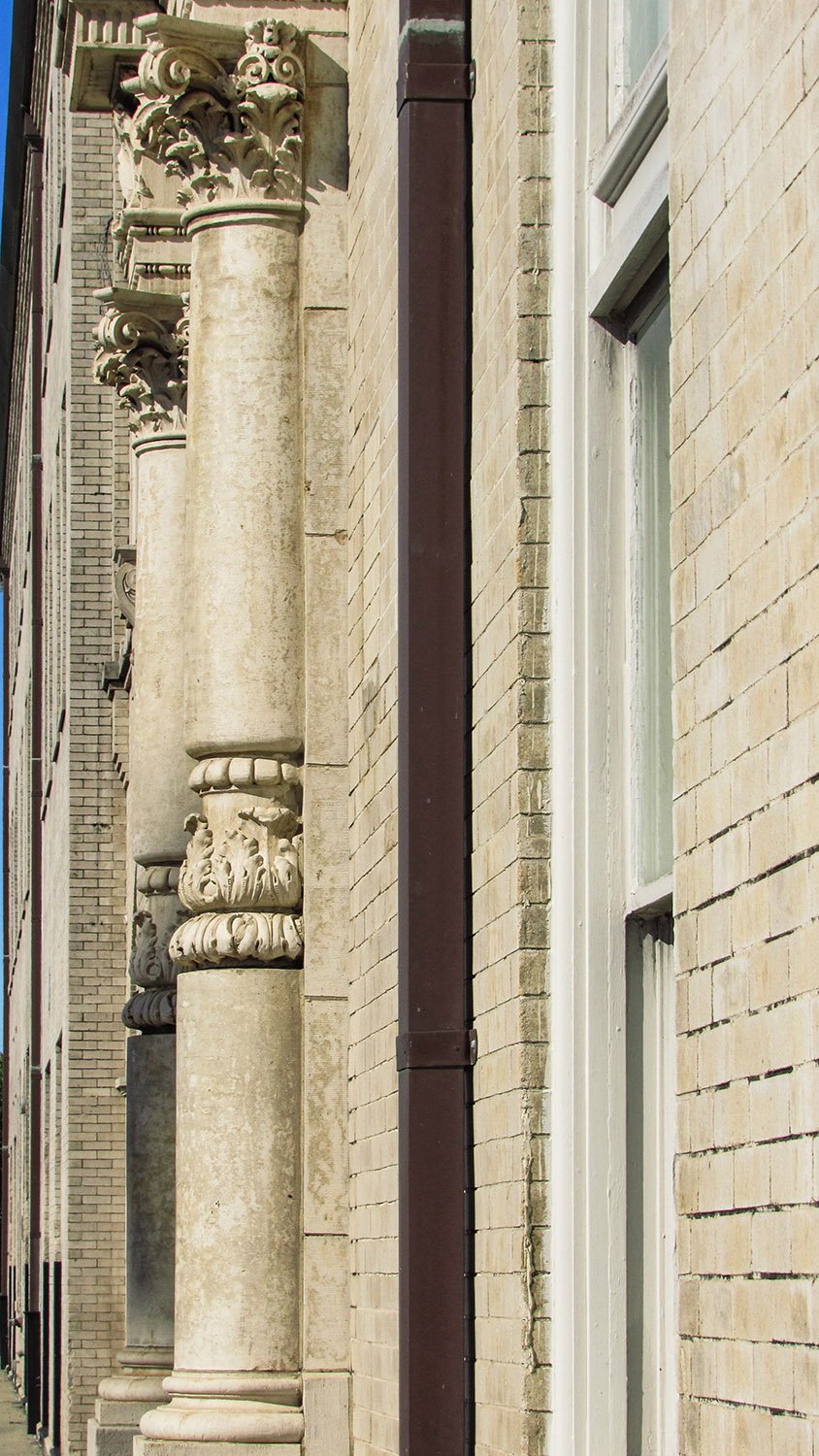
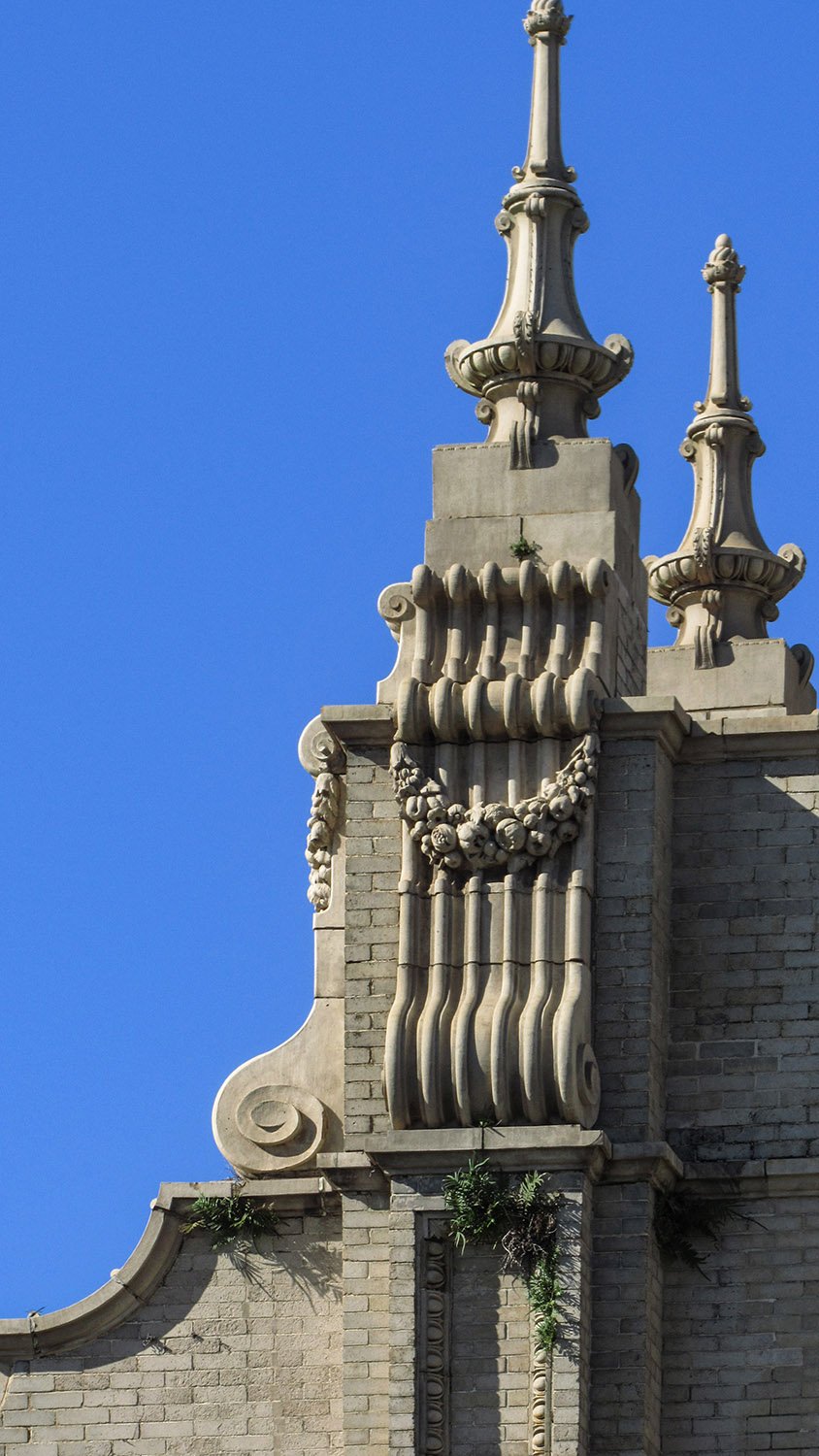
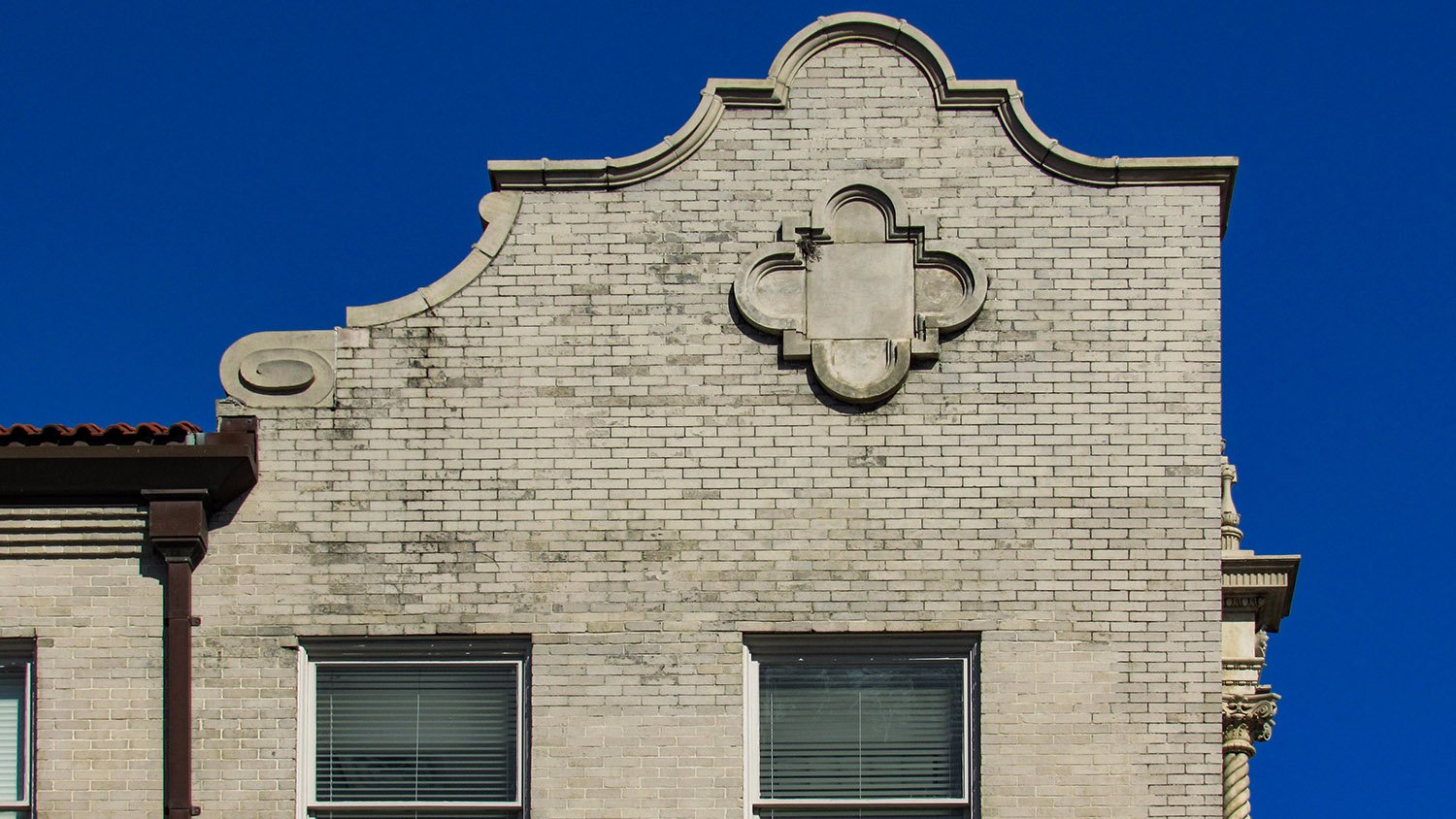
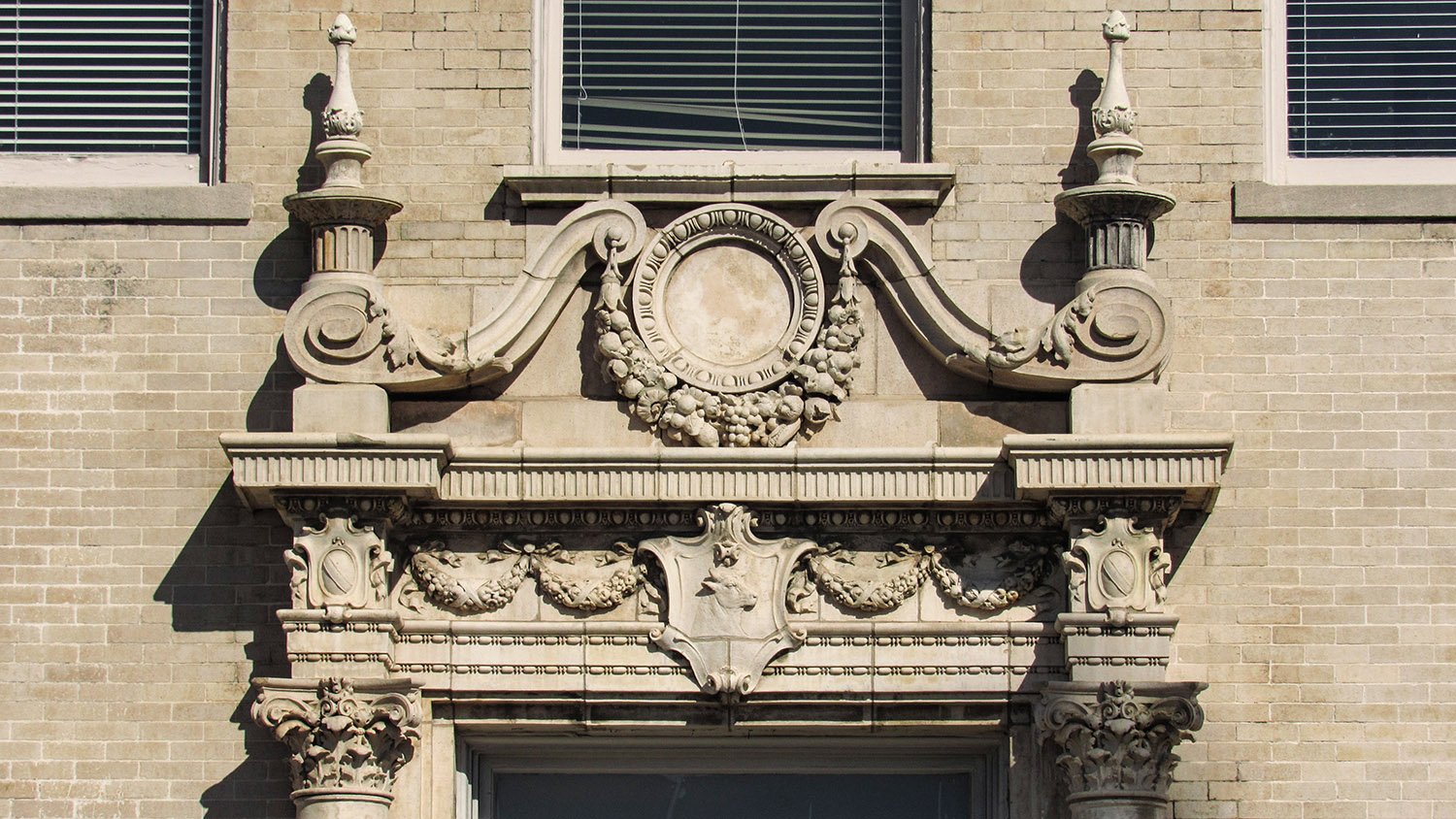
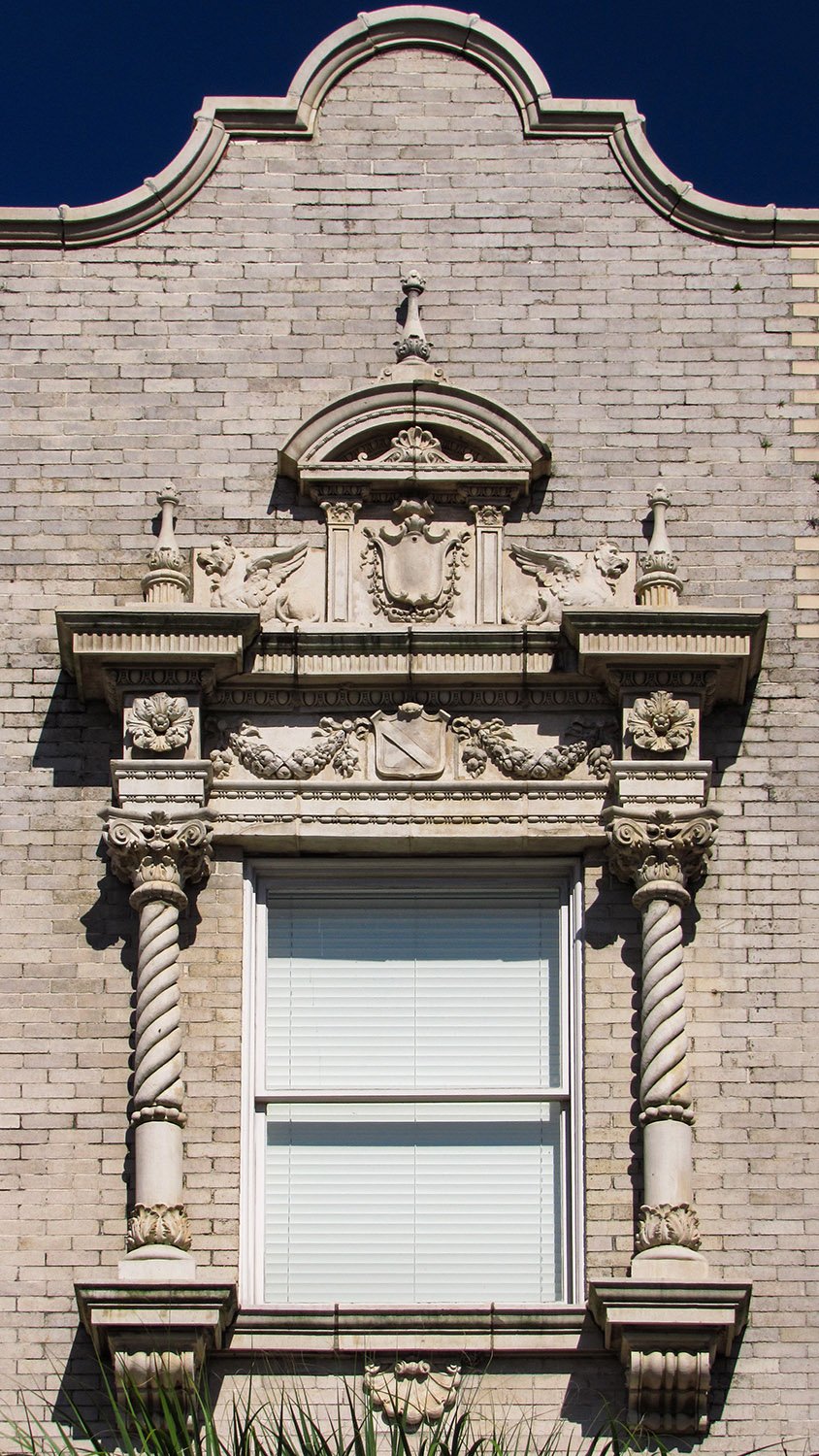
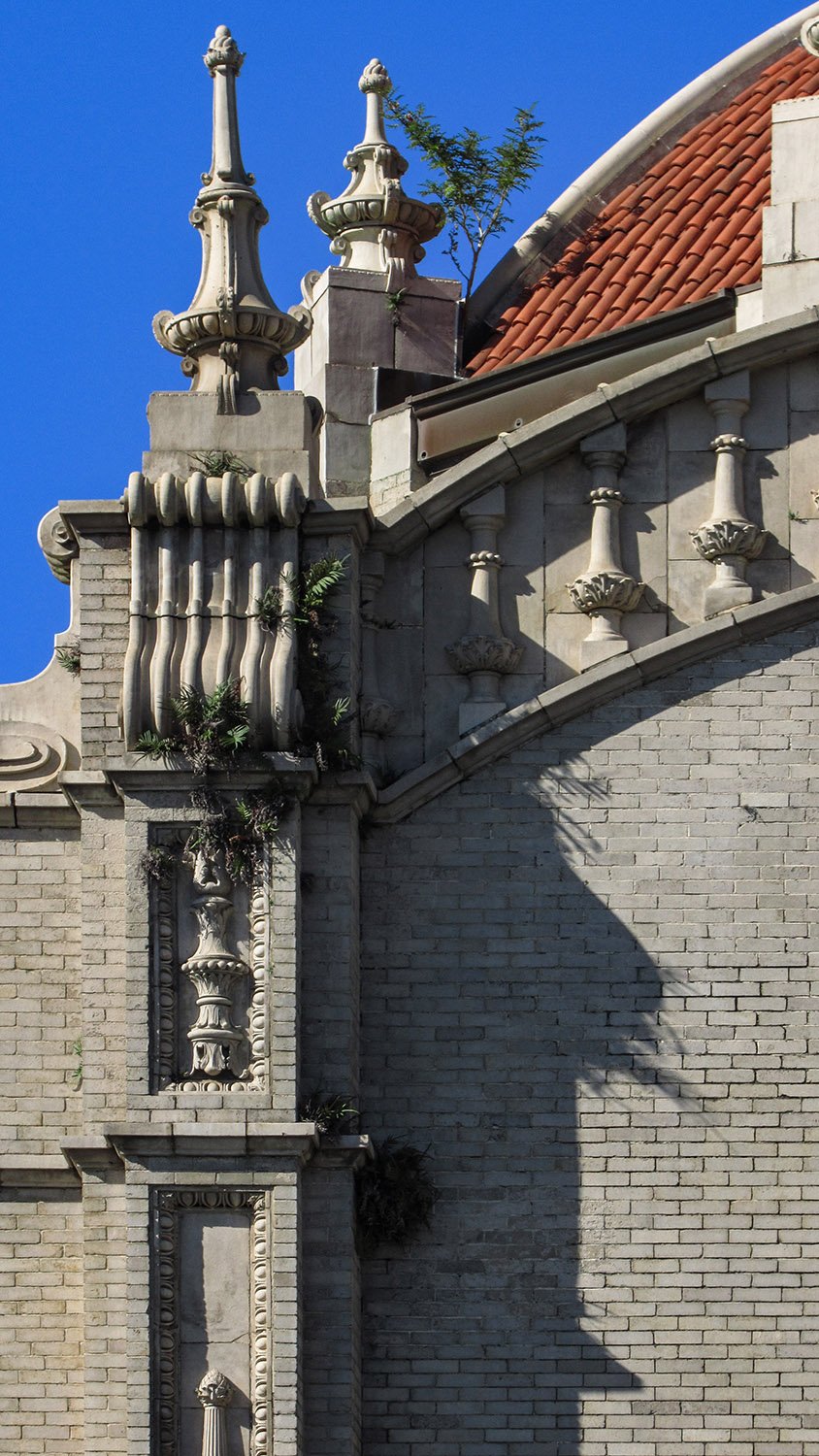
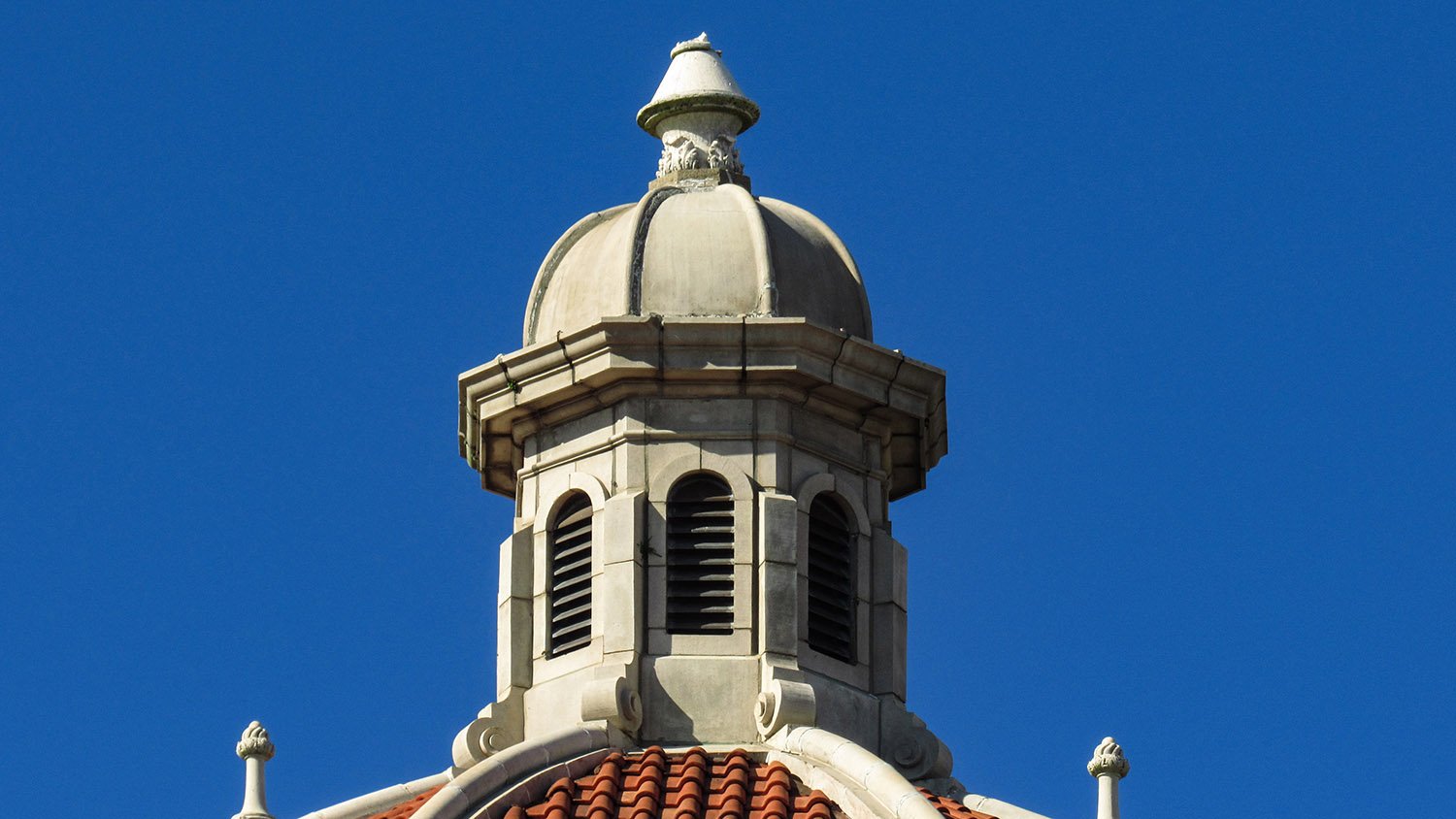
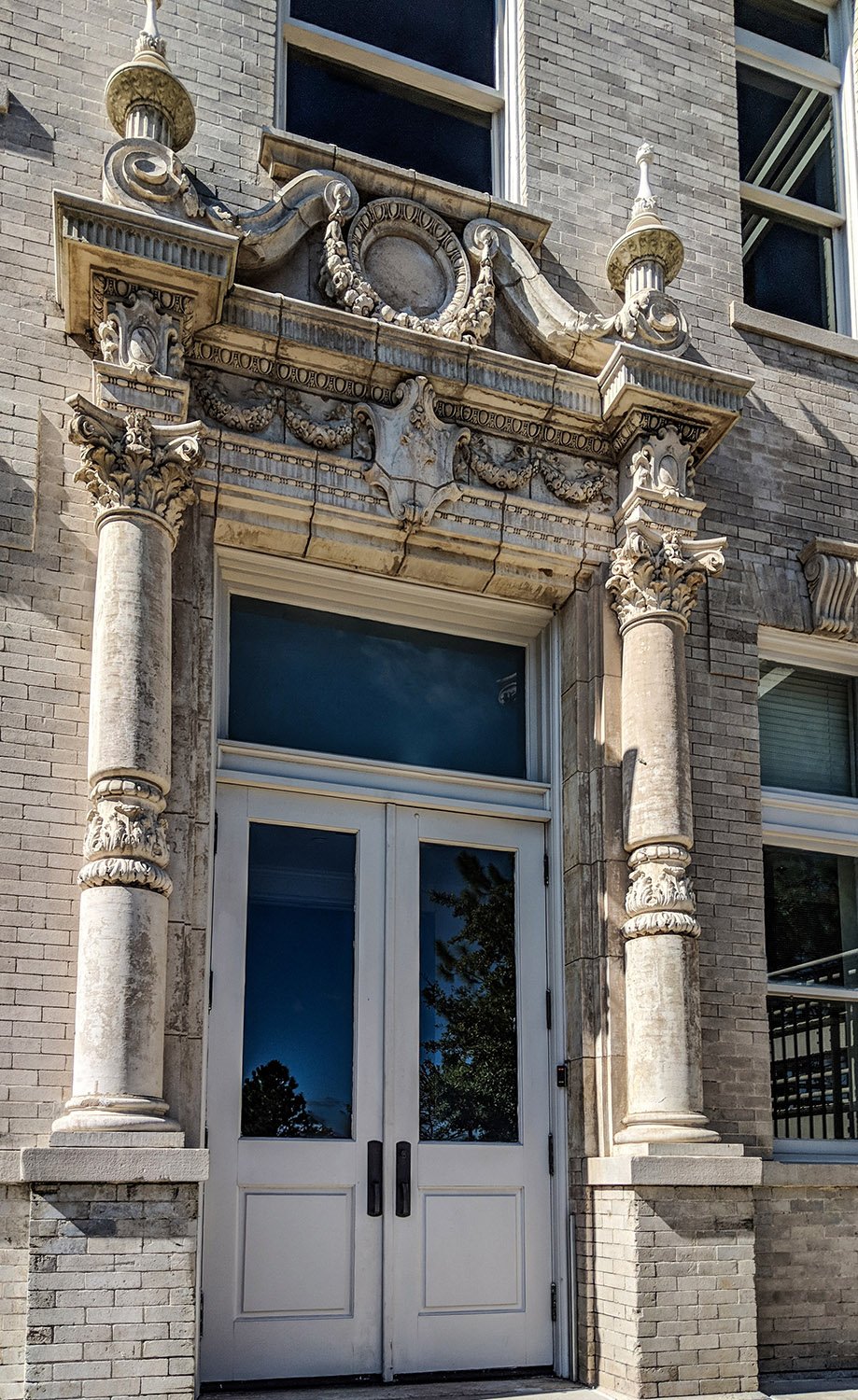
P. Thornton Marye. Gulf, Mobile and Ohio Passenger Terminal (1907). Mobile, Alabama.123Facade of Gulf, Mobile and Ohio Passenger Terminal, Mobile, AlabamaWest elevation of the Gulf, Mobile and Ohio Passenger Terminal, Mobile, AlabamaSoutheast corner of the Gulf, Mobile and Ohio Passenger Terminal, Mobile, AlabamaBay on the west elevation ofthe Gulf, Mobile and Ohio Passenger Terminal, Mobile, AlabamaLoggia on the facade of the Gulf, Mobile and Ohio Passenger Terminal, Mobile, AlabamaWindow and gable on the southeast corner of the Gulf, Mobile and Ohio Passenger Terminal, Mobile, AlabamaLooking up at the facade of the Gulf, Mobile and Ohio Passenger Terminal, Mobile, AlabamaDome and facade of the Gulf, Mobile and Ohio Passenger Terminal, Mobile, AlabamaOrnamentation on the facade of the Gulf, Mobile and Ohio Passenger Terminal, Mobile, AlabamaInscription on the facade of the Gulf, Mobile and Ohio Passenger Terminal, Mobile, AlabamaCenter window and gable on the facade of the Gulf, Mobile and Ohio Passenger Terminal, Mobile, AlabamaOrnamentation on the facade of the Gulf, Mobile and Ohio Passenger Terminal, Mobile, Alabama Decorative columns on a third-floor window of the Gulf, Mobile and Ohio Passenger Terminal, Mobile, AlabamaCherubs and P. Thornton Marye’s signature on the facade of the Gulf, Mobile and Ohio Passenger Terminal, Mobile, AlabamaTerracotta spandrel panel on the west elevation of the Gulf, Mobile and Ohio Passenger Terminal, Mobile, AlabamaParapet and finials on the west elevation of the Gulf, Mobile and Ohio Passenger Terminal, Mobile, AlabamaTerracotta ornamentation on the facade of the Gulf, Mobile and Ohio Passenger Terminal, Mobile, AlabamaParapet and finials on the facade of the Gulf, Mobile and Ohio Passenger Terminal, Mobile, AlabamaSecond-floor window on the facade of the Gulf, Mobile and Ohio Passenger Terminal, Mobile, AlabamaTerracotta ornamentation and finials on the facade of the Gulf, Mobile and Ohio Passenger Terminal, Mobile, AlabamaVolute and gargoyle on the facade of the Gulf, Mobile and Ohio Passenger Terminal, Mobile, AlabamaLooking up at a pinnacle and terracotta ornamentation on the facade of the Gulf, Mobile and Ohio Passenger Terminal, Mobile, AlabamaDome and finials on the Gulf, Mobile and Ohio Passenger Terminal, Mobile, AlabamaFinial on the Gulf, Mobile and Ohio Passenger Terminal, Mobile, AlabamaVolute and buttress on the facade of the Gulf, Mobile and Ohio Passenger Terminal, Mobile, AlabamaDoor columns on the west elevation of the Gulf, Mobile and Ohio Passenger Terminal, Mobile, AlabamaVolutes and finials on the facade of the Gulf, Mobile and Ohio Passenger Terminal, Mobile, AlabamaGable on the southwest corner of the Gulf, Mobile and Ohio Passenger Terminal, Mobile, AlabamaDoor pediment on the west elevation ofthe Gulf, Mobile and Ohio Passenger Terminal, Mobile, AlabamaThird-floor window on the facade of the Gulf, Mobile and Ohio Passenger Terminal, Mobile, AlabamaTerracotta ornamentation on the facade of the Gulf, Mobile and Ohio Passenger Terminal, Mobile, AlabamaCupola on the Gulf, Mobile and Ohio Passenger Terminal, Mobile, AlabamaEntrance on the east elevation of the Gulf, Mobile and Ohio Passenger Terminal, Mobile, Alabama
References
“Marye Plans Mobile Depot.” The Montgomery Times (Montgomery, Alabama), August 23, 1905, p. 5. ↩︎
“New Terminal Station Is Opened At Mobile”. The Times-Democrat (New Orleans, Louisiana), April 19, 1907, p. 4. ↩︎
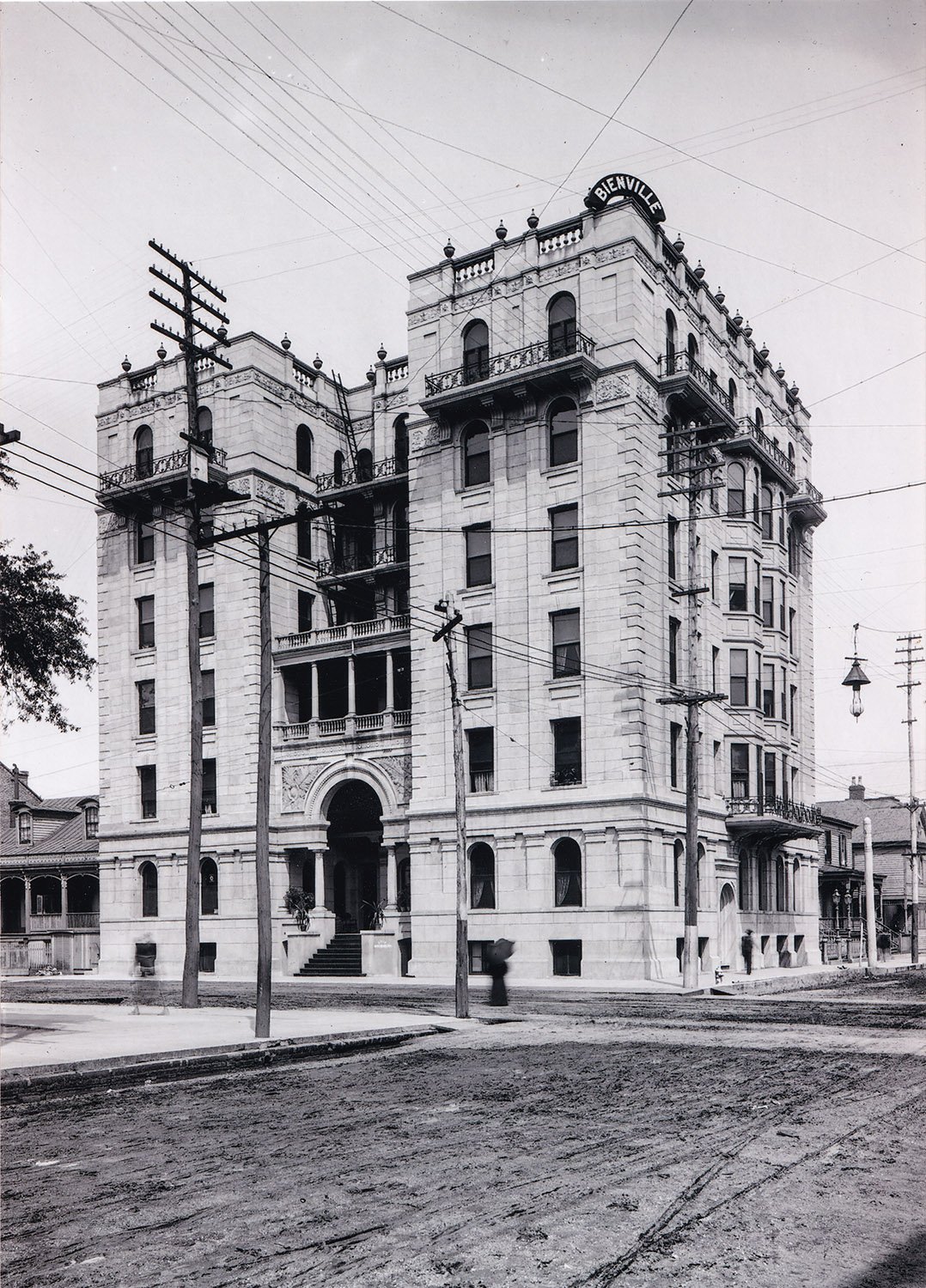
G.L. Norrman. Bienville Hotel (1900, demolished circa 1969). Mobile, Alabama.
The Background
Four days after his gushing comments about G.L. Norrmanfor the Macon press, Wallace Putnam Reed contributed the following report to The Augusta Chronicle about Norrman’s sudden late-career resurgence.
Article Excerpt:
My Augusta readers are lovers of the fine arts, and they will be glad to learn that one of their friends, Mr. G.L. Norrman, the famous Atlanta architect, is winning new honors.
When Norrman planned the splendid Hotel Bienville for Mobile he said nothing about it here. But he could not hide his light under a bushel. The Constitution‘s pictures of his designs for the new dormitory and mess hall at Athens have attracted attention everywhere, and without expecting it this modest man of genius is now overwhelmed with visitors and orders.
The matter interests me, because I have long been convinced that the man who can design and construct a great work in the architectural line is really a greater man than a poet or historian. The arts are different, but the first endures longer than the two others. In recent years we have seen the growth of public interest down south in schools of technology, and this is on the line of my remarks.
To put it more plainly, we of the south are outgrowing the old idea of a plantation aristocracy, whose younger sons must be professional men or nothing. Our young men of the future will be those who can compete with the Carnegies. Like that great Scotchman, they will start at the bottom and work their way up. When they succeed they will have all the social and political prominence they desire.1
References
Reed, Wallace Putnam. “Random Gossip”. The Augusta Chronicle, May 7, 1901, p. 4. ↩︎