The Background
A.C. Bruce (1835-1927) was a founding partner of Bruce & Morgan, the most prolific architectural firm in Atlanta and the Southeast in the late 19th century.
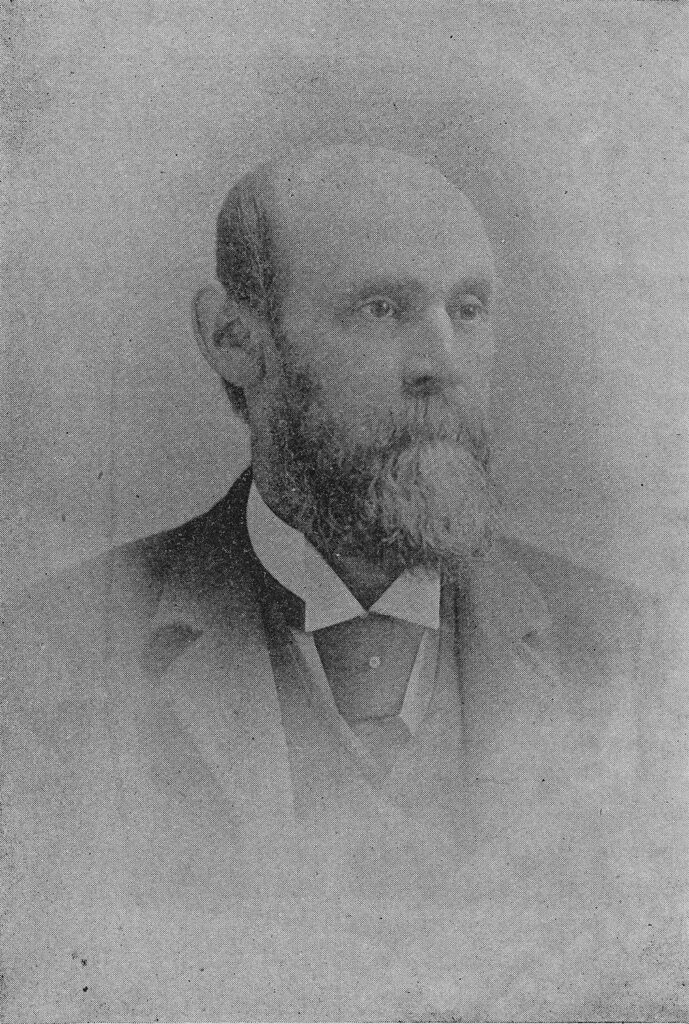
The son of a contractor,6 Bruce started a carpentry business in 1865,7 and in 1870, he moved to Knoxville, Tennessee, where he began billing himself as an architect.8
In 1879, he moved to Atlanta to partner with W.H. Parkins,9 Atlanta’s first professional architect, in the short-lived firm of Parkins & Bruce. Finally, in 1881, Bruce partnered with his longtime draughtsman, T.H. Morgan.10 11
One of only 5 architectural firms in Atlanta in 1881,12 Bruce & Morgan quickly established the largest and most successful practice in the Southeast, producing hundreds of government, commercial, and residential structures across every state in the region for the next 23 years.
The sheer volume and rapidity of their output ensured a certain consistency of design: their buildings were rarely great, but seldom terrible either.
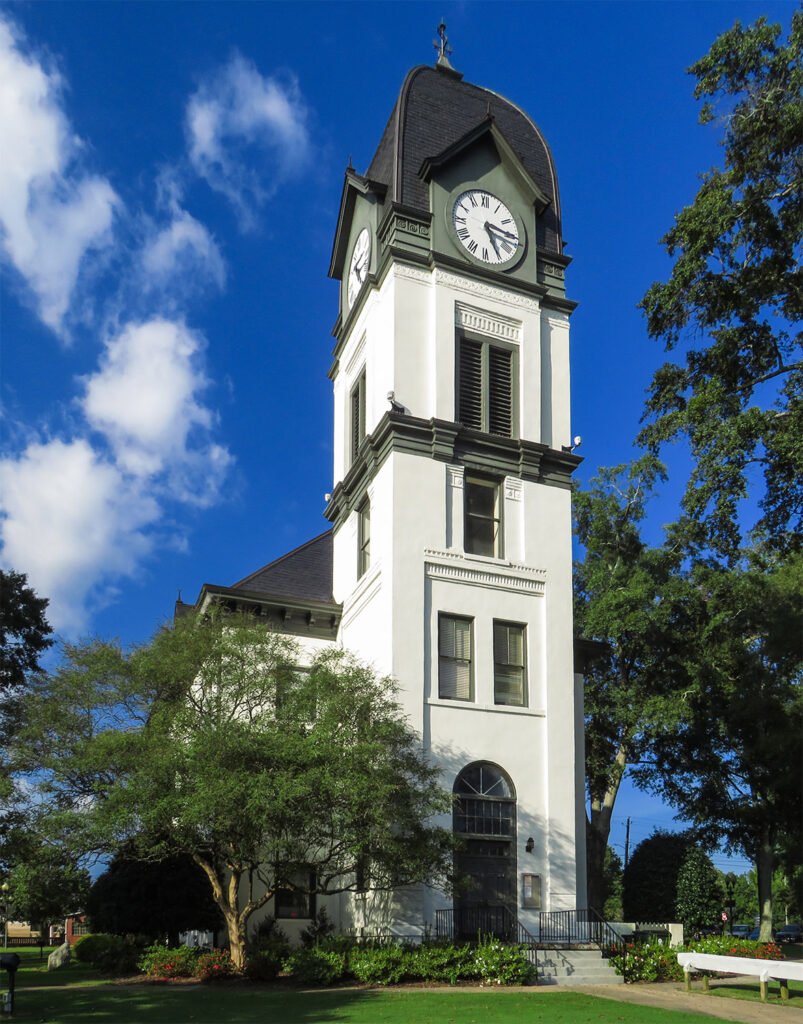
Past historians postulated that Bruce primarily handled design duties while Morgan attended to business affairs. However, I’ve found ample evidence that Morgan also consistently designed projects, if not to the same extent as Bruce — at least in the firm’s early years.
By the time Bruce & Morgan began producing Atlanta’s first skyscraper office buildings in the late 1890s, Morgan had clearly become the lead designer,15 16 17 and when Bruce retired from the firm in 1904, Morgan partnered with John R. Dillon for the successor firm, Morgan & Dillon, which continued until 1935.18
Bruce’s initial retirement was brief, and from 190519 to 1908, he joined with A.F. N. Everett in the firm of Bruce & Everett,20 specializing in churches and school buildings, although he also continued to design homes and apartment houses.
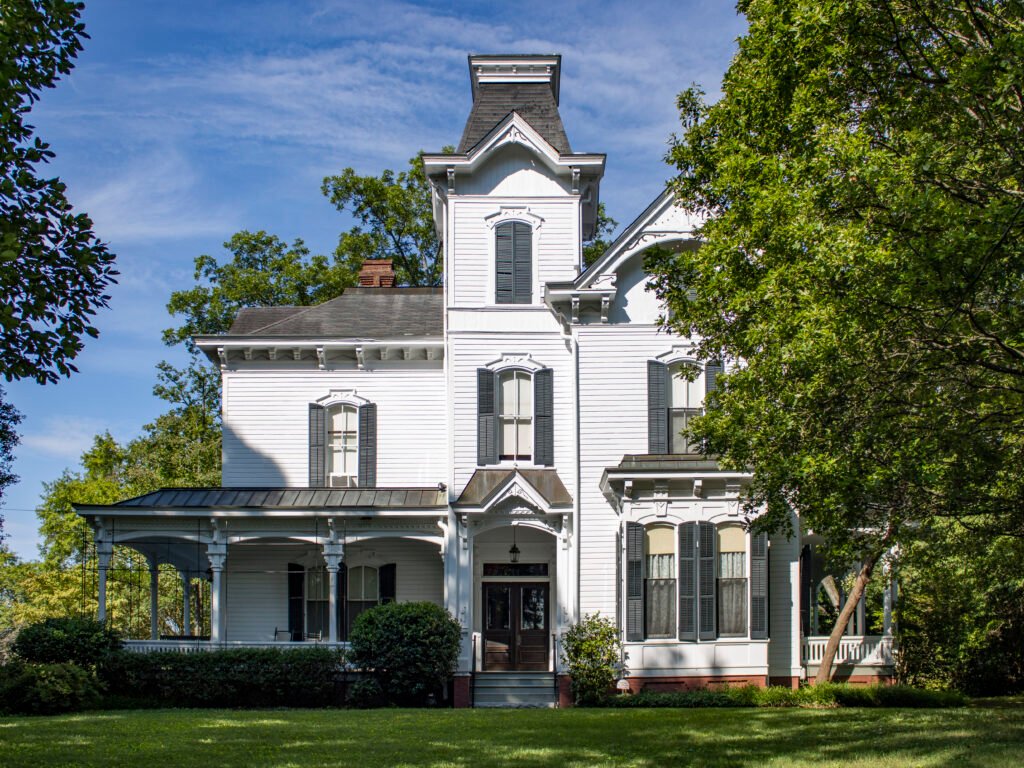
Public buildings were always Bruce’s forte, however, and it’s no surprise that many of his residential projects look suspiciously similar to his designs for county courthouses.
While he never exceeded the limits of his vernacular training, Bruce was a competent designer who admirably attempted to evolve with changing tastes. The residue of his Italianate designs from the 1860s and 70s still appeared in his work from the 1880s into the early 20th century, but he made good-faith efforts at more sophisticated styles like the Romanesque and Classical Revival, if not always successfully.
Bruce rarely produced any writing of significance, and you’ll find nothing especially revelatory in this short letter published in The Southern Architect journal in February 1893. The journal, incidentally, was founded by T.H. Morgan in 1889.22
Here, Bruce shares a common lament among architects of the time, criticizing people who attempted to design their own homes instead of hiring a professional.
Since architects were the journal’s primary audience, Bruce was essentially preaching to the choir, and while it may have been more effective to share his sentiments in a public newspaper like The Atlanta Constitution, he was clearly a shrewd businessman who took pains to avoid offending potential clients.
Compared to another of Atlanta’s leading architects of the era, G.L. Norrman — whose tendency toward brash public outbursts made him a lightning rod for disputes (and undoubtedly affected his business) — Bruce & Morgan were skilled diplomats who rarely attracted controversy. Note that Bruce even discreetly signed the letter with his initials only: A.C.B.
There’s a reason he had the top firm.
“I Am My Own Architect”
The expression “I am my own architect,” is frequently used by men and women who are about to undertake the erection of a residence, either in the city or country.
People who are guilty of indulgence in this form of vanity may be divided into two classes. The first are those who, as they express it, draw their own plans and employ an architect only for the purpose of designing the elevations and other “unimportant” matters. They are frank enough to confess that, while they have large ideas, their ability as draughtsmen is not worth mentioning. They disdain to cultivate such mere mechanical skill.
The second class comprise those gifted individuals who are able to draw the entire set, which are handed over to the unfortunate builder securing the contract.
In reality the tragedy of the transaction does not fall upon the builder, whose life is made miserable during the work, but upon the neighbors and residents of the locality, before whose horror-stricken faces are constructed the hideous exteriors that result necessarily from the barbaric practice of the fine art. How much better would the building look if designed by a skillful architect in charge of the work?
A.C.B.23
References
- Photo credit: City of Atlanta: A Descriptive, Historical and Industrial Review of the Gateway City of the South, p. 133. ↩︎
- “A.C. Bruce”. The Daily Star (Fredericksburg, Virginia), March 11, 1919, p. 2. ↩︎
- Bruce, A.C. “Nashville’s Builders”. The Nashville American, May 24, 1896, p. 3. ↩︎
- “The Mechanics’ Fair–Articles Exhibited, Premiums Awarded, &c.” Nashville True Whig, October 11, 1855, p. 2. ↩︎
- “Dissolution.” Nashville Union and Dispatch (Nashville, Tennessee), April 21, 1867, p. 4. ↩︎
- Bruce, A.C. “Nashville’s Builders”. The Nashville American, May 24, 1896, p. 3. ↩︎
- “Wanted Immediately.” (advertisement). The Nashville Daily Union (Nashville, Tennessee), January 6, 1865, p. 1. ↩︎
- “A.L. Jonas, Surveyor” (advertisement). April 14, 1870, p. 2. ↩︎
- “Mr. A.C. Bruce.” The Chattanooga Daily Times (Chattanooga, Tennessee), January 7, 1879, p. 2. ↩︎
- “Personal.” Knoxville Daily Chronicle (Knoxville, Tennessee), December 23, 1879, p. 4. ↩︎
- “Watkins Institute.” The Atlanta Constitution, December 1, 1881, p. 7. ↩︎
- Sholes’ Atlanta City Directory For the Year 1881 ↩︎
- “Notice to Contractors.” The Atlanta Constitution, October 23, 1887, p. 6. ↩︎
- Inscription on building cornerstone. ↩︎
- “It Will Be Ten Stories.” The Atlanta Journal, May 27, 1897, p. 1. ↩︎
- “That New Sky Scraper”. The Atlanta Constitution, September 4, 1899, p. 5. ↩︎
- “Big Building Is Now a Certainty”. The Atlanta Constitution, September 28, 1899, p. 7. ↩︎
- “Announcement”. The Atlanta Constitution, January 2, 1904, p. 7. ↩︎
- “Albany’s New School Building.” The Atlanta Constitution, November 2, 1905, p. 2. ↩︎
- “Notice of Dissolution”. The Atlanta Constitution, August 26, 1908, p. 14. ↩︎
- “Architecture”. The Atlanta Constitution, September 23, 1882, p. 9. ↩︎
- “An Important Enterprise.” The Atlanta Constitution, May 16, 1890, p. 10. ↩︎
- Bruce, A.C. “I Am My Own Architect”. The Southern Architect, Volume 4, no. 4 (February 1893), p. 103. ↩︎