Arriving in darkness was disorienting. The endless stream of bridges from the mainland to the shore was dimly lit — beneath it was an abyss.
The evening was abnormally warm for December. This is probably the new normal, I said to myself, as I removed my outer shirt and loosened my pants.
A steady wind blasted sand around in thick swirls, clouding my view as I rolled down the highway, rarely passing another car. If I were a fugitive, this would be a great place to hide.
I stopped at the visitor center on Roanoke Island, praying to God there was an open restroom. If not, I’d be shitting in the bushes. One car was parked in the lot — I didn’t see anyone in it.
I rushed into the restroom, girding myself for company. The room was brightly lit and spotlessly clean, as if it had never been used. It got used that evening.
When I walked out, I noticed the other car was gone — our paths had intersected, but we never saw each other.
I drove through a scattering of secluded towns — outposts, more like it — clustered with flimsy wood houses, tacky shops, and dingy seafood restaurants. Most buildings had the look of abandonment; many had “CLOSED” signs.
Are they closed for the season, or forever? It was hard to tell.
A sign on the road pointed to a public parking area — where? I could only see sand. I took a blind turn and was pleased to find myself in a tiny lot surrounded by large dunes.
Cutting off the headlights, I stepped out of the car, tossed my shirt on the seat, and unzipped my pants. As I took a deep breath of the salty air, I looked around at a trillion bright stars.
I am not a beach man. I find bodies of water dubious: slimy, polluted, full of trash, and swarming with strange creatures.
Yet as I plodded across the dunes in my sandals, a small flashlight in hand, I felt instinctively that I had entered a sacred space. I treaded quietly and solemnly, as if entering a temple.
I could hear nothing but the roaring waves, and at first glance, saw only the stream of moonlight shining on the water. In the distance, I spotted the bright beacon of a ship — a hostile intruder.
The tide was low — the water was too far away for my liking, and my feet sank into the wet sand, which isn’t a sensation I prefer.
I returned to the car and drove to the most practical stopping point for the night: where the main road turns abruptly, and a large parking area stretches out beside a lighthouse.
The lot was deserted and swept over with streams of sand. I parked in the corner by a pair of Porta-potties and some trash cans.
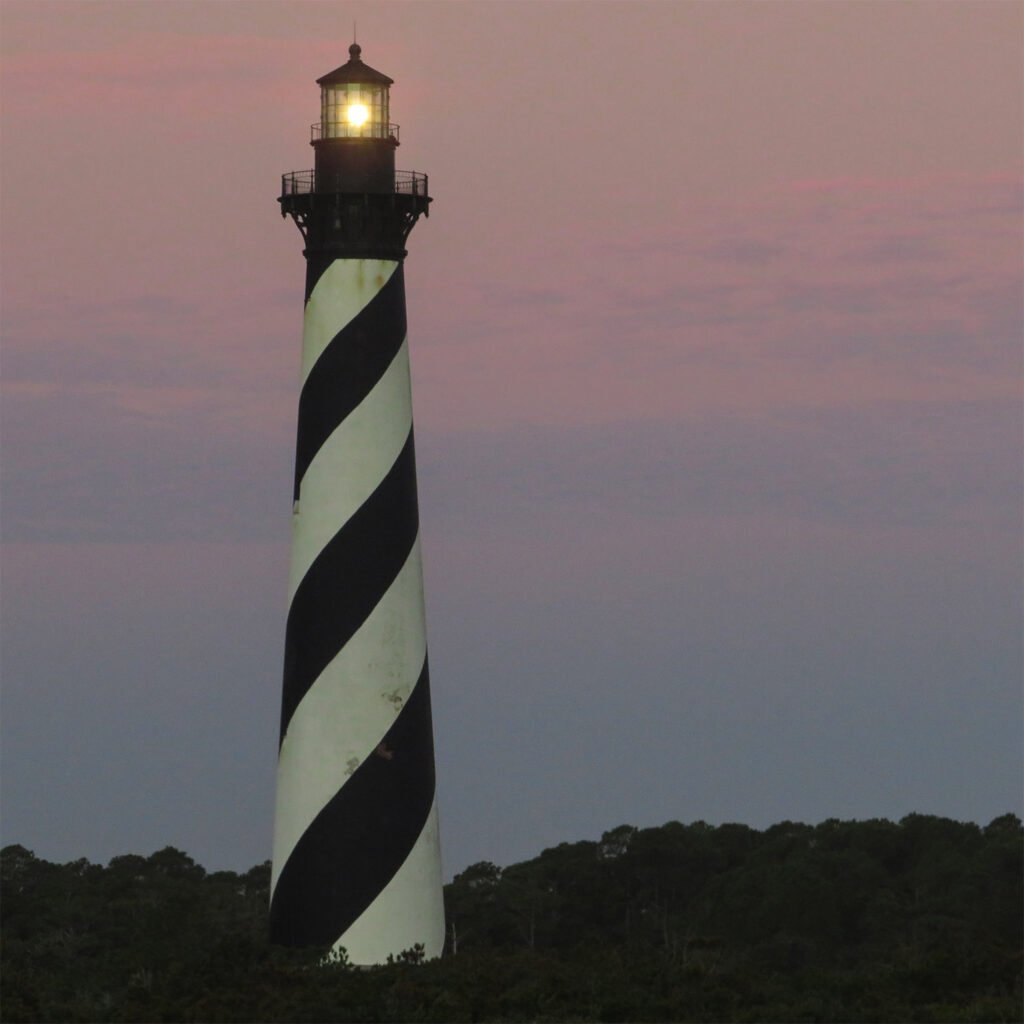
The lighthouse once stood here but was moved a little further up a few years ago, away from the encroaching water.
One day, everything here will be swallowed by the sea, I reflected. Possibly during my lifetime.
Accustomed as I am to the lights and noise of the city, the absolute darkness and silence were unsettling. Any crazy person could have been out there, silently watching me from behind the dunes and scrub brush, ready to attack in my most vulnerable moment. It was a risk I was willing to take.
I took another walk across the dunes and down to the water, this time serenaded by a chorus of crickets and frogs. One lone cricket chirped much louder than the others, unceasingly.
When I returned to the car, I leaned back in my seat, took off my clothes, and snuggled under a blanket, softly drifting in and out of consciousness.
The revolving beacon of the lighthouse broke the darkness at regular intervals, and every time the light passed over my body, I felt a twinge of fear, as if I were a fugitive who had escaped from prison, hiding from the searching light of the guard’s tower.
A few minutes before midnight, I heard the sound of an approaching car. I panicked — it had to be a cop.
I watched in the mirror as a vehicle rolled slowly behind me, then parked a couple of spaces away. It wasn’t a cop.
With the blanket pulled over my face, I peeked through the bottom of the window at a lone figure inside the car. The windows were fogged up, and I couldn’t make out details — but it had the shape of a man.
The figure fumbled for several minutes with blurry objects, throwing things in the back seat and acting agitated. I already had the key in my hand, slid into the ignition.
After several long minutes, the figure finally opened the door, and walked around to the back of the car, popping open the trunk. The figure was tall and slender, and while I couldn’t make out details in the dark, it appeared to be naked.
I held my breath — I figured my best course of action was to play dead.
I watched as the figure grabbed a lamp from the car, attached it to his head, slammed the trunk shut, and ran toward the beach. If he was wearing anything, it was an incredibly form-fitting suit.
I pulled the blanket off my face and watched the white light of the head lamp bouncing up and down over the dunes. After an hour of wild thoughts and restless deliberation, I saw the light return.
I pulled the blanket over my face again, carefully peeking out as the figure hopped in the car, fidgeted for a few more minutes, and left. Alone again.
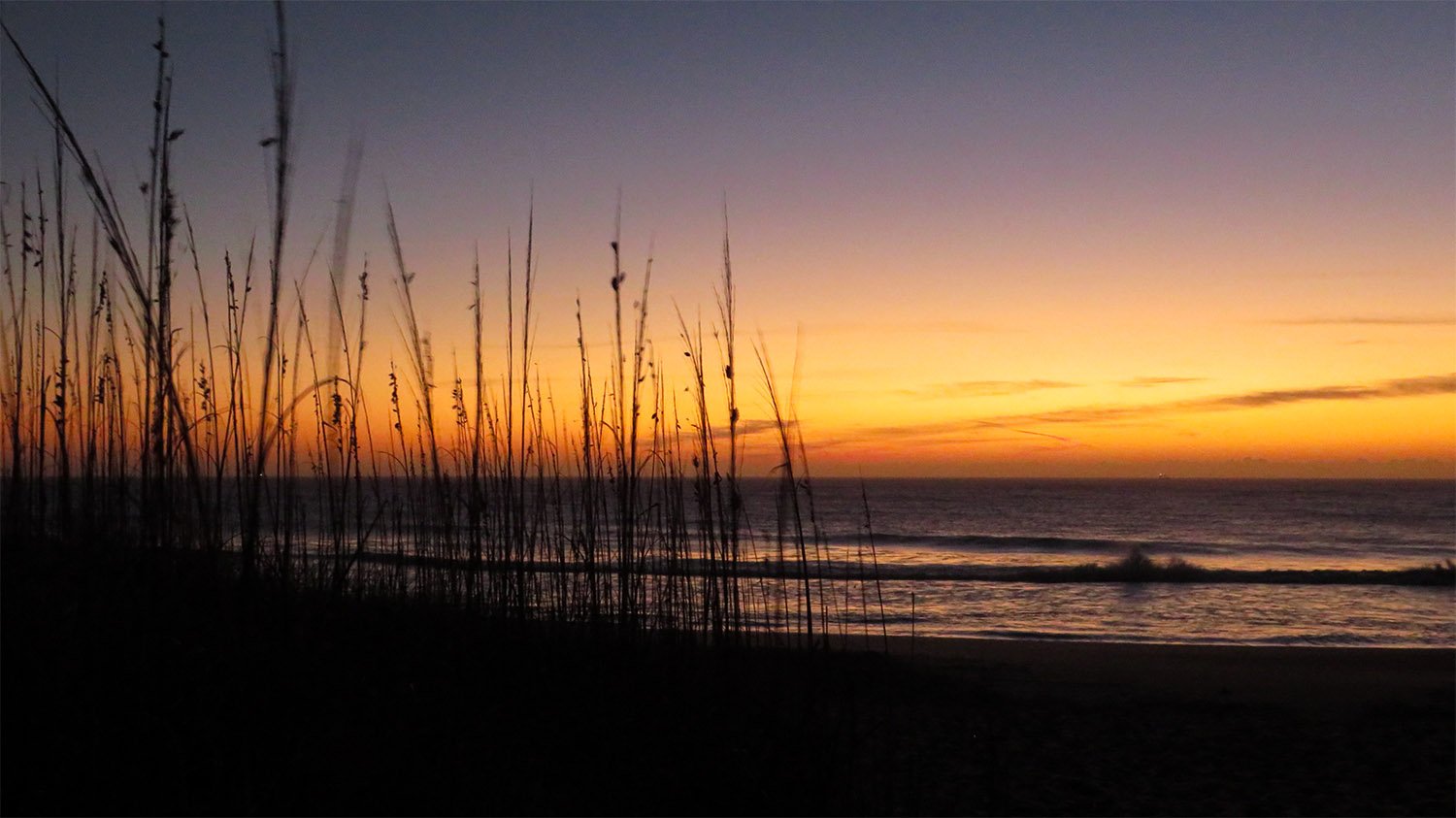
The night brought fitful sleep and strange dreams — nothing unusual there — and I was delighted to awake alert and refreshed at the first hint of daylight. The sky was muted, brushed in strokes of pink and purple.
I put on my pants and wandered down to the water — the same loud cricket from the night before was still awake and screeching.
In the early light, I could see that the dunes were covered in live oak, juniper, and holly — all trees familiar to me, but almost unrecognizable in their gnarled and withered appearance. I noticed the many plants: beach grass, sea oats, prickly pear cactus, marsh elder, and yucca.
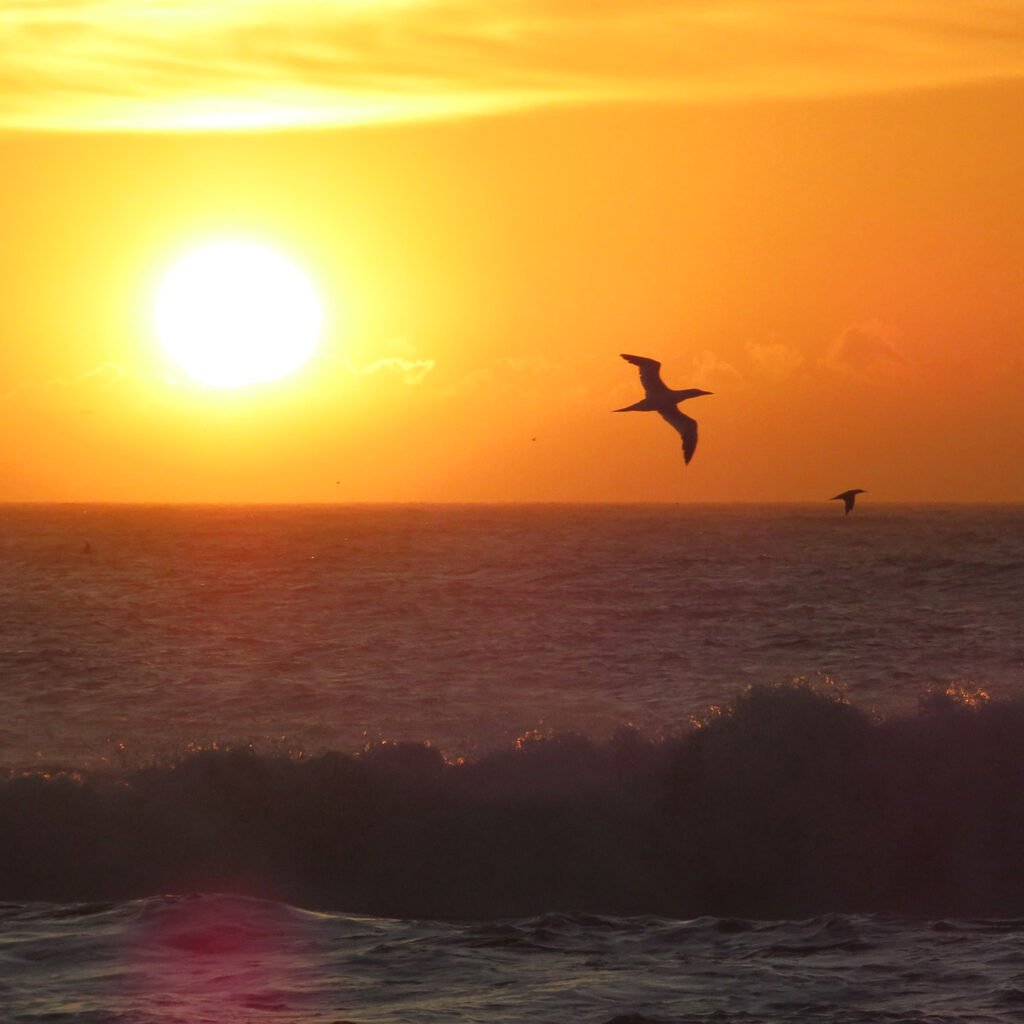
As I walked down the slope, the scene that opened before me was dramatic, expansive, and meditative: the sun had just peaked over the water, and the sky was ablaze in red and orange. Birds of every size and description surrounded me — in the sky, on the ground, nested in the sand, and roosting on the driftwood.
I saw that the sand was coarse, dark, and colorful, richly textured with pebbles and shell fragments.
High tide had arrived, and the water was now just a few feet from me. I stood in silence and observed the passing moment.
I made two more stops on the beach that morning, before a brief visit to Jockey’s Ridge, the largest dunes in the Outer Banks.
My 18-hour sojourn was spent in solitude: I never even spoke to another person. I had no life-changing moment, gained no special insights, and formed no great passion.
It was, however, an experience — a pleasant and fleeting memory that will wash away in time.