The Background
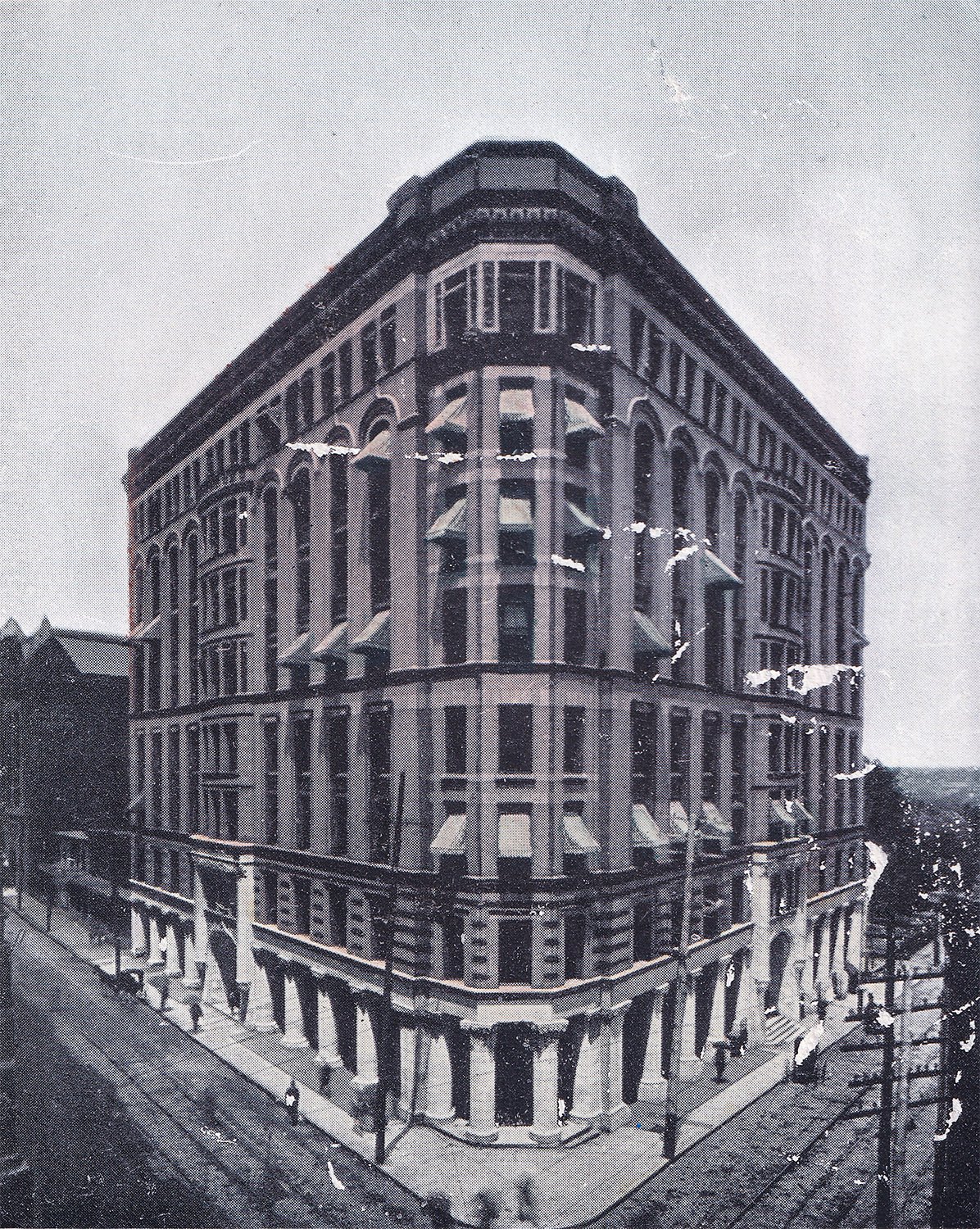
The eight-story Equitable Building was Atlanta’s first “skyscraper” when it opened in 1892. Built by Joel Hurt’s East Atlanta Land Company—a major client of G.L. Norrman‘s at the time—the Equitable wasn’t designed by Norrman but by John Wellborn Root of Burnham & Root2 in Chicago, one of the leading American architects of the era and a Georgia native.
Riding high on his own commercial and creative success of the early 1890s, Norrman was one of the Equitable Building’s original tenants3 and enjoyed the best view in Atlanta with a top-floor studio that spanned multiple suites,4 described as “brilliantly lighted, opening eastward.”5
On December 17, 1892, Norrman was profiled as part of an Atlanta Journal article about the building’s occupants, appropriately titled “The Equitable.“
The biographical sketch, published below, provides a few previously undisclosed details about Norrman’s early life, primarily regarding his education in Sweden and his international travels.
The profile also indicates that Norrman emigrated to the United States in 1874, which he confirmed in the 1900 census,6 although for his 1897 passport application, he claimed to have entered the country in the fall of 1872.7
Norrman’s reluctance to reveal his age is also pointedly discussed here, and it appears he was self-conscious about the subject—in both the 1880 and 1900 censuses, he reported himself as two years younger than his actual age.8 9
Given the fudging on his passport application, perhaps he just liked being mischievous with dates.
The article’s emphasis on his training is also notable, as Norrman was the only Atlanta architect at the time who had any formal education.
The city’s other architects were all either self-taught or trained under other designers, and the difference is apparent when you compare their often crude vernacular creations to Norrman’s more sophisticated designs.
The profile has several minor errors, including misspelling Norrman’s name (three times), erroneously stating that he came to Atlanta in 1882 (it was 188110), and referring to his first partnership as “Weed & Normann”, although it was Norrman & Weed.
The sketch also mentions the “Charlotte Hotel, Charlotte, N.C.”, although I’m not aware of any hotel designed by Norrman in that city. The name likely refers to Norrman’s design for the Hotel Carrolina (1891) in Durham, North Carolina, or it could also refer to the City Hall (1893) in Charlotte, then under construction.
“An Educated Architect”
Some men are born great, some achieve greatness, others have bachelorhood thrust upon them.
Now, the gentleman who occupies 829 on the eighth floor of the Equitable building is not only the architect of his own fortunes but the fortunes of a vast many others.
He is a lover of the beautiful, but has never been able to satisfy himself as to which style of architecture he would prefer in a wife.
In Southern Sweden his honest eyes first saw the light. He elected to be a designer and architect.
He finished his regular educational course in the finest school of Stockholm.
Then he made a tour of southern Europe and spent a time in Great Britain, studying all the different styles of architecture and the technique of different designers, from the age of sixteen until he proved himself one of the best draftsmen and one of the most ardent lovers of artistic architecture. He then spent a time in South America.
He has been at work for twenty-five years—eighteen in America—but he refuses, or rather, declines to make his age known because of the fact that he is still a bachelor of marriageable age and still hopes to meet with a companion of the opposite sex who would be willing to share his lot in a cottage of his own.
After coming to this country eighteen years ago this gentleman served as a draughtsman under various architects. He came to Atlanta in 1882 [sic], and was with his partner, Mr. Weed, under the firm name of Weed & Normann [sic], one of the architects of the Cotton Exposition buildings.
Of course you know who he is now—Mr. G.L. Normann [sic], whose splendid work as a finished architect is of national repute.
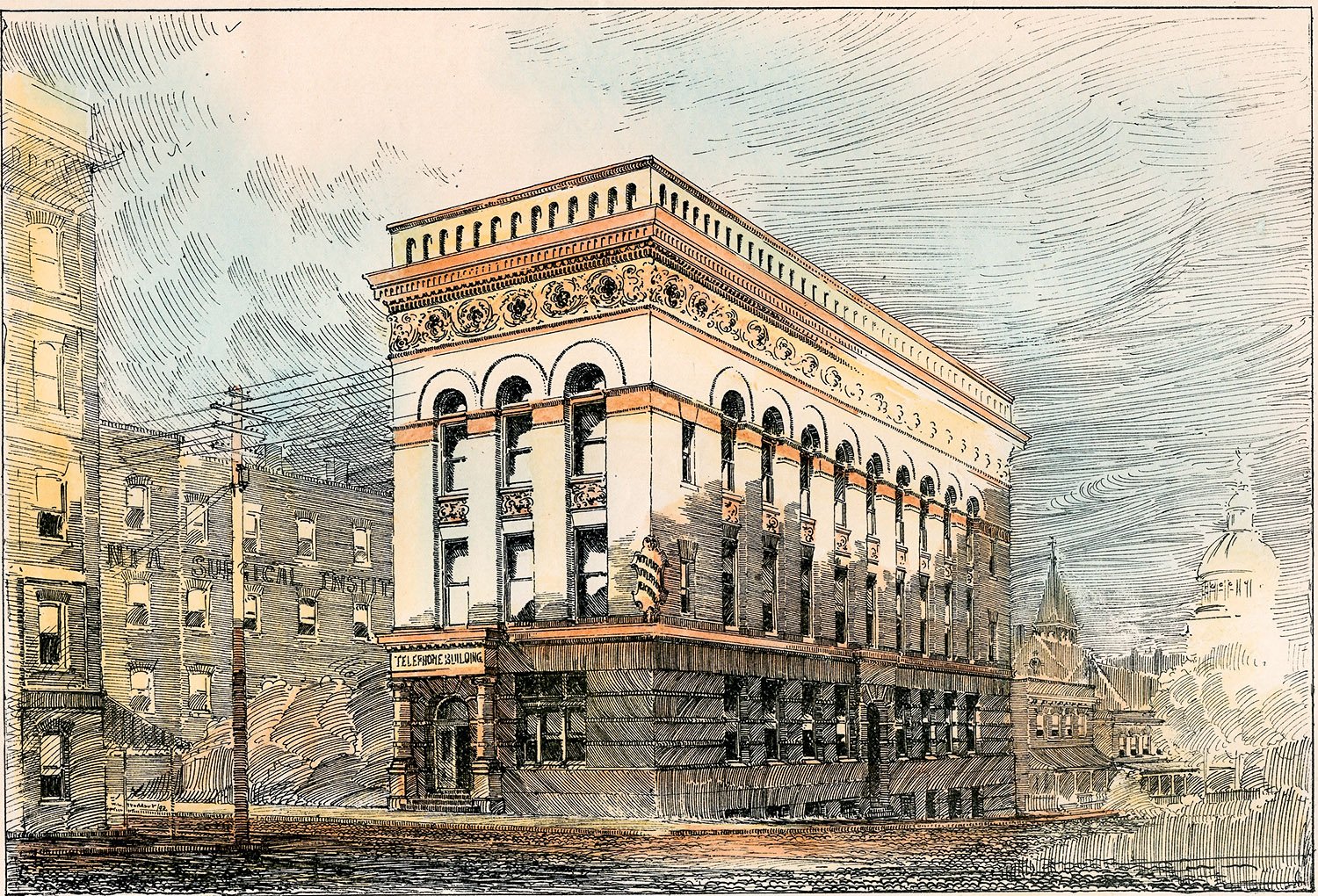
Among his finest tasks are some of the buildings that are monuments in Atlanta as well as other southern cities. He designed the Gate City bank building, the Piedmont exposition buildings, the beautiful Hebrew Orphan’s home, the elegant Hirsch building, the Edgewood school building, many of the handsome business houses and dwellings on Peachtree street and Edgewood avenue, and is now engaged on the new Bell Telephone building which will be one of the handsomest in the city.
Then he has designed many elegant buildings otherwheres, including the Armstrong hotel, Rome, Ga.; the Printup house and many beautiful homes in Gadsden, Ala. The aristocratic Windsor hotel, Americus, Ga.; the court house at Waycross, Ga.; the Charlotte hotel, Charlotte, N.C. [sic]; the Sweetwater Park hotel at Lithia Springs and many others.
Mr. Norrman is not only thoroughly conversant with all that pertains to his profession, but he looks on his work with the eye of an artist.
“I prefer the classic,” he said to a reporter, “for libraries, school houses, courthouses and all buildings of an educational character, as most proper. For depots and hotels any style will do, but I prefer the Romanesque for depots and the renaissance for hotels and homes as being more homelike and less business like in appearance. Churches I like Romanesque because the growth of the church and that style of architecture are so closely identified.
The so-called ‘colonial style’ of the old southern mansions is rennaissance [sic] so far as the builders were able to carry that style in those olden days, and it has recently come again into popular favor because of the sentiment that clings about those honored halls.”
Mr. Normann [sic] is a most interesting talker, thoroughly conversant with and in love with his art, and no one can fail to be interested in talking with him if he is a bachelor of uncertain age.”13
References
- Sparks, Andrew. “Turmoil Among the Turrets”. The Atlanta Journal and Constitution Magazine, March 7, 1971, p. 26. ↩︎
- “A Big Building.” The Atlanta Constitution, January 9, 1891, p. 6. ↩︎
- “G.L. Norrman. Architect.” (advertisement). The Atlanta Constitution, June 26, 1892, p. 5. ↩︎
- Atlanta City Directory Co.’s Greater Atlanta (Georgia) city directory (1893) ↩︎
- “In the Equitable.” The Atlanta Constitution, May 31, 1892, p. 7. ↩︎
- 1900 U.S. Census, Fulton County, Georgia, pop. sch., p. B1, Majestic Hotel, Norman, Godfry L. [Godfrey L. Norrman] ↩︎
- United States Passport Application no. 7175 for Godfrey L. Norman dated July 22, 1897. ↩︎
- 1880 U.S. census, Spartanburg County, South Carolina, population schedule, p. 45, dwelling 412, family 468, Norman, G.L [G.L. Norrman] ↩︎
- 1900 U.S. Census, Fulton County, Georgia, pop. sch., p. B1, Majestic Hotel, Norman, Godfrey L. [Godfrey L. Norrman] ↩︎
- “Messrs. Norrman & Weed.” The Atlanta Constitution, April 2, 1881, p. 9. ↩︎
- “Fulton Welfare Building Demolition Begins”. The Atlanta Journal, November 18, 1952, p. 31. ↩︎
- American Architect and Building News, vol. 41, no. 914 (July 1, 1893). ↩︎
- “An Educated Architect”. The Atlanta Journal, December 17, 1892, p. 9. ↩︎