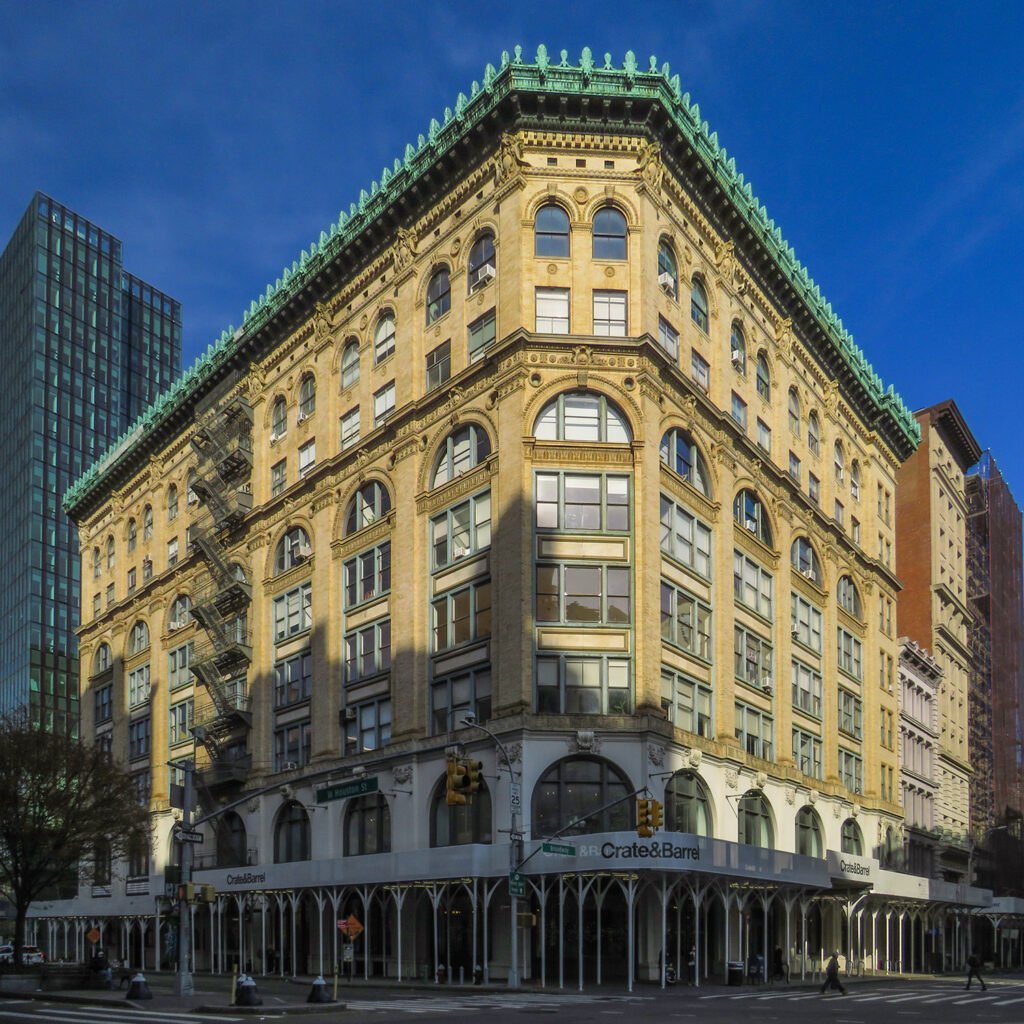
Stanford White of McKim, Mead & White. The Cable Building (1893). Greenwich Village, New York.
The Cable Building is one of my favorite New York structures, mostly because I have fond memories associated with it, including the quiet Thanksgiving morning when I took the picture shown above.
Completed around late 1893, this 8-story steel-framed building1 includes a full basement and fronts on Broadway, Houston, and Mercer Streets on the border of Greenwich Village and NoHo.
The Cable Building was designed for the Broadway & Seventh Avenue Railway Company by Stanford White of McKim, Mead & White,2 and is a very early example of the Beaux-Arts style.
Southeast corner of The Cable Building
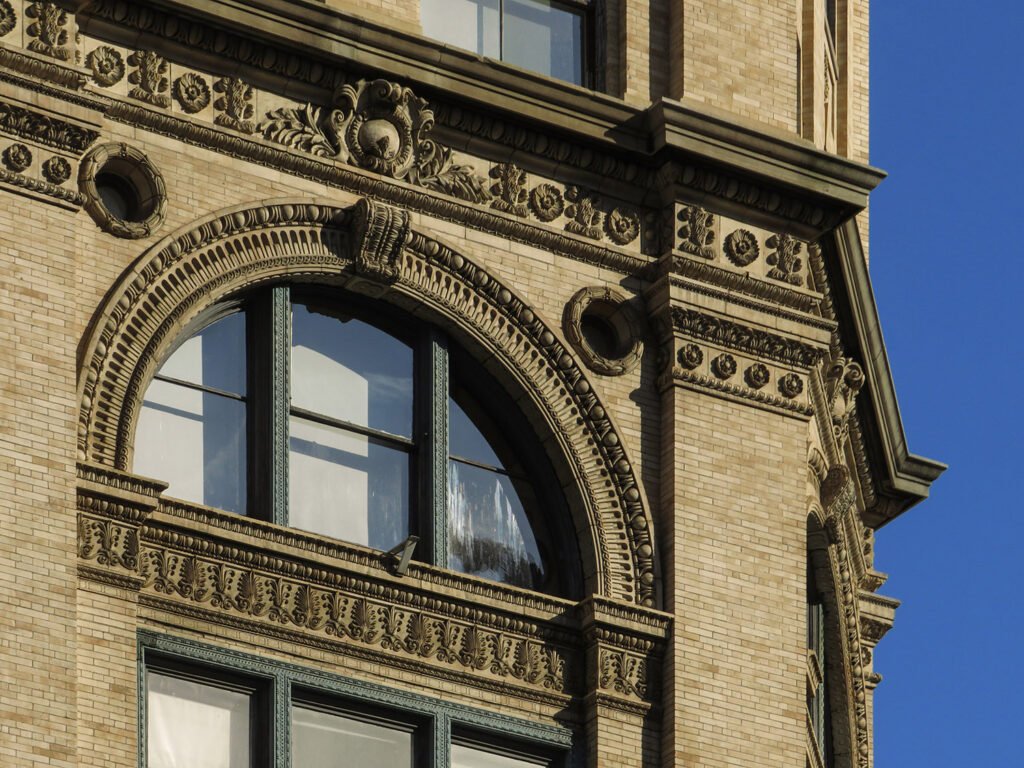
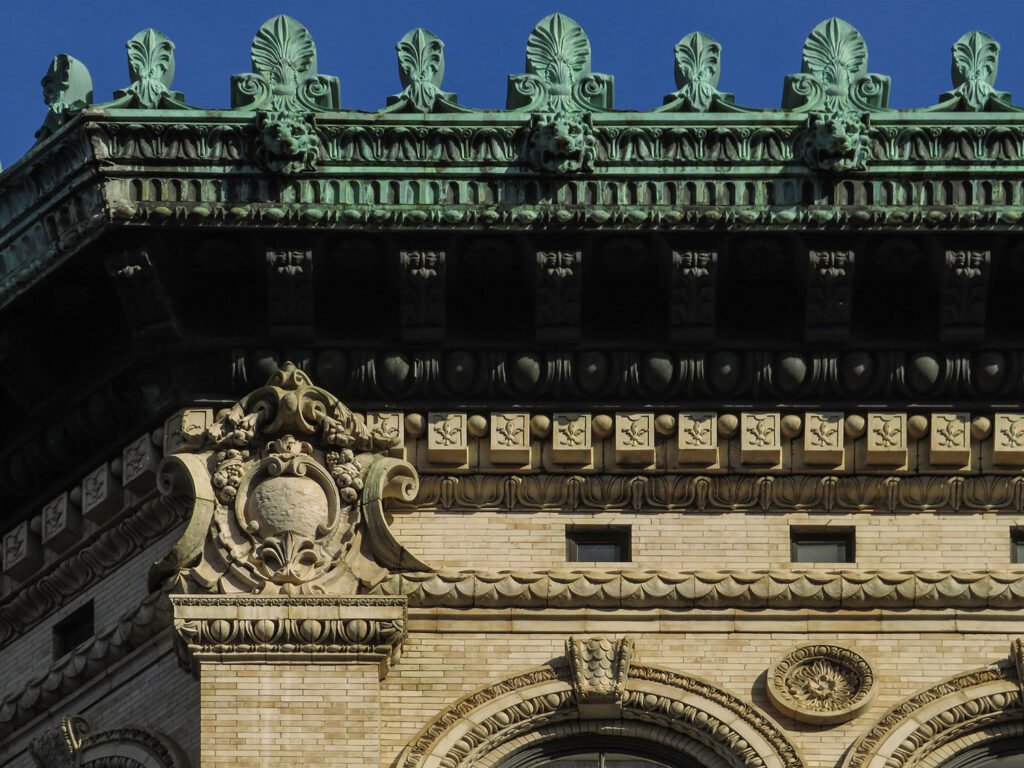
The building’s exterior was originally faced with Indiana limestone on the first and second floors, and the upper floors are covered in yellow brick and striking ornamental terra cotta,3 topped by an elaborate copper cornice.
Each floor encompasses nearly 20,000 square feet4 and encircles a central light court of more than 3,000 square feet.56 At its opening, the building’s first floor was designated for retail use, with the top three floors designed for offices and the middle floors reserved for warehouse space.7
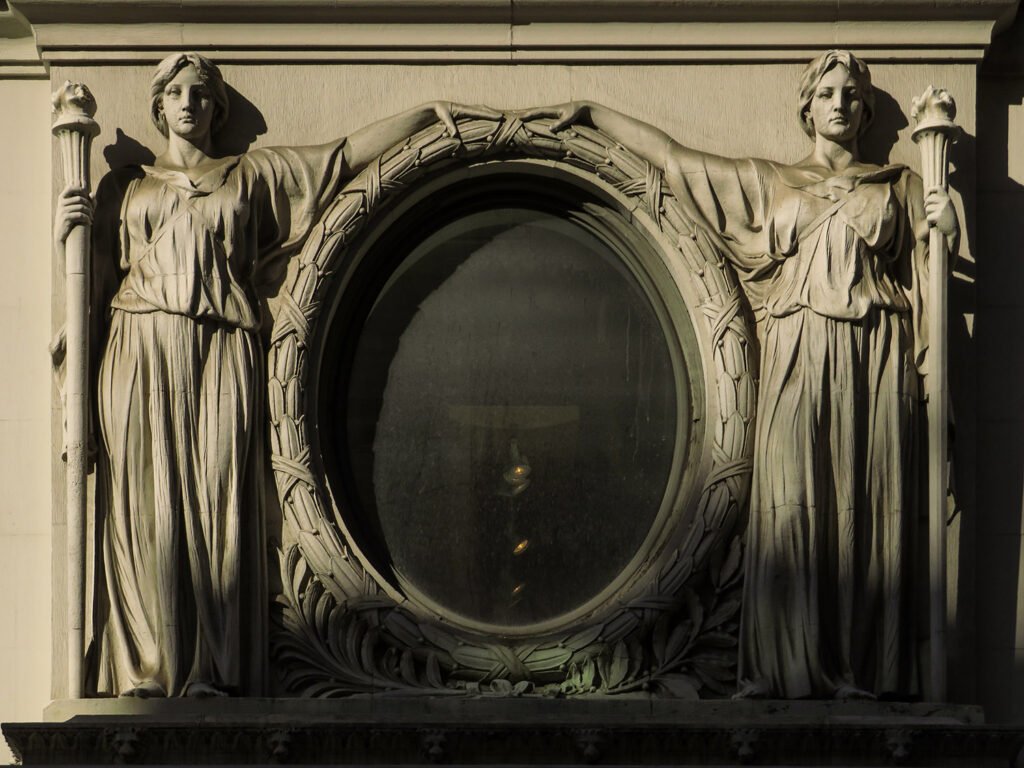
My favorite part of the exterior is the classically-inspired sculpture of two robed women guarding the portico on the east facade, designed by J. Massey Rhind.8
J. Massey Rhind. Sculpture on the east facade of The Cable Building.
With that being said, the building’s overall design isn’t White’s best: the chamfered corners temper the appearance of bulkiness and provide interesting focal points, but the many large windows on every side of the structure clutter the composition, making it look messy and overwrought.
What makes the Cable Building impressive, however, is that it was designed to conceal a power plant for the street railway company, effectively creating “a building within a building”.9
Reaching 46 feet below the street surface,10the building’s basement originally housed 550 tons of machinery that powered the company’s cable cars, including wheels measuring 32 feet in diameter and weighing 50 tons each.11
Cornice on The Cable Building
The machinery has long since been removed, and today the Cable Building’s deep bowels house the Angelika Film Center, where there’s a chance you may find me some late evening, watching an indie flick as nearby subway trains rumble past.
References
“The Cable Building.” The New York Times, December 19, 1893, p. 9. ↩︎
Baker, Paul R.Stanny: The Gilded Life of Stanford White. New York: The Free Press (1989), pp. 213-14. ↩︎
“The Cable Building.” The New York Times, December 19, 1893, p. 9. ↩︎
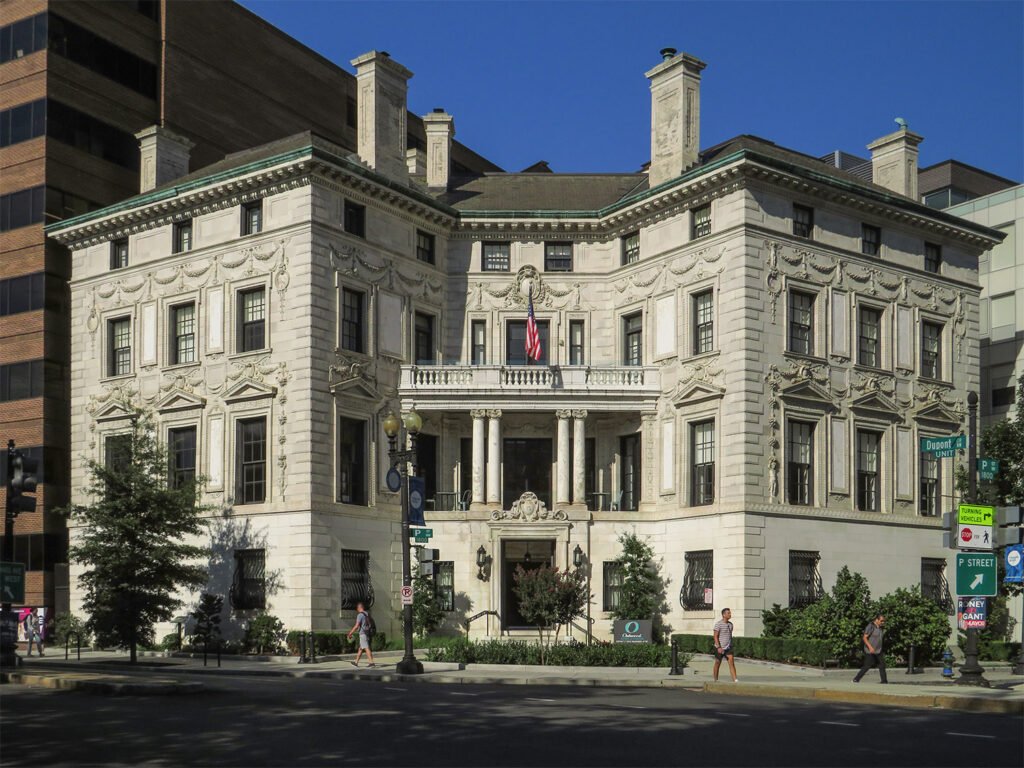
Stanford White of McKim, Mead & White. Robert Wilson Patterson Residence (1903). Washington, D.C.
The only thing that makes this home’s exterior truly interesting is its unique butterfly shape, designed to conform to its site overlooking Washington D.C.’s Dupont Circle.
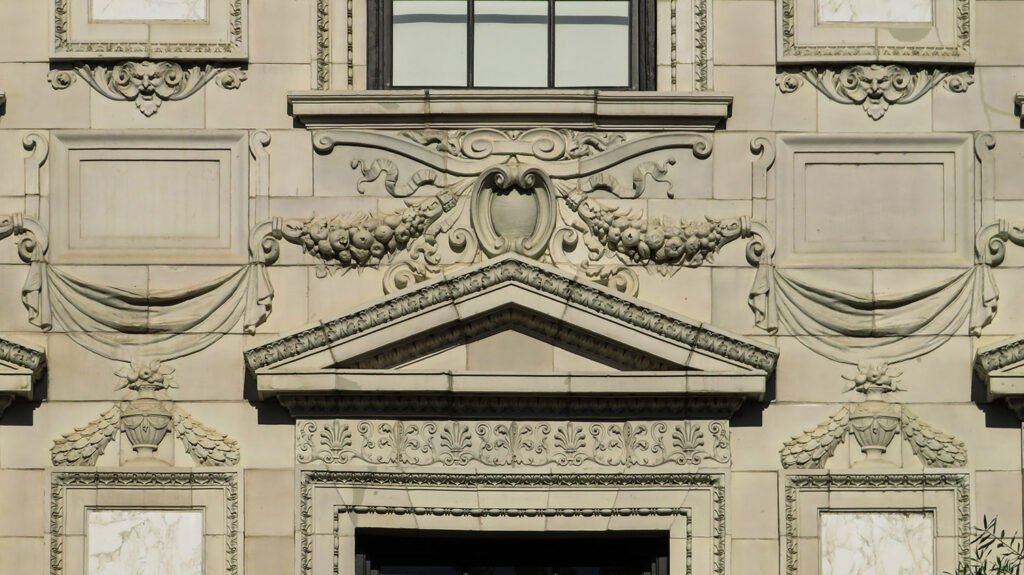
Otherwise, it’s fairly standard for Stanford White’s later work, with an overwrought mishmash of Renaissance-inspired details that appears fitful and fussy, akin to the cluttered walls of an old art gallery. However, the marble and limestone construction is quite exquisite on close observation.
White claimed the design had a “light and rather joyous character”.1 I’m not sure about joyous, but I can go along with light, as the abundance of windows in the structure gives it an airy feel, particularly when the sun hits all five sides of the facade.
Ornamentation on the Robert Wilson Patterson Residence
The home was built at the same time as White’s partner, Charles McKim, was designing the nearby East Wing of the White House, which…is no longer with us.
The Patterson Mansion is currently occupied by short-term rental units, and I hope to stay in one at some point in the future — preferably when D.C. is no longer occupied by madness. God knows when that may be.
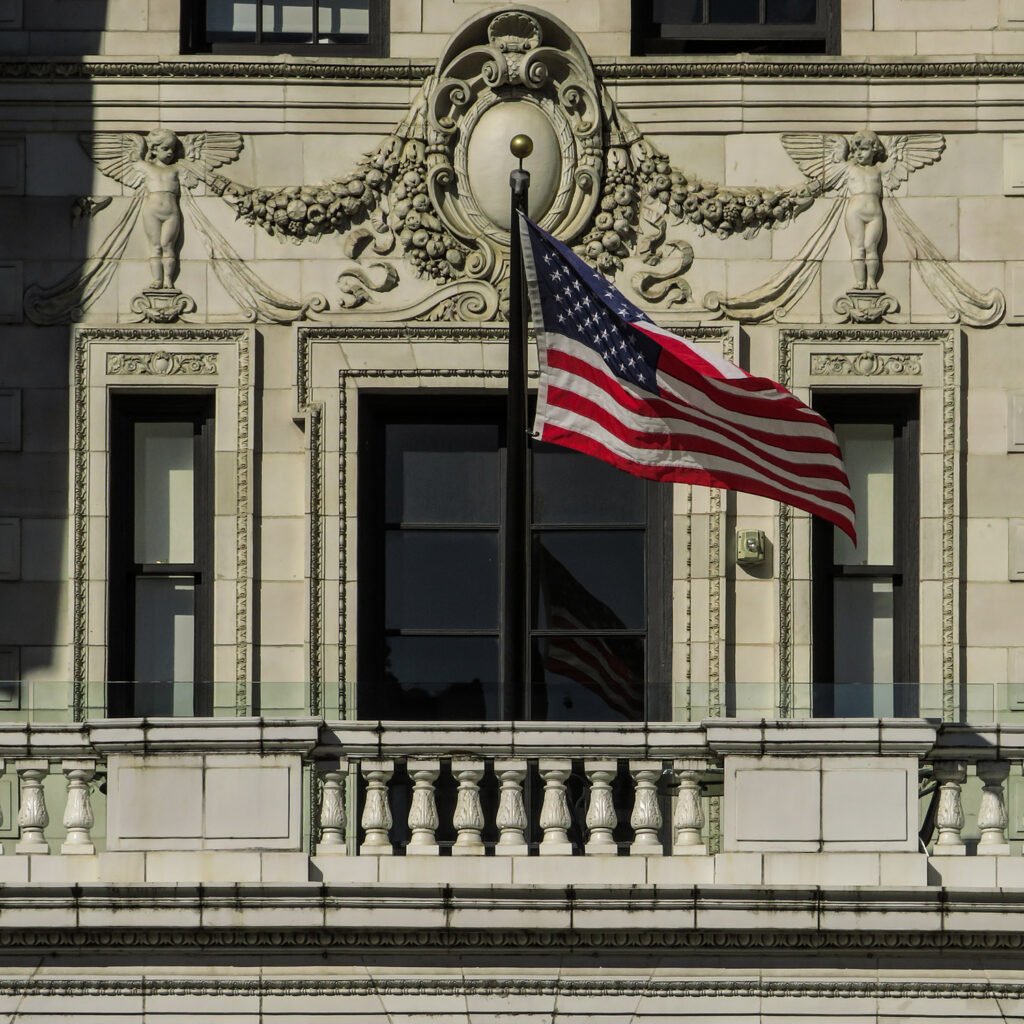
Third-floor balcony on the Robert Wilson Patterson Residence
References
White, Samuel G. The Houses of McKim, Mead & White. New York: Rizzoli International Publications, Inc. (1998), p. 212. ↩︎
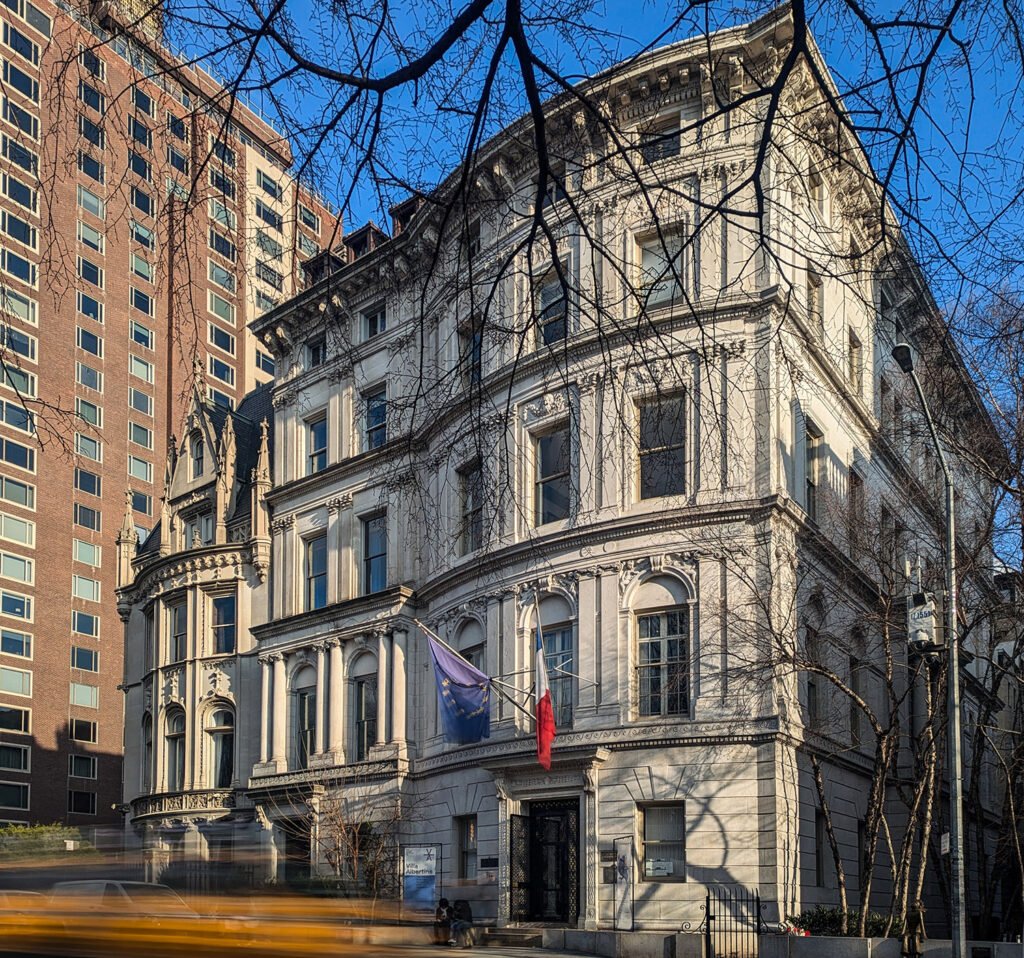
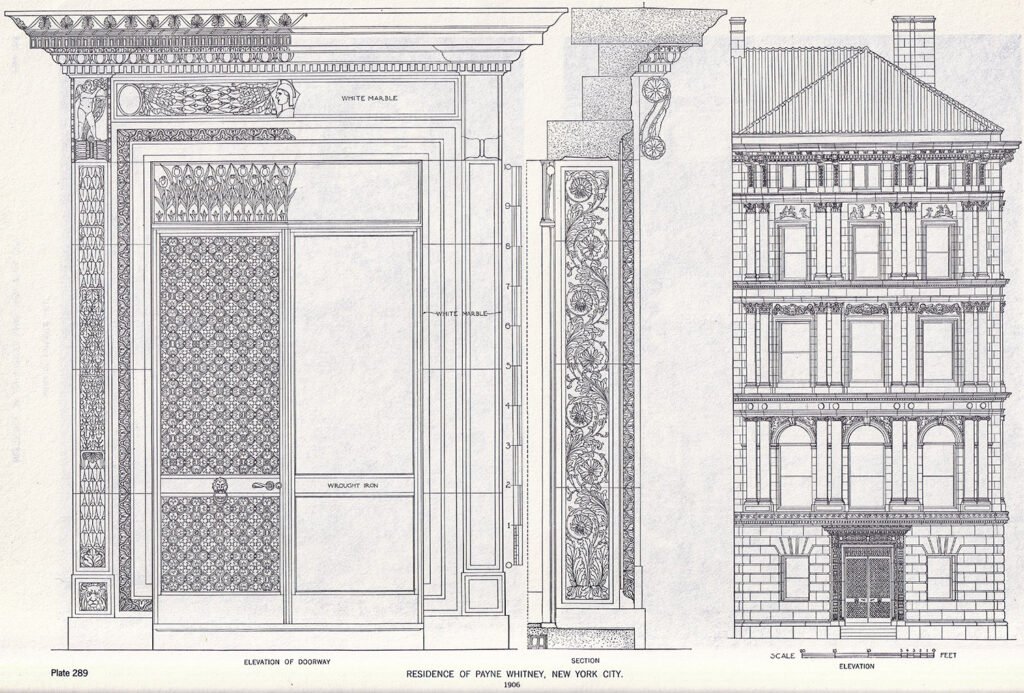
Stanford White of McKim, Mead & White. Henry Cook Residence (1907, left) and Payne Whitney Residence (1907, right). New York.
You’d be forgiven for thinking these two homes overlooking Central Park are actually one. Stanford White (or his assistants, more like it) designed the residences simultaneously, cladding the exteriors in elegant white Vermont granite and matching them with the same stacked Classical orders.1
They aren’t my favorite projects by McKim, Mead & White: the firm’s work had become quite derivative by 1907, and the designs here feel overprocessed, as if sketched and refined by too many different hands. It doesn’t help that White was murdered before the homes were completed.
What makes this pair of structures important, though, is that they are among the handful of old mansions that survive in New York. Built too late for the Gilded Age, they were nonetheless conceived in its shadow — remnants of an era that will never return.
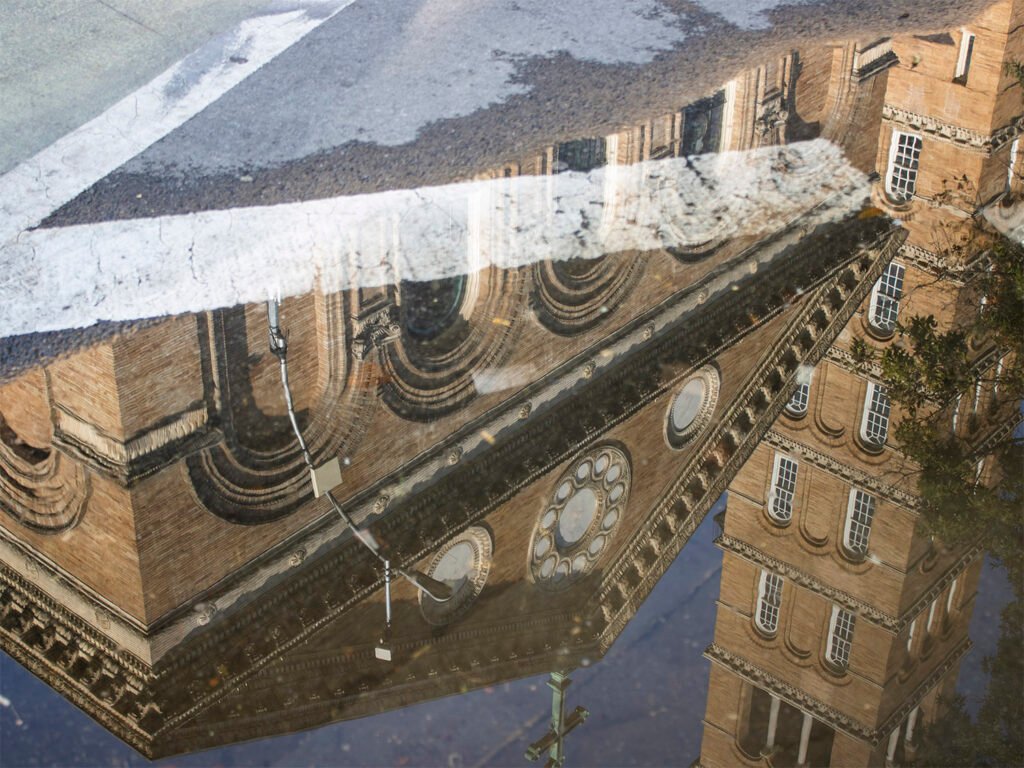
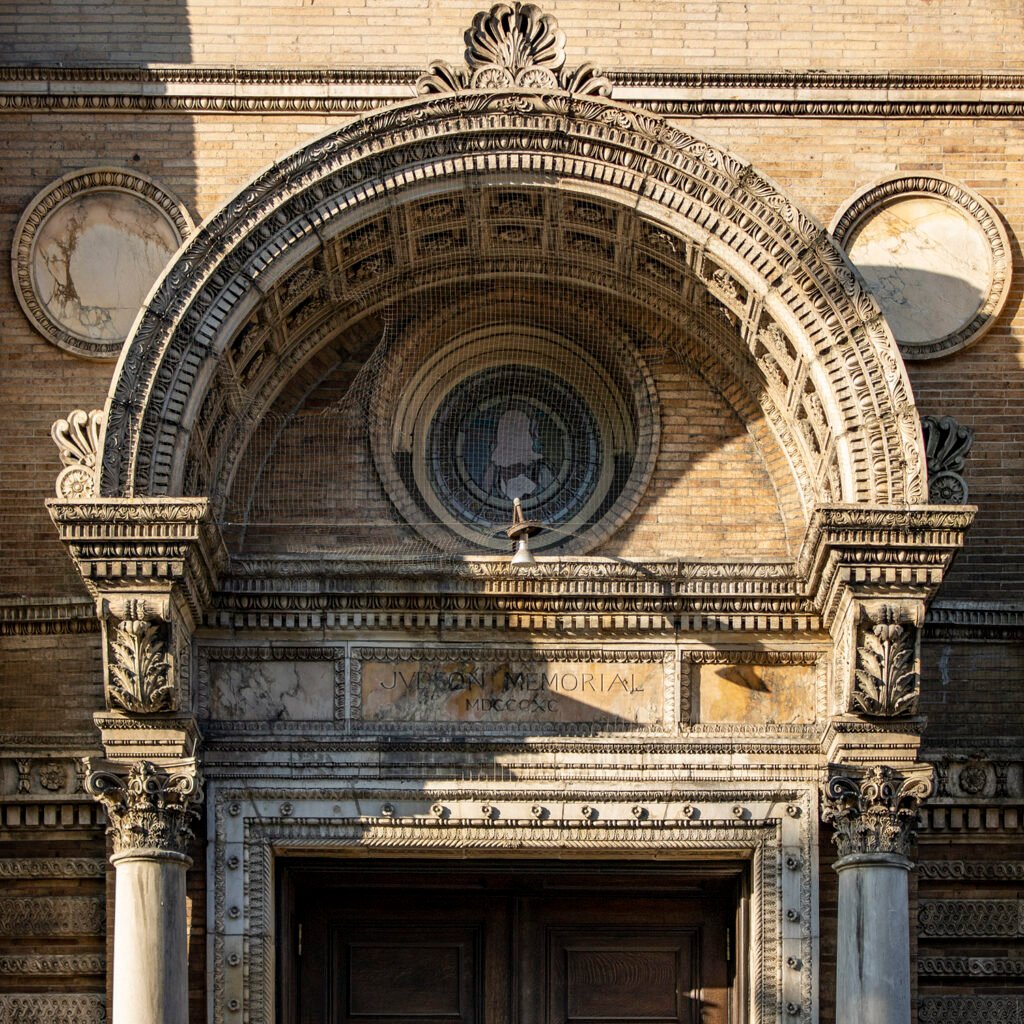
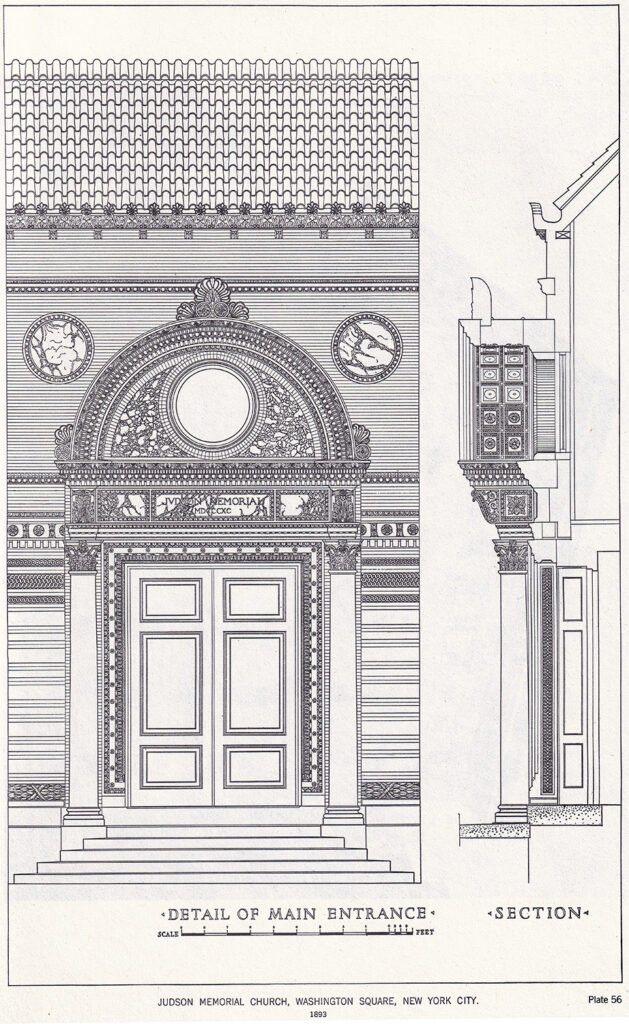
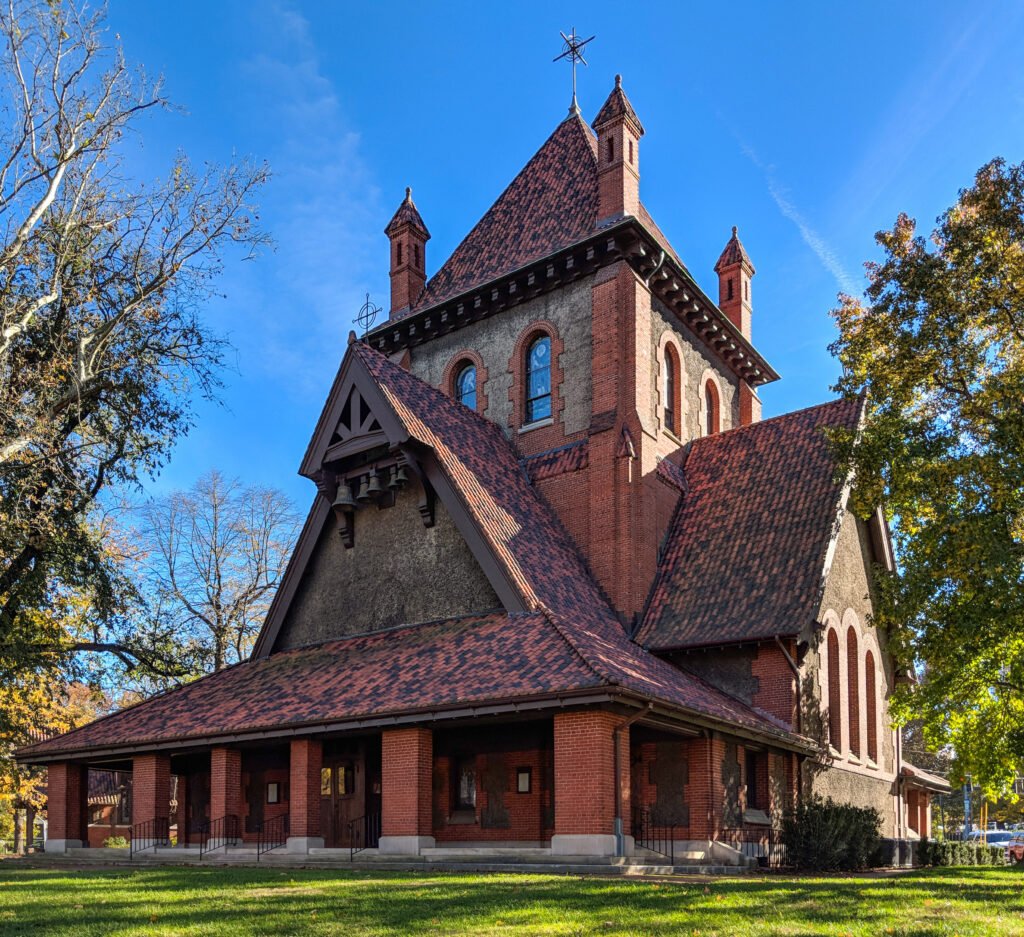
Stanford White of McKim, Mead & White. Judson Memorial Church, Sanctuary and Campanile (1893, 1896). Greenwich Village, New York.12345
Serious photographers (whatever the fuck that’s supposed to mean) despise reflection shots, but I’m kind of a sucker for them.
This puddle in Washington Square provided me with the best image I’ll likely ever get of Judson Memorial Church, built in stages between 1891 and 1896.
It’s a quirky and free-wheeling design by Stanford White that combined elements from numerous Italian cathedrals of the Renaissance era, all cobbled together with rich textures and finely detailed ornamentation.
White’s eclectic compositions didn’t always work, but this one is exquisite and charming, and the church has become one of New York’s most distinctive landmarks.
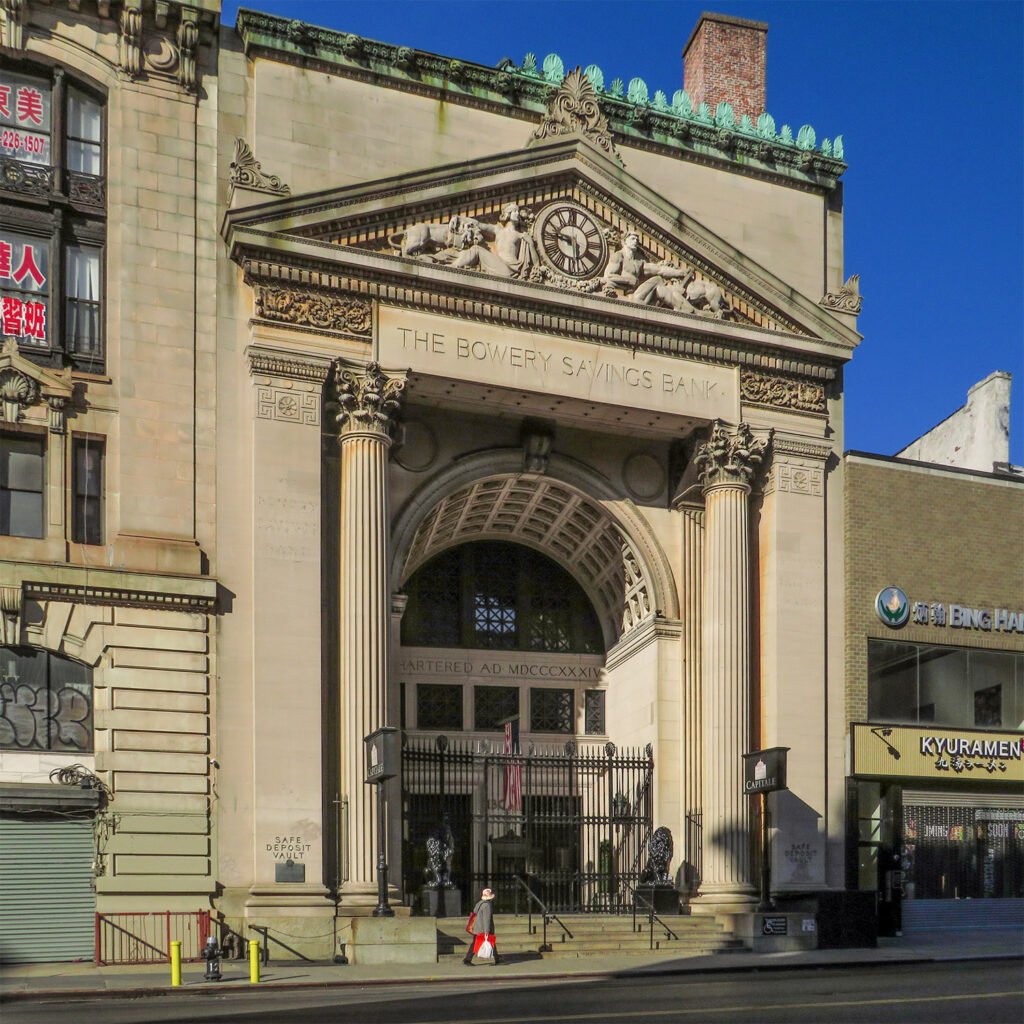
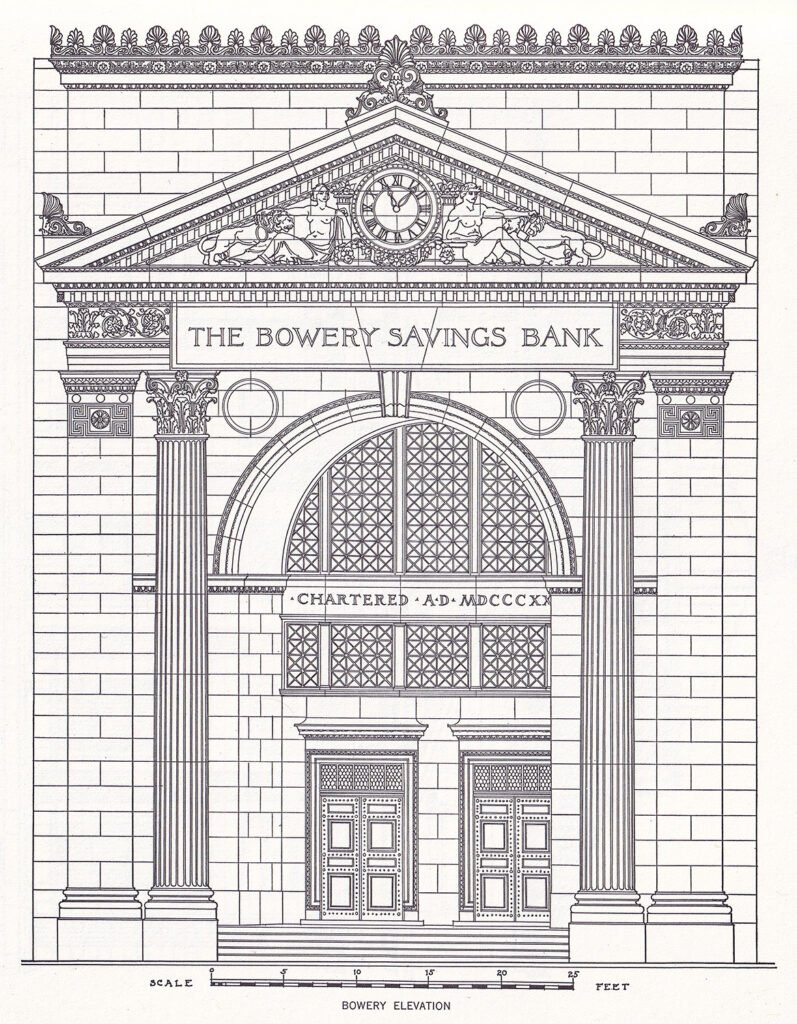
Stanford White of McKim, Mead & White. Bowery Savings Bank (1895). New York.123456
The Bowery Savings Bank is a significant early work in the Classical Revival style, credited to Stanford White of McKim, Mead & White.
Following their monumental buildings of classical inspiration for the World’s Columbian Exposition in 1893, the firm entirely embraced Roman and Renaissance influence in their designs, ushering in the Beaux Arts movement that dominated American architecture for decades.
By the time of White’s death in 1906, the firm’s work had become increasingly derivative and dreary, but this structure was designed early enough to retain some of their initial flair for quirkiness and originality: the front doors set slightly off-center within a recessed arch, for instance.
Built in the shape of an L with granite and Indiana limestone, the Bowery Savings Bank has two entrances, neither of which resembles the other — a larger side entrance on Grand Street, and the smaller, more interesting Bowery side shown here.
It appears the building was largely designed by Edward P. York, then White’s assistant, who also supervised its construction. York would later become a founding partner in the architectural firm of York & Sawyer.7
Ever the playboy, in the mid to late 1890s, White increasingly delegated his work to others while he indulged in a lavish lifestyle of excess and consumption — it didn’t end well for him.
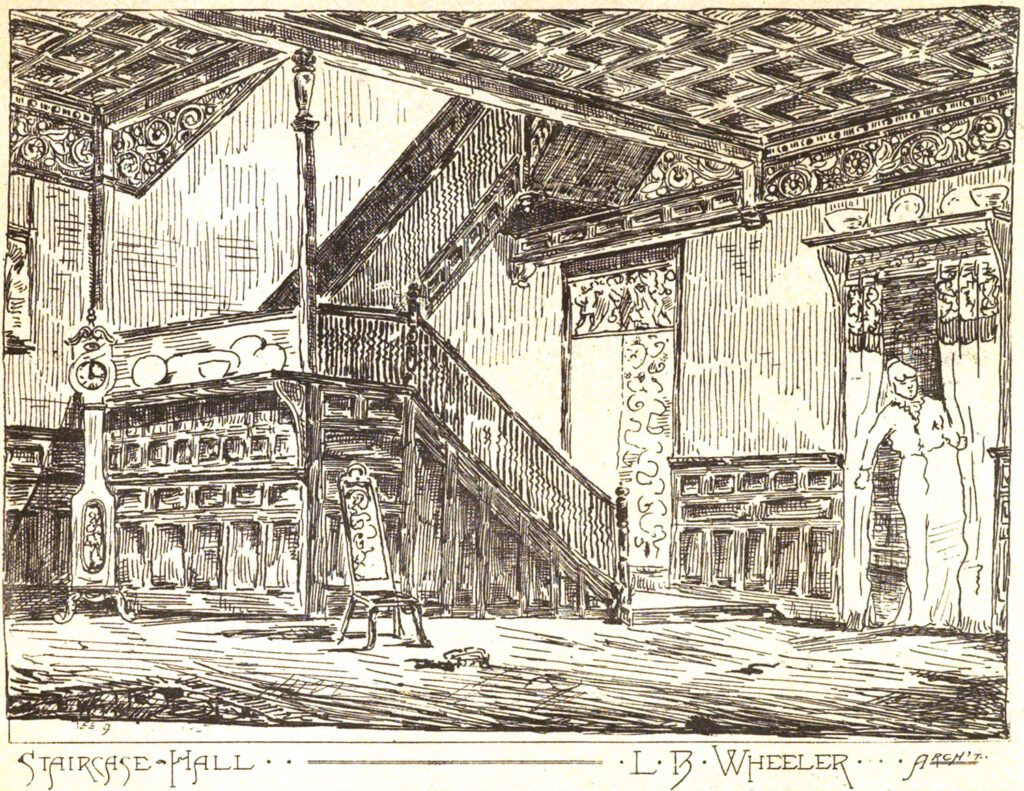
This is the second in a series of 5 articles on home decoration written by L.B. Wheeler (1854-1899), an architect who practiced in Atlanta from 1883 to 1891. The articles were published in The Atlanta Constitution in December 1885 and January 1886.
Here, Wheeler charted the origin of residential halls to Anglo-Saxon living rooms and criticized their “modern offspring” of the 19th century: “long, narrow, uncomfortable stair choked strips of passage”, which he characterized as “depressing”.
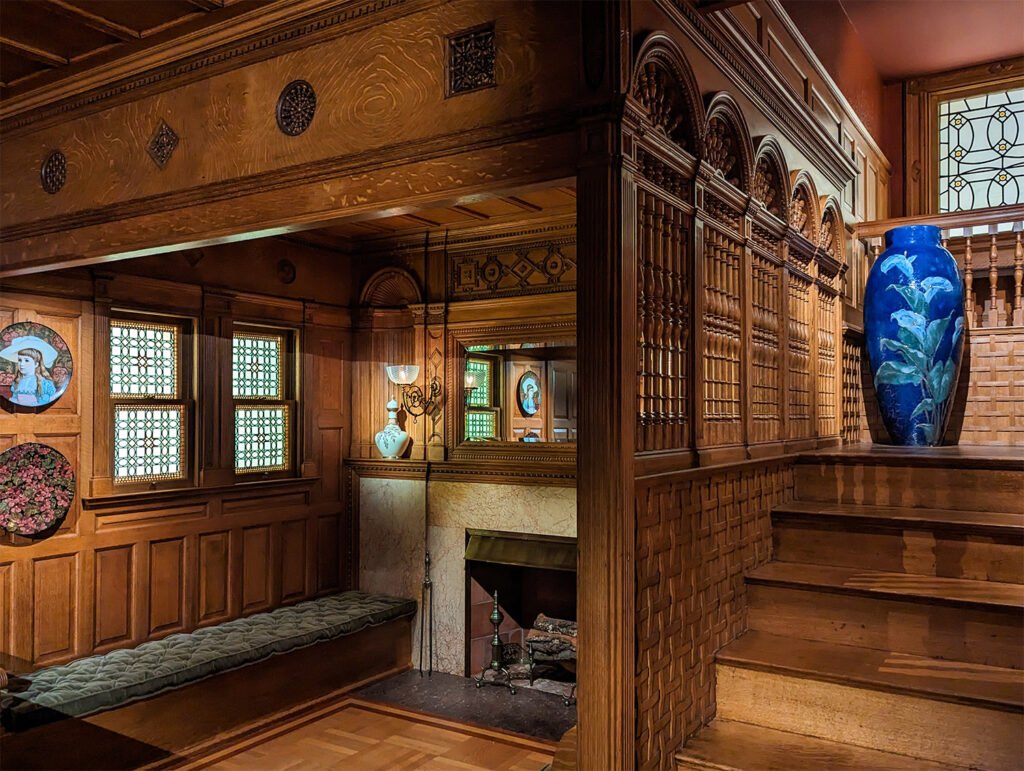
His description of a well-arranged central hall with a fireplace, stairs, and seating surrounded by a cluster of smaller rooms was the “living hall” concept introduced by McKim, Mead & White of New York in the 1870s. A fine example is their stair hall from the Metcalfe House (pictured below), on view at the Metropolitan Museum of Art.
McKim, Mead & White.Stair Hall from the Metcalfe House (1884). On exhibit at the Metropolitan Museum of Art, New York.2
Having previously practiced in New York, Wheeler would have been very familiar with the living hall concept, as indicated by an 1882 illustration of a similar “staircase hall” he designed (pictured at top).
The concept was still quite new in Atlanta, however, likely introduced to the city by G.L. Norrman with his design for the Edward C. Peters House in 1883. By the end of the 1880s, pretty much every home of consequence in Atlanta had a large, fashionable hall as its nucleus.
In this article, Wheeler also took the opportunity to argue for the judicious use of stained glass windows, and admonished people who furnished their halls with uncomfortable seats for “errand boys and servants… suited to their condition in life…” Wheeler described such accommodations as “giving a stone when no bread was asked for…”
Spoken like a true New York radical.
Home Decoration.
Halls.
By L.B. Wheeler, Architect of the Kimball House.
December 13, 1885
The germ of our modern hall probably found its origin in the hall or living room of the Anglo Saxon. This hall was a large room with wooden walls and earthen floor in which lived, dined and caroused lord, lady, guest and serf alike, and where at night they lay down upon their straw filled sacks to sleep, arranged according to their rank. The only decorations of this room were the variously dyed and figured cloths hung upon the walls and against which, when not required for purposes of war and pillage, were frequently hung the arms and armor of its occupants.
The only furniture besides the chairs, which were for the exclusive convenience of those high in rank, were the benches, in which during the day were stored the beds used at night. The fireplace was the center of the room and the fire of logs, around which the shivering occupants gathered as the winds rattled the osier shutters and the rain beat upon the thatched roof and clay covered walls, poured forth constantly its curling wreaths of smoke which lingered loitering among the guests before ascending to the roof and taking a final leave of the dried meats and other stores, as it passed out at the gables.
Although not what would now be considered habitable the old saxon hall had an air of homeliness and hospitality about it which is seldom possessed by its modern offspring.
The hall, like the host, should greet you hospitably. What is more depressing than an introduction into one of the long, narrow, uncomfortable stair choked strips of passage, with rooms arranged in a row on either side, which, through modern courtesy is sometimes called hall, and which, whatever its width, is but a passage still? A well arranged hall is a great source of ventilation and heat, it should be a bond uniting the rooms in a complete and harmonious suite. The rooms so connected may be made much smaller than would otherwise be necessary, could not their dimensions, when occasion requires, be increased by uniting one with the other.
Halls are frequently used as sitting and reception rooms and when the floors are of hardwood are very serviceable for dancing. The furniture usually consists of a table, chairs, umbrella stand and hat rack, etc., all of which should be suited to their purposes, and not used for show. If you have no use for a piece of furniture, you may feel perfectly safe in rejecting it. Furniture is not made like pictures and statuary, to be looked at, but for use.
Hall chairs and seats should be comfortable. The necessity for this caution was suggested upon hearing a dealer in furniture explaining to one of his customers who had objected to a hall seat because it was uncomfortable. That it was for the service of errand boys and servants to whom we should offer in courtesy while awaiting our convenience a seat and temporary shelter from the inclemency of the weather and that such a seat should be suited to their condition in life and did not need to be comfortable. What kindness, what rare courtesy, that offers to the unfortunate under the guise of hospitality, aesthetic uncomfortableness, this is giving a stone when no bread was asked for. All that is necessary to make furniture comfortable and useful is a little thought expended upon its design. The staircase should be broad and ample with spacious landings, having short and easy flights leading in agreeable directions to the stories above. Upon this general arrangement of the staircase depends its effect, be it either of elegance, grandeur or inviting hospitality and no amount of unnatural twisting or torturing of rail or balusters or ludicrous imitation of massiveness or lavish display of cheap ornamentation can rectify a mistake originally made in this respect. Swans are not hatched from goose eggs; nor do lace and ribbons make an ugly form beautiful, although lace and ribbons may in their place be very attractive ornaments. The hall should be well lighted, not necessarily by stained glass windows. Nature seen through transparent plate or even crystal sheet is sometimes nearly as beautiful as stained glass. That this is not generally comprehended, is to be judged from the frequency with which we see really beautiful, natural scenery blotted out with much care and great cost by the use of those crude and violent contrasts of color so abundantly produced by some of our manufacturers. Stained glass, like jewels, should be used very sparingly, and unless, as with a picture, it is genuine art work, it had better not be used at all.
Its effects are so powerful that they challenge attention before everything else and if on inspection they fail to support their pretentions to consideration, the impression is very disappointing and likely to mold our opinion in regard to the remainder of the room and its contents. Of course it is unnecessary to state that a piece of coloring, which must necessarily be so powerful as that of stained glass, if used in any quantity, must become the key or point of cumulation of any composition in which it may be placed and should be suited to its position. It is well to assure ourselves before accepting our own judgment on these matters that we are not color blind. Many persons, who little suspect it are deficient in their perception of color and to produce an impression on them it is necessary to use some very striking combinations. The delicate and harmonies of one of Tiffany’s masterpieces, would not be perceptible to them. The eye usually requires considerable education before it is able to distinguish and appreciate delicate, refined and subtle combinations of color. The selection of stained glass should be left to a competent artist. As to the story or sentiment expressed and its fitness for its place, we may possibly be judges, but unless we have some special knowledge we had better suspend further judgment. The small sketches displayed by the agents of manufacturers are commonly no indication of the finished work. They are often made by parties who have nothing what ever to do with their execution. Stained glass, like any other art work, requires in its execution the application of the artist’s own powers.
Where it is desired in the arrangement of a suite of rooms that each should produced its proper effect upon the beholder, it is of importance that the best should be reserved for the last. The proof of the wisdom of this course may be drawn from our own personal experience.
After eating honey, sugar seems less sweet. One picture will destroy the effect of another. The skillful tradesman shows his best goods last, and after the loud rolling of thunder, even the lion’s roar seems mild.
Many people get too much thunder in their halls. Their principal idea of artistic composition being to arrange everything so that the beholder will be perfectly overcome upon his entrance into the hall; the result being that the hall overpowers and destroys the effect of every other room in the house and leaves none of those pleasant little surprises, which in a carefully studied design unfold themselves gradually to the interest and delight of the beholder.
If possible, a hall should have a fireplace–a good, generous and serviceable one–and in a pleasant and suitable position; not one of the little, narrow, useless things caged and squeezed into some remote place or corner, simply because its species are fashionable. Hall, home and fireplaces seem to be inseparable. How the very names kindle the imagination and sets memory wandering among her long forgotten stores, awakening pleasant reminiscences of long ago. An old house, moss-covered and gray, a sweep or road suddenly appearing beneath the hoary maples, guarding the decrepit gate, and as suddenly disappearing at the foot of the hill, only to be seen again in sudden flashes from behind mounds of green meadow and red and white farms, as it passes on to mingle in the gray confusion of distant meadow, farm and forest. And with it and a part of all the wind, which, sweet with the odor of the new fallen hay, flows gently up the hill and over the tangled grass of the lawn, enclosing the old house in its tender robe or coolness, penetrating every crevice, stealing in at the windows, and whispering to the lilacs and gooseberry bushes as it passes away, rustling secrets of the old hall within.
The old hall with its quaint mahogany staircase peeping out from behind the figured curtains, and leading away into the unfathomable mystery of tottling childhood. The oaken-timbered ceiling grown dark with age. The wainscoted walls, the generous fireplace, with its andirons of brass always so bright, and which in the long winter evenings were so serviceable, retaining in place the blazing forelog. The high shelf above the fireplace, and its brass candelabra, awakening with their prismatic reflectors strange fancies in the mind of imaginative youth, and over all the hospitable red chimney, which on Christmas day poured forth far above the misty gray trees its curling wreaths of welcome.3
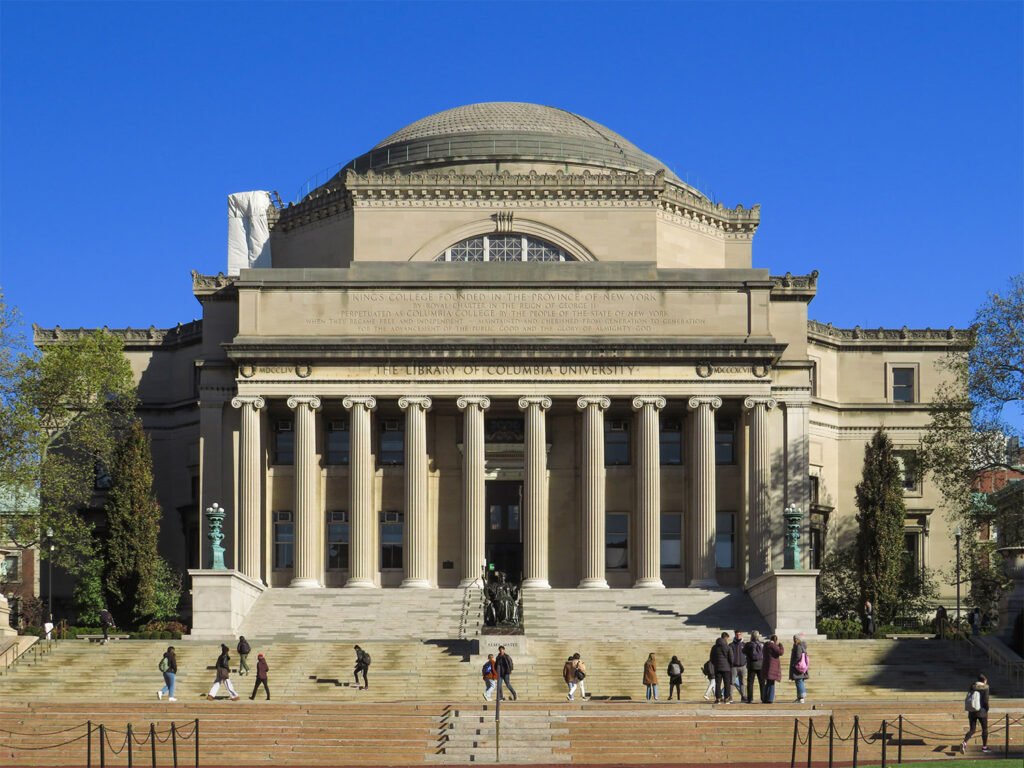
Charles McKim of McKim, Mead & White.Low Memorial Library at Columbia University (1897). New York.1
The Background
Stanford White was the lead designer for McKim, Mead & White, a New York firm that dominated American architectural design in the late 19th and early 20th centuries.
White was both an outstanding architect and a notorious public figure, already well-known for his wild philandering, excessive partying, and conspicuous overspending, when he was murdered on June 25, 1906, by the husband of one of his ex-lovers, Evelyn Nesbit, who was just 16 when White reportedly drugged and raped her.
Nesbit’s husband, Harry Thaw, shot White in front of a crowd of hundreds at New York’s Madison Square Garden — which White incidentally designed.
For more than a year, the front pages of American newspapers were covered in the lurid details of White’s seedy escapades, and the ensuing “Trial of the Century” ended when Thaw was declared not guilty by reason of insanity.
The day after White’s murder, The Atlanta Georgian newspaper published remarks by G.L. Norrman, who reportedly met Stanford White when they both “were on the committee of awards at the Chicago Exposition in 1893.” Details of this committee cannot be confirmed, but the report explained that: “Five other architects of the country were on the special committee that judged architectural drawings.”
Norrman was obviously an admirer of McKim, Mead & White’s work, and many of his projects drew extensive inspiration from their designs. Norrman claimed that he and White frequently met at the annual conventions of the American Institute of Architects, and touted him highly as a designer.
It should be noted, though, that the 2 projects for which Norrman praises White — the Low Memorial Library (pictured above) at Columbia University, and the Boston Public Library — are well-documented to be the work of White’s partner, Charles McKim.
Norrman was likely thinking of the Gould Memorial Library in the Bronx, which was designed by White.
Norrman’s remarks:
“I knew White well. His work placed him before the country as a great designer. The library at the Columbia library in New York was designed by his firm, but the magnificent front of the building was the work of Mr. White himself. His work on the Boston library was also of great note. I have known him quite a while and the news of his tragic death is a great shock to me.”2