References
- “Many Residences Soon To Be Built In Atlanta”. The Atlanta Constitution, July 10. 1901, p. 7. ↩︎
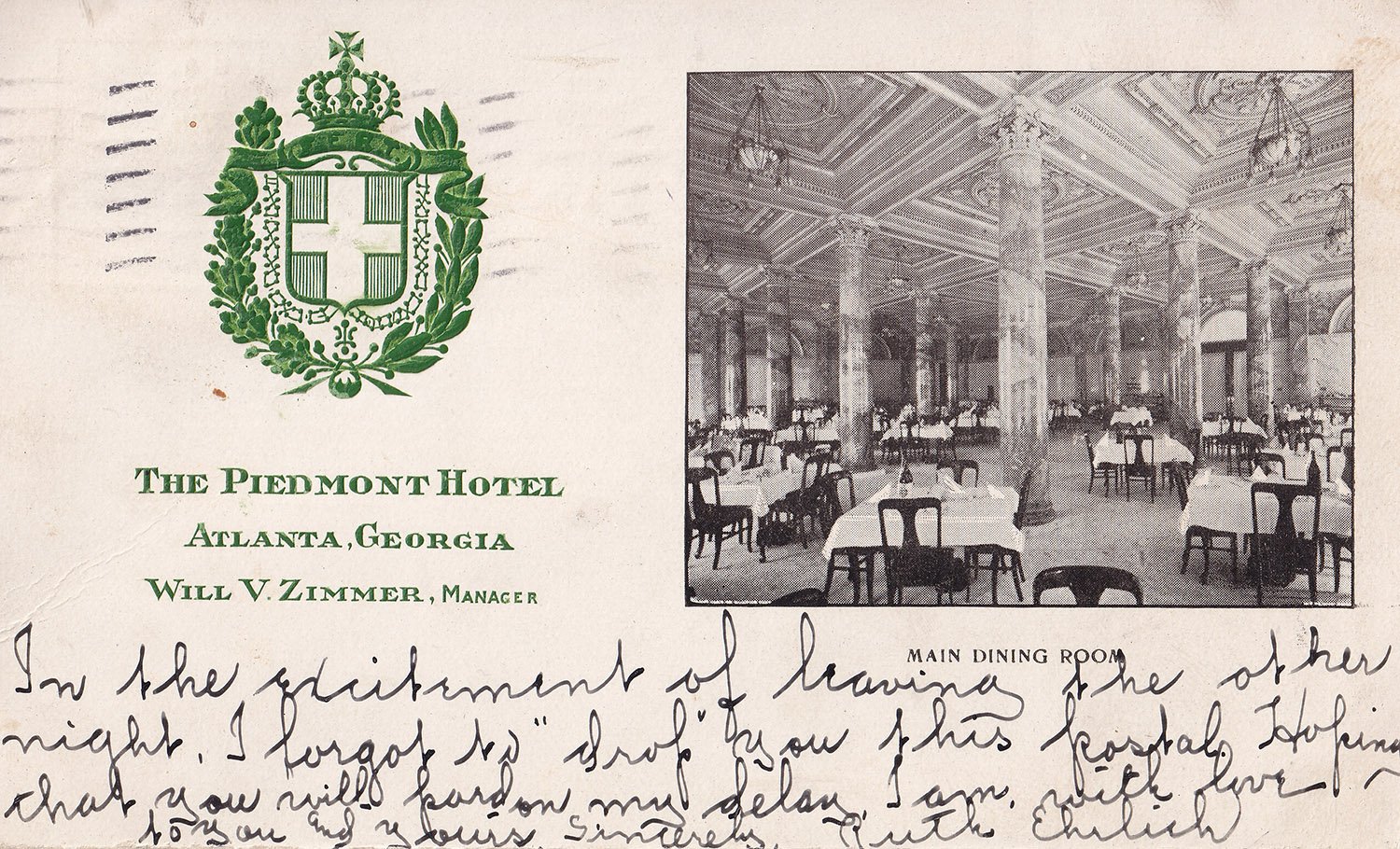
This postcard depicts the Main Dining Room of the Piedmont Hotel in Atlanta, designed by Willis F. Denny and completed in 1903.
Ruth Ehrlich wrote on the front: ‘In the excitement of leaving the other night, I forgot to “drop” you this postal. Hoping that you will pardon my delay. I am with love to you and yours sincerely.’
Oddly, the card is unaddressed and contains no postmark. Guess she forgot to “drop” it again.
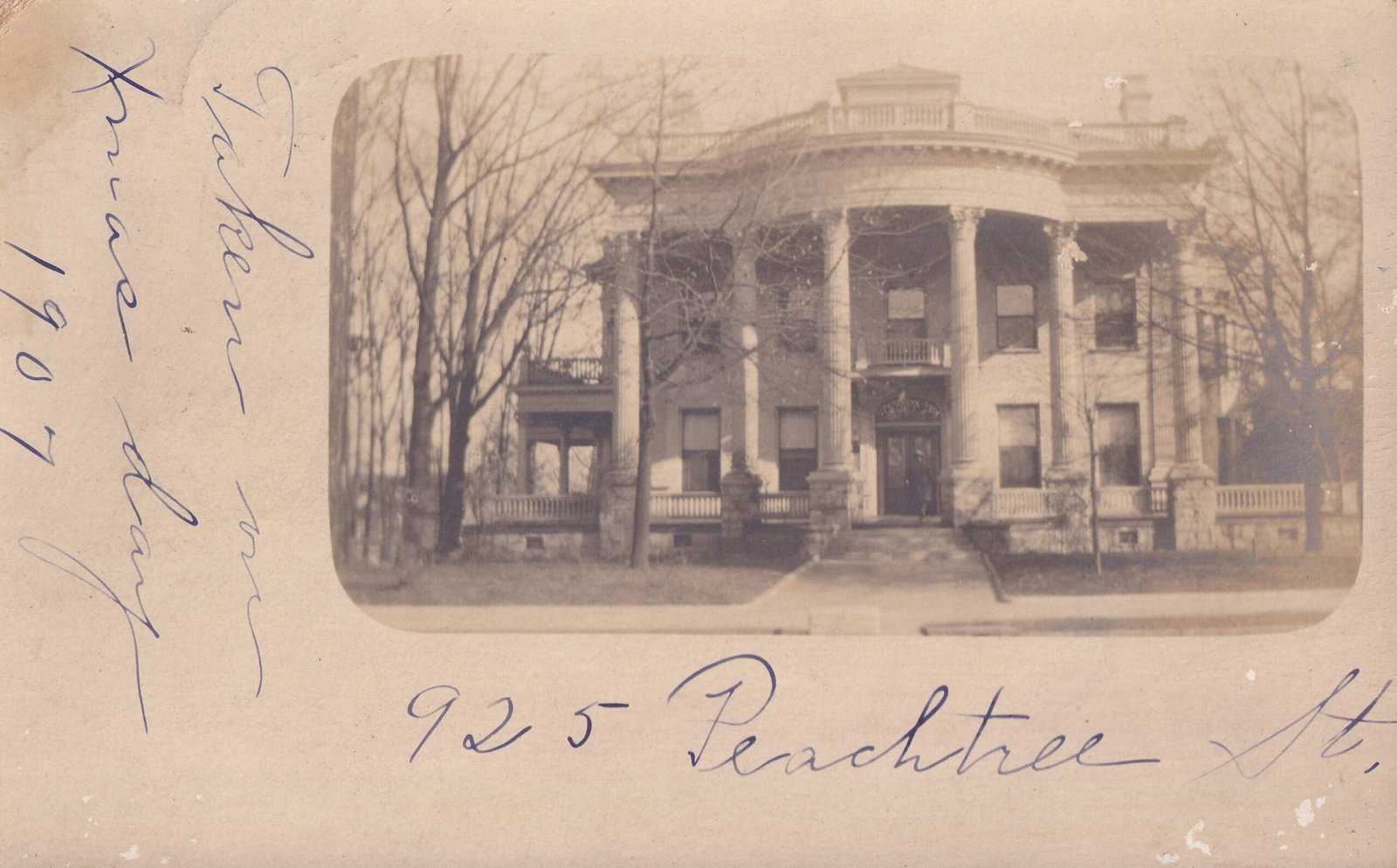
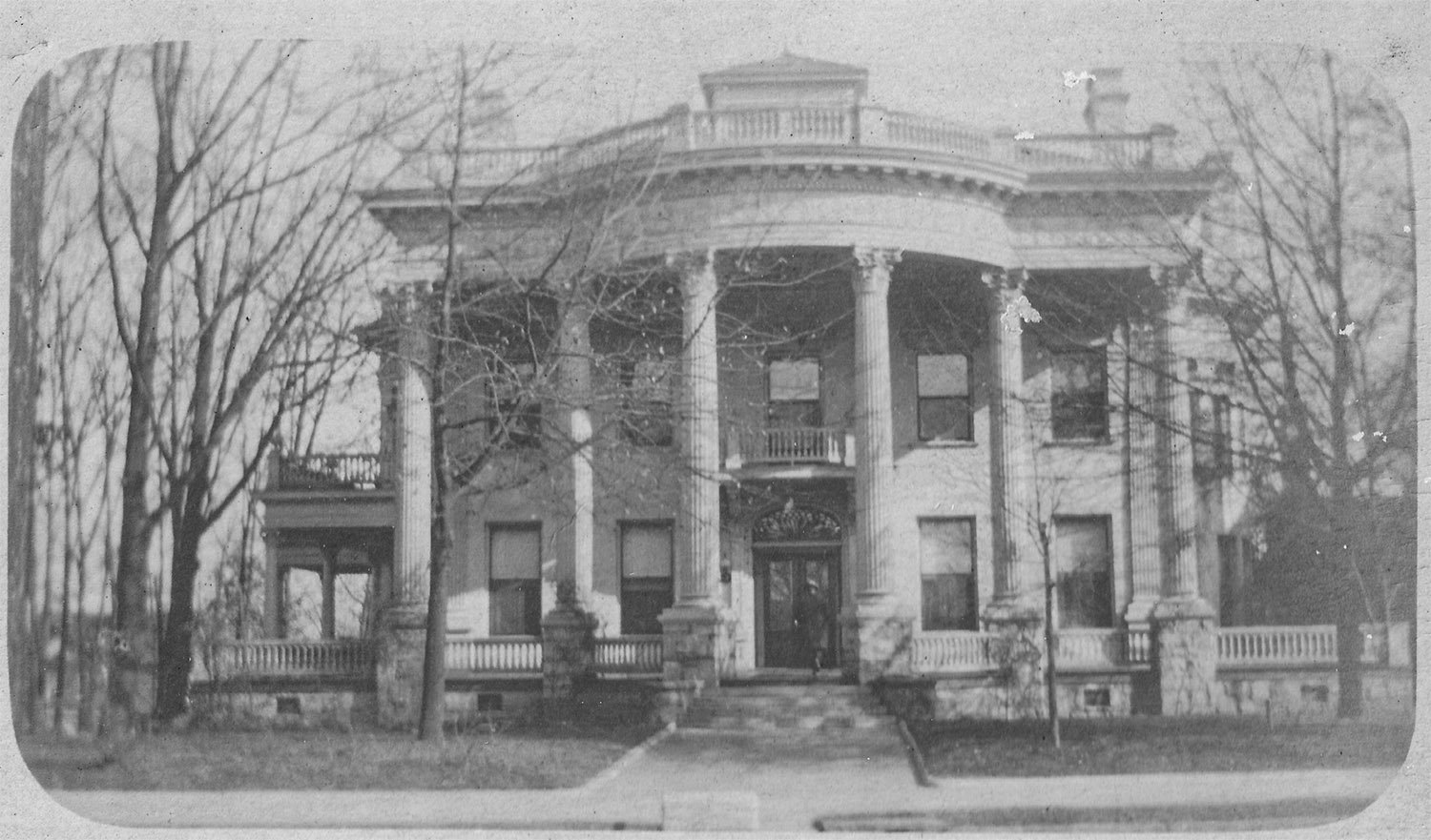
This postcard depicts the Fleming duBignon Residence in Atlanta, designed by Willis F. Denny and completed in 1902.
As noted on the front, the home was located at 925 Peachtree Street, and the photograph was “Taken on Xmas day 1907”.
The card was postmarked in Atlanta on March 2, 1909, and addressed to Miss Cynthia Farie at 202 East 31st Street in Savannah, Georgia, with the following message written on the back:
“I thought you would like a picture of Grandfather’s house. I want to thank you for the pretty valentine. Lots of love from Tissie.”
You think the grandfather knew his house had an exact duplicate in Louisville, Georgia?
This fascinating diatribe by G.L. Norrman was published in an April 1903 edition of The Sunny South, a supplementary publication distributed by The Atlanta Constitution.
A reporter asked three leading Atlanta architects for advice to young men considering an architectural career—the emphasis on men is notable, as women were then entering the field in increasing numbers, including Atlanta’s own Henrietta C. Dozier.
The article began as you might expect, with W.T. Downing and Willis F. Denny providing honest but measured remarks about the profession.
Count on Norrman to speak his mind, though: his blunt and weary assessment of the architect’s plight included more than a hint of bitterness, and his criticism of open design competitions was especially timely.
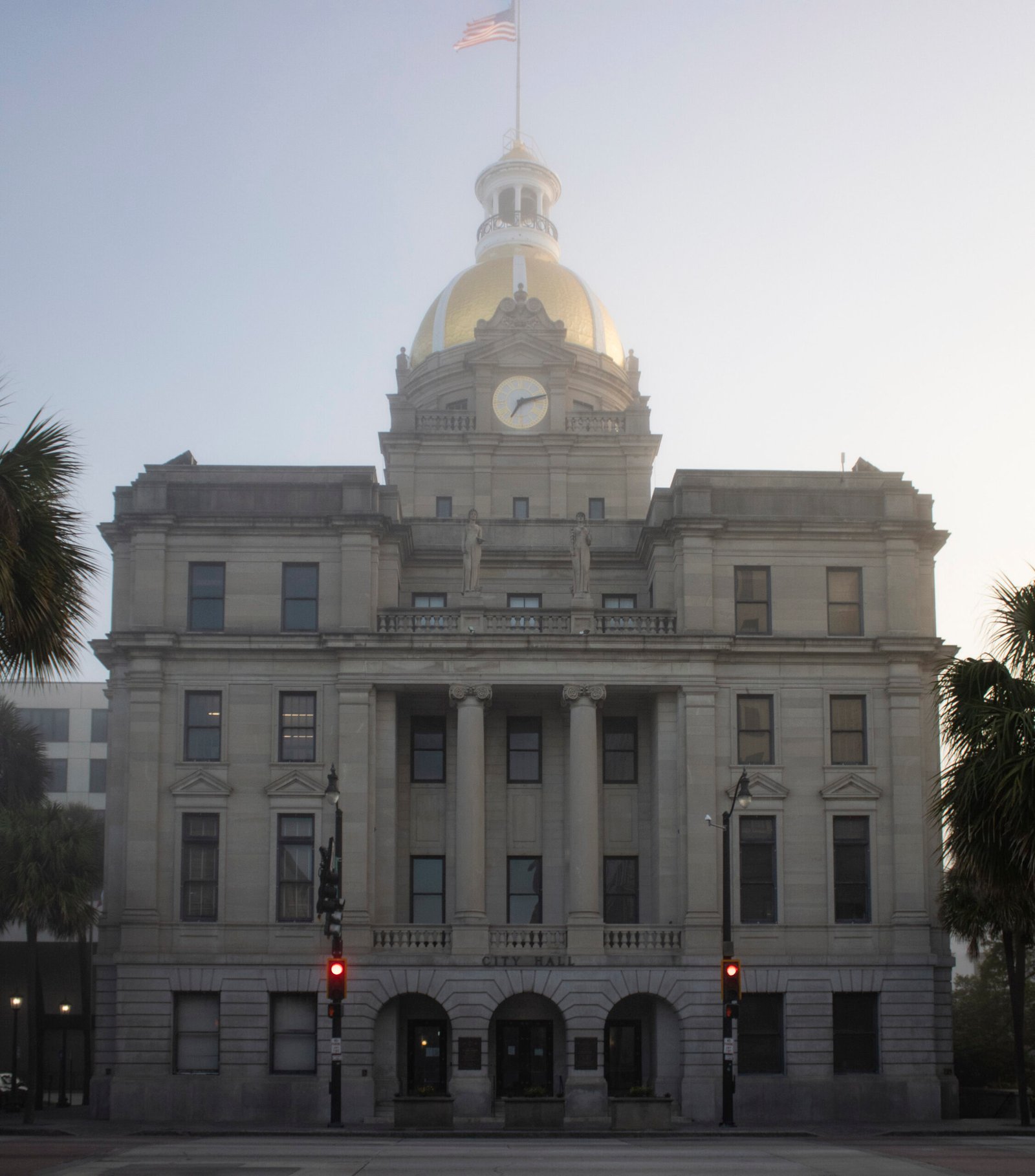
The following month, the plans Norrman entered in competition for the city hall in Savannah, Georgia, were deemed “the best of the fourteen submitted.”3 However, all the submitted plans were ultimately rejected, and the project was instead awarded to a local designer, H.W. Witcover.4
A later newspaper report revealed: “The plans the City liked best, were those of Mr. G.L. Norrman of Atlanta, but he had no pull with the machine.”5
The report alleged that Norrman’s plans were handed to Witcover—”a friend of the administration”—who was paid over $10,000 to design nearly identical ones.6 Savannah’s city hall was completed in 1906 and is indeed very similar to Norrman’s design.
It’s no wonder Norrman was so disparaging of his profession.
“The gift of gab is the essential thing for the architect. Knowledge, sense of proportion, and beauty, regard for it as an art, no longer count in architecture. One must be pleasant and agreeable, one must get business and make money.
“This is success counted in dollars and cents. It is success as the public understands it. It is the succcess that is appreciated. Thorough knowledge is dangerous; a ‘pleasing address’ is more to be desired than great wisdom.
“As I say, this is the popular conception of architecture. But architecture itself is an art; one must, in a large degree, be born for it. The training must be long and thorough—four years at some university, for the basic culture which leads to an understanding of the classic terms and figures used in architecture, and (in this country) four years in the polytechnic schools. In the École des Beaux-Arts in Paris the course is six years. After that, practical work in an architect’s office—making in all ten or twelve years of preparation.
“Is the apprenticeship long and arduous? I should say so—that is, to become an architect. This, however, is not necessary to make money in the profession of architecture. One then needs only to learn the superficial tricks; and so long as he has the aforementioned gift of gab it is only necessary that his building be safe, and the bricks stay in place. The public will never be any wiser.
“This is the most discouraging part of the profession. Let a man labor for years, and produce a masterpiece, the public will never notice it. It is the spirit of the age; it is as much so in Europe as in America. Nowadays, no one asks, Is he a good architect? but rather, Does he make money out of architecture?
“This is true of all artistic professions, but the worst part of it as applied to architecture is that plans must often be submitted in competition, where the judges are men in other lines of work. They would laugh at you if you claimed to understand dry goods, and they would be offended if you intimated that they didn’t understand architecture, and yet they pass on your design. It may be the result of years of study and experience, and the best of the lot; but it is not an accident if it is accepted. Not knowing anything about it, they say, ‘Give it to So-and-so; he’s a good fellow.’
“But to return to the beginner. His apprenticeship must be thorough, and in addition to his school training he must do office work. I think that artistic feeling is necessary to a large degree, though a sense of proportion and the finer distinctions between styles and ornament are largely things of habit and training. One may cultivate them much as a man cultivates command of language.
“What does architecture offer? At a recent civil service examination 150 trained draughtsmen applied for a government position which paid $1,500 a year. The winner of the new depot competition will get $1,000, and this for years of hard and unappreciated work. A farmer could make more on one year’s hay crop, and with one-tenth the nervous strain and exertion. No, I can’t say that the young man may expect a bonanza.”7
Willis Franklin Denny II (1874-1905), professionally known as Willis F. Denny, was an architect who practiced in Atlanta and the Southeastern United States in the late 19th and early 20th centuries.
Denny was born and raised in Louisville, Georgia1 (pronounced Lewis-ville), and studied architecture at Cornell University2 in New York. Unlike most Atlanta architects, Denny had actual talent.
Like so many Southern architects, however, Denny died tragically—at the age of 31, following a “severe attack of pneumonia.”3
Although his career lasted less than 10 years, Denny was prolific, and several fine examples of his work can be found across Georgia.
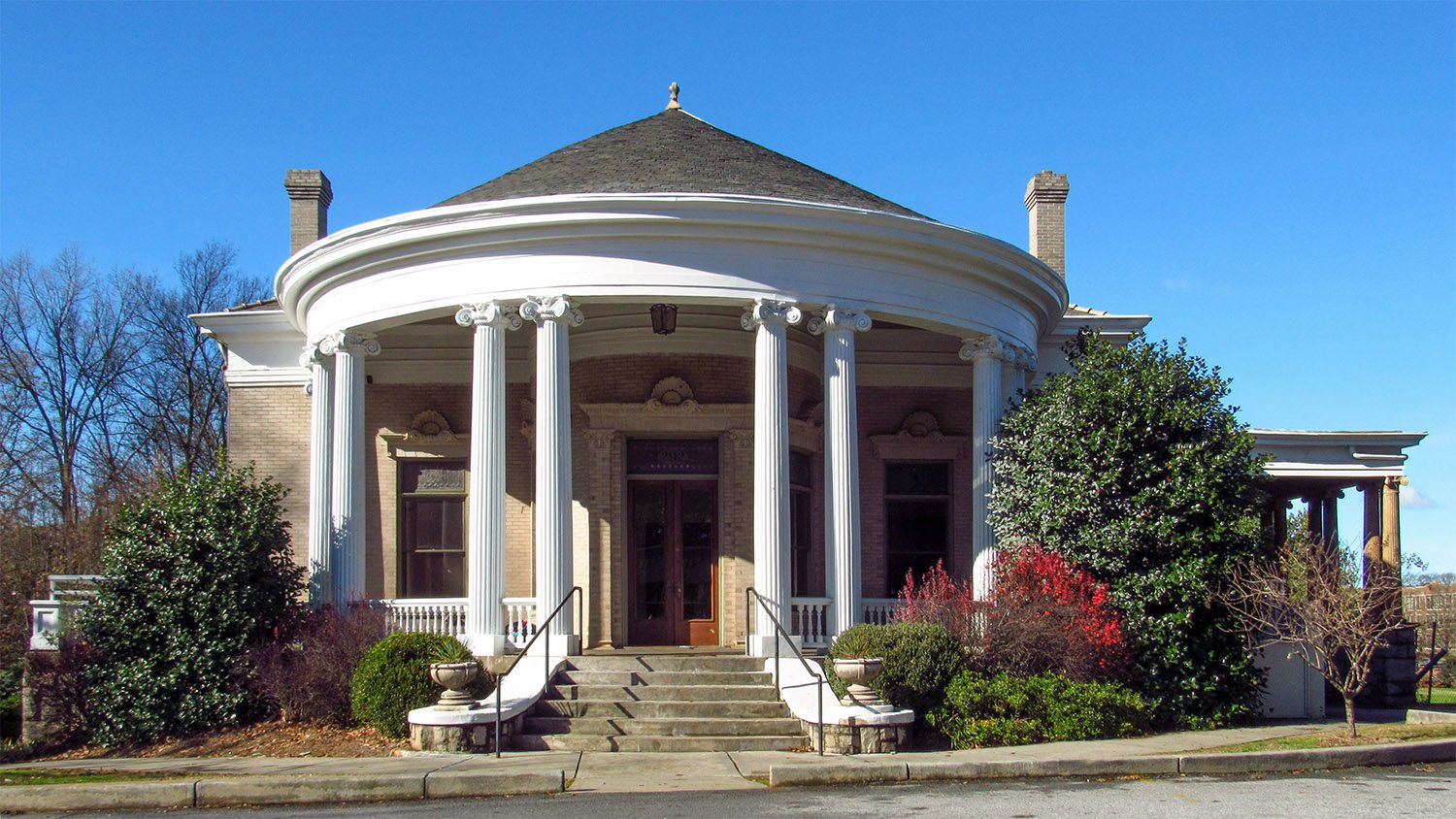
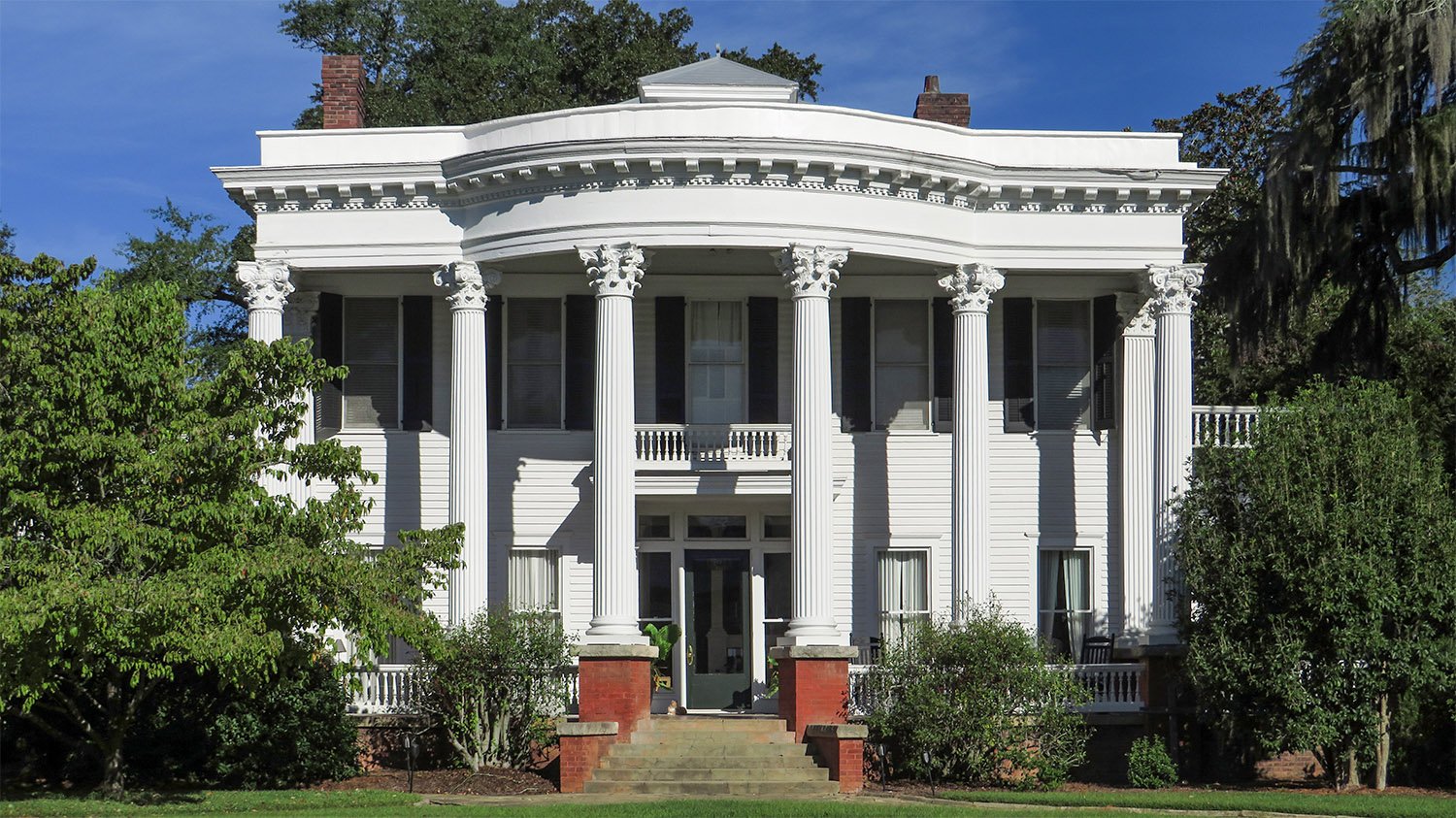
Notably, seven of Denny’s works still exist in Louisville, Georgia, including the Abbot Residence4 (pictured above) on Mulberry Street.
The Abbots were Louisville’s ruling family at the time, and their name is still found on every other building in the town. Denny remade the antebellum Abbot residence with the fine Neoclassical design seen today, although a definitive date for the project is elusive.
My best guess is that the Abbot house was renovated circa 1902, since Denny used the same design for the Fleming duBignon Residence (demolished, pictured below) in Atlanta, built on the corner of Peachtree and 14th Streets in 1902.5 6 7 8
So, which came first: the Abbot design or the duBignon design? That’s a mystery yet to be solved.