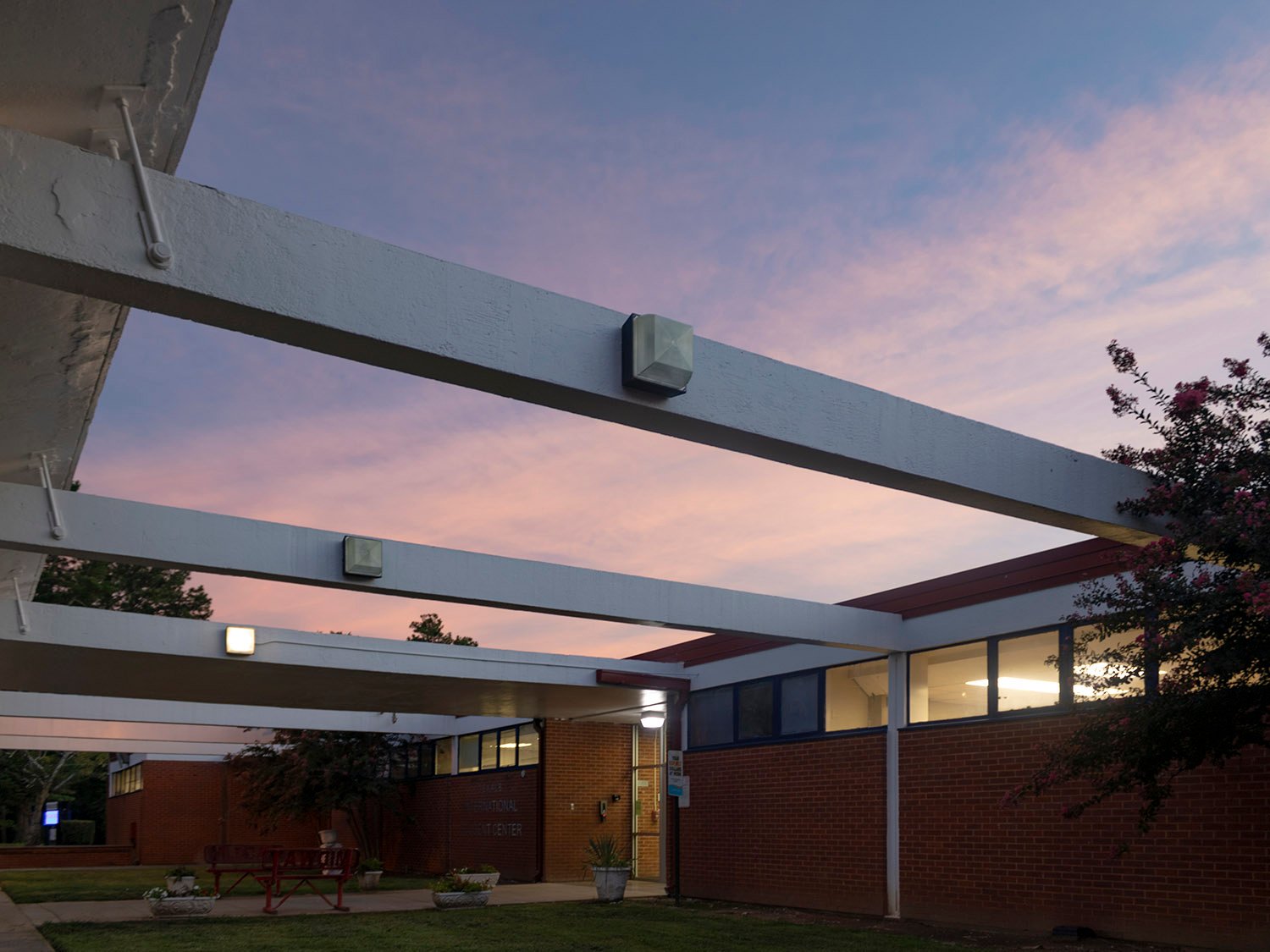
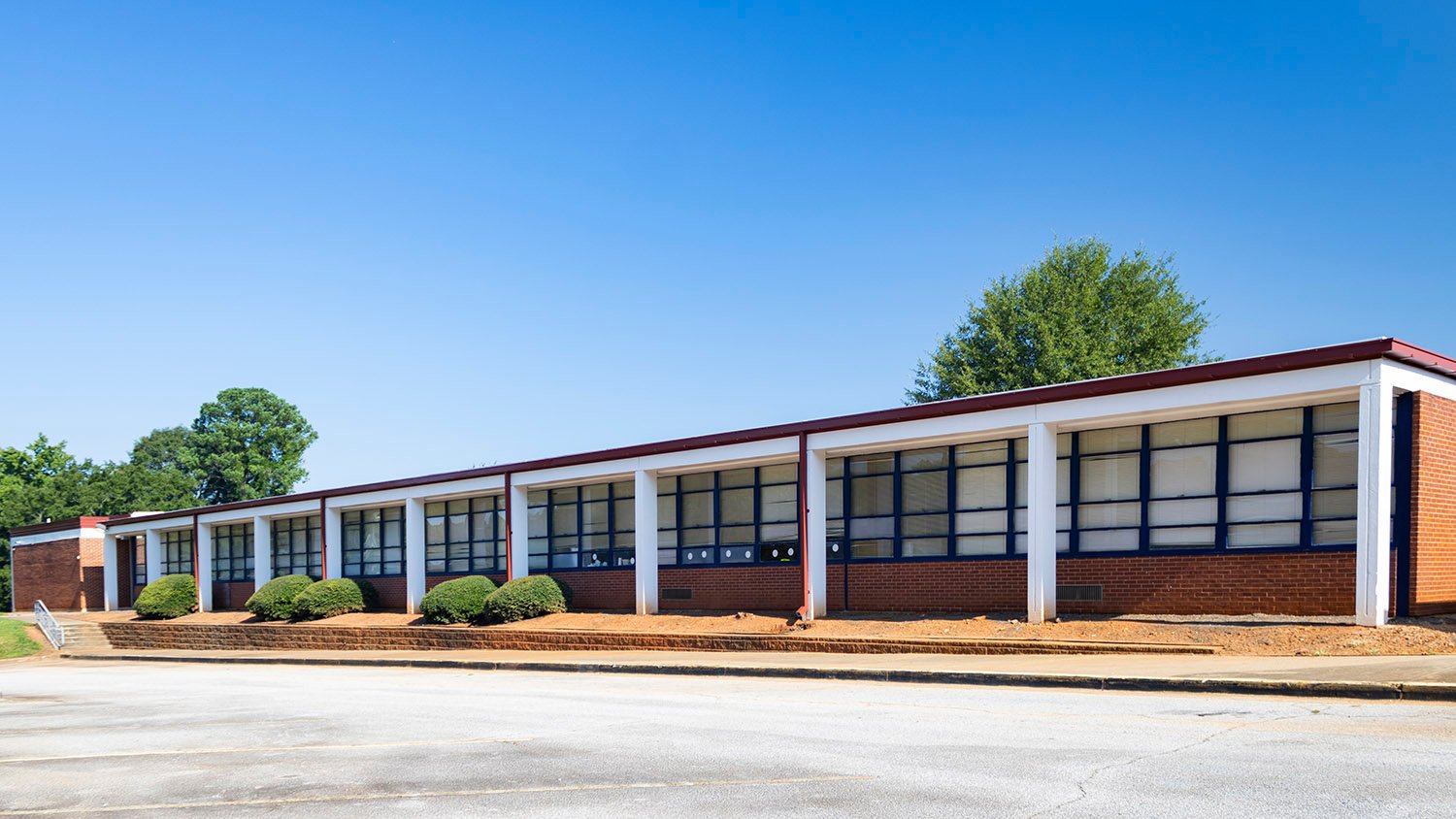
Midway Elementary School in DeKalb County, Georgia, was built in 1957 and designed by John Portman (1924-2017), a decade before he achieved fame for his soaring atrium hotels, of which Atlanta’s Hyatt Regency Hotel (1968)3 4 is the prototype.
Midway School was the first of many school buildings Portman designed in and around Atlanta through the 1980s.
Most still stand, and most are unremarkable—the casual observer would never guess they were from the same firm that produced many of Atlanta’s landmark towers. Look closely, though, and you’ll find they share the same core concept.
Born and raised in Atlanta, Portman made millions off the very Atlanta idea that instead of solving the problems of a dysfunctional city, you could just turn your back on them and pretend they don’t exist.
This idea was fundamental in Portman’s development of Peachtree Center in Downtown Atlanta, consciously designed to present blank, faceless, hostile exteriors to the person on the street, while concealing dramatic, cavernous (and privately controlled) spaces for customers inside.
Portman replicated this concept for San Francisco’s Embarcadero Center, the Westin Bonaventure hotel in Los Angeles, the Renaissance Center in Detroit,5 and the New York Marriott Marquis6 hotel—among many other large-scale projects— enjoying widespread acclaim from the late 1960s to the mid-1970s as a master of urban renewal.
By the 1980s, however, Portman’s designs had rapidly fallen out of favor as it became apparent that they ultimately destroyed the lives and fabric of the cities he claimed to be saving. Atlanta suffered the worst: its central core remains a depressing void, largely because of Portman’s sprawling concrete fortresses.
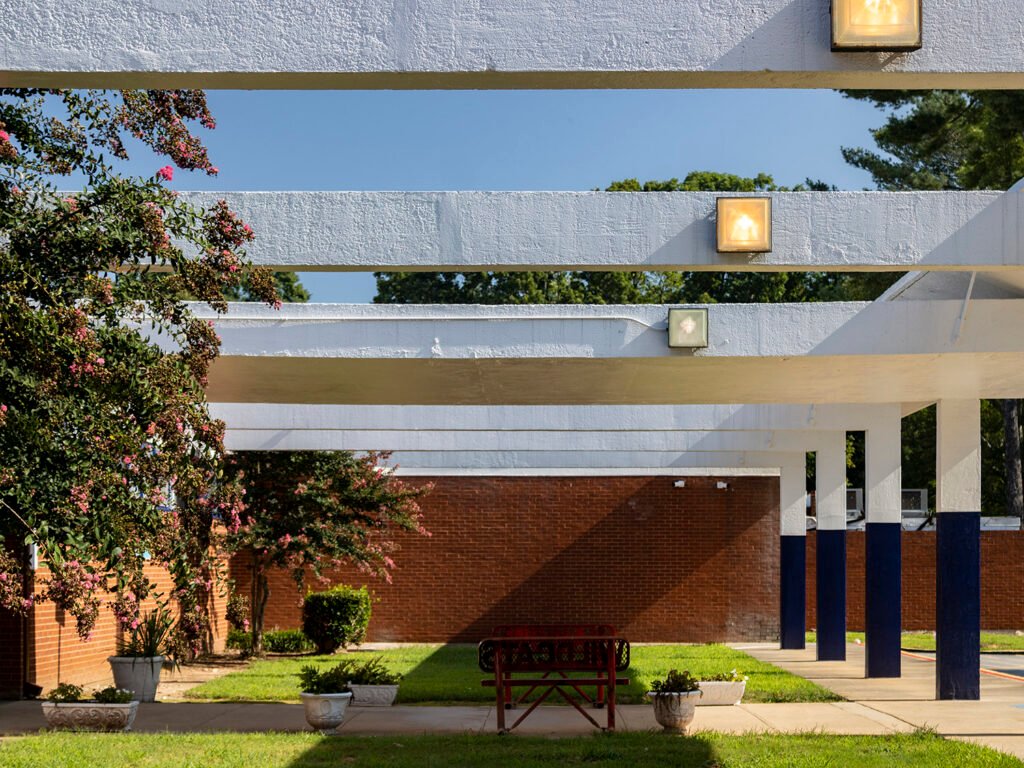
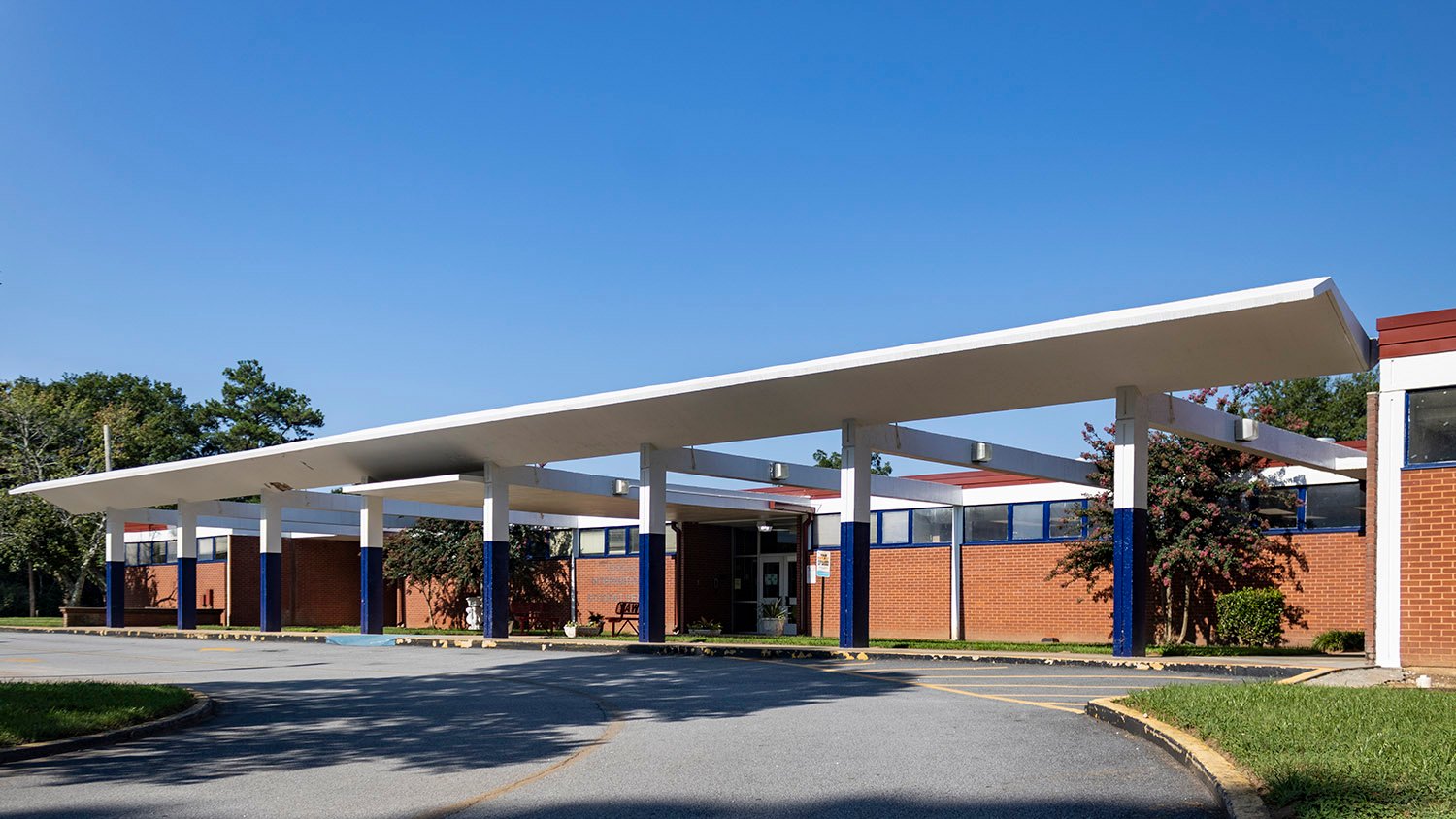
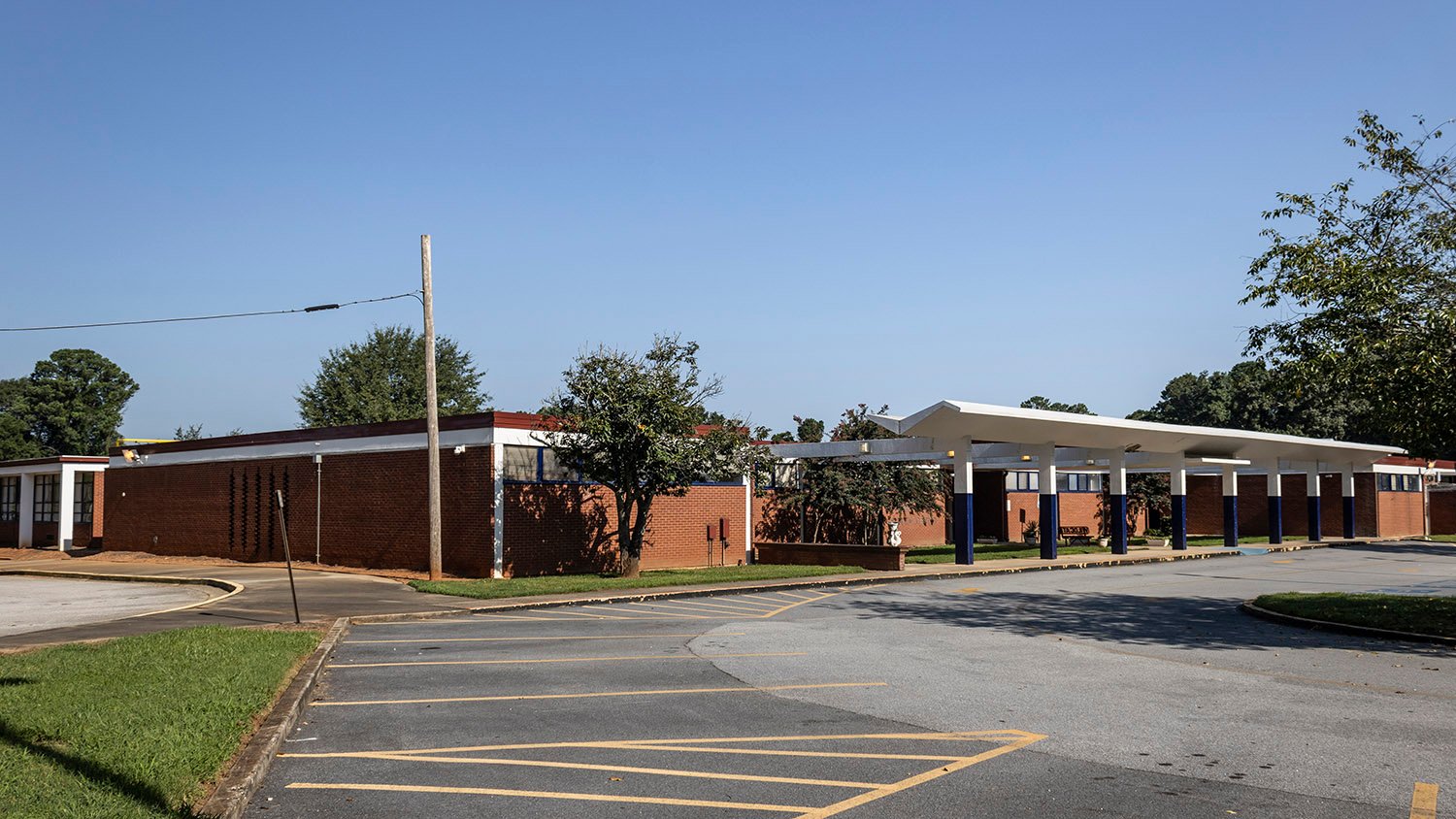
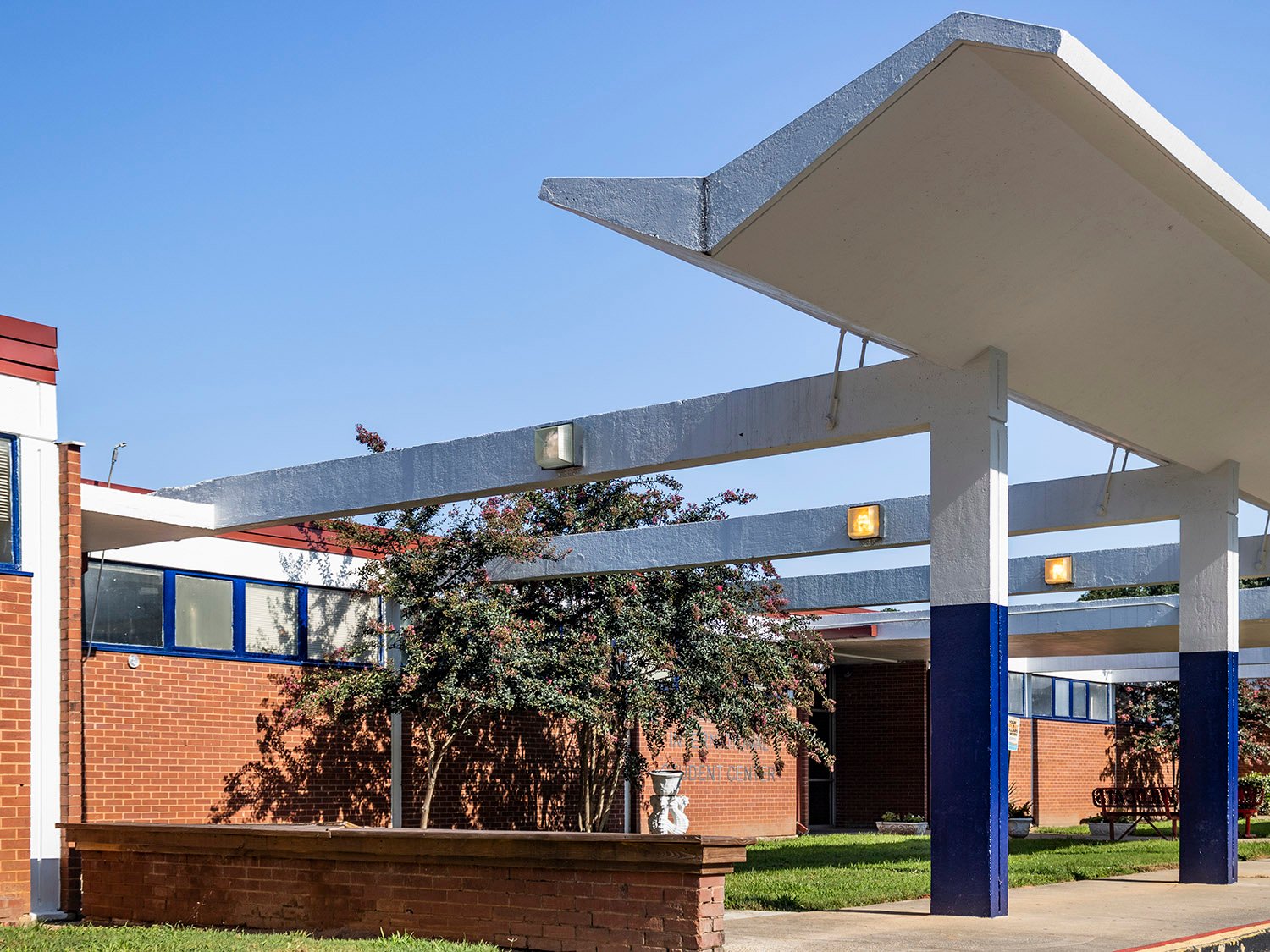
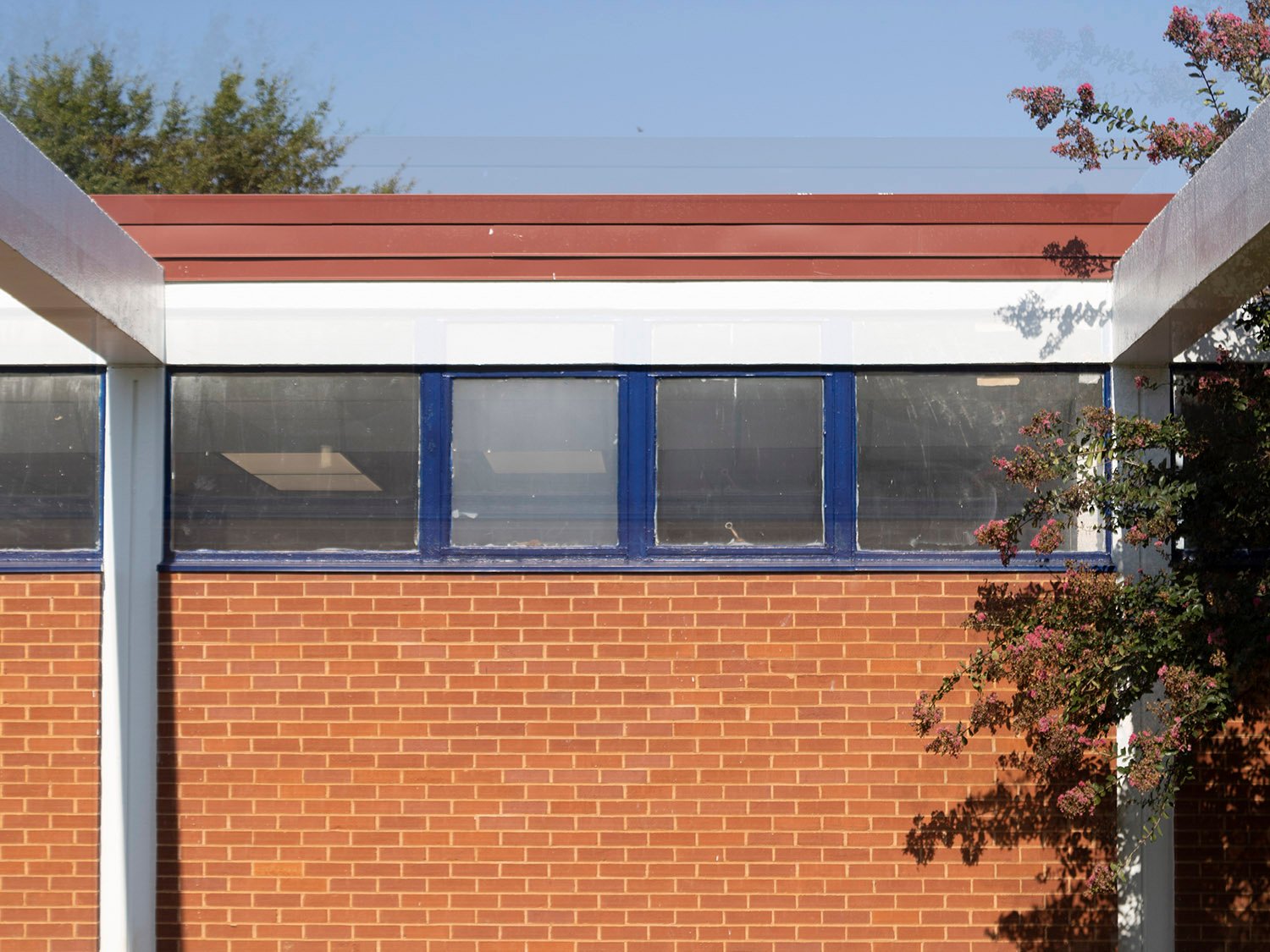
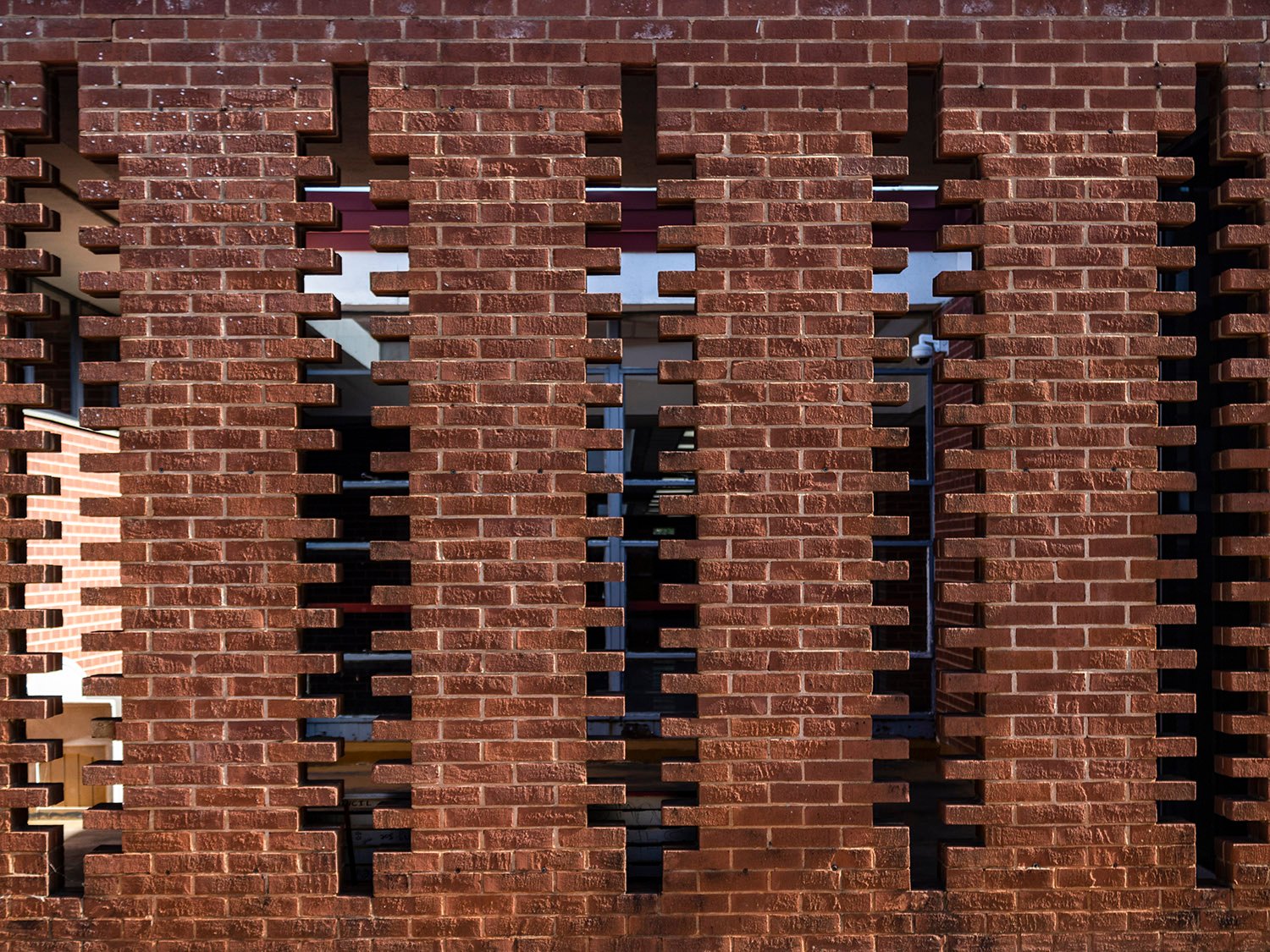
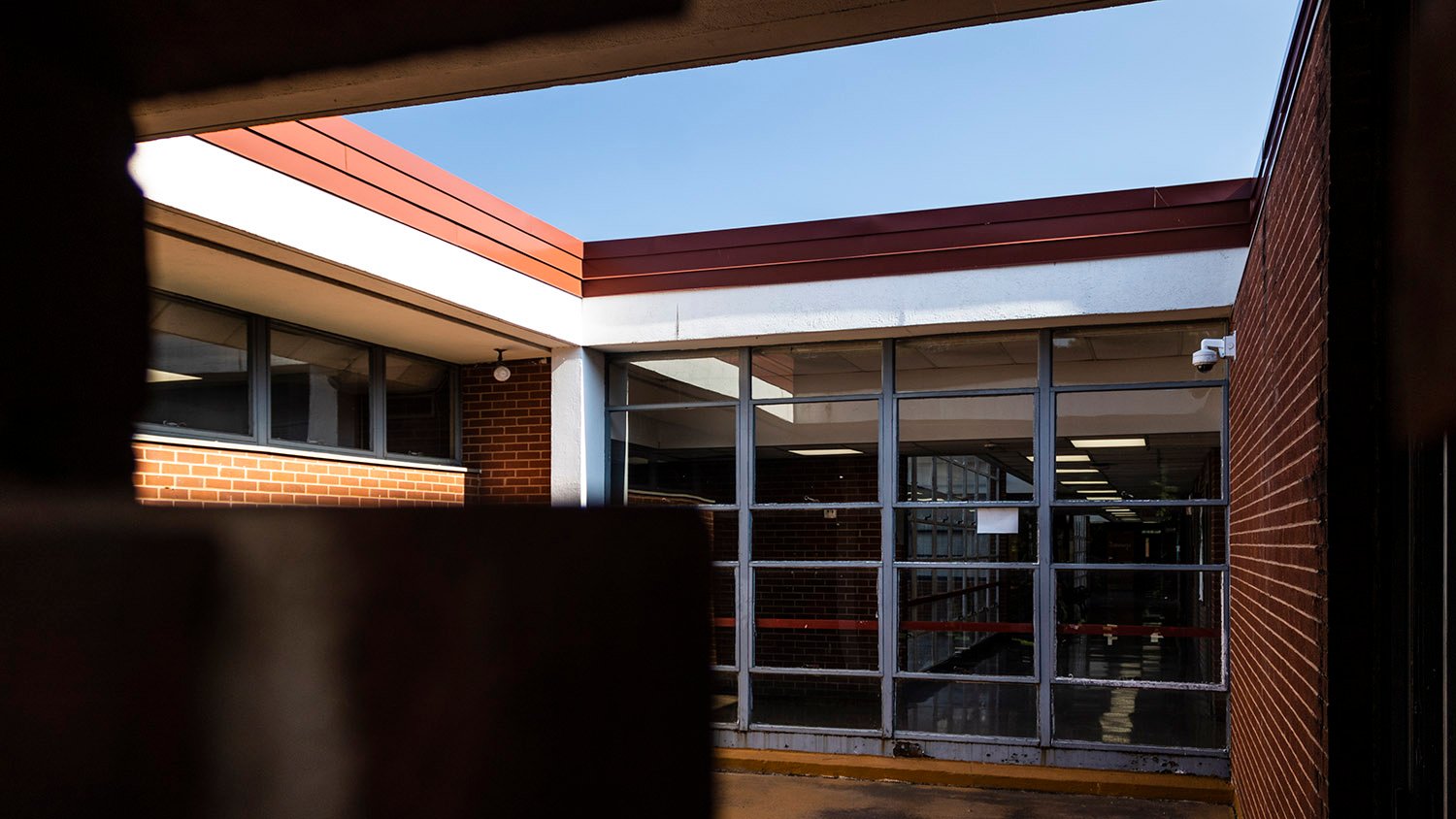
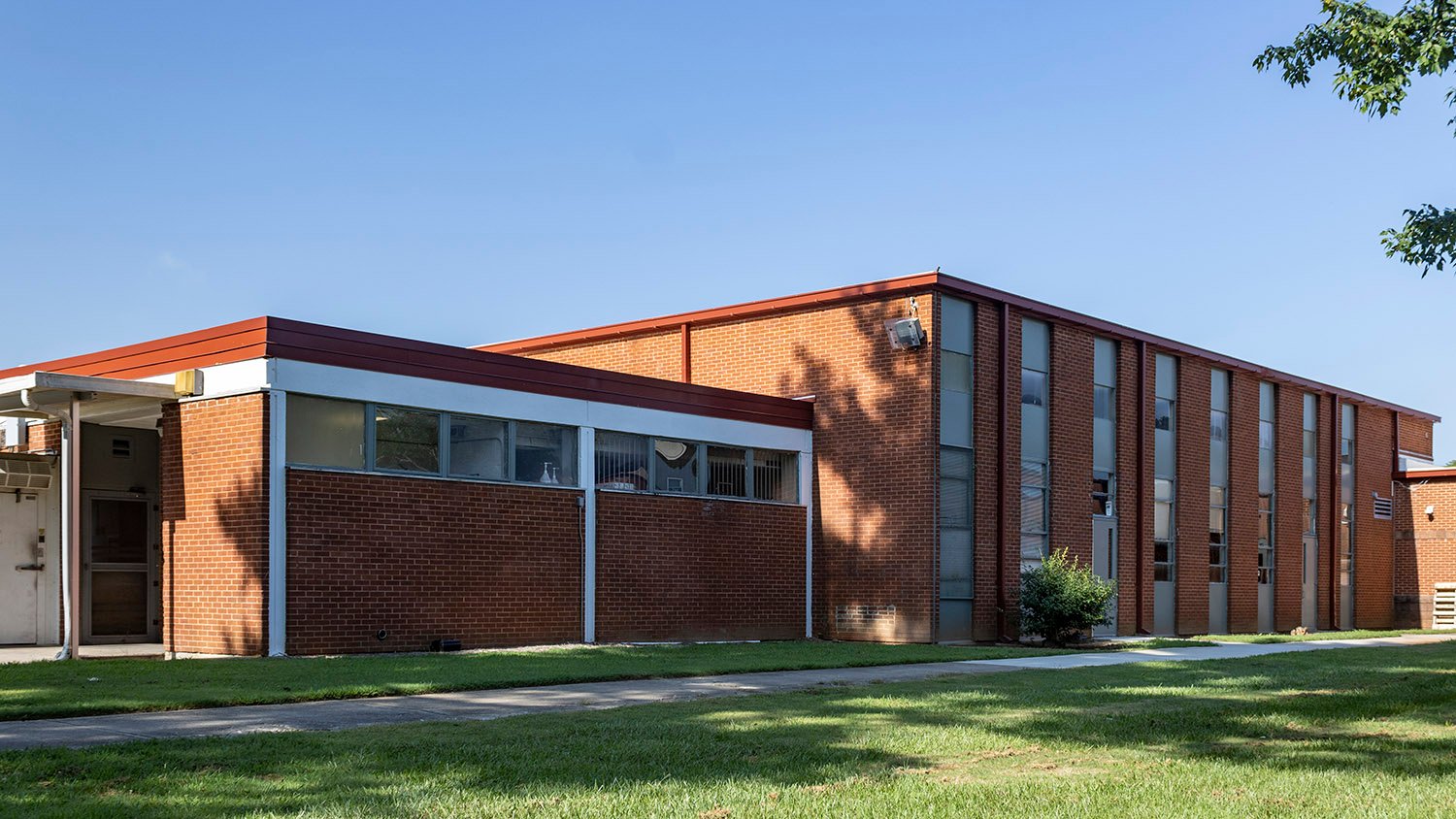
You can see the beginnings of Portman’s inward focus in his early work, like Midway School. The solid brick walls at the front of the building seal off the interior from the outside world—looking in the narrow clerestory windows, you only glimpse the ceiling.
The entrance courtyard spanned by beams is particularly notable, as Portman would repeat this design in later projects like the Dana Fine Arts Center (1965) in nearby Decatur.7 8 9
There, he lined the courtyard with brick walls, effectively creating an exterior room. Two years later, the courtyard design evolved into the landmark Hyatt atrium.
Gallery




References
- Portman, John C., and Barnett, Jonathan. The Architect As Developer. New York: McGraw-Hill (1976). ↩︎
- “DeKalb School Design Chosen For Exposition”. The Atlanta Journal and Constitution, December 9, 1956, p. 3-E. ↩︎
- Portman, John C., and Barnett, Jonathan. The Architect As Developer. New York: McGraw-Hill (1976). ↩︎
- The Atlanta Journal and Constitution, June 25, 1967, pp. 1-R-20-R. ↩︎
- Portman, John C., and Barnett, Jonathan. The Architect As Developer. New York: McGraw-Hill (1976). ↩︎
- Mortiz, Owen. “Broadway’s newest smash.” Daily News (New York), September 5, 1985, p. 11. ↩︎
- Portman, John C., and Barnett, Jonathan. The Architect As Developer. New York: McGraw-Hill (1976). ↩︎
- Crown, John. “Agnes Scott Begins $900,000 Arts Building”. The Atlanta Journal, February 11, 1964, p. 8. ↩︎
- “Agnes Scott’s New Building”. The Atlanta Constitution, October 14, 1965, p. 56. ↩︎