References
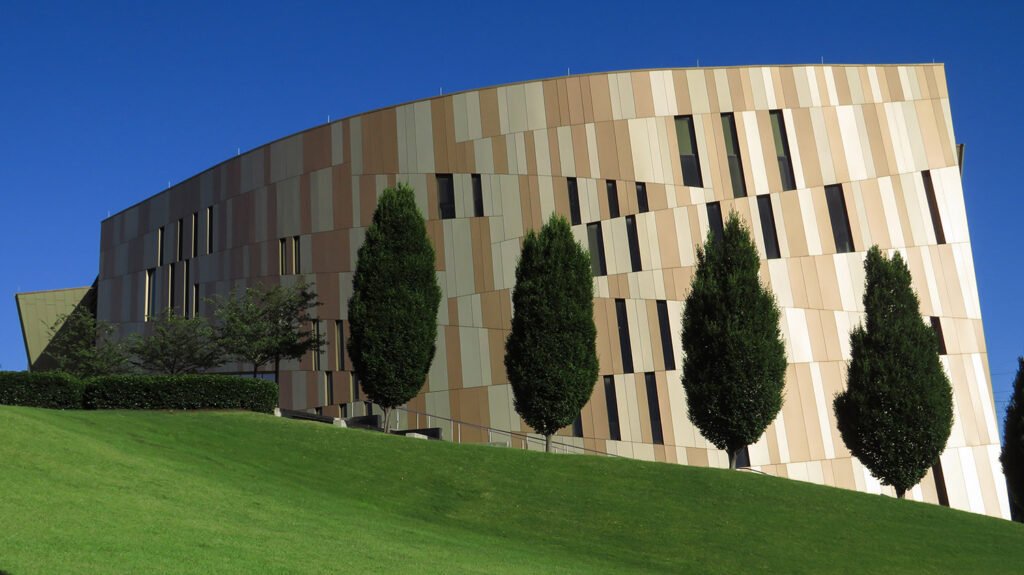
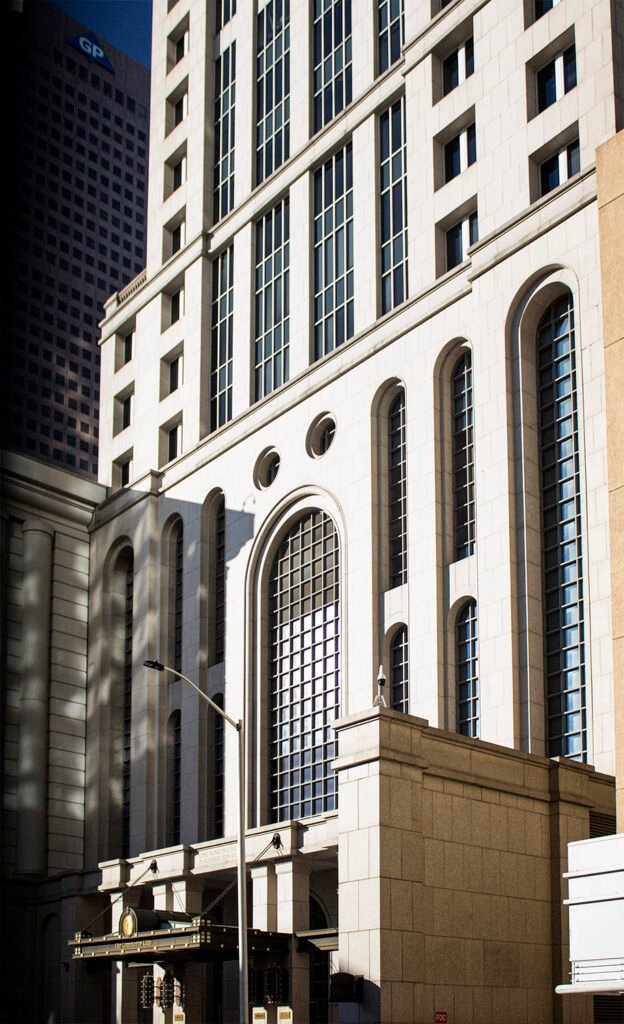
- National Center for Civil and Human Rights / HOK + The Freelon Group (Now part of Perkins+Will) | ArchDaily ↩︎
- Emerson, Bo. “Rights Center Story Comes to Life”. The Atlanta Journal-Constitution, June 26, 2014, p. 1BB. ↩︎
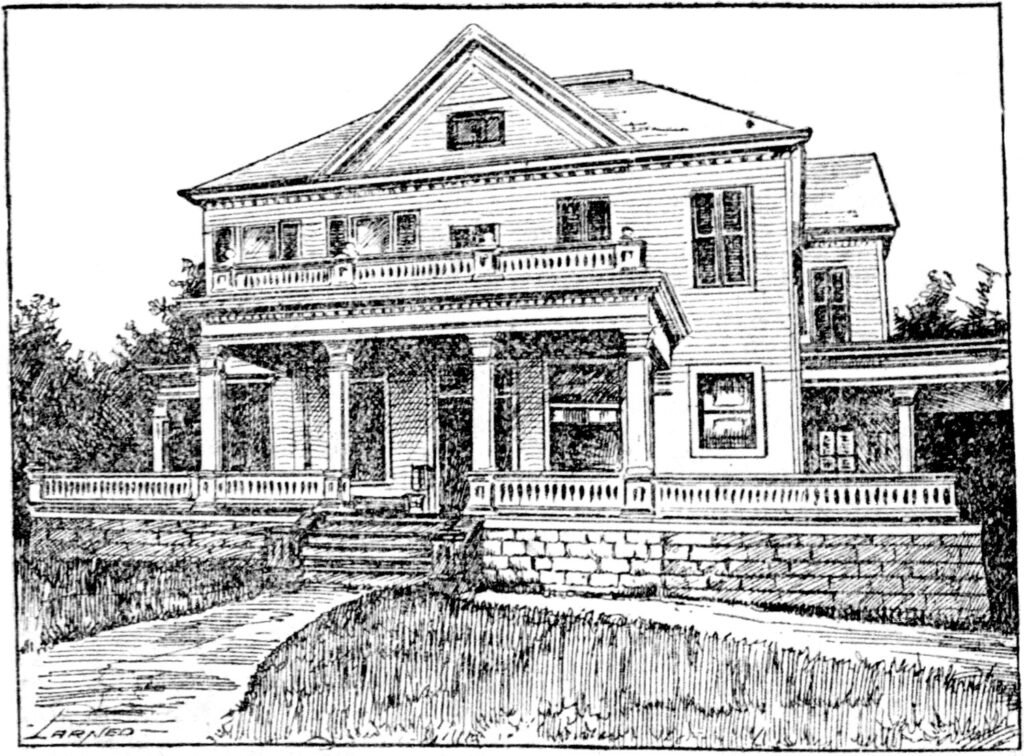
The following article was published in The Atlanta Journal in 1898, highlighting the “summer residence” of J.C.A. Branan in Kirkwood, then a suburban development located southeast of Atlanta.
Despite the Journal’s claim that the architecture was “unique”, it was anything but: while attractively designed in the Colonial Revival style, the 2-story home’s appearance was very similar to numerous residences around Atlanta at the time.
No information is provided about the home’s designer, and it may very well have been built by a contractor using plans from a pattern book.
The article was notable for more than just showing off a house, however, as Branan’s residency in Kirkwood was controversial and appears to have been a strategic political move.
When Branan built the home outside the city limits, his opponents questioned whether he should resign from Atlanta’s board of police commissioners1, although nothing seems to have transpired from the debate.
Branan must have had good political connections, because in late 1899, the Georgia governor signed a bill incorporating Kirkwood as a city and installing Branan as its mayor — without an election, mind you.
The move to incorporate Kirkwood was fiercely opposed by many of its residents, who filed a lawsuit against the state2 3and then held their own mayoral election in February 1900, with the “anti-incorporation” candidate winning over Branan.4 5
The following month, the Georgia supreme court repealed the law making Kirkwood a city, determining it to be unconstitutional.6 7 So much for that attempted power grab.
Branan made the “summer home” his permanent residence and died there in April 1927,8 9 10 five years after Kirkwood became part of Atlanta in 1922.11 12 Obituaries mentioned his status as Kirkwood’s former mayor, without noting that his tenure was both illegal and lasted less than 2 months.
The Branan home was located at 34 Boulevard Dekalb (later 1895 Boulevard Drive NE)13 and appears to have been demolished for the construction of Kirkwood Presbyterian Church’s educational building, which was built at the address in 1954.14 15
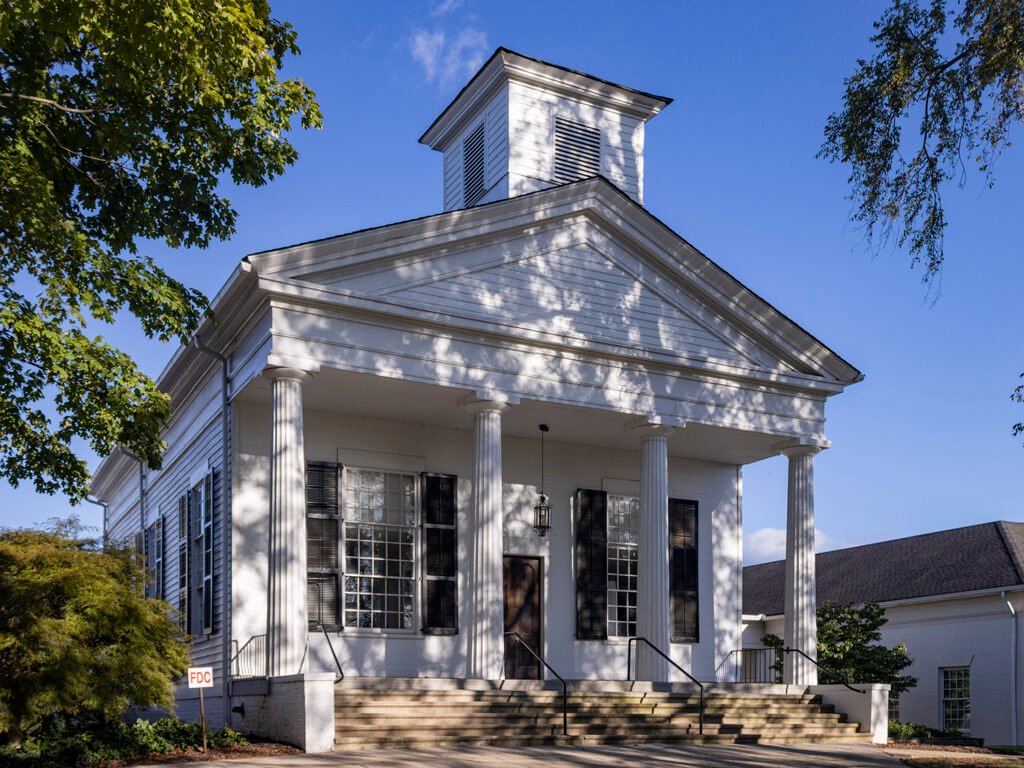
The church building was converted into a human services center in 1975,16 and still exists at the southeast corner of Hosea L. Williams Drive and Warren Street in the Kirkwood neighborhood.
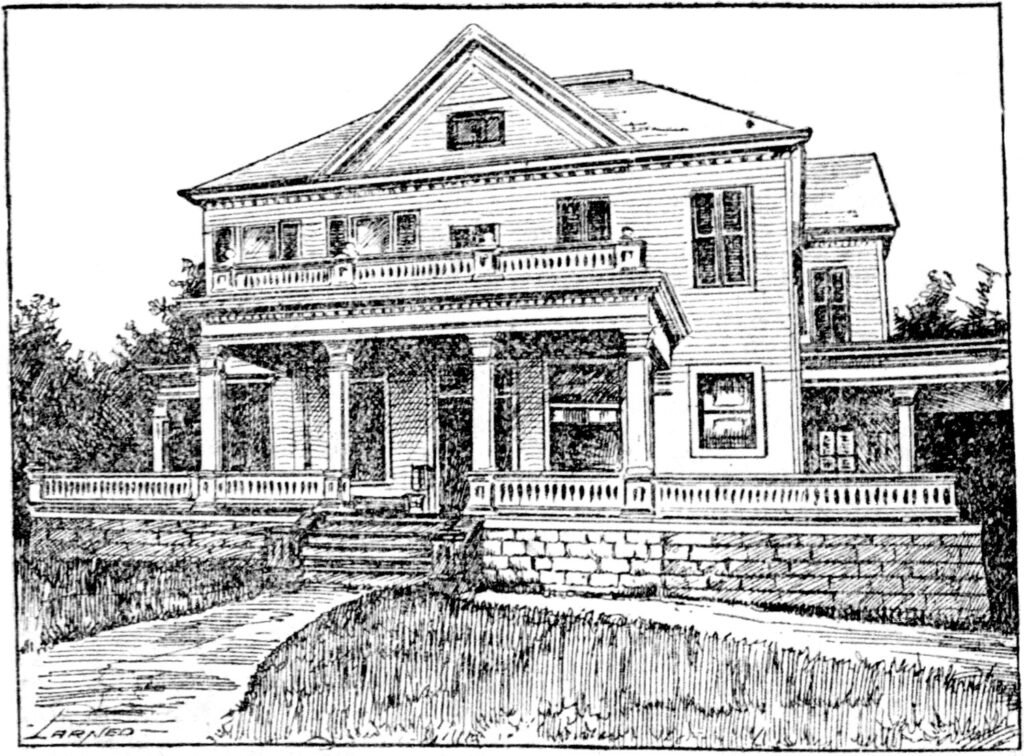
It Is Located At South Kirkwood, Three and One Half Miles From the City–Is a Model Country House.
One of the prettiest suburban homes built about Atlanta in some time is that of Mr. J.C.A. Branan, member of the board of police commissioners. The house is now about completed, and Mr. Branan is receiving many congratulations on the beauty of the lot and house and surroundings. A few more details remain to be finished before the place will show up to its best advantage.
Mr. Branan’s home is located at the corner of Boulevard DeKalb and Warren street, near Kirkwood, and is situated on a beautiful three-acre lot, one of the best in the county. It is a high rolling piece of land, and the drainage is perfect. The lot fronts 328 feet on Boulevard DeKalb, and runs back 525 feet.
The house is a two-story frame structure, slate roof, and it is built in the best workmanlike manner. The architecture is unique and the house presents a fine appearance from every point of view. The lower story contains five rooms, all large and commodious, and a reception hall. Besides these rooms there are the store rooms, butler’s pantry and other small apartments. This floor contains the parlor, dining room, reception hall, and a large family room, and the rooms are so arranged that four of them and the reception room can be thrown into one large hall or connecting rooms.
Up stairs there are six large rooms, besides bath rooms and closets. The house is fitted with hot and cold water apparatus throughout, and it is a delightful place in every respect. The entire house is finished in yellow pine with a hard oil finish from top to bottom. There is a barn and servant’s house on the lot, and Mr. Branan is now having a fine windmill put up to furnish water for the place. He says the wind-mill will practically turn Chattahoochee river in that direction when the fine breezes of DeKalb county start the wheel.
The house is about three and one-half miles from the union depot in Atlanta and is directly on the Decatur line of the Consolidated street railway company. There is a fine road in front of the house, and Mr. Branan’s new home is delightfully situated in every respect.
The place is a costly one and makes a fine summer home for the popular police commissioner.17
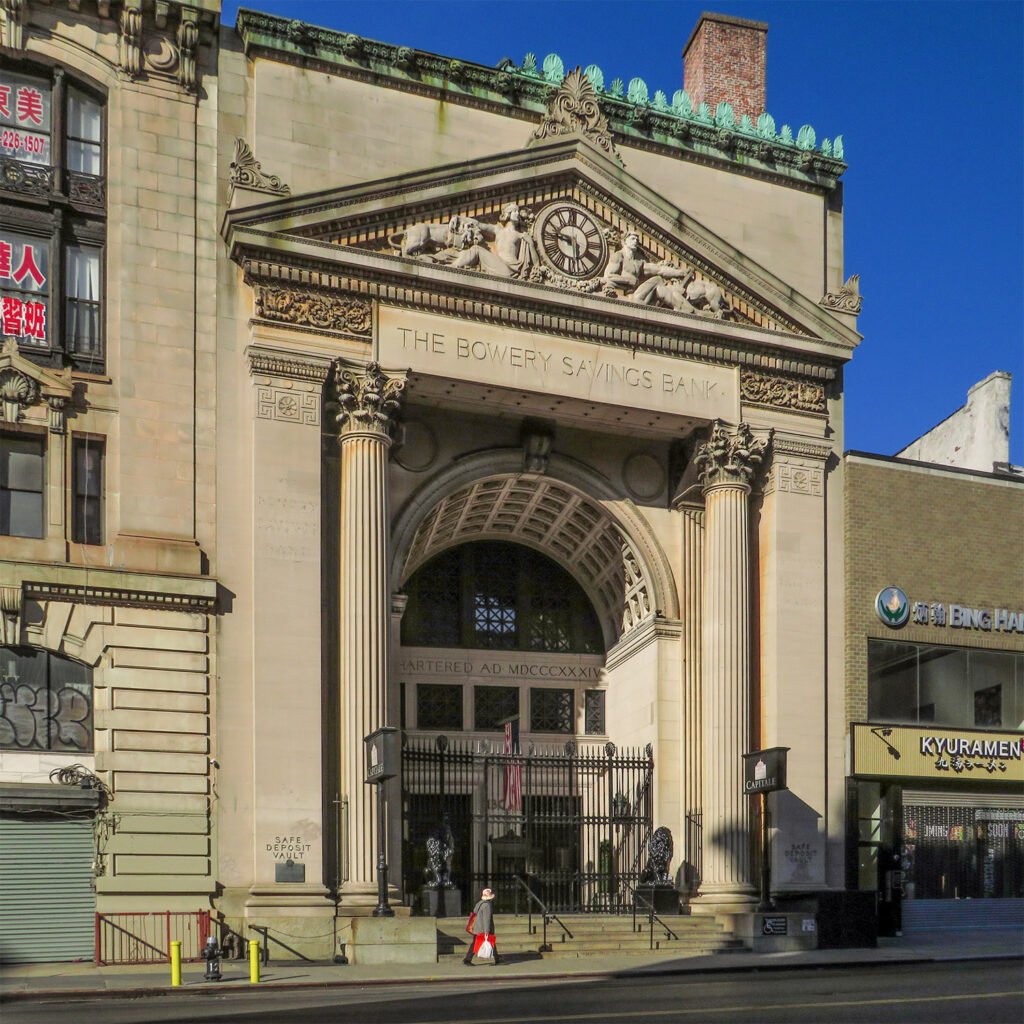
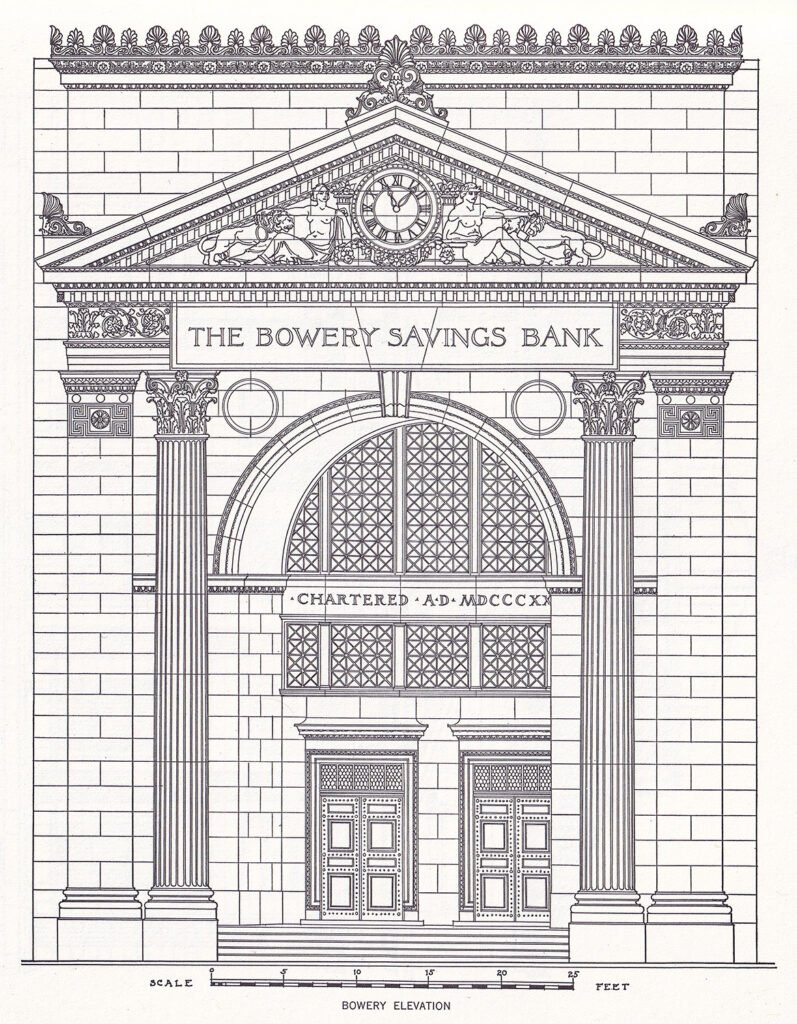
The Bowery Savings Bank is a significant early work in the Classical Revival style, credited to Stanford White of McKim, Mead & White.
Following their monumental buildings of classical inspiration for the World’s Columbian Exposition in 1893, the firm entirely embraced Roman and Renaissance influence in their designs, ushering in the Beaux Arts movement that dominated American architecture for decades.
By the time of White’s death in 1906, the firm’s work had become increasingly derivative and dreary, but this structure was designed early enough to retain some of their initial flair for quirkiness and originality: the front doors set slightly off-center within a recessed arch, for instance.
Built in the shape of an L with granite and Indiana limestone, the Bowery Savings Bank has two entrances, neither of which resembles the other — a larger side entrance on Grand Street, and the smaller, more interesting Bowery side shown here.
It appears the building was largely designed by Edward P. York, then White’s assistant, who also supervised its construction. York would later become a founding partner in the architectural firm of York & Sawyer.7
Ever the playboy, in the mid to late 1890s, White increasingly delegated his work to others while he indulged in a lavish lifestyle of excess and consumption — it didn’t end well for him.
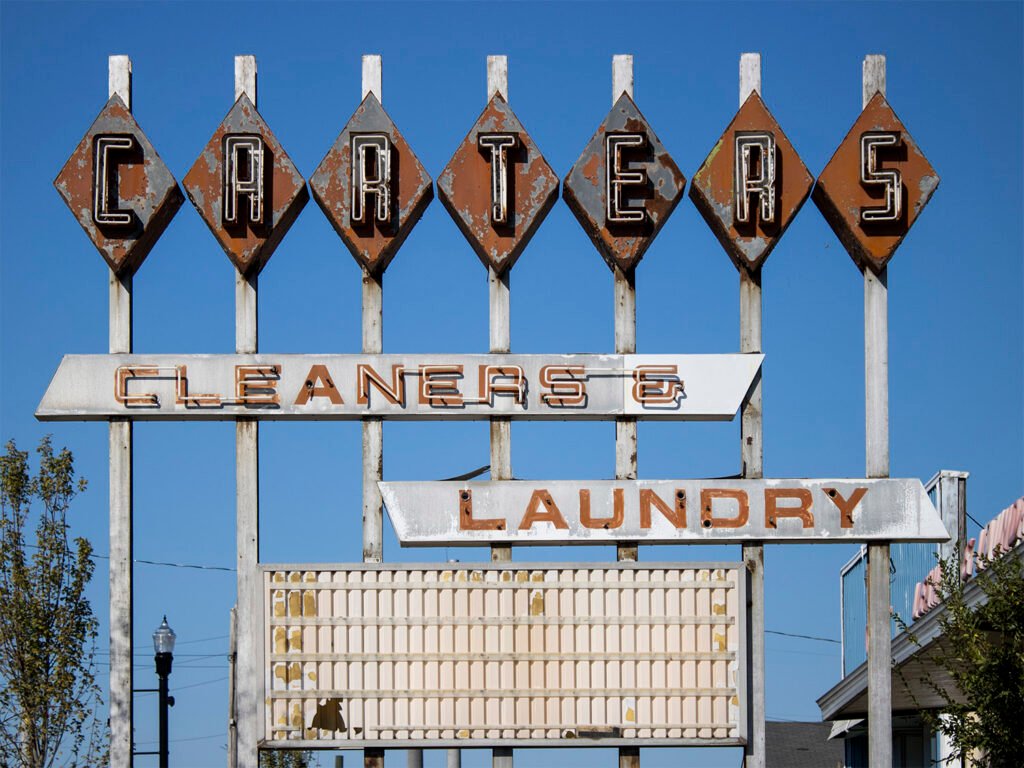
Carter’s Cleaners & Laundry in Forest Park, Georgia, opened in 1950. However, I suspect this fantastic Googie-style sign debuted in 1957, when the business expanded by 800 square feet,1 “providing a new front”,2 among other improvements.
The business ended circa 2009,3 and the building has been boarded up for years, with its relic sign left to rust.