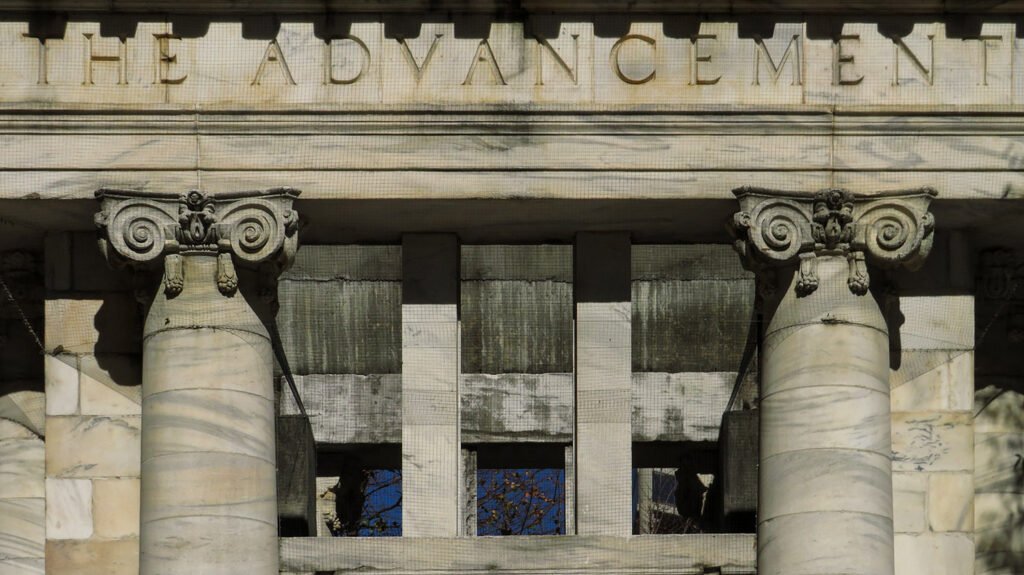
Category: Architecture of Atlanta and the Southeast

  • Public Comfort Building, Oakland Cemetery (1899) – Atlanta

    C. Walter Smith. Public Comfort Building at Oakland Cemetery (1899). Atlanta.

    The Public Comfort Building in Oakland Cemetery is the only surviving work in Atlanta known to have been designed by C. Walter Smith (1865-1910), an architect who worked for at least seven years as a draughtsman and assistant for G.L. Norrman before embarking on a fairly unremarkable solo career.

    Built on a small hill in the western portion of the 48-acre cemetery, this 2-story structure includes a full basement and totals 2,800 square feet.1 The exterior is faced in stucco-covered brick2 and rusticated granite trimmings, and marble flooring3 is used on the front porch and in the basement.

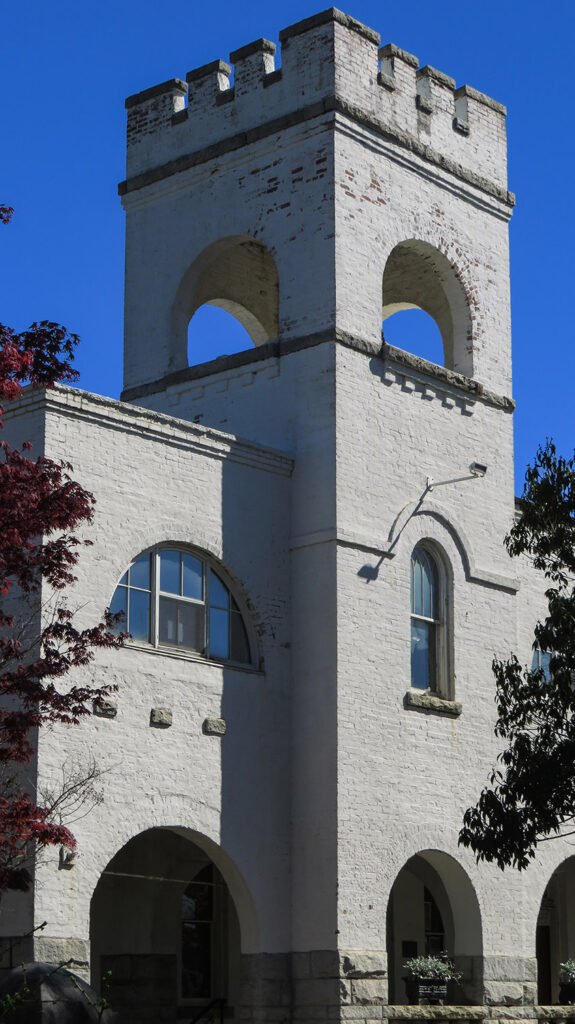
    Modeled after “the old Norman and English castellated churches,”4 the building’s design can be broadly defined as Romanesque, and its focal point is a 50-foot-high crenellated bell tower,5 heavily inspired by similar designs from G.L. Norrman.

    Today, Oakland Cemetery refers to the entire structure as the “Bell Tower”.
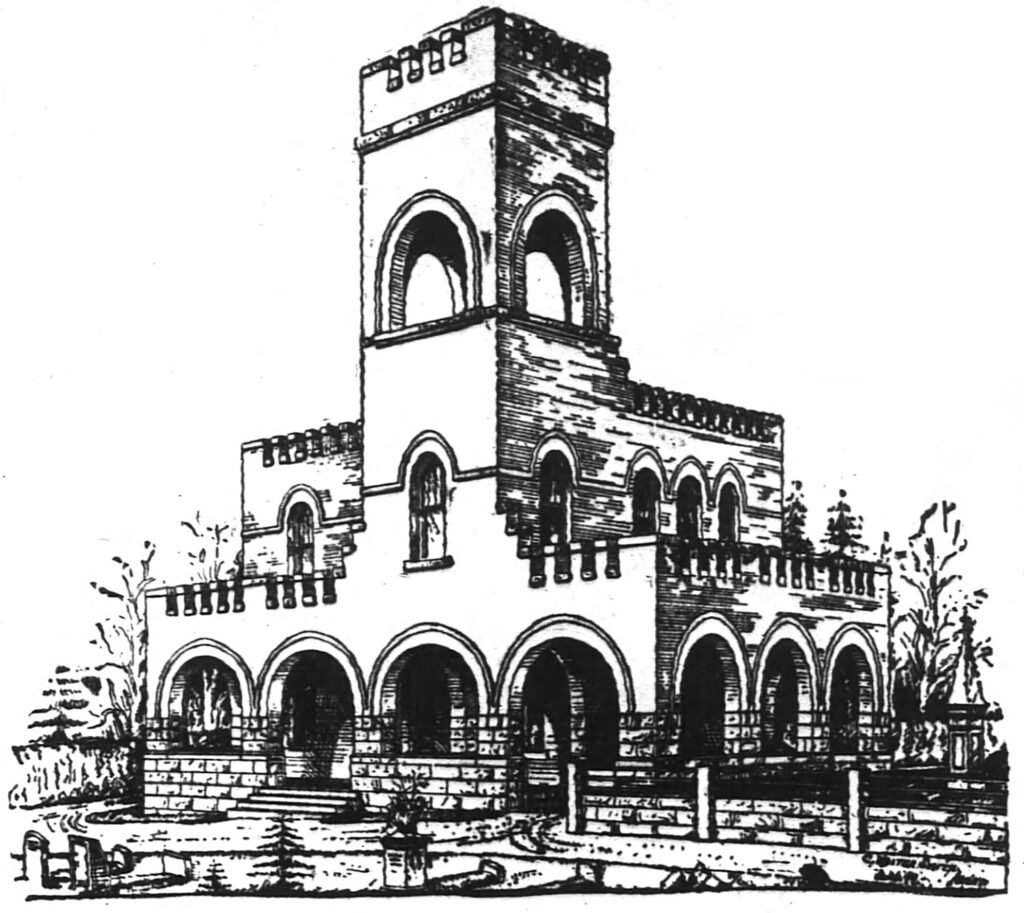
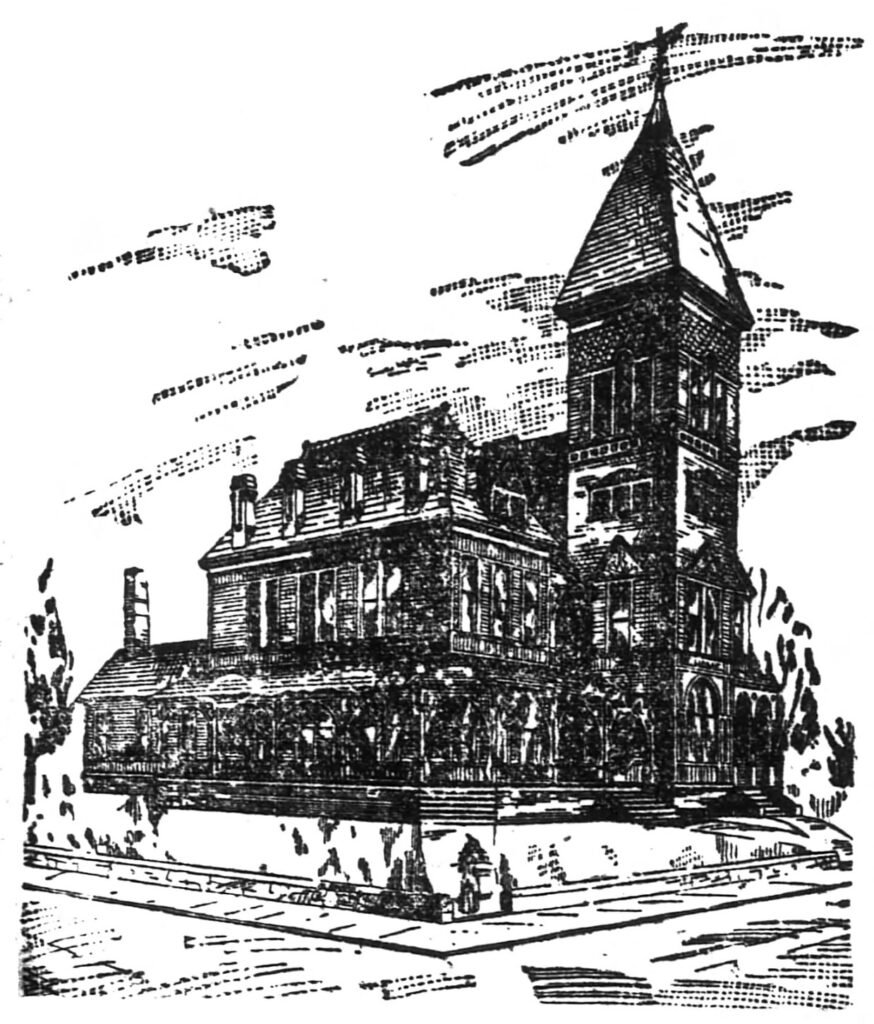
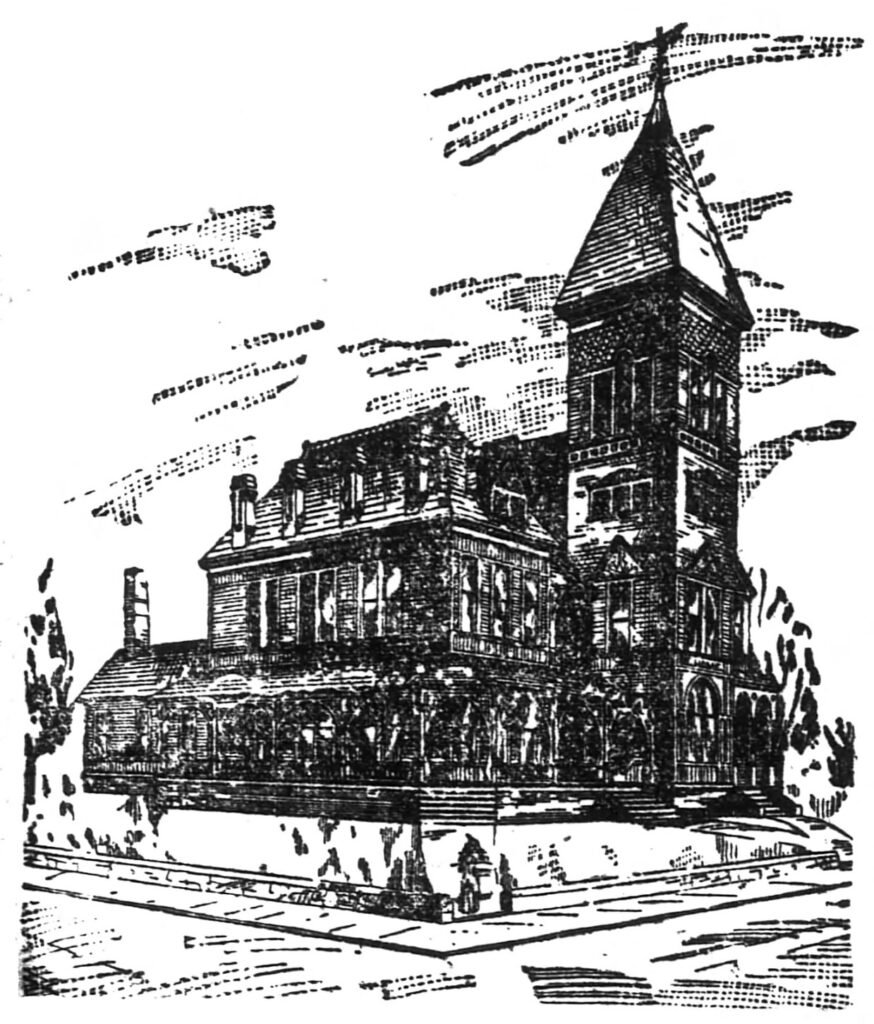
    C. Walter Smith. Public Comfort Building at Oakland Cemetery (1899). Atlanta.6

    An illustration from 1899 (pictured above) reveals the building’s original design: a one-story porch topped by battlements originally flanked the south facade, and a porte-cochère to accommodate wagons was attached to the east side.

    Curiously, the final design was reversed, with the porte-cochère moved to the west side of the structure, likely one of “a few slight changes” announced before construction began.7

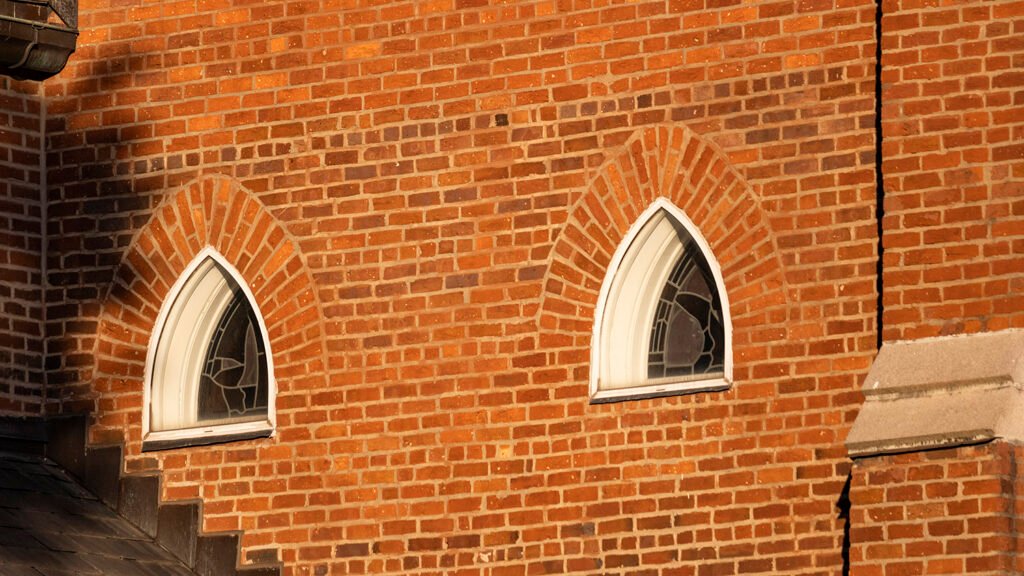
    Roman arches on the porch and bell tower, and Gothic-style arched windows on the second floor completed the appearance of a small, storybook castle — again, Smith borrowed significantly from Norrman for the aesthetic.
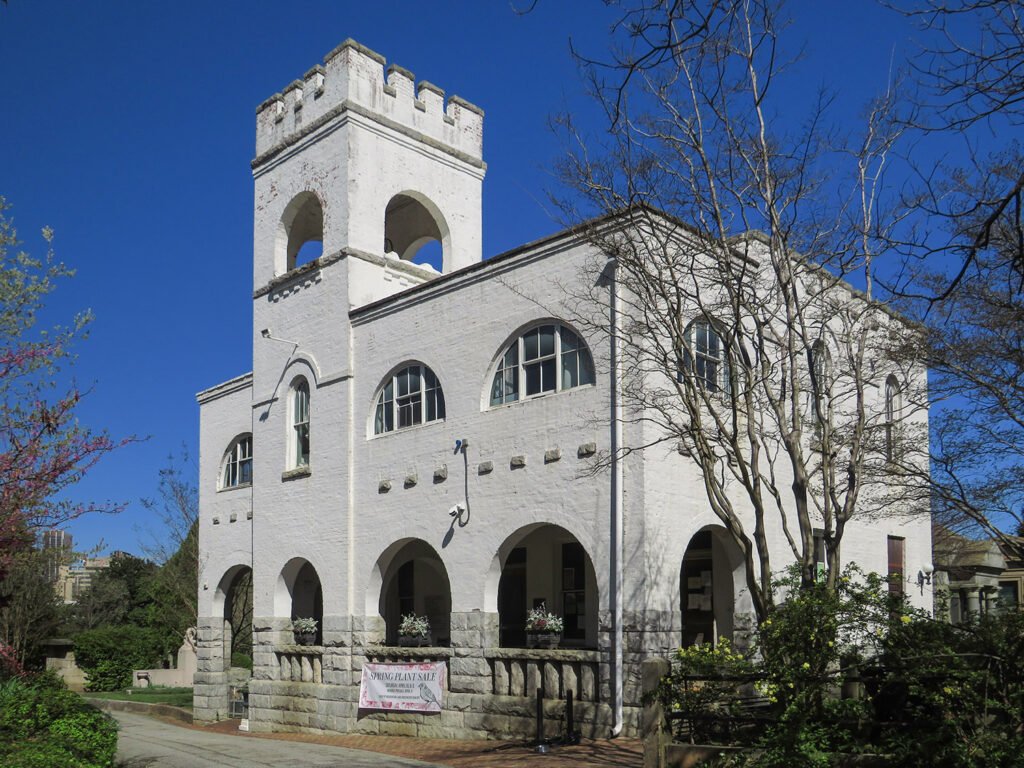
    South facade of the Public Comfort Building

    In its original conception, the building was one of Smith’s better designs. Despite years of training under “the South’s most prominent architect”8 — his words — Smith’s skill never came close to Norman’s high level of artistry, although his work here was at least intriguing.

    Unfortunately, the initial vision was compromised by the later addition of second-floor porches over the front porch and porte-cochère, topped with flat roofs and punctuated by incongruent half-round openings.

    I suspect the porches were added circa 1908, when the cemetery spent $5,000 on a range of improvements9 following its first annual report to the city, which requested $1,000 for “needed changes and repairs in the main building.”10

    The effect of the alterations is detrimental: the upper porches add unnecessary visual mass to the structure and pull focus away from the bell tower, robbing the entire composition of the uplifting, monumental effect Smith originally intended.
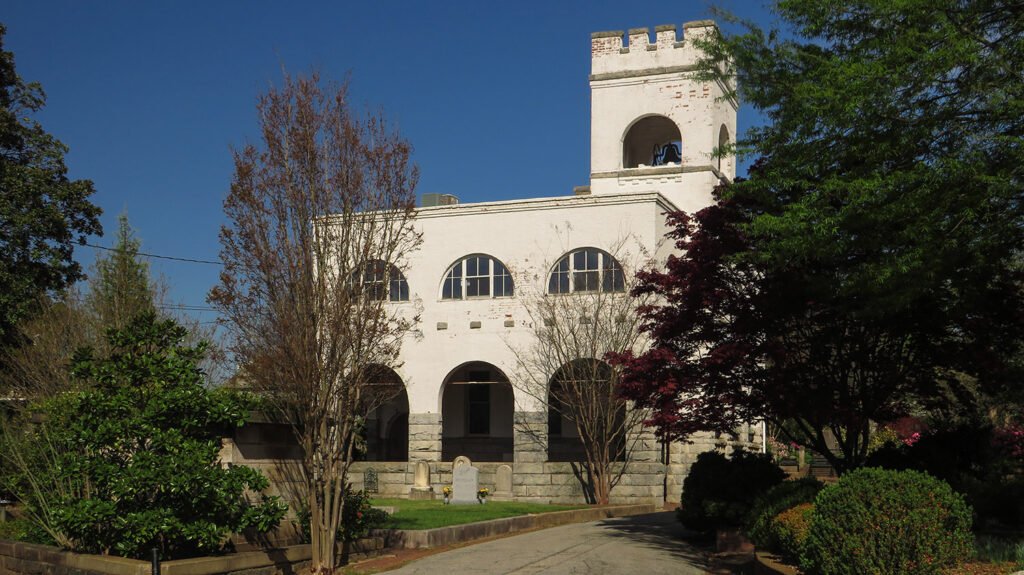
    West elevation of the Public Comfort Building

    “Public comfort” was a polite 19th-century euphemism for restrooms, which were originally housed on the ground floor of the structure.

    When the building was completed in October 1899, The Atlanta Journal delicately noted: “Here one now finds a convenience and comfort that was lacking for many years.”11 I guess early visitors just had to hold it — or maybe piss on a grave.

    There were initially six rooms in the building, including a ladies’ parlor and an “apartment for gentlemen.” All six rooms had tiled mantels,12 which was apparently noteworthy. Two of the mantels remain intact.

    The structure also included an office for the cemetery’s sexton,13 and Oakland Cemetery’s website claims the building contained a chapel, with the second floor used as the sexton’s residence. So many uses for such a small structure.

    Second-floor windows on the Public Comfort Building

    Despite its fanciful design, the building was, at heart, purely utilitarian, “suitable for the purposes for which it is intended,”14 as the Journal put it.

    People need to pee, of course, but the building’s other raison d’être was concealed in the basement.15 The structure was built on the site of a converted 2-story farmhouse16 known as the “dead house”17 — you can see where this is going.

    As the Journal explained:

    “There is a vault with eight catacombs and sixteen racks. This is as strong and substantial as could be made. For the retention of bodies for any length of time the catacombs will answer every purpose, as they are built to be air-tight for years to come. The racks, as a matter of course, are intended as a temporary place of keeping and are conveniently arranged. When the iron gate to the vault is locked entrance is practically impossible.”18
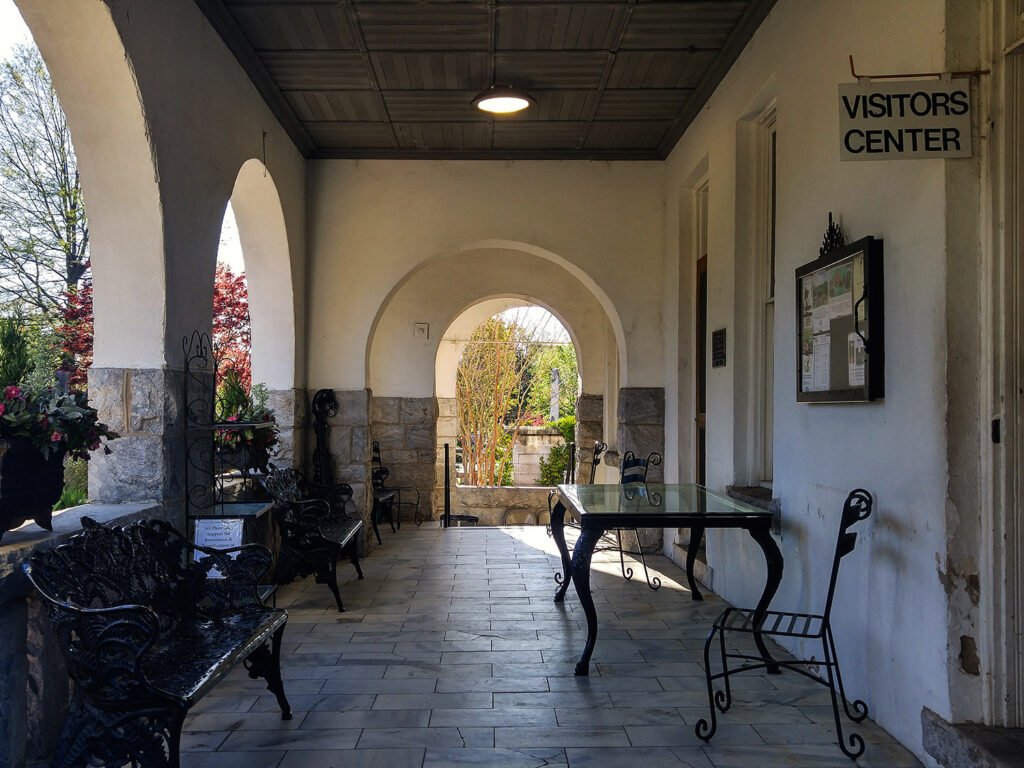
    Front porch of the Public Comfort Building

    Since Oakland is a public cemetery operated by the city of Atlanta, the building was funded by an appropriation from the city council.19 The Atlanta Building Company secured the contract with the lowest bid, and the project’s total cost was $4,600,20 with $650 spent on the stone.21

    Construction on the building was initially slated to begin on April 27, 1899,22 but was apparently delayed until June and completed in four months.23

    Although early plans called for the construction of one or two additional public comfort buildings in the cemetery,24 those never materialized, and this structure remained the only significant public building at the site, altered many times over by piecemeal repairs and alterations.

    When the Historic Oakland Foundation was formed in 1976 to preserve and maintain the cemetery’s historic integrity, the building became office space for the organization, with the ground floor converted into a small visitors center,25 a function that it served for decades.
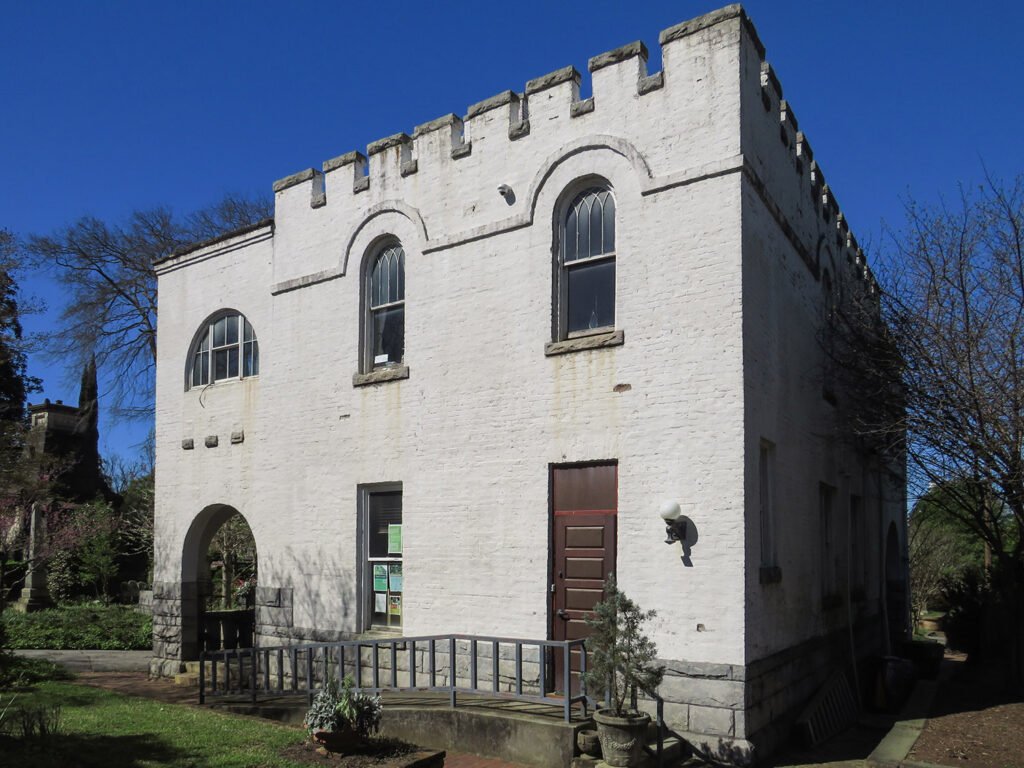
    East elevation of the Public Comfort Building

    In 2022, as Oakland Cemetery prepared to build a much larger visitors’ center outside its main entrance, the former Public Comfort Building was given a gut renovation designed by Smith Dalia Architects, Atlanta’s finest firm for the adaptive reuse of historic structures.

    The project included tearing out the hodgepodge of rooms on each floor for larger, open spaces, removing god-awful windows added to the second-floor porches, and making necessary accessibility alterations, which altered a portion of the front porch.26 27

    The building reopened later that year28 as an event space: the fallback choice when owners don’t know what to do with a historic structure.

    Following its renovation, the building now appears a little too clean and gleaming — I actually preferred it when it was worn and shabby — but it still has an undeniable anachronistic charm that’s uncommon in Atlanta.

    And as one of just six known extant works by Walter Smith, it’s also a matter of curiosity, if nothing else.
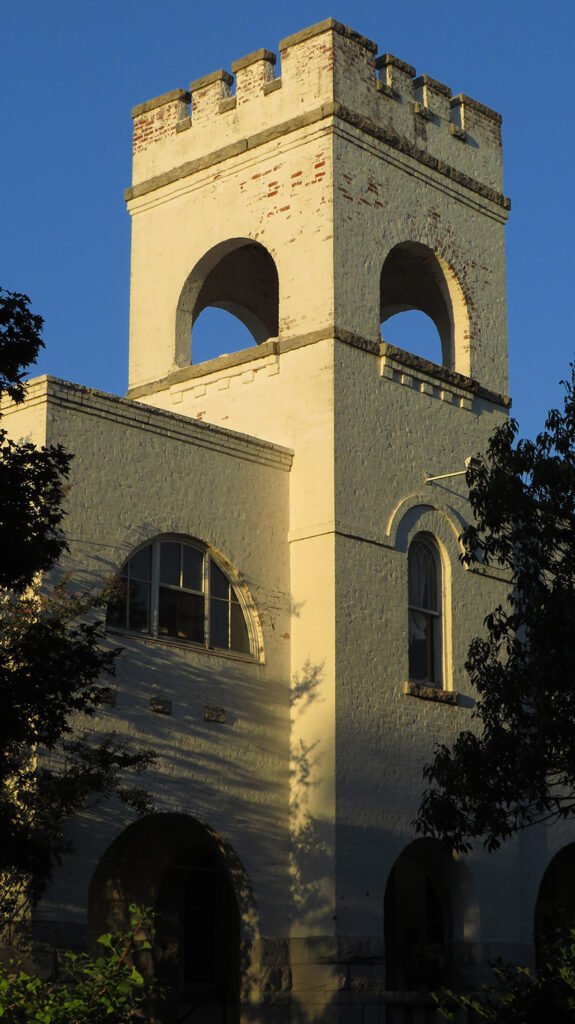
    Bell tower on the Public Comfort Building

    References

    1. Perspectives in Architecture: A new era for Oakland’s historic bell tower – Rough Draft Atlanta ↩︎
    2. “New Building To Be Erected At Oakland Cemetery”. The Atlanta Journal, April 14, 1899, p. 7. ↩︎
    3. “Big Improvement At The Cemetery”. The Atlanta Journal, October 13, 1899, p. 9. ↩︎
    4. “New Building To Be Erected At Oakland Cemetery”. The Atlanta Journal, April 14, 1899, p. 7. ↩︎
    5. ibid. ↩︎
    6. Illustration credit: ibid. ↩︎
    7. “Notice to Contractors.” The Atlanta Journal, April 4, 1899, p. 9. ↩︎
    8. “A Card.” The Atlanta Constitution, March 1, 1893, p. 10. ↩︎
    9. “Work Of Joyner For Last Two Years Reviewed”. The Atlanta Constitution, January 5, 1909, p. 4. ↩︎
    10. “Cemetery Commission Makes First Report”. The Atlanta Constitution, January 5, 1908, p. 8. ↩︎
    11. “New Building To Be Erected At Oakland Cemetery”. The Atlanta Journal, April 14, 1899, p. 7. ↩︎
    12. “Big Improvement At The Cemetery”. The Atlanta Journal, October 13, 1899, p. 9. ↩︎
    13. ibid. ↩︎
    14. ibid. ↩︎
    15. ibid. ↩︎
    16. Sections and Landmarks – Oakland Cemetery ↩︎
    17. “Big Improvement At The Cemetery”. The Atlanta Journal, October 13, 1899, p. 9. ↩︎
    18. ibid. ↩︎
    19. ibid. ↩︎
    20. “New Building To Be Erected At Oakland Cemetery”. The Atlanta Journal, April 14, 1899, p. 7. ↩︎
    21. “Mosley & Co. Get $390”. The Atlanta Journal, May 25, 1900, p. 5. ↩︎
    22. “New Building To Be Erected At Oakland Cemetery”. The Atlanta Journal, April 14, 1899, p. 7. ↩︎
    23. “Big Improvement At The Cemetery”. The Atlanta Journal, October 13, 1899, p. 9. ↩︎
    24. “Cemetery Commission Makes First Report”. The Atlanta Constitution, January 5, 1908, p. 8. ↩︎
    25. Perspectives in Architecture: A new era for Oakland’s historic bell tower – Rough Draft Atlanta ↩︎
    26. ibid. ↩︎
    27. Historic Oakland Cemetery Bell Tower – The Georgia Trust ↩︎
    28. Ribbon cutting to be held for Oakland Cemetery’s refurbished Bell Tower – Rough Draft Atlanta ↩︎
  • Catholic Shrine of the Immaculate Conception (1873) – Atlanta

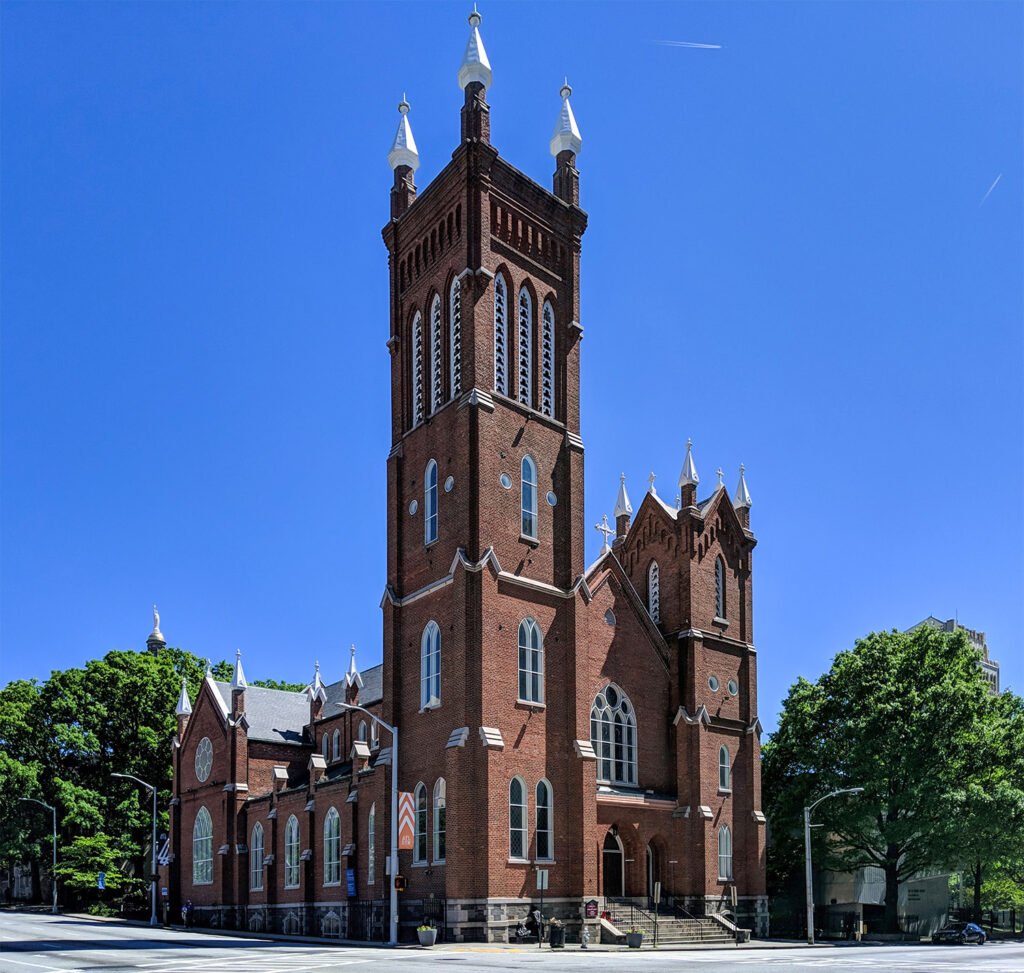
    W.H. Parkins. Catholic Shrine of the Immaculate Conception (1873). Atlanta.1 2 3
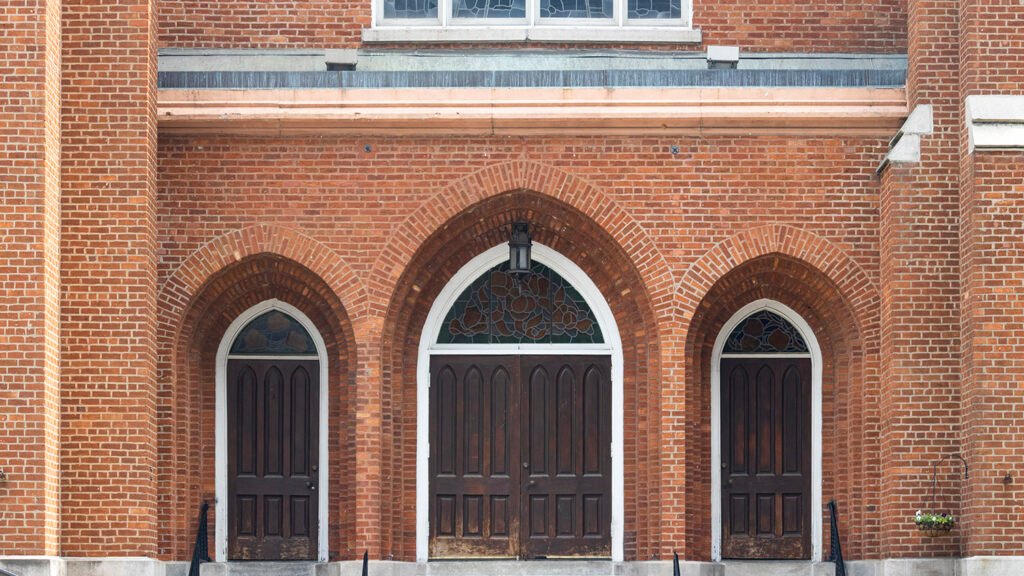
    Entrance of the Catholic Shrine of the Immaculate Conception
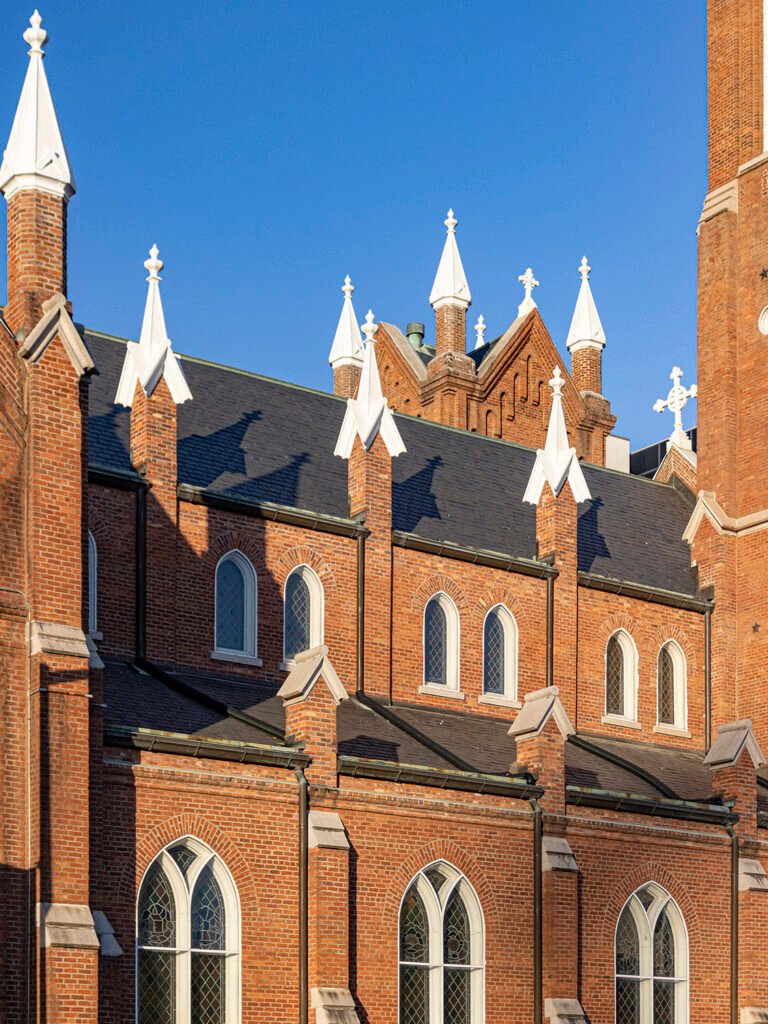
    North elevation of the Catholic Shrine of the Immaculate Conception
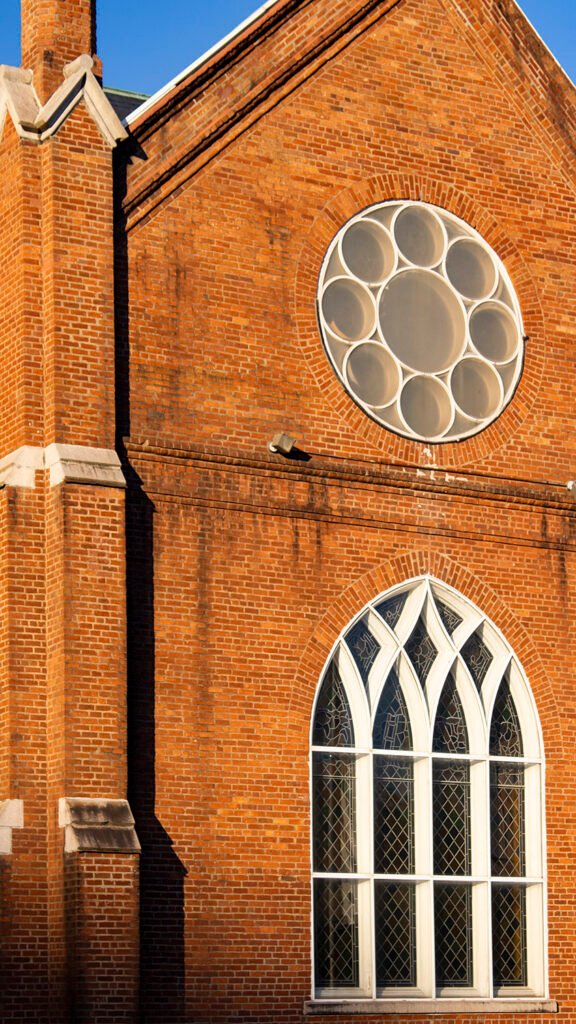
    Transept on the north elevation of the Catholic Shrine of the Immaculate Conception
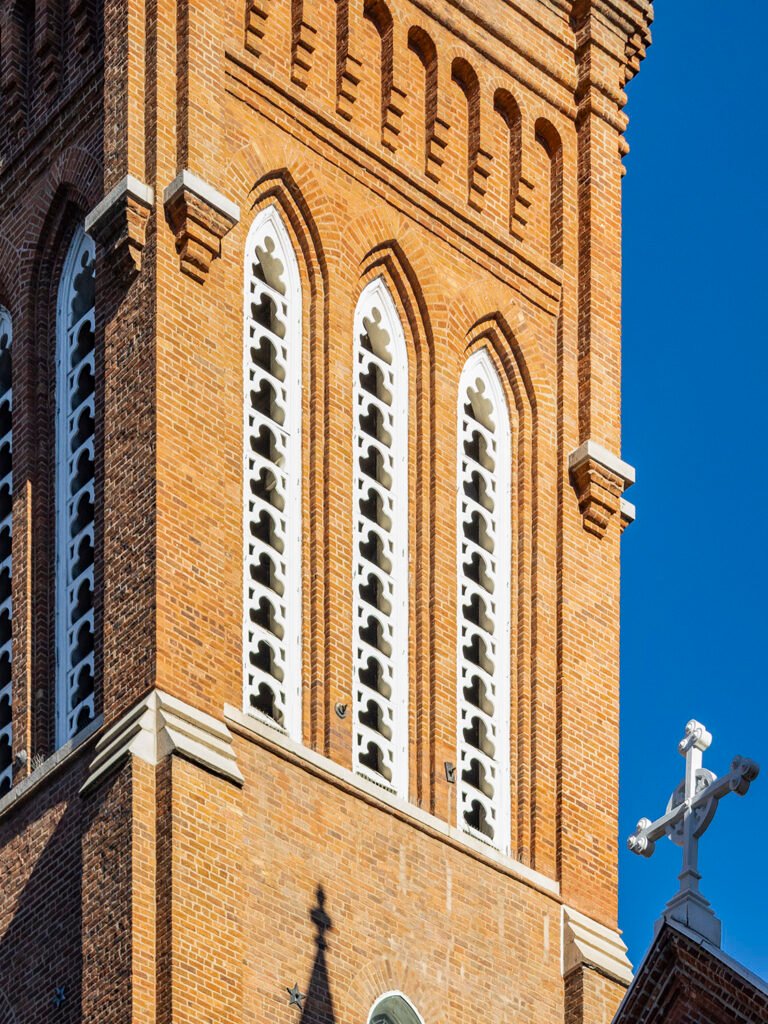
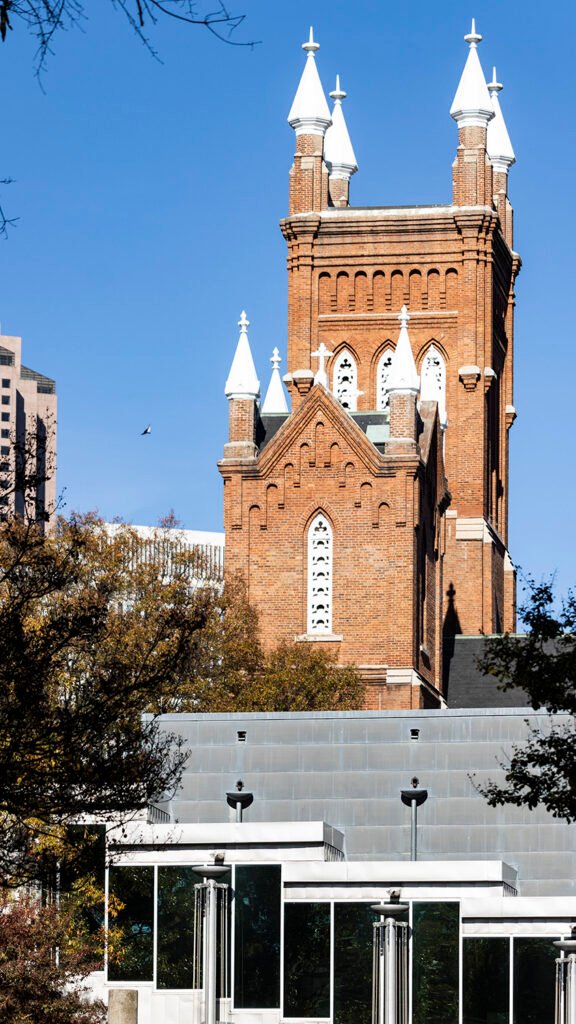
    Bell tower on the Catholic Shrine of the Immaculate Conception
    Windows on the east elevation of the Catholic Shrine of the Immaculate Conception
    Looking toward the Catholic Shrine of the Immaculate Conception from the south

    References

    1. “Notice!” (advertisement). The Atlanta Constitution, April 25, 1869, p. 2. ↩︎
    2. “Dedication of the New Roman Catholic Church.” The Atlanta Constitution, December 7, 1873, p. 8. ↩︎
    3. “A Brilliant Day.” The Atlanta Constitution, January 13, 1880, p. 4. ↩︎
  • United States Post Office (1933) – Atlanta

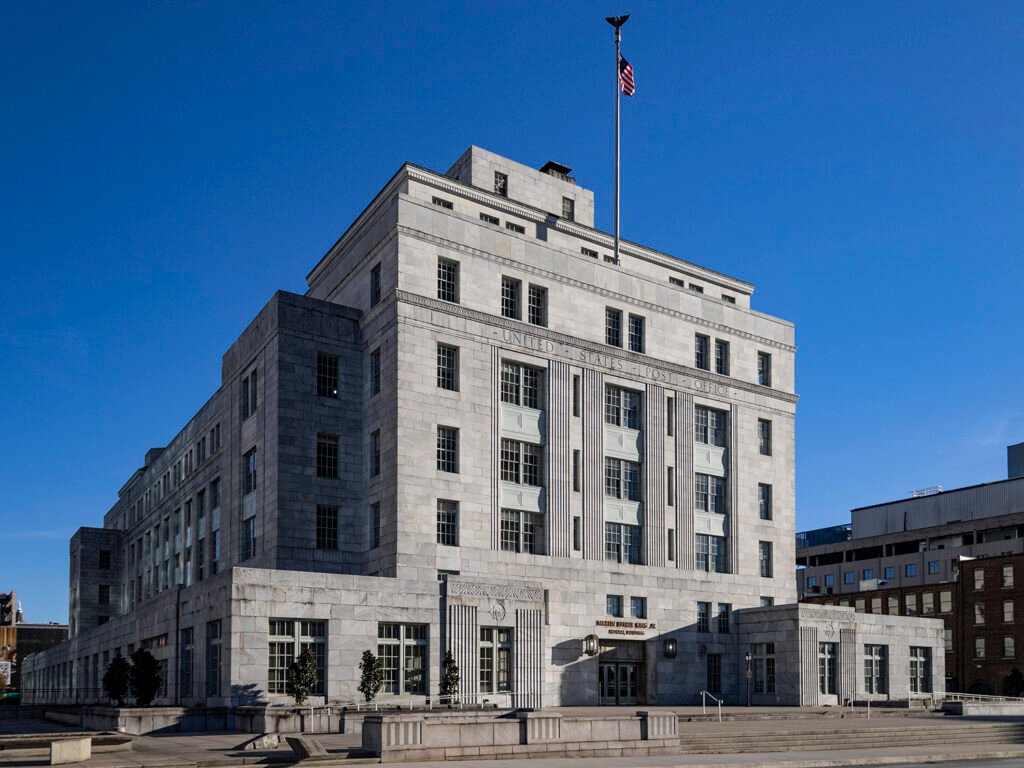
    A. Ten Eyck Brown with A. Barili, Jr. and J.W. Humphreys, associate architects. United States Post Office (1933). Atlanta.

    Don’t let Atlanta historians fool you: A. Ten Eyck Brown (1878-1940) likely had little to do with the design of this monumental structure, which ranks among the most exquisite buildings in the city.

    Opened in December 19331 as the United States Post Office, it appears the project was primarily designed by Brown’s associate architects, Alfredo Barili, Jr., and J. Wharton Humphreys, who established their own firm a few years later.2

    Compare the later works credited to Brown with those of his early years, and it’s clear that his own skills were inadequate for the more sophisticated designs that emerged from his firm in the 1920s onwards — this project is no exception.

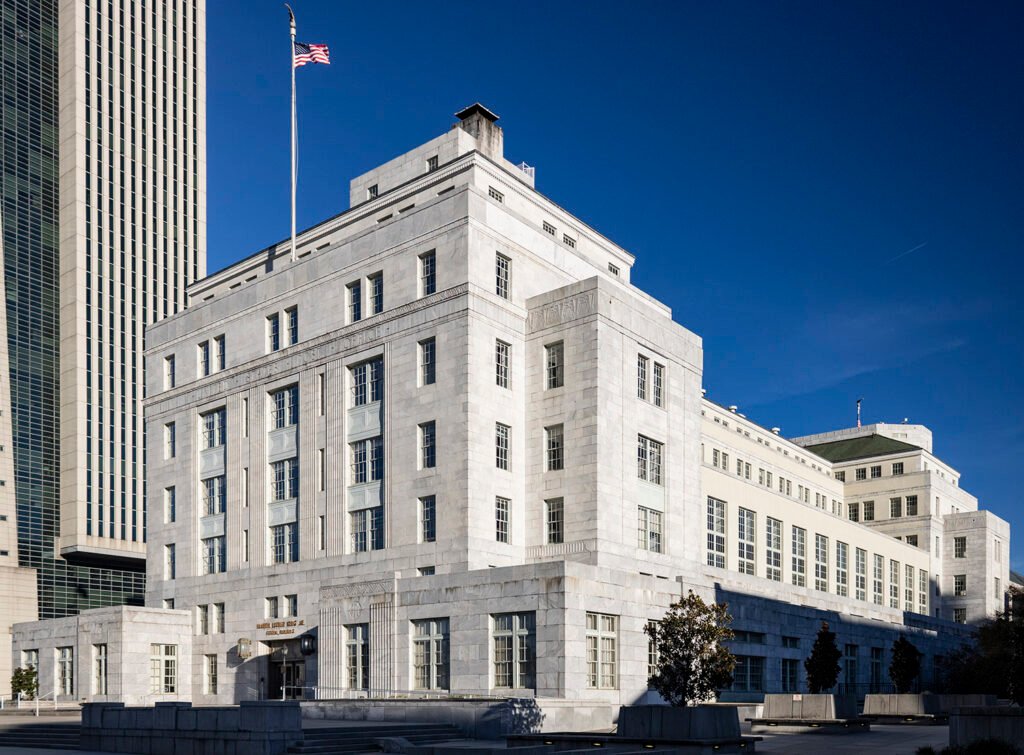
    East facade of the United States Post Office

    Designed in the Classical Moderne style, the building sits atop a base of Stone Mountain granite and is sleekly clad in Georgia marble.3

    The structure’s otherwise smooth facades on the east and west are punctuated by a trio of slightly recessed bays that recall Brown’s earlier design for the Fulton County Courthouse, but the effect is much more successful here.

    Indeed, the courthouse design is a joyless mess: the building’s facade is cluttered with windows of varying sizes, and the deeply-recessed center bay, supported by six multi-story columns, resembles a giant jail grating.

    In this design, the variation of the bays is much more subtle, and the windows are given space to breathe, providing enough contrast and visual balance for a pleasing and cohesive composition.

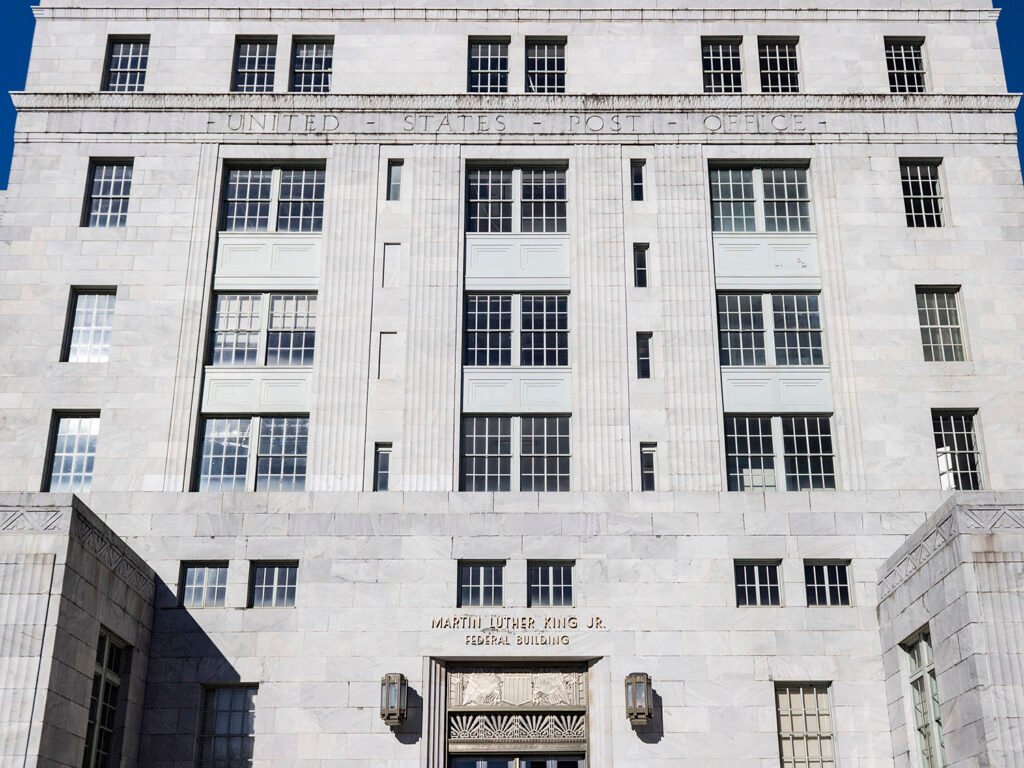
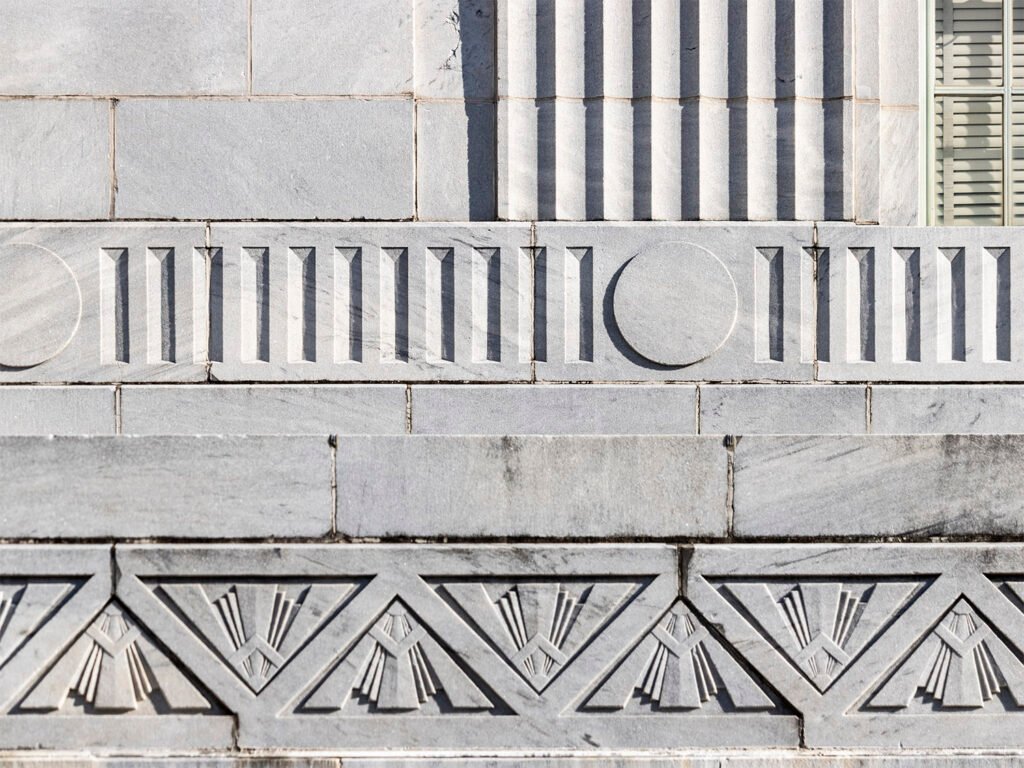
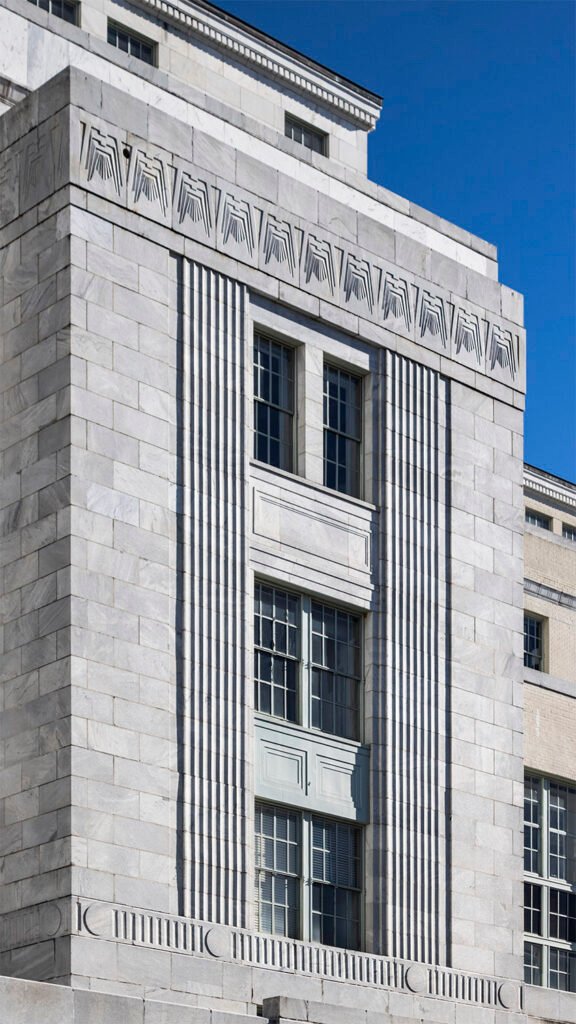
    This building also shines in its incorporation of fine textural detail, trimmed with pilasters, friezes, and stringcourses in stark geometric patterns, many of pre-Columbian inspiration. Emphasizing the structure’s bold ziggurat form, the design evokes the image of some ancient American temple dropped into a modern metropolis.

    Detail of ornamentation on the United States Post Office

    The project was completed for the princely sum of $3 million,4 and the volume of materials used in its construction is staggering: the structure is composed of 12,222 pieces of marble totalling 4,798,404 pounds, with the largest block weighing 8,400 pounds.5

    Atlanta, of course, never pays for quality architecture, and this bulwark of a building exists only because it was bankrolled by the United States government.

    At the time, federal building projects were supervised by the U.S. Treasury, and Brown was a natural choice to pick as the lead architect, since he began his career in the office of the supervising architect of the Treasury.6 7

    Brown was approaching the end of his life and career in the 1930s and was well-respected in Atlanta and the Southeast. Known as “Tony” to his friends,8 he became one of the city’s wealthiest architects in the early 20th century, with his firm designing dozens of large-scale public buildings across multiple states, although it appears his fortunes were greatly reduced during the Depression.

    Preston Stevens of Stevens & Wilkinson described him as “debonair and attractive,” and recalled a claim by another architect, Francis P. Smith, who said that ‘”Tony” could almost hypnotize his clients by sitting across the table from them and sketching designs upside down.’9

    Detail of the bay on the southwest corner of the United States Post Office

    I can’t criticize Brown too much for claiming primary credit on this project, as most architects of the era did the same. The myth of the lone designer had long become untenable, and by the turn of the 20th century, every Atlanta architect managed a team of design assistants.

    As building projects grew increasingly larger, costlier, and more complex to manage, most prominent architects effectively became figureheads, promoting their businesses and securing commissions while delegating actual design work to their employees.

    It’s well documented that numerous projects credited to Atlanta architects of the time, like W.T. Downing, Morgan & Dillon, W.A. Edwards, and Hentz, Reid & Adler — to name a few — were designed by assistants, many of whom went on to establish their own firms.

    Brown at least had the decency to share credit with the actual designers of his projects — often listing them as associate architects or supervising architects — a practice he began in 1922, when he was appointed the supervising architect for more than twenty public school buildings in Atlanta,10 11 nearly all of which were designed by other architects.12 13

    Contrast his approach with, say, G. Lloyd Preacher, who claimed credit for every work produced by his firm, although it’s abundantly obvious which projects weren’t his own. The most striking example is Atlanta’s fine neo-Gothic city hall, credited to Preacher but designed by one of his employees, George H. Bond,14 who was an infinitely more talented designer.

    Questions of credit aside, the former United States Post Office (later renamed the Martin Luther King, Jr. Federal Building) is one of the few structures in the city with any actual design caliber, and its quality of craftsmanship and attention to detail are unknown to modern architecture, in Atlanta or elsewhere.

    References

    1. Hamilton, Tom J., Jr. “Leaders Laud Administration Policies at Dedication of Atlanta’s New $3,000,000 Post Office Building”. The Atlanta Journal, December 3, 1933, p. 1. ↩︎
    2. “Barili & Humphries Architectural Firm Is Announced Here”. The Atlanta Journal, February 21, 1937, p. 6-D. ↩︎
    3. “New Post Office Is Dedicated And Accepted By City”. The Atlanta Journal, February 19, 1933, p. 1-B. ↩︎
    4. Hamilton, Tom J., Jr. “Leaders Laud Administration Policies at Dedication of Atlanta’s New $3,000,000 Post Office Building”. The Atlanta Journal, December 3, 1933, p. 1. ↩︎
    5. ibid. ↩︎
    6. “New P.O. Building Praised”. The Atlanta Constitution, March 27, 1931, p. 7. ↩︎
    7. “Noted Architect Succumbs Here At Age of 62”. The Atlanta Constitution, June 9, 1940, p. 1. ↩︎
    8. Stevens, Preston. Building a Firm: The Story of Stevens & Wilkinson Architects, Engineers, Planners Inc. Atlanta (1979), p. 67. ↩︎
    9. ibid. ↩︎
    10. “A. Ten Eyck Brown Made Supervising School Architect”. The Atlanta Constitution, January 21, 1922, p. 1. ↩︎
    11. “May Start Building Of 30 New Schools In Near Future”. The Atlanta Journal, January 22, 1922, p. 1. ↩︎
    12. “School Building Program Adopted By Board Friday”. The Atlanta Constitution, March 25, 1922, p. 1. ↩︎
    13. “Architect To Split School Plan Work”. The Atlanta Journal, March 25, 1922, p. 9. ↩︎
    14. Stevens, Preston. Building a Firm: The Story of Stevens & Wilkinson Architects, Engineers, Planners Inc. Atlanta (1979), p. 70. ↩︎
  • Carrie Steele Orphans’ Home – Atlanta (1889)

    Bruce & Morgan. Carrie Steele Orphans’ Home (1889, unbuilt). Atlanta.

    The Background

    The following article was published in The Atlanta Constitution in December 1889 and discusses the proposed design for the Carrie Steele Orphans’ Home, prepared by Bruce & Morgan of Atlanta.

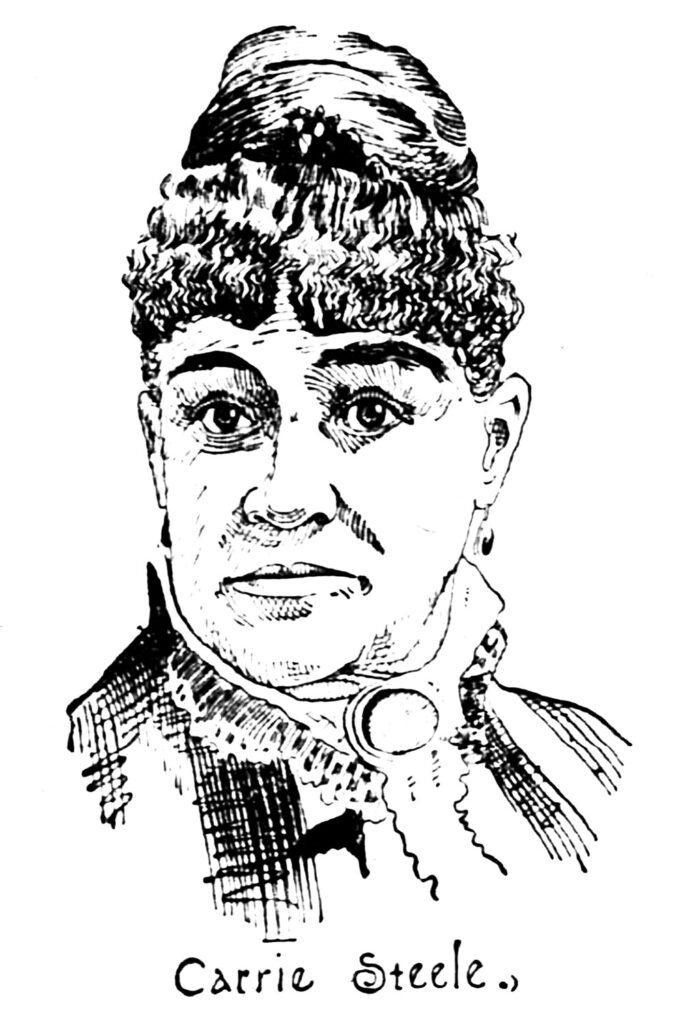
    Carrie Steele Logan (pictured here1)was “well known and highly respected”2 in both the White and Black communities of Atlanta in the late 19th century. Born into slavery in 1829,3 she worked for many years as an attendant in Atlanta’s passenger depot,4 5 where she reportedly became distressed by the “little army of street vagrants who ran around the depot entrance.”

    Steele ultimately quit her job, “impressed with the responsibility of rescuing the little tots that struggled for existence,” and according to the Constitution, “as she left the depot she led several homeless waifs to her home on Wheat street.”

    In 1887, Steele began raising money to build an orphanage for Black children, which the Constitution described as a “praiseworthy work,” opining that: “The home will do a vast amount of good in recovering from lives of vice and crime the little negroes who run around our streets ragged, friendless and homeless…”

    Note that in this article, Albert Howell, one of the orphanage’s early supporters, claimed that the home would “take the little negro waifs and make good servants of them.”

    Steele was a tenacious advocate for the project, pursuing every possible fundraising method. In 1888, she even published a book of anecdotes about her time working in Atlanta’s depot, titled Life and Adventures of Mrs. Carrie Steele, Stewardess Atlanta Depot, with proceeds funding the orphanage.6

    Lacking land for the project, in 1889, Steele petitioned the City of Atlanta,7 8which granted her a 99-year lease9 on a 4 to 5-acre parcel10 11 near the intersection of Fair Street and Flat Shoals Road (now the southeast corner of Memorial Drive SE and Holtzclaw Street SE).

    Location of Carrie Steele Orphans’ Home

    Steele reportedly “made many friends among the white people”,12 and it’s a testament to her reputation that the orphanage’s construction was funded by several of Atlanta’s wealthiest citizens, including Jonathan Norcross,13 who was, by all accounts, a miserly old asshole.

    In March 1890, The Atlanta Journal said of Steele’s fundraising efforts:

    “Almost all the prominent white people in the city have contributed something to the good cause, and to those who have not we desire to say that you could not contribute to a more laudable undertaking.”14

    Construction on the orphanage began in July 1890,15 but because it had to be built in stages as funding permitted, the project was completed in May 1892.16 However, the final structure wasn’t the one designed by Bruce & Morgan.

    The original design had apparently been dropped by May 1890, when Steele bought 30,000 bricks for the project17 18 — note that the plan described and illustrated here was for a wood-frame building.

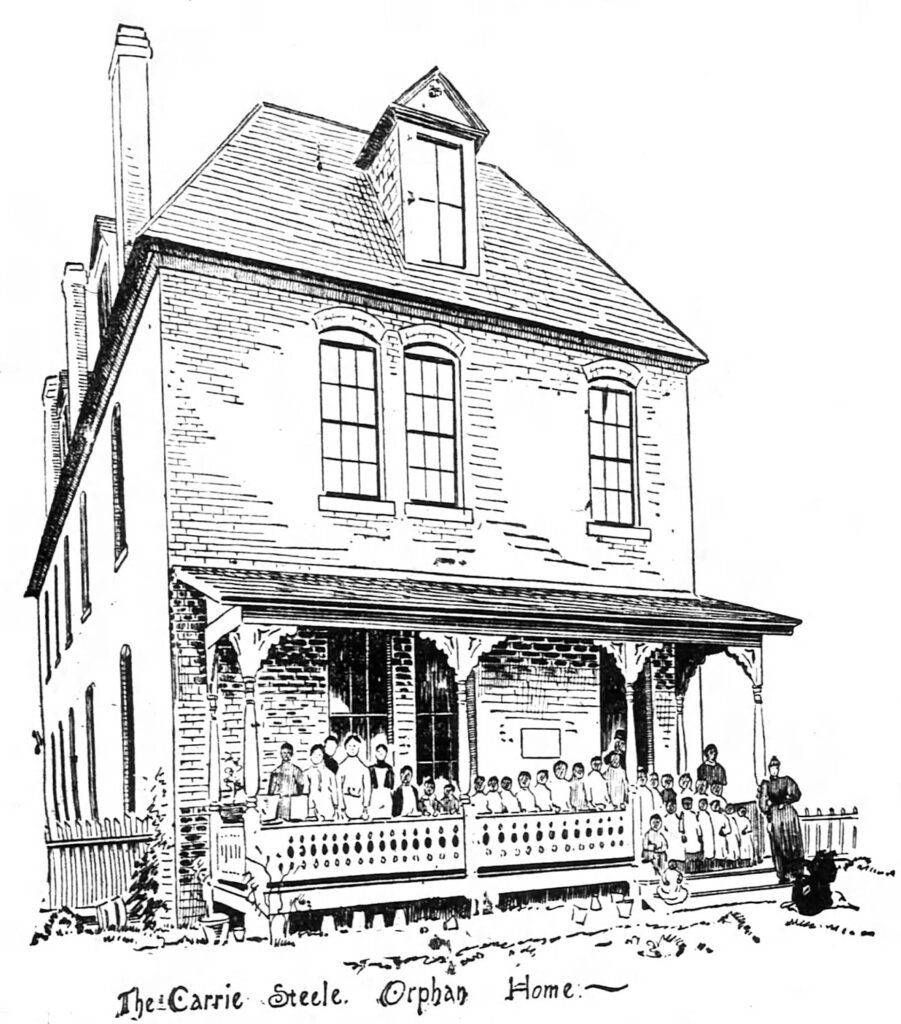
    Architect unknown. Carrie Steele Orphans’ Home (1892). Atlanta.19

    The plain brick structure that was ultimately built for the orphanage appears to have had no designer — or at least, not a good one. Containing 13 rooms,20 the orphanage housed 36 children at its dedication,21 and by 1896, it sheltered 75 children between the ages of one and fifteen years old.22

    In 1894, Steele told a reporter from the Constitution:

    “If these were my own children I could not love them more than I do. They all look up to me as if I were their mother, and come to me with all their little troubles as if I always had a remedy for them. I have had a great many discouragements and trials, but when I look back over these years and see how the Lord has taken care of me and my children, I feel that I ought to be thankful.”23

    Steele died in November 1900 at the age of 61, two months after a debilitating stroke.24 Her funeral was reportedly attended by 3,000 people,25 with the Constitution reporting that “the church was filled to overflowing and about half of the audience was composed of whites.” She was buried in Oakland Cemetery, the final resting place of Atlanta’s most distinguished citizens.

    Steele’s husband managed the orphanage until he died in 1904,26 which continued operating under a succession of directors, notably Clara M. Pitts, who managed the home from 1919 to 1950.27

    In 1928, the orphanage left its original property on Fair Street and moved to the Pittsburgh neighborhood in southwest Atlanta.28 Later renamed the Carrie Steele-Pitts Home, the orphanage moved to Faiburn Road in west Atlanta in 1964,29 where it remains in operation as the oldest black orphanage in the United States.30


    For Negro Orphans.

    The Good Work Which Carrie Steele Has Done.

    The Home As It Will Appear When Finished
    — What a City Officer Has To Say About It — Other Notes of Interest.

    “That’s the best investment Atlanta has ever made.”

    Colonel Albert Howell was the speaker. As he made the remark he pointed to an architect’s drawing of the Carrie Steele Orphan home.

    “Yes,” said Colonel Howell, “that is one of the most sensible charities ever inaugurated, and to one woman belongs the credit for its inception and the good work that has already been done. Carrie Steele is a good woman, and I know she deserves every success in this life work of hers. For it is a life-work. It is two years now since the project was conceived by Carrie, or rather since she gave up her position at the carshed that she might devote her whole time to this home. She has labored honestly and earnestly for its success, and she expects to devote the rest of her life to it.”

    Colonel Howell has shown his faith by his works. It was through his influence as alderman that the lease on the four acres of city land, upon which the home will stand was extended from ten to ninety-nine years. And in all her efforts to secure city aid, Colonel Howell has been one of Carrie Steele’s most staunch supporters.

    “It is a good thing for Atlanta as well as the state at large–this orphans’ home,” he said yesterday. “For it is the intention of the people interested in the home to take the little negro waifs and make good servants of them. The education they receive will all be in the direction of practical usefulness.”

    The home will be located on the Flat Shoals road where Fair street will intersect it. This is about two and a half miles from the center of the city and is delightfully located.

    The building, which, when completed, will look like the accompanying cut, will be a frame structure built in the most substantial manner. The building when finished which will contain, on the first floor an office and room for matron, with two school rooms, chapel and large dining room, with kitchen and laundry rooms, for teaching kitchen work. The second floor will contain dormitories, bath rooms, and all modern conveniences, and in every way adapted to the purposes for which it is intended. The plans were prepared by Messrs. Bruce & Morgan, and preparations are being made for commencing the work at once.

    It is the intention of the projector to start with one wing, and use that for the purposes of the home. Then as the years go by and the home gets well started, the building will be completed.31

    References

    1. Illustration credit: “Training The Colored Children”. The Atlanta Constitution, June 7, 1896, p. 3. ↩︎
    2. “The Colored Orphans’ Home.” The Atlanta Constitution, June 9, 1889, p. 3. ↩︎
    3. Carrie Steele Logan: A ‘Mother’ to Atlanta’s Orphans | Atlanta History Center ↩︎
    4. ibid. ↩︎
    5. “Carrie Steele Gets Married.” The Atlanta Journal, February 16, 1889, p. 2. ↩︎
    6. “Carrie Steele’s Book.” The Weekly Telegraph (Macon, Georgia), March 6, 1888, p. 8. ↩︎
    7. “The City’s Finances.” The Atlanta Journal, January 21, 1889, p. 1. ↩︎
    8. “Local Law Makers.” The Atlanta Constitution, January 22, 1889, p. 5. ↩︎
    9. “The City Fathers”. The Atlanta Constitution, November 19, 1889, p. 3. ↩︎
    10. “The Carrie Steele Orphan Home.” The Atlanta Constitution, July 2, 1889, p. 8. ↩︎
    11. “Home For Colored Orphans.” The Atlanta Journal, May 9, 1890, p. 3. ↩︎
    12. “Carrie Steele Died Last Night”. The Atlanta Constitution, November 4, 1900, p. 7. ↩︎
    13. “The Atlanta Orphan Home.” The Atlanta Journal, February 13, 1890, p. 3. ↩︎
    14. “Atlanta Orphan Asylum.” The Atlanta Journal, March 12, 1890, p. 4. ↩︎
    15. “Foundations Laid”. The Atlanta Journal, July 4, 1890, p. 1. ↩︎
    16. “City Notes.” The Atlanta Constitution, May 2, 1892, p. 5. ↩︎
    17. “Home For Colored Orphans.” The Atlanta Journal, May 9, 1890, p. 3. ↩︎
    18. “The Good Work of Carrie Steele”. The Atlanta Constitution, May 10, 1890, p. 4. ↩︎
    19. “Training The Colored Children”. The Atlanta Constitution, June 7, 1896, p. 3. ↩︎
    20. “The Colored Orphans.” The Atlanta Journal, August 16, 1892, p. 5. ↩︎
    21. “The Colored Orphans’ Home.” The Atlanta Constitution, June 21, 1892, p. 10. ↩︎
    22. “Training The Colored Children”. The Atlanta Constitution, June 7, 1896, p. 3. ↩︎
    23. “Her Own Work.” The Atlanta Constitution, April 15, 1894, p. 23. ↩︎
    24. “Short Items Of Local Interest”. The Atlanta Constitution, November 7, 1900, p. 9. ↩︎
    25. “What The Negro Is Doing”. The Atlanta Constitution, November 11, 1900, p. 4. ↩︎
    26. “Josiah Logan, Well-Known Negro, Died Tuesday”. The Atlanta Constitution, November 16, 1904. ↩︎
    27. Scott, Stanley S. “Groundbreaking Exercises For Children’s Home Sunday”. Atlanta Daily World, February 15, 1964, p. 7. ↩︎
    28. “New Home for Carrie Steele Colored Orphanage To Be Dedicated Wednesday”. The Atlanta Constitution, May 27, 1928, p. 19 A. ↩︎
    29. Scott, Stanley S. “Groundbreaking Exercises For Children’s Home Sunday”. Atlanta Daily World, February 15, 1964, p. 7. ↩︎
    30. Carrie Steele Logan: A ‘Mother’ to Atlanta’s Orphans | Atlanta History Center ↩︎
    31. “For Negro Orphans.” The Atlanta Constitution, December 1, 1889, p. 15. ↩︎
  • “All the Girls Give ‘Em Up” (1898)

    The Background

    The following article was published in The Looking Glass on January 22, 1898, and provides what it describes as “an appalling list of openly avowed Atlanta bachelors” at the time, including G.L. Norrman (1848-1909).

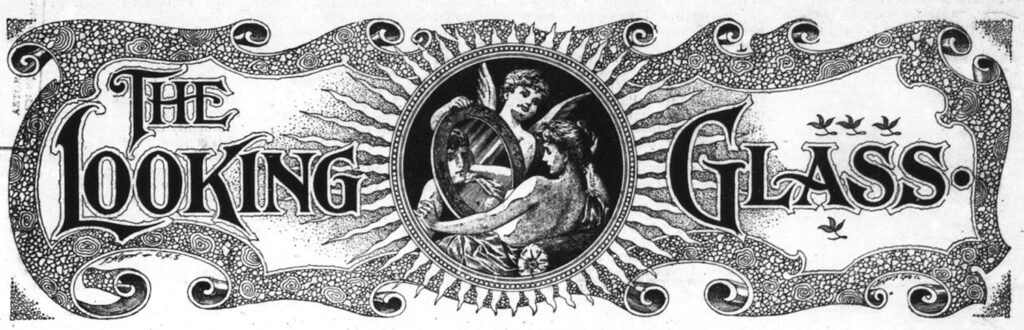
    The Looking Glass was a short-lived but notorious tabloid newspaper published weekly in Atlanta from 1895 to 1898, and it’s safe to say that pretty much everyone in the city read it, even if they’d never admit to it.

    Chock-full of photographs, oversized illustrations, and comic sketches, The Looking Glass was a visual feast compared to the drab pages of The Atlanta Constution and The Atlanta Journal, but what made made the publication so sensational was that it regularly dished on the lurid exploits of what it referred to as “Atlanta’s 400” — a sarcastic swipe at the city’s wealthiest citizens, inspired by the Four Hundred of New York.

    The members of Atlanta society who were regularly fawned over in the pages of the Constitution and the Journal were mercilessly mocked in The Looking Glass, with irresistible blind items that laid bare their infidelity, divorces, drug and alcohol addictions, and bankruptcies — among other social embarrassments.

    Absolutely no one who was anyone in Atlanta was spared byThe Looking Glass, which scandalously pushed against every conceivable social taboo of the time — it even had an illustration of a nude woman on its banner.

    A few random excerpts will give you an idea of why the newspaper was so popular:

    “The interesting rumor that a naked man was in the habit of parading the neighborhood of Grant Park has caused great excitement in the vicinity…”1

    “There is a certain high building in Atlanta, the roof of which furnishes an excellent coigne of vantage from which to survey the surrounding country. It is reached–the roof, I mean–by a ladder like flight of stairs leading up from a loft, and it is quite a common thing for lady visitors to repair thither to enjoy the superb view. The offices on the several floors of the building contain a good many young men who are no better than young men usually are, and some of them lately made the discovery that the fair visitors, ascending and descending, like the angels in Jacob’s dream, formed a series of living pictures quite eclipsing anything ever seen on the stage. One of the discoverers owns a hand camera, and with the aid of this instrument he has perpetuated the delectable vision in a number of different views”2

    “One of the numerous divorce cases which will be heard at the ensuing term of the Superior Court will in all probability develop a little story which contains about as many elements of the dramatic as are usually to be found in a single passage of every-day life… Some time ago the husband began to suspect (or so he claims) that his wife was taking more interest than she should in a certain friend of the family who was a frequent visitor at the domestic hearth… he proceeded to lay a trap for his friend and his spouse…”3

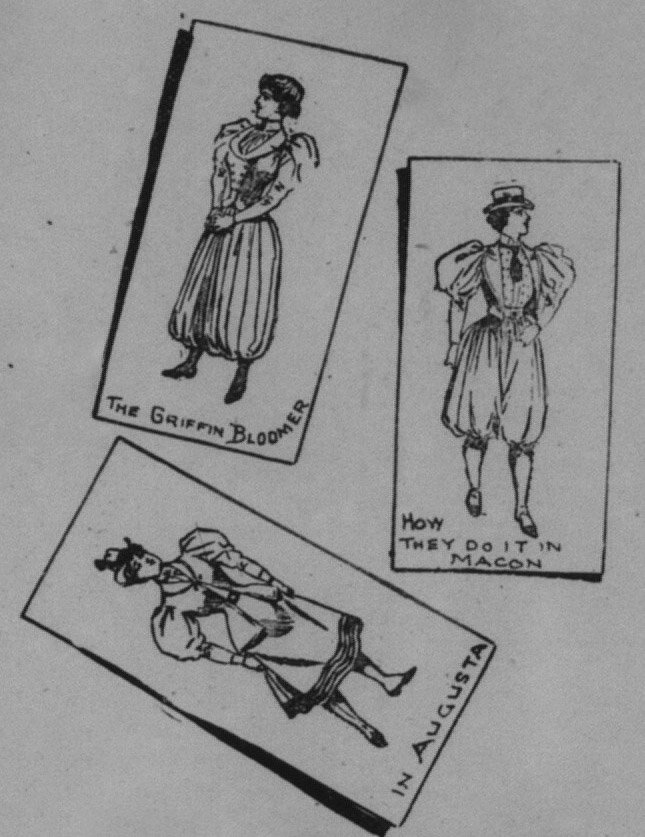
    “That there is a prejudice against bloomers is not to be denied, but The Looking Glass begs to doubt whether it is a puritanical prejudice. The objection is not ethical it is aesthetic. Bloomers are unpopular and generally reviled, not because they are immoral, but because they are ugly. They are a clumsy and ineffectual compromise between the graceful, comfortable and artistic knickerbockers and the flapping skirt, and alike all compromises, reproduce the bad points of both extremes, without their redeeming qualities.

    “A woman may be as shapely as Venus and as graceful as a fawn, but nothing will prevent her from looking like a guy the moment she thrusts her legs into a pair of meal sacks. A very loose nether garment, gathered in at the ankles, and superabundantly wide at the hips, is inherently grotesque, and neither youth nor beauty can save it from provoking a smile.”4

    That’s right, your ancestors were whores and perverts, too.

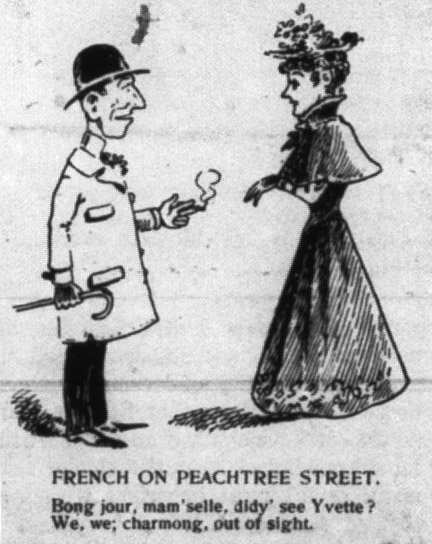
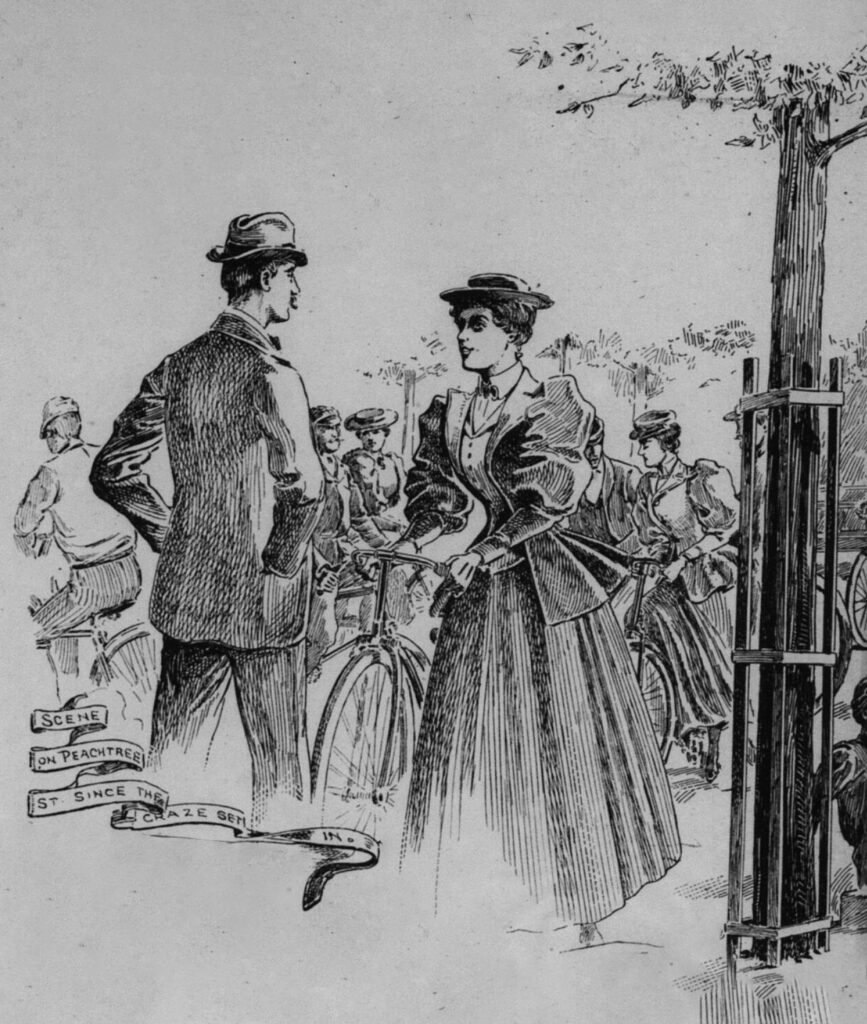
    Illustration from The Looking Glass5

    Needless to say, the tone of the following article is quite tongue-in-cheek, and the pseudonymous writer, a.k.a. “The Spinster”, writes about the Atlanta “men who have long been given up as hopeless by even the most persistent of the managing mammas.”

    Many of the “confirmed bachelors” listed here are also named in a somewhat similar article published in the Constitution two years earlier (see Atlanta’s Attractive Prizes for Leap Year Girls), and I suspect the writer of each was the same.

    But of course, The Looking Glass was much more provocative, and this article may have been at least a partial outing of some of the city’s closeted gay men at the time — God knows Atlanta is still full of them.

    Certainly, some of the phrasing here appears to be euphemistic: Jim Nutting is described as the most “impregnable man in bachelordom”, Hugh Boyd Adams is compared to an “old maid”, and Oscar Brown is said to be “one of the most incorrigible of the entire lot”.

    As always, history provokes more questions than it provides answers.

    Illustration from The Looking Glass6

    ALL THE GIRLS GIVE ‘EM UP.

    Atlanta’s Brigade of Confirmed Bachelors, Young and Old.

    Men Who Are Useful in Society, but Who Have Long Since Ceased to Be an Object of Solicitude on the Part of Designing Mammas–An Interesting Roster.

    I have noticed that the LOOKING GLASS has from time to time commented on the scarcity of marriages in Atlanta society and has suggested several reasons why this state of affairs exists. Chief among then, if I remember correctly, was the assertion that a majority of our young men look askance at matrimony because they are too poor to properly maintain a wife.

    So far as this theory goes it is correct, but it does not entirely cover the ground. I have studied the situation carefully and have come to the conclusion that the idea of matrimony, aside from the necessary additional expense which it entails, is becoming more and more distasteful to society men. Each year the free-to-come-and-go life of the clubs absorbs more and more of our really eligible bachelors, and they are irreclaimably lost so far as the girls and their mammas are concerned.

    One has only to look at the appalling list of openly avowed Atlanta bachelors–men who have long been given up as hopeless by even the most persistent of the managing mammas–to realize that I am right. Many of these men are entirely eligible, so far as money, good looks and intellect are concerned, but they are regarded as absolutely incorrigible. They dance attendance on the debutantes of each succeeding season, go to all the different functions and eat the dinners of anxious mammas–but they don’t marry. Neither does anyone expect them to marry; they have been in the swim for years and occupy a distinct place which they have made for themselves. However, such men are extremely useful members of society; they can always be depended upon to accept an invitation or keep an engagement, and they invariably put themselves out to make the debutantes have a good time.

    Sam Hall was a typical specimen of the class of which I am speaking. He was seen everywhere, knew every one worth knowing, was an undoubted authority on matters of social import, and led a cotillion gracefully. But who ever seriously thought Sam would marry?

    Another confirmed bachelor who has departed from our midst, and who has seen the alternate hope and despair of scores of girls, is Tom Paine. For a number of years he was regarded more or less seriously, and if half I hear is true, he had some very narrow escapes. But he was eventually given up as an irreclaimable, and all hopes of leading him to the altar were abandoned.

    At present Jim Nutting enjoys the distinction of being the most impregnable man in bachelordom. Jim has been in society since the time when man’s memory runneth not to the contrary. He has seen scores of his old flames led to the alter, and even assisted in the capacity of best man; on many of these occasions he has stood godfather to countless infants, but if he ever allowed the idea of matrimony to cross his mind, he dismissed it immediately.

    Bob Shedden has caused many a heart to beat high in anticipation of the momentous question, but the question was like the letter in the popular ballad–it never came.

    Hugh Boyd Adams is another man who has taken the veil, and who would not exchange his home at the club for any consideration. He is as punctilious about his social obligations as an old maid, but if you suggested matrimony to him he would stamped like an untamed broncho at the approach of an express-train.

    Godfrey L. Norrman is thoroughly wedded to his books and his artistic pursuits, and never gives marriage a second thought–at least, so he says.

    Daniel Rountree has all but dropped out of society, and is applying himself to his profession to the exclusion of all other matters. He is young, rich and good-looking, but he is apt to die in single blessedness.

    George Stearns is still young, but he is fast falling in line with the other confirmed bachelors and it is pretty safe to say that he will never marry.

    Gordon Kiser is one of the few ideal society men we have left. He has made society a study, and devotes a good deal of time to it, but he is generally regarded as not at all likely to exchange his present contented existence for one beset with doubts and fears. The girls have counted him out of the running.

    There was a time when John Ryan was the subject of a good deal of solicitation among enterprising mothers, but they have long since given up trying to hook him and have turned their attention to other directions.

    Lieutenant Oscar Brown is an enthusiastic clubman and popular diner-out, but he is also one of the most incorrigible of the entire lot.

    Our other confirmed bachelors might be catalogued thus: Harry English, Frank Orme, Charley Ryan, Robert Ryan, John J. Eagan, Fred J. Paxon, Lucius McClesky, Will Black, Peter Grant, Jack Slaton, Isham Daniel, Jim McKeldin, Reuben Hayden, Walter Kirkpatrick and Henderson Hallman.

    The Spinster.7

    References

    1. The Looking Glass (Atlanta), May 15, 1897, p. 9. ↩︎
    2. The Looking Glass (Atlanta), July 8, 1895, p. 9. ↩︎
    3. The Looking Glass (Atlanta), January 30, 1897, p. 8. ↩︎
    4. The Looking Glass (Atlanta), June 29, 1895. ↩︎
    5. The Looking Glass (Atlanta), February 27, 1897, p. 1. ↩︎
    6. “The Bicycle Craze Among Atlanta’s 400.” The Looking Glass (Atlanta), July 13, 1895. ↩︎
    7. “All the Girls Give ‘Em Up”. The Looking Glass (Atlanta), January 22, 1898, pp. 2-3. ↩︎

  • “Atlanta’s Attractive Prizes for Leap Year Girls” (1896)

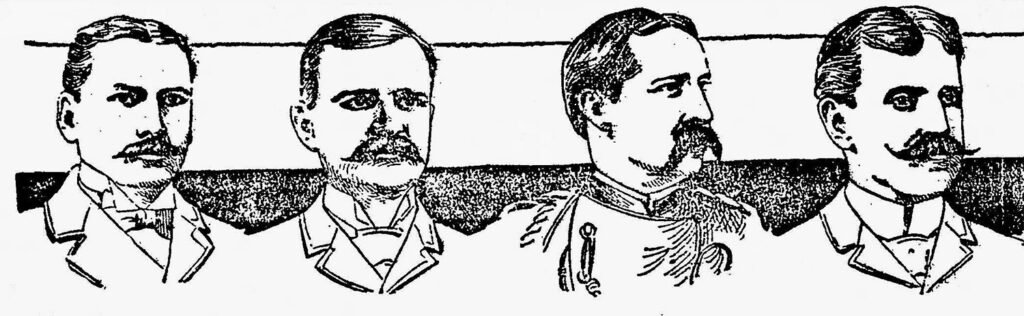
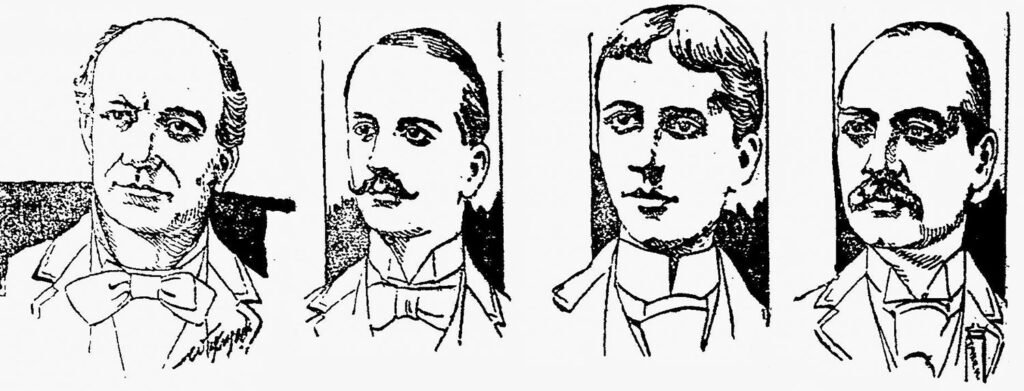
    From left to right: Peter Grant, Jim Nutting, Oscar Brown, Lucius McCleskey

    The Background

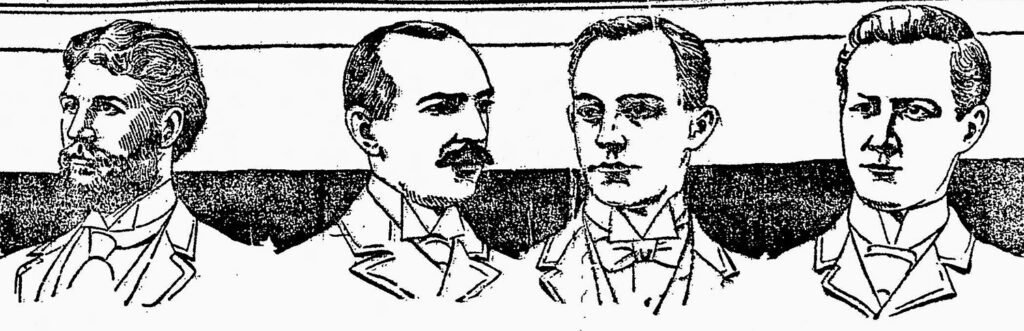
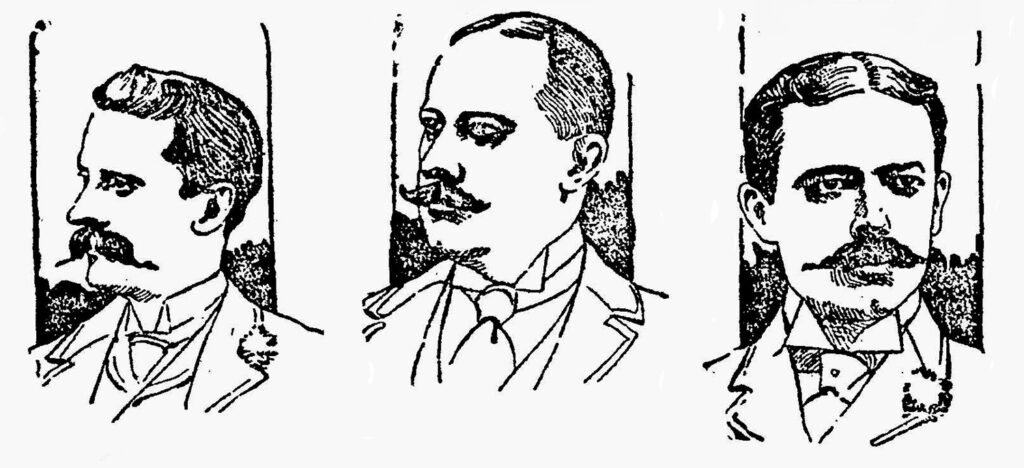
    The following article, published in The Atlanta Constitution in 1896, named the city’s well-known “eligible bachelors” of the time — all White, of course — with accompanying illustrations.

    The article’s conceit is based on an old Irish tradition called “Bachelor’s Day,” where women were allowed to propose to men on February 29, which typically occurs every 4 years.

    As the article points out, however, the leap year was skipped in 1900, so the next opportunity would have been 8 years later, in 1904.

    From left to right: Reuben Arnold, J.W. English, Jr., Fulton Coville, John M. Slaton

    “The Atlanta maiden with half an eye for a good thing is reveling in the prospect,” the writer says of young ladies proposing to men — albeit in jest.

    While restrictive attitudes toward women began loosening in the 1890s, it would have been considered highly improper — and was likely unheard of — for a woman to initiate a romance or marriage, particularly in the patriarchal stronghold of the Deep South.

    “The idea of such a thing,” one woman shrieked to the reporter. “A woman never can make any advances to a man. I expect to be just as reserved as ever this year.”

    From left to right: Isham Daniel, Thomas C. Erwin, Thos. B. Paine

    You have to wonder how many of the men named here were closeted homosexuals, or which ones were frequent visitors to Atlanta’s red-light district. I could certainly hazard some guesses based on the pictures.

    It’s also a little odd to see G.L. Norrman included in the list of eligible “young men”: he was 48 at the time and looked every day of it. Sorry, Godfrey.

    From left to right: G.L. Norrman, Will H. Black, R.F. Shedden, A.E. Calhoun

    This article is an odd, antiquated snapshot of an era whose traditions and values are so far removed from the current age that it’s almost baffling.

    The writer (also a woman) frequently describes Atlanta’s “blushing bachelors” as “gallant” and “chivalrous”, and asks if a man is “obligated by chivalry to accept the offer of the first enamored maiden who throws herself at his feet?”

    Her parting thought is that “…there are acres of younger men whose thoughts are just ripe for lovemaking.”

    …It didn’t mean the same thing back then.


    Atlanta’s Attractive Prizes for Leap Year Girls.

    Splendid Gallery of Local Bachelors Who are the Legitimate Prey of Our Fair Maidens Who Feel Disposed to Take Advantage of the Year 1896.

    Our blushing bachelors are in a state of modest agitation.

    The timid ones are keeping themselves close, and the more coquettish and kittenish ones are giving themselves bewitching airs. They suspect the intentions of every pretty girl they meet and not wishing to inflict the pain of refusal not a few of them have had to discourage fair maiden suitors who have shown a decided preference for them.

    How can they refuse the dear girls? Does leap year give man woman’s privilege of declining, or is he obligated by chivalry to accept the offer of the first enamored maiden who throws herself at his feet?

    These unsettled questions are worrying our Atlanta bachelors and are responsible for much unhappiness among them.

    For instance, Jack Slaton, one of the most charming of our local eligible, is in sore perturbation. Being a candidate, how can he refuse the young women? True, women cannot vote, but their influence upon those who do exercise the right of suffrage in this country is not inconsiderable.

    Neither is Andy Calhoun enjoying his usual quiet.

    “How can a fellow tell a girl that he loves another?” said he. “I wish next year was leap year.”

    These gentlemen represent two sample instances of the feeling of unrest among our bachelors. Others are no less disturbed. Conscious of their charms they cannot see how it is possible for them to survive through the year and retain their gallantry. If they would be so fortunate–or unfortunate–as to pull through the year, they would enter upon the coming twelve months with reputations greatly impaired, and they would be cut and tabooed on every side.

    The Atlanta maiden with half an eye for a good thing is reveling in the prospect. A fine field is before her. Eligibles of every kind and description are at hand. The bald-headed bachelor who has weathered many seasons and passed through more than one leap year unscathed, and who has never yet been melted into tenderness is plentiful. The younger eligible with less experience but not less invulnerability to women’s charms, but who are not without those engaging charms that make a man valuable in a woman’s eyes is also numerous in this city. Then the younger and fresher ones–the social yearlings–with neither experience nor power of resistance, impressionable youths with an eye for beauty and heart for love–there are armies of these–each waiting for some capturing maiden to come and bear him away. The spectacle must fairly dazzle the eyes of our Atlanta girls. Whole acres of young men, legitimate and desirable prey for pleading and matrimonially inclined young women–what a picture to delight the fancy!

    The field is too full of eligibles. Too many of our young men stand as monuments to the philosophy that it is better to live alone than risk the heart in the chances of a modern love affair.

    Just a glance at the list:

    Fulton Coville, who is bravely and gallantly facing the leap year possibilities.

    Judge John Berry, who, too chivalrous to reject a lady, has gone to Florida to escape offers, until his court will convene and occupy all his time.

    Jim McKeldin, who never having been refused and never having refused, does not know how to say “no,” and belongs to the first comer.

    Isham Daniel, who waits for leap year as a poet waits for spring, in the faith that it will some day bring him a prize.

    Thomas B. Paine, who would as leave be captured leap year as any other time.

    Andy Calhoun, who is in mortal fear that he will have to say “no” before the month of roses comes and sets him free. He is seriously thinking of putting an explanatory badge on himself to save himself and the young ladies’ embarrassment.

    Will Black, who sees no reason why a young woman shouldn’t tell a man so if she loves him.

    Hugh McKeldin, who, too modest to press his own claims upon the fairer portion of humanity, fondly hopes that the year will not pass without throwing some appreciative angel in his pathway.

    James W. English, Jr., who is such a strong admirer of the other sex that he deems himself fortunate when they smile upon him–leap year or at any other time.

    R.F. Shedden, who would like to know how the young woman would put the question.

    Hugh Adams, whose popularity during ordinary years is so great as to make him the center of attack during the leap year.

    Jim Nutting, who has such a general admiration and regard for the sex that he would gladly accept the first claimant.

    Peter Grant, who will either learn to say “no” or be captured early in the year.

    G.L. Norrman, who would refuse a lady nothing–not even his hand.

    Lieutenant Oscar Brown, who was fighting Indians all through last leap year and is immensely pleased at the thought of what this year may bring him.

    And a host of others. There are Lucius McClesky, Percy Adams, Alex Hull, Victor Smith, Preston Arkwright, Jack Slaton, Charles E. Harmon, Thomas C. Erwin, Frank Orme, Howell Peeples and an innumerable company of other attractive young men.

    There’s a romance in every name. Each separate man is waiting for the right woman. They are not cynics and they are not certain but that leap year will settle the question for them. Some of them are rather inclined to encourage the leap year girl. Others are less courageous. They are afraid to risk themselves in the hands of a pleading woman.

    There can be no prophesying as to the result of the year among our young men and young maidens. Early in the year–before the year begun, in fact–some of the young men put out the report that they were engaged. They industriously caused this rumor to gain circulation, hoping thereby to shut off the applicants for their hands. But the reports have been exploded and the young men stand convicted of base deception, deception in a cause in which there should be nothing but open and frank dealing. The young women have sworn to make the year a bitter one for these young men. The young women know they guilty offenders and they will make the suffer. The men may wreak a deadly vengeance themselves, however, by accepting some lovely suitor and insisting upon carrying the engagement to its culmination.

    But on the whole the young men are not averse to leap-year love making. Be it said to their credit, they keenly enjoy the outlook. Most of them have rather put themselves in the way than out of the way of love making. If the young women want to propose they cannot complain that the young men have given them no opportunity. Nearly all of the young men have kept up their calls with the old regularity.

    Jim McKeldin says the signs are propitious for a good year for the bachelors.

    “I will not furnish any picture for publication,” he stated to The Constitution last week when called on, “because I do not wish it to gain too wide a circulation during leap year.”

    The shrewd young women of two states are vieing [sic] with each other in their efforts to capture him. Tennessee and Georgia both want him and he says it’s a toss up between the two states as to chances at present.

    Victor Smith is modest. He believes that all things–even proposals–come to him who waits, and while he has not been waiting as long as many of our eligible gentlemen, he hopes that the year will not be entirely unfruitful in a matrimonial way.

    Then, there’s Mr. Harman–Charley Harman–whom the ladies all admire. He escaped the past two leap years through some miracle of misfortune which he alone can explain. The young ladies will not let him pass through this without severe trials. They are organized against him and the married ladies unwilling to see such a charming fellow in single harness, are in league with the younger ones. A steady and well-organized siege is to be laid to the heart of the able railroader and good fellow, and there’s not a doubt that he will surrender before the year ends.

    And Tom Erwin–best of good fellows. Atlanta young women are too sensible to allow him to escape. If he is too busy running a bank to propose himself during the years that the privilege belongs exclusively to the men, the young ladies will not allow him to evade this year. He’s a marked man among the young ladies. It’s a question which one reaches him first and makes the strongest plea.

    “Jim English is lovely,” exclaimed one of Atlanta’s fairest belles last week. “He’s such a good business man above all men. If I make any proposal this year it’ll be to him.”

    And so I might go on ad infinitum. There are many that I have not mentioned but who the young ladies have their eyes on. They will not escape and only a lack of space prevents their mention here.

    There is quite an array of young men. There are Joe Brown, Otis Smith, George Parrott, Mays Ball, Roger Elliott, Ulrich Atkinson, Harry Stearnes, Will Kiser, Quill Orme, ‘Gene Black, Alf Prescott, Walter Kilpatrick, Dr. Roy and many, many more. These young men, too, are legitimate prey for the leap year girls, and it is safe to prophesy that not a few of them will fall victims to the witchery of some maiden.

    And the young women–what do they think about it.

    The fairer portion of Atlanta has never yet settled the question whether it is quite the proper thing for them to propose. They say it is tradition, nothing more.

    “I don’t suppose any nice girl even proposed to a man,” said one of Atlanta’s fairest maidens the other day. “The idea of such a thing. A woman never can make any advances to a man. I expect to be just as reserved as ever this year.”

    And this idea seems all to prevalent. If the women will not exercise their privileges they have only themselves to blame. It is their right to make love to the men this year and the men, like Barkis, are willing. It is the woman’s fault if there is no lovemaking.

    To the backward ones I would suggest that this opportunity will not occur again in eight years. The closing of the century cuts the dear girls out of one leap year, and it will be eight long summers before another chance will come to the women to make love to the men. So the young women had best look to their opportunities and improve them.’

    A survey of the field here in Atlanta will show at a casual glance that the fair maidens have plenty of excellent timber to choose from. There is a fine army of eligible bachelors, pining and aching for the love and sympathy of some tender soul, and there are acres of younger men whose thoughts are just ripe for lovemaking.1

    References

    1. “Atlanta’s Attractive Prizes for Leap Year Girls”. The Atlanta Constitution, March 8, 1896, p. 4. ↩︎

  • Butts County Courthouse (1898) – Jackson, Georgia

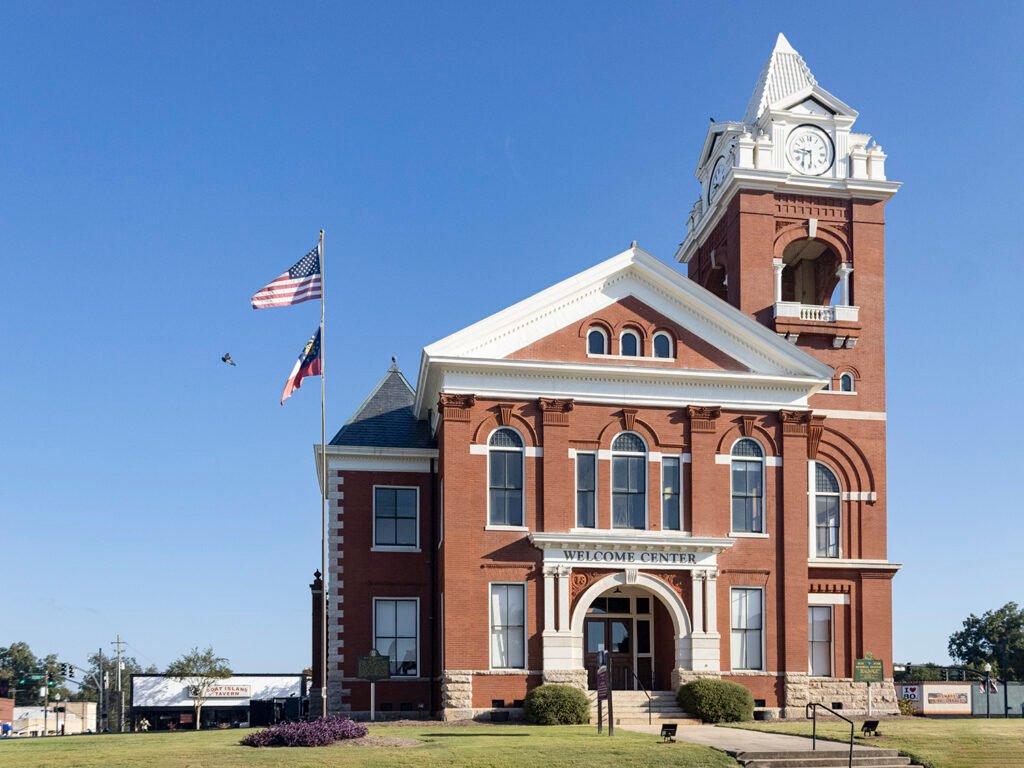
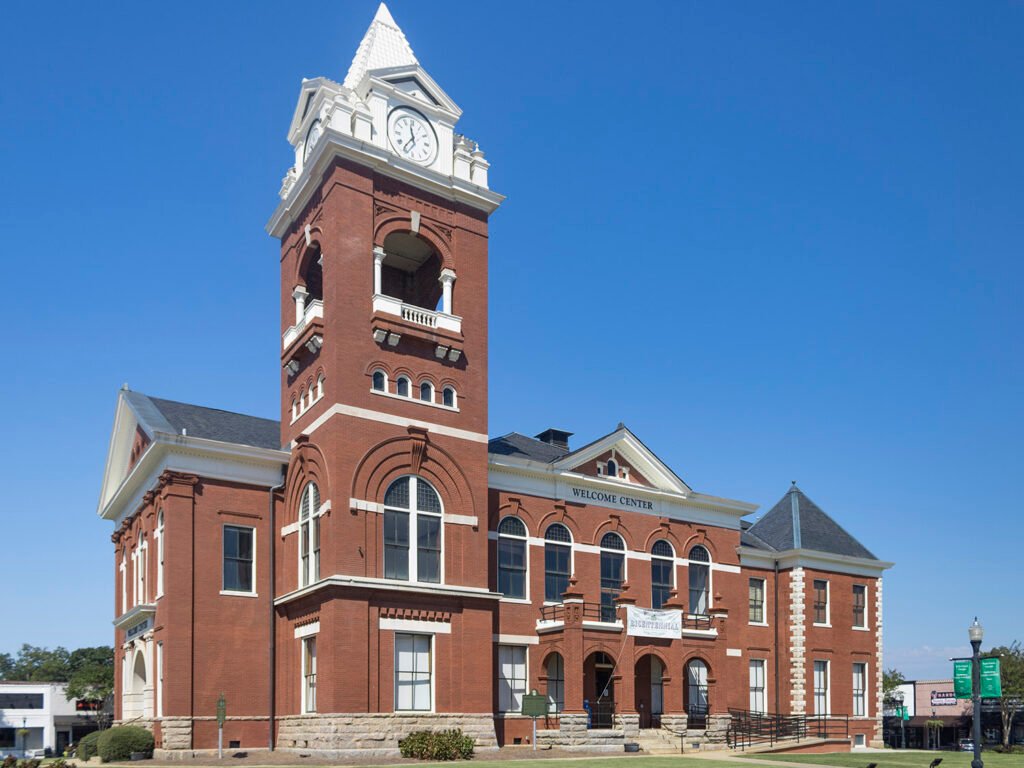
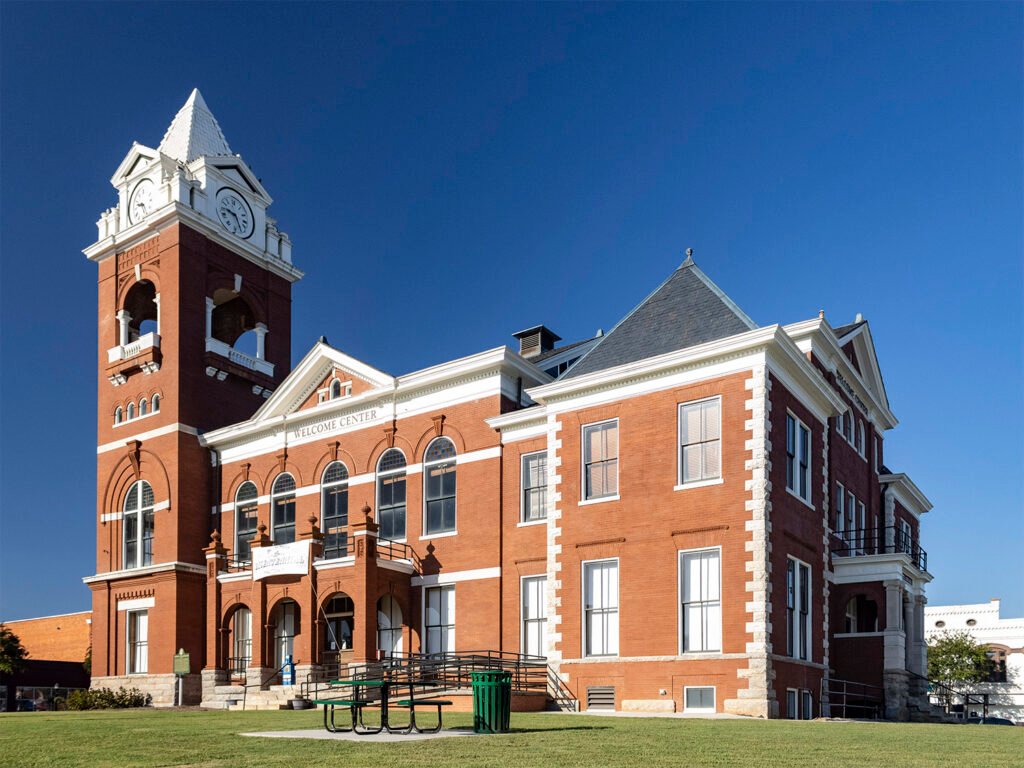
    Bruce & Morgan. Butts County Courthouse (1898). Jackson, Georgia.1 2 3
    East elevation of Butts County Courthouse
    Northeast corner of Butts County Courthouse

    References

    1. “Notice to Contractors.” The Atlanta Constitution, June 8, 1897, p. 11. ↩︎
    2. “Butts’ New Courthouse.” The Atlanta Constitution, September 14, 1897, p. 5. ↩︎
    3. 1898 Historic Courthouse – Butts County, Georgia | Georgia’s Outdoor Capital ↩︎
  • Tower Place (1975) – Atlanta

    Stevens & Wilkinson. Tower Place (1975). Buckhead, Atlanta.1 2
    Northeast corner of Tower Place
    Looking at Tower Place from the northwest

    References

    1. Stevens, Preston. Building a Firm: The Story of Stevens & Wilkinson Architects, Engineers, Planners Inc., Atlanta (1979). ↩︎
    2. Rogers, DeWitt. “Complex Nearing Completion”. The Atlanta Constitution, September 9, 1975, p. 5-D. ↩︎

  • Carnegie Pavilion (1997) – Atlanta

    Henri Jova of Jova Busby Daniels. Carnegie Pavilion (1997). Hardy Ivy Park, Atlanta.1

    Atlanta is typically willy-nilly when it comes to the persistent destruction of its own history, but occasionally, some brave preservationists can snatch a few scraps from the rubble for posterity.

    Such was the case in 1977, when the city’s Carnegie Library, built in 1902, was demolished for the Central Library. However, a local architect, A. Burnham Cooper, convinced the city to save the building’s marble facade, carefully dismantling and numbering the pieces before they were dumped at the Old Atlanta Prison Farm.2

    Ackerman & Ross with J.H. Dinwiddie and Bleckley & Tyler.3 4 5 Carnegie Library (1902, demolished 1977). Atlanta. Illustration from an undated postcard published by the Albertype Co.

    In the lead-up to the 1996 Olympics, when Atlanta was desperately trying to sell itself as a city with a legitimate cultural legacy — failing quite spectacularly, I might add — the idea was hatched to dust off the old library columns to form a centerpiece for Downtown’s new Hardy Ivy Park.6

    South elevation of the Carnegie Pavilion

    Tapped for the project was Henri Jova, one of Atlanta’s better 20th-century architects, who designed this fine Postmodern structure from the 8 bays of the historic building’s Beaux-Arts facade.

    The project wasn’t completed in time for the Olympics,7 but instead debuted the following spring,8 and today it stands as one of the few distinctive public monuments in the city.

    East elevation of the Carnegie Pavilion
    North elevation of the Carnegie Pavilion
    West elevation of the Carnegie Pavilion
    South elevation of the Carnegie Pavilion
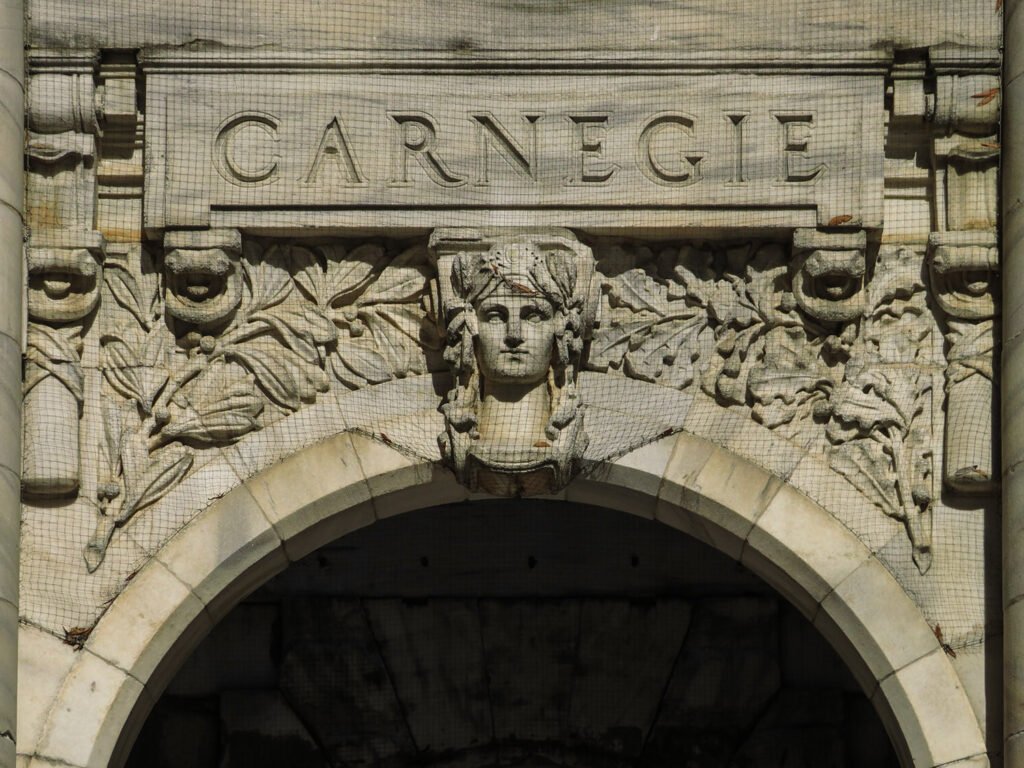
    Frieze on the south elevation of the Carnegie Pavilion
    Frieze on the west elevation of the Carnegie Pavilion
    Floor of the Carnegie Pavilion

    References

    1. “Carnegie Pavilion dedicated”. The Atlanta Journal, April 10, 1997, p. B6. ↩︎
    2. Fox, Catherine. “Building on History”. The Atlanta Journal-Constitution, January 26, 1996, p. E1. ↩︎
    3. “Carnegie Library Commission Awarded To Ackerman & Ross”. The Atlanta Constitution, December 23, 1899, p. 1. ↩︎
    4. “Will Begin Work Next Week”. The Atlanta Constitution, May 8, 1900, p. 12. ↩︎
    5. “Local Talent Is Secured”. The Atlanta Constitution, February 22, 1902, p. 7. ↩︎
    6. ibid. ↩︎
    7. Campbell, Colin. The Atlanta Journal-Constitution, October 3, 1996, p. B1. ↩︎
    8. “Carnegie Pavilion dedicated”. The Atlanta Journal, April 10, 1997, p. B6. ↩︎
  • Crum & Forster Building (1928) – Atlanta

    Helmle, Corbett & Harrison, with Ivey & Crook, associate architects. Crum & Forster Building (1928). Atlanta.1 2 3

    References

    1. “Insurance Firm Awards Contract For New Building”. The Atlanta Journal, September 18, 1927, p. D7. ↩︎
    2. “Beauty Marks Novel Office Structure Under Construction by Insurance Company”. The Atlanta Constitution, p. 5C. ↩︎
    3. “Many Types of New Construction Show Atlanta’s Progress”. The Atlanta Journal, July 8, 1928, p. D9. ↩︎