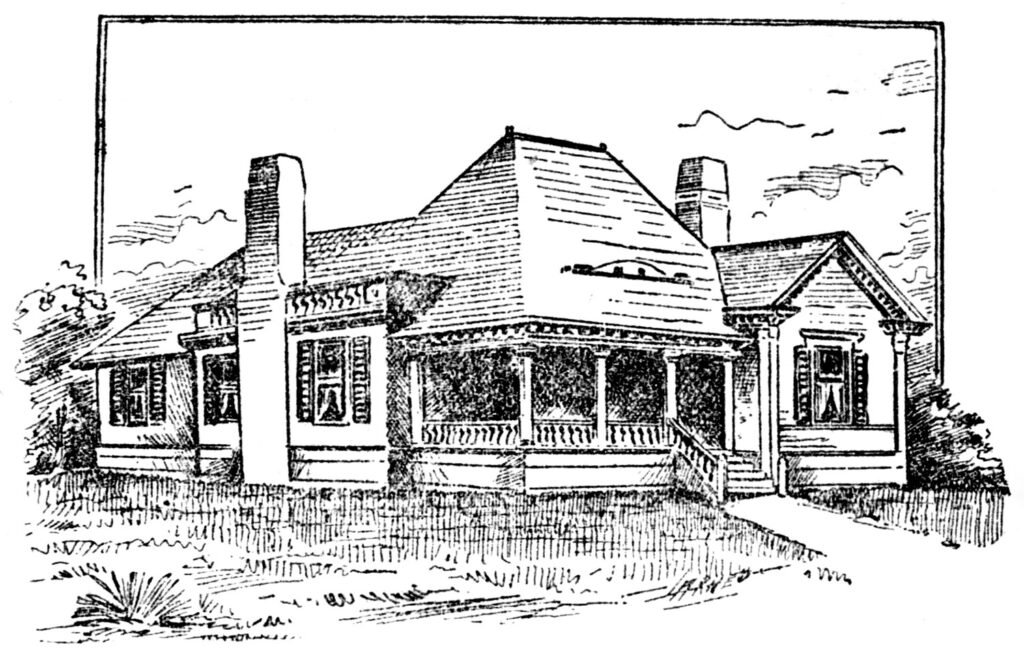
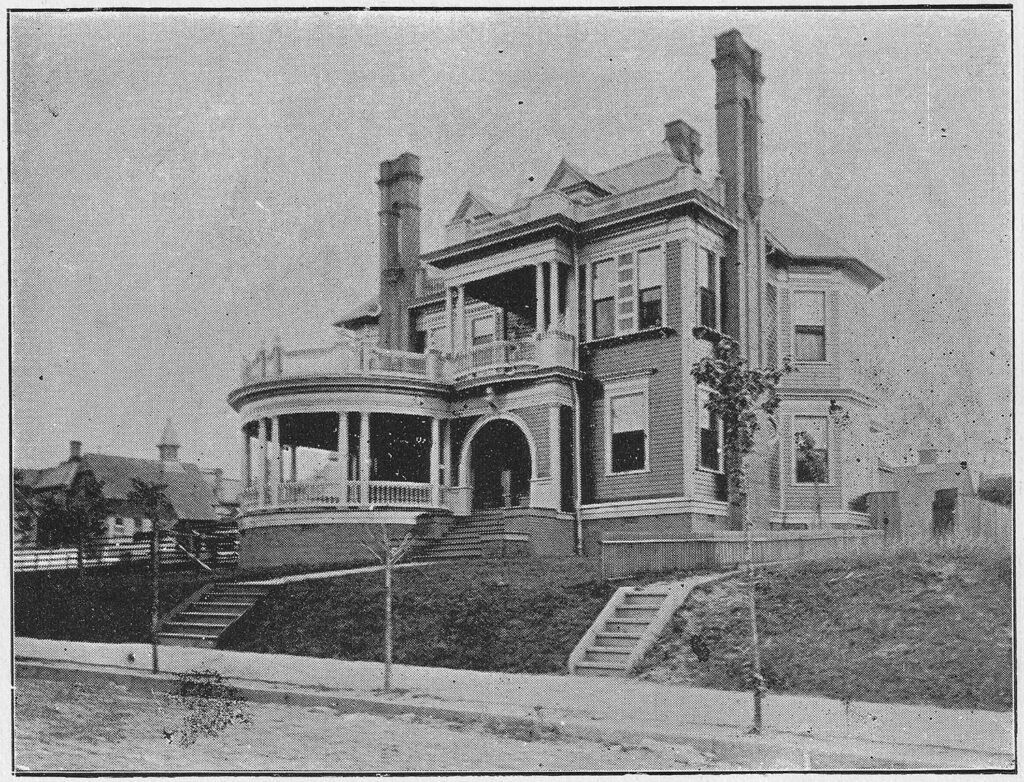
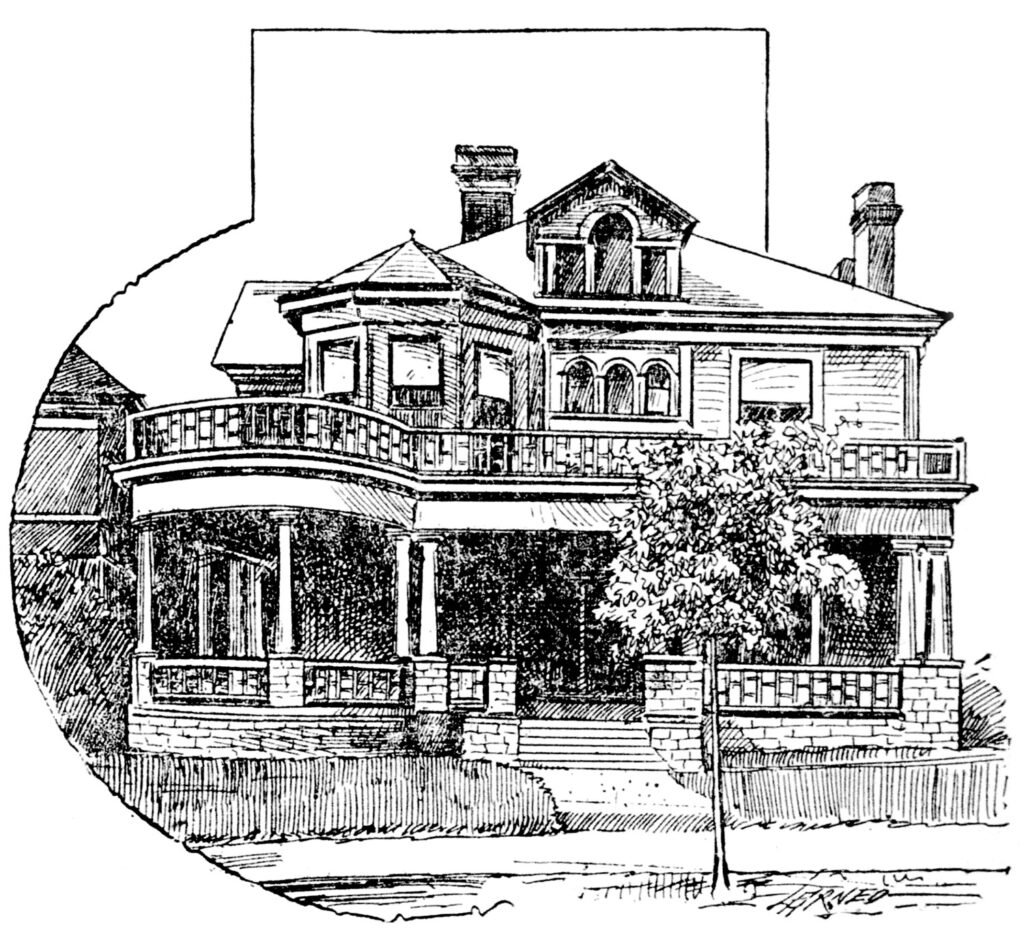
G.L. Norrman. E.C. Merry Residence (1893). West End, Atlanta.
The Background
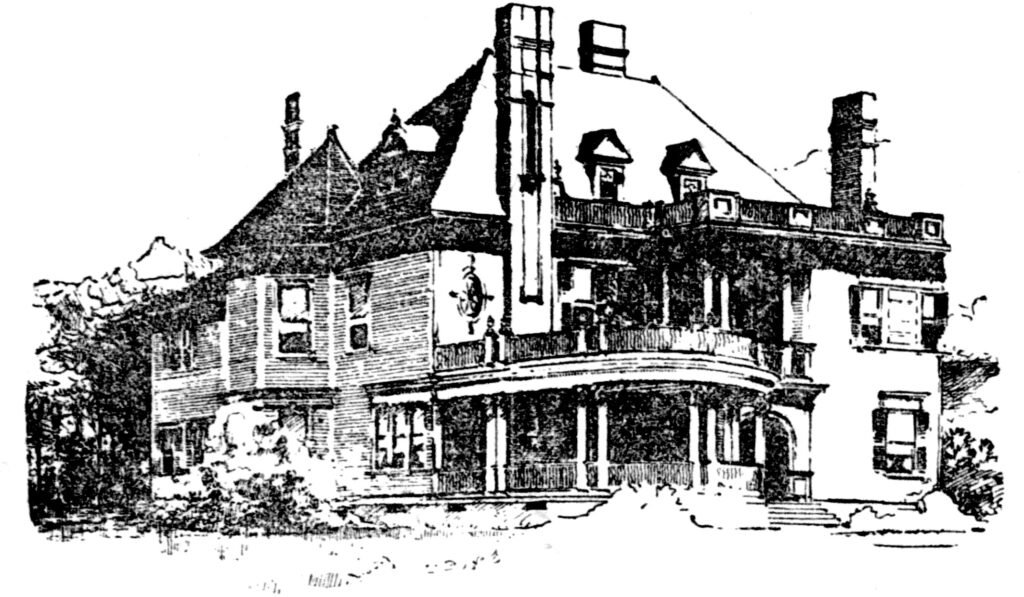
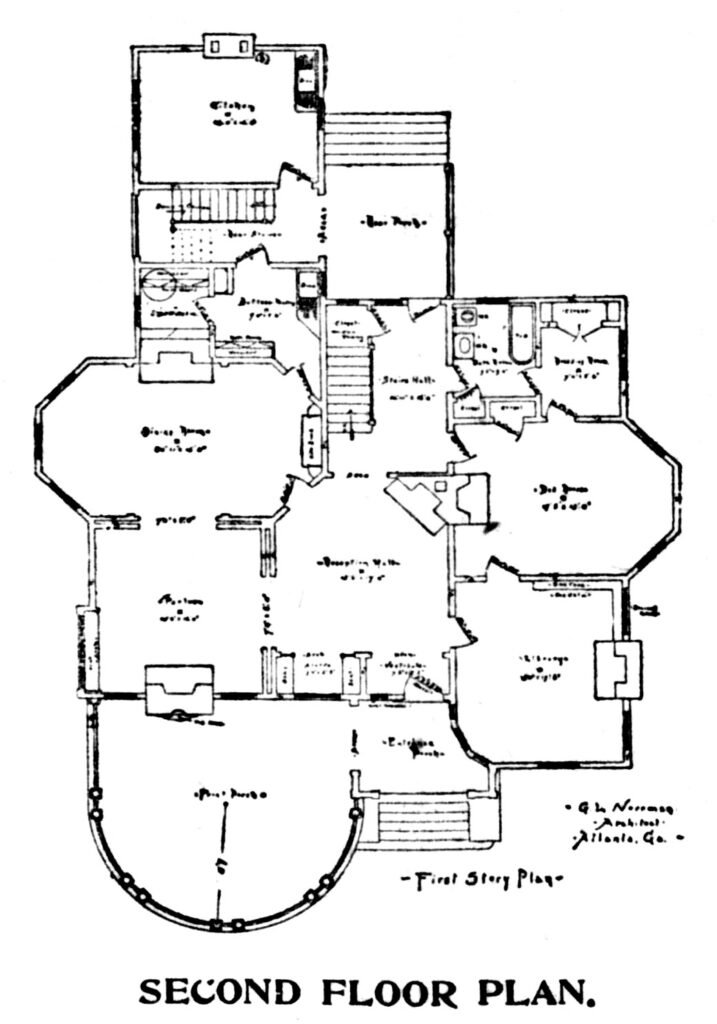
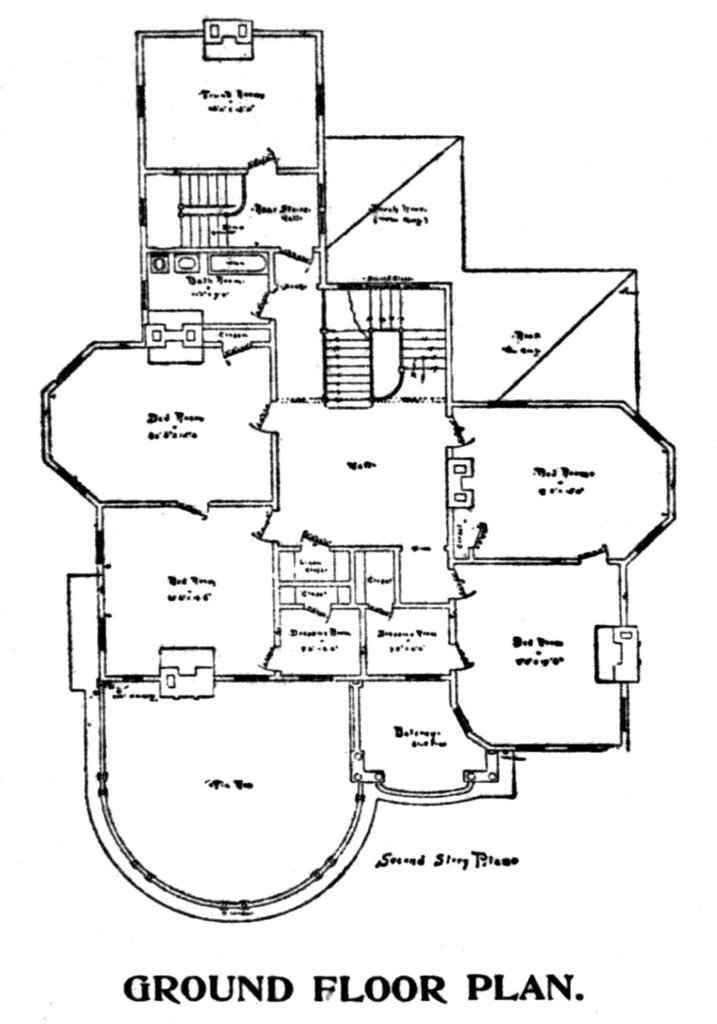
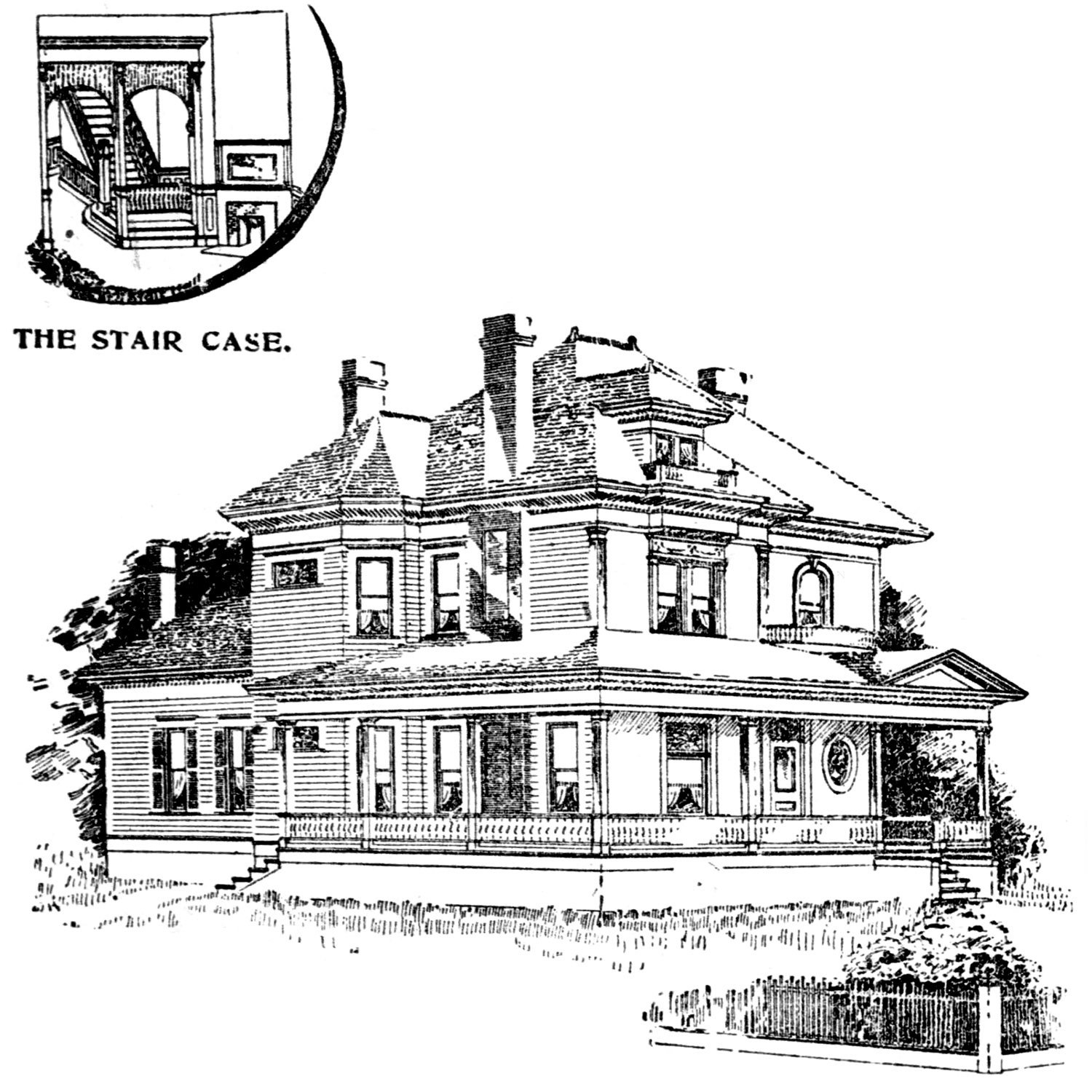
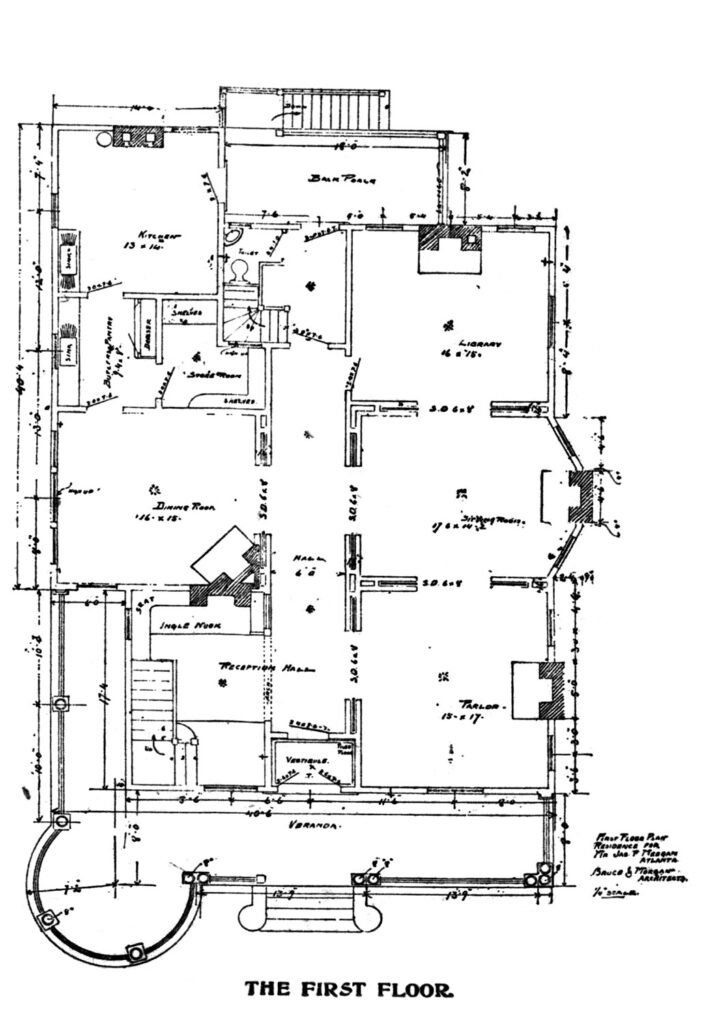
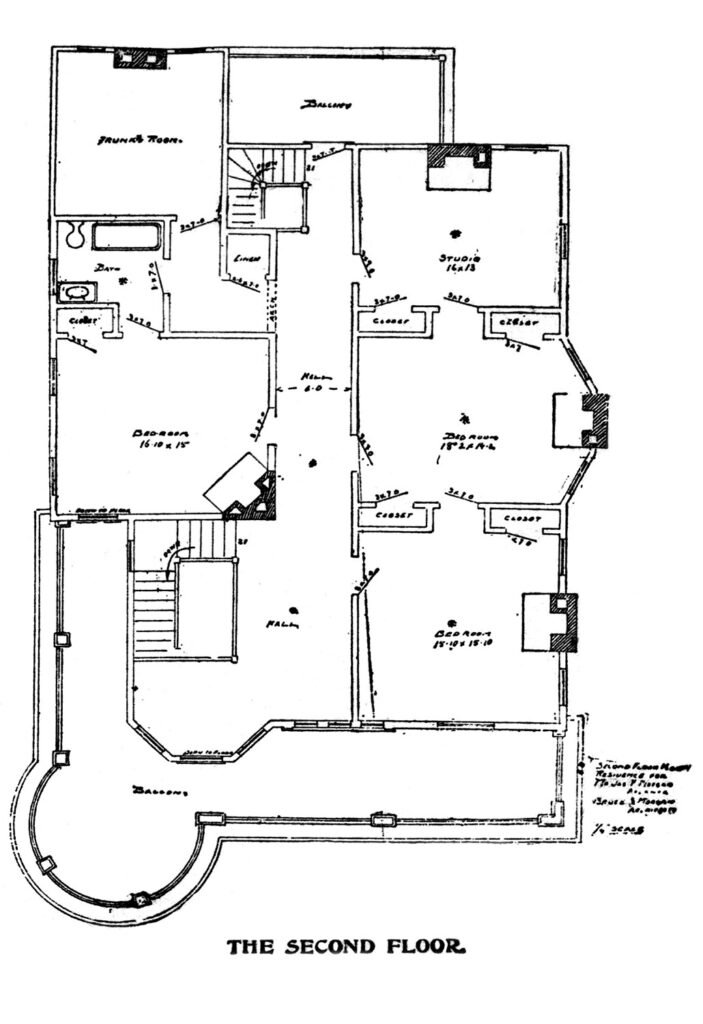
The following article, published in The Atlanta Journal in 1898, includes illustrations and floor plans of theE.C. Merry House, built in 1893 and designed byG.L. Norrman.
Located at 144 Lee Street (later 510 Lee Street SW), the 5-year-old home in Atlanta’s West End neighborhood was owned by Ovid Stewart at the time of the article’s writing.
Location of E.C Merry Residence
In 1890, the home’s original owner, E.C. Merry, became the principal of the West End Academy,1 located one block away. Humphries & Norrman designed the school’s original structure in 1883, but for whatever reason, Bruce & Morgan were selected to design its expansion in 1890.2
Norrman was primarily an architect of large residences, and it appears he gave up smaller projects entirely by the late 1890s, so it’s a genuine treat to have an illustration and floor plan for this charming 8-room cottage.
There are a few interesting aspects here:
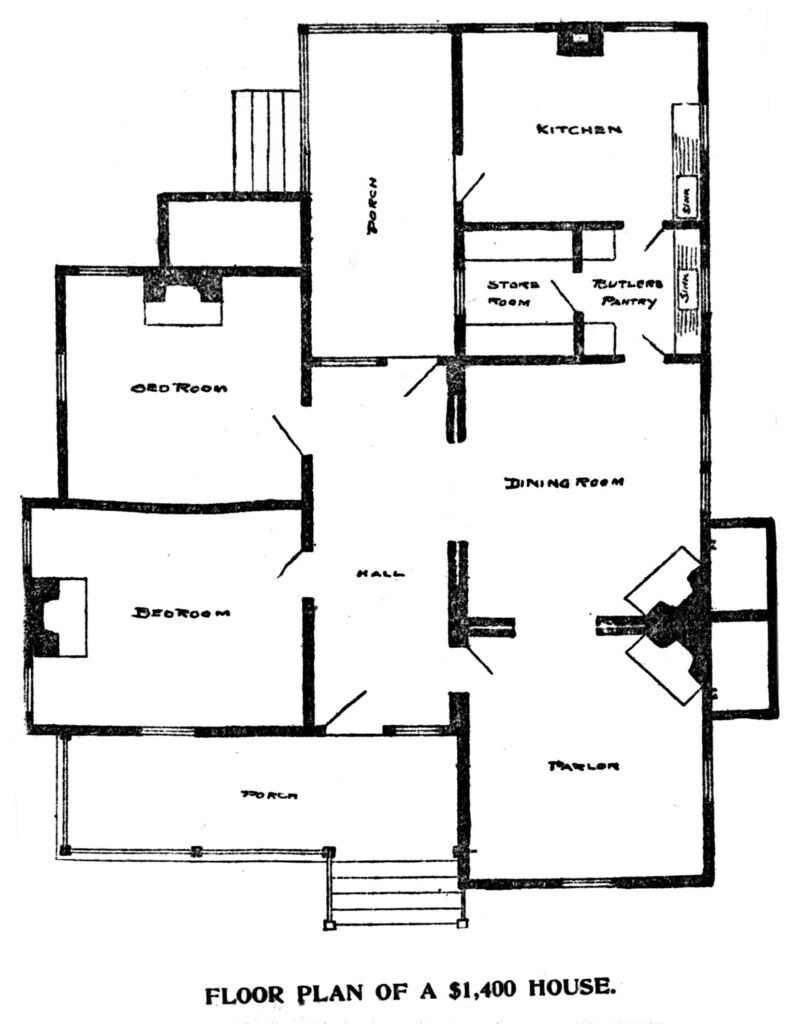
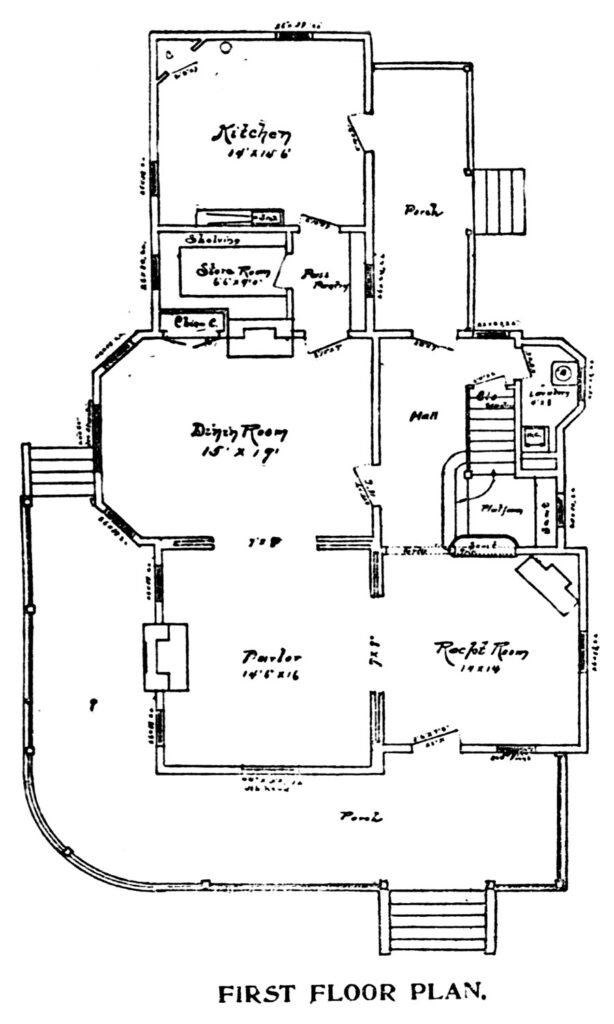
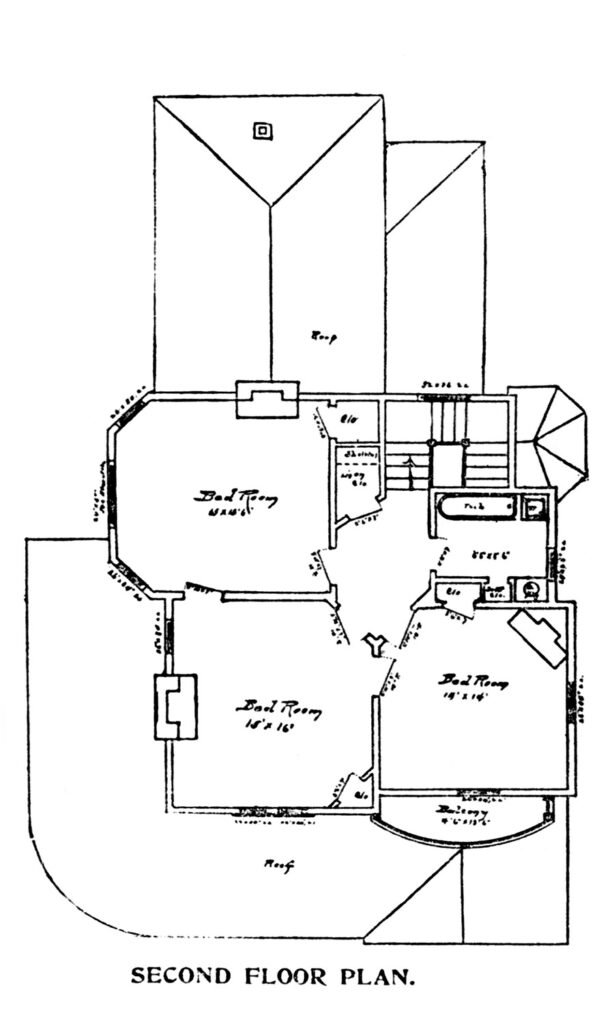
The plan is described as “simplicity itself”, and that’s no exaggeration: No bathroom was included, and it’s unclear if the home was even wired for electricity — with a total cost of $1,770, it probably wasn’t.
The Journal’s description describes the home’s “quaint, homelike Quaker suit”, and it appears the home was at least partially inspired by the vernacular architecture of colonial New England, much like Norrman’s design for the C.D. Hurt Residence the same year. I prefer this interpretation.
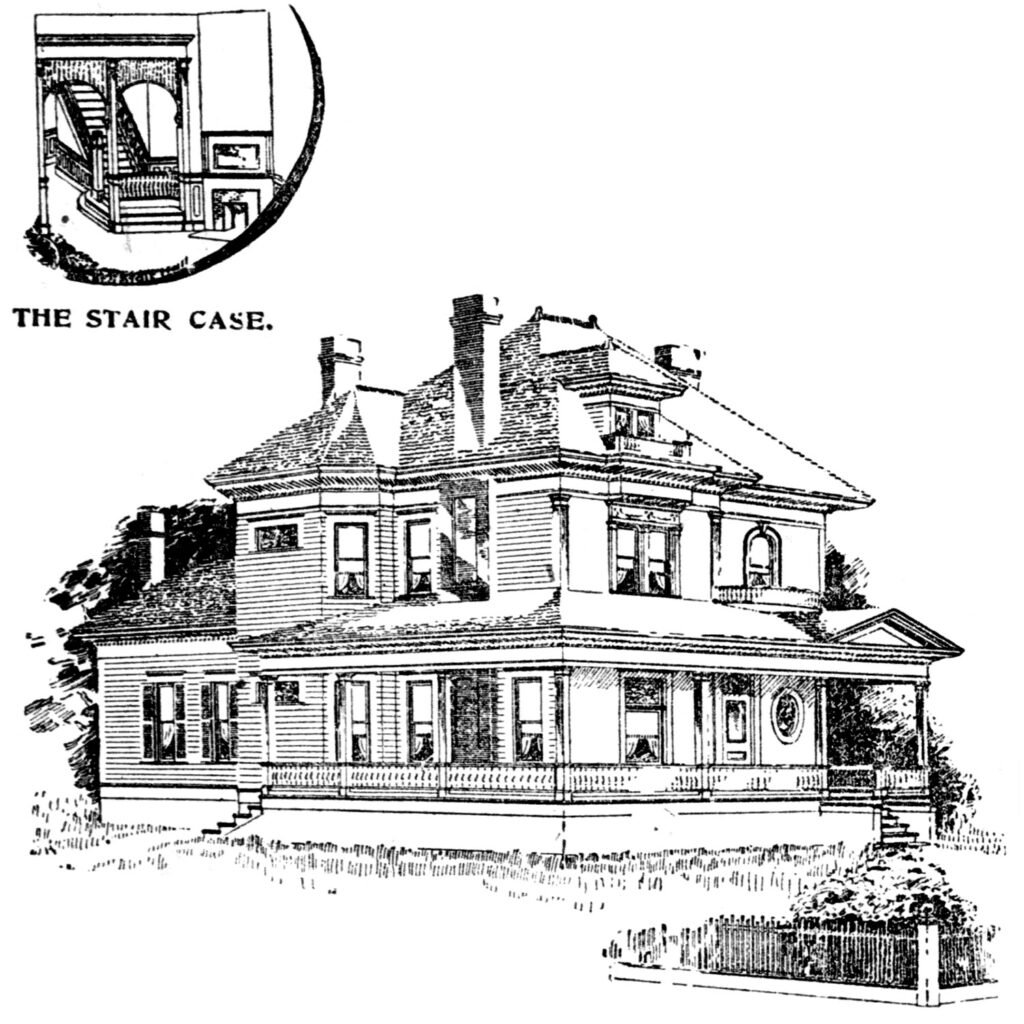
Norrman packed in several signature touches here: tapered chimneys, an eyebrow dormer on the front, Tuscan columns on the porch, and a balustrade and finials on the roof.
The home still belonged to Ovid Stewart when it was “badly burned” by a fire in February 1909,34 although it was swiftly repaired.56 Within a year, the property was occupied by Mrs. Stewart’s brother and sister-in-law, L.B. Langford and E.E. Langford,7 who spent $1,350 in additions8 — nearly as much as the home originally cost.
The Stewarts divorced in 1912,9 and after the death of Mrs. Langford in April 1914,1011 followed by her husband in September 1916,1213 the home became a rental property.14
Based on city directories, the structure survived another 42 years, meeting the same fate as thousands of other historic properties in Atlanta when the home was apparently demolished circa 1958 for the construction of the East-West Expressway (now I-20).15
Today, the site is occupied by the eastbound ramp from Lee Street. Progress!
Journal’s Model Houses; Home of Mr. Ovid Stewart
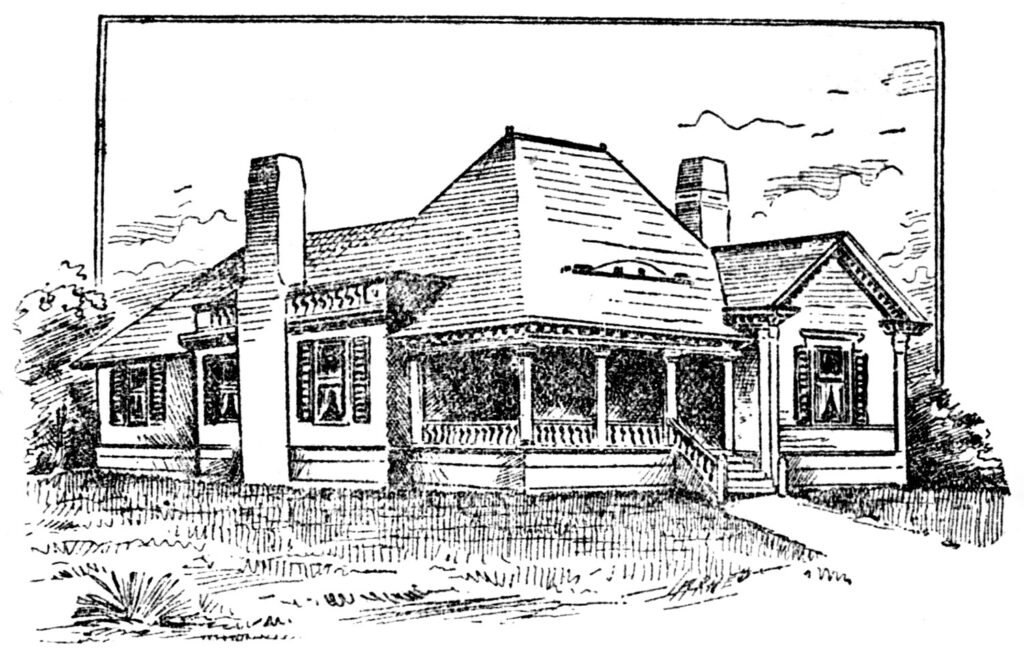
The accompanying cuts give the perspective and floor plan of Mr. Ovid Stewart’s pretty cottage on Lee street at the corner of Oak, in West End. It was built by Mr. E.C. Merry in 1893 from the plan of Mr. G.L. Norrman at a cost of $1,770, but could be duplicated now for about $1,400. It is a fine example of the grace and beauty to be found in a simple design when the skill of the architect is bestowed upon it. The plan is simplicity itself, and in a form to be the least expensive in proportion to results attained.
The floor plan shows the arrangement. This can be varied slightly without material difference in the cost, but care will have to be taken in changing it, for one of the chief beauties in the plan is in the adjustment of proportionate dimensions.
The construction is thorough and the cottage is exceedingly comfortable. It rests on a solid wall and has double walls and floors. It is painted gray, with white trimmings, which gives it a quaint, homelike Quaker suit.16
References
“To Teach In West End.” The Atlanta Constitution, August 9, 1890, p. 8. ↩︎
“The New Academy Building.” The Atlanta Constitution, November 2, 1890, p. 24. ↩︎
“Twelve Fires Within A Day”. The Atlanta Constitution, February 2, 1909, p. 5. ↩︎
“Nine Fire Calls Answered Monday”. The Atlanta Semi-Weekly Journal, February 2, 1909, p. 1. ↩︎
“Personal Mention”. The Atlanta Journal, February 14, 1909, p. H5. ↩︎
“Building Permits”. The Atlanta Journal, February 19, 1909, p. 14. ↩︎
“Mortuary”. The Atlanta Constitution, August 15, 1910, p. 5. ↩︎
“Building Permits”. The Atlanta Journal, September 15, 1910, p. 13. ↩︎
“Notice Notice Notice”. The Atlanta Constitution, February 9, 1912, p. 13. ↩︎
“Deaths and Funerals”. The Atlanta Journal, April 17, 1914, p. 2. ↩︎
“Mortuary”. The Atlanta Constitution, April 18, 1914, p. 2. ↩︎
“Deaths and Funerals”. The Atlanta Constitution, September 1, 1916, p. 2. ↩︎
“Mortuary”. The Atlanta Constitution, September 2, 1916, p. 2. ↩︎
“For Rent–Houses”. The Atlanta Journal, November 20, 1916, p. 17. ↩︎
“Here’s Route Of New East-West Expressway”. The Atlanta Journal and Constitution, March 23, 1958, p. 1-E. ↩︎
“Journal Model House; Home of Mr. Ovid Stewart” The Atlanta Journal, February 5, 1898, p. 9. ↩︎
G.L. Norrman. Paul Romare Residence (1892, demolished before 1926). Atlanta.1
The Background
The following article, published by The Atlanta Journal in 1898, includes an illustration and floor plans of thePaul Romare Residence, built in 1892 and designed byG.L. Norrman.23
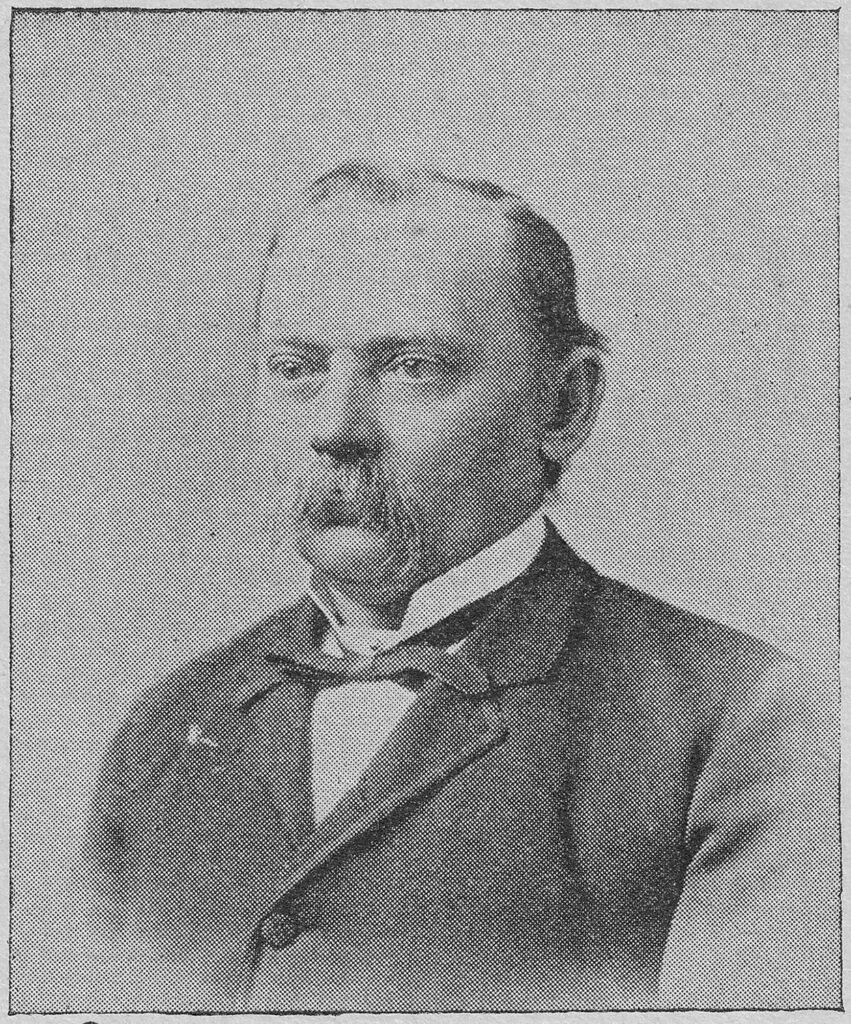
Like Norrman, PaulRomare(1828-1904,4 pictured here5)was also a Swedish immigrant.
Although Romare was 20 years older than Norrman,6 it appears the two men were close friends, as Norrman planned at least four projects for the Romare family over 21 years and also served as an honorary escort at Romare’s funeral.78
Romare and Norrman’s Connection
Romare began working at the Atlanta National Bank circa 1865 and steadily rose through the ranks, ultimately becoming the bank’s president in 1903.910 Like Norrman, he was also prominent in Atlanta society, and both men were members of the Capital City Club.11
Only 41 Atlantans in the 1890s were from Scandinavia,12 so Norrman and Romare likely bonded over their common heritage, if nothing else. However, the two men’s lives had many striking parallels.
Like Norrman, Romare was born and raised in southern Sweden, and both men became sailors: Romare left home at age 14 to serve as a cabin boy on a merchant ship captained by his father.
As a young man, Norrman reportedly left the Swedish navy shortly after he quarreled with an officer. When Romare was 18, he abandoned ship after a fight with the captain, hiding in a friend’s closet in New York to evade the captain’s search.
Romare eventually immigrated to the United States through Charleston, South Carolina. From 1850 to 1864, he lived and worked in the Upcountry, including the towns of Gaffney and Chester, both a short distance from Spartanburg, where Norrman began his practice a decade later.
Romare, incidentally, was apparently pronounced as “ROAM-a-ree”. And did I mention he secretly fathered a son with a Black woman in South Carolina?13 It was certainly never mentioned in Atlanta, where his wife, Lucy, and their six daughters were popular social fixtures.
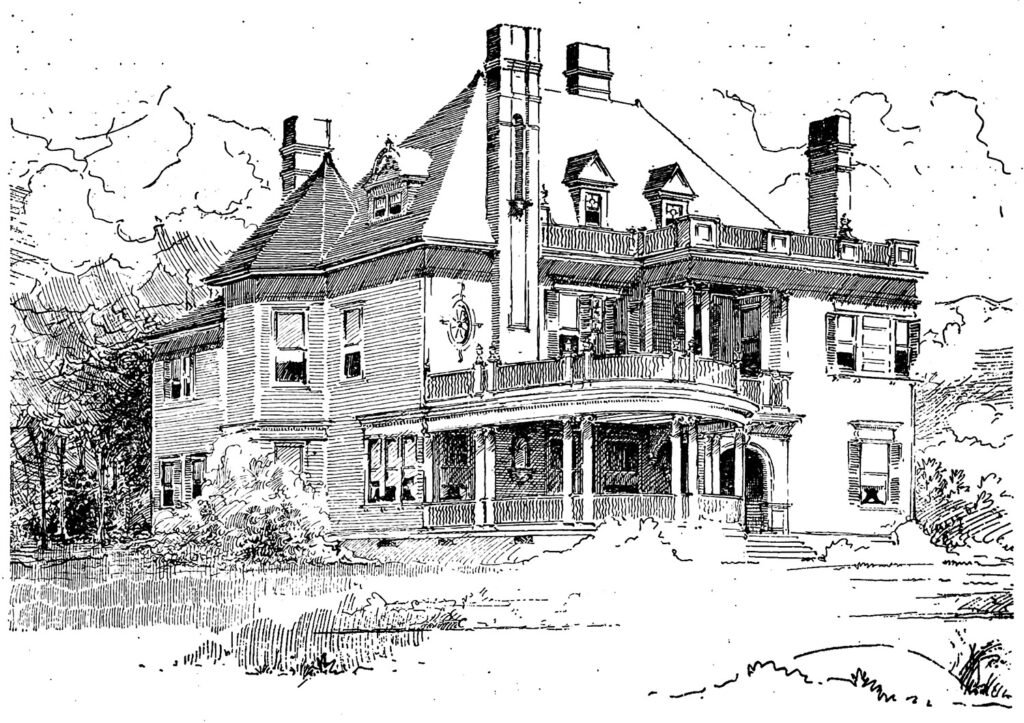
G.L. Norrman. Paul Romare Residence (1892, demolished before 1926). Illustration by W.L. Stoddart.14
About the Residence
The house shown here was the second Norrman designed for Romare and was built at 17 East North Avenue,15 on what is now the site of the Bank of America Plaza in Midtown Atlanta.
Location of Paul Romare Residence
However, the home was long gone before Bank of America, demolished at some point between 1923 and 1925,161718 and replaced by a car dealership in 1926.19 What else would you expect from Atlanta?
There are a few things to note about the floor plans shown below:
The Journal mislabeled the first story plan as the “Second Floor Plan” and the second story plan as the “Ground Floor Plan”, because of course they did.
The first story plan centered around a reception hall with a fireplace, an evolution of the living hall concept Norrman used in the 1880s, prime examples of which can still be seen in the Edward C. Peters House and T.W. Latham House in Atlanta. For the Romare design, a separate stair hall was placed behind the reception hall. So many halls.
There were two full bathrooms in the Romare house — one per floor. The first-floor bathroom was connected to both the main bedroom and the stair hall, presumably to be shared by guests.
Bedroom closets were still a novelty in 1892, and like most homes that had them, the closets in the Romare design were tiny. However, Norrman also included spacious“dressing rooms” with closets in three of the five bedrooms, undoubtedly designed for Romare’s wife and daughters.
Typical of Norrman’s residential designs for wealthy clients, the service areas were well-defined and separate from the rest of the home. Servants would be expected to enter from the rear porch, and the kitchen and rear stairs were buffered from the dining room by a large butler’s pantry.
The Romare house was one of the better works from a short-lived period in Norrman’s career, circa 1892-1893, when he became particularly audacious and avant-garde in his residential designs, freely mixing classical, Colonial, Romanesque, and Palladian elements in striking combinations.
The approach didn’t always work — the C.D. Hurt Residence, for example, is an unholy mess — but it’s clear Norrman put his best effort into the Romare Residence, and the results speak for themselves. Vacker som en dag!
G.L. Norrman. Paul Romare Residence (1892, demolished before 1926). Atlanta.
Journal’s Model Houses; Home of Paul Romare.
The above cut represents the residence of Mr. Paul Romare on North avenue. It was built from the plans of Mr. G.L. Norrman at a cost of $12,000, and is one of the best constructed and most comfortable residences in the city. The plan is not altogether of any conventional style, but the details are in that of the renaissance. The interior arrangement fully appears in the floor plans of the first and second stories. The interior finish of the lower story is of hard wood, built in special designs from detail plans by Mr. Norrman. The parlor is finished in sycamore and beautifully frescoed. The diningroom [sic], library and other rooms of the lower story are finished in oak. The details are in keeping with the general style shown in the details of the exterior.
The workmanship and material from foundation to roof are of the best, and the arrangement makes the residence one of the most comfortable in the city.
The house is fitted with the best modern appliances for comfort, including electric bells, etc., and everything of that kind.20
References
Photo credit: Atlanta Homes: Attractiveness of Residences in the South’s Chief City. Atlanta Presbyterian Publishing Company (1901). ↩︎
“The Home Builders”. The Atlanta Constitution, June 20, 1892, p. 8. ↩︎
“My, How We Do Grow!” The Atlanta Constitution, September 21, 1892, p. 4. ↩︎
“Paul Romare, Financier, Dead After Long Illness”. The Atlanta Journal, February 8, 1904, p. 2. ↩︎
Photo credit: City of Atlanta: A Descriptive, Historical and Industrial Review. Louisville, Kentucky: The Inter-State Publishing Company (1893), p. 74. ↩︎
“Mr. Paul Romare.” The Atlanta Constitution, February 12, 1893, p. 7. ↩︎
“Funeral Notice.” The Atlanta Journal, February 9, 1904, p. 11. ↩︎
“Romare To Rest In West View”. The Atlanta Constitution, February 9, 1904, p. 5. ↩︎
“New President Will Be Romare”. The Atlanta Constitution, May 9, 1903, p. 6. ↩︎
“Romare Made President Of Bank”. The Atlanta Journal, May 10, 1903, p. 1. ↩︎
“The Club Reception.” The Atlanta Constitution, October 19, 1887, p. 2. ↩︎
Mebane, Anne Fonvielle. (1967). Immigrant Patterns in Atlanta, 1880 and 1896 [Master’s thesis, Emory University], p. 48. ↩︎
This is the third in a series of articles published by The Atlanta Journal in 1898 featuring illustrations and floor plans of residences designed by Atlanta architects.
The article was published in January 1898 and presented the Susie Wells Residence, designed byButt & Morris, an architectural duo consisting of James W. Butt and Marshall F. Morris. Butt established his practice in Atlanta in 1893,1 and Morris apparently joined in 1896.2
Location of Susie Wells Residence
Scant information is available about either Butt or Morris, and little of the firm’s work survives in Atlanta. While they appeared to enjoy some success in the late 1890s and early 1900s, their last newspaper mention was in 1905,3 and the partnership seems to have disbanded around 1909.45
There’s also nothing to indicate that Butt & Morris were good designers: city building permits reveal that most of their work consisted of modest, inexpensive homes and buildings, and illustrations and plans of their designs suggest a distinct lack of talent.
Consider the plans here, which include an awkwardly shaped lavatory tacked on to the first floor, a baffling hall design on the second floor, and oddly-shaped closets shoved into the corners of the bedrooms, among other poor choices.
Located at the southwest corner of Whitehall and McDaniel Street in what is now Atlanta’s Mechanicsville neighborhood, the Wells home didn’t survive 15 years. Wells rented out the house following the death of her mother in January 190667 and then sold it in early 1913,8 when it was replaced by a one-story brick auto garage.910
Journal Model Homes; Residence of Miss Susie Wells
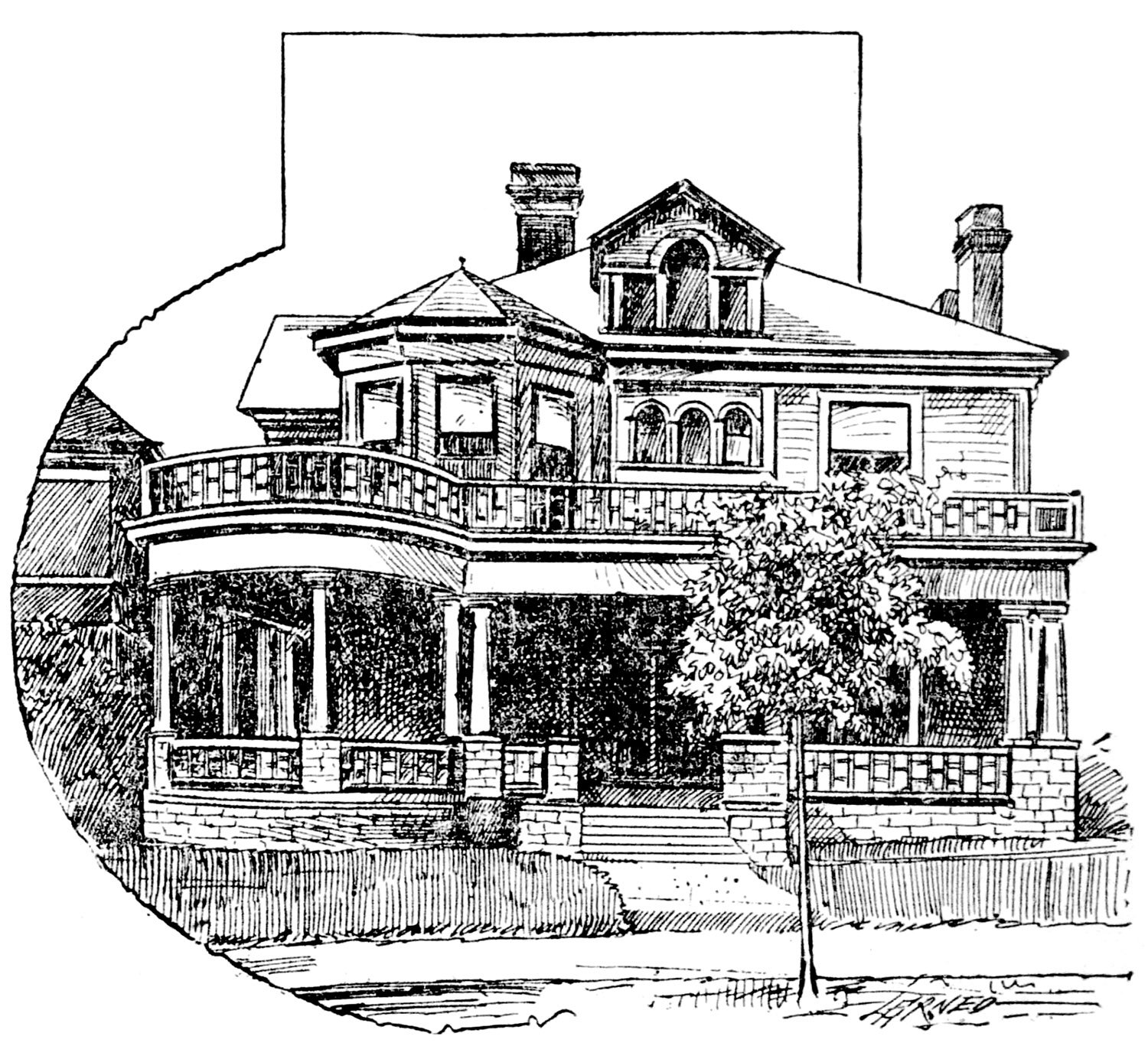
The accompanying cuts represent one of the handsomest seven-room houses in the city. It was built for Miss Susie Walters at 446 Whitehall Street last summer, and was completed in the early fall at an actual cost of $2,500. It is in design and finish one of the most attractive houses ever built in Atlanta at this price, and the arrangement is exceedingly convenient.
The foundation is a solid brick wall, and the chimneys are of ample size and well built. The timber is select pine and sized to make even walls. The roof is of shingles, painted black, and has the appearance of a slate roof. The floors are double and storm-sheeting underlies the weather-boarding. The interior finish is select pine of natural color in hard oil.
The arrangement of the reception hall, parlor and dining room is exceedingly convenient and attractive, and a very pretty grill work separates the reception hall from the stair hall, as will be seen in the illustration. The doors are select pine veneered, showing no joints, and between the reception hall and dining room there are sliding doors.
The fire places on the lower floor are furnished with club-house grates, tile hearths, and cabinet oak mantels.
Upstairs the finish is the same with the exception of mirrors above the mantels. Down stairs, in addition to the halls, dining room, parlor and kitchen, there is an ample pantry, conveniently fitted up with bins and shelves, and a well arranged butler’s pantry with sink. There is a lavoratory [sic] down stairs and up stairs a complete bath room with porcelain-lined bath tub. The plumbing is of the best quality, both in material and workmanship. The three chambers up stairs are connected and each has an ample closet.
At the end of the upper hall there is a large linen closet. The ascent from the first to the second story is by very pretty stairs with a graceful landing divided from the front hall by grill work, as indicated.
The hardware is of fine quality, all the way through, and the finish is old copper. The gas fixtures are furnished with electric lighting apparatus and a complete system of electric bells extends through the house.
The painting is three coat work outside and in, and is first class in material and workmanship. The outside is painted in canary, trimmed in white, a very pretty combination. The house is situated on a large lot, at the corner of Whitehall and McDaniel streets, and has attracted much attention.
The perspective view is taken from the northwest, and shows a very pretty veranda in front of the house. The first and second story floor plans, also represented by illustrations, fully explain themselves.
The house was designed for Miss Wells by Butt & Morris, of Atlanta.11
References
“Removal.” The Atlanta Constitution, September 10, 1893, p. 16. ↩︎
“Butt & Morris, Architects”. (advertisement), The Atlanta Journal, May 30, 1896, p. 10. ↩︎
“Advertisement for Bids for Construction of Stable at the Dumping Grounds.” The Atlanta Constitution, May 16, 1905, p. 15. ↩︎
Throughout 1898, The Atlanta Journal published a sporadic series of articles featuring floor plans and illustrations of “moderate cost” residential designs by Atlanta architects, including G.L. Norrman, Bruce & Morgan, C. Walter Smith, and others.
The series reflected the dire economic conditions at the time: following the Panic of 1896, the United States plunged into its second depression of the decade, and few Atlanta architects had substantial work from 1897 to 1898.
Just a few years earlier, it would’ve been unthinkable for the city’s top architectural firms to peddle their designs in a local newspaper, but desperate times demand humility.
The first article is included here, and was published in January 1898, featuring the James F. Meegan Residence, designed by Bruce & Morgan, then the Southeast’s largest architectural firm. The home was located at 23 West North Avenue12 (later 33 North Avenue NW) in what is now Midtown Atlanta.
Location of James F. Meegan Residence
There are a few interesting aspects of the home’s plan:
The rooms are arranged on either side of a central hallway that runs from the front to the back door, a standard 19th-century design that was fairly unfashionable by 1898. In the days before air conditioning, however, it was a highly practical design for circulating air throughout a home.
There is only one full bathroom in the house, located on the second floor. A downstairs lavatory is tucked beneath the back stairs.
Also note that only three of the five rooms on the second floor are designated as bedrooms — the other 2 rooms include a “studio” and “trunk room”.
The Colonial Revival-style home was demolished by 1927 and replaced by a one-story commercial building3 that still stands.
In fact, of the 8 homes featured in the Journal‘s series, all were demolished in the 20th century. Keep that in mind the next time you hear an Atlantan blame the city’s lack of historic buildings on Sherman.
Journal Hints on Home Building; Model Houses at Moderate Cost
First of a Series of Articles To Be Printed By The Journal on a Subject of Interest to All Who Contemplate Building.
Of the many New Year resolutions which are made in Atlanta in the early days of 1898, there will be none more deserving a speedy execution than the resolve which comes to every man sooner or later in life to build a home of his own.
The man who lives in other people’s houses until he might be expected to give up all idea of having one of his own, still preserves a place in his affections for the home which he will have constructed some day. This particular home will be different from any he has ever seen or occupied, and will be arranged to suit his individual fancy. In spare moments he will permit his brain to play upon the plans, adding various little touches here and there to enhance the beauty of the imaginary castle.
Before the days when home building was reduced to a science it was remarked that “fools build houses for wise men to live in,” but this has ceased to be true for many years. The builder is now considered the wisest man of the time.
In a great home city like Atlanta, where the ranks of home owners are very large, and are being constantly added to, there are always a vast number of people who are thinking of building. The man who wants to build a house for himself and his family feels more greatly interested in a cottage which will suit their needs than in a score of palatial sky-scrapers.
Despite various assertions to the contrary, the pleasures of home owning appeal as strongly to the city man as to his country cousin, for it is not only in the rural districts or little villages that pleasure is derived from seeing the little “children run to lisp the sire’s return, or climb his knee the envied kiss to share.”
In order to aid those who desire to construct homes, The Journal will present a series of plans by well known architects which will be found useful in crystalizing the thoughts of its readers. These plans will show houses which have actually been constructed in Atlanta within the past year.
Accompanying this article are the front view and two floor plans of the residence of Mr. James F. Meegan, on North avenue. The house is one of the prettiest on that street, and since its erection last spring has been greatly admired. The plans are the work of Bruce & Morgan. The building was designed for a 50-foot lot. On the first floor there are the parlor, sitting room and library, on the right.
On the left are the reception hall, dining room and kitchen. Upstairs are two bedrooms and the studio on the right, while on the opposite side are a bedroom, bathroom and trunkroom.
The entrance gives a very pleasing effect with the reception hall and pretty stairway. The front veranda, with its circular finish on the corner, gives an artistic effect to the front.
All the rooms on the right of the hallway, down stairs, are arranged with sliding doors, so that all may be thrown together when it is desired. The dining room and kitchen are connected by a butler’s pantry, and adjoining the latter is a store room. The appointments in the kitchen, store room and pantry are admirably located for the convenience of the occupants.
Four of the upstairs rooms are provided with closets and dressing rooms. The bathroom, which is large and well fitted, is conveniently located.
The cost to construct this well appointed residence was $3,500.4
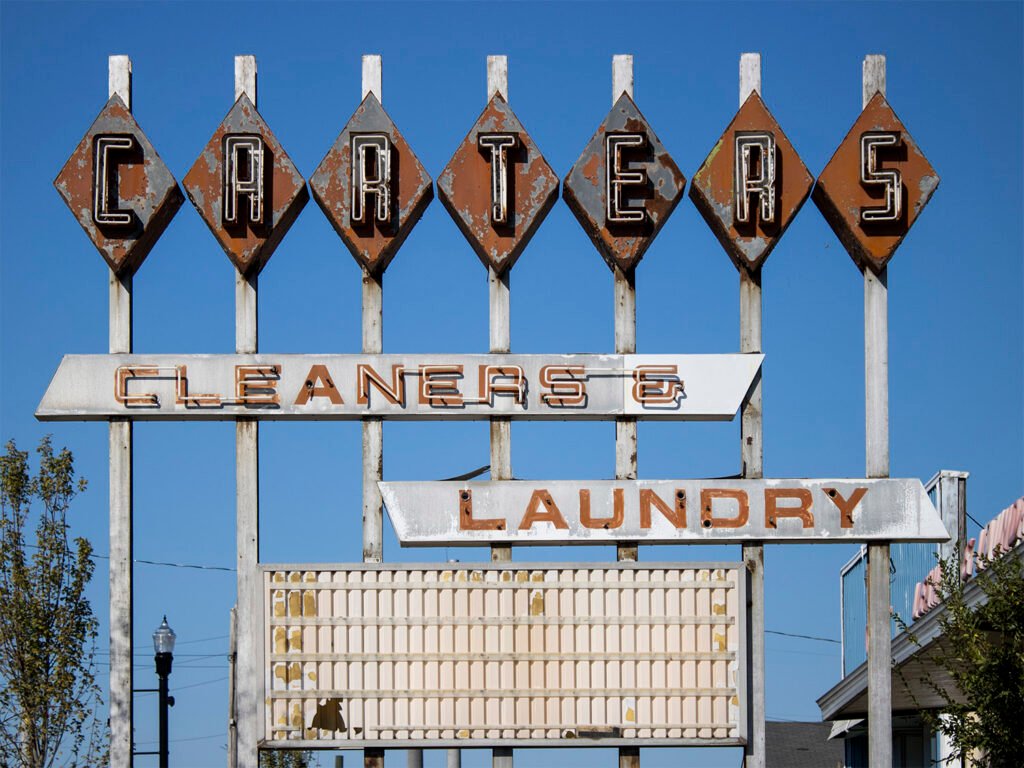
Carter’s Cleaners & Laundry (circa 1950s). 954 Main Street, Forest Park, Georgia.
Carter’s Cleaners & Laundry in Forest Park, Georgia, opened in 1950. However, I suspect this fantastic Googie-style sign debuted in 1957, when the business expanded by 800 square feet,1 “providing a new front”,2 among other improvements.
The business ended circa 2009,3 and the building has been boarded up for years, with its relic sign left to rust.
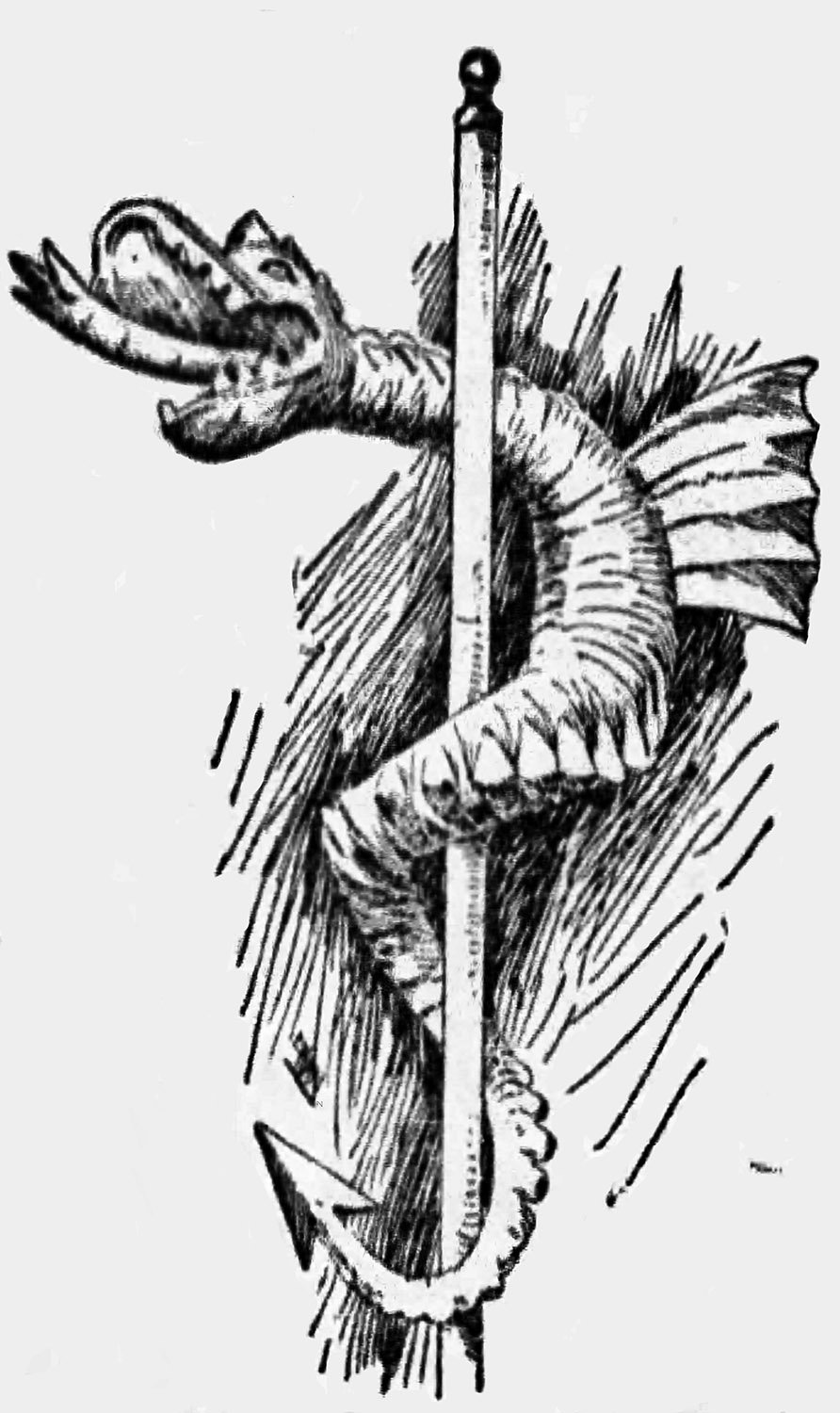
Illustration of the weather vane on City Hall, Charlotte, North Carolina, 1893.1
Americans are a bored and petulant lot of children who insist on living in an apocalyptic fever dream, always conjuring up some new monster to lash out at in dramatic spectacle, lest — God forbid — we attend to the darkness of our own souls.
Desperate to make a dollar, the news industry has long been willing to capitalize on our collective catastrophizing, constantly looking for the next shiny object to spin into a lightning rod for controversy. It’s not always successful, though.
Such was the case in Charlotte, North Carolina, in 1892 and 1893, when the local press attempted to stir the public’s ire over a weather vane atop the new city hall, designed by G.L. Norrman.
When construction on the building topped out in October 1892, it was festooned with a large tin weather vane shaped like a slithering mythical dragon.23
The Charlotte Observer was scathing in its assessment of the dragon, opining that “it may be classic, but not even its maker can say it’s pretty.”4 The paper added:
Yesterday afternoon after the monstrosity was placed, the universal query was “Why did they put such a looking thing up there?” The only answer that could be gotten was, “because the architect said so.” The mayor, nor any of the aldermen will own it; each declares he didn’t select it. But there’s no use in disapproving, the dragon has come to stay; may be it will improve on acquaintance.5
The dragon was designed by John Osborne, a Charlotte tinsmith, and Norrman reportedly pronounced it as “a work of genius”, claiming Osborne could get a position with him in Atlanta whenever he wanted. “It is hoped that this invitation includes the dragon,” the Observer cattily quipped.6
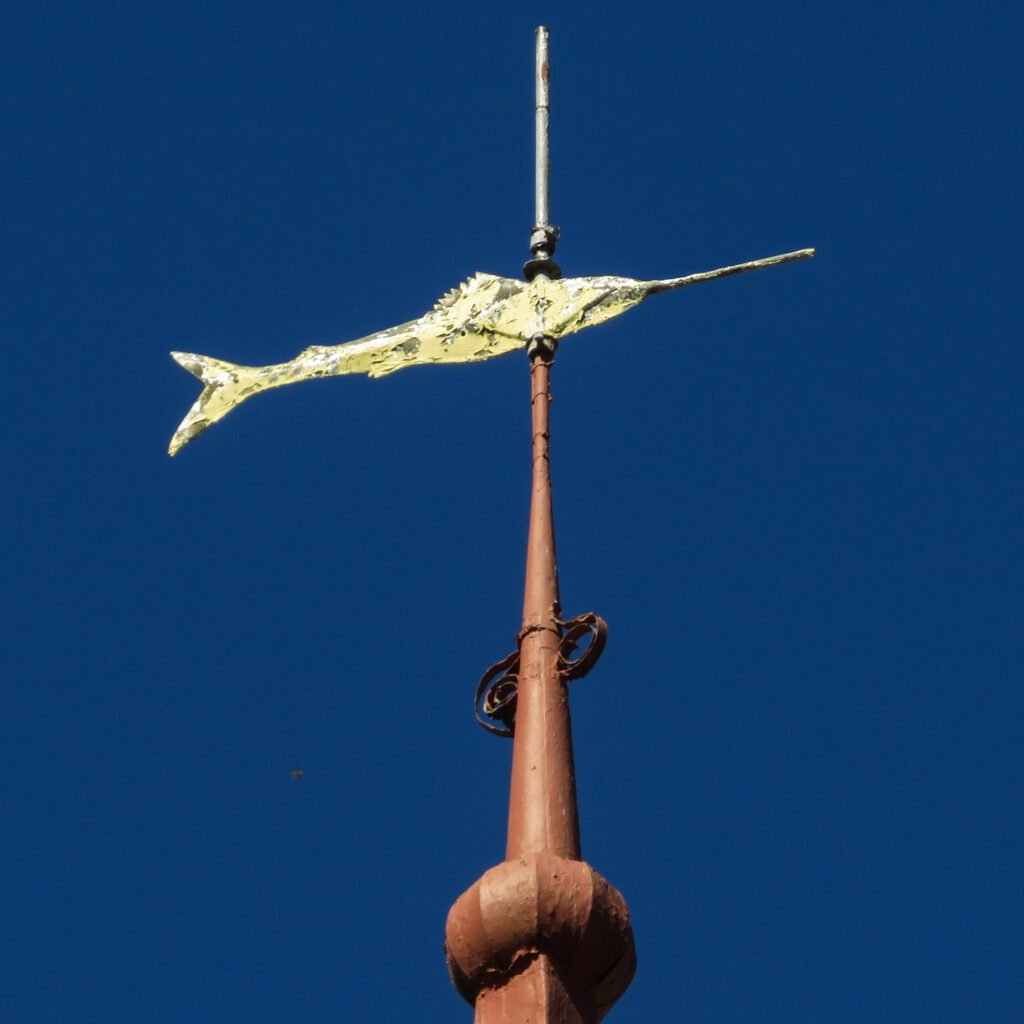
Norrman’s selection of the dragon no doubt stemmed from his fascination with Norse mythology, but he also had a history of adding mirthful creatures to his buildings. On the City Hall and Opera House in Newberry, South Carolina, for example, he topped the central tower with a weather vane in the shape of a garfish.
“Why this primordial and repulsive fish was chosen is not known”, a local historian later huffed — a touch overdramatic, I’d say.7 It’s also not known why local historians are so pompous and humorless, but that’s a discussion for another time.
Detail of weather vane on City Hall and Opera House (1882). Newberry, South Carolina.
A week after the dragon was placed on Charlotte’s city hall, a “Constant Reader” of the Observer anonymously wrote the following letter:
Can you kindly enlighten the public as to what the fiery dragon on top of the new city hall steeple is emblematic of? About the only reference the writer can find in regard to the dragon is found in the 20th chapter of Revelation and judging from what we read there it is not at all complimentary to the good people of Charlotte to be guarded over by a beast of that description. Why wouldn’t an American eagle or a hornets’ nest, for instance, be good enough for the Queen City?8
The newspaper responded: “The Observer‘s only answer to “Constant Reader’s” first interrogatory is that the design on top of the steeple is emblematic only of the way the work on the hall has drag(ged) on. Bang!”
It was a fair point: construction on Charlotte’s city hall began in December 18909 and was supposed to end in December 1891.10 However, the projectwas plagued by delays andwas finally completed in April 1893.11
The Observer‘s campaign against the dragon was on a roll, and when Norrman visited Charlotte in November 1892 to check on the building’s progress, the newspaper couldn’t help but be disparaging:
Mr. Normann [sic], architect of the city hall, is here. He met with a cordial reception from the dragon–for he is its only friend. Mr. Normann says he is willing to take the dragon down if the people would prefer something else; but perhaps the dragon is a good safety valve; everyone can cuss it as much as he pleases, without fear of retaliation, and it is best for it to remain on high.12
Norrman’s offer to remove the dragon was unusually deferential and seemingly diffused the newspaper’s criticism, as it didn’t make another peep about the matter for weeks.
In December 1892, the Observer had apparently warmed to the dragon’s appearance, reporting: “The city hall tower shows up well from any direction around about the city–even the dragon looks handsome.”13
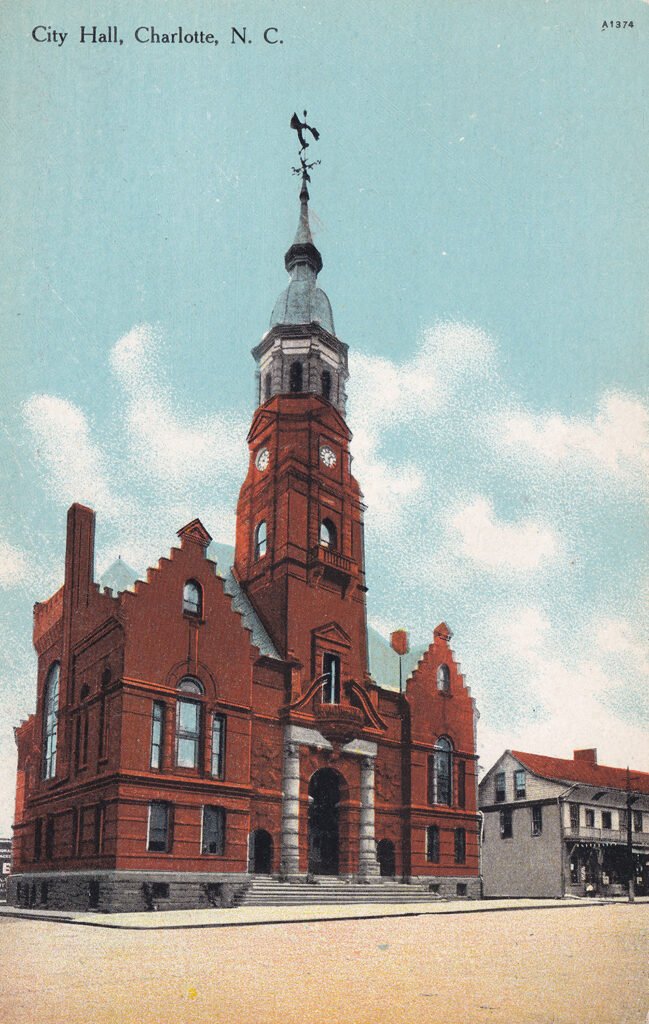
G.L. Norrman. City Hall (1893, demolished 1926). Charlotte, North Carolina. Illustration from an undated postcard.
By March 1893, the Observer was clearly resigned to the dragon’s existence. In an article championing the work of the city’s mayor, R.J. Brevard, the writer proclaimed: ‘We can stand upon our city hall, beneath “that dragon” without fear, but pride, for we can say the hall and ‘dragon” are paid for…’14
In December 1893, the dragon was threatened by a zealous objector, although The Observer had nothing to say about the matter. Instead, The Charlotte News reported on the following incident from the annual conference of the Methodist Episcopal Church South that had just concluded in the city:
“…one large portly member sprung to the aisle and said: “It is time something were done. Even here in the city of Charlotte, the dragon, the image of the old devil himself sweeps around ‘with every wind that blows,’ from the top of the city hall. The country is on a gallop to the devil and let’s head it off.“15
The newspaper added: “It cannot be denied–the brother is right. The devil overlooks Charlotte.“16 Sensationalist much?
It seems nothing came of the impassioned threat, and the dragon remained on the city hall until the building was demolished in 1926 — the only Southern city that has destroyed its historic fabric more than Atlanta is Charlotte.
The exact date of the dragon’s demise was February 2, 1926, with The Charlotte News documenting its final dramatic moments:
The giant dragon, which once proudly flaunted its head to every whim of the weather, was a mass of twisted metal and steel at the foot of the tower. Piles of brick and stone were falling upon it in utter disregard of its former proud station high above the street.17
And thus ended the saga of Charlotte’s dastardly dragon, buried in a heap of rubble after 33 years.
References
“The Dragon in Conference.” The Charlotte News (Charlotte, North Carolina), December 5, 1893, p. 1. ↩︎
“Local Briefs.” The Charlotte Observer (Charlotte, North Carolina), October 5, 1892, p. 4. ↩︎
“The Dragon–It May Be Classic, But Is Not Pretty.” The Charlotte Observer (Charlotte, North Carolina), October 7, 1892, p. 4. ↩︎