Category: Architecture

  • Confederate Soldiers’ Home (1891-1901) – Atlanta

    Bruce & Morgan. Confederate Soldiers' Home (1891-1901). Atlanta.
    Bruce & Morgan. Confederate Soldiers’ Home (1891-1901). Atlanta.1

    The Background

    The following article, published in The Atlanta Journal in April 1890, describes the Confederate Soldiers’ Home in Atlanta, completed in 1891 and designed by A.C. Bruce of Bruce & Morgan.

    Planned to house 150 to 200 people,2 the facility was built on 125 acres located two miles southeast of Atlanta and connected to Grant Park3 by a 1.5-mile dirt road that became known as Confederate Avenue (later United Avenue SE).

    Location of Confederate Soldiers’ Home

    The Origins of the Home

    The project was first proposed in April 1889 by Henry W. Grady, editor of The Atlanta Constitution, although it was hardly his own conception.

    In late 1888 and early 1889, Major Joe E. Stewart of Austin, Texas, traveled to the Northeast and began fundraising appeals in Boston and New York to support an existing home for Confederate veterans in Austin.4 5

    Why Stewart considered that a good idea was anyone’s guess, since no self-respecting Northener would’ve given a damn about aiding the ex-soldiers of a treasonous rebellion. As the Mail and Express of New York opined bluntly:

    “Major Stewart’s advocacy of the scheme for a Confederate Soldiers’ Home will not find favor here. That is not a matter of National concern…but is distinctly anti-National and to be discouraged.”6

    Needless to say, Stewart’s ill-conceived fundraising tour was a failure, and the soldiers’ home in Austin, Texas, received only $1500 in donations from Northern contributors.7

    Always full of self-righteous fervor, Henry Grady seized on the story in one of his typical bloviating editorials for the Constitution, proclaiming that Confederate soldiers should be aided by Southern money, making an impassioned plea to build a veterans’ home in Georgia for those who “suffered in her cause” — that is to say, those who fought for human slavery. Spare me the states’ rights bullshit.

    Grady wrote, in part:

    “Come home, Major Stewart, and let us take care our heroes to our own hearts, and wear them there, never to be paraded again with their limping gait, their poor wounds and their shabby raiment through the lines of strangers, of whom charity is begged for their behalf!

    “But we need Confederate Homes! In every state there are men wearing honorable scars who are poor and helpless.

    “WE MUST BUILD A CONFEDERATE HOME in GEORGIA! We must built it at once! We must show that Georgia’s heart beats true to the men who suffered in her cause–and that she will take them to her heart!”8

    Grady began a public fundraising campaign for the project, with the Constitution contributing the first $1,000. The campaign reportedly received over $10,000 in pledges within 12 hours of the newspaper’s distribution,9 and nine days later, an organization overseeing the project was incorporated with a board of 25 directors led by Grady.10 Credit them for moving quickly.

    Confederate Soldiers' Home
    Confederate Soldiers’ Home11

    Design and Construction

    While it was initially reported that the project’s building committee accepted a plan by W.T. Downing of Wheeler & Downing,12 G.L. Norrman also submitted plans, and A.C. Bruce13 of Bruce & Morgan ultimately secured the commission.14 It undoubtedly helped that A.C. Bruce was also a Confederate veteran.

    Looking every bit like a fashionable summer hotel, Bruce’s design for the Confederate Soldiers’ Home was one of his better efforts: a rambling structure of two to three stories, primarily Queen Anne style, with all the expected eclecticism and embellishments of the era, including a 120-foot-tall turret.

    Construction began in November 1889,15 and the building’s cornerstone was laid in a public ceremony on Confederate Memorial Day, April 26, 1890.16 17 The structure was completed in January 1891,18 19 and while the project was initially estimated at $22,000,20 the final cost was $27,699.25.21

    Another Lost Cause

    Although the Constitution set a goal of $50,000 in subscriptions for the project,22 23 24 the Confederate Soldiers’ Home ultimately received just over $41,000, leaving only $41.01 in available funds at the building’s completion.25 Henry Grady died in December 1889, and it’s safe to assume the project’s funding faltered in the absence of his leadership.

    The project’s directors should have taken a cue from Atlanta’s Carrie Steele Orphans’ Home, which was under construction at the same time and similarly funded by popular subscription. The original plans for the orphanage — also designed by Bruce & Morgan — were apparently dropped in favor of a simpler structure to accommodate reduced funding.

    We’re talking about Atlanta, though, where show and spectacle have always been prioritized over fiscal responsibility, and one of the directors of the veterans’ home project even admitted that the committee splurged on “extras in the form of a slate roof, etc.,” adding at least $1000 to the total cost.26

    As it became clear that the organization lacked the funds to operate its shiny new facility, the directors decided to unload it on the State of Georgia, offering the entire property to the state government on the condition that it shelter veterans for 25 years, after which it could be used for other purposes.27 28 Too bad the state didn’t want it.

    In November 1890, a bill was introduced in the state legislature to operate the home as a public facility,29 although it was defeated in August 1891.30 A similar bill was shelved in December 1892,31 32 and a third attempt was killed when lawmakers deferred it to a finance committee.33

    Partially fueling the legislature’s refusals was the simmering resentment Georgia’s bumfuck politicians have long held against the city, knowing full well the state would be Mississippi without Atlanta. Some legislators apparently dismissed the project as a typical Atlanta “speculative scheme,”34 35 and frankly, they weren’t entirely wrong on that count.

    In 1894, the Confederate Soldiers’ Home even became a contentious topic in the state’s gubernatorial race. The leading candidate was William Yates Atkinson, a former speaker of the Georgia House of Representatives, who voted against the home and actively denounced the project on the campaign trail, telling attendees at one event:

    “The friends of the home didn’t care anything about it, but they wanted it accepted because it was located in Atlanta.

    “That home was a regular poor house and they wanted to send you needy veterans to that Atlanta poor house, where you would be under a master to whom you would have to beg like a slave for the necessities of life.”36

    Oh, the irony.

    Atkinson won the election, and in January 1895, the Confederate Soldiers’ Home was “still uninhabited, save by a lone watchman,”37 when the organization decided to sell the property.38 39

    Confederate Soldiers' Home, 1901 illustration
    Confederate Soldiers’ Home, 1901 illustration40

    Myth and Mayhem

    By the mid-to-late 1890s, it had become glaringly obvious that the New South myth was utter bullshit. The chief promulgator, Henry Grady, was long dead, and like the grand mansions that sat vacant for years in Atlanta’s Inman Park, the Confederate Soldiers’ Home was left to rot because no one could pony up the cash — even for the soldiers of Georgia’s vaunted “cause.”

    The decision to sell the facility prompted a lawsuit from the local real estate company that initially donated the land, claiming they had done so with the understanding that the property would be used solely for a veterans’ home.41

    The trial ended with a judge’s order to sell the property,42 43 but an effort to sell in April 189644 was apparently dropped, and a second attempt in 1897 was delayed by the Daughters of the Confederacy, who wanted another chance to woo the state legislature into operating the facility.45 That also failed.

    A published description of the property in 1897 portrayed a bleak scene:

    “The home is three stories high and is of beautiful architecture. It was once painted, but no one would at present suspect it.

    “The sides are weather beaten and many of the planks are beginning to decay. The old windmill with the tank on the top is now grown up with vines and shows that it has not been in use for some time. The walks, which wind in and about the premises in the immediate neighborhood of the building, and which were once well kept, are now grown up with grass and weeds.

    “The approach to the home for a quarter of a mile is almost as gloomy as the building itself, and one would suspect that he was in the neighborhood, even though the building had not been sighted. The street car track which was laid when the home was built and when it was thought that there was no doubt but what it would soon be inhabited by many veterans, is now in a state of decay. The rails are rusty, the bed has in many places caved in and is covered with weeds.

    “The little road which had been graded along side, is now grown up with shrubbery, and the lizards dart away at the approach of a chance pedestrian.”46

    In April 1898, an attempt to sell the home on the steps of the Fulton County Courthouse was halted because the highest bid was only $10,000.47

    A year later, another public auction resulted in an even lower winning bid: $8,000, offered by Joel Hurt,48 who reportedly “had not intended to buy the property when he went to the sale, and only did it to help the veterans out.”49

    That sale was also denied,50 and the property remained unsold and vacant, with no hope of eventual use in sight.

    A Blaze of Glory

    In 1900, nearly ten years after the Confederate Soldiers’ Home was completed, a group of Confederate veterans, led by Major W.T. Gary,51 once again lobbied the Georgia legislature to operate the facility, aided by the recommendation of a new, more sympathetic governor, Allen D. Candler.52

    Worn down by the state’s repeated rejections, it was a shock to everyone involved when the Soldiers’ Home Bill was passed in December 1900 by a vote of 106 to 50,53 54 and the facility finally opened on June 3, 1901.55 56

    Ah, but it’s Atlanta, so you know there’s a shitty twist ending.

    Before it had been occupied for even four months, the Confederate Soldiers’ Home was destroyed by fire on September 30, 1901.57 58

    The building’s restroom (just the one?) apparently incorporated the “Smead dry closet“, in which facilities without sewer access could collect feces and burn it into a fine powder — a novel solution in 1890, but quite outdated by 1901, when flush toilets had become the accepted standard.

    As the Journal explained:

    “In the lavatory the Smead system of disposing of the refuse was used. Daily the crematory in connection with the lavatory was fired up.

    The negro porter who started these fires this morning placed a wheelbarrow load of shavings and other timber from the premises into the furnace. The fire burned fiercely and broke through the top of the furnace.

    “When Dr. Bryan went into the department he noticed the flames. He ran out and asked if the flames were not too high.

    “Superintendent James L. Wilson seeing the condition of the fire quickly gave the alarm. By this time the flames had commenced to burn the woodwork in the vicinity of the furnace.

    “The smoke was pouring into the center of the house in great volumes, and owing to the draft at this place the flames spread rapidly.”59

    Of course, they tried to pin the blame on the Black man, but after sitting unused for ten years, the furnace was probably a faulty mess. Or maybe the place was just haunted by Sherman‘s ghost.


    Bruce & Morgan. Confederate Soldiers' Home (1891-1901). Atlanta.
    Bruce & Morgan. Confederate Soldiers’ Home (1891-1901). Atlanta.

    We Love Them

    And Now In Their Declining Years

    We Will Shelter Them.

    Something About the Home to be Occupied by the Soldiers

    Who Shed Their Blood For The Southern Land–A Description of the New Building Soon to be Completed for the Veterans.

    The veterans will soon be quartered in their new home.

    The plans for the building were prepared by Messrs. Bruce & Morgan.

    The contract was awarded to Messrs. Austin & Boylston.

    The building will be one hundred and eighty feet long, and at the south end, the widest portion, one hundred feet in width.

    The approach will be through a “Porte coache,” [sic] and the entrance will be handsomely finished and attractive. On either side of the main entrance there will be niches for statuary.

    On the first floor are a main hall, corridors, reception rooms, a parlor, a chapel, a sitting room, office, dining room, kitchen, pantry, laundry and bed rooms.

    You first enter a large hall, handsomely finished, 32×50 feet. On the right are the ladies’ reception room and parlors and on the left the gentlemen’s reception room. Adjoining the latter is a reading room. The sitting room is 25×59 feet, and will be used by the old soldiers when the weather will not permit them to go out of doors.

    The office is in the main hall.

    The “memorial chapel” is in front of the building, and to the left of the main entrance. It will be used for divine services, banquets and public receptions.

    The dining room is 36×40 feet, and will seat one hundred people. The kitchen and pantries are a one-story wing and adjoin the dining hall. The laundry is beneath the kitchen.

    There are ten bed rooms on this floor.

    Two hundred and seventy-five feet of wide verandahs surround the first floor.

    There are thirty rooms on the second floor, the smallest of which are 12×14 feet, and the largest 15×18.

    Each bedroom has a fireplace and two windows.

    There are several easily accessible staircases leading to the first floor.

    On the second floor there are three balconies, one in the center of the building and one on each side.

    A portion of one wing of the building is three stories high, and in this upper story are ten bedrooms.

    The turret, the highest point of which is one hundred and twenty feet from the ground, is of an octagon shape.

    A large balcony surrounds the building seventy-five feet from the ground, and from it an excellent view of the city can be had.

    The foundation of the building will be stone and the balance of wood, inside the wood work will be natural pine, and the main hall will be panel-wainscotted.

    It will cost between twenty and twenty-five thousand dollars and will be one of the handsomest buildings in the county.60

    References

    1. Illustration credit: “We Love Them”. The Atlanta Journal, April 26, 1890, p. 12. ↩︎
    2. “The Veterans’ Home”. The Atlanta Journal, December 9, 1890, p. 1. ↩︎
    3. “Veterans’ Home”. The Atlanta Journal, May 9, 1889, p. 4. ↩︎
    4. “Ex-Confederate Home.” Austin Weekly Statesman (Austin, Texas), November 1, 1888, p. 4. ↩︎
    5. “To Aid Confederate Soldiers.” New-York Tribune, February 7, 1889, p. 3. ↩︎
    6. “Echoes From The People.” The World (New York), January 31, 1889, p. 2. ↩︎
    7. “The Confederates Home.” The Atlanta Constitution, April 2, 1889, p. 1. ↩︎
    8. “Shall We Go Begging For Them?” The Atlanta Constitution, April 6, 1889, p. 4. ↩︎
    9. “Let Us Wear Them In Our Hearts!” The Atlanta Constitution, April 7, 1899, p. 17. ↩︎
    10. “The Soldiers’ Home.” The Atlanta Constitution, April 26, 1890, p. 15. ↩︎
    11. Illustration credit: “The Soldiers’ Home”. The Atlanta Constitution, April 26, 1890, p. 15. ↩︎
    12. “The Confederate Home.” The Atlanta Constitution, September 11, 1889, p. 7. ↩︎
    13. “The Trustees Meet.” The Atlanta Constitution, July 17, 1891, p. 7. ↩︎
    14. “In And About Atlanta.” The Atlanta Constitution, September 21, 1889, p. 5. ↩︎
    15. “The Confederate Home.” The Atlanta Constitution, November 24, 1889, p. 11. ↩︎
    16. “To Lay The Corner-Stone.” The Atlanta Constitution, April 15, 1890, p. 5. ↩︎
    17. “Confederate Home.” The Atlanta Constitution, April 25, 1890, p. 9. ↩︎
    18. “The Veterans’ Home”. The Atlanta Constitution, January 9, 1891, p. 6. ↩︎
    19. “Strong Effort To Pass Gary Bill”. The Atlanta Constitution, November 25, 1900, p. 4. ↩︎
    20. “In And About Atlanta.” The Atlanta Constitution, September 21, 1889, p. 5. ↩︎
    21. “The Trustees Meet.” The Atlanta Constitution, July 17, 1891, p. 7. ↩︎
    22. ‘The Confederate “Home” Movement.’ The Atlanta Constitution, April 9, 1889, p. 4. ↩︎
    23. “It Is Still Moving On!” The Atlanta Constitution, April 16, 1889, p. 4. ↩︎
    24. “The Confederate Home of Georgia Organized.” The Atlanta Constitution, April 19, 1889, p. 4. ↩︎
    25. “The Trustees Meet.” The Atlanta Constitution, July 17, 1891, p. 7. ↩︎
    26. “The Idler’s Note Book”. The Atlanta Journal, September 9, 1890, p. 4. ↩︎
    27. “About The Capitol.” The Atlanta Constitution, October 19, 1890, p. 16. ↩︎
    28. “Confederate Home.” The Atlanta Constitution, November 22, 1890, p. 10. ↩︎
    29. ibid. ↩︎
    30. “Defeated!” The Atlanta Constitution, August 27, 1891, p. 1. ↩︎
    31. “Defeat The Fate.” The Atlanta Constitution, December 15, 1892, p. 7. ↩︎
    32. “The Veterans Mourn.” The Atlanta Journal, December 15, 1892, p. 1. ↩︎
    33. “Confederate Soldiers’ Home Is Sold To Joel Hurt For $8,000”. The Atlanta Constitution, May 3, 1899, p. 5. ↩︎
    34. “The Greeks Bearing Gifts.” The Atlanta Constitution, September 5, 1891, p. 4. ↩︎
    35. “The Soldiers’ Home”. The Atlanta Constitution, November 24, 1892, p. 8. ↩︎
    36. “Those Joint Debates.” The Atlanta Journal, March 31, 1894, p. 13. ↩︎
    37. “Trustees Will Meet”. The Atlanta Constitution, January 22, 1895, p. 10. ↩︎
    38. “To Sell It In The Spring”. The Atlanta Journal, January 29, 1895, p. 1. ↩︎
    39. “The Home To Be Sold”. The Atlanta Constitution, January 30, 1895, p. 5. ↩︎
    40. Illustration credit: “Soldiers’ Home Opens Its Doors To Veterans Today”. The Atlanta Journal, June 3, 1901, p. 7. ↩︎
    41. “The Soldiers’ Home Case.” The Atlanta Constitution, September 4, 1895, p. 5. ↩︎
    42. “To Sell The Soldiers’ Home”. The Atlanta Constitution, September 17, 1895, p. 5. ↩︎
    43. “The Soldiers’ Home.” The Atlanta Constitution, December 18, 1895, p. 8. ↩︎
    44. “Sale of Soldiers’ Home Property.” The Atlanta Constitution, March 31, 1896, p. 10. ↩︎
    45. “Home Trustees Have Not Acted”. The Atlanta Constitution, June 3, 1897, p. 12. ↩︎
    46. “Soldiers’ Home To Be Sold. Court’s Order Expected Any Time”. The Atlanta Constitution, May 24, 1897, p. 6. ↩︎
    47. “Sale Of Home Declared Off”. The Atlanta Constitution, April 6, 1898, p. 5. ↩︎
    48. “Confederate Soldiers’ Home Is Sold To Joel Hurt For $8,000”. The Atlanta Constitution, May 3, 1899, p. 5. ↩︎
    49. “Soldiers’ Home Sells For $8,000 At Auction”. The Atlanta Journal, May 2, 1899, p. 1. ↩︎
    50. “Sale Of The Home Is Not Confirmed”. The Atlanta Constitution, May 22, 1889, p. 8. ↩︎
    51. Gary, W.T. “Why We Should Accept Confederate Home.” The Atlanta Constitution, November 13, 1900, p. 4. ↩︎
    52. “Veterans Fighting For Soldiers’ Home”. The Atlanta Journal, November 20, 1900, p. 10. ↩︎
    53. “Soldiers’ Home Bill Passed By House; Georgia Veterans Will Have Shelter At Last After Waiting Eleven Years”. The Atlanta Journal, December 12, 1900, p. 1. ↩︎
    54. “Georgia Veterans Get Their Home By The Vote Of 106 To 50”. The Atlanta Constitution, December 13, 1900, p. 1. ↩︎
    55. “Soldiers’ Home Will Be Opened To Vets Today”. The Atlanta Constitution, June 3, 1901, p. 1. ↩︎
    56. “Soldiers’ Home Opens Its Doors To Veterans Today”. The Atlanta Journal, June 3, 1901, p. 7. ↩︎
    57. “Soldiers’ Home Totally Destroyed: Generous People Will Rebuild It; Journal Leases Hotel For Vets”. The Atlanta Journal, September 30, 1901, p. 1. ↩︎
    58. “Soldiers’ Home, Destroyed By Flames That Relit The Fire Of A Smouldering Sympathy, Will Be Rebuilt By Georgians”. The Atlanta Constitution, October 1, 1901, p. 1. ↩︎
    59. ibid. ↩︎
    60. “We Love Them”. The Atlanta Journal, April 26, 1890, p. 12. ↩︎
  • Atlanta Lodge, No. 78, of B.P.O. Elks (1911)

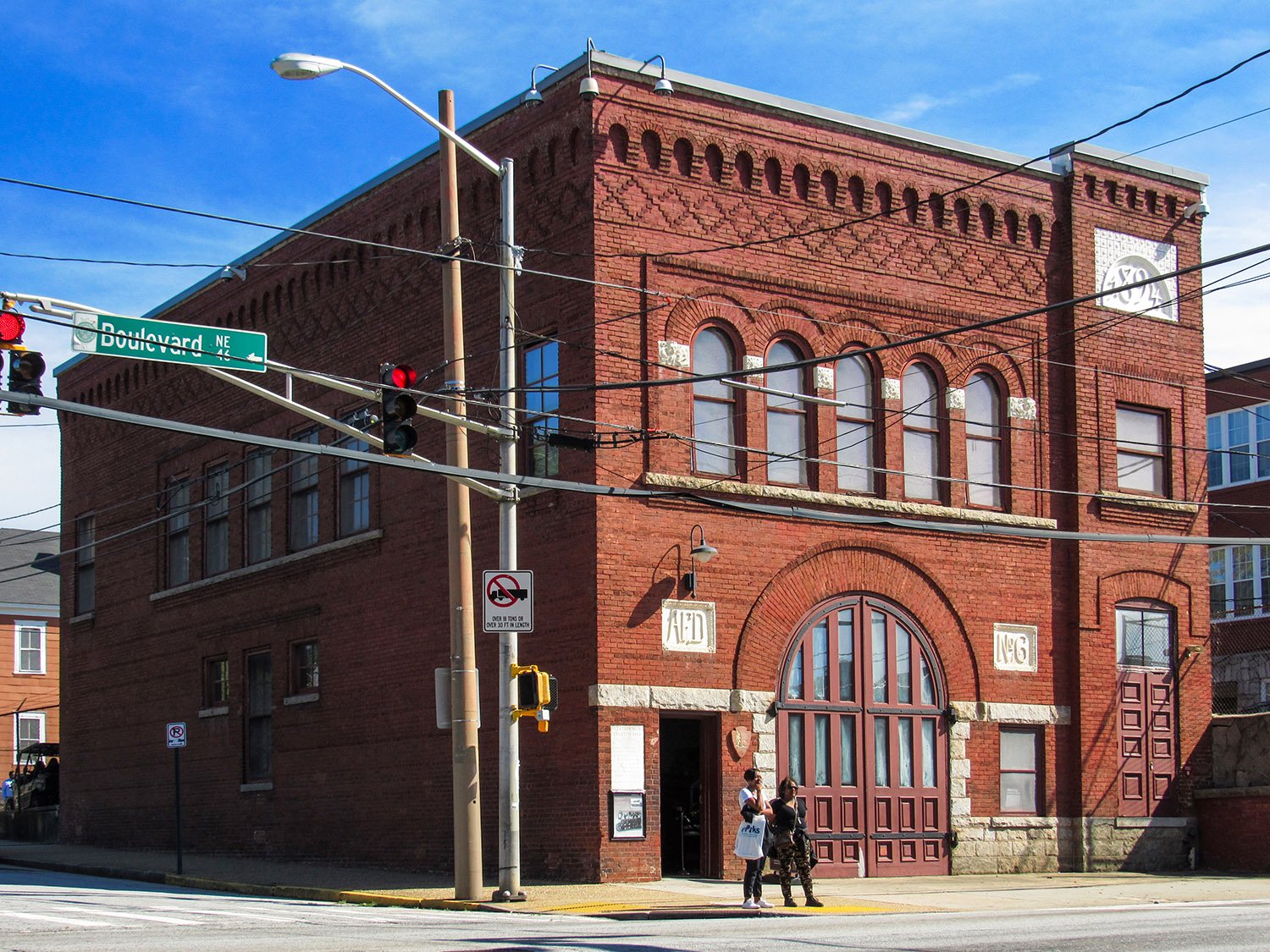
    J.R. MacEachron of MacEachron & Trowbridge. Atlanta Lodge, No. 78, of B.P.O. Elks (1911). Atlanta.
    J.R. MacEachron of MacEachron & Trowbridge. Atlanta Lodge, No. 78, of B.P.O. Elks (1911). Atlanta.1 2 3 4 5
    Entrance of Atlanta Lodge
    Entrance of Atlanta Lodge
    Looking at Atlanta Lodge from the west
    Looking at Atlanta Lodge from the west
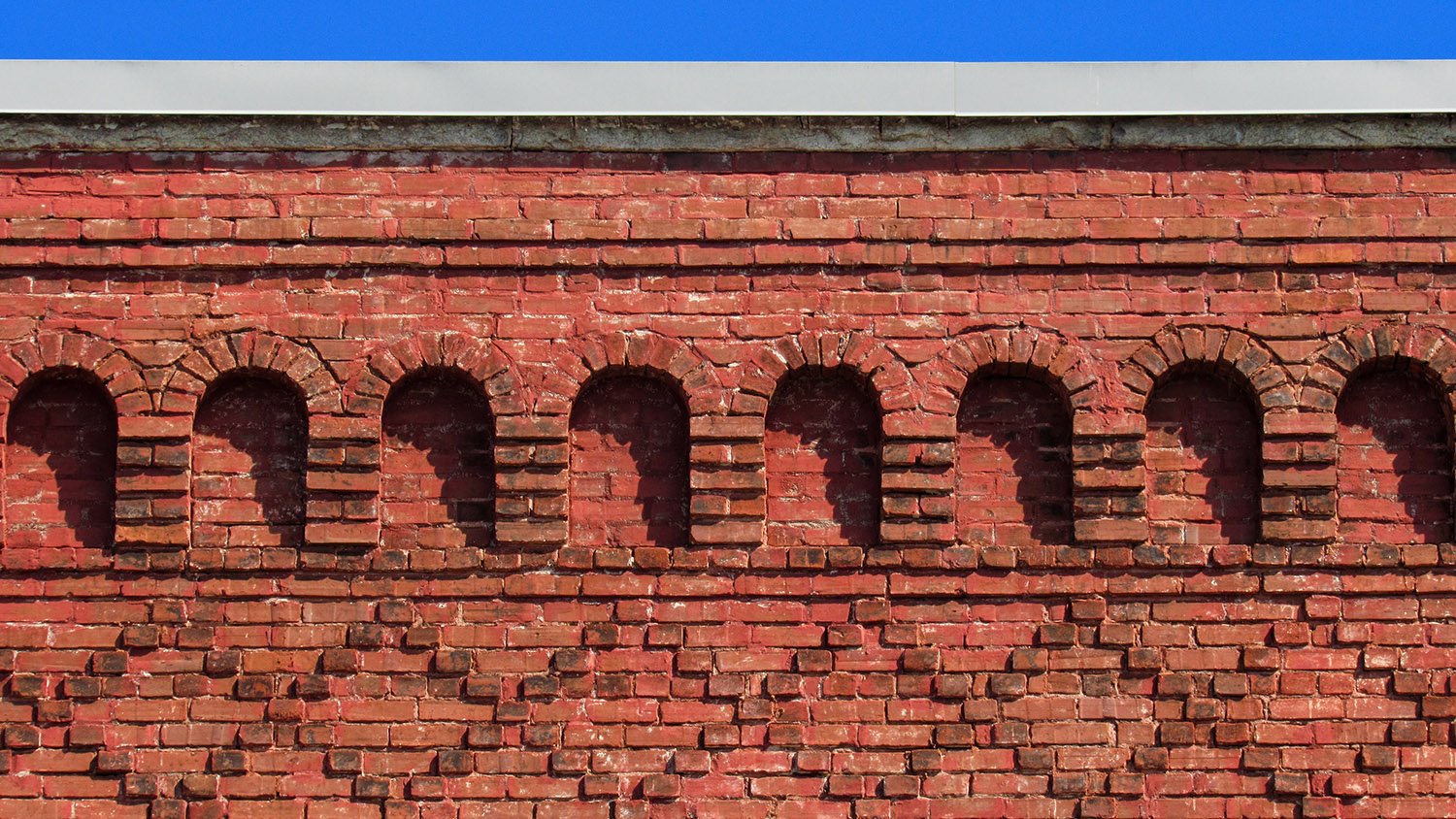
    Cornice on the east elevation of Atlanta Lodge
    Cornice on the east elevation of Atlanta Lodge
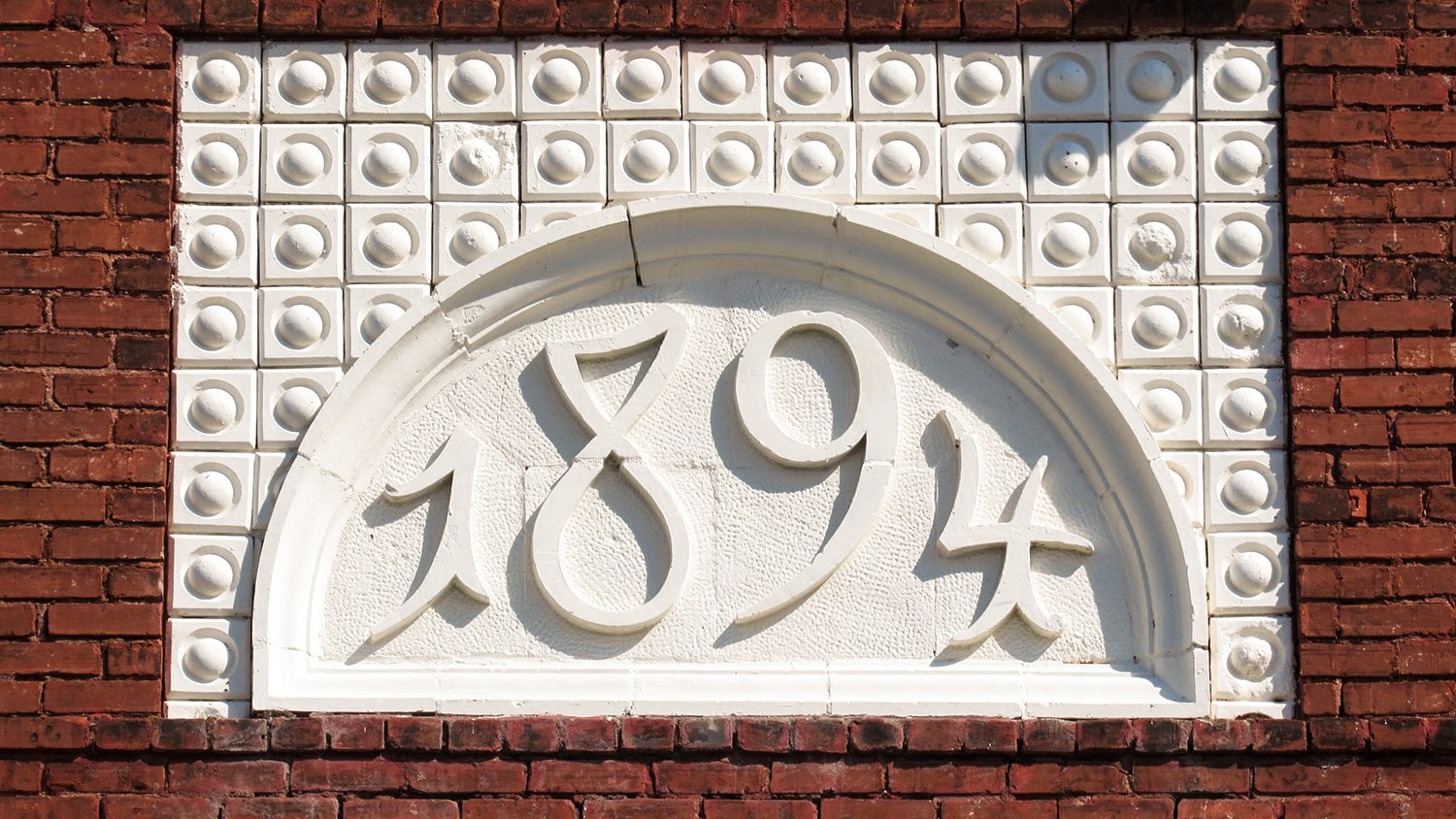
    Terracotta spandrel panel on the facade of Atlanta Lodge
    Terracotta spandrel panel on the facade of Atlanta Lodge
    First-floor window on the facade of Atlanta Lodge
    First-floor window on the facade of Atlanta Lodge
    Pilaster and terracotta moulding on the facade of Atlanta Lodge
    Pilaster and terracotta molding on the facade of Atlanta Lodge
    Cornice, pediment, and terracotta ornamentation on the facade of Atlanta Lodge
    Cornice, pediment, and terracotta ornamentation on the facade of Atlanta Lodge
    Third-floor window on the facade of Atlanta Lodge
    Third-floor window on the facade of Atlanta Lodge
    Terracotta molding at the entrance of Atlanta Lodge
    Terracotta molding at the entrance of Atlanta Lodge
    Cornice on the facade of Atlanta Lodge
    Cornice on the facade of Atlanta Lodge
    Terracotta console and molding on the facade of Atlanta Lodge
    Terracotta console and molding on the facade of Atlanta Lodge
    Entrance of Atlanta Lodge
    Entrance of Atlanta Lodge

    References

    1. Moran, Robert. “Floor Plans For Handsome Elks’ Building, Which Will Be Home Of Atlanta Lodge No. 78”. The Atlanta Journal, August 14, 1910, p. 3. ↩︎
    2. “New Elks Home Presents Most Pleasing Exterior”. The Atlanta Constitution, July 31, 1911, p. 3. ↩︎
    3. “First Meeting Of Elks In New Home Tonight”. The Atlanta Constitution, November 2, 1911, p. 7. ↩︎
    4. “Elks Hold Initiation In Beautiful New Home”. The Atlanta Constitution, November 3, 1911, p. 8. ↩︎
    5. “First Initiation Held In The Elks’ New Home”. The Atlanta Journal, November 3, 1911, p. 22. ↩︎
  • Percy Rivington Pyne Residence (1912) – New York

    Charles McKim of McKim, Mead & White. Percy Rivington Pyne Residence (1912). New York.
    Charles McKim of McKim, Mead & White. Percy Rivington Pyne Residence (1912). New York.

    There’s something to be said for a little restraint, as demonstrated by this tasteful 5-story townhouse in the Lenox Hill neighborhood of New York’s Upper East Side.

    Location of the Percy Rivington Pyne Residence

    The home is officially credited to Charles McKim of McKim, Mead & White, but was primarily the work of his assistant, William M. Kendall, who began assuming design duties as McKim’s health deteriorated.1

    Although the plan was first conceived in 1906,2 McKim died in 1909, three years before the project was completed in 1912.

    Cornice on the Percy Pyne Rivington Residence
    Cornice on the Percy Pyne Rivington Residence

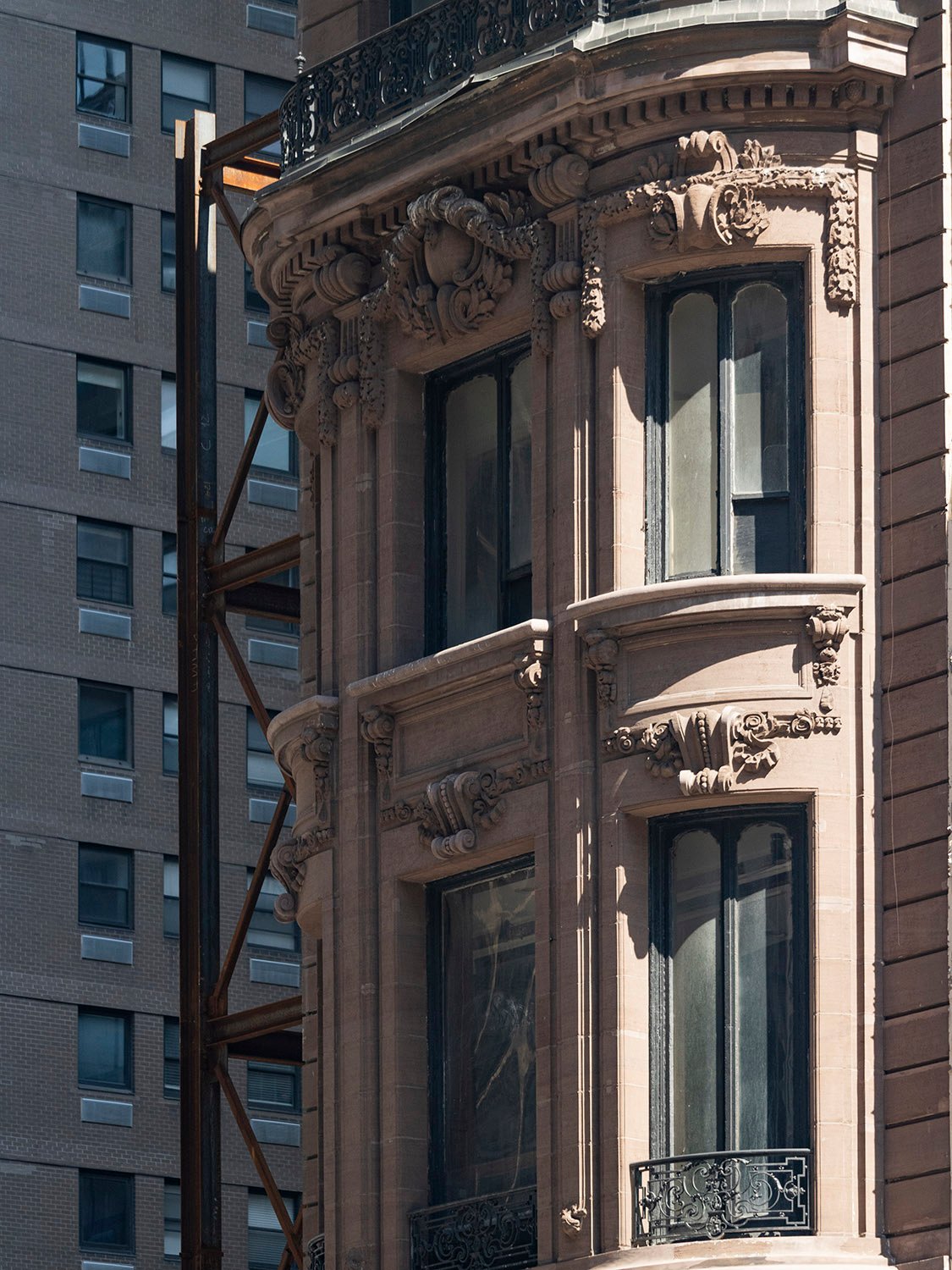
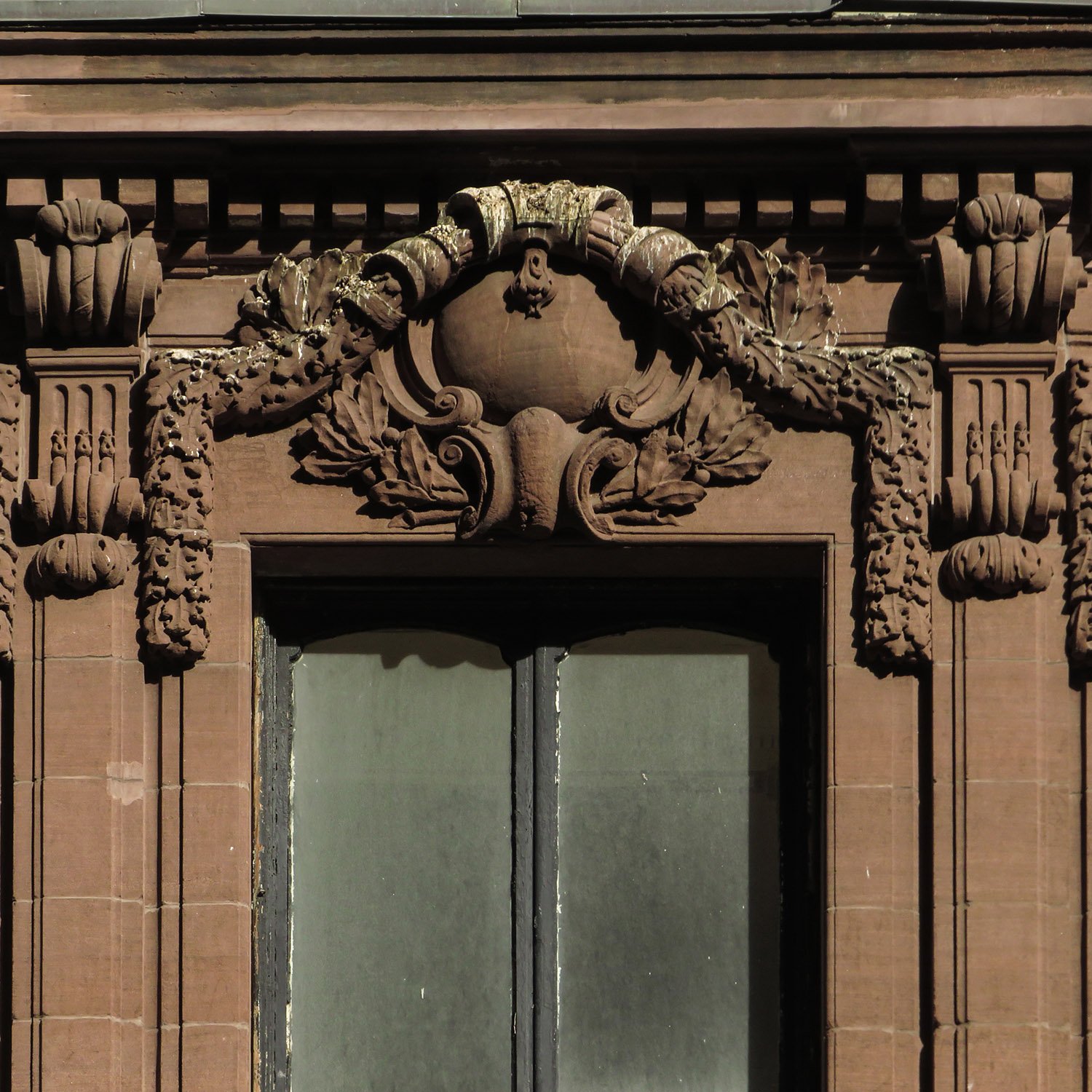
    Neo-Federal in style, the Pyne residence balances a simple composition with refined touches, including a richly ornamented cornice, finely detailed consoles, an entrance portico with an elaborate frieze, and a series of blind arch windows on the second floor, one of them filled with marble and topped by a sculpted garland in its lunette.

    Yeah, I’m pulling out all the pretentious architectural terms.

    Dormers on the east facade of the Percy Pyne Rivington Residence
    Dormers on the east facade of the Percy Pyne Rivington Residence

    My favorite part of the home’s design is the set of three dormers across the front roof — one of these things is not like the others.

    It’s New York, so a Sesame Street reference felt appropriate.

    Third-floor window on the east facade of the Percy Pyne Rivington Residence
    Third-floor window on the east facade of the Percy Pyne Rivington Residence

    The stately Pyne Residence looks more like something you’d find in Washington, D.C., and easily blends into the background if you’re rushing down Park Avenue (and who isn’t?). Only on close inspection does the home’s subtle elegance reveal itself.

    When McKim, Mead & White’s successors planned the Oliver D. Filley Residence next door in 1926, they wisely continued the same scale and design.

    Portico on the east facade of the Percy Pyne Rivington Residence
    Portico on the east facade of the Percy Pyne Rivington Residence
    Blind arch window on the east facade of the Percy Pyne Rivington Residence
    Blind arch window on the east facade of the Percy Pyne Rivington Residence
    Consoles on the Percy Pyne Rivington Residence
    Consoles on the Percy Pyne Rivington Residence

    Elevations, Sections, and Floorplans3

    References

    1. White, Samuel G. The Houses of McKim, Mead & White. New York: Rizzoli International Publications, Inc. (1998), p. 234. ↩︎
    2. ibid. ↩︎
    3. A Monograph of the Work of McKim Mead & White, 1879-1915. New York: The Architectural Book Publishing Company, 1915. ↩︎
  • King Memorial Station (1979) – Atlanta

    Aeck Associates with Reynolds, Smith & Hills. King Memorial Station (1979). Sweet Auburn, Atlanta.
    Aeck Associates with Reynolds, Smith & Hills. King Memorial Station (1979). Sweet Auburn, Atlanta.1 2 3
    Looking at King Memorial Station from the northwest
    Looking at King Memorial Station from the northwest
    Platform of King Memorial Station
    Platform of King Memorial Station

    References

    1. Bailey, Sharon. “MARTA Depicts Station”. The Atlanta Constitution, November 6, 1975, p. 10-A. ↩︎
    2. “MARTA Unveils Plan For Grant Street Site”. The Atlanta Journal, November 6, 1975, p. 6-A. ↩︎
    3. Ledlie, Joe. “MARTA Gets Big Rush in Debut”. The Atlanta Journal and Constitution, July 1, 1979, p. 1-A. ↩︎
  • Kauffman Center for the Performing Arts (2011) – Kansas City, Missouri

    Moshe Safdie of Safdie Architects with BNIM Architects. Kauffman Center for the Performing Arts (2011). Kansas City, Missouri.
    Moshe Safdie of Safdie Architects with BNIM Architects. Kauffman Center for the Performing Arts (2011). Kansas City, Missouri.1 2
    North elevation of the Kauffman Center for the Performing Arts
    North elevation of the Kauffman Center for the Performing Arts

    References

    1. Kauffman Center for the Performing Arts – Safdie Architects ↩︎
    2. Paul, Steve. “Eyes On The Prize”. The Kansas City Star, September 11, 2011, p. F3. ↩︎
  • Bolling Sasnett Residence (1922) – Atlanta

    A.F. N. Everett. Bolling Sasnett Residence (1922). Ansley Park, Atlanta.
    A.F. N. Everett. Bolling Sasnett Residence (1922). Ansley Park, Atlanta.1 2 3 4

    References

    1. “Building Activities in And around Atlanta”. The Atlanta Constitution, November 13, 1921, p. 6. ↩︎
    2. “Dwellings.” Manufacturers Record, Volume 80, no. 21 (November 24, 1921), p. 79. ↩︎
    3. “Mrs. Sasnett Gives Lovely Bridge-Luncheon”. The Atlanta Journal, June 4, 1922, p. 1C. ↩︎
    4. “Mrs.Sassnet Gives Bridge-Luncheon.” The Atlanta Constitution, June 5, 1922, p. 9. ↩︎
  • Antoine Graves Homes (1966-2009) – Atlanta

    John C. Portman, Jr. of Edwards & Portman. Antoine Graves Homes (1966-2009). Sweet Auburn, Atlanta. Photograph by Edmund W. Hughes of Bell & Stanton Inc, dated February 28, 1967.
    John C. Portman, Jr. of Edwards & Portman. Antoine Graves Homes (1966-2009). Sweet Auburn, Atlanta.1 2 3 4 Photograph by Edmund W. Hughes of Bell & Stanton Inc, dated February 28, 1967.

    References

    1. Coleman, George M. “Mayor Allen, Others Break Ground For New Antoine Graves Homes”. Atlanta Daily World, April 28, 1964, p. 1. ↩︎
    2. “Homes for Elderly Fill Up Quickly”. The Atlanta Journal and Constitution, May 8, 1966, p. 37. ↩︎
    3. “City Architects Honored”. The Atlanta Journal, October 28, 1966, p. 14. ↩︎
    4. Portman’s first atrium building to be torn down – SaportaReport ↩︎
  • Floyd County Courthouse – Rome, Georgia (1893-2026)

    Bruce & Morgan. Floyd County Courthouse (1893-March 23, 2026). Rome, Georgia. Photograph from an undated postcard.
    Bruce & Morgan. Floyd County Courthouse (1893-March 23, 2026). Rome, Georgia.1 2 3 4 5 Photograph from an undated postcard.

    References

    1. “Floyd’s New Court House.” The Macon Telegraph (Macon, Georgia), June 3, 1891, p. 3. ↩︎
    2. “The Courthouse For Floyd”. The Atlanta Constitution, November 3, 1891, p. 5. ↩︎
    3. “It Is Handsome.” The Weekly Tribune (Rome, Georgia), November 9, 1893, p. 4. ↩︎
    4. Rome courthouse tower collapses in massive fire – Northwest Georgia News ↩︎
    5. Historic Floyd County Courthouse fire: What we know – Northwest Georgia News ↩︎

  • William J. Speer Residence – Atlanta (1890-1911)

    G.L. Norrman. William J. Speer Residence (1890-1911). Atlanta.
    G.L. Norrman. William J. Speer Residence (1890-1911). Atlanta.1

    The Background

    The following excerpt is from an article published in The Atlanta Constitution in April 1891, and describes the William J. Speer Residence in Atlanta, built in 1890 and designed by G.L. Norrman.

    The Speer residence was located on the northwest corner of Peachtree Street and North Avenue, at 544 Peachtree Street2 3 (later 620 Peachtree Street NE) in what is now Midtown Atlanta.

    Location of William J. Speer Residence

    About William J. Speer

    In 1890, William J. Speer (1846-19314, pictured here5) served as assistant treasurer for the State of Georgia, first appointed in 1880 by his brother, Daniel Speer, who was the state treasurer.6 7 No nepotism there.

    William J. Speer was elected state treasurer in 18968 and resigned from the position in 1900, citing unspecified health issues.9 He was re-elected in 1911 and served in the position until two weeks before his death at the age of 85, making him “the oldest state official in point of service.”10

    G.L. Norrman was likely well acquainted with the Speer family: one of his earliest projects in Atlanta was for the Peachtree Street residence of Daniel Speer,11 12 and Norrman and William J. Speer were both members of the Capital City Club.13

    Design and Construction

    If there’s a surviving photograph of the Speer residence, I’ve never seen it. However, based on the accompanying illustration shown above, it appears the home was a duplicate of Norrman’s plan for the Samuel McGowan Residence (1889, pictured below) in Abbeville, South Carolina, which still exists.

    G.L. Norrman. Samuel McGowan Residence (1889). Abbeville, South Carolina.
    G.L. Norrman. Samuel McGowan Residence (1889). Abbeville, South Carolina.14

    In 1889 and 1890, Norrman’s output rapidly increased, and with several large-scale commissions, his office was clearly swamped with work.

    While he was never above reusing plans to save time and money, Norrman was usually savvy about concealing the practice, altering a home’s porches or roof line, for instance, or maybe adding a turret or other stylistic flourishes to differentiate its appearance from a design predecessor.

    In this case, however, he didn’t even bother, only swapping out the McGowan house’s Queen Anne and Palladian elements for a nebulous Chateauesque skin on the Speer residence.

    The materials were also substantially different: the McGowan house was built with cheaper wood siding and shingles, while Speer’s “palatial mansion”15 was faced with brick, stone, and terra cotta. Otherwise, besides a few altered windows, the two homes’ facades appear interchangeable.

    For an architect whose “designs were noted for originality,”16 Norrman’s copy of his own work posed some reputational risk, yet with 150 miles between Atlanta and Abbeville, the chances were slim to none that anyone from either place would see both homes.

    The Speer residence was first announced in March 1889 with an estimated cost of $40,000 to $50,000.17 18 While the home was under construction in December 1889, it was said to be “one of the most magnificent and costly on Peachtree.”19 As completion neared in January 1890, the project’s cost was reported as both $20,00020 21 and $30,000.22

    About the Interior

    In October 1890, the Speers hosted their first formal event in the new residence, described as the “first elaborate reception given this season.”23 The party ostensibly celebrated the Speers’ daughter, Annie, who made her formal social debut the previous year.24

    Managing the state treasury was obviously lucrative, and the Speers used the event to show off their home’s lavishly-appointed interiors, which the Constitution predictably gushed over in exacting detail:

    “The guests entered a splendid hallway, with a massive mantel opposite the front portal. On either side the mirrors were superb candelabras of beaten silver, with candles of pale pink and blue. The woodwork is of English oak. The wide hearth has brown tiling, and is finished with beaten bronze. The back of the great fireplace has a superb bronze basrelief [sic]. A carved oak arch on the left and an arched passageway gives a view of the winding, carved oaken stairway, with its wide landing and its rich opaline glass windows. The carpet is in … browns and tans, so is the wall, and the chandeliers are of colored bronze.

    The interior of the house was planned by Mrs. Speer, but Mr. Speer furnished the library, one of the most tasteful and elegant apartments. The window and book case curtains are of yellow Indian silk. The carpet is an Axminster in rich, dull tones, the walls are pale chocolate, the wood work carved English oak and the furniture deliciously comfortable and easy, is of carved oak upholstered in plain and stamped leather.

    Two oak chairs with odd, richly carved backs and seats of handsomely stamped leather are particularly beautiful and unique; the ornaments of bronze and terracotta on the mantel are superb.

    The … drawing room is all in the daintiest tones. The walls and rich carpet are pale blue and cream; the hangings white lace and pale blue India silk, sprinkled with flowers; the chandeliers silver, with white tapers encircling the large center globe light. The superb Louis X furniture was made to order and is upholostered in tapestry stuffs of richest brocade, with center pieces in quaint … designs. The drawing room opens into the dining room, whose carpet and walls are of delicate gray-blue. The furniture and wood work is cherry, the chandeliers silver. The chandeliers are as unique as handsome.”25

    An Unhappy Home

    Despite the opulence of their home, the Speers’ domestic life wasn’t a charmed one.

    In September 1903, Speer’s wife, Geraldine, filed for divorce, alleging that her husband was “an habitual drunkard, having been continually drunk for over a year,”26 and that the couple had been effectively separated for three years. Mrs. Speer further claimed that her husband had recently come home in a drunken rage and assaulted their son, John, leaving her fearing for her life.27 28

    “A handsome residence on Peachtree street is not always enough to make a woman satisfied,” one newspaper quipped.29

    And that wasn’t the first violent incident in the home.

    The Wood Affair

    On the morning of December 20, 1902, Mrs. W.J. Wood entered the parlor of the Speer residence and fired a gun at Mary Ballinger, a seamstress who worked for the family.30 31

    “You know that you have come between my husband and myself and caused him to abuse me,”32 Wood reportedly screamed at Ballinger as she whipped out a .32 caliber pistol, shooting four times but missing her target.33 34

    Wood’s husband was a “well known bartender”35 at the Globe Saloon on North Broad Street,36 and she suspected that Ballinger was “responsible for the alienation of her husband’s affections.”37

    Wood turned herself in to the authorities shortly after the shooting, declaring, “I have killed her! I have killed her!” Upon learning that Ballinger was unharmed, it was said that Wood’s “only regret is that she did not succeed.”38

    An attempt to declare Wood insane failed,39 40 and she was released from jail within days.41 42 It was hardly surprising when she tried to murder her husband seven months later at his apartment on Marietta Street, shooting him five times, once successfully in the abdomen43 44 — apparently her aim improved.

    When she was found hiding in a house on Hill Street and subsequently arrested, Wood reportedly said, “Is he dead? I hope he is. He has ruined my life; he has wrecked my hopes. I had to do it. I was forced to do it. I hope he will die; oh! I hope he will die!”45 Atlanta’s hysterical narcissism is exhausting.

    A Quiet Demise

    Needless to say, a shooting inside a Peachtree Street home “caused a sensation in that neighborhood,”46 and the Speers’ divorce soon afterward must have inflicted irreparable damage on the family’s social standing.

    Always objective, the local press reported Geraldine’s claims with a tone of heavy skepticism. “None of his friends here believe the charges…that he has been guilty of drunkenness and cruelty,” one article stated.47 Typical.

    Geraldine Speer dropped an alimony suit against her husband when he paid her a lump-sum settlement in September 1903,48 49 and the divorce was finalized in 1906.50

    After 14 years in the home, in May 1904, Geraldine and her four children moved south of Atlanta to the nearby town of College Park, Georgia,51 a far cry from the tony trappings of Peachtree Street. Her death in January 1909 was barely noted in the Atlanta newspapers.52 53

    Later biographies of William J. Speer were thoroughly revisionist, omitting any mention of the divorce and falsely claiming he married his second wife following Geraldine’s death.54 55 Such are the lies history is built on.

    Quiet Passing

    The former Speer residence was quietly sold in summer 1904 to Mr. and Mrs. J. Wylie Pope,56 who made $1,500 worth of unspecified “repairs and additions” to the structure in 1905.57 When the Popes occupied the property, it was described as “one of the few homes in Atlanta that has a large and beautiful rose garden attached.”58 So there’s that.

    In 1908, the Popes moved into an apartment in Atlanta’s Majestic Hotel, selling the home to J.C. Cooper of Athens, Georgia,59 who, in turn, sold the property to a pair of developers sometime after late 1910.60 61

    By 1911, Peachtree Street was rapidly transforming into a primarily commercial corridor, and the fussy grand homes built just a decade or two earlier had already become outmoded as Atlanta’s wealthiest citizens either moved out to the suburban developments of Ansley Park, Druid Hills, and Buckhead or began occupying luxury apartments in the city.

    With the towering Georgian Terrace Hotel rising one block north of the 21-year-old Speer house, there was barely a peep when the home was demolished in May 1911,62 63replaced by a one-story building with four retail stores.64 65


    G.L. Norrman. William J. Speer Residence (1890-1911). Atlanta.
    G.L. Norrman. William J. Speer Residence (1890-1911). Atlanta.

    Article Excerpt

    The residence of Mr. Speer, built on the corner of North avenue and Peachtree street, is in the early French renaissance style, more commonly known as Chateau. The exterior is composed of brick, stone and terra-cotta. A wide veranda runs the whole front and terminates on each side near the middle elevation. The front entrance is a stone and terra-cotta archway, openings with a wide vestibule with tile floors and arches leading out on verandas on each side. The hall and stairway are finished in oak, and has at one end an octagon bay window with seats, and at the other a large fireplace, with seats and at the other a large fireplace with seats under the arch which runs up to the first landing on the stairs, and from which you can look down into the hall. Sliding doors connect the hall, sitting room, parlor and dining room, so that, when thrown open, the whole front of the first floor is utilized. The parlor is finished in maple with elaborate carvings on mantel and in panels. The dining room is finished in oak, and contains a magnificent sideboard, and aisles so connected as to make all the details of the room correspond and harmonize.

    The house is a perfect harmony throughout, and reflects great credit upon Mr. G.L. Norrman, the architect.66

    References

    1. Illustration credit: “New Homes On The Peachtrees.” The Atlanta Constitution, April 19, 1891, p. 10. ↩︎
    2. Atlanta City Directory Co.’s Greater Atlanta (Georgia) city directory (1893) ↩︎
    3. Insurance maps of Atlanta, Georgia, 1899 / published by the Sanborn-Perris Map Co. Limited – Digital Library of Georgia ↩︎
    4. “Captain Speer, Treasurer Of State, Is Dead”. The Atlanta Journal, December 29, 1931, p. 1. ↩︎
    5. Illustration credit: “Democratic State Ticket–The Men Who Are Now”. The Atlanta Journal, August 29, 1896, p. 12. ↩︎
    6. “Treasurer Hardeman Will Retire.” The Atlanta Constitution, January 29, 1896, p. 4. ↩︎
    7. “Captain Speer, Treasurer Of State, Is Dead”. The Atlanta Journal, December 29, 1931, p. 1. ↩︎
    8. “Captain Furlow To Be Appointed”. The Atlanta Journal, October 8, 1896, p. 10. ↩︎
    9. “State Treasury Changes Hands”. The Atlanta Constitution, October 30, 1900, p. 5. ↩︎
    10. “Captain Speer, Treasurer Of State, Is Dead”. The Atlanta Journal, December 29, 1931, p. 1. ↩︎
    11. “Real Estate Notes.” The Atlanta Constitution, May 8, 1882, p. 7. ↩︎
    12. “Atlanta’s Growth.” The Atlanta Constitution, August 6, 1882, p. 7. ↩︎
    13. “The Club Receives”. The Atlanta Constitution, December 28, 1888, p. 5. ↩︎
    14. “An Ornament To The Town.” The News & Courier (Charleston, South Carolina), January 14, 1889, p. 6. ↩︎
    15. “Belles And Beauties.” The Atlanta Constitution, November 3, 1889, p. 16. ↩︎
    16. “Well Known In Durham”. Greensboro Daily News (Greensboro, North Carolina), November 19, 1909, p. 2. ↩︎
    17. “Home Building.” The Atlanta Constitution, March 20, 1889, p. 8. ↩︎
    18. “Real Estate Notes.” The Atlanta Journal, May 25, 1889, p. 2. ↩︎
    19. “Belles And Beauties.” The Atlanta Constitution, November 3, 1889, p. 16. ↩︎
    20. “Brighter Than Ever.” The Atlanta Constitution, January 13, 1890, p. 6. ↩︎
    21. “A Splendid Showing.” The Atlanta Constitution, January 14, 1890, p. 4. ↩︎
    22. “Peachtree Street.” The Atlanta Journal, January 20, 1890, p. 1. ↩︎
    23. “Society”. The Atlanta Journal, October 16, 1890, p. 2. ↩︎
    24. ibid. ↩︎
    25. “A Brilliant Event.” The Atlanta Constitution, October 16, 1890, p. 5. ↩︎
    26. “Asks For Divorce”. Savannah Morning News (Savannah, Georgia), September 9, 1903, p. 1. ↩︎
    27. “Mrs. Wm. J. Speer Seeks Divorce”. The Atlanta Constitution, September 9, 1903, p. 8. ↩︎
    28. “Asks For Divorce”. Savannah Morning News (Savannah, Georgia), September 9, 1903, p. 1. ↩︎
    29. The Griffin Weekly News (Griffin, Georgia), September 11, 1903, p. 4. ↩︎
    30. “I Have Killed Her With This Pistol”. The Atlanta Journal, December 20, 1902, p. 1. ↩︎
    31. “Jealous Wife Uses Pistol”. The Atlanta Constitution, December 21, 1902, p. 12. ↩︎
    32. “I Have Killed Her With This Pistol”. The Atlanta Journal, December 20, 1902, p. 1. ↩︎
    33. ibid. ↩︎
    34. “Jealous Wife Uses Pistol”. The Atlanta Constitution, December 21, 1902, p. 12. ↩︎
    35. “Jealous Woman Shoots Her Husband Fatally”. The Atlanta Journal, July 29, 1903, p. 1. ↩︎
    36. “Jealous Woman Who Shot To Kill Is Insane Declares Her Husband”. The Atlanta Journal, December 21, 1902, p. 1. ↩︎
    37. “I Have Killed Her With This Pistol”. The Atlanta Journal, December 20, 1902, p. 1. ↩︎
    38. ibid. ↩︎
    39. “Lunacy Writ For Mrs. Wood”. The Atlanta Journal, December 22, 1902, p. 1. ↩︎
    40. “Lunacy Writ Withdrawn Today”. The Atlanta Journal, December 23, 1902, p. 11. ↩︎
    41. “Mrs. Wood Is Free But Will Not Leave”. The Atlanta Journal, December 26, 1902, p. 3. ↩︎
    42. “Mrs. Wood To Face A Criminal Charge”. Atlanta Semi-Weekly Journal, December 29, 1902, p. 7. ↩︎
    43. “Husband Shot By Jealous Wife; Woman In Jail”. The Atlanta Constitution, July 30, 1903, p. 1. ↩︎
    44. “Jealous Woman Shoots Her Husband Fatally”. The Atlanta Journal, July 29, 1903, p. 1. ↩︎
    45. ibid. ↩︎
    46. “Jealous Woman Who Shot To Kill Is Insane Declares Her Husband”. The Atlanta Journal, December 21, 1902, p. 1. ↩︎
    47. “Domestic Trouble Of Speers”. The Macon Telegraph (Macon, Georgia), September 14, 1903, p. 1. ↩︎
    48. “Will Not Ask For Alimony”. The Atlanta Constitution, September 13, 1903, p. 4. ↩︎
    49. “Domestic Trouble Of Speers”. The Macon Telegraph (Macon, Georgia), September 14, 1903, p. 1. ↩︎
    50. “Court Records.” The Atlanta Journal, January 12, 1906, p. 15. ↩︎
    51. “John A. Speer Dies Suddenly”. The Atlanta Constitution, February 4, 1905, p. 7. ↩︎
    52. “Mrs. Speer Dies Suddenly.” The Atlanta Constitution, January 14, 1909, p. 7. ↩︎
    53. “Deaths And Funerals”. The Atlanta Journal, January 14, 1909, p. 3. ↩︎
    54. “Captain William J. Speer Finishes Fourty-Sixth Year In Treasury Department”. The Atlanta Journal, November 24, 1926, p. 7. ↩︎
    55. “Captain Speer, Treasurer Of State, Is Dead”. The Atlanta Journal, December 29, 1931, p. 1. ↩︎
    56. “Social Items.” The Atlanta Constitution, September 1, 1904, p. 8. ↩︎
    57. “Building Permits.” The Atlanta Journal, August 9, 1905, p. 11. ↩︎
    58. “Pope Home Sold For $25,000”. The Atlanta Constitution, August 16, 1908, p. 2. ↩︎
    59. ibid. ↩︎
    60. “Personal Mention”. The Atlanta Journal, September 20, 1910, p. 11. ↩︎
    61. “The Real Estate Field”. The Atlanta Journal, June 6, 1911, p. 19. ↩︎
    62. “Building Permits.” The Atlanta Journal, May 6, 1911, p. 13. ↩︎
    63. “The Real Estate Field”. The Atlanta Journal, June 6, 1911, p. 19. ↩︎
    64. “Building Permits”. The Atlanta Journal, August 22, 1911, p. 16. ↩︎
    65. “The Real Estate Field.” The Atlanta Journal, November 5, 1911, p. 8H. ↩︎
    66. “New Homes On The Peachtrees.” The Atlanta Constitution, April 19, 1891, p. 10. ↩︎

  • Capitol View Masonic Temple (1923) – Atlanta

    Francis P. Smith of Pringle & Smith. Capitol View Masonic Temple (1923). Capitol View, Atlanta.
    Francis P. Smith of Pringle & Smith. Capitol View Masonic Temple (1923). Capitol View, Atlanta.1 2 3 4
    Windows on the east facade of the Capitol View Masonic Temple
    Windows on the east facade of the Capitol View Masonic Temple
    South facade of the Capitol View Masonic Temple
    South facade of the Capitol View Masonic Temple
    Limestone facing and pediment on the southeast entrance of the Capitol View Masonic Temple
    Limestone facing and pediment on the southeast entrance of the Capitol View Masonic Temple
    Dentilled cornice on the east facade of the Capitol View Masonic Temple
    Dentilled cornice on the east facade of the Capitol View Masonic Temple
    Cornice on the south facade of the Capitol View Masonic Temple
    Cornice on the south facade of the Capitol View Masonic Temple
    Cornice, frieze, and architrave on the east facade of the Capitol View Masonic Temple
    Cornice, frieze, and architrave on the east facade of the Capitol View Masonic Temple
    Pilasters with Corinthian capitals on the east facade of the Capitol View Masonic Temple
    Pilasters with Corinthian capitals on the east facade of the Capitol View Masonic Temple
    Limestone facing on the southeast entrance of the Capitol View Masonic Temple
    Limestone facing on the southeast entrance of the Capitol View Masonic Temple
    Ground-floor store window on the south facade of the Capitol View Masonic Temple
    Ground-floor store window on the south facade of the Capitol View Masonic Temple
    Arch window on the south facade of the Capitol View Masonic Temple
    Arch window on the south facade of the Capitol View Masonic Temple

    References

    1. “Masons To Begin Work On Temple”. The Atlanta Journal, August 27, 1922, p. 8F ↩︎
    2. “New Temple Of The Capitol View Masonic Lodge”. The Atlanta Journal, November 4, 1923, p. 8F. ↩︎
    3. “Development Work In Capitol View Near Completion”. The Atlanta Journal, September 30, 1923, p. 8C. ↩︎
    4. Craig, Robert M. The Architecture of Francis Pringle Smith: Atlanta’s Scholar-Architect. Athens, Georgia: University of Georgia Press (2012). ↩︎