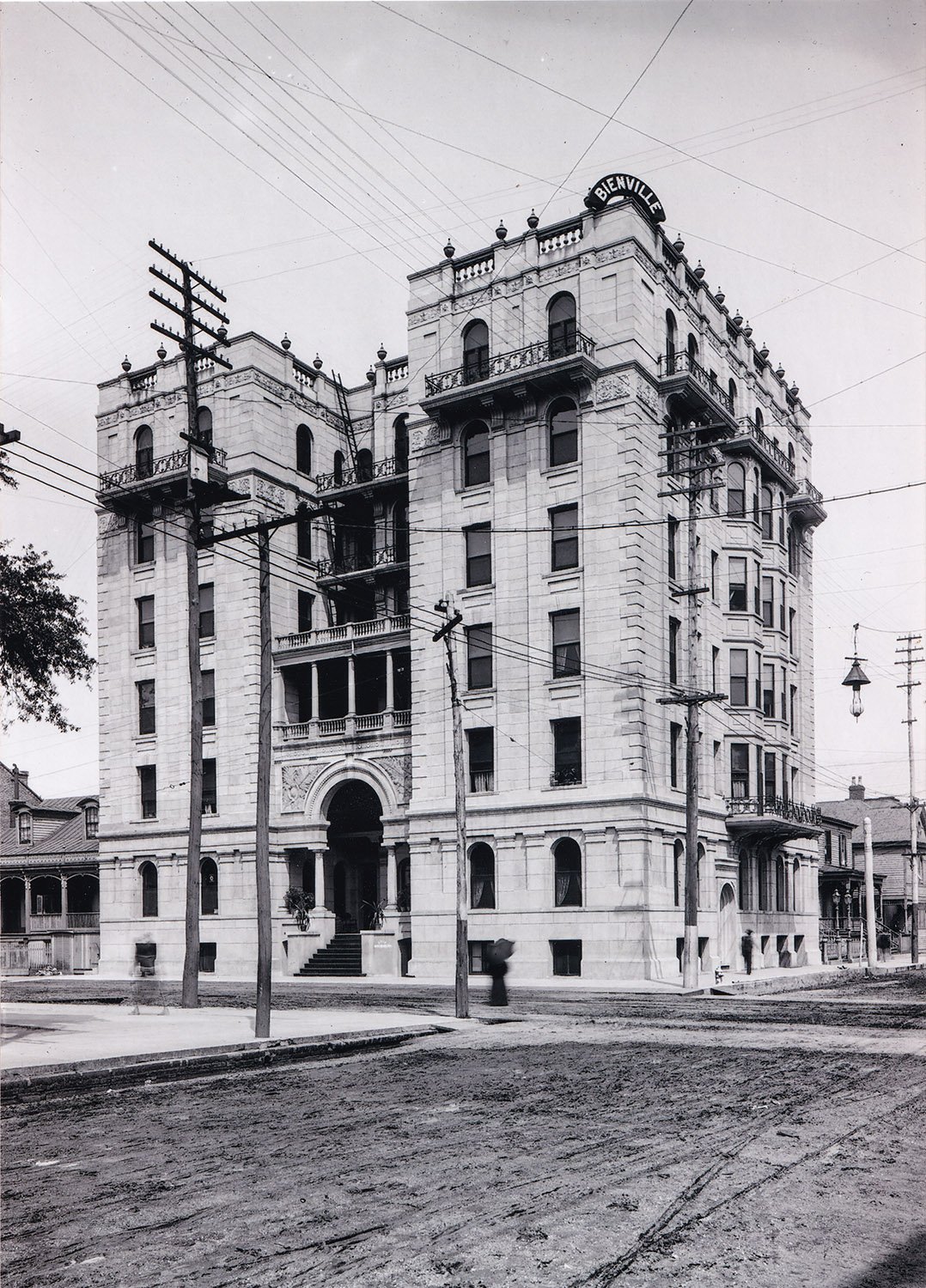
G.L. Norrman‘s string of public disputes continued in 1896, when the Fulton County Commission in Atlanta wanted to build a new county jail, engaging in an overlong and convoluted selection process that was chock-full of corruption and cronyism.
Norrman’s history with the project began in 1892, when the commission asked him to draw plans for the renovation and expansion of the existing jail,12 dropping the idea within a matter of weeks when neighboring residents petitioned for the facility to be relocated to another part of the city.3456
The old jail, overcrowded and in severe disrepair, was still being used in April 1896, when the county commission requested plans for a new jail designed by Grant Wilkins,7 a local engineer who also billed himself as an architect. Wilkins was a favorite of the Atlanta political machine and a thoroughly incompetent designer.
Wilkins’ first plans for the jail were scrapped when the commission decided to change the location of the new facility,89 holding an open competition in May 1896 for “a modern and model prison”,10 in which 5 architects — Norrman was not one of them — submitted plans,11 with Wilkins acting as an “adviser”.12
It appears that the open competition was simply for show, as the commission suddenly decided that the jail could cost no more than $150,000 — an impossibly low sum — and rejected each of the submitted plans for being too expensive to build, requesting that the designers modify them.1314
When the architects resubmitted their cheaper plans, the commission rejected them again1516and handed the contract for the design back to Wilkins, suddenly increasing the projected budget to $175,000.1718 Cunning, no?
In June 1896, Norrman informally presented his own plans to C.A. Collier, chairman of the Fulton County Commission, which he stated could be built for less than $150,000. Norrman had refused to submit plans in the competition because the commission had decided that Wilkins would act as supervising architect for the project regardless of the designer, and Norrman wanted to supervise the construction of the building himself.19
In July 1896, Norrman and 4 other local architects — including his rivals GoLucke & Stewart — jointly submitted a formal protest against the commission for their selection of Wilkins,20 with allegations that Wilkins’ hiring was “…the result of a scheme made by certain members of the board.”21Ya think? Norrman requested that the commission reopen the competition, but the motion was voted down.22
In September 1896, Wilkins completed his plans for the “model jail”,23 with the winning construction bid totalling nearly $170,000.24 The plans were available for public inspection, and Norrman obviously took advantage of the opportunity.
The November 21, 1896, issue of The Atlanta Journal published the following letter from Norrman, in which he gave a thorough and scathing analysis of Wilkins’ design, repeatedly mocking the “model jail” (he used the phrase a total of 15 times).
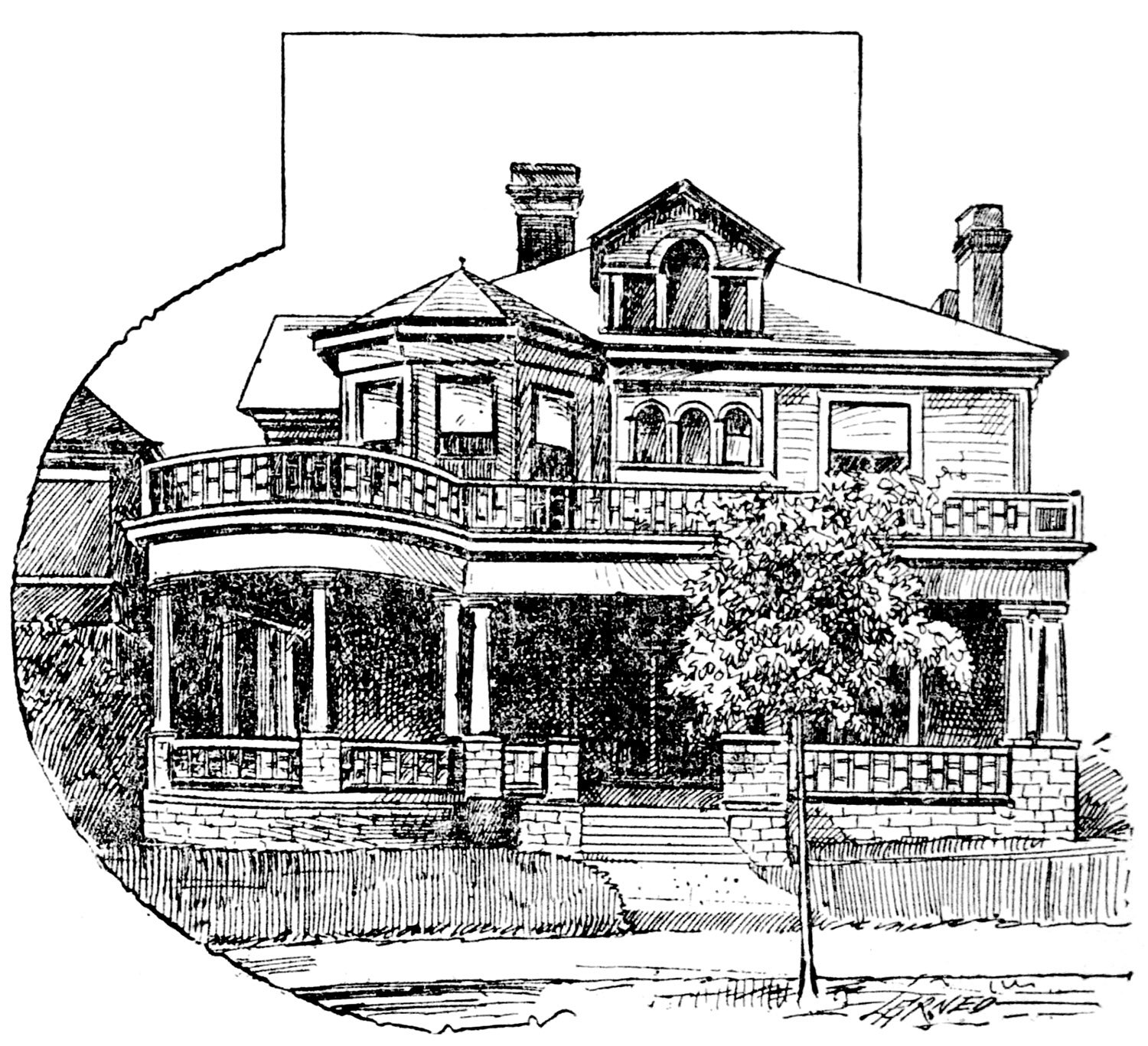
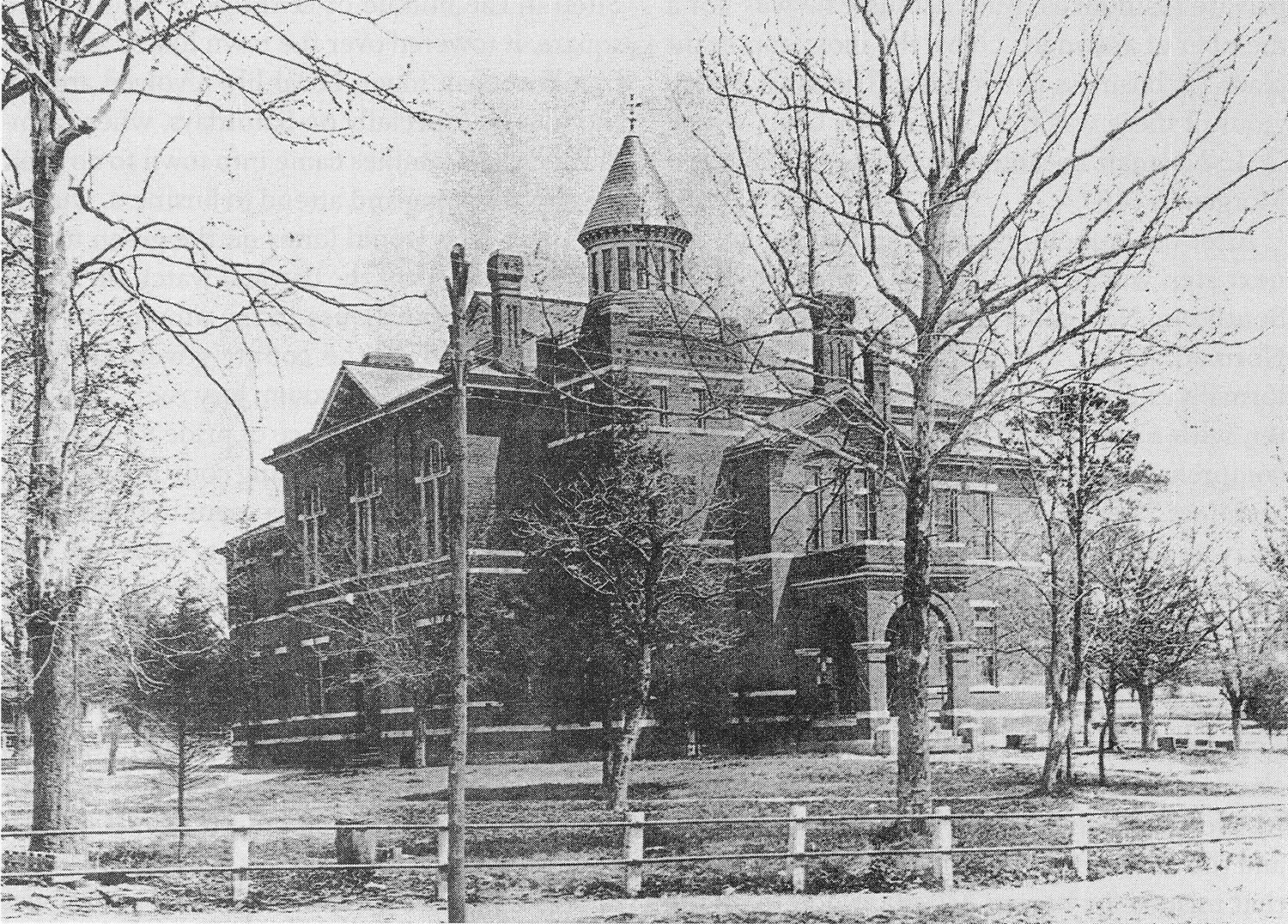
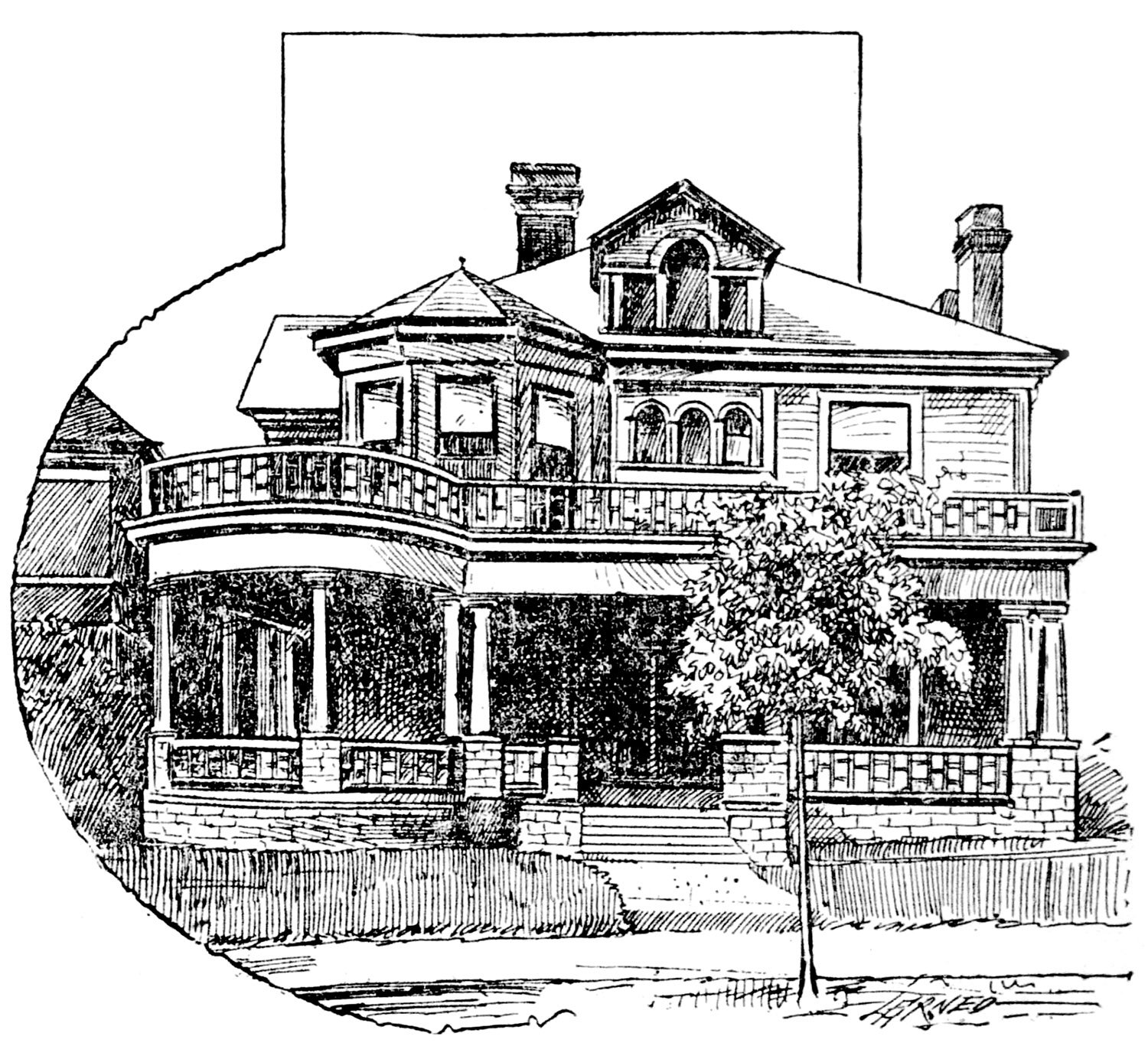
Grant Wilkins. Projected design forFulton County Jail (1898). Illustration by Gate City Engraving Co.25
Norrman’s remarks:
To the Editor ofThe Journal:
“I have just seen the drawings of “A Model Jail” and of all the curious structures that I have ever seen, “A Model Jail” is the most curious. When I first saw the name I thought it was a hoax gotten up by some charlatan to advertise himself, but when I heard that the chairman of the building committee of the proposed jail, the superintendent, a doctor, a lawyer, and a dentist, all of them honorable men, and good Christian gentlemen (in fact, we have none but Christian gentlemen in this country and in Europe, except some Jewish gentlemen, and in Turkey, where there are some Mohammedan gentlemen) had really started out to hunt “A Model Jail”.
I was sure that there must be something of that sort somewhere, only I had never heard of it, or else, that it was a practical joke, gotten up by some wag, who thought that it was too old a gag to take them out snipe-hunting, as they may have caught on to the joke, or he may have thought it too cruel a trick to get off on anybody, as in snipe-hunting the parties who do the hunting have to hold the bag, and in hunting “A Model Jail” the public have to hold it.
But sure enough they found “A Model Jail,” and on their return were prepared to tell any architect who wished to design “A Model Jail” all about it.
The description was somewhat obscure as to the appointments of “A Model Jail,” but what was particularly required in “A Model Jail,” besides the cells, is reception rooms, vestibules, reception hall, and all sorts of halls, and that is what we are really going to have. In fact, we are going to have more halls than anything else. Two-thirds of the building is nothing but halls. We are going to have front halls, and back halls, side halls, zig-zag halls, up-and-down halls, dark halls, light halls, ventilated halls, and unventilated halls, and a very large haul on the public exchequer.
As I said before, “A Model Jail” is a curious structure. Its appearance is somewhat in the style of a Mosque, with the crescents left off of the top of the minarets. It has some appointments that are necessary in a jail, some that are not unnecessary, and some necessary appointments it has not at all, but it has a perfect labyrinth of halls arranged somewhat on the plan of the Catacombs, but I think that when the attendants get accustomed to the building, they will find their way to each compartment without a guide.
I know that it is considered in bad taste for an architect to express himself about any building, and that it is rank heresy for anybody to doubt the competency of a building committee to judge not only of “A Model Jail,” but of a courthouse, or any other building for which they are appointed. One might as well doubt the competency of Sir Joseph to rule the Queen’s navy after scrubbing the front door knobs so successfully, as to doubt the competency of a building committee to judge of architecture, where each and every one has made a success of the cotton business, law business, reforming business, philanthropy business, or any other business. (This is an age of business.) So I do not for a moment mean to criticize the building committee: I simply think that the public may be interested in knowing that “A Model Jail” is one of the most unique buildings in this or any other country.
As there has been some talk to the effect that Mr. Wilkins, who was the expert at the recent competition for the new jail, had possibly gotten his idea from the architects who submitted plans, I would state that, in my opinion, he has not. I think that his plans for “A Model Jail” are entirely original, unless they were suggested by some one who was interested in giving the county the least room for the most money.
If the designs had been taken from an architect’s plans, the appointments of the hospital in the jail would have been entirely different. Baths and lavatories would have been provided for each ward, and appointments would have been made for nurses and a dispensary, rooms would have been provided for a matron and her help. There would very likely have been appointments made for persons who were detained without being strictly criminals.
If an architect had designed the building, the specifications would have been definite. As it is there are about fifty places in which the materials are to be approved by the superintendent without it being definitely stated what they are to be.
This, however, may be premeditated, as there are so many places in which expensive material is specified, which are handled only by persons who own the patents, and on which there could be no competition, but which could be easily substituted with an advantage to the building and a saving of about $50,000 (if the right man got the job), by substituting such material as is made by many firms.
It may be possible that the letting of the construction of the building will be carried on in the same spirit in which the architectural competition was carried on, and in that case the specification as it stands is a model document.
It may be remembered that the plans which were submitted by the architects in the so-called competition had four hundred cells, as was then required, and would have cost $150,000 to $300,000, while the proposed “Model Jail” has only one hundred and ninety cells all told, and the bids are likely to run from $200,000 to $300,000.
I doubt if any bids will come inside of $200,000 unless the building is unloaded from material on which there is a monopoly.
But even at this figure, there is considerable of a discrepancy between the cost of a jail designed by an architect and “A Model Jail” with all its hallways.
This, I think, will prove that any suggestion that Mr. Wilkins has taken his idea for “A Model Jail” from an architect is entirely without foundation.
Lorenzo B. Wheeler (1854-1899), professionally known as L.B. Wheeler, was an architect who practiced in Atlanta from 1883 to 1891. Of his many projects in Atlanta, only his interior design work for the Edward C. Peters Residence (1883)12 may still survive, although it’s unclear how much of that can be credited to him and not the home’s architect, G.L. Norrman.
Wheeler came to Atlanta from New York in 1883 to design the Kimball House Hotel,3 the first atrium hotel in the city and possibly the United States (no, Atlanta, it wasn’t the Hyatt Regency).
L.B. Wheeler. Kimball House Hotel (1885, demolished 1959). Atlanta. Illustration from an undated postcard published by Adolph Selige Publishing Co.
Before his time in the Southeast, Wheeler worked withHugh Lamb from 1877-1881, and a handful of buildings by Lamb & Wheeler still survive in New York.
In Atlanta, Wheeler first partnered with H.I. Kimball,4 owner of the Kimball House, a prototypical Atlanta huckster who marketed himself as an architect and engineer — he was neither.
Wheeler was the first Atlanta architect to specialize in interior design. In the 1880s, much of his work involved decorating Peachtree Street mansions, including many designed by other architects. In 1885 and 1886, he wrote a series of articles on home decoration for The Atlanta Constitution.
In 1885, Kimball & Wheeler partnered with W.H. Parkins, Atlanta’s first legitimate architect.5 One surviving work from the Kimball, Wheeler & Parkins firm remains: the Randolph County Courthouse (1886) in Cuthbert, Georgia, primarily credited to Parkins.6
Kimball left the firm in 18867, and Parkins & Wheeler were associated for a brief period between 1886 and 1887,8 with one project from the firm surviving: the Oglethorpe County Courthouse (1887) in Lexington, Georgia, also credited to Parkins.9
Wheeler practiced independently from 1887 to 1890, and while he wasn’t an exceptional designer, his work was a little more skillful and interesting than most Atlanta architects of the era. His designs demonstrated an understanding of national architectural trends, and it appears the work of H.H. Richardson particularly influenced him.
In the late 1880s, Wheeler secured extensive work in several Alabama boomtowns, and 2 homes in Anniston, Alabama, are the only known extant works from his solo period.
Crowan Cottage10 (1886, pictured above) and Noble Cottage (1887, pictured below) are a pair of picturesque Queen Anne-style residences designed for Samuel Noble. Despite the homes’ nearly identical designs, Crowan Cottage has been ludicrously attributed to Stanford White,11 who never designed a damn thing in the Southeast.
Wheeler relocated to Memphis, Tennessee, in early 1891,12 shortly after securing the commission for the Cossitt Library1314(1893, demolished 1958), a beautiful Romanesque creation that could easily be considered his finest work.
Wheeler’s former assistant, W.T. Downing,15 operated in Atlanta as Wheeler & Downing from 1891 to April 1892,16 finishing up Wheeler’s unfinished projects.17 Downing easily filled the void left by Wheeler and became one of Atlanta’s most prominent architects until he died in 1918.
By 1894, Wheeler had moved to St. Louis, where he worked in two partnerships before seemingly disappearing from the public eye by 1898. Following a brief illness, he died at his father’s home in Connecticut at the age of 45,18 with his death barely noted in newspapers outside of Atlanta.
Described as “quiet and reserved”, Wheeler reportedly owned many “rare and very expensive” books, with his library said to be “the finest collection of architectural works in the South.” After his death, The Atlanta Constitution claimed:
“His room at the Kimball contained only two chairs, his bed and a dresser, but it was so crowded with books that one experienced difficulty in moving about.”19
It somehow seems fitting that so few traces of Wheeler’s work remain.
References
“Some New Buildings”. The Atlanta Constitution, July 12, 1885, p. 9. ↩︎
“Southern Architecture”. The Atlanta Journal, January 1, 1886, p. 1. ↩︎
“Mr. Kimball’s Projected Suburb”. The Atlanta Constitution, October 21, 1883, p. 8. ↩︎
W.W. Goodrich. W.W. Goodrich Residence (1890, altered). Inman Park, Atlanta.
The W.W. Goodrich Residence, located at 177 Elizabeth Street NE in Atlanta’s Inman Park neighborhood, is the city’s only known extant work designed by William Wordsworth Goodrich (1841-1907), professionally known as W.W. Goodrich, an architect who practiced in Atlanta between 1889 and 1895.
Firm biographical details for Goodrich are difficult to find, as he was, by all indications, a pathological liar who fabricated much of his backstory. He was born in New York1 and began practicing in Kingston, New York, circa 1875,2 before moving to Denver, Colorado, circa 1879,3 leaving in 1881 after he was arrested for check fraud and larceny.4
In the 1880s, Goodrich spent short stints in Boise, Idaho;5 Seattle;6 San Francisco,7 and Oakland, California.8 In 1883, he was arrested in both Los Angeles and Boston for check fraud. 910
Goodrich’s career in Atlanta was unremarkable, and his feeble attempt at the Eastlake style in his own home showed he had equally mediocre design skills. Only 2 other works from Goodrich’s Atlanta years are known to survive: the Leslie Dallis Residence (1891)1112 in LaGrange, Georgia, and Yonah Hall (1893)131415 at Brenau University in Gainesville, Georgia, both uninspired designs.
The Goodrich family didn’t stay long in this home, which was built in early 1890.161718 In November 1891, the city marshal auctioned off the property for Goodrich’s failure to pay taxes,19 and the home was purchased by W.C. Hale.
In 1893, Goodrich moved to Norfolk, Virginia,20 apparently relocated his practice to Baltimore around 1895,21 and finally ended up in Oregon by 1904,22 where he died in 1907. As one newspaper obituary said, in part: “…he had his faults, as all mortals have…”23
A better storyteller than an architect — although he wasn’t good at either — Goodrich managed to get many of his outlandish tales published in newspaper articles, most of which are included on this site.
W.W. Goodrich Residence circa 189024Looking at the north elevation of the W.W. Goodrich ResidenceGable on the facade of the W.W. Goodrich ResidencePorch post and ornamentation on the W.W. Goodrich Residence
References
United States Census, 1850, William Goodrich, Harmony, Chautauqua, New York, United States. ↩︎
Advertisement. The Daily Freeman (Kingston, New York), October 5, 1875, p. 1. ↩︎
Advertisement. Rocky Mountain News, May 24, 1879, p. 2. ↩︎
“Held to Answer”. Rocky Mountain News, March 26, 1881, p. 2. ↩︎
“Architect”. Idaho Tri-Weekly Statesman, March 14, 1882, p. 3. ↩︎
Advertisement. Seattle Daily Post-Intelligencer, September 29, 1882, p. 2. ↩︎
“Brevities”. Seattle Daily Post-Intelligencer, July 25, 1883, p. 3. ↩︎
“A New Architect”. Oakland Daily Evening Tribune, July 23, 1885, p. 2. ↩︎
“A Worthless Check”. The Boston Herald, November 27, 1883, p. 1. ↩︎
“An Old Fraud Heard From”. Los Angeles Herald, March 16, 1884, p. 4. ↩︎
“Building in LaGrange.” The Atlanta Constitution, December 13, 1890, p. 3. ↩︎
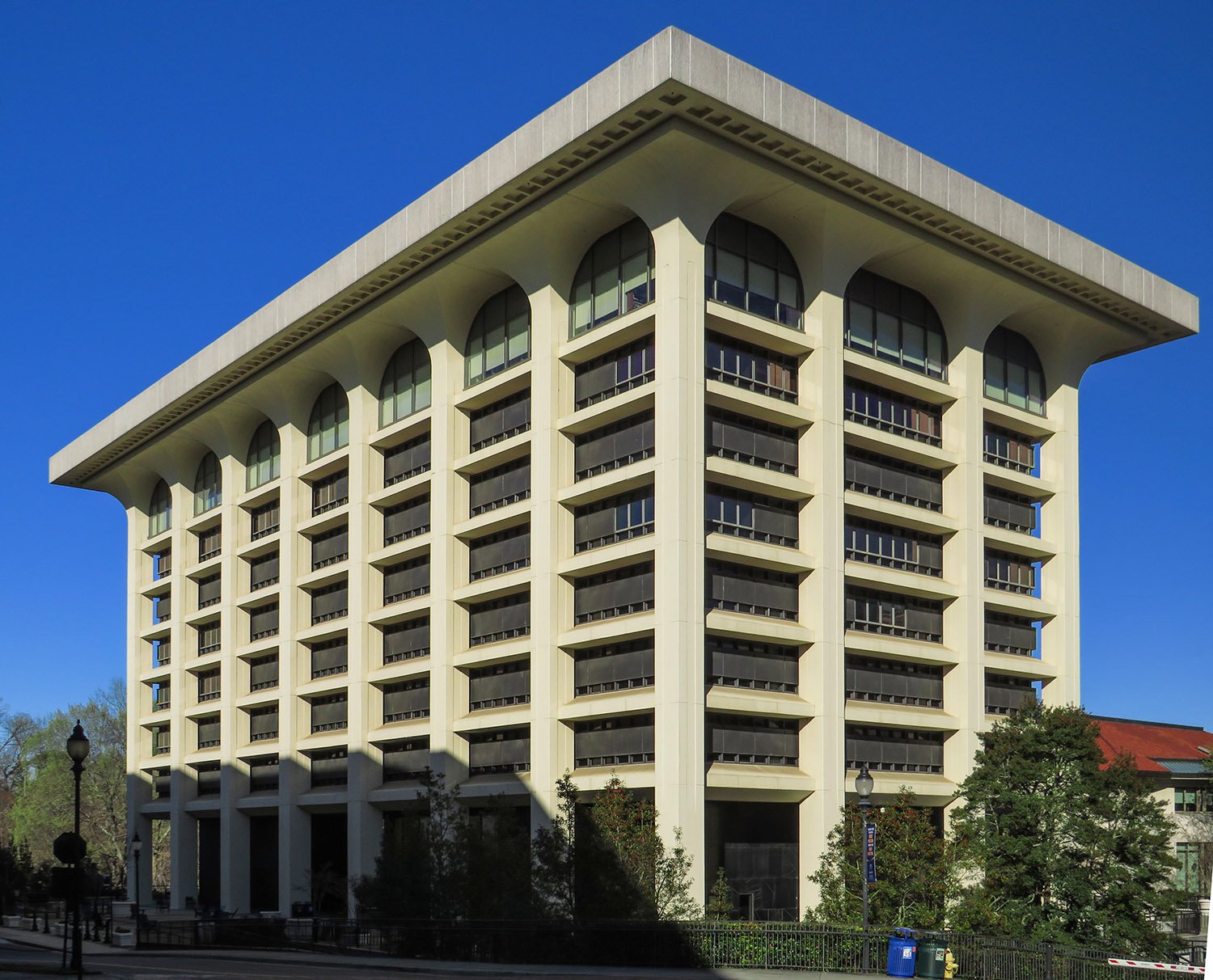
Santiago Calatrava. Innovation, Science & Technology Building (2014), Florida Polytechnic University. Lakeland, Florida.1Looking at the Innovation, Science & Technology Building from the northeastEntrance of Innovation, Science & Technology Building
Long an artful dodger when it came to details of his personal life, here, G.L. Norrman wrote his own autobiographical sketch while essentially saying nothing at all.
“I was born in Sweden in about the same manner as all other Swedes. Nothing of any note happened at the event. Everything went along in much the same manner as the day before.
“The only sensation that my coming into this world created was a little stir among some old aunts and other lady friends of the family, who found it difficult to decide whom I looked like, but they finally came to the conclusion that I resembled my great-grandmother. I suppose that they came to this decision on account of my being bald-headed, wrinkled in the face, and of a very unsettled disposition.
“A very charming young lady solicited my picture for this volume, and assured me that it would be a most excellent means for securing business, and she told me that the public was not only interested in my appearance, but was greatly interested in knowing all about me, and the publishers were interested fifteen dollars’ worth. So, in giving an account of myself, I thought I would be very explicit, and would begin with the beginning.
“Nothing of any moment has occurred since. I have been engaged in my profession for many years. I hope that the public will pardon me for not stating how long, as I am still a bachelor, and hope that if my picture does not bring me any business it will call the young ladies’ attention to the opportunity of securing a most exemplary husband, and if they knew how long I had been in business they might not be so greatly interested.
“At any rate, I have been in business long enough to have had considerable experience, and if anyone is interested in one way or another, let me know, and I’ll give a more detailed account of myself.”
G.L. Norrman (attributed). C. D. Hurt Residence (1893). Inman Park, Atlanta.
Hiding in plain sight in Atlanta’s Inman Park neighborhood, the C. D. Hurt Residence isn’t conspicuous, nor does it appear especially significant.
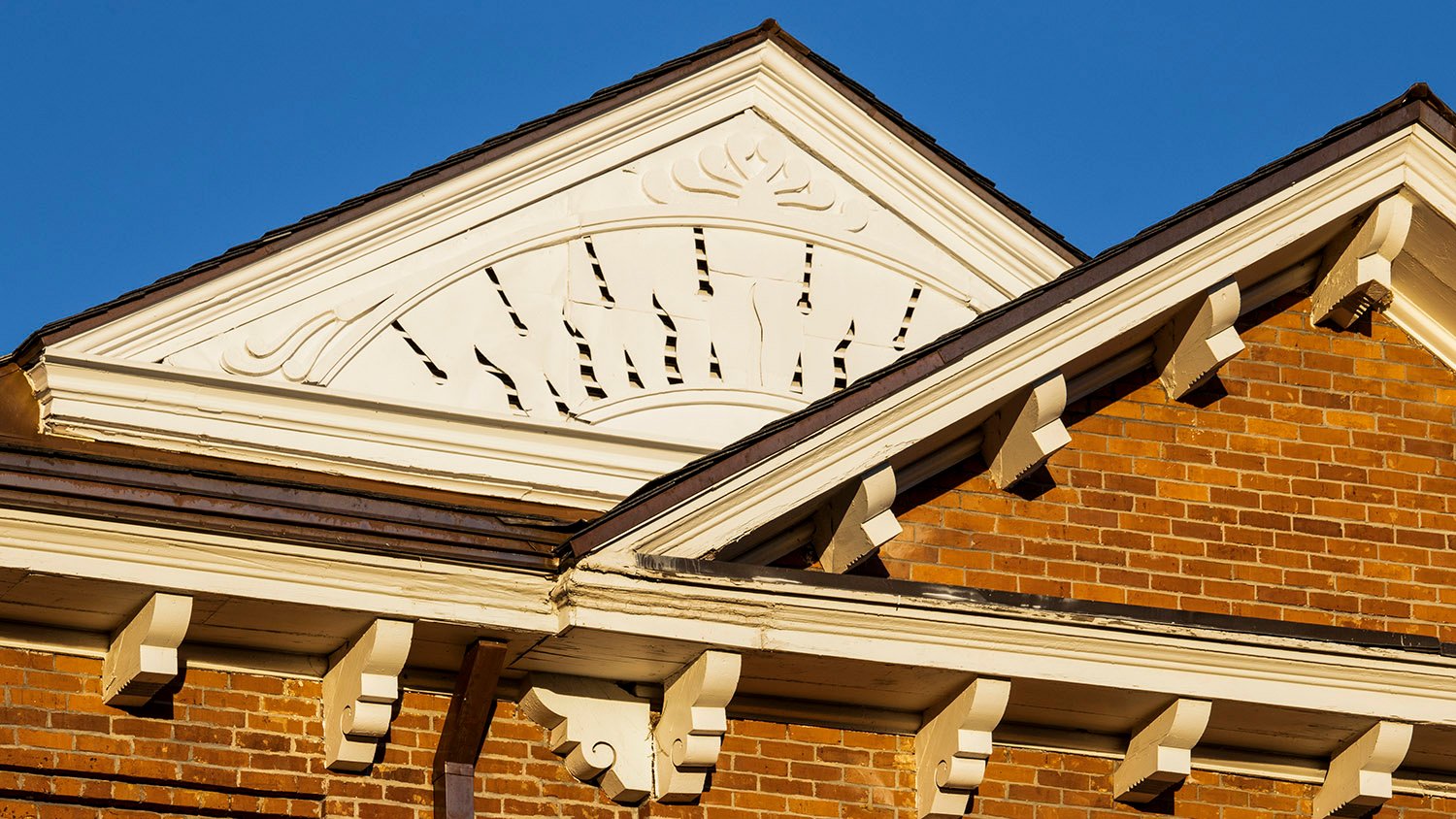
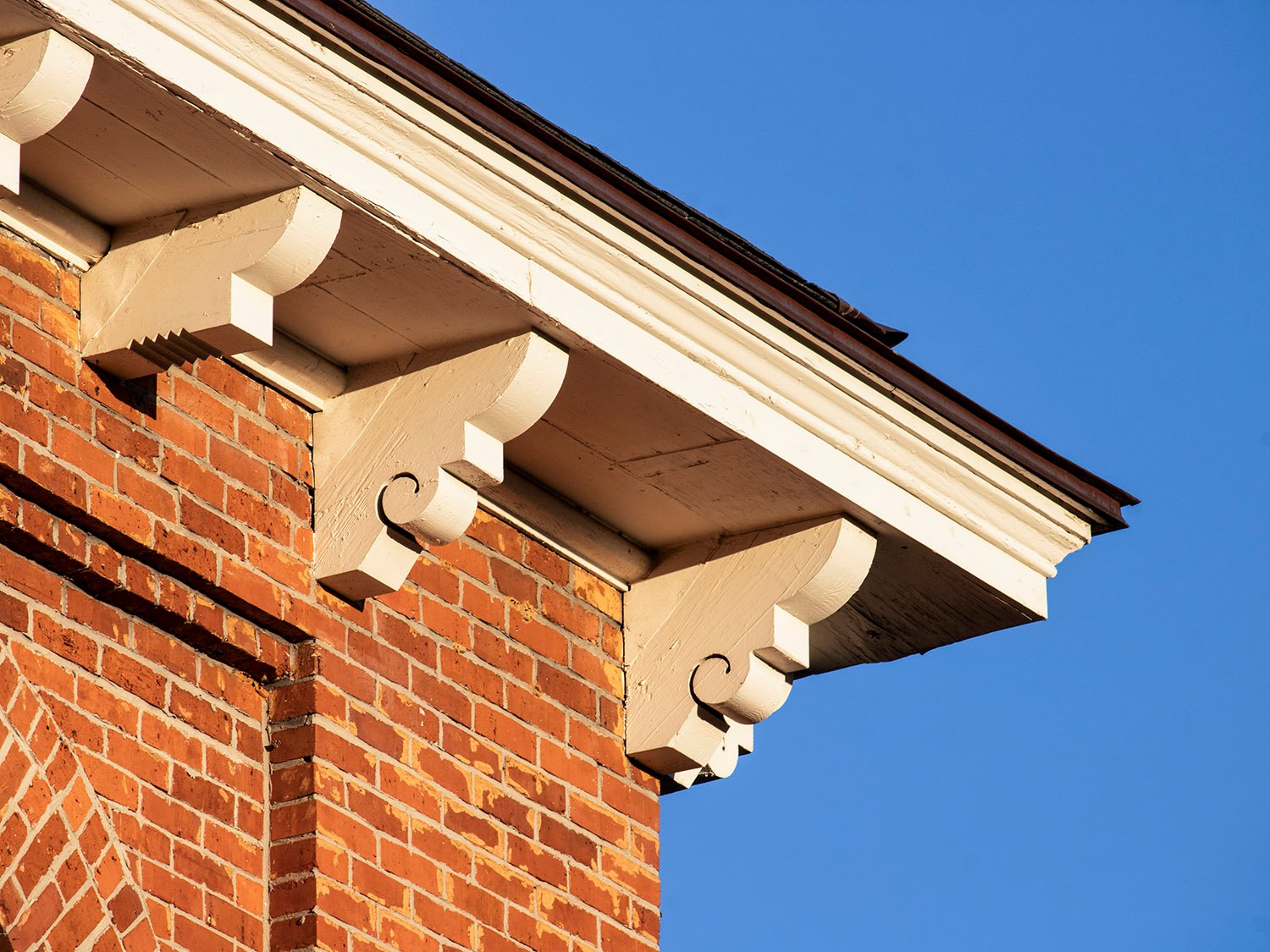
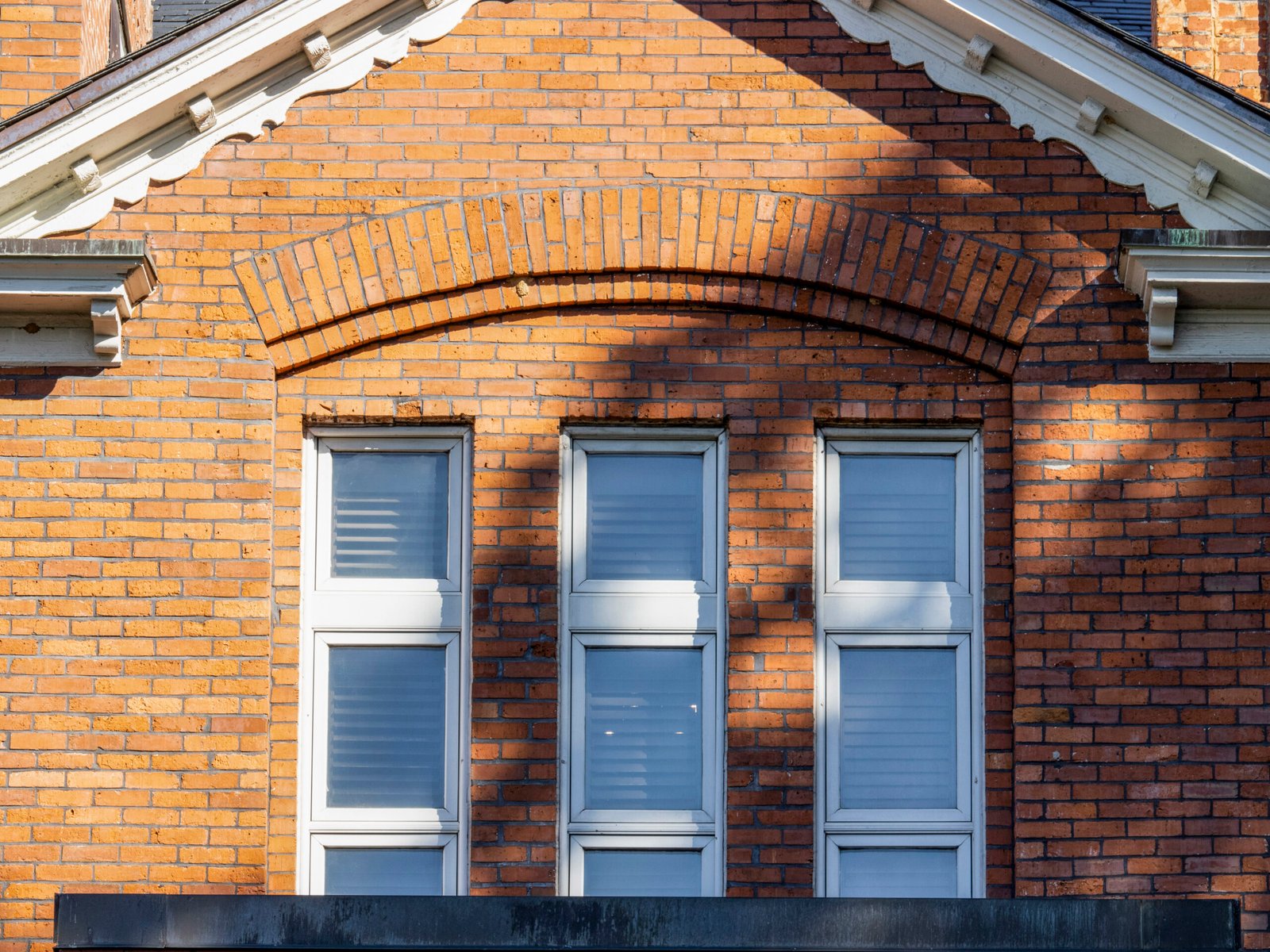
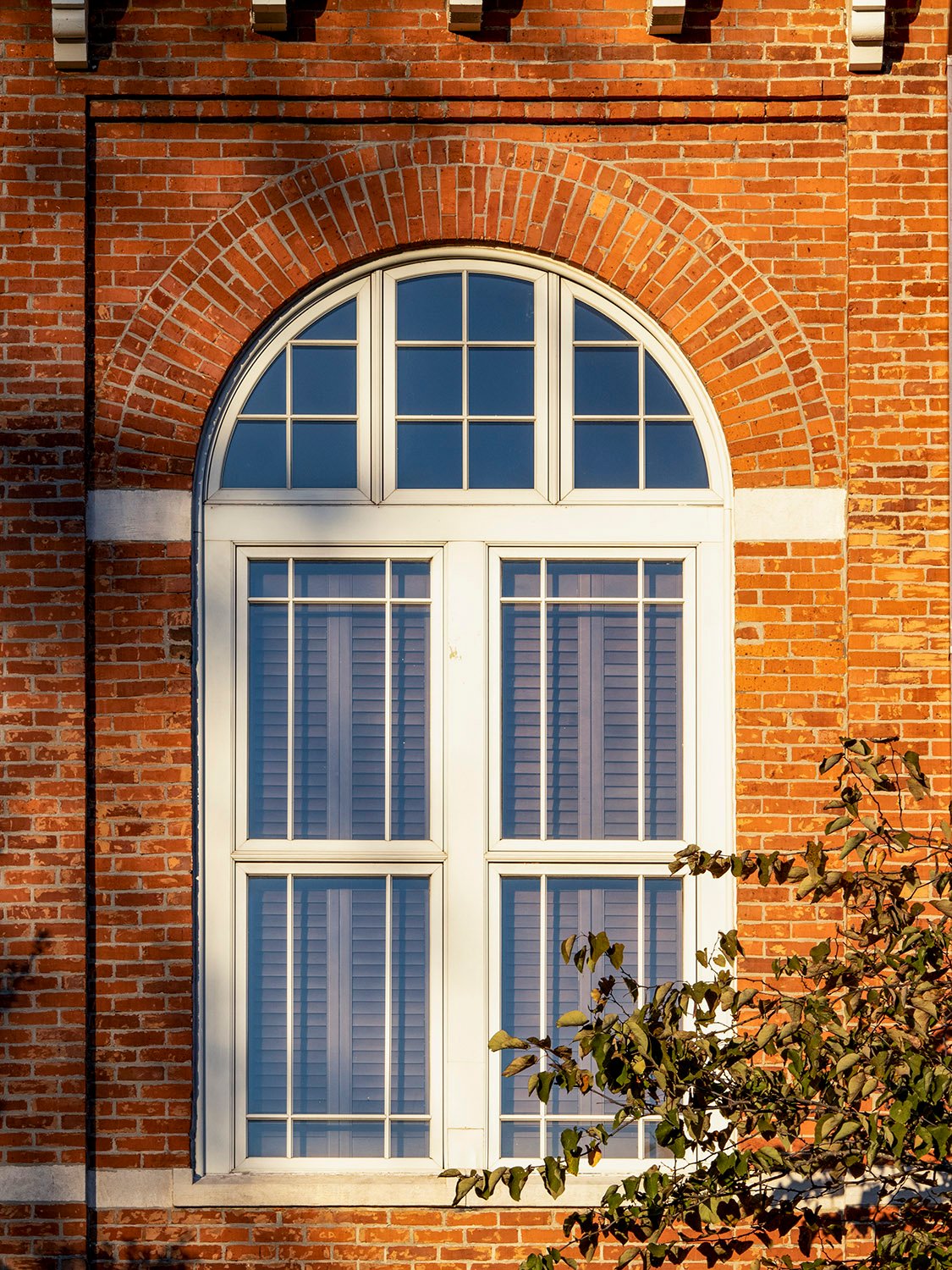
Located at 36 Delta Place NE, this rambling 2-story, eclectic-style home is primarily Colonial Revival in influence, with its wood shingles, steep gables, overhanging second floor, and assortment of oddly-shaped windows recalling the vernacular designs of coastal New England architecture.
It’s good to have a little doubt when attributing buildings to architects, but in this case, there’s no need: the home can be indisputably credited to G.L. Norrman.
Often erroneously dated to 1891 or 1892, the house was built in 1893, as reported in an April 1893 article from The Atlanta Constitution1 and another in May 1893 in The Atlanta Journal2 — both stated that the home was then in the course of construction.
Dr. Charles D. Hurt (1843-19063) was the brother of Joel Hurt, president of the East Atlanta Land Company, which owned and developed the Inman Park suburb. Norrman appears to have been Joel Hurt’s preferred architect at the time, completing as many as 8 projects for his companies and family in the late 1880s and early 1890s, making him an obvious choice to design the home.
G.L. Norrman (attributed). C. D. Hurt Residence (1893). Inman Park, Atlanta.
The Design
Beyond circumstantial evidence, the Hurt house can be handily attributed to Norrman based on specific elements that it shares with 2 residences designed by his firm in the same period: the R.O. Barksdale Residence (1893) in Washington, Georgia, which still exists, and the Paul Romare Residence in Atlanta (1892, demolished).
Similarities between the Hurt Residence and the Barksdale Residence:
The facades of both houses feature a prominent bay with 2 windows on the second floor and a Palladian window on the first floor, both topped by a hip roof.
Both houses share the same chimney designs, slightly tapered at the top, with distinctive dentilled string courses.
Both houses originally featured a tall, exposed chimney on the front porch as a central focal point.
Both houses include porches with dentilled cornices and Norrman’s trademark Tuscan columns.
G.L. Norrman. Paul Romare Residence (1893, demolished). Atlanta. Illustration by W.L. Stoddart.
Similarities between the Hurt Residence and the Romare Residence:
Both houses were topped with a steeply pitched hip roof.
Both houses included an oval window, also featured in Norrman’s design for the Thomas W. Latham Residence in Inman Park.
Both houses included an exposed chimney as a focal point, each embedded with the same classically styled niche (illustrated below)
G.L. Norrman. Chimney niche on the C. D. Hurt Residence.
Similarities between the Hurt Residence and other Norrman projects:
The Hurt house’s dormer windows are of the same designas those on theEdward C. Peters Residence (1883) in Atlanta, a confirmed Norrman work, and the Atlanta & Edgewood Street Railway Shed (1889), also located in Inman Park and attributed to Norrman.
The Hurt house’s second-floor bay window is the same one used in the Atlanta & Edgewood Railway Shed, attributed to Norrman.
An Evolution
Although fairly unremarkable in appearance, the Hurt house represents a major shift in Norrman’s residential designs.
In the 1880s and early 1890s, many of Norrman’s larger home plans included a rear service wing that contained the kitchen and servants’ quarters — a prime example is the W.W. Duncan Residence in Spartanburg, South Carolina (1886, pictured below).
G.L. Norrman. Service wing on the W.W. Duncan Residence (1886). Spartanburg, South Carolina.
The service wing was visually distinct from the main house and was typically capped with a low-slung hip roof, denoting its modest, utilitarian status.
For the Hurt house, the hip-roofed wing shifted from the back to the front, the first time this appears to have been implemented in one of Norrman’s plans. It was a bold and avant-garde choice, signaling a shift in taste toward less fussy and unpretentious styles that took hold in the 1890s.
Norrman refined the design heading into the 20th century, including the W.L. Reynolds Residence (1897, pictured below) and the Leon D. Lewman Residence (1901, demolished, pictured below) in Atlanta.
By the late 1890s, Norrman fully embraced lower roof lines, but in the Hurt house, the main portion of the structure still included a fantastically high roof — undoubtedly topped with decorative finials — a holdover from his 1880s work.
The Hurt house’s 13-room floor plan evolved from the plan used in Norrman’s design for the John T. Taylor Residence (1892) in Americus, Georgia.
The Taylor house appears to have been planned on a simple four-square grid, with the entry room and stairway occupying the lower left quadrant. In the Hurt house, however, the introduction of the front wing meant the entry room and stairwell had to be pushed slightly back, opening up space for an additional room to the left of the front door.
Otherwise, the plans for the two houses are largely identical, right down to the separate exterior entrance in each master bedroom.
G.L. Norrman. Leon D. Lewman Residence (1901, demolished). Atlanta.4
A Question of Credit
I suspect much of the Hurt house was designed by one or more of Norrman’s employees, possibly C. Walter Smith, Norrman’s longtime draughtsman and later chief assistant.
Smith began working for Norrman in 1887, serving as a draughtsman for over 5 years before leaving to start his own practice in March 1893.5 Smith returned to Norrman’s employment within a year as his chief assistant,6 but left to start his business again in April 1896,7 working independently until 1907.
Based on his few surviving works, Smith was not an exceptional designer in his own right: he clearly lacked whatever combination of ingredients made Norman such an outstanding architect. However, it appears that Norrman likely delegated many of his residential projects to Walter Smithin the 1890s.
The Constitution all but said as much in 1896, when Smith embarked on his second solo attempt:
“The work that he did even before he branched out for himself had gained for him a distinction that few people have won in a lifetime,” the newspaper noted. “Mr. Smith has designed and superintended the construction of many of the most elegant residences in the city…”8
If you compare a typical Norrman residence from the 1880s to one from the 1890s, it’s clear that the latter projects didn’t receive nearly as much of his attention.
Norrman’s career reached its commercial and creative peak between 1890 and 1893, and he increasingly spent much of his time crossing the Southeastern United States by train, securing commissions, and attending to building projects.
With a packed schedule and an office full of assistants, Norrman undoubtedly began focusing most of his attention on large-scale or prestige commissions: the Windsor Hotel (1892) in Americus, Georgia, for instance, or the J.C. Simonds Residence (1893) in Charleston, South Carolina.
G.L. Norrman. J.C. Simonds Residence (1893). Charleston, South Carolina.
Because Walter Smith left to form his practice while the Hurt house was under construction, it’s also possible that he started the project and another assistant completed it, which could explain the uneven design.
W.L. Stoddart, for instance, was also employed by Norrman in 1893, still fresh from his training at Columbia University. When Norrman hired him in March 1892, the Journal claimed Stoddart would be his chief assistant,9 although he was listed as a draughtsman in city directories.10
Every architect’s approach is different, but Norrman may have roughed out the preliminary plans for the project, leaving a draughtsman or assistant to fill in the details, while lending just enough of his finesse to claim the design as his own.
The Hurt home’s north elevation also bears a striking resemblance to the side of the William Merritt Chase Homestead in New York, designed by McKim, Mead & White in 1892. Norrman frequently borrowed from the firm’s designs, and if he was pressed for time and lacking inspiration, he might have reproduced what he saw in a photograph or drawing of the home.
A Messy Composition
If Norrman didn’t give the Hurt design much scrutiny, that might explain its frankly sloppy configuration: the 3 bay windows of varying sizes on the north side, for example, and the hodge-podge of incongruent elements borrowed from other projects.
Part of the home’s imbalance can be explained by its vernacular inspiration, but that doesn’t excuse its incoherent composition. Stand on one side of the Hurt house, and it looks like a completely different home from the other. The design feels clunky, slapdash, and pure kitchen sink, as if everything but was thrown into it.
It should be noted that Norrman also disliked the then-fashionable Colonial style, stating in 1890 that it had “at best, a number of absurdities”, and that “there are few who carry the style out well”. As a designer who excelled in the Romanesque and preferred the classical, he may have been admitting to his own lack of proficiency in the style.
Despite the Hurt house’s shortcomings, it’s entirely characteristic of Norrman’s 1893 residential designs, which stand out in his oeuvre as especially freewheeling and audacious. He was the most celebrated and sought-after architect in the Southeast at that point, and clearly felt emboldened to take risks.
When risk-taking worked, the results were spectacular, as seen in the Simonds Residence. When it didn’t? Well, you can see the results here.
North elevation of the C. D. Hurt Residence
Construction and History
The Hurt House’s history is as messy as its design, chock-full of the sort of macabre and pathetic tales one expects from an Atlanta home.
A Whole Lotta Hurt
C. D. Hurt (pictured here11) and his family moved to the city from Columbus, Georgia, in October 1892.1213 Until their own “elegant and roomy residence”14 was completed, the Hurts temporarily lived in the spec house at 56 Euclid Avenue15 (now 882 Euclid Avenue NE), which Norrman designed for the East Atlanta Land Company in 1890.
Curiously, while Hurt’s home was still being built in April 1893, it was also the site of a wedding for his niece, Lucy Hurt McTyere.16
Hurt had 5 children with his wife, Mary, although it appears only his daughters, Louise and Maude, still lived with them in 1893, when he was 50, and she was 46.
Hurt worked as a medical surgeon and opened an office in Atlanta’s Equitable Building,17 which his brother owned. He was also on the payroll of his brother’s street railway company as a “medical advisor” — with whatever legitimate duties that must have entailed — in addition to being a staff member at Grady Memorial Hospital and the Atlanta School of Medicine.1819
There have been claims that Hurt operated his office from his home, but that appears to be inaccurate based on city directories and newspaper reports.
Hurt’s daughter, Louise, married in January 1895, and the reception was held at the Hurt house.2021 Assuming it was a happy occasion, the wedding was a singular bright spot preceding a long line of tragedies in the home:
On July 5, 1896, Hurt’s 8-month-old grandson, Charles, died in the home after a bout with malaria.22
On July 19, 1898, Hurt’s youngest daughter, Maude, died in the home at 6:45 p.m., following a 10-day illness.23 Only 17 years old, Maude’s death was described by the Constitution as “one of the saddest deaths that have clouded this city in years…”24
In September 1899, Charles and Joel Hurt’s brother, E.F. Hurt, died on an extended visit from New York, and his funeral was held in the Hurt house.25
After a 2-year illness, Mary Hurt died on October 22, 1902, “when death crept softly into the home,” according to the Journal. 2627 Poetic, no?
Wasting little time, C.D. Hurt married his second wife, AnnieLouiseMiller, in Hendersonville, North Carolina, on October 6, 1903. Annie was described as an “accomplished and attractive young woman,” 28 and the couple had an unnamed infant son when Hurt himself died in the home on August 12, 1906, following an 8-month illness.2930
After collecting on Hurt’s $15,000 life insurance policy,31 his accomplished and attractive young wife seemingly disappeared from Atlanta, and the home was presumably sold, ending the Hurts’ 13-year run of the house.
Oval window on the east facade of the C.D. Hurt Residence
Dwindling Fortunes
Never the prestigious enclave Joel Hurt intended it to be, Inman Park had become quite passe by the early 1900s.
Most of Atlanta’s prominent citizens continued to build their mansions on Peachtree Street, migrating farther north each year. Ansley Park was quickly becoming the fashionable new residential section, mostly because of its proximity to Peachtree Street.
The Inman Park residences designed by Norrman and other architects in the previous decade were already quaint relics of another era. With the United States emerging from a years-long financial depression, even the wealthy preferred more subdued home designs, and the gaudy mansions of the Gilded Age were seen as oversized, ostentatious, and out of fashion.
Inman Park’s original homes had spent most of their lives vacant or on the market — scan newspaper classified ads from the 1890s and early 1900s, and you’ll consistently find listings for “good as new” Inman Park homes for sale or rent, often reduced in price.
The remaining lots in Inman Park were auctioned off en masse by the East Atlanta Land Company in 1904,32 and the neighborhood was filled out with mostly smaller, cheaper houses over the next decade.
As the Journal deftly noted in 1908: “The Inman Park of the present time…has almost forgotten the story of its origin–which now seems like ancient history…”33
Second-floor bay window on the north elevation of the C.D. Hurt Residence
Life As a Boarding House
The large, antiquated Inman Park houses were really only viable as rental properties, so it’s no surprise that in December 1907, newspaper classifieds began requesting boarders for the former Hurt house. Terse but descriptive, the first ads touted: “Beautiful views, splendid board, country air, not far out.”34
A January 1908 ad sought “Two or three young men for large front room; also couple for beautiful room,”35 while an October 1908 ad noted the home’s “Suite beautiful rooms, with private bath…”36
In November 1908, ads described “Four connecting rooms, unfurnished…private entrance”,37 which likely referred to the home’s original master bedroom. In 1909, the entire house was listed for rent by Edwin P. Ansley‘s real estate agency for $50 a month.38
On March 25, 1909, a 68 mph “hurricane” ripped across Atlanta, cutting a path from West End through Downtown to Inman Park. In a lengthy list of damaged buildings, the Journal reported that “In Inman Park at Edgewood avenue and Delta Place a chimney was blown down.”39
This may have been the tall chimney at the front of the house, which was removed at some point in the structure’s history. A photograph from the 1970s shows that a chunk of one chimneystack was also missing, possibly a result of the same storm.
Chimney on the C.D. Hurt Residence
In February 1910, the home was owned by C. Horace McCall when a “daring porch climber” broke the window of a second-floor bathroom.
“Mrs. Turner“, apparently a boarder in the house, screamed upon hearing the shattered window, scaring off the intruder. The Constitution noted ominously that “A dark shadow was seen in the distance…but no clews [sic] were obtained.”
The report added: “This section of the city has been infested with burglars recently, and several citizens have made complaint of inadequate police protection.”40
In July 1918, McCall and his wife still lived in the home when thieves robbed their backyard hen house, swiping their entire collection, including 20 “frying-size chickens”. The stolen property totalled $30.41
Mrs. McCall died in the house on February 28, 1923,42 and it appears the property was sold shortly thereafter. In July 1924, another infant died in the home: the son of two boarders, Mr. and Mrs. J.B. McMillam.
Bay windows on the north elevation of the C.D. Hurt Residence
By the 1920s, Atlanta had grown rapidly beyond Inman Park’s borders, and the former suburb was fully absorbed into the city. One mile northeast of the neighborhood, Druid Hills opened in 1908 (Norrman designed its first home), and many of Inman Park’s prominent residents — notably members of the Candler family — migrated to the outlying development for the next several years.
As Inman Park fell into decades-long decline, the old Hurt home passed through a succession of owners, always operating as a boarding house, and apparently attracting the caliber of people one associates with such establishments. A few incidents from those years are intriguing:
In 1925, the house was owned by the estate of the late John W. White when a 36-year-old boarder, Mrs. W.T. Hooks, was arrested for attempted arson. On May 4 of that year, fire crews were called to the home at 4 a.m., where they found a burning pile of kindling wood in Hooks’ closet, with Hooks “fully dressed and all her trunks completely packed”. The state accused Hooks of attempting to burn down the home for insurance money, but she was acquitted of the charges in June 1925.4344454647
In 1929, a 31-year-old occupant of the home named T.M. Bates was treated at Grady Memorial Hospital for wounds received from a “vicious rat” that reportedly bit Bates twice as he was going to sleep, after which he “jumped on top of a dresser to escape further injury”.48
In January 1931, Fanny Jolly operated the boarding house when “the careless handling of an oil lamp” sparked a fire in the kitchen, forcing the home’s 11 occupants to “flee in their night clothing”. One boarder was knocked unconscious when he jumped 15 feet from his second-story window, while another received severe cuts on his legs from crawling out a different window.4950
In 1945, W.A. and Gertrude Croft bought the home from Harry Beerman.51 Real estate ads described the home as an “excellent rooming house” and “convenient to stores and cars”, concluding rather cynically that “This is a money-maker”.52
This may have been when the home received its most significant alterations. In August 1946, classified ads from the address listed a “Monarch coal cook stove, gas cook stove…2 practically new glass paneled doors, 2 used windows” for sale.53 Sounds like they were tearing the place up, doesn’t it?
An image from the 1970s (pictured below) shows that at some point, the home’s front porch was partially filled in and screened, rooms were clumsily added to the porch roof, and original windows were moved and replaced. I suspect those alterations are attributable to the Crofts.
Inman Park was in the nascent stages of a rebirth in the 1970s, when affluent young professionals began restoring its old homes and joined forces to quash a proposed interstate highway that would have cut through the neighborhood’s heart.
Rundown and crime-ridden, “most people avoided the area”, the Constitution said in 1975, and not everyone was convinced the neighborhood was worth saving.55
A skeptical article from 1971 described Inman Park as “a festering little carbuncle on the hide of big old Atlanta”, with residents detailing the precarious condition of the area. One homeowner stated:
“If you’ve got a sense of humor, it’s a great place to live. Over here, when people shoot guns they usually aim into the ceiling. There’s a lot of drug traffic in the neighborhood with the kids. They are very wise, like New York street children. I took one little girl to Grady while she was on a bad LSD trip. She was in the middle of the street screaming and everybody else was afraid to do anything. Hard drugs are apparently very available.”56
Little wonder that the old Hurt house remained a target for crime — in January 1975, the home was burglarized again, with the thief swiping a tape recorder, clock, liquor, and 8 cartons of cigarettes.57
Despondency seems to have been the way of life in the home, and in August 1976, a 47-year-old boarder at the address committed suicide in the most Atlanta way possible: jumping from the top of the Hyatt Regency atrium.58
C.D. Hurt Residence, after renovation
Return to Form
In 1981, the home was listed for sale again, remaining on the market for nearly 2 years under two different agencies.
A succession of real estate advertisements sounded increasingly desperate, first promoting the house as “Single family OR townhouse. Partially restored. Clean & livable” with “POOL & wine cellar”. 59 Later ads touted the home’s “suburban amenities”.60
An ad for an open house breathlessly hyped: “13 Fireplaces, antique brass & beveled glass, arches, millwork & pocket doors!”61 Norrman always did like pocket doors.
A May 1982 ad claimed that “Practical people will love the close-in convenient location and the fact that it can be used for rental units.”62 That was oddly out of step with the changing character of the neighborhood, however — it wasn’t practical people who were buying in Inman Park at that point, but those invested in its resurgent vision.
Palladian window on the C.D. Hurt Residence
By the 1990s, Inman Park had completed its dramatic revitalization, drawing national acclaim, and the Hurt house finally returned to its intended use as a private dwelling.
The home has been fully renovated, with the mid-20th-century accretions on the front removed, and the porch and facade returned to a reasonable facsimile of its original appearance.
Inman Park is now one of the most exclusive and desirable neighborhoods in intown Atlanta, with homes like the Hurt house valued in the millions. More than a century after its conception, Joel Hurt’s development is finally a success.
And as for his brother’s home — well, it’s more significant than it appears.
References
“City Notes.” The Atlanta Constitution, April 2, 1893, p. 23. ↩︎
“Flowers Are A-Blooming.” The Atlanta Journal, May 5, 1893, p. 3. ↩︎
“Dr. C.D. Hurt Dead: Ill 8 Months”. The Atlanta Journal, August 13, 1906, p. 5. ↩︎
“New Lewman Residence On Peachtree Place.” The Atlanta Constitution, October 6, 1901, p. 5. ↩︎
“A Card”. The Atlanta Constitution, March 1, 1893, p. 10. ↩︎
“Dr. Chas. Hurt Yields to Death”. The Atlanta Constitution, August 13, 1906, p. 1. ↩︎
“Dr. C.D. Hurt Dead: Ill 8 Months”. The Atlanta Journal, August 13, 1906, p. 5. ↩︎
“Carlton-Hurt” The Atlanta Constitution, February 15, 1895, p. 3. ↩︎
“Today’s Talk in Society”. The Atlanta Journal, January 23, 1895, p. 7. ↩︎
“Little Child’s Death.” The Atlanta Journal, July 6, 1897, p. 5. ↩︎
“Death of Miss Hurt.” The Atlanta Constitution. July 20, 1898, p. 55. ↩︎
“In Memory of Miss Mary Maude Hurt.” The Atlanta Constitution, July 24, 1898, p. 15. ↩︎
“Death Has Come to Mr. E.F. Hurt”. The Atlanta Journal, September 18, 1899, p. 3. ↩︎
“Mrs. Mary Hurt Is Dead After Years of Illness” The Atlanta Journal, October 23, 1902, p. 7. ↩︎
“Miss Mary Hurt Is Dead After Long Illness”. The Atlanta Journal, October 22, 1902, p. 8. ↩︎
“Miss Miller of N.C. Weds Dr. C.D. Hurt.” The Atlanta Journal, October 6, 1903, p. 10. ↩︎
“Dr. Chas. Hurt Yields to Death”. The Atlanta Constitution, August 13, 1906, p. 1. ↩︎
“Dr. C.D. Hurt Dead; Ill 8 Months”. The Atlanta Journal, August 13, 1906, p. 5. ↩︎
“Wil of Dr. Hurt Has Been Probated”. The Atlanta Journal, August 16, 1906, p. 5. ↩︎
“Big Auction Sale May 31.” The Atlanta Constitution, May 22, 1904, p. 8. ↩︎
“Inman Park, Atlanta’s First Suburb, Has Developed Into One of the City’s Most Beautiful Resident Sections”. The Atlanta Journal, April 26, 1908, p. H5. ↩︎
“Wanted–Boarders.” The Atlanta Constitution, December 8, 1907, p. 3D. ↩︎
“Wanted–Boarders.” The Atlanta Constitution, January 5, 1908, p. 4. ↩︎
“Wanted–Boarders.” The Atlanta Constitution, October 1, 1908, p. 10. ↩︎
“For Rent–Rooms”. The Atlanta Journal, November 8, 1908, p. H9. ↩︎
“For Rent by Edwin P. Ansley”. The Atlanta Constitution, March 14, 1909, p. 3. ↩︎
“Scenes of Havoc Wrought By Last Night’s Wind”. The Atlanta Journal, March 25, 1909, p. 1. ↩︎
“Burglar Visits Inman Park Home”. The Atlanta Constitution, February 7, 1910, p. 7. ↩︎
“C.H. McCall’s Chickens Are Taken By Thieves”. The Atlanta Journal, July 2, 1918, p. 12. ↩︎
“Mortuary”. The Atlanta Constitution, March 1, 1923, p. 24. ↩︎
“Woman Is Indicted On Arson Charges After Fire in Atlanta”. The Atlanta Journal, June 5, 1925, p. 36. ↩︎
“Arson Is Charged To Mrs. W.T. Hooks In Indictment”. The Atlanta Constitution, June 6, 1925, p. 7. ↩︎
“Woman’s Trial Begins In Superior Court On Charge of Arson.” The Atlanta Journal, June 25, 1925, p. 5. ↩︎
“Woman Is Freed On Arson Charge In Fulton Court”. The Atlanta Constitution, June 26, 1925, p. 3. ↩︎
“Woman Is Acquitted On Charge of Setting Fire to House Here”. The Atlanta Journal, June 26, 1925, p. 20. ↩︎
“Atlantian Scales Dresser To Escape Vicious Rat”. The Atlanta Journal, September 9, 1929, p. 4. ↩︎
“11 Persons Escape, Two Are Injured As House Burns”. The Atlanta Journal, January 7, 1931, p. 14. ↩︎
“Two Injured in Fire, Eleven Flee Building”. The Atlanta Constitution, January 8, 1931, p. 6. ↩︎
“Adams-Cates Reports $62,600 August Sales”. The Atlanta Journal, August 12, 1945, p. 7-D. ↩︎
“Homes for Sale, N.E.” The Atlanta Constitution, May 18, 1945, p. 23. ↩︎
“Household Goods”. The Atlanta Constitution, August 24, 1946, p. 6. ↩︎
Photo credit: Marr, Christine V. and Sharon Foster Jones. Inman Park. Arcadia Publishing: Charleston, South Carolina, 2008, p. 49. ↩︎
Tyson, Jean. “Rebirth: Old Neighborhoods Come Alive Again”. The Atlanta Journal and Constitution, April 20, 1975, p. 1-G. ↩︎
Sparks, Andrew. “Turmoil Among the Turrets”. The Atlanta Journal and Constitution Magazine, March 7, 1971, p. 25. ↩︎
“Crime Report”. The Atlanta Constitution, January 3, 1975, p. 4-C. ↩︎
“Two Persons Leap to Deaths Here”. The Atlanta Constitution, August 22, 1976, p. 6-A. ↩︎
“Bud Bailey Realty”. The Atlanta Constitution, April 29, 1981, Classified p. 12. ↩︎
“Downtown Properties”. The Atlanta Constitution, April 4, 1982, Classified p. 16. ↩︎
“Open House”. The Atlanta Journal, October 17, 1982, p. 30-J. ↩︎
“Downtown Properties”. The Atlanta Journal, May 2, 1982, Classified p. 17. ↩︎
D.H. Burnham & Company. Washington Union Station (1907). Washington, D.C.1234Looking at Washington Union Station from the southwestStatuary and inscripted frieze on the south facade of Washington Union StationOriginal waiting room in Washington Union StationLoggia on the south facade ofWashington Union StationSecond-floor window on the south facade of Washington Union StationEagle statuary and inscripted frieze on the south facade of Washington Union Station
References
“New Union Passenger Station For Washington.” The Washington Post, March 17, 1902, p. 1. ↩︎
“The Proposed New Union Railway Depot.” The Washington Times, March 17, 1902, p. 3. ↩︎
“Farewell To Old Terminal”. The Sunday Star (Washington, D.C.), November 17, 1907, Part 1, p. 3. ↩︎
“New Union Station”. The Sunday Star (Washington, D.C.), November 24, 1907, Part 8, p. 11. ↩︎
Louis Sullivan. Pediment on the Bayard Building (1899). New York.
The Background
The following letter was originally published in the October 1893 edition of The Southern Architect, and was written by Edmund George Lind (1829-1909), professionally known as E.G. Lind, a British-born architect who spent most of his life and career in Baltimore but practiced in Atlanta from 1883 to 1893.
Here, Lind reported on his visit to the annual convention of the American Institute of Architects in Chicago, held in July 1893, when the city was also hosting the massive World’s Columbian Exposition.
Chicago was then emerging as the epicenter for modern architecture in the United States — led by Burnham & Root, Louis Sullivan, and Frank Lloyd Wright — and the exposition became a watershed moment for the industry, ushering in the classically-inspired Beaux Arts style that dominated American architecture for decades.
As Lind noted, the exposition was largely planned by John Wellborn Root, an architect who was born and raised in rural Georgia and practiced in Chicago with D.H. Burnham. Root pioneered the modern steel-framed skyscraper, and his only work in Georgia was the 8-story Equitable Building that was Atlanta’s first “skyscraper” when it opened in 1892.
In the early 1890s, architecture in the Southeast was still embarrassingly behind the rest of the country, and of the dozen or so architects then based in Atlanta, only Lind and G.L. Norrman are known to have visited the Chicago exposition.
Lind retired shortly after his Chicago visit, but Norrman immediately began incorporating elements of Chicago architecture into his designs and produced several strikingly modern buildings directly inspired by the Beaux Arts style and the works of Louis Sullivan and Burnham & Root.
Coming from the overgrown backwater of Atlanta, Lind was clearly dazzled by the bustling city of Chicago, at the time the second largest in the United States. Here he references his visit to Burnham & Root’s 21-story Masonic Temple — then the tallest building in Chicago — and Sullivan’s Auditorium Building, then the largest building in the United States.
For a man of the 19th century, Lind took a surprisingly progressive attitude toward women, praising the unnamed “lady architectress” of the Women’s Building (Sophia Hayden), at a time when the first wave of female architects prompted fierce opposition in the industry. Lind also noted that the women of Chicago were as “pushing and independent as the men”, concluding rather cheekily: “I like them.”
And just to prove that some things never change: Lind marvelled that Chicago actually buried its “unsightly” telegraph lines — Atlanta still refuses to bury its utility lines.
Impressions of An Architect at the Fair
The Editor of Southern Architect:
When I left Atlanta for Chicago I fully intended transmitting you a prompt and faithful report of the proceedings of twenty seventh annual Convention of the A.I.A. and the World’s Congress of Architects, as well as some particulars of the World’s Fair and the city itself, but I have been in such a constant state of wonderment and weariment since my arrival, that I have felt equal to nothing except resting and getting nothing of that.
The fact is, anyone coming to Chicago and expecting to live on in the old fashioned way will be surprised to find he has got to do two days’ work in one all the year round or he will soon be nobody and nowhere. Everything here goes with a rush. It is worse than New York. Even the women go ahead as no other women can, if they do have big feet, which I have failed to notice; they make use of them, and are quite as pushing and independent as the men if not more so. I like them.
About the convention. I was greatly disappointed in finding so small an attendance of architects. I had expected hundreds where tens only were visible, and felt sure the great fair would bring such an abundance of architects from all parts of the world that a chance would be given of meeting many old friends, but the attendance was really slimmer than usual, while the foreign element was almost entirely wanting. One Englishman alone representing Great Britain, and a Japanese, Japan. France and Germany had representatives somewhere, but did not come within my ken. Many papers had been forwarded for reading to the convention which will be published with the proceedings in due course of time.
Monday, the 31st of July, President Edward H. Kendall of New York, opened the convention with an address. General business was transacted, and at an adjournment the members were lunched by the Illinois Chapter, and afterwards carried around the city in four splendid tallyho coaches. With a short stop for lunch on the return trip, this outing consumed a good four hours which were enjoyed immensely, as a good opportunity was afforded of viewing the best part of the city and boulevards. These latter are as beautiful as they are abundant, no expense being spared in the decoration and maintenance. I have never seen anywhere landscape gardening in such beauty and perfection.
Tuesday, 1st of August, at 10 a.m., another meeting of the institute was held and business closed. At 2 p.m., same day, the formal opening of the Congress of Architects took place, Mr. D.H. Burnham, chairman, reading a paper, “The Organization of the World’s Exposition,” in which he gave his deceased partner, Mr. Root, all the credit for the conception and arrangement of the buildings and general plan of the whole. More than once Mr. Root’s name was mentioned during the congress, and each time with the greatest of praise.
Wednesday more papers and more entertaining, concluding with an excursion on the Lake to Lincoln Park. Returning later in the evening to the World’s Fair, we witnessed from the boat a grand display of fireworks, which, with the brilliant electric lighting of the Fair buildings and grounds, made a perfect fairyland of the place.
By 10 o’clock we reached the wharf at the foot of Van Buren street, well filled for one day with lunches and sightseeing, and quite ready for rest till the morrow.
The next three days were filled in with reading papers on various subjects relating to architecture, to very small, but appreciative audiences. Then the “World’s Congress of Architects” closed forever.
Why is it architects display so little interest in the profession they practice and profess to love so well? Surely no other body of professional men would have manifested as much indifference as was displayed in this World’s Congress of Architects? To my mind it was both disheartening and humiliating.
The Convention and Congress over, I felt at liberty to indulge in the World’s Fair to my heart’s content and indulged accordingly, winding up each evening by being thoroughly wound up, and retiring at night too weary even for dreams.
It is not surprising one should become fatigued wandering about the Fair grounds, when we are reminded of the fact that Jackson Park and the Midway Plaisance, on which the buildings stand, contain over six hundred acres of land. This is no small surface to cover, and when you come to add to this the wandering in and out and up and down the various buildings, the fatigue encountered is immense.
To attempt even a slight description of the grounds and various buildings composing the Fair would fill a volume and then fall short of conveying an adequate idea of the immensity and beauty of the whole. No expense or labor has been spared, and the results achieved probably surpass any effort ever before made in a like direction. It is fairyland, it is Aladdin’s Palace eclipsed, it is perfection, and America can afford to feel proud.
The sight of the buildings alone was worth coming many miles to see, and I shall never feel sufficiently thankful that for once my bump of economy was overcome by my organ of extravagance, and I was led to visit this land of delectable delights, and spend time and money to so good a purpose.
One cannot fail to be struck with the care and attention bestowed upon the grounds and shrubbery; they are kept in beautiful condition and the floral designs are splendid. I was told $4,000,000 had been laid out on these grounds previous to their selection for the Exposition, and altogether they had cost $5,000,000.
The water front is about two miles in extent, beautifully adorned architecturally, presenting a magnificent appearance seen from Lake Michigan. In various parts throughout the grounds beautiful sheets of water are provided, symmetrically or naturally formed, adding greatly to the charm of the whole, and as some of these have boats and gondolas plying on them, the scene is bright and lively in the extreme.
When it is considered how many architects were employed to design the various buildings composing the Exposition, it is remarkable that so much harmony should prevail as a whole. No less than ten architects (three from New York, one from Boston, one from Kansas, and five from Chicago) and architectress has fingers in this glorious architectural pie, the lady architectress being the author of the very beautiful Woman’s building, or rather ther very beautiful building for women. If any one had a doubt before of woman’s fitness for the calling of architecture, let him doubt no longer.
On these buildings have been expended about $35,000,000. They cover twice the area of the Paris Exposition of 1889, and cost twice as much. The supply of electricity alone cost $1,000,000, furnishing 17,000 horse power for electric lighting. The supply of 24,000 horse power of steam is furnished by the largest and best arranged set of boilers ever seen, and one of the engines, the “Allis,” is twice the size of the celebrated Corliss engine used at the Centennial Exposition.
In short, the Fair is a wonder of wonders. At every turn the eye and mind are kept going, and it only requires a sufficient number of visit for the eye and mind to be gone altogether. Just fancy, in the matter of fine art alone there are thousands and thousands of pictures, acres upon acres, which would take a connoisseur twelve months at least to examine, and yet a few days has to suffice to run them over; and here let me say while I think of it, that the United States comes out ahead in art as she has done in everything else. Only a few years ago America was nowhere from an artistic standpoint; now she is in it to stay. Some people think she will some day take the lead, I think she has already done so.
It may be worthy of remark that more people are to be found outside the buildings than inside. The truth is the exhibits attract far less attention than the buildings and grounds. A bicyclist might ride up and down the corridors of all the buildings except the one devoted essentially to art, all day long, without inconveniencing the visitors, so few are there.
The propriety of erecting such expensive temporary buildings for exhibition purposes may be justly subjected to criticism, since the very beauty of the former detracts from the worth of the latter; indeed it is doubtful whether in the near future exhibitions will be found in sufficient number, to furnish an exposition that will be worth visiting if this practice is adhered to. I think it is equally doubtful whether such institutions as the “Midway Plaisance” are at all helpful to the progress of arts and sciences.
‘No visitor to the World’s Fair can fail to be struck with the immense crowds always to be found on the Plaisance, attracted by the numerous side shows and exhibitions with which that place abounds, most of them merely catch-penny “fakes,” and all making large draughts upon the time and purse of the sightseer. These international fairs were never intended to include such stuff, and it ought not to form any part of them, but they are there, people like it and pay for it; meanwhile the ambitious inventor and exhibitor is left out in the cold.
I cannot close this letter without a word for the city of Chicago proper. It is a wonder, both on account of its size and the magnitude and costliness of its buildings; everything is on such a large and magnificent scale that one doesn’t begin to appreciate what he sees until he sees it in detail. After going over the floor and ascending to the top of a few such buildings as the Masonic Temple and Auditorium, he feels their bigness, and ceases to wonder that there are millions in ’em.
Then the streets are straight and wide, and as a rule very clean for so large a city, while the principle ones are freed from those disfiguring telegraph poles so unsightly in most big cities, the telegraph wires being all put underground. The street car service is abundant and generally good, though to a Southerner, too little respect is paid to the comfort and safety of the passengers in the way of getting on and off, but one doesn’t expect everything. Then too, one is often puzzled to learn the names of the various streets for want of proper signs, which is a great evil in a city where people are in too great a hurry to stop and answer questions, and police are too invisible to be found when wanted, but will these drawbacks the visitor leaves the Windy City of the West with pleasant memories, and a thankful heart that he has escaped alive and whole, and with sufficient funds to carry him back home.