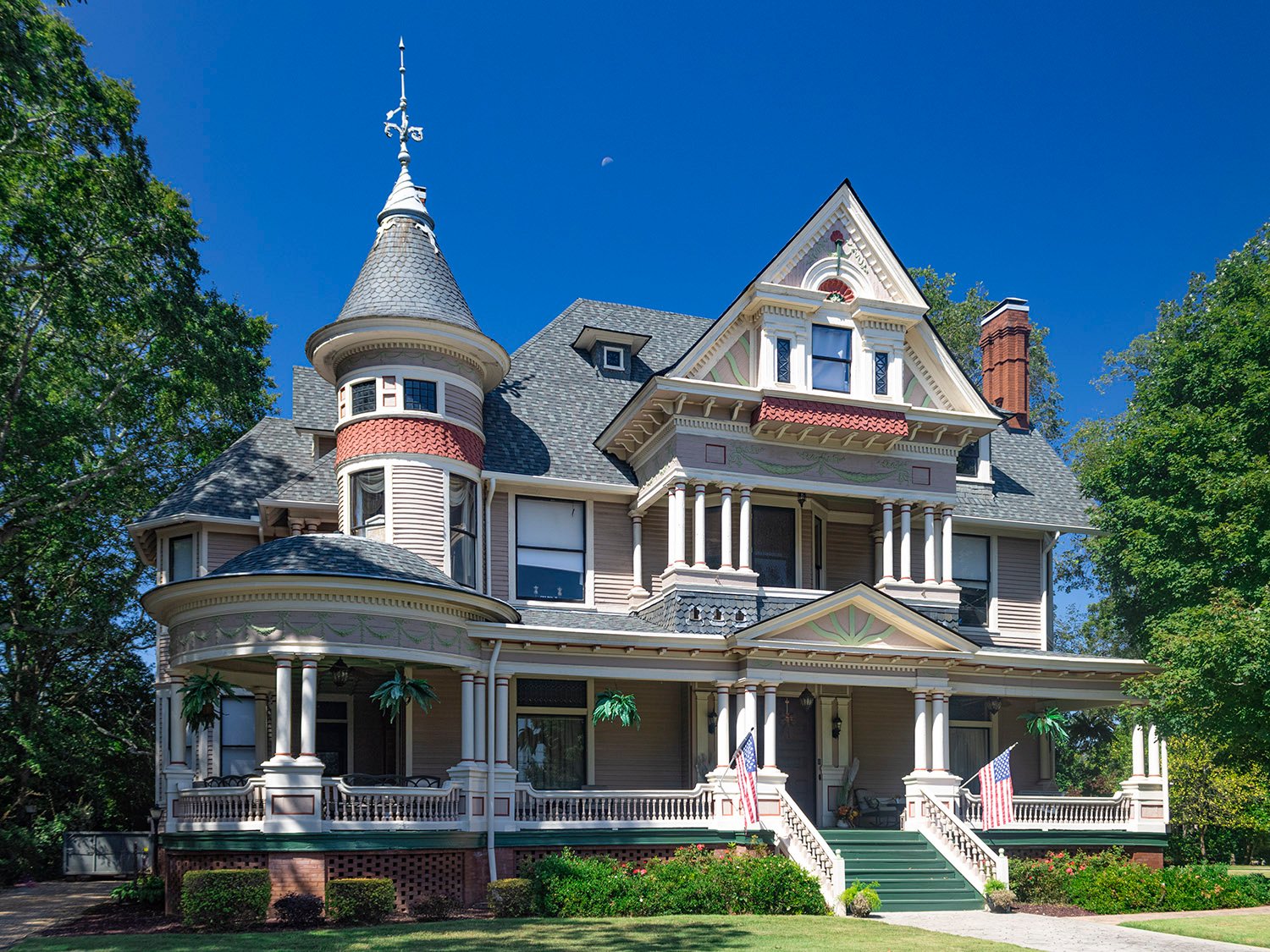
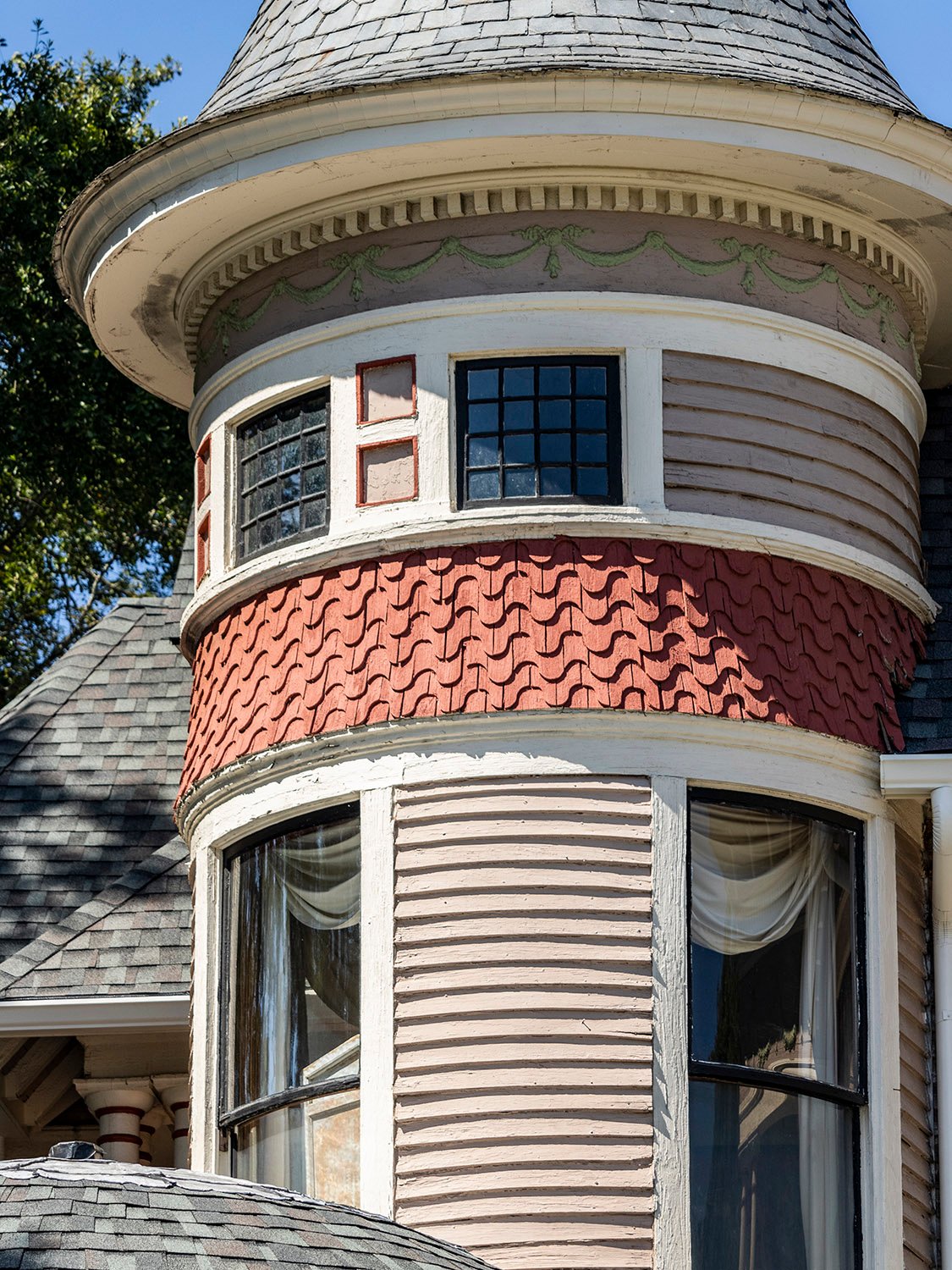
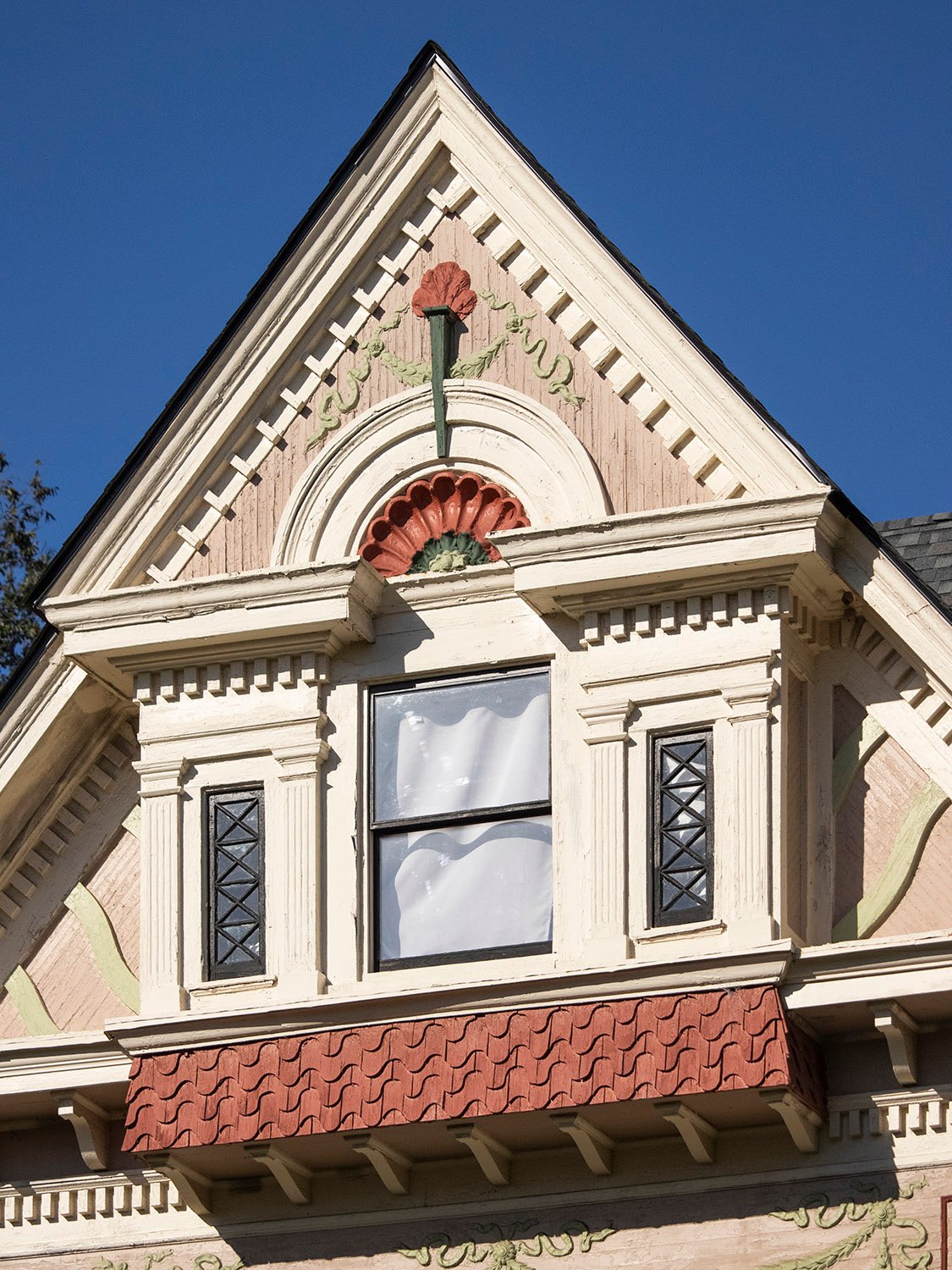
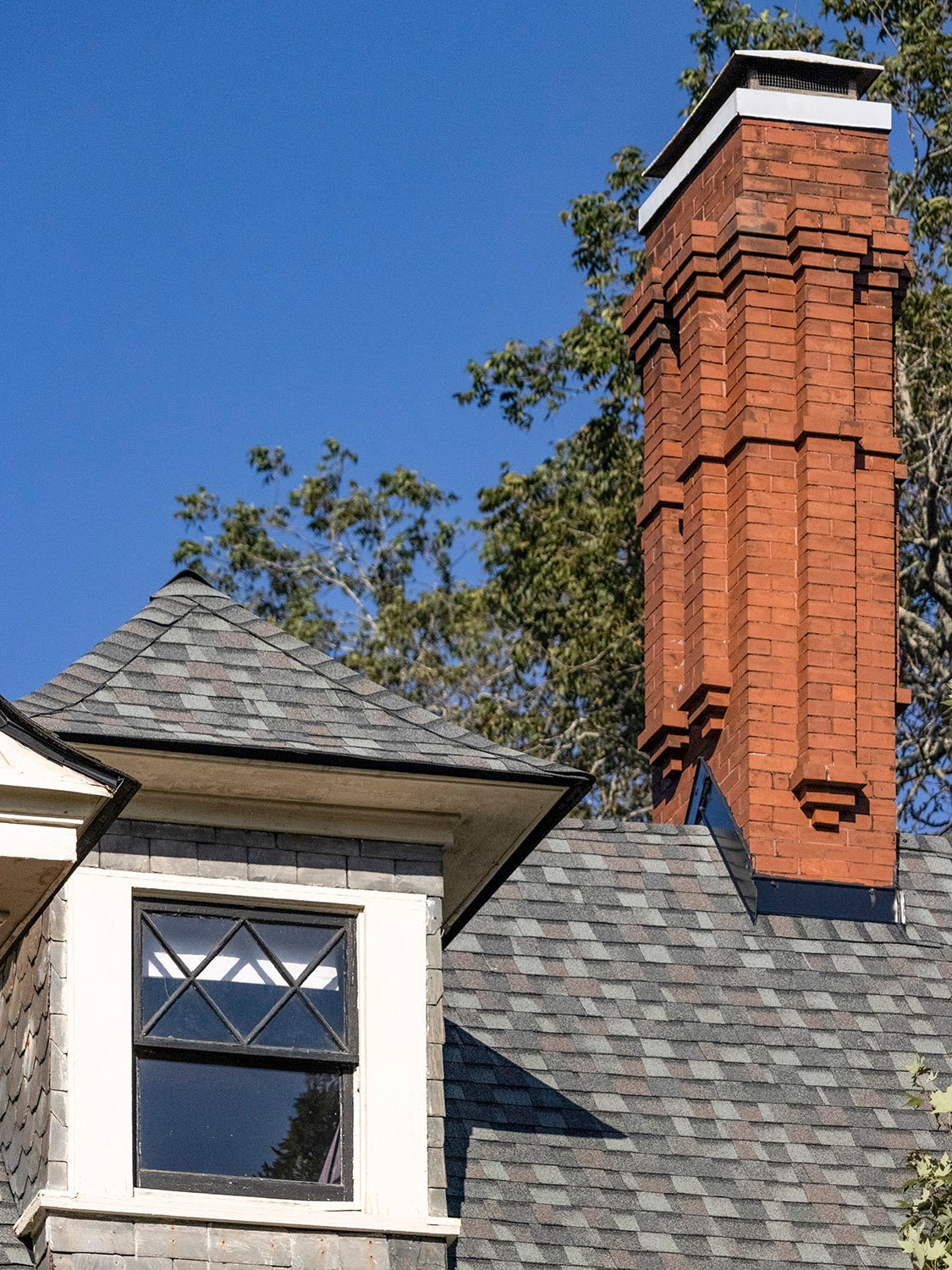
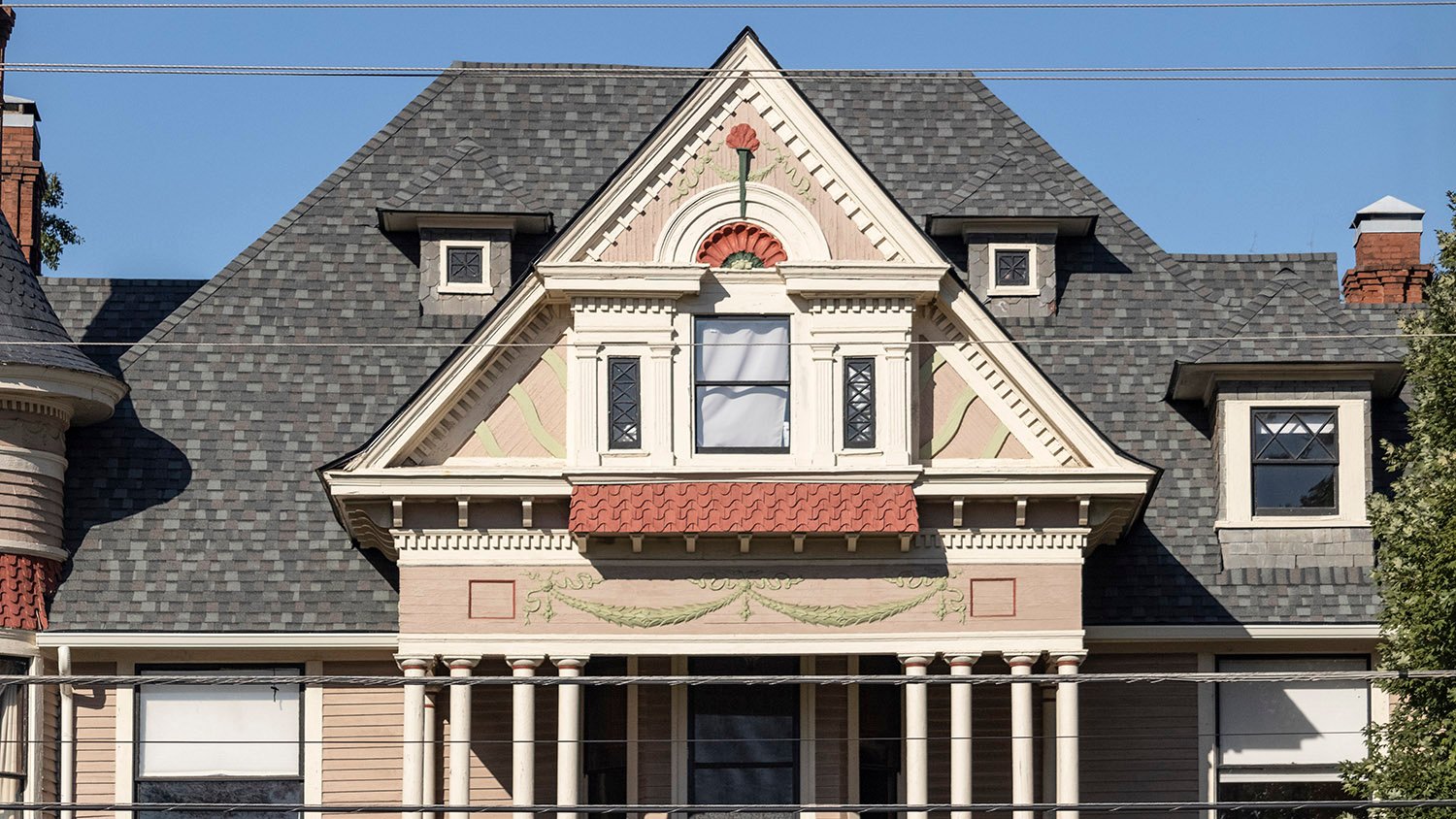
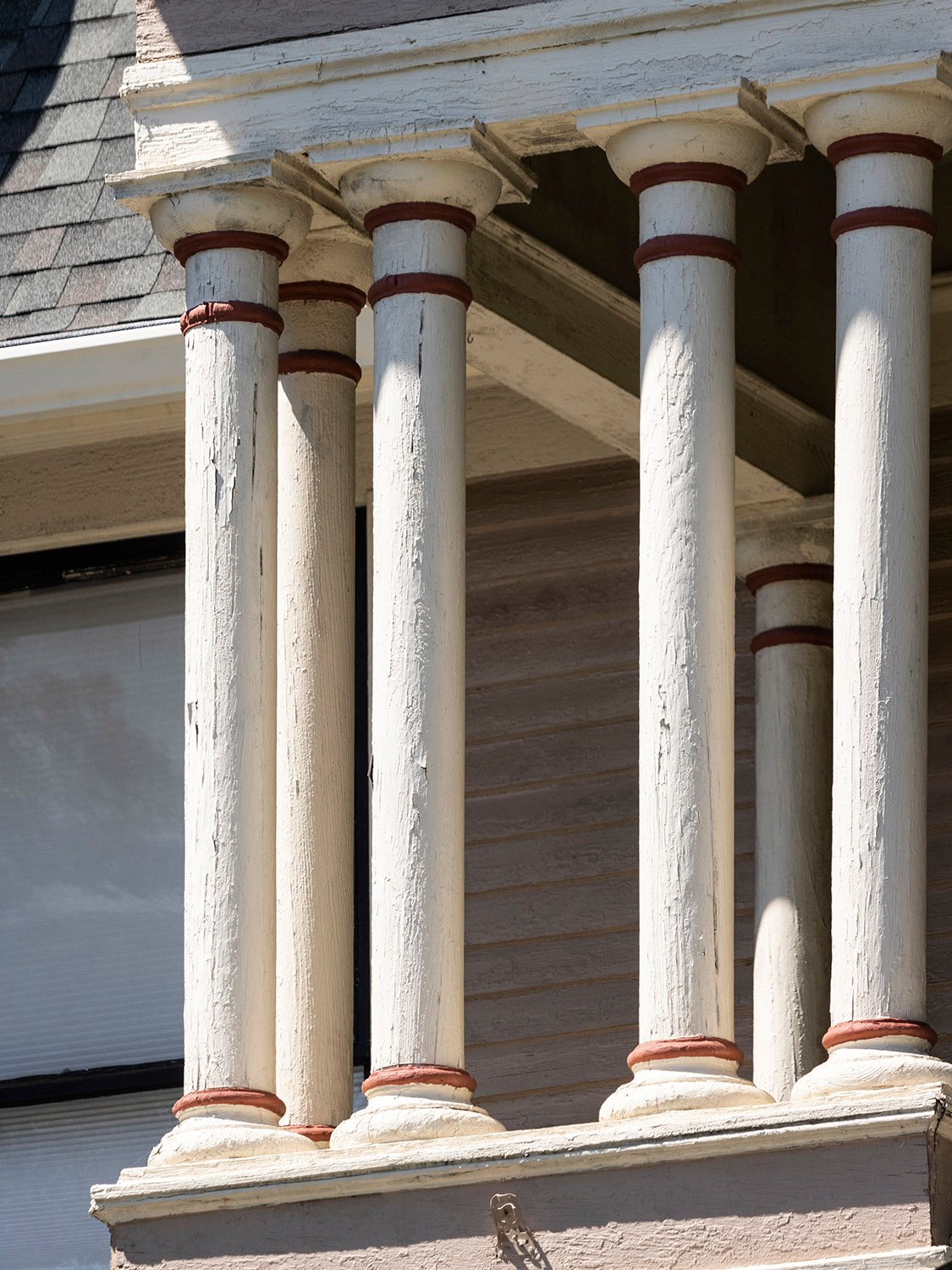
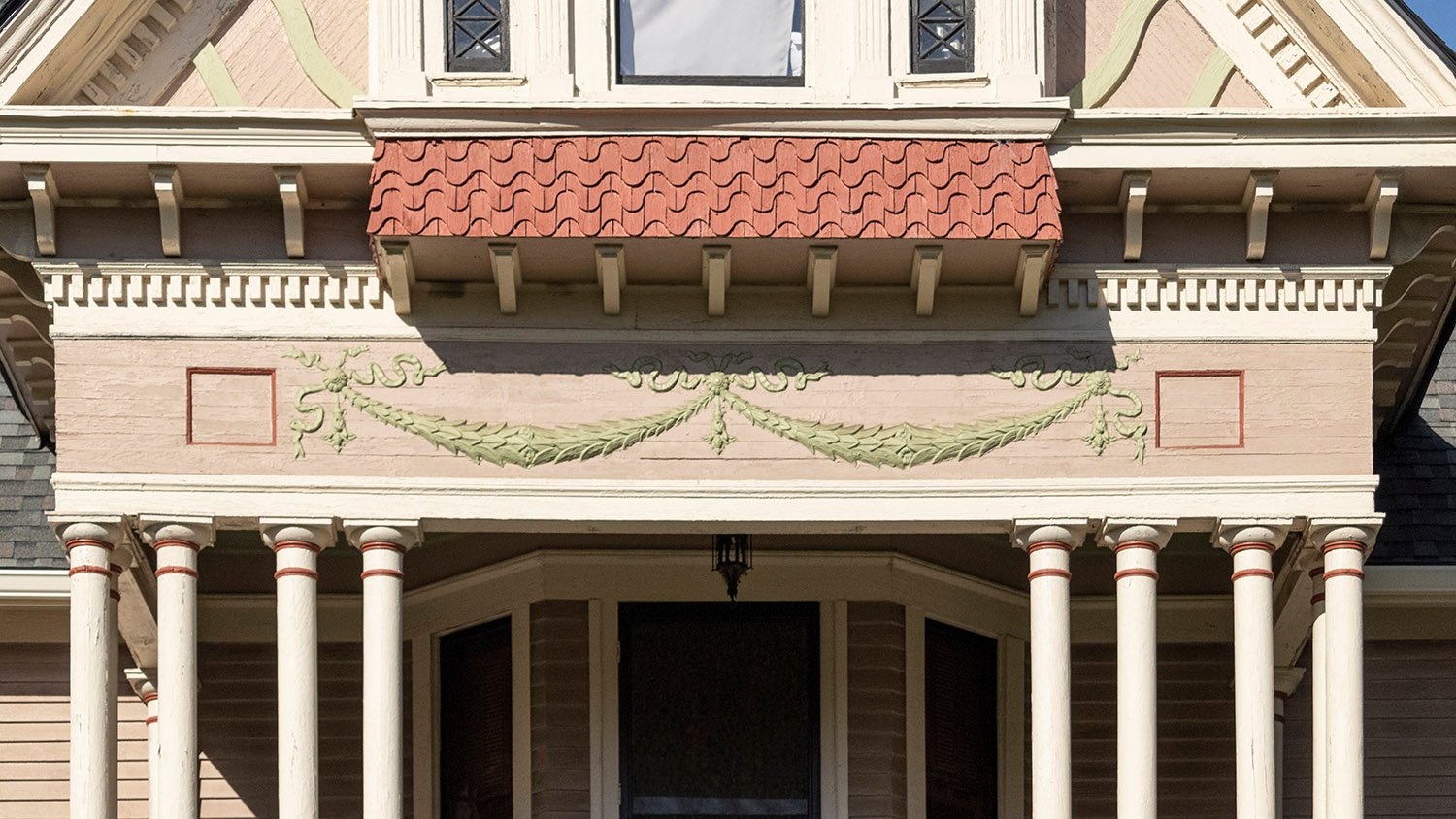
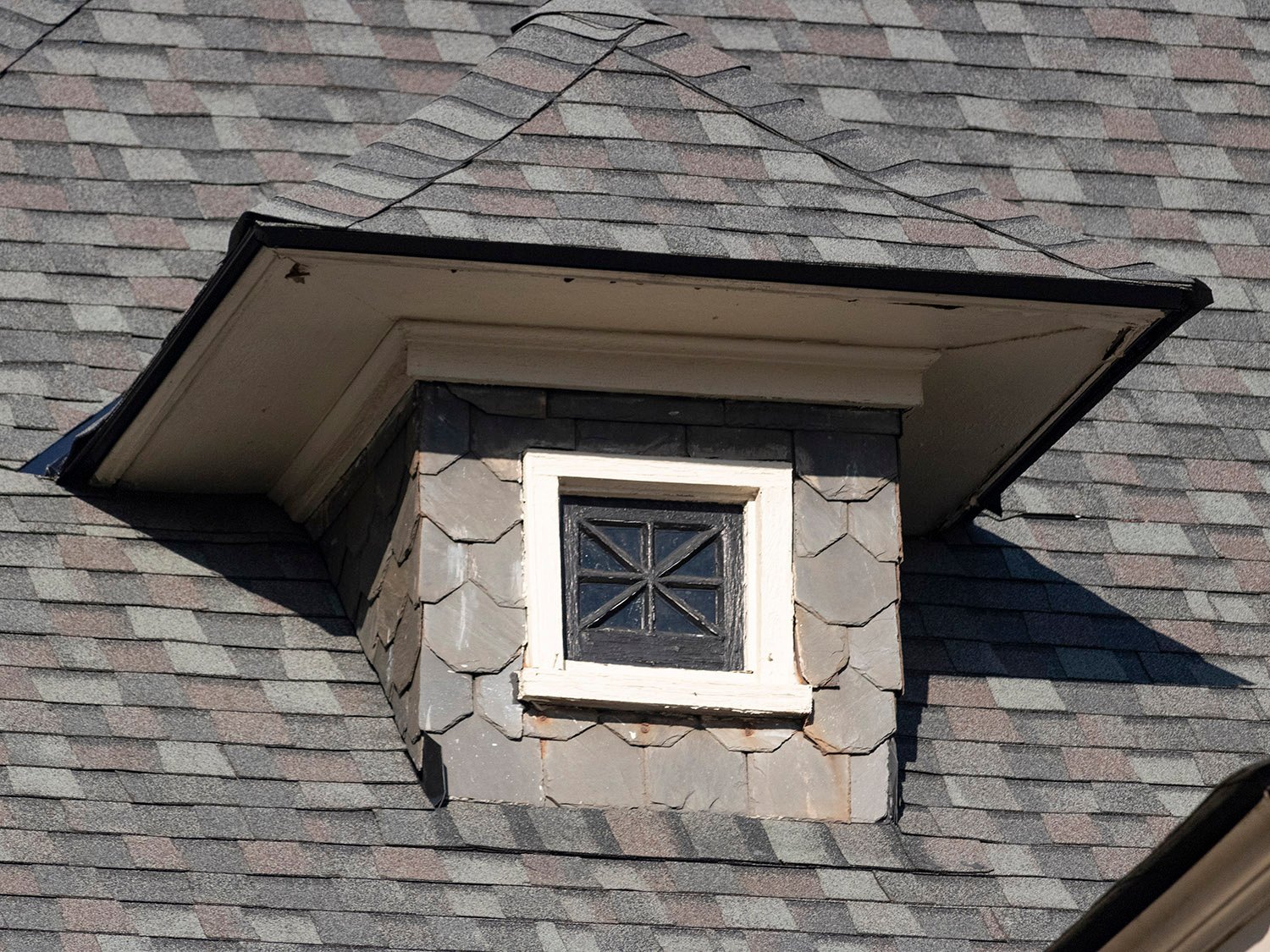
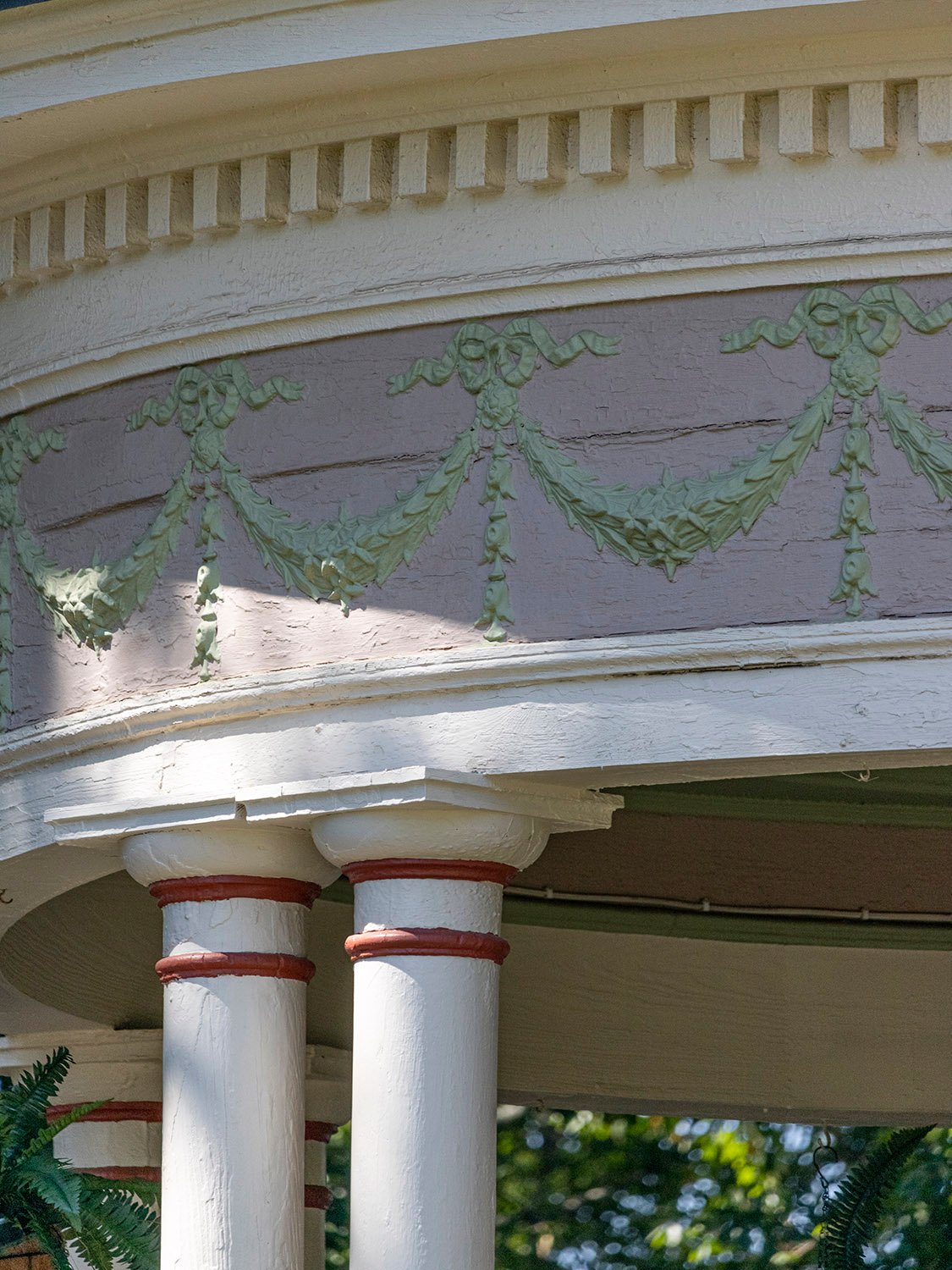
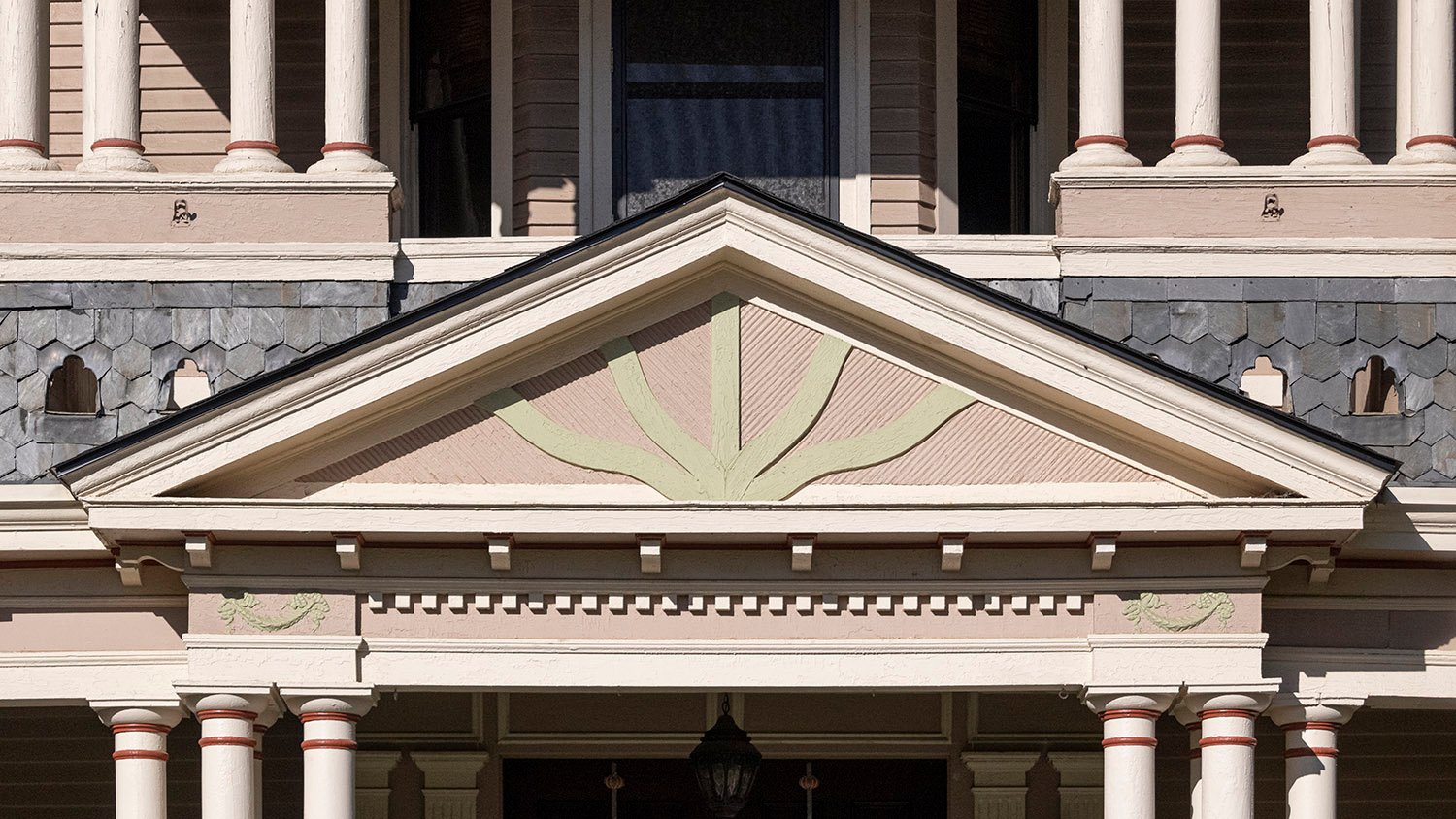
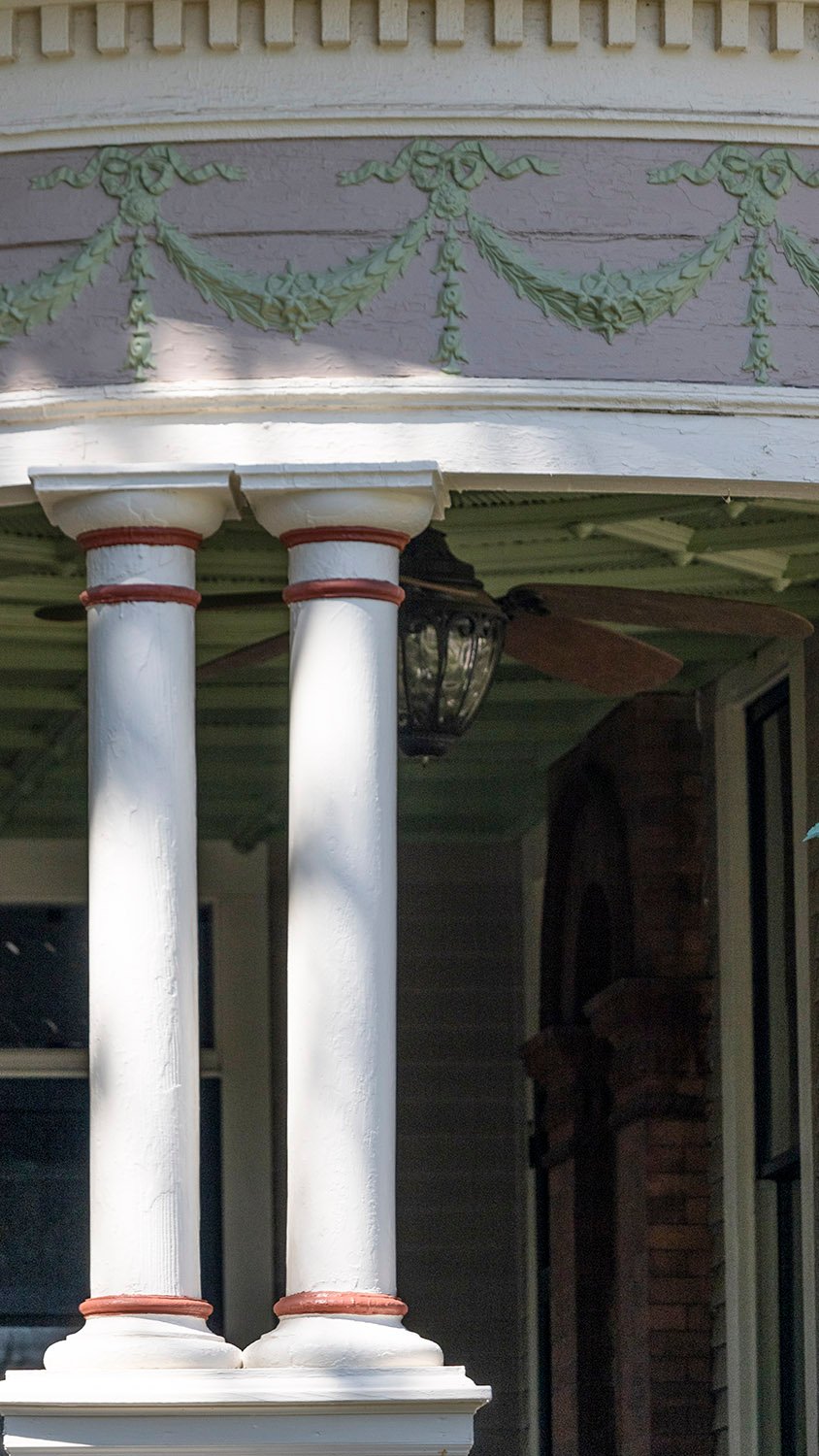
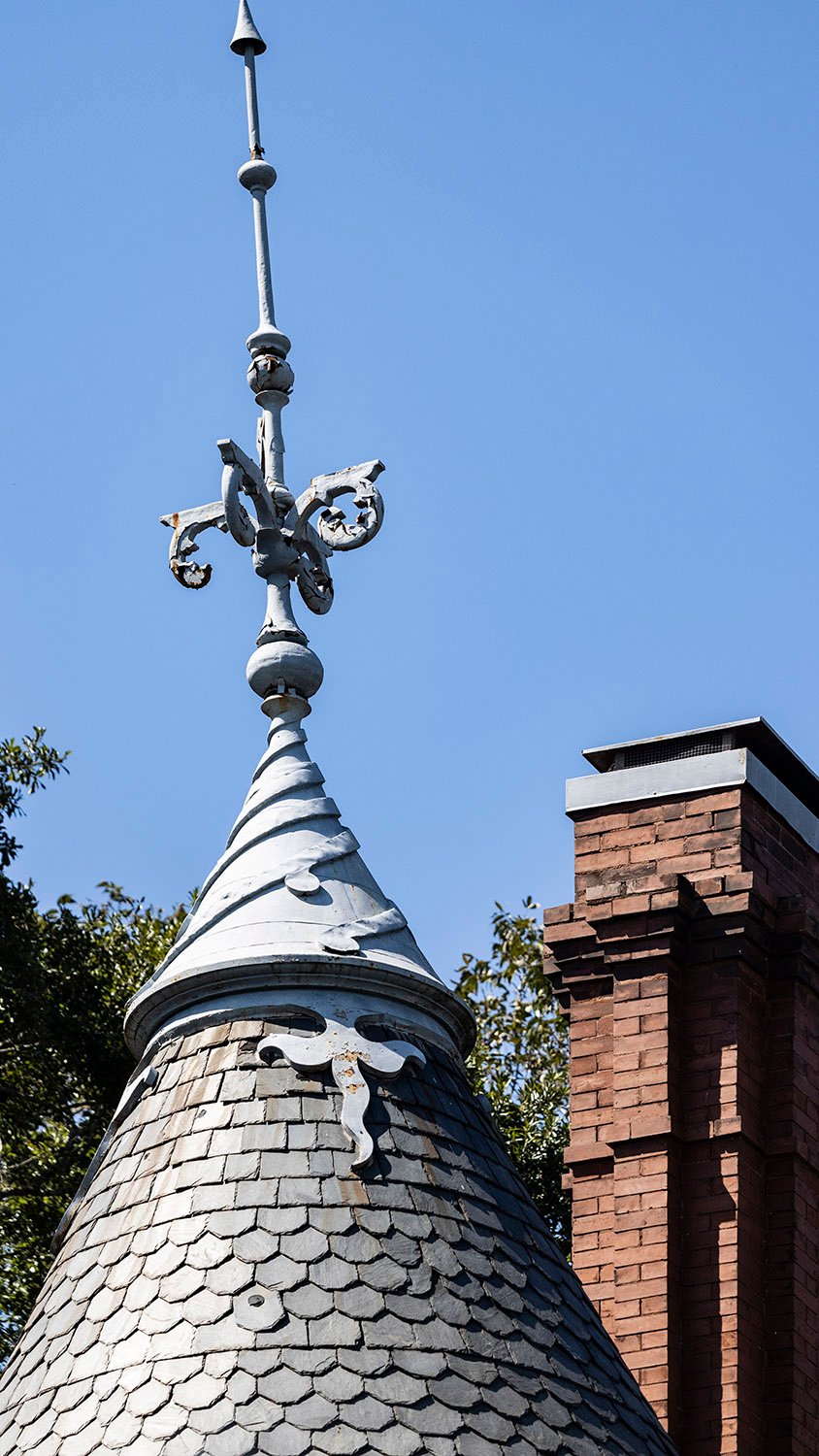
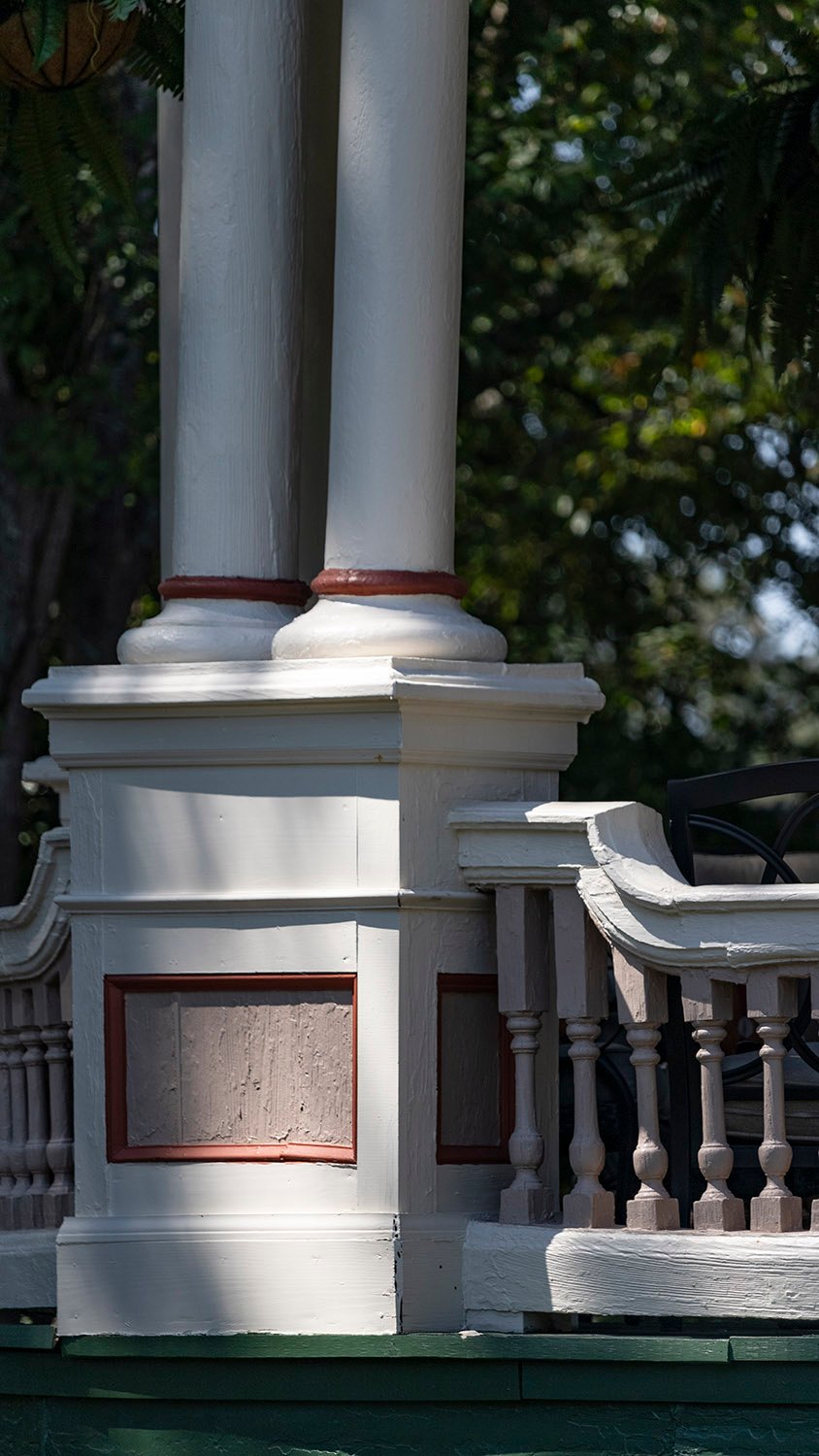
Bruce & Morgan. J.R. Carmichael Residence (1898). Jackson, Georgia.1234Turret on the J.R. Carmichael Residence, Jackson, GeorgiaProjecting gabled dormer with Palladian window on the J.R. Carmichael Residence, Jackson, GeorgiaDormer and chimney on the J.R. Carmichael Residence, Jackson, GeorgiaLooking at the roofline of the J.R Carmichael Residence, Jackson, GeorgiaColumns on the second-floor porch of the J.R. Carmichael Residence, Jackson, GeorgiaEaves, cornice, and festooned frieze over the second-floor porch of the J.R. Carmichael Residence, Jackson, GeorgiaDormer on the J.R. Carmichael Residence, Jackson, GeorgiaCornice and festooned frieze on the first-floor porch of the J.R. Carmichael Residence, Jackson, GeorgiaPorch pediment on the J.R. Carmichael Residence, Jackson, GeorgiaCornice, festooned frieze, and columns on the first-floor porch of the J.R. Carmichael Residence, Jackson, GeorgiaTurret shingles, finial, and chimney on the J.R. Carmichael Residence, Jackson, GeorgiaPedestal and balustrade on the first-floor porch of the J.R. Carmichael Residence, Jackson, Georgia
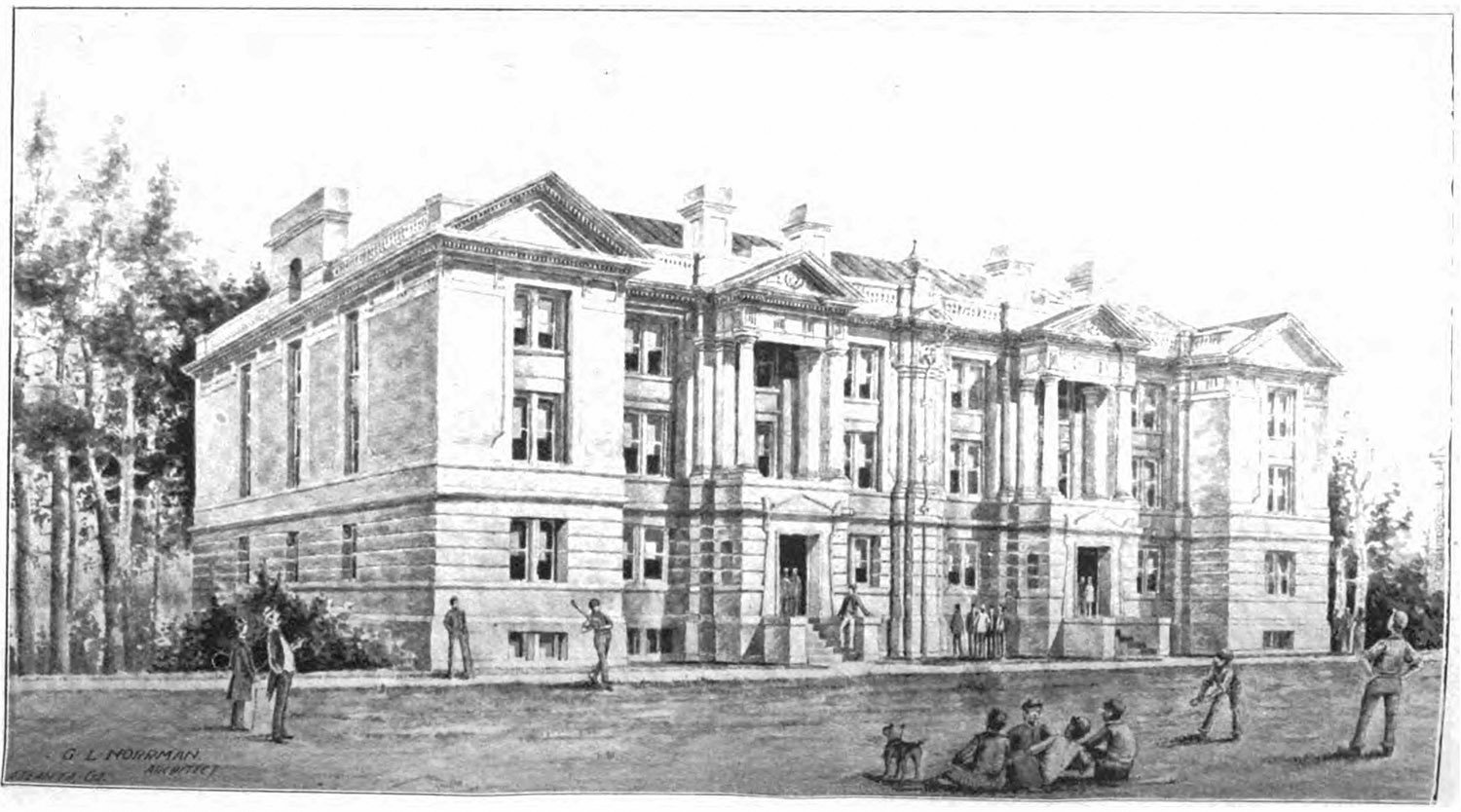
G.L. Norrman.Projected design of Candler Hall (1901). University of Georgia, Athens.1
The Background
Following a similar article in The Savannah Press, in May 1901, Wallace Putnam Reed wrote the following sketch of G.L. Norrman for his “Random Atlanta Gossip” column in The Macon Telegraph.
Reed recounted remarks attributed to a man from Birmingham, Alabama, about Norrman’s recent work, including the Bienville Hotel in Mobile, Alabama, and Candler Hall at the University of Georgia in Athens (pictured above).
One interesting aspect of the conversation is the speaker’s claim that “we are trying to induce Norrman to move to Birmingham.” Norrman considered moving to Birmingham, Alabama, in 1899,234 but ultimately remained in Atlanta.
Article Excerpt:
A Birmingham man who is a graduate of the University of Georgia called my attention, this morning, to the new dormitory, and mess hall of that institution, designed by Mr. G.L. Norrman, an Atlanta architect, who is somewhat famous throughout the South.
“These will be the handsomest buildings on the campus,” said the visitor from Birmingham, as he pointed to their pictures on the first page of the Constitution. “I don’t know anything of the kind in Europe or America, at the same cost, which is equal to these structures, measured by the standards of beauty and utility. By the way, we are trying to induce Norrman to move to Birmingham. The new Hotel Bienville in Mobile is his work, you know, and it has made him the most popular man in Atlanta. There is something in fine architecture that appeals to the heads and hearts of all classes. I would rather be a great architect than almost anything else.”
In the meantime Mr. Norrman who was standing within hearing walked off without waiting to be introduced to his admirer. Like most men of the genuine artistic temperament, he gets his satisfaction out of the work and cares less for compliments than any man I know.
If he cares for distinction he can easily make himself recognized as one of the foremost architects of this country. The late John Wellborn Root of Atlanta, enjoyed that distinction, but in some lines Mr. Norrman is regarded as his superior.5
G.L. Norrman. Candler Hall (1902). University of Georgia, Athens.
The Background
In April and May 1901, Wallace Putnam Reed wrote at least three similararticles about G.L. Norrmanthat were published in different newspapers throughout the Southeast. The first article is included below, written by Reed for his weekly column in The Savannah Press.
Here, Reed claimed Norrman was “A Swedish gentleman of aristocratic ancestry”, but that appears to be inaccurate.
All evidence indicates Norrman came from an ordinary middle-class family, and if he falsely presented himself as a descendant of Swedish nobility, it was entirely unnecessary—he was remarkable enough on his own merits.
Article Excerpt:
Mr. G.L. Norrman, the well known Atlanta architect, has a legion of friends in Savannah who will be delighted with his splendid designs for the State University dormitory and mess hall, which were the most notable illustrations in The Constitution the other day.
Mr. Norrman is in love with his profession.He is an original thinker, a scholar, and a traveler who has studied on their sites the best examples of the world’s ancient and modern architecture. When I do not find it convenient to spend a leisure hour in a big library I hunt up Norrman. He is a favorite with our brightest men, and the south is dotted with churches, public buildings, and residences which bear testimony to his skill and artistic taste.
This man is worth a column here if we had the time and space. A Swedish gentleman of aristocratic ancestry, he has made himself the master of our language, and few writers have his happy gifts of expression. Though comparatively a young man, he is a type of our old-fashioned gentleman in his notions of honor, chivalry, and personal responsibility. It is gratifying to me to see his name imperishably linked with our university. His work will help it in more ways than one.1
References
Reed, Wallace Putnam. “Random Georgia Gossip.” The Savannah Press (Savannah, Georgia), April 27, 1901, p. 4. ↩︎
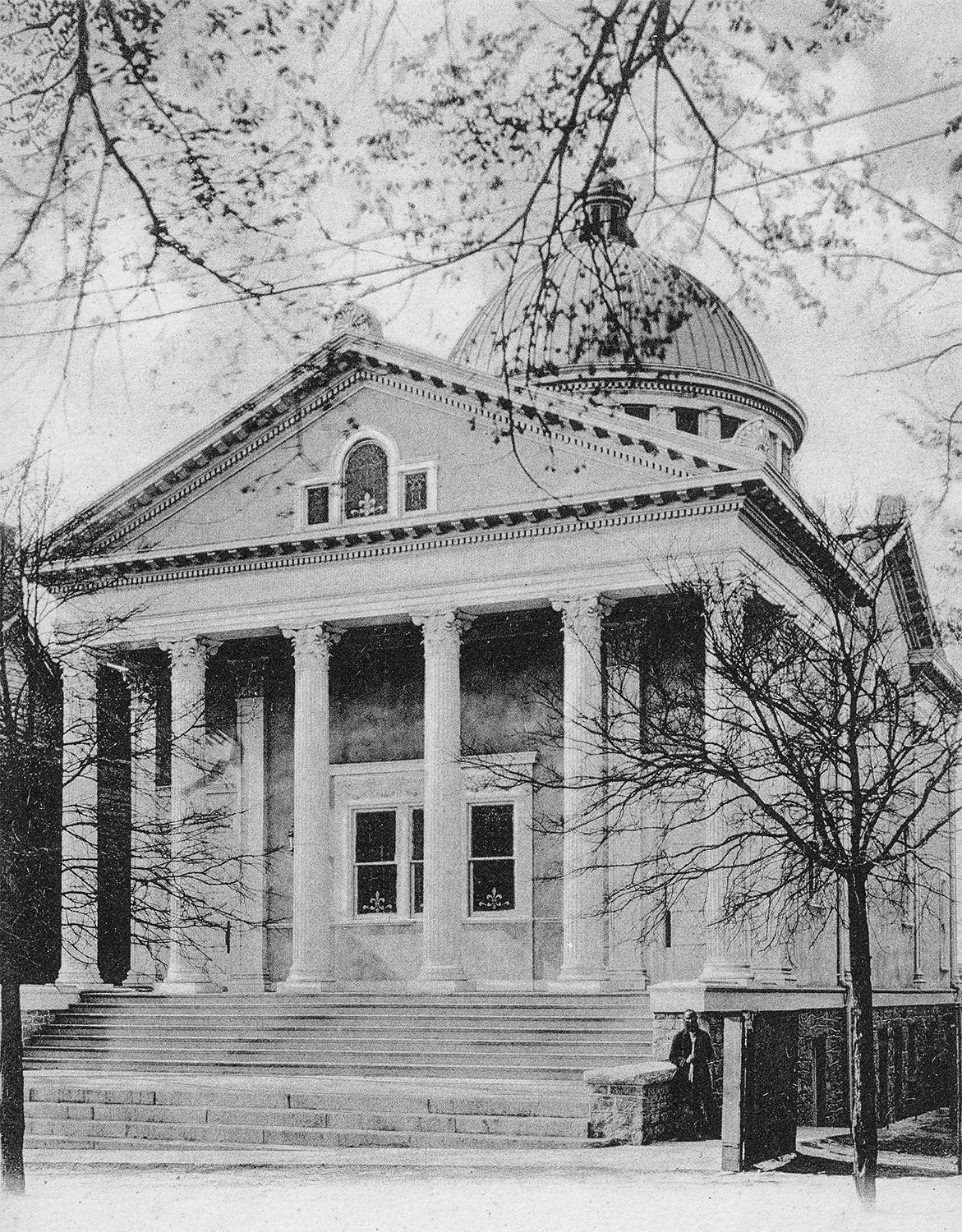
G.L. Norrman. First Church of Christ Scientist (1899, demolished). Atlanta. Photograph from an undated postcard published by Witt Brothers of Atlanta.
The Background
Five months after Wallace Putnam Reed’sanecdote about G.L. Norrman and Mrs. Mims, a much-expanded version of the tale made its way to Washington, D.C., where the story was reported in the “One Woman’s View” column of The Washington Post.
The new version included an additional detail about windowsandreduced Norrman to something of a buffoonish caricature, exaggerating a Scandinavian accent and playing on the “dumb Swede” stereotype that was prevalent in the 19th century.1
Norrman was anything but dumb, of course, speaking at least three languages and later described as “one of the best read men in the country and well informed on any and all subjects.”2 But why let truth get in the way of a humorous story, eh?
The revised story was subsequently published in newspapers across the United States.
Article Excerpt:
They have been building a Christian Science church down in Atlanta—I think it’s Atlanta—so a man from Georgia tells me, and the architect they selected to do the thing is a Scandinavian who is as frank in manner as he is artistic in practice. When the building was nearly completed, one of the leading women of the church, mother of a very famous Georgia belle, came to look at it.
“Ah, Mr. Blank,” said she, “it is very beautiful: but you musn’t take too much credit to yourself. Thought has played a great part in bringing this to pass. Not work, but thought. I have put my mind on it since it began to be. I have given you absent treatment to help you. That is why you have been so successful. I have helped you greatly, with my thought.”
“Dank you, madam; I dank you much,” responded the architect. “But I wish you had told me about dis sooner yet. I vould haf tole you what to do. Myself, I can build churches. I do not need your thoughts. But it is that man that puts in the glass. Why you not put your mind on him? He haf put in the most tam bad glass whatever I did see.”
When that Christian Science church in Atlanta was completed, the chief woman member of the congregation gazed at it admiringly.
“It is a thought of God materialized,” she said—I don’t pretend, by the way, to have her phraseology exactly, but I think I convey her meaning. “It is thought made manifest. It is mind made visible. What a pity it is not in marble.”
“Ach, madam,” said the architect, “whose fault is that? I haf no thought; I haf only bricks. I build it with bricks. You haf the thoughts. Why did you not think marble while you were thinking?”3
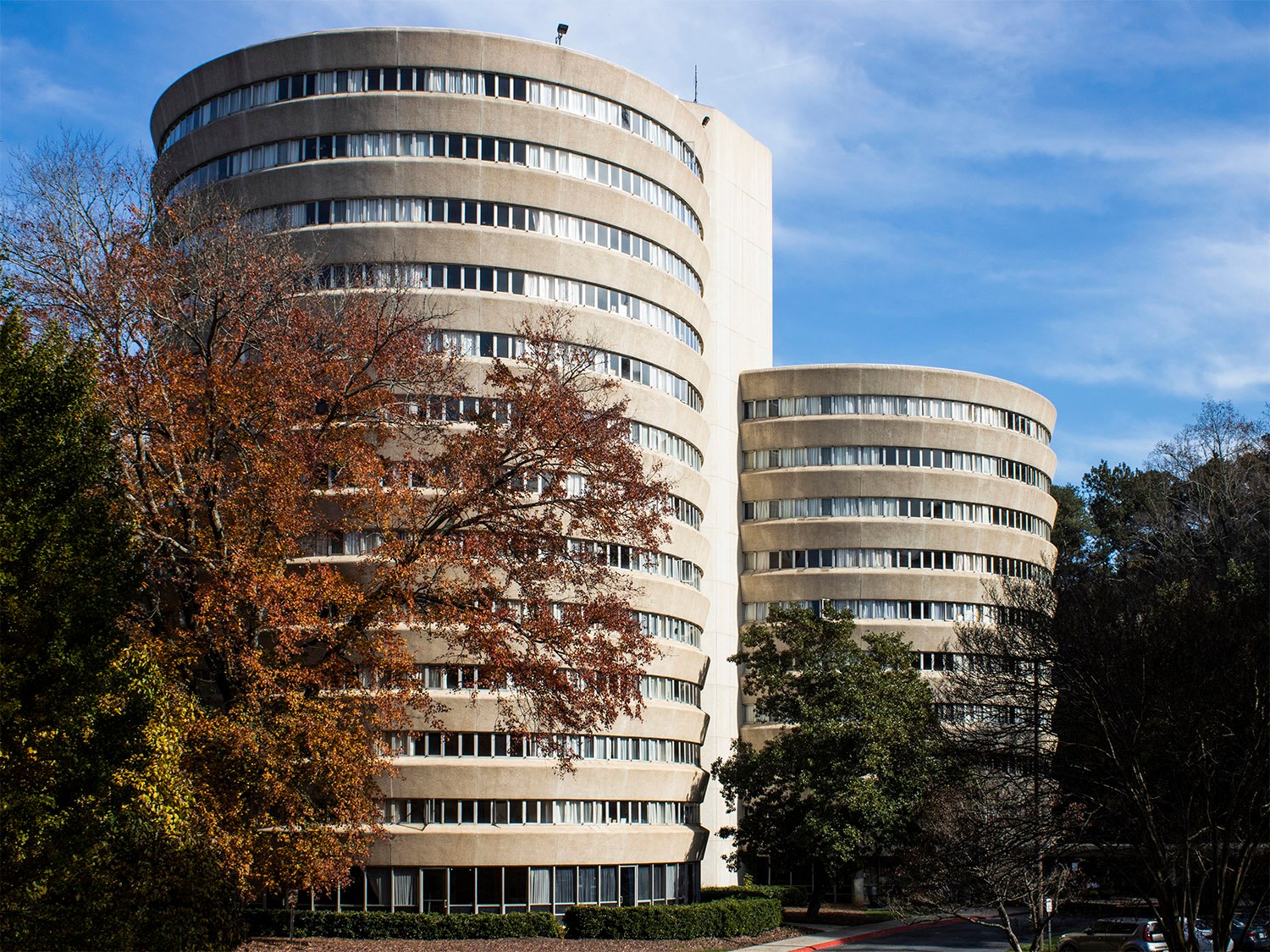
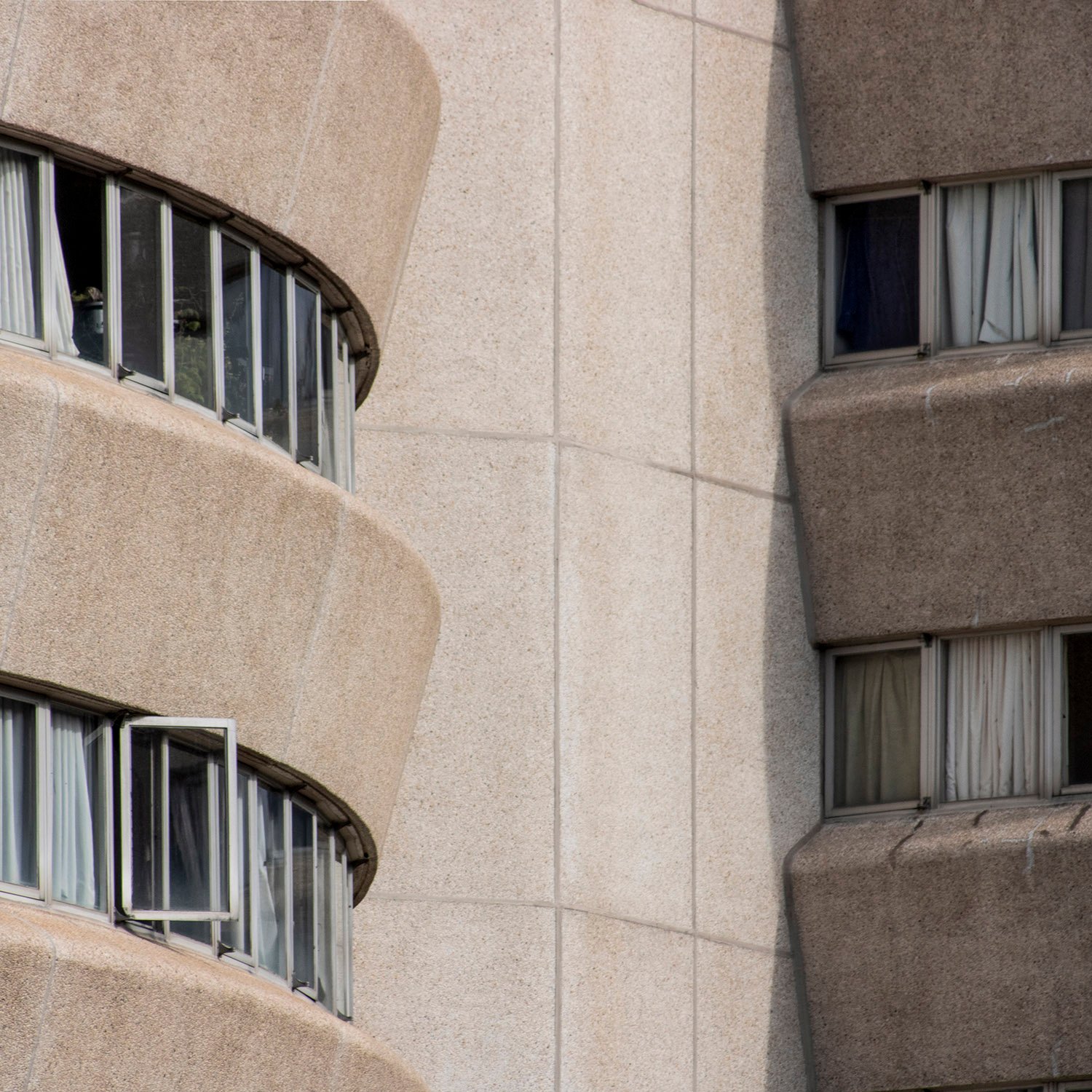
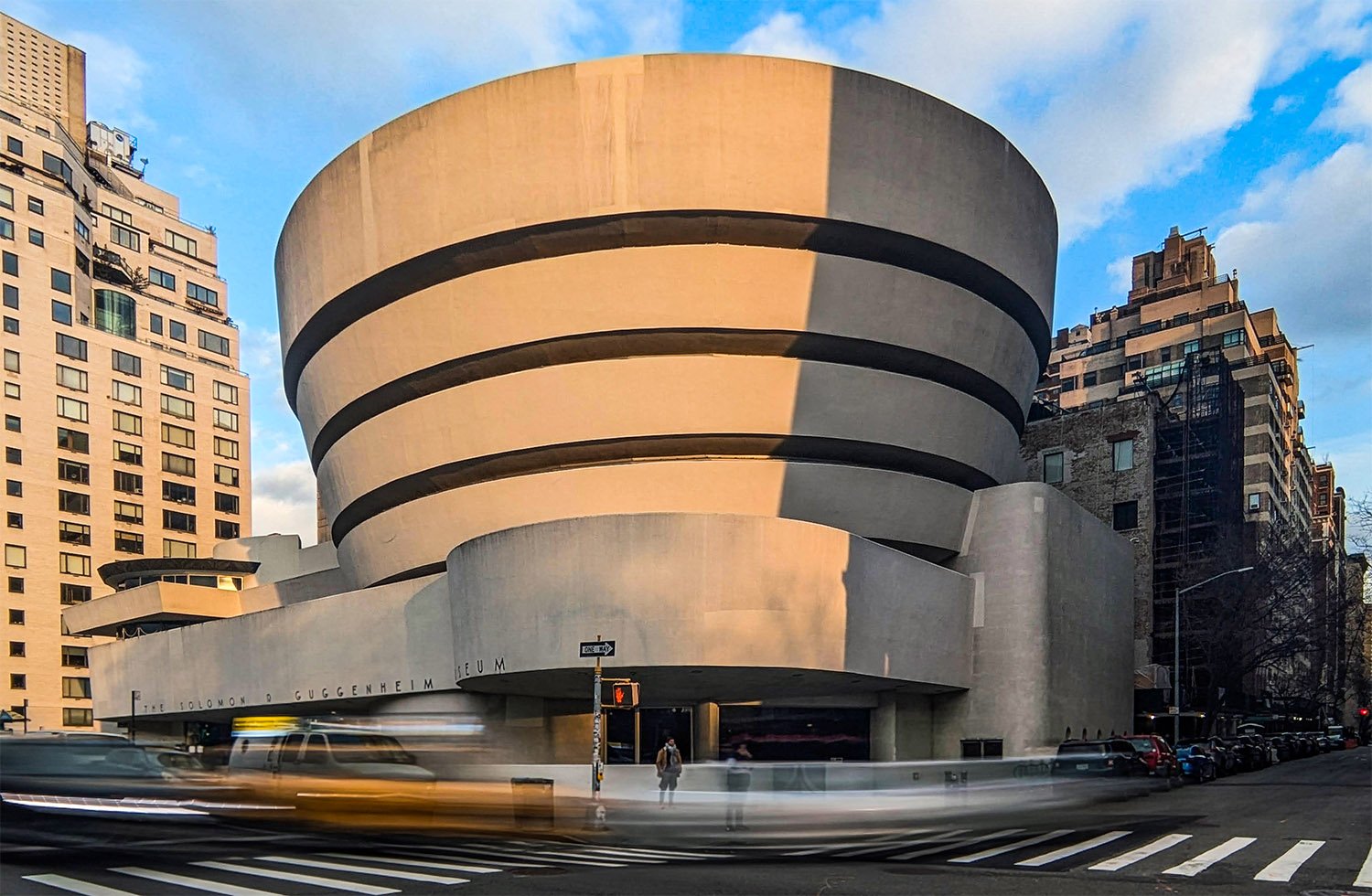
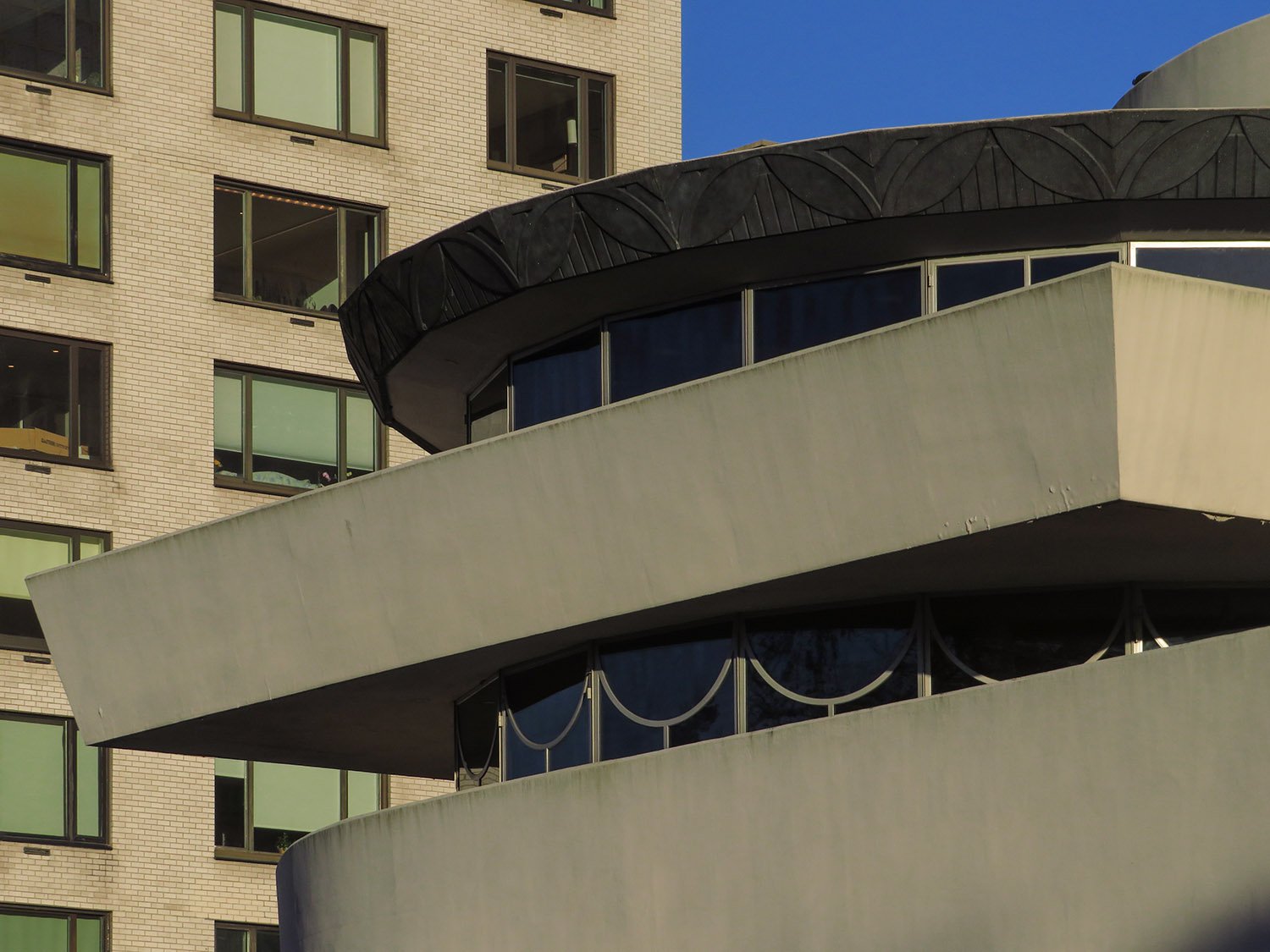
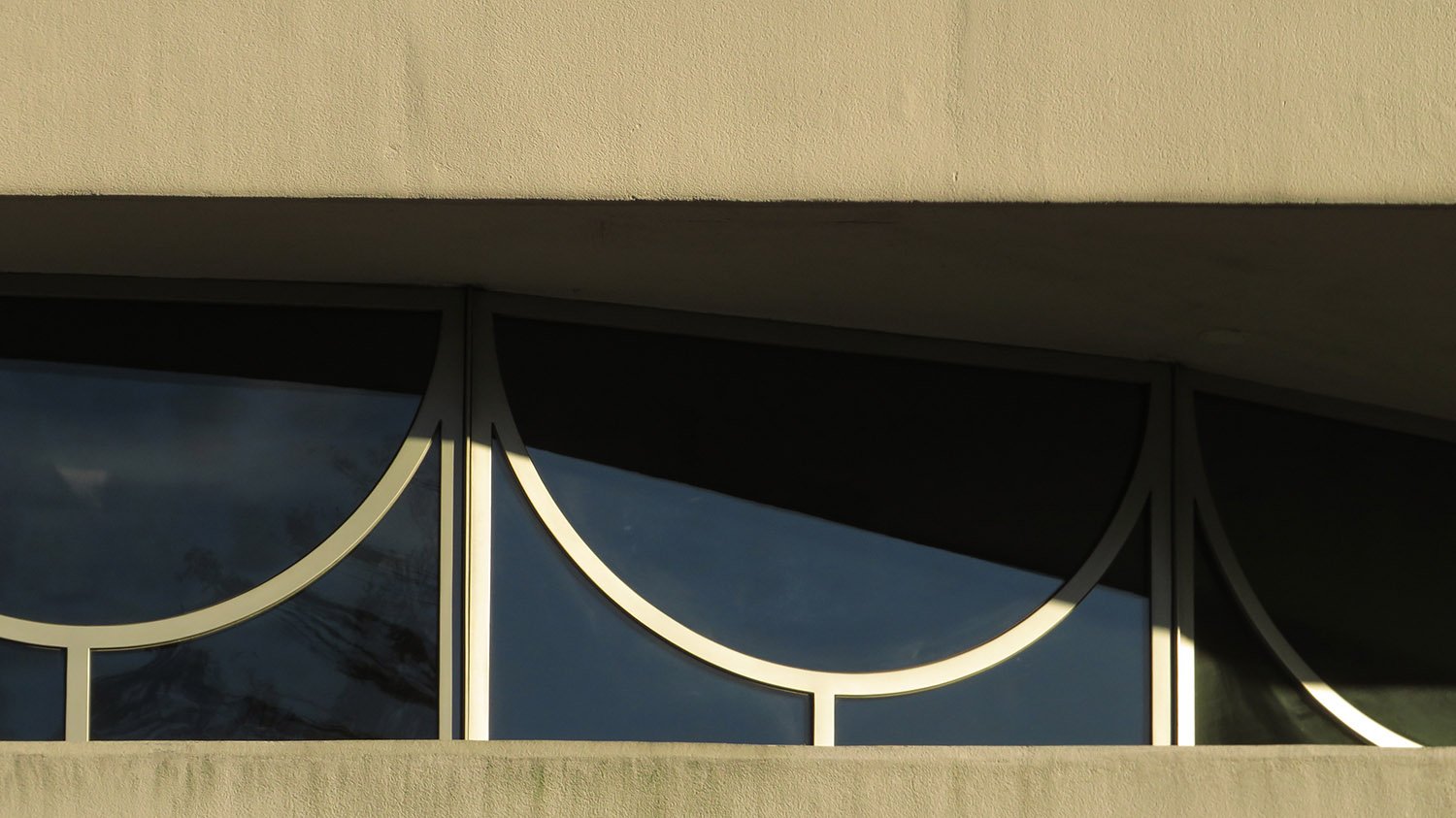
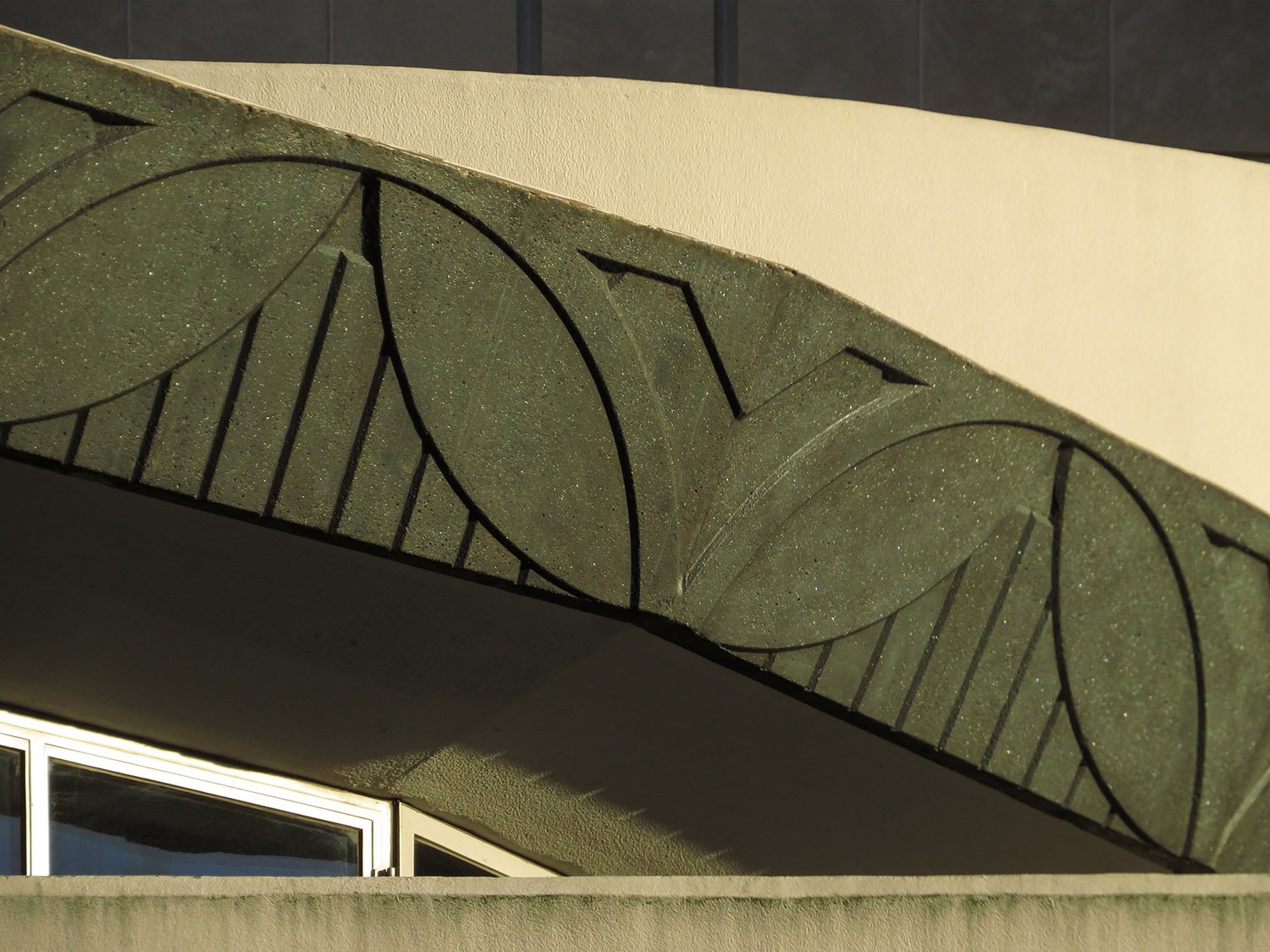
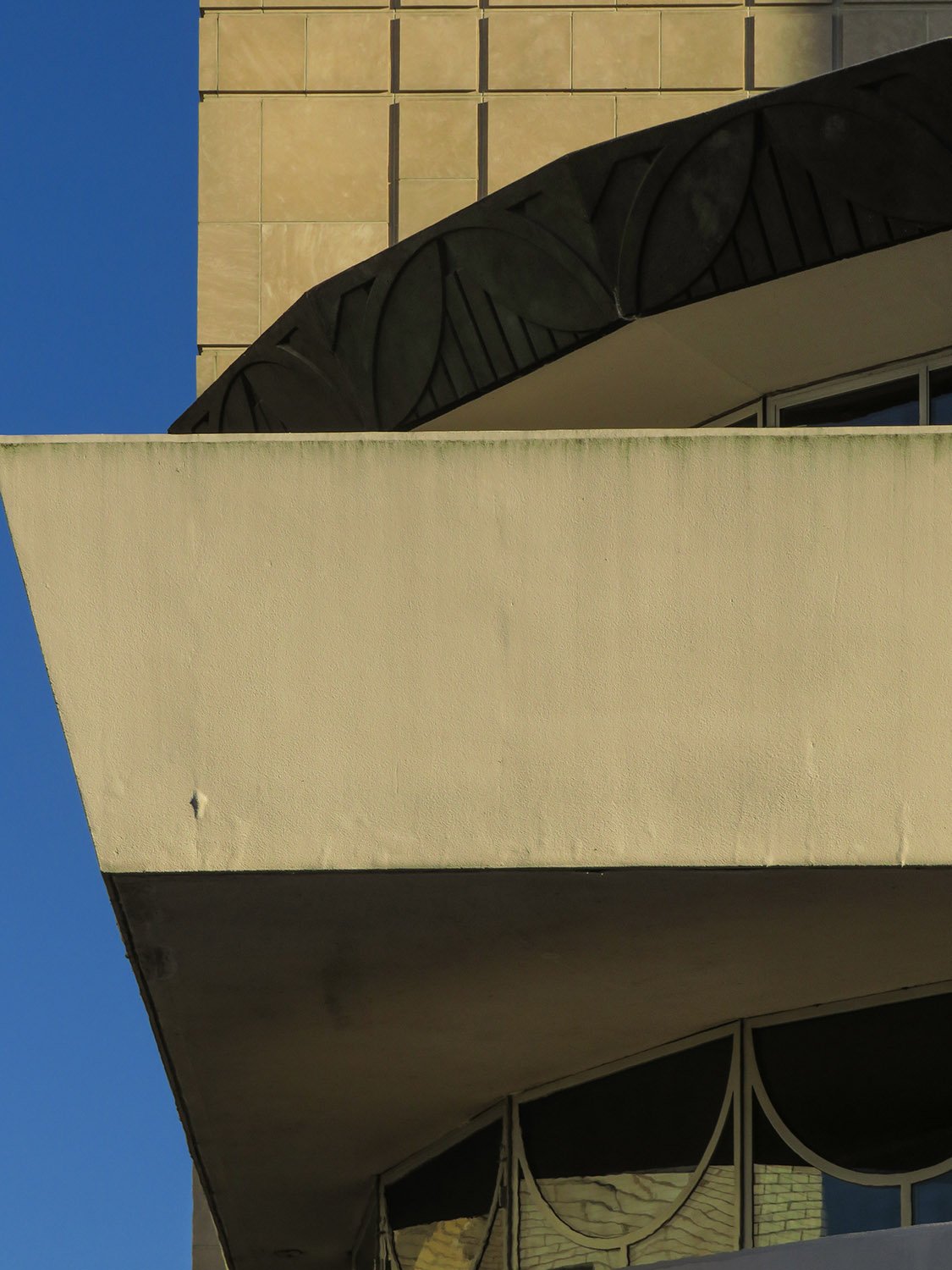
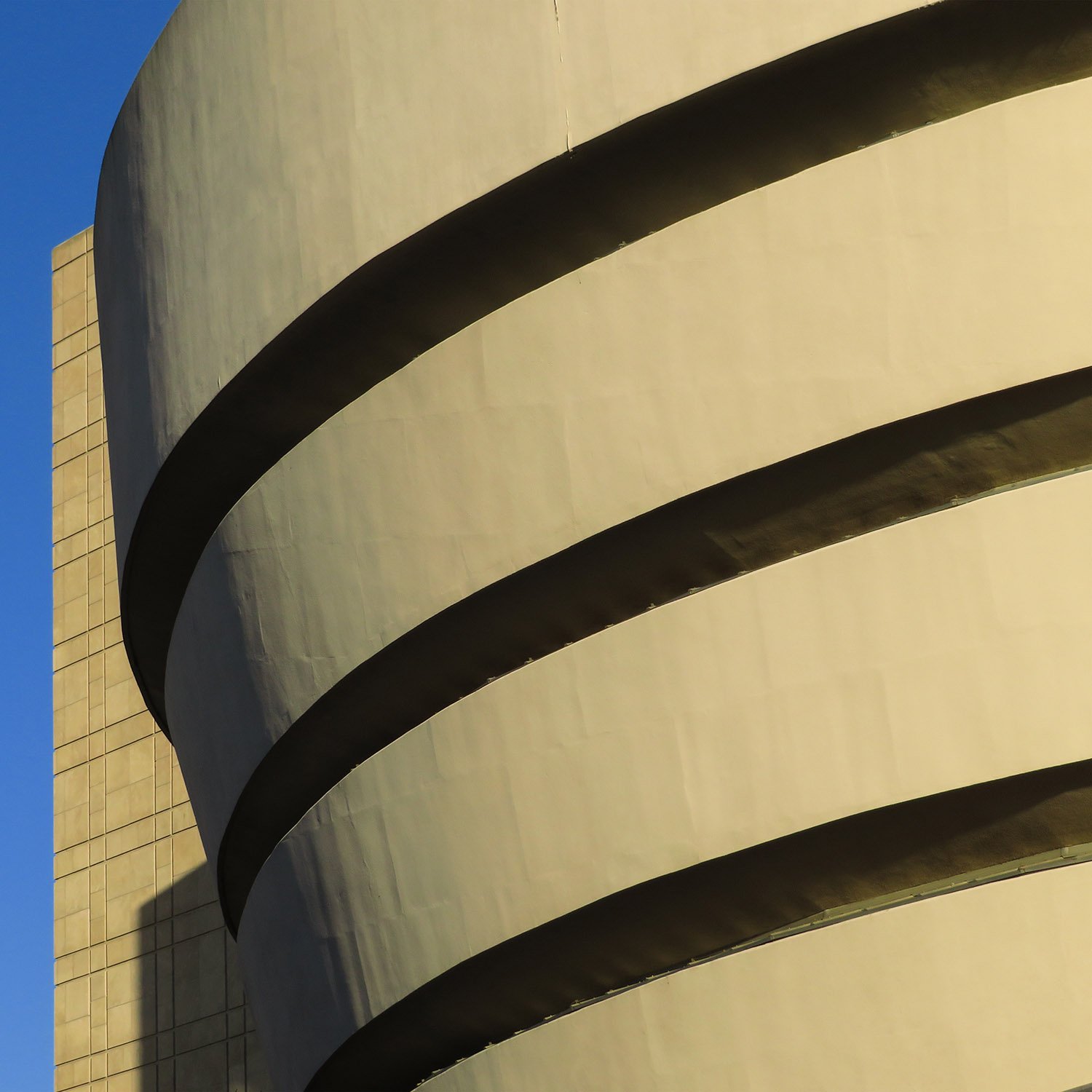
Frank Lloyd Wright. Solomon R. Guggenheim Museum (1959). New York.1Looking toward “The Monitor” at the Solomon R. Guggenheim Museum, New York Third-floor windows on “The Monitor“ at the Solomon R. Guggenheim Museum, New YorkPatterned fascia above the fourth floor of “The Monitor” at the Solomon R. Guggenheim Museum, New YorkTerrace between the third and fourth floors of “The Monitor” at the Solomon R. Guggenheim Museum, New YorkGunnite facade of the rotunda at the Solomon R. Guggenheim Museum, New York
References
“It’s Weird but Wondrous, This Museum by Wright”. Buffalo Evening News (Buffalo, New York), October 21, 1959, p. 1. ↩︎
Thomas H. Morgan once claimed that G.L. Norrman “made friends easily,”1 but it could also be said that he made enemies easily.
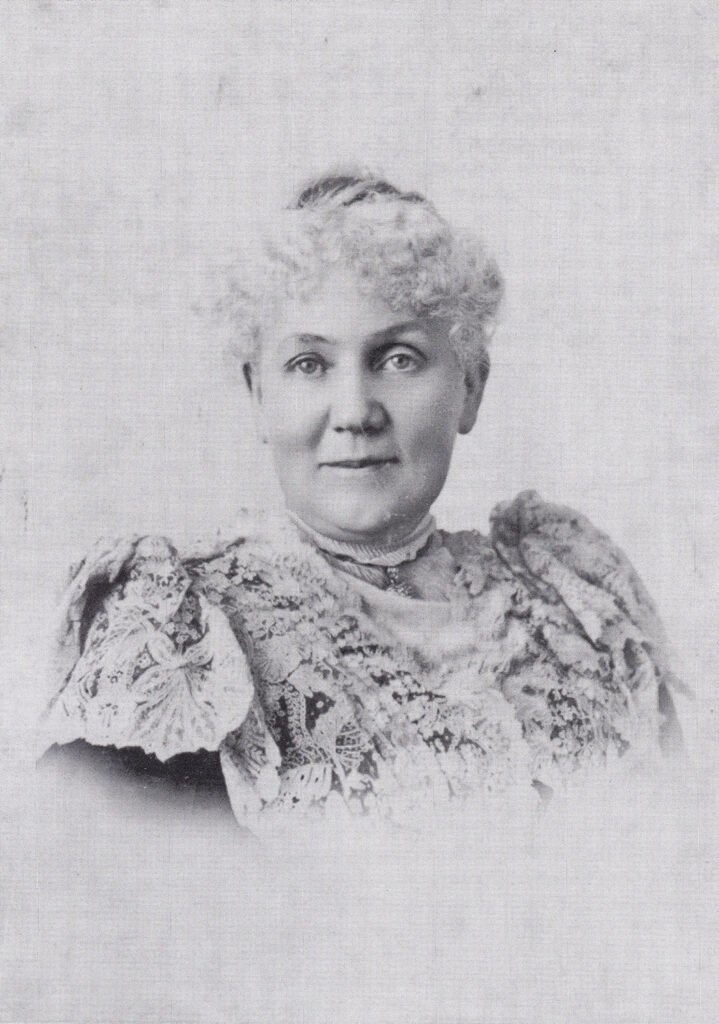
Norrman’s rivals were as colorful as he was, but none were as endearingly antagonistic as Sue Harper Mims (1842-1913, pictured here), a prominent Atlanta socialite and the leader of the city’s Christian Science congregation.
Between 1898 and 1899, when he designed and oversaw construction of the church’s sanctuary, Norrman—who worshiped Norse gods—made several audaciously disparaging remarks about Christian Science beliefs, drawing rebuke from Mrs. Mims.
It’s hard to determine whether Norrman and Mims were truly adversaries or if they just enjoyed taunting each other—perhaps it was a little of both.
Here, Norrman’s friend Wallace Putnam Reed recounted a humorous exchange between Norrman and Mrs. Mims, published in January 1900 for his weekly column in The Augusta Chronicle.
Article Excerpt:
“I see that Architect Godfrey L. Norrman, of Atlanta, has been in Augusta in consultation with the owners of the burned district. Mr. Norrman is not only an accomplished architect, but has a fine sense of humor. He was the architect for the Christian Science Temple in Atlanta, which was erected by Mrs. Livingston Mims. It is a beautiful building of pure white, built after the pattern of the Parthenon, and is made of white plaster over brick walls. When the work was completed and Mrs. Mims was looking at the pretty structure, she exclaimed, “It is beautiful, but I wish it was marble,” whereupon Architect Norrman promptly replied: “Well, Mrs. Mims, you just think it marble, and it will be marble.” It seems that several times during the building of the Temple Mr. Norrman had complained of some indisposition and the Christian Scientist said to him: “Mr. Norrman, just think you are well, and you will be well.” The architect desired her to apply her doctrine to the temple.”2
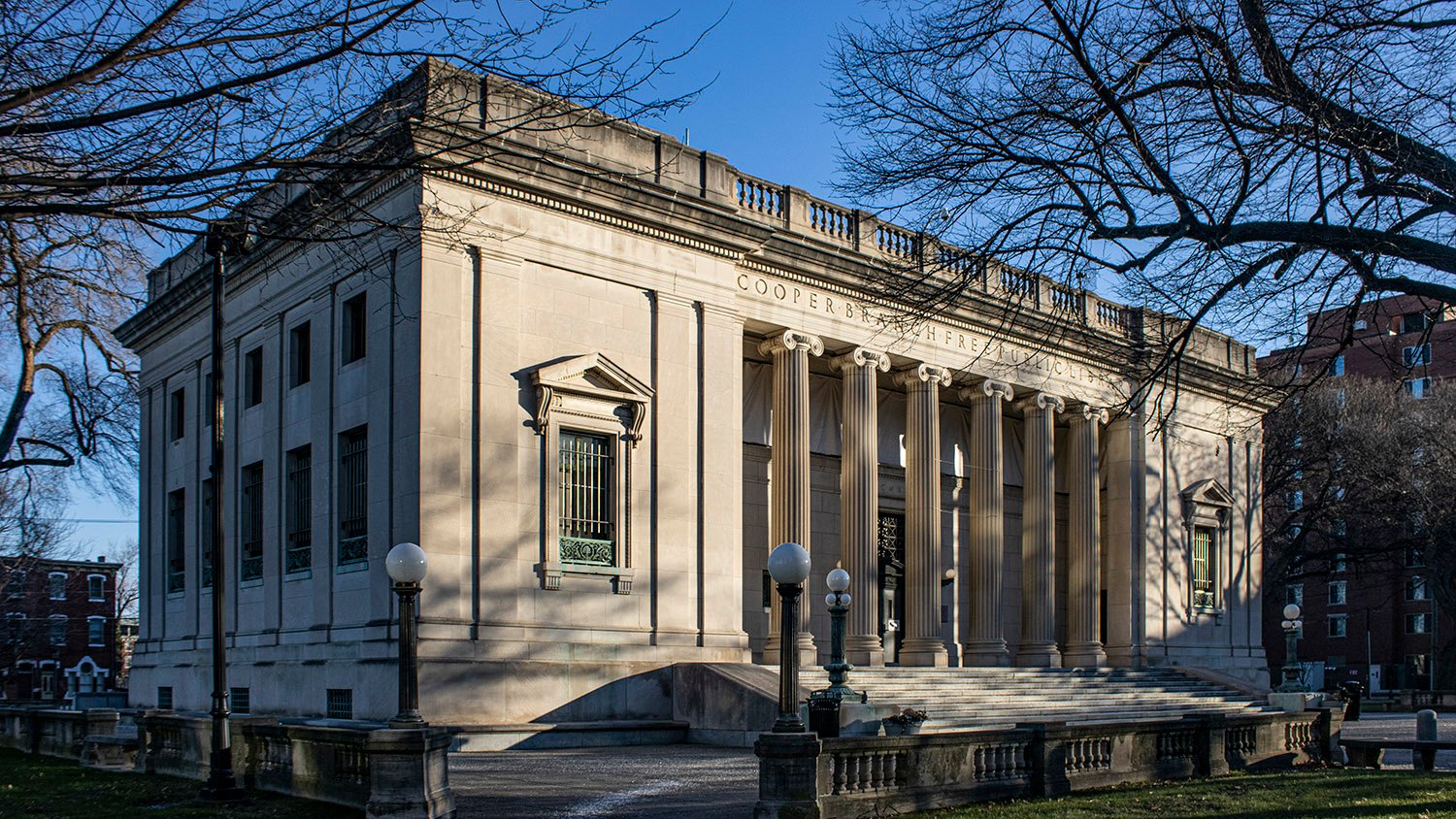
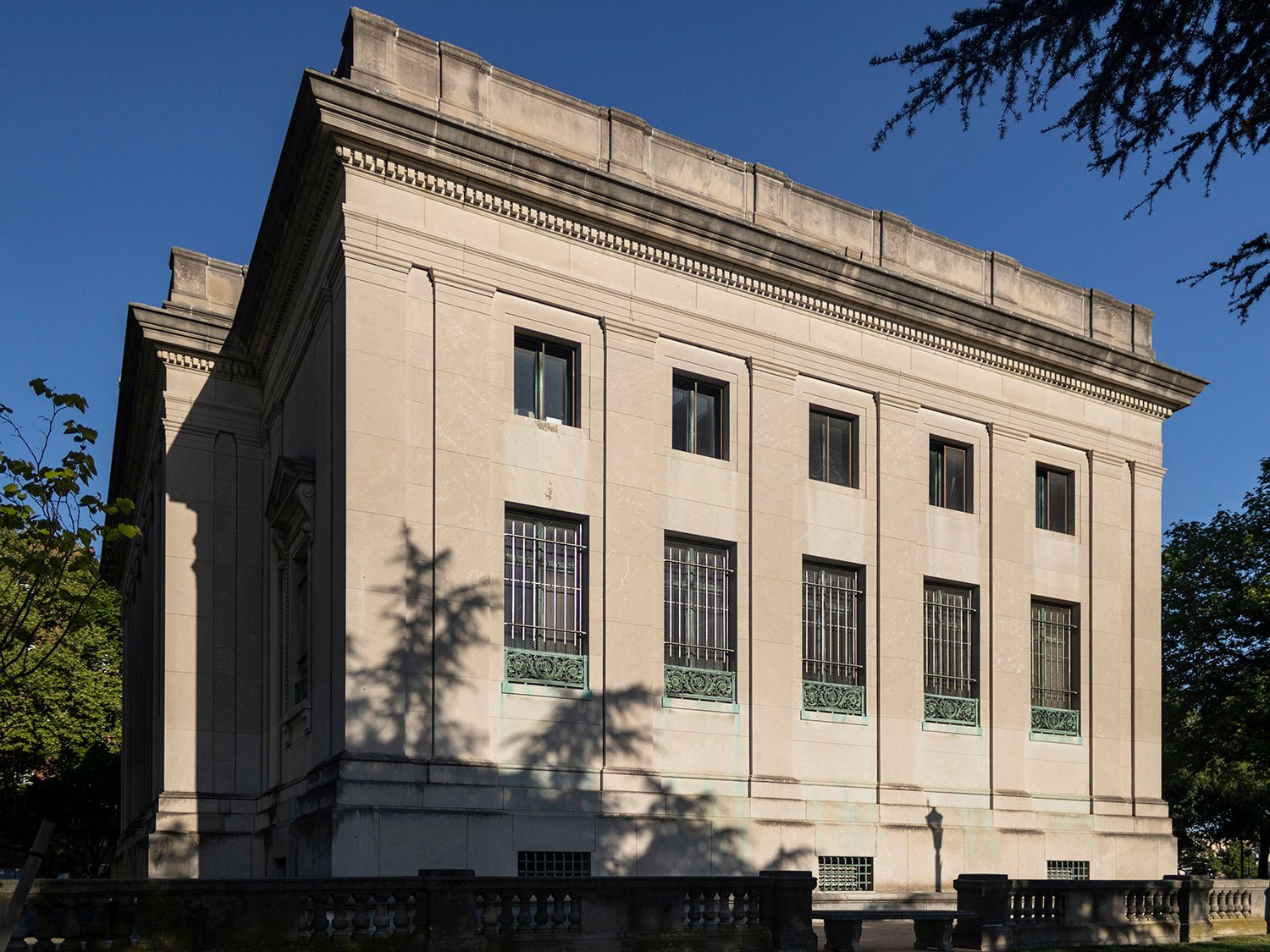
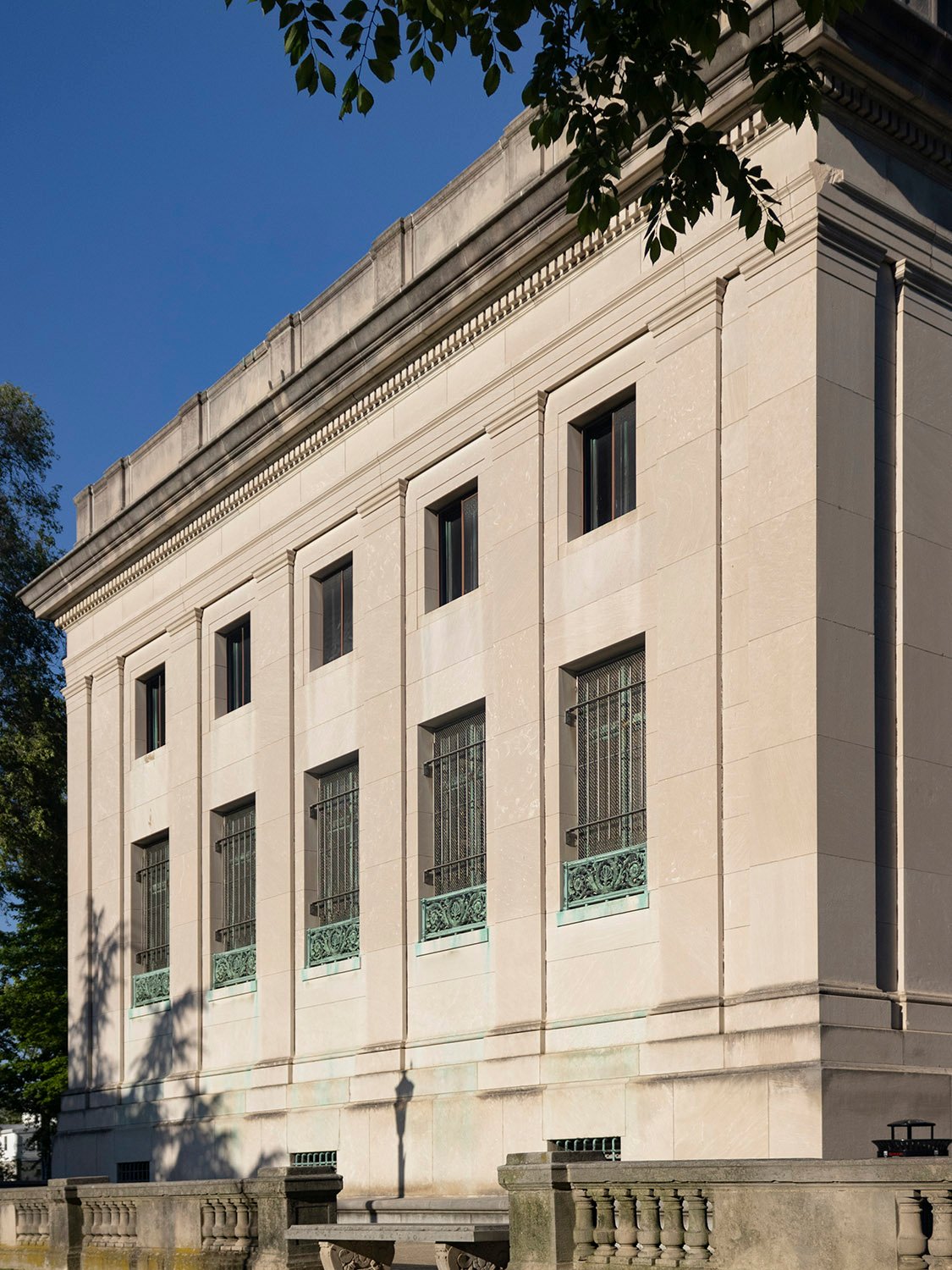
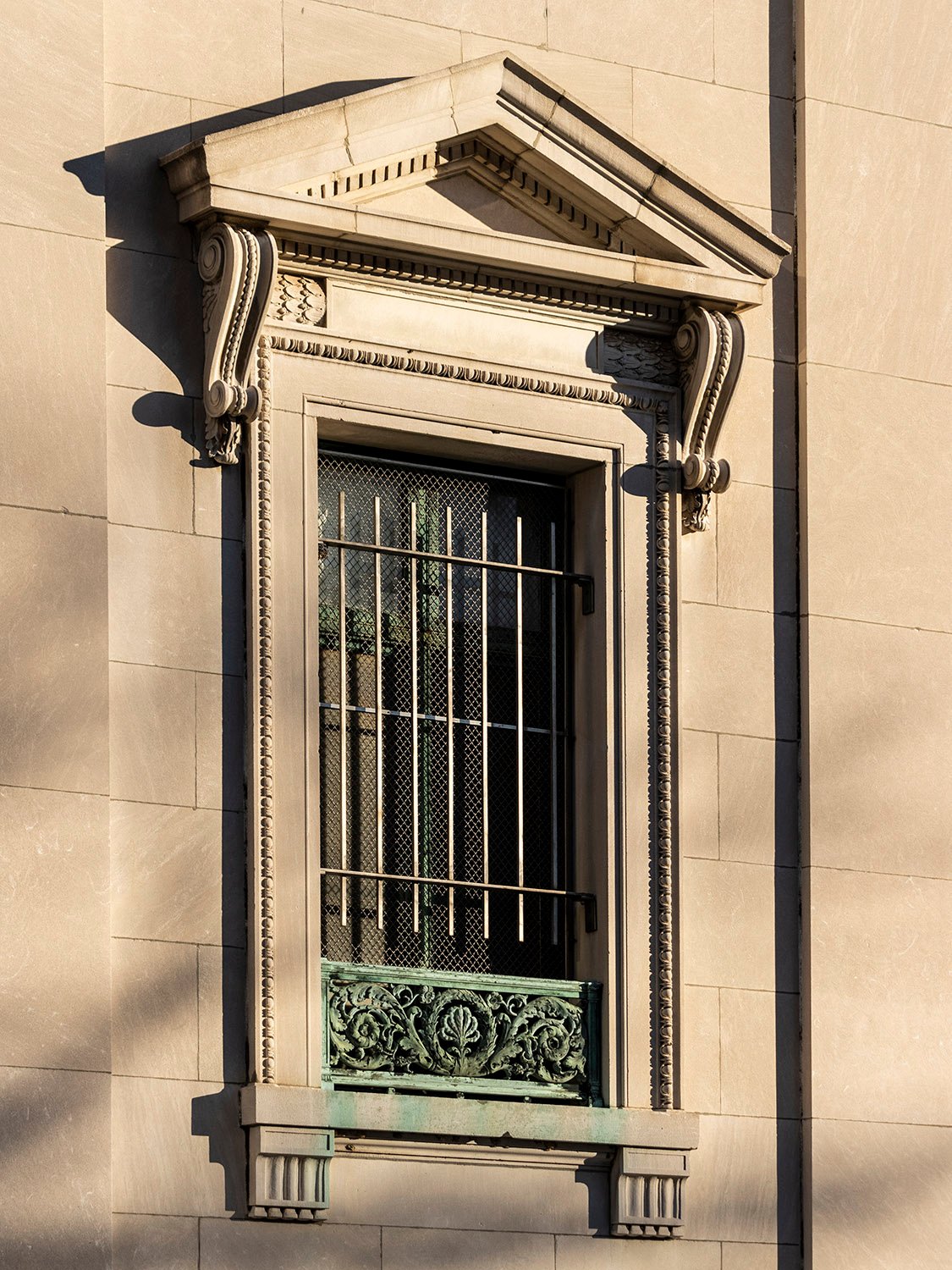
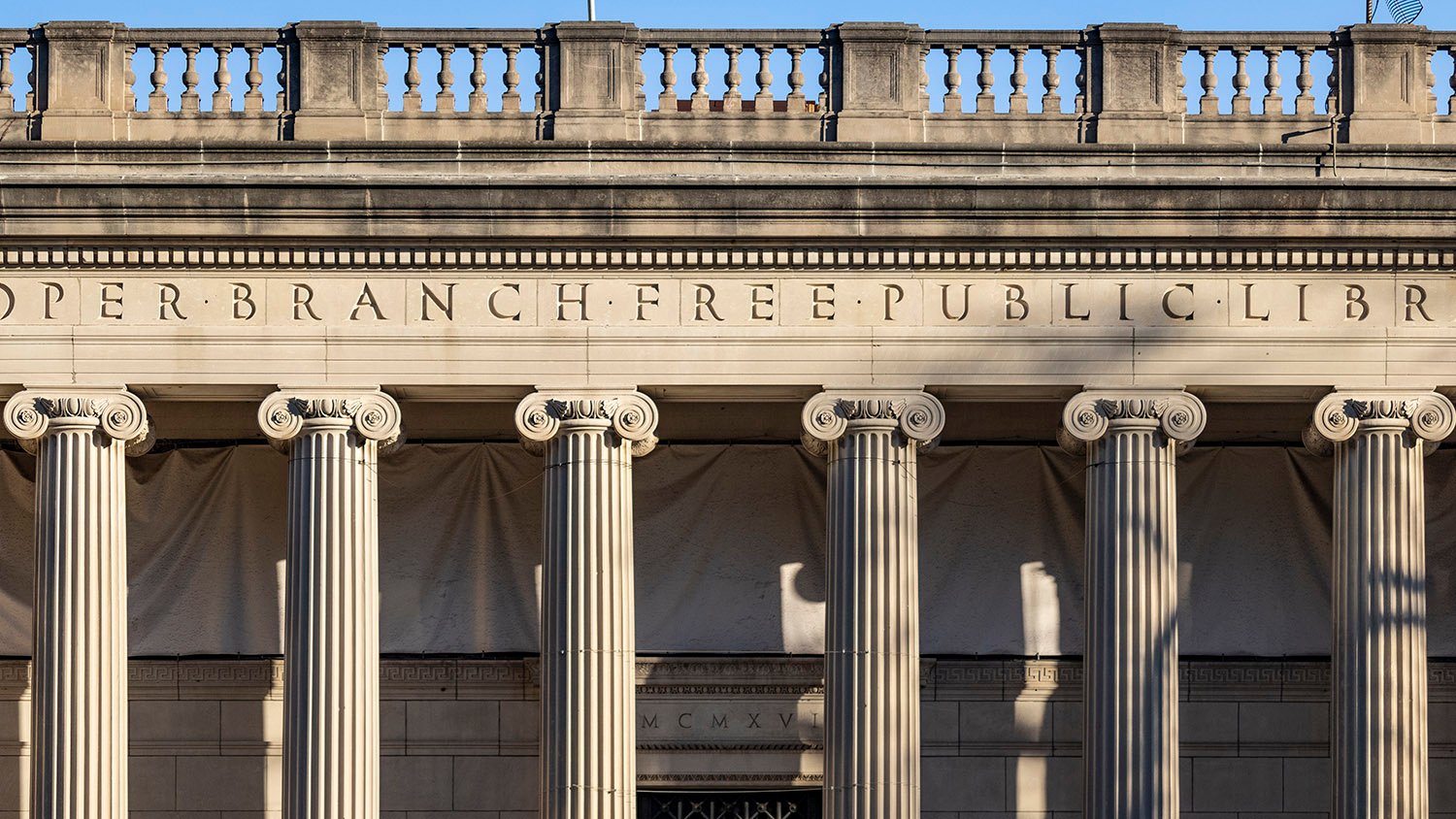
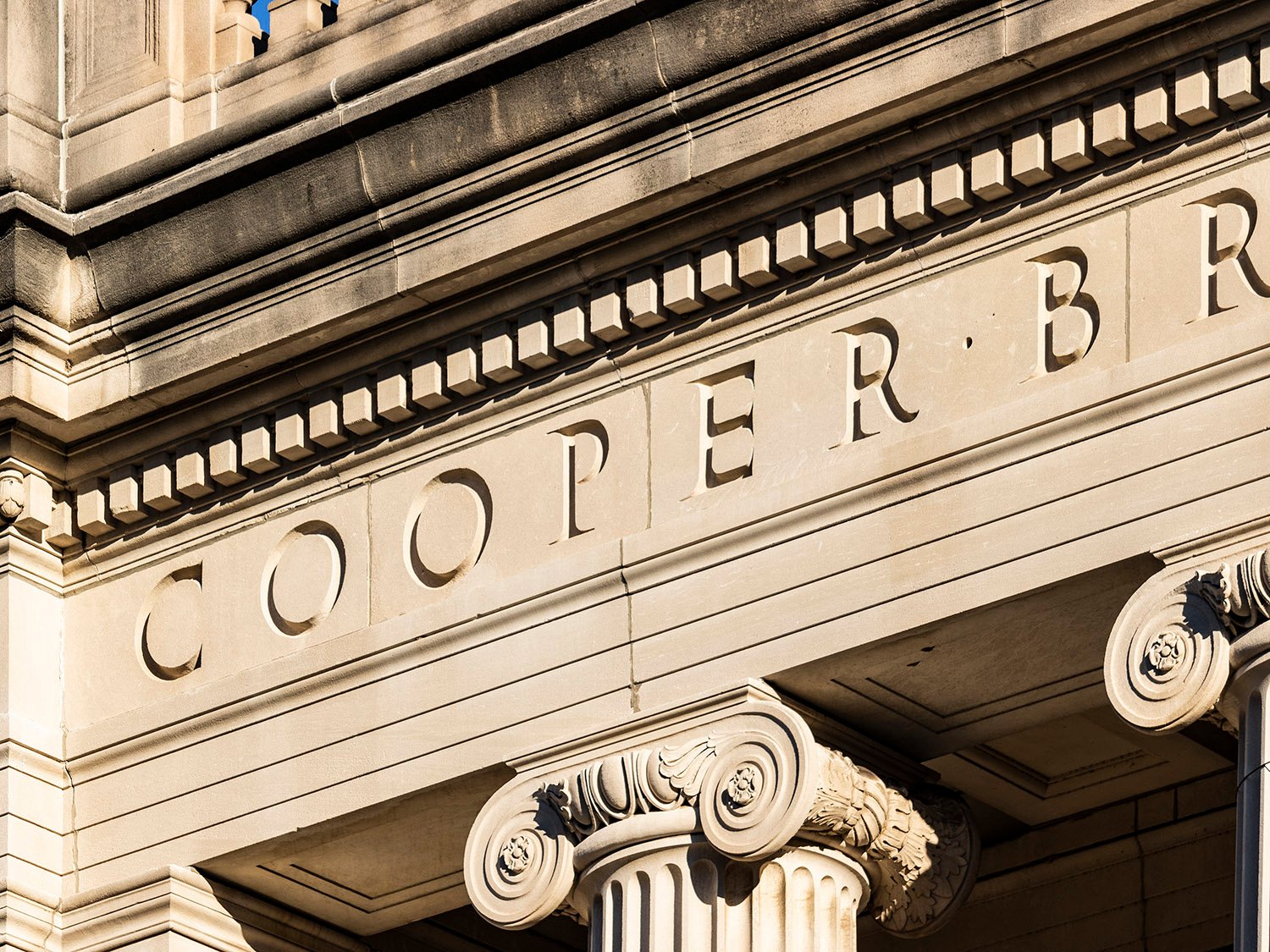
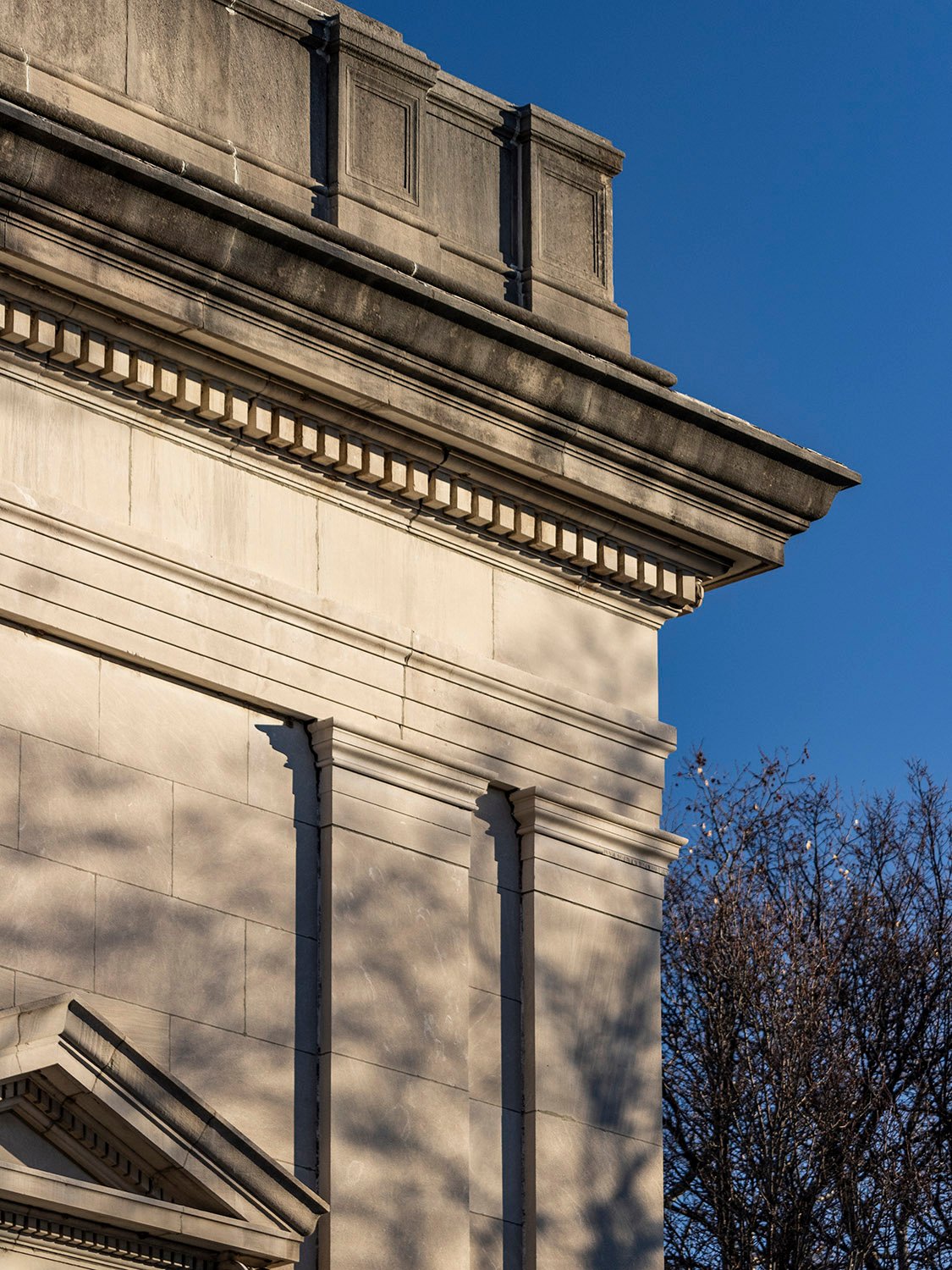
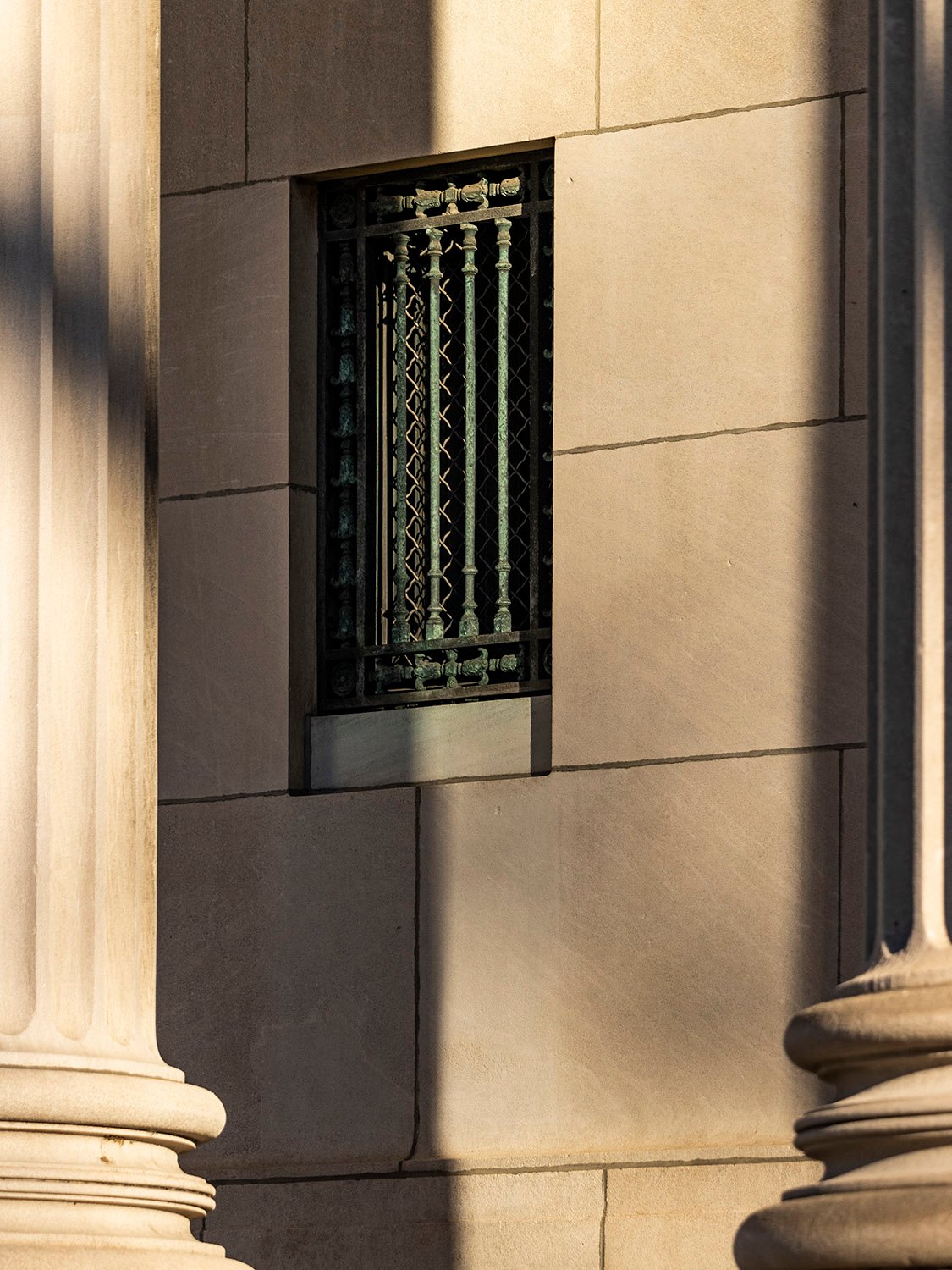
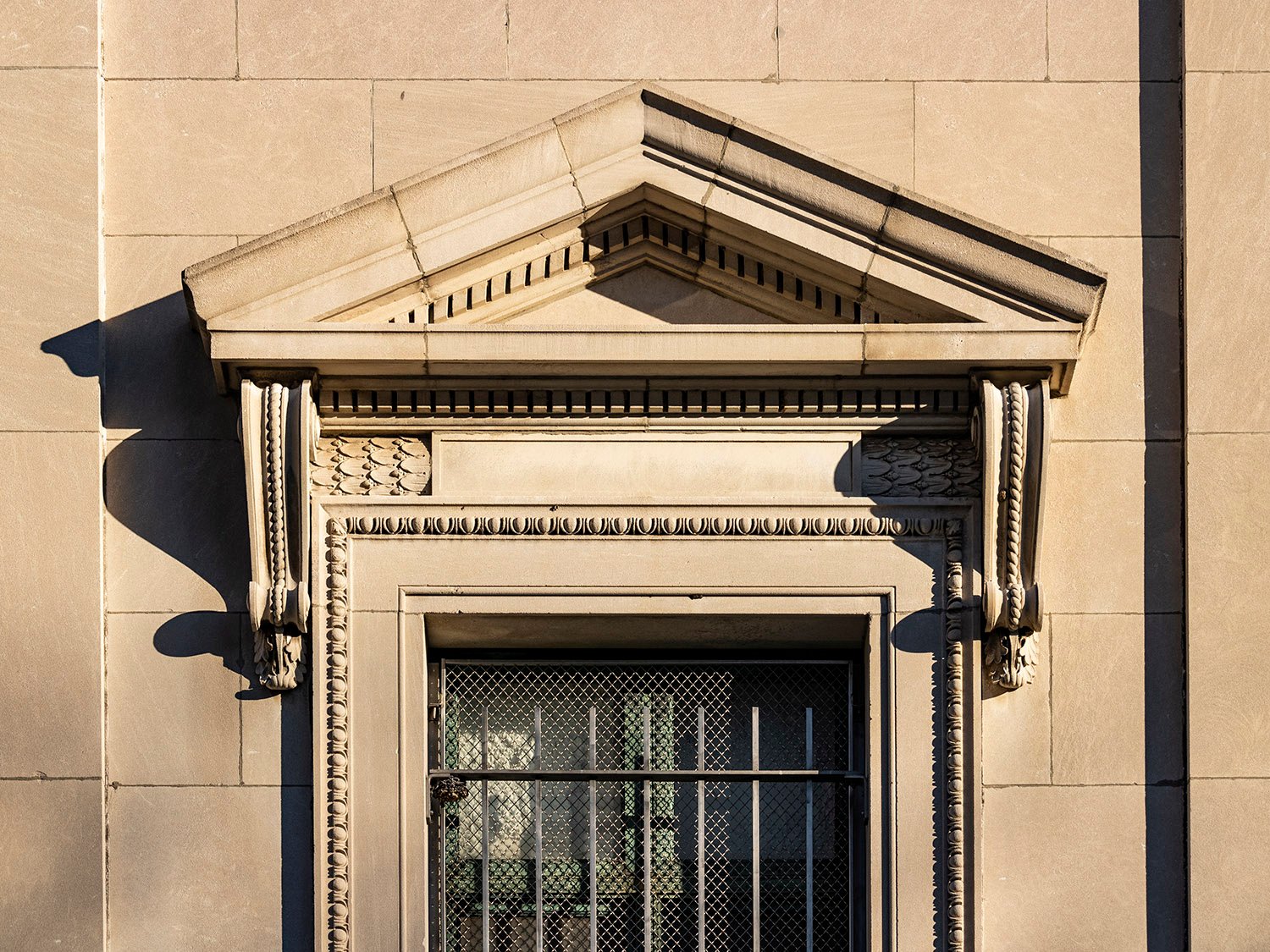
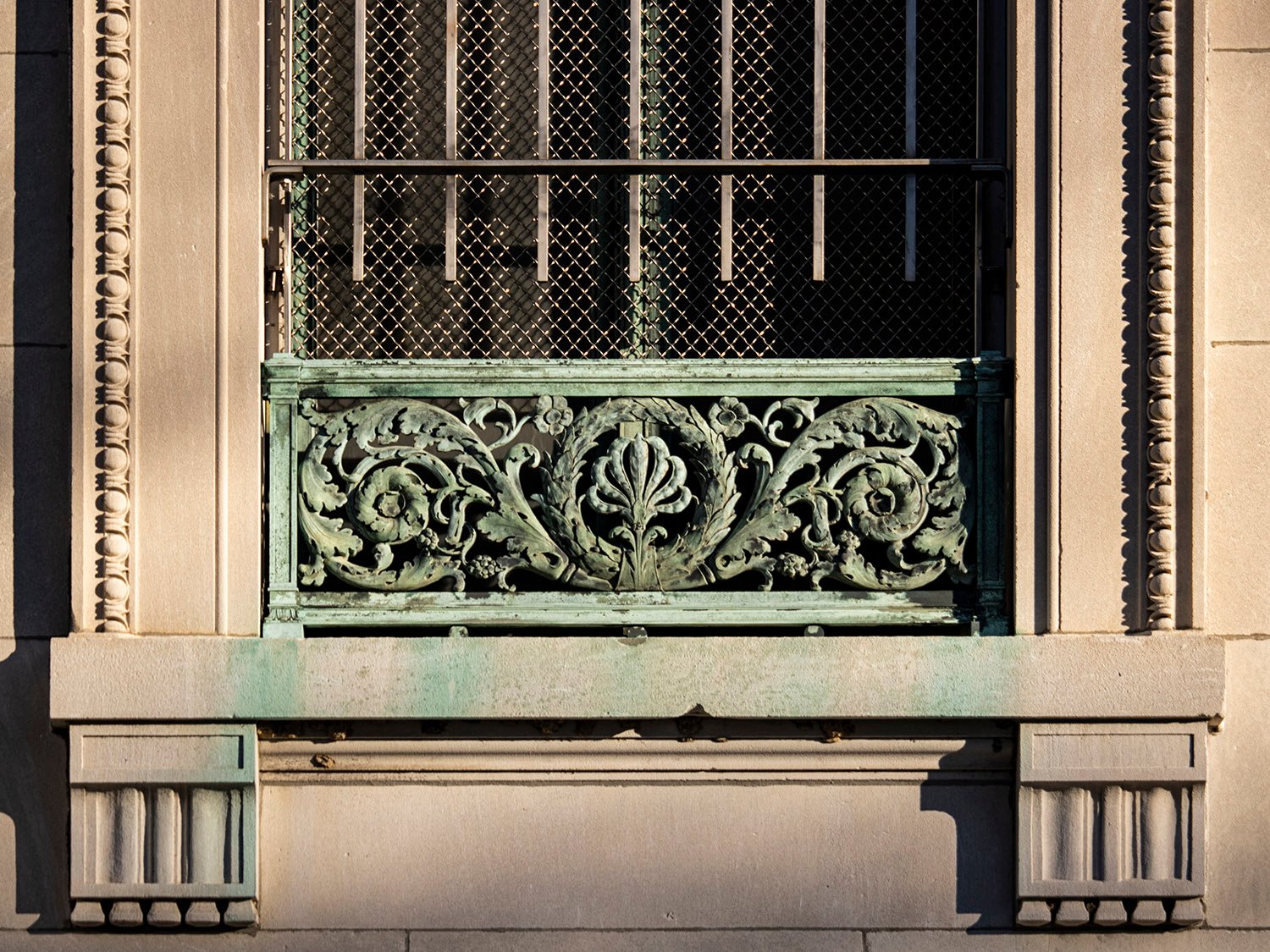
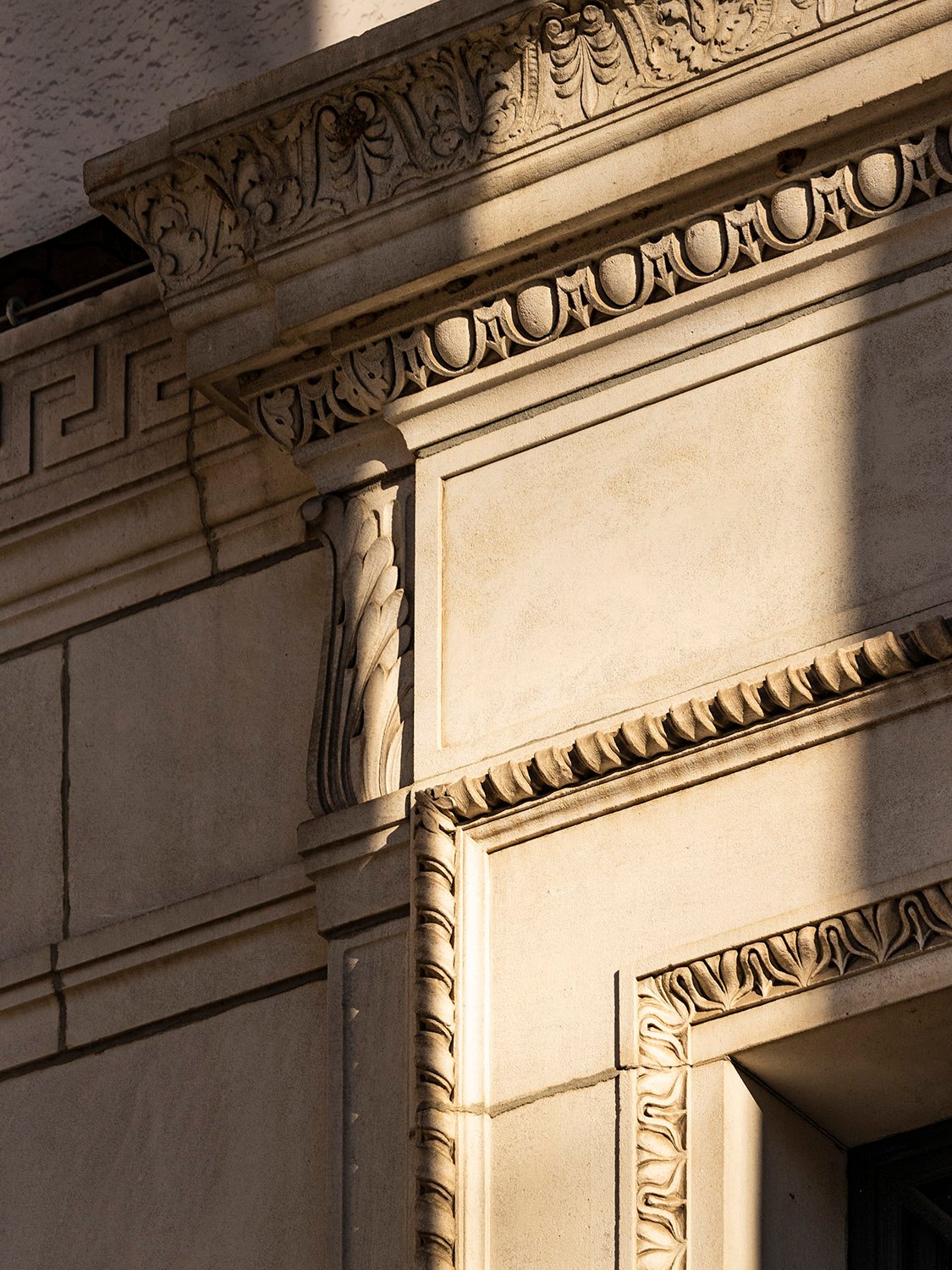
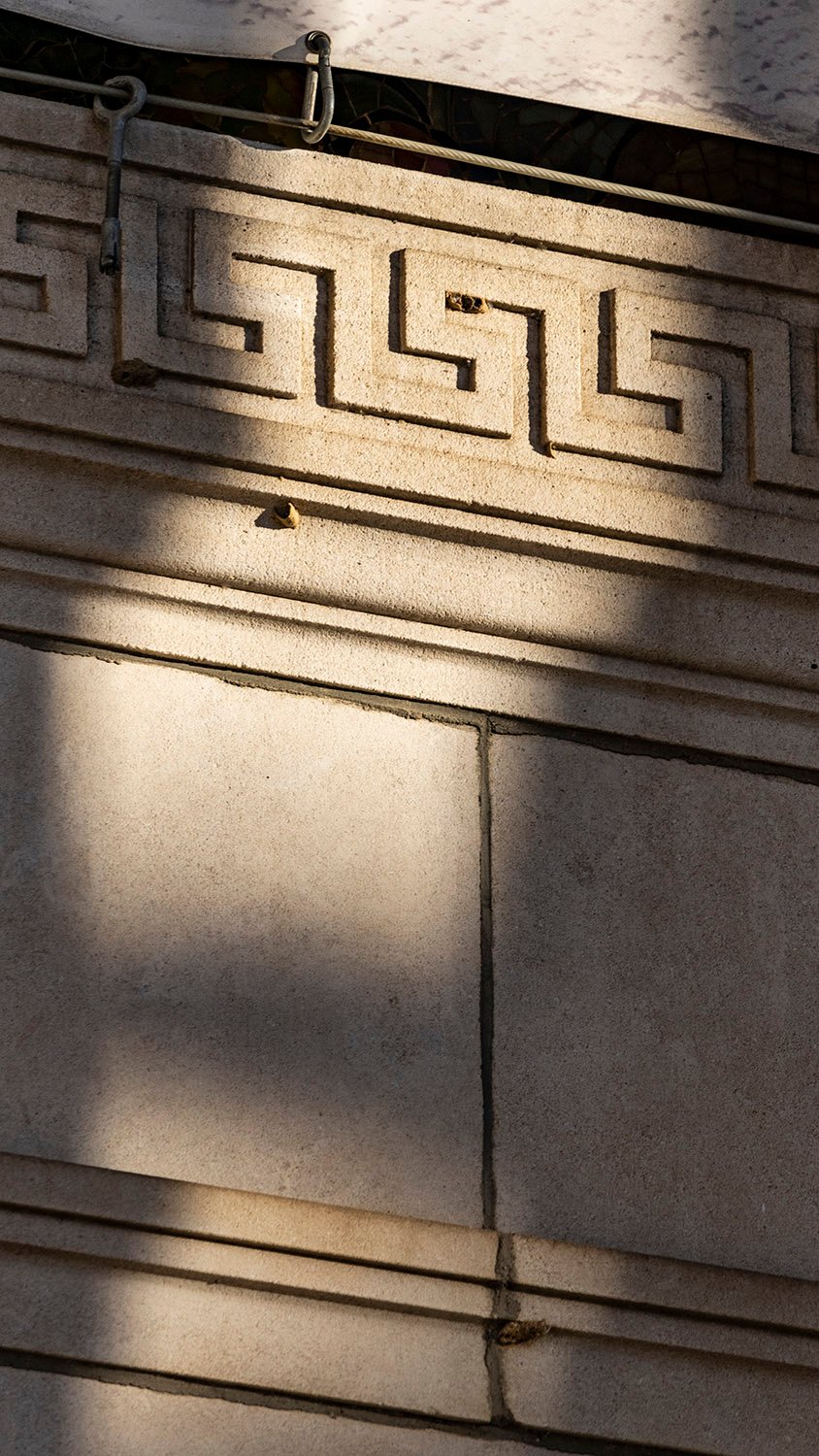
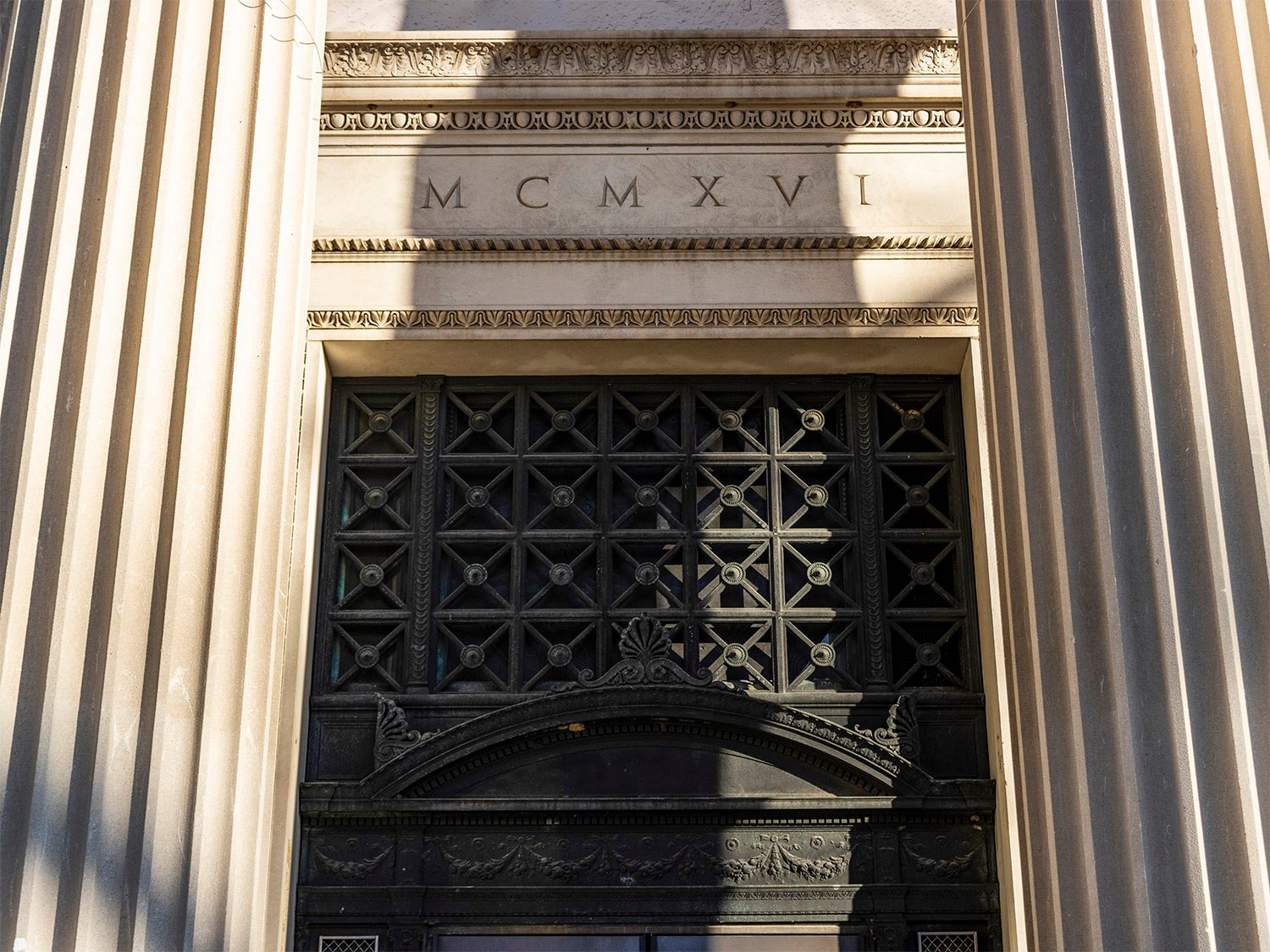
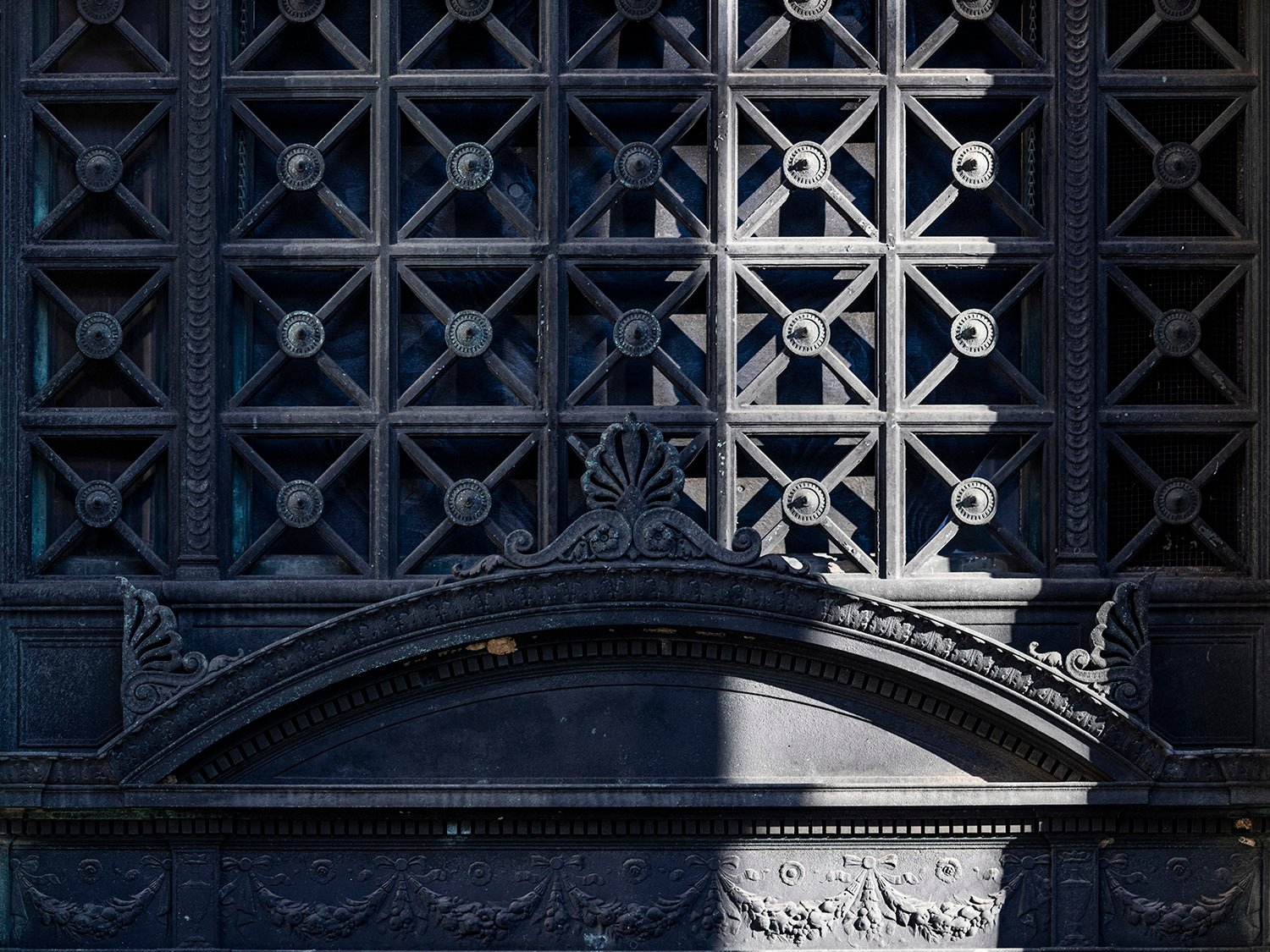
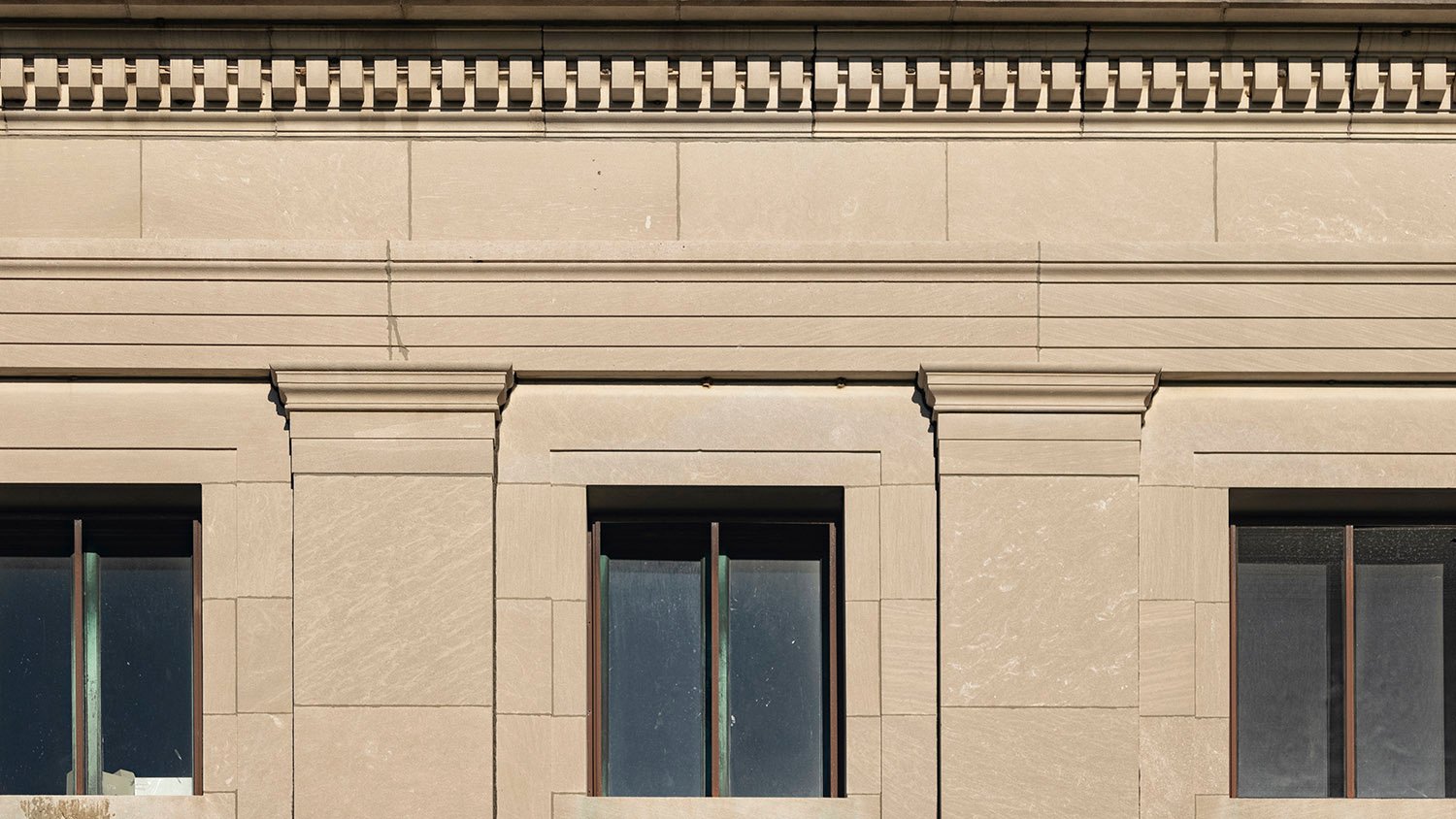
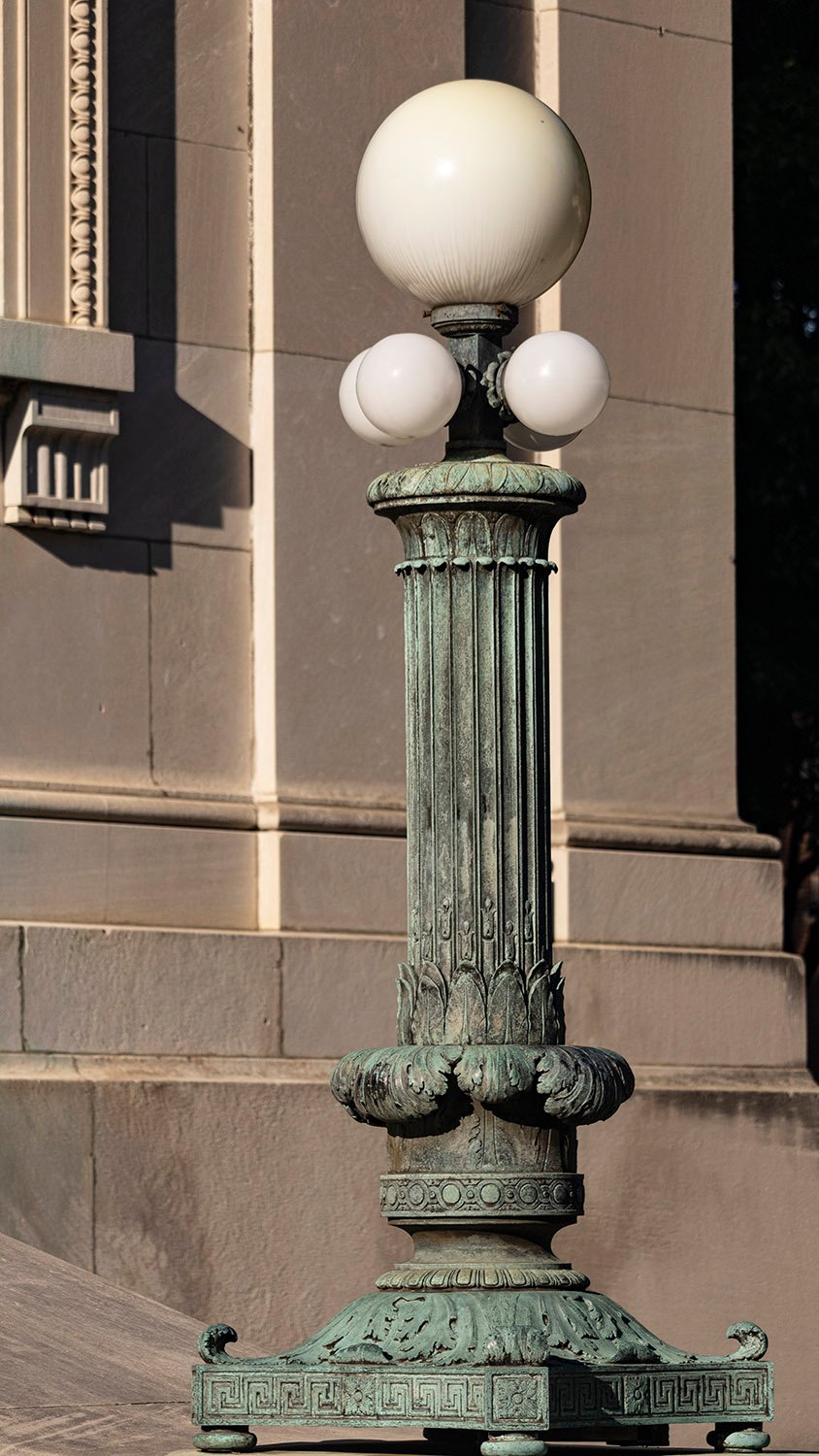
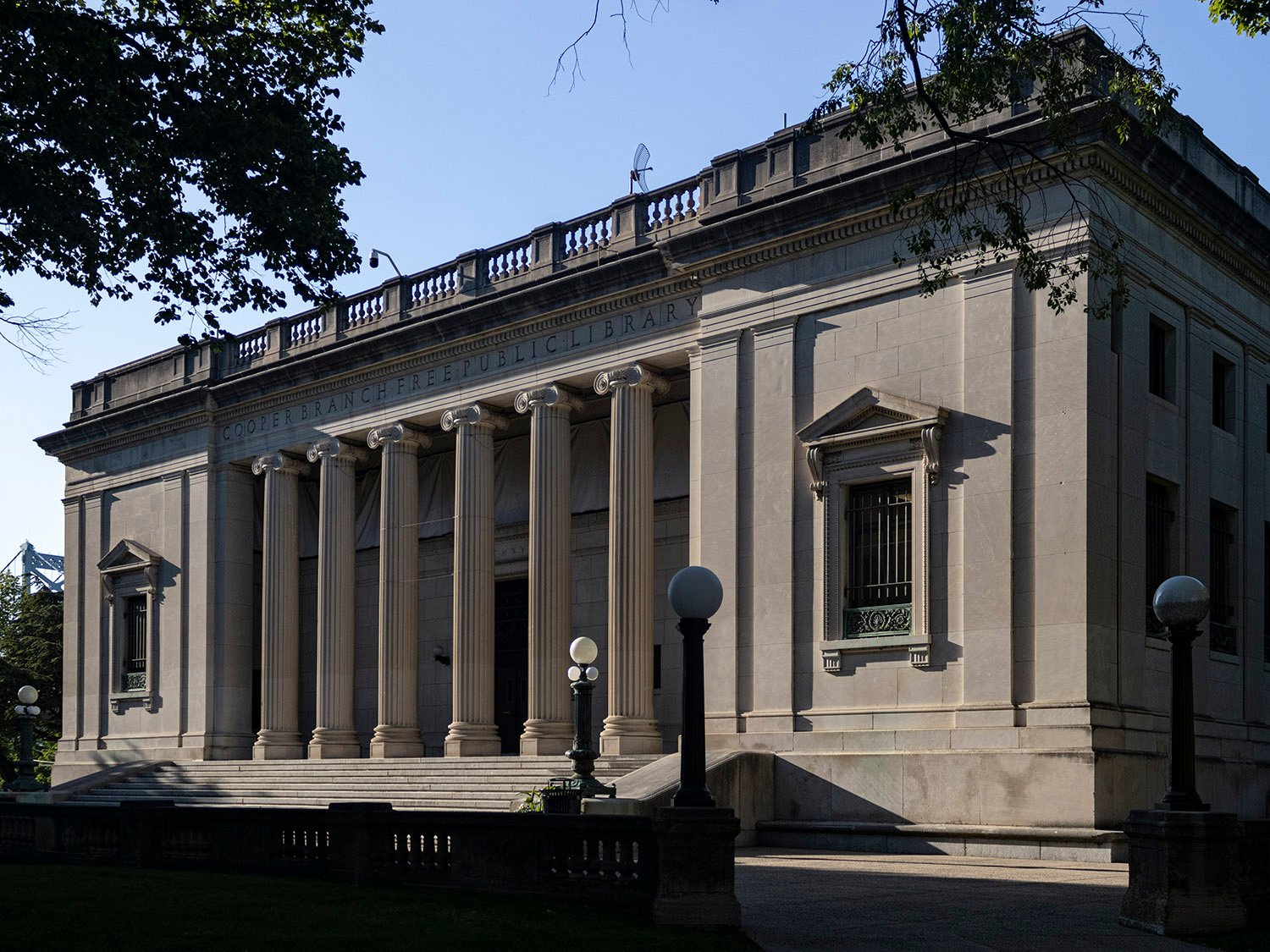
Karcher & Smith. Cooper Branch Free Public Library (1918). Camden, New Jersey.12West elevation of the Cooper Branch Free Public Library, Camden, New JerseyWest elevation of the Cooper Branch Free Public Library, Camden, New JerseyWindow on the facade of the Cooper Branch Free Public Library, Camden, New JerseyBalustrade, inscription, and columns on the facade of the Cooper Branch Free Public Library, Camden, New JerseyCornice, inscription, and Ionic capitals on the Cooper Branch Free Public Library, Camden, New JerseyCornice, frieze, and pilasters on the southeast corner of the Cooper Branch Free Public Library, Camden, New JerseyLooking between columns at a window on the facade of the Cooper Branch Free Public Library, Camden, New JerseyPedimented window on the facade of the Cooper Branch Free Public Library, Camden, New Jersey Achitrave, ornamental railing, and triglyphs on a window of the Cooper Branch Free Public Library, Camden, New Jersey Pediment and mouldings on the main entrance of the Cooper Branch Free Public Library, Camden, New JerseyGreek Key moulding on the facade of the Cooper Branch Free Public Library, Camden, New JerseyCornice, frieze, and pilasters on the northwest corner of the Cooper Branch Free Public Library, Camden, New Jersey Pedestal, cornice, frieze, and pilasters on the north elevation of the Cooper Branch Free Public Library, Camden, New Jersey Date inscription, ornamental iron, and pediment above the main entrance of the Cooper Branch Free Public Library, Camden, New JerseyOrnamental iron and pediment above the main entrance of the Cooper Branch Free Public Library, Camden, New JerseySecond-floor window on the west elevation of the Cooper Branch Free Public Library, Camden, New JerseyBase of a column on the facade of the Cooper Branch Free Public Library, Camden, New JerseyLight and pedestal at the entrance of the Cooper Branch Free Public Library, Camden, New JerseyLooking at the Cooper Branch Free Public Library from the southeast
References
“Beautiful Design For New Library”. Camden Post-Telegram (Camden, New Jersey), April 20, 1916, p. 1. ↩︎
“North Camden News”. Camden Post-Telegram (Camden, New Jersey), March 23, 1918, p. 9. ↩︎
Continuing the apocalyptic theme established in his previous article about G.L. Norrman, in May 1899, Wallace Putnam Reed of The Atlanta Constitution wrote the following article entitled “A Scientist’s Dream and Its Terrors”.
In the story, Norrman and a friend—undoubtedly Reed himself—discussed the potential cataclysmic effects of an earthquake in the Isthmus of Panama. The conversation was spurred by Norrman’s interest in the 1692 Jamaica earthquake, as he was said to “devote considerable attention to such exceptional freaks of nature”.
Norrman then went to sleep and experienced what he described as “the worst dream I ever had”, picturing his own slow, agonizing death—a curious foreshadowing of his actual death by suicide 10 years later.
The story was published by several other newspapers throughout the United States.
A Scientist’s Dreams and Its Terrors
Some time ago Mr. Godfrey L. Norrman read a thrilling account of the great earthquake which destroyed the old city of Port Royal in the West Indies.
The narrative interested him, and he could not dismiss it from his mind.
His fondness for scientific studies had caused him to devote considerable attention to such exceptional freaks of nature, and the story of the Port Royal disaster led him to speculate upon the possibilities of similar calamities in future.
One evening the matter came up while he was conversing with a friend who took a deep interest in such subjects, and in the course of their talk some startling theories and suggestions were discussed.
“What would be the result if an earthquake should up tear up the Isthmus of Panama?” asked Mr. Norrman’s friend.
“It would be far-reaching in its effects,’ was the reply, ‘and it would doubtless make the region we live in uninhabitable.”
“You are right,” said the other. “I have studied the matter for years, and I have formed some very positive opinions about it. The great earthquakes of the past in the tropics may be repeated. Possibly they will occur in new localities, and on a gigantic scale. the Panama isthmus is only about fifty miles wide. Now, it would be easy for a big earthquake to tear a chasm several miles wide through that narrow strip of land.”
“Just so,” assented Mr. Norrman.
“Very well,” continued the prophet of evil. “It is understood that the Pacific is perhaps fully two inches lower than the Atlantic. You know what would happen.”
“Yes,” answered the interested listener, “the gulf stream would change its course.”
“Change is no name for it,” said the talker. “The gulf stream would rush with fearful velocity through the chasm into the Pacific and where would we be?”
“Buried under mountains of snow and ice,” replied the other.
“No doubt about that,” said the man who was predicting future horrors. “The loss of the gulf stream would suddenly change our climate. The gulf would freeze into a solid mass of ice. Florida would be covered with snow-clad glaciers, and Georgia would be bleak and cold as Alaska. The change would kill almost every living thing, but after some years this frozen territory would have a suitable animal and vegetable life. Polar bears would be numerous and perhaps tribes of hardy people like the Eskimos would live here. Other quarters of the globe would send exploring expeditions in this direction, and new Pearys and Andrees would try to discover traces of our buried civilization.”
“Do you really believe all of this?” asked Mr. Norrman.
“Yes, don’t you?”
“Some of it—I hardly know to what extent,” was the response, “but I am inclined to agree with you that such a convulsion as you suggest would suddenly revolutionize our climate and make it impossible for us to live here. The diversion of the gulf stream would probably give us conditions similar to those of the arctic region.”
There was more talk on the same line, and at a late hour Mr. Norrman went to bed with his head full of some very sensational theories, facts and predictions.
Naturally, he had a dream, and it goes without saying that it was a holy terror. He was ripe for it—in the very state of mind for a nightmare.
At first the dreamer found it very pleasant. He was on one of the islands near the Florida peninsula, and the glories of that flowery land and the summer sea dazzled and delighted him.
Suddenly he staggered and came near falling. He felt dizzy and sick. The waves began rolling mountain high, and the island seemed to be rocking.
What was the matter?
A telegraph operator rushed out of his office and shouted to a group of tourists:
“An earthquake has torn the isthmus of Panama wide open from sea to sea!”
The tourists hurried away to carry the news to their families.
Mr. Norrman was left alone on the beach.
He had been watching numerous ships at a distance as they moved slowly over the waters.
All at once their speed increased. They began to move rapidly, and in a short time they darted by in the direction of the Isthmus, so quickly that the spectator wondered how those on board could breathe. The vessels seemed to fly like arrows.
The stiff breeze, growing stronger very moment, was getting colder.
The solitary watcher on the beach felt too weak to walk to in a place of shelter, and he was glad to sit down where a huge rock shielded him from the gale.
He remained there some two or three hours. The ships were no longer visible. Great masses of white fog advanced from every quarter, and a heavy snow began falling.
The white fog began freezing, and big masses of ice could be seen in the gulf, circling around the island, while in the distance icebergs loomed up all in their white and awful splendor.
Unable to move, the man by the rock felt that he was rapidly and surely freezing to death. The ground about him was covered with ice and snow. He was chilled to the very narrow, and shivered like an aspen leaf.
No human being ever suffered more than Mr. Norrman during that frightful ordeal. Certain death apparently was his doom, and he gave up all hope. His tortures were so unbearable that he was anxious to die and end his misery. His ears, nose, feet and hands were frozen, and it was impossible for him to crawl.
Yet his mind was abnormally active. He recalled all that he had ever read and heard about the horrors of arctic life, and he felt the keenest curiosity about the extent of the earthquake and its effects upon the south Atlanta and gulf states.
Even in those moments of excruciating pain his thoughts turned to Georgia, and he laughed deliriously when he pictured to himself the astonishment of the promenaders in their spring costumes on Peachtree street when they lost their climate at one fell swoop, and found the snow drifts piling up around them.
But human endurance has its limit.
A tremendous howl exploding from his own throat awoke Mr. Norrman, and leaping from his bed, with chattering teeth and shaking limbs, he made a rush for the grate, and got as close as he possibly could to the fire.
It was a pleasant spring night, but he was nearly frozen, and it took an hour to restore its circulation.
“That was the worst dream I ever had,” said Mr. Norrman, “and it makes me shiver to think of it.“
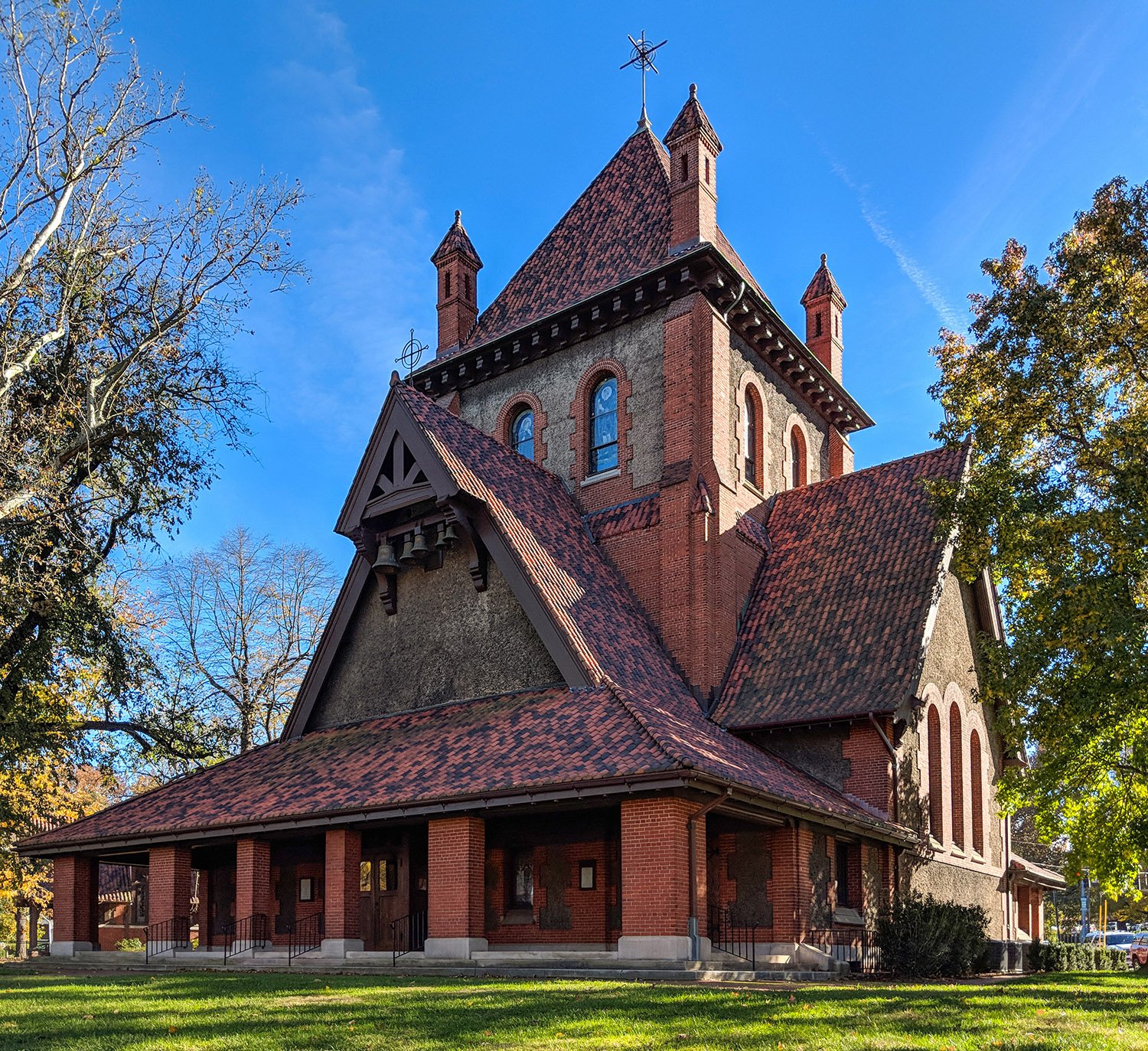
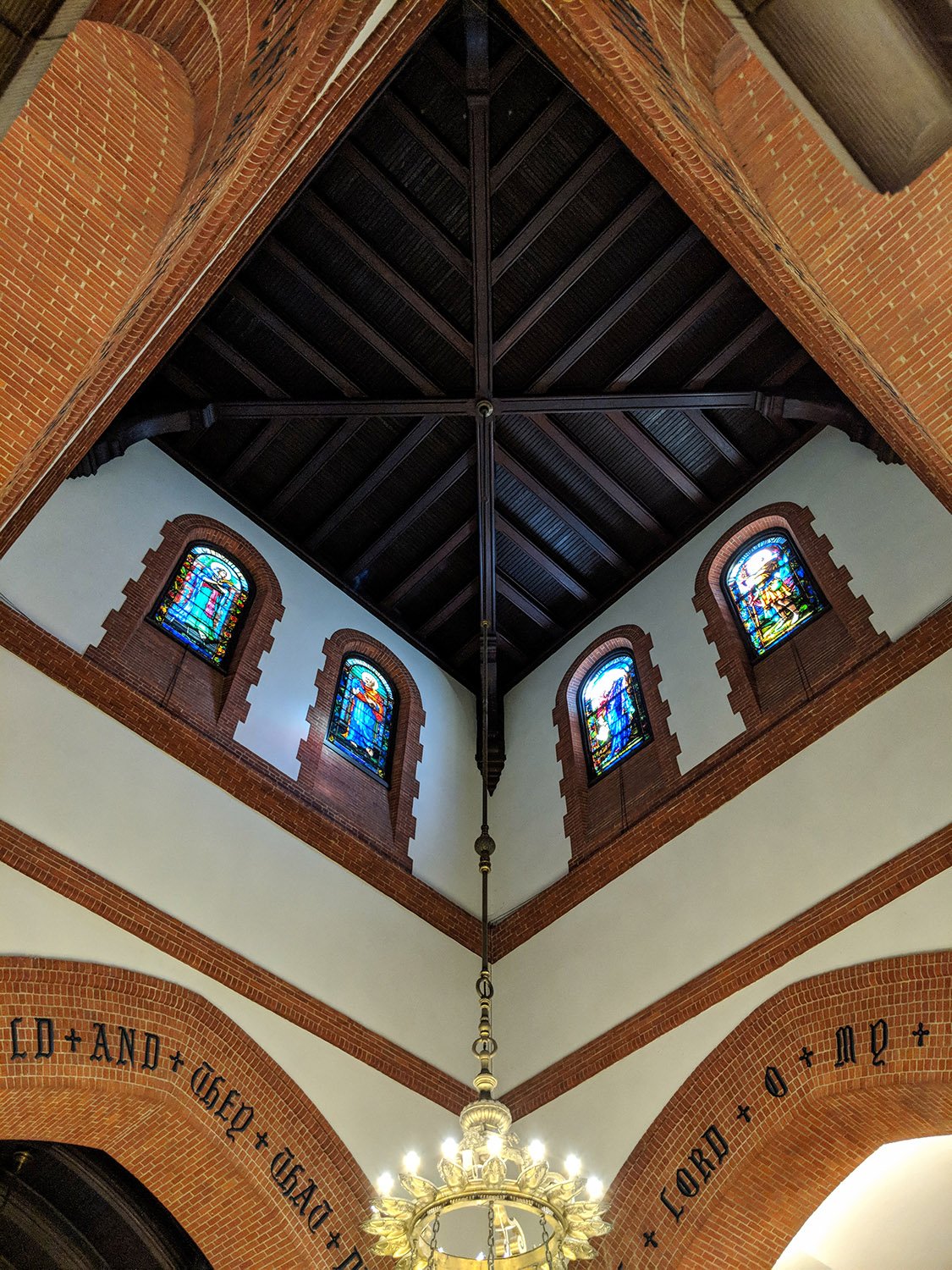
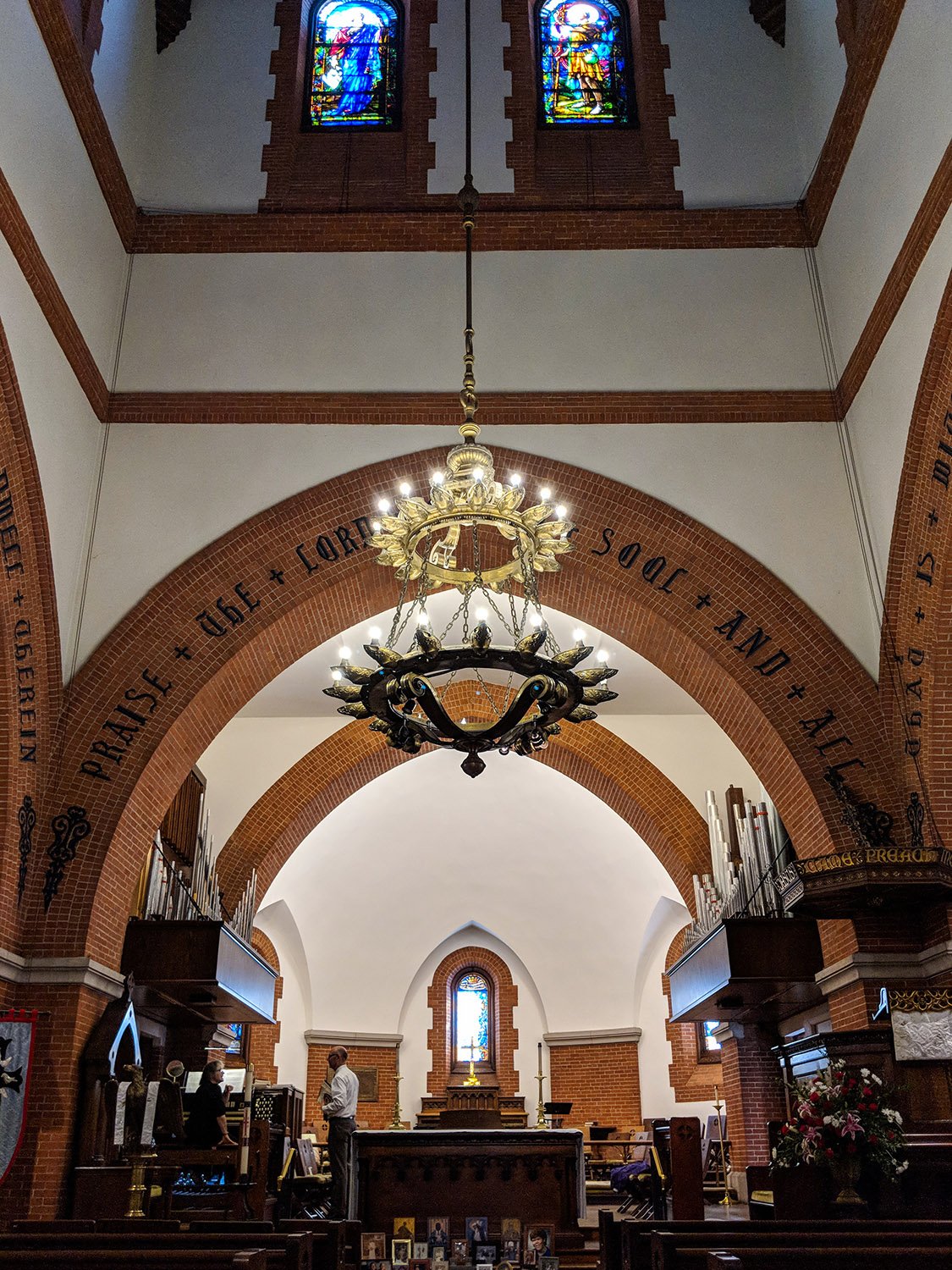
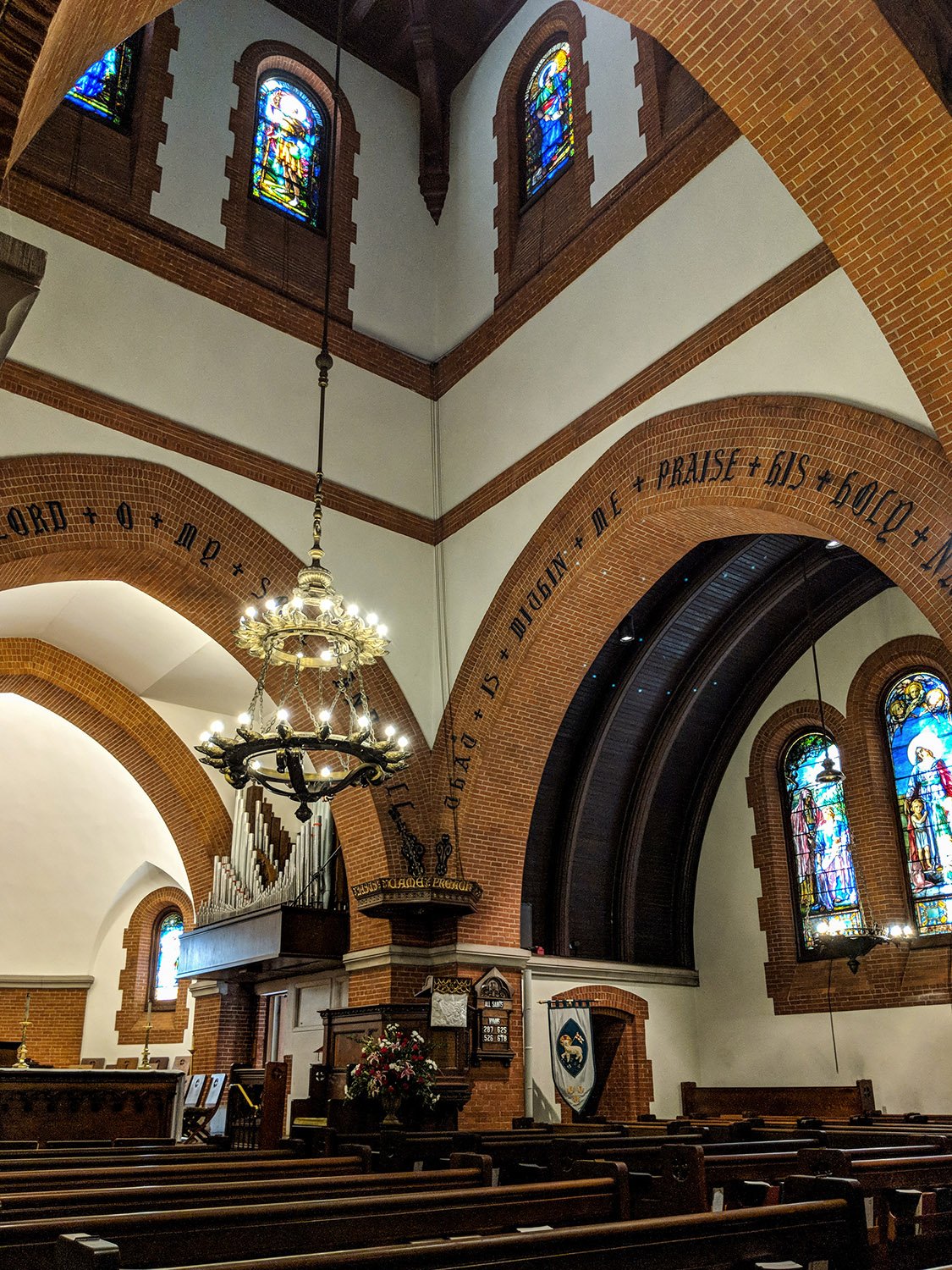
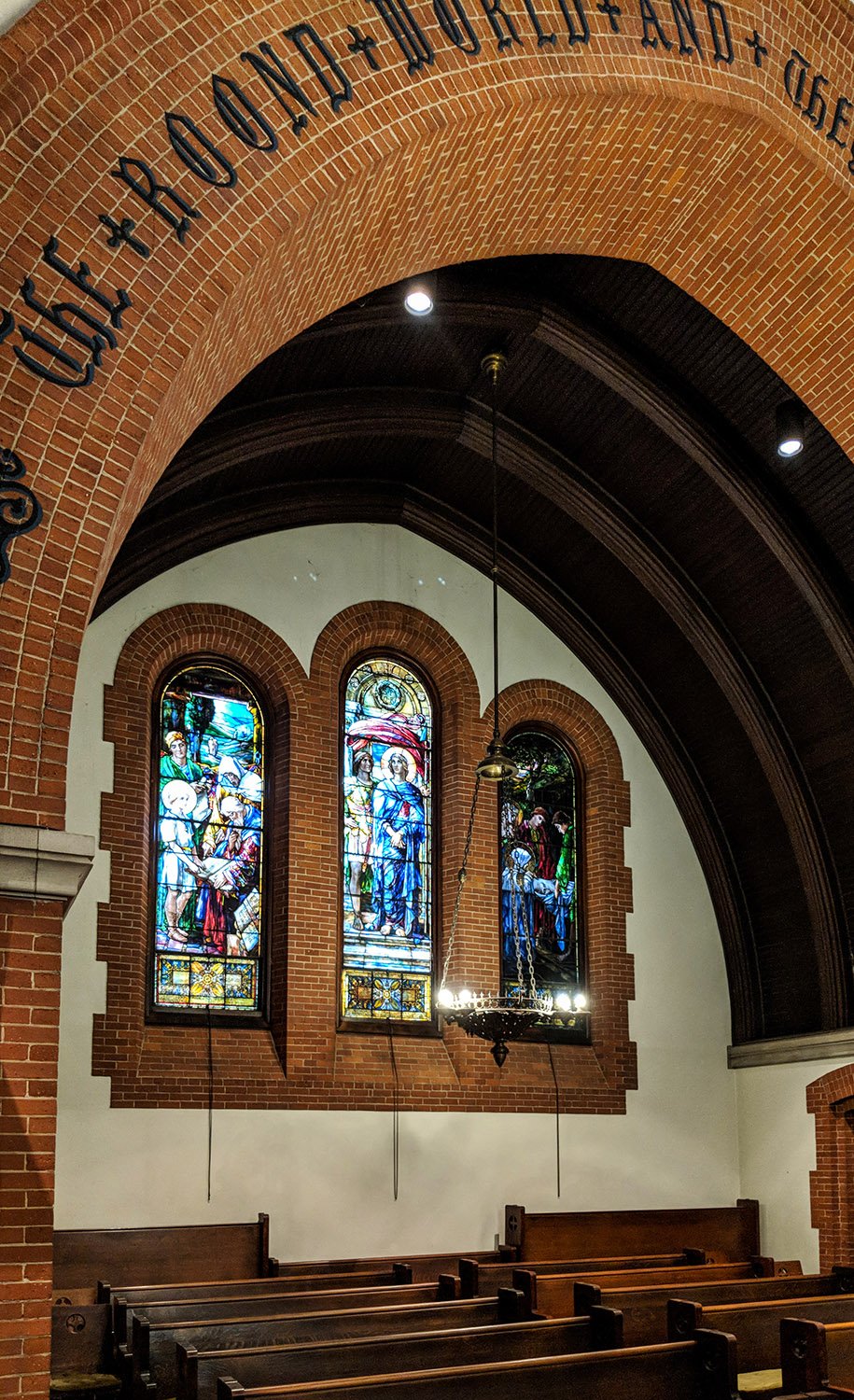
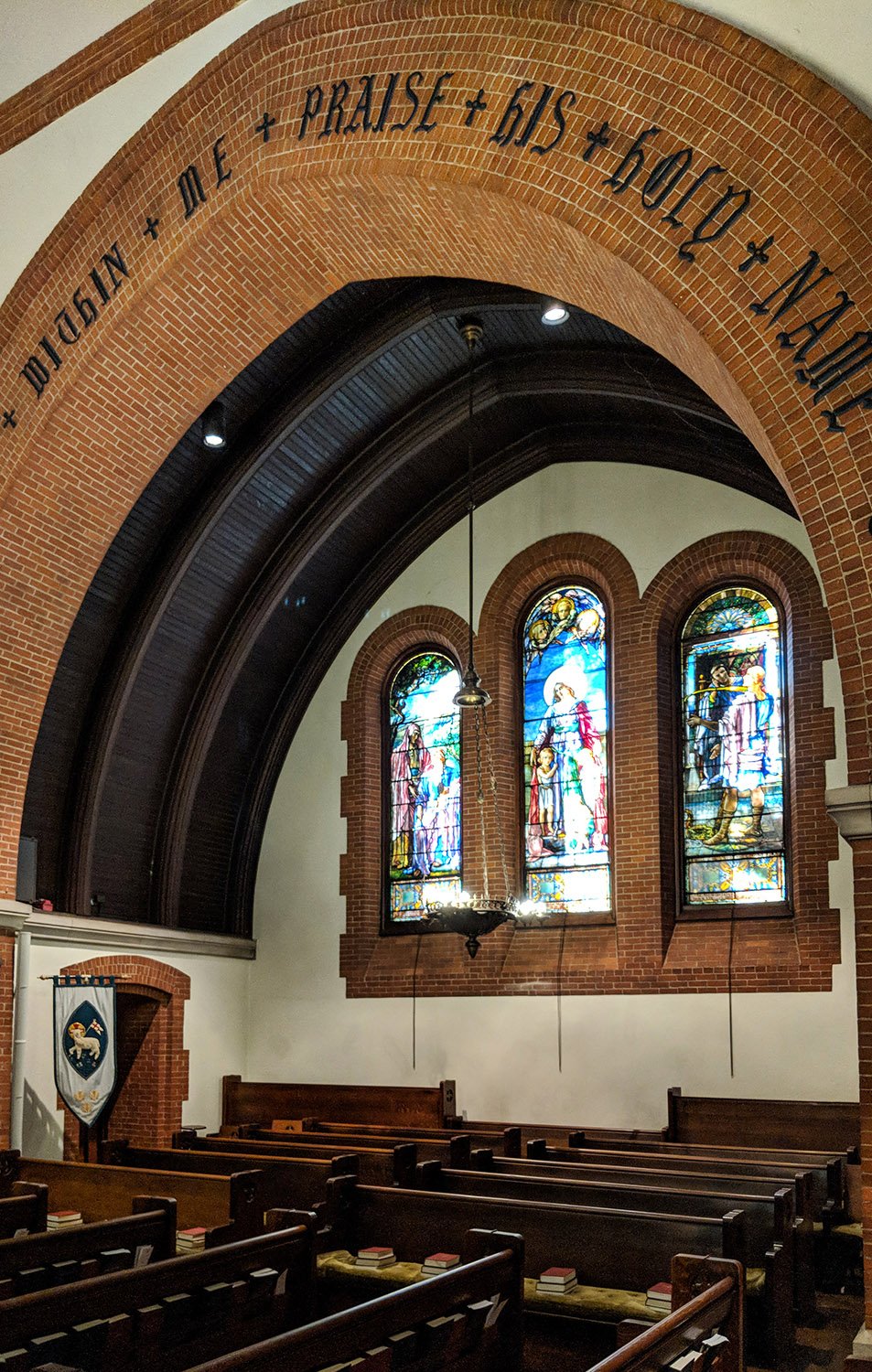
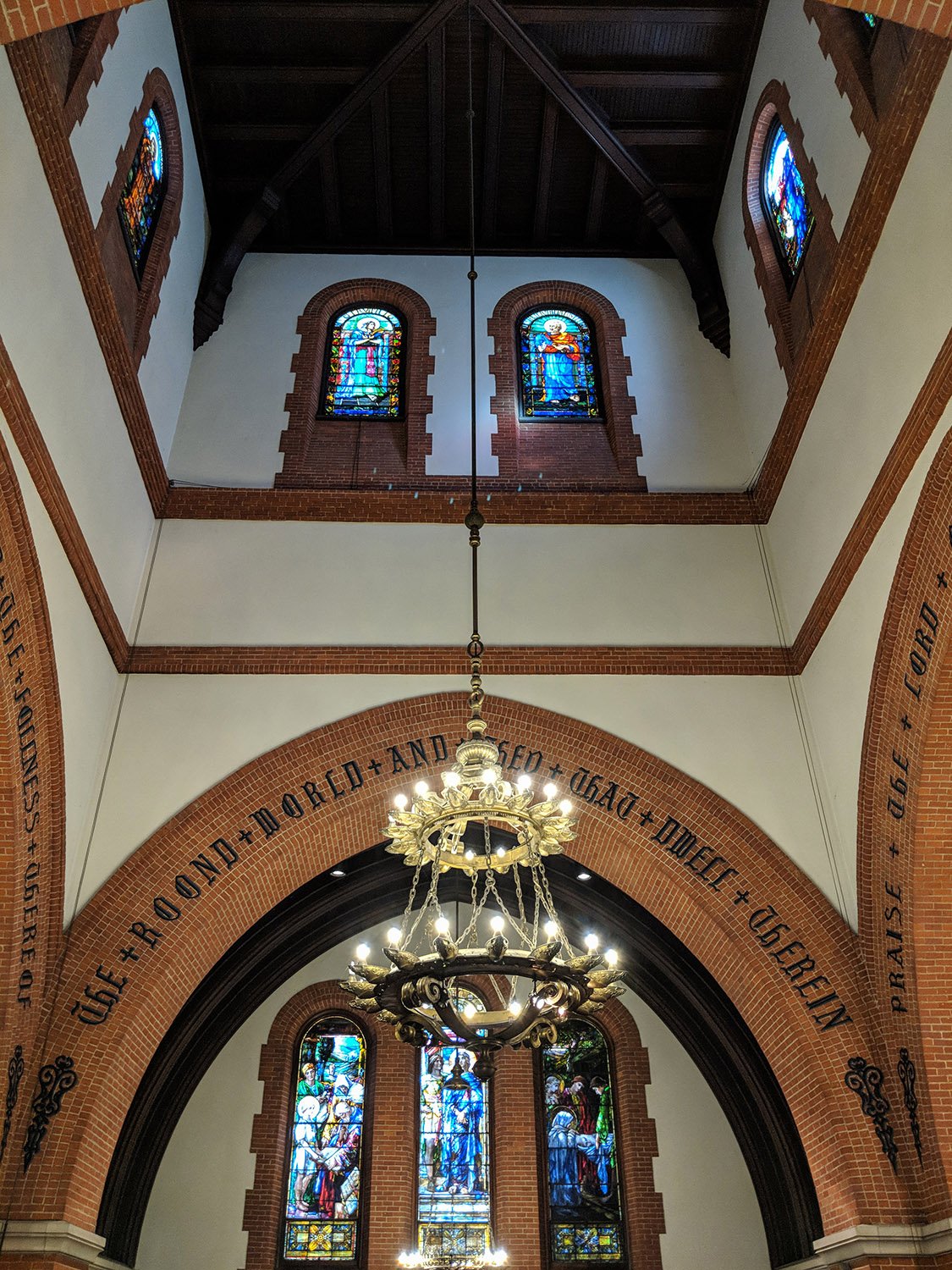
Richard Morris Hunt. TheCathedral of All Souls (1896). Biltmore Village, Asheville, North Carolina.12Looking up in the tower of The Cathedral of All Souls, Asheville, North CarolinaSanctuary of The Cathedral of All Souls, Asheville, North CarolinaSanctuary of The Cathedral of All Souls, Asheville, North CarolinaEast transept of The Cathedral of All Souls, Asheville, North CarolinaWest transept of The Cathedral of All Souls, Asheville, North CarolinaLooking up in the sanctuary of The Cathedral of All Souls, Asheville, North CarolinaA window in The Cathedral of All Souls, Asheville, North Carolina