From the Notebook

  • “Hints on Hygiene” (1893) by W.W. Goodrich

    The Background

    The following article was published in The Atlanta Journal in 1893, and written by W.W. Goodrich, an architect who practiced in Atlanta between 1889 and 1895.

    Like any self-respecting architect, Goodrich considered himself an expert on, well, just about everything. Here, he pontificates on the health and dietary habits of 19th-century Americans in a condescending and frequently offensive diatribe that begins by dismissing vegetarians as “fanatics” while also scolding “the rich” for “the excessive use of meats.”

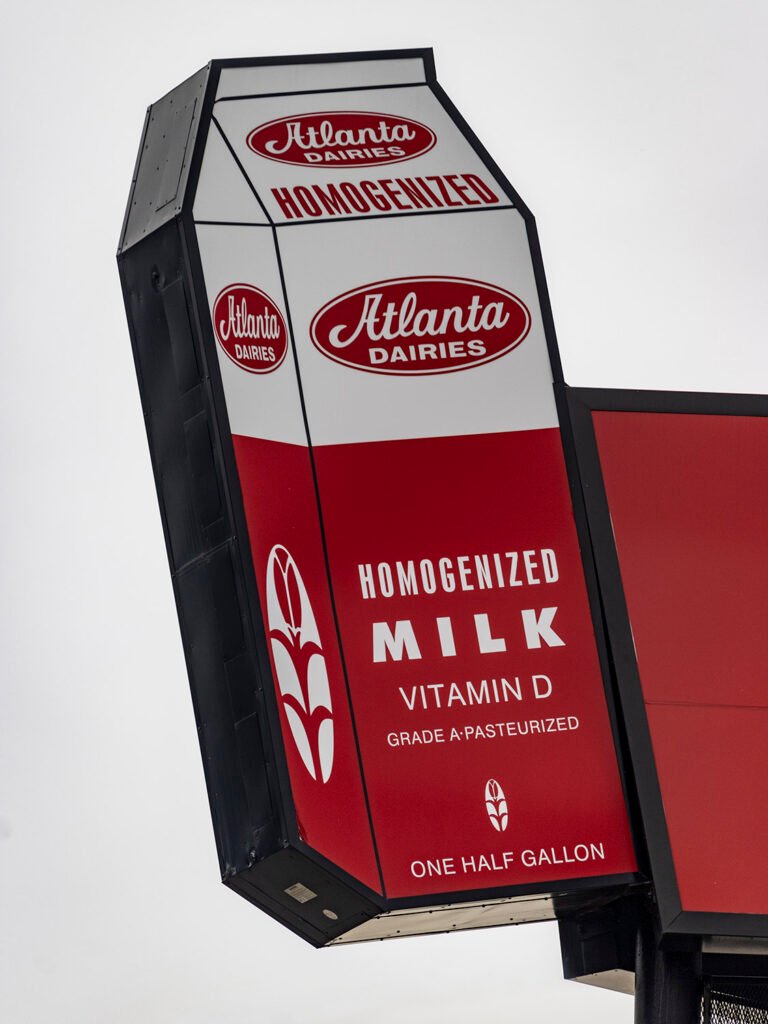
    Sounding every bit like a shill for the dairy industry, Goodrich spends the bulk of the article extolling the alleged benefits of drinking milk, with a string of dubious assertions unsupported by modern science. Everything from fever to liver failure could be cured with a “milk regimen” he explains, as practiced by “certain savage or semi-civilized tribes of pastoral habits.”

    Goodrich made these claims at a time when milk production was unregulated in the United States, and dairy manufacturers regularly tainted their products by dumping in everything from calf brains to formaldehyde, leading to the outbreak of multiple diseases and the poisoning deaths of thousands of Americans — primarily infants. Drink up!

    As Goodrich acknowledges, tuberculosis was frequently transmitted by bacteria found in unboiled milk, a danger well known to the public by the 1890s. Here, he advocates for the pasteurization of milk, a process that was not widely employed in the United States at the time, and would not be legally required until the early 20th century.

    Goodrich’s stated desire in this writing was “to infuse a little hygienic good sense into the average American” who only needed to “observe the laws of temperance.”

    And as for the people of Atlanta? “Nowhere in the world is self-restraint more necessary than in Georgia”, he explains, claiming that the hot and humid climate of the Southeast both “stimulates the appetite” and “render[s] digestion difficult”.

    Why ask a doctor for health advice when you can consult a third-rate architect?


    Hints on Hygiene

    Some Secrets of Good Health for Every Day Use by Everybody.

    Written for the Journal.

    If people knew how to eat and drink properly or were willing to confine themselves to articles of food suited to their digestion, and would just take the amount of exercise necessary to facilitate the digestion, the lives of the greater part of the human race would be indefinitely prolonged.

    There would have to be excepted from this sweeping assertion certain diseases – like those of throat and lungs – that cannot always be avoided, but which nevertheless in many cases can be limited in their ravages by prudence.

    The statement as made is a truism, and has been known to sensible persons since dawn of civilization and the origin of gormands and epicures. Some old Persian writer placed the whole secret of health in the ability to leave off eating before the appetite was entirely satisfied, and the wise men of Greece and Rome never ceased to preach similar truths, both by precept and example. These things they had learned, not from works on hygiene, which did not abound in ancient times, nor from family physicians, who were far from being plentiful as they are now but from simple observation.

    The apostles of a vegetable diet have usually been fanatics, but there has always been a grain of truth in their doctrines, for it is true that the greater part of diseases are caused, especially among the rich, by the excessive use of meats.

    It is only a few years since the nourishing qualities of milk and its hygienic value began to be properly appreciated. Everyone was aware that the young of the human race and of the lower animals using it as their only diet flourished and grew strong alike in bone and muscle.

    It appeared to be easily digested and seemed to contain all the elements that the body seemed to need, at least in the early stages of its growth. Adults – at least those in civilized countries – despised it and would have considered themselves doomed to an early death had they found themselves confined to a milk regimen. The same opinion, has, fortunately, not prevailed among certain savage or semi-civilized tribes of pastoral habits, who have maintained a healthy existence from time immemorial on milk and its products.

    Medical science, aided by chemistry, has for some years past been working a gradual change in these ancient prejudices.

    The chemists have discovered that milk contains all the elements necessary to make blood, bone and muscle. It adapts itself to the most difficult digestion.

    A man can live and enjoy perfect health on milk and its products alone, or his system find in it everything needful – fatty matter, caseine, albumen, and especially phosphate of lime for building up his bony framework. Doctors prescribe it for patient suffering from low fevers.

    If a person finds himself suffering from torpididty of the liver, or a tendency to indigestion let him drink milk freely, say two or three quarts a day, and abstain from meat, and he will almost invariably find himself cured speedily.

    It may be said of certain diseases of the liver and kidneys and of the dyspepsia that they have invariably been brought on by ignorance or disregard of the laws of hygiene, and no one need ever have them unless he is obliged to live in the tropics, or has by chance been so situated that the choice of his diet was beyond his control.

    It has been in all ages of the world been difficult to make any considerable number of human beings observe the laws of temperance in eating and drinking if the means of indulgence were at their disposal.

    It is much more difficult to infuse a little hygienic good sense into the average American of today than into the luxurious Roman in the time of Lucullus, and nowhere in the world is self-restraint more necessary than in Georgia, where the climate constantly stimulates the appetite, while at the same time certain latent qualities of the atmosphere seem to render digestion difficult.

    While milk in its perfect state is capable of such infinite service to the health, it has at the same time an extraordinary facility in transmitting diseases. A great part of that consumed in large cities is from cows kept in stables and fed often on unwholesome food.

    When tuberculosis diseases become too common among these animals the newspapers ventilate the matter and the health officers show a temporary activity, but the evil continues. It is more trying from the fact that diseased milk is largely used as nourishment for young children.

    If the purity of milk is suspected, however, it only needs to be remembered that the noxious germs it contains may be destroyed by boiling. In England, where milk is rarely boiled, there have been occasional local epidemics caused by the use of milk from diseased cows.

    In 1870 an epidemic of typhoid fever at Islington was propagated in this manner. Epidemics of croup and scarlatina have also in England been attributed to the same cause. The nutritive and hygienic qualities of milk and its tendency to transmit disease have for the last ten years been frequent subjects for discussion at the sessions of the Paris Academy of Medicine. The matter is sufficiently practical and important to attract the attention a little oftener of medical associations in America.

    W.W. Goodrich1

    References

    1. Goodrich, W.W. “Hints on Hygiene.” The Atlanta Journal, April 29, 1893, p. 1. ↩︎
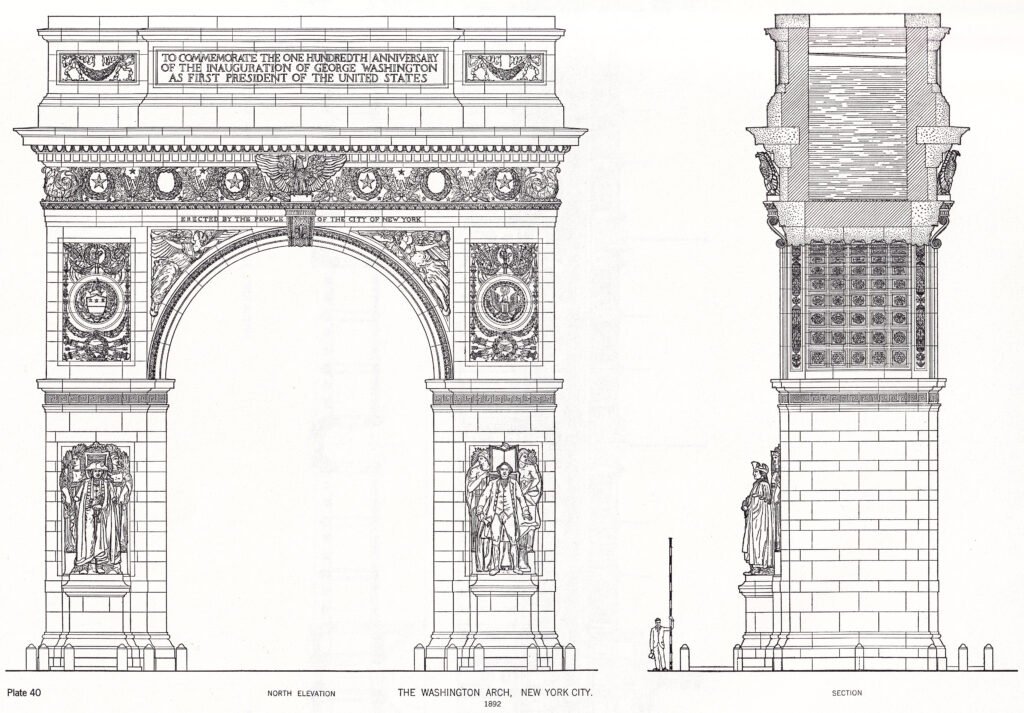
  • Washington Square Arch (1891) – New York

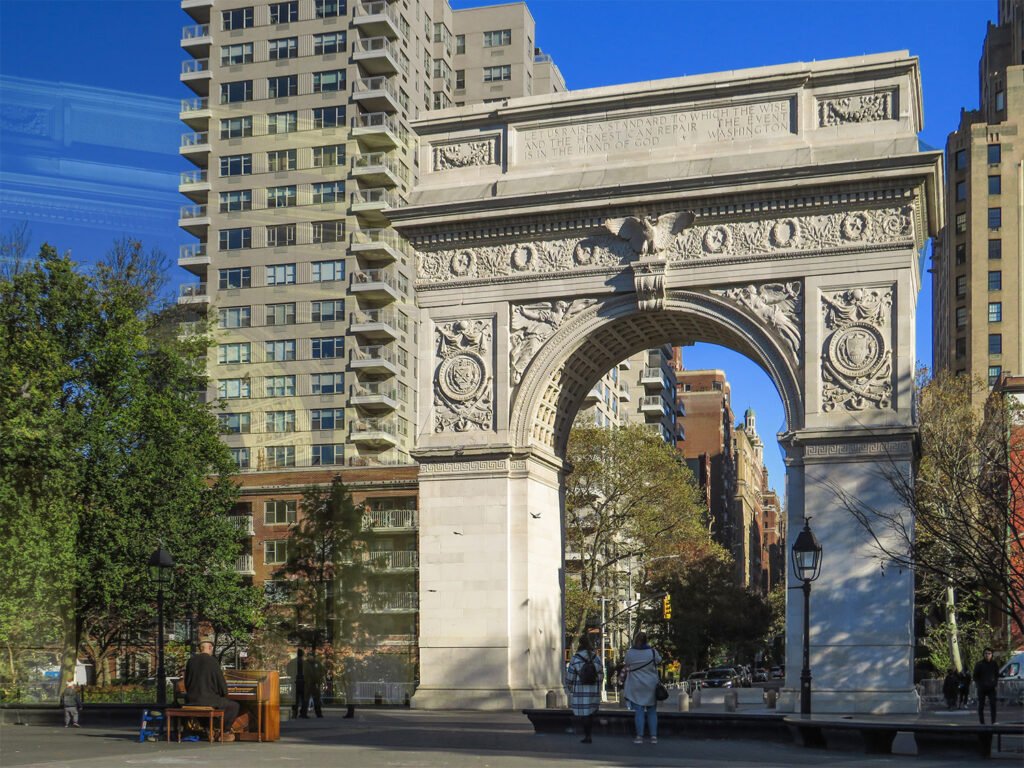
    Stanford White of McKim, Mead & White. Washington Square Arch (1892). Greenwich Village, New York.1

    Elevation and Section2

    References

    1. “The Last Stone Is Laid.” The World (New York), April 6, 1892, p. 10. ↩︎
    2. A Monograph of the Work of McKim Mead & White, 1879-1915. New York: The Architectural Book Publishing Company, 1915. ↩︎
  • “Atlanta’s Advancement” (1893) by W.W. Goodrich

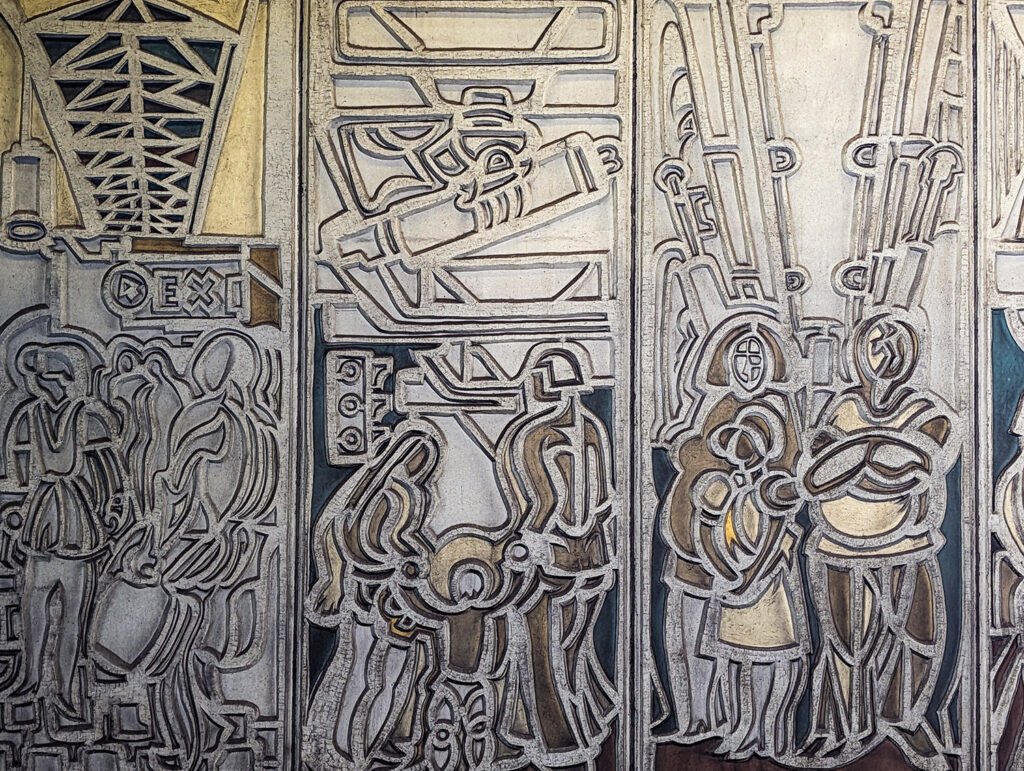
    Charlie Mitchell.Everyday MARTA Scenes (1982). Arts Center Station, Atlanta.1

    The Background

    The following article was published in the The Atlanta Journal in 1893 and written by W.W. Goodrich, an architect who practiced in Atlanta between 1889 and 1895.

    Atlanta has long been a mediocre city gagging on its own arrogance and self-importance, a characteristic that can be definitively traced to the 1880s, when Henry W. Grady turned the Atlanta Constitution into a daily mythmaking machine of endless puff pieces that touted the city in near-religious terms as the predestined savior of a resurrected “New South” that would soon rival the industrial centers of the North.

    So effective was the propaganda that to this day, deluded Atlantans — despite all evidence to the contrary — will avow that Atlanta is a “world-class city” poised to overtake New York, Los Angeles, or [insert city name here] at any moment. That moment, of course, never arrives.

    Here, Goodrich followed the template of hundreds of other gushing Atlanta promotional articles in the 1890s, starting with the subtle proclamation: “Atlanta is a phenomenal city.” He goes on to praise the city’s “master minds”, “great and grand monuments”, “charming homes” and “genuine” architects, concluding that Atlanta’s destiny was to be — wait for it — “the Chicago of the south”.

    This is an article stuffed with so many lies and embellishments that it can only be considered a humorous work of fiction, and Goodrich repeats many of the sentiments he expressed in his similar 1892 article, “Atlanta’s Unique, Composite and Attractive Architecture”.

    Goodrich no doubt hoped that stroking Atlantans’ egos would drum up business for himself: at the time of this article’s publication, the United States was in the throes of the Panic of 1893, which plunged the nation into an economic depression for over 4 years.

    Most Atlanta architects struggled greatly at that time, and many left the city altogether, including Goodrich, who in 1893 was already dividing his time between Atlanta and Norfolk, Virginia.2 3 Goodrich’s company still claimed some presence in the city in December 1894,4 but his final Atlanta newspaper advertisement was in February 1895.5 I doubt he was greatly missed.


    Atlanta’s Advancement

    Her Growth In Architecture Discussed.
    W.W. Goodrich Writes Interestingly.
    On the Beauties of the Homes of Atlanta.
    The Center of the Best Field for Building Materials in the Country – Artistic Home Adornment.

    Atlanta is a phenomenal city. The wonderful recuperative powers inherent in the master minds of this progressive city, has stood it many good turns in the past, and is at the front today, crowding out the pessimists, supplanting them and their narrow views, and erecting upon their small ideas great and grand monuments to a future as well as to this present generation.

    Beautiful homes, are all about, practical contentment assures that observer on every hand “that life is worth living,” and that Atlanta’s homes are models of rare elegance, bliss, “and homes, sweet home.”

    The best building materials to be had in the “known world” are all native to Georgia, the empire state of the south, and are all within a radius of fifty miles of Atlanta. These materials are to be seen everywhere “in this city of charming homes.” And none is too humble but that some one or more of Georgia’s native building materials are in its make-up and form an integral part of the harmonious whole of Atlanta’s homes, that are known far and wide as being the best and most carefully studied and constructed; and arranged in their entirety, more so than in any other city of our common country.

    The diversified forms of architecture are here blended.

    The many inventions for good health and labor saving appliances for the housewife are in every home.

    It is the progressive study of Atlanta’s architects. And many of them are educated, practical men, thoroughly versed in its many intricate ramifications to design for their clientele only that which will be an additional ornament to Atlanta’s excellent structural monuments, that so attract our northern and western friends, and they go from us to their own homes, with the most pleasing reminders of the hospitality of our southland, that each genuine architect, each real lover of his profession, who is so thoroughly imbued with his chosen calling banishes all other thoughts from his mind, and with his brother professional urges the many clients to use only native Georgia products, native Georgia labor, home industry and home labor, and thus imbued we have a style of architecture that is gradually being woven from the warp and woof of the past and present into a beautiful architectural mantle that so handsomely adorns Atlanta and her progress. Atlanta is thus garmented on every hand. The cottage homes of Atlanta and her beautiful suburbs are her pride. The thrift of a city is in its suburban population, because any city without suburbs is a dead, non-progressive affair, not worthy to be called even a village. The many suburbs are taking on metropolitan airs. Electrical lines are running and being planned to run everywhere.

    The sound of the hammer and the merry whiz of the saw erect the ear, all denoting progress, thrift and sturdy belief in the greatness of our claim that Atlanta is the magic city of the south, and that her destiny is to be, and will be, the Chicago of the south. With this belief each one of her thousands stand shoulder to shoulder – a steady, solid phalanx of veterans ready to battle for Atlanta’s future, Atlanta’s greatness and Atlanta’s grandeur.

    W.W. Goodrich6

    References

    1. MARTA’s Art Program – MARTA ↩︎
    2. “W.W. Goodrich & Co., Architects” (advertisement). Norfolk Virginian (Norfolk, Virginia), August 17, 1892, p. 2. ↩︎
    3. “The Passing Throng.” The Atlanta Constitution, January 8, 1893, p. 5. ↩︎
    4. “Bright Days Ahead”. The Atlanta Constitution, December 27, 1894, p. 5. ↩︎
    5. “Professional Cards.” The Atlanta Constitution, February 27, 1895, p. 7. ↩︎
    6. Goodrich, W.W. “Atlanta’s Advancement”. The Atlanta Journal, March 25, 1893, p. 1. ↩︎
  • Marcus Tower, Piedmont Hospital (2020) – Atlanta

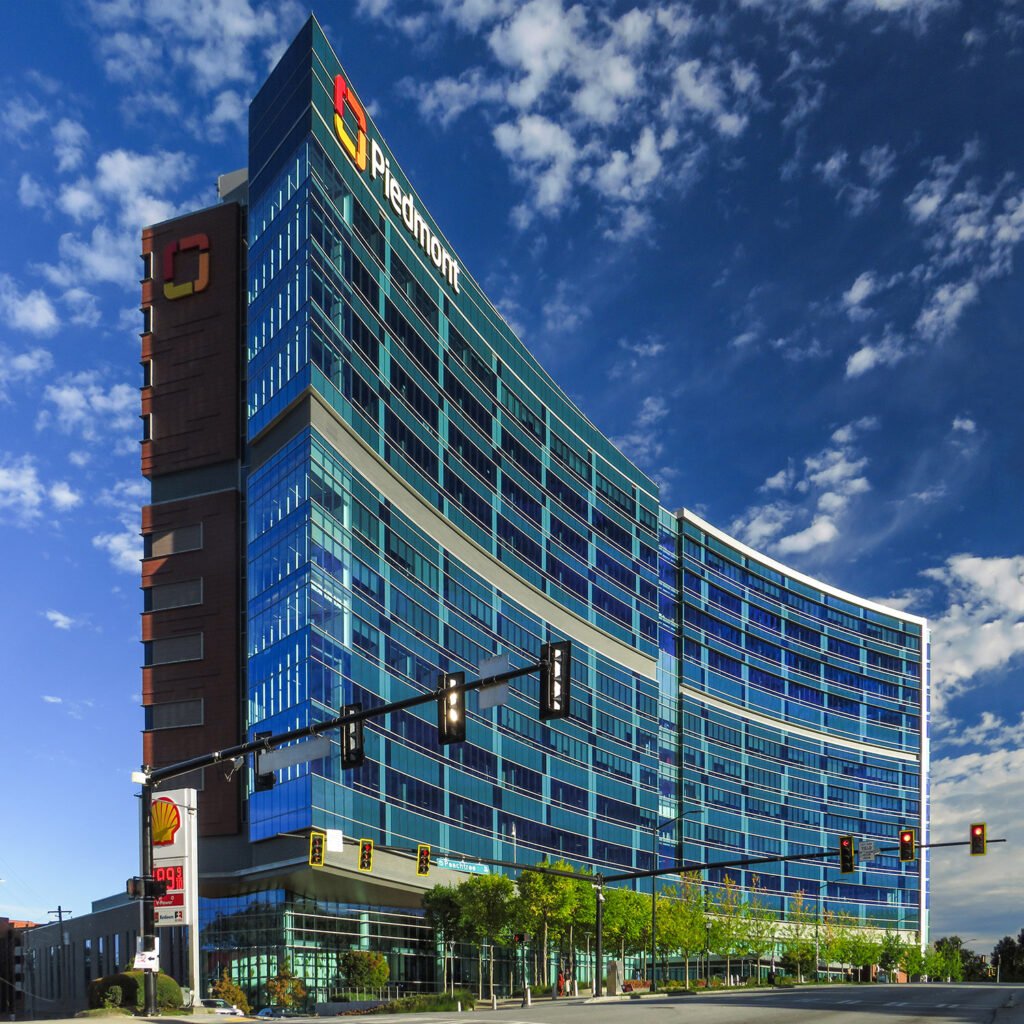
    HKS Architects. Marcus Tower, Piedmont Atlanta Hospital (2020). Buckhead, Atlanta.1

    References

    1. Piedmont Atlanta Hospital Marcus Tower | HKS Architects ↩︎

  • “Atlanta’s Unique, Composite and Attractive Architecture” (1892) by W.W. Goodrich

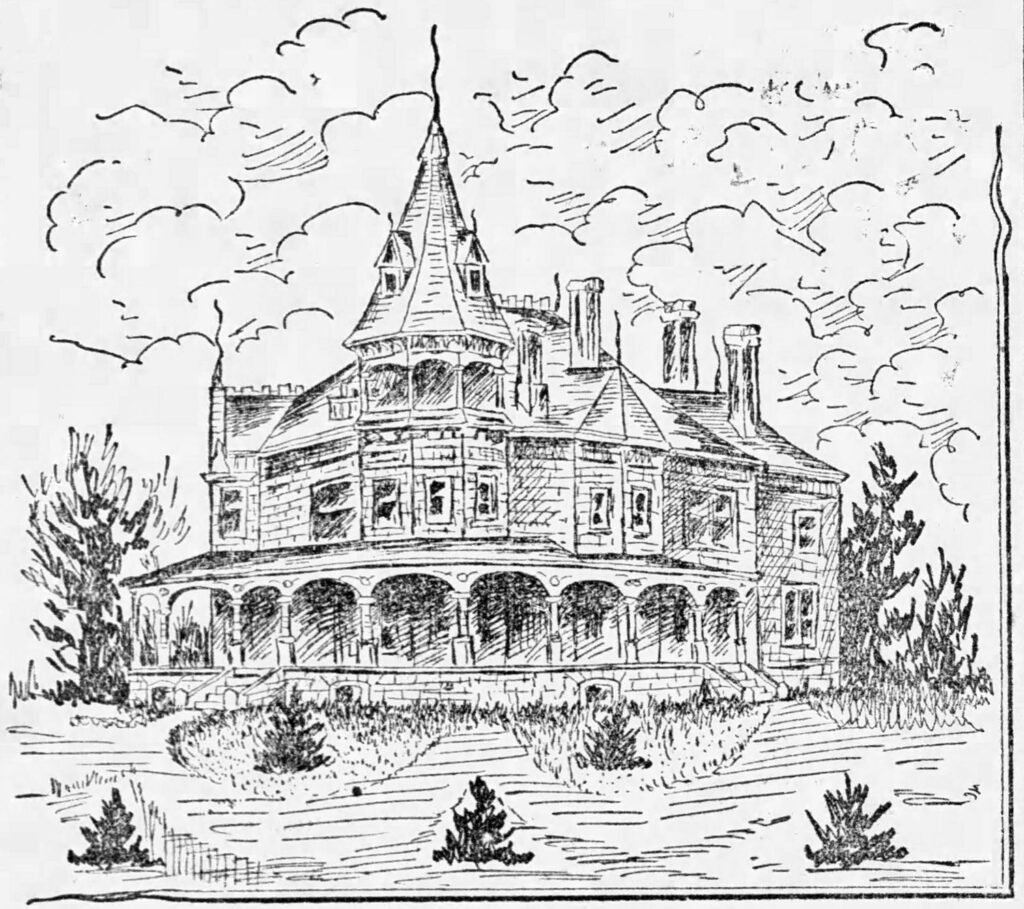
    W.W. Goodrich. E.F. Gould Residence (1891, burned January 28, 1918). Inman Park, Atlanta.1 2

    The Background

    The following article was published in the Manufacturers’ Record in 1892 and written by W.W. Goodrich, an architect who practiced in Atlanta between 1889 and 1895.

    Here, Goodrich engages in the sort of masturbatory civic boosting that Atlantans devour, describing the city in such gushing, over-the-top terms that the article could be easily mistaken for parody.

    That Goodrich saw fit to write this embarrassing concoction of lies and fantasy for a nationally distributed publication underscores how deeply Atlantans swim in their own illusion, convinced that they are somehow exceptional and superior to other cities.

    However, as any visitor in Goodrich’s time or now could attest, Atlanta is an aggressively mediocre city with scant culture and no distinguishable identity — the most defining feature is its population of conceited and ignorant inhabitants who loathe and despise each other while desperately seeking validation for their delusions of grandeur.

    Indeed, few cities are so blithely arrogant as Atlanta, with so little of substance to show for it: Atlanta is the child who demands praise for using the toilet; the man with an average penis who is convinced he has a sizeable endowment; the insecure teenager desperate to be seen as popular, unaware that absolutely no one thinks about them.

    Atlanta is a city built by frauds and liars, and Goodrich happened to be both. Before he arrived in Atlanta, he had a record of larceny and check fraud in Colorado, California, and Massachusetts,3 4 5 6 7 and many of the fantastical claims from his life story are easily disproven by the historical record.

    Keep that in mind when Goodrich describes Atlantans as “moral heroes”, refers to the city in utopian terms as a place where “democrats and republicans work harmoniously for the public good”, and compares the city’s antebellum architecture (no, Sherman didn’t burn all of it) to that of ancient Greece.

    Halfway through, the article turns into an advertisement for Georgia marble, a material so prohibitively expensive for use in construction that even the Georgia State Capitol was built with cheaper Indiana limestone.8

    Shortly before writing this article, Goodrich toured the Georgia Marble Company’s quarry,9 and he may have been an investor in the business. Goodrich was also the designer for two of the marble buildings he lists here: the Herald Publishing Company building and the R.F. Gould house in Atlanta’s Inman Park.10

    Goodrich concludes the article by praising the architecture of Atlanta, which then, as now, consisted almost entirely of artless, watered-down imitations of superior designs from better cities — often a decade or more out of fashion by the time Atlantans in their insecure posturing began demanding them.

    “Atlanta has no style of architecture”, Goodrich exclaims. “This shows the wisdom of her architects.” Or as G.L. Norrman more accurately described Atlanta architecture: “The prevailing style is no style at all.”9


    Atlanta’s Unique, Composite and Attractive Architecture.

    By W.W. Goodrich

    The hero rises above his environment, and ennobles mankind.

    The people of Atlanta are moral heroes, who have put themselves in touch with each other and with their countrymen of our common land.

    Here democrats and republicans work harmoniously for the public good, eschewing partisanship and striving in accord to upbuild a great city. Here is a charity between the vast political parties that commands admiration.

    The blending of opposite political forces and opinions and the burial of dead issues have brought Atlanta to the front, and built her wonderfully up.

    The architecture of Atlanta is progressive; from the simple taste of the artisan to the mansion of the rich is but a step, and the spirit of all, even the humblest, is to betterment. Under this universal inspiration Atlanta is surely marching to permanent superiority of architecture.

    Before the war architecture was a blending of the Jacobian and the Colonial, of which excellent examples are still extant, the fluted columns of the simple orders, in bold effrontery, giving a classic invitation to come in and hear the oratory of the old masters of that art, now almost extinct. Looking on these facades I almost imagine I am in the classic land of Greece, in the temples of the gods, listening to a Socrates.

    When Sherman destroyed Atlanta he little thought, probably, that a city would arise upon its ruins. Could he now look from the aspiring roof of the stately Equitable building he would see a grand metropolis on the wreck of old Atlanta, and on every hand majestic monuments of architects’ skill, and beautiful structural facades that fascinate the vision and compel the admiration of the most careless observer.

    The principal building material for architectural effect and artistic embellishment is from the Georgia Marble Co.’s quarries at Tate, Pickens county, Ga. This marble leads the world. It is the granular marble, that resists all atmospheric action, stands all strains and finishes in a superb and harmonious whole. And this marble can be used at no greater expense than the finer grades of pressed brick.

    Among the structures wholly or in part of Georgia marble are these:

    • Herald building, daily newspaper, entire front.
    • The R.F. Gould residence, wholly of marble, even the chimneys of this imperial stone, beautifully carved, and the heat and acids of the smoke do not tarnish the chimneys in the least.
    • The Equitable building, in part.
    • The Inman Building, in part.
    • The High building, in part.
    • The Aragon Hotel, in part.

    And there are many others wholly or in part marble throughout Atlanta.

    In all my experience with building stones Georgia marble gives me the greatest satisfaction for a perfect building material that will last and not be affected by heat or cold, nor the action of frost in freezing.

    I have seen the cities of the growing West spring up in a day, figuratively speaking. They have their set back, but Atlanta grows on, and no matter what the financial state of the land at large, she climbs higher with her sky scrapers.

    Her homes have more of architectural merit with each passing period or building construction. Each new house builder vies as never before to outdo his friend in home building and in home comforts. There is no accepted or popular pattern, no slavish imitation of any model, however liked, no wholesale adoption of architectural fashions, but a sturdy originality and independence of taste and idea that are always seeking and finding new effects and comforts.

    Atlanta has no style of architecture. This shows the wisdom of her architects. We see a picturesque blending of all styles, the best of all styles grouped in a myriad of beautiful and harmonious, but differing and exquisitely unlike wholes. Such a composite and yet symmetrical and attractive architecture was never before seen, the outcome of a growing architectural taste, and presenting with absolute freedom from copied uniformity a rare and delightful variety and originality of gems of architectural beauty.

    Every residence is different, and new combinations of grace and convenience constantly enrapture the eye.

    The democracy in architecture relieves the sky line, and in a wholesale innovation, wherein monotony is destroyed, a scenic effect is given to the streets and lawns that could not be obtained any other way, and that makes Atlanta the very ideal of architectural taste and loveliness.11

    References

    1. Illustration: “Pencil Sketch Of Marble Residence Of E.F. Gould”. The Atlanta Journal, April 21, 1891, p. 5. ↩︎
    2. “Edgewood Avenue House Is Destroyed By Fire”. The Atlanta Journal, January 28, 1918, p. 9. ↩︎
    3. “Held to Answer”. Rocky Mountain News (Denver), March 26, 1881, p. 2. ↩︎
    4. “Probably a Sharp Swindler”. Daily National Republican (Washington, D.C.), November 27, 1883, p. 3. ↩︎
    5. “An Old Fraud Heard From”. Los Angeles Herald, March 16, 1884, p. 4. ↩︎
    6. “A Worthless Check”. The Boston Herald, November 27, 1883, p. 1. ↩︎
    7. “Operation With Checks”. Boston Daily Advertiser, November 27, 1883, p. 8. ↩︎
    8. “The Capitol Contract”. The Atlanta Constitution, September 27, 1884, p. 7. ↩︎
    9. “A Delightful Excursion”. The Atlanta Constitution, February 20, 1892, p. 1. ↩︎
    10. “W.W. Goodrich & Co., Architects”. Norfolk Virginian (Norfolk, Virginia), August 17, 1892, p. 2. ↩︎
    11. Goodrich, W.W. “Atlanta’s Unique, Composite And Attractive Architecture.” Manufacturers’ Record, Vol. 22, no. 4 (August 26, 1892), p. 64. ↩︎
  • Main Building at Georgia Institute of Technology (1888) – Atlanta

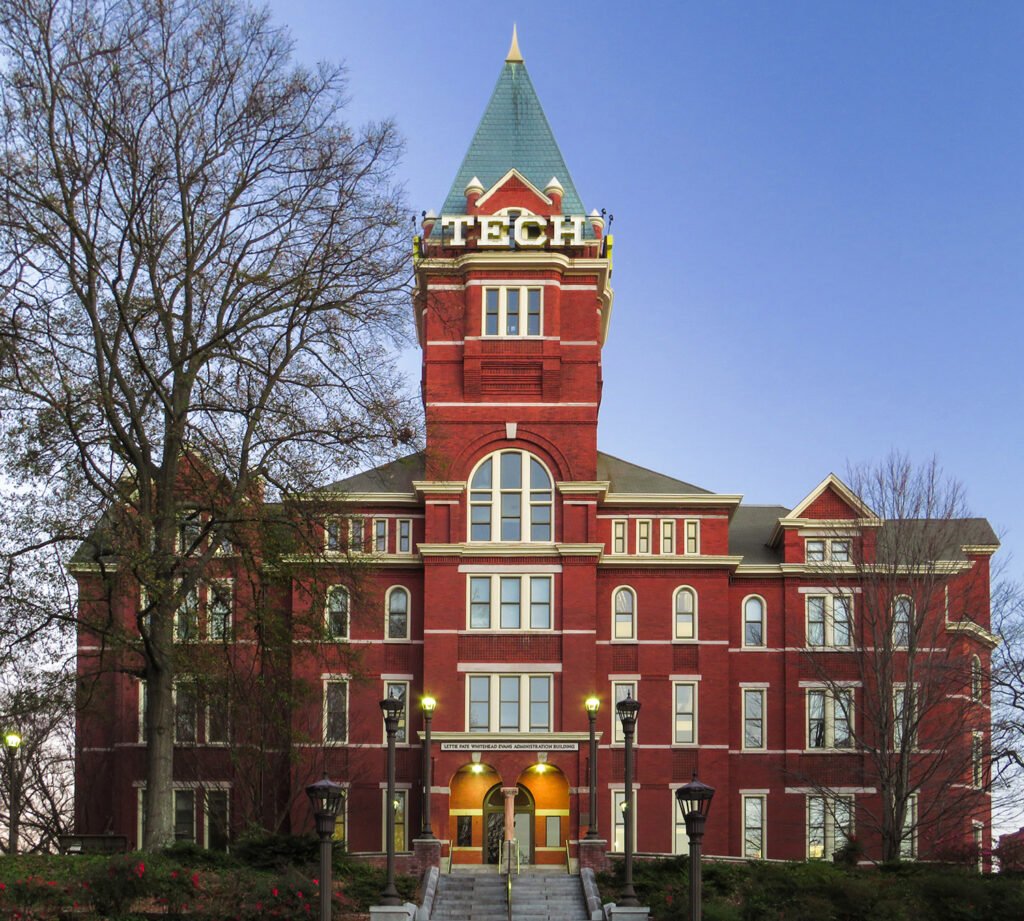
    Bruce & Morgan. Main Building (1888) at Georgia Institute of Technology, Atlanta.1 2 3

    References

    1. “Georgia’s Pride”. The Atlanta Constitution, March 16, 1887, p. 5. ↩︎
    2. “Technological School.” The Atlanta Journal, March 16, 1887, p. 1. ↩︎
    3. “The First Session”. The Atlanta Constitution, October 4, 1888, p. 8. ↩︎
  • Shower Secrets

    We’d been playing together for a while. It was an intense and heavy game.

    After we both finished, we walked to the locker room together. He took off his shirt and gave it to me.

    As he headed for the shower, he slid off his pants — first the right leg, then the left, bending down slightly before me. He handed those to me, too.

    He disappeared behind the door and a second later poked out his arm, underwear dangling from his fingers.

    “You can have this too,” he said casually.

    It was pungent and soaked with sweat.

    He left the door cracked just enough for me to make out his form in the steam.

    He knew what he was doing.

  • Jackson Square Library (1887) – New York

    Richard Morris Hunt. Jackson Square Library (1887). Greenwich Village, New York.1 2

    References

    1. “Given By a Millionaire”. The World (New York), July 5, 1888, p. 1. ↩︎
    2. Renovating: A Strange House and Its Strange Story ↩︎

  • “Stand by the Manufacturers” (1892) by W.W. Goodrich

    J.K. Orr Shoe Company (1907). Sweet Auburn, Atlanta.1 2

    The Background

    Just six days after his previous letter to The Atlanta Constitution, W.W. Goodrich returned to bloviate about manufacturing.

    In the following letter, Goodrich suggested Atlanta could attract manufacturers by emulating “wide-awake” cities like Detroit, Denver, and… Rahway, New Jersey (yeah, I dunno), offering residents tax-exempt stocks in local companies and buying from those companies to the exclusion of outside markets.

    In a poorly constructed run-on sentence, he also opined that bringing industry to Atlanta would “solve the domestic labor problem”. And if his insinuation wasn’t clear enough, he added: “white artisan labor or factory help bring in their families, female help that would enter our homes and supplant the idle, shiftless race that is now a nuisance.” Lovely.

    Goodrich noted the “cassiterite or tin ore” in “North Temercal”, California, a place that apparently never existed — except in his delusional mind. Just as deranged was his parting vision of Atlanta as a city where “the fires of blast furnaces…should light up the horizon of the setting sun to illuminate the whole night away, only to welcome the rising sun, and be dissipated in the light of a cloudless day.”

    Have I mentioned lately how much I detest this despicable, fraudulent, lying, racist hack of a writer and architect?


    Stand by the Manufacturers.

    Editor Constitution–Your articles on manufacturing enterprises, that should be attracted and retained in Atlanta, and encouraged by Atlanta capital, is the uppermost subject in the minds of the leading business men. Mr. Kirkpatrick, of Bain & Kirkpatrick, a courteous gentleman with whom I have had frequent conversations upon this subject, and who is alive to the necessity of Atlanta’s present and future greatness, has spoken in no uncertain tones upon this wide-awake subject. Mr. Kirkpatrick, who is well read and versed in how to get manufacturers to locate, favors the plan adopted by all wide-awake cities, as Detroit, Denver, Rahway, Newark, Elizabethtown and the hosts of cities of Pennsylvania, Connecticut, Massachusetts, New York, Ohio and Indiana–this is, for the citizens to take stock, as far as possible, in all laudable enterprises, exempt them from taxation for a specified time, and buy from their half their goods to the exclusion of outside markets. In other words, protection to home enterprise, home capital and home industry.

    We have near us vast deposits of iron, coal and the fluxes. In North Temercal, Cal., in Dakota and elsewhere in the United States. We have unbounded supplies in cassiterite or tin ore. We can manufacture the iron here in Atlanta and cast the plates with American tin, and save as per enclosed article at least $25,000,000 annually that now goes abroad.

    One industry brings another. Atlanta would be the leading city of the south in everything attainable for the advancement of the body politic.

    Again the bringing of these various industries would solve the domestic labor problem, the white artisan labor or factory help bring in their families, female help that would enter our homes and supplant the idle, shiftless race that is now a nuisance.

    I am surprised at the lack of interest of some of the editorial fraternity, to the one thing needful for the supremacy of Atlanta as a commercial city. Why, sir, manufacturing enterprises should crown all the business of ingress into this city. The fires of blast furnaces, or rolling mills, of various shops from the making of a pin or needle to the turning out of a thoroughly well built locomotive, or a stationary engine, should light up the horizon of the setting sun to illuminate the whole night away, only to welcome the rising sun, and be dissipated in the light of a cloudless day.

    W.W. GOODRICH3

    References

    1. “New Plant Of J.K. Orr Shoe Co. Which Will Be Completed April 1”. The Atlanta Journal, January 28, 1907, p. 3. ↩︎
    2. “First Train Load Of Machinery Brought South For Shoe Factory”. The Atlanta Constitution, April 7, 1907, p. 5. ↩︎
    3. Goodrich, W.W. “Stand by the Manufacturers.” The Atlanta Constitution, July 19, 1892, p. 4. ↩︎

  • Sammye E. Coan Middle School (1967) – Atlanta

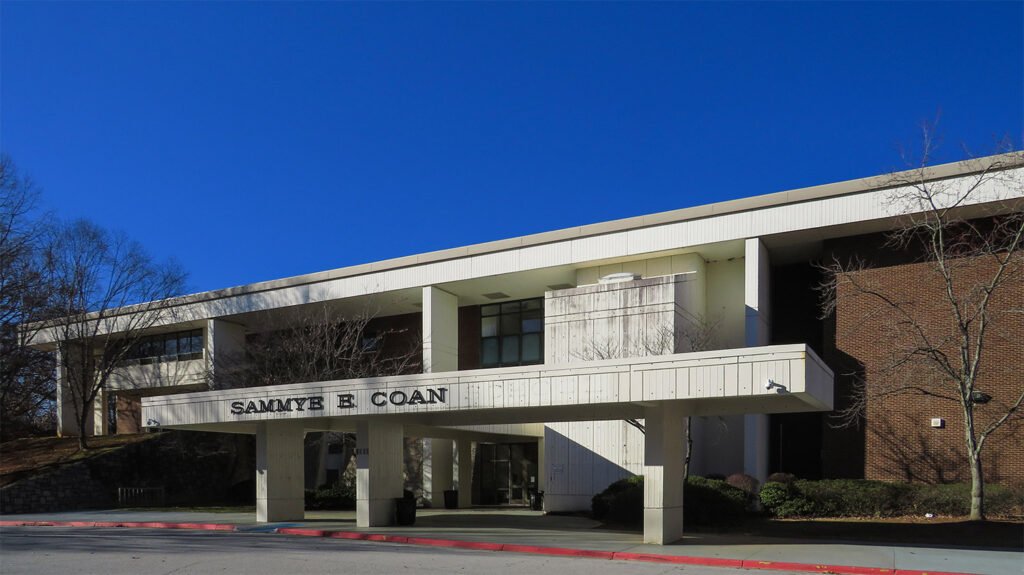
    Morris Hall and Peter Norris. Sammy E. Coan Middle School (1967), Kirkwood, Atlanta.1 2

    References

    1. “Coan School Boasts No Grades”. The Atlanta Journal and Constitution, September 4, 1967, p. 14-A. ↩︎
    2. “Award-Winning Sammye E. Coan School Design”. The Atlanta Journal, October 25, 1968, p. 5-R. ↩︎