From the Notebook
-
Mining for Attention

The Background
The following anecdote, attributed to W.W. Goodrich, was published in The Atlanta Constitution just nine months after he moved to Atlanta in 1889.1
Nearly everything in this story about an Oregon gold rush town appears to be a lie. It’s plausible that Goodrich passed through the locality at some point, but he couldn’t even get its name right.
According to the Oregon Encyclopedia, Amelia City “boomed for a short time and quickly declined”, appearing on maps from 1876 to 1890. The article adds that the town’s “…peak population was likely a few hundred…”
So much for Goodrich’s description of a “town of thirty thousand miners…”, including some who “…had not seen a baby in twenty years…”
And surely with thirty thousand horny men around, the town’s two young women would have been popping out babies like firecrackers.
Oh, c’mon, you know the “old lady” was really a madam.
Even the story of Goodrich’s 1700-mile journey from Salt Lake City to Pendleton, Oregon, is a lie.
In 1882, Goodrich lived for six months in Boise, Idaho,2 3 before moving to Seattle.4 That was when he could have passed through Amelia City, which was located on the route between Boise and Seattle, southeast of Baker City.5
Incidentally, the distance between Salt Lake City and Pendleton, Oregon, is less than 600 miles, but who’s measuring?
The only difference between an architect and a con artist is that an architect believes their own bullshit, and Goodrich seems to have straddled the fine line between the two his entire life, constantly running from one location to the next when his lies caught up with him, leaving scant architecture of merit in his wake.
In 1890, the Deep South was virgin territory for Goodrich, and it was no doubt easier for him to get away with his tall tales at a time when the telegraph was the fastest mode of communication, and long-distance phone service was nonexistent.
Travel to the other side of the country was also costly and precarious, and there would have been few people in a backwater like Atlanta who would have been familiar enough with the Far West to call Goodrich’s bluff.
Still, you’d hope someone was astute enough to notice the ripe whiff emanating from his outlandish stories.
Notes by the Wayside.
Mr. W.W. Goodrich, the architect, has traveled very extensively. In 1882 he traveled seventeen hundred miles by private conveyance with his family, going from Salt Lake to Pendleton, Oregon. At Amelia, Oregon, he found a town of thirty thousand miners, and in the entire population there were but three women–an old lady and her two daughters.
Mr. Goodrich had along his little baby six weeks old, and the baby created a sensation in the camps. Some of the miners had not seen a baby in twenty years, and they crowded about and handed the baby from one another.
“If an artist could have painted the scene,” said Mr. Goodrich, “it would have been a most interesting picture. There were grizzly old miners with pistols in their belts and knives in their boots alternately crying and laughing as they passed the baby around. ‘God bless his little gizzard,’ said one fellow, as the tears streamed down his face.”6
References
- “Comes Here to Live.” The Atlanta Constitution, September 18, 1889, p. 4. ↩︎
- “Architect.” Idaho Tri-Weekly Statesman (Boise City, Idaho), March 14, 1882, p. 3. ↩︎
- “Personal.” Idaho Tri-Weekly Statesman (Boise City, Idaho), September 19, 1882, p. 5. ↩︎
- “Architect & Sanitary Engineer.” (advertisement) Seattle Daily Post-Intelligencer, September 29, 1882, p. 3. ↩︎
- Amelia City – Oregon Encyclopedia ↩︎
- “Notes by the Wayside.” The Atlanta Journal, June 24, 1890, p. 3. ↩︎
-
Relic Signs: Sugar -n- Spice (1961) – Spartanburg, South Carolina

Sugar -n- Spice (1961). 212 South Pine Street, Spartanburg, South Carolina. It isn’t difficult to determine the date of this roadside relic—it’s right on the sign.
Location of Sugar ‘n’ Spice
Besides the five or six surviving buildings designed by G.L. Norrman, there isn’t a whole lot in Spartanburg, South Carolina, worth mentioning, but Sugar ‘n’ Spice was a pleasant surprise when I discovered it.
At the restaurant’s 40th anniversary in 2001, the owner revealed that he had considered removing the restaurant’s distinctive Googie-style canopy but ultimately reconsidered: “I did a little poll, and it was not even close … the canopy’s staying.”1
A wise decision.

Googie-style canopy at Sugar ‘n’ Spice, Spartanburg, South Carolina References
-
Exit Only

It’s one of those weird moments when I walk into a room after something awful has happened, but I don’t know what.
I see a few strangers standing in the corners, glancing at each other nervously and speaking in hushed tones.
The familiar faces are nowhere to be found. But even in their absence, I can feel the tension in the pit of my stomach.
I’m not part of any clique, and I keep to myself. I’m always the last to know about anything, if I ever know about it at all.
I’ve spent my life as an oblivious outsider—my only companion is my angel.
Through trial and error, we’ve developed a seamless form of communication:
Something isn’t right, I’ll think to myself.
“Time to go,” he whispers in confirmation.
I used to be scared by the uncertainty: he never tells me where we’re going next, and there’s usually some lingering sadness or guilt. Often a lot. We always end up in a better place, though.
Sometimes—years later, perhaps—an unbelievable quirk in the matrix will reveal to me what actually happened. Not the surface event necessarily, but the underlying truth of it. I have insane luck in that regard.
Oh, now I get it, I tell my guy, as I tuck the wisdom in my soul.
And here I am again, standing by myself in a dark space where life has suddenly gone absent.
“Time to go,” he tells me.
I exit without a second thought.
-
Morris Brandon School (1947) – Atlanta
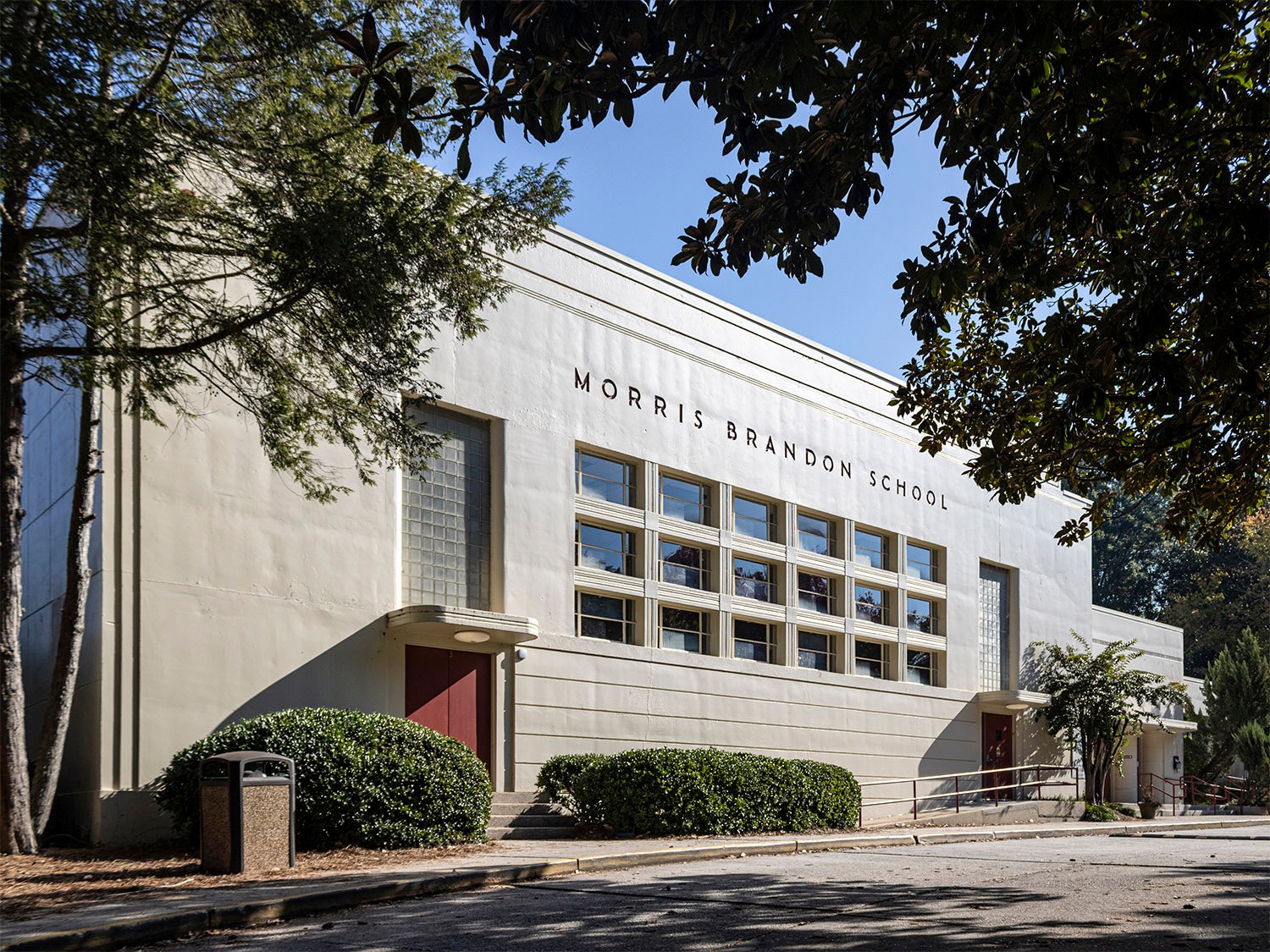
Tucker & Howell.Morris Brandon School (1947). Buckhead, Atlanta.1 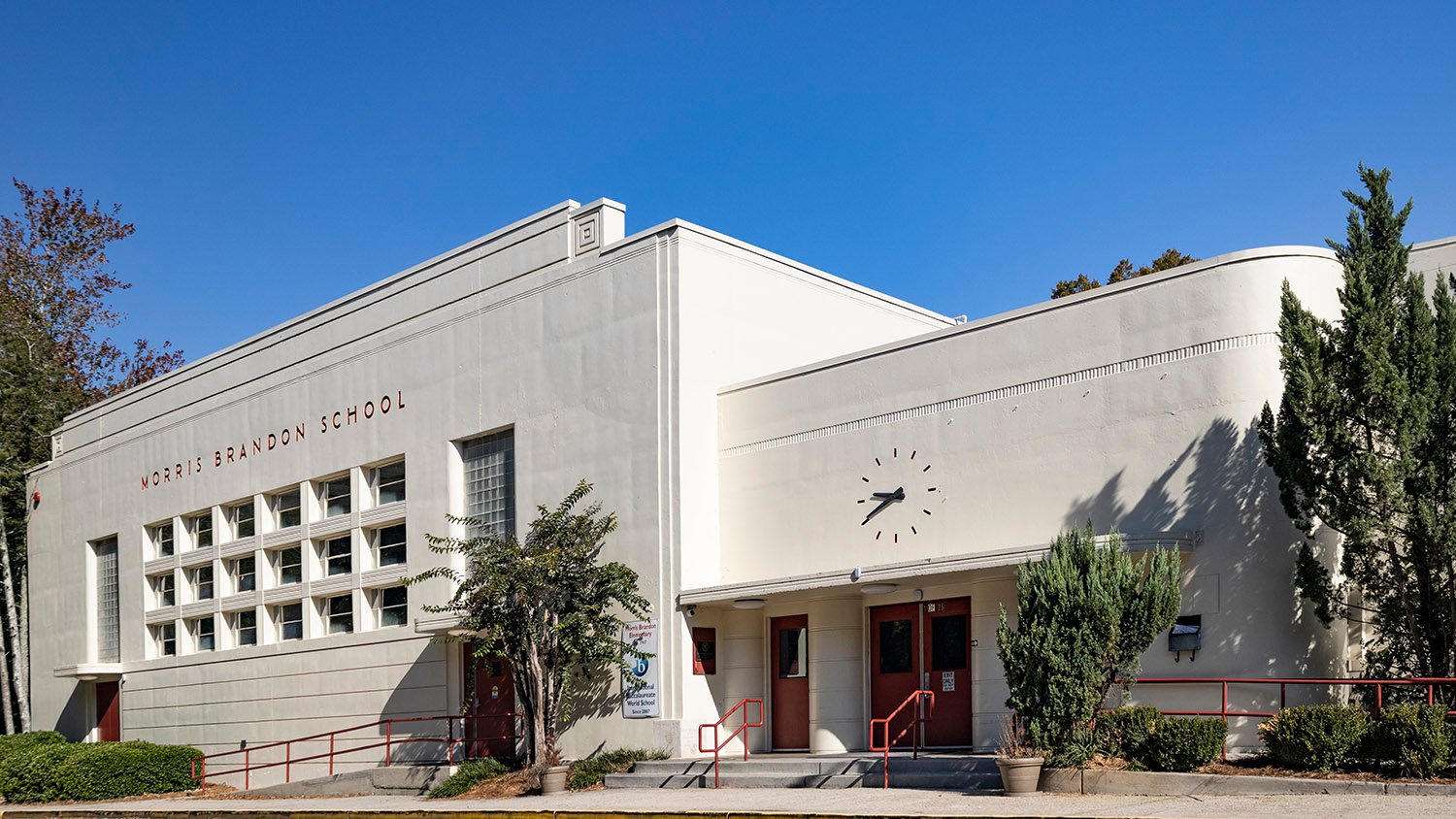
Looking at Morris Brandon School from the southeast 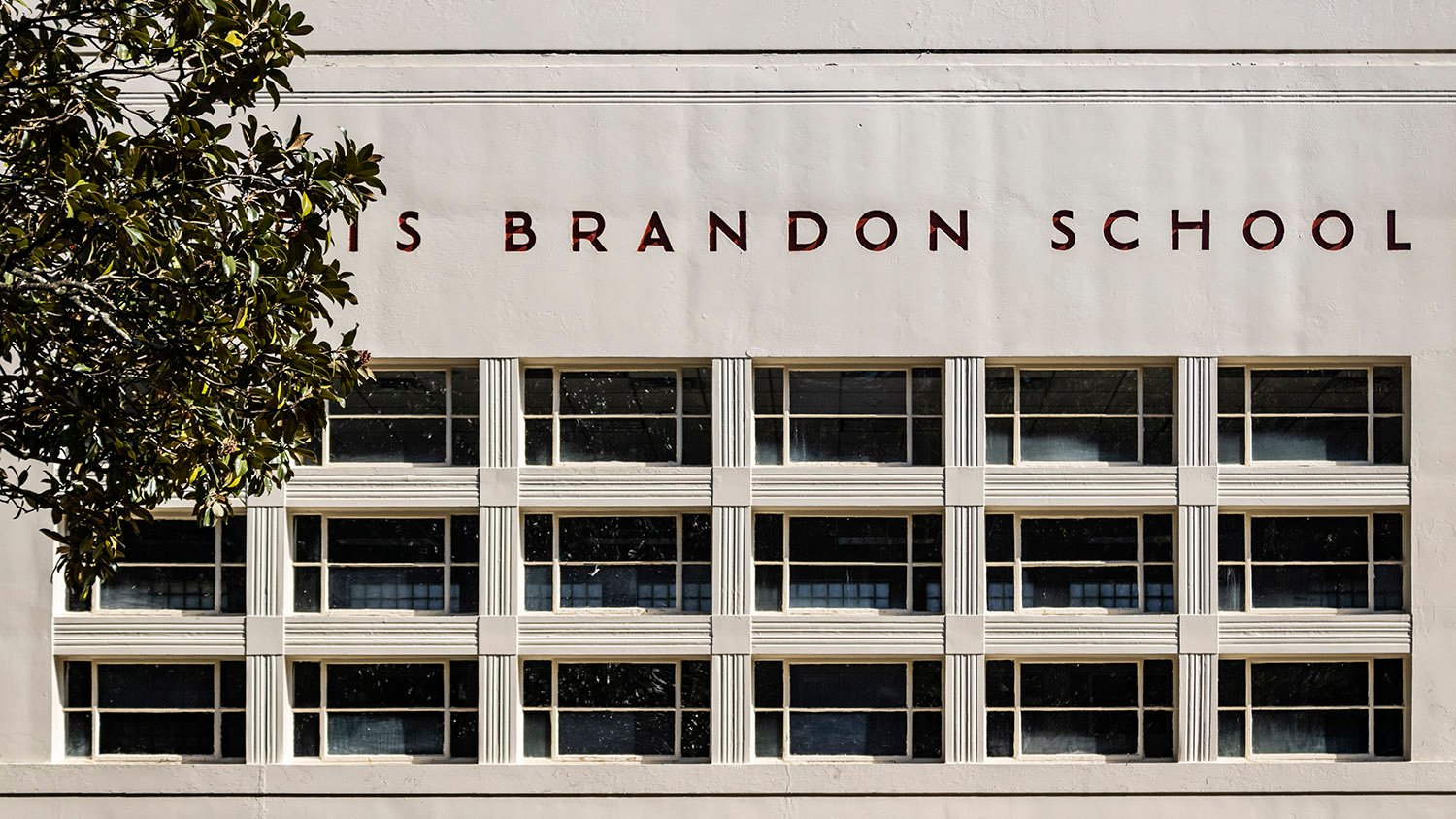
Window on the facade of Morris Brandon School, Atlanta 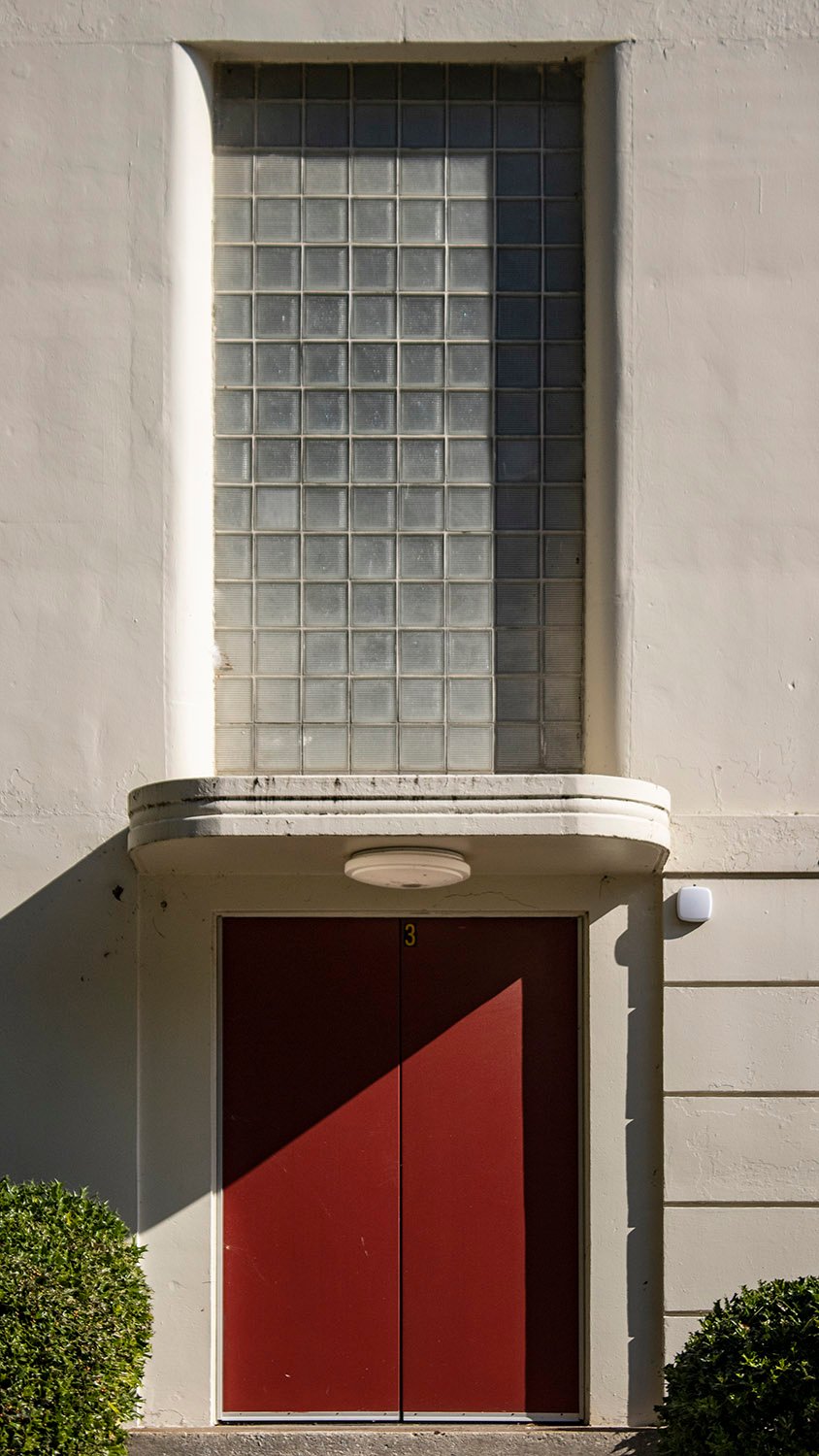
Entrance and glass-block window on the facade of Morris Brandon School, Atlanta 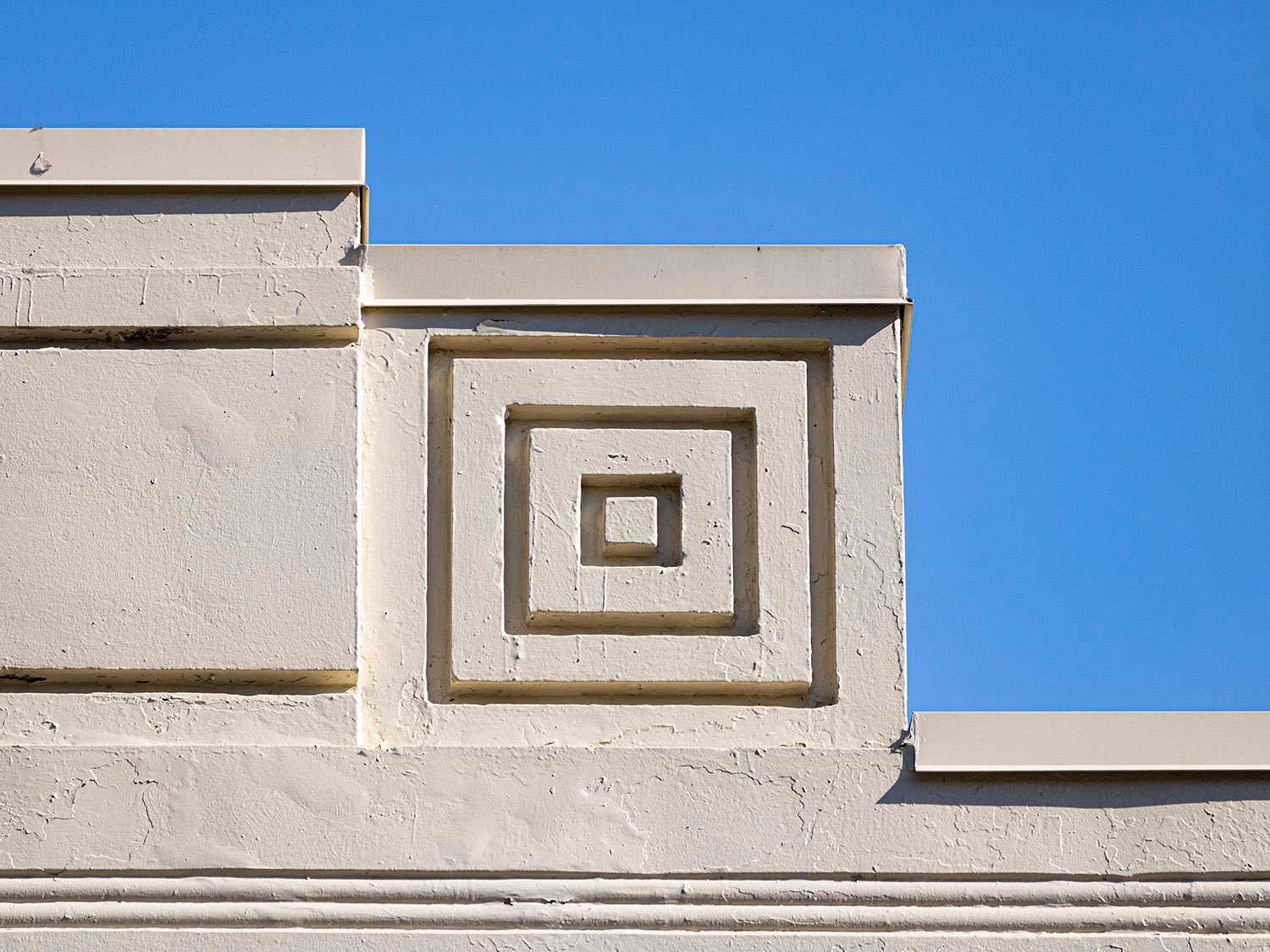
Parapet on the facade of Morris Brandon School, Atlanta 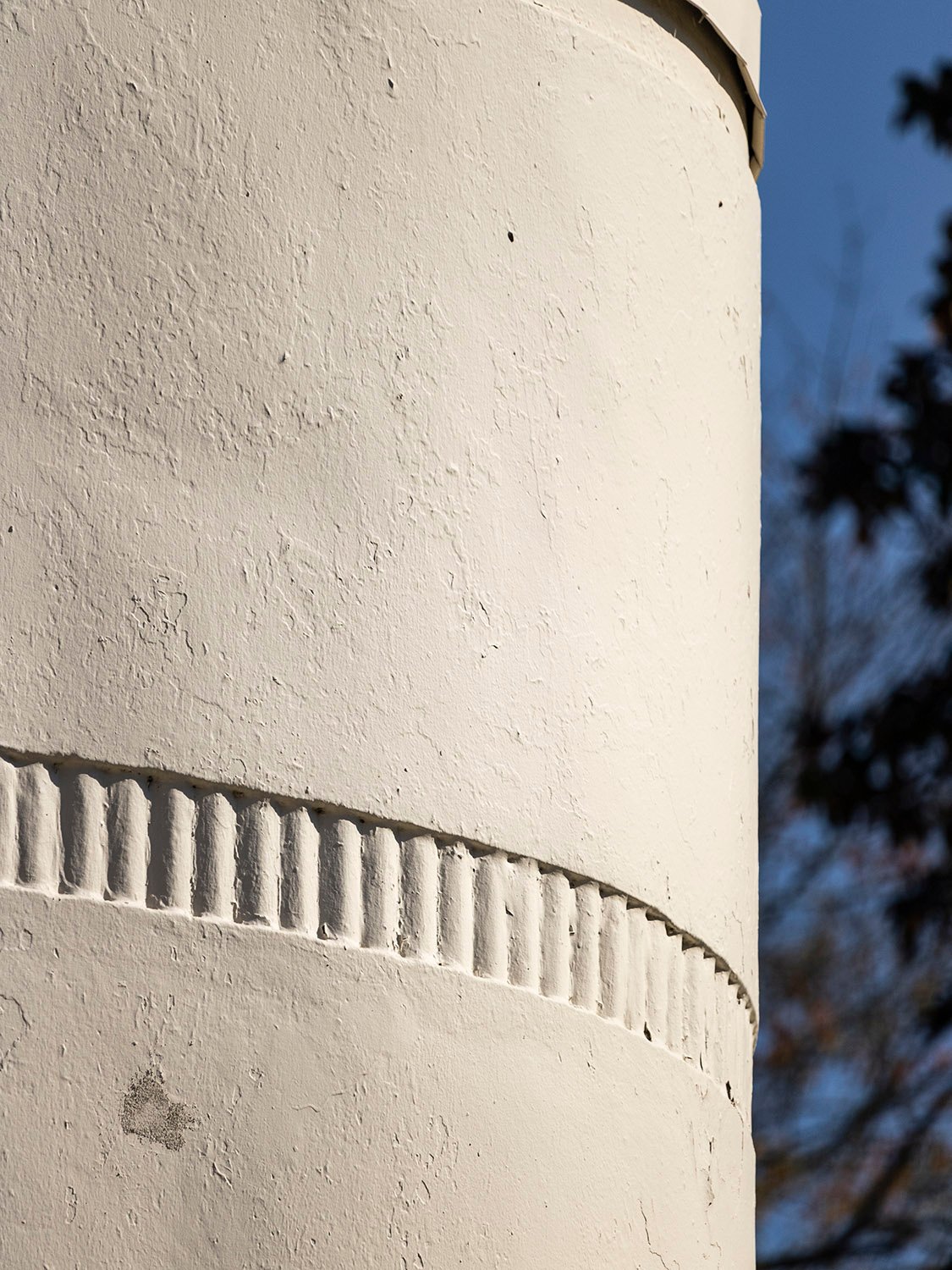
Curved wall and string course on the facade of Morris Brandon School, Atlanta 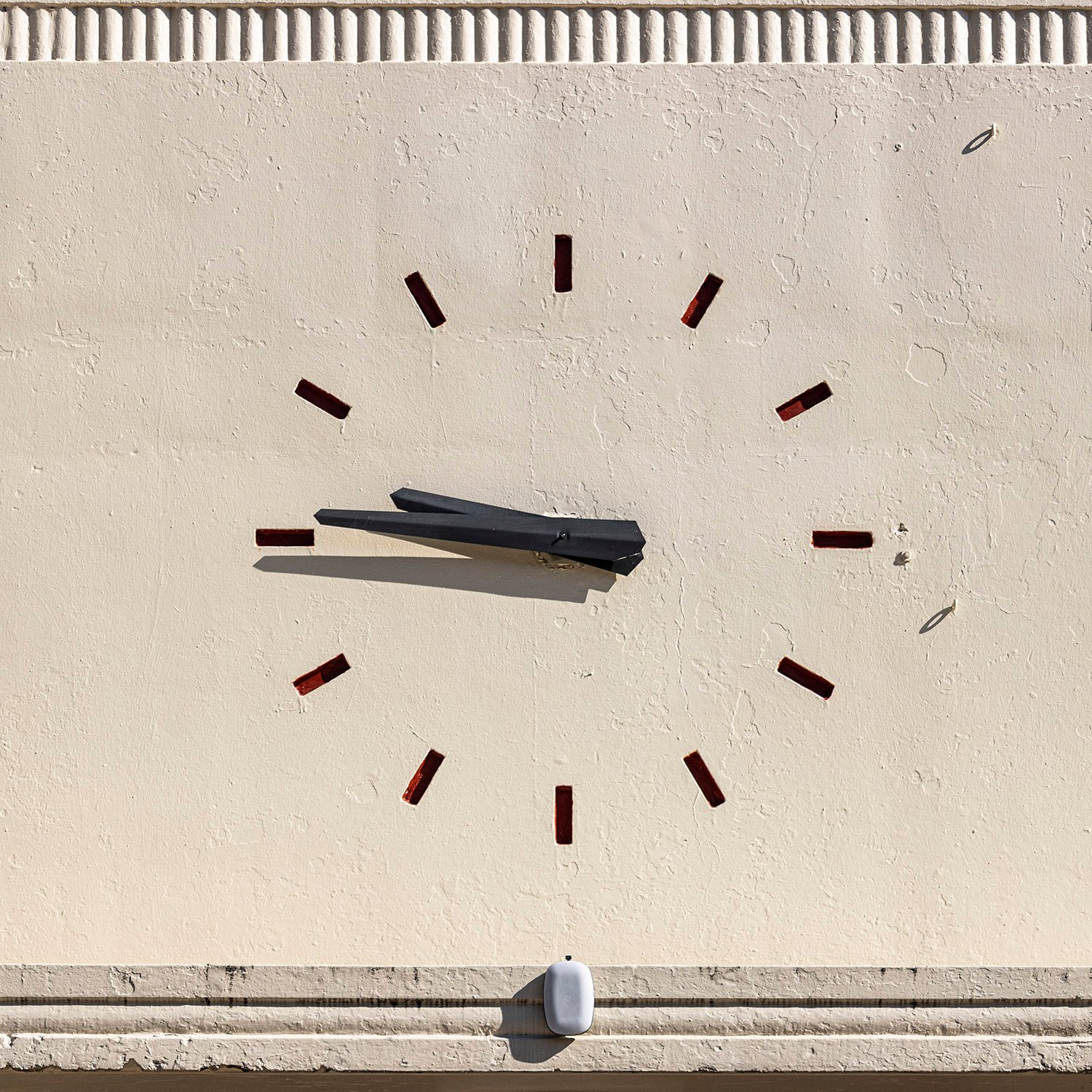
Clock on the facade of Morris Brandon School, Atlanta 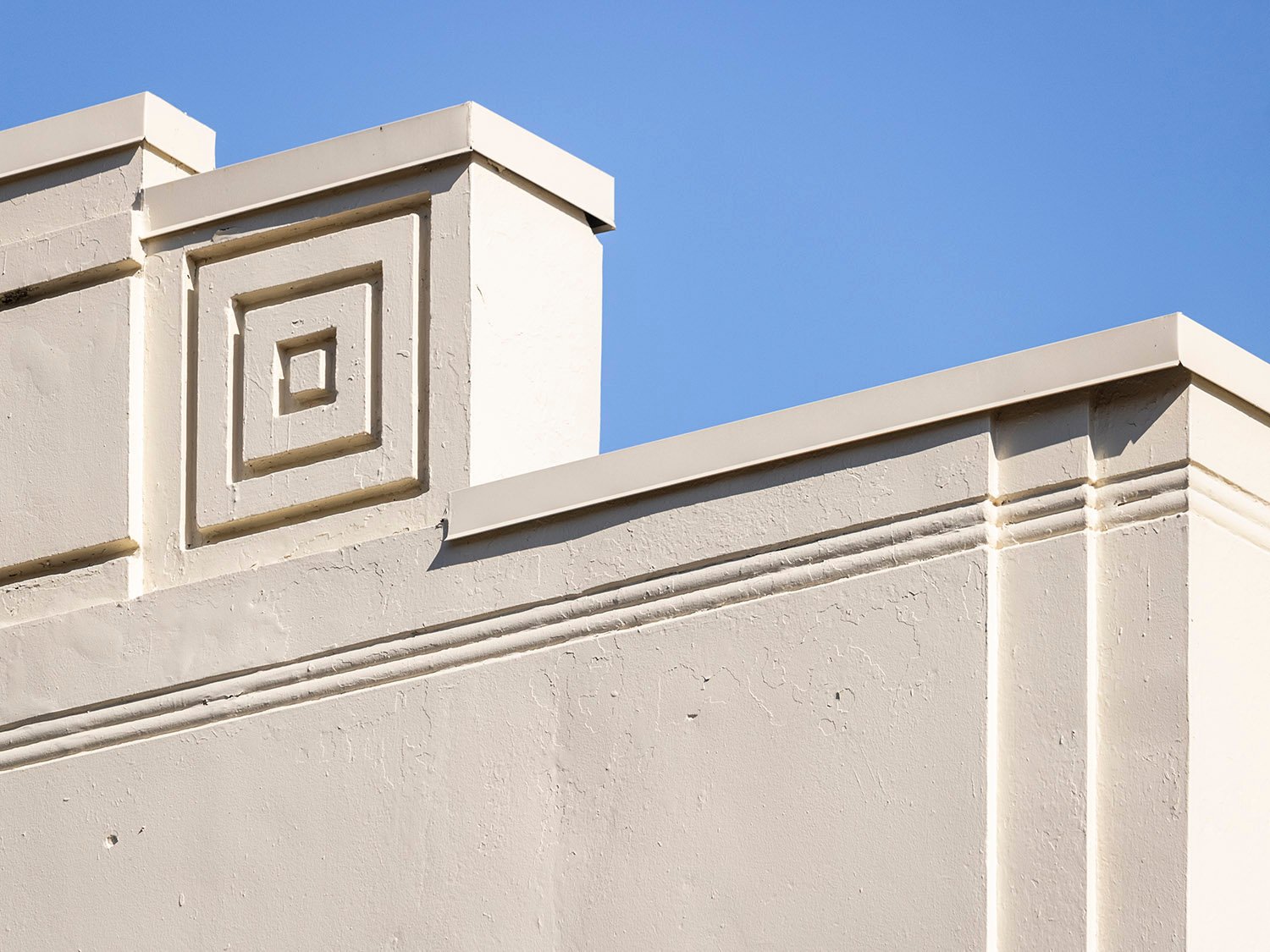
Parapet and string course on the facade of Morris Brandon School, Atlanta References
- “Brandon School Modern—and Cheap”. The Atlanta Constitution, August 24, 1947, p. 3-D. ↩︎
-
Urban Life: Common pigeons in Atlanta
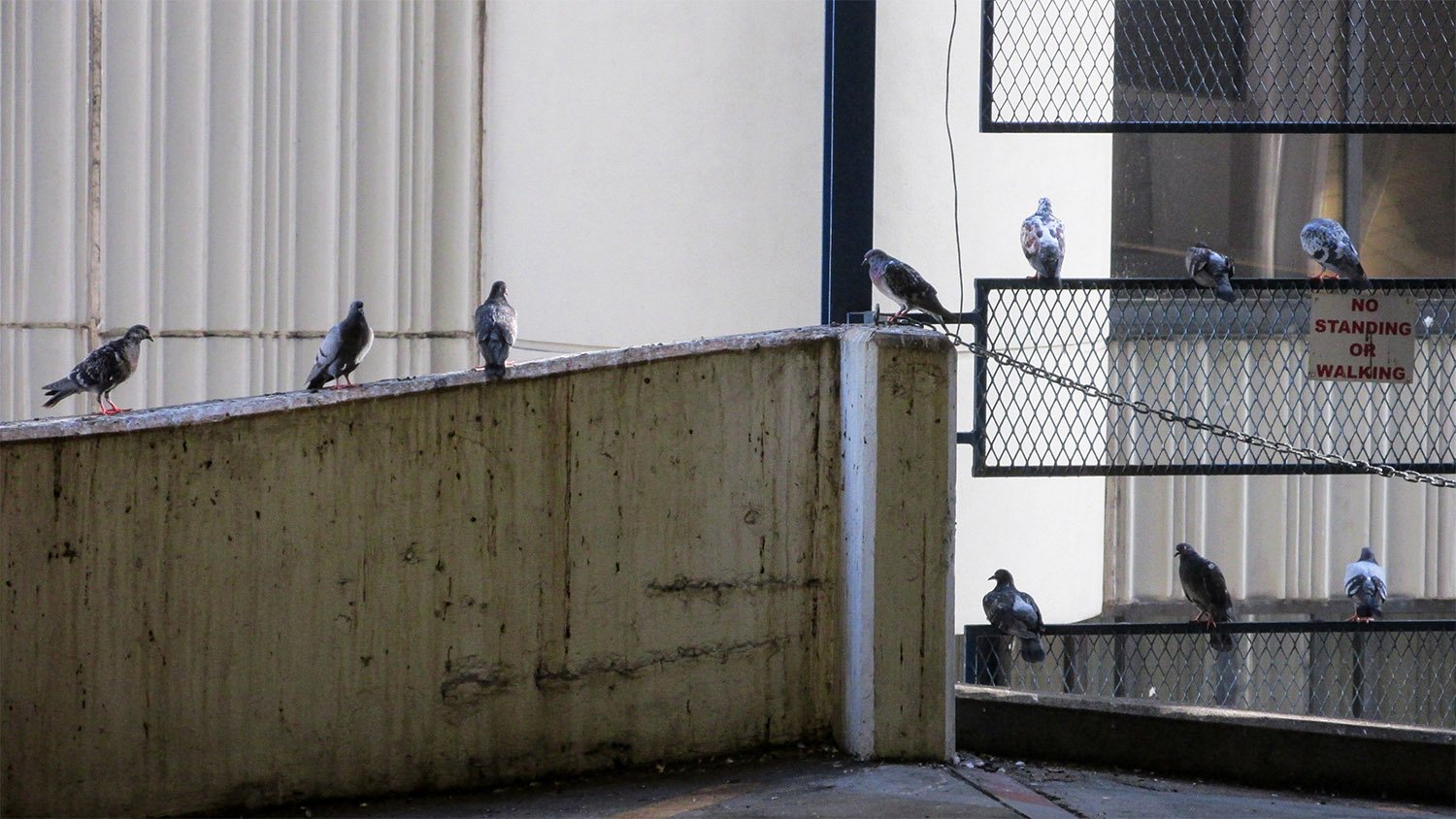
Common pigeons (Columba livia). Peachtree Center, Atlanta. These little rebels don’t care about the rules.
They spend their days watching all the dull, desperate people noisily shuffling through the streets below, quietly defiant in their nonchalance.
My kind of birds.
-
“The President and the Bootblack” (1890) by W.W. Goodrich
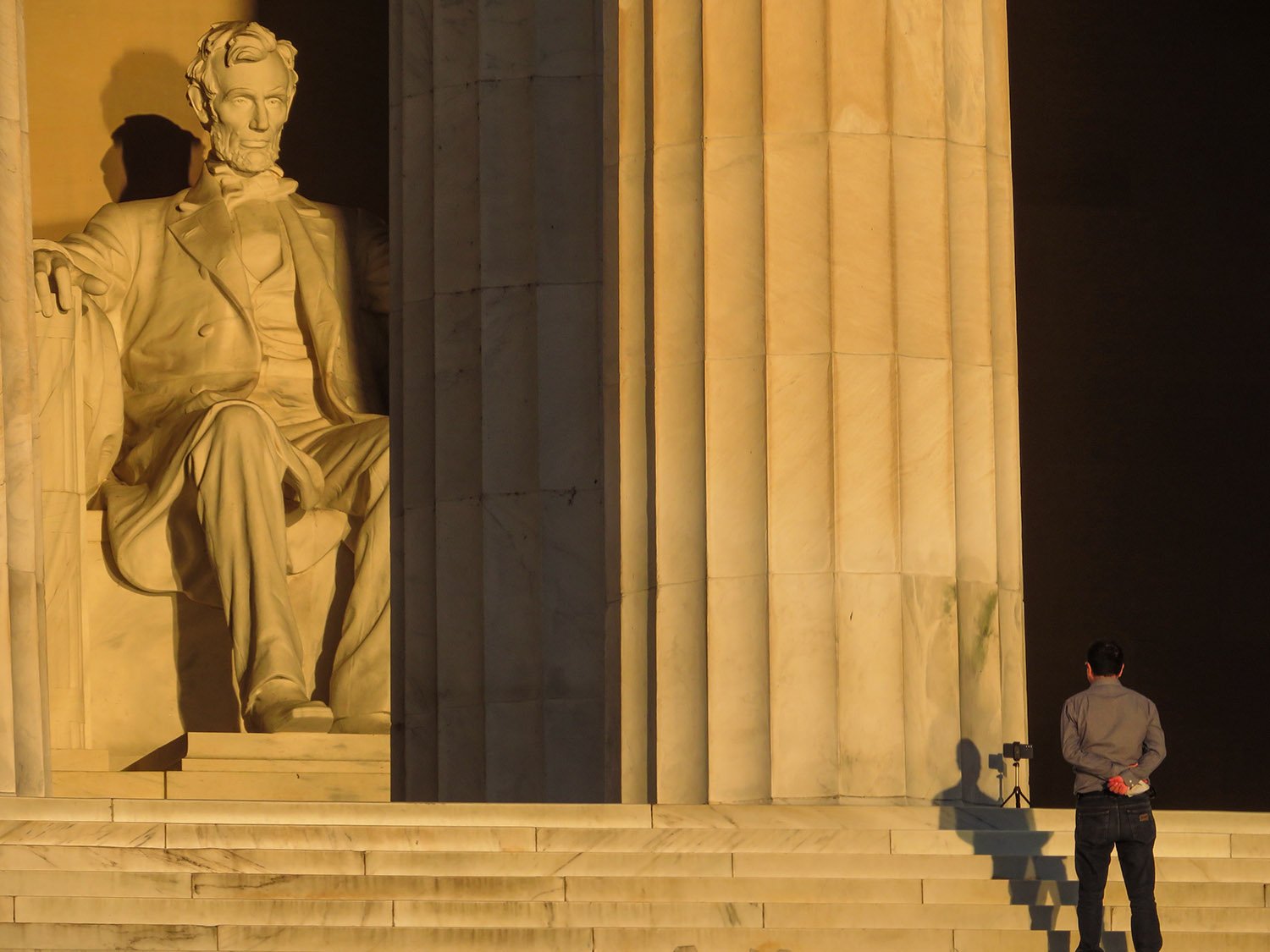
Henry Bacon and Daniel Chester French. Lincoln Memorial (1922). Washington, D.C. The Background
This is the fifth in a series of articles written for The Atlanta Journal in 1890 and 1891 by W.W. Goodrich, an architect who practiced in Atlanta between 1889 and 1895.
Here, Goodrich tells a “true story” of an encounter with Abraham Lincoln in New York City during the Civil War, although the account is almost certainly fabricated.
Goodrich was a pathological liar of some magnitude,1 2 3 and it appears that he largely invented his own biographical details, with implausible stories that became increasingly outlandish throughout his life.
By the time of his death in 1907, Goodrich was described in one obituary as “a personal friend of President Lincoln.”4
The truth, of course, was likely much more mundane. According to the 1860 census—just before the Civil War, and when Goodrich was 19 years old—a man of his name and age lived in what is now the Financial District of Manhattan, where he worked as an insurance clerk.5
It’s doubtful that an insurance clerk who became an architect ever worked as a bootblack, and the odds that he met Abraham Lincoln are slim to none.
Goodrich at least includes a speck of truth by referencing City Hall Park, the largest public space in Lower Manhattan.
This fable is in the vein of other hagiographic tales about American “heroes” that were popular in the 19th century—the apocryphal story of young George Washington chopping down a cherry tree, concocted by Mason Locke Weems, is a prime example of the genre.
This is not a prime example, however, as Goodrich was about as skilled at writing as he was at architecture.
It may seem a little daring that an Atlanta architect would write such a glowing account of Lincoln for a Southern audience, but keep in mind that Atlantans in the New South era prided themselves on having swiftly moved on from the Civil War—or at least, that was the image the city’s leaders wished to project.
The Old Southern hatred and ignorance remained just beneath the surface—and does so to this day—but this was, after all, the city that feted General Sherman for three days in 1879,6 fourteen years after he partially burned it.
Still, Northern-born men like Goodrich who lived and worked in Atlanta in the years after the Civil War had to walk a careful line: Atlantans weren’t offended if a Northerner pledged allegiance to their homeland so long as that person gave a knowing wink to indicate that they, too, shared the cherished Southern values of racism and unmerited superiority.
Look no further than Goodrich’s article entitled “Educational Advantages North and South”, published in The Southern Architect in 1892.
As The Atlanta Constitution said of the article:
“[Goodrich] views the negro as an incumbrance and a political nuisance, and hopes that the better elements of the north and west will seek homes here and stand by the Anglo-Saxon race.”7
It should come as no surprise, then, that Goodrich’s story here includes caricatured and infantilizing depictions of Black people, using offensive and stereotypical language.
Two explicit racist terms will not be reproduced here and have been replaced with the [omitted] tag.
The President and Bootblack.
Characteristic Incident in the Life of Abraham Lincoln—A True Story.
Written for the Journal.
“Shine, sir! Shine Sir!” the usual cry of the bootblack trudging along day by day, half-starved, hope in a future better existence, where he can sit beside a table of generous roast beef, mashed spuds, the revivifying coffee, hot rolls and butter. How my memory goes back to those days when these good things were of the “sight and smell only.” A short time before the assassination of our Lincoln he visited New York City in company with that stern, hard-headed secretary of war, Stanton.
I had seen the president on several occasions and knew him by sight, as Mr. Lincoln always, and all times, had a quiet, natural greeting for everyone; even the humblest child could approach him and be assured of a cordial and true gentlemanly greeting.
As they were crossing City Hall park I ran up behind, and with sang froid, said “Shine, uncle, shine, sir?” Mr. Lincoln turned about with a bright, humorous smile, while the great war secretary, in half indignation, asked the president to come on, as time was precious, but Mr. Lincoln said, “Wait a moment, Mr. Stanton, let’s sit down.”
Seating themselves at the west of the old city hall on a settee Mr. Lincoln was in the act of placing his right boot on my box, when behind me arose a cry: “Massa Lincum, let me shine of dem boots? Smug, you go away from dar, den Massa Lincum make me free. You poor white trash no bizzness shining my Massa’s boots.” A good argument, even from the “duke,” as we called the colored lad. My nickname was “Smug.” Mr. Lincoln afterwards remarked: “I will let you both shine; each can have a boot.” A crowd was gathering about us, of boot-blacks, errand boys, news boys and pedestrians, all anxious to know what was up, but all soon knew who the distinguished gentleman was, and with repeated cries from the less fortunate boys of “Go in Smug,” “I’ll bet on the duke,” and other phrases, we shined as best we could, Mr. Lincoln amusingly telling us that he’d bet on the hoss that won, and I’ll pay the boy that shines the best for both boots, patronizingly patting us on the back. When we had nearly completed our pleasant task Mr. Lincoln said: “Boys, I am going to tell you a story. I have just come up from the front. Have been down with General Grant, looking over the battle-fields, going through the hospitals;” and a great tear rolled down his cheek as he mentioned the brave boys, with legs and arms shot off, and the lonely graves of the unknown dead, and thinking of the anxious ones at home, who would never see their fathers, brothers and sons again. How vividly he portrayed the scene. Finally he said: “Several evenings since, as I sat in a tent door, in conversation with General Grant, a colored woman came by the guard, and in her arms were two little colored children saying, as she approached, ‘Massa Lincum, I’se hab twins, boff [omitted]. One I’se named arter you, and de udder arter Massa Washington. Dey’s boff de berry picture ob yous. Now, Massa Lincum, seeing as how yous ben so good ter de [omitted], and dat yous has made us free, and as my ole man is at de front, shouldering his musket fighting for yer, I’se gwine to ask yer to help dese [omitted] to something to eat,’” and suiting his action to his words he took out of his vest pocket two one dollar bills, and gave us each one, saying “you [omitted] look as though something to eat would not be amiss.”
The boys gave Massa Lincum three cheers and a tiger. While I was putting up my brush and blacking, after receiving the bill, even before I was off the bended knee, he saw in box a book. “Smug, what is that book?” I reluctantly gave it to him. He looked at its well-worn leaves and read “Robinson’s Algebra,” looking at me quizzically, saying to himself “Robinson’s Algebra.” “What are you doing with an algebra?” I hesitated about telling him, but his pleased look drew out my story. Only a poor, struggling student, working and striving under every opportunity and at whatever occupation to get an education that would prepare me for the future and that better my condition, and that by knowledge. He manifested much interest, promising to keep a weather eye on my future, and in parting said, “As your shine is well done, do everything else in like manner. and you will soon shine in something better.”
W.W. Goodrich8
References
- “Held to Answer”. Denver Rocky Mountain News, March 26, 1881, p. 2. ↩︎
- “Probably a Sharp Swindler”. The National Republican (Washington, D.C.), November 27, 1883, p. 3. ↩︎
- “An Old Fraud Heard From”. Los Angeles Herald, March 16, 1884, p. 3. ↩︎
- “Capt. Goodrich”. St. John’s Review (St. Johns, Oregon), February 15, 1907, p. 2. ↩︎
- United States Census, 1860, William Goodrich, 2nd District, 7th Ward, New York City, New York, p. 138. ↩︎
- “Two Receptions”. The Atlanta Constitution, January 30, 1879, p. 1. ↩︎
- “Editorial Comment”. The Atlanta Constitution, May 14, 1892, p. 4. ↩︎
- Goodrich, W.W. “The President and the Bootblack.” The Atlanta Journal, July 5, 1890, p. 12. ↩︎
-
Dobbs University Center (1987-2017) – Atlanta
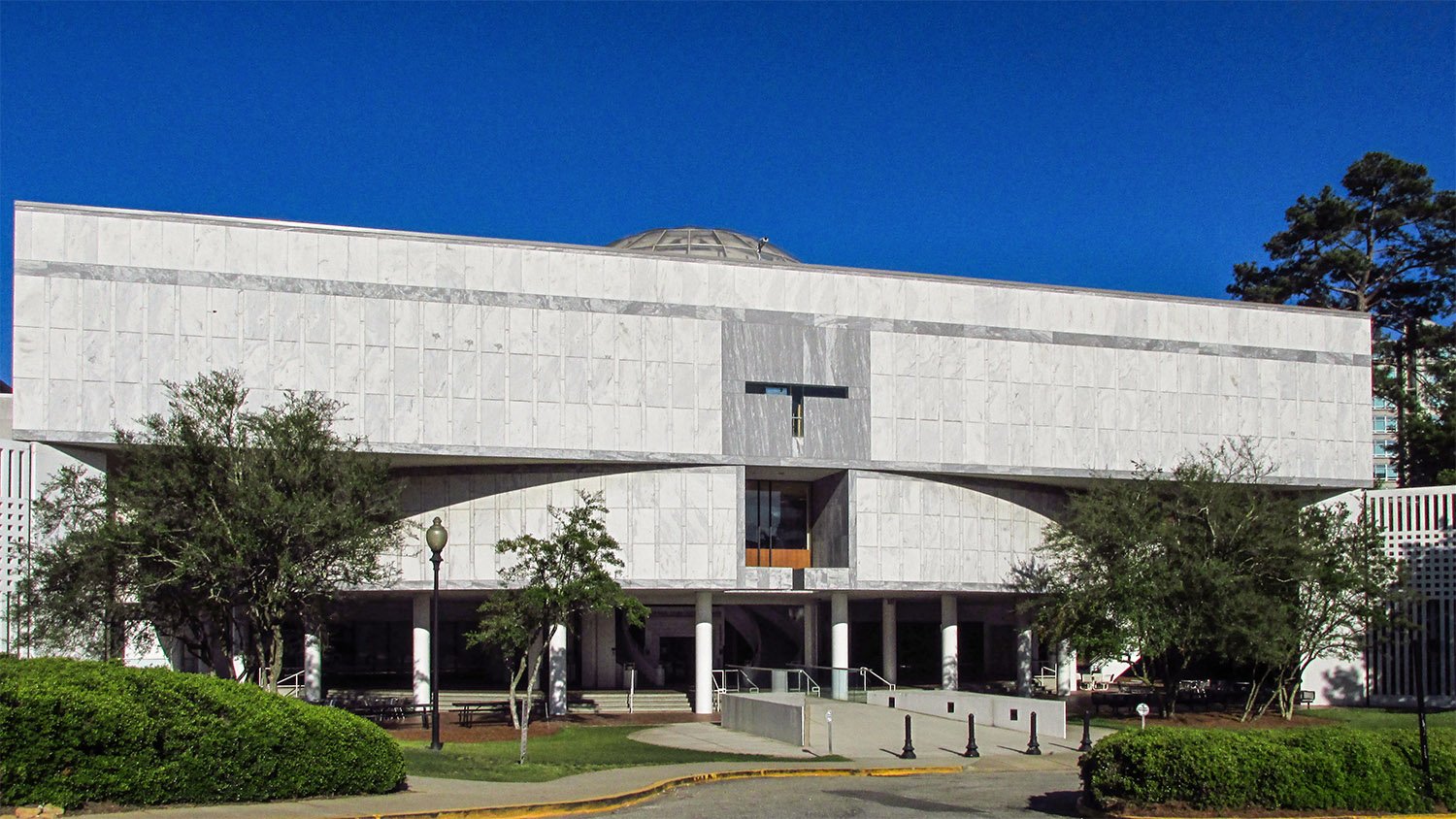
John Portman and Associates. R. Howard Dobbs University Center (1987, demolished 2017). Emory University, Atlanta.1 2 3 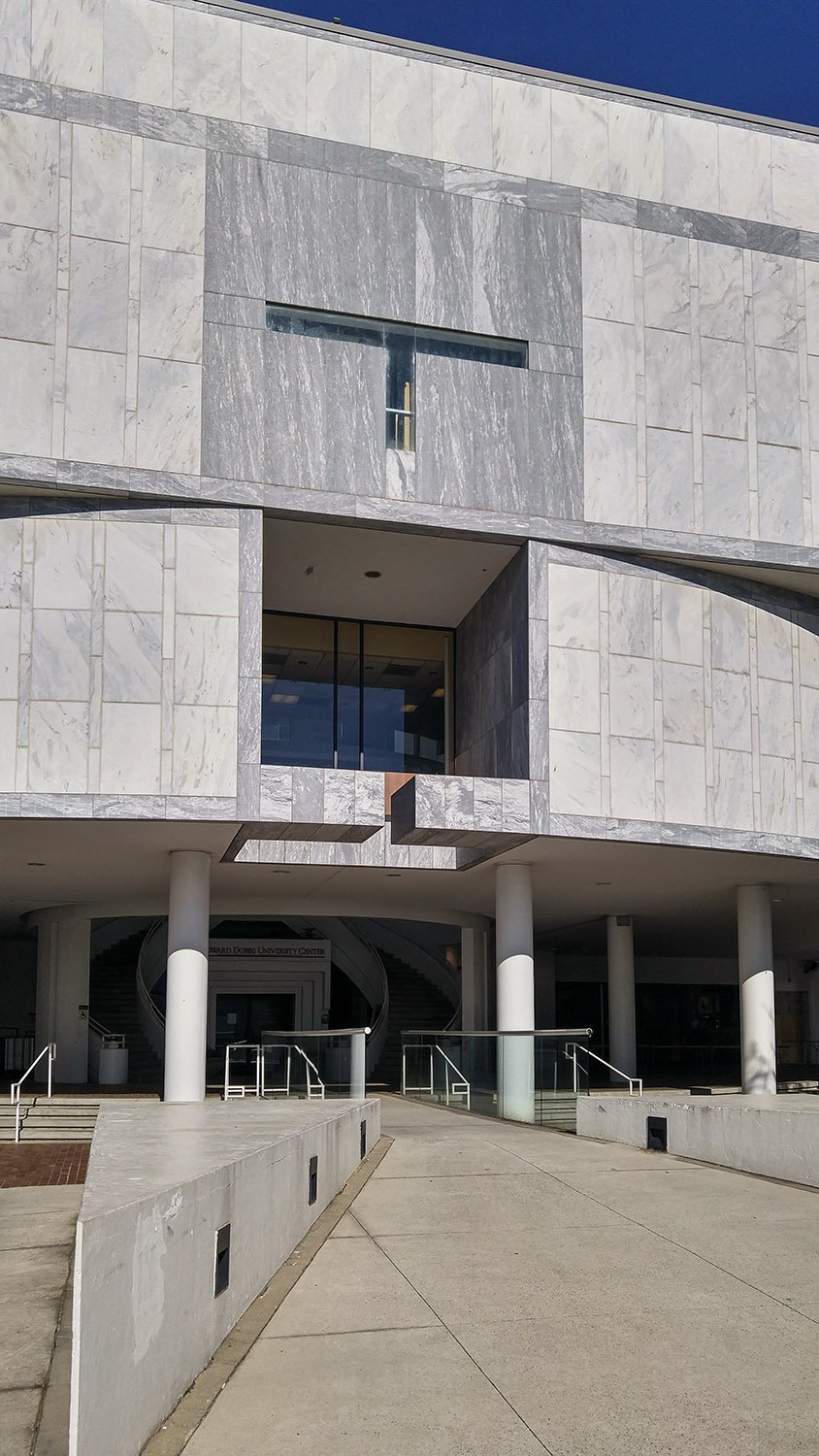
Approaching the entrance of Dobbs University Center, Atlanta 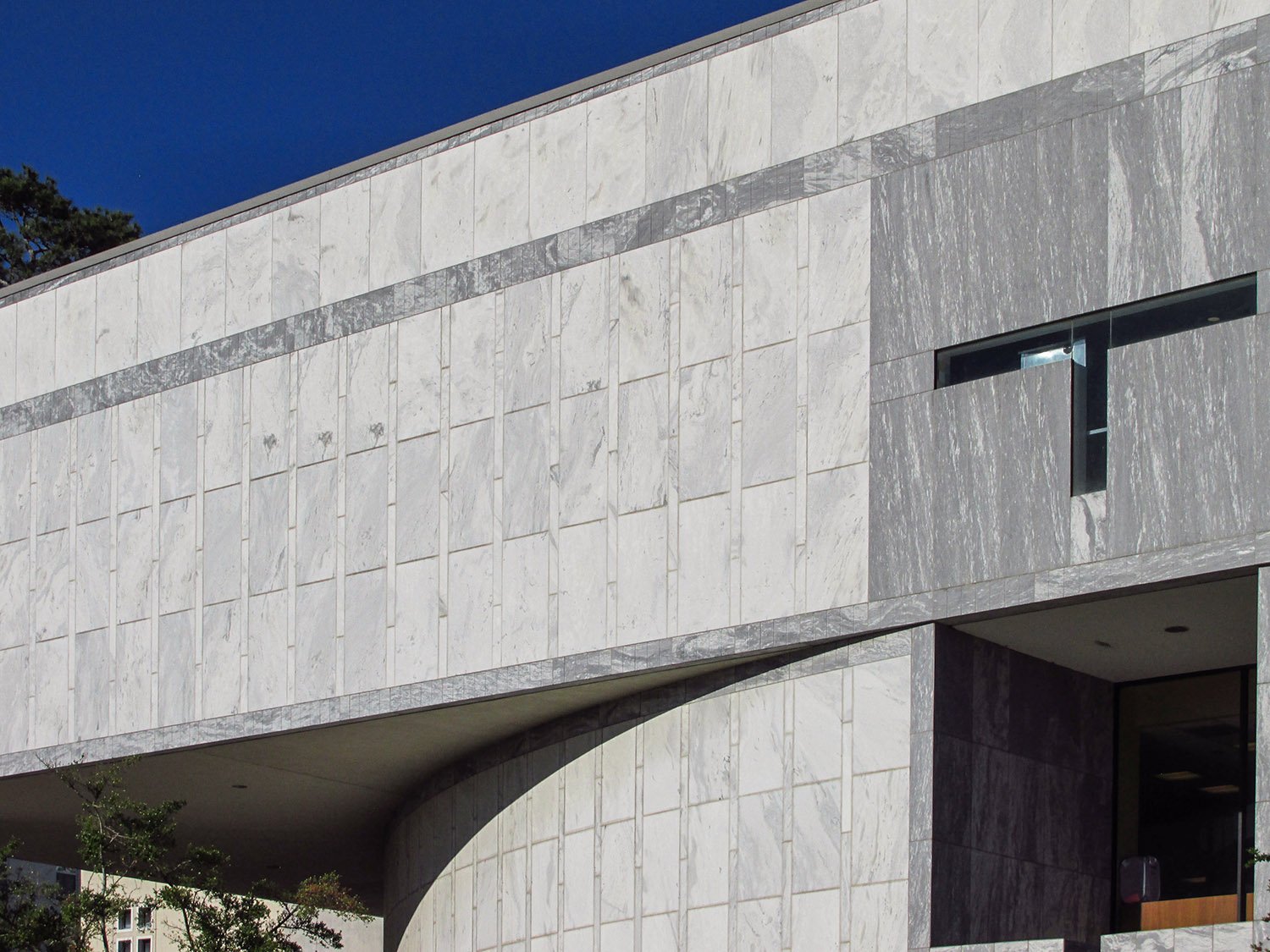
Cantilevered floor on the facade of Dobbs University Center, Atlanta 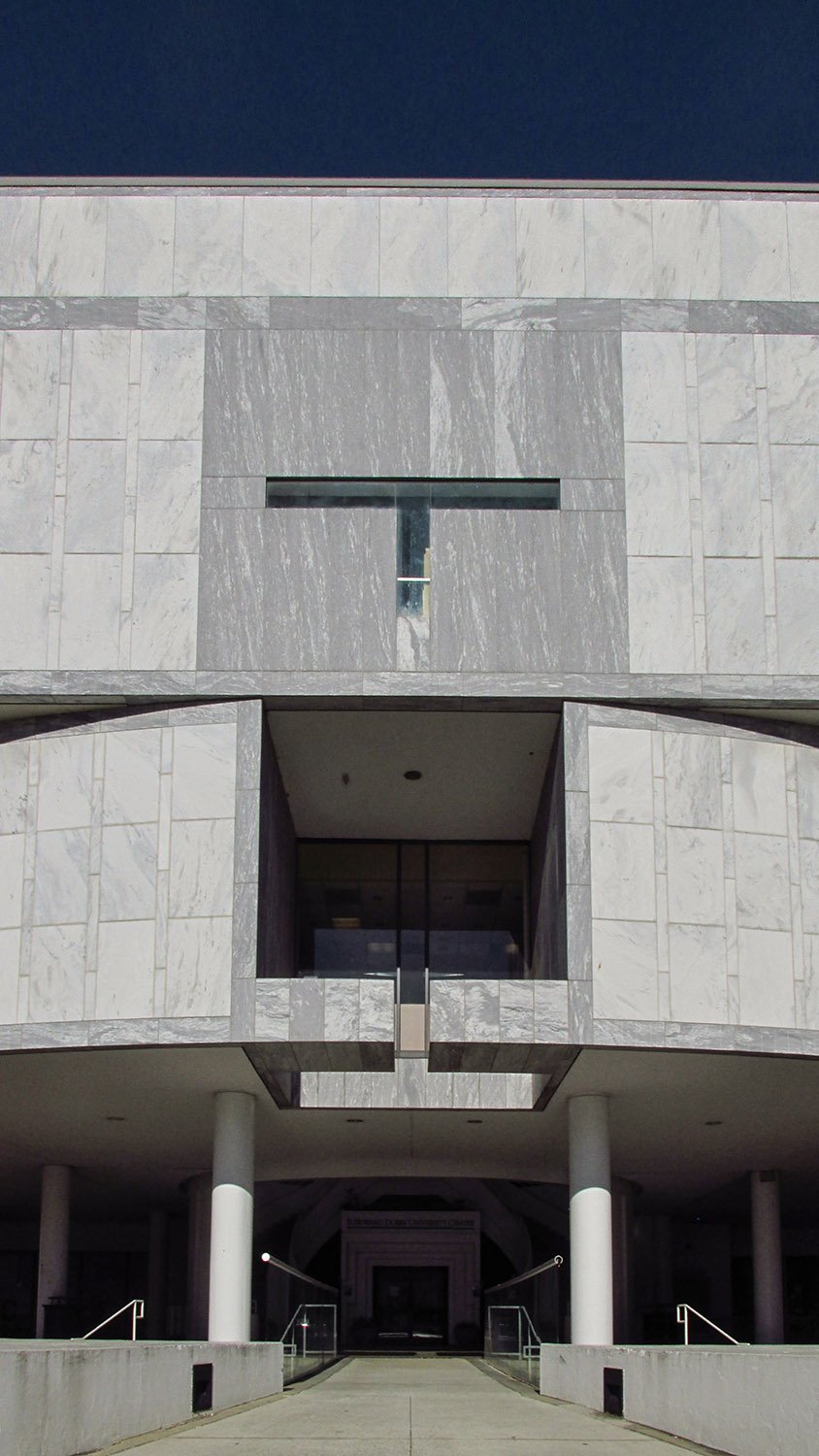
Looking up at the facade of Dobbs University Center, Atlanta 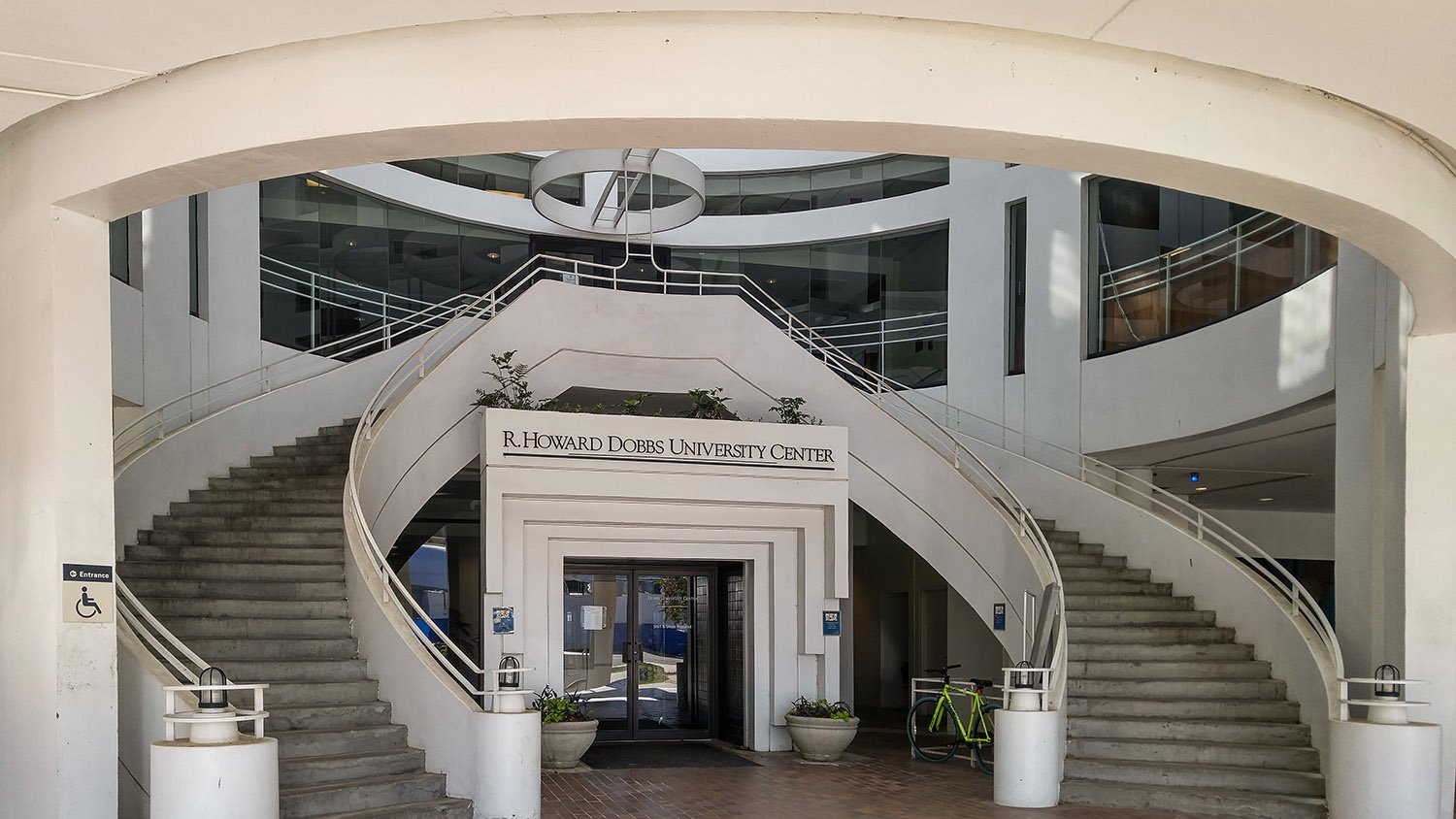
Entrance of Dobbs University Center, Atlanta 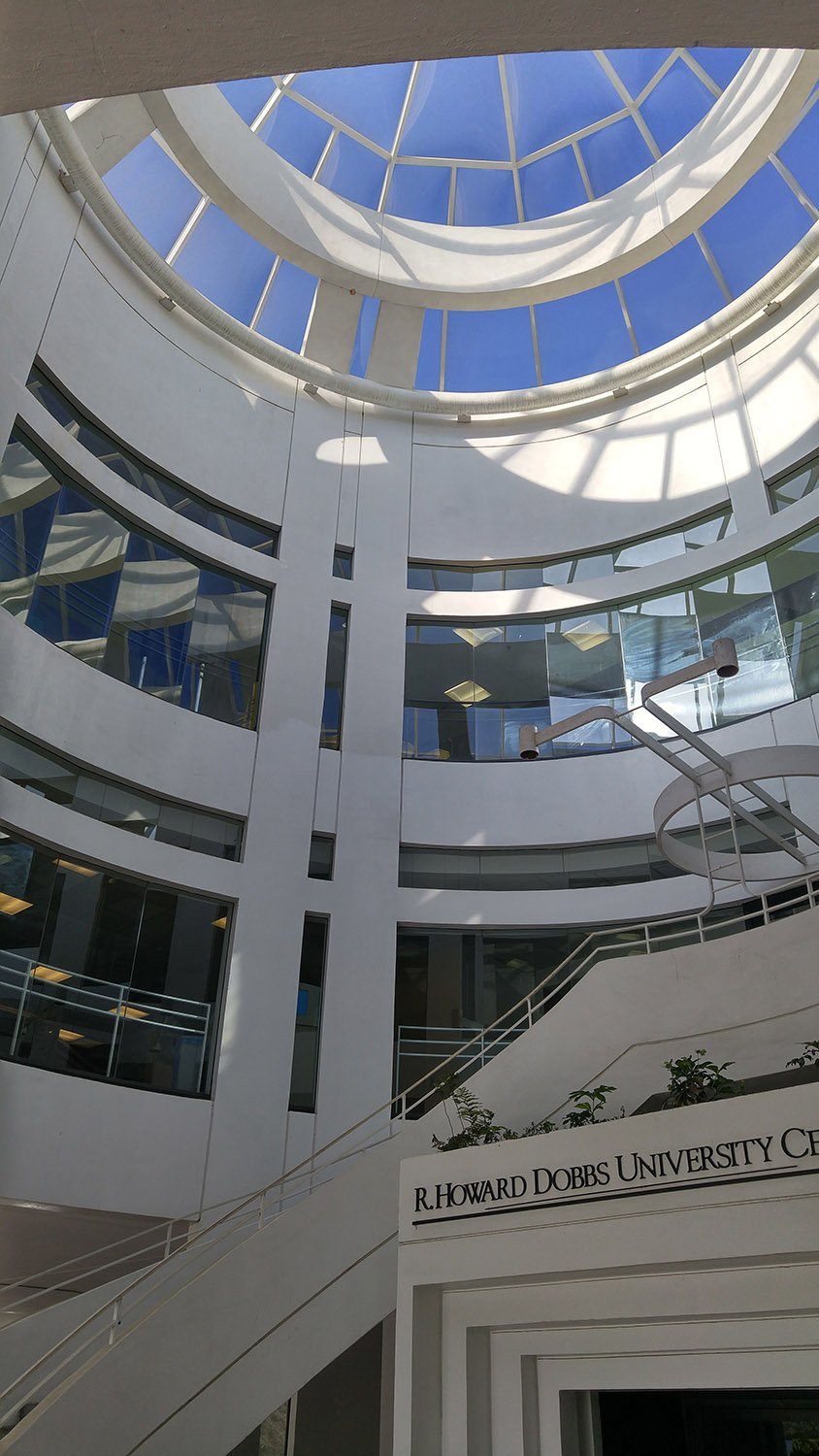
Looking up at the entrance rotunda of Dobbs University Center, Atlanta 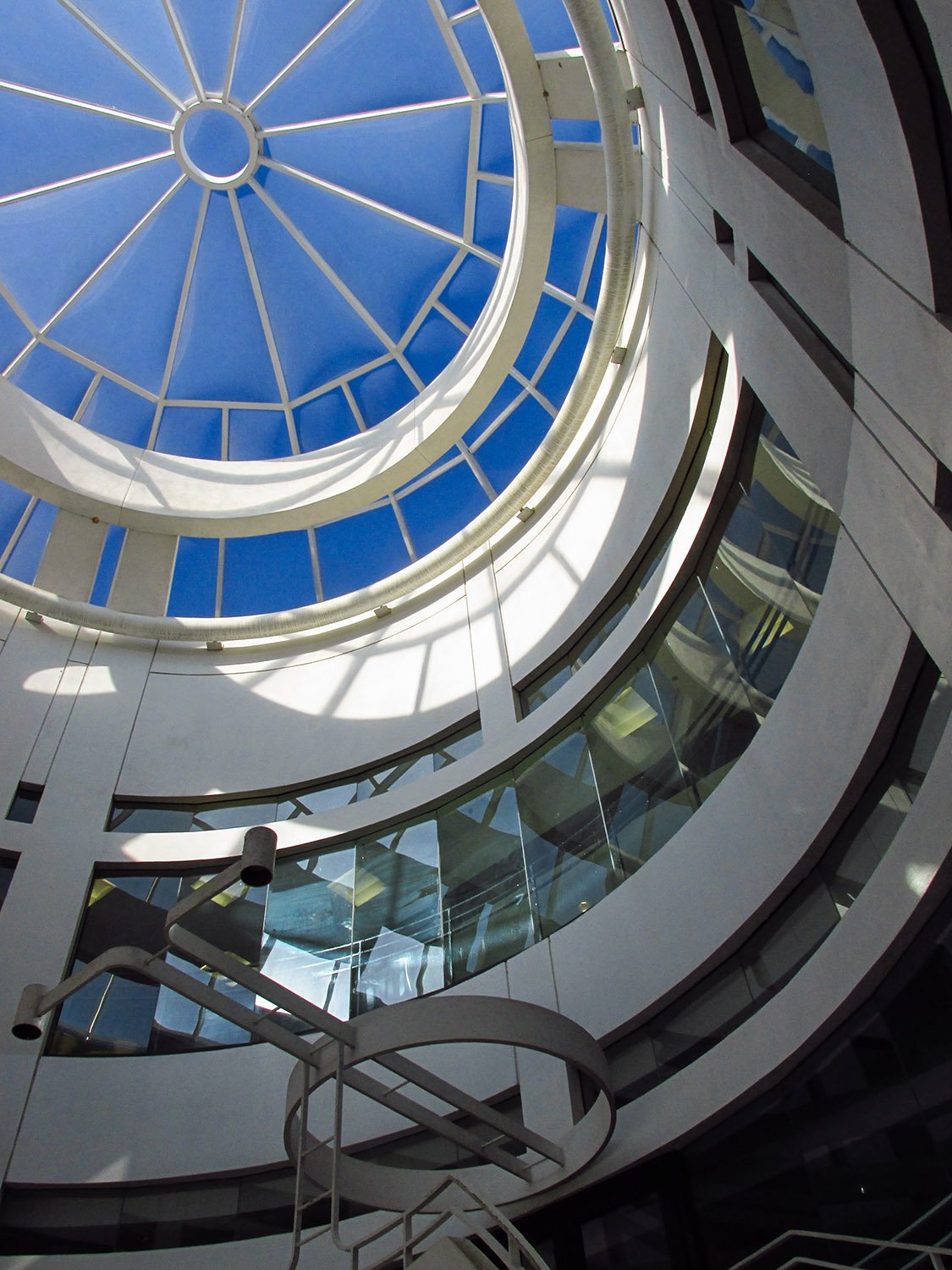
Looking up at the entrance rotunda of Dobbs University Center, Atlanta 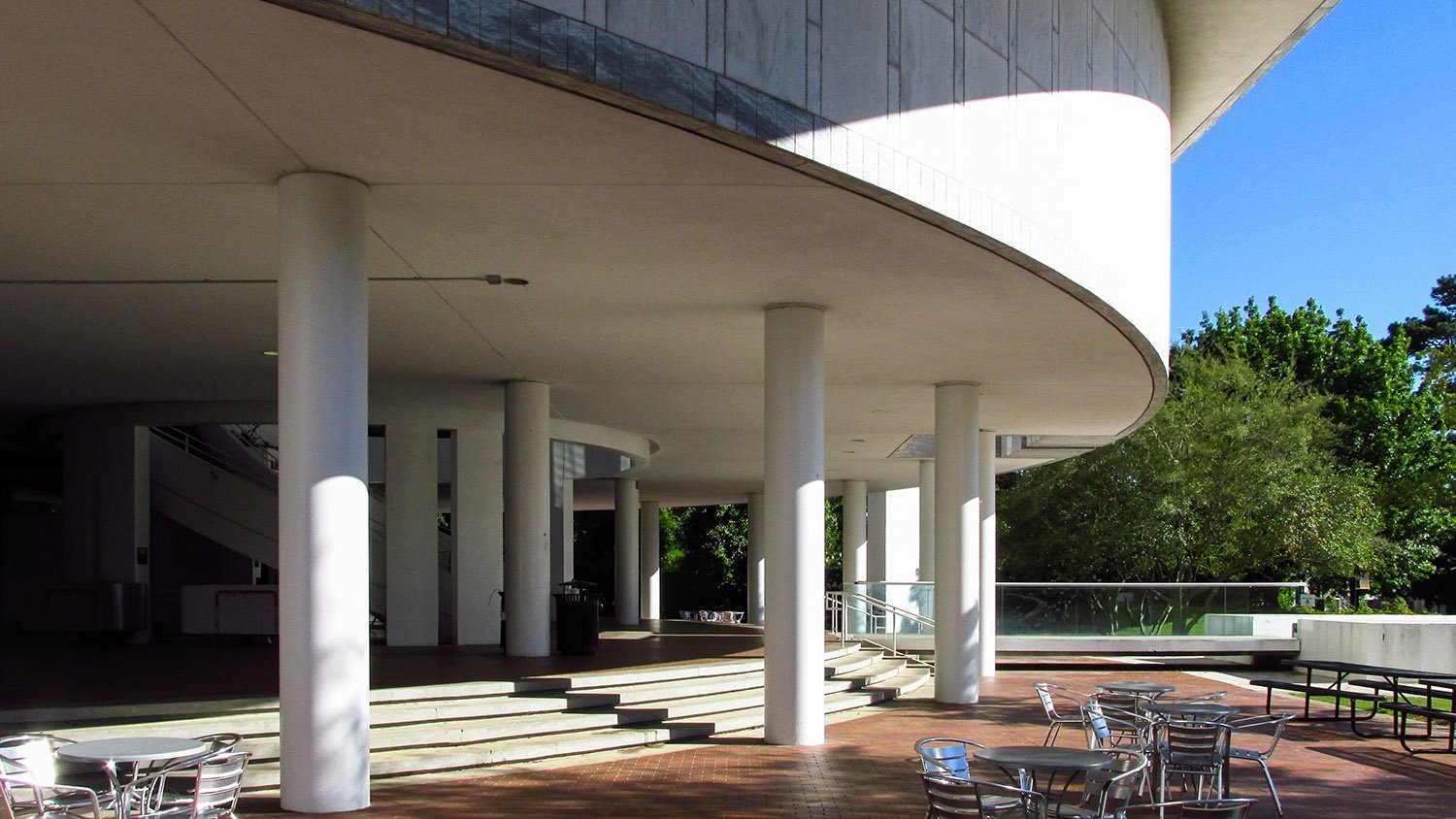
Patio outside Dobbs University Center, Atlanta 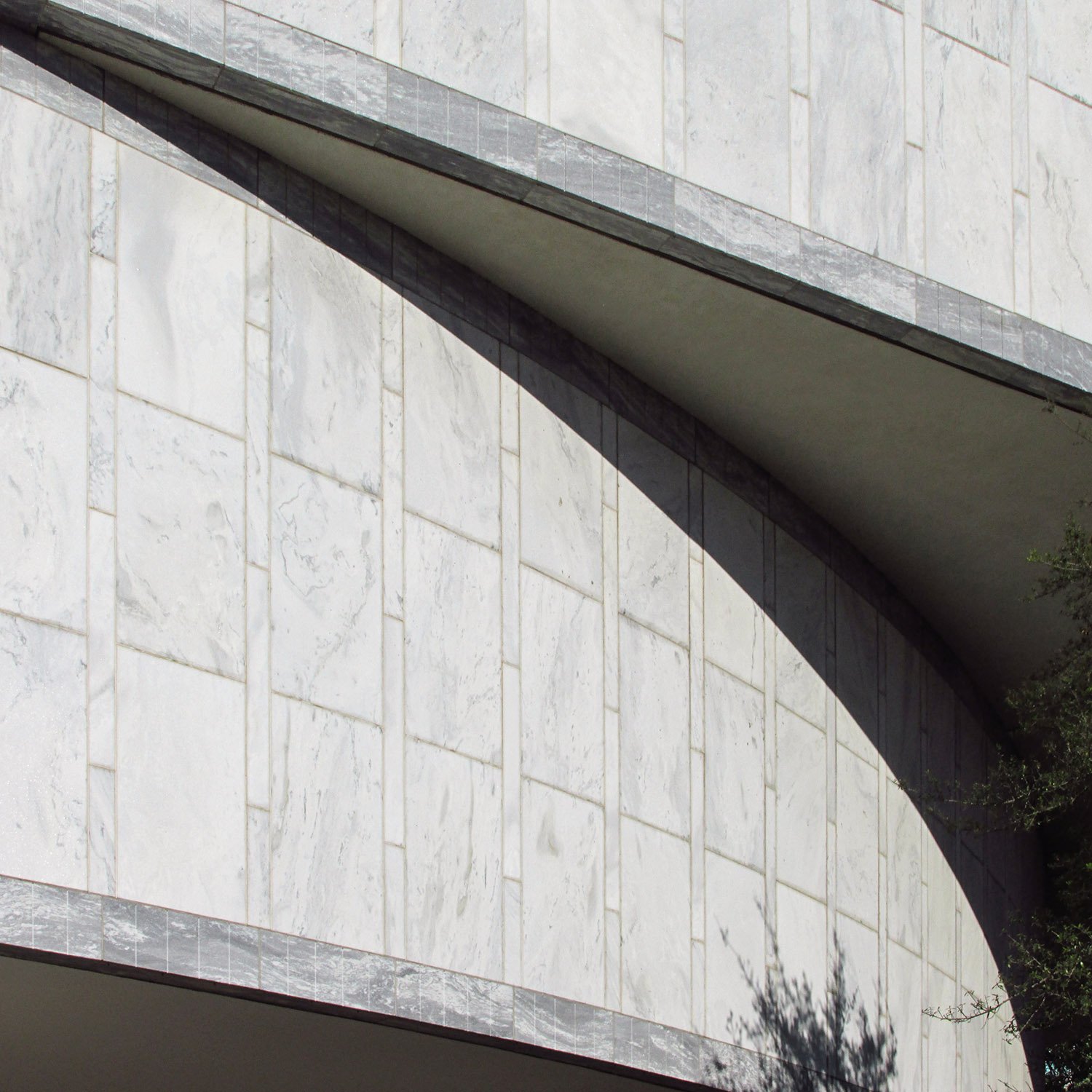
Looking up at a cantilevered floor on Dobbs University Center, Atlanta 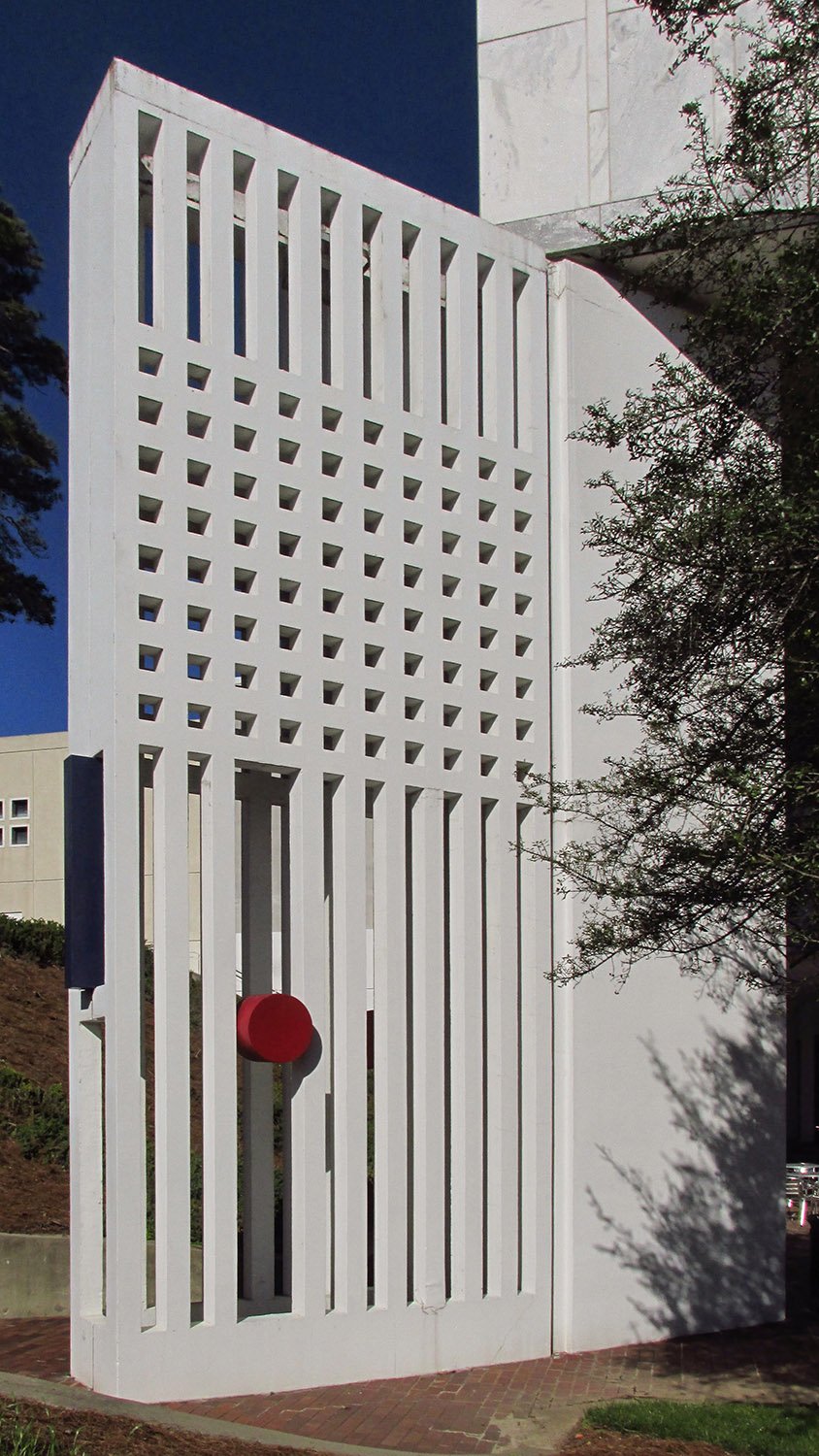
Screen wall on the southwest corner of Dobbs University Center, Atlanta 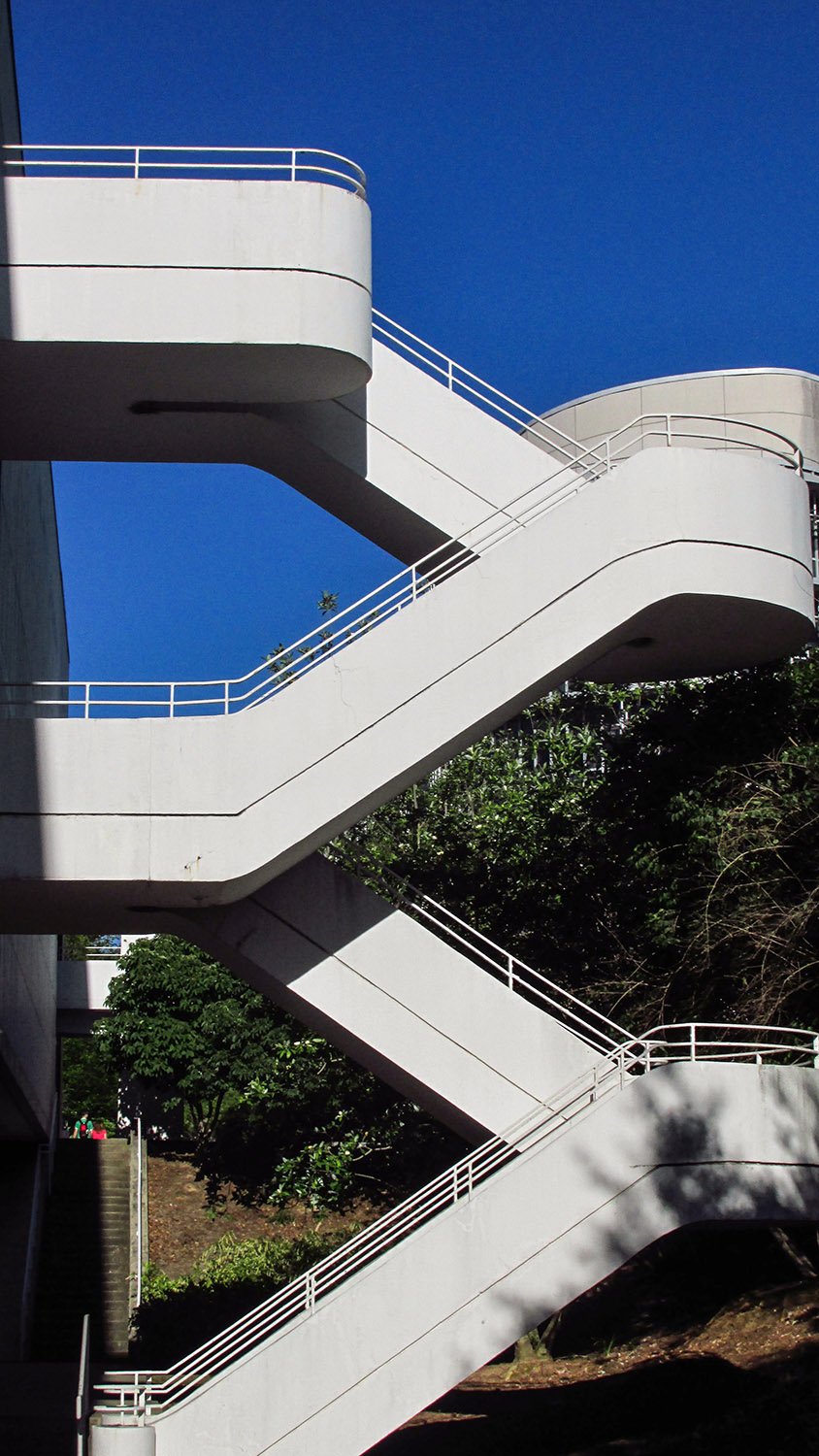
Stairs on the south elevation of Dobbs University Center, Atlanta 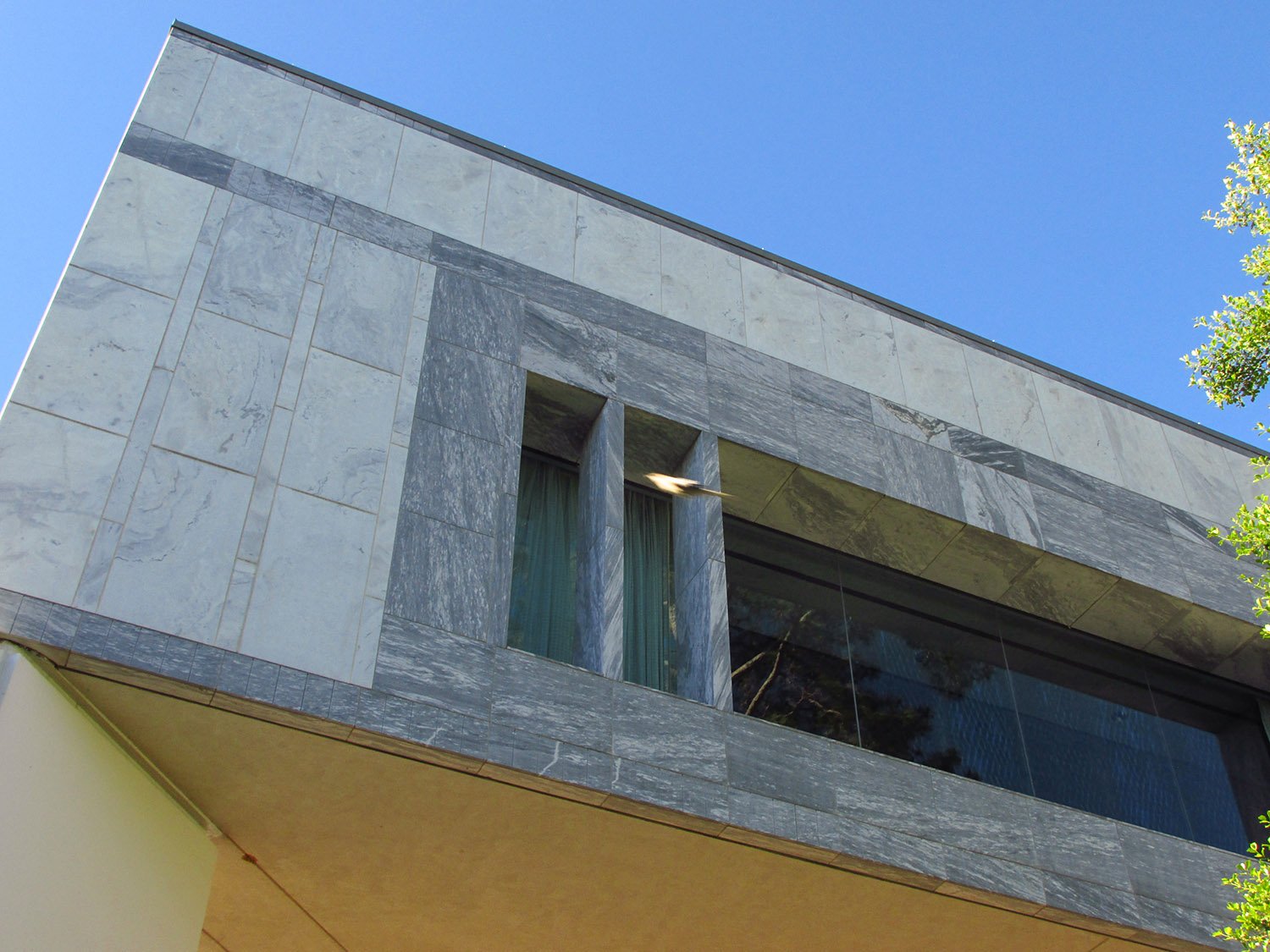
Looking up at the south elevation of Dobbs University Center, Atlanta 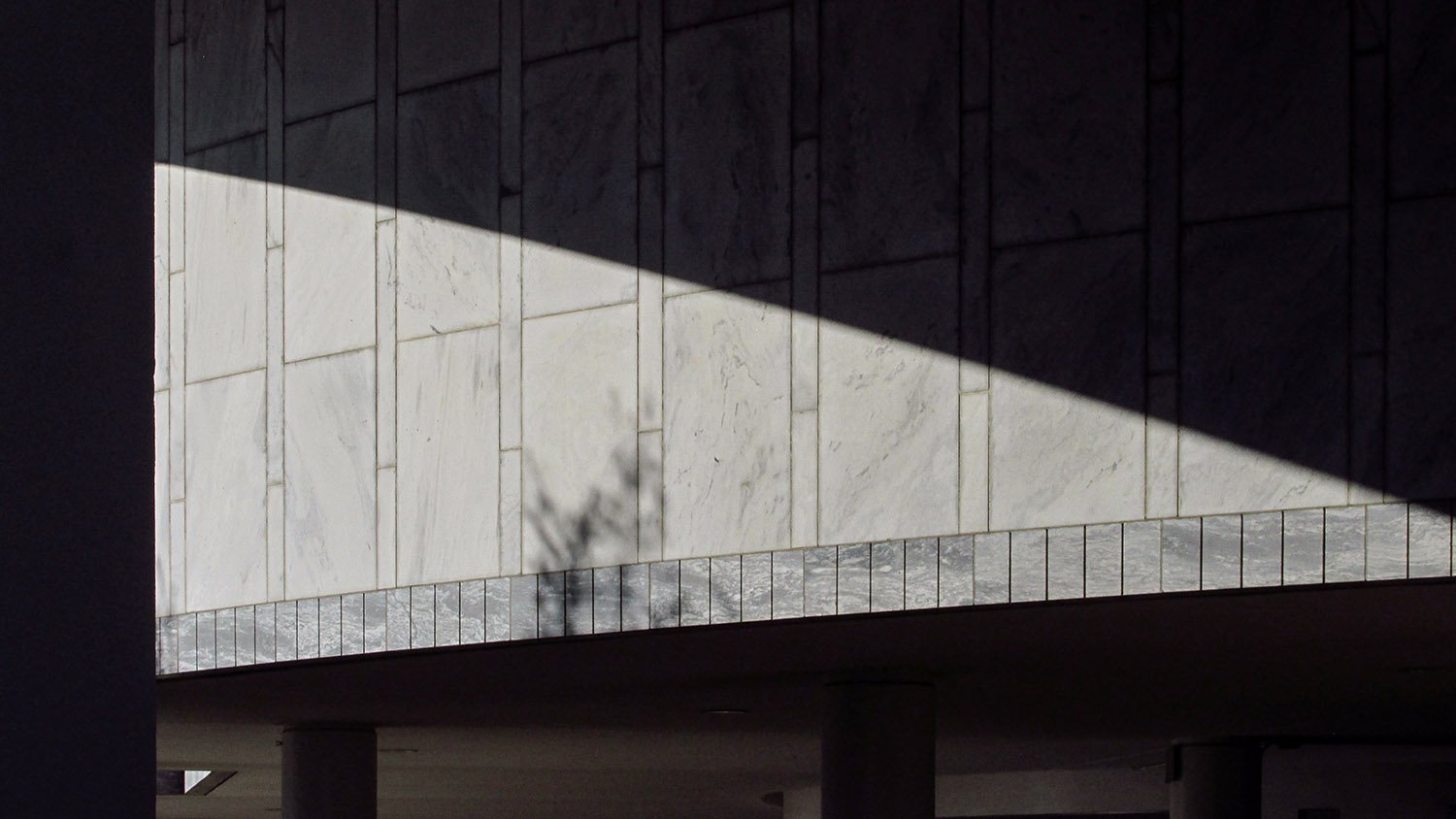
Marble panels on the facade of Dobbs University Center, Atlanta 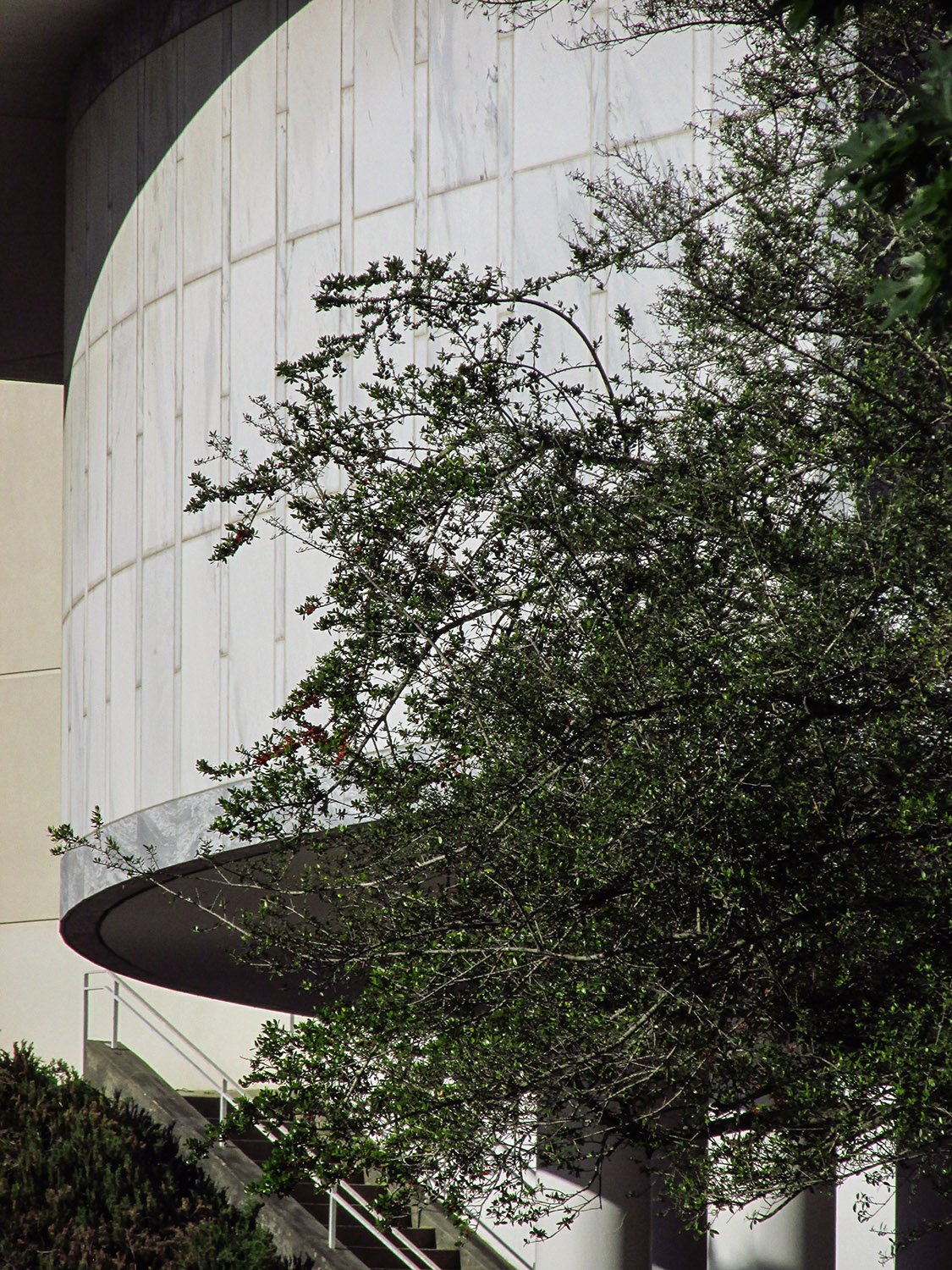
Stairs and cantilevered floor on the south elevation of Dobbs University Center, Atlanta 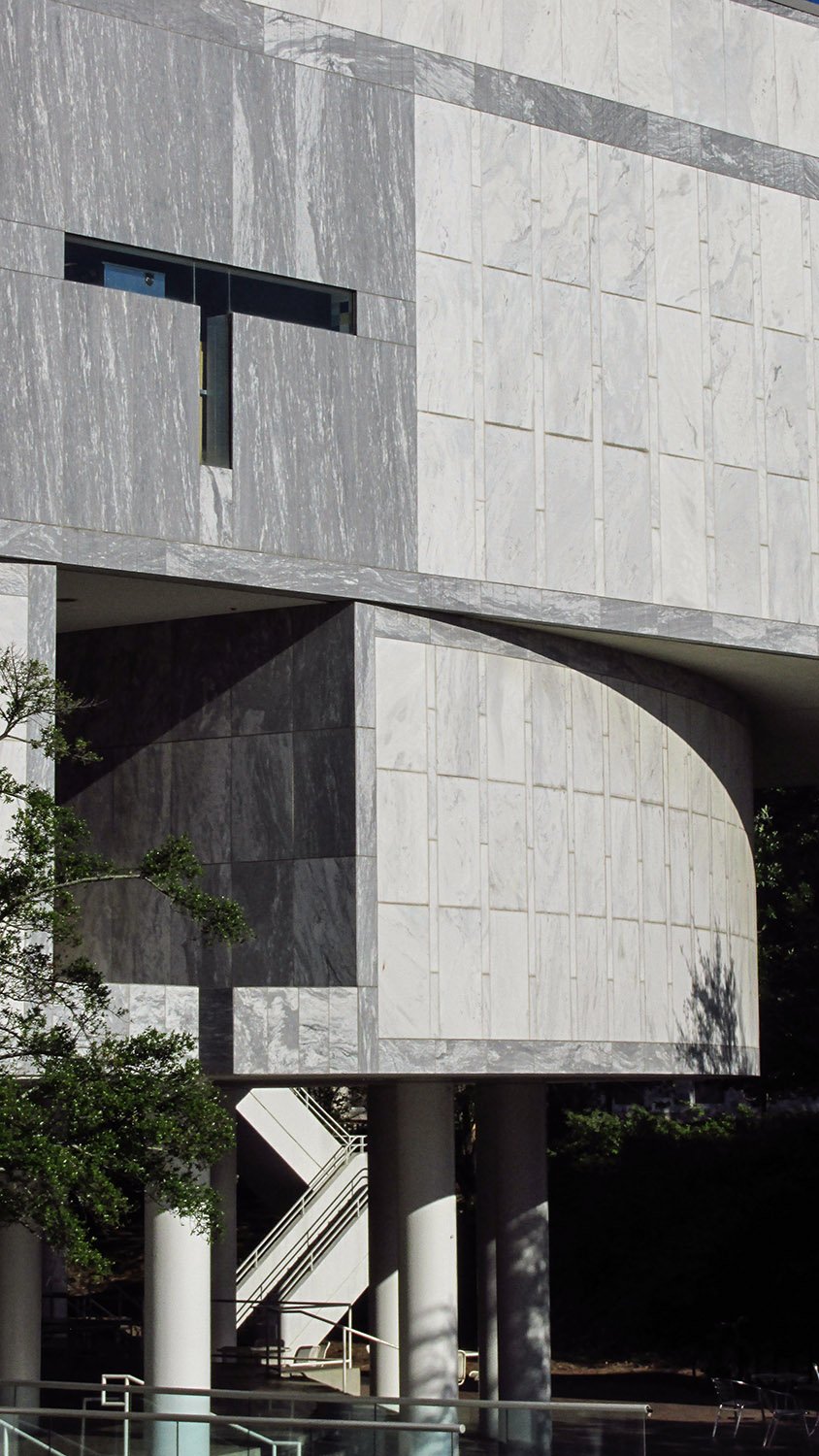
Looking at the facade of Dobbs University Center, Atlanta 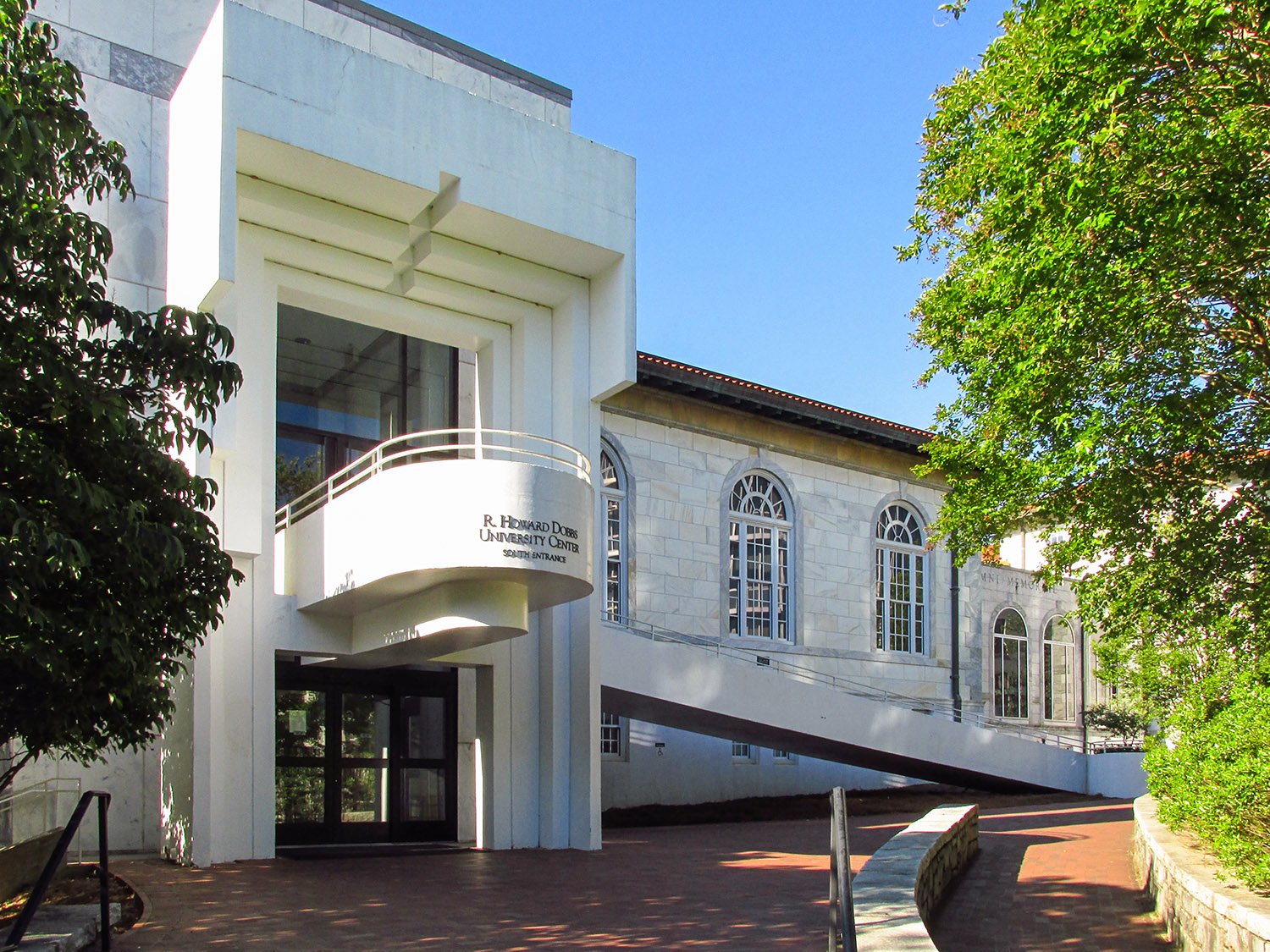
Entrance on the south elevation of Dobbs University Center, Atlanta 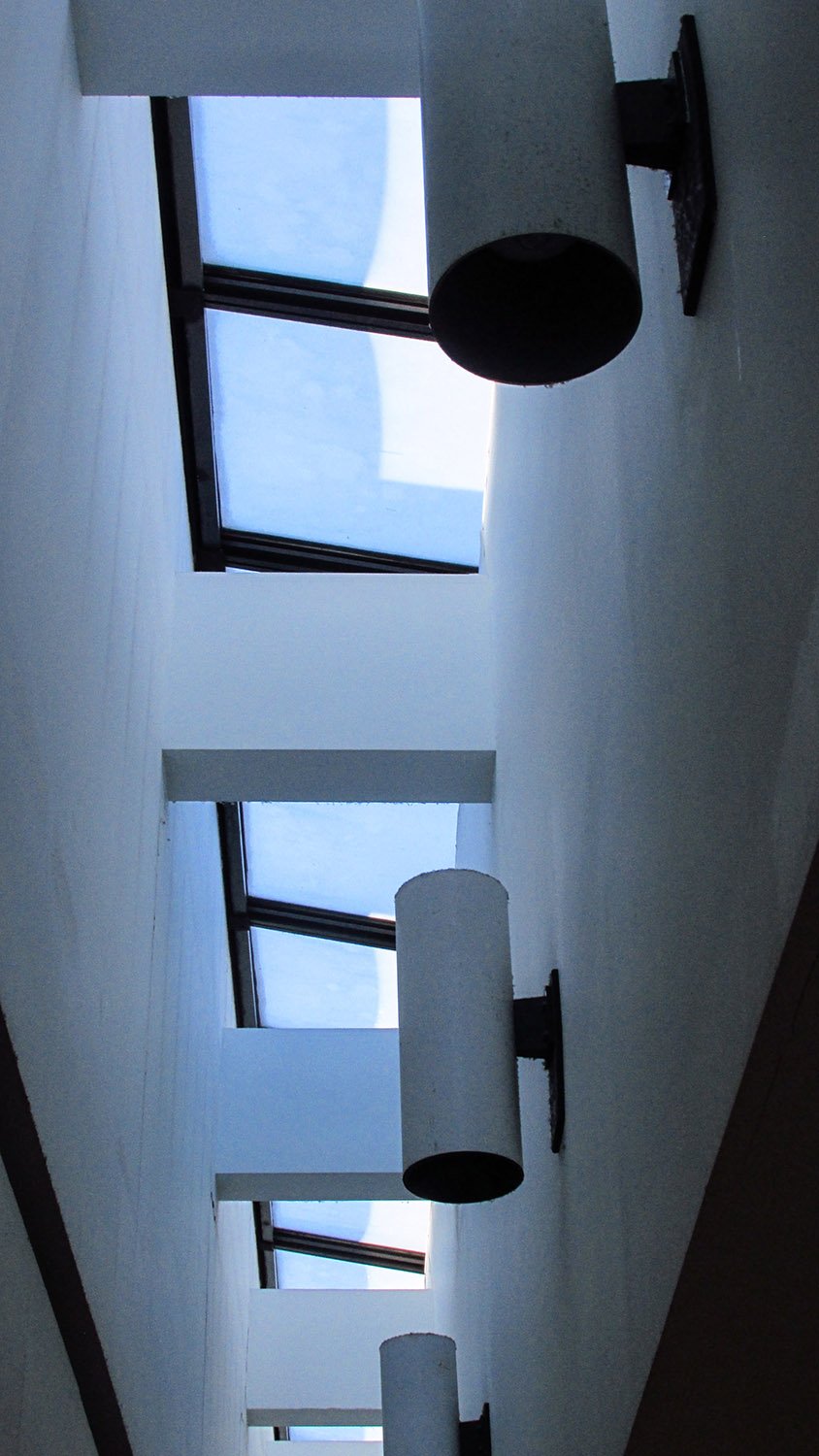
Skylight and sconces inside Dobbs University Center, Atlanta 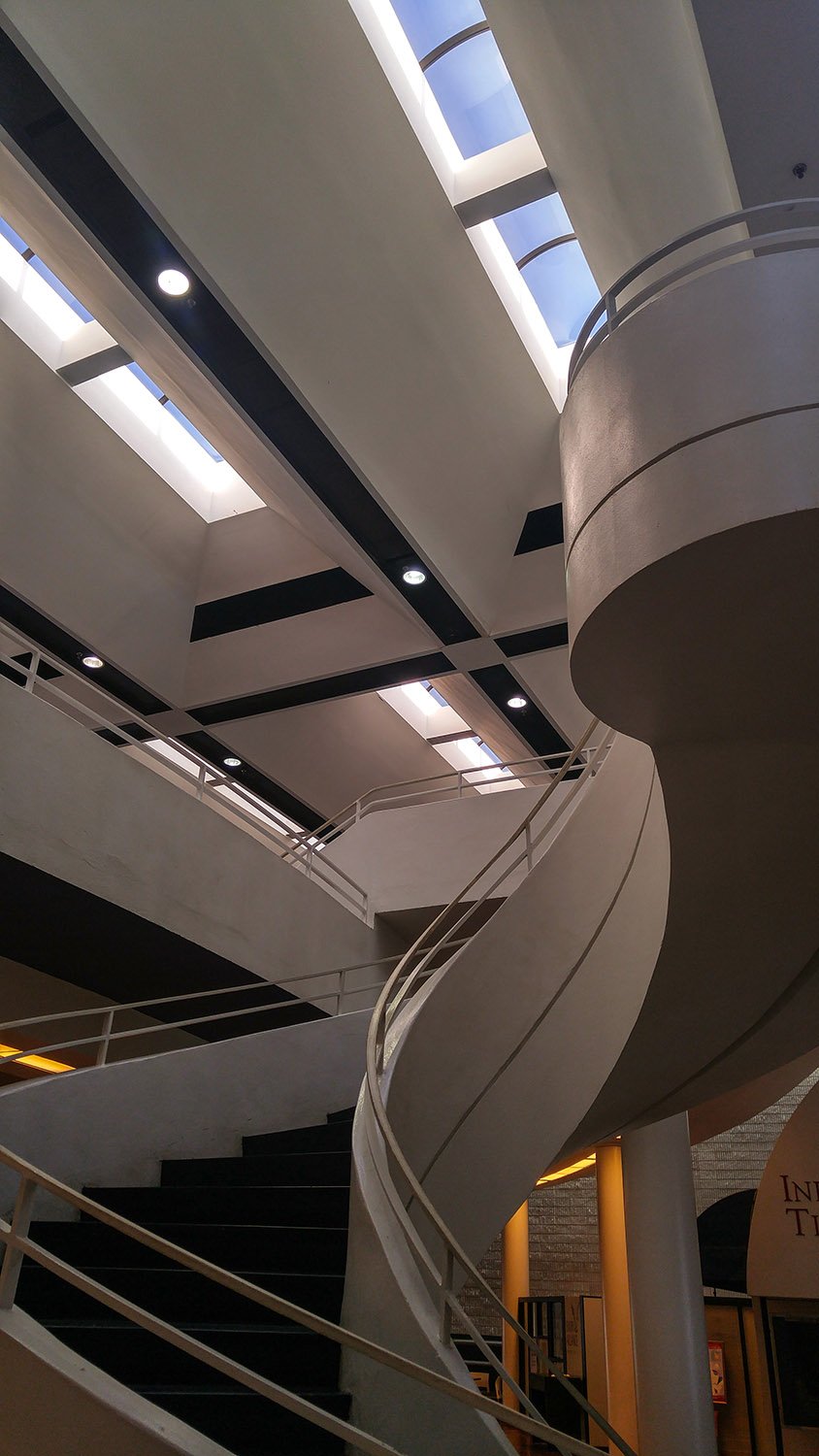
Winding staircase in Dobbs University Center, Atlanta 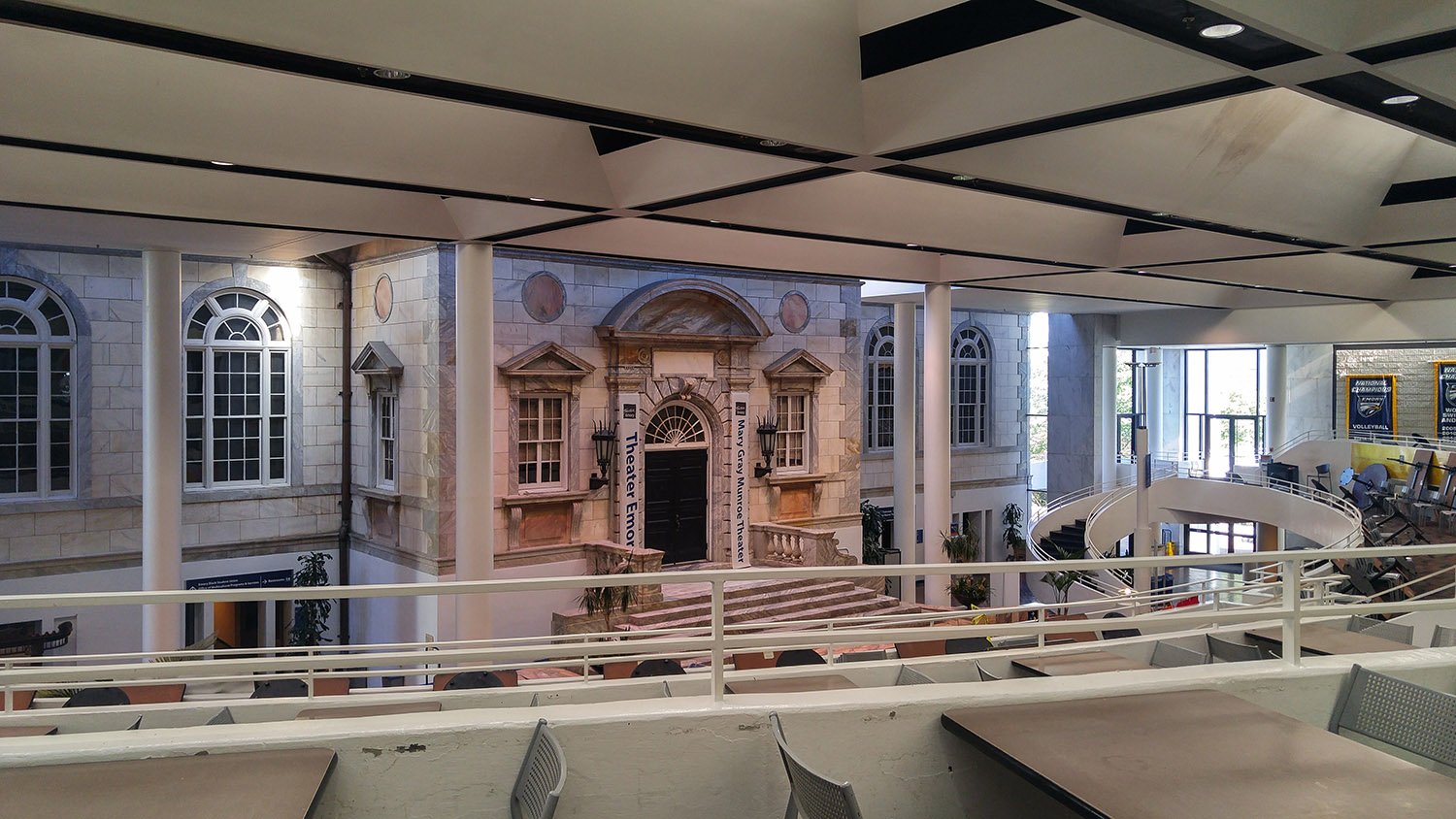
Dining commons in Dobbs University Center, Atlanta 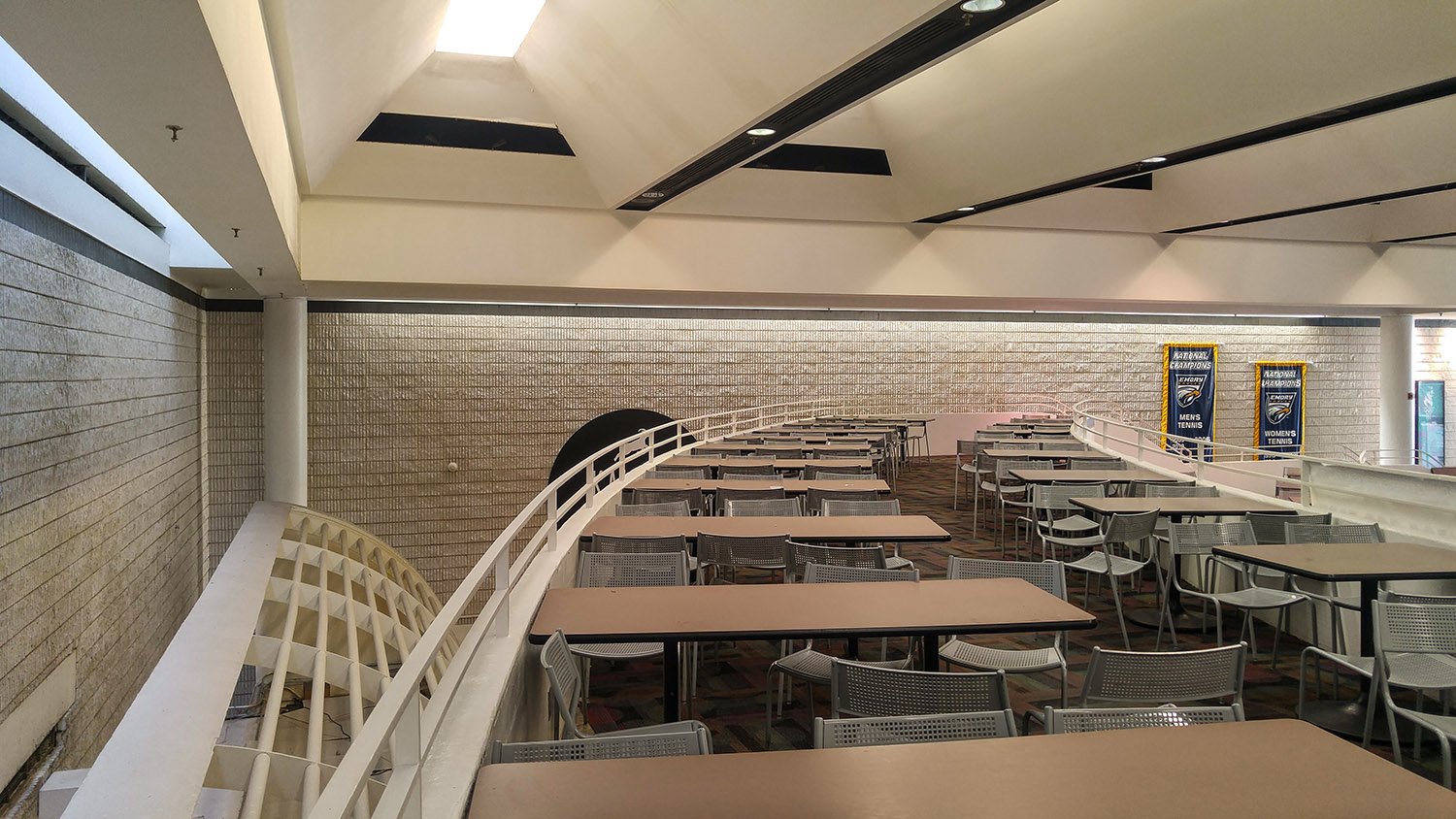
Mezzanine level of the dining commons in Dobbs University Center, Atlanta 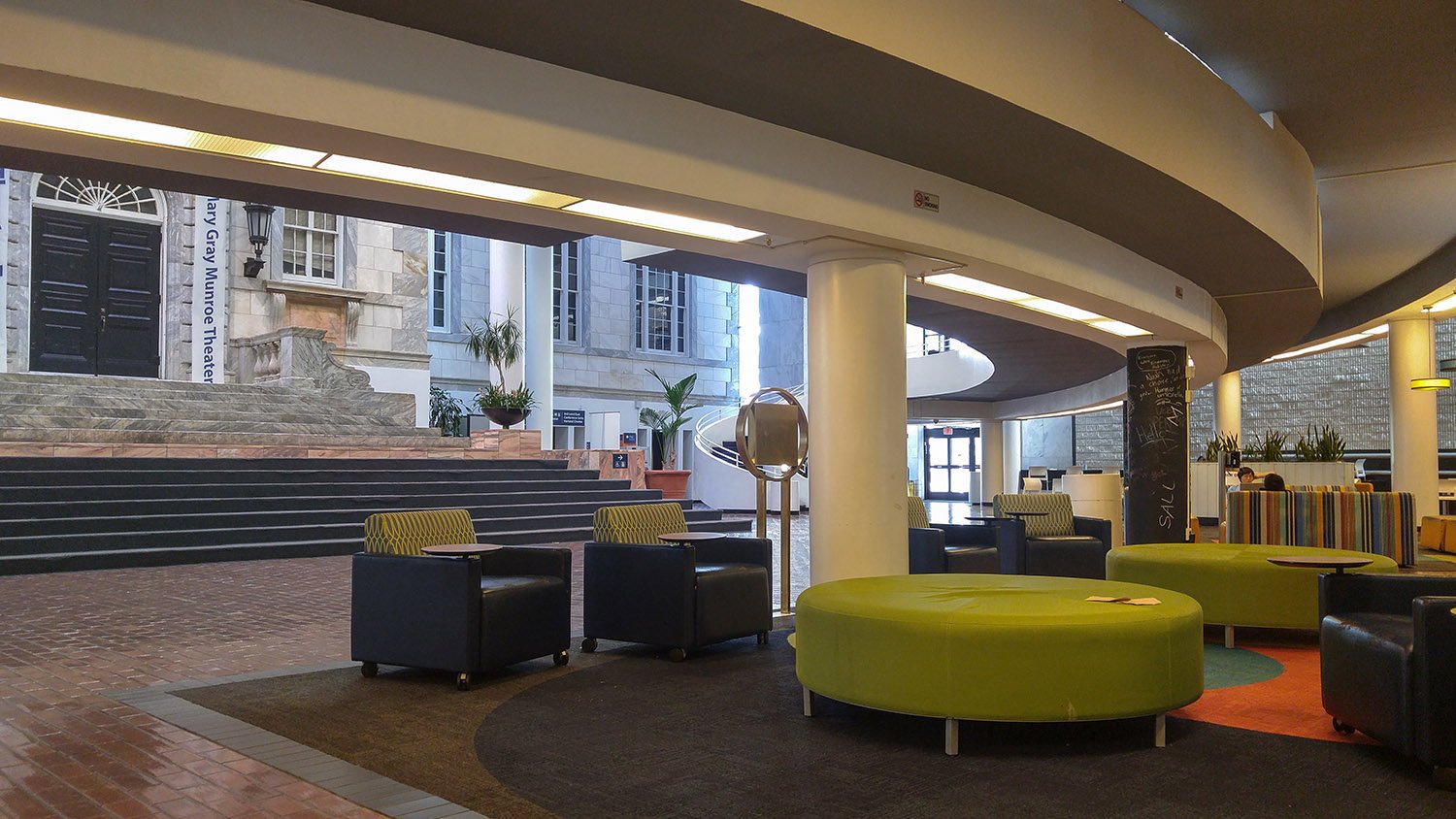
Ground floor of the dining commons in Dobbs University Center, Atlanta 
Skylight over the entrance rotunda of Dobbs University Center, Atlanta - Fox, Catherine. “New Emory student center like an amiable, multilevel Main Street”. The Atlanta Journal and Constitution, March 8, 1987, p. 4-J. ↩︎
- Photos: Goodbye to the DUC | Emory University | Atlanta GA ↩︎
- DUC Down | Emory University | Atlanta GA ↩︎
-
“Pretty Homes” (1890) by W.W. Goodrich
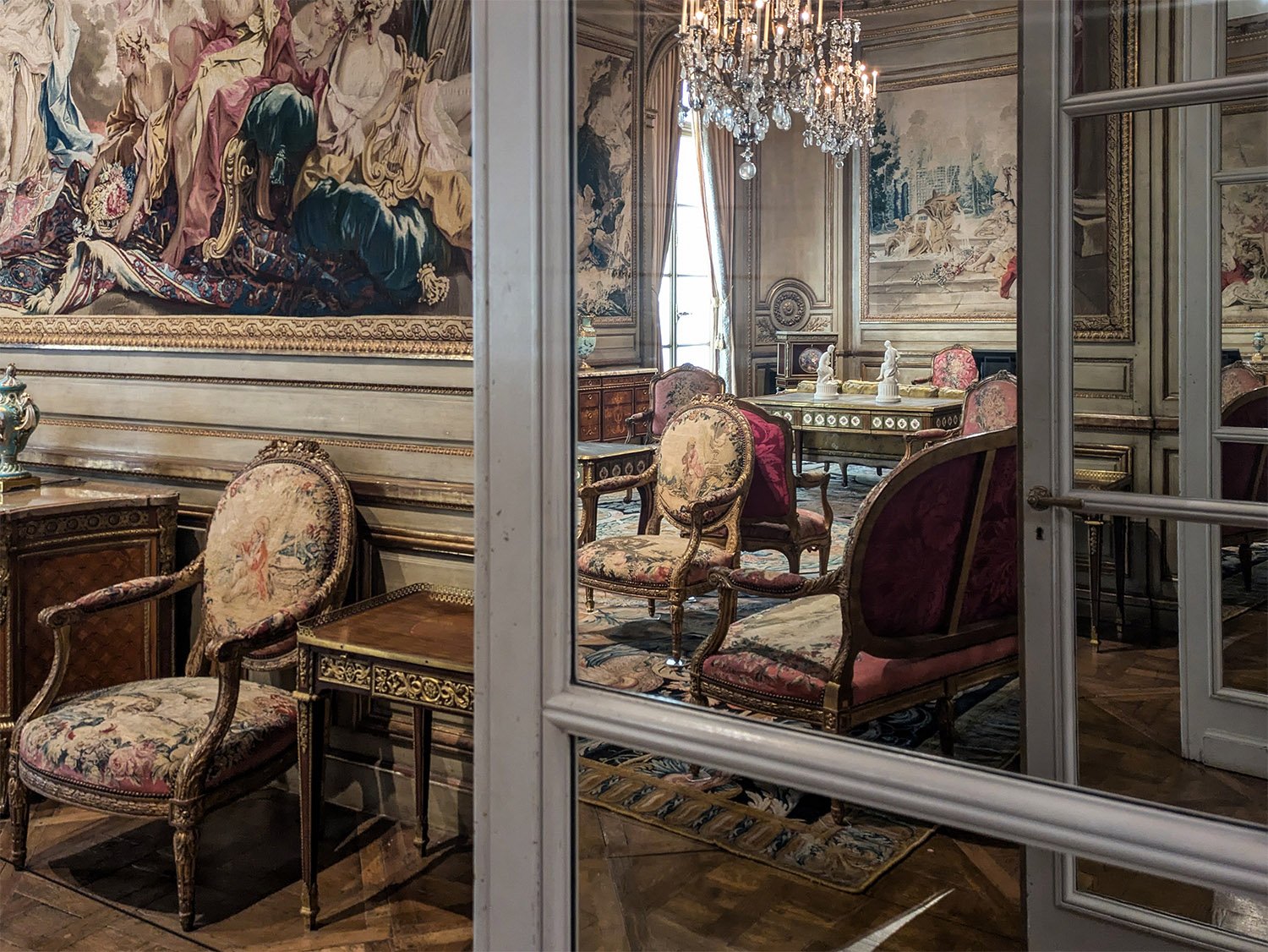
Maison Carlhian. Drawing Room from a Town House: 901 Fifth Avenue, New York City (1923). On exhibit at the Philadelphia Art Museum. The Background
This is the fourth in a series of articles written for The Atlanta Journal in 1890 and 1891 by W.W. Goodrich, an architect who practiced in Atlanta between 1889 and 1895.
Aimed squarely at the upper-class audience who could afford the services of an architect, Goodrich provided an exacting, plodding description of a hall and reception room decorated in the Colonial Revival style that was then becoming fashionable in Atlanta’s wealthiest homes.
At the time, interior design as a dedicated profession was emerging in larger cities like New York and Chicago, but in Atlanta, it was still primarily the domain of architects—in particular, L.B. Wheeler and W.T. Downing were well known for their interior design skills.
Goodrich adopted a lofty, condescending tone typical of the era, when designers—usually men—lectured their readers—primarily women—on how to decorate their homes in a manner that was considered cultured, refined, and in “good taste”.
Pretty Homes.
A Chapter on Interior Decoration.
A Roomy Reception-Room and Hall.
An Article that Will Prove of Special Interest to the Ladies – Description of Beautiful Decorations for a Reception Room.Written for the Journal.
Of the numerous styles of design applicable to the treatment of a reception room and hall the Colonial is one of the most pleasing, combining, as it does, the severe and studied simplicity of classic form with a delicate and distinctive grace and daintiness of detail. As one of the first principles of design is adaptability to requirements, the use to which the room is to be put should determine not only the practical essentials of convenience and utility, but also the impression which is to be made on the minds of its occupants by their surroundings, and this impression should coincide as nearly as possible with the thoughts and objects which will be uppermost in their minds. As such a room is devoted to the formalities of society, the treatment of its design should be formal and of studied simplicity. Any attempt at display or indulgence in eccentricities of design, either in wood finish, furniture, hangings or decorations, any violent or startling combinations of color, any pictures or bric-a-brac sufficiently conspicuous and out of keeping with their surroundings to attract immediate attention, would be evidences of bad taste and want of study in the effect of the whole.
Our reception room should consequently be, more than any other room, a harmonious whole, a dream of perfection, for it is here that we declare our taste and education to the world. If it is otherwise, the conception has been a failure, and the visitors will not find that appropriate ease in their surroundings which the occasion demands. It is infinitely better to make no attempt whatever at treatment than to give cause for the ignorant presumption of the would-be critic. A rich, pleasing, and above all, general effect should be the first impression conveyed to the mind on entering the successfully treated reception room, the whole scheme being so carefully studied that no one thing should be given undue prominence, but everything should participate in and be subservient to the effect of the whole, and then this effect will have the “refinement and charm of a fascinating and cultivated woman dressed in perfect taste.” Great care should be taken to produce the exact shades of colors desired, and it is important that those selected should be becoming to the “mistress of the house”, for if otherwise, she will appear at a disadvantage and out of place with her surroundings just when she should feel and appear at her best The most satisfactory results can be obtained by the general use of one or two color at most, but these can be produced in two or more shades which, however, should vary but slightly. Many so-called reception rooms are used for various other purposes which would involve the consideration of other impressions to be expressed in the treatment of design, together with other practical essentials.
Our room is about fifteen feet square, with the four corners rounded, and the wall coving into the ceiling with a curve of about nine inches radius, having no molding at either intersection with the flat surfaces. The inlaid floor is highly polished and has a border of prima vera and satin wood with the center in strips of the former wood two inches wide laid vertically in each wall, and mitering at angles.
Prima vera is a beautiful golden yellow species of mahogany which is used on the Pacific coast for fine interior finish. The wood finish of the room is made in cherry, which is enabled with seven coats of a rich cream color and polished to a dull egg-shell gloss. Cherry is greatly superior to pine or white wood for enameling purposes, the grain being so close and the wood so hard that all moldings and detail, no matter how fine, are sharply and clearly produced, and the chances of denting or disfiguring in any way by constant use are greatly lessened. As the drawings show clearly the treatment of the woodwork, only a few general remarks are necessary to make them understood. All moldings and details are of the utmost delicacy, the sinking being but one-quarter of an inch.
The carvings are mostly composed of acanthus leaf, rendered quite flat, with an extreme projection of but three-quarters of an inch, those of garlands only having conventionalized flowers and leaves, all executed with the utmost delicacy, edges being sharply and clearly defined, but in no case having a projection of more than one-sixteenth of an inch, the high light edges and surfaces being daintily touched with silver throughout. The portion of frieze over windows is a transom light of silver leaded pink and cream colored opalescent glass, on the same plane with walls of room; below this is a silvered rod, with rings for draperies. The walls are hung with a warm shade of rose pink silk, perfectly plain, in vertical pleats about four inches wide. This silk is secured in place by hooks and eyes, and can be taken down, cleaned and put back again with but very little trouble. Just below the wood cornice is a valance of the same silk, divided into sections by narrow pipes, placed at equal intervals, the head of each hanging down and being slightly crushed. The valance is cut to hang in slight creases, but its lower edge follows around the room in a perfectly straight line, and is bordered by a cream-colored silk fringe two and one-quarter inches wide, corresponding to the epistylium over doors and windows. Just back of this fringe is a silvered rod, supported by hooks screwed into the walls, its surface showing at intervals through the reticulations. The window draperies are heavy ones being of satin damask, in the same rose pink as the wall hangings, but a shade darker with cream colored silk fringes, tassels and linings. A pair of silk lace curtains and a sash lace on silver rods subdue the daylight to the desired tone. The ceiling cove and that portion of the walls above the cornice molding are treated in five coats of oil color on plaster, rendered in cloudy effect, commencing at the cornice, in rose pink, grading lighter toward the ceiling, and finally to a cream color beyond the ornament on ceiling, the clouding being in cream and pink, very light and filmy, and irregularly introduced. At the intersection of cove and ceiling are two strands of braid in carton pierre, forming a framework on which base the decoration. This braid comes down over the cove at intervals in two intertwining strands, and the intermediate spaces are filled by garlands of conventionally treated flowers and leaves, also produced in carton pierre, not over three-eights of inch in relief at great delicacy, both these and the braid being daintily silvered on high lights. Festoons of small discs hang above and below each garland, and acanthus buds and sprays spring from intermediate loops of the braid, flowing out onto ceiling and down into cove. The ornament is mostly cream in color, although where the clouding happens to be cream it has a very light pinkish tone, and in some places hardly distinguishable from the ground color; or, the whole treatment has a dreamy, atmosphere effect, impossible to describe, and must be seen to comprehend. All ornament is, of course, produced without any shadow or attempt at false relief, as under no circumstances whatever is such a treatment allowable. The furniture is like the finish, made in cherry and enameled in a rich cream color. It consists of the following pieces: A window seat about six feet long, having a cushion six inches thick and a large detached soft pillow, the edges of both being finished with a cord, which, on the cushion, is made into corner knots. A light divan five feet long, two arm chairs to match and two reception chairs complete the seating capacity of the room. The bottoms of all legs are shod with small silver boots, having casters on the front and rubber bearings on the back legs to prevent too free and easy a movement over the polished floor. All seats are upholstered plain, that is, not tufted, and the colorings are or figured silk tapestry, worked with bunches of flowers and leaves in delicate shades of dull blue, pink and green, on a light cream ground, the goods being mostly ground and showing very little of the other colors. There is a center table elliptical in shape, has silvered claw feet, and a Mexican onyx top of rich creamy tone. The cabinet has clear plate glass, with silvered leads in doors and sides, a French plate mirror back and three plate glass shelves, the piece being finished equally well both inside and out. All this furniture has the most delicate possible details of moldings and carvings, and is daintily lined and touched with silver throughout. Two large, white, bear skin rugs form the only floor covering.
W.W. Goodrich1
References
- Goodrich, W.W. “Pretty Homes.” The Atlanta Journal, June 21, 1890, p. 5. ↩︎
-
A.G. Rhodes Residence, “Rhodes Hall” (1903) – Atlanta
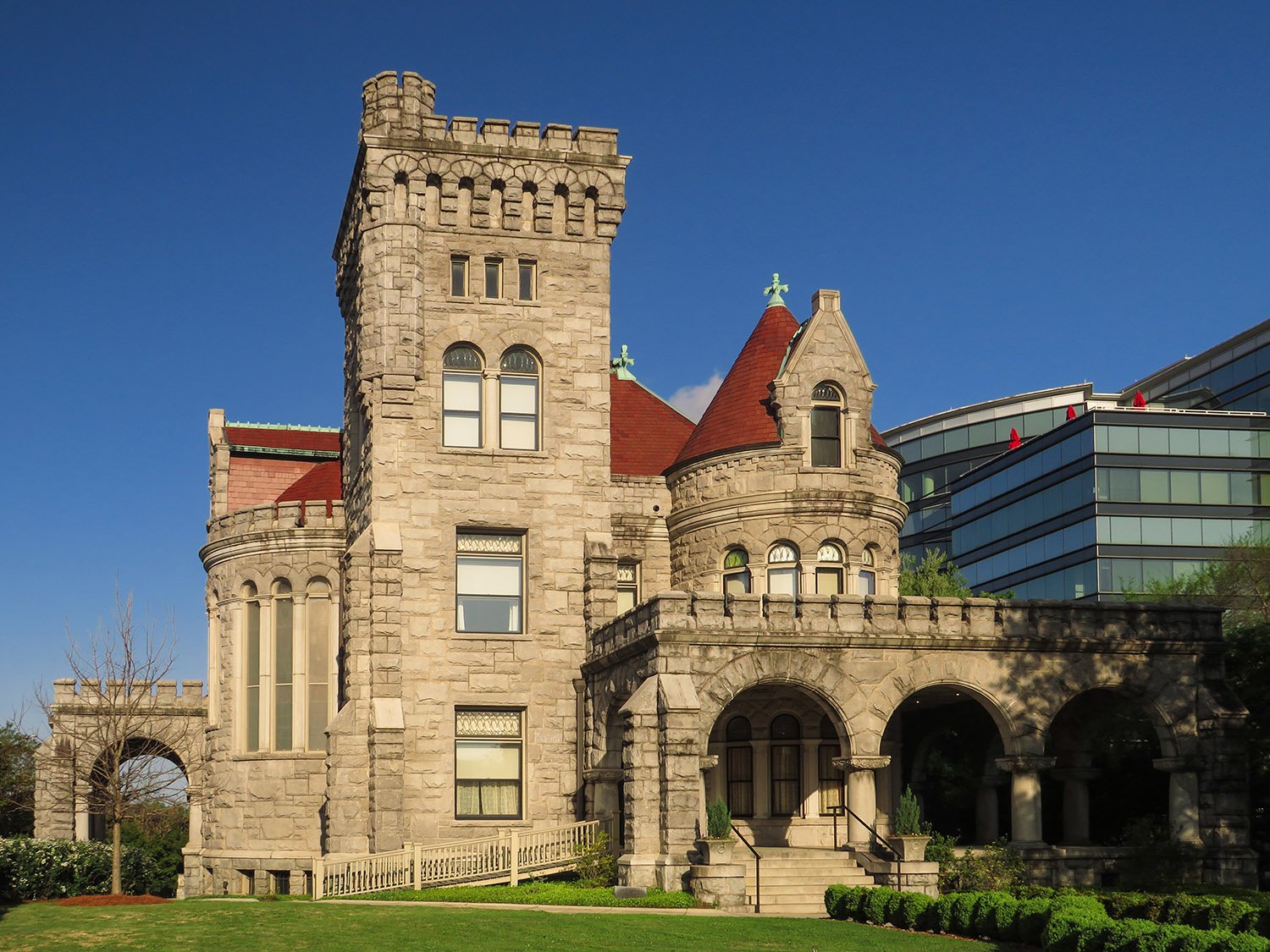
Willis F. Denny. A.G. Rhodes Residence, “Rhodes Hall” (1903). Atlanta.1 2 3 4 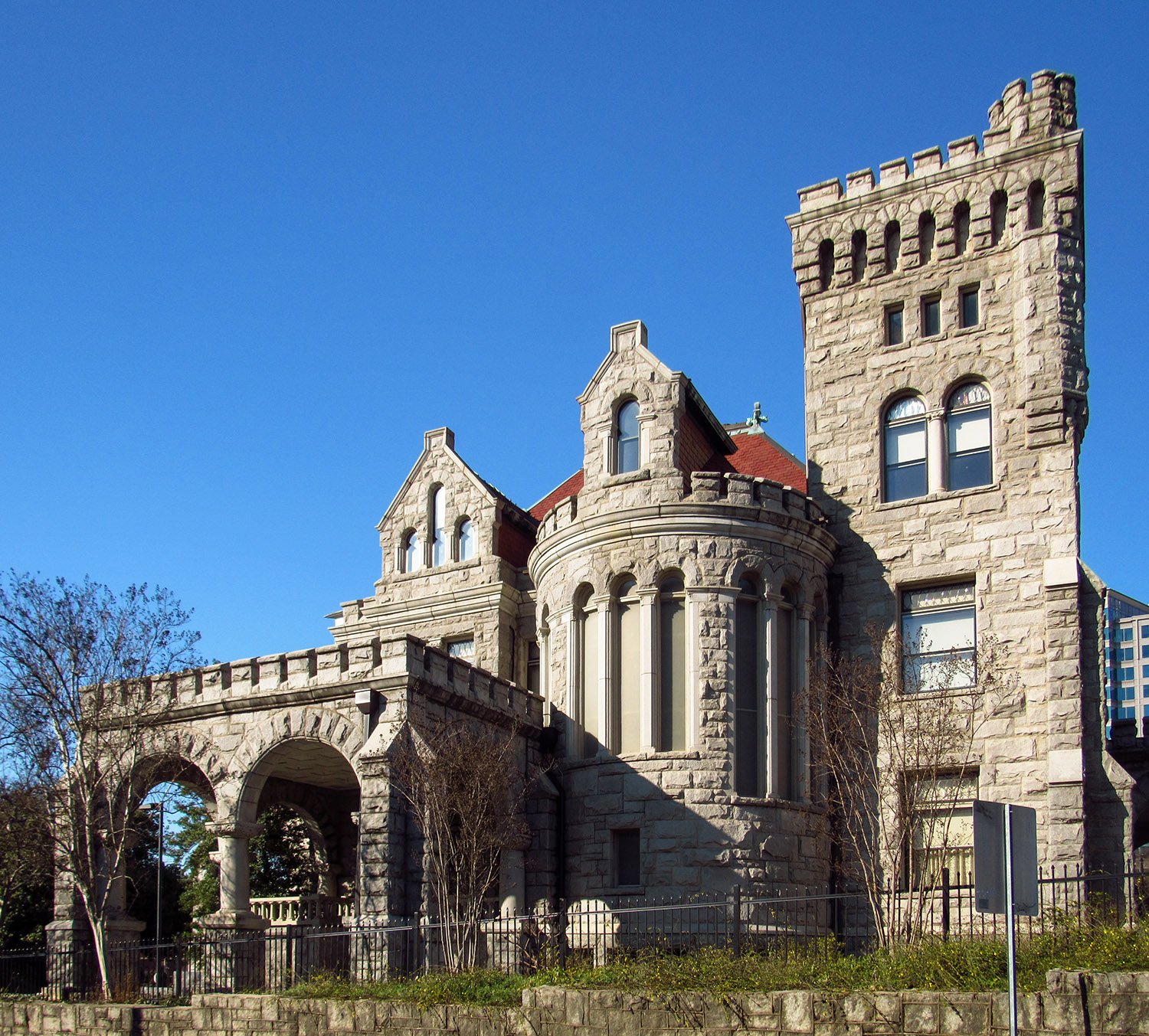
South elevation of Rhodes Hall, Atlanta 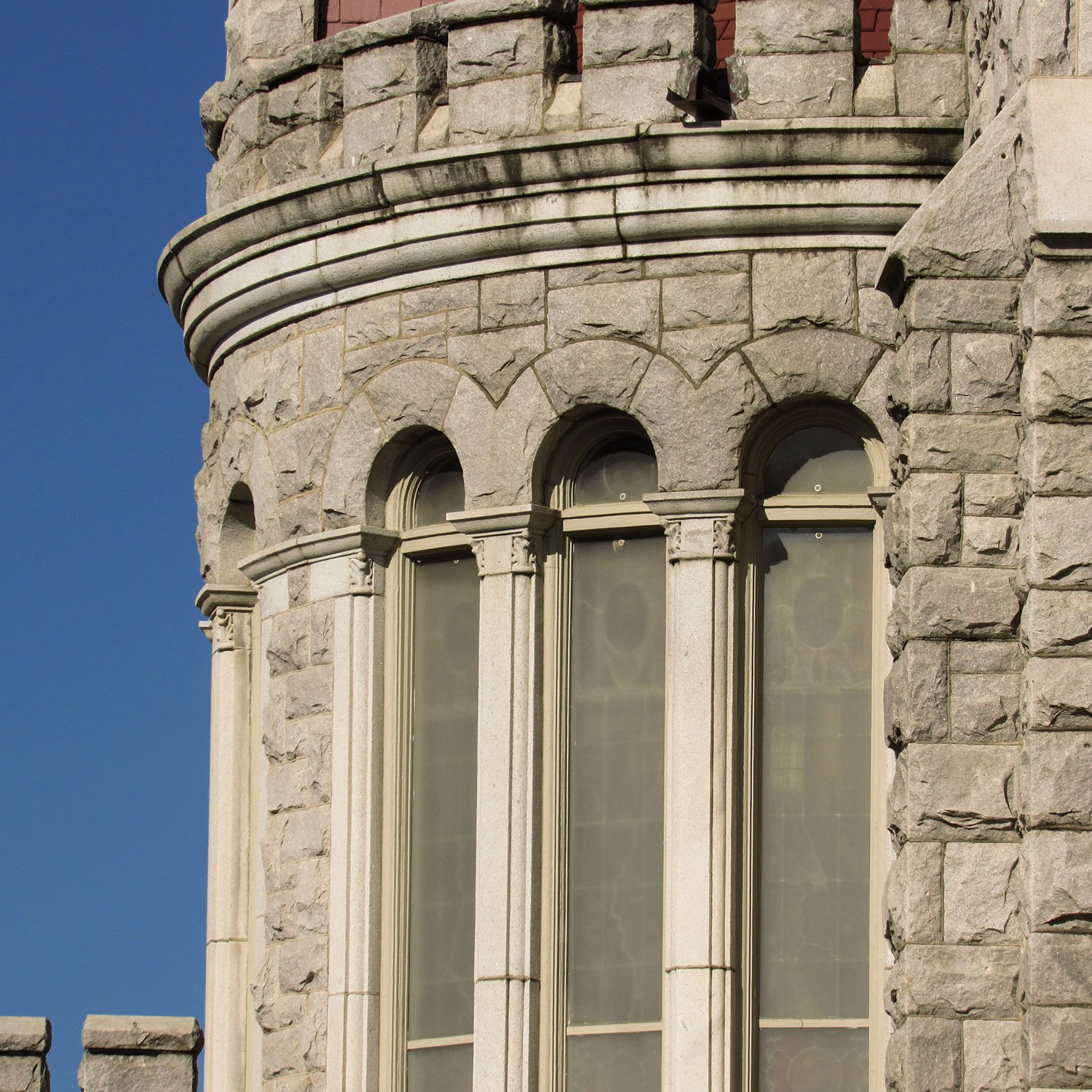
Staircase windows on the south elevation of Rhodes Hall, Atlanta 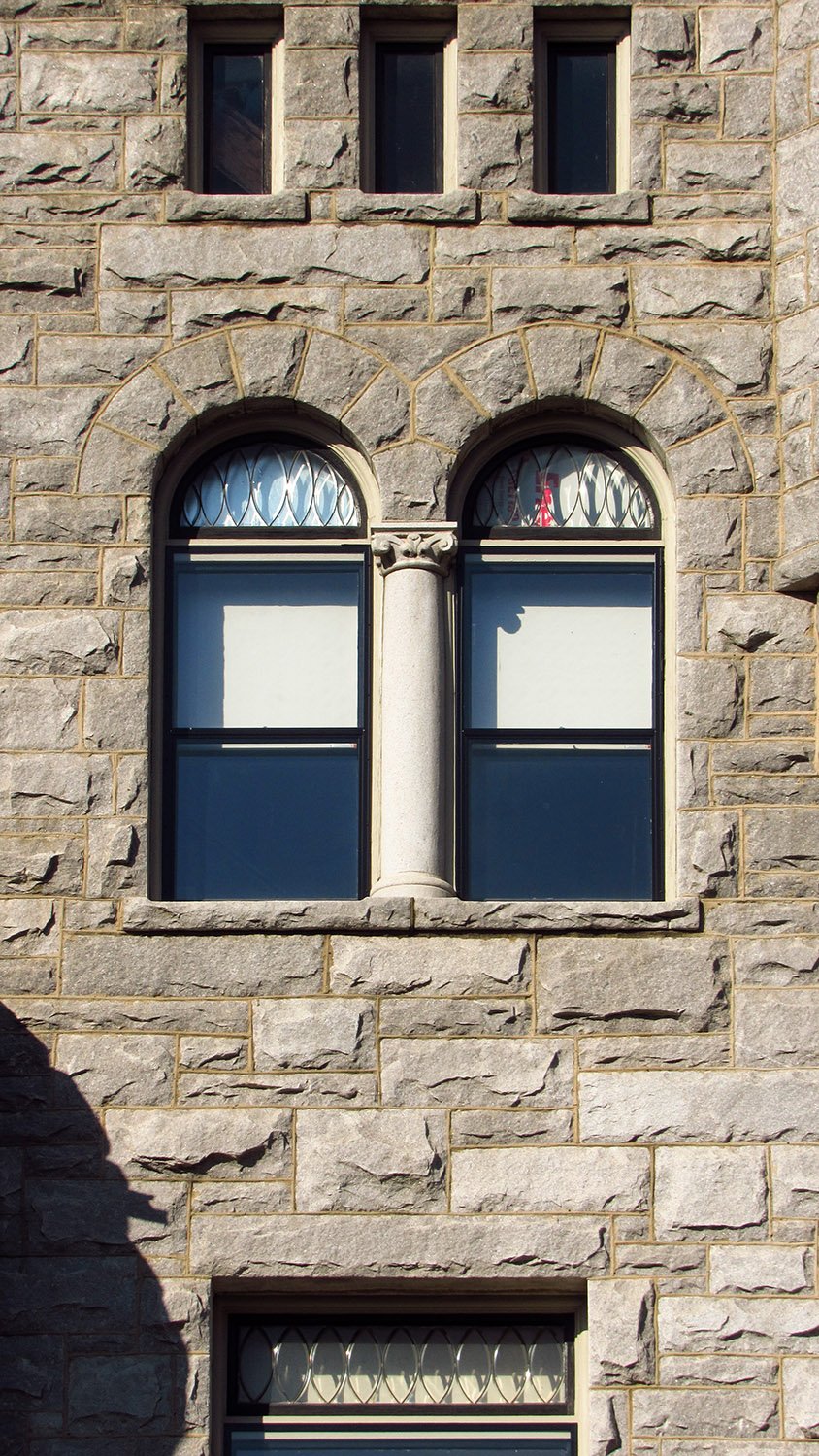
Third-floor windows on the tower of Rhodes Hall, Atlanta 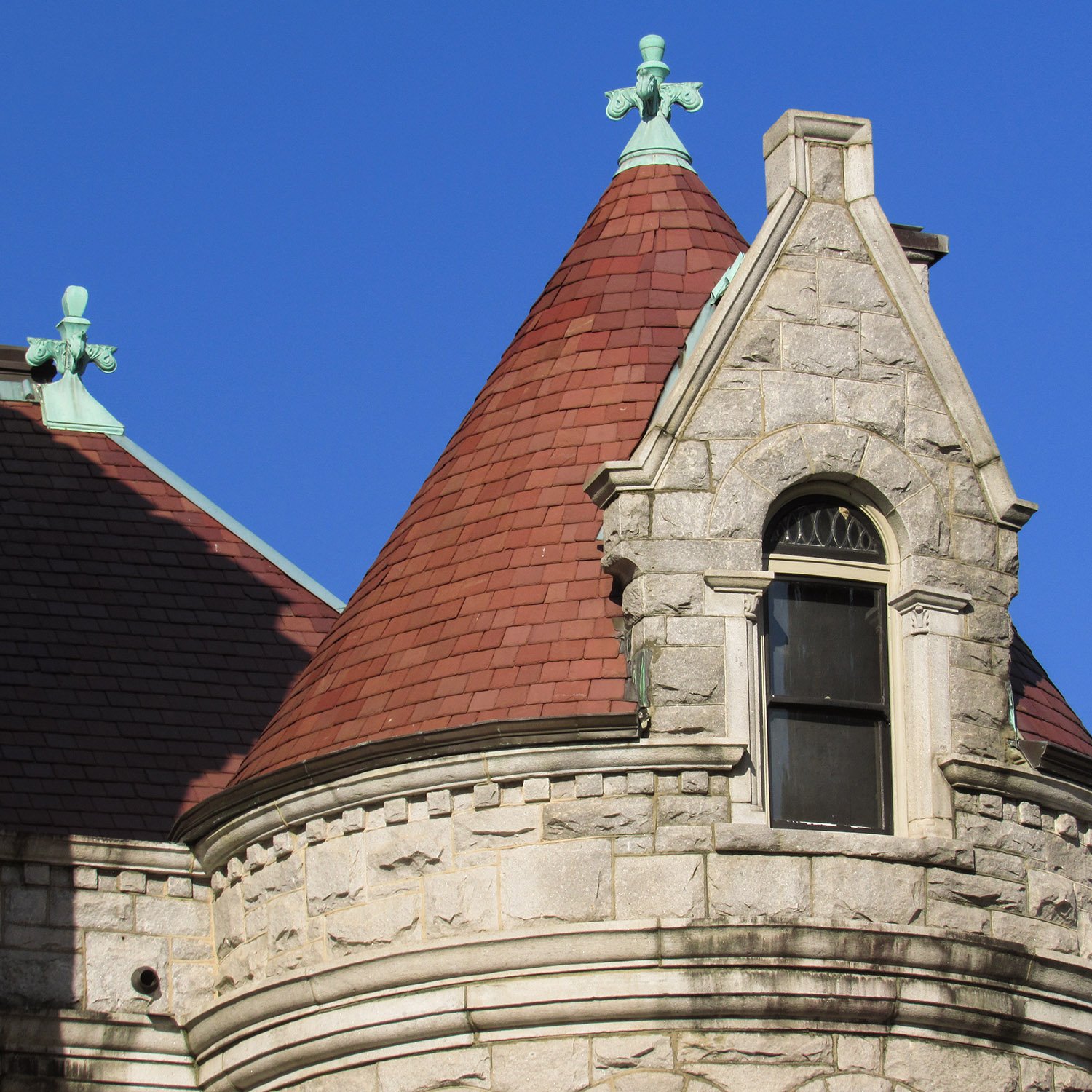
Dormer on the facade of Rhodes Hall, Atlanta 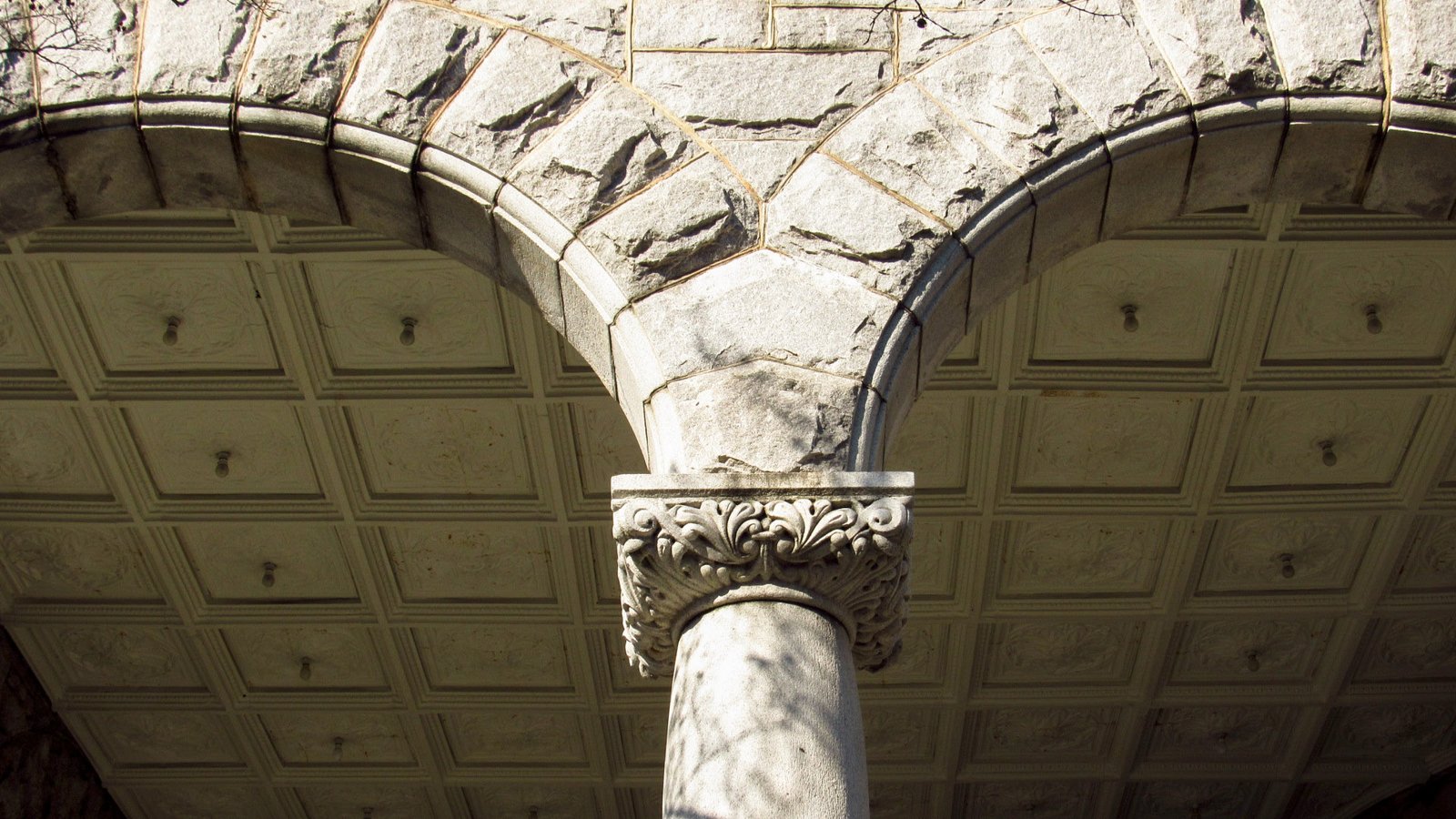
Looking up at the arches and ceiling on the front porch of Rhodes Hall, Atlanta 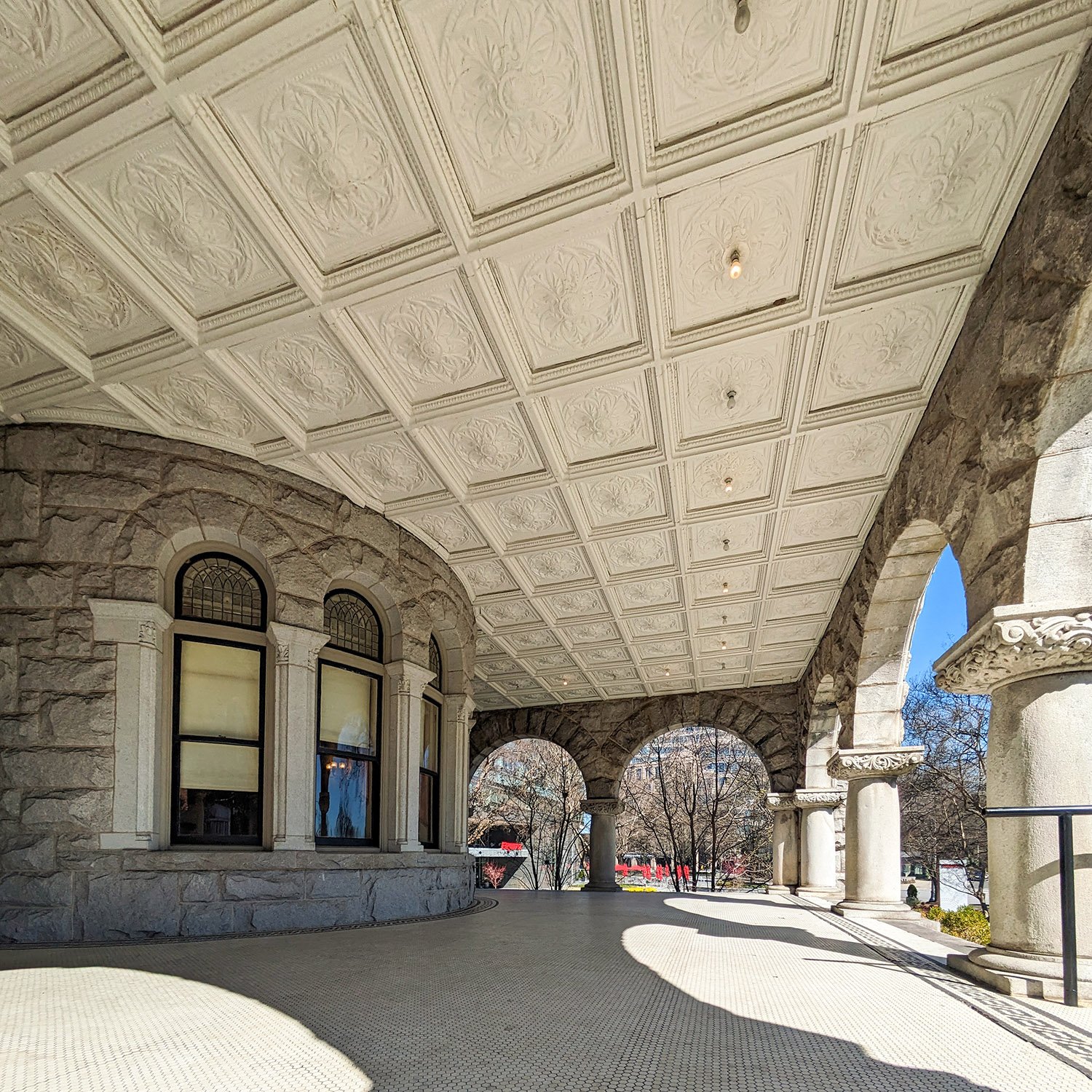
Front porch of Rhodes Hall, Atlanta 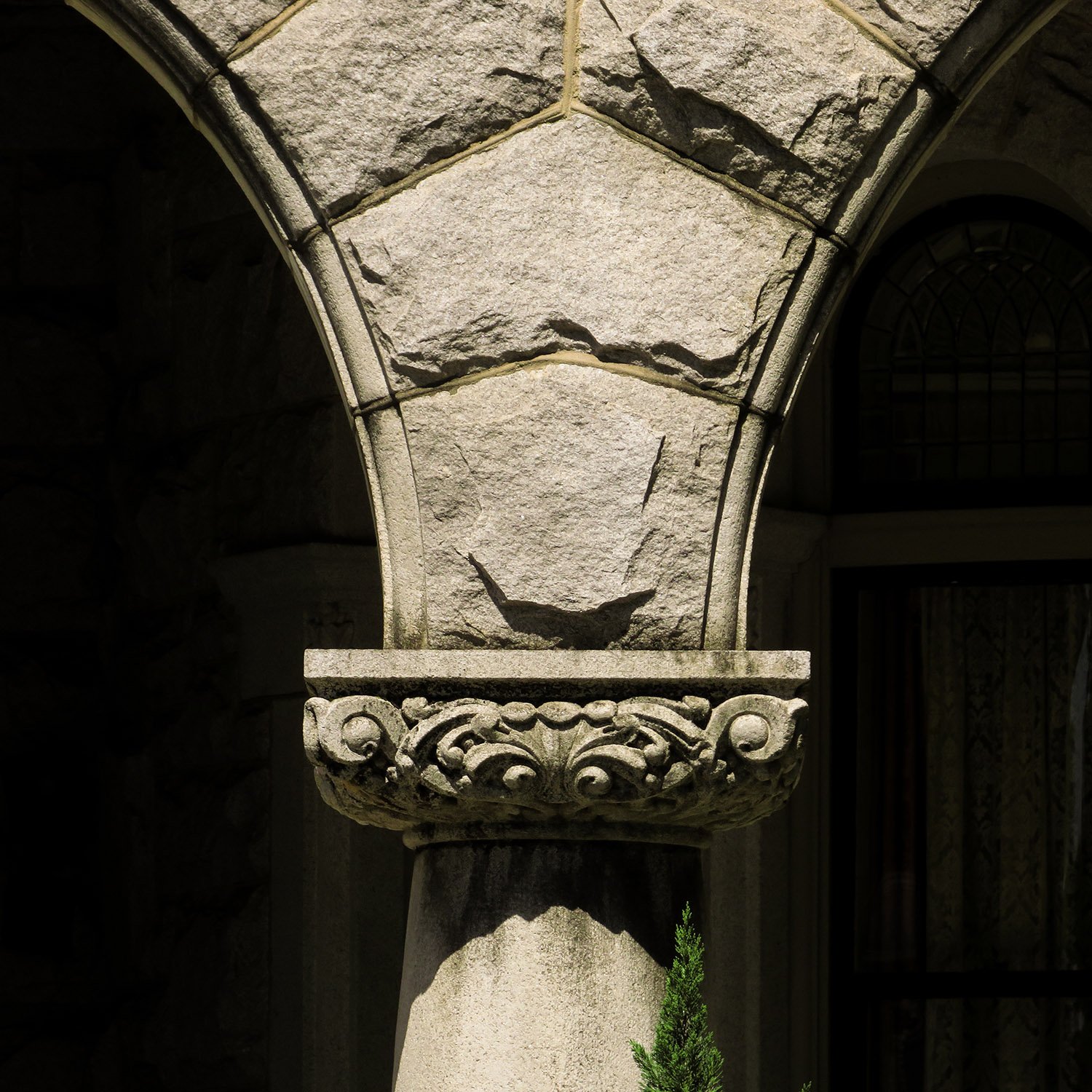
Cushion capital on the front porch of Rhodes Hall, Atlanta References
- $2,000,000 In Buildings Going Up In Atlanta”. The Atlanta Journal, February 28, 1902, p. 5. ↩︎
- “Home Of A.G. Rhodes To Be Modern Castle”. The Atlanta Journal, May 3, 1902, p. 5. ↩︎
- “Beautiful And Costly Atlanta Homes”. The Atlanta Constitution, August 10, 1902, p. 6. ↩︎
- “Personal Mention”. The Atlanta Journal, December 6, 1903, p. S5. ↩︎