The Background
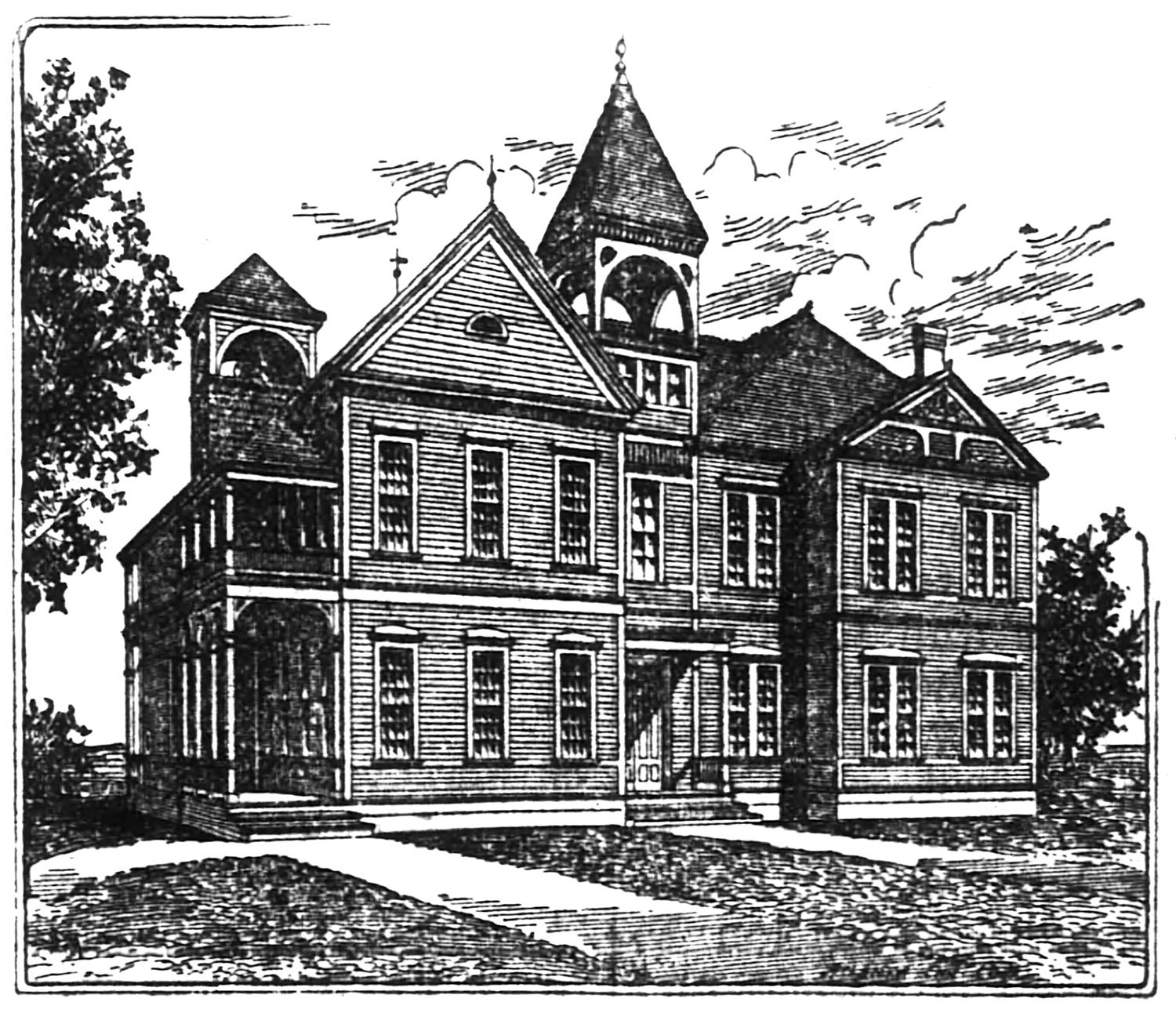
The article below, published in The Atlanta Constitution in November 1890, describes the expansion of the West End Academy in West End, Georgia, completed in 1890 and designed by Bruce & Morgan.
Later absorbed into the city of Atlanta, the school’s property consisted of two acres2 on the west side of Lee Street, just north of Gordon Street (later Ralph David Abernathy Boulevard SW).
Location of West End Academy
West End Academy was originally founded in 1883,3 4 when West End was still a self-governing municipality separate from Atlanta. Although the academy operated as a public school, tuition was initially charged for each student.5
The original two-story wood-frame structure for West End Academy was designed by Humphries & Norrman,6 and the primary credit likely belongs to George P. Humphries, who was also a West End resident and, it appears, handled most of the firm’s projects there.
After Humphries’ death in August 1885, the West End Academy allowed his children to attend the school tuition-free “in consideration of past services to the town,”7 further suggesting his involvement in the school’s design.
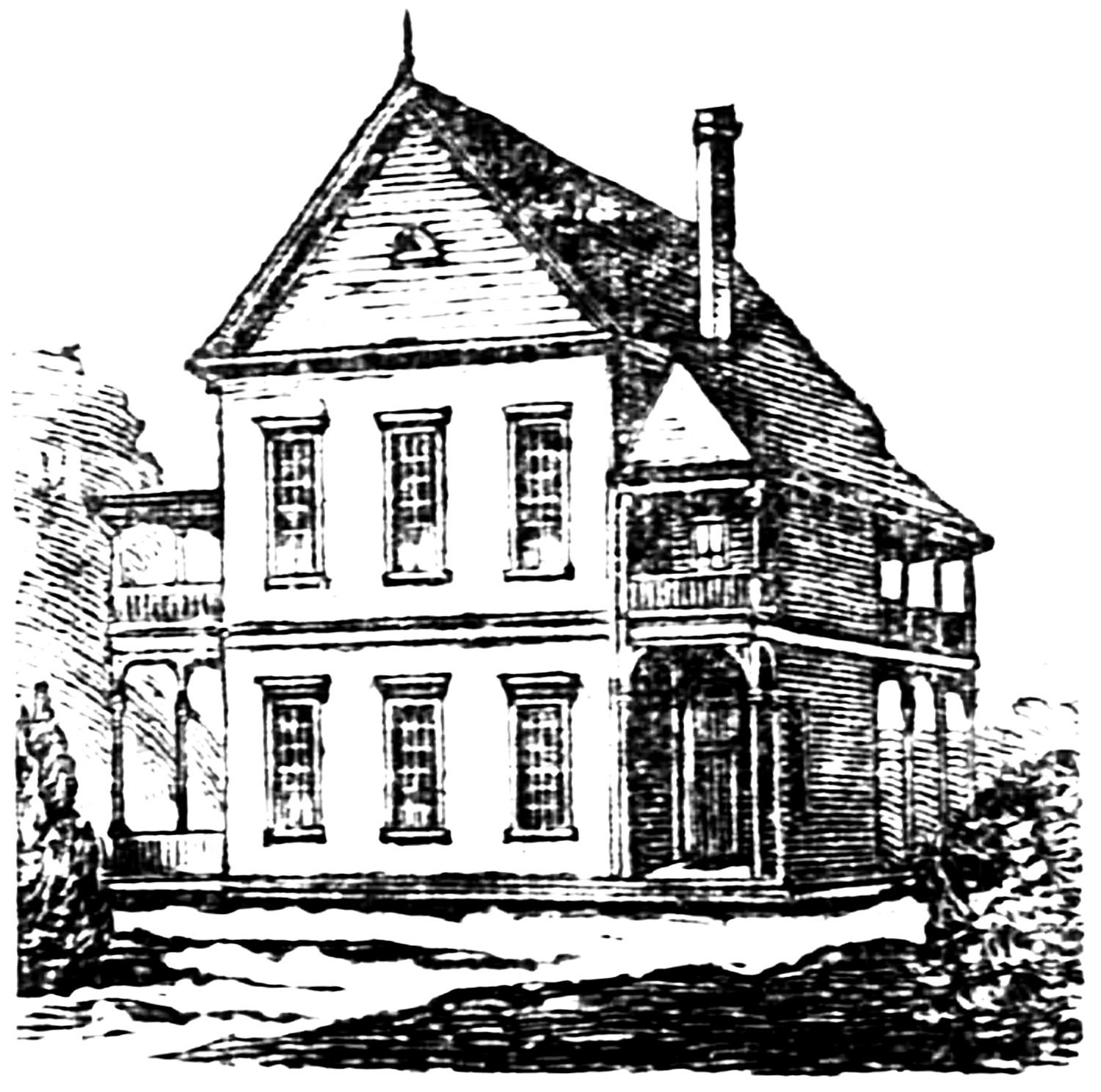
Construction on West End Academy’s first building began in June 18839 and was completed by October 1883. Although the initial estimate for the project was $5,000,10 11 12 a 1884 report stated the final cost as “the round sum of $10,000,”13 while a 1890 article claimed the cost was $6,500.14
There isn’t much information about the original structure’s design or number of rooms, but it was said to be “roomy enough for the pleasant occupation of several hundred pupils, if necessary.”15 In 1884, the school reportedly taught 90 students.16
A Need for Expansion
By 1890, West End Academy had an enrollment of 297 students,17 and despite the earlier claim of it being “roomy enough” for several hundred, a “patron and friend” described the school’s dangerously overcrowded conditions to the Constitution:
“Last fall term not less than seventy pupils were seated in a room of only fifty desks … In the principal’s room there were seventy-five pupils and only fifty desks.”18
The need for expansion was urgent, and in July 1890, the school’s trustees established a building committee for “enlarging and beautifying the academy”, with the imperative to “engage an architect at once to begin work.”19
They weren’t playing around—in just under three weeks, the office of Bruce & Morgan solicited construction bids for the project, with one day’s notice before the deadline and the repeated instruction: “Work to be begun at once.”20
Why Bruce & Morgan?
Since Humphries & Norrman designed West End Academy’s original building in 1884, it’s a little odd that G.L. Norrman wasn’t chosen for the expansion six years later.
However, Bruce & Morgan were undoubtedly a top choice because of the numerous school buildings the firm had recently designed for Atlanta’s public school system, including the Third and Fifth Ward Grammar Schools.
And although he would soon make school buildings a specialty, Norrman had designed comparatively few by 1890, and if the original West End Academy was handled by his deceased partner, it would make sense that he wasn’t consulted.
I also suspect that Norrman didn’t care much for Humphries or his work—it’s just a hunch.
Even if Norrman had been considered, his office was swamped with work in summer 1890, so a $4,500 project may not have been worth his time and effort.
Assuming construction began in late July 1890, West End Academy’s expansion was completed in about three months, opening in early November 1890.
After the Expansion
When West End was annexed into Atlanta in 1893, ownership of West End Academy was transferred to the City of Atlanta,21 22 and the renamed West End School23 24became part of Atlanta’s public school system.
By that time, the school had again outgrown its capacity,25 and in 1902, the West End School was described as “probably the worst crowded of the schools.”26 In 1904, a 12-room school was built on nearby Peeples Street to alleviate crowding.27 28
With the opening of the new West End School, the old West End School was renamed Lee Street School, with plans to add three or four classrooms,29 30 though it’s unclear if that happened.
In May 1906, a fire in the basement of Lee Street School forced over 200 children to evacuate as smoke filled the building.31 32
Obviously aware that the all-wood structure was a firetrap, the school’s principal, Eleta A. Mills, was well-prepared for the event and regularly conducted fire drills with the students.33 Remarkably, no one was injured in the fire—except for Mills, who fell down the stairs and hurt her back.34
As the Constitution described the scene:
“From the class rooms the children marched in perfect order. Through the hallways, down the stairs they went, the clouds of smoke rising about them and almost stifling them. Yet they never wavered.
“When the firemen declared that the fire was extinguished, Miss Mills had the children to march back into the school, where they quietly resumed their lessons.
“The children were not more than a minute getting out of the building, and it was about fifteen minutes that they were held in line.”35
While there was no structural damage from the fire, the old West End Academy had clearly become a liability—an unsafe, outdated, and undersized hand-me-down from a bygone city and century.
In 1907, when the Lee Street School reported an enrollment of 320 students,36 L.Z. Rosser, the president of Atlanta’s board of education, described the school as “unsanitary and unfit for use”, adding, “In fact, all the old frame buildings have outgrown their usefulness.”37
Rosser repeated his criticism in 1908:
“It is the board’s policy to abolish as rapidly as possible every old school building in the city and whenever we put up a new building it is the safest and most thoroughly equipped that architectural skill can devise. I am frank to say that we still have several old school houses which ought to go, and they will go as fast as the financial appropriation will permit.”38
The appropriation finally came, and in summer 1910, the Lee Street School was “rolled back”39 40 100 feet to accommodate construction of a new building (pictured below),41 with students using the relocated structure during the interim.42 43 44 That couldn’t have done much for safety.
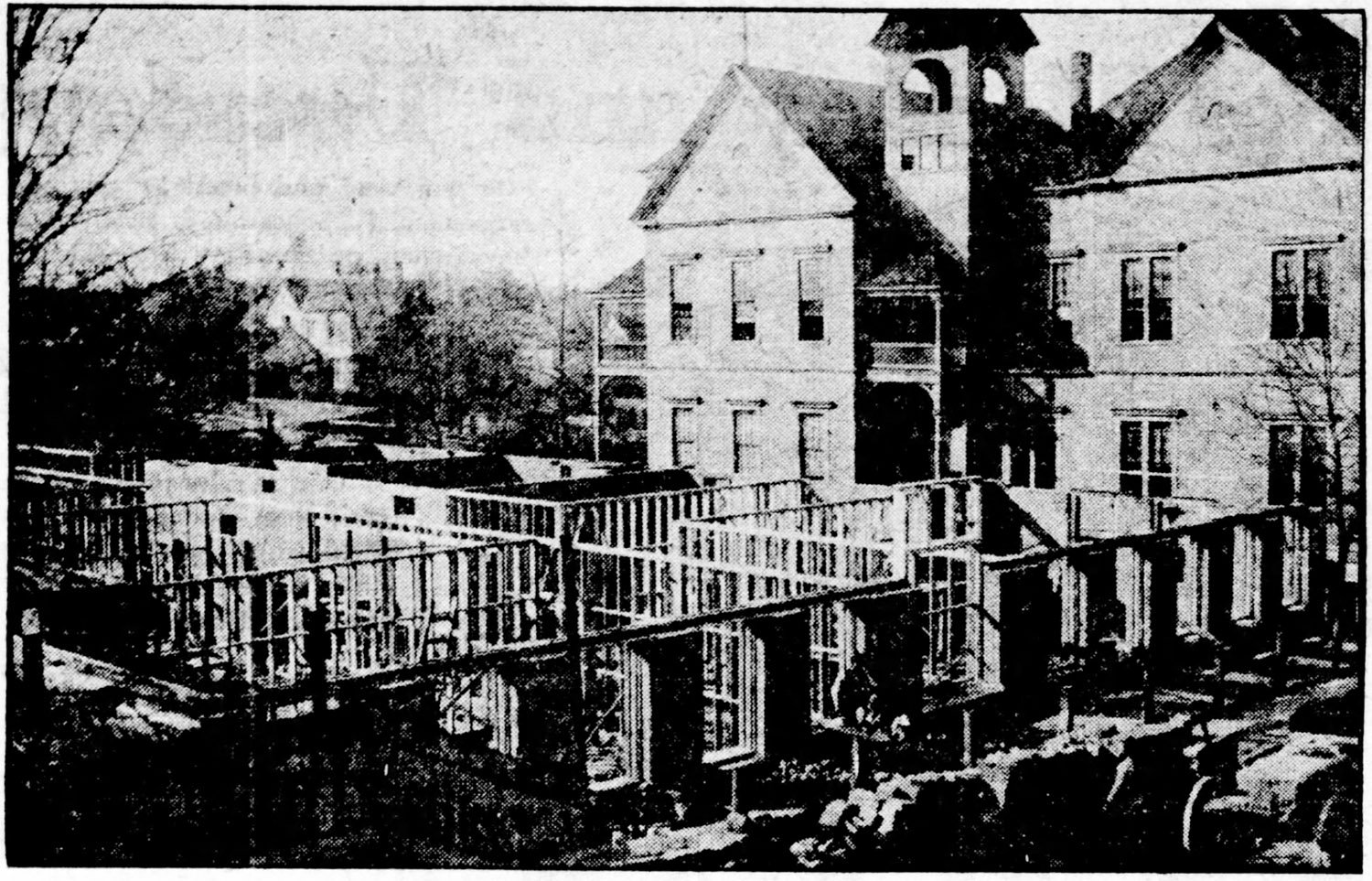
Designed by Edward E. Dougherty, the new Lee Street School was completed in August 191146 and was similar to other schools he designed in Atlanta in the same period, built of brick and containing 12 classrooms.47
The old West End Academy was unceremoniously demolished sometime in 1911, and there’s no evidence anyone objected. A Sanborn map published that year identified the structure as simply “Old School B’ld’g To Be Removed.”48
The replacement school was torn down in 1969 to make way for the Mall West End,49 which itself is slated for demolition in 2026. Nothing is permanent in Atlanta.
The New Academy Building.
How the West End Academy Has Been Improved.
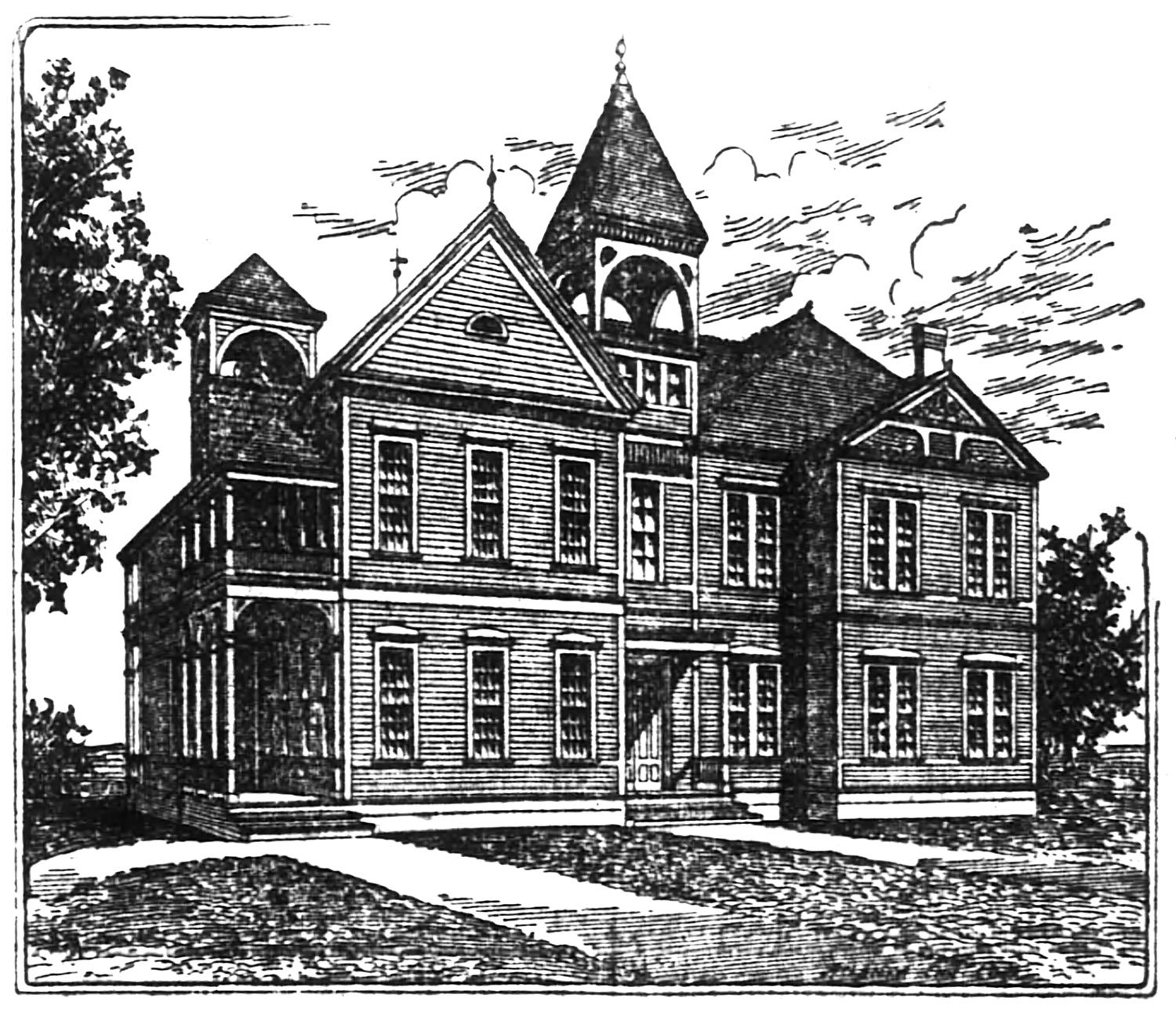
The rapid growth of the little city of West End is illustrated by the fact that she has recently been compelled to double the capacity of her public school building in order to meet the increasing demand for school accommodations. The extensive addition to the old structure has been completed, and the entire building now presents a very handsome and imposing appearance. The new part was planned by Messrs. Bruce & Morgan and harmonizes admirably with the old.
The accompanying cut shows the building as it now stands, and no city of the same size has a more comfortable or better arranged schoolhouse than has West End. The exterior is pleasing to the eye and the interior admirably adapted to school purposes.
On the first floor is a wide hall traversing the building, into which opens three well-appointed schoolrooms. Along a narrower hall leading from this main one are to be found three smaller rooms, which are to be used as a music room, library and principal’s office, respectively. The music room is so situated that the sound of the pianos cannot be heard in any way of the rest of the building. Three wide, easy stairways lead up to the second floor, where are situated two comfortable schoolrooms and a large auditorium. This auditorium is admirably suited for the opening exercises of the school each morning and for public exercises and is so constructed that it may be easily made into two additional schoolrooms when the increased attendance shall require it. All the rooms are well ventilated and lighted and provided with ample hat and cloak closets.
The cost of these improvements is $4,000, and will prove to be money well spent for West End.
The new part of the building was turned over to the school authorities by the contractor last Friday, and that portion of the school which, for the last two months has been occupying the hall over Caldwell’s store, will take possession of their new quarters tomorrow. No doubt the additional room and accommodations offered will be taken advantage of at once by new pupils from West End and vicinity, and by some from Atlanta who have been crowded out of the city schools.
The school has taken assured rank among the best educational institutions of Atlanta. It is operated on the plan of a public school, being supported by appropriations from the city council and from the county public school fund, supplemented by a nominal tuition fee of $1 to $1.50 per pupil per month. This small tuition fee is charged, because if the school were made entirely free the present rate of taxation (which is now 50 cents on the $100) would have to be nearly doubled in order to pay the deficit in the income of the school.
The academy is under the control of a board of trustees, who elect the leaders, lay out the course of study, adopt the textbooks, etc., just as is done in other public school systems. This board at present consists of representative men of the city who enjoy fully the confidence of the community. They are as follows: Malcolm Johnston, Dr. John W. Nelms, Burgess Smith, W.L. Wilson, G.A. Howell, W.A. Culver, W.W. Lambdin, E.C. Atkins, M. Taylor and J.C. Harris.
The principal of the school is Professor E.C. Merry, one of the best equipped teachers of the state. Professor Merry has a splendid reputation in educational circles, and as a disciplinarian and instructor and school manager has few equals. The exercises of the entire school under his skillful management move like clock-work. His assistant teachers, who are Miss Mamie Pitts, Miss Sallie Davis, Miss Mattie Nunnally and Miss Carrie Harden, are all skillful, experienced and enthusiastic. The entire corps seem animated with the single desire to make the West End academy the model school of the state.
There is also an excellent music department connected with the school, which is presided over by Miss Leila G. Hanbury, an accomplished instructress in instrumental music.
The academy was never more prosperous than at present, having an average attendance of about 200 pupils, and bids fair with its increased accommodations to raise that average to 250 to 275 before the scholastic year is ended.
This school in the past has been a powerful factor in West End’s progress, but is now in better shape than ever to contribute towards the growth and upbuilding of that little city.50
References
- Illustration credit: “The West End Academy” (advertisement). The Atlanta Constitution, September 9, 1891, p. 10. ↩︎
- “West End Splinters.” The Atlanta Journal, March 15, 1883, p. 4. ↩︎
- Public notice. The Atlanta Constitution, April 3, 1883, p. 2. ↩︎
- “West End Academy.” The Atlanta Constitution, July 8, 1883, p. 9. ↩︎
- ibid. ↩︎
- “The Hill Building.” The Atlanta Constitution, March 16, 1884, p. 4. ↩︎
- “West End Notes.” The Atlanta Constitution, August 14, 1885, p. 7. ↩︎
- Illustration credit: “West End.” The Atlanta Constitution, February 13, 1887, p. 4. ↩︎
- “West End Notes.” The Atlanta Journal, June 25, 1883, p. 4. ↩︎
- “West End Splinters.” The Atlanta Journal, May 9, 1883, p. 4. ↩︎
- “West End Academy.” The Atlanta Constitution, July 8, 1883, p. 9. ↩︎
- “West End Waifs.” The Atlanta Constitution, July 13, 1883, p. 2. ↩︎
- “West End Improvements.” The Atlanta Journal, January 11, 1884, p. 4. ↩︎
- “West End.” The Atlanta Constitution, April 27, 1890, p. 21. ↩︎
- “West End Academy.” The Atlanta Constitution, July 8, 1883, p. 9. ↩︎
- “West End Improvements.” The Atlanta Journal, January 11, 1884, p. 4. ↩︎
- “The West End Academy.” The Atlanta Constitution, June 20, 1890, p. 4. ↩︎
- “Letters From The People.” The Atlanta Constitution, July 10, 1890, p. 4. ↩︎
- “West End Academy.” The Atlanta Constitution, July 2, 1890, p. 11. ↩︎
- “Notice to Contractors.” The Atlanta Constitution, July 21, 1890, p. 7. ↩︎
- “Will Annex.” The Atlanta Constitution, September 14, 1893, p. 5. ↩︎
- “Everything In Shape”. The Atlanta Constitution, December 30, 1893, p. 7. ↩︎
- “At Atlanta’s Fair.” The Atlanta Constitution, July 27, 1894, p. 10. ↩︎
- “Among The Schools.” The Atlanta Constitution, September 9, 1894, p. 4. ↩︎
- “Changes To Be Made.” The Atlanta Constitution, March 8, 1893, p. 3. ↩︎
- “To Give Room In Crowded Schools”. The Atlanta Constitution, September 13, 1902, p. 8. ↩︎
- “Two Schools Will Be Built.” The Atlanta Constitution, October 30, 1903, p. 2. ↩︎
- “Mayor Speaks At West End”. The Atlanta Constitution, December 24, 1903, p. 2. ↩︎
- “New Schools Completed”. The Atlanta Constitution, July 22, 1904, p. 6. ↩︎
- “New School Houses Are Now Complete”. The Atlanta Journal, July 22, 1904, p. 4. ↩︎
- “Panic Of Children Is Presented At School When Fire Breaks Out”. The Atlanta Journal, May 11, 1906, p. 1. ↩︎
- “Fire Breaks Out In Lee Street School And Panic Is Prevented By Bravery Of Pupils And Faithful Teachers”. The Atlanta Constitution, May 12, 1906, p. 1. ↩︎
- “Fire Drills.” The Atlanta Journal, May 12, 1906, p. 6. ↩︎
- “Fire Breaks Out In Lee Street School And Panic Is Prevented By Bravery Of Pupils And Faithful Teachers”. The Atlanta Constitution, May 12, 1906, p. 1. ↩︎
- ibid. ↩︎
- “School Report Is Made On Wednesday”. The Atlanta Journal, September 11, 1907, p. 7. ↩︎
- “City Schools In Bad Repair”. The Atlanta Constitution, April 1, 1907, p. 5. ↩︎
- “Safety Of Atlanta School Houses Looked Into”. The Atlanta Journal, March 5, 1908, p. 10. ↩︎
- “Seventh Ward Club Has First Fall Meeting”. The Atlanta Journal, September 3, 1910, p. 10. ↩︎
- “Enthusiastic Meeting Of Seventh Ward Club”. The Atlanta Constitution, September 4, 1910, p. 8. ↩︎
- “Building Permits.” The Atlanta Journal, December 2, 1910, p. 19. ↩︎
- ‘”Honk-Honk” Law Strikes A Snag”. The Atlanta Constitution, August 2, 1910, p. 7. ↩︎
- “Seventh Ward Club Has First Fall Meeting”. The Atlanta Journal, September 3, 1910, p. 10. ↩︎
- “Enthusiastic Meeting Of Seventh Ward Club”. The Atlanta Constitution, September 4, 1910, p. 8. ↩︎
- Photo credit: “New Bond Issue School House Under Construction”. The Atlanta Journal, February 5, 1911, p. 3. ↩︎
- “Lee Street School Will Be In Readiness For The Opening Of School Term In Fall”. The Atlanta Constitution, June 25, 1911, p. 6A. ↩︎
- ibid. ↩︎
- Insurance maps, Atlanta, Georgia, 1911 / published by the Sanborn Map Company ↩︎
- Brown, June. “Rusk in Atlanta For School Rite”. The Atlanta Journal, October 21, 1969, p. 2. ↩︎
- “The New Academy Building.” The Atlanta Constitution, November 2, 1890, p. 24. ↩︎