Category: Atlanta Buildings Illustrated

  • Third and Fifth Ward Grammar Schools (1890) – Atlanta

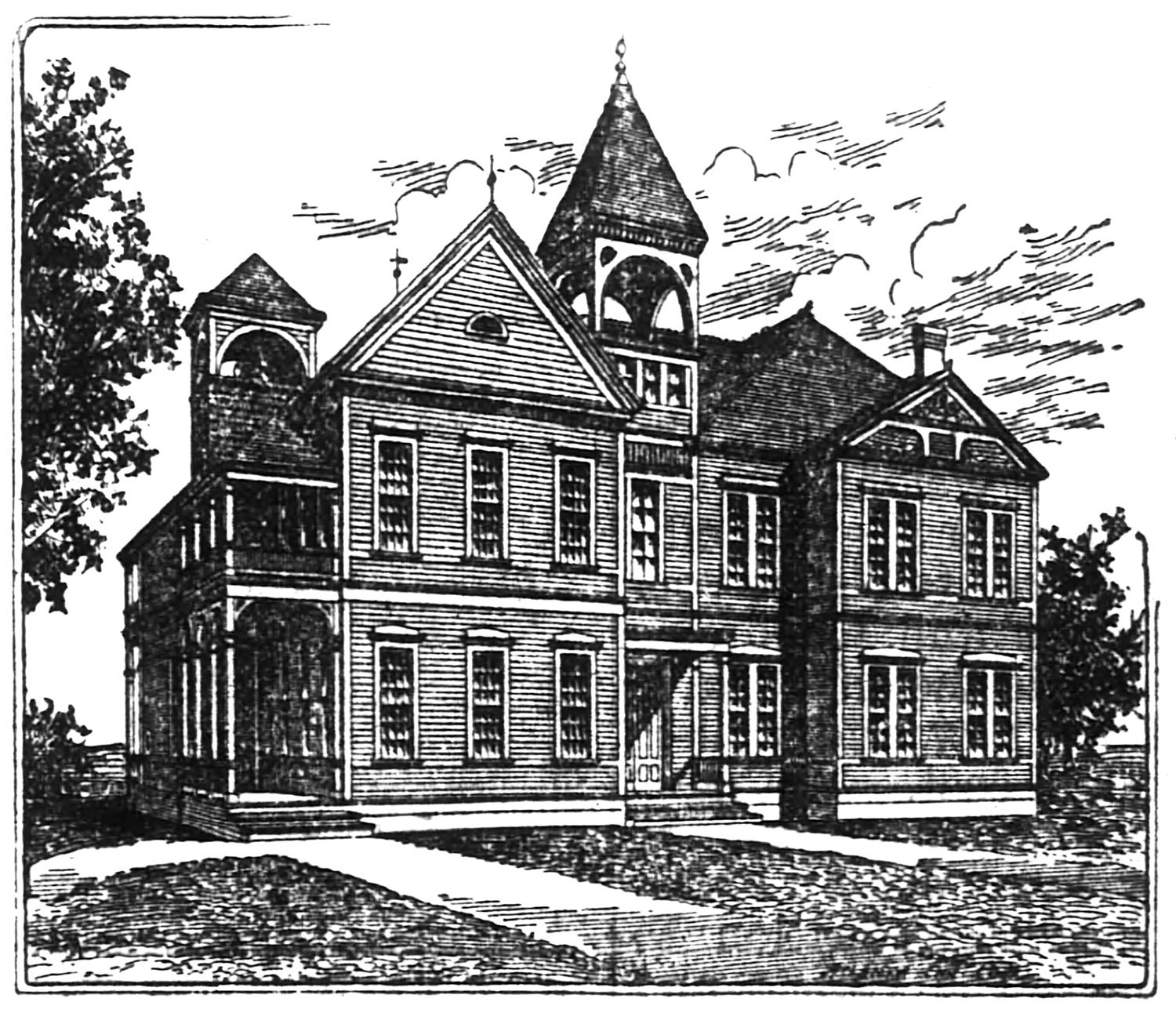
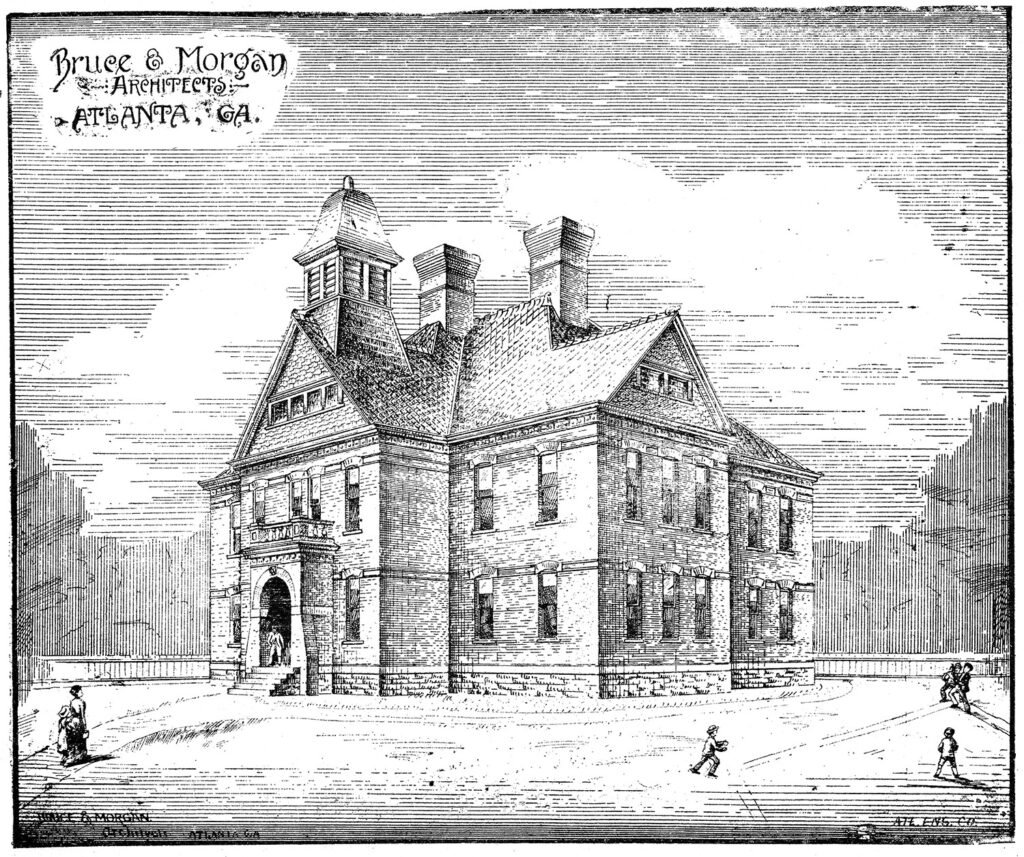
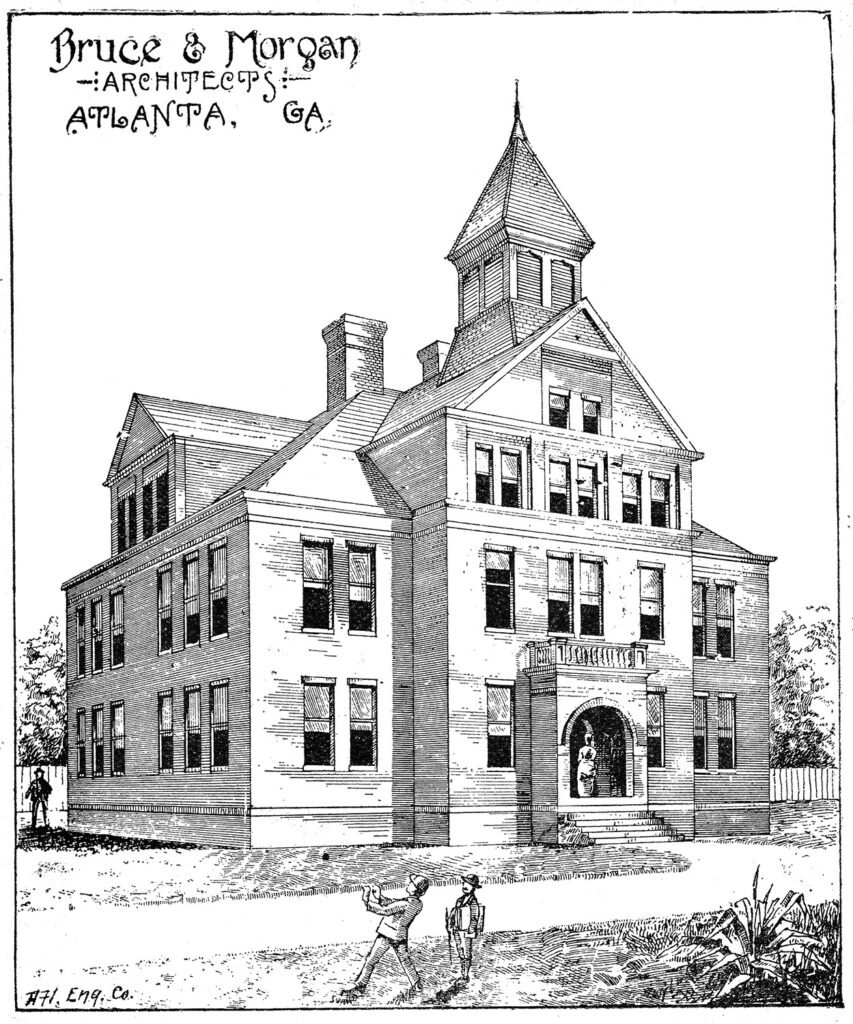
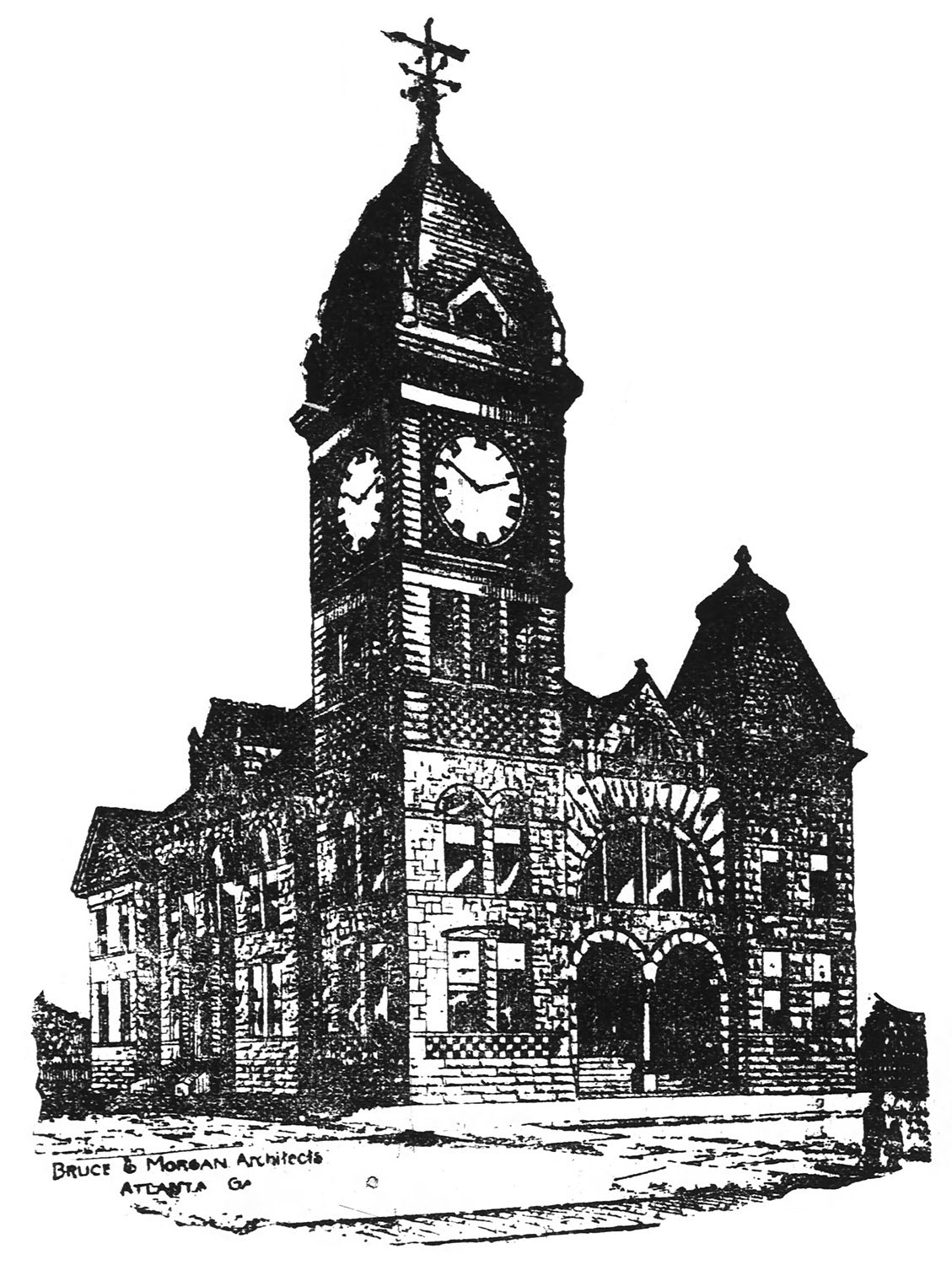
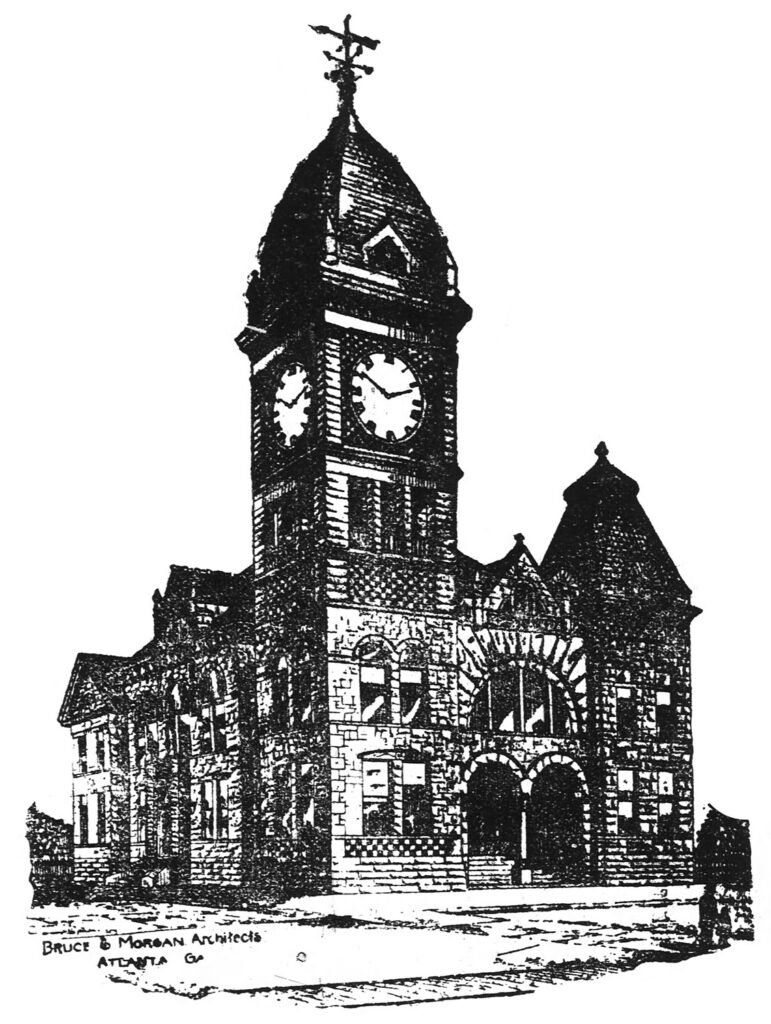
    Bruce & Morgan. Fifth Ward Grammar School / Wallace Street School / State Street School (1890-1929). Atlanta.
    Bruce & Morgan. Fifth Ward Grammar School / Wallace Street School / State Street School (1890-1929). Atlanta.1

    The Background

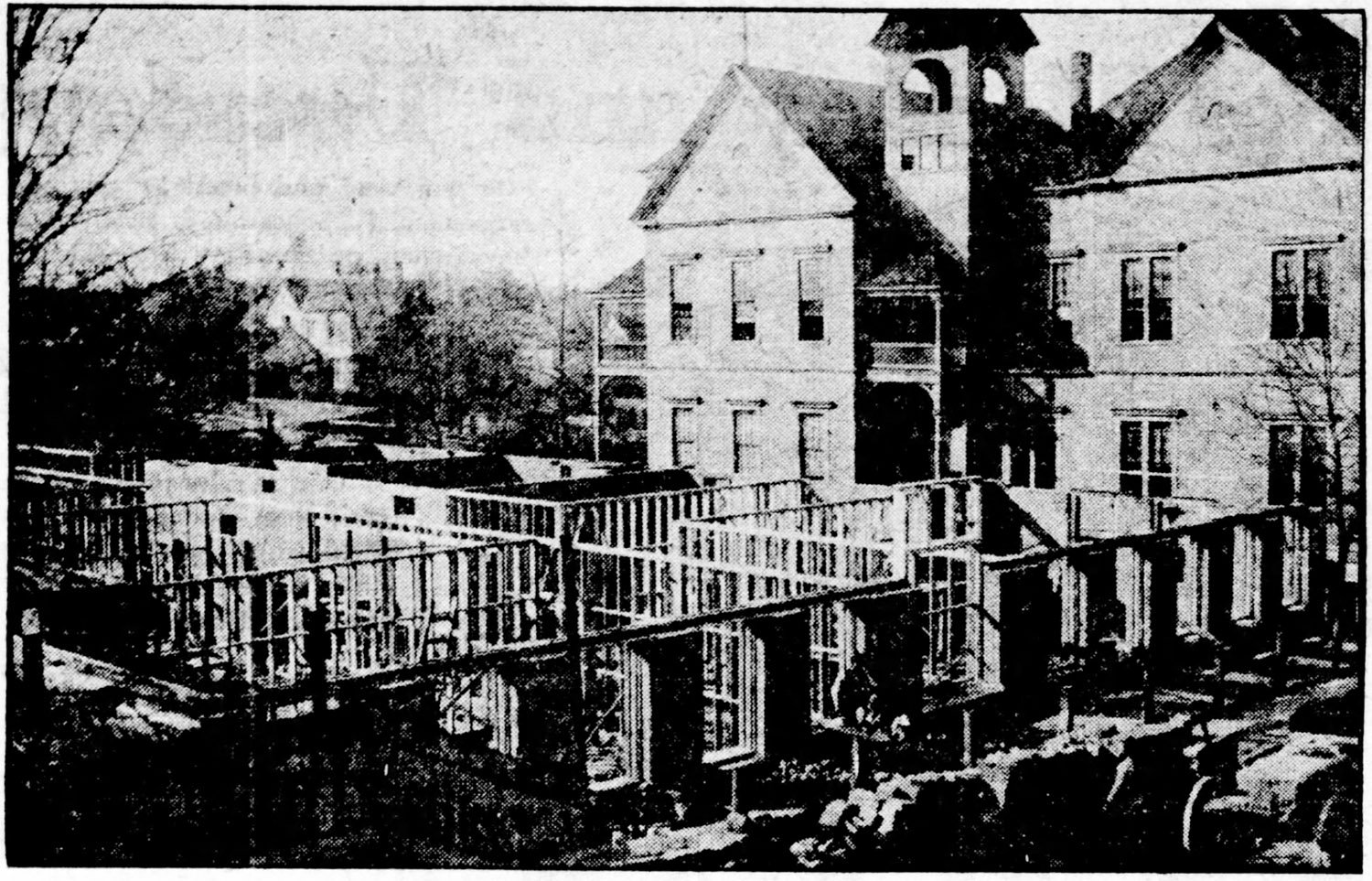
    The following article, published in The Atlanta Journal in July 1890, describes Atlanta’s Third and Fifth Ward Grammar Schools, completed in 1891 and designed by Bruce & Morgan.

    The Third Ward Grammar School was officially named the Fraser Street School, built on the corner of Fraser and Love Streets in southeast Atlanta.2 3 The school opened on February 9, 1891.4 5

    Location of Third Ward Grammar School

    The Fifth Ward Grammar School, officially named the Wallace Street School6 and later the State Street School,7 was built on a road that no longer exists, occupying a lot in northwest Atlanta that is now part of the Georgia Tech campus.

    The Wallace Street School also opened on February 9, 1891.8

    Location of Fifth Ward Grammar School

    As the leading architectural practice in the Southeast, Bruce & Morgan planned so many academic structures in the 1880s that they published a book of their educational designs, titled Modern School Buildings, in 1889.9 I wish I could find a copy.

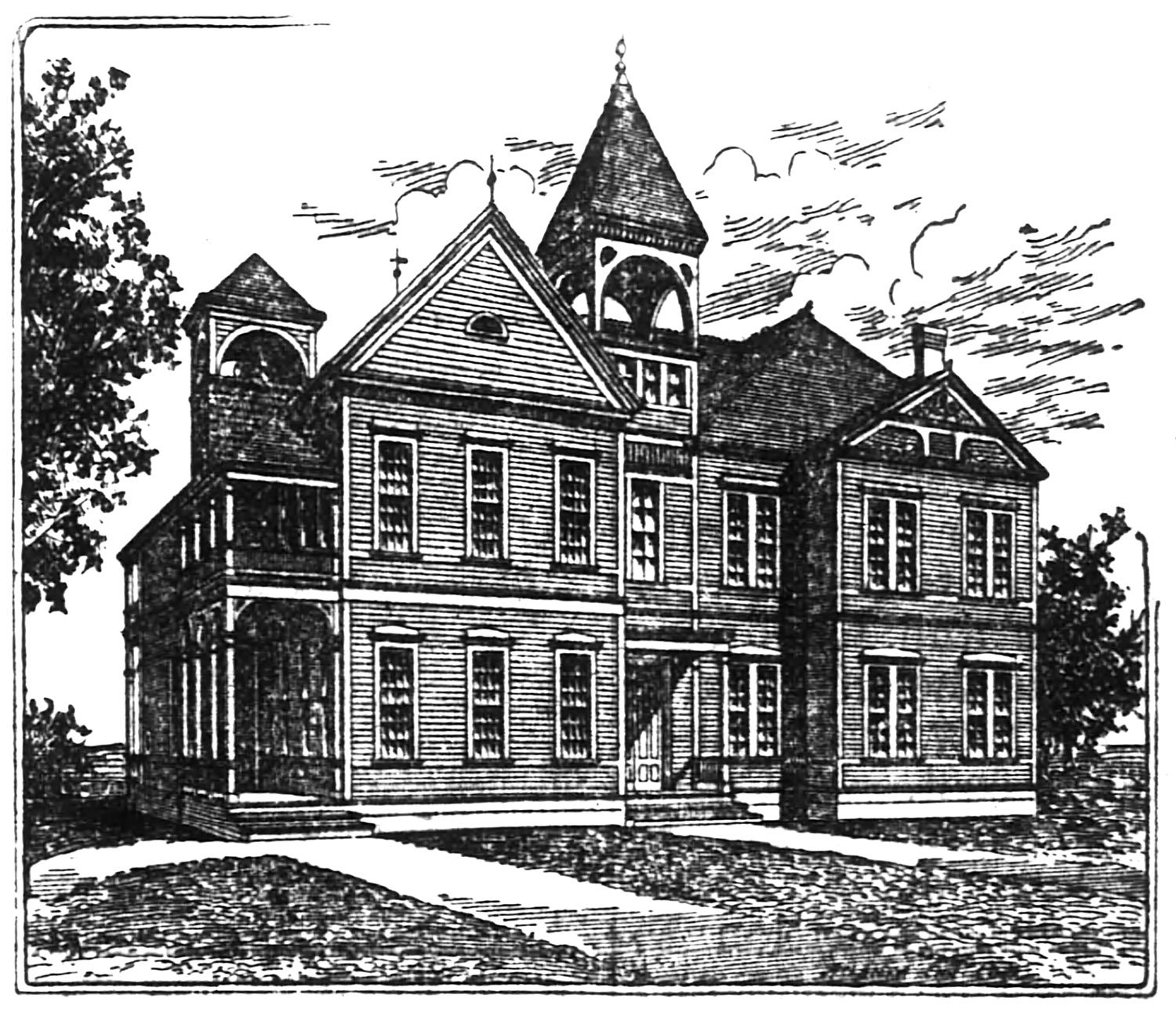
    Atlanta’s steady growth in the late 19th century fueled a constant need for new or expanded school buildings, and the Fourth Ward Grammar School, or Boulevard School, completed in 1888,10 was one of the firm’s many designs for the city’s public school system.

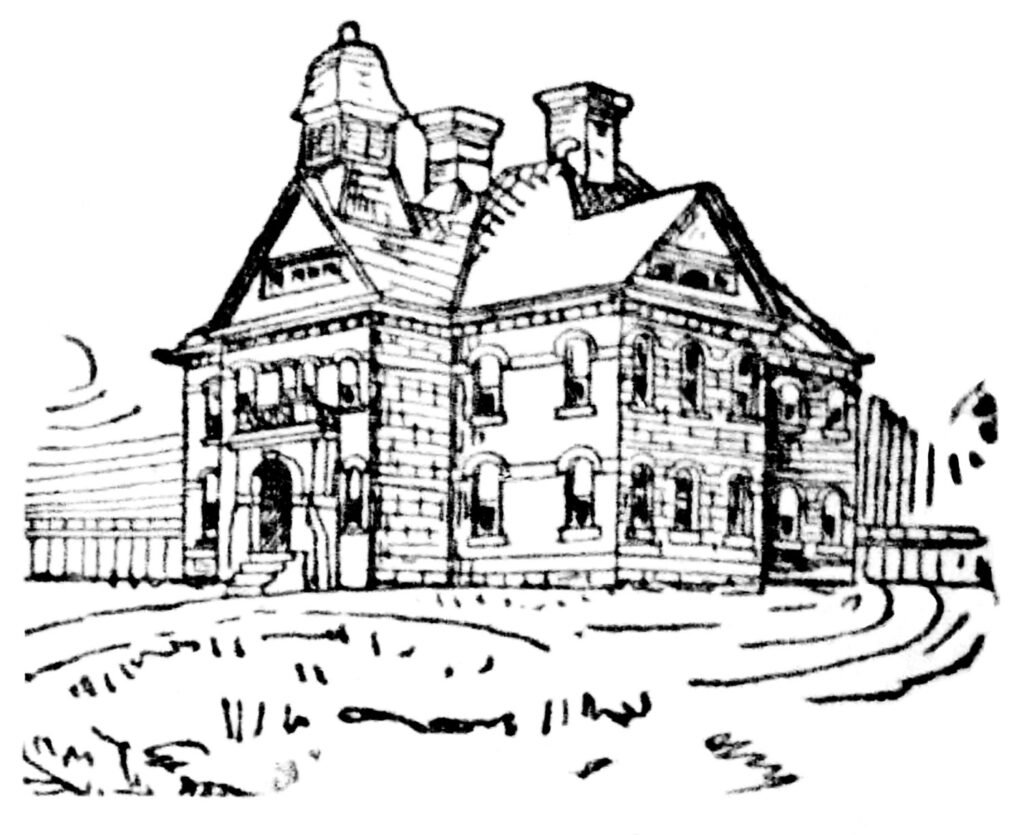
    Bruce & Morgan. Fourth Ward Grammar School /Boulevard School (1888). Atlanta.
    Bruce & Morgan. Fourth Ward Grammar School /Boulevard School (1888). Atlanta.11 12

    As noted in the article, Bruce & Morgan also designed the Gray Street Grammar School, which was designated for Black students13 and built on the same plan as the Third and Fifth Ward schools. After the building was completed in 1889, it was said to be “the best school house in Atlanta.”14

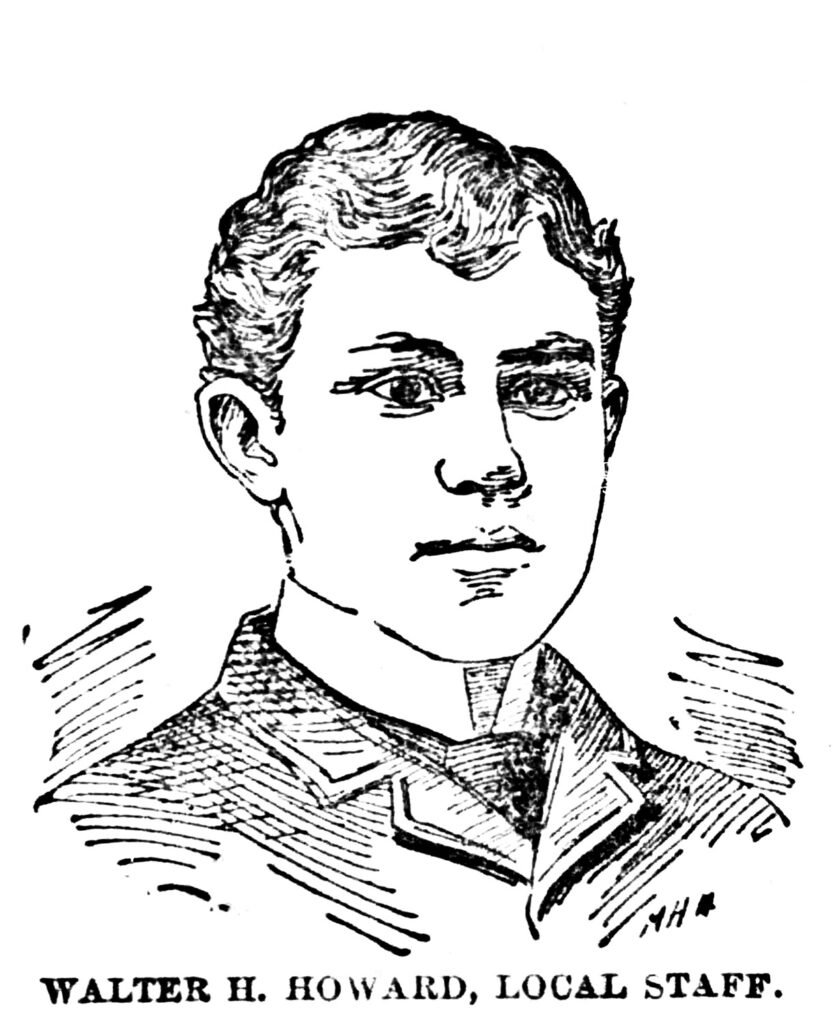
    This effusive article was written by our favorite young dynamo, Walter H. Howard, who, as usual, described every nook and cranny of the buildings in enthusiastic detail, such as the stairs that were “free from all winding or devious ways”. Of course, baby boy was only 19 and barely out of school himself, so he may have taken a special interest in the projects.

    Despite Howard’s claim that the Third and Fifth Ward schools represented “a new departure in the architectural style of Atlanta’s grammar schools,” they didn’t appear much different from the Fourth Ward Grammar School, built two years earlier.

    All three of the schools were two-story brick buildings with eight classrooms—one for each grade. They all looked like oversized homes, too, topped with cozy gables and cutesy belfries that weren’t far removed from the one-room schoolhouses of earlier days.

    It was G.L. Norrman‘s 1892 design for the Edgewood Avenue Grammar School in Inman Park that truly marked a shift in Atlanta’s school designs, dispensing with the homey pretense and embracing a bold Renaissance styling that befitted an educational facility in a modern city.

    With Atlanta’s growth continuing unabated in the early 20th century, the schoolhouses from the early 1890s inevitably became outdated and inadequate, and both the Fraser Street and State Street schools were ultimately replaced.

    The Fraser Street School was torn down in August 1923,15 and shortly before the State Street School was demolished in 1929,16 it was reported that “All of State’s contemporaries have been razed.”17


    The New Schools

    Being Built For Atlanta’s Children.

    Details Of Improved Construction.

    The Two New Grammar School Buildings in Course of Erection–A New Departure in School Architecture for Atlanta–Locations.

    The two new public school buildings now in course of erection mark a new departure in the architectural style of Atlanta’s grammar schools.

    The wise decision reached by the board of education some time ago, that hereafter none but brick schools of the most approved pattern should be built, is being carried out most satisfactorily in these two new schools.

    The schools are located, one in the third ward at the corner of Love and Frazier streets, and one in the fifth ward near the corner of Wallace and State streets.

    They are of a similar style of architecture, both exactly alike, and each when completed will cost about $16,000.

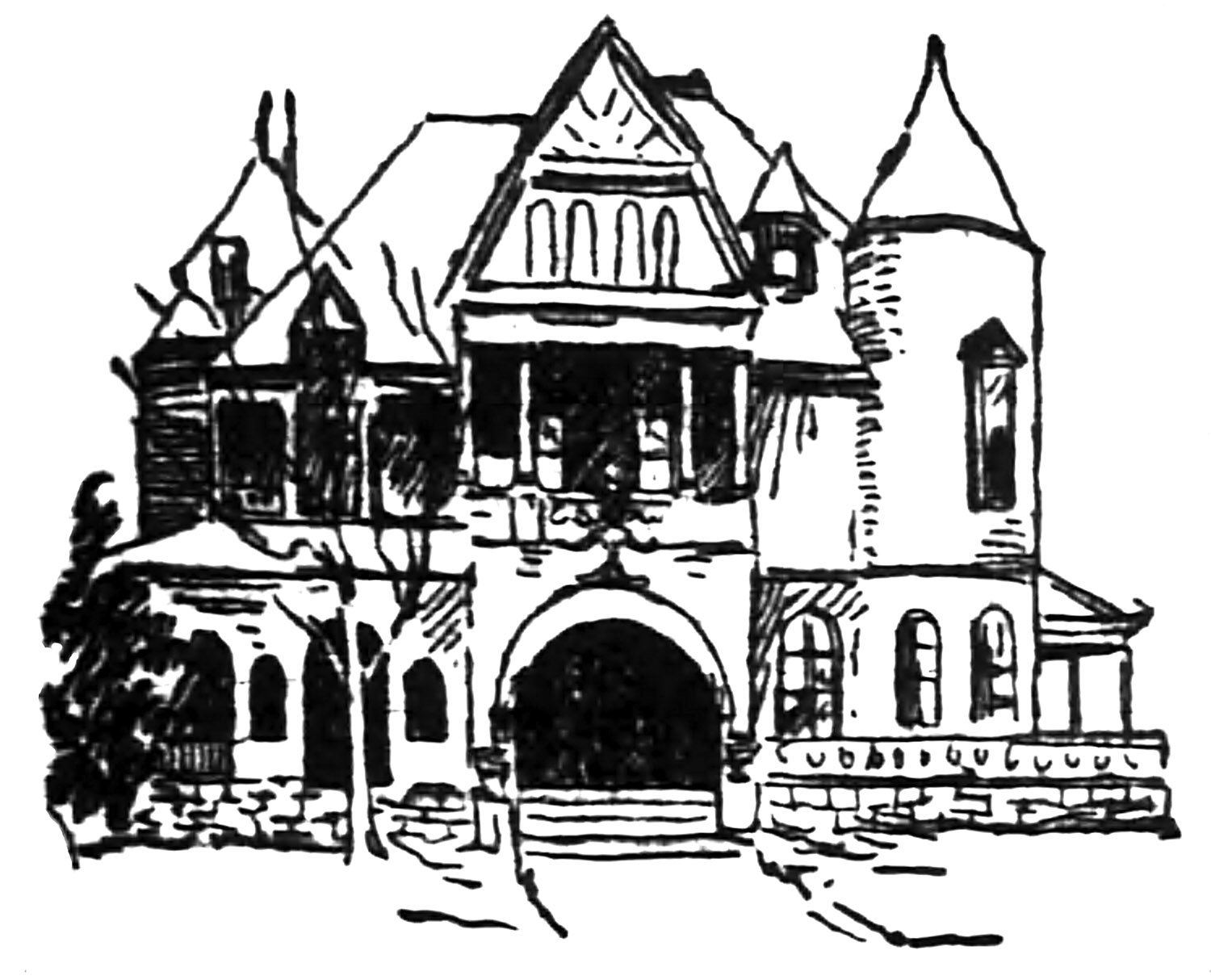
    Bruce & Morgan. Grammar School Building (1890). Atlanta.

    To Superintendent Slaton, the members of the committee on public buildings and grounds from the board of education, and to the architects, Messrs. Bruce & Morgan, are due in the main the credit for the advanced type of grammar school buildings in Atlanta.

    The two new schools will be two-story brick buildings, with eight grades each, and precisely similar to the handsome new building known as the Gray street grammar school, in the fifth ward, a school which was only completed this year.

    The new schools will be ready for occupation before the first of January. They will enable the superintendent to seat the larger part of the applicants for places in the schools, and will greatly lessen the size of each school district adjoining them.

    For instance, the one in the Third ward at the corner of Love and Frazier, will relieve both Crew and Fair street schools, both of which were greatly crowded last year.

    Correspondingly, the new school near the corner of Wallace and State streets will take those scholars who are unable to obtain seats in either Davis or Marietta street schools.

    Then again, the new schools are built very near to the present city limits and consequently will be convenient to the citizens who live in the territory recently acquired by the extension of the limits.

    With these two new schools and the Gray street school Atlanta will have three brick schools just alike and of the recent style of school architecture. All the new schools built in the near future will probably be of a similar plan. It will, therefore, be of interest to Atlanta’s citizens and school patrons to know something of these most excellently constructed school buildings.

    In them safety, health, comfort and convenience are combined.

    In the first place everything has been done to well light and ventilate the class rooms. Each room is entered from a door opening on the hall and one opening into a hat and cloak room, which also has a door opening into the hall. The windows are very large and are placed on the side and end of the room. The teacher’s stand is placed at the dark end of the room, so that the light comes in from the near and left of the pupil. The end endeavored to be attained in the ventilation of these buildings is to practically put the scholars as much out of doors as possible.

    The ventilation and heating is most carefully looked after. The rooms will be heated by steam and the foul air all carried rapidly off by large ventilation shafts.

    The halls up and down stairs are very large and well lighted. There are two wide entrances admitting fresh air. Then the stair cases are unusually wide and free from all winding or devious ways, sloping not too much.

    The great object to be attained in having the great wide exits, the large open hallways and the large stairways is the prevention of danger or panic in cases of fire. One of the greatest safeguards against panics is the admirable manner in which the superintendent keeps the children instructed in the fire drill, but then the proper construction of the buildings lessens the danger very greatly.

    Summed up briefly, the other advantages to be found in the construction of the new style school buildings are, perfect sanitation, abundance of room, economy of space, durability of the buildings, excellent acoustical conditions, and the neat and comfortable manner in which the class rooms are furnished.

    The buildings are not only constructed substantially, but with a view to beauty as well. The floors are deadened so as to destroy sound, and the doors are constructed so that all open on the outside, thus lessening the danger in case of a panic.

    Nothing has done more toward building Atlanta up and in making her a great city than her excellent system of public schools, and the new departure in the style of her school buildings will greatly increase the efficiency and the value of her great public school system–already the best at the south.

    Walter H. Howard.18

    References

    1. Illustration credit: City of Atlanta: A Descriptive, Historical and Industrial Review. Louisville, Kentucky: The Inter-State Publishing Company, 1892-93, p. 25. ↩︎
    2. “Finance Committee.” The Atlanta Constitution, May 30, 1890, p. 5. ↩︎
    3. “The Public Schools.” The Atlanta Constitution, August 27, 1890, p. 7. ↩︎
    4. “Little Locals.” The Atlanta Constitution, February 4, 1891, p. 5. ↩︎
    5. “They Are Open.” The Atlanta Constitution, February 10, 1891, p. 3. ↩︎
    6. “The Public Schools.” The Atlanta Constitution, August 27, 1890, p. 7. ↩︎
    7. “State St. School Closing Fortieth Year Of Service”. The Atlanta Journal, May 5, 1929, p. 10. ↩︎
    8. “They Are Open.” The Atlanta Constitution, February 10, 1891, p. 3. ↩︎
    9. “From Our Notebook.” The Atlanta Constitution, June 23, 1889, p. 17. ↩︎
    10. “The Boulevard School”. The Atlanta Constitution, October 14, 1888, p. 12. ↩︎
    11. “Notice to Contractors”. The Atlanta Constitution, April 7, 1888, p. 8. ↩︎
    12. Illustration credit: City of Atlanta: A Descriptive, Historical and Industrial Review. Louisville, Kentucky: The Inter-State Publishing Company, 1892-93, p. 23. ↩︎
    13. “The Public Schools.” The Atlanta Constitution, December 28, 1888, p. 8. ↩︎
    14. “Major Slaton’s Report”. The Atlanta Constitution, February 6, 1890, p. 6. ↩︎
    15. “Wrecking” (advertisement). The Atlanta Journal, August 27, 1923, p. 16. ↩︎
    16. “6 School Structures Tentatively Accepted By Education Board”. The Atlanta Journal, May 15, 1929, p. 4. ↩︎
    17. Pitts, Mamie Louise. “State St. School to Celebrate Thirty-Ninth Anniversary”. The Atlanta Journal, January 27, 1929, p. 12N. ↩︎
    18. Howard, Walter H. “The New Schools”. The Atlanta Journal, July 12, 1890, p. 1. ↩︎
  • Confederate Soldiers’ Home (1891-1901) – Atlanta

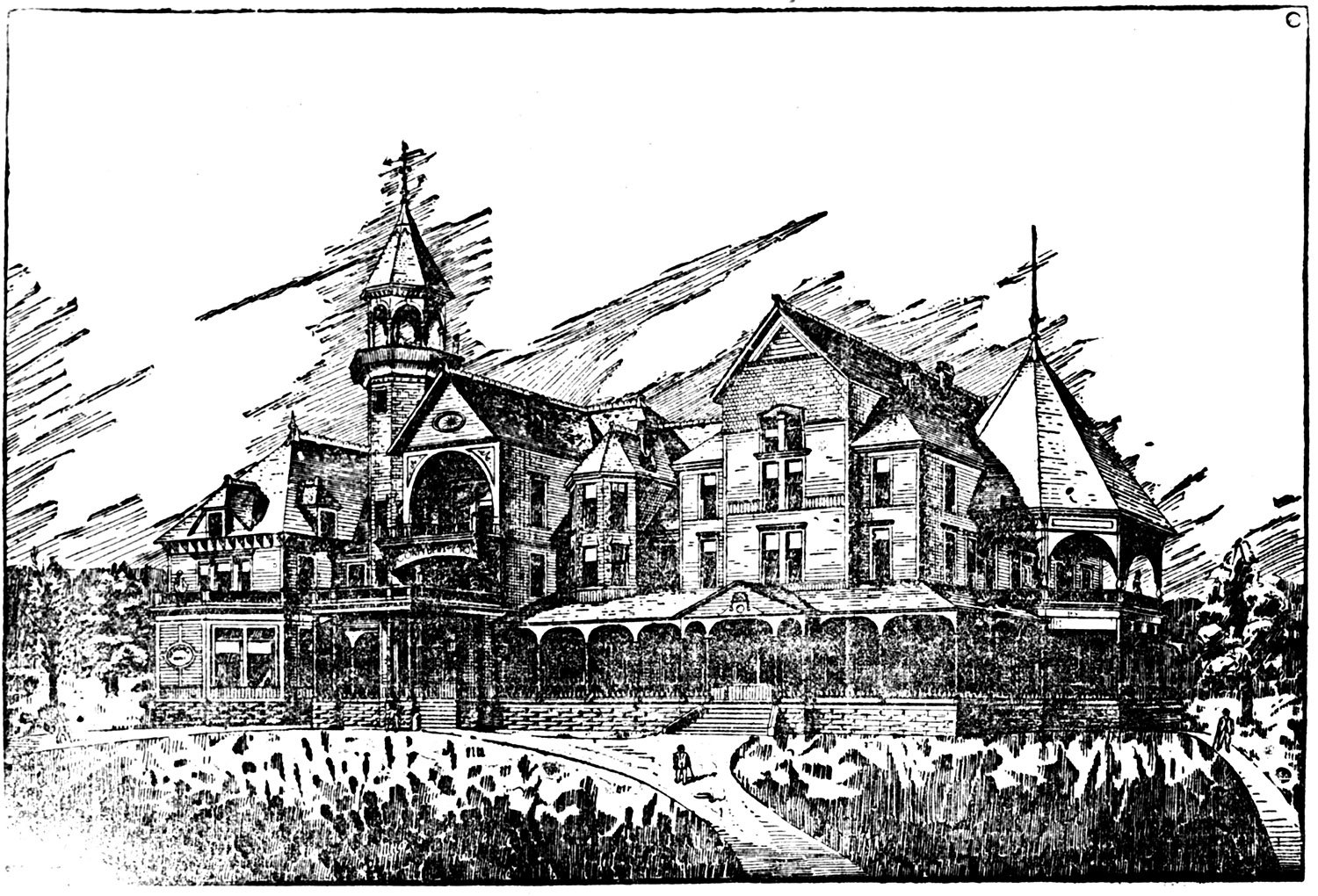
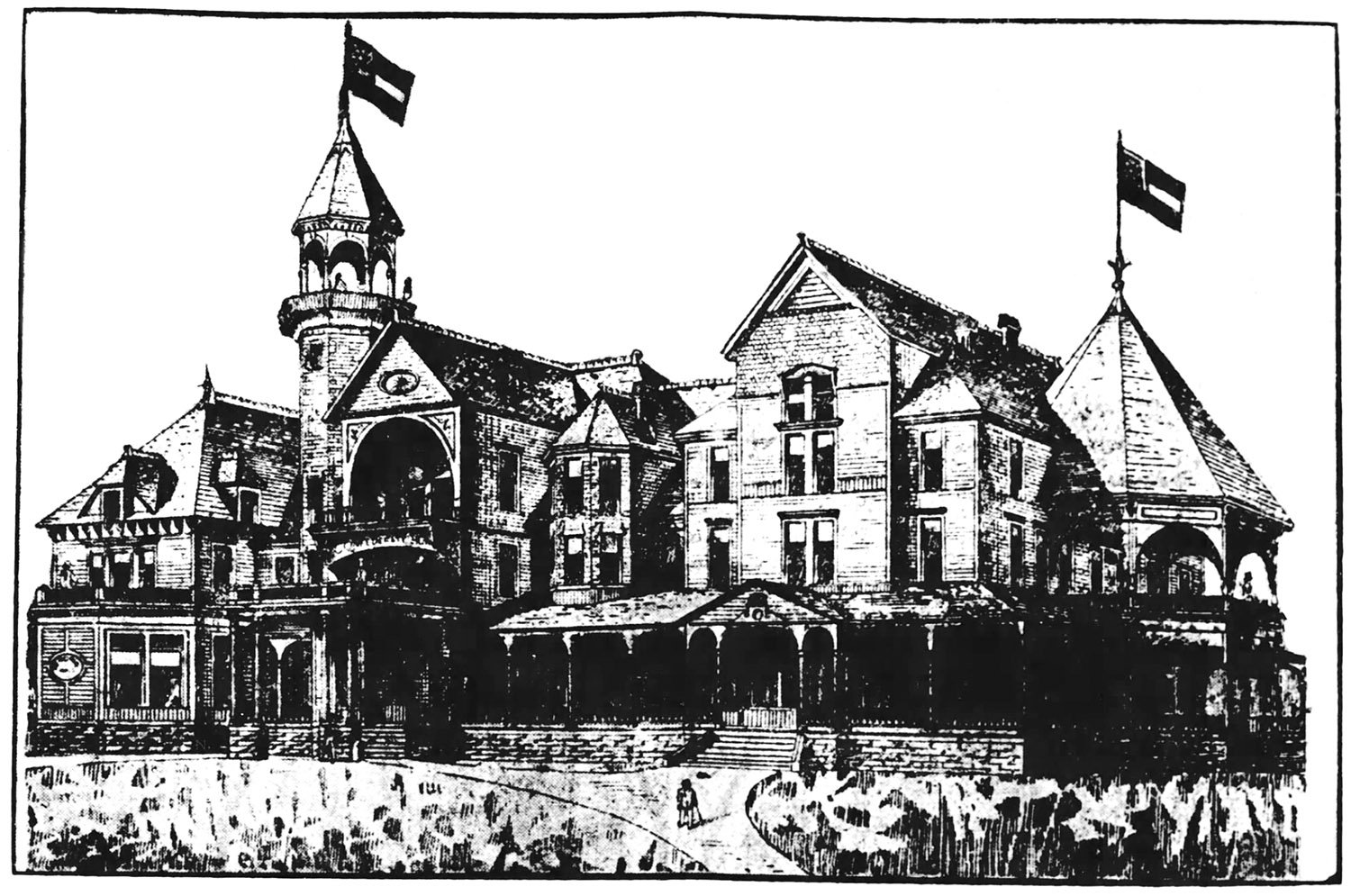
    Bruce & Morgan. Confederate Soldiers' Home (1891-1901). Atlanta.
    Bruce & Morgan. Confederate Soldiers’ Home (1891-1901). Atlanta.1

    The Background

    The following article, published in The Atlanta Journal in April 1890, describes the Confederate Soldiers’ Home in Atlanta, completed in 1891 and designed by A.C. Bruce of Bruce & Morgan.

    Planned to house 150 to 200 people,2 the facility was built on 125 acres located two miles southeast of Atlanta and connected to Grant Park3 by a 1.5-mile dirt road that became known as Confederate Avenue (later United Avenue SE).

    Location of Confederate Soldiers’ Home

    The Origins of the Home

    The project was first proposed in April 1889 by Henry W. Grady, editor of The Atlanta Constitution, although it was hardly his own conception.

    In late 1888 and early 1889, Major Joe E. Stewart of Austin, Texas, traveled to the Northeast and began fundraising appeals in Boston and New York to support an existing home for Confederate veterans in Austin.4 5

    Why Stewart considered that a good idea was anyone’s guess, since no self-respecting Northener would’ve given a damn about aiding the ex-soldiers of a treasonous rebellion. As the Mail and Express of New York opined bluntly:

    “Major Stewart’s advocacy of the scheme for a Confederate Soldiers’ Home will not find favor here. That is not a matter of National concern…but is distinctly anti-National and to be discouraged.”6

    Needless to say, Stewart’s ill-conceived fundraising tour was a failure, and the soldiers’ home in Austin, Texas, received only $1500 in donations from Northern contributors.7

    Always full of self-righteous fervor, Henry Grady seized on the story in one of his typical bloviating editorials for the Constitution, proclaiming that Confederate soldiers should be aided by Southern money, making an impassioned plea to build a veterans’ home in Georgia for those who “suffered in her cause” — that is to say, those who fought for human slavery. Spare me the states’ rights bullshit.

    Grady wrote, in part:

    “Come home, Major Stewart, and let us take care our heroes to our own hearts, and wear them there, never to be paraded again with their limping gait, their poor wounds and their shabby raiment through the lines of strangers, of whom charity is begged for their behalf!

    “But we need Confederate Homes! In every state there are men wearing honorable scars who are poor and helpless.

    “WE MUST BUILD A CONFEDERATE HOME in GEORGIA! We must built it at once! We must show that Georgia’s heart beats true to the men who suffered in her cause–and that she will take them to her heart!”8

    Grady began a public fundraising campaign for the project, with the Constitution contributing the first $1,000. The campaign reportedly received over $10,000 in pledges within 12 hours of the newspaper’s distribution,9 and nine days later, an organization overseeing the project was incorporated with a board of 25 directors led by Grady.10 Credit them for moving quickly.

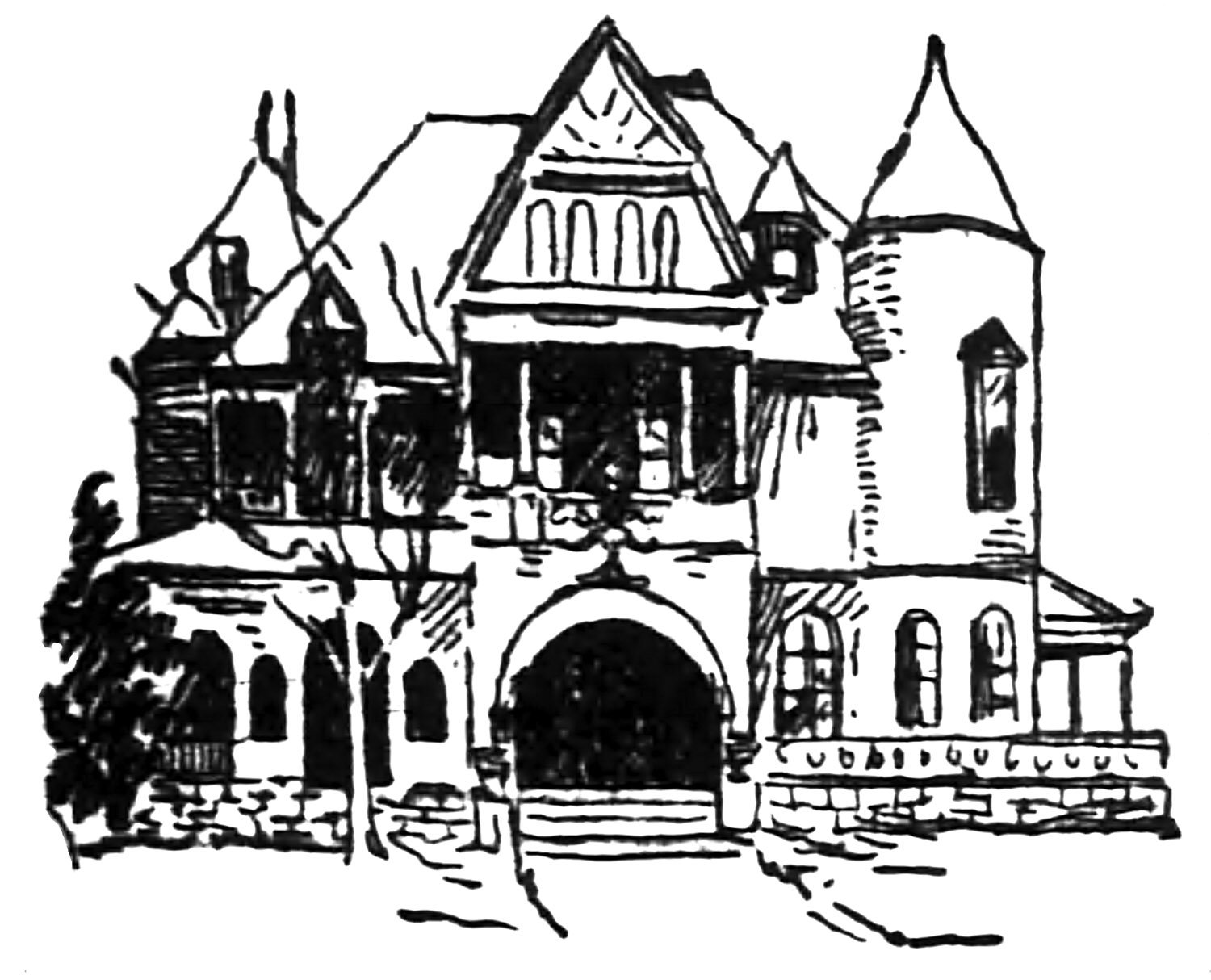
    Confederate Soldiers' Home
    Confederate Soldiers’ Home11

    Design and Construction

    While it was initially reported that the project’s building committee accepted a plan by W.T. Downing of Wheeler & Downing,12 G.L. Norrman also submitted plans, and A.C. Bruce13 of Bruce & Morgan ultimately secured the commission.14 It undoubtedly helped that A.C. Bruce was also a Confederate veteran.

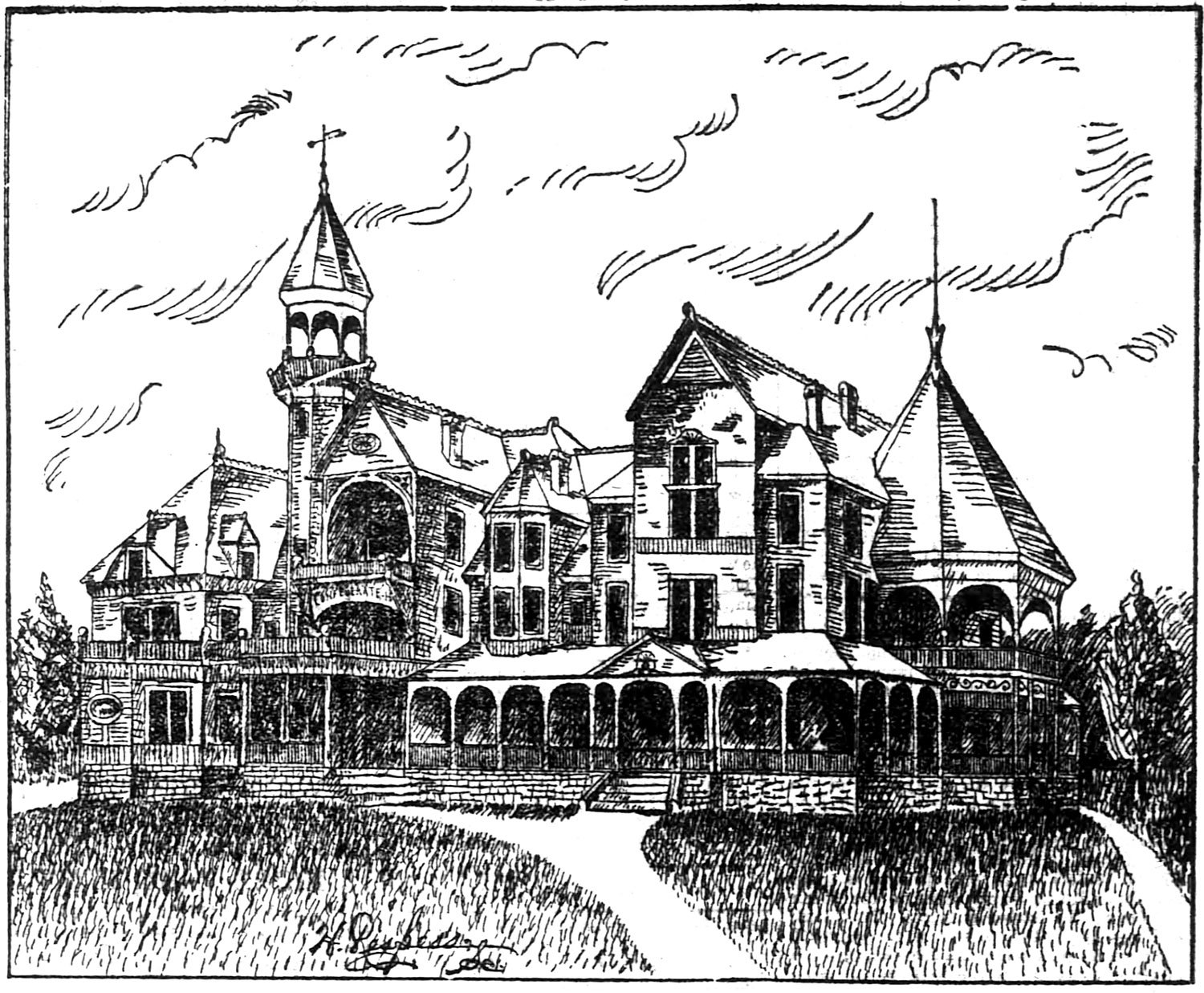
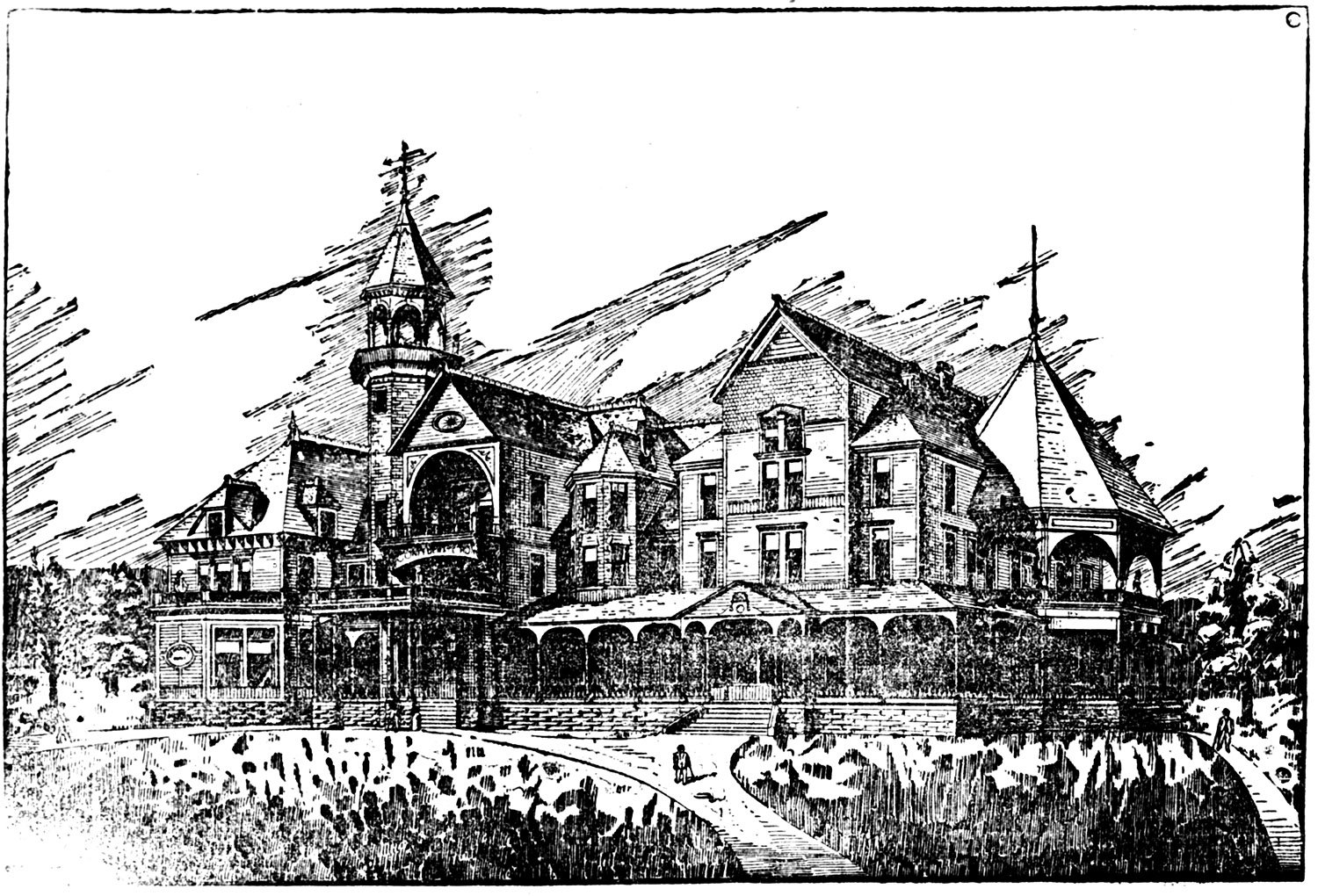
    Looking every bit like a fashionable summer hotel, Bruce’s design for the Confederate Soldiers’ Home was one of his better efforts: a rambling structure of two to three stories, primarily Queen Anne style, with all the expected eclecticism and embellishments of the era, including a 120-foot-tall turret.

    Construction began in November 1889,15 and the building’s cornerstone was laid in a public ceremony on Confederate Memorial Day, April 26, 1890.16 17 The structure was completed in January 1891,18 19 and while the project was initially estimated at $22,000,20 the final cost was $27,699.25.21

    Another Lost Cause

    Although the Constitution set a goal of $50,000 in subscriptions for the project,22 23 24 the Confederate Soldiers’ Home ultimately received just over $41,000, leaving only $41.01 in available funds at the building’s completion.25 Henry Grady died in December 1889, and it’s safe to assume the project’s funding faltered in the absence of his leadership.

    The project’s directors should have taken a cue from Atlanta’s Carrie Steele Orphans’ Home, which was under construction at the same time and similarly funded by popular subscription. The original plans for the orphanage — also designed by Bruce & Morgan — were apparently dropped in favor of a simpler structure to accommodate reduced funding.

    We’re talking about Atlanta, though, where show and spectacle have always been prioritized over fiscal responsibility, and one of the directors of the veterans’ home project even admitted that the committee splurged on “extras in the form of a slate roof, etc.,” adding at least $1000 to the total cost.26

    As it became clear that the organization lacked the funds to operate its shiny new facility, the directors decided to unload it on the State of Georgia, offering the entire property to the state government on the condition that it shelter veterans for 25 years, after which it could be used for other purposes.27 28 Too bad the state didn’t want it.

    In November 1890, a bill was introduced in the state legislature to operate the home as a public facility,29 although it was defeated in August 1891.30 A similar bill was shelved in December 1892,31 32 and a third attempt was killed when lawmakers deferred it to a finance committee.33

    Partially fueling the legislature’s refusals was the simmering resentment Georgia’s bumfuck politicians have long held against the city, knowing full well the state would be Mississippi without Atlanta. Some legislators apparently dismissed the project as a typical Atlanta “speculative scheme,”34 35 and frankly, they weren’t entirely wrong on that count.

    In 1894, the Confederate Soldiers’ Home even became a contentious topic in the state’s gubernatorial race. The leading candidate was William Yates Atkinson, a former speaker of the Georgia House of Representatives, who voted against the home and actively denounced the project on the campaign trail, telling attendees at one event:

    “The friends of the home didn’t care anything about it, but they wanted it accepted because it was located in Atlanta.

    “That home was a regular poor house and they wanted to send you needy veterans to that Atlanta poor house, where you would be under a master to whom you would have to beg like a slave for the necessities of life.”36

    Oh, the irony.

    Atkinson won the election, and in January 1895, the Confederate Soldiers’ Home was “still uninhabited, save by a lone watchman,”37 when the organization decided to sell the property.38 39

    Confederate Soldiers' Home, 1901 illustration
    Confederate Soldiers’ Home, 1901 illustration40

    Myth and Mayhem

    By the mid-to-late 1890s, it had become glaringly obvious that the New South myth was utter bullshit. The chief promulgator, Henry Grady, was long dead, and like the grand mansions that sat vacant for years in Atlanta’s Inman Park, the Confederate Soldiers’ Home was left to rot because no one could pony up the cash — even for the soldiers of Georgia’s vaunted “cause.”

    The decision to sell the facility prompted a lawsuit from the local real estate company that initially donated the land, claiming they had done so with the understanding that the property would be used solely for a veterans’ home.41

    The trial ended with a judge’s order to sell the property,42 43 but an effort to sell in April 189644 was apparently dropped, and a second attempt in 1897 was delayed by the Daughters of the Confederacy, who wanted another chance to woo the state legislature into operating the facility.45 That also failed.

    A published description of the property in 1897 portrayed a bleak scene:

    “The home is three stories high and is of beautiful architecture. It was once painted, but no one would at present suspect it.

    “The sides are weather beaten and many of the planks are beginning to decay. The old windmill with the tank on the top is now grown up with vines and shows that it has not been in use for some time. The walks, which wind in and about the premises in the immediate neighborhood of the building, and which were once well kept, are now grown up with grass and weeds.

    “The approach to the home for a quarter of a mile is almost as gloomy as the building itself, and one would suspect that he was in the neighborhood, even though the building had not been sighted. The street car track which was laid when the home was built and when it was thought that there was no doubt but what it would soon be inhabited by many veterans, is now in a state of decay. The rails are rusty, the bed has in many places caved in and is covered with weeds.

    “The little road which had been graded along side, is now grown up with shrubbery, and the lizards dart away at the approach of a chance pedestrian.”46

    In April 1898, an attempt to sell the home on the steps of the Fulton County Courthouse was halted because the highest bid was only $10,000.47

    A year later, another public auction resulted in an even lower winning bid: $8,000, offered by Joel Hurt,48 who reportedly “had not intended to buy the property when he went to the sale, and only did it to help the veterans out.”49

    That sale was also denied,50 and the property remained unsold and vacant, with no hope of eventual use in sight.

    A Blaze of Glory

    In 1900, nearly ten years after the Confederate Soldiers’ Home was completed, a group of Confederate veterans, led by Major W.T. Gary,51 once again lobbied the Georgia legislature to operate the facility, aided by the recommendation of a new, more sympathetic governor, Allen D. Candler.52

    Worn down by the state’s repeated rejections, it was a shock to everyone involved when the Soldiers’ Home Bill was passed in December 1900 by a vote of 106 to 50,53 54 and the facility finally opened on June 3, 1901.55 56

    Ah, but it’s Atlanta, so you know there’s a shitty twist ending.

    Before it had been occupied for even four months, the Confederate Soldiers’ Home was destroyed by fire on September 30, 1901.57 58

    The building’s restroom (just the one?) apparently incorporated the “Smead dry closet“, in which facilities without sewer access could collect feces and burn it into a fine powder — a novel solution in 1890, but quite outdated by 1901, when flush toilets had become the accepted standard.

    As the Journal explained:

    “In the lavatory the Smead system of disposing of the refuse was used. Daily the crematory in connection with the lavatory was fired up.

    The negro porter who started these fires this morning placed a wheelbarrow load of shavings and other timber from the premises into the furnace. The fire burned fiercely and broke through the top of the furnace.

    “When Dr. Bryan went into the department he noticed the flames. He ran out and asked if the flames were not too high.

    “Superintendent James L. Wilson seeing the condition of the fire quickly gave the alarm. By this time the flames had commenced to burn the woodwork in the vicinity of the furnace.

    “The smoke was pouring into the center of the house in great volumes, and owing to the draft at this place the flames spread rapidly.”59

    Of course, they tried to pin the blame on the Black man, but after sitting unused for ten years, the furnace was probably a faulty mess. Or maybe the place was just haunted by Sherman‘s ghost.


    Bruce & Morgan. Confederate Soldiers' Home (1891-1901). Atlanta.
    Bruce & Morgan. Confederate Soldiers’ Home (1891-1901). Atlanta.

    We Love Them

    And Now In Their Declining Years

    We Will Shelter Them.

    Something About the Home to be Occupied by the Soldiers

    Who Shed Their Blood For The Southern Land–A Description of the New Building Soon to be Completed for the Veterans.

    The veterans will soon be quartered in their new home.

    The plans for the building were prepared by Messrs. Bruce & Morgan.

    The contract was awarded to Messrs. Austin & Boylston.

    The building will be one hundred and eighty feet long, and at the south end, the widest portion, one hundred feet in width.

    The approach will be through a “Porte coache,” [sic] and the entrance will be handsomely finished and attractive. On either side of the main entrance there will be niches for statuary.

    On the first floor are a main hall, corridors, reception rooms, a parlor, a chapel, a sitting room, office, dining room, kitchen, pantry, laundry and bed rooms.

    You first enter a large hall, handsomely finished, 32×50 feet. On the right are the ladies’ reception room and parlors and on the left the gentlemen’s reception room. Adjoining the latter is a reading room. The sitting room is 25×59 feet, and will be used by the old soldiers when the weather will not permit them to go out of doors.

    The office is in the main hall.

    The “memorial chapel” is in front of the building, and to the left of the main entrance. It will be used for divine services, banquets and public receptions.

    The dining room is 36×40 feet, and will seat one hundred people. The kitchen and pantries are a one-story wing and adjoin the dining hall. The laundry is beneath the kitchen.

    There are ten bed rooms on this floor.

    Two hundred and seventy-five feet of wide verandahs surround the first floor.

    There are thirty rooms on the second floor, the smallest of which are 12×14 feet, and the largest 15×18.

    Each bedroom has a fireplace and two windows.

    There are several easily accessible staircases leading to the first floor.

    On the second floor there are three balconies, one in the center of the building and one on each side.

    A portion of one wing of the building is three stories high, and in this upper story are ten bedrooms.

    The turret, the highest point of which is one hundred and twenty feet from the ground, is of an octagon shape.

    A large balcony surrounds the building seventy-five feet from the ground, and from it an excellent view of the city can be had.

    The foundation of the building will be stone and the balance of wood, inside the wood work will be natural pine, and the main hall will be panel-wainscotted.

    It will cost between twenty and twenty-five thousand dollars and will be one of the handsomest buildings in the county.60

    References

    1. Illustration credit: “We Love Them”. The Atlanta Journal, April 26, 1890, p. 12. ↩︎
    2. “The Veterans’ Home”. The Atlanta Journal, December 9, 1890, p. 1. ↩︎
    3. “Veterans’ Home”. The Atlanta Journal, May 9, 1889, p. 4. ↩︎
    4. “Ex-Confederate Home.” Austin Weekly Statesman (Austin, Texas), November 1, 1888, p. 4. ↩︎
    5. “To Aid Confederate Soldiers.” New-York Tribune, February 7, 1889, p. 3. ↩︎
    6. “Echoes From The People.” The World (New York), January 31, 1889, p. 2. ↩︎
    7. “The Confederates Home.” The Atlanta Constitution, April 2, 1889, p. 1. ↩︎
    8. “Shall We Go Begging For Them?” The Atlanta Constitution, April 6, 1889, p. 4. ↩︎
    9. “Let Us Wear Them In Our Hearts!” The Atlanta Constitution, April 7, 1899, p. 17. ↩︎
    10. “The Soldiers’ Home.” The Atlanta Constitution, April 26, 1890, p. 15. ↩︎
    11. Illustration credit: “The Soldiers’ Home”. The Atlanta Constitution, April 26, 1890, p. 15. ↩︎
    12. “The Confederate Home.” The Atlanta Constitution, September 11, 1889, p. 7. ↩︎
    13. “The Trustees Meet.” The Atlanta Constitution, July 17, 1891, p. 7. ↩︎
    14. “In And About Atlanta.” The Atlanta Constitution, September 21, 1889, p. 5. ↩︎
    15. “The Confederate Home.” The Atlanta Constitution, November 24, 1889, p. 11. ↩︎
    16. “To Lay The Corner-Stone.” The Atlanta Constitution, April 15, 1890, p. 5. ↩︎
    17. “Confederate Home.” The Atlanta Constitution, April 25, 1890, p. 9. ↩︎
    18. “The Veterans’ Home”. The Atlanta Constitution, January 9, 1891, p. 6. ↩︎
    19. “Strong Effort To Pass Gary Bill”. The Atlanta Constitution, November 25, 1900, p. 4. ↩︎
    20. “In And About Atlanta.” The Atlanta Constitution, September 21, 1889, p. 5. ↩︎
    21. “The Trustees Meet.” The Atlanta Constitution, July 17, 1891, p. 7. ↩︎
    22. ‘The Confederate “Home” Movement.’ The Atlanta Constitution, April 9, 1889, p. 4. ↩︎
    23. “It Is Still Moving On!” The Atlanta Constitution, April 16, 1889, p. 4. ↩︎
    24. “The Confederate Home of Georgia Organized.” The Atlanta Constitution, April 19, 1889, p. 4. ↩︎
    25. “The Trustees Meet.” The Atlanta Constitution, July 17, 1891, p. 7. ↩︎
    26. “The Idler’s Note Book”. The Atlanta Journal, September 9, 1890, p. 4. ↩︎
    27. “About The Capitol.” The Atlanta Constitution, October 19, 1890, p. 16. ↩︎
    28. “Confederate Home.” The Atlanta Constitution, November 22, 1890, p. 10. ↩︎
    29. ibid. ↩︎
    30. “Defeated!” The Atlanta Constitution, August 27, 1891, p. 1. ↩︎
    31. “Defeat The Fate.” The Atlanta Constitution, December 15, 1892, p. 7. ↩︎
    32. “The Veterans Mourn.” The Atlanta Journal, December 15, 1892, p. 1. ↩︎
    33. “Confederate Soldiers’ Home Is Sold To Joel Hurt For $8,000”. The Atlanta Constitution, May 3, 1899, p. 5. ↩︎
    34. “The Greeks Bearing Gifts.” The Atlanta Constitution, September 5, 1891, p. 4. ↩︎
    35. “The Soldiers’ Home”. The Atlanta Constitution, November 24, 1892, p. 8. ↩︎
    36. “Those Joint Debates.” The Atlanta Journal, March 31, 1894, p. 13. ↩︎
    37. “Trustees Will Meet”. The Atlanta Constitution, January 22, 1895, p. 10. ↩︎
    38. “To Sell It In The Spring”. The Atlanta Journal, January 29, 1895, p. 1. ↩︎
    39. “The Home To Be Sold”. The Atlanta Constitution, January 30, 1895, p. 5. ↩︎
    40. Illustration credit: “Soldiers’ Home Opens Its Doors To Veterans Today”. The Atlanta Journal, June 3, 1901, p. 7. ↩︎
    41. “The Soldiers’ Home Case.” The Atlanta Constitution, September 4, 1895, p. 5. ↩︎
    42. “To Sell The Soldiers’ Home”. The Atlanta Constitution, September 17, 1895, p. 5. ↩︎
    43. “The Soldiers’ Home.” The Atlanta Constitution, December 18, 1895, p. 8. ↩︎
    44. “Sale of Soldiers’ Home Property.” The Atlanta Constitution, March 31, 1896, p. 10. ↩︎
    45. “Home Trustees Have Not Acted”. The Atlanta Constitution, June 3, 1897, p. 12. ↩︎
    46. “Soldiers’ Home To Be Sold. Court’s Order Expected Any Time”. The Atlanta Constitution, May 24, 1897, p. 6. ↩︎
    47. “Sale Of Home Declared Off”. The Atlanta Constitution, April 6, 1898, p. 5. ↩︎
    48. “Confederate Soldiers’ Home Is Sold To Joel Hurt For $8,000”. The Atlanta Constitution, May 3, 1899, p. 5. ↩︎
    49. “Soldiers’ Home Sells For $8,000 At Auction”. The Atlanta Journal, May 2, 1899, p. 1. ↩︎
    50. “Sale Of The Home Is Not Confirmed”. The Atlanta Constitution, May 22, 1889, p. 8. ↩︎
    51. Gary, W.T. “Why We Should Accept Confederate Home.” The Atlanta Constitution, November 13, 1900, p. 4. ↩︎
    52. “Veterans Fighting For Soldiers’ Home”. The Atlanta Journal, November 20, 1900, p. 10. ↩︎
    53. “Soldiers’ Home Bill Passed By House; Georgia Veterans Will Have Shelter At Last After Waiting Eleven Years”. The Atlanta Journal, December 12, 1900, p. 1. ↩︎
    54. “Georgia Veterans Get Their Home By The Vote Of 106 To 50”. The Atlanta Constitution, December 13, 1900, p. 1. ↩︎
    55. “Soldiers’ Home Will Be Opened To Vets Today”. The Atlanta Constitution, June 3, 1901, p. 1. ↩︎
    56. “Soldiers’ Home Opens Its Doors To Veterans Today”. The Atlanta Journal, June 3, 1901, p. 7. ↩︎
    57. “Soldiers’ Home Totally Destroyed: Generous People Will Rebuild It; Journal Leases Hotel For Vets”. The Atlanta Journal, September 30, 1901, p. 1. ↩︎
    58. “Soldiers’ Home, Destroyed By Flames That Relit The Fire Of A Smouldering Sympathy, Will Be Rebuilt By Georgians”. The Atlanta Constitution, October 1, 1901, p. 1. ↩︎
    59. ibid. ↩︎
    60. “We Love Them”. The Atlanta Journal, April 26, 1890, p. 12. ↩︎
  • William J. Speer Residence – Atlanta (1890-1911)

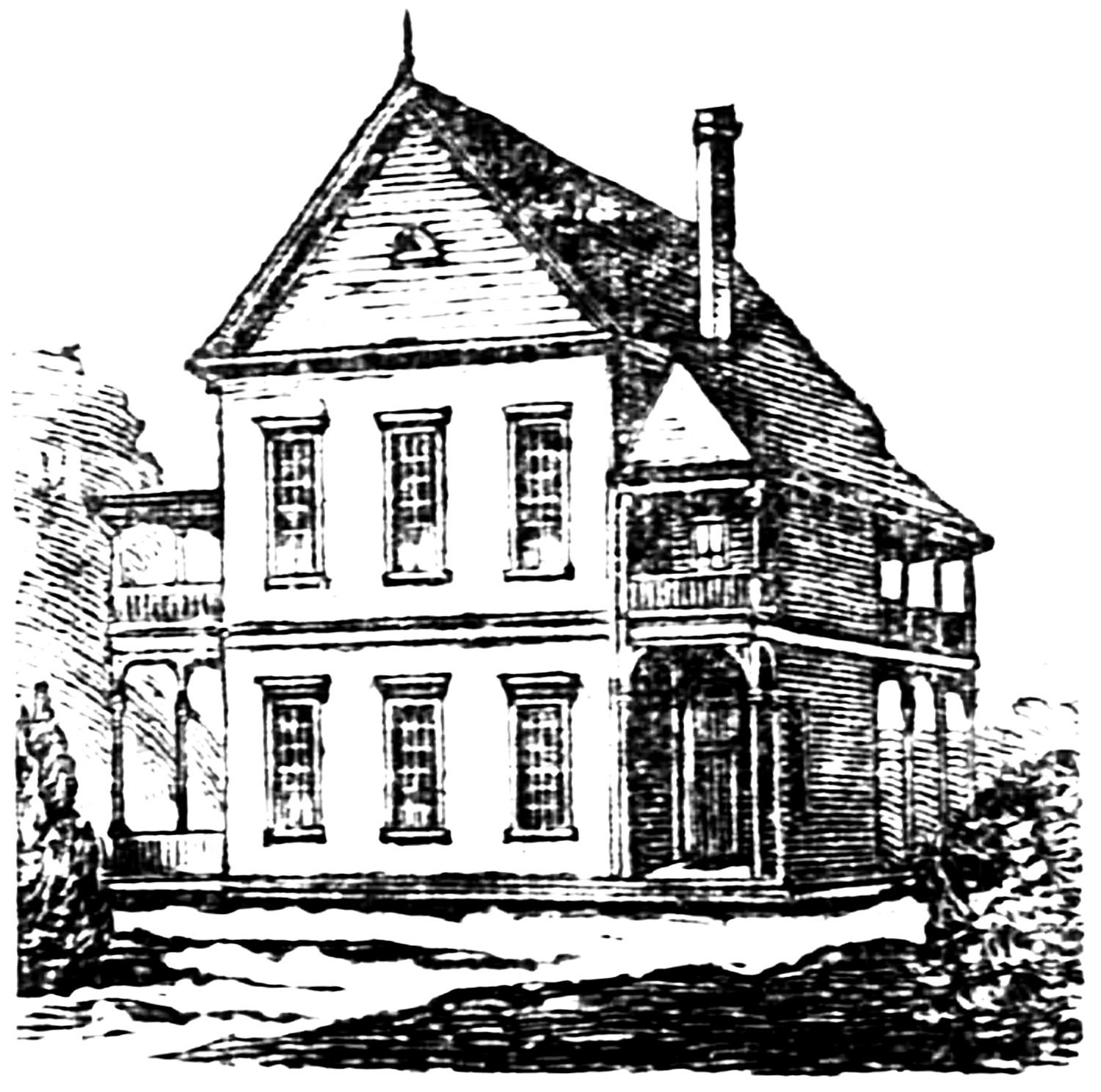
    G.L. Norrman. William J. Speer Residence (1890-1911). Atlanta.
    G.L. Norrman. William J. Speer Residence (1890-1911). Atlanta.1

    The Background

    The following excerpt is from an article published in The Atlanta Constitution in April 1891, and describes the William J. Speer Residence in Atlanta, built in 1890 and designed by G.L. Norrman.

    The Speer residence was located on the northwest corner of Peachtree Street and North Avenue, at 544 Peachtree Street2 3 (later 620 Peachtree Street NE) in what is now Midtown Atlanta.

    Location of William J. Speer Residence

    About William J. Speer

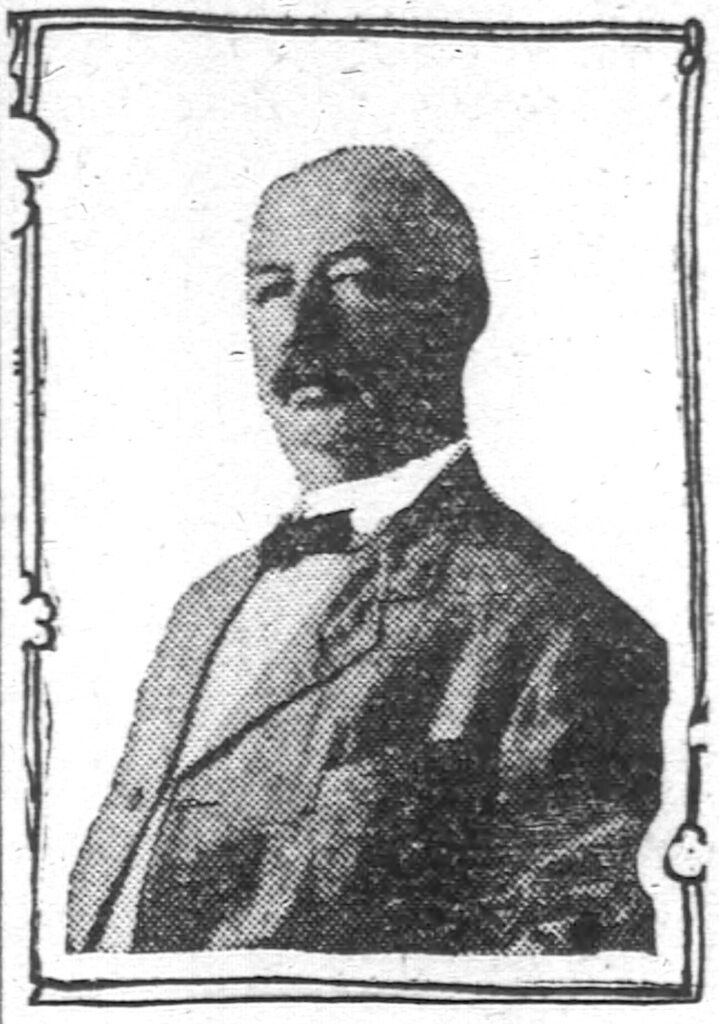
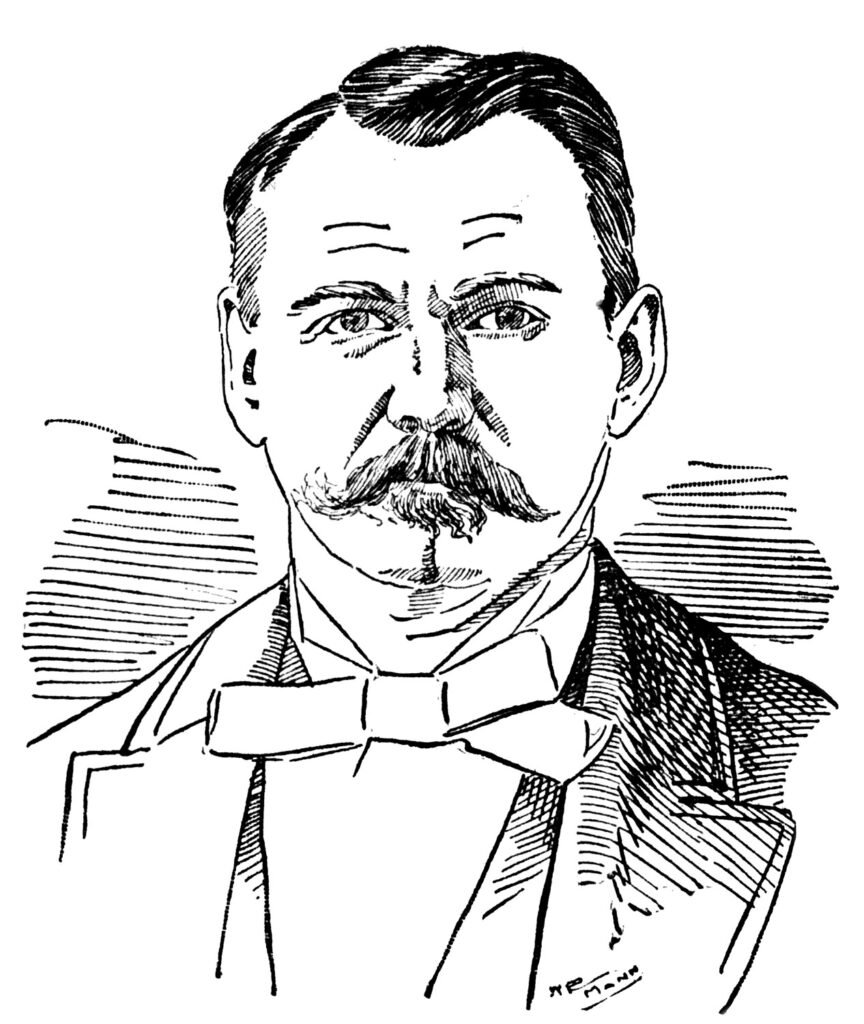
    In 1890, William J. Speer (1846-19314, pictured here5) served as assistant treasurer for the State of Georgia, first appointed in 1880 by his brother, Daniel Speer, who was the state treasurer.6 7 No nepotism there.

    William J. Speer was elected state treasurer in 18968 and resigned from the position in 1900, citing unspecified health issues.9 He was re-elected in 1911 and served in the position until two weeks before his death at the age of 85, making him “the oldest state official in point of service.”10

    G.L. Norrman was likely well acquainted with the Speer family: one of his earliest projects in Atlanta was for the Peachtree Street residence of Daniel Speer,11 12 and Norrman and William J. Speer were both members of the Capital City Club.13

    Design and Construction

    If there’s a surviving photograph of the Speer residence, I’ve never seen it. However, based on the accompanying illustration shown above, it appears the home was a duplicate of Norrman’s plan for the Samuel McGowan Residence (1889, pictured below) in Abbeville, South Carolina, which still exists.

    G.L. Norrman. Samuel McGowan Residence (1889). Abbeville, South Carolina.
    G.L. Norrman. Samuel McGowan Residence (1889). Abbeville, South Carolina.14

    In 1889 and 1890, Norrman’s output rapidly increased, and with several large-scale commissions, his office was clearly swamped with work.

    While he was never above reusing plans to save time and money, Norrman was usually savvy about concealing the practice, altering a home’s porches or roof line, for instance, or maybe adding a turret or other stylistic flourishes to differentiate its appearance from a design predecessor.

    In this case, however, he didn’t even bother, only swapping out the McGowan house’s Queen Anne and Palladian elements for a nebulous Chateauesque skin on the Speer residence.

    The materials were also substantially different: the McGowan house was built with cheaper wood siding and shingles, while Speer’s “palatial mansion”15 was faced with brick, stone, and terra cotta. Otherwise, besides a few altered windows, the two homes’ facades appear interchangeable.

    For an architect whose “designs were noted for originality,”16 Norrman’s copy of his own work posed some reputational risk, yet with 150 miles between Atlanta and Abbeville, the chances were slim to none that anyone from either place would see both homes.

    The Speer residence was first announced in March 1889 with an estimated cost of $40,000 to $50,000.17 18 While the home was under construction in December 1889, it was said to be “one of the most magnificent and costly on Peachtree.”19 As completion neared in January 1890, the project’s cost was reported as both $20,00020 21 and $30,000.22

    About the Interior

    In October 1890, the Speers hosted their first formal event in the new residence, described as the “first elaborate reception given this season.”23 The party ostensibly celebrated the Speers’ daughter, Annie, who made her formal social debut the previous year.24

    Managing the state treasury was obviously lucrative, and the Speers used the event to show off their home’s lavishly-appointed interiors, which the Constitution predictably gushed over in exacting detail:

    “The guests entered a splendid hallway, with a massive mantel opposite the front portal. On either side the mirrors were superb candelabras of beaten silver, with candles of pale pink and blue. The woodwork is of English oak. The wide hearth has brown tiling, and is finished with beaten bronze. The back of the great fireplace has a superb bronze basrelief [sic]. A carved oak arch on the left and an arched passageway gives a view of the winding, carved oaken stairway, with its wide landing and its rich opaline glass windows. The carpet is in … browns and tans, so is the wall, and the chandeliers are of colored bronze.

    The interior of the house was planned by Mrs. Speer, but Mr. Speer furnished the library, one of the most tasteful and elegant apartments. The window and book case curtains are of yellow Indian silk. The carpet is an Axminster in rich, dull tones, the walls are pale chocolate, the wood work carved English oak and the furniture deliciously comfortable and easy, is of carved oak upholstered in plain and stamped leather.

    Two oak chairs with odd, richly carved backs and seats of handsomely stamped leather are particularly beautiful and unique; the ornaments of bronze and terracotta on the mantel are superb.

    The … drawing room is all in the daintiest tones. The walls and rich carpet are pale blue and cream; the hangings white lace and pale blue India silk, sprinkled with flowers; the chandeliers silver, with white tapers encircling the large center globe light. The superb Louis X furniture was made to order and is upholostered in tapestry stuffs of richest brocade, with center pieces in quaint … designs. The drawing room opens into the dining room, whose carpet and walls are of delicate gray-blue. The furniture and wood work is cherry, the chandeliers silver. The chandeliers are as unique as handsome.”25

    An Unhappy Home

    Despite the opulence of their home, the Speers’ domestic life wasn’t a charmed one.

    In September 1903, Speer’s wife, Geraldine, filed for divorce, alleging that her husband was “an habitual drunkard, having been continually drunk for over a year,”26 and that the couple had been effectively separated for three years. Mrs. Speer further claimed that her husband had recently come home in a drunken rage and assaulted their son, John, leaving her fearing for her life.27 28

    “A handsome residence on Peachtree street is not always enough to make a woman satisfied,” one newspaper quipped.29

    And that wasn’t the first violent incident in the home.

    The Wood Affair

    On the morning of December 20, 1902, Mrs. W.J. Wood entered the parlor of the Speer residence and fired a gun at Mary Ballinger, a seamstress who worked for the family.30 31

    “You know that you have come between my husband and myself and caused him to abuse me,”32 Wood reportedly screamed at Ballinger as she whipped out a .32 caliber pistol, shooting four times but missing her target.33 34

    Wood’s husband was a “well known bartender”35 at the Globe Saloon on North Broad Street,36 and she suspected that Ballinger was “responsible for the alienation of her husband’s affections.”37

    Wood turned herself in to the authorities shortly after the shooting, declaring, “I have killed her! I have killed her!” Upon learning that Ballinger was unharmed, it was said that Wood’s “only regret is that she did not succeed.”38

    An attempt to declare Wood insane failed,39 40 and she was released from jail within days.41 42 It was hardly surprising when she tried to murder her husband seven months later at his apartment on Marietta Street, shooting him five times, once successfully in the abdomen43 44 — apparently her aim improved.

    When she was found hiding in a house on Hill Street and subsequently arrested, Wood reportedly said, “Is he dead? I hope he is. He has ruined my life; he has wrecked my hopes. I had to do it. I was forced to do it. I hope he will die; oh! I hope he will die!”45 Atlanta’s hysterical narcissism is exhausting.

    A Quiet Demise

    Needless to say, a shooting inside a Peachtree Street home “caused a sensation in that neighborhood,”46 and the Speers’ divorce soon afterward must have inflicted irreparable damage on the family’s social standing.

    Always objective, the local press reported Geraldine’s claims with a tone of heavy skepticism. “None of his friends here believe the charges…that he has been guilty of drunkenness and cruelty,” one article stated.47 Typical.

    Geraldine Speer dropped an alimony suit against her husband when he paid her a lump-sum settlement in September 1903,48 49 and the divorce was finalized in 1906.50

    After 14 years in the home, in May 1904, Geraldine and her four children moved south of Atlanta to the nearby town of College Park, Georgia,51 a far cry from the tony trappings of Peachtree Street. Her death in January 1909 was barely noted in the Atlanta newspapers.52 53

    Later biographies of William J. Speer were thoroughly revisionist, omitting any mention of the divorce and falsely claiming he married his second wife following Geraldine’s death.54 55 Such are the lies history is built on.

    Quiet Passing

    The former Speer residence was quietly sold in summer 1904 to Mr. and Mrs. J. Wylie Pope,56 who made $1,500 worth of unspecified “repairs and additions” to the structure in 1905.57 When the Popes occupied the property, it was described as “one of the few homes in Atlanta that has a large and beautiful rose garden attached.”58 So there’s that.

    In 1908, the Popes moved into an apartment in Atlanta’s Majestic Hotel, selling the home to J.C. Cooper of Athens, Georgia,59 who, in turn, sold the property to a pair of developers sometime after late 1910.60 61

    By 1911, Peachtree Street was rapidly transforming into a primarily commercial corridor, and the fussy grand homes built just a decade or two earlier had already become outmoded as Atlanta’s wealthiest citizens either moved out to the suburban developments of Ansley Park, Druid Hills, and Buckhead or began occupying luxury apartments in the city.

    With the towering Georgian Terrace Hotel rising one block north of the 21-year-old Speer house, there was barely a peep when the home was demolished in May 1911,62 63replaced by a one-story building with four retail stores.64 65


    G.L. Norrman. William J. Speer Residence (1890-1911). Atlanta.
    G.L. Norrman. William J. Speer Residence (1890-1911). Atlanta.

    Article Excerpt

    The residence of Mr. Speer, built on the corner of North avenue and Peachtree street, is in the early French renaissance style, more commonly known as Chateau. The exterior is composed of brick, stone and terra-cotta. A wide veranda runs the whole front and terminates on each side near the middle elevation. The front entrance is a stone and terra-cotta archway, openings with a wide vestibule with tile floors and arches leading out on verandas on each side. The hall and stairway are finished in oak, and has at one end an octagon bay window with seats, and at the other a large fireplace, with seats and at the other a large fireplace with seats under the arch which runs up to the first landing on the stairs, and from which you can look down into the hall. Sliding doors connect the hall, sitting room, parlor and dining room, so that, when thrown open, the whole front of the first floor is utilized. The parlor is finished in maple with elaborate carvings on mantel and in panels. The dining room is finished in oak, and contains a magnificent sideboard, and aisles so connected as to make all the details of the room correspond and harmonize.

    The house is a perfect harmony throughout, and reflects great credit upon Mr. G.L. Norrman, the architect.66

    References

    1. Illustration credit: “New Homes On The Peachtrees.” The Atlanta Constitution, April 19, 1891, p. 10. ↩︎
    2. Atlanta City Directory Co.’s Greater Atlanta (Georgia) city directory (1893) ↩︎
    3. Insurance maps of Atlanta, Georgia, 1899 / published by the Sanborn-Perris Map Co. Limited – Digital Library of Georgia ↩︎
    4. “Captain Speer, Treasurer Of State, Is Dead”. The Atlanta Journal, December 29, 1931, p. 1. ↩︎
    5. Illustration credit: “Democratic State Ticket–The Men Who Are Now”. The Atlanta Journal, August 29, 1896, p. 12. ↩︎
    6. “Treasurer Hardeman Will Retire.” The Atlanta Constitution, January 29, 1896, p. 4. ↩︎
    7. “Captain Speer, Treasurer Of State, Is Dead”. The Atlanta Journal, December 29, 1931, p. 1. ↩︎
    8. “Captain Furlow To Be Appointed”. The Atlanta Journal, October 8, 1896, p. 10. ↩︎
    9. “State Treasury Changes Hands”. The Atlanta Constitution, October 30, 1900, p. 5. ↩︎
    10. “Captain Speer, Treasurer Of State, Is Dead”. The Atlanta Journal, December 29, 1931, p. 1. ↩︎
    11. “Real Estate Notes.” The Atlanta Constitution, May 8, 1882, p. 7. ↩︎
    12. “Atlanta’s Growth.” The Atlanta Constitution, August 6, 1882, p. 7. ↩︎
    13. “The Club Receives”. The Atlanta Constitution, December 28, 1888, p. 5. ↩︎
    14. “An Ornament To The Town.” The News & Courier (Charleston, South Carolina), January 14, 1889, p. 6. ↩︎
    15. “Belles And Beauties.” The Atlanta Constitution, November 3, 1889, p. 16. ↩︎
    16. “Well Known In Durham”. Greensboro Daily News (Greensboro, North Carolina), November 19, 1909, p. 2. ↩︎
    17. “Home Building.” The Atlanta Constitution, March 20, 1889, p. 8. ↩︎
    18. “Real Estate Notes.” The Atlanta Journal, May 25, 1889, p. 2. ↩︎
    19. “Belles And Beauties.” The Atlanta Constitution, November 3, 1889, p. 16. ↩︎
    20. “Brighter Than Ever.” The Atlanta Constitution, January 13, 1890, p. 6. ↩︎
    21. “A Splendid Showing.” The Atlanta Constitution, January 14, 1890, p. 4. ↩︎
    22. “Peachtree Street.” The Atlanta Journal, January 20, 1890, p. 1. ↩︎
    23. “Society”. The Atlanta Journal, October 16, 1890, p. 2. ↩︎
    24. ibid. ↩︎
    25. “A Brilliant Event.” The Atlanta Constitution, October 16, 1890, p. 5. ↩︎
    26. “Asks For Divorce”. Savannah Morning News (Savannah, Georgia), September 9, 1903, p. 1. ↩︎
    27. “Mrs. Wm. J. Speer Seeks Divorce”. The Atlanta Constitution, September 9, 1903, p. 8. ↩︎
    28. “Asks For Divorce”. Savannah Morning News (Savannah, Georgia), September 9, 1903, p. 1. ↩︎
    29. The Griffin Weekly News (Griffin, Georgia), September 11, 1903, p. 4. ↩︎
    30. “I Have Killed Her With This Pistol”. The Atlanta Journal, December 20, 1902, p. 1. ↩︎
    31. “Jealous Wife Uses Pistol”. The Atlanta Constitution, December 21, 1902, p. 12. ↩︎
    32. “I Have Killed Her With This Pistol”. The Atlanta Journal, December 20, 1902, p. 1. ↩︎
    33. ibid. ↩︎
    34. “Jealous Wife Uses Pistol”. The Atlanta Constitution, December 21, 1902, p. 12. ↩︎
    35. “Jealous Woman Shoots Her Husband Fatally”. The Atlanta Journal, July 29, 1903, p. 1. ↩︎
    36. “Jealous Woman Who Shot To Kill Is Insane Declares Her Husband”. The Atlanta Journal, December 21, 1902, p. 1. ↩︎
    37. “I Have Killed Her With This Pistol”. The Atlanta Journal, December 20, 1902, p. 1. ↩︎
    38. ibid. ↩︎
    39. “Lunacy Writ For Mrs. Wood”. The Atlanta Journal, December 22, 1902, p. 1. ↩︎
    40. “Lunacy Writ Withdrawn Today”. The Atlanta Journal, December 23, 1902, p. 11. ↩︎
    41. “Mrs. Wood Is Free But Will Not Leave”. The Atlanta Journal, December 26, 1902, p. 3. ↩︎
    42. “Mrs. Wood To Face A Criminal Charge”. Atlanta Semi-Weekly Journal, December 29, 1902, p. 7. ↩︎
    43. “Husband Shot By Jealous Wife; Woman In Jail”. The Atlanta Constitution, July 30, 1903, p. 1. ↩︎
    44. “Jealous Woman Shoots Her Husband Fatally”. The Atlanta Journal, July 29, 1903, p. 1. ↩︎
    45. ibid. ↩︎
    46. “Jealous Woman Who Shot To Kill Is Insane Declares Her Husband”. The Atlanta Journal, December 21, 1902, p. 1. ↩︎
    47. “Domestic Trouble Of Speers”. The Macon Telegraph (Macon, Georgia), September 14, 1903, p. 1. ↩︎
    48. “Will Not Ask For Alimony”. The Atlanta Constitution, September 13, 1903, p. 4. ↩︎
    49. “Domestic Trouble Of Speers”. The Macon Telegraph (Macon, Georgia), September 14, 1903, p. 1. ↩︎
    50. “Court Records.” The Atlanta Journal, January 12, 1906, p. 15. ↩︎
    51. “John A. Speer Dies Suddenly”. The Atlanta Constitution, February 4, 1905, p. 7. ↩︎
    52. “Mrs. Speer Dies Suddenly.” The Atlanta Constitution, January 14, 1909, p. 7. ↩︎
    53. “Deaths And Funerals”. The Atlanta Journal, January 14, 1909, p. 3. ↩︎
    54. “Captain William J. Speer Finishes Fourty-Sixth Year In Treasury Department”. The Atlanta Journal, November 24, 1926, p. 7. ↩︎
    55. “Captain Speer, Treasurer Of State, Is Dead”. The Atlanta Journal, December 29, 1931, p. 1. ↩︎
    56. “Social Items.” The Atlanta Constitution, September 1, 1904, p. 8. ↩︎
    57. “Building Permits.” The Atlanta Journal, August 9, 1905, p. 11. ↩︎
    58. “Pope Home Sold For $25,000”. The Atlanta Constitution, August 16, 1908, p. 2. ↩︎
    59. ibid. ↩︎
    60. “Personal Mention”. The Atlanta Journal, September 20, 1910, p. 11. ↩︎
    61. “The Real Estate Field”. The Atlanta Journal, June 6, 1911, p. 19. ↩︎
    62. “Building Permits.” The Atlanta Journal, May 6, 1911, p. 13. ↩︎
    63. “The Real Estate Field”. The Atlanta Journal, June 6, 1911, p. 19. ↩︎
    64. “Building Permits”. The Atlanta Journal, August 22, 1911, p. 16. ↩︎
    65. “The Real Estate Field.” The Atlanta Journal, November 5, 1911, p. 8H. ↩︎
    66. “New Homes On The Peachtrees.” The Atlanta Constitution, April 19, 1891, p. 10. ↩︎

  • A.E. Thornton Residence, “Thornhurst” (1890) – Vinings, Georgia

    G.L. Norrman. A.E. Thornton Residence, "Thornhurst" (1890). Vinings, Georgia.
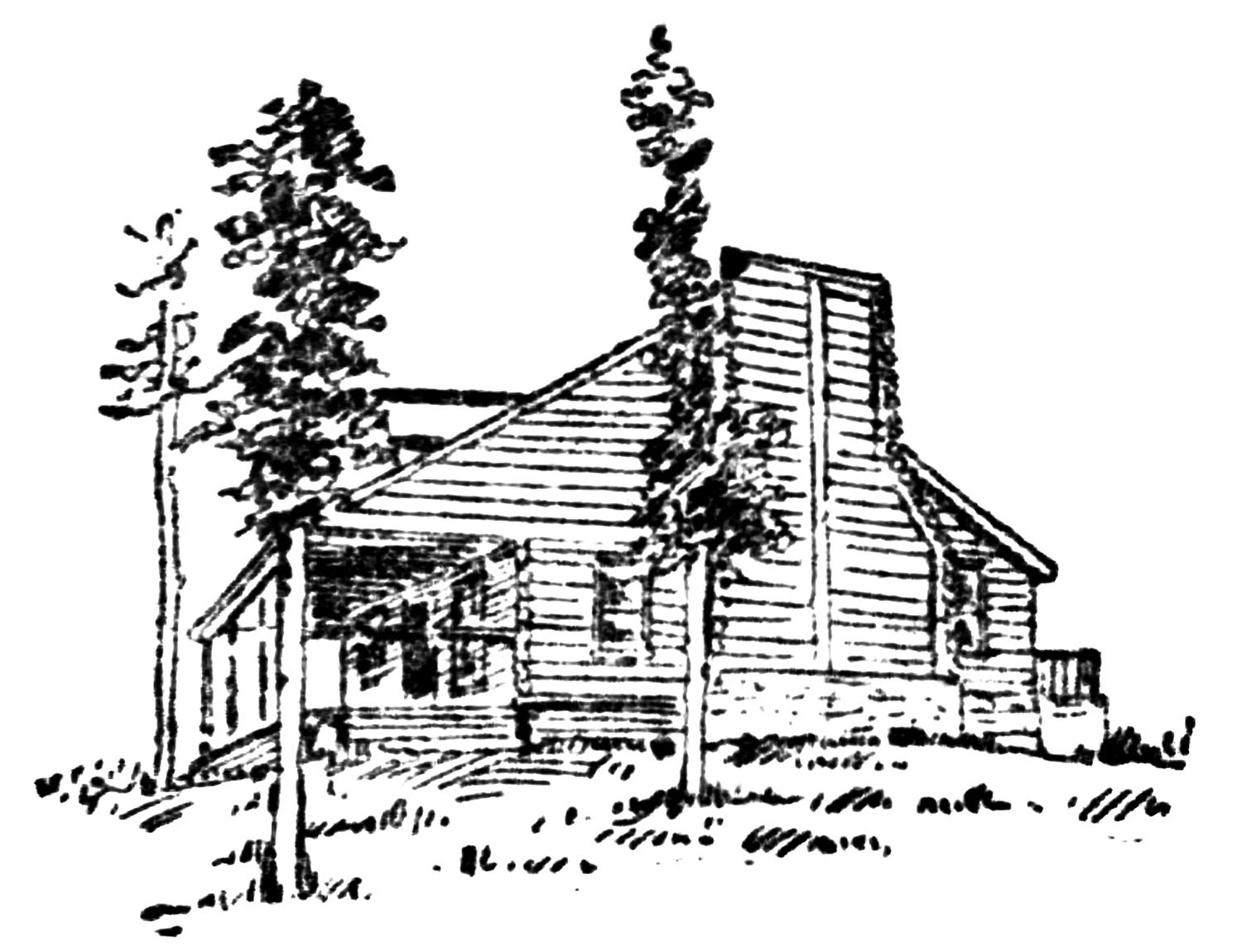
    G.L. Norrman. A.E. Thornton Residence, “Thornhurst” (1890). Vinings, Georgia.1

    The Background

    The following article, published in The Atlanta Journal in March 1890, describes a log cabin built outside of Vinings, Georgia, as a summer residence for A.E. Thornton, and designed by G.L. Norrman.2 3

    Located in Cobb County, roughly 10 miles northwest of central Atlanta near the Chattahoochee River, Vinings was a tiny rural outpost in the 1890s; today it’s a sprawling suburb of leafy neighborhoods and office parks.

    Approximate Location of Thornhurst

    In the late 19th and early 20th centuries, many of Atlanta’s prominent citizens maintained “summer homes” in the surrounding countryside, typically only a few miles outside the city for easy access via wagon or train. Vinings, for example, was a stop on the Western and Atlantic Railway.4

    And Albert E. Thornton (1851-1907, pictured here5) was as prominent as they got — one of those deep-pocketed men who seemed to have a hand in just about every conceivable business enterprise.

    By 1890, Thornton served as president of four cotton oil mills,6 president of the Land Title Warranty and Safe Deposit Company in Atlanta,7 8 and vice president of the American Pine Fibre Company in Wilmington, North Carolina.9

    Thornton was also a director of:

    • The Atlanta Street Railway Company10
    • The Augusta, Gibson, and Sandersville Railroad11
    • The Atlanta and West Point Railroad12
    • The Atlanta Electric Illuminating Company13
    • The Atlanta National Bank,14 founded in 1865 by his father-in-law, Alfred Austell15

    Thornton would have been well-acquainted with G.L. Norrman’s work, since Norrman designed the renovation for Atlanta National Bank in 1886,16 as well as residences for one of its chief employees, Paul Romare. Norrman and Thornton were also members of the Capital City Club.17

    It was a slow news day when the Journal published this front-page article, which describes nearly every aspect of “Thornhurst”, Thornton’s 600-acre country estate at Vinings, in exhaustive detail — including the family dogs.

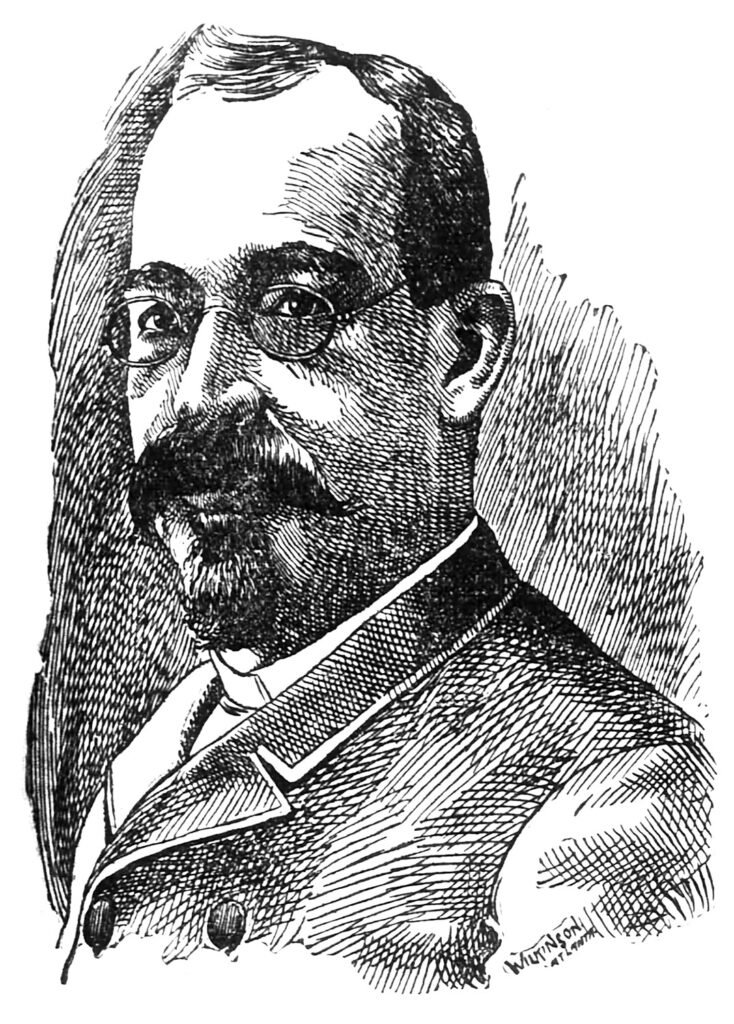
    The author of the article was Walter H. Howard (1870-1902, pictured here18), who at 19 years old was the youngest member of the Journal‘s writing staff.19

    Howard eventually became the city editor of the Journal before moving to New York and working for The New York Journal, notably as a war correspondent in Cuba during the Spanish-American War and later as a foreign correspondent in London.20

    Howard then returned to Atlanta and served as an editor for the short-lived Atlanta Daily News,21 but like so many hot-shot journalists, he burned out fast, dying at the age of 32 after a years-long battle with tuberculosis.22 23

    Following his death, Howard was described as having “the energy of a dynamo,”24 yet it’s hard to find much of it in this plodding, prosaic piece that has all the rhetorical brilliance of a typical college freshman’s essay. My favorite line: “chimneys that one reads about, or, perhaps, dreams about but never sees.”

    Howard’s depiction of Thornhurst as “a log cabin in the mountains” is also amusing: there’s exactly one small mountain at Vinings — Mount Wilkinson — although I would characterize it as a large hill. Today, the area is as hot and polluted as the rest of Atlanta, but you can be sure it was never a place for “cool draughts of pure mountain air.”

    Thoughts on Thornhurst

    The construction dates for Thornhurst are unclear, but the project was first announced in December 1889, and the article here was published in March 1890, so the home was likely completed in 1890.

    Another description of the structure from October 1891 — nearly two years after this article was published — revealed that the interior had yet to be fully furnished, and that Thornton and his wife, Leila, spent “some few days out of every week or so there.”25

    The same report said the Thorntons planned to build an “elegant residence” on the property, at “a point of commanding prominence overlooking the Chattahoochee river and some very rugged country.”26 Those plans apparently never materialized, but presumably Norrman would also have been the designer for the larger home.

    Norman’s specialty was elegant residences, so it must have been a unique challenge for him to design a six-room log cabin that “preserved some characteristics of antebellum days,”27 as the 1891 article put it, using old-fashioned building techniques described as “peculiar to the backwoods.”28

    The latter article provided a little more detail about the home’s construction that wasn’t included here, notably the following:

    “The space in the walls between the logs are daubed with mud, and the entire surface inside and out is shelaced [sic], adding infinitely both to the beauty and the durability of the structure. The roof is of thatch.

    The rustic effect has been carried out in detail on the interiors. Here the mantels are of barked ash poles, notched and rugged. The floors of the cottage are of polished wood.”29

    Thornhurst’s Fate

    From the 1890s to the 1900s, local social columns regularly reported on the Thorntons’ excursions to Thornhurst, where they often hosted large parties and social gatherings in the summer months, including at least one barbecue in 1906 for the employees of the Atlanta National Bank.30

    As the Journal noted in 1900:

    “Among the country places of Atlanta persons, “Thornhurst,” owned by Mr. and Mrs. Albert E. Thornton, arouses pleasant memories in the minds of a number of Atlantians who have visited this home during the summer.”31

    The last mention of Thornhurst in an Atlanta newspaper appeared in January 1908,32 nearly a year after A.E. Thornton’s death.33 Leila Thornton inherited the entirety of her husband’s estate, including Thornhurst and other real estate holdings, which the Journal said made her “perhaps the wealthiest woman in the state.”34

    The final published reference I can find to Thornhurst is in the Summer Social Register of 1911,35 and beyond that, the date of the cabin’s demise is unclear.

    When Leila Thornton died in 1931, she was a resident of the Biltmore Hotel in Atlanta,36 and it appears the family’s estate in Vinings had already long been sold off, with the cabin presumably demolished.

    Coincidentally, a Log Cabin Drive exists in Vinings today, named after the Log Cabin Community Church, which was founded in 1912 and housed in a log cabin. Based on a photograph of the original church, it wasn’t the same as Thornhurst.

    I guess Vinings had more than one log cabin.


    A Place Of Beauty.

    An Atlanta Gentleman’s Country Home
    On The Banks Of The Chattahoochee.

    Mr. A.E. Thornton’s Country Residence Near Vining’s Station–An Elegant Log House Built on the Top of a Hill Overlooking the River.

    Written for The Journal.

    There is in course of construction on the banks of the Chattahoochee river, one mile from Vinings station, an ideal country home of a city gentleman.

    The place is owned by Mr. A.E. Thornton, president of the Atlanta Cotton Seed Oil company. It consists of six hundred acres of well wooded land among the small mountains to the right of the little station; at a place where the river bends well towards the south in its course.

    The house is on the summit of a tall hill near the river side. At the bottom of the hill a clear spring branch threads its way through a mass of undergrowth and finally mingles its waters with those of the Chattahoochee.

    The house is nothing more than a log cabin, but it is the most elegant one in the state. It is a story and a half high and contains six rooms, four down stairs and two above.

    Every piece of wood that is being used in the construction of this picturesque building is fine, and was cut and prepared for use on the place. For this purpose a small steam saw mill was put up at the foot of the hill by the side of the branch, and all of the logs and planks used on the place are sawed in it.

    The House Itself.

    The log house is built upon a stone foundation. The first story is built of evenly selected logs, lain one upon the other, and the small crevices between them neatly filled with hardened cement. The upper half story is covered on the outside with fancy shingles.

    The bark is scraped off of all the logs, and they are neatly scraped, but unpainted.

    And then the chimneys. They are chimneys that one reads about, or, perhaps, dreams about but never sees. There are two of them, one at each end of the house. They are regular old fashioned log chimneys with the cracks stopped up with cement. They are what are called double chimneys, furnishing a fireplace for each of the four down stairs rooms.

    These chimneys are four feet deep and sixteen feet wide at the base, and taper gently to the top, where they are four by nine feet. The logs of which they are built decrease in size toward the top so that the appearance of the chimneys is entirely symmetrical.

    The Broad Porches.

    The house has two very broad porches. The front porch faces the west, giving a magnificent view of the glorious sunsets to be seen in these mountains. The posts supporting the roof of this porch are nicely-selected pine saplings, sawn so that the knotty branches form artistic rustic brackets.

    The back porch is a broad, open plaza, fourteen by forty-two feet, without any roof. It is inclosed by rustic banisters and railings of knotty pine branches.

    From this porch, through a vista dimmed by intervening trees, is the view of the river, about a hundred yards off. Mr. Thornton’s place has about one mile of river front, and the grounds from the house to the river will be cleared out nicely so that the view will be unobstructed.

    Inside The House.

    The inside of the house is finished with an exactness and nicety that is charming to observe.

    The walls and ceilings of the rooms and hallway are cleanly and smoothly scraped and painted white.

    The very broad inviting hallway, leading through the house from one porch to another, gives passage to cool draughts of pure mountain air.

    Everything inside the rooms is arranged with the same artistic roughness as on the outside. The mantles are of pine and adorned with rough, knotty brackets. The large, old-fashioned hand-irons in the fireplace, across which are laid large logs of hickory and oak wood complete a picture of one of those comfortable rooms.

    The stairway leading to the second floor is constructed in keeping with the rest of the house. The post at the foot and banisters are of the same knot covered pine branches, presenting a very pretty rustic effect.

    The interior of the two rooms upstairs is finished with the same comfort and neatness as those below. Amply large closets are set on either side of these rooms and pretty little dormer windows looking out over the mountains on one side, and the river on the other.

    The Water Works.

    This log house of Mr. Thornton’s will have a complete system of water works in it.

    And the water will be the purest spring water, cool and refreshing.

    On the top of one of the mountains is the large, clear spring from which the water will flow. At this spring a tank has been placed, the bottom of which is sixteen feet above the top of the house. From this tank pipes will convey the water to the house, about a quarter of a mile distant.

    The idea of having waterworks in a log cabin in the mountains is quite something new.

    The new waterworks plant of the city of Atlanta will be on the Chattahoochee river just one mile and a half above Mr. Thornton’s place.

    The Out Houses.

    Just outside the house, near the open plaza, is a neat little kitchen and a servant’s house. The yard is surrounded by a tall picket fence, and will be laid off and planted in nothing but grasses and natural wild flowers.

    The place has over a hundred good chickens on it and a separate inclosure [sic] has been built for them.

    Then the dogs.

    Mr. Thornton has a pack of five little beagle hounds, the smallest, prettiest little fellows imaginable. There are but very few of these dogs around Atlanta, and to follow them in a chase after a rabbit is an interesting experience. The little fellows never get tired. They will run a rabbit all day and never abandon the chase until it is killed or captured.

    Besides these there are two fine fox hounds, and several other dogs, setters and pointers, will be taken to the place. A kennel has been built for the dogs as large as a stable, and an inclosure built around it.

    The Stable And Orchard.

    On the northern slope of the mountain, only a short distance from the house, is the stable.

    In this Mr. Thornton will keep his cows and two carriage horses, his carriage, a wagon, and other farm implements. This barn and stable is perfectly arranged.

    Below the stable is a newly planted orchard of fine peach, apple and pear trees, grapes and scuppernongs. The orchard is regularly and beautifully laid off and will be sown in clover. It contains about six acres of well-cleared land.

    The place is peculiarly picturesque and beautiful. The buildings are all constructed upon a similar style of architecture, and the uniformity with which the work, the designs, and the arrangements of the buildings have been perfected and carried out is an evidence of Mr. Thornton’s excellent taste and good judgment.

    Mr. George A. Yarbrough is the polite and efficient contractor who has so ably carried out this beautiful work for Mr. Thornton.

    During the approaching summer Mr. and Mrs. Thornton will entertain some of their friends at their country seat in true English style.

    Walter H. Howard.37

    References

    1. Illustration credit: “Summer Homes!” The Atlanta Journal, October 17, 1891, p. 7. ↩︎
    2. “Some Striking Things.” The Atlanta Constitution, December 1, 1889, p. 14. ↩︎
    3. “Georgia And Alabama.” Columbus Enquirer-Sun (Columbus, Georgia), December 8, 1889, p. 3. ↩︎
    4. “Summer Homes!” The Atlanta Journal, October 17, 1891, p. 7. ↩︎
    5. Illustration credit: “Thornton Goes To Final Rest”. The Atlanta Constitution, April 3, 1907, p. 1. ↩︎
    6. “A.E. Thornton, Esq.” The Atlanta Constitution, July 10, 1887, p. 16. ↩︎
    7. “An Important Enterprise.” The Atlanta Constitution, April 29, 1887, p. 1. ↩︎
    8. “From Our Notebook.” The Atlanta Constitution, May 3, 1889, p. 5. ↩︎
    9. “American Pine Fibre Company” (advertisement), The Atlanta Constitution, April 16, 1890, p. 4. ↩︎
    10. “It Changes Hands.” The Atlanta Constitution, April 9, 1889, p. 1. ↩︎
    11. “The Augusta, Gibson and Sandersville.” The Atlanta Constitution, February 13, 1890, p. 3. ↩︎
    12. “Officers Elected.” The Atlanta Journal, August 8, 1890, p. 2. ↩︎
    13. “Light and Power.” The Atlanta Constitution, October 3, 1890, p. 6. ↩︎
    14. “Report Of The Condition Of The Atlanta National Bank”. The Atlanta Journal, March 10, 1890, p. 1. ↩︎
    15. “Col. Thornton’s Funeral Today”. The Atlanta Constitution, April 4, 1907, p. 4. ↩︎
    16. “The City.” The Atlanta Journal, May 25, 1886, p. 4. ↩︎
    17. “The New Club.” The Atlanta Constitution, April 17, 1883, p. 8. ↩︎
    18. “Story Of The Journal.” The Atlanta Journal, May 1, 1889, p. 8. ↩︎
    19. ibid. ↩︎
    20. Ormond, Sidney. “Walter Howard Is Dead; The Story Of His Life”. The Atlanta Constitution, June 12, 1902, p. 1. ↩︎
    21. ibid. ↩︎
    22. “Walter Howard Dies In Asheville”. The Atlanta Journal, June 11, 1902, p. 1. ↩︎
    23. “Walter Howard To Rest In Oakland”. The Atlanta Constitution, June 12, 1902, p. 5. ↩︎
    24. Ormond, Sidney. “Walter Howard Is Dead; The Story Of His Life”. The Atlanta Constitution, June 12, 1902, p. 1. ↩︎
    25. “Summer Homes!” The Atlanta Journal, October 17, 1891, p. 7. ↩︎
    26. ibid. ↩︎
    27. ibid. ↩︎
    28. ibid. ↩︎
    29. ibid. ↩︎
    30. ‘Barbecue at “Thornhurst”‘. The Atlanta Journal, April 25, 1906, p. 10. ↩︎
    31. “Homes Where Atlantians Spend The Summer Months”. The Atlanta Journal, June 2, 1900, p. 6. ↩︎
    32. “Mr. J.G. Oglesby Jr., To Give Barbecue”. The Atlanta Journal, January 21, 1908, p. 8. ↩︎
    33. “Thornton Goes To Final Rest”. The Atlanta Constitution, April 3, 1907, p. 1. ↩︎
    34. “Thornton Estate Is Left To Widow”. The Atlanta Journal, April 9, 1907, p. 1. ↩︎
    35. Social Register Summer 1911 ↩︎
    36. “Mrs. Thornton’s Funeral Services Set For Saturday”. The Atlanta Journal, May 29, 1931, p. 23. ↩︎
    37. Howard, Walter H. “A Place Of Beauty.” The Atlanta Journal, March 15, 1890, p. 1. ↩︎

  • Kiser Law Building (1891-1936) – Atlanta

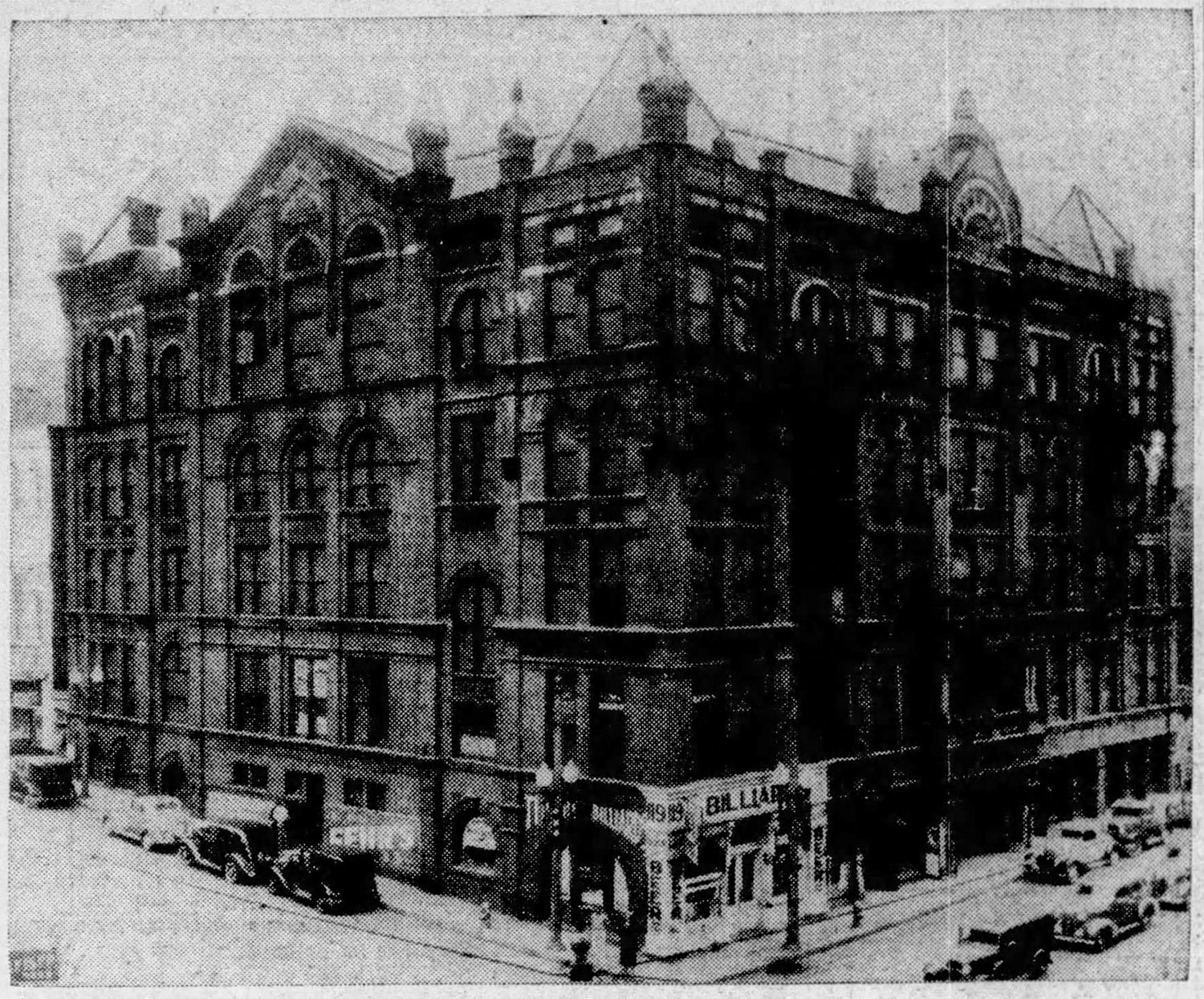
    Bruce & Morgan. Kiser Law Building (1891-1936). Atlanta.
    Bruce & Morgan. Kiser Law Building (1891-1936). Atlanta.1

    The Background

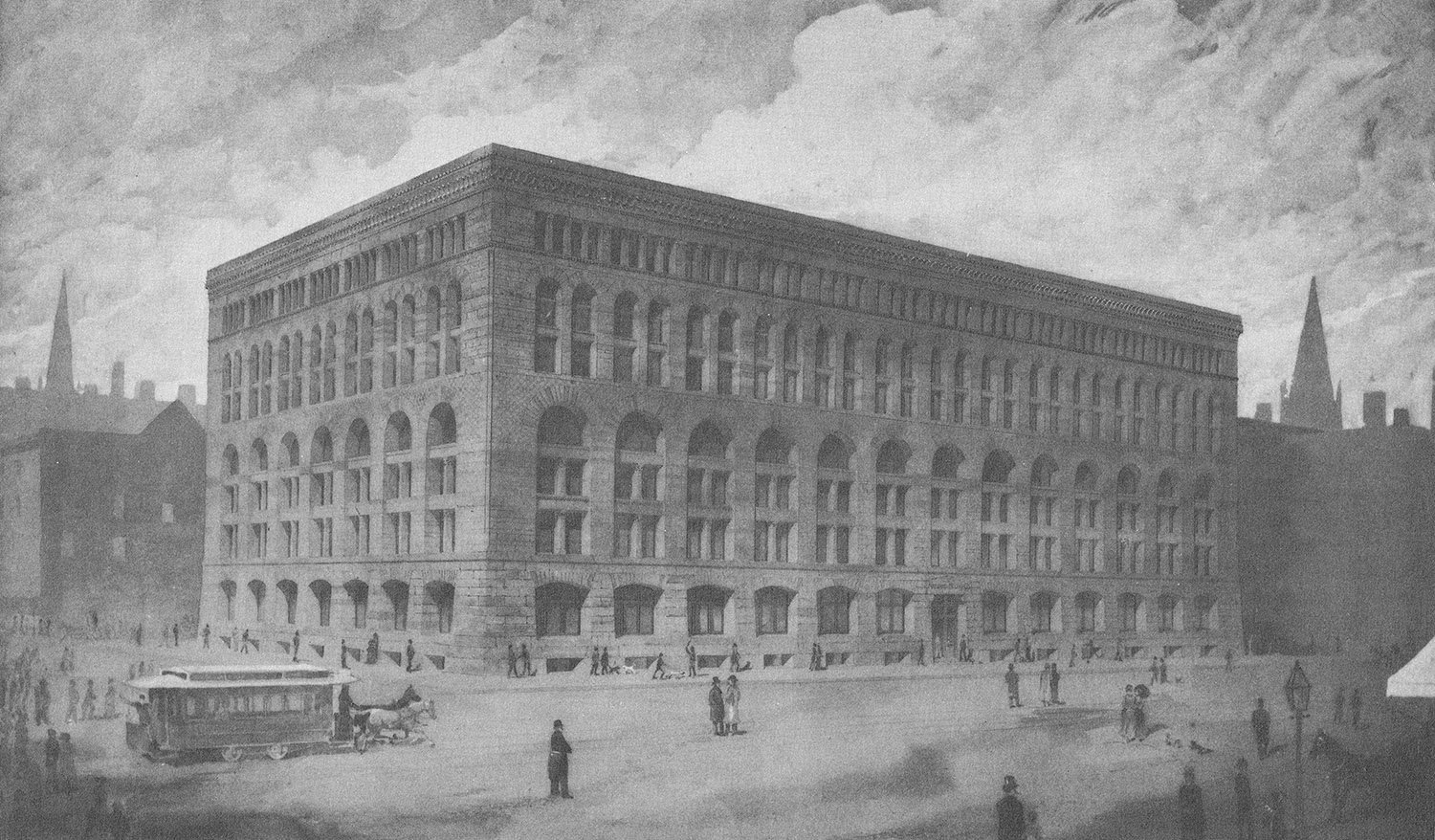
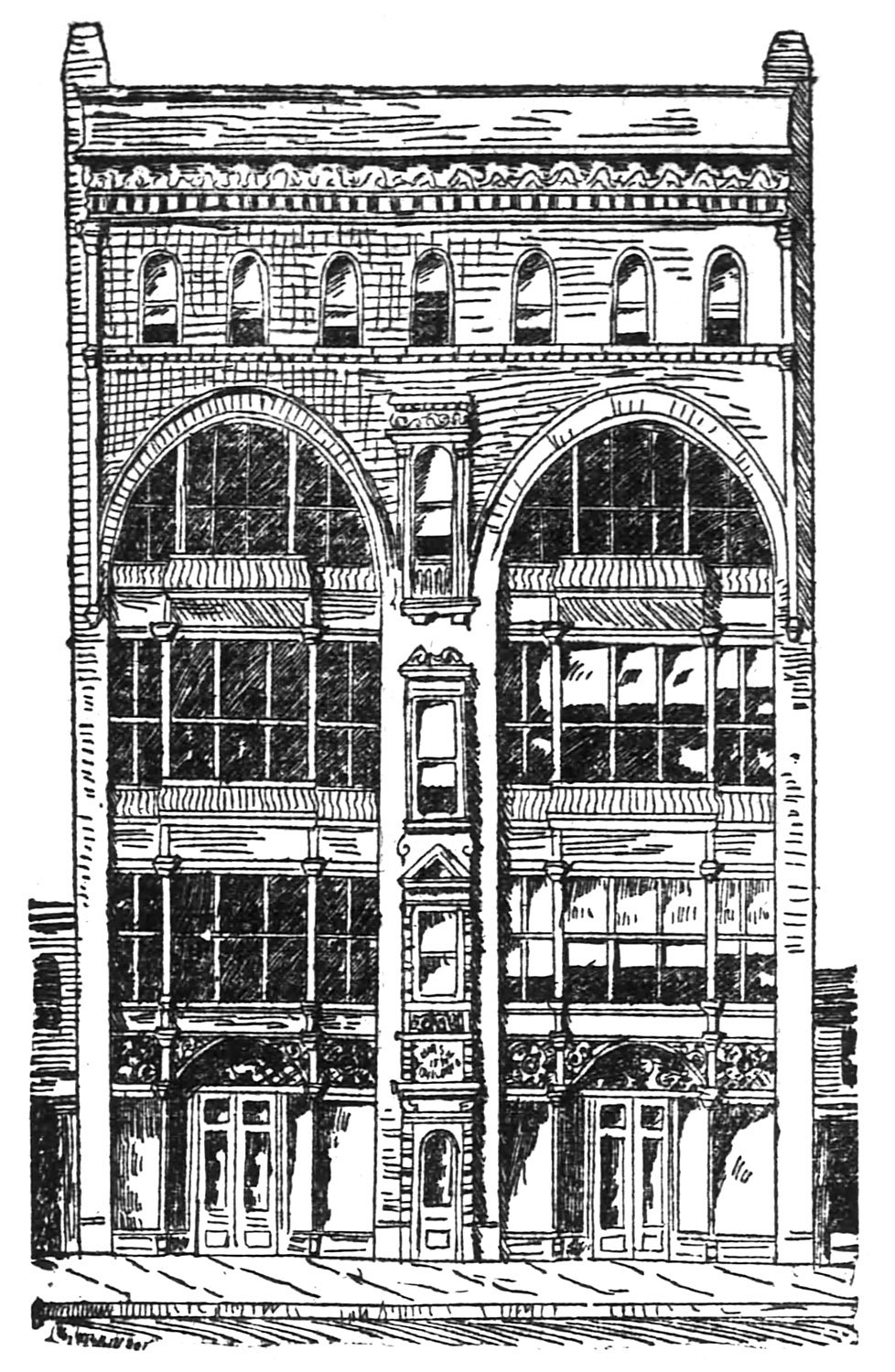
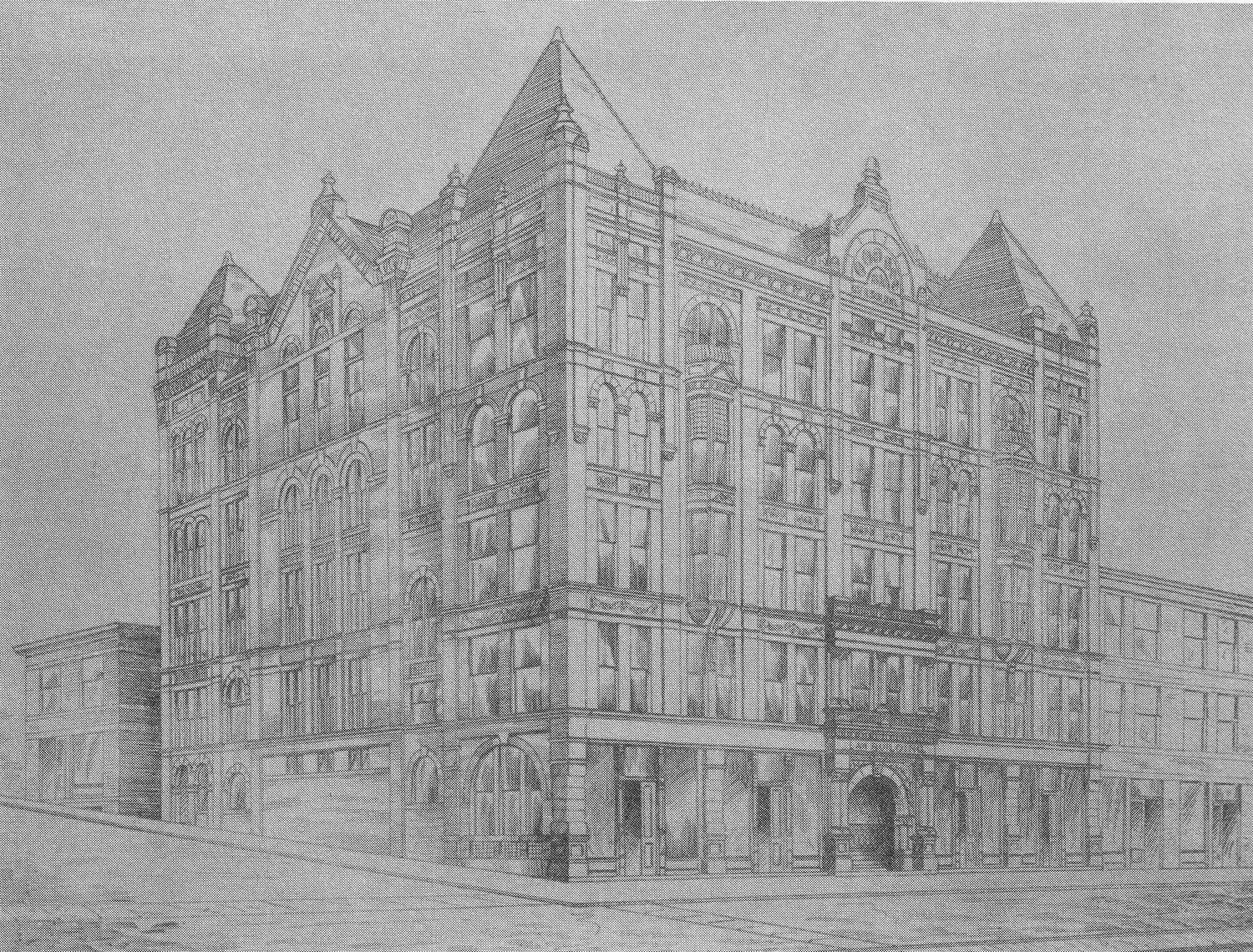
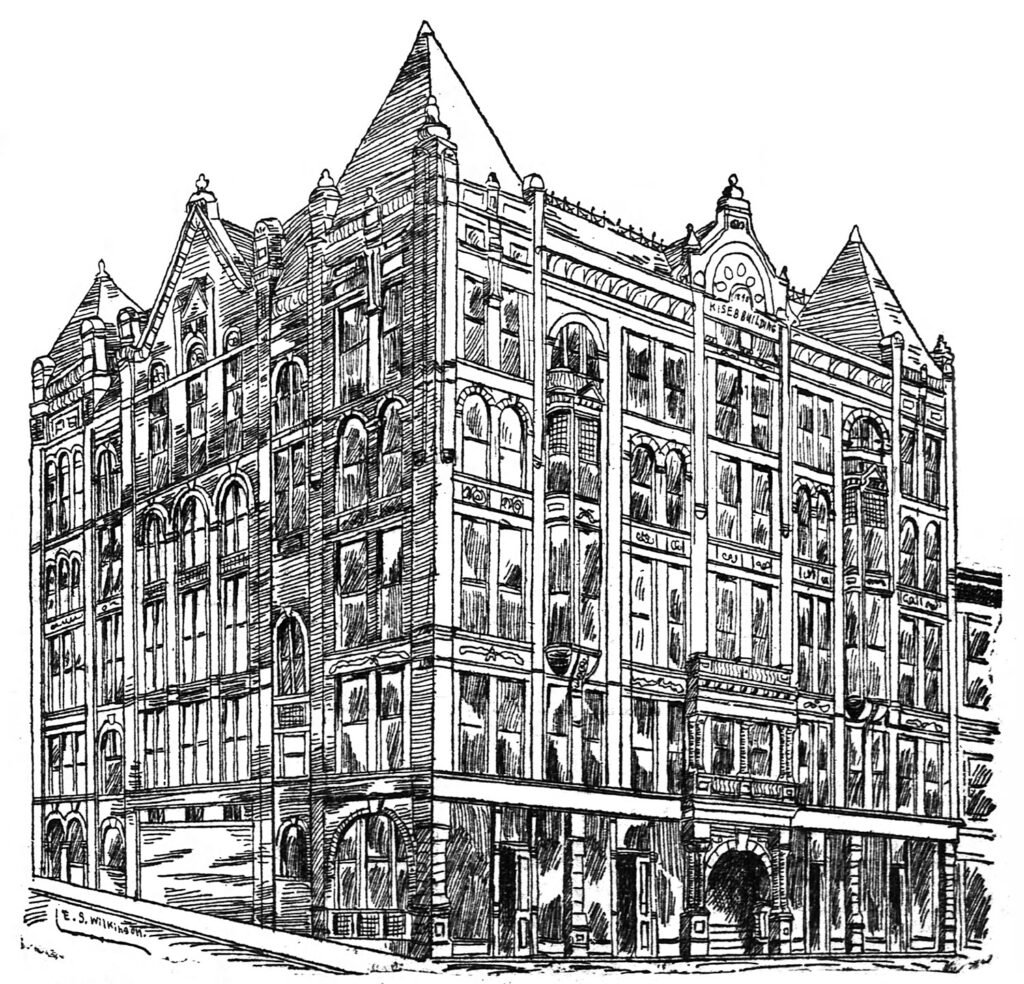
    The following article, published in The Atlanta Constitution in 1890, includes an illustration and a brief description of the Kiser Law Building, completed in 1891 and designed by Bruce & Morgan.

    Location of Kiser Law Building

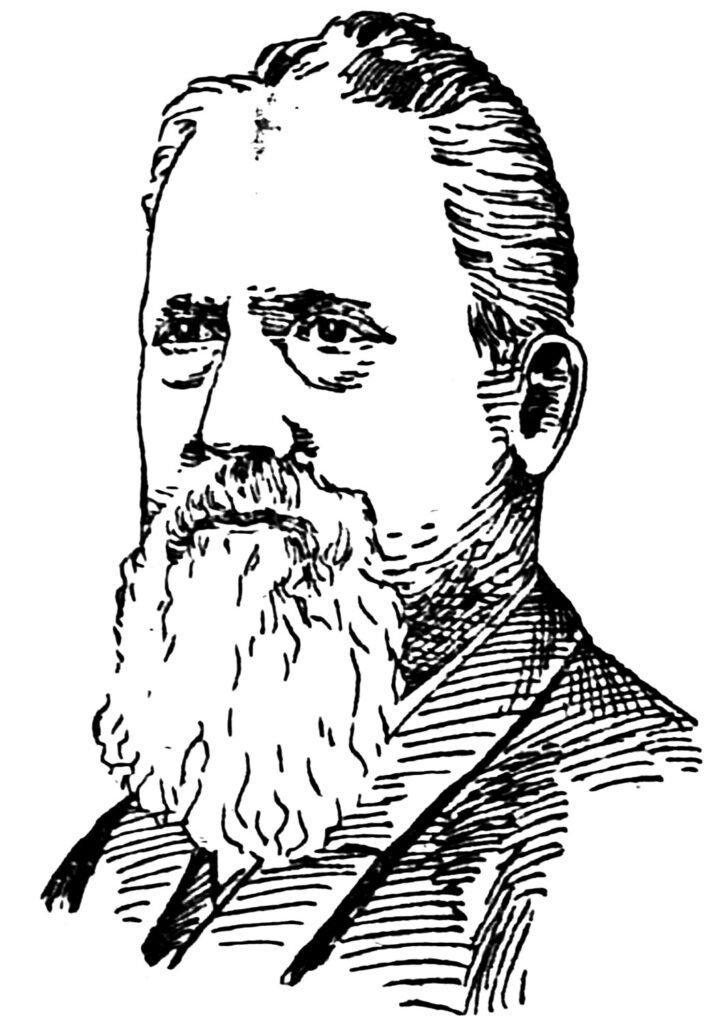
    Located at the northwest corner of Hunter and Pryor Streets (later Martin Luther King, Jr. Drive SE and Pryor Street SE) in Atlanta, the five-story office building was owned by M.C. Kiser (1830-18932), a local real estate developer.

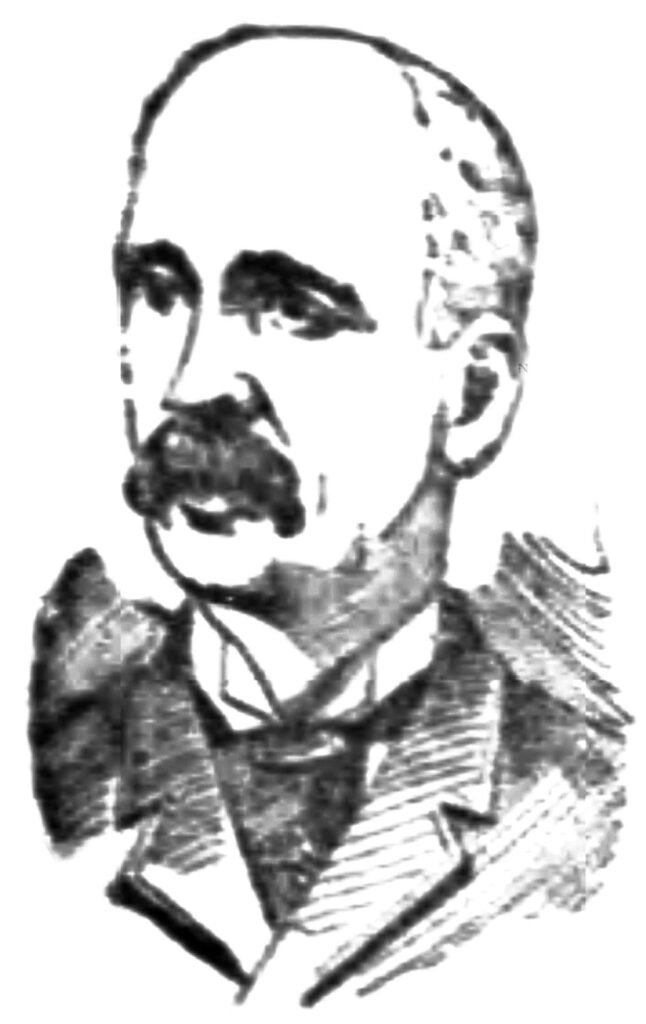
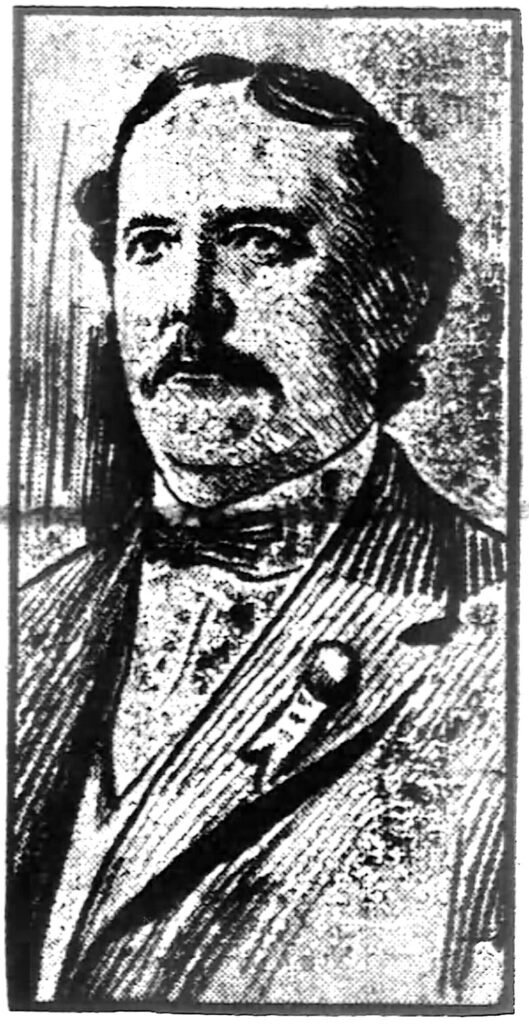
    For several years, members of the Atlanta Bar Association had reportedly approached Kiser (pictured here3) with requests for him to build a structure designed exclusively for law offices.4 5

    When Kiser finally agreed to the project, the association formed a building committee that considered two designs for the structure: one by A.Mc.C. Nixon, and the winning plan by Bruce & Morgan.6 7

    Bruce’s Approach

    Although T.H. Morgan increasingly became the primary designer for Bruce & Morgan through the 1890s, A.C. Bruce still handled the majority of the firm’s output in the early part of the decade, and the Kiser Law Building appears to have been his design.

    Bruce was a former cabinet maker and carpenter who lacked formal architectural training, and by 1890, the limits of his skill set were becoming readily apparent.

    Many of Bruce’s designs from the early 1890s appear heavy-handed and anachronistic: you can see he was attempting to adapt to modern tastes, but his design sensibility was still fundamentally stuck in the 1870s — the Kiser Law Building was a prime example.

    Looking at the illustration above, the building resembles a stack of drawers haphazardly piled on top of each other, and oversized windows of varying shapes and sizes junk up both facades.

    That additive approach to design was typical of architects with a background in carpentry, who often designed buildings as if they were giant pieces of furniture, joining disparate elements and tacking on unnecessary embellishments instead of envisioning their compositions as solid masses to be sculpted into form.

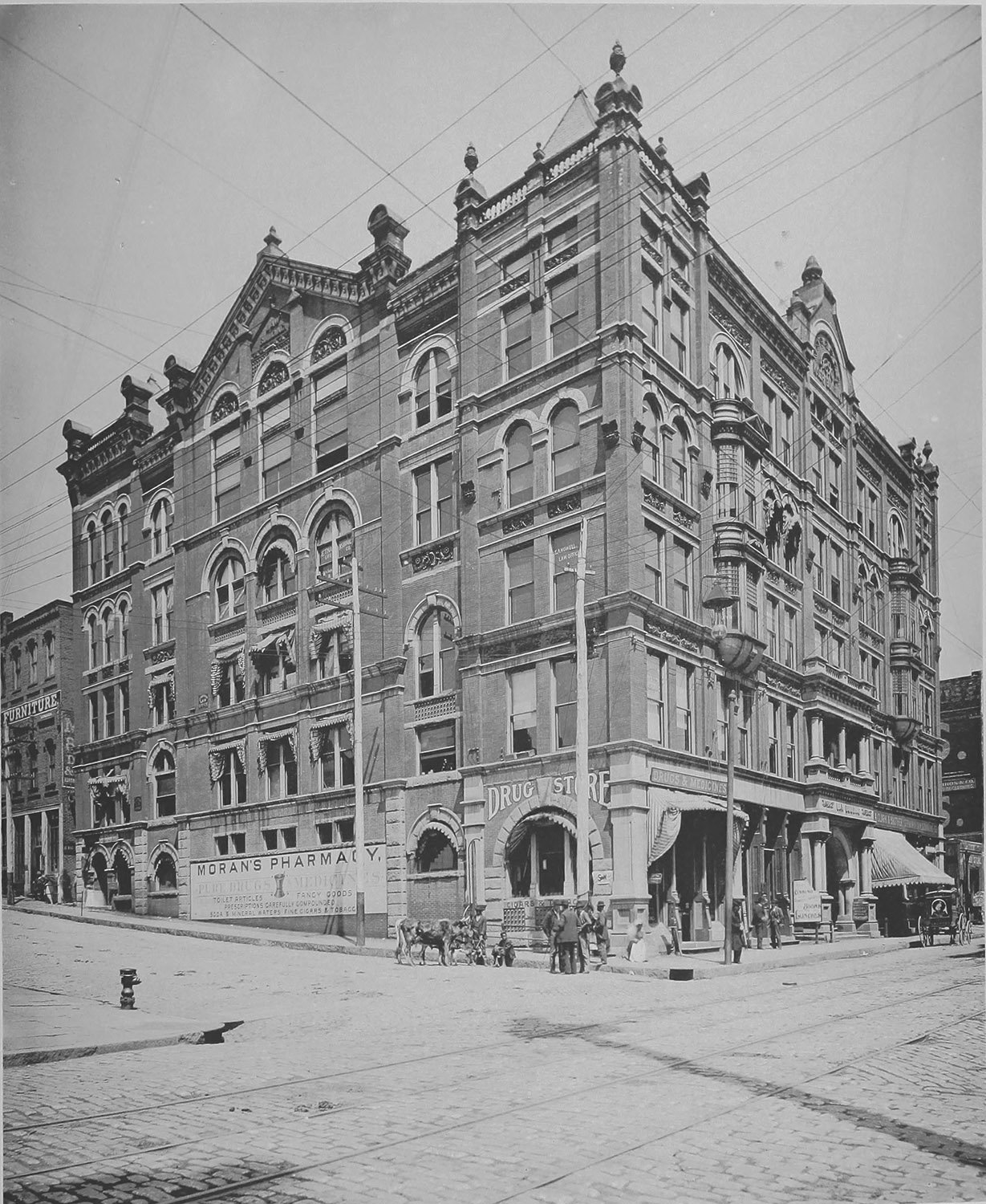
    The building’s overall style is equally baffling: Bruce was presumably aiming for the Romanesque, but for all the eclectic adornments, including terra cotta trim,8 9a decorative slate roof with iron crestings, ornamental iron balconies, and marble columns,10 he didn’t quite achieve a cohesive style. The pyramidal peaks and elaborate gables were also becoming rapidly outdated by 1891.

    Kiser Law Building circa 1895
    Kiser Law Building circa 189511

    Design and Construction

    As construction began, it was reported that the Kiser Law Building would be constructed of either Berea sandstone or marble.12 It’s Atlanta, so it appears they opted for the cheaper sandstone for most of the structure and incorporated marble trim around the entrance.13

    Set over a full basement, the building’s five floors included a 16-foot-wide central hall, served by one elevator, four stairwells, and two fire escapes. A light court was also designed to extend from the top to the bottom floor, so that each of the building’s 84 offices would be lighted and ventilated from the outside.14

    The building was illuminated with electric lighting and included “water closets of the latest patterns…located in the rear [heh] of every floor.15

    While it was originally reported that the building would be heated by steam,16 17 Kiser ultimately chose the Bolton Hot Water System, which was marketed as a “purely scientific, healthful way of heating.”18

    I don’t really care enough about such things to learn more; however, the man who supervised the heating system’s installation told the Constitution: “…the larger buildings in the north have been heated by hot water apparatuses for the last ten or twelve years, yet it is practically new for the south…”19

    No surprise, really: Atlanta’s self-conscious developers are always late to the game, simply replicating what was done a decade ago in the better cities of the North.

    The floors of the Kiser Law Building were planned as follows:

    • The ground floor included spaces for four stores — the storefront at the corner of Hunter and Pryor was designated for a bank,20 and another space facing Pryor Street was planned as a restaurant.21 The entrance hallway featured marble wainscoting and tile22 and led to “four broad stairways” and “an elevator of the most approved pattern.”23
    • The second, third, and fourth floors were identical in design, and each contained 28 office suites — 14 on each side of the central hall. The offices were finished in hardwoods and Georgia pine, with fireproof vaults and closets.24 25
    • The fifth floor was intended to house two large halls “suited to the use of secret societies, public meetings and other similar purposes,”26 as well as a kitchen, storerooms, reception room, and a club room or library.27

    Construction on the building began on April 8, 1890,28 with J.H. Matthews,29 “a wide-awake contractor”,30 supervising the project. The initial estimated cost of the building was $90,000, with a projected completion date of April 1, 1891.31 The cost rose to $100,000 by 1891,32 and the building was completed in August 1891.33 34

    Local interest in the project was high, and while construction was still underway in November 1890, Kiser had reportedly received applications from 100 lawyers seeking office space.35

    Firms began announcing their intention to move to the building in early 1891,36 and in June 1891, George W. Adair, who handled leasing for the property, reported: “The Kiser law building is nearly ready for occupancy, which is good news to those who have already selected their rooms, and others that are waiting for its completion.”37

    Their lease agreements should have included the following caveat: the only thing slimier than a lawyer is an Atlanta developer.

    The Terminal Debacle

    In July 1891, Kiser leased nearly the entire law building — including the top four floors, the corner store on the ground floor, and the full basement38 39to a single firm: the Richmond Terminal Company, which had abruptly decided to relocate its headquarters from Washington, D.C. to Atlanta.40

    The company stated its intention to use the Kiser Building as temporary office space until it could build its own facility in the city,41 signing a two-year lease for the then-unheard-of sum (in Atlanta anyway) of $14,500 a year.42 43

    Commonly referred to as the “Terminal”, the company had previously purchased the Central Railroad and Banking Company, Georgia’s oldest railroad,44 based in Savannah. The Terminal’s new Atlanta headquarters consolidated the employees from both Savannah and Washington in a single location.

    However, the Kiser Building was much too small to house the Terminal’s 250 to 300 workers,45 46 and one executive stated, “Unfortunately that building is not large enough to fully accommodate all the offices, but we will try to make do.” Kiser said of the negotiation: “…the trouble was they wanted more room, but finally concluded they could get along by adding the corner room and the basement.”47

    The Terminal’s hasty relocation to Atlanta was more than a little suspicious, and there were allegations that it wasn’t “bona fide”, which the company denied.48 Atlanta’s newspapers, of course, hailed the move, with the always-bloviating Constitution prognosticating:

    “A grand new depot and office building. That is the inevitable result.

    The bringing of these offices to Atlanta is a bigger thing than might appear at first glance. This naturally makes Atlanta the center of the railroad situation of the south, and, as Atlanta is now the insurance center, it becomes beyond question the financial center of the south.”49

    The lawyers who already selected offices in the Kiser Building just had to suck it, I guess. The Odd Fellows probably weren’t too thrilled either: the Constitution reported in July 1891 that “about ten days ago they selected the fifth floor of the Kiser building and immediately rented it as an Odd Fellows’ hall. Then the Terminal people came along and wished the place.”50

    Anyone who knows how shit goes down in Atlanta could guess what happened next: Just six months after the Terminal employees began working in the Kiser building, the Central Railroad was forced into receivership by a local judge.51 52

    Rumors of the Terminal’s financial difficulties and potential bankruptcy had swirled around Atlanta for months, spurred by the resignations of top executives and directors who had reportedly been battling for control of the company.53 54

    There was also the time in January 1892, when the company apparently lacked the funds to pay its employees, delaying their paychecks for more than a week,55 56 57 58 a situation charitably described as “embarrassing.”59

    The final blow was delivered in a lawsuit filed by a stockholder against the company, alleging that, among other things, the Terminal’s owners were conspiring to transfer $500,000,000 in debt onto the Central Railroad, “which it [could] never pay,”60 61 presumably with the intent to bankrupt it. Sounds like business as usual for an American enterprise.

    Under the rules of the receivership, the Central Railroad’s 74 employees62 returned to Savannah,63 64 and while it initially appeared that the remaining Terminal employees would stay in Atlanta, they were ordered back to Washington in June 1892, leaving the Kiser Building nearly vacant.65 66The company hired George W. Adair to sublet the building,67 which was filled with lawyers as originally planned.68

    Kiser Law Building circa 1936
    Kiser Law Building circa 1936

    The Inevitable Demise

    Office structures tend to fall out of fashion quickly, and in 1930, the Journal said of the Kiser Law Building: “…the lawyers, loan brokers, and trade representatives [have] shifted to more modernly equipped buildings…”, noting that, “storms of nearly half a century have raised havoc with the structure and its artistic domes, its oriel windows, and its ornamental trimmings.”69

    By 1936, the Kiser Law Building was reportedly “almost empty except for a store or two on the sidewalk.”70 No one seemed too upset when the structure was demolished in November and December 1936 for — take a wild guess — a parking lot.71 72 73


    The Article

    Bruce & Morgan. Kiser Law Building (1891-1936). Atlanta.
    Bruce & Morgan. Kiser Law Building (1891-1936). Atlanta.

    Major M.C. Kiser’s “Law Building” will be one of the handsomest buildings in the south, and when finished will be one of Atlanta’s greatest attractions.

    The Constitution gives here an excellent cut of the building, made from the drawings of Bruce & Morgan, the architects. The uses to which the building are to be put have been fully explained in these columns.

    The building will be erected at the corner of Pryor and Hunter streets, fronting on Pryor, and will be five stories in height. It will be devoted to offices for lawyers, with clubrooms for a Lawyers’ club. It will be just as complete as possible, an ideal building in every respect.74

    References

    1. Illustration credit: Atlanta in 1890: “The Gate City”. Atlanta: The Atlanta Historical Society, Inc. (1986), p. 62. ↩︎
    2. “M.C. Kiser Dead”. The Atlanta Constitution, December 1, 1893, p. 5. ↩︎
    3. Illustration credit: “The Programme For Today Is Here.” The Atlanta Constitution, August 14, 1890, p. 5. ↩︎
    4. “The Kiser Building”. The Atlanta Constitution, January 26, 1890, p. 19. ↩︎
    5. “Kiser’s Law Building.” The Atlanta Constitution, April 8, 1890, p. 7. ↩︎
    6. “The Kiser Building”. The Atlanta Constitution, January 26, 1890, p. 19. ↩︎
    7. “Kiser’s Law Building.” The Atlanta Constitution, April 8, 1890, p. 7. ↩︎
    8. “The Kiser Building”. The Atlanta Constitution, January 26, 1890, p. 19. ↩︎
    9. “History In Clay.” The Atlanta Constitution, May 15, 1892, p. 3. ↩︎
    10. “Kiser’s Law Building.” The Atlanta Constitution, April 8, 1890, p. 7. ↩︎
    11. Photo credit: Art Work of Atlanta: Published in Twelve Parts ↩︎
    12. “Kiser’s Law Building.” The Atlanta Constitution, April 8, 1890, p. 7. ↩︎
    13. “The Kiser Building”. The Atlanta Constitution, January 26, 1890, p. 19. ↩︎
    14. “Kiser’s Law Building.” The Atlanta Constitution, April 8, 1890, p. 7. ↩︎
    15. ibid. ↩︎
    16. “The Kiser Building”. The Atlanta Constitution, January 26, 1890, p. 19. ↩︎
    17. “Kiser’s Law Building.” The Atlanta Constitution, April 8, 1890, p. 7. ↩︎
    18. “Kiser Building.” The Atlanta Constitution, September 6, 1891, p. 3. ↩︎
    19. ibid. ↩︎
    20. “Kiser’s Law Building.” The Atlanta Constitution, April 8, 1890, p. 7. ↩︎
    21. “The Kiser Building”. The Atlanta Journal, November 29, 1890, p. 5. ↩︎
    22. “The Kiser Building”. The Atlanta Constitution, January 26, 1890, p. 19. ↩︎
    23. “Kiser’s Law Building.” The Atlanta Constitution, April 8, 1890, p. 7. ↩︎
    24. “The Kiser Building”. The Atlanta Constitution, January 26, 1890, p. 19. ↩︎
    25. “Kiser’s Law Building.” The Atlanta Constitution, April 8, 1890, p. 7. ↩︎
    26. ibid. ↩︎
    27. “The Kiser Building”. The Atlanta Constitution, January 26, 1890, p. 19. ↩︎
    28. “Kiser’s Law Building.” The Atlanta Constitution, April 8, 1890, p. 7. ↩︎
    29. “Atlanta Building Up.” The Atlanta Constitution, October 3, 1890, p. 3. ↩︎
    30. “A Hoisting Elevator.” The Atlanta Journal, November 11, 1890, p. 1. ↩︎
    31. “Kiser’s Law Building.” The Atlanta Constitution, April 8, 1890, p. 7. ↩︎
    32. “Etched and Sketched.” The Atlanta Constitution, July 30, 1891, p. 4. ↩︎
    33. “Railroad Notes.” The Atlanta Constitution, August 16, 1891, p. 19. ↩︎
    34. “They Are Here.” The Atlanta Constitution, August 24, 1891, p. 4. ↩︎
    35. “The Kiser Building”. The Atlanta Journal, November 29, 1890, p. 5. ↩︎
    36. “Land Titles.” The Atlanta Journal, April 30, 1891, p. 7. ↩︎
    37. “FOR RENT — Houses, Cottages, Etc.” The Atlanta Constitution, June 28, 1891, p. 10. ↩︎
    38. “The Kiser Building”. The Atlanta Constitution, July 23, 1891, p. 4. ↩︎
    39. “Terminal Offices In The Kiser Block.” The Atlanta Constitution, July 24, 1891, p. 2. ↩︎
    40. “The General Offices”. The Atlanta Constitution, July 22, 1891, p. 7. ↩︎
    41. ibid. ↩︎
    42. “Terminal Offices In The Kiser Block.” The Atlanta Constitution, July 24, 1891, p. 2. ↩︎
    43. “Then And Now.” The Atlanta Constitution, July 28, 1891, p. 5. ↩︎
    44. “The Central’s Fate.” The Atlanta Constitution, March 5, 1892, p. 1. ↩︎
    45. “To Move Their Offices.” The Atlanta Journal, June 17, 1892, p. 3. ↩︎
    46. “Fleming Out.” The Atlanta Constitution, July 25, 1892, p. 3. ↩︎
    47. “Terminal Offices In The Kiser Block.” The Atlanta Constitution, July 24, 1891, p. 2. ↩︎
    48. ibid. ↩︎
    49. ibid. ↩︎
    50. “Might Have Interrupted Their Plans.” The Atlanta Constitution, July 26, 1891, p. 15. ↩︎
    51. “A Receiver!” The Atlanta Journal, March 4, 1892, p. 1. ↩︎
    52. “The Central’s Fate.” The Atlanta Constitution, March 5, 1892, p. 1. ↩︎
    53. “Changes In The Terminal.” The Macon Telegraph (Macon, Georgia), January 5, 1892, p. 1. ↩︎
    54. “The Complete Story”. The Atlanta Constitution, January 6, 1892, p. 1. ↩︎
    55. “Railroad News.” The Atlanta Constitution, January 1, 1892, p. 3. ↩︎
    56. “Pay Day Postponed.” The Atlanta Journal, January 1, 1892, p. 3. ↩︎
    57. “They Have Resigned”. The Atlanta Journal, January 5, 1892, p. 3. ↩︎
    58. “Salaries Paid.” The Macon Telegraph (Macon, Georgia), January 7, 1892, p. 2. ↩︎
    59. “Atlanta’s Rumors.” The Morning News (Savannah, Georgia), January 7, 1892, p. 1. ↩︎
    60. “A Receiver!” The Atlanta Journal, March 4, 1892, p. 1. ↩︎
    61. “The Central’s Fate.” The Atlanta Constitution, March 5, 1892, p. 1. ↩︎
    62. “Fleming Out.” The Atlanta Constitution, June 25, 1892, p. 3. ↩︎
    63. “Paints A Rosy Picture.” The Atlanta Journal, March 29, 1892, p. 1. ↩︎
    64. “The Central’s Officials”. The Atlanta Journal, March 30, 1892, p. 1. ↩︎
    65. “To Move Their Offices”. The Atlanta Journal, June 17, 1892, p. 3. ↩︎
    66. “Are Anxious To Leave.” The Atlanta Journal, June 18, 1892, p. 3. ↩︎
    67. “Mr. W.G. Oakman”. The Atlanta Journal, June 22, 1892, p. 1. ↩︎
    68. “Kiser Building, Familiar Landmark Here For Almost 50 Years, Will Be Demolished”. The Atlanta Journal, November 15, 1936, p. 8-D. ↩︎
    69. Moody, George O. “‘Home’ In Kiser Building Lost By Pigeons”. The Atlanta Journal, July 6, 1930, p. 2. ↩︎
    70. “Old Landmark Of City Will Be Demolished”. The Atlanta Constitution, November 15, 1936, p. 6C. ↩︎
    71. ibid. ↩︎
    72. “Kiser Building, Familiar Landmark Here For Almost 50 Years, Will Be Demolished”. The Atlanta Journal, November 15, 1936, p. 8-D. ↩︎
    73. “Adair Announces Important Leases”. The Atlanta Journal, December 6, 1936, p. 6-D. ↩︎
    74. The Atlanta Constitution, March 30, 1890, p. 8. ↩︎

  • Cherokee County Courthouse – Murphy, North Carolina (1892-1895)

    Bruce & Morgan. Cherokee County Courthouse (1892-1895). Murphy, North Carolina.
    Bruce & Morgan. Cherokee County Courthouse (1892-1895). Murphy, North Carolina.

    The Background

    The following article, published in The State Chronicle in March 1890, includes an illustration and a description of the Cherokee County Courthouse in Murphy, North Carolina, designed by Bruce & Morgan.

    A vernacular interpretation of the Romanesque Revival style, the building depicted in the illustration appears to be a competent effort by A.C. Bruce, and an updated version of his plan for the Newton County Courthouse in Covington, Georgia, completed in 1884.

    The only questionable elements in the otherwise cohesive composition are the odd pediment and oversized half-round window above the entrance portico. This wasn’t an exceptional design, by any means, but generally well-proportioned and tastefully executed.

    Location of Cherokee County Courthouse

    The article states that the county’s leaders were unsure whether the courthouse should be built of brick with marble trimmings or “an entire marble face,” a preposterous question for a rural jurisdiction in the Deep South.

    Marble was so cost-prohibitive in the late 19th century that even Atlantans couldn’t afford it as a primary building material, much less the inhabitants of a dirt-poor county in the hills of Carolina.

    Unsurprisingly, the finished courthouse was primarily built with pressed brick, while the foundation and steps were composed of marble.1 The initial cost of the project was reported as $21,5002 by one source and $22,5753 by another, but other reports estimated it at $40,000.4 5 6

    It’s difficult to find a definitive date for the building’s completion, but the cornerstone was laid in July 1891,7 and most sources state it was finished in 1892, which would be a reasonable timeframe.

    Despite this article’s claim that the courthouse would “stand the storm of ages”, the building was destroyed by fire on December 13, 1895,8 less than four years after its completion, although the outer walls were left intact.9

    In early 1896, Bruce & Morgan were hired as architects for the building’s replacement,10 and it appears they essentially replicated the previous design.

    The rebuilt courthouse was also destroyed by fire on January 16, 1926,11 12and replaced with an entirely new structure.13 14

    So much for it being “a monument for centuries to come.”


    Murphy’s New Court House.

    The State Chronicle is glad to be able to present to its readers to day a picture of the new Court House which the Commissioners and Magistrates of Cherokee county have decided to erect at Murphy. It will be a handsome building and an ornament to the town and county, as well as its best advertisement. It is to have a face and trimmings of marble quarried from the Cherokee county quarries. Marble of almost every shade of color is found in Cherokee, and the Western North Carolina Railroad runs in such close proximity to the marble as to enable parties to load it directly from the quarries into the cars. A marble Court House will advertise this marble better than an hundred agents and an hundred newspapers. The Commissioners and Magistrates have not exactly determined whether it shall have an entire marble face, and have advertised for bids with the marble face and only with marble trimming. But they have decided to build it, and it is a decision in which the entire State is interested. It shows that we are going forward. As the Murphy Bulletin well and truly put it: “The Court House will stand the storm of ages and retain its original beauty and magnificence.” The Commissioners and Magistrates have acted wisely, and the Chronicle rejoices that a spirit of faith in the glorious future of their county has been present with them. This marble Court House will be a monument for centuries to come of the wisdom of the men now living in Cherokee.15

    References

    1. “State News.” The Weekly Review (Reidsville, North Carolina). January 21, 1891, p. 7. ↩︎
    2. “Around Town.” Asheville Daily Citizen (Asheville, North Carolina), January 12, 1891, p. 4. ↩︎
    3. “State News.” The Weekly Review (Reidsville, North Carolina). January 21, 1891, p. 7. ↩︎
    4. “Building Notes.” The Atlanta Constitution, February 21, 1890, p. 5. ↩︎
    5. “Murphy’s Marble Court House.” Asheville Daily Citizen (Asheville, North Carolina). December 14, 1895, p. 1. ↩︎
    6. “To Rebuild the Court House.” Asheville Daily Citizen (Asheville, North Carolina), January 7, 1896, p. 1. ↩︎
    7. “Murphy’s Barbecue.” Asheville Daily Citizen (Asheville, North Carolina), July 18, 1891, p. 1. ↩︎
    8. “Murphy’s Marble Court House.” Asheville Daily Citizen (Asheville, North Carolina). December 14, 1895, p. 1. ↩︎
    9. “Cherokee County Court House Swept By Disastrous Fire for Second Time In History, Damage Believed $100,000.” The Sunday Citizen (Asheville, North Carolina), January 17, 1926, p. 20. ↩︎
    10. “To Rebuild the Court House.” Asheville Daily Citizen (Asheville, North Carolina), January 7, 1896, p. 1. ↩︎
    11. “Cherokee Courthouse Is Destroyed By Fire”. The Charlotte News (Charlotte, North Carolina), January 16, 1926, p. 1. ↩︎
    12. “Cherokee County Court House Swept By Disastrous Fire for Second Time In History, Damage Believed $100,000.” The Sunday Citizen (Asheville, North Carolina), January 17, 1926, p. 20. ↩︎
    13. “Start Plans For Cherokee Courthouse”. The Asheville Times (Asheville, North Carolina), January 22, 1926, p. 18. ↩︎
    14. “New Courthouse Will Be Built In Cherokee County”. Salisbury Evening Post (Salisbury, North Carolina), January 28, 1926, p. 6. ↩︎
    15. The State Chronicle (Raleigh, North Carolina), March 11, 1890, p. 3. ↩︎

  • Public Comfort Building, Oakland Cemetery (1899) – Atlanta

    C. Walter Smith. Public Comfort Building at Oakland Cemetery (1899). Atlanta.

    The Public Comfort Building in Oakland Cemetery is the only surviving work in Atlanta known to have been designed by C. Walter Smith (1865-1910), an architect who worked for at least seven years as a draughtsman and assistant for G.L. Norrman before embarking on a fairly unremarkable solo career.

    Built on a small hill in the western portion of the 48-acre cemetery, this 2-story structure includes a full basement and totals 2,800 square feet.1 The exterior is faced in stucco-covered brick2 and rusticated granite trimmings, and marble flooring3 is used on the front porch and in the basement.

    Modeled after “the old Norman and English castellated churches,”4 the building’s design can be broadly defined as Romanesque, and its focal point is a 50-foot-high crenellated bell tower,5 heavily inspired by similar designs from G.L. Norrman.

    Today, Oakland Cemetery refers to the entire structure as the “Bell Tower”.

    C. Walter Smith. Public Comfort Building at Oakland Cemetery (1899). Atlanta.6

    An illustration from 1899 (pictured above) reveals the building’s original design: a one-story porch topped by battlements originally flanked the south facade, and a porte-cochère to accommodate wagons was attached to the east side.

    Curiously, the final design was reversed, with the porte-cochère moved to the west side of the structure, likely one of “a few slight changes” announced before construction began.7

    Roman arches on the porch and bell tower, and Gothic-style arched windows on the second floor completed the appearance of a small, storybook castle — again, Smith borrowed significantly from Norrman for the aesthetic.

    South facade of the Public Comfort Building

    In its original conception, the building was one of Smith’s better designs. Despite years of training under “the South’s most prominent architect”8 — his words — Smith’s skill never came close to Norman’s high level of artistry, although his work here was at least intriguing.

    Unfortunately, the initial vision was compromised by the later addition of second-floor porches over the front porch and porte-cochère, topped with flat roofs and punctuated by incongruent half-round openings.

    I suspect the porches were added circa 1908, when the cemetery spent $5,000 on a range of improvements9 following its first annual report to the city, which requested $1,000 for “needed changes and repairs in the main building.”10

    The effect of the alterations is detrimental: the upper porches add unnecessary visual mass to the structure and pull focus away from the bell tower, robbing the entire composition of the uplifting, monumental effect Smith originally intended.

    West elevation of the Public Comfort Building

    “Public comfort” was a polite 19th-century euphemism for restrooms, which were originally housed on the ground floor of the structure.

    When the building was completed in October 1899, The Atlanta Journal delicately noted: “Here one now finds a convenience and comfort that was lacking for many years.”11 I guess early visitors just had to hold it — or maybe piss on a grave.

    There were initially six rooms in the building, including a ladies’ parlor and an “apartment for gentlemen.” All six rooms had tiled mantels,12 which was apparently noteworthy. Two of the mantels remain intact.

    The structure also included an office for the cemetery’s sexton,13 and Oakland Cemetery’s website claims the building contained a chapel, with the second floor used as the sexton’s residence. So many uses for such a small structure.

    Second-floor windows on the Public Comfort Building

    Despite its fanciful design, the building was, at heart, purely utilitarian, “suitable for the purposes for which it is intended,”14 as the Journal put it.

    People need to pee, of course, but the building’s other raison d’être was concealed in the basement.15 The structure was built on the site of a converted 2-story farmhouse16 known as the “dead house”17 — you can see where this is going.

    As the Journal explained:

    “There is a vault with eight catacombs and sixteen racks. This is as strong and substantial as could be made. For the retention of bodies for any length of time the catacombs will answer every purpose, as they are built to be air-tight for years to come. The racks, as a matter of course, are intended as a temporary place of keeping and are conveniently arranged. When the iron gate to the vault is locked entrance is practically impossible.”18

    Front porch of the Public Comfort Building

    Since Oakland is a public cemetery operated by the city of Atlanta, the building was funded by an appropriation from the city council.19 The Atlanta Building Company secured the contract with the lowest bid, and the project’s total cost was $4,600,20 with $650 spent on the stone.21

    Construction on the building was initially slated to begin on April 27, 1899,22 but was apparently delayed until June and completed in four months.23

    Although early plans called for the construction of one or two additional public comfort buildings in the cemetery,24 those never materialized, and this structure remained the only significant public building at the site, altered many times over by piecemeal repairs and alterations.

    When the Historic Oakland Foundation was formed in 1976 to preserve and maintain the cemetery’s historic integrity, the building became office space for the organization, with the ground floor converted into a small visitors center,25 a function that it served for decades.

    East elevation of the Public Comfort Building

    In 2022, as Oakland Cemetery prepared to build a much larger visitors’ center outside its main entrance, the former Public Comfort Building was given a gut renovation designed by Smith Dalia Architects, Atlanta’s finest firm for the adaptive reuse of historic structures.

    The project included tearing out the hodgepodge of rooms on each floor for larger, open spaces, removing god-awful windows added to the second-floor porches, and making necessary accessibility alterations, which altered a portion of the front porch.26 27

    The building reopened later that year28 as an event space: the fallback choice when owners don’t know what to do with a historic structure.

    Following its renovation, the building now appears a little too clean and gleaming — I actually preferred it when it was worn and shabby — but it still has an undeniable anachronistic charm that’s uncommon in Atlanta.

    And as one of just six known extant works by Walter Smith, it’s also a matter of curiosity, if nothing else.

    Bell tower on the Public Comfort Building

    References

    1. Perspectives in Architecture: A new era for Oakland’s historic bell tower – Rough Draft Atlanta ↩︎
    2. “New Building To Be Erected At Oakland Cemetery”. The Atlanta Journal, April 14, 1899, p. 7. ↩︎
    3. “Big Improvement At The Cemetery”. The Atlanta Journal, October 13, 1899, p. 9. ↩︎
    4. “New Building To Be Erected At Oakland Cemetery”. The Atlanta Journal, April 14, 1899, p. 7. ↩︎
    5. ibid. ↩︎
    6. Illustration credit: ibid. ↩︎
    7. “Notice to Contractors.” The Atlanta Journal, April 4, 1899, p. 9. ↩︎
    8. “A Card.” The Atlanta Constitution, March 1, 1893, p. 10. ↩︎
    9. “Work Of Joyner For Last Two Years Reviewed”. The Atlanta Constitution, January 5, 1909, p. 4. ↩︎
    10. “Cemetery Commission Makes First Report”. The Atlanta Constitution, January 5, 1908, p. 8. ↩︎
    11. “New Building To Be Erected At Oakland Cemetery”. The Atlanta Journal, April 14, 1899, p. 7. ↩︎
    12. “Big Improvement At The Cemetery”. The Atlanta Journal, October 13, 1899, p. 9. ↩︎
    13. ibid. ↩︎
    14. ibid. ↩︎
    15. ibid. ↩︎
    16. Sections and Landmarks – Oakland Cemetery ↩︎
    17. “Big Improvement At The Cemetery”. The Atlanta Journal, October 13, 1899, p. 9. ↩︎
    18. ibid. ↩︎
    19. ibid. ↩︎
    20. “New Building To Be Erected At Oakland Cemetery”. The Atlanta Journal, April 14, 1899, p. 7. ↩︎
    21. “Mosley & Co. Get $390”. The Atlanta Journal, May 25, 1900, p. 5. ↩︎
    22. “New Building To Be Erected At Oakland Cemetery”. The Atlanta Journal, April 14, 1899, p. 7. ↩︎
    23. “Big Improvement At The Cemetery”. The Atlanta Journal, October 13, 1899, p. 9. ↩︎
    24. “Cemetery Commission Makes First Report”. The Atlanta Constitution, January 5, 1908, p. 8. ↩︎
    25. Perspectives in Architecture: A new era for Oakland’s historic bell tower – Rough Draft Atlanta ↩︎
    26. ibid. ↩︎
    27. Historic Oakland Cemetery Bell Tower – The Georgia Trust ↩︎
    28. Ribbon cutting to be held for Oakland Cemetery’s refurbished Bell Tower – Rough Draft Atlanta ↩︎
  • Carrie Steele Orphans’ Home – Atlanta (1889)

    Bruce & Morgan. Carrie Steele Orphans’ Home (1889, unbuilt). Atlanta.

    The Background

    The following article was published in The Atlanta Constitution in December 1889 and discusses the proposed design for the Carrie Steele Orphans’ Home, prepared by Bruce & Morgan of Atlanta.

    Carrie Steele Logan (pictured here1)was “well known and highly respected”2 in both the White and Black communities of Atlanta in the late 19th century. Born into slavery in 1829,3 she worked for many years as an attendant in Atlanta’s passenger depot,4 5 where she reportedly became distressed by the “little army of street vagrants who ran around the depot entrance.”

    Steele ultimately quit her job, “impressed with the responsibility of rescuing the little tots that struggled for existence,” and according to the Constitution, “as she left the depot she led several homeless waifs to her home on Wheat street.”

    In 1887, Steele began raising money to build an orphanage for Black children, which the Constitution described as a “praiseworthy work,” opining that: “The home will do a vast amount of good in recovering from lives of vice and crime the little negroes who run around our streets ragged, friendless and homeless…”

    Note that in this article, Albert Howell, one of the orphanage’s early supporters, claimed that the home would “take the little negro waifs and make good servants of them.”

    Steele was a tenacious advocate for the project, pursuing every possible fundraising method. In 1888, she even published a book of anecdotes about her time working in Atlanta’s depot, titled Life and Adventures of Mrs. Carrie Steele, Stewardess Atlanta Depot, with proceeds funding the orphanage.6

    Lacking land for the project, in 1889, Steele petitioned the City of Atlanta,7 8which granted her a 99-year lease9 on a 4 to 5-acre parcel10 11 near the intersection of Fair Street and Flat Shoals Road (now the southeast corner of Memorial Drive SE and Holtzclaw Street SE).

    Location of Carrie Steele Orphans’ Home

    Steele reportedly “made many friends among the white people”,12 and it’s a testament to her reputation that the orphanage’s construction was funded by several of Atlanta’s wealthiest citizens, including Jonathan Norcross,13 who was, by all accounts, a miserly old asshole.

    In March 1890, The Atlanta Journal said of Steele’s fundraising efforts:

    “Almost all the prominent white people in the city have contributed something to the good cause, and to those who have not we desire to say that you could not contribute to a more laudable undertaking.”14

    Construction on the orphanage began in July 1890,15 but because it had to be built in stages as funding permitted, the project was completed in May 1892.16 However, the final structure wasn’t the one designed by Bruce & Morgan.

    The original design had apparently been dropped by May 1890, when Steele bought 30,000 bricks for the project17 18 — note that the plan described and illustrated here was for a wood-frame building.

    Architect unknown. Carrie Steele Orphans’ Home (1892). Atlanta.19

    The plain brick structure that was ultimately built for the orphanage appears to have had no designer — or at least, not a good one. Containing 13 rooms,20 the orphanage housed 36 children at its dedication,21 and by 1896, it sheltered 75 children between the ages of one and fifteen years old.22

    In 1894, Steele told a reporter from the Constitution:

    “If these were my own children I could not love them more than I do. They all look up to me as if I were their mother, and come to me with all their little troubles as if I always had a remedy for them. I have had a great many discouragements and trials, but when I look back over these years and see how the Lord has taken care of me and my children, I feel that I ought to be thankful.”23

    Steele died in November 1900 at the age of 61, two months after a debilitating stroke.24 Her funeral was reportedly attended by 3,000 people,25 with the Constitution reporting that “the church was filled to overflowing and about half of the audience was composed of whites.” She was buried in Oakland Cemetery, the final resting place of Atlanta’s most distinguished citizens.

    Steele’s husband managed the orphanage until he died in 1904,26 which continued operating under a succession of directors, notably Clara M. Pitts, who managed the home from 1919 to 1950.27

    In 1928, the orphanage left its original property on Fair Street and moved to the Pittsburgh neighborhood in southwest Atlanta.28 Later renamed the Carrie Steele-Pitts Home, the orphanage moved to Faiburn Road in west Atlanta in 1964,29 where it remains in operation as the oldest black orphanage in the United States.30


    For Negro Orphans.

    The Good Work Which Carrie Steele Has Done.

    The Home As It Will Appear When Finished
    — What a City Officer Has To Say About It — Other Notes of Interest.

    “That’s the best investment Atlanta has ever made.”

    Colonel Albert Howell was the speaker. As he made the remark he pointed to an architect’s drawing of the Carrie Steele Orphan home.

    “Yes,” said Colonel Howell, “that is one of the most sensible charities ever inaugurated, and to one woman belongs the credit for its inception and the good work that has already been done. Carrie Steele is a good woman, and I know she deserves every success in this life work of hers. For it is a life-work. It is two years now since the project was conceived by Carrie, or rather since she gave up her position at the carshed that she might devote her whole time to this home. She has labored honestly and earnestly for its success, and she expects to devote the rest of her life to it.”

    Colonel Howell has shown his faith by his works. It was through his influence as alderman that the lease on the four acres of city land, upon which the home will stand was extended from ten to ninety-nine years. And in all her efforts to secure city aid, Colonel Howell has been one of Carrie Steele’s most staunch supporters.

    “It is a good thing for Atlanta as well as the state at large–this orphans’ home,” he said yesterday. “For it is the intention of the people interested in the home to take the little negro waifs and make good servants of them. The education they receive will all be in the direction of practical usefulness.”

    The home will be located on the Flat Shoals road where Fair street will intersect it. This is about two and a half miles from the center of the city and is delightfully located.

    The building, which, when completed, will look like the accompanying cut, will be a frame structure built in the most substantial manner. The building when finished which will contain, on the first floor an office and room for matron, with two school rooms, chapel and large dining room, with kitchen and laundry rooms, for teaching kitchen work. The second floor will contain dormitories, bath rooms, and all modern conveniences, and in every way adapted to the purposes for which it is intended. The plans were prepared by Messrs. Bruce & Morgan, and preparations are being made for commencing the work at once.

    It is the intention of the projector to start with one wing, and use that for the purposes of the home. Then as the years go by and the home gets well started, the building will be completed.31

    References

    1. Illustration credit: “Training The Colored Children”. The Atlanta Constitution, June 7, 1896, p. 3. ↩︎
    2. “The Colored Orphans’ Home.” The Atlanta Constitution, June 9, 1889, p. 3. ↩︎
    3. Carrie Steele Logan: A ‘Mother’ to Atlanta’s Orphans | Atlanta History Center ↩︎
    4. ibid. ↩︎
    5. “Carrie Steele Gets Married.” The Atlanta Journal, February 16, 1889, p. 2. ↩︎
    6. “Carrie Steele’s Book.” The Weekly Telegraph (Macon, Georgia), March 6, 1888, p. 8. ↩︎
    7. “The City’s Finances.” The Atlanta Journal, January 21, 1889, p. 1. ↩︎
    8. “Local Law Makers.” The Atlanta Constitution, January 22, 1889, p. 5. ↩︎
    9. “The City Fathers”. The Atlanta Constitution, November 19, 1889, p. 3. ↩︎
    10. “The Carrie Steele Orphan Home.” The Atlanta Constitution, July 2, 1889, p. 8. ↩︎
    11. “Home For Colored Orphans.” The Atlanta Journal, May 9, 1890, p. 3. ↩︎
    12. “Carrie Steele Died Last Night”. The Atlanta Constitution, November 4, 1900, p. 7. ↩︎
    13. “The Atlanta Orphan Home.” The Atlanta Journal, February 13, 1890, p. 3. ↩︎
    14. “Atlanta Orphan Asylum.” The Atlanta Journal, March 12, 1890, p. 4. ↩︎
    15. “Foundations Laid”. The Atlanta Journal, July 4, 1890, p. 1. ↩︎
    16. “City Notes.” The Atlanta Constitution, May 2, 1892, p. 5. ↩︎
    17. “Home For Colored Orphans.” The Atlanta Journal, May 9, 1890, p. 3. ↩︎
    18. “The Good Work of Carrie Steele”. The Atlanta Constitution, May 10, 1890, p. 4. ↩︎
    19. “Training The Colored Children”. The Atlanta Constitution, June 7, 1896, p. 3. ↩︎
    20. “The Colored Orphans.” The Atlanta Journal, August 16, 1892, p. 5. ↩︎
    21. “The Colored Orphans’ Home.” The Atlanta Constitution, June 21, 1892, p. 10. ↩︎
    22. “Training The Colored Children”. The Atlanta Constitution, June 7, 1896, p. 3. ↩︎
    23. “Her Own Work.” The Atlanta Constitution, April 15, 1894, p. 23. ↩︎
    24. “Short Items Of Local Interest”. The Atlanta Constitution, November 7, 1900, p. 9. ↩︎
    25. “What The Negro Is Doing”. The Atlanta Constitution, November 11, 1900, p. 4. ↩︎
    26. “Josiah Logan, Well-Known Negro, Died Tuesday”. The Atlanta Constitution, November 16, 1904. ↩︎
    27. Scott, Stanley S. “Groundbreaking Exercises For Children’s Home Sunday”. Atlanta Daily World, February 15, 1964, p. 7. ↩︎
    28. “New Home for Carrie Steele Colored Orphanage To Be Dedicated Wednesday”. The Atlanta Constitution, May 27, 1928, p. 19 A. ↩︎
    29. Scott, Stanley S. “Groundbreaking Exercises For Children’s Home Sunday”. Atlanta Daily World, February 15, 1964, p. 7. ↩︎
    30. Carrie Steele Logan: A ‘Mother’ to Atlanta’s Orphans | Atlanta History Center ↩︎
    31. “For Negro Orphans.” The Atlanta Constitution, December 1, 1889, p. 15. ↩︎
  • Walnut Street Christian Church – Chattanoooga, Tennessee (1886)

    A.C. Bruce of Bruce & Morgan. Walnut Street Christian Church (1886-1976). Chattanooga, Tennessee.1

    The Background

    The following article was published in The Chattanooga Daily Times and details the plan and construction of the Walnut Street Christian Church in Chattanooga, Tennessee, built in 1886 and designed by A.C. Bruce of Bruce & Morgan. The building was demolished circa 1976.

    Bruce was raised in Nashville, Tennessee, and began his practice in Knoxville, Tennessee. When he later partnered with T.H. Morgan in Atlanta, the firm continued to secure considerable work throughout eastern Tennessee, including, as the article notes, Chattanooga’s Hamilton County Courthouse and First Presbyterian Church, both demolished.

    Location of Walnut Street Christian Church

    The design of the tidy Gothic-style church, shown in the illustration above, is typical of Bruce, who consistently struggled to balance solids and voids in his compositions. Note that the doors and windows appear just a little too large for the overall massing: Bruce frequently drew doors and windows out of scale.

    The Walnut Street Christian Church occupied this building until 1910, when the congregation moved half a block to the former First Presbyterian Church, becoming Central Christian Church.2 3

    The old Christian Church building was then sold to the local chapter of the Knights of Pythias organization, who converted it into a meeting hall.4 Based on fire maps, the structure’s original 85-foot-high steeple5 was removed at some point,6 likely during this renovation.

    In 1923, the building was sold again to the neighboring Newell Sanitarium,7 which converted it into a 10-room annex circa 1925.8 It appears the former church — altered at least twice — remained at 709 Walnut Street9 until the construction of the neighboring Downtown General Hospital, which opened in July 1976.10 The hospital’s parking lot replaced the building.

    I won’t lie: This is a dead-boring article that reads a lot like those Old Testament books with endless lists of names and dry histories — the ones Christians pretend to read, if they read the Bible at all.

    To make it easier to find, I’ve highlighted the portion about the building’s design in tasteful lavender. You’re welcome.


    The New Christian Church to be Dedicated Today.

    Handsome Brick Structure on Walnut Street Between Seventh and Eighth Streets.

    History Of The Church.

    Its Organization, Struggles, Work and Final Great Success–Full Roster of the Membership

    During the winter of 1879, A. Teachout of Cleveland, O., came to this city to spend some months, and being an earnest Christian, he sought out some men and women of his own “faith and order,” and induced them to engage with him in an effort to begin the work in this city which has culminated in their house today, and the happy and memorable occasion which will there be celebrated. Among this little band who were brave enough to make such a beginning, may be mentioned Lucius DeLong and wife, N.P. Nail, R.S. Kendrick and wife, and W.C. Carter and wife.

    Arrangements were made by them to invite Dr. W.H. Hopson, of Louisville, Ky., to preach a series of sermons in this city. Accordingly Dr. Hopson came and preached for about a week in the old Southern Methodist church, which stood at the corner of Eighth and Market, where Loveman’s new building stands. Dr. Hopson concluded his services in James Hall. In some respects, this was a notable meeting. Large crowds waited upon the preaching and the immediate results were ten accessions by obedience of the gospel: Bradford Post and wife, Fred H. Phillips, B.H. Ferguson and wife, James Nichols, Mrs. Webb and three others.

    Before leaving the city Dr. Hopson effected a temporary organization and A. Teachout was appointed Elder of the church. From the time of organization regular meeting were held in a hall or other place within their reach. The worship of God has therefore been steadily maintained ever since.

    THE SUNDAY SCHOOL

    was established about 1878. Probably its first Superintendent was Weston F. Burch, of Missouri,–a man of rare worth never to be forgotten by those who knew him. His successors in that office have W.C. Carter, G.B. Woolworth, R. W. Andrews and the present incumbent, D.W. Chase, who has brought the school to unprecedented prosperity.

    The school undertook to pay for the eight stained windows in the auditorium and will succeed. The children and the teachers of the school have paid to the building fund about $400 during the past two years besides paying their own current expenses and are ready to be among the first today to make pledge for liquidating the indebtedness. There is also a lively Mission Sunday School under the care of Charles Caldwell and Charles R. McCall, which has started during the last spring, which will bear its share of the responsibility.

    THE PREACHERS

    who have served the church have been A. Allison, Geo. W. Abell, J.R. Biggs, F.M. Hawkins, Dr. A.G. Thomas, A.S. Johnson, D.T. Beck and T.D. Butler. In a brief history such as this aims to be, many names which are entitled to honorable mention are likely to be overlooked. This is unavoidable and should not be construed by partial friends as intentional.

    The local organization of the Christian Womens’ Board of Mission, which has done a large share of the work of raising money for this new house, as it had done for the very eligible lot upon which it stands, is largely due to Mrs. G.B. Woodworth for its establishment and successful management, though no year of its existence has been crowned with such prosperity as the present, under the active and indefatigable Presidency of Mrs. Eva Wilkinson.

    The following have served the church as its Elders: A. Teachont [sic], N.P. Nail, B. Post, L.S. Barret, Isaac Strickle and G.B. Woodworth.

    The Deacons have been: L. DeLong, Fred H. Phillips, S.J. Graham, Jno. A. Graham, A.B. Phillips, W.T. Lucas, J.R. Hays, R.W. Andrews, B. Post and Geo. B. Woodworth and D.W. Chase.

    Up to the 1st of September, 1884, much had been done by this active and devoted people. They had secured the lot they now occupied and nearly paid for it, and they had made an appeal to the Home Missionary Society of the church in America to help them to sustain regular preaching. An arrangement was completed by which their present pastor, T.D. Butler, came among them, and the work at once began to advance vigorously. The new house, which is to be opened today, was started, and a systematic series of operations pursued by which financial help was received. To this end Mr. Butler has traveled much in Tennessee, Kentucky, Ohio, Indiana, Illinois and Missouri, and has raised nearly $2,500 in cash, and has secured loans to the amount of $1,500 on safe and advantageous terms. In addition to this, the spiritual needs of the church have been amply supplied, and more than a hundred members added to the membership. The lot furnishes only a narrow margin beyond the walls, but the house stands 75×50 feet, with a first-class basement. Here are two rows of graceful iron columns, supported by a substantial footing of stone, and thes [sic] in turn adequately support the floor of the auditorium. We reach the main room by spacious steps, which lead into a vestibule of ample size, having a door on the right which opens into the pastor’s room–as on the left you pass into the gallery above, which has a capacity of nearly 100 people–or below into the commodious school and prayer meeting room. The auditorium is furnished with neat pews from the Excelsior Furniture Co., Cincinnati, O., and cathedral glass windows from the Robert Mitchell Furniture House, Cincinnati. Beneath the rostrum is a baptistery [sic], with all the modern appliances, and on either side are the robing rooms to be used by candidates for baptism and for other purposes. On the whole this is one of the neatest, best furnished and most convenient churches in the city.

    The plans and specifications for this church were generously donated by A.C. Bruce, Esq., of Bruce & Morgan, Architects, Atlanta, Ga.–the architect of the court house and the First Presbyterian church.

    THE CONTRACTORS.

    Stone work, Trout & Coxon; brick work, J.F. Wright; slate and galvanized iron, J.C. Banks & Co.; roof and tower, R.D. Whitice; carpenter work, W.M. Cosby and R.W. Andrews; gas fitters, Lookout Plumbing Company and plumbing by H.A. McQuade.

    The building committee has been Isaac Strickle, D.W. Chase, G.B. Woodworth, R.W. Andrews, W.M. Cosby and John A. Graham.

    The Trustees are Lucius Delong, President; D.W. Chase, Secretary and Treasurer; Bradford Post, G.B. Woodworth, M.M. Caldwell.

    The present organization of the church is: Thomas D. Butler, Pastor; Official Board, G.B. Woodworth, Chairman; B. Post, D.W. Chase, John A. Graham, A. B. Phillips, W.M. Cosby, L. DeLong, G.M. King, J.T. Lynn.

    [LIST OF CHURCH MEMBERS — too long and boring to repeat here.]11

    References

    1. “The New Christian Church to be Dedicated Today.” The Chattanooga Daily Times (Chattanooga, Tennessee), August 8, 1886, p. 8. ↩︎
    2. “Dr. Boswell In His New Pulpit”. The Chattanooga News (Chattanooga, Tennessee), January 3, 1910, p. 2. ↩︎
    3. “Reasons For Their Faith”. The Chattanooga Daily Times (Chattanooga, Tennessee), January 3, 1910, p. 3. ↩︎
    4. “New Home Of Keystone Lodge”. The Chattanooga News (Chattanooga, Tennessee), January 8, 1910, Magazine Section, p. 4. ↩︎
    5. Image 9 of Sanborn Fire Insurance Map from Chattanooga, Hamilton County, Tennessee. | Library of Congress ↩︎
    6. Image 42 of Sanborn Fire Insurance Map from Chattanooga, Hamilton County, Tennessee. | Library of Congress ↩︎
    7. “Knights Of Pythias Give Up Old Home”. Chattanooga Daily Times (Chattanooga, Tennessee), March 24, 1923, p. 1. ↩︎
    8. “Newell Sanitarium To Increase Capacity”. Chattanooga Daily Times (Chattanooga, Tennessee), December 10, 1925, p. 9. ↩︎
    9. Rothberger Directory Company’s Chattanooga, Tennessee City Directory 1960. Chattanooga, Tennessee: Rothberger Directory Company (1960). ↩︎
    10. “In Tennessee”. Bristol Herald-Courier (Bristol, Tennessee), July 11, 1976, p. 1. ↩︎
    11. “The New Christian Church to be Dedicated Today.” The Chattanooga Daily Times (Chattanooga, Tennessee), August 8, 1886, p. 8. ↩︎

  • Swift Specific Company – Atlanta (1883-1956)

    Edmund G. Lind. Swift Specific Company (1883-1956). Atlanta.1

    The Background

    The following article was published in The Atlanta Constitution in 1883, and despite its title — “New Atlanta Buildings” — the article discusses a single structure: the laboratory of the Swift Specific Company, designed by E.G. Lind (1829-1909).2

    Blurring the line between news and advertisement, the article essentially served as a promotion for the Atlanta-based manufacturer of the “S.S.S.” tonic, a cure-all elixir sold across the United States and Europe in the late 19th and early 20th centuries.

    The company still exists, and the product is still manufactured in Atlanta, so I won’t be too disparaging. Suffice it to say, when an unregulated medicinal tonic is billed as the “Great Blood Remedy of the Age,” claiming to cure everything from sores, ulcers, and boils to eczema, rheumatism, blood diseases,3 and — oh, yes — syphilis,4 there’s room to be skeptical.

    Typical of Atlanta, the tonic also has a shady and convoluted backstory. The recipe for the remedy was reportedly offered by members of the Muscogee Nation to Irwin Dennard of Perry, Georgia, in 1826. Dennard later sold the formula to Charles T. Swift, who formed a company to manufacture the product, relocating it to Atlanta in 1873.5

    Humphries & Norrman were initially reported as the designers of the company’s factory in 1883,6 but all evidence indicates E.G. Lind designed the completed building. Lind’s own project list includes the factory,7 and one of the company’s directors was J.W. Rankin, a repeat client of Lind’s, and a member of the building committee for Atlanta’s Central Presbyterian Church, which Lind also designed.8

    Lind’s records indicate that the project cost was $12,000,9 but the company claimed it totaled over $30,000 with machinery.10

    Location of Swift Specific Company

    The 3-story brick factory was built on the northeast corner of Hunter and South Butler Streets (later Martin Luther King, Jr. Drive SE and Jesse Hill, Jr. Drive SE), bordering the Georgia Railroad.

    Then located on the edge of the city, the site was surrounded by a low-rent district of shanties and small factories, but was also two blocks from the central freight depot — ideal for distribution.

    In advertisements from the 1880s and 1890s, the company often touted its proximity to the Georgia State Capitol, located one block west of the factory. The Fulton County Jail was later built next door to the facility, but they never mentioned that in their marketing.

    Considering the company’s constant promotion in the Atlanta press, it’s surprisingly difficult to find any articles that discuss the development of its property after 1883.

    At some point between 1899 and 1911, the factory appears to have doubled in size.11 12 My best guess is that the expansion took place circa 1902, after the company bought an adjoining lot on Hunter Street in 1901.13 Who the designer of the addition was is unclear — Lind left Atlanta in 1893 and retired from practice.

    Later renamed the S.S.S. Company, the factory continued operating at the same location until circa 1956-57, when the entire area was acquired and cleared for the construction of the I-75/85 Downtown Connector.14 15 The site is now occupied by an exit ramp.


    “New Buildings In Atlanta.”

    New Laboratory Of The Swift Specific Co.

    Now being erected corner Hunter and Butler streets, one block below the City Hall, one hundred feet long, eighty feet
    wide–three stories and cellar.

    We give a drawing of the new Laboratory of The Swift Specific Company now being built corner Hunter and Butler streets. This will be a handsome building, an ornament to that part of the city, and is not only an evidence of the thrift and growth of Atlanta, but is a most substantial proof the confidence of the proprietors of this extraordinary remedy in its merit, and the permanent business of its manufacture and sale. In fact, they know so well that their remedy is all they claim for it, they have no hesitation in investing twenty to forty thousand dollars in substantial buildings and improved machinery for its manufacture. They will have in their new Laboratory at [sic] 30-horse power engine, two boilers, ten immense steam tight percolators, a large mill for grinding the roots, a powerful press of two tons to the inch for extracting the juices, besides numerous bottle washing and bottle filling machines. Taken as a whole, it will be, when finished, one of the most complete Laboratories in America, and will be superintended by a practical Pharmacist and Chemist of 25 years experience.

    Since Swift’s Specific has come into general use as a health tonic, the demand has increased so rapidly and largely that the Company have had difficulty in keeping up the supply, but now they expect to be prepared for all emergencies, as their capacity will be, after October 1st, over a million dollars a year.

    Letters From the People.

    A Marvelous Cure.

    From the Memphis Appeal, August 1.

    To the Editors of the Appeal: Noticing in your paper where S.S.S. had effected a cure in an aggravated case of scrofula, I have concluded to give My experience with the remedy mentioned. Some time ago I was afflicted with a very stubborn case of eczema; at the time I was living in Philadelphia. It got worse and worse, until my face and other portions of my body were covered with a mass of running sores. I visited my family physician, and after being under his care for a long time without any relief he turned me over to Prof. Duffing, a noted expert on skin diseases, and after swallowing a barrel of medicine prescribed by him without giving me any relief, I consulted with several other professional experts with a like success. I was miserable, and despaired of a cure. Being very skeptical in regard to the effect of patent medicines, I had as yet not tried any, but being advised by many people I commenced at the top of the list of patient remedies for eczema, ectyma, mentagra and other skin affectations, and I think I tried them all, still however, without doing me any good. I had heard of S.S.S., and although I had been repeatedly advised by my friends to try it, still as each remedy failed in producing the desired result, and as with each failure my skepticism increased, I refused to take it until in utter desperation I concluded to give it a trial as a last resort, not believing, however, it would have a beneficial effect. But to my surprise, after taking several bottles, I noticed a decided improvement, and when I had finished the fifth bottle I shouted hurrah, for my skin was without a blemish, as fair and smooth as possible. I write this in the interest of anyone that may be afflicted likewise, and now I swear by S.S.S.

    DRUMMER.


    P.S.–I would be pleased to correspond with anyone that is interested, and give them full details.

    Address “DRUMMER,”
    Care Memphis Appeal16

    References

    1. Photo credit: Atlanta in 1890: “The Gate City”. Atlanta: The Atlanta Historical Society, Inc. (1986), p. 35. ↩︎
    2. “Summary Of The Week.” The American Architect and Building News, Volume 14, no. 408 (October 20, 1883), p. 191. ↩︎
    3. “Swift’s Specific” (advertisement). The Atlanta Constitution, February 18, 1883, p. 10. ↩︎
    4. “Important Reduction In Price Of Swift’s S. Specific” (advertisement). The Atlanta Constitution, October 23, 1891, p. 6. ↩︎
    5. Company Leadership Over the Years – S.S.S. Company ↩︎
    6. “How We Grow.” The Atlanta Constitution, June 10, 1883, p. 3. ↩︎
    7. Belfoure, CharlesEdmund G. Lind: Anglo-American Architect of Baltimore and the South. Baltimore, Maryland: The Baltimore Architectural Foundation (2009), p. 180. ↩︎
    8. Belfoure, p. 144. ↩︎
    9. Belfoure, p. 180. ↩︎
    10. Company advertisement. The Atlanta Constitution, December 16, 1883, p. 4. ↩︎
    11. Insurance maps of Atlanta, Georgia, 1899 / published by the Sanborn-Perris Map Co. Limited ↩︎
    12. Insurance maps, Atlanta, Georgia, 1911 / published by the Sanborn Map Company ↩︎
    13. “Property Transfers.” The Atlanta Journal, September 9, 1901, p. 5. ↩︎
    14. Hamilton, Joe. “Big Change Coming In Street Network”. The Atlanta Journal and Constitution, June 10, 1956, p. 1-C. ↩︎
    15. “Work Begins on Connector Link Sewer Project”. The Atlanta Journal, January 10, 1957, p. 25. ↩︎
    16. “New Buildings In Atlanta.” The Atlanta Constitution, August 5, 1883, p. 11. ↩︎