Category: Atlanta Buildings Illustrated

  • Carrie Steele Orphans’ Home – Atlanta (1889)

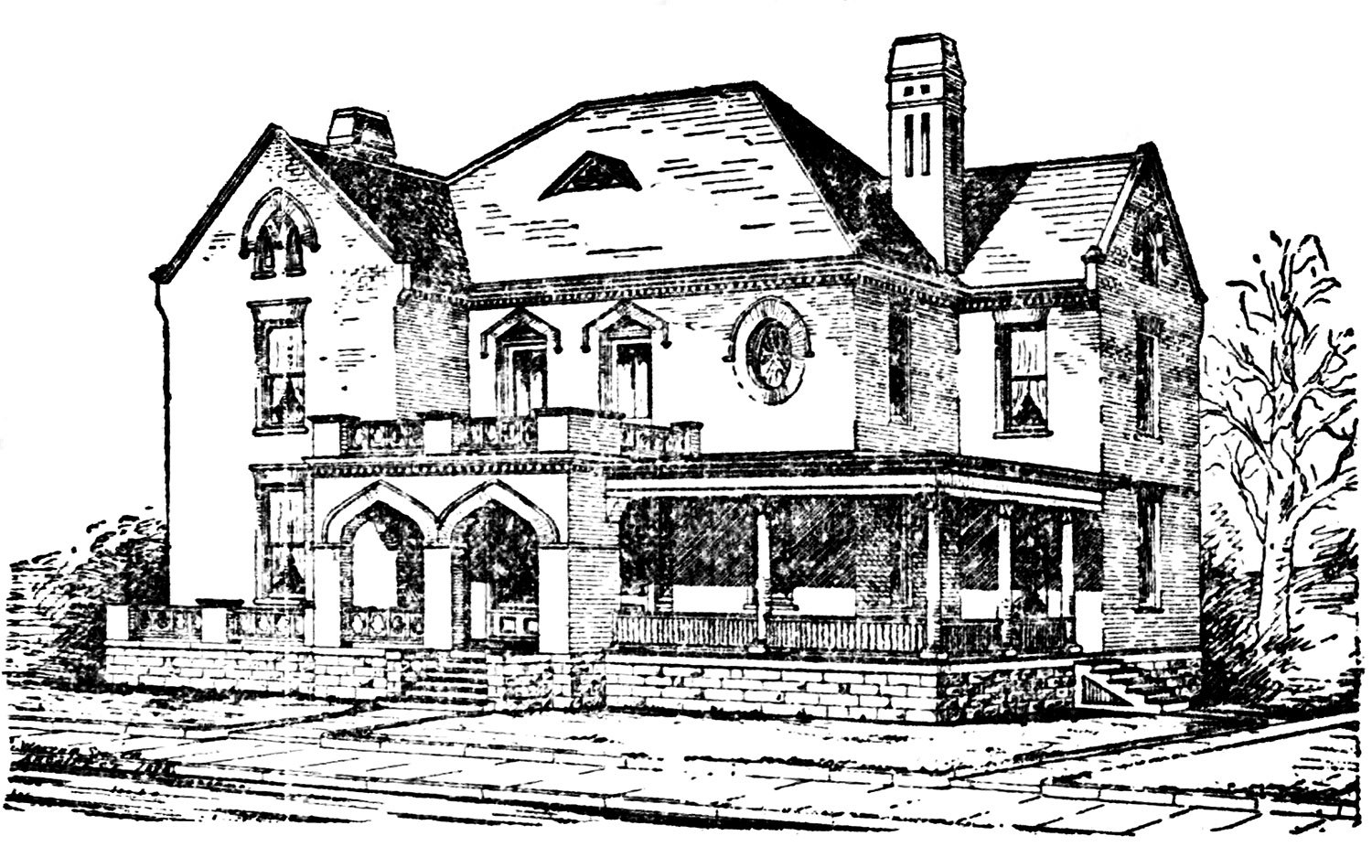
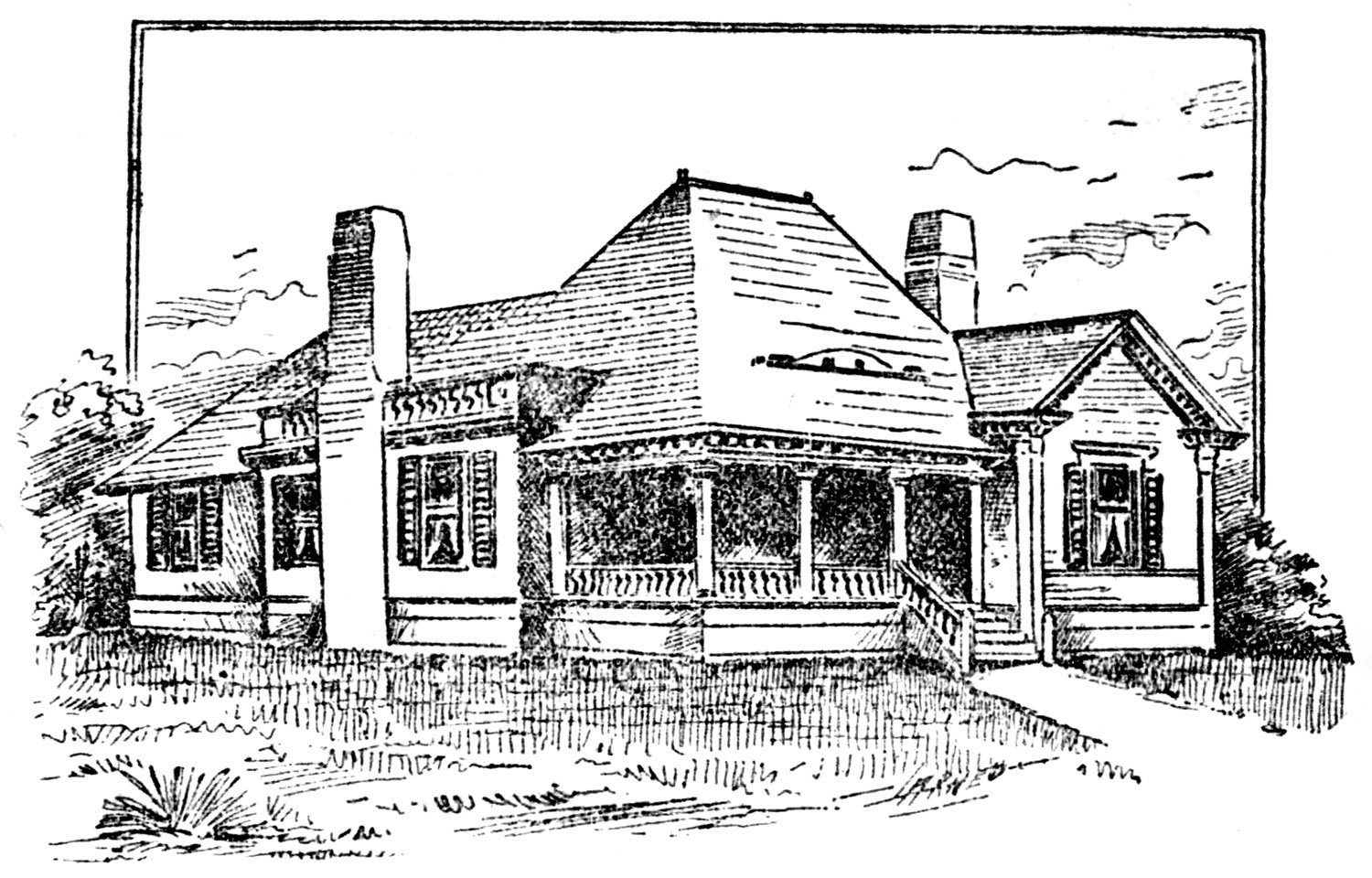
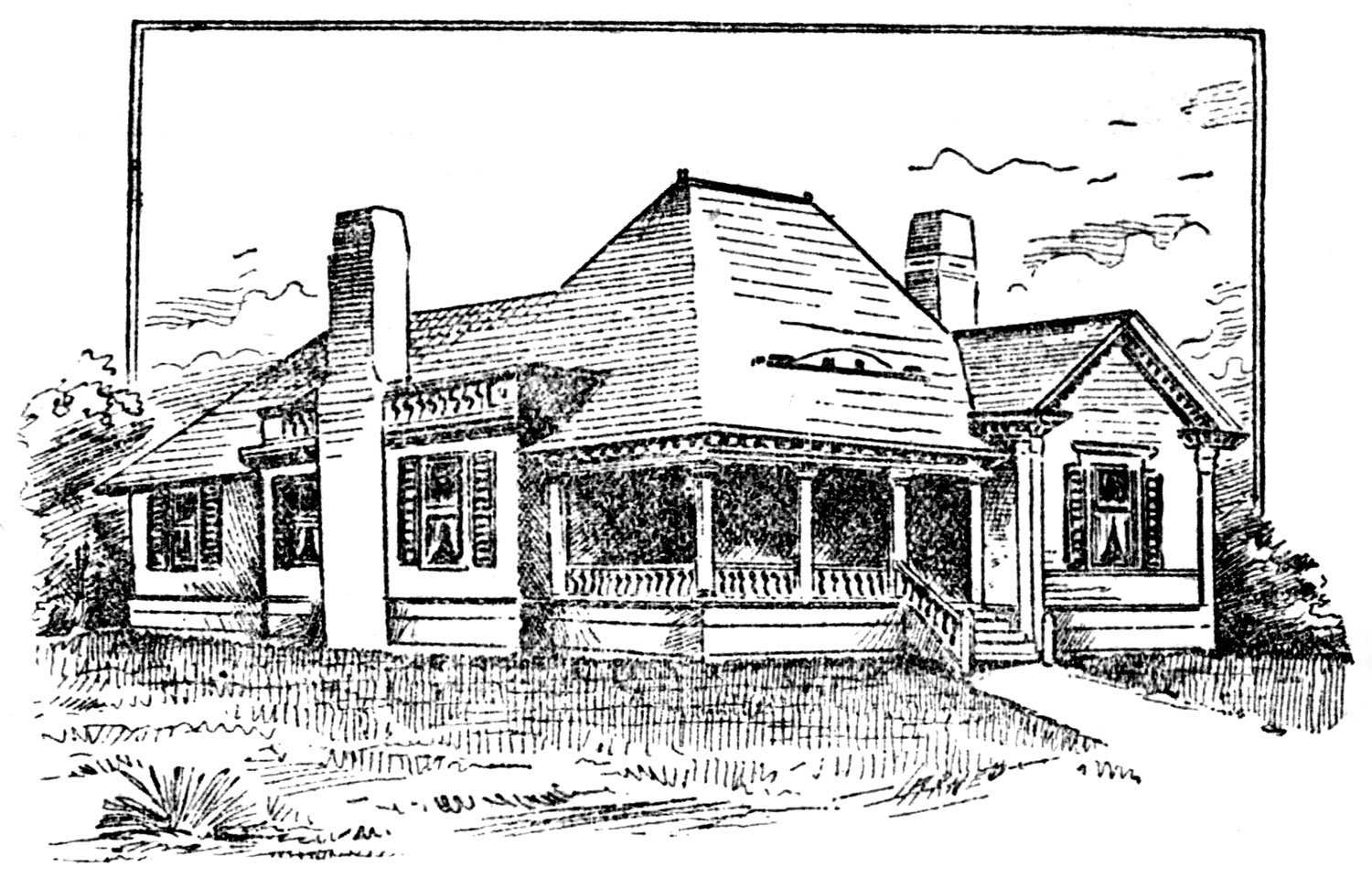
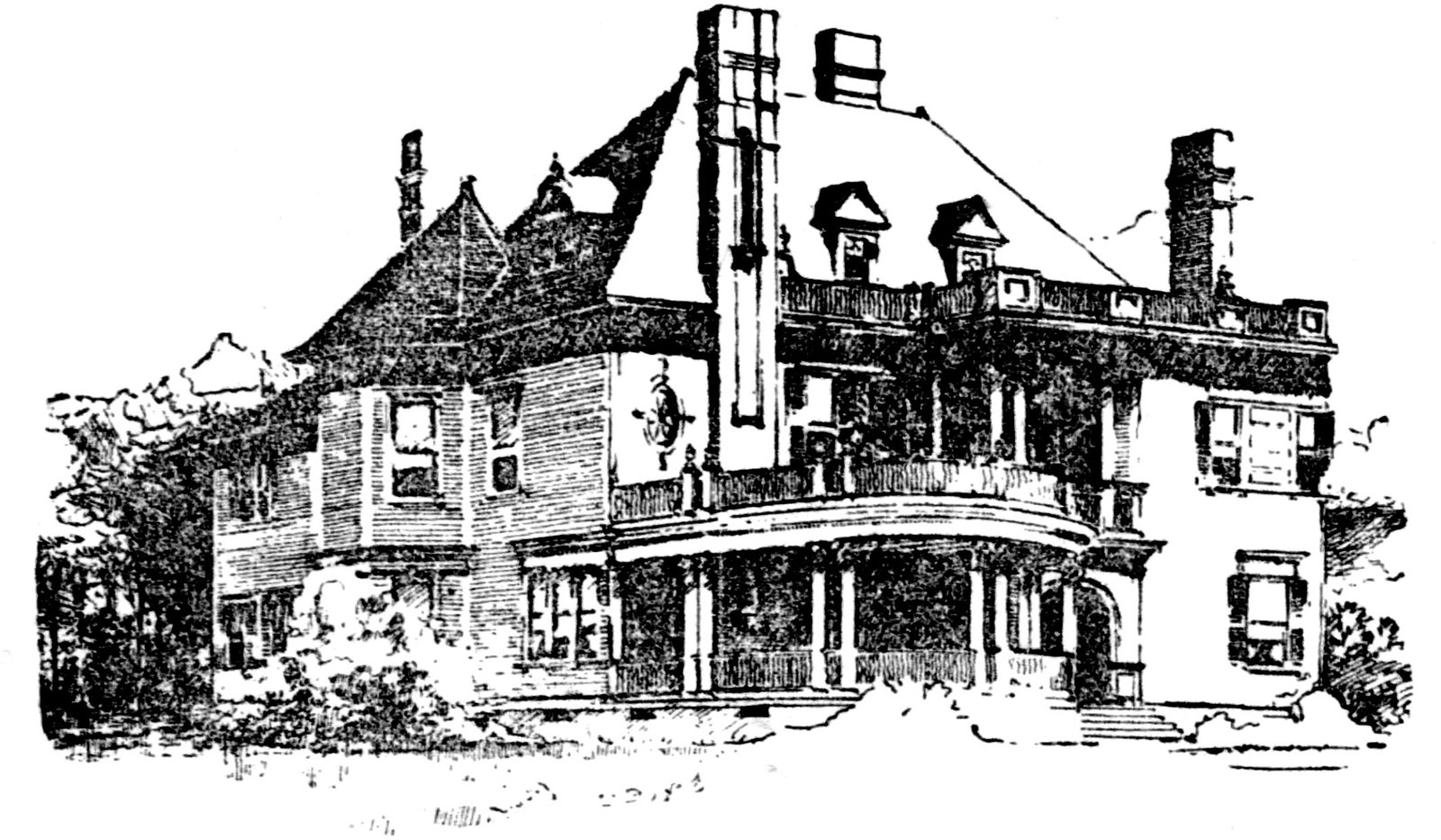
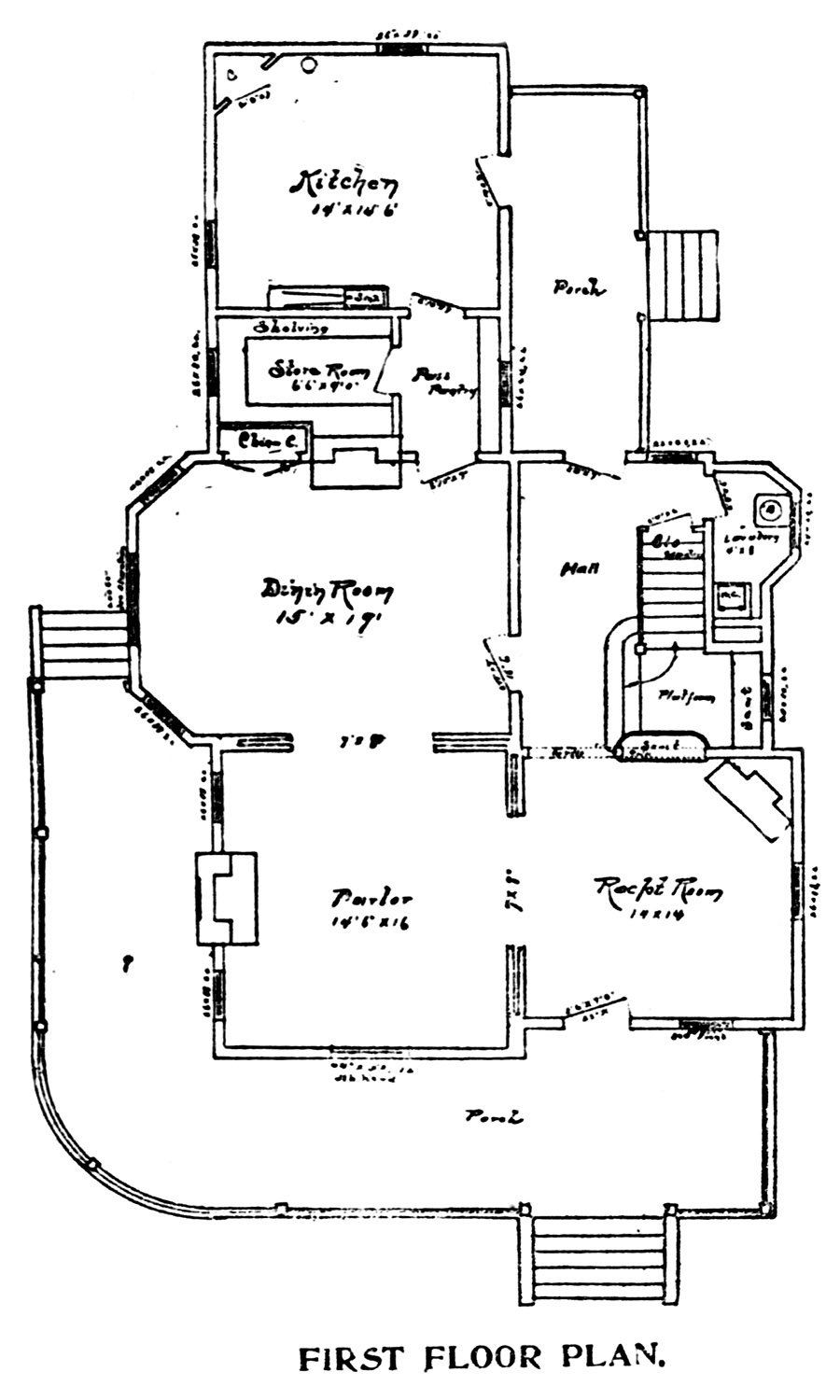
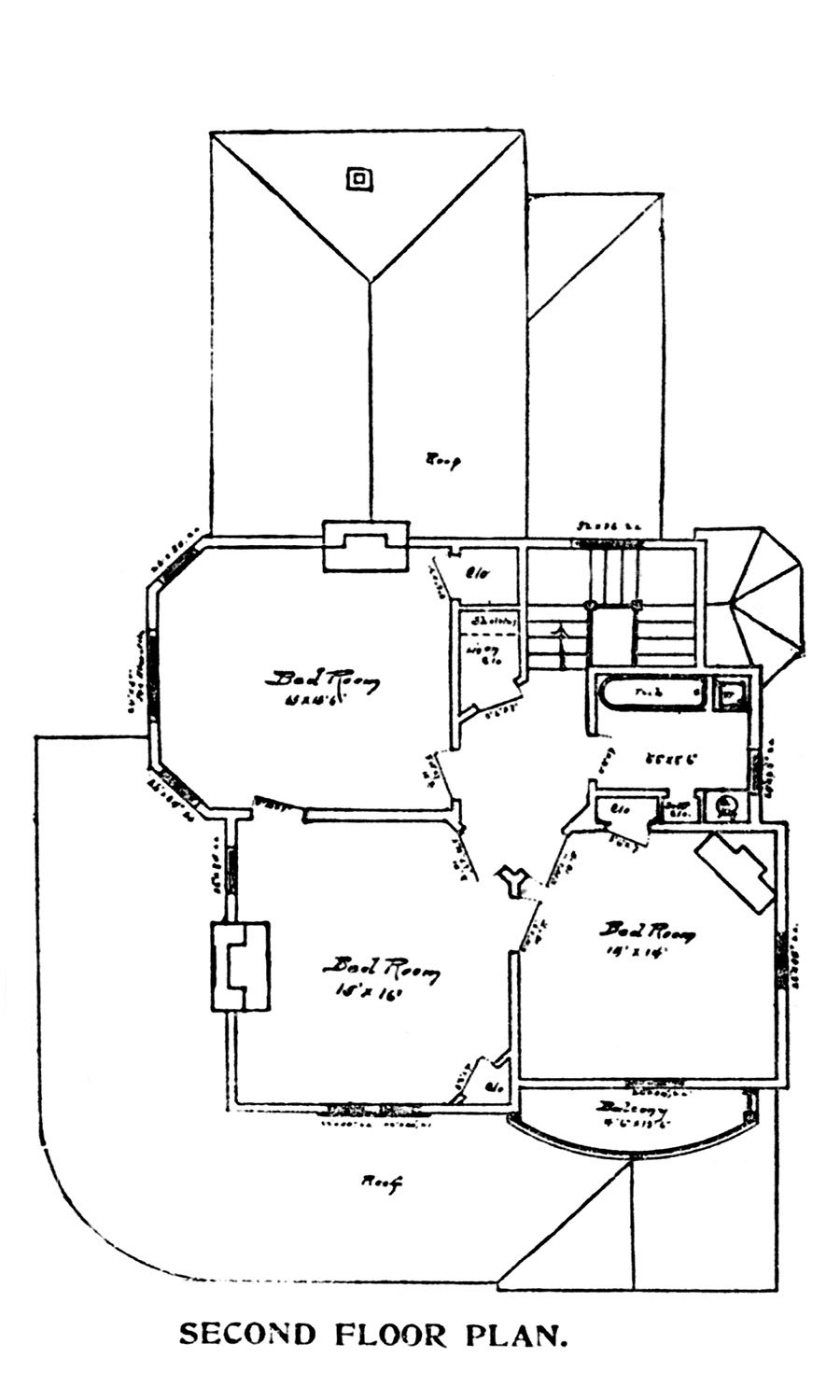
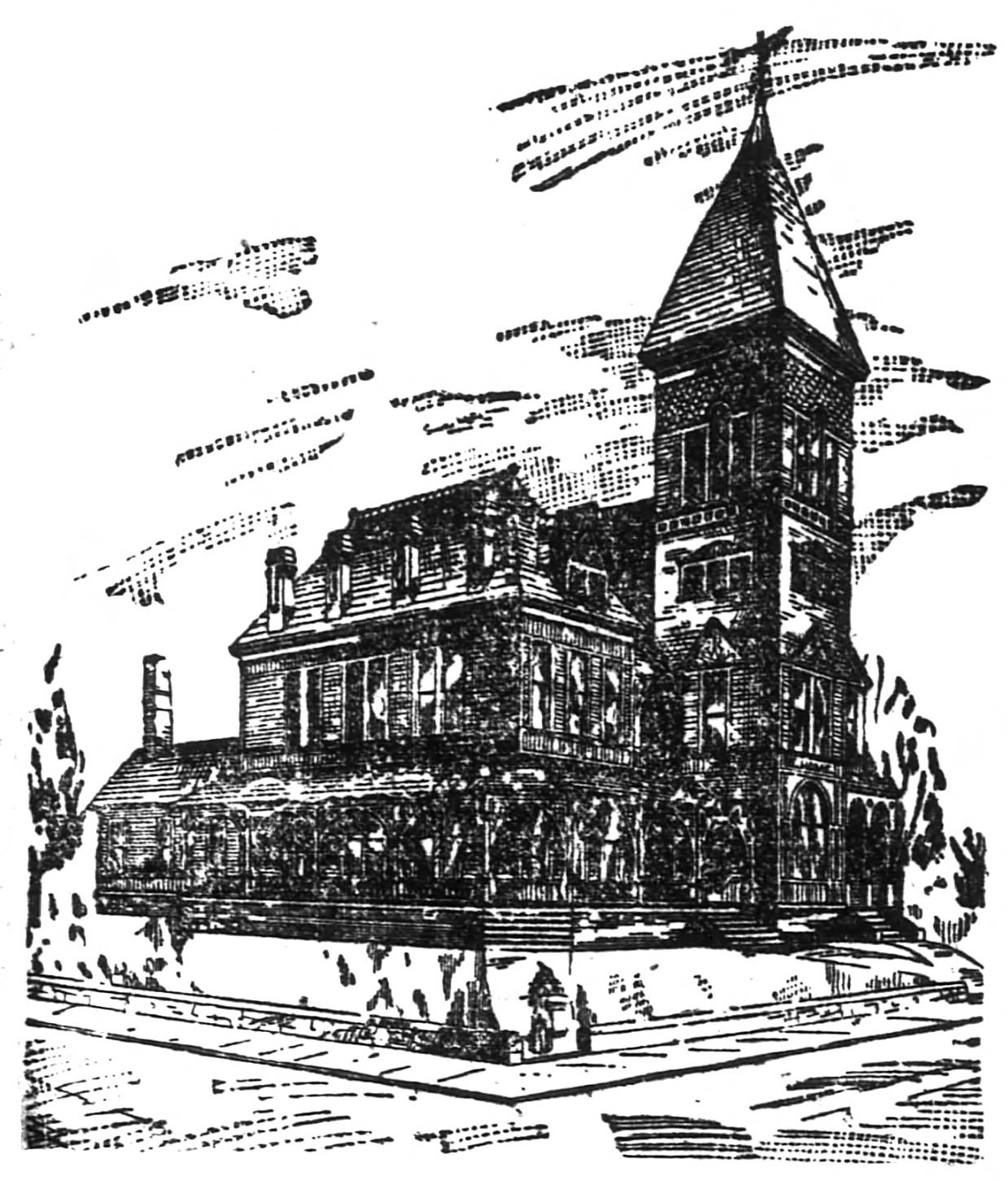
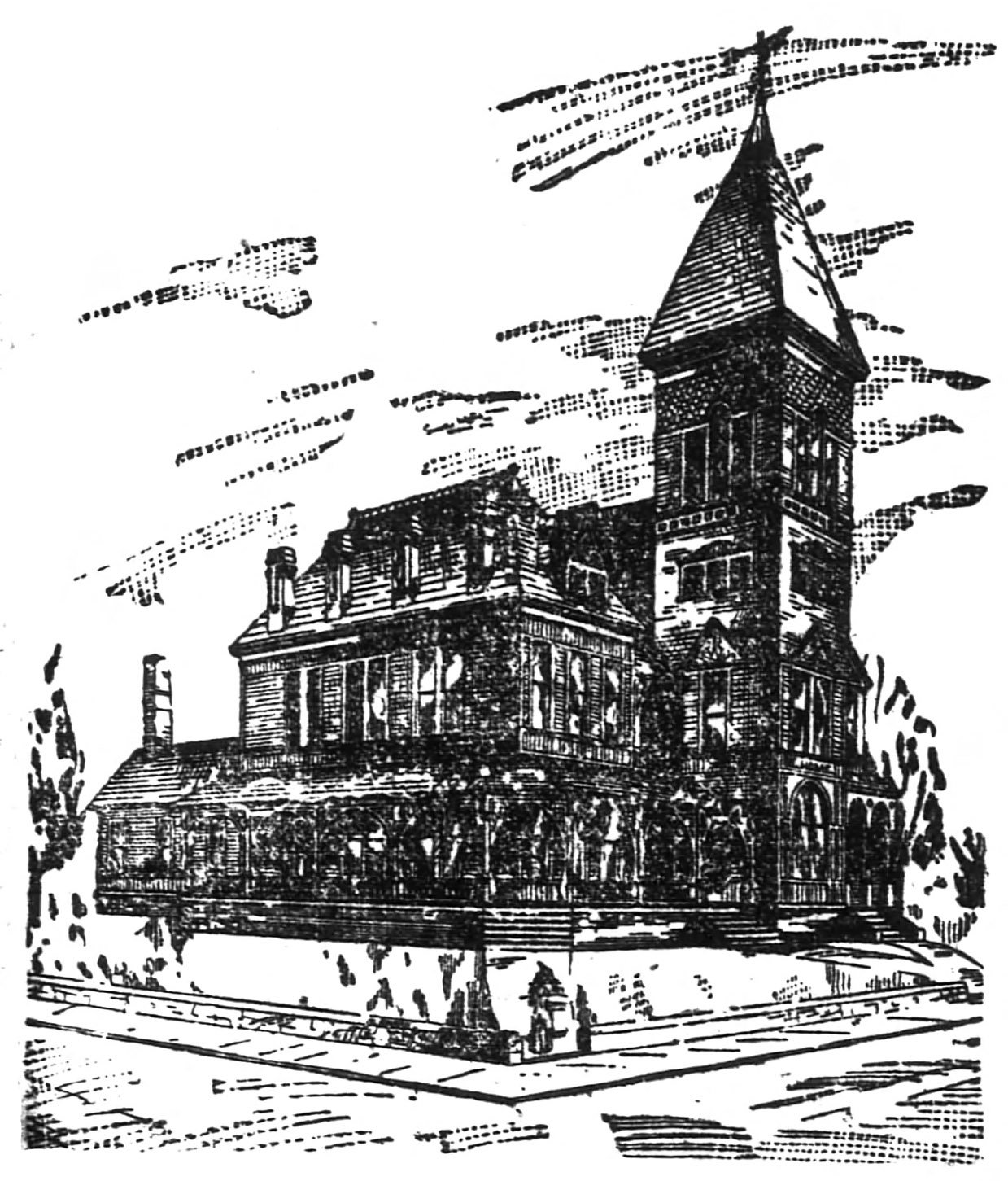
    Bruce & Morgan. Carrie Steele Orphans' Home (1889, unbuilt). Atlanta.
    Bruce & Morgan. Carrie Steele Orphans’ Home (1889, unbuilt). Atlanta.

    The Background

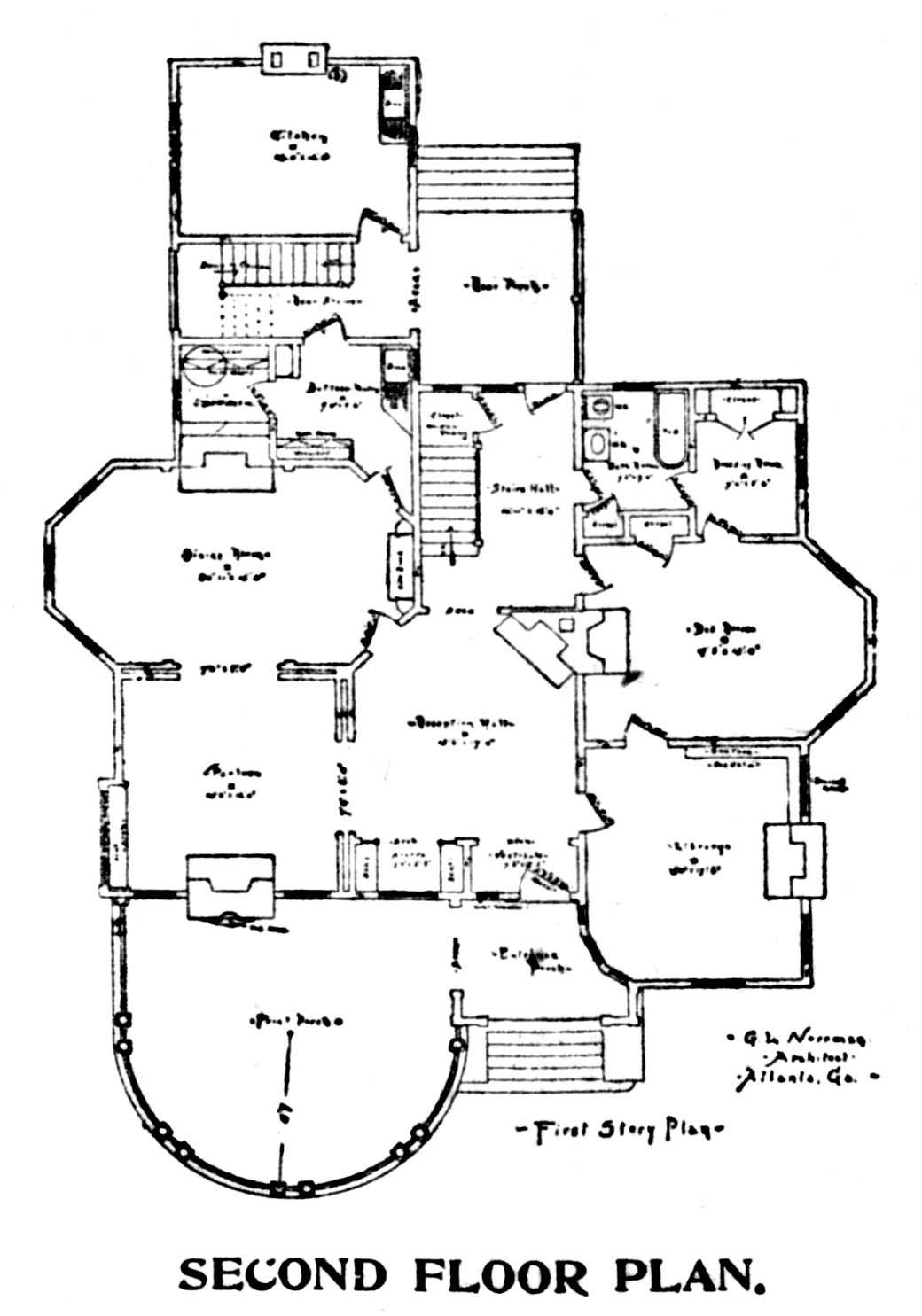
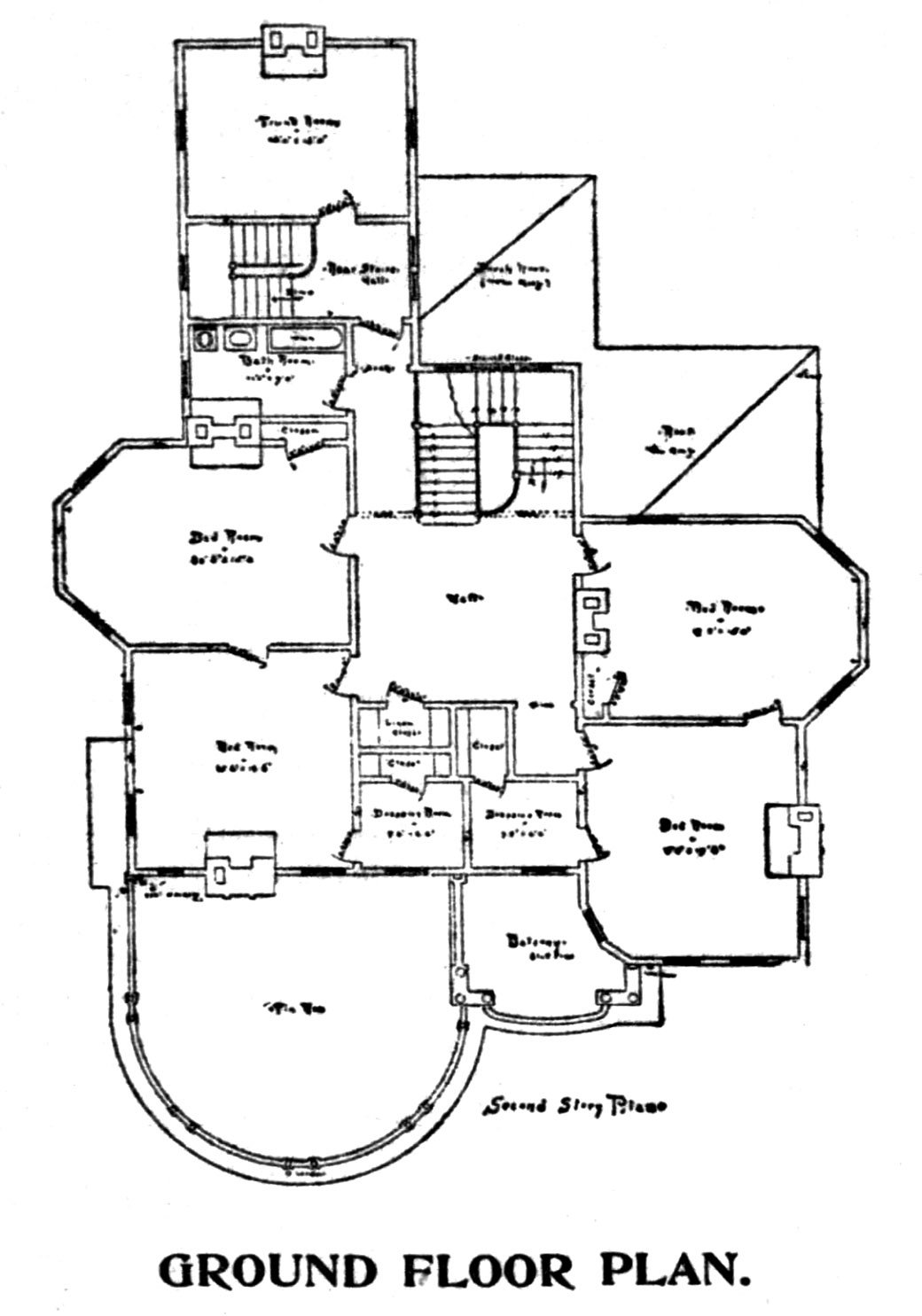
    The following article was published in The Atlanta Constitution in December 1889 and discusses the proposed design for the Carrie Steele Orphans’ Home, prepared by Bruce & Morgan of Atlanta.
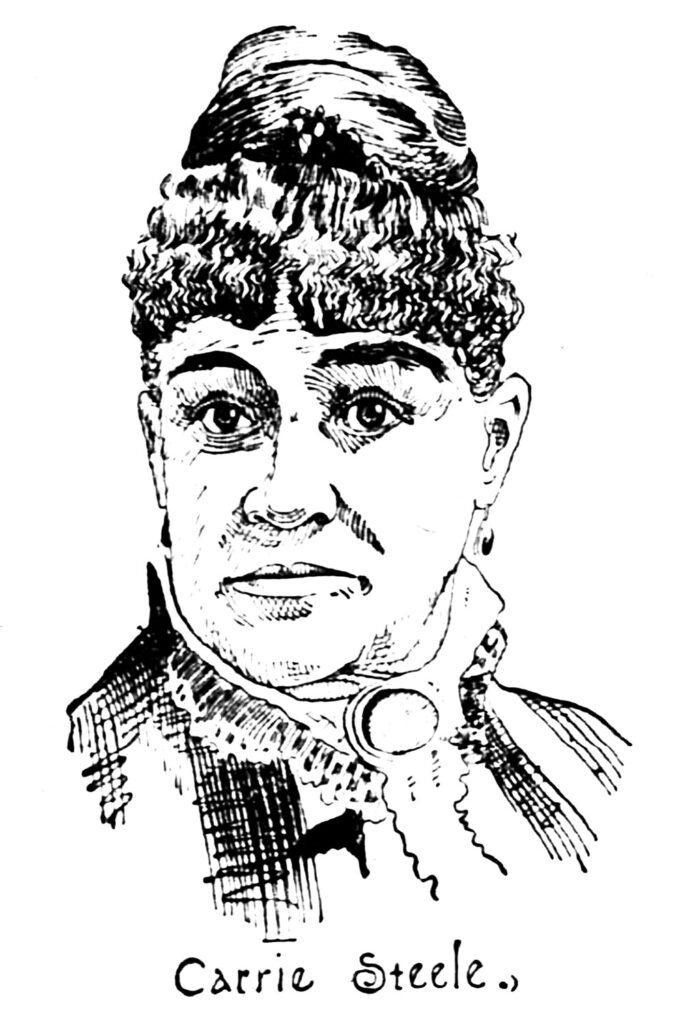
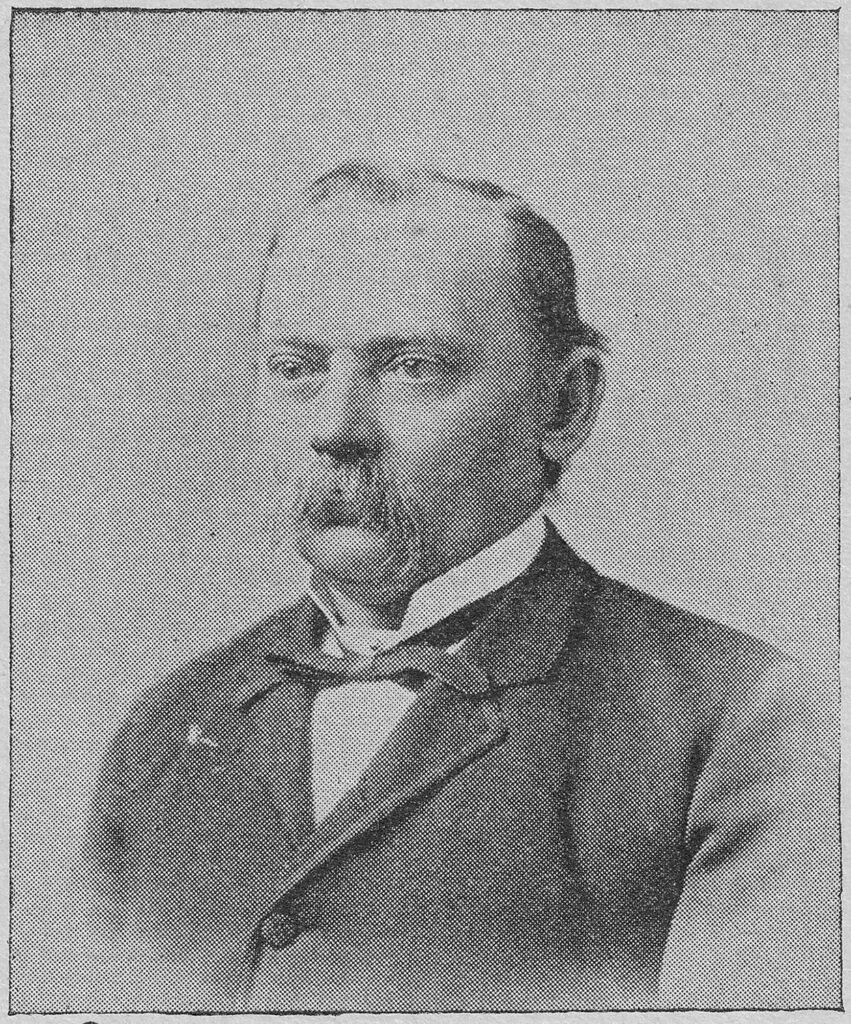
    Carrie Steele Logan (pictured here1)was “well known and highly respected”2 in both the White and Black communities of Atlanta in the late 19th century. Born into slavery in 1829,3 she worked for many years as an attendant in Atlanta’s passenger depot,4 5 where she reportedly became distressed by the “little army of street vagrants who ran around the depot entrance.”

    Steele ultimately quit her job, “impressed with the responsibility of rescuing the little tots that struggled for existence,” and according to the Constitution, “as she left the depot she led several homeless waifs to her home on Wheat street.”

    In 1887, Steele began raising money to build an orphanage for Black children, which the Constitution described as a “praiseworthy work,” opining that: “The home will do a vast amount of good in recovering from lives of vice and crime the little negroes who run around our streets ragged, friendless and homeless…”

    Note that in this article, Albert Howell, one of the orphanage’s early supporters, claimed that the home would “take the little negro waifs and make good servants of them.”

    Steele was a tenacious advocate for the project, pursuing every possible fundraising method. In 1888, she even published a book of anecdotes about her time working in Atlanta’s depot, titled Life and Adventures of Mrs. Carrie Steele, Stewardess Atlanta Depot, with proceeds funding the orphanage.6

    Lacking land for the project, in 1889, Steele petitioned the City of Atlanta,7 8which granted her a 99-year lease9 on a 4 to 5-acre parcel10 11 near the intersection of Fair Street and Flat Shoals Road (now the southeast corner of Memorial Drive SE and Holtzclaw Street SE).

    Location of Carrie Steele Orphans’ Home

    Steele reportedly “made many friends among the white people”,12 and it’s a testament to her reputation that the orphanage’s construction was funded by several of Atlanta’s wealthiest citizens, including Jonathan Norcross,13 who was, by all accounts, a miserly old asshole.

    In March 1890, The Atlanta Journal said of Steele’s fundraising efforts:

    “Almost all the prominent white people in the city have contributed something to the good cause, and to those who have not we desire to say that you could not contribute to a more laudable undertaking.”14

    Construction on the orphanage began in July 1890,15 but because it had to be built in stages as funding permitted, the project was completed in May 1892.16 However, the final structure wasn’t the one designed by Bruce & Morgan.

    The original design had apparently been dropped by May 1890, when Steele bought 30,000 bricks for the project17 18 — note that the plan described and illustrated here was for a wood-frame building.
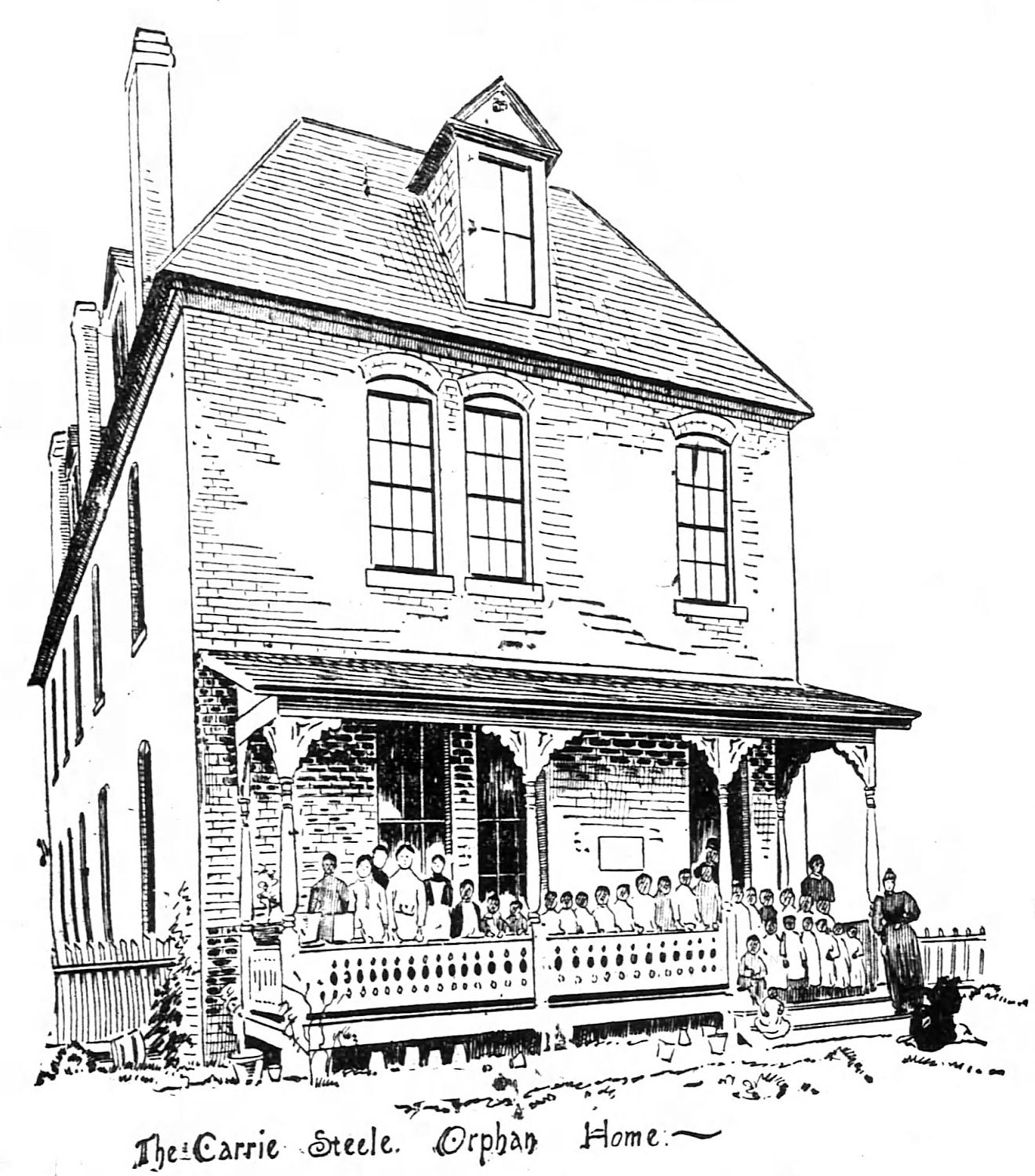
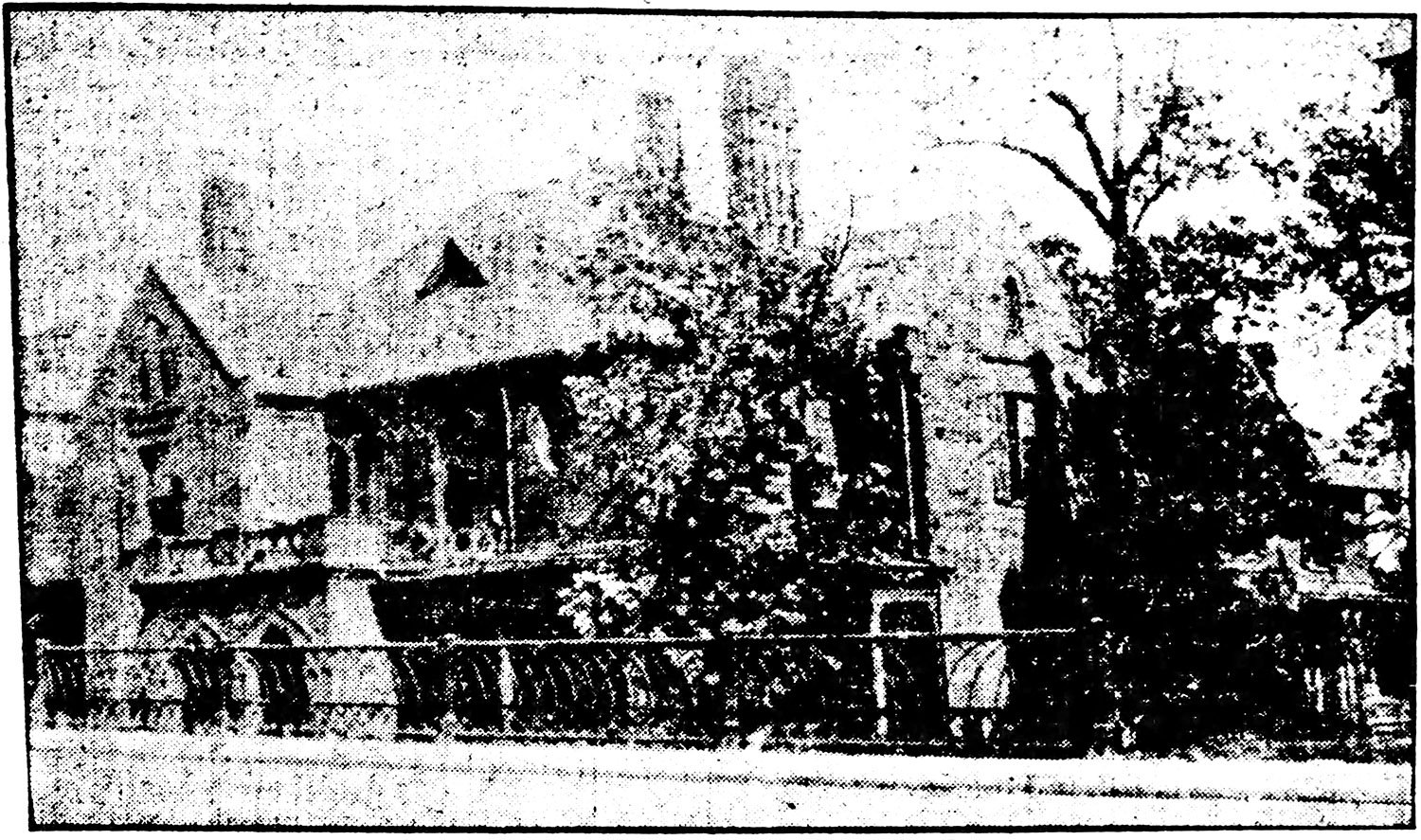
    Architect unknown. Carrie Steele Orphans' Home (1892). Atlanta.
    Architect unknown. Carrie Steele Orphans’ Home (1892). Atlanta.19

    The plain brick structure that was ultimately built for the orphanage appears to have had no designer — or at least, not a good one. Containing 13 rooms,20 the orphanage housed 36 children at its dedication,21 and by 1896, it sheltered 75 children between the ages of one and fifteen years old.22

    In 1894, Steele told a reporter from the Constitution:

    “If these were my own children I could not love them more than I do. They all look up to me as if I were their mother, and come to me with all their little troubles as if I always had a remedy for them. I have had a great many discouragements and trials, but when I look back over these years and see how the Lord has taken care of me and my children, I feel that I ought to be thankful.”23

    Steele died in November 1900 at the age of 61, two months after a debilitating stroke.24 Her funeral was reportedly attended by 3,000 people,25 with the Constitution reporting that “the church was filled to overflowing and about half of the audience was composed of whites.” She was buried in Oakland Cemetery, the final resting place of Atlanta’s most distinguished citizens.

    Steele’s husband managed the orphanage until he died in 1904,26 which continued operating under a succession of directors, notably Clara M. Pitts, who managed the home from 1919 to 1950.27

    In 1928, the orphanage left its original property on Fair Street and moved to the Pittsburgh neighborhood in southwest Atlanta.28 Later renamed the Carrie Steele-Pitts Home, the orphanage moved to Faiburn Road in west Atlanta in 1964,29 where it remains in operation as the oldest black orphanage in the United States.30

    For Negro Orphans.

    The Good Work Which Carrie Steele Has Done.

    The Home As It Will Appear When Finished
    — What a City Officer Has To Say About It — Other Notes of Interest.

    “That’s the best investment Atlanta has ever made.”

    Colonel Albert Howell was the speaker. As he made the remark he pointed to an architect’s drawing of the Carrie Steele Orphan home.

    “Yes,” said Colonel Howell, “that is one of the most sensible charities ever inaugurated, and to one woman belongs the credit for its inception and the good work that has already been done. Carrie Steele is a good woman, and I know she deserves every success in this life work of hers. For it is a life-work. It is two years now since the project was conceived by Carrie, or rather since she gave up her position at the carshed that she might devote her whole time to this home. She has labored honestly and earnestly for its success, and she expects to devote the rest of her life to it.”

    Colonel Howell has shown his faith by his works. It was through his influence as alderman that the lease on the four acres of city land, upon which the home will stand was extended from ten to ninety-nine years. And in all her efforts to secure city aid, Colonel Howell has been one of Carrie Steele’s most staunch supporters.

    “It is a good thing for Atlanta as well as the state at large–this orphans’ home,” he said yesterday. “For it is the intention of the people interested in the home to take the little negro waifs and make good servants of them. The education they receive will all be in the direction of practical usefulness.”

    The home will be located on the Flat Shoals road where Fair street will intersect it. This is about two and a half miles from the center of the city and is delightfully located.

    The building, which, when completed, will look like the accompanying cut, will be a frame structure built in the most substantial manner. The building when finished which will contain, on the first floor an office and room for matron, with two school rooms, chapel and large dining room, with kitchen and laundry rooms, for teaching kitchen work. The second floor will contain dormitories, bath rooms, and all modern conveniences, and in every way adapted to the purposes for which it is intended. The plans were prepared by Messrs. Bruce & Morgan, and preparations are being made for commencing the work at once.

    It is the intention of the projector to start with one wing, and use that for the purposes of the home. Then as the years go by and the home gets well started, the building will be completed.31

    References

    1. Illustration credit: “Training The Colored Children”. The Atlanta Constitution, June 7, 1896, p. 3. ↩︎
    2. “The Colored Orphans’ Home.” The Atlanta Constitution, June 9, 1889, p. 3. ↩︎
    3. Carrie Steele Logan: A ‘Mother’ to Atlanta’s Orphans | Atlanta History Center ↩︎
    4. ibid. ↩︎
    5. “Carrie Steele Gets Married.” The Atlanta Journal, February 16, 1889, p. 2. ↩︎
    6. “Carrie Steele’s Book.” The Weekly Telegraph (Macon, Georgia), March 6, 1888, p. 8. ↩︎
    7. “The City’s Finances.” The Atlanta Journal, January 21, 1889, p. 1. ↩︎
    8. “Local Law Makers.” The Atlanta Constitution, January 22, 1889, p. 5. ↩︎
    9. “The City Fathers”. The Atlanta Constitution, November 19, 1889, p. 3. ↩︎
    10. “The Carrie Steele Orphan Home.” The Atlanta Constitution, July 2, 1889, p. 8. ↩︎
    11. “Home For Colored Orphans.” The Atlanta Journal, May 9, 1890, p. 3. ↩︎
    12. “Carrie Steele Died Last Night”. The Atlanta Constitution, November 4, 1900, p. 7. ↩︎
    13. “The Atlanta Orphan Home.” The Atlanta Journal, February 13, 1890, p. 3. ↩︎
    14. “Atlanta Orphan Asylum.” The Atlanta Journal, March 12, 1890, p. 4. ↩︎
    15. “Foundations Laid”. The Atlanta Journal, July 4, 1890, p. 1. ↩︎
    16. “City Notes.” The Atlanta Constitution, May 2, 1892, p. 5. ↩︎
    17. “Home For Colored Orphans.” The Atlanta Journal, May 9, 1890, p. 3. ↩︎
    18. “The Good Work of Carrie Steele”. The Atlanta Constitution, May 10, 1890, p. 4. ↩︎
    19. “Training The Colored Children”. The Atlanta Constitution, June 7, 1896, p. 3. ↩︎
    20. “The Colored Orphans.” The Atlanta Journal, August 16, 1892, p. 5. ↩︎
    21. “The Colored Orphans’ Home.” The Atlanta Constitution, June 21, 1892, p. 10. ↩︎
    22. “Training The Colored Children”. The Atlanta Constitution, June 7, 1896, p. 3. ↩︎
    23. “Her Own Work.” The Atlanta Constitution, April 15, 1894, p. 23. ↩︎
    24. “Short Items Of Local Interest”. The Atlanta Constitution, November 7, 1900, p. 9. ↩︎
    25. “What The Negro Is Doing”. The Atlanta Constitution, November 11, 1900, p. 4. ↩︎
    26. “Josiah Logan, Well-Known Negro, Died Tuesday”. The Atlanta Constitution, November 16, 1904. ↩︎
    27. Scott, Stanley S. “Groundbreaking Exercises For Children’s Home Sunday”. Atlanta Daily World, February 15, 1964, p. 7. ↩︎
    28. “New Home for Carrie Steele Colored Orphanage To Be Dedicated Wednesday”. The Atlanta Constitution, May 27, 1928, p. 19 A. ↩︎
    29. Scott, Stanley S. “Groundbreaking Exercises For Children’s Home Sunday”. Atlanta Daily World, February 15, 1964, p. 7. ↩︎
    30. Carrie Steele Logan: A ‘Mother’ to Atlanta’s Orphans | Atlanta History Center ↩︎
    31. “For Negro Orphans.” The Atlanta Constitution, December 1, 1889, p. 15. ↩︎
  • Walnut Street Christian Church – Chattanooga, Tennessee (1886)

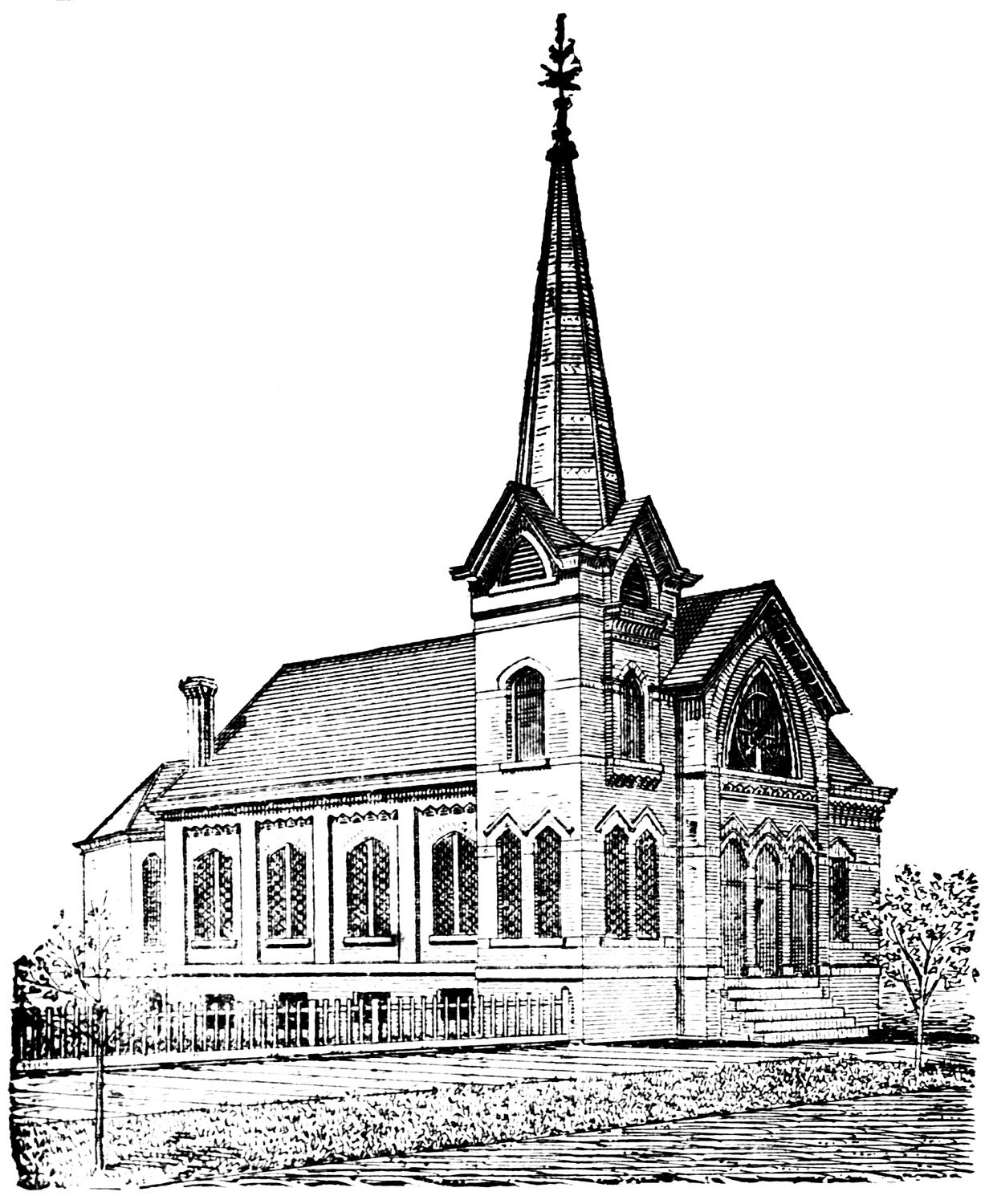
    A.C. Bruce of Bruce & Morgan. Walnut Street Christian Church (1886-1976). Chattanooga, Tennessee.
    A.C. Bruce of Bruce & Morgan. Walnut Street Christian Church (1886-1976). Chattanooga, Tennessee.1

    The Background

    The following article, published in The Chattanooga Daily Times, details the plan and construction of the Walnut Street Christian Church in Chattanooga, Tennessee, built in 1886 and designed by A.C. Bruce of Bruce & Morgan.

    The building was demolished circa 1976.

    Bruce was raised in Nashville, Tennessee, and began his practice in Knoxville, Tennessee. When he later partnered with T.H. Morgan in Atlanta, the firm continued to secure considerable work throughout eastern Tennessee, including, as the article notes, Chattanooga’s Hamilton County Courthouse and First Presbyterian Church, both of which were demolished.

    Location of Walnut Street Christian Church

    The design of the tidy Gothic-style church, shown in the illustration above, is typical of Bruce, who consistently struggled to balance solids and voids in his compositions. Note that the doors and windows appear just a little too large for the overall massing: Bruce frequently drew them out of scale.

    The Walnut Street Christian Church occupied this building until 1910, when the congregation moved half a block to the former First Presbyterian Church, becoming Central Christian Church.2 3

    The old Christian Church building was then sold to the local chapter of the Knights of Pythias organization, who converted it into a meeting hall.4 Based on fire maps, the structure’s original 85-foot-high steeple5 was removed at some point,6 likely during this renovation.

    In 1923, the building was sold again to the neighboring Newell Sanitarium,7 which converted it into a 10-room annex circa 1925.8 It appears the former church — altered at least twice — remained at 709 Walnut Street9 until the construction of the neighboring Downtown General Hospital, which opened in July 1976.10 The hospital’s parking lot replaced the building.

    I won’t lie: This is a dead-boring article that reads a lot like those Old Testament books with endless lists of names and dry histories — the ones Christians pretend to read, if they read the Bible at all.

    To make it easier to find, I’ve highlighted the portion about the building’s design in tasteful lavender. You’re welcome.


    The New Christian Church to be Dedicated Today.

    Handsome Brick Structure on Walnut Street Between Seventh and Eighth Streets.

    History Of The Church.

    Its Organization, Struggles, Work and Final Great Success–Full Roster of the Membership

    During the winter of 1879, A. Teachout of Cleveland, O., came to this city to spend some months, and being an earnest Christian, he sought out some men and women of his own “faith and order,” and induced them to engage with him in an effort to begin the work in this city which has culminated in their house today, and the happy and memorable occasion which will there be celebrated. Among this little band who were brave enough to make such a beginning, may be mentioned Lucius DeLong and wife, N.P. Nail, R.S. Kendrick and wife, and W.C. Carter and wife.

    Arrangements were made by them to invite Dr. W.H. Hopson, of Louisville, Ky., to preach a series of sermons in this city. Accordingly Dr. Hopson came and preached for about a week in the old Southern Methodist church, which stood at the corner of Eighth and Market, where Loveman’s new building stands. Dr. Hopson concluded his services in James Hall. In some respects, this was a notable meeting. Large crowds waited upon the preaching and the immediate results were ten accessions by obedience of the gospel: Bradford Post and wife, Fred H. Phillips, B.H. Ferguson and wife, James Nichols, Mrs. Webb and three others.

    Before leaving the city Dr. Hopson effected a temporary organization and A. Teachout was appointed Elder of the church. From the time of organization regular meeting were held in a hall or other place within their reach. The worship of God has therefore been steadily maintained ever since.

    THE SUNDAY SCHOOL

    was established about 1878. Probably its first Superintendent was Weston F. Burch, of Missouri,–a man of rare worth never to be forgotten by those who knew him. His successors in that office have W.C. Carter, G.B. Woolworth, R. W. Andrews and the present incumbent, D.W. Chase, who has brought the school to unprecedented prosperity.

    The school undertook to pay for the eight stained windows in the auditorium and will succeed. The children and the teachers of the school have paid to the building fund about $400 during the past two years besides paying their own current expenses and are ready to be among the first today to make pledge for liquidating the indebtedness. There is also a lively Mission Sunday School under the care of Charles Caldwell and Charles R. McCall, which has started during the last spring, which will bear its share of the responsibility.

    THE PREACHERS

    who have served the church have been A. Allison, Geo. W. Abell, J.R. Biggs, F.M. Hawkins, Dr. A.G. Thomas, A.S. Johnson, D.T. Beck and T.D. Butler. In a brief history such as this aims to be, many names which are entitled to honorable mention are likely to be overlooked. This is unavoidable and should not be construed by partial friends as intentional.

    The local organization of the Christian Womens’ Board of Mission, which has done a large share of the work of raising money for this new house, as it had done for the very eligible lot upon which it stands, is largely due to Mrs. G.B. Woodworth for its establishment and successful management, though no year of its existence has been crowned with such prosperity as the present, under the active and indefatigable Presidency of Mrs. Eva Wilkinson.

    The following have served the church as its Elders: A. Teachont [sic], N.P. Nail, B. Post, L.S. Barret, Isaac Strickle and G.B. Woodworth.

    The Deacons have been: L. DeLong, Fred H. Phillips, S.J. Graham, Jno. A. Graham, A.B. Phillips, W.T. Lucas, J.R. Hays, R.W. Andrews, B. Post and Geo. B. Woodworth and D.W. Chase.

    Up to the 1st of September, 1884, much had been done by this active and devoted people. They had secured the lot they now occupied and nearly paid for it, and they had made an appeal to the Home Missionary Society of the church in America to help them to sustain regular preaching. An arrangement was completed by which their present pastor, T.D. Butler, came among them, and the work at once began to advance vigorously. The new house, which is to be opened today, was started, and a systematic series of operations pursued by which financial help was received. To this end Mr. Butler has traveled much in Tennessee, Kentucky, Ohio, Indiana, Illinois and Missouri, and has raised nearly $2,500 in cash, and has secured loans to the amount of $1,500 on safe and advantageous terms. In addition to this, the spiritual needs of the church have been amply supplied, and more than a hundred members added to the membership. The lot furnishes only a narrow margin beyond the walls, but the house stands 75×50 feet, with a first-class basement. Here are two rows of graceful iron columns, supported by a substantial footing of stone, and thes [sic] in turn adequately support the floor of the auditorium. We reach the main room by spacious steps, which lead into a vestibule of ample size, having a door on the right which opens into the pastor’s room–as on the left you pass into the gallery above, which has a capacity of nearly 100 people–or below into the commodious school and prayer meeting room. The auditorium is furnished with neat pews from the Excelsior Furniture Co., Cincinnati, O., and cathedral glass windows from the Robert Mitchell Furniture House, Cincinnati. Beneath the rostrum is a baptistery [sic], with all the modern appliances, and on either side are the robing rooms to be used by candidates for baptism and for other purposes. On the whole this is one of the neatest, best furnished and most convenient churches in the city.

    The plans and specifications for this church were generously donated by A.C. Bruce, Esq., of Bruce & Morgan, Architects, Atlanta, Ga.–the architect of the court house and the First Presbyterian church.

    THE CONTRACTORS.

    Stone work, Trout & Coxon; brick work, J.F. Wright; slate and galvanized iron, J.C. Banks & Co.; roof and tower, R.D. Whitice; carpenter work, W.M. Cosby and R.W. Andrews; gas fitters, Lookout Plumbing Company and plumbing by H.A. McQuade.

    The building committee has been Isaac Strickle, D.W. Chase, G.B. Woodworth, R.W. Andrews, W.M. Cosby and John A. Graham.

    The Trustees are Lucius Delong, President; D.W. Chase, Secretary and Treasurer; Bradford Post, G.B. Woodworth, M.M. Caldwell.

    The present organization of the church is: Thomas D. Butler, Pastor; Official Board, G.B. Woodworth, Chairman; B. Post, D.W. Chase, John A. Graham, A. B. Phillips, W.M. Cosby, L. DeLong, G.M. King, J.T. Lynn.

    [LIST OF CHURCH MEMBERS — too long and boring to repeat here.]11

    References

    1. “The New Christian Church to be Dedicated Today.” The Chattanooga Daily Times (Chattanooga, Tennessee), August 8, 1886, p. 8. ↩︎
    2. “Dr. Boswell In His New Pulpit”. The Chattanooga News (Chattanooga, Tennessee), January 3, 1910, p. 2. ↩︎
    3. “Reasons For Their Faith”. The Chattanooga Daily Times (Chattanooga, Tennessee), January 3, 1910, p. 3. ↩︎
    4. “New Home Of Keystone Lodge”. The Chattanooga News (Chattanooga, Tennessee), January 8, 1910, Magazine Section, p. 4. ↩︎
    5. Image 9 of Sanborn Fire Insurance Map from Chattanooga, Hamilton County, Tennessee. | Library of Congress ↩︎
    6. Image 42 of Sanborn Fire Insurance Map from Chattanooga, Hamilton County, Tennessee. | Library of Congress ↩︎
    7. “Knights Of Pythias Give Up Old Home”. Chattanooga Daily Times (Chattanooga, Tennessee), March 24, 1923, p. 1. ↩︎
    8. “Newell Sanitarium To Increase Capacity”. Chattanooga Daily Times (Chattanooga, Tennessee), December 10, 1925, p. 9. ↩︎
    9. Rothberger Directory Company’s Chattanooga, Tennessee City Directory 1960. Chattanooga, Tennessee: Rothberger Directory Company (1960). ↩︎
    10. “In Tennessee”. Bristol Herald-Courier (Bristol, Tennessee), July 11, 1976, p. 1. ↩︎
    11. “The New Christian Church to be Dedicated Today.” The Chattanooga Daily Times (Chattanooga, Tennessee), August 8, 1886, p. 8. ↩︎

  • Swift Specific Company – Atlanta (1883-1956)

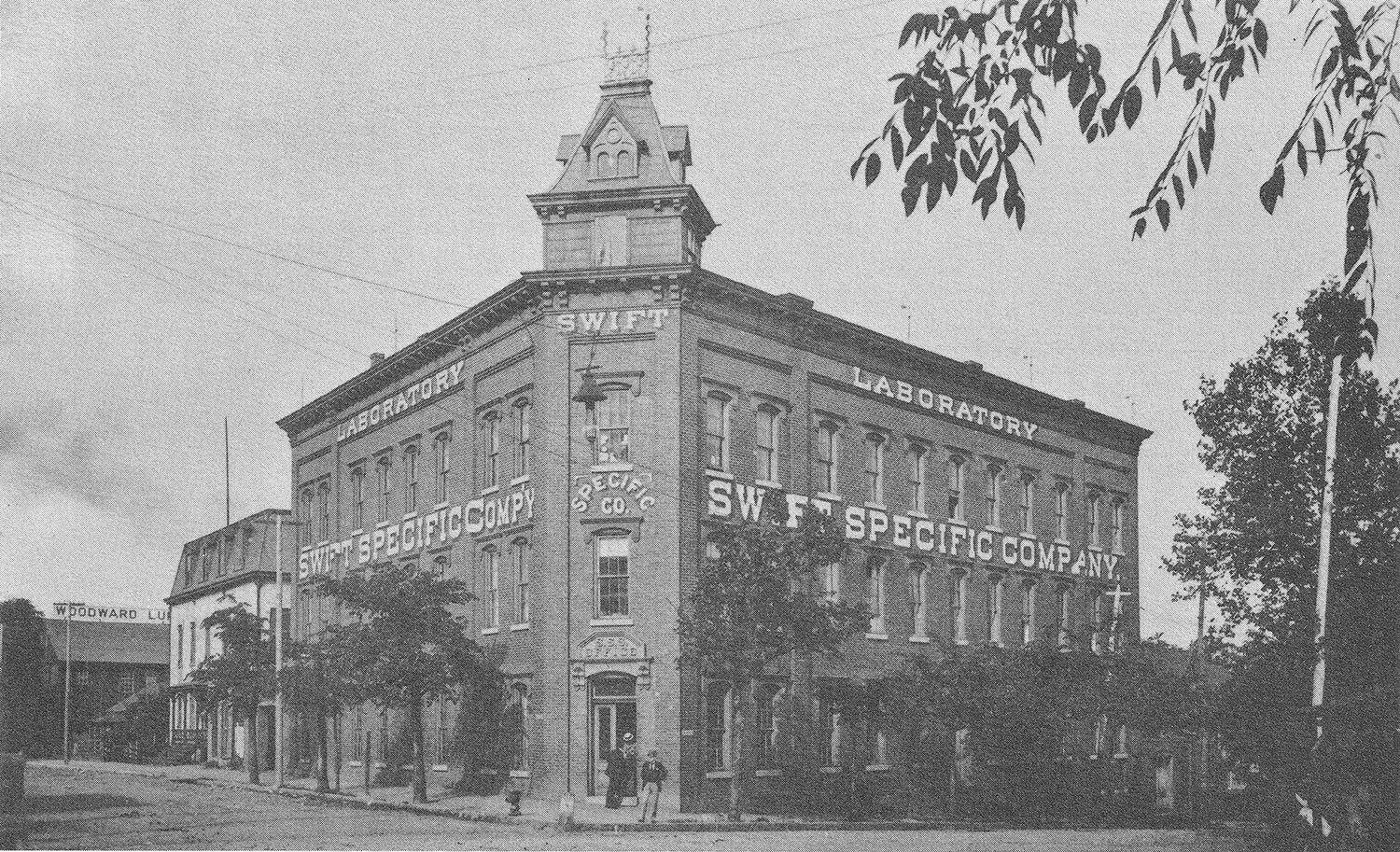
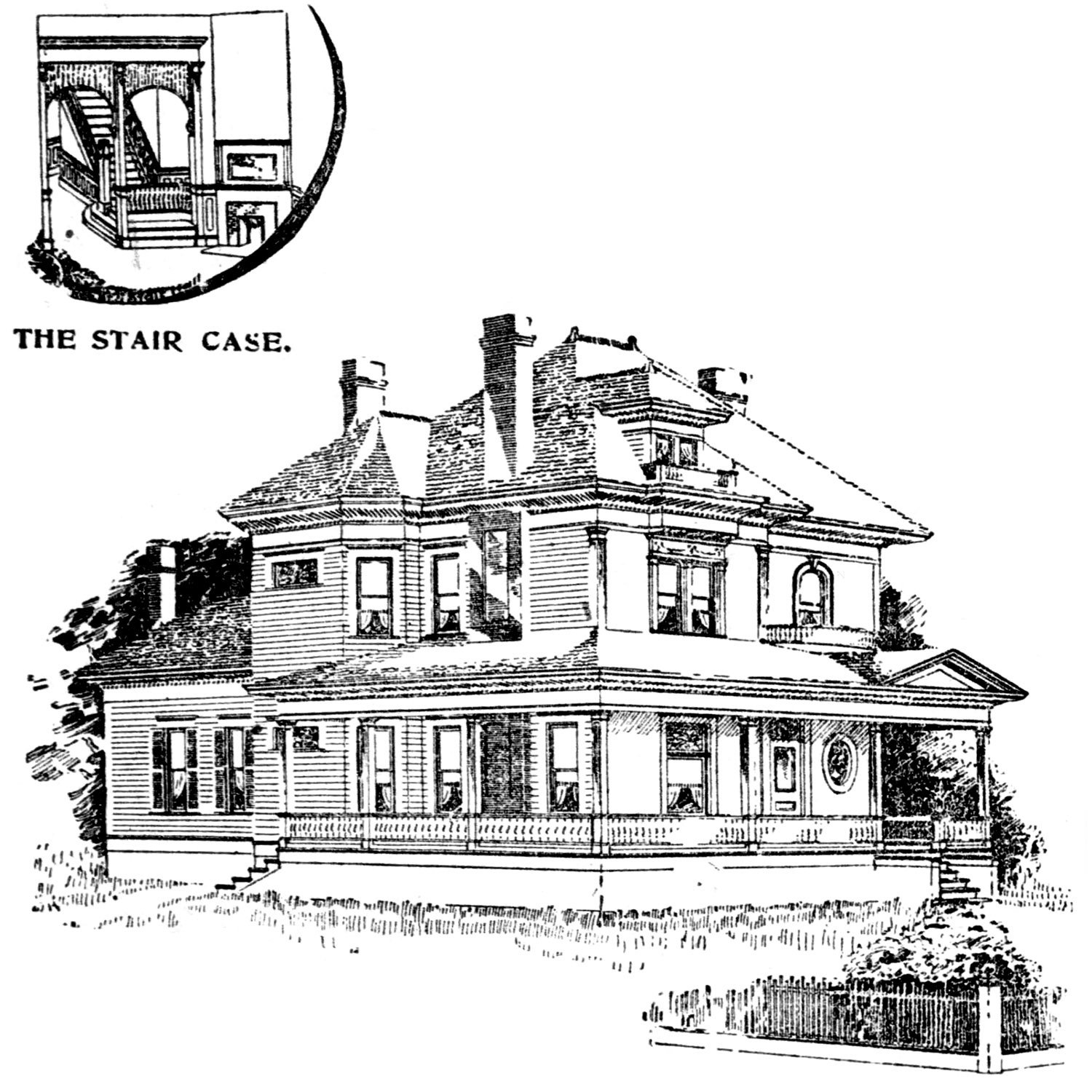
    Edmund G. Lind. Swift Specific Company (1883-1956). Atlanta.
    Edmund G. Lind. Swift Specific Company (1883-1956). Atlanta.1

    The Background

    The following article was published in The Atlanta Constitution in 1883, and despite its title — “New Atlanta Buildings” — the article discusses a single structure: the laboratory of the Swift Specific Company, designed by E.G. Lind (1829-1909).2

    Blurring the line between news and advertisement, the article essentially served as a promotion for the Atlanta-based manufacturer of the “S.S.S.” tonic, a cure-all elixir sold across the United States and Europe in the late 19th and early 20th centuries.

    The company still exists, and the product is still manufactured in Atlanta, so I won’t be too disparaging. Suffice it to say, when an unregulated medicinal tonic is billed as the “Great Blood Remedy of the Age,” claiming to cure everything from sores, ulcers, and boils to eczema, rheumatism, blood diseases,3 and — oh, yes — syphilis,4 there’s room to be skeptical.

    Typical of Atlanta, the tonic also has a shady and convoluted backstory. The recipe for the remedy was reportedly offered by members of the Muscogee Nation to Irwin Dennard of Perry, Georgia, in 1826. Dennard later sold the formula to Charles T. Swift, who formed a company to manufacture the product, relocating it to Atlanta in 1873.5

    Humphries & Norrman were initially reported as the designers of the company’s factory in 1883,6 but all evidence indicates E.G. Lind designed the completed building. Lind’s own project list includes the factory,7 and one of the company’s directors was J.W. Rankin, a repeat client of Lind’s, and a member of the building committee for Atlanta’s Central Presbyterian Church, which Lind also designed.8

    Lind’s records indicate that the project cost was $12,000,9 but the company claimed it totaled over $30,000 with machinery.10

    Location of Swift Specific Company

    The 3-story brick factory was built on the northeast corner of Hunter and South Butler Streets (later Martin Luther King, Jr. Drive SE and Jesse Hill, Jr. Drive SE), bordering the Georgia Railroad.

    Then located on the edge of the city, the site was surrounded by a low-rent district of shanties and small factories, but was also two blocks from the central freight depot — ideal for distribution.

    In advertisements from the 1880s and 1890s, the company often touted its proximity to the Georgia State Capitol, located one block west of the factory. The Fulton County Jail was later built next door to the facility, but they never mentioned that in their marketing.

    Considering the company’s constant promotion in the Atlanta press, it’s surprisingly difficult to find any articles that discuss the development of its property after 1883.

    At some point between 1899 and 1911, the factory appears to have doubled in size.11 12 My best guess is that the expansion took place circa 1902, after the company bought an adjoining lot on Hunter Street in 1901.13 Who the designer of the addition was is unclear — Lind left Atlanta in 1893 and retired from practice.

    Later renamed the S.S.S. Company, the factory continued operating at the same location until circa 1956-57, when the entire area was acquired and cleared for the construction of the I-75/85 Downtown Connector.14 15 The site is now occupied by an exit ramp.


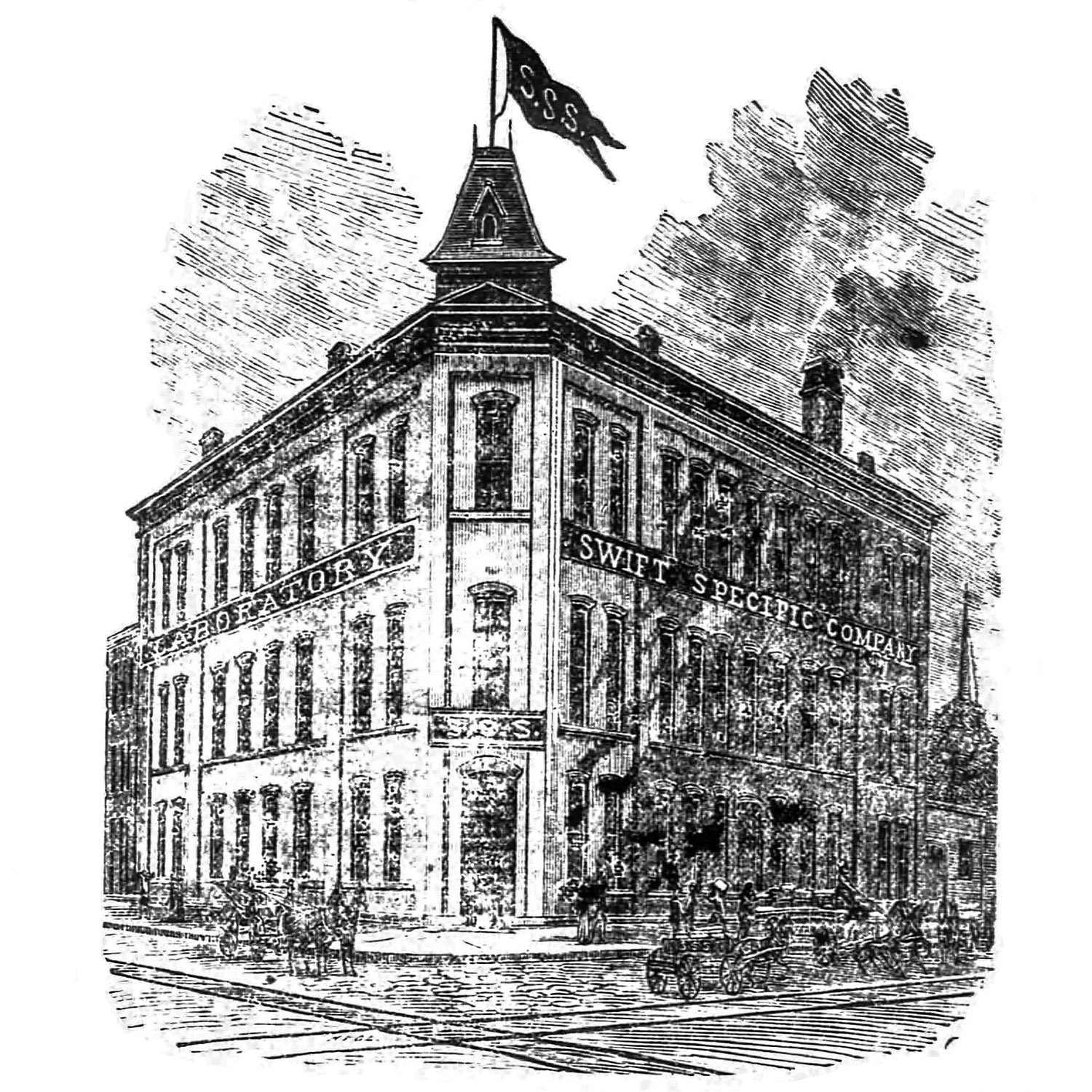
    “New Buildings In Atlanta.”

    New Laboratory Of The Swift Specific Co.

    Now being erected corner Hunter and Butler streets, one block below the City Hall, one hundred feet long, eighty feet
    wide–three stories and cellar.

    We give a drawing of the new Laboratory of The Swift Specific Company now being built corner Hunter and Butler streets. This will be a handsome building, an ornament to that part of the city, and is not only an evidence of the thrift and growth of Atlanta, but is a most substantial proof the confidence of the proprietors of this extraordinary remedy in its merit, and the permanent business of its manufacture and sale. In fact, they know so well that their remedy is all they claim for it, they have no hesitation in investing twenty to forty thousand dollars in substantial buildings and improved machinery for its manufacture. They will have in their new Laboratory at [sic] 30-horse power engine, two boilers, ten immense steam tight percolators, a large mill for grinding the roots, a powerful press of two tons to the inch for extracting the juices, besides numerous bottle washing and bottle filling machines. Taken as a whole, it will be, when finished, one of the most complete Laboratories in America, and will be superintended by a practical Pharmacist and Chemist of 25 years experience.

    Since Swift’s Specific has come into general use as a health tonic, the demand has increased so rapidly and largely that the Company have had difficulty in keeping up the supply, but now they expect to be prepared for all emergencies, as their capacity will be, after October 1st, over a million dollars a year.

    Letters From the People.

    A Marvelous Cure.

    From the Memphis Appeal, August 1.

    To the Editors of the Appeal: Noticing in your paper where S.S.S. had effected a cure in an aggravated case of scrofula, I have concluded to give My experience with the remedy mentioned. Some time ago I was afflicted with a very stubborn case of eczema; at the time I was living in Philadelphia. It got worse and worse, until my face and other portions of my body were covered with a mass of running sores. I visited my family physician, and after being under his care for a long time without any relief he turned me over to Prof. Duffing, a noted expert on skin diseases, and after swallowing a barrel of medicine prescribed by him without giving me any relief, I consulted with several other professional experts with a like success. I was miserable, and despaired of a cure. Being very skeptical in regard to the effect of patent medicines, I had as yet not tried any, but being advised by many people I commenced at the top of the list of patient remedies for eczema, ectyma, mentagra and other skin affectations, and I think I tried them all, still however, without doing me any good. I had heard of S.S.S., and although I had been repeatedly advised by my friends to try it, still as each remedy failed in producing the desired result, and as with each failure my skepticism increased, I refused to take it until in utter desperation I concluded to give it a trial as a last resort, not believing, however, it would have a beneficial effect. But to my surprise, after taking several bottles, I noticed a decided improvement, and when I had finished the fifth bottle I shouted hurrah, for my skin was without a blemish, as fair and smooth as possible. I write this in the interest of anyone that may be afflicted likewise, and now I swear by S.S.S.

    DRUMMER.


    P.S.–I would be pleased to correspond with anyone that is interested, and give them full details.

    Address “DRUMMER,”
    Care Memphis Appeal16

    References

    1. Photo credit: Atlanta in 1890: “The Gate City”. Atlanta: The Atlanta Historical Society, Inc. (1986), p. 35. ↩︎
    2. “Summary Of The Week.” The American Architect and Building News, Volume 14, no. 408 (October 20, 1883), p. 191. ↩︎
    3. “Swift’s Specific” (advertisement). The Atlanta Constitution, February 18, 1883, p. 10. ↩︎
    4. “Important Reduction In Price Of Swift’s S. Specific” (advertisement). The Atlanta Constitution, October 23, 1891, p. 6. ↩︎
    5. Company Leadership Over the Years – S.S.S. Company ↩︎
    6. “How We Grow.” The Atlanta Constitution, June 10, 1883, p. 3. ↩︎
    7. Belfoure, CharlesEdmund G. Lind: Anglo-American Architect of Baltimore and the South. Baltimore, Maryland: The Baltimore Architectural Foundation (2009), p. 180. ↩︎
    8. Belfoure, p. 144. ↩︎
    9. Belfoure, p. 180. ↩︎
    10. Company advertisement. The Atlanta Constitution, December 16, 1883, p. 4. ↩︎
    11. Insurance maps of Atlanta, Georgia, 1899 / published by the Sanborn-Perris Map Co. Limited ↩︎
    12. Insurance maps, Atlanta, Georgia, 1911 / published by the Sanborn Map Company ↩︎
    13. “Property Transfers.” The Atlanta Journal, September 9, 1901, p. 5. ↩︎
    14. Hamilton, Joe. “Big Change Coming In Street Network”. The Atlanta Journal and Constitution, June 10, 1956, p. 1-C. ↩︎
    15. “Work Begins on Connector Link Sewer Project”. The Atlanta Journal, January 10, 1957, p. 25. ↩︎
    16. “New Buildings In Atlanta.” The Atlanta Constitution, August 5, 1883, p. 11. ↩︎
  • “St. Luke’s Cathedral” (1883-1906)

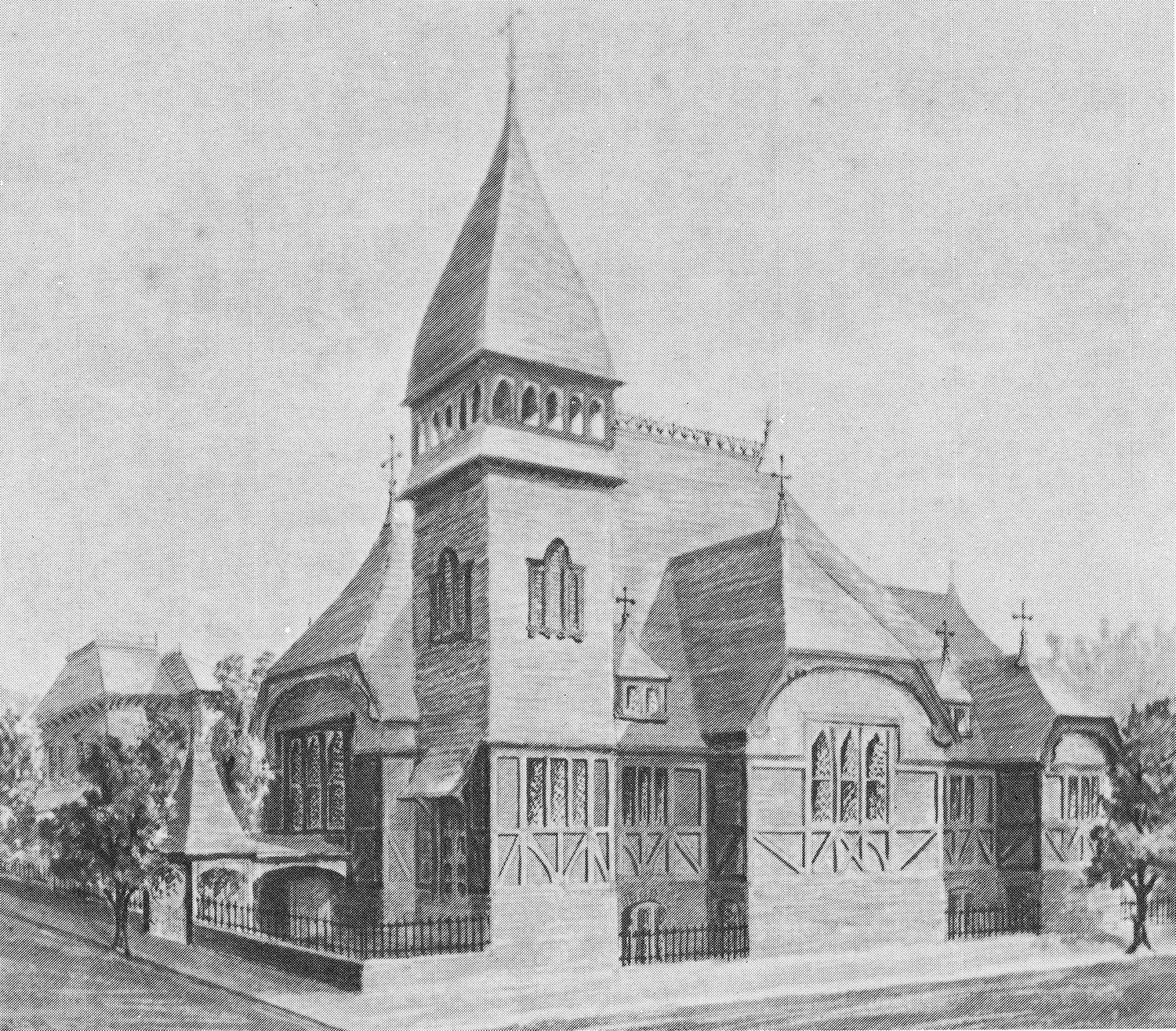
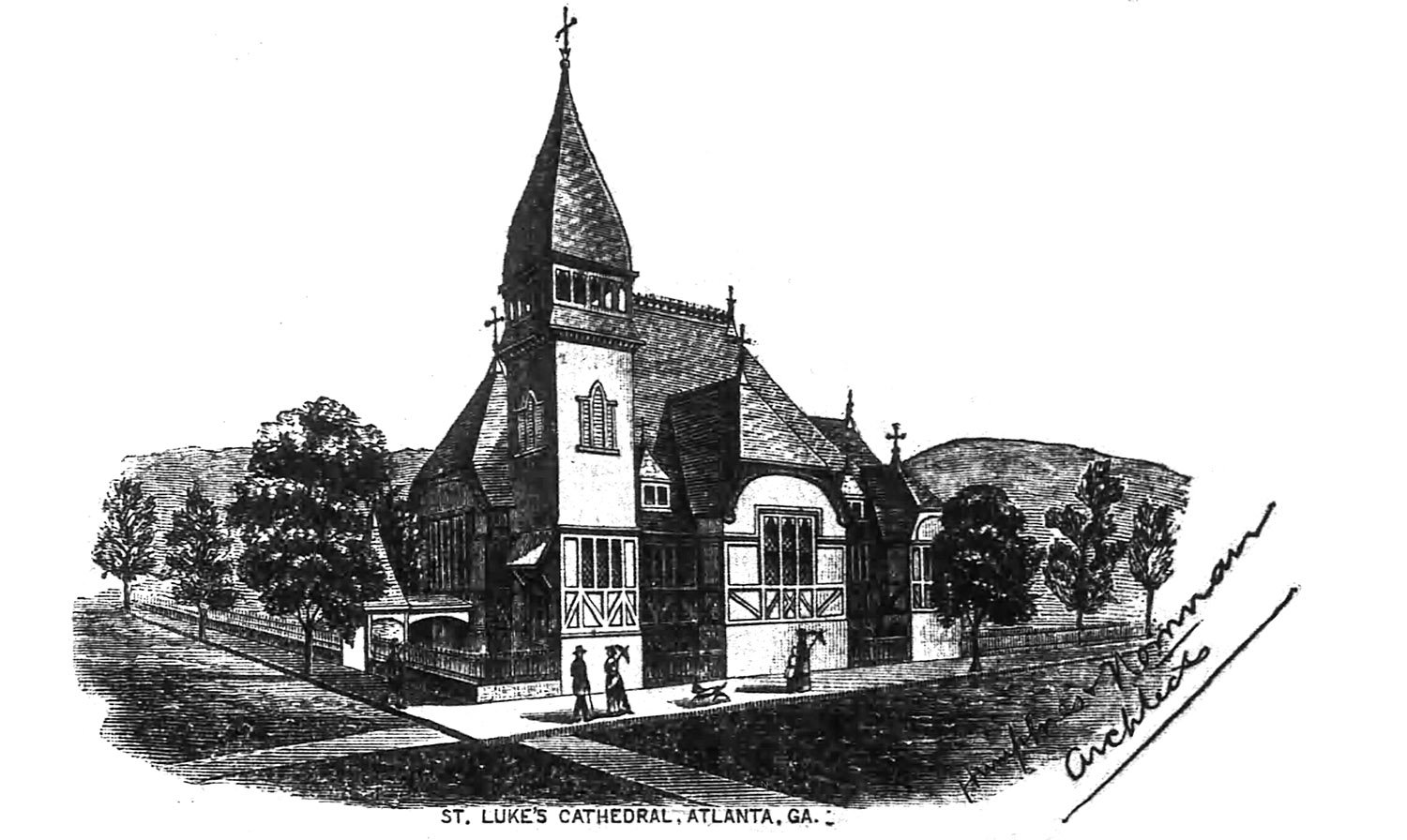
    G.L. Norrman. St. Luke's Cathedral (1883-1906). Atlanta.
    G.L. Norrman. St. Luke’s Cathedral (1883-1906). Atlanta.1

    The Background

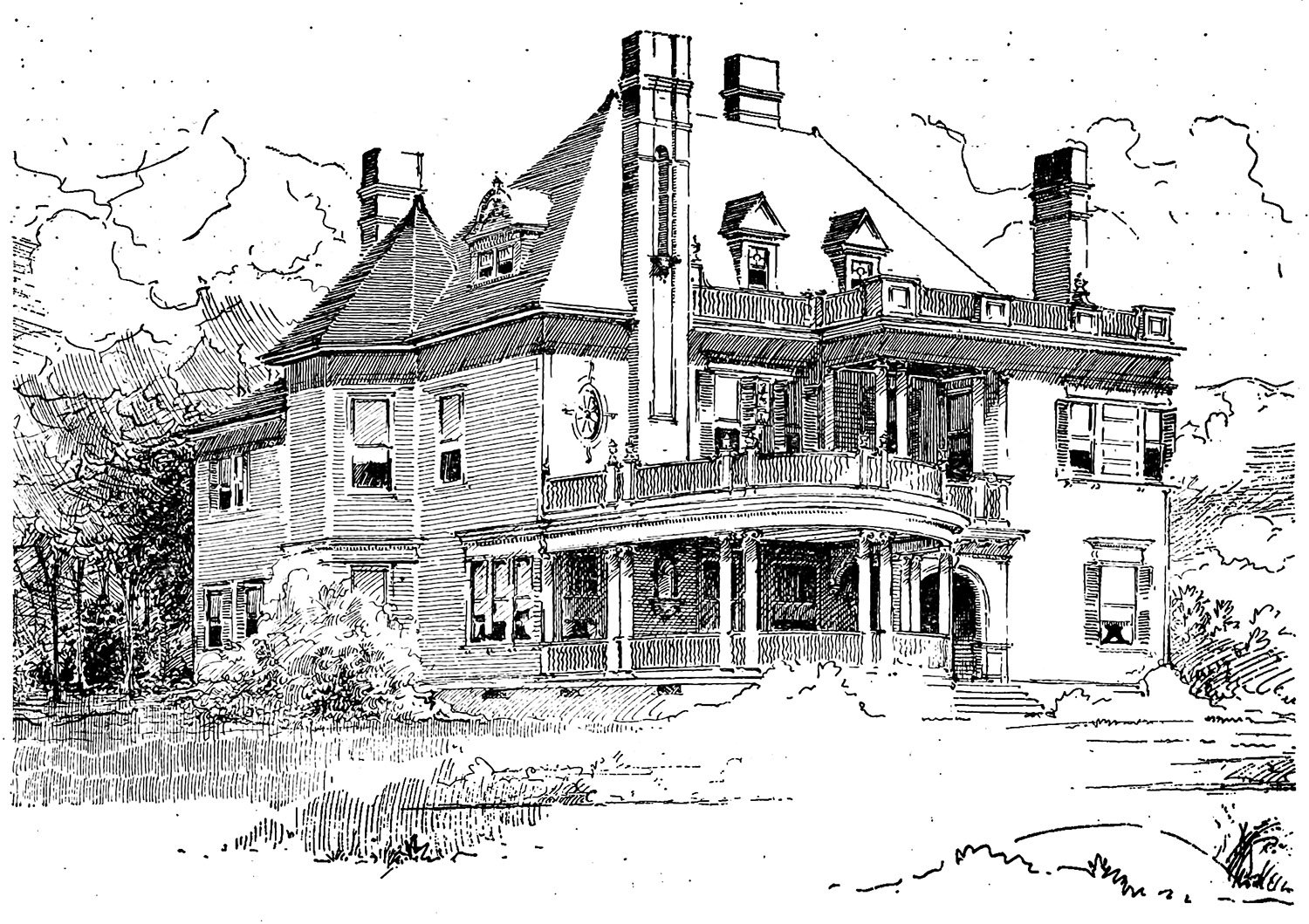
    The following article was published in The Atlanta Constitution in February 1883, and celebrated the completion of one of the first major works by G.L. Norrman (1848-1909) in Atlanta: St. Luke’s Cathedral.

    Although the project was credited to the firm of Humphries & Norrman, it appears Norrman was the primary designer — the illustration included with the article is even signed in his handwriting.

    St. Luke’s Episcopal Church was founded in 1864, with its first building destroyed by the Union army in the burning of Atlanta.2 The church’s second structure was located at the southeast corner of Spring and Walton Streets,3 but in 1882, the congregation was forced to sell the property after it failed to pay for furnishings from a local store owner, who in turn sued the church and won.4 Pay for your pews, damn it.

    Humphries & Norrman began working on plans for a new building in July 1882, although it wasn’t clear if the project would even be executed, as the church also considered moving its old structure to their new property5 at the northeast corner of Houston and Pryor Streets, just off Peachtree Street.

    Location of St. Luke’s Cathedral

    The plans were ultimately accepted, and construction on the sanctuary was rapid — about 4 months. Building had “begun only a few weeks ago” when the cornerstone was laid on October 21, 1882,6 and the first service was held in the church’s basement on Christmas Day 1882,7 although the interiors were completed in February 1883.

    The article below describes the building’s interior in exacting detail, but doesn’t say anything about its exterior, which was clad in brick and topped with a 60-foot-high steeple.8 The final cost of the project was just $5,500.9

    When the church was constructed, it was barely within the city limits and towered over the one and two-story homes around it.

    Within ten years, Atlanta’s ever-expanding commercial district engulfed the building, and in 1892, when the church lost its cathedral designation to nearby St. Philip’s,10 the St. Luke’s sanctuary was overshadowed by the rise of its new next-door neighbor: DeGive’s Grand Opera House, a 7-story entertainment palace.

    One year later, Atlanta’s first “flatiron” structure, the 3-story commercial Peck Building, designed by G.L. Norrman, was erected on a sliver of land across from St. Luke’s entrance, blocking the church’s exposure to Peachtree Street.

    In 1906, only twenty-three years after the sanctuary’s completion, St. Luke’s sold out to DeGive,11 and the congregation moved further up Peachtree Street into a new building designed by P. Thornton Marye,12 13 which still stands.

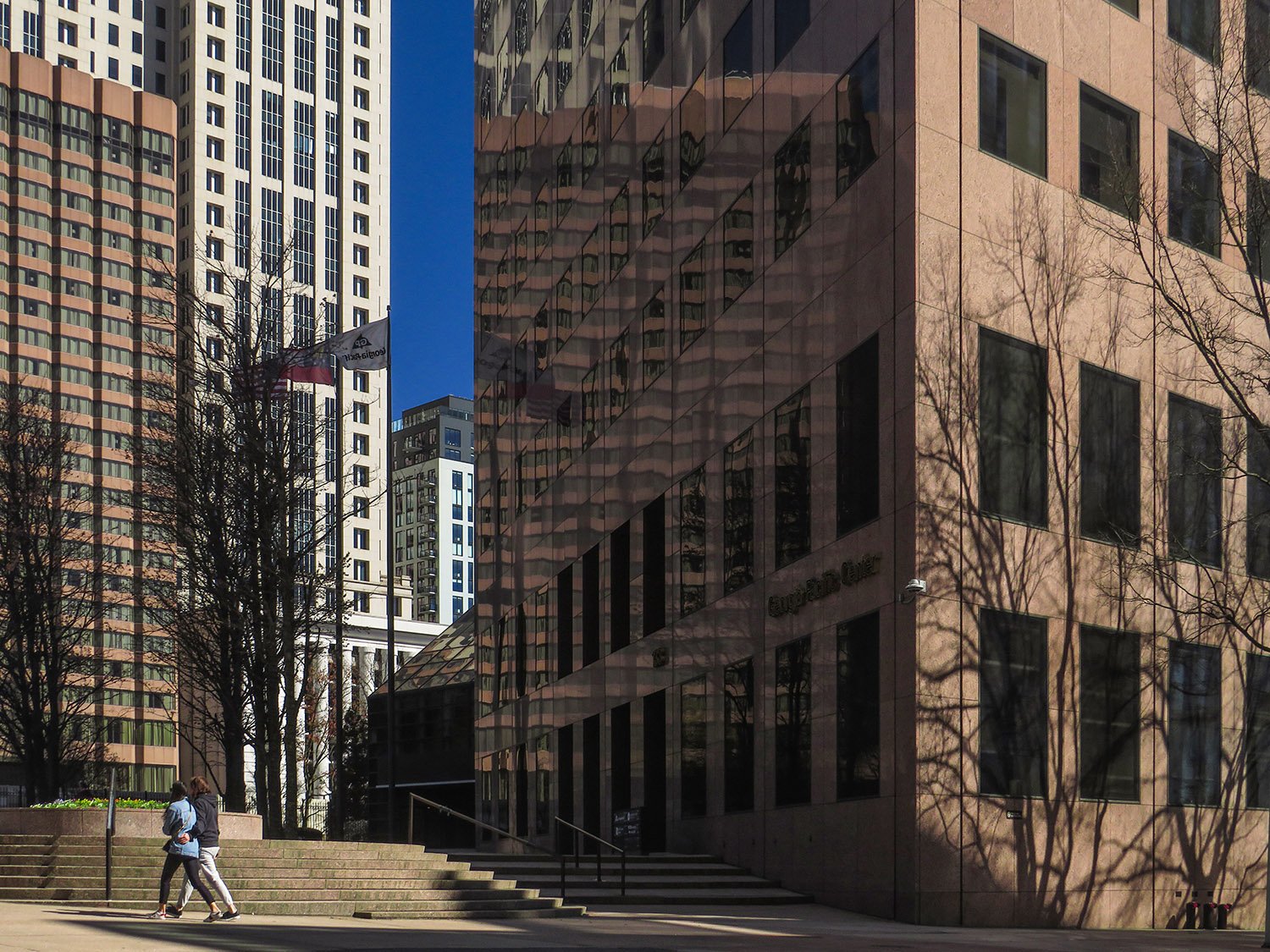
    Georgia-Pacific Center (1982), the former site of St. Luke's Cathedral. Atlanta.
    Georgia-Pacific Center (1982), the former site of St. Luke’s Cathedral. Atlanta.

    The old St. Luke’s was demolished in October 1906, with materials from the structure salvaged to build a home on Gilmer Street,14 also long since destroyed. The former church property was replaced with a block of single-level stores15 and is now the site of the Georgia-Pacific Center in Downtown Atlanta.

    After the sanctuary was demolished, “M.S” commented on the church’s move in the “Women and Society” column of The Atlanta Journal:

    In olden times if a congregation wished to build a new church and leave the old building for the new it was looked upon by other congregations with distress and disapproval, and the next thing to giving up their religion itself. This no doubt was only sentiment; but it seems to me if we of this day would cultivate a little more of the true sentiment and love for the pure and beautiful and less of the worldlier sentimental we would live sweeter and more wholesome lives, nearer in a true sense to one another, to nature and to nature’s God.16

    Bitch, please, this is Atlanta.


    St. Luke’s Cathedral.

    Was yesterday finished and will be opened to-day to the public, and is one of the handsomest churches in the city.

    It is located on the corner of Houston and Pryor street, facing Peachtree. The plans were drawn by Messrs. Humphreys and Norman [sic], architects. Under their personal supervision it has been built and they have reason to feel proud of it. The contractors, Messrs. Oliver and Carey, and their foreman, Mr. Edward Edge, deserve much credit for the construction. It is of the old English architecture and is much admired. The interior finish in ceiling is Georgia pine left in its natural color, all other woodwork walnut, except the pews which are ash ends and poplar seats and backs, all upright walls are plastered and will be frescoed by Messrs. Sheriden & Bro.

    The chancel furniture is being made the Gate City Planing company and will be finished within two weeks and will consist of the bishop’s chair with canopy, altar table with eight foot arch, credance table, two priest’s chairs, two priest’s stalls and kneeling desks, pulpit, two lectern, all walnut except the credence tables, which is made of Virginia pine from the old Blankford church, near Petersburg, Virginia, built in colonial days over one hundred fifty years ago.

    The chancel will be enclosed with a brass rail now being made in New York.

    The church will be lighted with gas, having one large 20 light chandelier and 12 two light brackets. The organ will be a very fine one and built by Messrs. Pilcher & Co., of Louisville, Ky. Negotiations are now progressing for its constrnction [sic]. The font will be of Tennessee marble and be located at the intersection of the aisles in the body of the church.

    A cathedral is the principal church in a diocese and is where the bishop presides and has a seat is the center of his authority.

    Atlanta is the residence of the bishop of Georgia and St. Luke’s has been built for the bishop as the cathedral

    Space forbids a more detailed description of the new church. The following sessions will be held therein commencing this morning at seven o’clock and continue during Lent:

    The Rev. Mr. Beckwith will preach to-day at 11 o’clock, and the Rev. Mr. Williams this evening at 7:30 o’clock.17

    References

    1. Illustration credit: Lyon, Elizabeth A. Atlanta Architecture: The Victorian Heritage, 1837-1918. The Atlanta Historical Society (1976), p. 43. ↩︎
    2. “St. Luke’s Church Now For Sale By Owner”. The Atlanta Journal, July 29, 1906, p. 12. ↩︎
    3. “Auction Sale of Central Property.” The Atlanta Constitution, August 6, 1882, p. 3. ↩︎
    4. “A Verdict Against a Church.” The Atlanta Constitution, June 22, 1882, p. 4. ↩︎
    5. “Real Estate and Industrial Notes.” The Atlanta Constitution, July 28, 1882, p. 7. ↩︎
    6. “The Corner-Stone”. The Atlanta Constitution, October 22, 1882, p. 6. ↩︎
    7. “St. Luke Episcopal Church To Build At Once”. The Atlanta Journal, March 9, 1906, p. 7. ↩︎
    8. Atlanta, Georgia, 1886 / published by the Sanborn Map and Publishing Co Limited ↩︎
    9. “The Building Outlook.” The Atlanta Constitution, February 1, 1883, p. 7. ↩︎
    10. “St. Luke Episcopal Church To Build At Once”. The Atlanta Journal, March 9, 1906, p. 7. ↩︎
    11. “Big Apartment House On St. Luke’s Site”. The Atlanta Journal, August 1, 1906, p. 15. ↩︎
    12. “Plans Of New St. Luke Church Completed By Architect Marye”. The Atlanta Constitution, January 12, 1906, p. 3. ↩︎
    13. “St. Luke Episcopal Church To Build At Once”. The Atlanta Journal, March 9, 1906, p. 7. ↩︎
    14. “Tearing Down Old Landmark”. The Atlanta Constitution, October 12, 1906, p. 11. ↩︎
    15. Insurance maps, Atlanta, Georgia, 1911 / published by the Sanborn Map Company ↩︎
    16. M.S. “The Passing of Old St. Luke’”. The Atlanta Journal, November 11, 1906, p. 6S. ↩︎
    17. “St. Luke’s Cathedral”. The Atlanta Constitution, February 11, 1883, p. 9. ↩︎