The Background
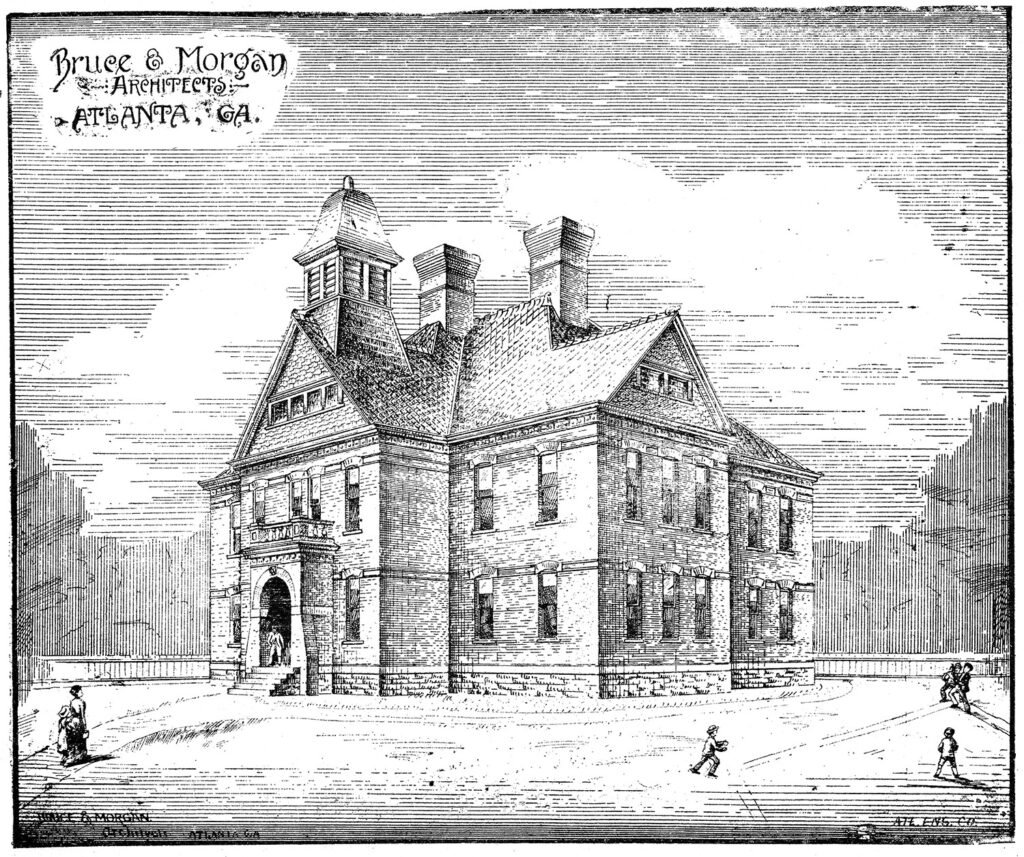
The following article, published in The Atlanta Journal in July 1890, describes Atlanta’s Third and Fifth Ward Grammar Schools, completed in 1891 and designed by Bruce & Morgan.
The Third Ward Grammar School was officially named the Fraser Street School, built on the corner of Fraser and Love Streets in southeast Atlanta.2 3 The school opened on February 9, 1891.4 5
Location of Third Ward Grammar School
The Fifth Ward Grammar School, officially named the Wallace Street School6 and later the State Street School,7 was built on a road that no longer exists, occupying a lot in northwest Atlanta that is now part of the Georgia Tech campus.
The Wallace Street School also opened on February 9, 1891.8
Location of Fifth Ward Grammar School
As the leading architectural practice in the Southeast, Bruce & Morgan planned so many academic structures in the 1880s that they published a book of their educational designs, titled Modern School Buildings, in 1889.9 I wish I could find a copy.
Atlanta’s steady growth in the late 19th century fueled a constant need for new or expanded school buildings, and the Fourth Ward Grammar School, or Boulevard School, completed in 1888,10 was one of the firm’s many designs for the city’s public school system.
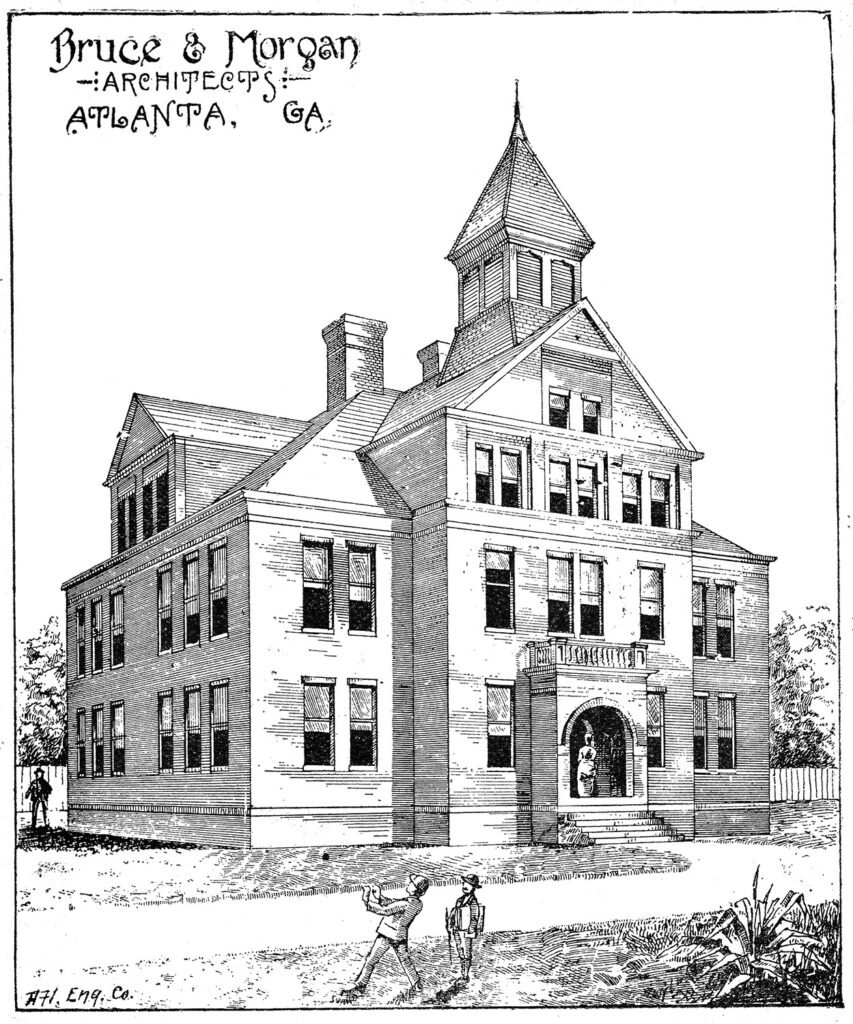
As noted in the article, Bruce & Morgan also designed the Gray Street Grammar School, which was designated for Black students13 and built on the same plan as the Third and Fifth Ward schools. After the building was completed in 1889, it was said to be “the best school house in Atlanta.”14
This effusive article was written by our favorite young dynamo, Walter H. Howard, who, as usual, described every nook and cranny of the buildings in enthusiastic detail, such as the stairs that were “free from all winding or devious ways”. Of course, baby boy was only 19 and barely out of school himself, so he may have taken a special interest in the projects.
Despite Howard’s claim that the Third and Fifth Ward schools represented “a new departure in the architectural style of Atlanta’s grammar schools,” they didn’t appear much different from the Fourth Ward Grammar School, built two years earlier.
All three of the schools were two-story brick buildings with eight classrooms—one for each grade. They all looked like oversized homes, too, topped with cozy gables and cutesy belfries that weren’t far removed from the one-room schoolhouses of earlier days.
G.L. Norrman‘s 1892 design for the Edgewood Avenue Grammar School in Inman Park truly marked a shift in Atlanta’s school designs, dispensing with the homey pretense and embracing a bold Renaissance style that befitted an educational facility in a modern city.
As Atlanta grew unabated in the early 20th century, the schoolhouses from the early 1890s inevitably became outdated and inadequate, and both the Fraser Street and State Street schools were ultimately replaced.
The Fraser Street School was torn down in August 1923,15 and shortly before the State Street School was demolished in 1929,16 it was reported that “All of State’s contemporaries have been razed.”17
The New Schools
Being Built For Atlanta’s Children.
Details Of Improved Construction.
The Two New Grammar School Buildings in Course of Erection–A New Departure in School Architecture for Atlanta–Locations.
The two new public school buildings now in course of erection mark a new departure in the architectural style of Atlanta’s grammar schools.
The wise decision reached by the board of education some time ago, that hereafter none but brick schools of the most approved pattern should be built, is being carried out most satisfactorily in these two new schools.
The schools are located, one in the third ward at the corner of Love and Frazier streets, and one in the fifth ward near the corner of Wallace and State streets.
They are of a similar style of architecture, both exactly alike, and each when completed will cost about $16,000.
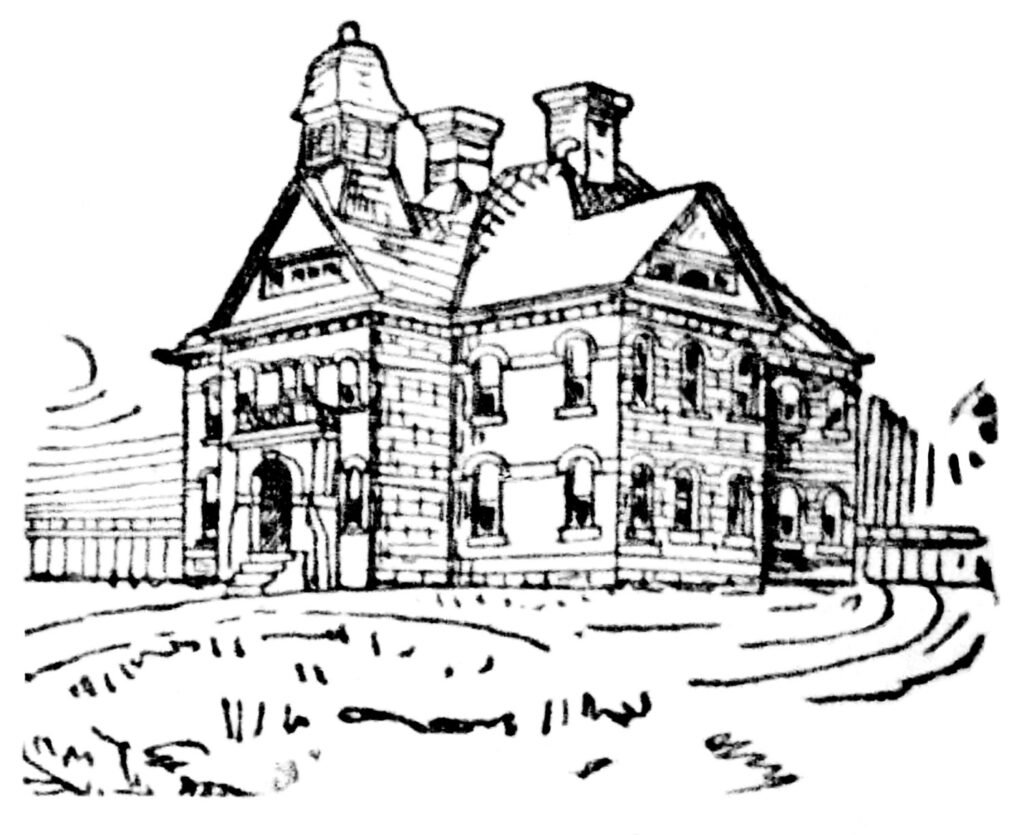
To Superintendent Slaton, the members of the committee on public buildings and grounds from the board of education, and to the architects, Messrs. Bruce & Morgan, are due in the main the credit for the advanced type of grammar school buildings in Atlanta.
The two new schools will be two-story brick buildings, with eight grades each, and precisely similar to the handsome new building known as the Gray street grammar school, in the fifth ward, a school which was only completed this year.
The new schools will be ready for occupation before the first of January. They will enable the superintendent to seat the larger part of the applicants for places in the schools, and will greatly lessen the size of each school district adjoining them.
For instance, the one in the Third ward at the corner of Love and Frazier, will relieve both Crew and Fair street schools, both of which were greatly crowded last year.
Correspondingly, the new school near the corner of Wallace and State streets will take those scholars who are unable to obtain seats in either Davis or Marietta street schools.
Then again, the new schools are built very near to the present city limits and consequently will be convenient to the citizens who live in the territory recently acquired by the extension of the limits.
With these two new schools and the Gray street school Atlanta will have three brick schools just alike and of the recent style of school architecture. All the new schools built in the near future will probably be of a similar plan. It will, therefore, be of interest to Atlanta’s citizens and school patrons to know something of these most excellently constructed school buildings.
In them safety, health, comfort and convenience are combined.
In the first place everything has been done to well light and ventilate the class rooms. Each room is entered from a door opening on the hall and one opening into a hat and cloak room, which also has a door opening into the hall. The windows are very large and are placed on the side and end of the room. The teacher’s stand is placed at the dark end of the room, so that the light comes in from the near and left of the pupil. The end endeavored to be attained in the ventilation of these buildings is to practically put the scholars as much out of doors as possible.
The ventilation and heating is most carefully looked after. The rooms will be heated by steam and the foul air all carried rapidly off by large ventilation shafts.
The halls up and down stairs are very large and well lighted. There are two wide entrances admitting fresh air. Then the stair cases are unusually wide and free from all winding or devious ways, sloping not too much.
The great object to be attained in having the great wide exits, the large open hallways and the large stairways is the prevention of danger or panic in cases of fire. One of the greatest safeguards against panics is the admirable manner in which the superintendent keeps the children instructed in the fire drill, but then the proper construction of the buildings lessens the danger very greatly.
Summed up briefly, the other advantages to be found in the construction of the new style school buildings are, perfect sanitation, abundance of room, economy of space, durability of the buildings, excellent acoustical conditions, and the neat and comfortable manner in which the class rooms are furnished.
The buildings are not only constructed substantially, but with a view to beauty as well. The floors are deadened so as to destroy sound, and the doors are constructed so that all open on the outside, thus lessening the danger in case of a panic.
Nothing has done more toward building Atlanta up and in making her a great city than her excellent system of public schools, and the new departure in the style of her school buildings will greatly increase the efficiency and the value of her great public school system–already the best at the south.
Walter H. Howard.18
References
- Illustration credit: City of Atlanta: A Descriptive, Historical and Industrial Review. Louisville, Kentucky: The Inter-State Publishing Company, 1892-93, p. 25. ↩︎
- “Finance Committee.” The Atlanta Constitution, May 30, 1890, p. 5. ↩︎
- “The Public Schools.” The Atlanta Constitution, August 27, 1890, p. 7. ↩︎
- “Little Locals.” The Atlanta Constitution, February 4, 1891, p. 5. ↩︎
- “They Are Open.” The Atlanta Constitution, February 10, 1891, p. 3. ↩︎
- “The Public Schools.” The Atlanta Constitution, August 27, 1890, p. 7. ↩︎
- “State St. School Closing Fortieth Year Of Service”. The Atlanta Journal, May 5, 1929, p. 10. ↩︎
- “They Are Open.” The Atlanta Constitution, February 10, 1891, p. 3. ↩︎
- “From Our Notebook.” The Atlanta Constitution, June 23, 1889, p. 17. ↩︎
- “The Boulevard School”. The Atlanta Constitution, October 14, 1888, p. 12. ↩︎
- “Notice to Contractors”. The Atlanta Constitution, April 7, 1888, p. 8. ↩︎
- Illustration credit: City of Atlanta: A Descriptive, Historical and Industrial Review. Louisville, Kentucky: The Inter-State Publishing Company, 1892-93, p. 23. ↩︎
- “The Public Schools.” The Atlanta Constitution, December 28, 1888, p. 8. ↩︎
- “Major Slaton’s Report”. The Atlanta Constitution, February 6, 1890, p. 6. ↩︎
- “Wrecking” (advertisement). The Atlanta Journal, August 27, 1923, p. 16. ↩︎
- “6 School Structures Tentatively Accepted By Education Board”. The Atlanta Journal, May 15, 1929, p. 4. ↩︎
- Pitts, Mamie Louise. “State St. School to Celebrate Thirty-Ninth Anniversary”. The Atlanta Journal, January 27, 1929, p. 12N. ↩︎
- Howard, Walter H. “The New Schools”. The Atlanta Journal, July 12, 1890, p. 1. ↩︎