Lorenzo B. Wheeler (1854-1899), professionally known as L.B. Wheeler, was an architect who practiced in Atlanta from 1883 to 1891.
Of his many projects in Atlanta, only Wheeler’s interior design work for the Edward C. Peters Residence (1883)1 2 may still survive, although it’s unclear how much of it can be credited to him rather than to the home’s architect, G.L. Norrman.
Wheeler initially came to Atlanta from New York in 1883 to design the second Kimball House Hotel.3
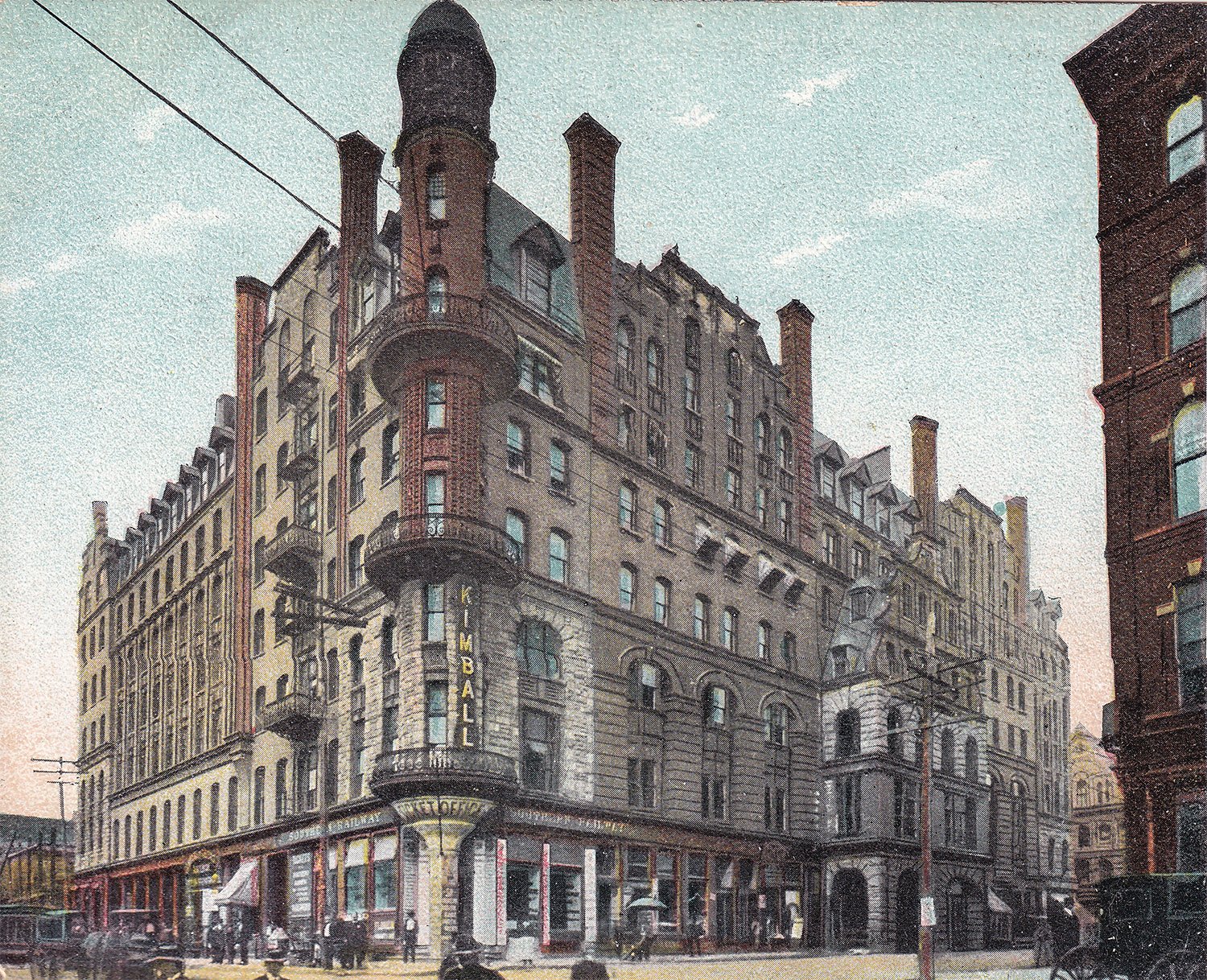
Before his time in the Southeast, Wheeler worked with Hugh Lamb from 1877 to 1881, and a handful of Lamb & Wheeler buildings still survive in New York.
In Atlanta, Wheeler first partnered with H.I. Kimball,4 owner of the Kimball House, and a prototypical Atlanta huckster who marketed himself as an architect and engineer—he was neither.
Wheeler was the first Atlanta architect to specialize in interior design. In the 1880s, much of his work involved decorating mansions on Peachtree Street, including many designed by other architects. In 1885 and 1886, he wrote a series of articles on home decoration for The Atlanta Constitution.
In 1885, Kimball & Wheeler partnered with W.H. Parkins, Atlanta’s first professional architect.5 One surviving work from the Kimball, Wheeler & Parkins firm remains: the Randolph County Courthouse (1886) in Cuthbert, Georgia, primarily credited to Parkins.6
Kimball left the firm in 18867, and Parkins & Wheeler were associated for a brief period between 1886 and 1887,8 with one surviving project from the firm: the Oglethorpe County Courthouse (1887) in Lexington, Georgia, also credited to Parkins.9
Wheeler practiced independently from 1887 to 1890, and while he wasn’t an exceptional designer, his work was slightly more skillful and interesting than that of most Atlanta architects of the era.
His designs demonstrated an understanding of national architectural trends, and it appears he was particularly influenced by the work of H.H. Richardson.
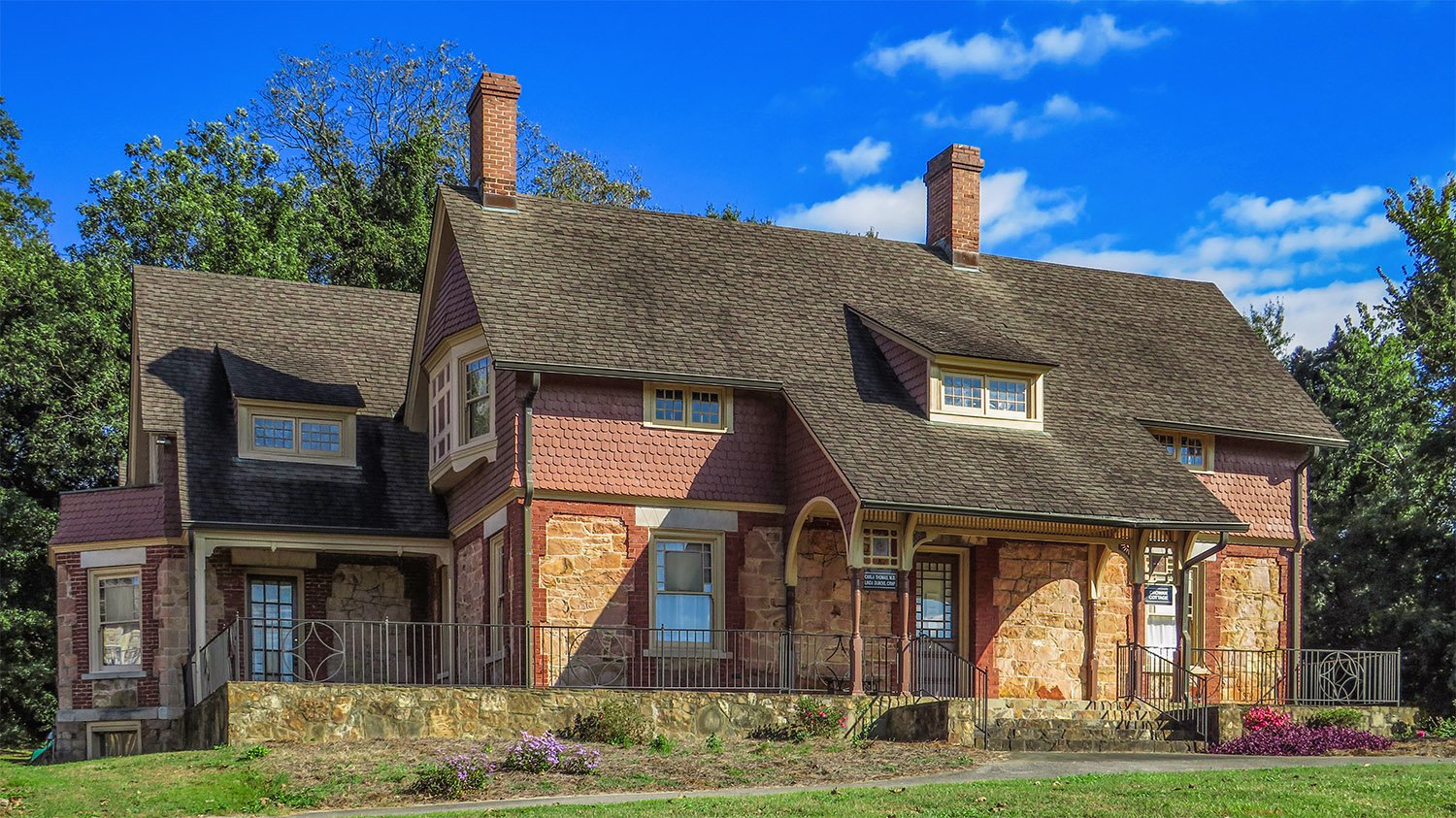
In the late 1880s, Wheeler secured extensive work in several Alabama boomtowns, and two homes in Anniston, Alabama, are the only known surviving works from his solo period.
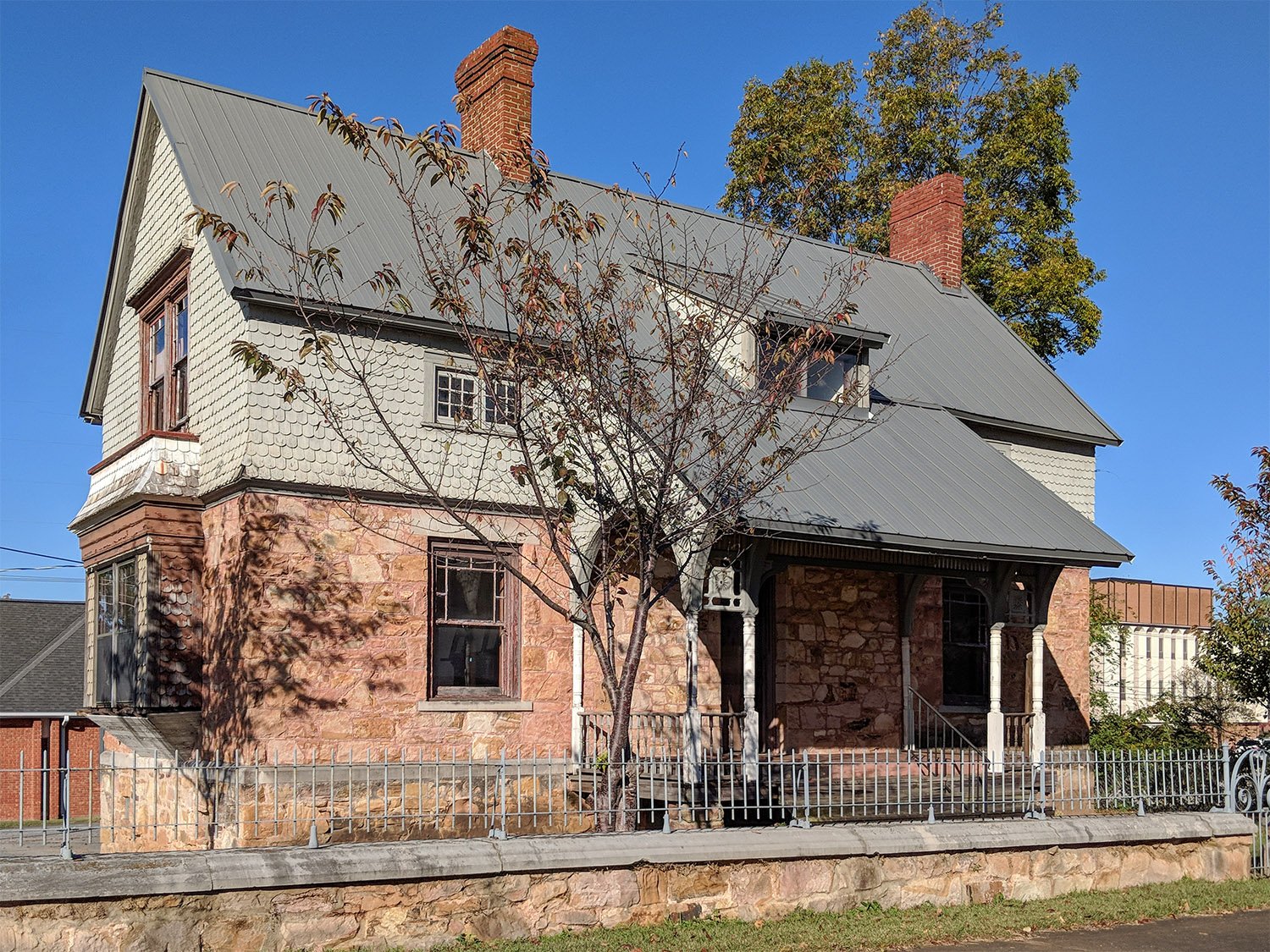
Crowan Cottage10 and Noble Cottage, both pictured on this page, are a pair of picturesque Queen Anne-style residences designed for Samuel Noble of Anniston.
Despite the homes’ nearly identical designs, Crowan Cottage has been ludicrously attributed to Stanford White,11 who never designed a damn thing in the Southeast.
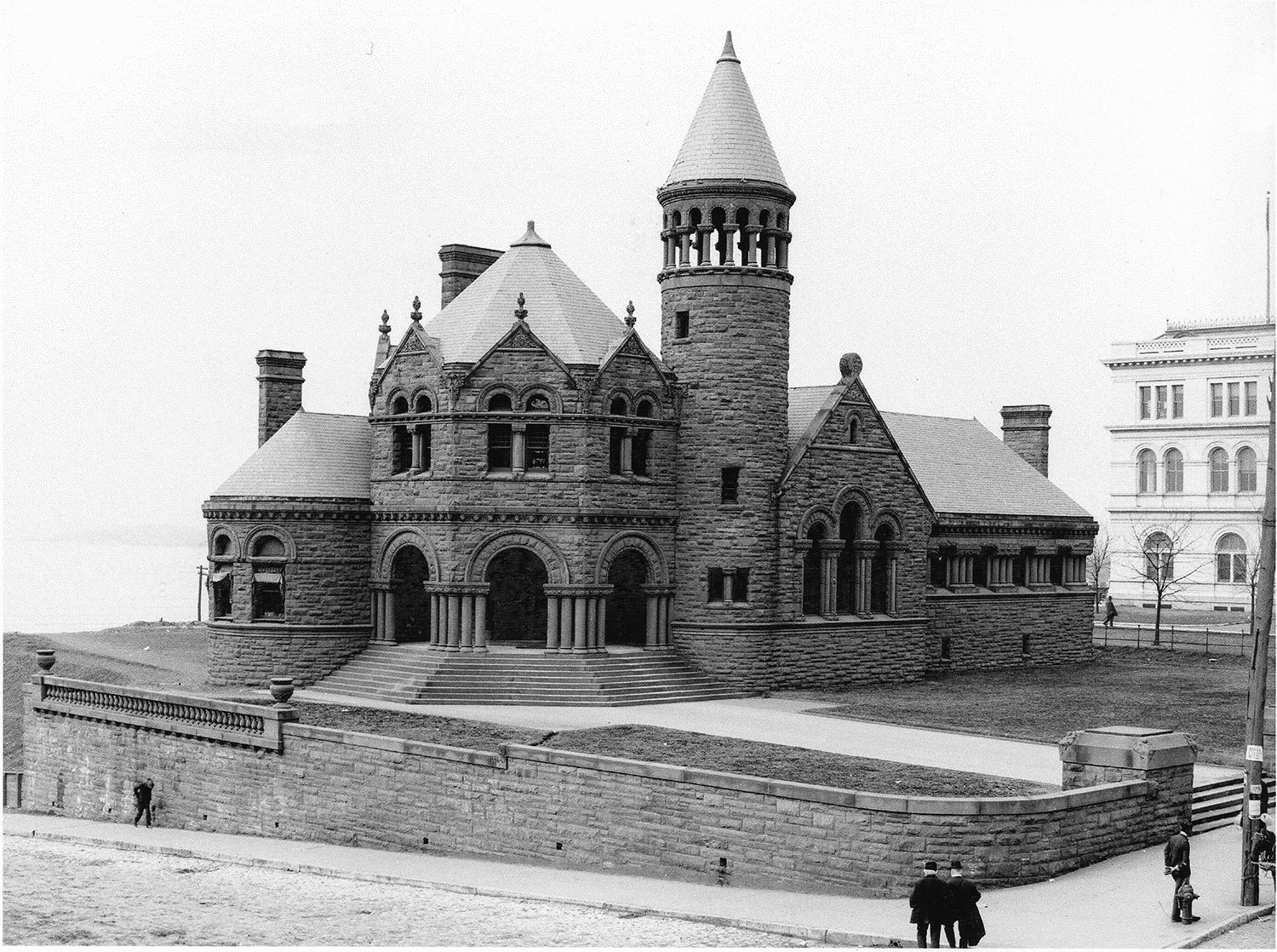
Wheeler relocated to Memphis, Tennessee, in early 1891,12 shortly after securing the commission for the Cossitt Library 13 14(1893, demolished 1958), a beautiful Romanesque creation that could easily be considered his finest work.
Wheeler’s former assistant, W.T. Downing,15 operated in Atlanta as Wheeler & Downing from 1891 to April 1892,16 finishing up Wheeler’s unfinished projects in the city.17
Downing easily filled the void left by Wheeler and became one of Atlanta’s most prominent architects until he died in 1918.
By 1894, Wheeler had moved to St. Louis, where he worked in two partnerships before disappearing from the public eye by 1898. Following a brief illness, he died at his father’s home in Connecticut at the age of 45,18 with his death barely noted in newspapers outside of Atlanta.
Described as “quiet and reserved”, Wheeler reportedly owned many “rare and very expensive” books, with his library said to be “the finest collection of architectural works in the South.” After his death, the Constitution claimed:
“His room at the Kimball contained only two chairs, his bed and a dresser, but it was so crowded with books that one experienced difficulty in moving about.”19
It seems fitting that so few traces of Wheeler’s work remain.
References
- “Some New Buildings”. The Atlanta Constitution, July 12, 1885, p. 9. ↩︎
- “Southern Architecture”. The Atlanta Journal, January 1, 1886, p. 1. ↩︎
- “Mr. Kimball’s Projected Suburb”. The Atlanta Constitution, October 21, 1883, p. 8. ↩︎
- ibid. ↩︎
- “A Card.” The Atlanta Constitution, March 19, 1885, p. 5. ↩︎
- “Personal.” The Atlanta Journal, March 18, 1886, p. 4. ↩︎
- “Notice.” The Atlanta Constitution, July 1, 1886, p. 8. ↩︎
- “Notice of Dissolution.” The Atlanta Constitution, April 1, 1887, p. 5. ↩︎
- “Personal.” The Atlanta Journal, March 18, 1886, p. 4. ↩︎
- National Register of Historic Places Inventory – Nomination Form – Noble Cottage ↩︎
- National Register of Historic Places Inventory – Nomination Form – Crowan Cottage ↩︎
- Morgan, Thomas H. “The Georgia Chapter of The American Institute of Architects”. The Atlanta Historical Bulletin, Volume 7, No. 28 (September 1943): p. 148. ↩︎
- “To Begin Work.” The Memphis Daily Commercial, April 6, 1890, p. 5. ↩︎
- “Another Big Building.” Memphis Avalanche, September 13, 1890, p. 1. ↩︎
- Morgan, Thomas H. “The Georgia Chapter of The American Institute of Architects”. The Atlanta Historical Bulletin, Volume 7, No. 28 (September 1943): p. 148. ↩︎
- “Eight Millions More.” The Atlanta Constitution, April 13, 1890, p. 7. ↩︎
- Morgan, Thomas H. “The Georgia Chapter of The American Institute of Architects”. The Atlanta Historical Bulletin, Volume 7, No. 28 (September 1943): p. 148. ↩︎
- “Death of Mr. L.B. Wheeler”. The Atlanta Constitution, March 7, 1899, p. 2. ↩︎
- ibid. ↩︎