The Background
This is the seventh in a series of articles written for The Atlanta Journal in 1890 and 1891 by W.W. Goodrich, an architect who practiced in Atlanta between 1889 and 1895.
Americans have an innate infantile tendency to mythologize that which they destroy, like the toddler who squishes a bug and then babbles endlessly about how pretty it was. The prime modern example is the suburbanites who herd into treeless residential developments named — take your pick: Oak Manor, Cherry Ridge, Deer Valley, or what have you.
As they gaze over a barren landscape primped and manicured within an inch of its life, the ground drenched in cancerous chemicals to keep their exotic grasses artificially green and free of animal life, they lament their disconnect from nature and pine for a visit to the nearest state park.
The same sort of nonsense was happening in the 19th century, when White Americans suddenly became fascinated by the culture of the native tribes whom they had all but eliminated through genocide, or — for those who are too delicate to face uncomfortable truths — “removal”.
Goodrich gives his own opinion of the indigenous people here: “…they will never be quiet until the last one is made a good Indian, ‘that is a dead one.’” A charming human being, no?
This article is a self-indulgent mess of a creative writing exercise, even for a cut-rate fabulist like Goodrich. Here, he describes the land around Mount Baker and the Nooksack River in what is now the state of Washington, although his descriptions are largely inaccurate.
Goodrich also weaves in an “Indian legend” that appears entirely invented, throwing in bits of Chinook Jargon that are often incorrectly used and misspelled, and absurd names that could have been concocted by a child.
The only accurate name is Nez Perces, a tribe whose territory originally encompassed 17 million acres in portions of what are now the states of Idaho, Montana, Oregon, and Utah. By the 1890s, the tribe had been confined to a reservation of about 750,000 acres in northern Idaho, which still exists today.
Goodrich bounced around the Western territories for several years, and no doubt picked up bits and pieces of Native American lore — he certainly created lore of his own. In 1879, he moved to Denver,1 leaving Colorado in 1881 after he was arrested for check fraud and larceny.2
He briefly practiced in Boise, Idaho, in 18823 before spending 6 months in Seattle,4 reappearing in San Francisco in 1883, where he presented himself as “recently from New York”.5 That same year, he was arrested in both Los Angeles and Boston for check fraud,6 7 8 before moving to Oakland, California, in 1885.9
Given his brief stint in Washington, his reputation for falsity, and the flimsy claims made here, it’s likely that Goodrich never actually visited the places he described.
Among the notable inaccuracies in this article:
- This is Goodrich’s second use of the characters, “Queen Wyltwyck”, Boston and Pilchickanim. Wyltwyck, of Dutch origin, was the original name of Kingston, New York, where Goodrich may have been raised and practiced architecture from 187510 to 1878.11
- The 365-foot natural bridge “of solid marble” on the Nooksack River never existed.
- Nooksack Falls is 88 feet high, not 400 feet, as Goodrich claims.
- The Tsiatko were considered forest spirits, not human ghosts.
- “Nika tilakum” is a mangled spelling of the Chinook Jargon phrase Nika tilikum, meaning “my people”.
- “Uyuck”, “Pilchikanin” appear to be entirely invented names.
Other Chinook Jargon terms used in this article include:
- Tyee – leader, chief
- Sahale – mountain
- Kloshe – good
- Kloochman – woman
- Markook – trading house or store12
Goodrich also uses a word from Chinook Jargon that is now considered offensive and will not be reproduced here. The term has been replaced with the [omitted] tag.
Land of the Indian.
The Wonders of Nature That Abound
In the Native Home of the Warrior
Some of the Wonderful and Awe-Inspiring Scenery Viewed and Described by an Atlanta Man – One of the Indian Legends
Written for the Journal.
Wonders of nature face the traveler as he journeys over the lands of Queen Wyltwyck.
On each hand there are certainly some of the greatest natural curiosities to be found on the earth.
Forests of gigantic spruce, cedars and firs two and three hundred feet high, at three feet from the ground forty feet in circumference, is no uncommon sight.
In the dense forests lie great mountain giant cedars that have grown to enormous heights, and by the fierce storms have fallen over, we have counted five growths thus lying across each other making a total thickness of forty-seven feet.
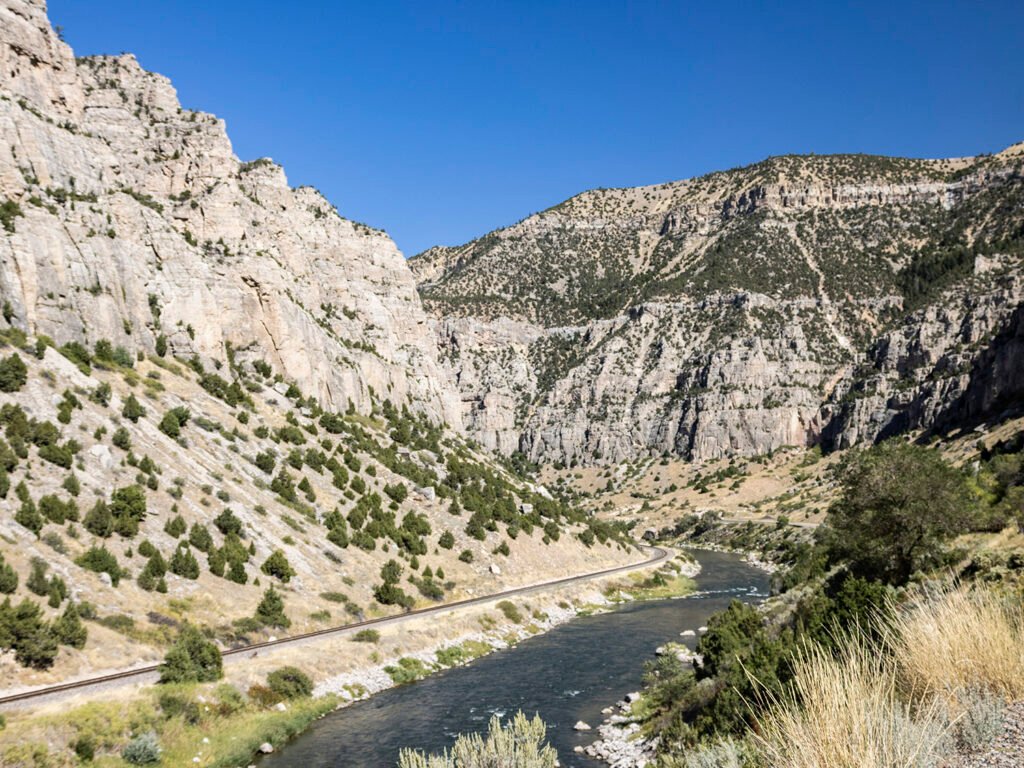
There are several natural bridges spanning certain canyons which are almost true arches. A natural bridge across the Nooksack near Mt. Baker is far down in the canyon’s depths, and hence has seldom been seen by a white man. Gliding under it in a canoe, it is seen to be one massive arch, which is 365 feet across, and far below the arch runs the river of Buttermilk chuck. Among the ragged rocks and projecting crags it windows its circuitous way to the salt chuck.
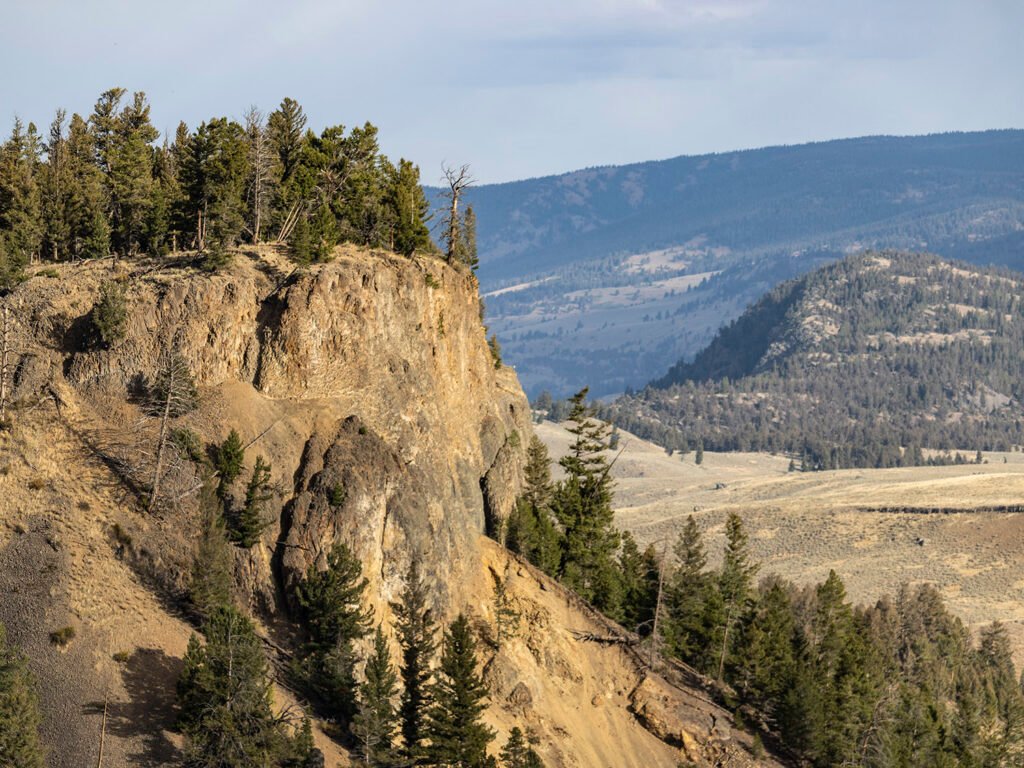
While above, rising in sheer perpendicular ascent, tower the granite cliffs of the canyon 2,000 feet or more in the air, showing seams of coal, iron, fluorspar, quarts carrying gold, galena carrying gray copper, with threads of native copper, inaccessible to man, but which can be found in the river’s bed. Beautiful agates, crystals and amethysts are everywhere in more or less profusion. Under each end of the arch are beautiful marble shafts, polished by the winds and drifting sands, of uncut native and natural art. The great architect of nature has here shown that the art of man is insignificant and puny in comparison to the wondrous works of Sahale Tyee. The bridge itself is of solid marble, of wondrous purity and richness. Below the bridge are the upper falls and rapids which take a plunge of nearly 300 feet in succeeding short falls, with a final plunge of 400 feet to the canyon some nine miles from the bridge, from which point the waters are placid for several miles.
The Indians give the bridge a wide berth. They are extremely afraid of it. Tsiatko; at the merest mention of this word, they tremble in terror.
A Kloshe [omitted] sought the bridge as a way across the canyon, and was never more heard from. She was a most beautiful squaw, brave and true. When the chilling blasts come through the canyon from above the bridge, and the winds whistle through the trees, they imagine they see her tsiatko, or ghost, walking across the span.
A peculiarity of the apparition is that at from noon to about 1:30 p.m., clear, cold days, a shadowy figure does promenade always one way – from the east to the west. The apparition is only the sun’s rays reflecting on the smooth walls of the canyon, producing in a marked degree, almost a human form. Above the bridge to the glaciers the current is swift, with sunken rocks to swamp the canoe, should its handler not be careful. Salmon and trout are plentiful. The salmon are easily speared, and a salmon broil over a bed of coals is a delicacy that must be partaken of to be known in its intrinsic advantage over the false so-called modern cooking by grease of any kind. With a hard tack and a hat full of salmon berries it is a feast of natural and delicate food easily digested, and hungry for more is the dyspeptic’s actual cry. He soon finds his dyspepsia is a thing of the past, his insomnia has disappeared, and he can sleep like a log, figuratively speaking, that even the caterwauling of a mountain lion fails to awaken him from his sound sleep. And a mountain lion’s cry is not to be sneezed at, to use a street expression.
Our guide Uyuck, a tall sinewy [omitted], with iron nerves that never flinched in mortal combat with man or beast, trembled as he beheld this majestic bridge, with its graceful sweep and arching curves.
The arch itself is stupendous. A clear span, over the river from the top of the bridge to where it springs from the fall of the side wall is nearly one hundred feet, while its thinnest part at center of span in the center over the river is only eight feet, with a width for a foot-path only, and above the water nearly one thousand feet.
The river below looks like a thread of frayed cotton flying in the winds, so great is the tossing about of the water in the center of the rapids. Truly a great view from the bridge. To the north, is Mount Baker, clad in eternal snow, its ever moving glaziers [sic] of ice glistening and flashing reflecting rays from peak to peak, from canyon to canyon, from range to range. To the east the Rocky Mountains; to the south the west Puget Sound region; to the west old ocean, pacific when it pleases. But in its bosom there lurks a danger that man cannot overcome. We have seen it quiet and restful, its long, gentle roll, upon which, with sportive play, leaped the fur seal, after its meal of salmon; the leopard seal after its prey; the great whale with jaws open, and rushing through the water, when of a sudden it closes its jaws and it has its catch of fish, as it spouts and sprays us with water. Again we have seen it in its anger, when its fury was let loose, and we, like the Indian, trembled at its majestic grandeur, and arching waves that over-topped our yard arms and descended upon our ship’s decks with a thunderous thud, that made every timber creak and tremble. Yes, we, too, have said “Sahale tyee, sahale tyee, nika tilakum.”
Ascending the river still further toward the glaziers, our guide points out to us various points of interest.
Upon a level plain, several years before, was fought an Indian battle of remarkable fierceness.
The Nez Perces had crossed the range to avenge an insult, as they said. A Nez Perces buck had abducted a [omitted] Kloochman. In taking the female over the range to his tribe he was overtaken. His ears were cut off, and he was turned adrift to go to his tribe as he had come. The Nez Perces are a war-like people, and have caused Uncle Sam already many men and much money to keep them upon their reservation: but they will never be quiet until the last one is made a good Indian, “that is a dead one.” The chief of the Nez Perces sent over the range several hundred of his best warriors and fiercest fighters. They were met at this plain by the Queen of the Wyltwick tribe. With her eagle feathers in profusion and dressed in a lion’s skin, she led her bucks in person as Tyee Wyltwyck was sick nigh unto death. She left him at the Markook with Pilchickanin and Boston and the squaws and papooses. The fight raged for three days, day and night, and when the last of the Nez Perces was exterminated and she was triumphant, and her dead braves had been laid to rest upon the platforms of the dead that were hastily made, and not until then was there such an Indian dance for joy at the extermination of a foe, as the Rocky mountains before or since have ever seen. Her dead braves were mourned and wailed for at the sail house, incantations for their journey to the happy hunting grounds in successive eras of prosperity were prayed for, and after weeks of mourning and moons of wailing, all again was as quiet as the placid waters of the lake.
W.W. Goodrich13
References
- Advertisement. Rocky Mountain News (Denver), May 24, 1879, p. 2. ↩︎
- “Held to Answer”. Rocky Mountain News (Denver), March 26, 1881, p. 2. ↩︎
- “Architect”. Idaho Tri-Weekly Statesman (Boise, Idaho), March 14, 1882, p. 3. ↩︎
- Advertisement. Seattle Daily Post-Intelligencer, September 29, 1882, p.2. ↩︎
- “Brevities”. Seattle Daily Post-Intelligencer, July 25, 1883, p. 3. ↩︎
- “A Worthless Check”. The Boston Herald, November 27, 1883, p. 1. ↩︎
- “Operation With Checks”. Boston Daily Advertiser, November 27, 1883, p. 8. ↩︎
- “An Old Fraud Heard From”. Los Angeles Herald, March 16, 1884, p. 4. ↩︎
- “A New Architect”. Oakland Daily Evening Tribune (Oakland, California), July 23, 1885, p. 2. ↩︎
- Advertisement. The Daily Freeman (Kingston, New York), October 5, 1875, p. 1. ↩︎
- Advertisement. The Daily Freeman (Kingston, New York), December 9, 1878, p. 2. ↩︎
- Gibbs, George. A Dictionary of the Chinook Jargon Language, or Trade Language of Oregon. New York: Cramoisy Press (1863). ↩︎
- Goodrich, W.W. “Land of the Indian.” The Atlanta Journal, November 1, 1890, p. 3. ↩︎