From the Notebook

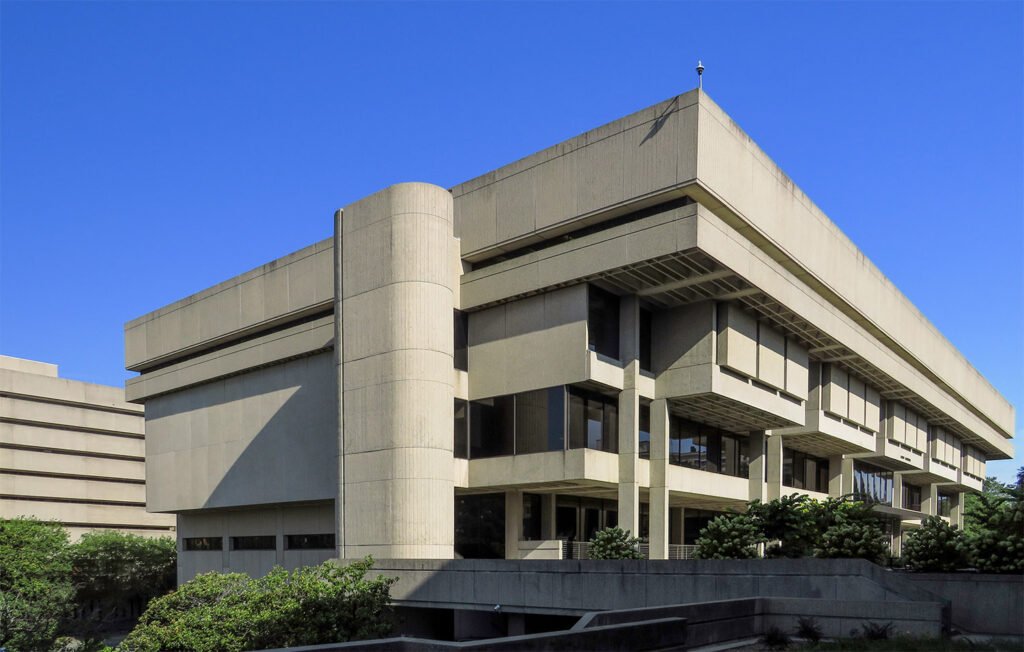
  • Georgia-Pacific Center (1982) – Atlanta

    Leon Moed and Michael McCarthy of Skidmore, Owings & Merrill. Georgia-Pacific Center (1982). Atlanta. 1 2 3 4

    References

    1. Teasley, Colleen. “Georgia-Pacific Wants Its Own Place in Skyline”. The Atlanta Journal, February 13, 1979, p. 5-D. ↩︎
    2. Walker, Tom. “Georgia-Pacific Leasing Starts In March”. The Atlanta Journal, February 20, 1979, p. 8-D. ↩︎
    3. Walker, Tom. “Plans Unveiled for Tower That Will Rise 52 Floors.” The Atlanta Journal, May 3, 1979, p. 1-D. ↩︎
    4. Fox, Catherine. “G-P Center: a flashy gem for Sun Belt”. The Atlanta Journal/The Atlanta Constitution, January 16, 1983, p. 9H. ↩︎

  • In the Words of G.L. Norrman: On the Meaning of “Civilization” and “Christian Community” (1899)

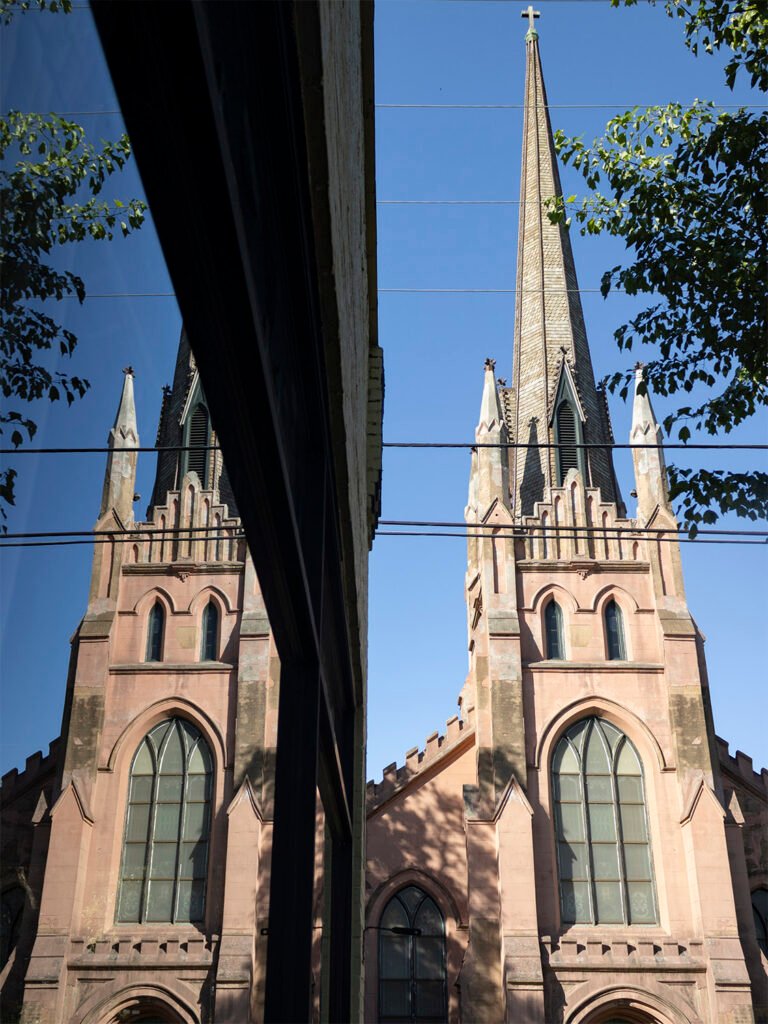
    George E. Walker. Trinity Episcopal Church (1860). Abbeville, South Carolina.1 2

    The Background

    On May 1, 1899, The Atlanta Constitution published this short letter from G.L. Norrman in its “Topics About Which the People Are Talking” column.

    Norrman’s own views of Christianity and society were already well-documented in his pamphlet Architecture As Illustrative of Religious Belief and as a Means of Tracing Civilization, and here he suggested that the newspaper interview people on their definition of the terms “civilization” and “Christian community”.

    The note includes an outdated and offensive term referencing people of color.

    Norrman’s remarks:

    In all countries, where moral and social systems similar to our own prevail, two expressions are in use among all sorts and conditions of men, to which each individual man seems to give his own interpretation. These terms are used in the kitchen and in the parlor; in squalid hovels and in the most elaborate apartments; we hear them in the barroom, at the bar of justice and behind jail bars. From press and pulpit they are heard continually, and fanatics for ages have made zealous use of them while kindling cruel bonfires for the immolation of their fellow creatures. Politicians use them as a means of catching votes; trades people to sell goods; promotors of all sorts to float their schemes. Sometimes they are used by learned professors and sometimes by ignorant field negroes. The expressions I have reference to are ‘civilization’ and ‘Christian community.’ I think it would be interesting to a large number of your subscribers to read definitions of these terms from people of various pursuits and various intellectual attainments.”3

    References

    1. Trinity Episcopal Church and Cemetery, Abbeville County – SCDAH ↩︎
    2. Restoring Abbeville’s Trinity Episcopal Church – South Carolina Public Radio ↩︎
    3. “Topics About Which the People Are Talking”. The Atlanta Constitution, May 1, 1899, p. 4. ↩︎

  • William R. Cannon Chapel and Religious Center, Emory University (1981) – Atlanta

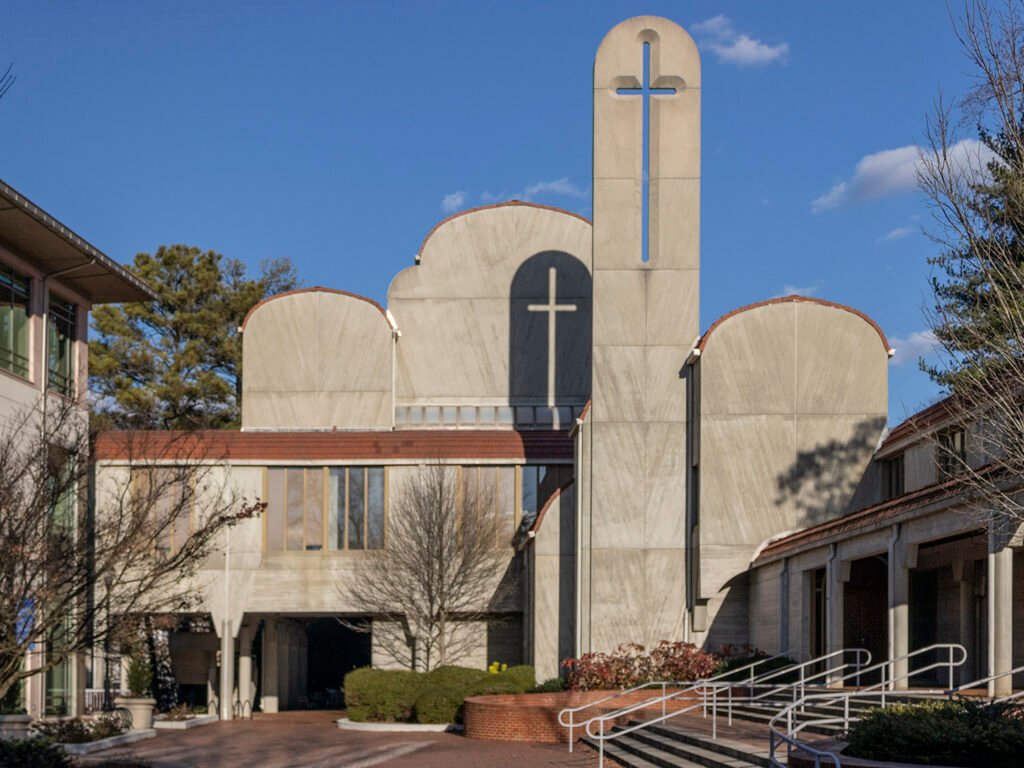
    Paul Rudolph. William R. Cannon Chapel and Religious Center, Emory University (1981). Atlanta.1 2 3

    References

    1. Speed, Billy Cheney. “New Chapel Will Open At Emory”. The Atlanta Journal-The Atlanta Constitution Weekend, September 19, 1981, p. 10-B. ↩︎
    2. Burnett, W.C. “Emory chapel offered architect a challenge”. The Atlanta Journal, October 2, 1981, 1-C. ↩︎
    3. Fox, Catherine. “Emory Chapel A Gem Of Design”. The Atlanta Constitution, October 16, 1981, p. 1-C. ↩︎
  • In the Words of G.L. Norrman: On Music Critics (1899)

    In the Words of G.L. Norrman: On Music Critics (1899)

    The Background

    Following G.L. Norrman‘s previously published remarks about Moriz Rosenthal, The Atlanta Journal received several indignant letters rebuking his criticism. After his first performance sold out,1 Rosenthal then held a second concert in Atlanta,2 which was attended by a reader of the newspaper, identified only as “M.E.C.”

    In a letter published on February 24, 1899, “M.E.C.” gave a rapturous review of the concert in ridiculously florid terms, while also swiping at Norrman. The pertinent quotes:

    • “I had occasion several weeks ago to refer with indignation to the kind of stuff a morning paper was serving us as musical criticism.”
    • “But why should we expect every artist to have in the highest degree every attribute of other artists: A man may be an excellent architect, and yet know very little about music.”3

    Always eager to have the last word, Norrman shot back with another letter, which was published on February 27, 1899. Norrman liberally quoted M.E.C.’s own words, and also took the opportunity to mock the Christian Science movement — keep in mind, he was still overseeing the construction of Atlanta’s Christian Science church at the time.4

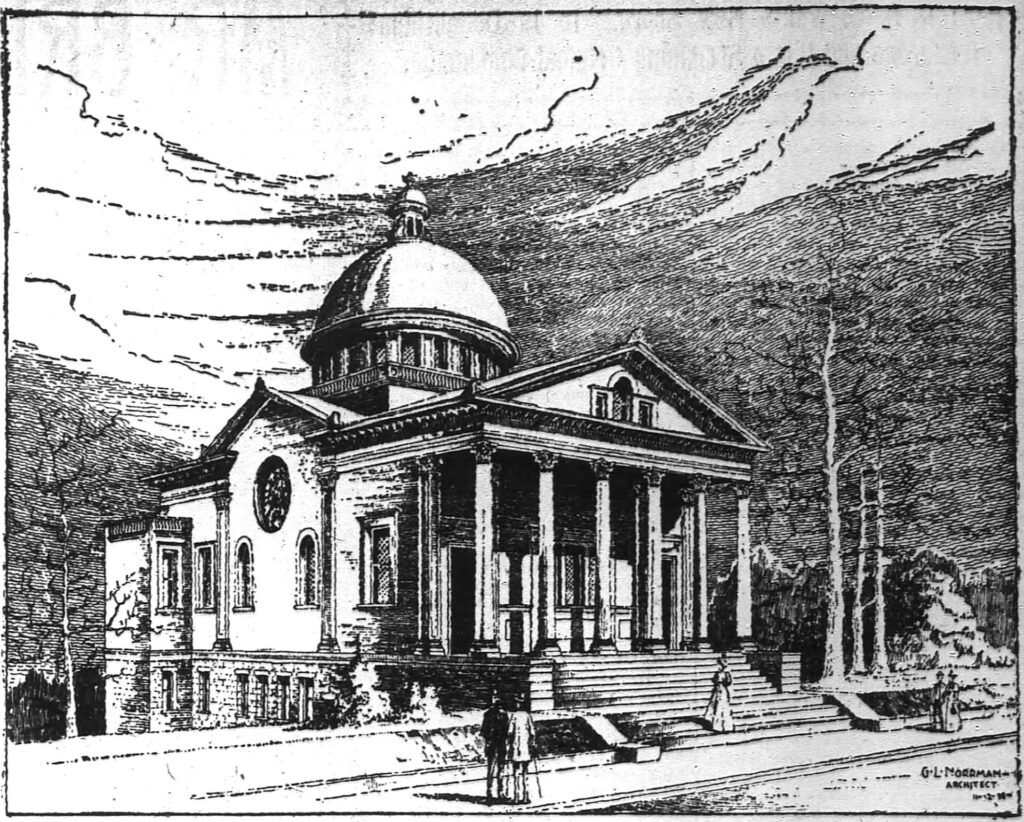
    G.L. Norrman. First Church of Christ Scientist (1899, demolished). Atlanta.5

    It’s probable that “M.E.C.” was Sue Harper Mims, the leader of Atlanta’s Christian Science church, a stuffy old society woman with whom Norrman regularly traded barbs.

    Norrman’s remarks:

    To the Editor ofThe Journal:

    “I never realized until Friday, when reading the criticism on Rosenthal by “M.E.C.” the amount of delicate perception that is necessary to be a musical critic. It requires such a delicacy of perception as to be able to distinguish a half expressed passion from an expressed passion, or from an unexpressed passion. A critic who can comprehend the “half expressed passion of a Chopin” can undoubtedly comprehend “the intellectual profundity of Schumann.” A person who is endowed with such spiritual light might almost be capable of preaching a Christian Science sermon or write poetry for a young ladies’ literary society.

    “To an ordinary person whose spiritual understanding does not extend beyond what is expressed, music, architecture or any other art is a fine art only when it is a vehicle for conveying emotions. When art is used for any other purpose it is merely a handicraft. So an acrobatic performance with the fingers on a piano is itself no more of a fine art than is an acrobatic performance with the toes on a tight rope.”

    G.L. NORRMAN6

    References

    1. “Atlanta To Have Fair”. The Macon Telegraph (Macon, Georgia), February 16, 1899, p. 2. ↩︎
    2. “Rosenthal’s Second Concert.” The Atlanta Constitution, February 16, 1899, p. 5. ↩︎
    3. “Music”. The Atlanta Journal, February 24, 1899, p. 5. ↩︎
    4. “The First Christian Science Church Built Here Will Be Dedicated Today”. The Atlanta Constitution, April 2, 1899, p. 4. ↩︎
    5. ibid. ↩︎
    6. “Criticism of a Critic.” The Atlanta Journal, February 27, 1899, p. 4. ↩︎
  • What I’ve Learned from Social Media

    What I’ve Learned from Social Media

    1. A cry for help is just a cry for attention. No one actually wants to be helped.
    2. Everyone thinks their life is either uniquely special or uniquely awful; neither is true, and either way, it’s narcissism.
    3. Ninety percent of the world’s problems would be solved if every man was complimented on his penis by another man.

  • In the Words of G.L. Norrman: On Music Criticism (1899)

    In the Words of G.L. Norrman: On Music Criticism (1899)

    The Background

    G.L. Norrman was a man of forceful and contrary opinions that often riled the ruling class of Atlanta, a pretentious pack of lying dullards who couldn’t face the truth if their lives depended on it.

    What no doubt baffled them the most about Norrman was that he could fully articulate his objections in a defined and intelligent manner, of which most people are simply incapable.

    In February 1899, the Atlanta Concert Association hosted a concert at Degive’s Grand Opera House by the Polish pianist Moriz Rosenthal, who was popularly referred to by his last name only.1

    Rosenthal was internationally famous, and his appearance in a backwater like Atlanta was considered a cultural milestone for the city.

    The newspapers were expectedly fawning of Rosenthal’s performance, but a reporter from The Atlanta Journal got an earful when he asked Norrman for his thoughts on Rosenthal, which were published on February 17, 1899, in the “Loitering in the Lobbies” column.

    The comments include multiple references to 19th-century performers, and appropriate informational links have been provided. However, there is scant information online about Joseph Denck (1848-1916), a pianist from Columbia, South Carolina who primarily performed in the Southeast.

    Norrman’s remarks:

    “Yes, I heard Rosenthal, and while I do not profess to be a musical critic I don’t mind saying how he impressed me.

    “I think his technique was very good—but that his selections were poor. I am backed up by an Atlanta musician who is far above the average, in fact, almost a professional. You see, Rosenthal played last night nothing that is familiar even to the average musician much less the great body of his audience. Indeed, as a popular success his entertainment was a dead failure. Now, if he had played a few selections even from such composers as Rossini, Beethoven, Wagner, I could have followed him much better. But, as it was, I could hardly follow him at all—and, of course, the great body of his auditors could not enjoy his playing.

    “It would have been far better if he had played selections from composers more familiar to people of average musical culture and thrown in popular airs for the benefit of the great majority of his audience who could have understood them. As it was these people simply sat there got nothing for their money.

    “Perhaps there were a dozen or so persons in the audience who really enjoyed the performance. Still I couldn’t prove even this. If the bringing of Rosenthal here was to arouse an interest in music and help the people to understand it, I can’t see exactly how this object was accomplished.

    “Say, for instance, that the majority of his hearers were up in the multiplication table of music, so to express it, and I am satisfied that such was not the case—how could they even then be expected to make a long leap and understand and enjoy the calculus of music he undoubtedly gave. For his selections were all of the highest, the most difficult grade, ultra scientific and classical.

    “So, in my view, his performance was not only a failure from a popular standpoint, and was not even a success judged from the plans of average and even above the average musicians and people of musical culture.

    “For my own part, I much prefer Mr. Joseph Denck as he played a few years ago. He has a marvelous touch and always played selections from composers more or less familiar to music lovers, and his playing of popular music is exquisite. Yes, as Denck played a few years ago, when I last heard him. I like him better than Rosenthal. He is not only a wonderful pianist, but knows how to please the average musicians and the people better than Rosenthal, judged by his performance last night.”

    Reporter: How does Rosenthal compare with Padarewski?

    “He’s about as good, I think. I never thought Paderewski such a miracle of a musical genius as some people did. I saw nothing about him to lose my head over. He’s very fine, no doubt, but so is Rosenthal, I suppose—

    “But admit that Rosenthal was as fine as fine can be Wednesday night. What does it amount to him if we cannot follow him?

    “It is not good taste in a pianist to be ever so fine if his audience don’t know it—can’t take in his fineness. Just as it would not be good taste for a person to speak Greek in a parlor full of people if nobody present understood the language.

    “I am no musical critic, but I try to take a common sense view of Rosenthal, and am backed up in what I have said by a musician of far more than average ability in musical matters. We were discussing Rosenthal after his performance and found that our views coincided concerning his recital.”2

    References

    1. “Rosenthal’s Coming Great Social Event As Well As Musical”. The Atlanta Journal, February 15, 1899, p. 7. ↩︎
    2. “Loitering In the Lobbies”. The Atlanta Journal, February 17, 1899, p. 10. ↩︎
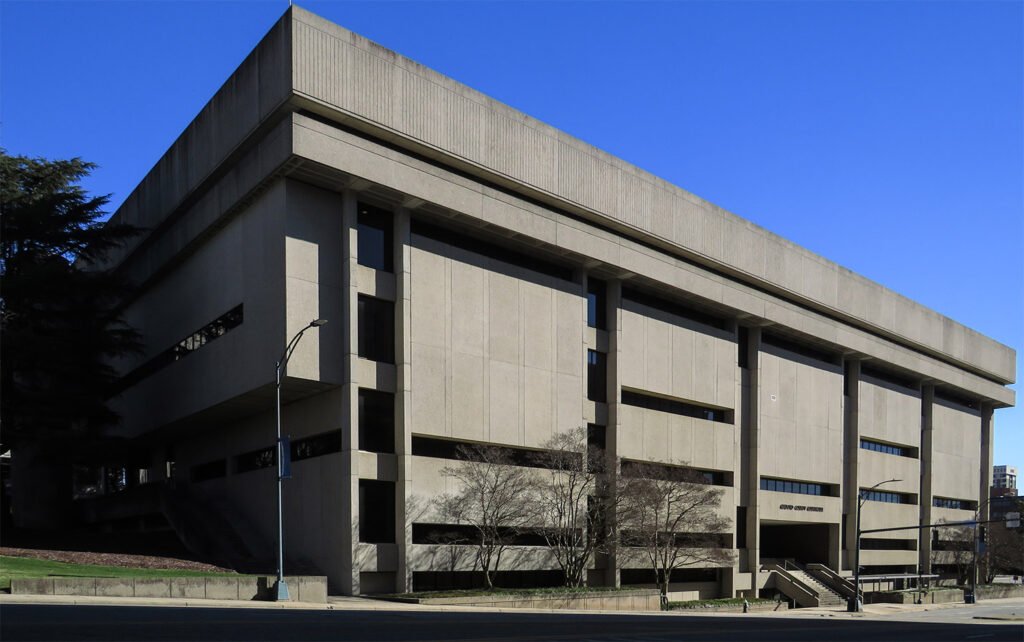
  • Greensboro-Guilford County Government Center (1972)- Greensboro, North Carolina

    Eduardo Catalano with Peter C. Sugar and McMinn, Norfleet & Wicker. Greensboro-Guilford County Government Center (1969-1972). Greensboro, North Carolina.1 2

    References

    1. Building cornerstone ↩︎
    2. Spivey, Jo. “Building Transfer Nov. 20”, The Greensboro Record, November 2, 1972, p. 9. ↩︎
  • In the Words of G.L. Norrman: On Kissing, Again (1898)

    In the Words of G.L. Norrman: On Kissing, Again (1898)

    The Background

    Attitudes toward sex were rapidly changing in the late 19th century, and 1898 was a banner year for kissing controversies.

    Richmond P. Hobson was a dashingly handsome Navy lieutenant from Alabama who became a national celebrity when he was captured and held as a prisoner of war after sinking the Merrimac steamship in the Spanish-American War.

    Following his release, Hobson went on a national tour, which was attended by throngs of admiring young girls, and in August 1898, he stopped in Atlanta to give a lecture at the Governor’s Mansion,1 2 which G.L. Norrman apparently attended.

    A week after his Atlanta visit, Hobson visited Long Beach, California, where he was approached by Emma Arnold of St. Louis, visiting with a group of a dozen friends. Arnold brazenly asked Hobson for a kiss — to which he agreed. Arnold then proceeded to kiss each of her female friends to share Hobson’s kiss with them.3

    The resulting scandal fueled a press flurry that lasted for months, and it launched Hobson’s status as an early sex symbol. Hobson kissed hundreds of girls for the remainder of his tour, which newspapers began dubbing “Hobson’s kissing tour”. At one event in Chicago, he reportedly kissed 163 women, followed by another in Kansas City where he broke his record by kissing 417.4

    Incidentally, the famous Mrs. Kingsberry of Atlanta defended Hobson as a “nice manly fellow, and modest, too”, placing blame for his kissing escapades on the loose young women who flocked to him. “All young girls are enthusiastic hero worshipers!” she wrote. “Poor young fellow!” she added. “To think of marching up to 400 Kansas women and kissing 267 of them! What horrors!”5

    As controversy swirled over Hobson’s incident with “the Long Beach girl”, Norrman wrote the following letter to The Atlanta Constitution, which was published on August 14, 1898.

    “Patriotism and Kisses”

    Editor Constitution

    “Lieutenant Hobson, in a short talk at the governor’s mansion, remarked to the effect that too much ado was made over the incident of the Merrimac, claiming that all our seamen would cheerfully embrace every opportunity of serving the country.

    “From Miss Arnold’s explanation of the incident of the kiss I infer that she is equally modest and generous and gives every girl in the country credit for a desire of embracing the same opportunity of showing, with a merry smack, her appreciation of the heroism on the Merrimac.”

    G.L. Norrman

    Atlanta, August 12th.6

    References

    1. “Hobson Here; Will Lecture”. The Atlanta Journal, August 2, 1898, p. 1. ↩︎
    2. “Great Reception Given Lt. Hobson”. The Atlanta Journal, August 3, 1898, p. 5. ↩︎
    3. “How Miss Arnold Got Hobson’s Kiss”. The Atlanta Constitution, August 12, 1898, p. 9. ↩︎
    4. “Hero Hobson’s Kissing Tour Through the Wild West”. The Atlanta Journal, December 22, 1898, p. 4. ↩︎
    5. “Lieut. Hobson’s Kissing Tour As Viewed By Mrs. Kingsberry”. The Atlanta Journal, December 24, 1898, p. 4. ↩︎
    6. “Patriotism and Kisses”. The Atlanta Journal, August 14, 1898, p. 16. ↩︎
  • In the Words of G.L. Norrman: On Cursing (1898)

    In the Words of G.L. Norrman: On Cursing (1898)

    The Background

    In 1898, Randolph Guggenheimer, president of the City Council of Greater New York, instituted an ordinance that prohibited swearing in public places and imposed a $10 fine on a person for each curse word they uttered.1

    The ordinance was widely mocked by the press and deeply unpopular with New Yorkers,2 and the council repealed it in less than three weeks.3

    On August 2, 1898, The Atlanta Journal published the opinions of well-known Atlantans on New York’s “anti-damn” ordinance and whether it could be replicated in Atlanta, in an article titled: ‘”Antidamn” Law For Us?” G.L. Norrman — once a sailor, mind you — was naturally opposed.

    As a representative piece of Atlanta journalism, the article repeatedly misspelled Guggenheimer’s name as “Gurgenheimer”.

    Norrman’s remarks:

    Curse words I regard merely as adjectives used to express strong feeling. They simply emphasize what a man says and those toward whom they are applied always understand that what is said is meant. These adjectives are sometimes very useful in business, because some people persist in refusing to understand what you mean unless you emphasize it with them. These adjectives should be regulated arccording to the people with whom you are talking.

    “To illustrate: If a lady comes into the office and proves to be disagreeable, I simply excuse myself—say that I am too busy, or words to that effect: but if a book agent or lightning rod man or life insurance drummer comes in, I tell him to go to hell. I don’t believe that Mr. Gurgenheimer’s [sic] law can be enforced to advantage in New York City. My experience with New Yorkers is that you often have to emphasize your language very emphatically in talking even to them. In fact, I believe that more emphasis is needed in New York than Atlanta because it’s a larger place. Of course, I don’t think, for a moment that the ‘anti-damn’ laws could be enforced in Atlanta. Its enforcement would seriously interfere with business.

    “I admit that these adjectives are not elegant, but they form the most forcible way in which one can express himself.”4

    References

    1. “Public Profanity Must Stop.” The Rome Daily Sentinel (Rome, New York), July 21, 1898, p. 4. ↩︎
    2. “He Is Acting As The Mayor.”. The Daily Standard Union (Brooklyn, New York), August 1, 1898, p. 8. ↩︎
    3. “The Board of Aldermen”. The New York Times, August 17, 1898, p. 12. ↩︎
    4. ‘”Antidamn” Law For Us?’. The Atlanta Journal, August 2, 1898, p. 5. ↩︎
  • In the Words of G.L. Norrman: On Kissing (1898)

    In the Words of G.L. Norrman: On Kissing (1898)

    The Background

    In February 1898, The Atlanta Journal received a letter from an old society lady of Atlanta, Mrs. Kingsberry, who was disturbed by “the latest fad in the Gate City=kissing”. Repeating 2 rumors she had recently heard about Atlanta girls allowing boys to kiss them, Mrs. Kingsberry wrote: “This fad of kissing is simply horrid!”1

    The letter was widely distributed and mocked in newspapers across the country,2 leading the Journal to ask prominent Atlanta citizens for their own opinions on kissing, which were published in a February 8, 1898, article titled “Is There a Kissing Craze? And If So, What About It?” Always good for a quip, G.L. Norrman offered his own kissing commentary.

    Norrman’s remarks:

    Judging from my own experience, there is not much kissing going on in Atlanta. I stand in with the young ladies pretty well, but they never give me any chance at it, so I believe The Journal‘s correspondent is wrong in her opinion about Atlanta society. If the lady who made these statements will give me some pointers, I will investigate the matter, and if she is right I will be able later to tell you something about it.”

    “Abroad they are very strict in the highest society. I find that the world is the same everywhere in the same social circles. It was common among the Romans to kiss a lady to tell whether she had been drinking. They had such an abhorrence of drinking, especially among women, that it was customary to salute the women to make sure that they had not been drinking. As the origin of kissing, I cannot speak advisedly. They tell me that it is a very good thing, and may have originated with Adam and Eve, so far as I know.”3

    References

    1. “Interesting Letter From Mrs. Kingsberry”. The Atlanta Journal, February 5, 1898, p. 6. ↩︎
    2. “What the Papers Say Of the Kissing Epidemic.” The Atlanta Journal, February 10, 1898, p. 4. ↩︎
    3. “Is There a Kissing Craze? And If So, What About It?” The Atlanta Journal, February 8, 1898, p. 5. ↩︎