
I found this fine-feathered fiend on a recent photo excursion, giving me the sinister side-eye without moving a muscle.
Good thing hawks aren’t any bigger—I’d have been its Thanksgiving dinner otherwise.
I found this fine-feathered fiend on a recent photo excursion, giving me the sinister side-eye without moving a muscle.
Good thing hawks aren’t any bigger—I’d have been its Thanksgiving dinner otherwise.
This is the eighteenth and final installment in a series of articles written for The Atlanta Journal in 1890 and 1891 by W.W. Goodrich, an architect who practiced in Atlanta between 1889 and 1895.
As in his 1890 article of the same name, Goodrich here describes the Colonial Revival architectural style that was then gaining popularity in Atlanta.
Hardly anything about the style was actually “colonial”, and in typical rambling fashion, Goodrich attempts to explain its finer points across multiple paragraphs—without success.
Readers would have been better served by G.L. Norrman’s succinct definition a year earlier: “The so-called colonial style is barbarism of the Italian renaissance interpreted by Sir Christopher Wren.”
Boom. Done.
This article takes a bizarre turn when Goodrich describes matching a home’s furniture to the hair color and complexion of the woman who lives there, with corresponding fashion tips—I wish I were joking.
“A brunette is never so exquisite as in cream color,” Goodrich writes, adding: “Women who have rather florid complexions look well in various shades of plum and heliotrope.”
As for blondes? “Blondes look fairer and younger in dead black.”
Notice, of course, that only light-skinned complexions are discussed.
The article ends with a lecture for young women on buying furniture. “Each couch and footstool is an achievement”, Goodrich prattles. “Each rug and curtain represents a triumph.”
You can tell he was exhausting to be around.
A few words in the article text have been lost due to faded ink on the original newspaper page. The missing portions are indicated by the [obliterated] tag.
Something About The Colonial Architecture.
Many Specimens of the Style Found in the South.
Adapting My Lady’s Boudoir to Her Own Tints and Tones.
How to Buy Furnishings for a Home so as to Produce the Most Artistic effect.
Written for The Journal.
Through knickerbocker treatment we inherit architectural forms bequeathed to us from the Italian renaissance. To this we have given the name “Colonial”–developed, as it was, during our colonial existence and thereafter.
The north and south are possessed of numerous examples of this style in the old homes on the farms and manors of New England, and on the plantations of the middle and southern states.
This development is a growth with constant retrospection toward Greek art and an occasional treatment of forms, promoted or necessitated by existing conditions. The acanthus and the scallop shell are frequently met with, and a profusion of [obliterated], bead and fret mouldings, bands and [obliterated] are the proper ornamentation.
This application of the ornament varies [obliterated]. Sometimes we see it in profuse [obliterated] and sometimes used sparingly with plain surfaces as better becomes Puritan taste. The southern colonial of Maryland, Virginia, South Carolina and Georgia verges almost on the rococo, in some cases, especially in the detail of the foliage. The towns of the south are full of exquisite examples of fine colonial ornament, exterior and interior.
In most cases the metal work of old colonial houses is very simple, the surfaces being of plain polished brass and the edges [obliterated] ornamented with some of the characteristic fretwork of the exterior ornamentation. Where such ornament is found it is usually adapted from earlier renaissance examples, simplified to suit the occasion of the owner’s purse.
The colonial school has been recently revived in many parts of the country, more especially for suburban residences near large cities and for handsome country houses surrounded by broad landscapes. When consistently executed, it is most suitable for such buildings and the quaint outlines and soft colorings of some of the recent examples in this school are very attractive, making home dearer and more to be desired than any form of home construction.
The colonial will always be memorable for the introduction of that unique style of furniture and coloring that has never ceased to be admired, having that about it which appeals to the most refined feelings of domesticity, and is strictly adapted to the occupants of the home in color, form and generally symphony; thus, for a blonde I would have a rose parlor, the woodwork of prima vara [sic], the glass of polished plate, the mantel of root ash, the facings of onyx. The walls should be hung with rose-colored silk in various rose designs, procaded [sic] with thistles; the furniture in rosewood covered with rose-colored velvets, embossed with roses; the portieres of rose-colored silks and satins, with heavy fringes in blue and gold.
In the dining-room the hangings are of peacock blue, with a border of beetle’s wings, sewed on with jewels and pearls. The chairs of mahogany, covered with light, embossed terra cotta velvet.
The ballroom is Moorish, designed from a room in the Alhambra, of tinges of blue and gold, in symmetrical designs of Greek Byzantium, with the draperies, hanging and divans of exquisitely oriental treatment.
In the library the prevailing hue should be a soft brown with delicate blue and [obliterated] violets peeping out from grasses in various portions. And for the boudoir I would have a tulip room, old gold covering the walls and a dado of yellow and pale pink tulips reaching to the dulled gilt frieze.
There can be no finer example of modern American furnishing than this idea, that the colors chose were those tints of which a duplicate were found in the hair, the eyes and the complexion of the lady herself.
A woman with blue-gray eyes and a thin, neutral-tinted complexion, is never more becomingly dressed than in the blue shades in which gray is mixed, for in this complexion there is a certain delicate blueness.
A brunette is never so exquisite as in cream color, for she has reproduced the tinting of her skin in her dress. Put the same dress on a colorless blonde and she will be far from charming, while in gray she would be quite the reverse. The reason is plain, in the blonde’s sallowness there are tints of gray, and in the dark woman’s pallor there are always yellowish tones, the same as predominate in the cream-colored dress.
Women who have rather florid complexions look well in various shades of plum and heliotrope, also in certain shades of dove gray, for to a trained eye this color has a tinge of pink which harmonizes with the flesh of the face. Blondes look fairer and younger in dead black like that of wool goods or velvet, while brunettes require the sheen of satin or gloss of silk in order to wear black to advantage.
One of the greatest charms of colonial houses is found in the beams and panels which appear without disguise in the ceilings, and which are manifestly capable of supporting the floor above. They give a sense of fitness and security which one does not experience in the contemplation of the unbroken, and apparently unsupported, expanse of plaster, which forms the ceiling of the modern. Add to this bareness the two or three feet of unnecessary height, which we usually find in houses of the last decade, with no shape in the finish of the cornice to give an impression of support, or perhaps a meaningless cornice repeating the confused floral forms of the absurdity which forms the centre piece, and it is evident that innovation and reform in the matter have not come to soon.
If a room be badly proportioned or too high, a good effect may be obtained by dividing the ceiling space by moulding of heavy wood–enough to give a feeling of stability.
[obliterated] be frescoed or painted, and if the work be carefully considered, and not too intricate in pattern, the appearance of the room will be greatly improved.
The colonial school of architecture and ornament has proved to be so well adapted to modern uses and surrounding that many handsome residences of the kind are to be found in various parts of this city, and are coming in more general use in this country. While its prominent features are necessarily adaptations from earlier forms transplanted from across the sea, yet it has more of an historical claim to be considered an American style than almost any other, and as such is worthy of special study.
From any point of view the colonial style is decidedly free from old-fashioned ideas, whilst it is distinguished not only for elegance, but comfort and convenience, thus being well adapted to modern adoption. The formation influences that led up to this remarkable development of artistic power, date from the Italian Renaissance, illustrating how subtle germs of thought, fed from various sources, and fructifying from generation to generation, are presently developed under favoring circumstances in original and attractive forms. The colonial style was not an electric, it was a positive creation, characterized by a charming individuality.
Colonial mantels, as constructive features of apartments, claim our first notice. If of hard wood the ornaments were curved or turned; if of plain wood, they were coated with a plastic composition, toned to yellow color, that presently assumed an adamantine hardness, and on which were formed in relief, figure groups, and floral garlands, and pendants, similar designs being carried out on the jambs and lintels of hardwood mantels.
Pillars supporting the shelves would at times by mounted by brass capitals; but many of the pillared supports are fine examples of turnery, which was also applied to geometric ornaments on lintels. Much of the pleasing effect of the mantels is due the fine proportions maintained, and the delicacy of relief work in carvings and mouldings, made more effective by ample and well considered spacing. The mantel would be surrounded by a moderately high oblong mirror, metal lined, and running its whole length and this topped by shelves resting on brackets.
In the colonial order of architecture, the home seeker can do better in buying pieces singly, rather than in sets, and to pick up said articles at various times, as the home progresses in being occupied, and as wants increase.
It seems a pity that the young woman who is about to establish a home, and has a sum of money to spend for its garnishing, cannot be persuaded from laying it all out at once. She robs herself of so much future enjoyment. The spick and span sets of furniture which are carelessly ordered from an upholsterer, and carried home and stood around her parlors by his men, will never afford her half the satisfaction she can get in a room for which to-day she buys a chair, and the next week, seeing there must be a table to accompany the chair, she starts on a fresh shopping excursion, and finds a table which is exactly what she was looking for; and in another month, discovering the need of a bookcase or a screen she has again the delight of the hunt, and the gratification of obtaining the prettiest screen and bookcase in the city.
Such a room is a growth, a gathering together of household treasures, little by little. Each article, bought only when the need arises, or when something is happily found to just meet the need, will have a family history which makes it an entertaining as well as a valuable possession. Each couch and footstool is an achievement; each rug and curtain represents a triumph. Such a home, built up gradually, with careful planning in each part, with thought and loving consideration in all its details, acquires a far deeper meaning than could be purchased by the longest purse from the most fashionable cabinet-maker.
W.W. GOODRICH.2




July 1890 wasn’t a good time for Atlanta’s water supply. At the start of the month, a lack of rainfall caused the city’s reservoir to drop nearly six inches in three days. “This looks a little scary,” remarked The Atlanta Journal.1 By mid-month, the water was 27 inches below capacity.2
Days later, the city’s artesian well failed, with the waterworks superintendent, W. G. Richards,3 quietly fashioning a makeshift connection between the well and the main hydrant.
The Constitution later explained: “those who drank the water at the hydrants, soon detected the difference, and the failure of the well became public.”4
Then on July 10, 1890, disaster struck: a nearby refinery burned to the ground,5 releasing over 200,000 gallons of refined oil—cottonseed oil, that is—into the reservoir.6 7 8
A two- to three-inch layer of cottonseed oil floated on the surface of the reservoir’s water, killing hundreds of fish,9 multiple birds,10 11 and possibly several cows.12 13
As workers began pumping oil from the lake, the president of Atlanta’s board of health, Dr. James Baird, along with the state chemist, declared the municipal water was still safe to drink.14 15
An investigation later determined the oil never entered through the city’s supply filters, which were located 15 feet below the water’s surface.16
Although public officials were as deceitful then as they are today, Dr. Baird was correct: Refined cottonseed oil is safe for human consumption, even if it isn’t especially healthy. Today, it’s commonly used in the processed foods Americans so gleefully devour.
Of course, that didn’t stop W.W. Goodrich—ever the attention-seeker—from claiming to have become severely ill after drinking a glass of tainted tap water at his office.
Goodrich certainly felt well enough to run to the Journal, whose coverage of the waterworks incident was predictably more sensationalist than the rival Constitution.
The Journal described his purported illness in robust detail:
“In about half an hour, he had a violent attack of vomiting which lasted until he was almost completely exhausted. He then took the electric car for his home, when he began to vomit again.”17
The Journal writer asked Dr. Baird about Goodrich’s illness and reported flatly: “The doctor thinks that the water could not have caused the sickness.”
Atlanta was still a small city at that point, and if the doctor knew anything about Goodrich, he must have known the man was a massive bullshitter.
Only a few weeks earlier, Goodrich claimed his entire family was poisoned by eating canned tomatoes and corn18—two poisoning stories within a month is a little suspicious, don’t ya think?
A few days after his so-called sickness, Goodrich wrote the following “suggestion” to the Journal about how to filter water with slabs of marble. Because, of course, he was also a hydrology expert.
To the Editor of The Journal:
Apropros of the waterworks question there is a remedy for aiding the filtration of water, in the use of thin slabs of marble hung on wire at the surface of the water level. The test of the effectual usefulness of this cure remedy has been proven to be a positive destroyer for all dust organisms that are in water. They are attracted to the marble, live in its pores. The gradual detrition of the marble by the action of the water causes the acid of the marble, which is carbonic, to kill all dust germs of dust germ life.
Thus the gradual formation of that greenish fungoid growth which we see on marble, in water, or in damp places, is this same fungus. Settling basins of marble, and filters of marble slabs, perforated, with small holes between the regulation layers of filtration material, are of a more specific precipitate for foreign matter than alum. Whereas alum, while it is a specific in a certain sense, still it will permeate and be taken up in the water, and of course used by the public. There are stringent laws against the use of alum by bakers in the making of bread in many cities, on account of its action in the stomach. Alum is known to be a nerve destroyer, and if its use is persisted in the system soon becomes a subject of severe nervous prostration.
W.W. GOODRICH.19






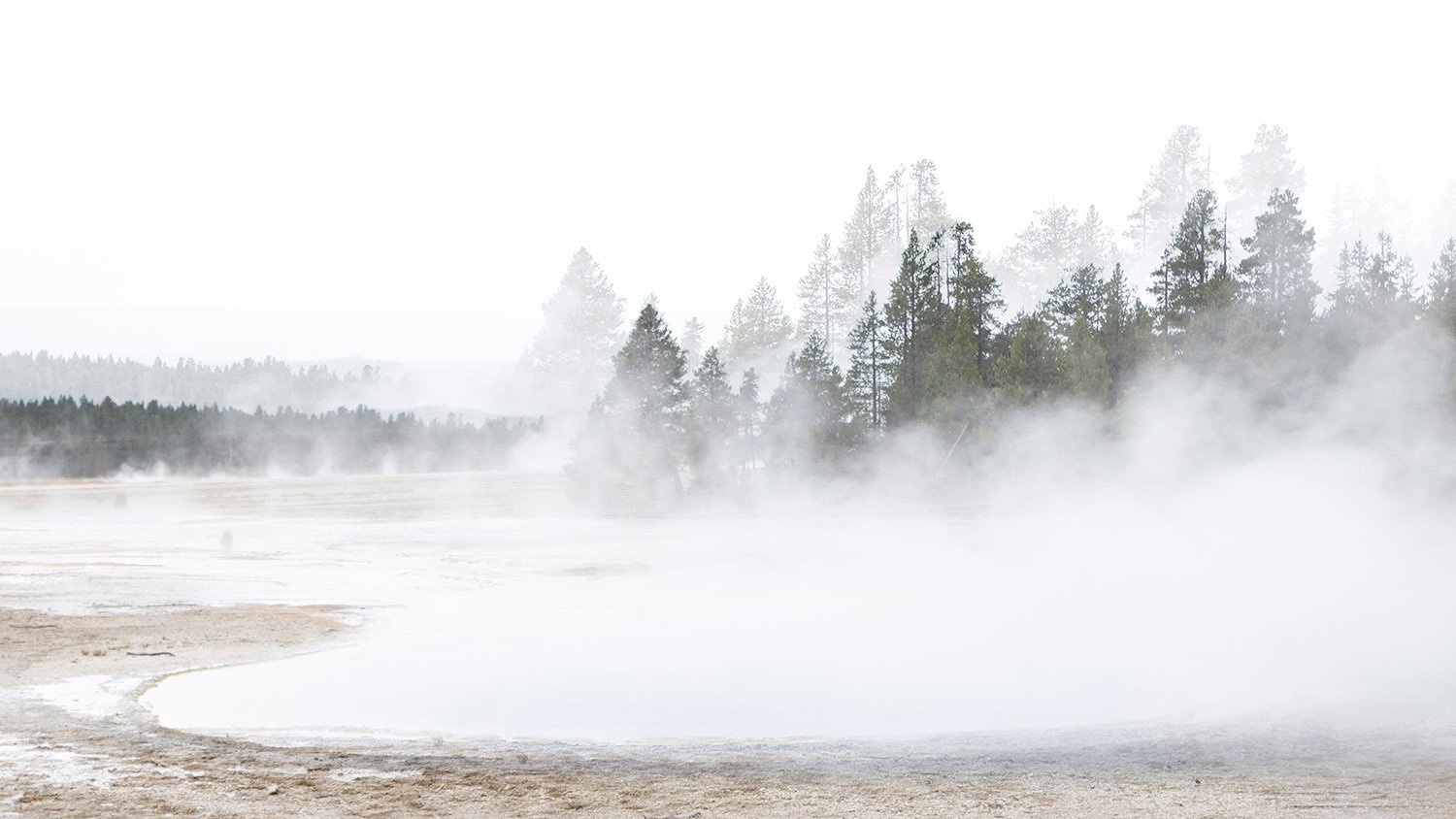
This is the seventeenth in a series of articles written for The Atlanta Journal in 1890 and 1891 by W.W. Goodrich, an architect who practiced in Atlanta between 1889 and 1895.
After nearly two years of stories, Goodrich’s billowing font of bullshit was clearly running out of steam.
In the following article from November 1891, he once again draws inspiration from his brief residency in Washington state for another croaky blast of hot air, conjuring up a tale about a noxious “fountain of death” that kills every living creature near it—”one whiff of it is sufficient to extinguish life.”
This toxic body of water never existed, of course, but that doesn’t stop Goodrich from crafting a macabre story about a little girl who wandered from home and died at the foot of the fountain “with a little dead bird clutched in her hand.” The Victorians were some twisted fuckers, no?
Never content to stick with just far-fetched, Goodrich then dives into patently absurd, claiming that the ozone levels in the higher elevations of Washington are “so intense” that they eliminate all disease from the body (“Asthma is cured there in a few weeks”). Sure, Dr. Goodrich.
He also claims to have sent a 20-ton “bowlder” rolling down a mountain, which absolutely didn’t happen.
Incidentally, Goodrich misspells Mt. Tahoma as “Mt. Tacoma” and Mt. Saint Helens as “St. Helena”. Keep in mind that he lived in Washington for, at most, six months and likely never set foot in any of these places, so there’s a reason he can’t even get their names right.
In addition to being an obvious prevaricator, Goodrich was a terrible orthographer, hence such spelling atrocities as “fissues” and “flou spar.”
The remainder of the article is a string of anecdotes about other locations that never existed, complete with mummies and hieroglyphics (again), “an adult dwarf”, “an Indian of giant stature”, and a lake where giant animals were gathered up and drowned by the Paiute tribe—he misspells that name, too.
By all accounts, 1891 was a banner year for Atlanta’s architects, with the city’s leading firms designing and supervising major works across the Southeast.
Goodrich, however, still had plenty of time to spew his nonsense in the pages of the Journal. Make of that what you will.
A Fountain Of Death On The Great Divide.
A Spring Whose Noxious Fumes Kill All That Approach It.
An Atlanta Man’s Visit to the Wonderful Geyser Basin.
Digging Into the Graves of a Prehistoric Race–Curious Hieroglyphics on the Rocks–Interesting Tradition.
Between the headwaters of the Nooksack and the Yakima, from out the side of a massive rock, spurts a spring of clear running water, intensely cold. By placing the edge of the hand in the pool the water can be turned into the Puget Sound basin by the Nooksack river, or into the Columbia river basin by the Yakima, so close together is the line that divides the two basins.
What a panorama is here before the observer. To the north is Mt. Baker, to the south are Mts. Tacoma, St. Helena and Shasta, to the west the Pacific ocean, northward the British possessions and Alaska, South Oregon and California. To the east, as far as the eye can see, the Columbia river basin, and still farther, on the distant horizon, western Idaho, that gem of the mountains.
In a clump of stunted trees, at a point about three miles from the Nooksack, and about thirty feet from the trail, there bubbles a spring of the clearest sparkling water that one ever saw. The only thing peculiarly noticeable about the spring from a distance is the loud hissing sound it makes as it gushes up out of the gravelly soil. It sounds more like boiling water with occasional jets of steam escaping than the ordinary purling of a stream.
Approach it and you will be startled to see lying around the spring hundreds of birds, scores of small animals, such as coons, foxes and the like. Nearly always there are bodies of birds or animals in a more or less advanced stage of decomposition near the edge of the spring. If a tourist is wise he will be content with an inspection of the unattractive spot from a distance, more especially if there happens to be the carcass of a steer lying beside it with the nose an inch or two from the water.
The fact is that there rises constantly from the spring a gas so noxious and so deadly that one whiff of it is sufficient to extinguish life.
The terrible character of the spring is well known to all who reside in the neighborhood.
One day the little six-year-old daughter of a farmer living near the spring wandered away from home. Her absence was not noticed for an hour or two, and then the parents went in search of the child. They found her lying dead beside the spring with a little dead bird clutched in her hand. She had evidently seen the bird lying beside the spring, and being attracted by the bright color of its plumage, had tried to pick it up, and in so doing had inhaled the gas rising from the water and died with the bird.
Another time a squaw who was supposed to be recovering from a spree, wandered down by the spring. She probably started to the river to get a drink, when she discovered the spring and knelt beside it, dying in that position. A venturesome man once held his breath and nostrils and leaned over the spring to hear the noise it made, which he described as something terrible.
The water is thought to be comparatively wholesome, but nothing is known positively about it, as it has never been analyzed. There can be no doubt, however, that the spring is certain and instant death to every living thing–insect, animal and human–that approaches it.
Above the timber line is one of vast expanse of blue air. So intense is the ozone that its inhalation sends the blood through the system with accelerated quickness, its penetrating power rapidly revivifying the hemoglobin of the blood’s red corpsucles [sic], eliminating all diseases and rejuvenating the body. Indeed, if one afflicted with living or liver troubles could stay on the Divide and have the comforts of life at command at an altitude of 12,000 feet, he would be speedily healed. Asthma is cured there in a few weeks.
On the Divide all is bare rock with stunted growth of buffalo grass in spots. Except for an occasional spring and the falling snows, there would be no water. Two thousand feet below, or 10,000 feet above the ocean we left all forms of trees and vegetation. What there was, was stunted, twisted, gnarled and dwarfed.
Looking toward the northeast is seen, far down the mountain’s side, in a grand canyon, vapor arising in puffs, some higher than others, toward which we wended our way, our guide telling us they were geysers in a state of ebullition.
This is a peculiar rocky formation. On little mesas were huge bowlders [sic], brought there by glaciers and worn round like balls. One of these, near the verge of a declivity, weighing by observation some 20 tons, we undermined and started down the mountain’s side into a canyon below, a distance of a mile, with a descent of some 45 degrees. On it rolled, fast gaining momentum. Its flying force was terrific. It crashed through giant trees like as though they were pipe stems, starting over other stones, and they in turn others, until it seemed as though an awful avalanche was crushing and grinding the sides of the mountains into a mass of splinters and powder.
It was a grand but a terrific sight. The noise was as the noise of the ocean waves against the rocks of the coast when there is an awful storm on old ocean and the seas are lashing themselves into foam.
In the basin, there were several geysers in commotion, one throwing up mud, another hot water, still others mud and steam. By the sides of the geysers were crystals of sulphur in beautiful and fanciful shapes. Peculiar mineral waters came from the mountain’s sides, some salt, some lime and others in varied proportions of different salts and lime. The spouting of these geysers made peculiar rainbows of different colors and shadows.
All about the basin, which was about twenty acres in extent, were skeletons of animals, from the hairy elephant to the human being, veritable valleys of bones, some petrified, some partly so, some embedded in the rocky formation by the sillification [sic] of the mineral waters.
Many caves of different sizes were all about the rocks, in which were mummies wrapped as are the Egyptians. Stalagmites and stalactites were seen in remarkable profusion and beauty.
One [sic] one amesa [sic] some two hundred feet above the geysers were several mounds.
The little hillocks were dug into and ghastly skeletons were brought to light, a strange revelation of an unknown race. Copper war weapons, shaped something like a harpoon, only much shorter and stouter, were beside each skeleton. Curious characters were etched on the blade of the instrument, and their had survived through centuries.
One of the mounds I excavated, exposing a flat stone of flou spar [sic]. It had been designed as a door to a sepulcher. After being raised, there was exposed a grave, walled on all sides and tightly cemented with sulphur. In it was a dwarfed body doubled up in a sitting position, a custom followed by the ancient Indian and Aztec tribes all along the Pacific slope. The formation of the skull was like that of a Chinaman. The body, though small, was that of an adult dwarf.
Several other graves were opened and the bodies in all of them were similar in anatomical construction and size. In many of the graves were hewn utensils, evidently used for cooking, together with arrow heads, known to have been used by coast tribes for centuries.
A remarkable formation was the canyon’s side walls; huge fissues [sic], emitting fumes and steam, of unknown depth, streams of hot water, from the tiny rill to the brook, coursing down the canyon’s sides. No life anywhere. All was solitude, save for the sound of the mud as the gases came to the surface, emitting strange and weird noises. The Indian never comes into this basin.
Occasional earthquakes shook the earth with violent convulsions. And the grim sentinel rocks at the mouth of the canyon waved spasmodically at each quake. Terrific rumblings and violent roars, as of terrible combat between Herculean giants, were constant. Nature here was grand, and a lover of nature could here see Sacra Tyhee in his might.
To the eastward of this valley is a mixed formation of sandstone, carboniferous limestone, slate, igneous rocks and lava. Here is a hill called “Curious Butte.” It is composed of stratified material of several colors, bright blue and yellow predominating. Near this hill is a deposit of itacolumite or flexible sandstone, indicating that the region is diamoniferous [sic]. It is possible that the blue strata exposed in the hill are of the same nature as the “blue stuff” in which diamonds are found in the south African mines. No one has ever prospected the place for diamond.
Much of the limestone in this region is fossiliferous, but near the plutonic rocks the fossils cannot be made out, owing to the metamorphosis of the limestone by heat. However, in several places have been found corals and sponges, and ammonites, tenenebratlas [sic] spirifers are often abundant.
Near a Galena mine, three miles from the spring, east of the valley, many hieroglyphics are carved on the rocks. It is a sort of picture writing, and is popularly supposed to have been the work of Aztecs. It is certain that the writing was not done by the present race of Indians of this basin. Similar hieroglyphics are found near Candelaria; also in Humbolt county, on Star Canyon, near the Sheba mine; on the Carson river, below Ragtown, and in many other localities.
The Indians have a tradition that extends they know not how far into “the long ago,” of an Indian of giant stature who gave them great trouble. They say that the giant warrior came from the north. He took up his abode near Pyramid Lake and made war on the Piutes, killing many of their men. The giant was finally slain by a Piute Cavid, who crept up behind him and drove a poisoned arrow into his body between the shoulder blades.
Two or three of the giant’s tracks and his grave are shown to this day. The tracks are near the Truckee river, between Wadsworth and Pyramid Lake. They are in soft sandstone and are still kept clear of sand and soil. Every Indian that passes the spot stops and sweeps out any dirt that may have lodged in the big tracks.
The giant’s grave is not far from where the tracks are seen. The grave is always kept clear of vegetation any grass or weeds seen growing on it are pulled up by the roots. In this way the spot has always been kept marked.
The Indians also have a tradition of huge animals that roamed the country. They say the animals had horns with which they were able to uproot trees. To rid themselves of the great beasts, the whole Piute tribe turned out, surrounded the herd and drove them into Pyramid lake, where all were drowned. Even now, when the lake is rough and black waves are seen rolling about far out from shore, the Indians point to the waves and say they are the backs of the monster beasts.
It may be that the big animals were the elephants that made the tracks at the Carson quarry, and that the supposed human tracks are the footprints of the Piute Goliath.
W.W. GOODRICH.1

I took a midnight Greyhound from Savannah to Atlanta once—never again.
The only good thing about hanging out at Savannah’s bus station was that I got this shot of the sign for the Thunderbird Inn across the street.
The landmark neon sign on Oglethorpe Avenue dates to the motel’s opening in 1964 and has been remarkably well-preserved.
While not nearly as old as most of Savannah’s historic structures, it’s a unique and colorful component of the city’s fabric.
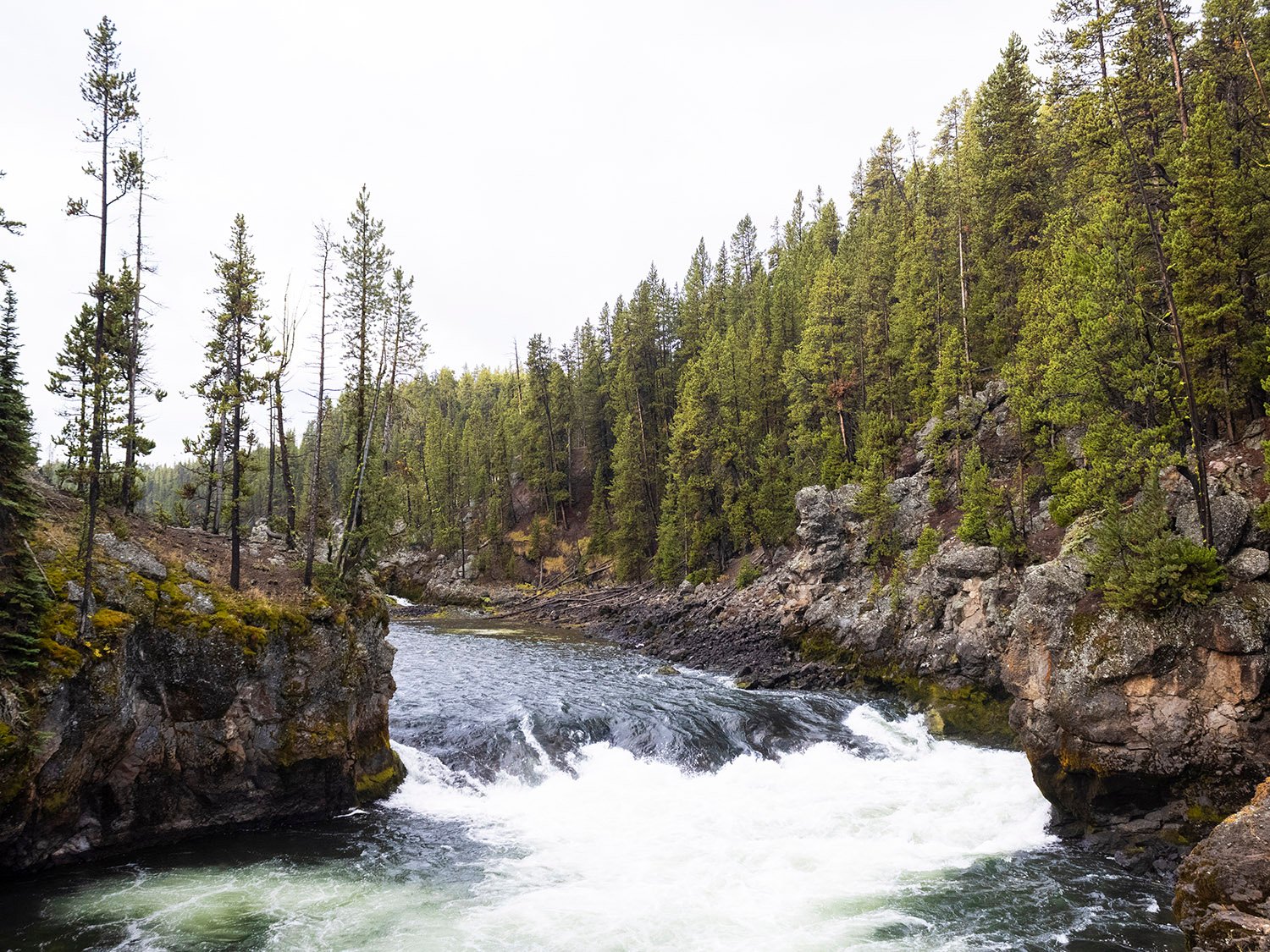
This is the fifteenth in a series of articles written for The Atlanta Journal in 1890 and 1891 by W.W. Goodrich, an architect who practiced in Atlanta between 1889 and 1895.
Goodrich briefly lived in Boise, Idaho, from 1882 to 1883, and here, in two tediously long paragraphs, he paints an idyllic (and fabricated) portrait of the Shoshone people of Idaho celebrating the annual return of salmon to the Snake River.
His description of the Shoshones strikes an admiring, although occasionally condescending tone—not unusual for Goodrich—and conspicuously omits any mention of the tribe’s tenuous plight at the time.
After years of fighting the seizure of their lands by White settlers, the Shoshones were, in 1875, restricted by a presidential executive order to the tiny Lemhi Reservation along the Salmon River.
Backed by the area’s covetous settlers, the federal government wanted to force the tribe onto a different reservation at Fort Hall, more than 200 miles to the south.
By the time Goodrich lived in Idaho, the Shoshones, cloistered at the Lemhi Reservation, lacked access to the Snake River, which thoroughly discredits this story as one drawn from first-hand observation.
After years of failed negotiations, the Shoshones were forcibly removed to the Fort Hall Reservation in 1907, in what has been referred to as “Idaho’s Trail of Tears.” The Shoshones then merged with the Bannock tribe, and today the descendant Shoshone-Bannock Tribes remain based on the reservation.
Although a fixture of popular imagination, the annual return of salmon to the Snake River is now in rapid decline, as a series of dams erected in the 20th century by the United States Army Corps of Engineers has decimated salmon populations in the river. So much for American progress, eh?
A Picturesque Indian Custom.
How It Is Spent By The Shoshones.
They Rejoice at the Return of the Delicious Salmon – Their Grotesque Revelings in Their Beautiful Home in the Mountains.
Written for the Journal.
Idaho, that gem of the mountains, was never more beautiful than at this time, in its gorgeous array of wild flowers. Seven moons had come and gone since the last salmon had descended the falls, speeding its way to the “salt chuck.” The Snake river, winds its sinuous way to the Oregon, whence it empties into the Pacific. Amid grand scenic changes, this mighty river, of several hundreds of miles in length, touching many states, is the outlet for the overflow of a vast territory of most fertile soil and most wondrous growths; here is the home of the best peaches, potatoes, apples and small fruits that our grand country produces. Their flavor is superb; nay, delicious in the extreme. Nothing grown in any part of our common country can excel them in flavor. Here the cayute is in his native element, the coyote and the jack rabbit run races. The gray wolf and grizzly bear snarl and treat each other with extreme discourtesy over the bones of a slain antelope or venison. Here the mountain lion and his mortal enemy, man, meet in desperate combat, and man is the winner. High upon the range flashes an instant, then out, the signal fire. Again it flashes, thence from adjoining peaks, thence along the whole range, presently high fires are burning in every direction. Thus the Shoshones show their joy and gratitude for the return of May; of its muck a muck from the “salt chuck.” Salmon are running, flashing beauties, whose scales glitter with many and varied colors of the rising sun, are easily speared as they dart over the riffles and through the shallow waters. The silent Indian medicine man follows up and down the stream making grimaces and gesticulating wildly to the Great Spirit his approval of the running salmon. Then comes the chief, in beads and feathers, in gaudy colors and buck-skin moccasins, trimmed out with beads, utterly silent, and as informal as a bronze statue, and as cold in gesture as yonder snow-clad peak. The falls of the Snake river are of perfect grandeur; Shoshone falls, so named after the Indians who live on the Snake, are of quartz, fluorspar, granite and sandstone. Occasionally thin seams of the precious metals are interlaced and intertwined in the different formations. In the river’s bed are excellent placer mines of gold. Agates, amethysts and emeralds are in profusion, and when polished are beautiful in all the colors conceivable, and when cut present scenic effects that outrival any artistic effect of brush of any metal, however prettily worked or arranged. All along the banks of the Snake at various altitudes are lost rivers, varying from several feet above high water mark to hundreds of feet above water level. These rivers rise in the mountains and follow the canyons to the plains, thence flow underground for miles in the lava, which is spread all over the country in various thicknesses. And it is no uncommon sight to be traveling along over these lava plains, to see great holes just ahead of you, perpendicular and of from few feet to hundreds of feet deep with the rushing waters below rumbling and roaring, and seething and foaming. Many an animal and man has fallen into these places and been carried underground never to be seen or to be heard from again.
Slowly circling about the chief in concentric circles, led by the medicine man, were all the bucks. Breaking ranks, each for himself ran to his cayute and galloped away for a mile then stopped with backs to the chief in a circle. On came the Shoshone, dressed in buckskin, and all over her blanket were still gaudier colors than the chief, her face painted in stripes, circles and squares. At some distance behind her came her children still further behind; from out of each teepee came the squaws and their children. As they came up with the chief each threw before him a wild flower, and as the last child passed in review he waved his hands towards the eternal mountains and calling upon the Great Spirit poured out in the fervency of his soul’s fondest desires praises to God for the return of May and of the run of salmon. After his prayer the pappooses and young children were seated about him on all sides, the grown daughters forming a circle about the children; then the squaws in a circle; then the young bucks; and at a given signal in rode the bucks straight at the chief, and at a pace that was furious, but just as they would ride over the ones about the chief they swerved, and rushing about in a circle, each brandishing his tomahawk, uttering the Indian yell of defiance to winter, of contempt for old boreas, and of joy at the coming of May. Then the squaws, hand in hand, danced before the chief;—and such a dance, and such grotesque actions, and such peculiar gyrations, and such can-cans;—and as their joyousness was becoming more boisterous the children took up the Indian refrains, their sacred music, and soon the whole tribe was a whirling mass of beings that you could not tell where the affair commenced or ended, so great were the contortions. At another given signal all again was as quiet as the grave; each wended his way to his teepee. At another signal all appeared at the outside of their teepees, and then the bucks, in single file, came to the chief dressed in feathers, gaudy ribbons, painted faces, in hideous stripes from their hair to their breech clouts, their legs painted in circles. Building a great fire from resinous trees, burrs and dry wood, all formed in the famous buck dance, that is so hideous and so full of contortions, grimaces and peculiar evolutions, finally winding up in complete exhaustion and absolute temporary uselessness of the body for any labor or any physical endurance. The squaws would have to pick up their lords and carry them to their teepees, so completely worn out were the bucks from the dance. Thus the noble Red man showed his appreciation of the 1st of May, and of the run of Salmon, his favorite food.
W.W. Goodrich1
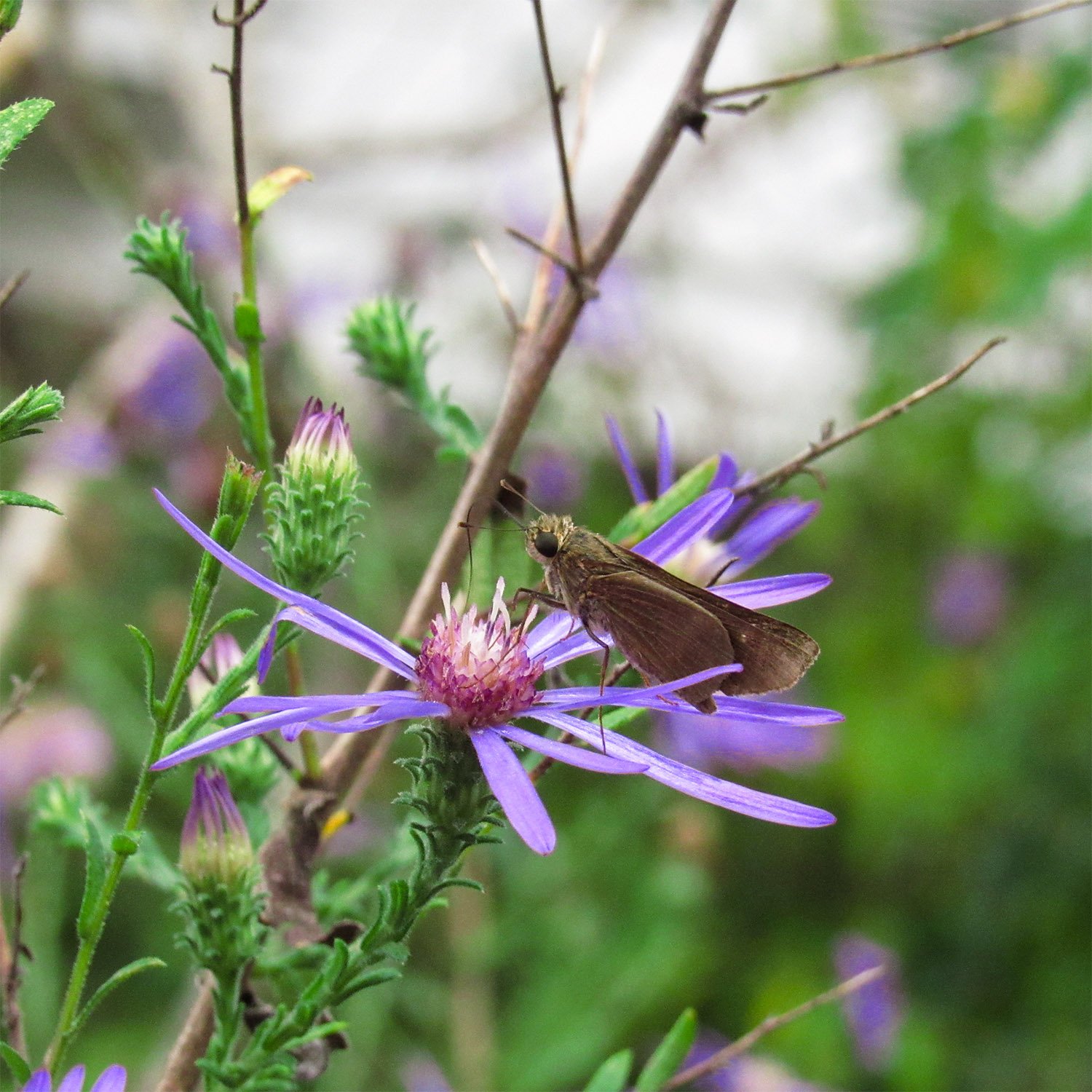
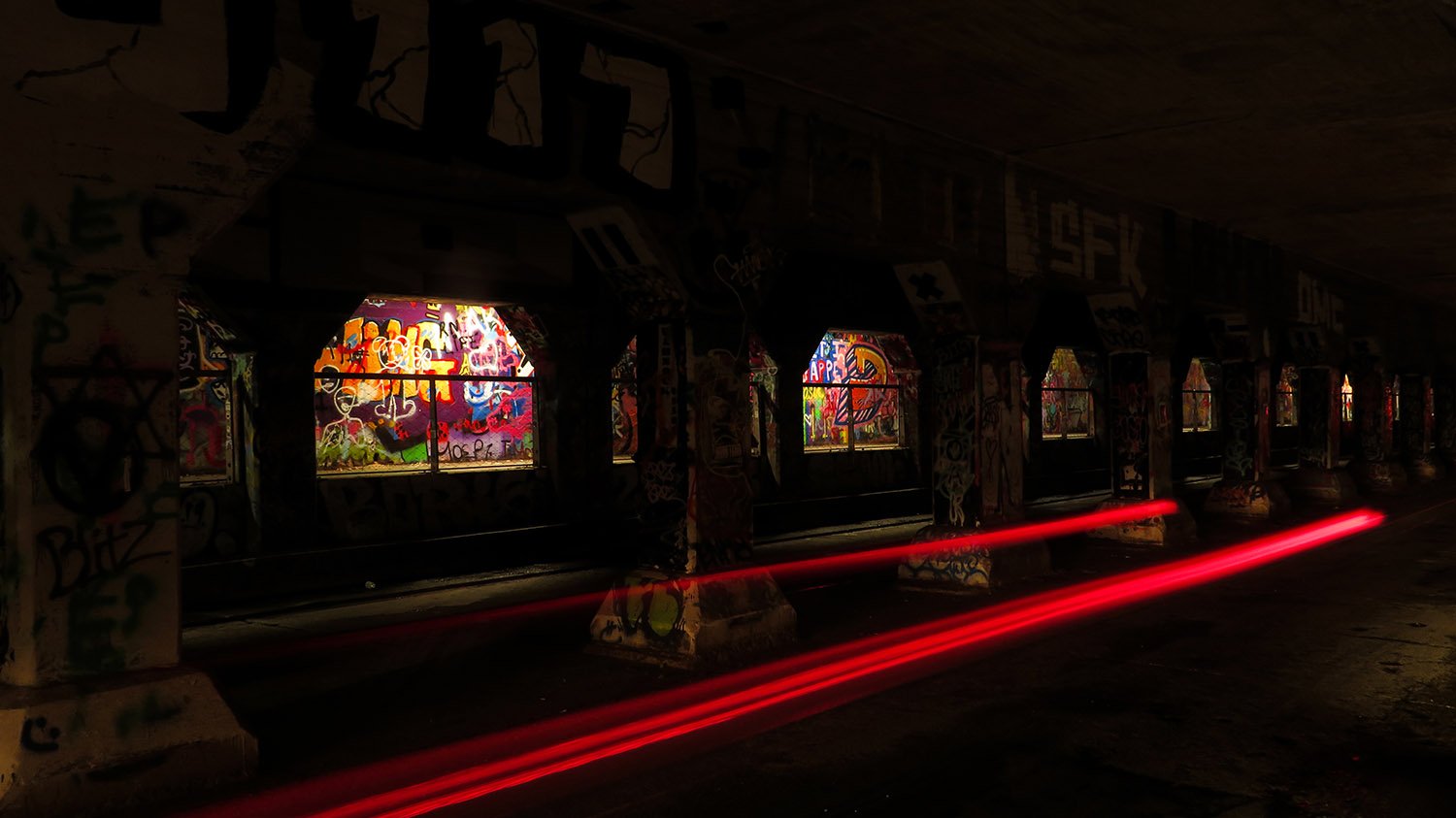
I had a dream last night that I was the sole passenger on a train—
A train that ran on no track.
I only realized it when we passed through a place I wasn’t expecting.
This isn’t on the route, I thought.
I then noticed the train was free-falling down a steep slope.
I was petrified.
To my amazement, the unseen engineer skillfully navigated a sharp right turn onto an old trolley track,
And we descended a curving road paved with Belgian block.
The ride down was rough, but as we reached the bottom, we slid comfortably onto level ground.
Then I watched with disbelief as the train coasted through a forbidding gate—
The guard standing sentinel smiled and waved us through as if we were expected.
I finally understood that this chaotic journey had been carefully orchestrated:
The route without a track was exactly how I was supposed to reach my destination.
It’s true that the mercurial twists and turns of my life have often scared and perplexed me.
I learned long ago to work with whatever tools are available to me in the moment, without attachment,
Trusting that, somehow, it will lead me to my next step.
When the tool inevitably breaks and the moment ends,
I’ve never hesitated to take the next turn, the next bend, the next exit—
To my mind, I’ve never had a choice.
To those outside my train, it must look confusing and erratic.
I’ve become used to the looks of bewilderment, the remarks of scorn and ridicule.
What people have yet to comprehend is that this is the future planned for all of us:
The tracks that were long ago laid are being actively dismantled and destroyed.
No longer will we have the luxury of following a prescribed route in comfort—
We must now learn to trust the wisdom of irrational guidance.
Buckle up.