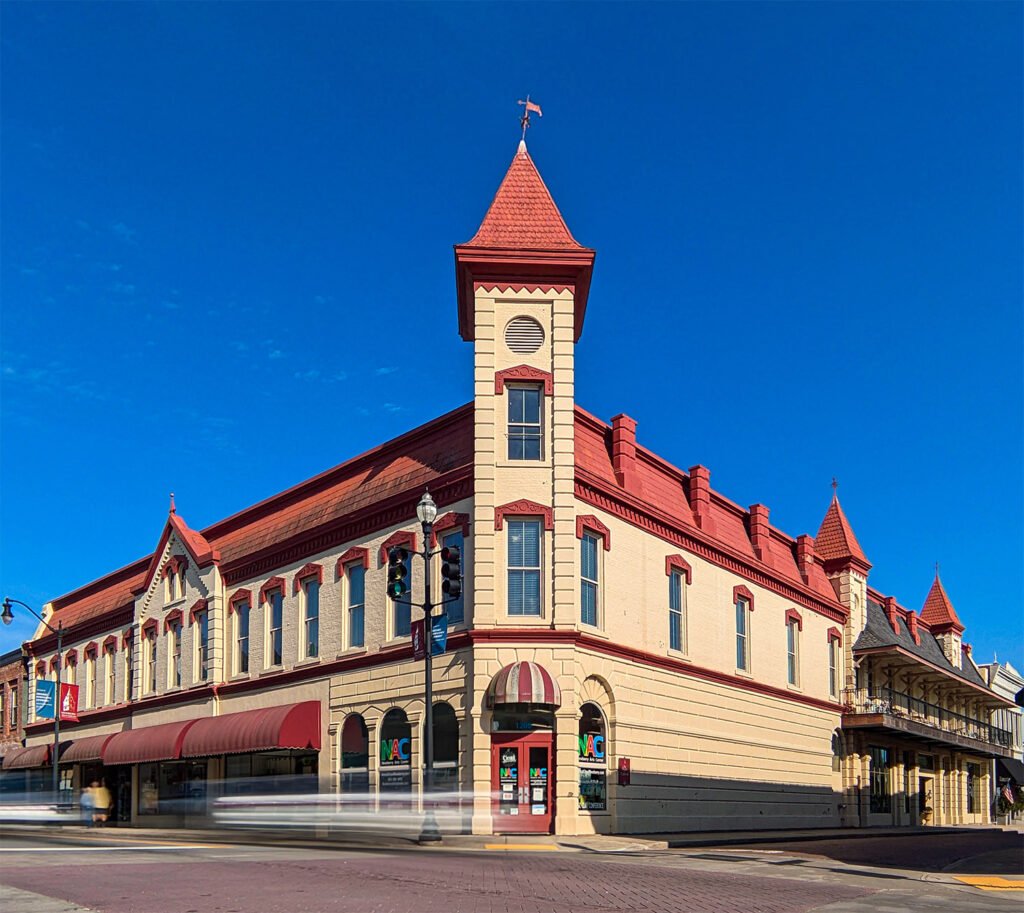
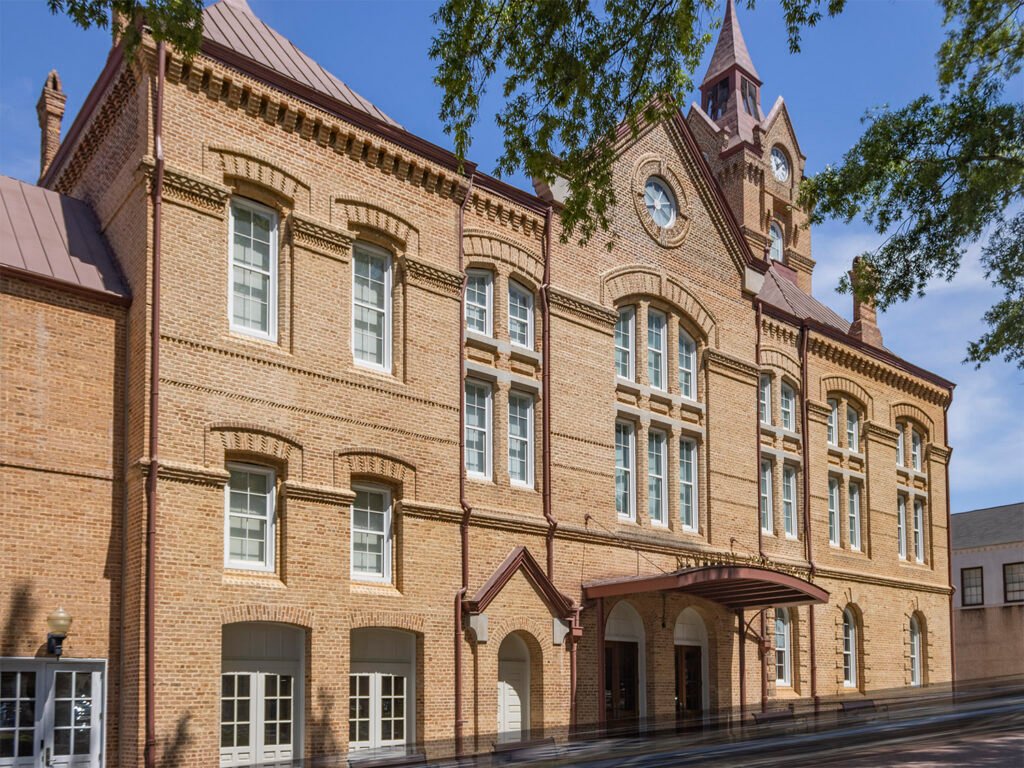
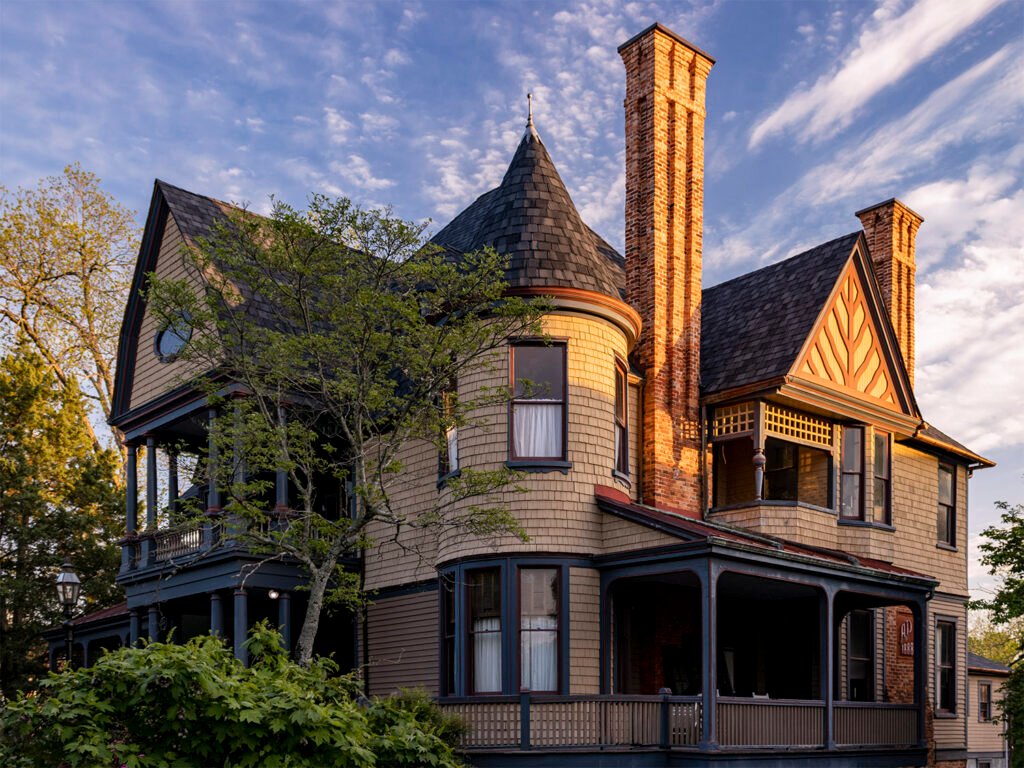
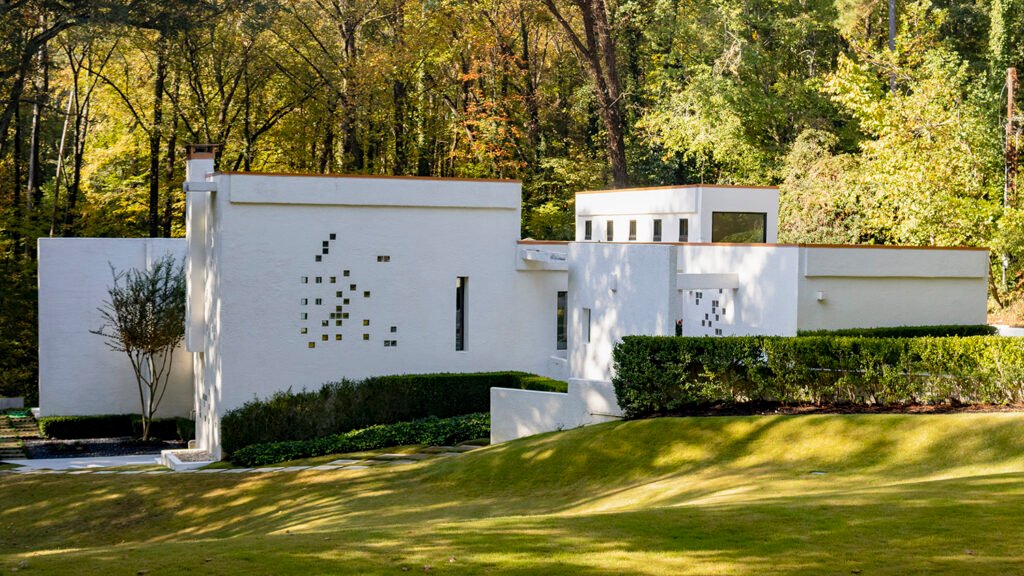
Yesterday was manic but rewarding as I took an unexpected jaunt to South Carolina to get my final photographs of 4 works by G.L. Norrman: the Newberry Hotel and Opera House in Newberry, and the Samuel McGowan House and Eureka Hotel in Abbeville.
Norrman’s spirit is more or less infused with mine by this point, and the proof is in the images. I’ve taken great pictures of many fine buildings, but my photographs of Norrman’s work are consistently my best.
G.L. Norrman.Newberry Hotel (1879). Newberry, South Carolina. G.L. Norrman.City Hall and Opera House (1882). Newberry, South Carolina. G.L. Norrman.Eureka Hotel (1903). Abbeville, South Carolina. G.L. Norrman.Samuel McGowan House (1889). Abbeville, South Carolina.
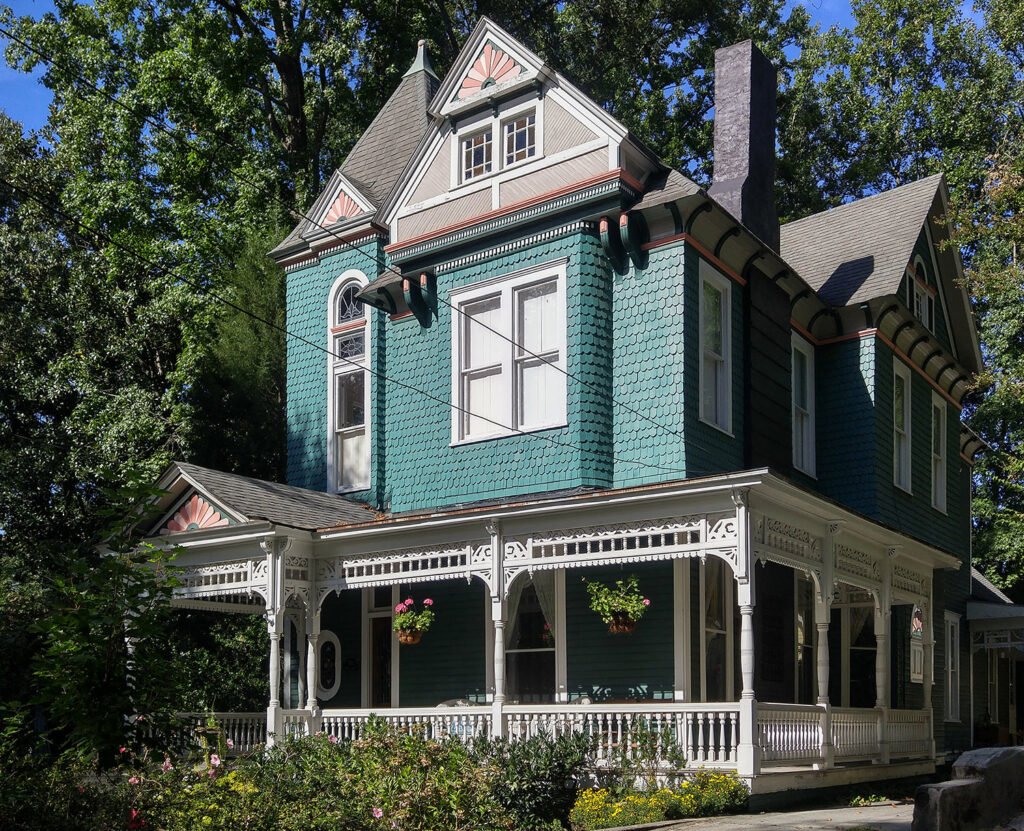
J.W. Golucke.M.A. Hale Residence (1892). Inman Park, Atlanta.
This Queen Anne-style home is Atlanta’s only known extant work designed by J.W. Golucke (1857-1907),12 a shyster carpenter who built a career on smooth talk and grand delusions of being a legitimate architect.
A thoroughly fraudulent and incompetent designer, Golucke was one of several “Atlanta architects” of his era who did little actual work in the city, primarily peddling their shoddy plans to poor, rural communities that didn’t know any better. Thus, if you travel through backwoods Georgia, you’ll find more than a dozen county courthouses by Golucke’s design3 — all of them terrible.
Golucke fittingly died in a south Georgia jail cell while being held on charges of forgery,4 weeks after attempting suicide under the influence of drugs.56 His work is not celebrated here.
References
“Atlanta’s Growth.” The Atlanta Constitution, July 13, 1892, p. 7. ↩︎
“Mrs. M.A. Hale’s Death.” The Atlanta Constitution, March 29, 1896, p. 6. ↩︎
G.L. Norrman.Edgewood Avenue Grammar School. Inman Park, Atlanta (1892).
The Background
The following remarks by G.L. Norrman were included in a biographical sketch titled “An Educated Architect”, published in the December 17, 1892, edition of The Atlanta Journal.
Norrman’s remarks:
“I prefer the classic for libraries, school houses, courthouses and all buildings of an educational character, as most proper. For depots and hotels any style will do, but I prefer the Romanesque for depots and the renaissance for hotels and homes as being more homelike and less business like in appearance. Churches I like Romanesque because the growth of the church and that style of architecture are so closely identified.
“The so-called ‘colonial style’ of the old southern mansions is renaissance so far as the builders were able to carry that style in those olden days, and it has recently come again into popular favor because of the sentiment that clings about those honored halls.”1
References
“An Educated Architect.” The Atlanta Journal, December 17, 1892, p. 9. ↩︎
G.L. Norrman. Samuel McGowan Residence (1889). Abbeville, South Carolina.
The Background
On January 6, 1892, a large tornado obliterated the town of Fayetteville, Georgia, located 25 miles southwest of Atlanta, killing 3 people. While cleanup and rebuilding efforts were underway, G.L. Norrman offered his advice on how to build houses quickly and cheaply in the January 14, 1892 edition of The Atlanta Constitution, in an article titled “For Fayetteville”.
Norrman’s remarks:
“If the homeless people of Fayetteville can get lumber and brick in the manner suggested byThe Constitution, they can build houses very quickly and cheaply on the same plan employed to house the people of Chicago after the great fire. The houses so built are very light, but very strong. The plan was to make the frame entirely 2×8 joists and one inch plank. The 2×8 inch joists were put down on blocks in the same way that sills are laid. The floor joists were then put in two feet apart, with the ends resting against the side joists. Twenty-penny nails were driven through the side pieces from the outside into the ends of the floor joists. Two such nails were so driven in each.
“This could be made stronger by nailing a 1×2 strip on the inside of the side pieces under the floor joists. Planks one inch thick and a foot wide were then set upright and nailed to the sides and ends. The cracks between the plank were covered with strips, and the joists rested on them above just as they they do ordinarily upon studding; and so the roof was supported. The inside of the plank was lined with canvas and covered with building paper, which made the house quite warm. A stack chimney was built in the center and was made to serve two or three rooms. The chimney dropped back about three feet above the fireplace, and on the shoulder so made a board was fastened, making a simple but convenient mantel-piece. The chimney so built contained about two thousand five hundred brick. The houses were easily kept warm and very comfortable with well-fitted doors and windows.
“They are ready to be occupied and at any time afterwards may be plastered, for a very small cost by nailing one-inch strips diagonally on the walls over the building paper, and laths over these strips. Strips, laths and plaster take up about one and three-fourth inches and with the paper, canvas and plank already there, they make a wall about three inches, thick, giving a house closer and warmer than an ordinary plastered frame house. The diagonal strips give the structure remarkable strength. I built such a house on the mountain side at Tryon, S.C., and it was struck by a storm and carried away. The chimney was demolished, but the house rolled down the mountain side without breaking. Twelve years ago I built a number of such houses, with six rooms each, at Spartanburg, S.C., at an expense of $350 each, including material and labor. It is remarkable how cheap you can build a comfortable house.
“If any of the Fayetteville people wish to try this plan I will be pleased to give them any necessary explanation. No drawings will be necessary.”1
References
“For Fayetteville.” The Atlanta Constitution, January 14, 1892, p. 7. ↩︎
G.L. Norrman. W.W. Duncan Residence (1886). Spartanburg, South Carolina.
The Background
The April 13, 1890, edition of The Atlanta Constitution published this wide-ranging conversation with G.L. Norrman in the article “Eight Millions More”. The reporter had visited Norrman’s office to solicit his thoughts on construction prospects in Atlanta for the upcoming building season, but Norrman was more interested in discussing his ideas about architecture.
Norrman’s remarks:
“My advice is that people build simple houses, especially if they have not much to spend. The main object of a house is to make people comfortable, and to build simply for show is in bad taste. They put on all kinds of cheap ornaments that are vulgar even on expensive houses, and where they are trying to make a show with little money it is the shoddiest building they can get up. It is expensive and not ornamental.
“A house should always be made as simple as possible; nothing should be put on that may be left off. It is strange that business men of good sense should use it so badly when they come to build, and instead of building for comfort should build entirely for show. They even put tops on school houses that make them look like summer hotels.”
Reporter: What is the prevailing style?
“The prevailing style is no style at all. But few houses here or elsewhere are built in good taste. Any style is good. There is no preference, so that the style is carried out. A building should also suggest in its architecture the purpose for which it is intended.
“The Romanesque style was introduced into this country by Richardson, who has used it very effectively; but his imitators always make a failure of it because they are not as cultivated as he, and consequently do not know how to carry it out. I do not think it a good style for libraries and public buildings, because it is a style that was developed in the most barbarous age and has no suggestion of learning.
“The colonial style has been introduced lately by McKim, Mead & White, of New York, and it is very good as they designed it, but there are few who carry out the style well. At best it has a number of absurdities that are only interesting because of their association with the early history of this country.
“The so-called colonial style is barbarism of the Italian renaissance interpreted by Sir Christopher Wren. The best buildings on this continent are as a rule of that style. Mr. [E.C.] Gardner, of this city, who is a very cultured architect, is strong in colonial style.
“Whatever suits the occasion is best no matter what style, whether gothic, Romanesque, Queen Anne or renaissance so it is harmoniously carried out.
“Shingle as a rule is the best wall covering for frame houses, because the grain of the wood is perpendicular, whereas in weatherboarding it is not. But when shingles are put up as an ornament, it is in bad taste, for there is no particular beauty in the shingle.
“There should always be eight inches of brick around flues where the brick touches woodwork. It takes more brick, but it is the only safe way to build a chimney, and I always put it in the specifications. Architects, as a rule, do not build chimneys large enough. Usually they only put four inches of brick between a flue and woodwork. That is not sufficient.
“Galvanized iron does not harmonize with anything. It is a makeshift. It is used because stone is too costly.
“If a child looks up and sees iron painted to imitate stone, his keen eyes detect the fraud; and when his father undertakes to teach him truthfulness, the child tells him he is another. Why, I have even known ministers to build such falsehoods in their churches.”
Reporter: Do you get any ideas from nature?
“Painting and sculpture are intended to suggest nature, but architecture is not. There is nothing in nature that you can pattern after. A great many writers on architecture know nothing about it. There is Ruskin who wrote so many books about architecture without understanding his subject. In his description of the church of San Marco, he said the undulatory appearance of the floor was the architect’s representation of the waves of the Adriatic. If he had understood construction he would have known that the church was built on piles and the floor settled.
“The outlook for building is good this year, and I think there will be more of it done this year than last; certainly the houses will be of a better character.”1
References
“Eight Millions More.” The Atlanta Constitution, April 13, 1890, p. 7. ↩︎
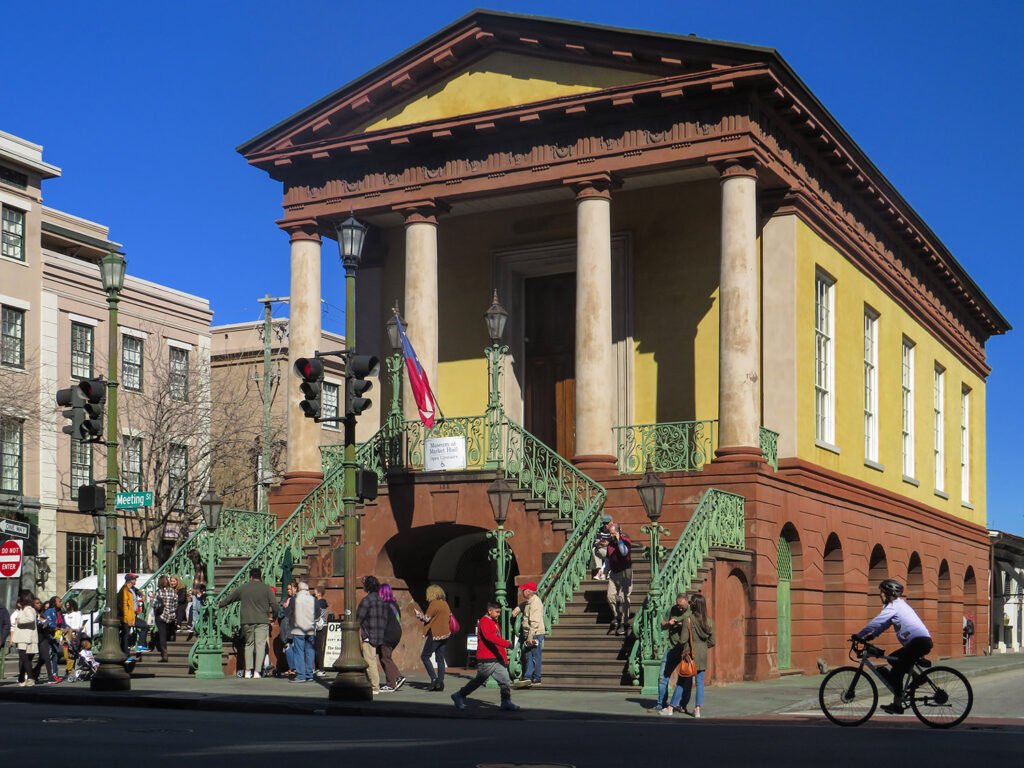
Edward B. White. Market Hall (1841). Charleston, South Carolina.12
The Background
In August 1888, P.J. Moran, a member of the Atlanta city council, proposed an ordinance to establish central market houses owned and operated by the city, based on the public market house in Charleston, South Carolina34 (pictured above), which is still in operation.
G.L. Norrman was clearly in favor of the plan and expressed his thoughts for the August 23, 1888, edition of The Atlanta Constitution, in an article entitled “The Market Houses”. In typical Atlanta fashion, the council deliberated the idea for years,5678910 but took no serious action, and the plan eventually fizzled out.
In 1892, a central market designed by Bruce & Morgan of Atlanta was announced with great fanfare,1112 but the plans were quickly abandoned when the city council refused to grant the owners’ request for a 15-year protection agreement that would prohibit similar markets from operating in the city.1314
It wouldn’t have made any difference, because Atlanta had no such markets until the 1924 opening of the Municipal Market (later Sweet Auburn Curb Market).1516 So much for it being a progressive city.
Norrman’s remarks:
“I am very much interested in the market house project started by Councilman Moran. I have given the matter a good deal of study. My idea is that the markets should be erected between Peachtree and Broad Streets, in the rear of the National hotel. This space is not occupied at present and it probably could be purchased by the city at a cheap figure. But if it is not practicable to get this, let the city have one markethouse for south Atlanta and one for north Atlanta. Just where they should be located I cannot say, but they ought to be in convenient localities. Atlanta should lose no time in abolishing the many meat stores which are to be found in nearly every street. It is a wonder that they have not bred disease long ago. In these stores are all sorts of perishable articles which are permitted to decay. The city needs nothing so badly as it needs adequate market houses. I trust that the ordinance introduced by Mr. Moran will be carried into effect.”17
References
“Proceedings of Council.” The Charleston Mercury (Charleston, South Carolina), June 5, 1840, p. 2. ↩︎
“The New Market.” The Charleston Courier (Charleston, South Carolina), January 4, 1841, p. 2. ↩︎
“A Dull Meeting”. The Atlanta Constitution, August 7, 1888, p. 5. ↩︎
“Market Houses.” The Atlanta Constitution, August 21, 1888, p. 8. ↩︎
“The Market Problem”. The Atlanta Constitution, December 16, 1888, p. 26. ↩︎
“The Chances Are Slim”. The Atlanta Journal, February 15, 1889, p. 1. ↩︎
“The Market House.” The Atlanta Constitution, February 24, 1889, p. 12. ↩︎
“Shall We Have a Market House?” The Atlanta Journal, February 25, 1889, p. 3. ↩︎
“About the City Hall.” The Atlanta Constitution, March 23, 1889, p. 7. ↩︎
“The Market House.” The Atlanta Journal, August 1, 1890, p. 3. ↩︎
“The Market Building.” The Atlanta Journal, February 9, 1892, p. 3. ↩︎
“Atlanta’s New Market.” The Atlanta Constitution, February 24, 1892, p. 5. ↩︎
“Work of Council.” The Atlanta Journal, March 8, 1892, p. 2. ↩︎
“No Market for Atlanta.” The Atlanta Constitution, March 23, 1892, p. 1. ↩︎
“Big Crowds Attend Opening Of New Municipal Market.” The Atlanta Constitution, May 4, 1924, p. 8. ↩︎
“Busy Scenes Mark Opening Of Local Municipal Market”. The Atlanta Journal, May 4, 1924, p. A11. ↩︎
“The Market Houses.” The Atlanta Constitution, August 23, 1888, p. 8. ↩︎
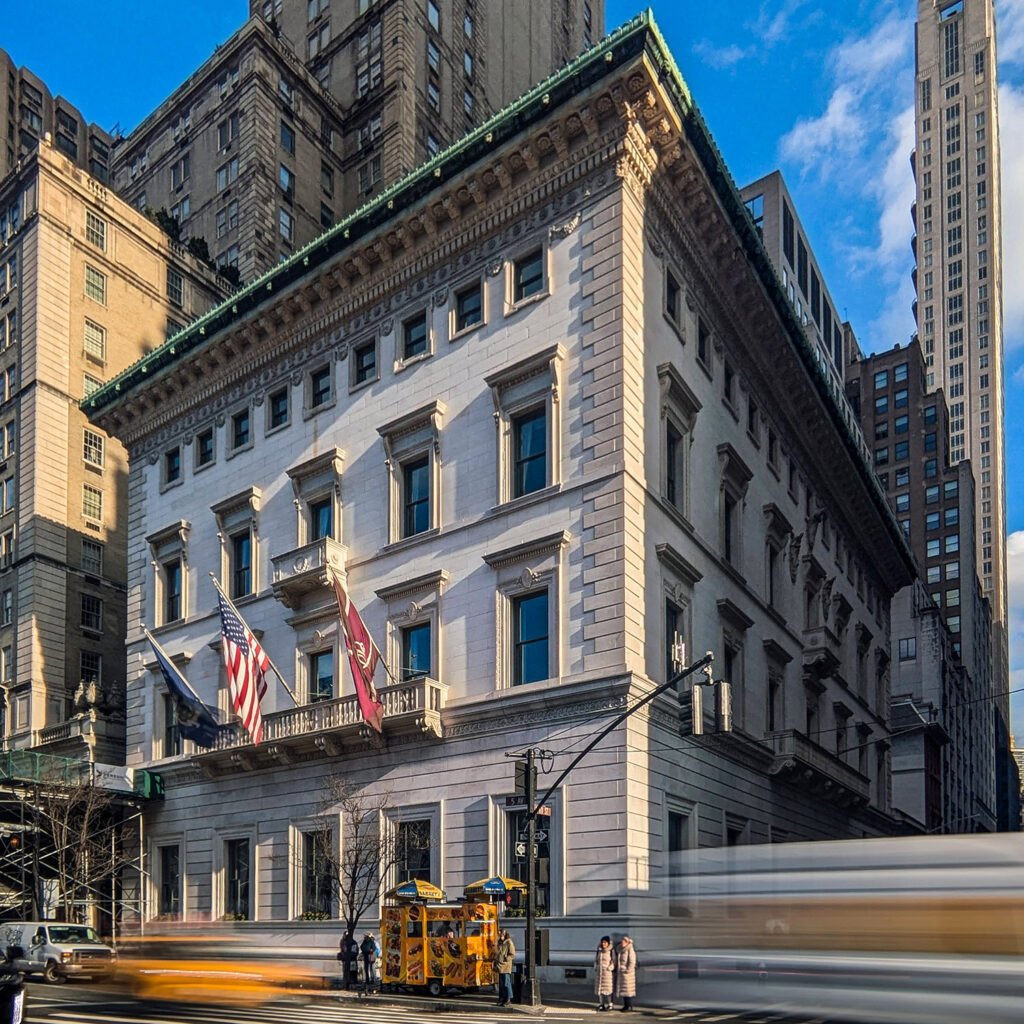
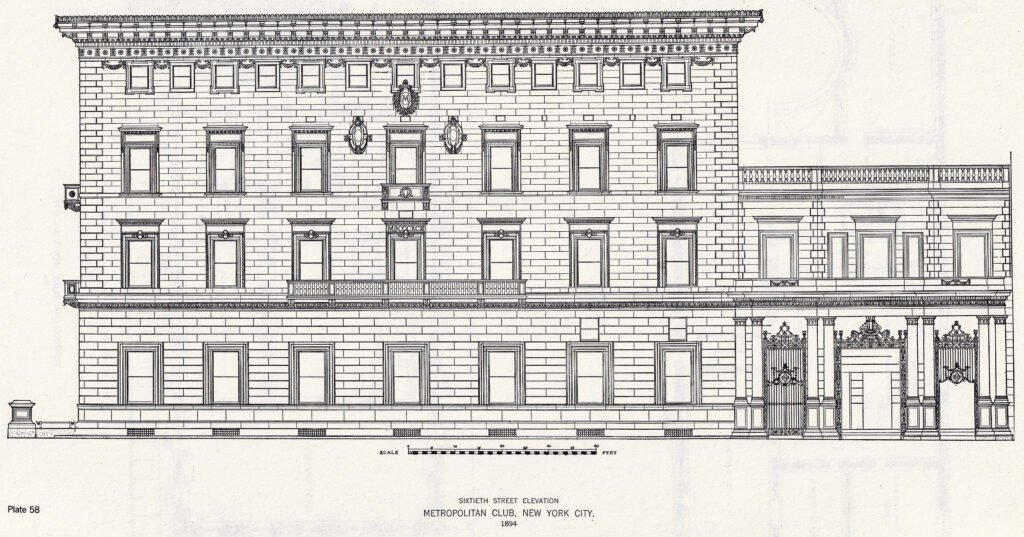
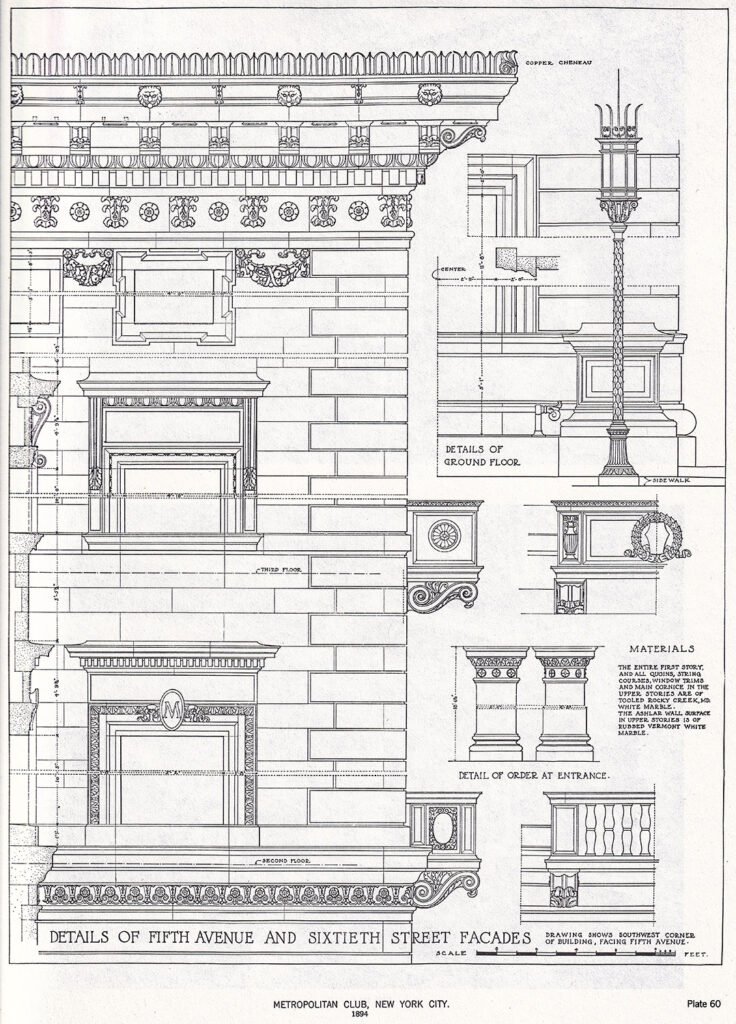
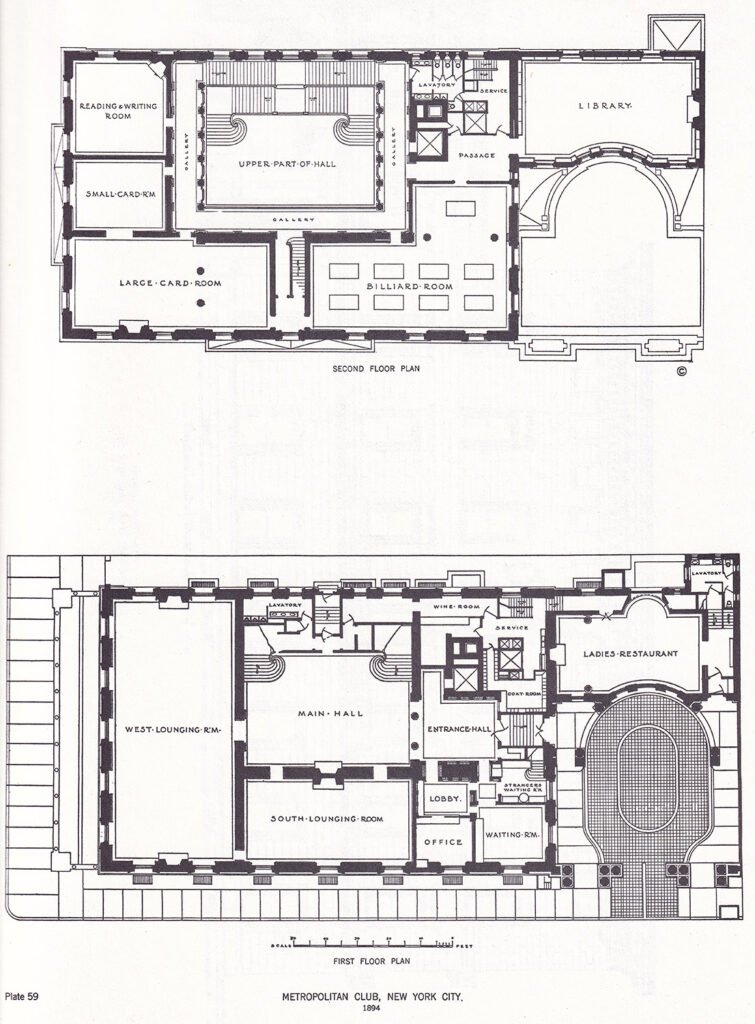
Stanford White of McKim, Mead & White.Metropolitan Club (1894). New York.1
The Fifth Avenue side of the Metropolitan Club enjoys just a few minutes of direct light in the winter, so I had to work fast for this picture. It was a freezing day in January — hours before a snowstorm hit — but damn it, the result was worth the misery.
Of the many fine examples of Stanford White’s work in New York, this is the best. The composition is simple yet refined, the elements are perfectly balanced, and the facade is delicately textured with just the right amount of ornamentation. Someday I’ll get the detail shots.
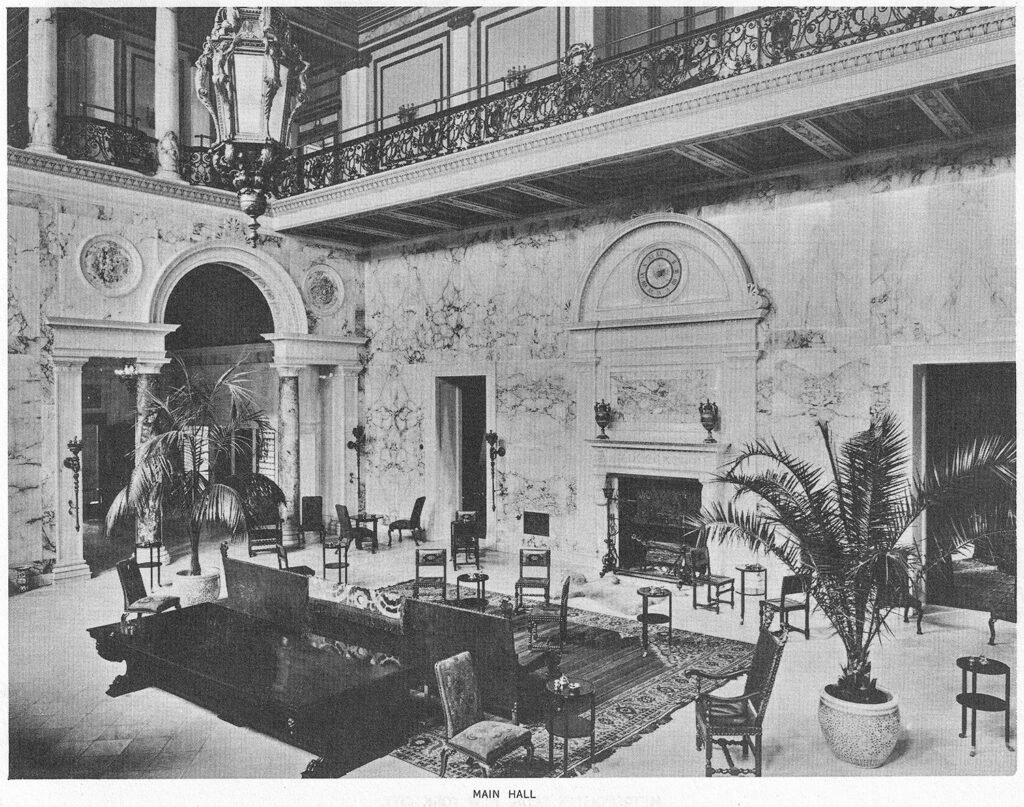
The structure was designed in the style of an Italian palazzo and built of marble, with opulent interiors that I’ll certainly never photograph. The Metropolitan Club, after all, was founded by millionaires and is now patronized by billionaires. I’ll just take pics by the Halal cart across the street, thanks.
The following article was originally published in the September 1892 edition ofThe Southern Architect, and was written by Edmund George Lind (1829-1909), professionally known as E.G. Lind, a British-born architect who spent most of his life and career in Baltimore, but practiced in Atlanta from 1883 to 1893.
Less an article than a few brief notes, here Lind offers guidance on selecting interior colors based on a room’s orientation to the sun.
Synthetic pigments developed in the 19th century brought a dizzying array of bright new colors into existence, and in the age when the rule-breaking artists of Impressionism shocked the public with the bold and vivacious tones of their paintings, color was the subject of both intense scientific scrutiny and countless mystical theories.
As de facto interior designers, architects had to possess a strong understanding of the relationship between light and color, and Lind took a special interest in color and its associations: in 1882 he presented his own mystical theory on “The Harmony Between Color and Music” to his colleagues in the American Institute of Architects.
Lind’s suggestions here are more or less conventional wisdom for choosing interior colors, and are perfectly applicable today. However, in a time when nearly all conventions are being actively dismantled and questioned, Lind’s insistence on adherence to a set of arbitrary rules feels amusingly antiquated. Rules, after all, are made to be broken.
Coloring of Rooms
If the aspect of a room be north, northeast, northwest, or due east, the general tone of the coloring should be positively warm. Blues, greens, etc., all shaded colors which involve any predominant use of blues, must be avoided.
In such aspects the choice should tend towards reds and all their various combinations with yellow.
As the aspect approaches east and west, so colors should verge towards yellow, rather than red tints. In an eastern aspect, tints of light yellows, lemon colors, etc., are always effective and cheerful.
If the aspect is south or southwest or west, and opens to the sun, then we may venture on the use of cooler colors even on positive blue.
Where the light is strong, unobscured and plentiful the tone of coloring may be full.
Where the supply of light is small, the coloring should be light.
It should be borne in mind that full toned colors lessen the apparent size of a room, while light coloring enlarges it.
It was a freezing day in Philly when I snapped this pic of a pigeon shivering on a fire hydrant — I believe it was on 15th Street in Center City, across from City Hall.
Snow was on the way, and the winter wind whipping between the buildings packed a nasty bite. I hope the bird is enjoying the warmer weather.