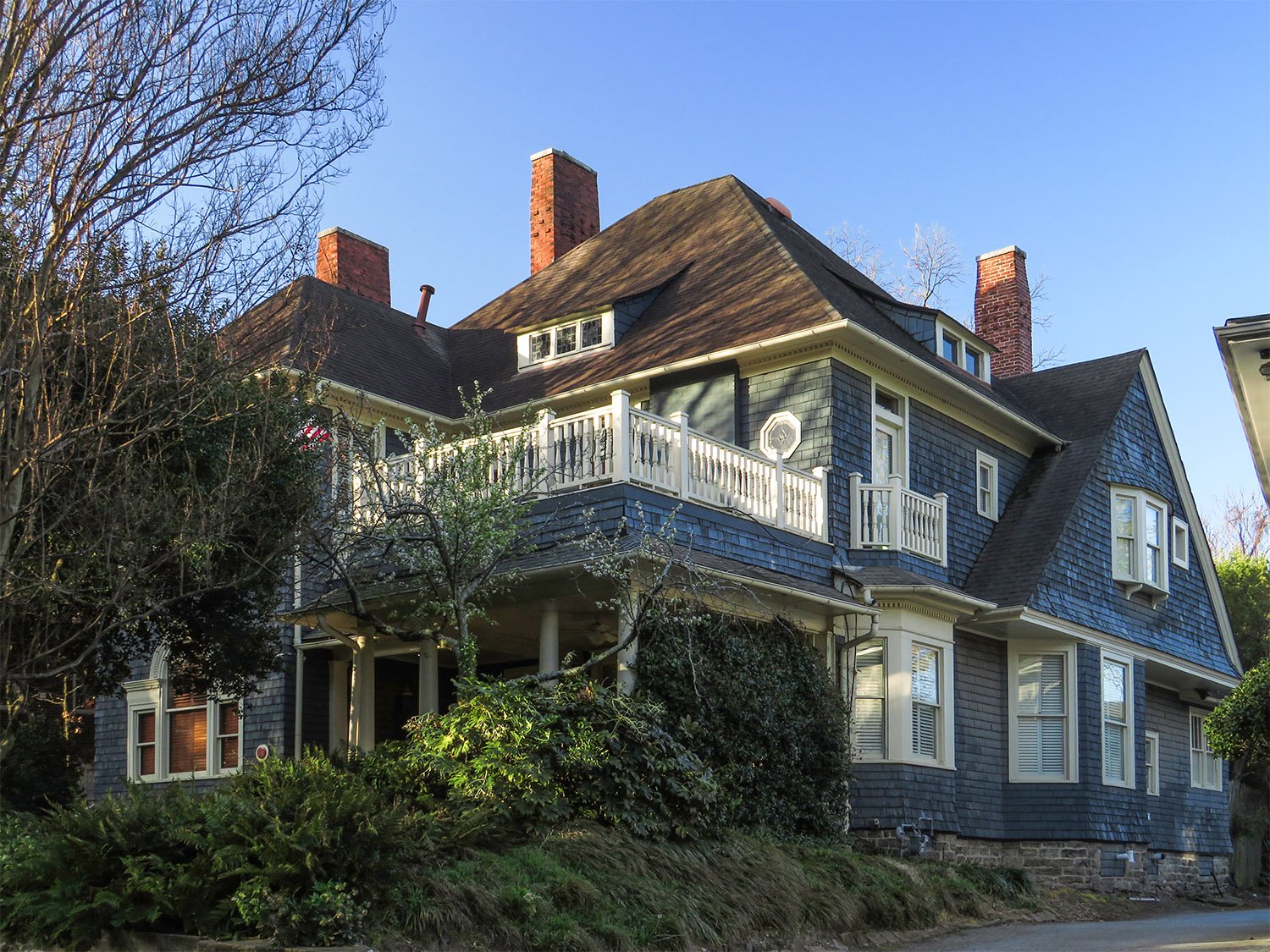
Hiding in plain sight in Atlanta’s Inman Park, the C. D. Hurt Residence isn’t conspicuous, and it doesn’t seem especially significant compared to the neighborhood’s showier mansions.
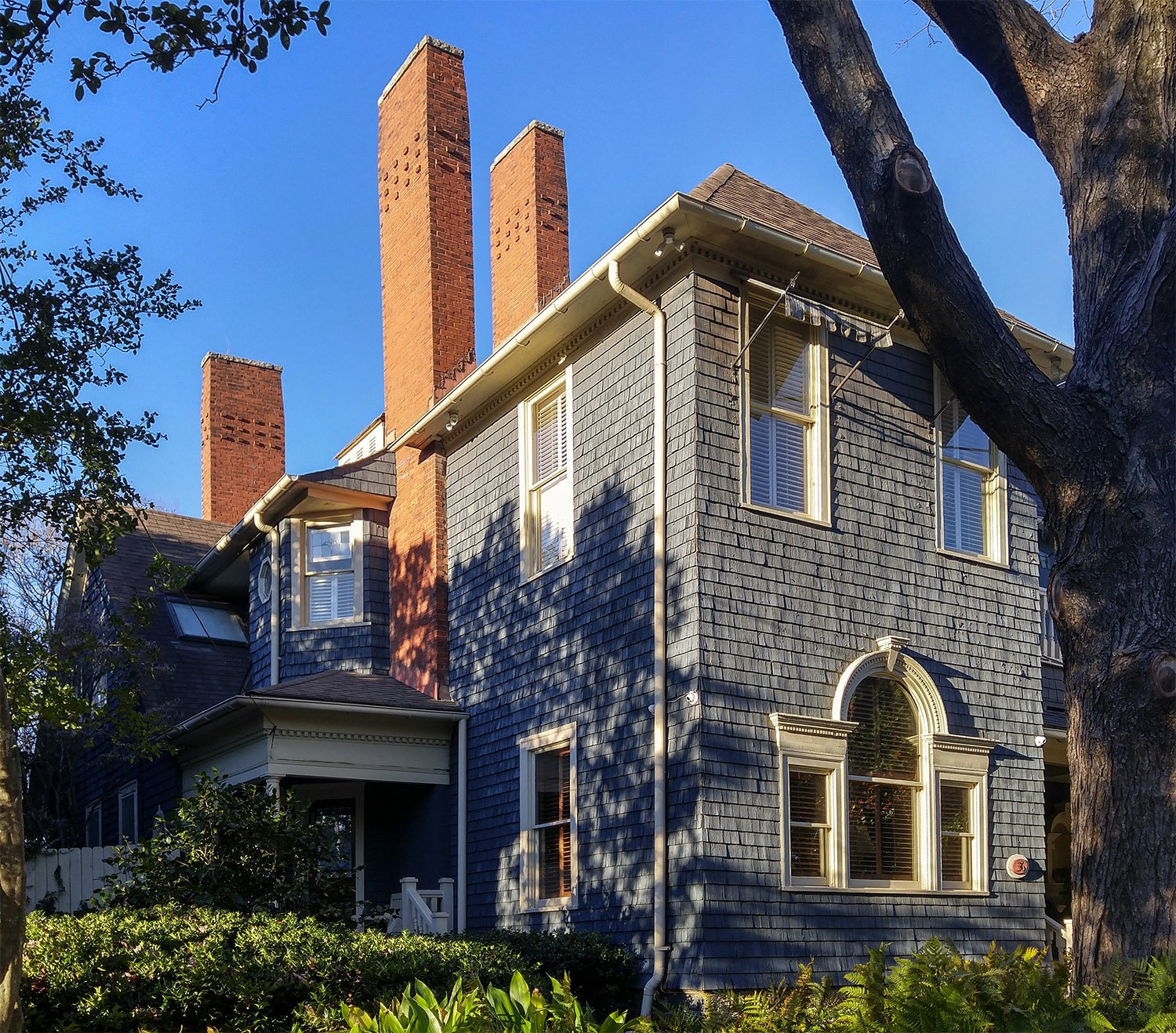
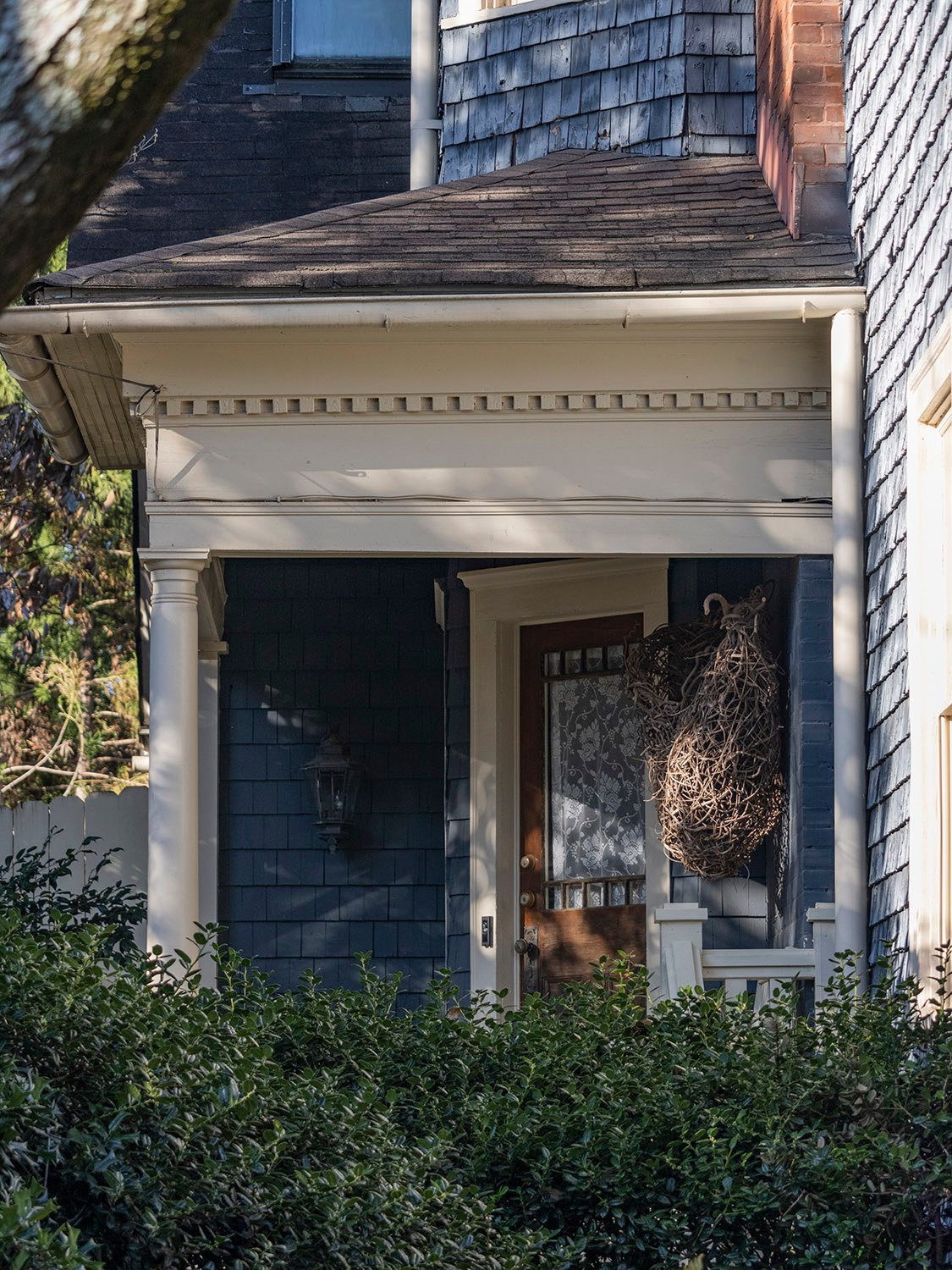
Located at 36 Delta Place NE, this rambling two-story home is primarily Colonial Revival in style, with wood shingles, steep gables, an overhanging second floor, and an assortment of oddly shaped windows that recall the vernacular designs of coastal New England architecture.
It’s good to have a little doubt when attributing buildings to architects, but in this case, there’s no need: the home can be indisputably credited to G.L. Norrman.
Location of C.D. Hurt Residence
Often erroneously dated to 1891 or 1892, the house was built in 1893, as reported in an April 1893 article in The Atlanta Constitution1 and another in May 1893 in The Atlanta Journal 2—both stated that the home was then in the course of construction.
Dr. Charles D. Hurt (1843-19063) was the older brother of Joel Hurt, president of the East Atlanta Land Company, which initially owned and developed the Inman Park suburb.
Norrman appears to have been Joel Hurt’s preferred architect at the time, completing as many as eight projects for his companies in the late 1880s and early 1890s, making him an obvious choice to design the home.
The Design
Beyond circumstantial evidence, the Hurt Residence can be handily attributed to Norrman based on specific elements that it shares with two homes designed by his firm in the same period: the R.O. Barksdale Residence (1893) in Washington, Georgia, which survives, and the Paul Romare Residence in Atlanta (1892, demolished).
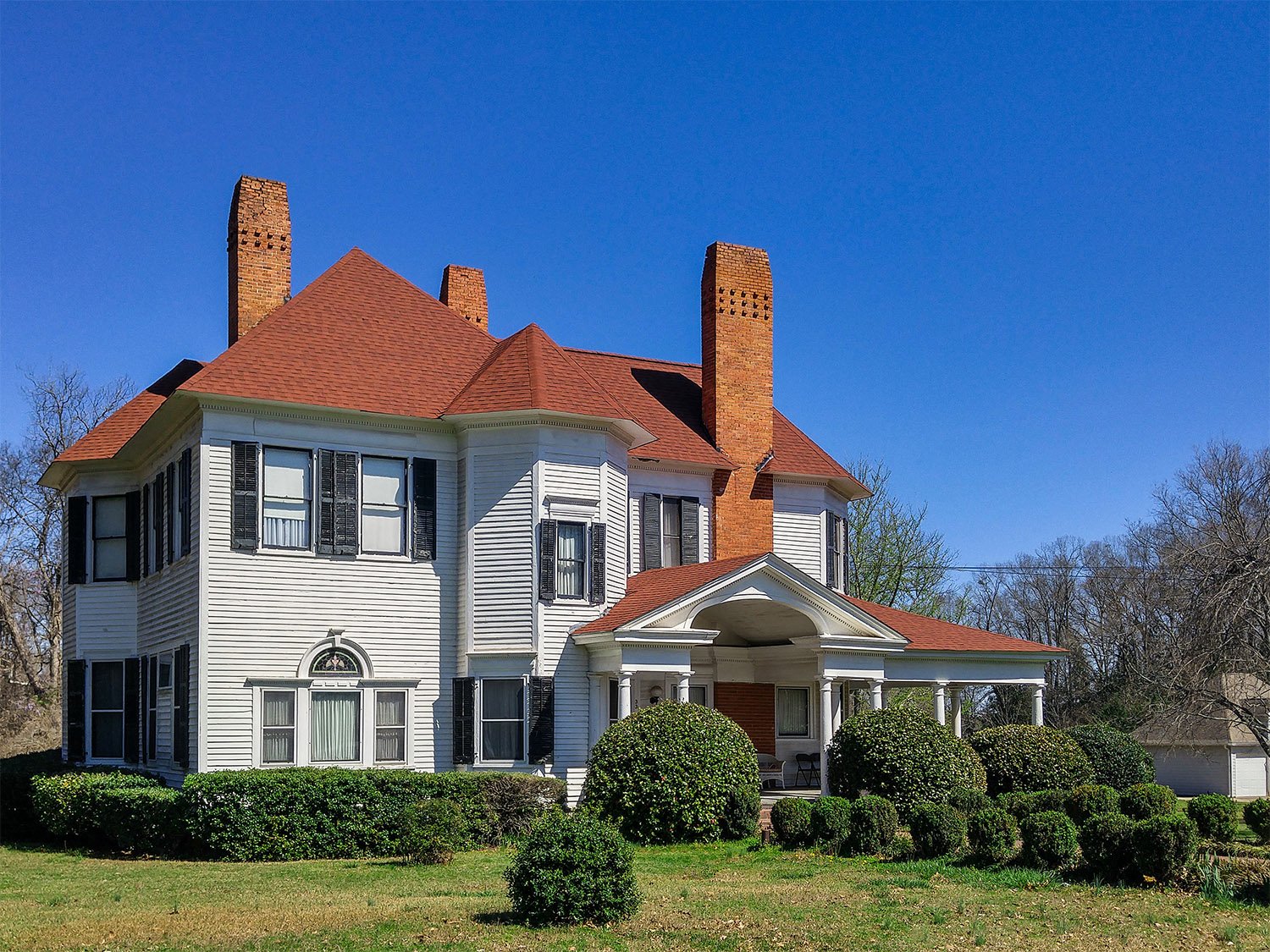
Similarities between the Hurt Residence and the Barksdale Residence:
- The facades of both houses feature a prominent bay with two second-floor windows and a Palladian window on the first floor, both topped by a hip roof.
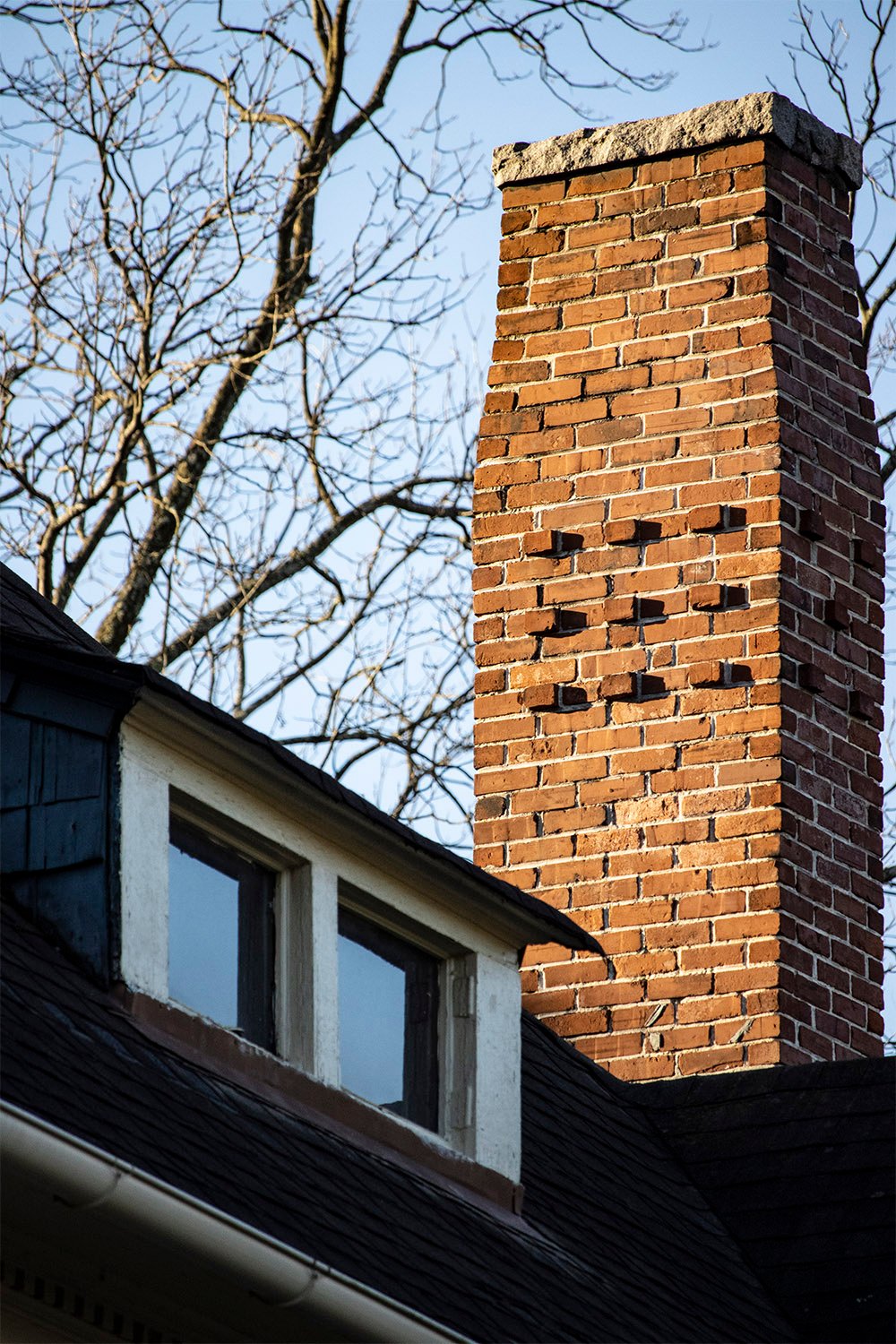
- Both houses share the same chimney designs, slightly tapered at the top, with distinctive dentilled string courses.
- Both houses originally featured a tall, exposed chimney on the front porch as a central focal point.
- Both houses include porches with dentilled cornices and Norrman’s trademark Tuscan columns.
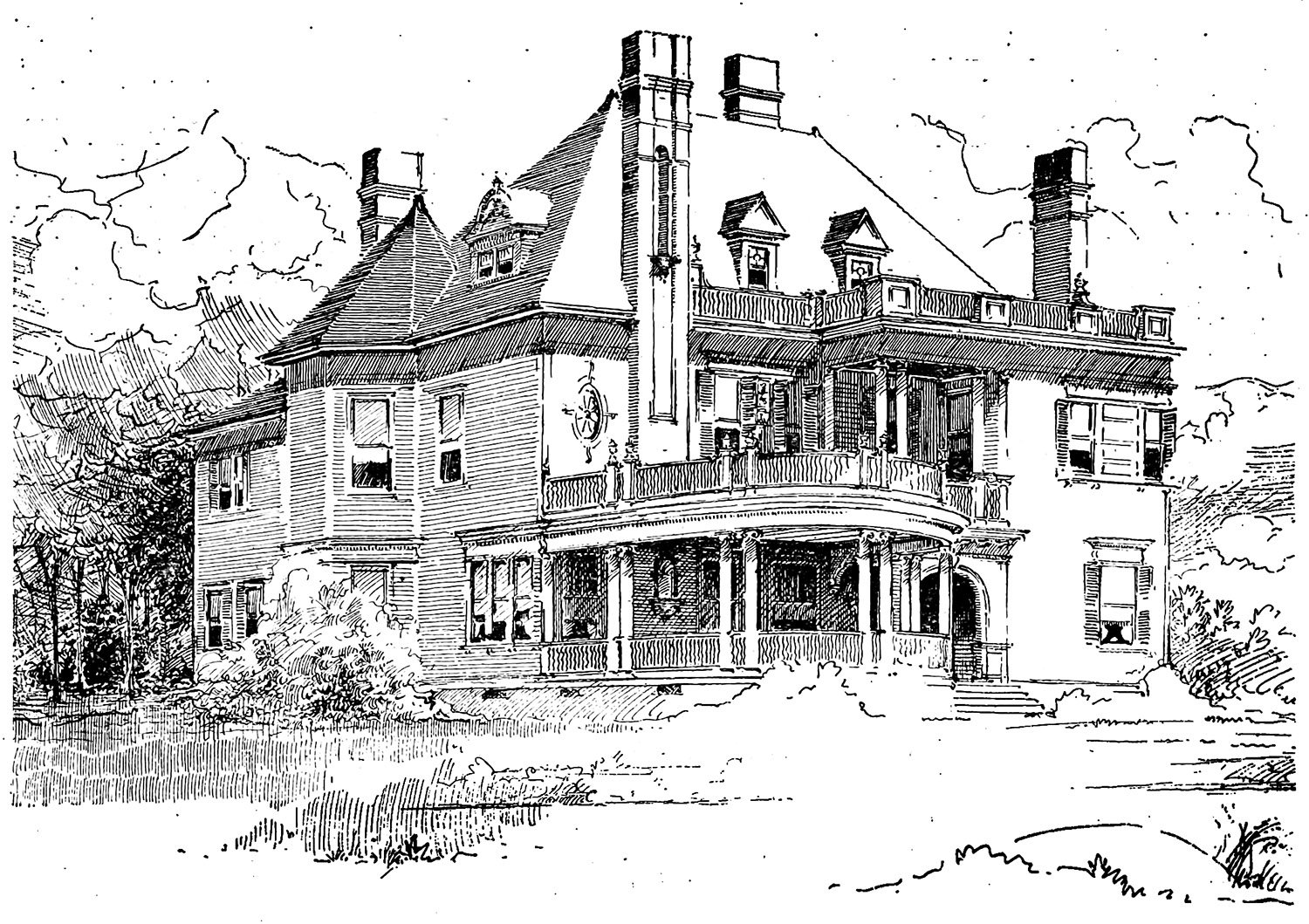
Similarities between the Hurt Residence and the Romare Residence:
- Both houses were topped with a steeply pitched hip roof.
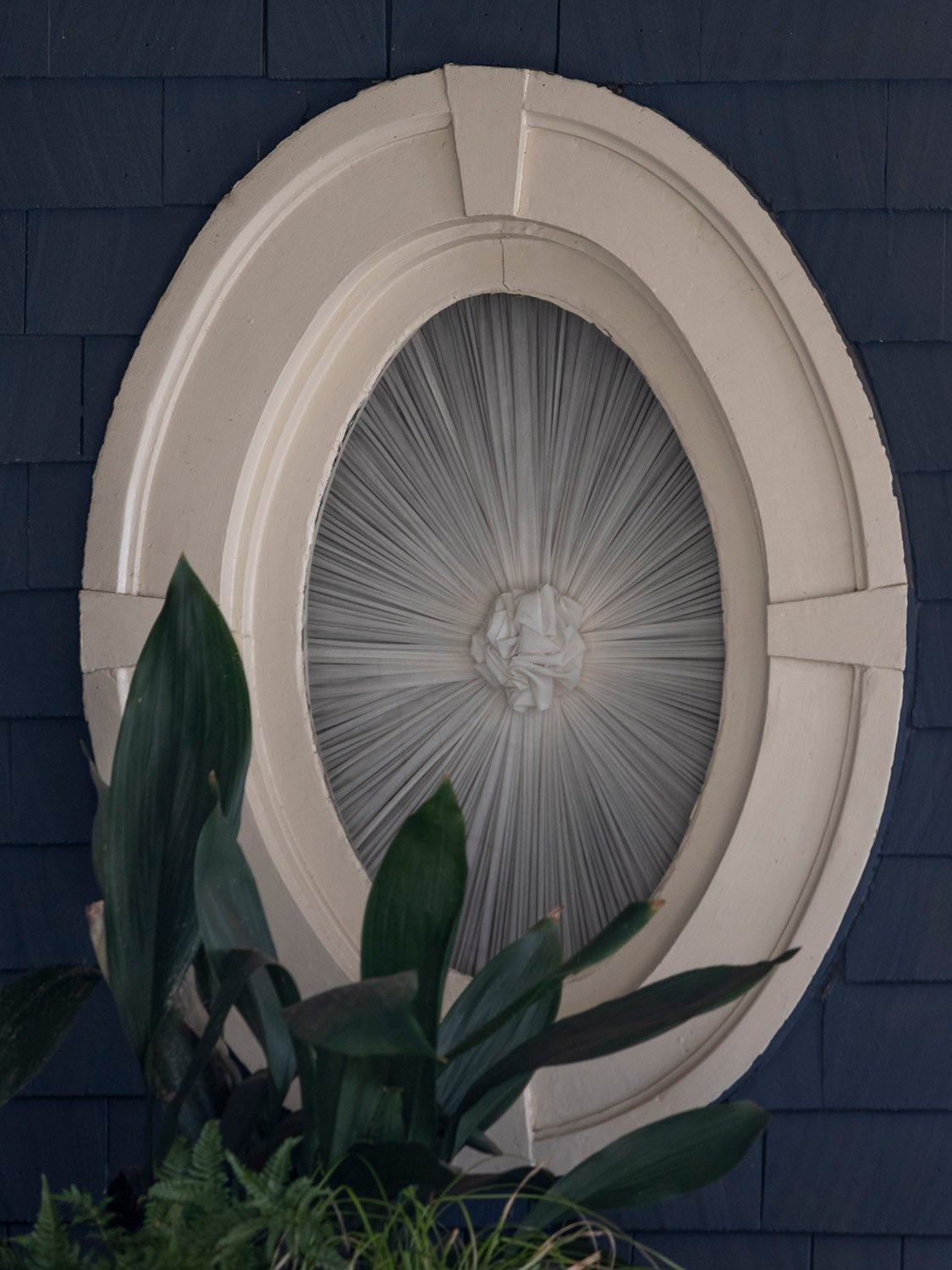
- Both houses included an oval window, also featured in Norrman’s design for the Thomas W. Latham Residence in Inman Park.
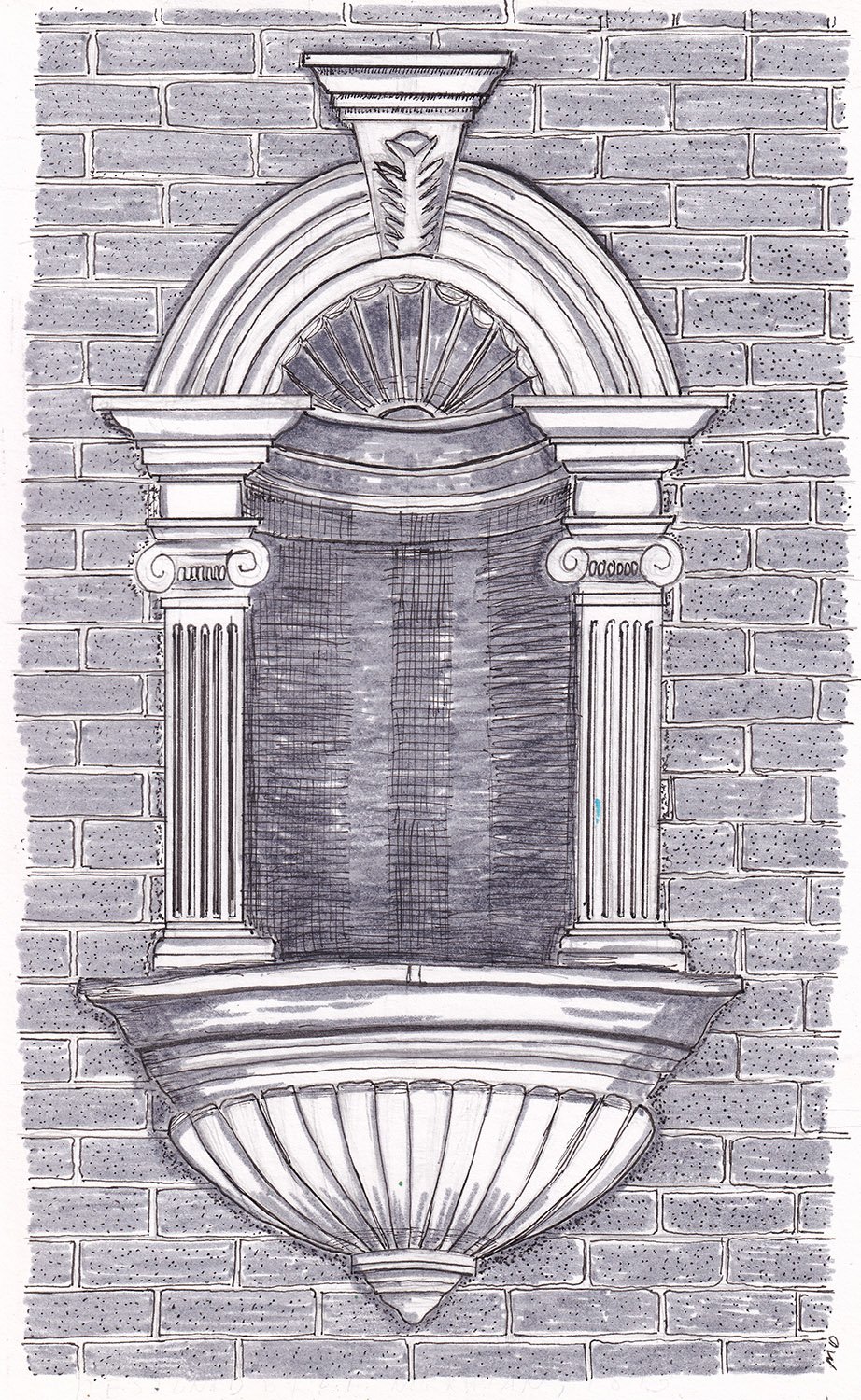
- Both houses included an exposed chimney as a focal point, each embedded with the same classically styled niche (illustrated below)
Similarities between the Hurt Residence and other Norrman projects:
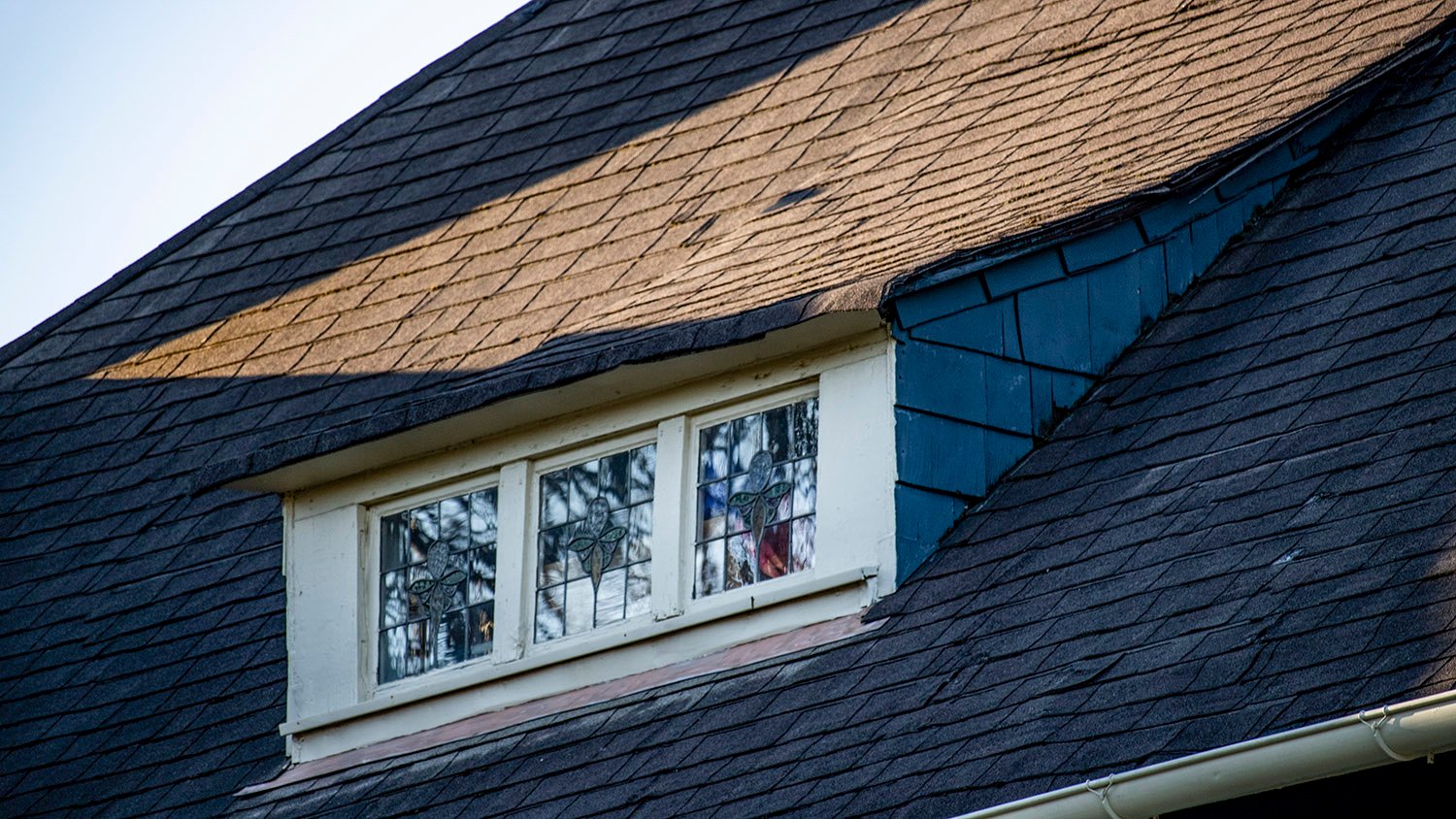
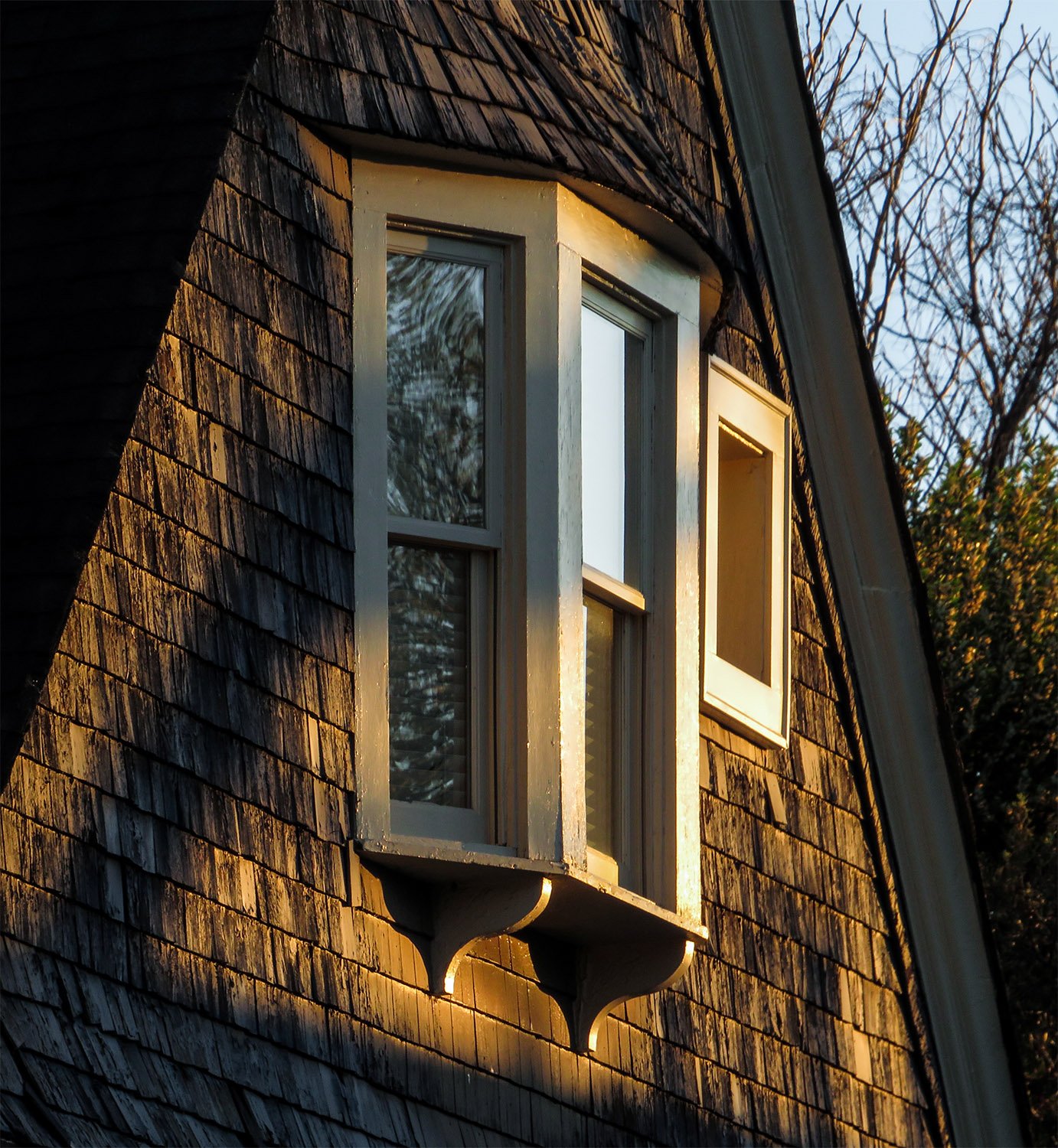
- The Hurt Residence’s shed dormer windows are of the same design as those on the Edward C. Peters Residence (1883) in Atlanta, a confirmed Norrman work, and the Atlanta & Edgewood Street Railway Shed (1889), also located in Inman Park and attributed to Norrman.
- The Hurt Residence’s second-floor bay window is the same one used in the Atlanta & Edgewood Railway Shed, attributed to Norrman.
A Design Evolution
While fairly unremarkable in appearance, the Hurt Residence represents a major shift in Norrman’s residential designs.
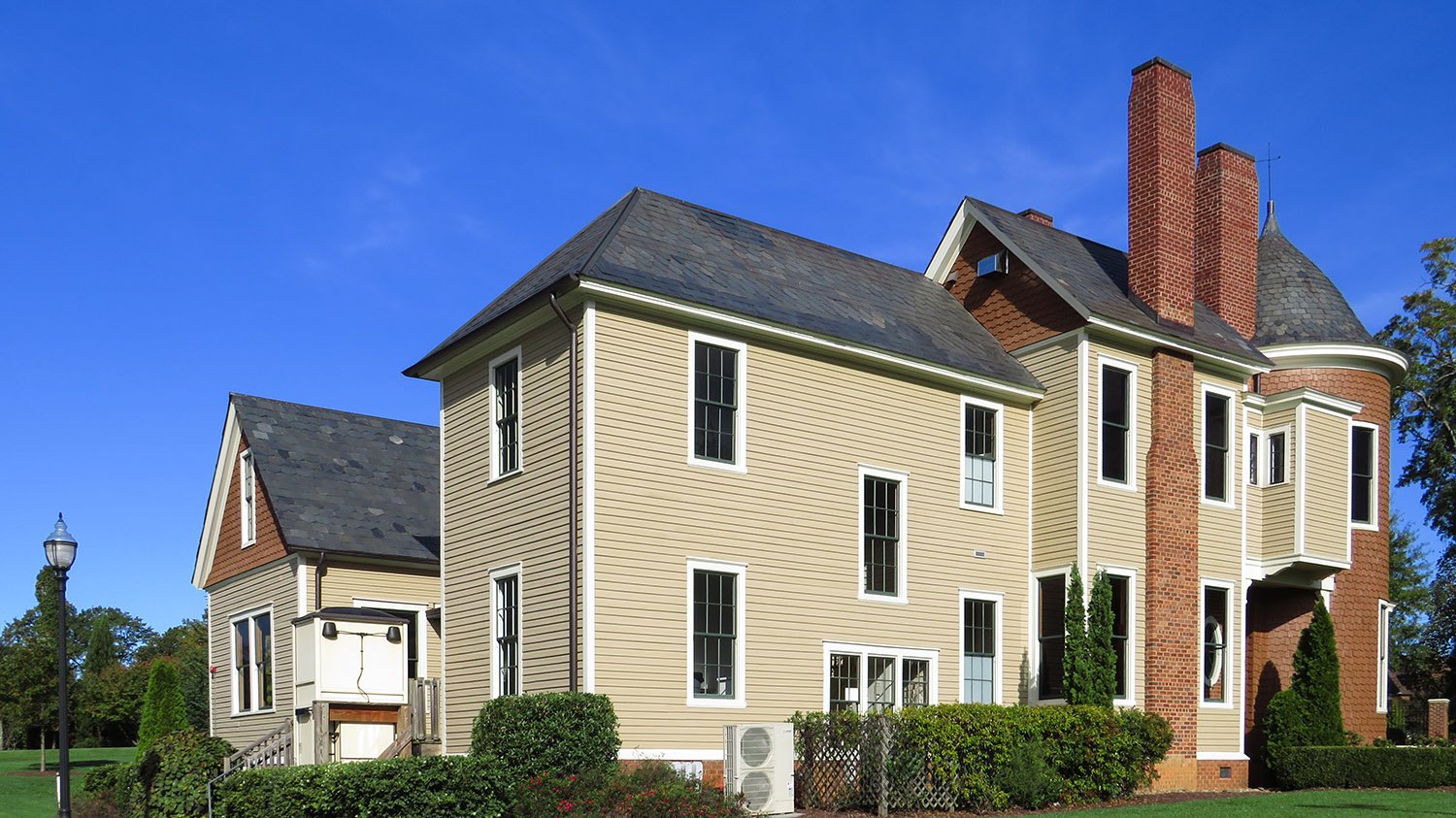
In the 1880s and early 1890s, many of his larger home plans included a rear service wing that contained the kitchen and servants’ quarters—a prime example is the W.W. Duncan Residence in Spartanburg, South Carolina (1886, pictured below).
The service wing was visually distinct from the main house and was often capped with a low-slung hip roof, denoting its modest, utilitarian status.
For the Hurt Residence, the hip-roofed wing moved from the back to the front, the first time this appears to have been implemented in one of Norrman’s plans.
That was a bold choice, marking Norrman’s initial departure from the lofty styles of the 1880s and early 1890s toward the less pretentious, more unassuming residential designs that took hold from the mid-1890s onwards.
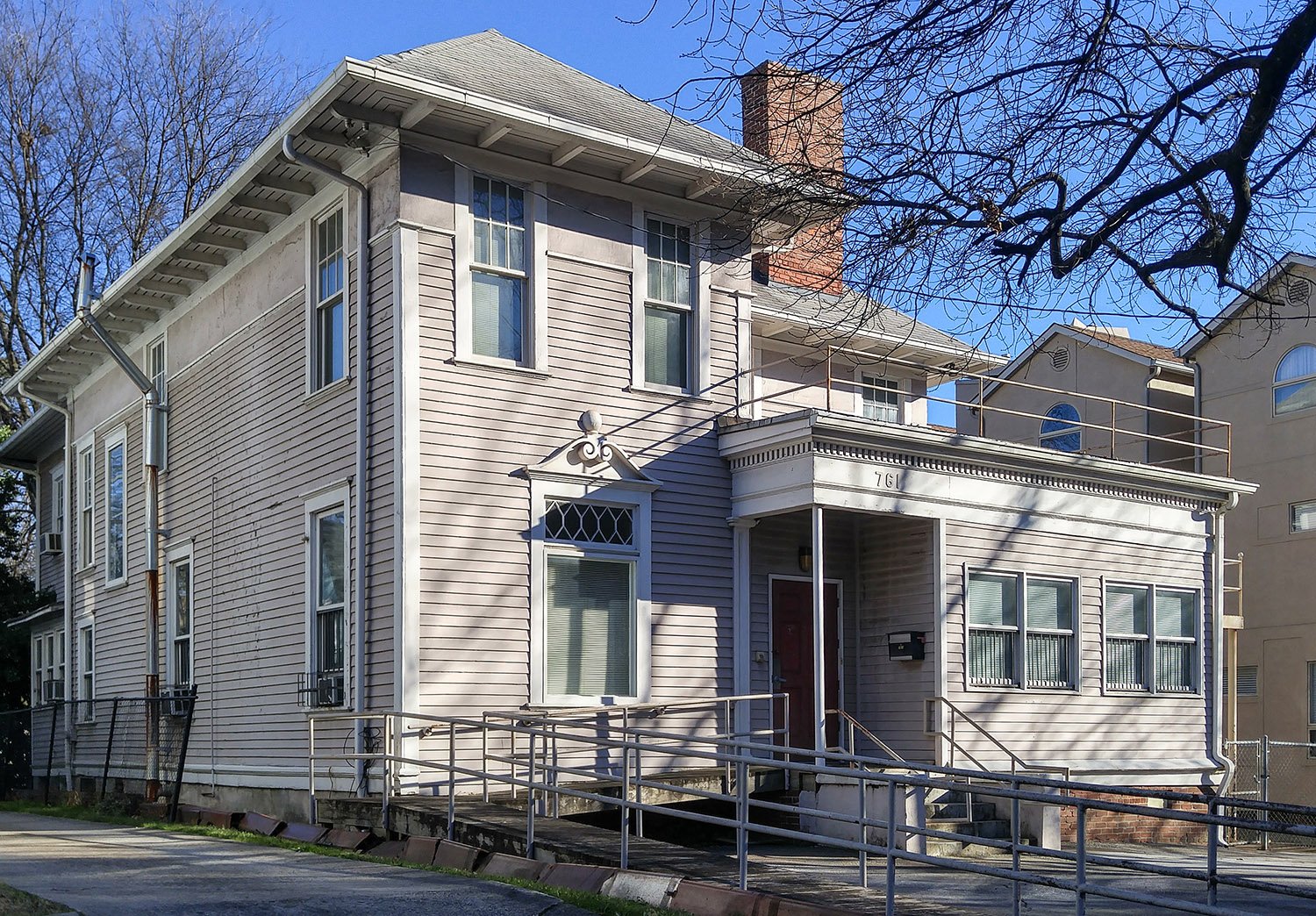
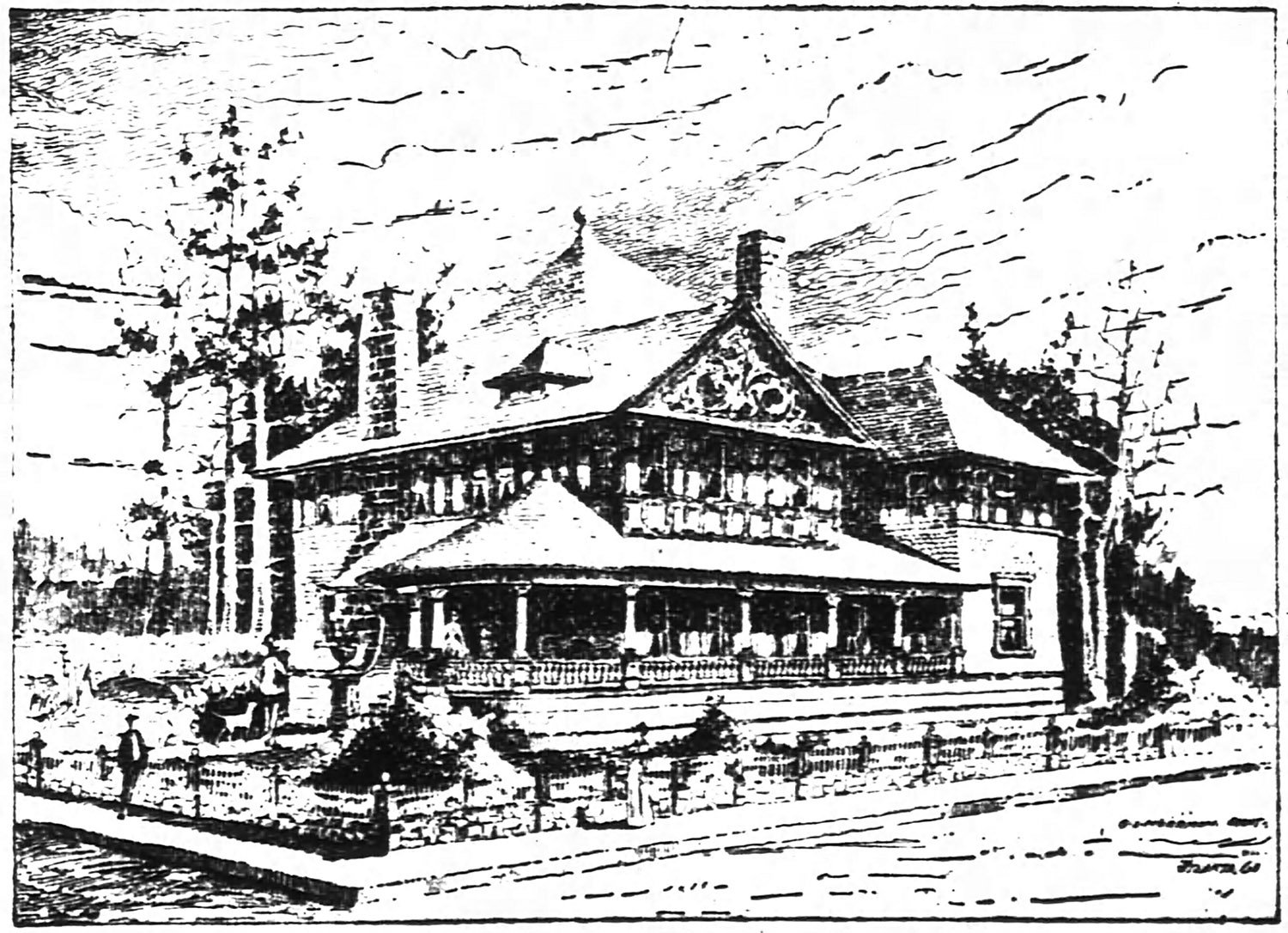
Norrman subsequently repeated and refined the Hurt design many times over the next several years. Prime examples are Atlanta’s W.L. Reynolds Residence (1897, pictured below) and the Leon D. Lewman Residence (1901, demolished, pictured below).
Later versions made complete use of low-slung rooflines, but in the Hurt Residence, Norrman still designed an absurdly high central roof—a lingering remnant from his 1880s work.
The Hurt Residence’s 13-room floor plan also appears to have evolved from the plan used in Norrman’s design for the John T. Taylor Residence (1892) in Americus, Georgia.
Based on a simple four-square grid, the plan for the Taylor Residence placed the stair hall in the lower left quadrant.
In the Hurt Residence, the stair hall had to be pushed back to accommodate the projecting wing.
Otherwise, the plans for the two houses are largely identical, right down to the separate exterior entrance in their first-floor bedrooms.
A Question of Credit
I suspect much of the Hurt Residence was designed by one or more of Norrman’s employees, possibly C. Walter Smith, Norrman’s longtime draughtsman and later chief assistant.
Smith began working for Norrman in 1887, serving as a draughtsman for over five years before leaving to start his own practice in March 1893.5
Within a year, Smith returned to Norrman’s firm to work as his chief assistant,6 but left to start his business again in April 1896,7 working independently until 1907.
Based on his few surviving works, Smith wasn’t an exceptional designer in his own right: he clearly lacked whatever combination of ingredients made Norman such an outstanding architect.
However, it appears that Norrman likely delegated many of his residential projects to Walter Smith in the 1890s.
The Constitution all but said as much in 1896, when Smith embarked on his second solo attempt:
“The work that he did even before he branched out for himself had gained for him a distinction that few people have won in a lifetime,” the newspaper noted. “Mr. Smith has designed and superintended the construction of many of the most elegant residences in the city…”8
If you compare a typical Norrman residence from the 1880s to one from the 1890s, it’s clear that the latter projects didn’t receive nearly as much of his attention.
Norrman’s career reached its commercial and creative peak between 1890 and 1893, and he increasingly spent much of his time traveling by train across the Southeastern United States, securing commissions and attending to building projects.
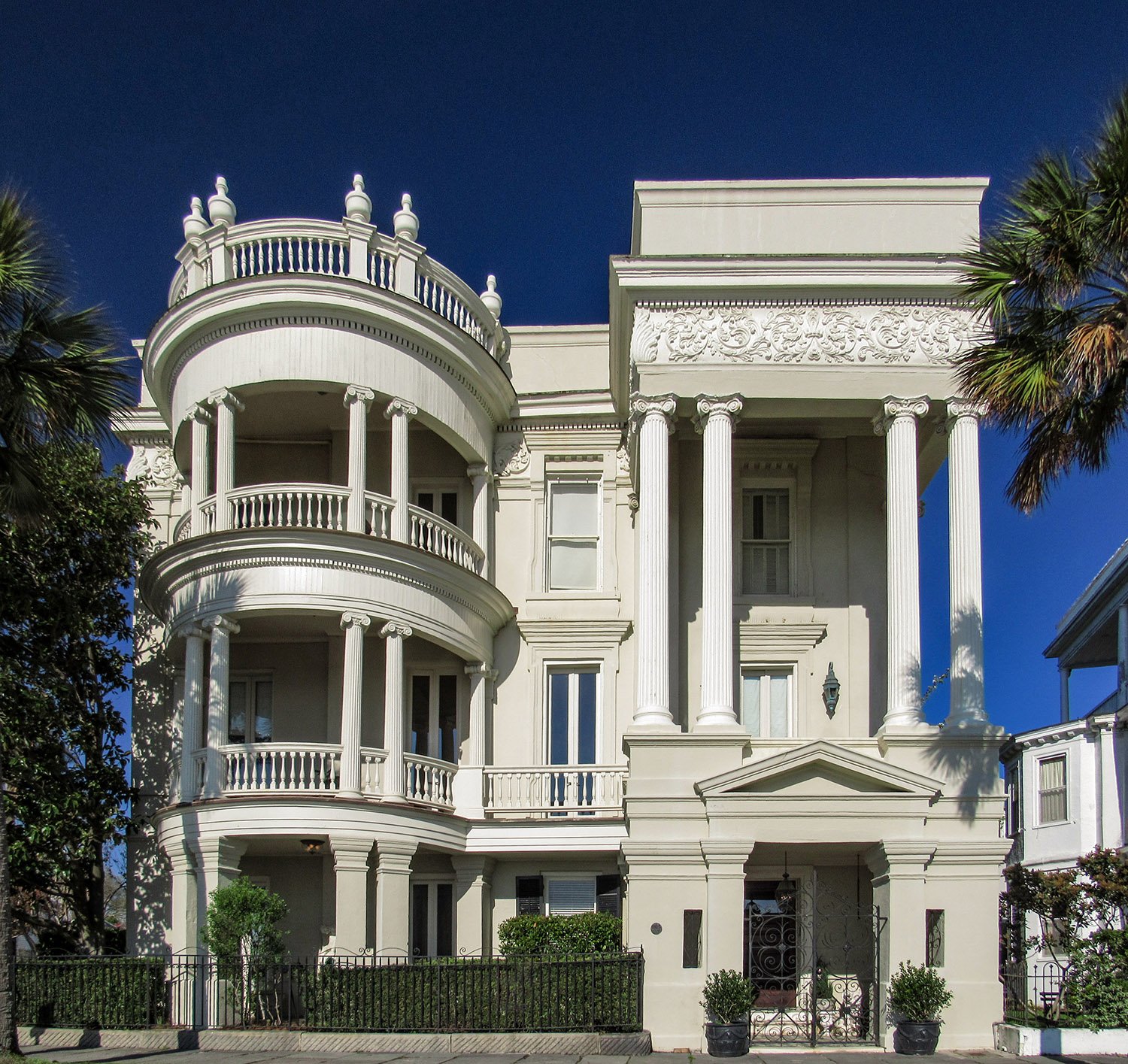
With a packed schedule and an office full of assistants, Norrman likely began focusing most of his attention on large-scale or prestige commissions: the Windsor Hotel (1892) in Americus, Georgia, for instance, or the J.C. Simonds Residence (1893) in Charleston, South Carolina.
Because Walter Smith left to form his practice while the Hurt Residence was under construction, it’s also possible that he started the project and another assistant completed it, which could explain the uneven design.
W.L. Stoddart, for instance, was also employed by Norrman in 1893, still fresh from his training at Columbia University. When Norrman hired him in March 1892, the Journal claimed Stoddart would be his chief assistant,9 although he was listed as a draughtsman in city directories.10
Every architect’s approach is different, but Norrman may have roughed out the preliminary plans for the project, leaving a draughtsman or assistant to fill in the details, while lending just enough of his finesse to claim the design as his own.
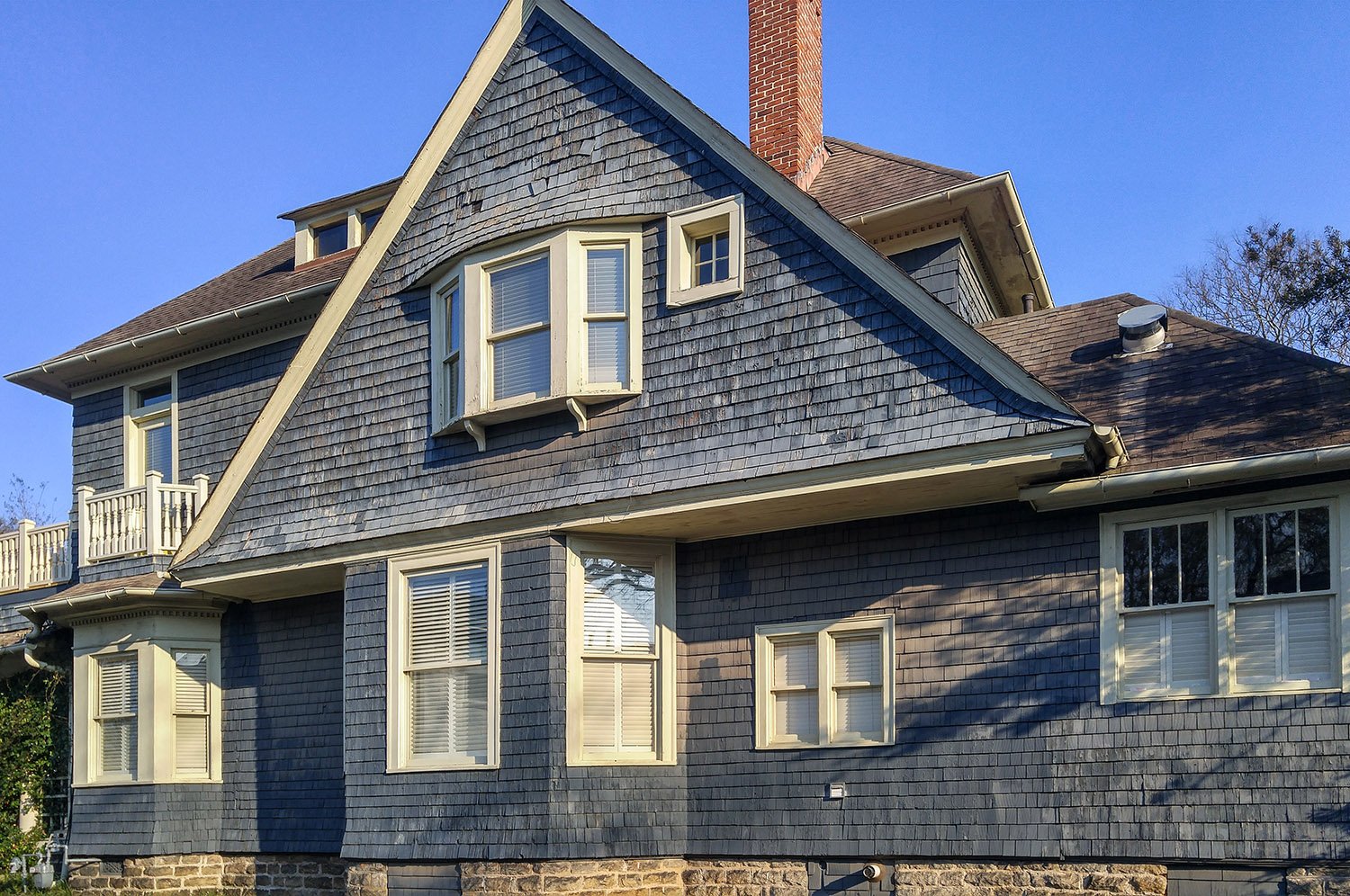
The Hurt Residence’s north elevation also bears a striking resemblance to the side of the William Merritt Chase Homestead in New York, designed by McKim, Mead & White in 1892.
Norrman frequently borrowed from the firm’s designs, and if he was pressed for time or lacking inspiration, he might have reproduced what he saw in a photograph or drawing of the home.
A Messy Composition
If Norrman didn’t give the Hurt Residence’s design much scrutiny, that might explain its frankly sloppy configuration: the three bay windows of different sizes on the north elevation, for example, or the hodgepodge of elements borrowed from other projects.
Part of the home’s imbalance can be explained by its vernacular inspiration, but that doesn’t excuse its incoherent composition.
Stand on one side of the Hurt Residence, and it looks like a completely different home from the other side. The design feels clunky, slapdash, and pure kitchen sink, as if everything but was thrown into it.
Norrman also disliked the then-fashionable Colonial style, stating in 1890 that it had “at best, a number of absurdities”, and that “there are few who carry the style out well”.
As a designer who excelled in the Romanesque and preferred the classical, Norrman may have been admitting to his own lack of proficiency in the style.
Despite the Hurt Residence’s shortcomings, it’s entirely characteristic of Norrman’s 1893 residential designs, which stand out in his oeuvre as especially freewheeling and audacious. He was the most celebrated and sought-after architect in the Southeast at that point, and clearly felt emboldened to take risks.
When the risk-taking worked, the results were spectacular, as seen in the Simonds Residence. When it didn’t? Well, you can see the results here.
Construction and History
The Hurt Residence’s history is as messy as its design, chock-full of the sort of macabre and pathetic tales one expects from an Atlanta home.
A Whole Lotta Hurt
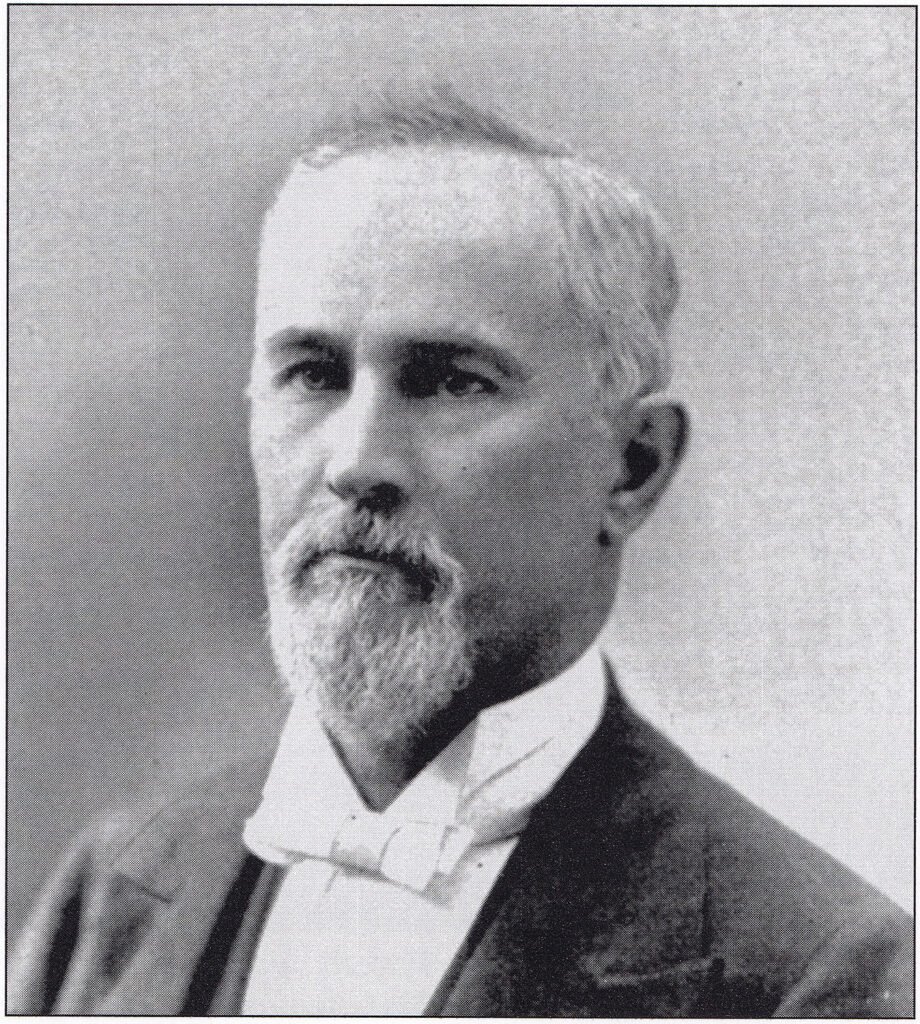
C. D. Hurt (pictured here11) and his family moved to the city from Columbus, Georgia, in October 1892.12
13 Until their own “elegant and roomy residence”14 was completed, the Hurts temporarily lived in the spec house at 56 Euclid Avenue15 (now 882 Euclid Avenue NE), which Norrman designed for the East Atlanta Land Company in 1890.
While Hurt’s home was still being built in April 1893, it was also the site of a wedding for his niece, Lucy Hurt McTyere.16
Hurt had five children with his wife, Mary, although it appears only his daughters, Louise and Maude, were living with them in 1893, when he was 50, and she was 46.
Hurt worked as a medical surgeon and opened an office in Atlanta’s Equitable Building,17 which his brother owned. He was also on the payroll of his brother’s street railway company as a “medical advisor”—with whatever legitimate duties that must have entailed —in addition to being a staff member at Grady Memorial Hospital and the Atlanta School of Medicine.18 19
There have been claims that Hurt operated his office from his home, but that appears to be inaccurate based on city directories and newspaper reports.
Hurt’s daughter, Louise, married in January 1895, and the reception was held at the Hurt Residence.20 21 Assuming it was a happy occasion, the wedding was a singular bright spot preceding a long line of tragedies in the home:
- On July 5, 1896, Hurt’s eight-month-old grandson, Charles, died in the home after a bout with malaria.22
- On July 19, 1898, Hurt’s youngest daughter, Maude, died in the home at 6:45 p.m., following a 10-day illness.23 Only 17 years old, Maude’s death was described by the Constitution as “one of the saddest deaths that have clouded this city in years…”24
- In September 1899, Charles and Joel Hurt’s brother, E.F. Hurt, died on an extended visit from New York, and his funeral was held in the Hurt Residence.25
- Following a two-year illness, Mary Hurt died on October 22, 1902, “when death crept softly into the home,” according to the Journal. 26 27 Poetic, no?
- Wasting little time, C.D. Hurt married his second wife, Annie Louise Miller, in Hendersonville, North Carolina, on October 6, 1903. Annie was described as an “accomplished and attractive young woman,” 28 and the couple had an unnamed infant son when Hurt himself died in the home on August 12, 1906, following an eight-month illness.29 30
After collecting on Hurt’s $15,000 life insurance policy,31 his accomplished and attractive young wife seemingly disappeared from Atlanta, and the home was presumably sold, ending the Hurts’ 13-year run of the house.
Dwindling Fortunes
With the United States emerging from a years-long financial depression at the turn of the 20th century, the ostentatious Inman Park residences designed by Norrman and other architects in the late 1880s and early 1890s were already relics of another era.
Never the prestigious enclave Joel Hurt intended it to be, Inman Park had become thoroughly passe, and many of its first homes spent their early years either vacant or on the market—scan newspaper classified ads from the 1890s, and you’ll consistently find listings for “good as new” Inman Park homes for sale or rent, often at reduced prices.
In the early 1900s, most of Atlanta’s prominent citizens continued to build their homes on Peachtree Street, two miles west of Inman Park, migrating further north toward Buckhead each year.
Ansley Park quickly became a fashionable new residential section, largely because of its close proximity to Peachtree Street, but its homes were much more modest in appearance than the gaudy Gilded Age mansions of the previous century.
The East Atlanta Land Company auctioned off Inman Park’s remaining lots en masse in 1904,32 and the neighborhood was filled out with mostly smaller, cheaper houses over the next decade.
As the Journal noted in 1908: “The Inman Park of the present time…has almost forgotten the story of its origin—which now seems like ancient history…”33
Life As a Boarding House
The large, antiquated Inman Park houses were really only viable as rental properties, so it’s no surprise that in December 1907, newspaper classifieds began requesting boarders for the former Hurt Residence. Terse but descriptive, the first ads touted: “Beautiful views, splendid board, country air, not far out.”34
A January 1908 ad sought “Two or three young men for large front room; also couple for beautiful room,”35 while an October 1908 ad noted the home’s “Suite beautiful rooms, with private bath…”36
In November 1908, ads described “Four connecting rooms, unfurnished…private entrance”,37 which likely referred to the home’s original master bedroom.
In 1909, the entire house was listed for rent by Edwin P. Ansley‘s real estate agency for $50 a month.38
On March 25, 1909, a 68 mph “hurricane” ripped across Atlanta, cutting a path from West End through Downtown to Inman Park. In a lengthy list of damaged buildings, the Journal reported that “In Inman Park at Edgewood avenue and Delta Place a chimney was blown down.”39
This may have been the tall chimney at the front of the house, which was removed at some point in the structure’s history. A photograph from the 1970s shows that a chunk of one chimney stack was also missing, possibly a result of the same storm.
In February 1910, the home was owned by C. Horace McCall when a “daring porch climber” broke the window of a second-floor bathroom.
“Mrs. Turner“, apparently a boarder in the house, screamed upon hearing the shattered window, scaring off the intruder. The Constitution noted ominously that “A dark shadow was seen in the distance…but no clews [sic] were obtained.”
The report added: “This section of the city has been infested with burglars recently, and several citizens have made complaint of inadequate police protection.”40
In July 1918, McCall and his wife still lived in the home when thieves robbed their backyard henhouse, swiping their entire collection, including 20 “frying-size chickens”. The stolen property totaled $30.41
Mrs. McCall died in the house on February 28, 1923,42 and it appears the property was sold shortly thereafter. In July 1924, another infant died in the home: the son of two boarders, Mr. and Mrs. J.B. McMillam.
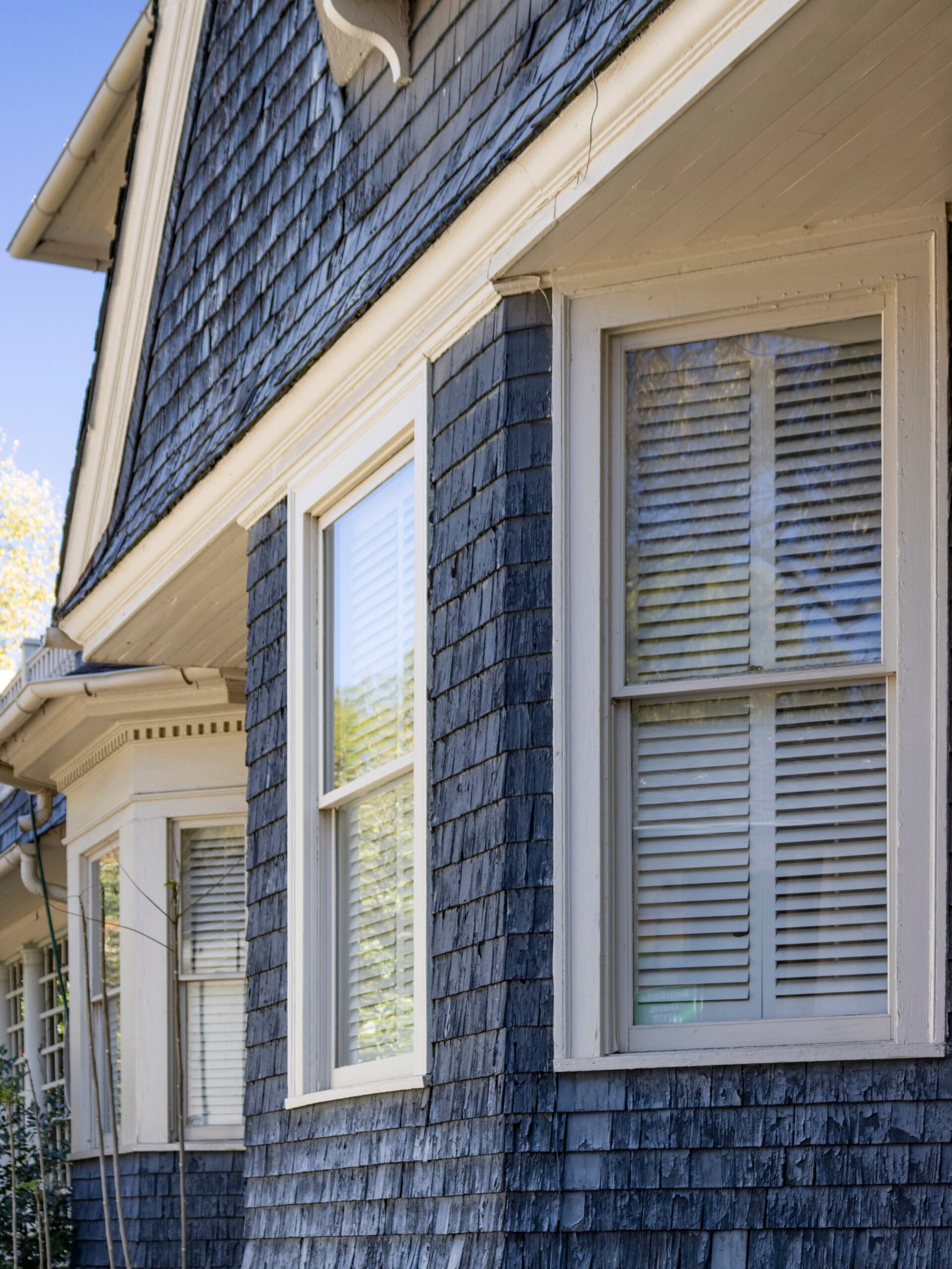
By the 1920s, Atlanta had grown rapidly beyond Inman Park’s borders, and the former suburb was fully absorbed into the city.
One mile northeast of the neighborhood, Druid Hills opened in 1908 (Norrman designed its first home), and many of Inman Park’s prominent residents—notably members of the Candler family— migrated to the outlying development for the next several years.
As Inman Park fell into a decades-long decline, the old Hurt Residence passed through a succession of owners, always operating as a boarding house, and apparently attracting the caliber of people one associates with such establishments.
A few incidents from those years are intriguing:
- In 1925, the house was owned by the estate of the late John W. White when a 36-year-old boarder, Mrs. W.T. Hooks, was arrested for attempted arson. On May 4 of that year, fire crews were called to the home at 4 a.m., where they found a burning pile of kindling wood in Hooks’ closet, with Hooks “fully dressed and all her trunks completely packed”. The state accused Hooks of attempting to burn down the home for insurance money, but she was acquitted of the charges in June 1925.43 44 45 46 47
- In 1929, a 31-year-old occupant of the home named T.M. Bates was treated at Grady Memorial Hospital for wounds received from a “vicious rat” that reportedly bit Bates twice as he was going to sleep, after which he “jumped on top of a dresser to escape further injury”.48
- In January 1931, Fanny Jolly operated the boarding house when “the careless handling of an oil lamp” sparked a fire in the kitchen, forcing the home’s 11 occupants to “flee in their night clothing”. One boarder was knocked unconscious when he jumped 15 feet from his second-story window, while another received severe cuts on his legs from crawling out a different window.49 50
In 1945, W.A. and Gertrude Croft bought the home from Harry Beerman.51 Real estate ads described the home as an “excellent rooming house” and “convenient to stores and cars”, concluding rather cynically that “This is a money-maker”.52
This may have been when the home received its most significant alterations. In August 1946, classified ads from the address listed a “Monarch coal cook stove, gas cook stove…2 practically new glass paneled doors, 2 used windows” for sale.53
Sounds like they were tearing up the place, doesn’t it?
An image from the 1970s (pictured below) shows that at some point, the home’s front porch was partially filled in and screened, rooms were clumsily added to the porch roof, and original windows were moved and replaced. I suspect those alterations were the work of the Crofts.

It was also in the 1970s when Inman Park entered the nascent stages of a rebirth as young professionals began restoring its homes and joined forces to quash a proposed freeway that would have cut through the heart of the neighborhood.
Inman Park had been notoriously run-down and crime-ridden for decades, though, and its transformation was hardly a foregone conclusion. Even as late as 1975, the Constitution claimed that “most people avoided” the area.55
A skeptical article from 1971 described Inman Park as “a festering little carbuncle on the hide of big old Atlanta”, with residents detailing its precarious condition. One homeowner stated:
“If you’ve got a sense of humor, it’s a great place to live. Over here, when people shoot guns they usually aim into the ceiling. There’s a lot of drug traffic in the neighborhood with the kids. They are very wise, like New York street children. I took one little girl to Grady while she was on a bad LSD trip. She was in the middle of the street screaming and everybody else was afraid to do anything. Hard drugs are apparently very available.”56
Little wonder that the old Hurt Residence remained a target for crime—in January 1975, the home was burglarized again, with the thief swiping a tape recorder, clock, liquor, and 8 cartons of cigarettes.57
In August 1976, a 47-year-old boarder at the address committed suicide in the most Atlanta way possible: jumping from the top of the Hyatt Regency atrium.58
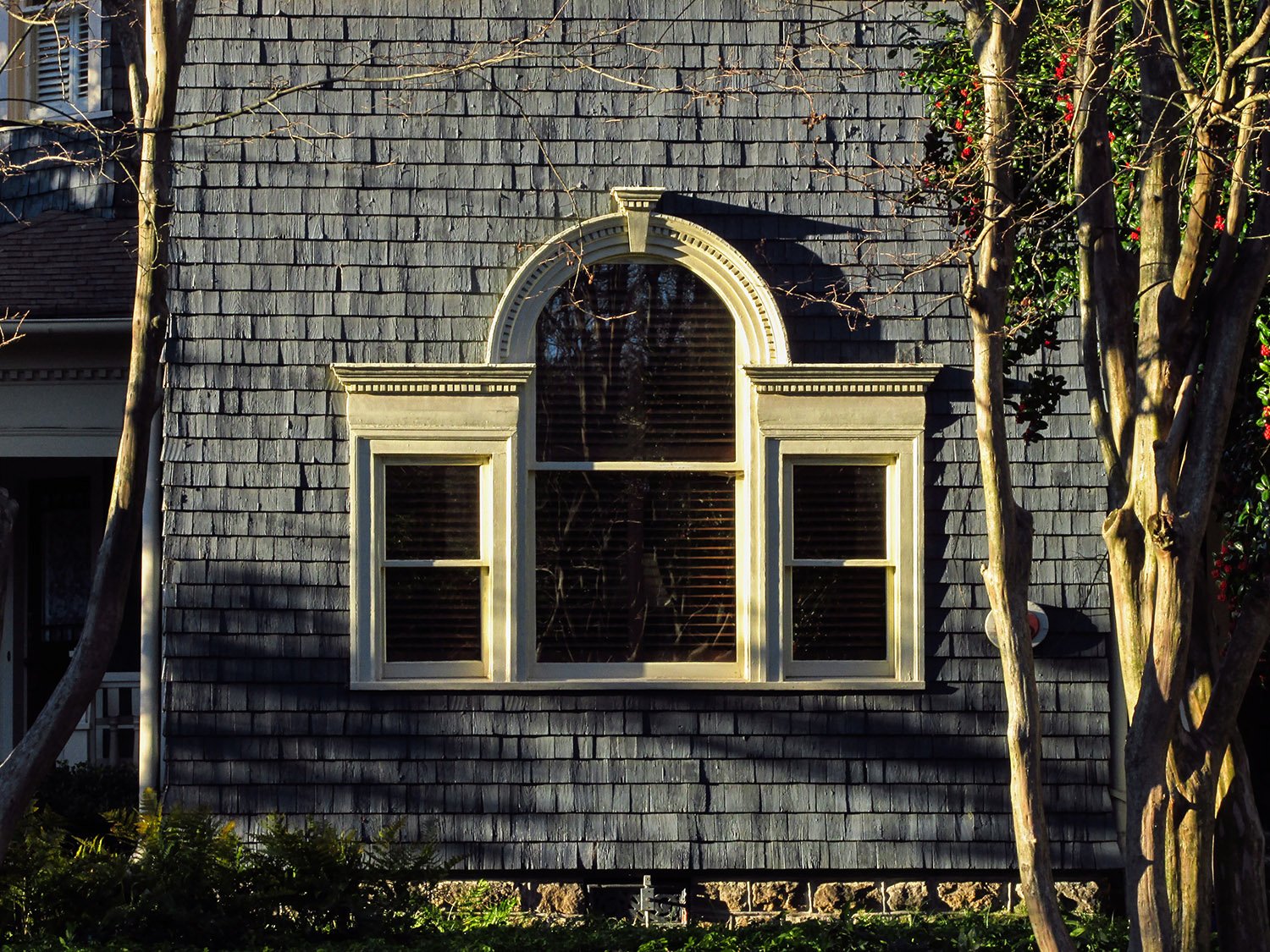
Return to Form
In 1981, the home was listed for sale again and remained on the market for nearly two years under two different agencies.
A succession of advertisements sounded increasingly desperate, first promoting the house as “Single family OR townhouse. Partially restored. Clean & livable” with “POOL & wine cellar”. 59 Later ads touted the home’s “suburban amenities.”60
An ad for an open house breathlessly hyped: “13 Fireplaces, antique brass & beveled glass, arches, millwork & pocket doors!”61 Norrman always did like pocket doors.
A May 1982 ad claimed that “Practical people will love the close-in convenient location and the fact that it can be used for rental units.”62
That was oddly out of step with the changing character of the neighborhood, however—it wasn’t practical people who were buying in Inman Park at that point, but those invested in its resurgent vision.
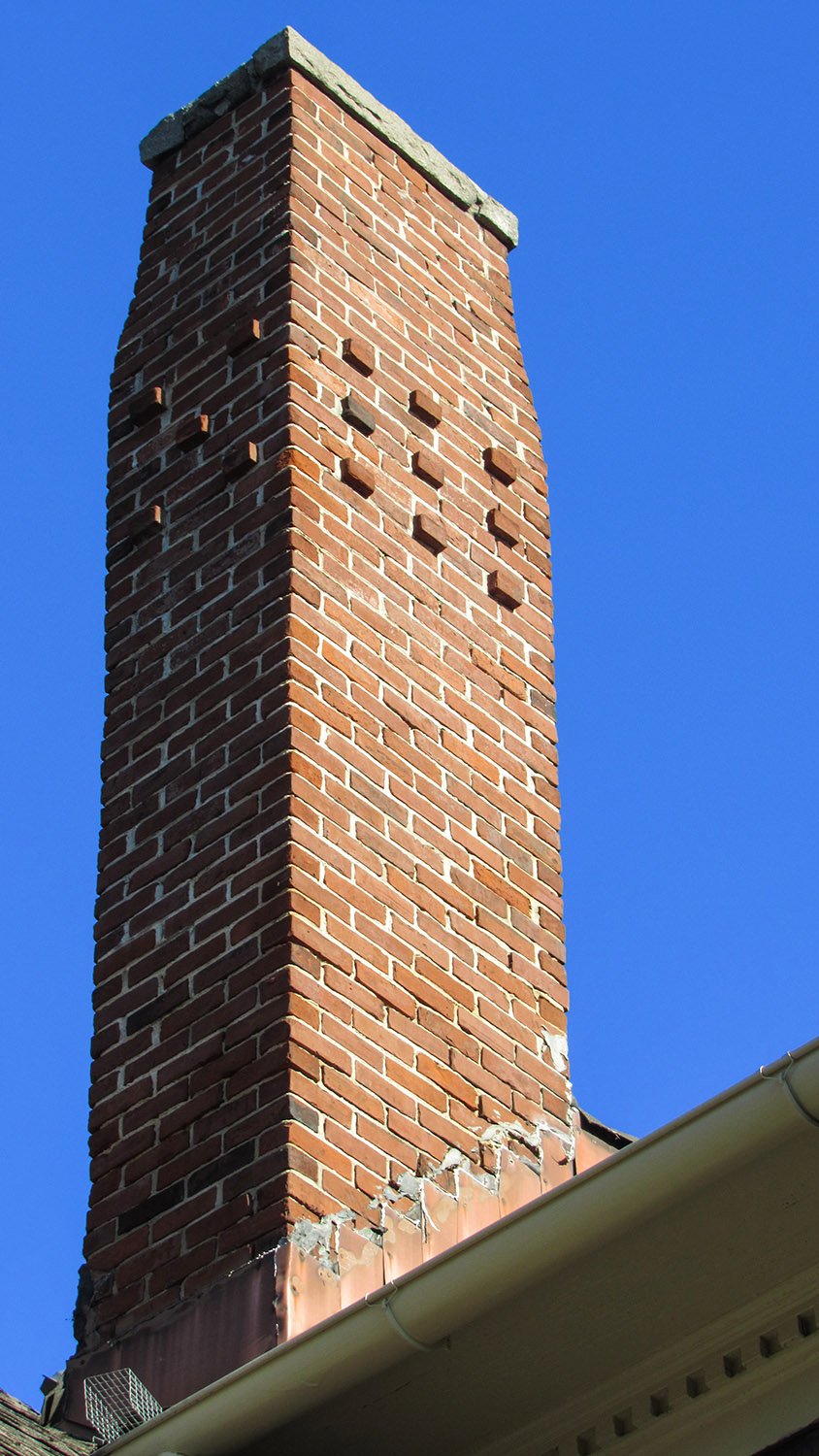
By the 1990s, Inman Park had completed a dramatic revitalization that drew national acclaim, and the Hurt Residence finally returned to its intended use as a private dwelling.
The home has been fully renovated, with the mid-20th-century accretions on the front removed and the porch and facade restored to a reasonable facsimile of their original appearance.
Inman Park is now one of the most exclusive and desirable neighborhoods in intown Atlanta, with homes like the Hurt Residence valued in the millions. More than a century after its conception, Joel Hurt’s development is finally a success.
And as for his brother’s home—well, it’s more significant than it initially seems.
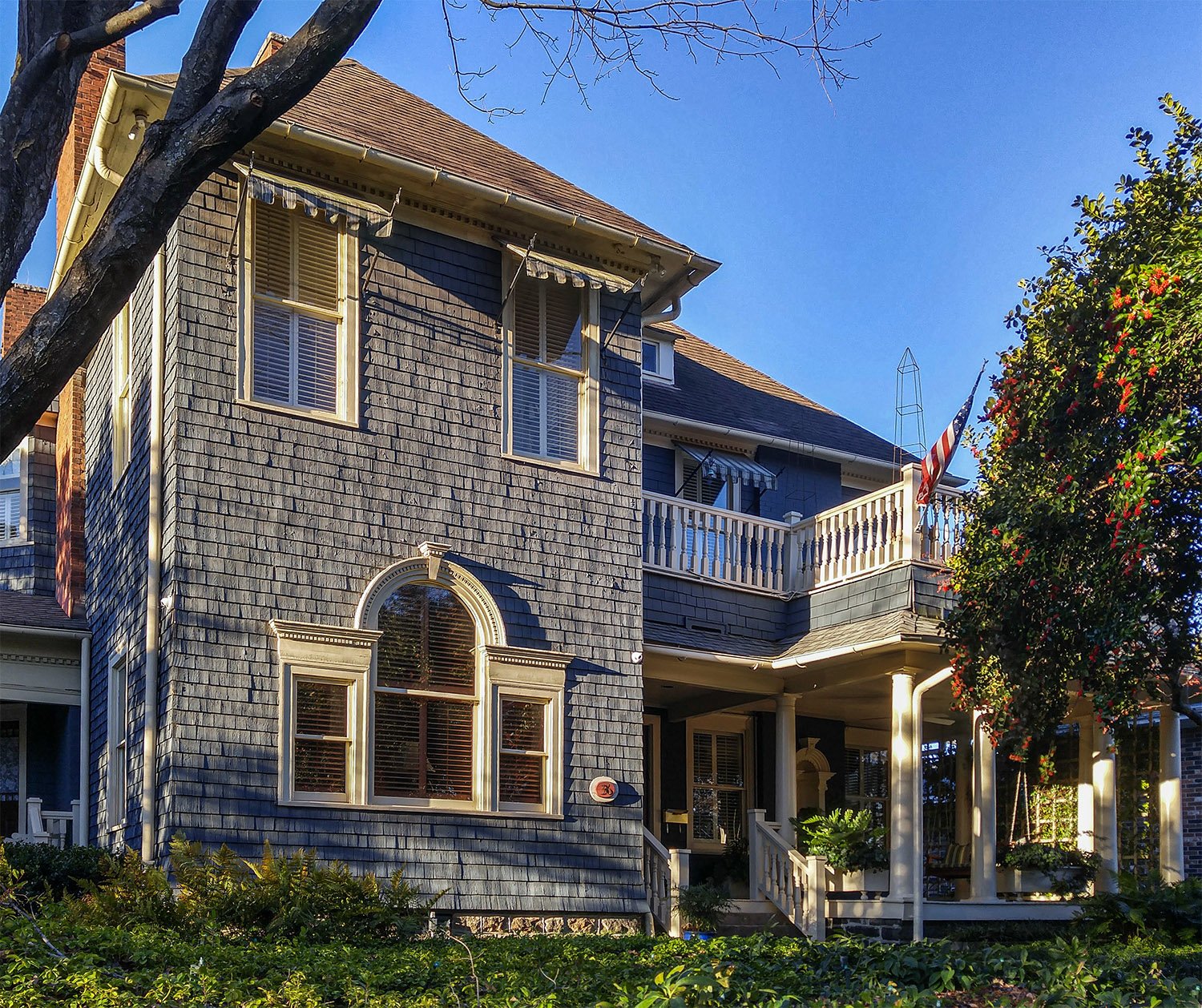
References
- “City Notes.” The Atlanta Constitution, April 2, 1893, p. 23. ↩︎
- “Flowers Are A-Blooming.” The Atlanta Journal, May 5, 1893, p. 3. ↩︎
- “Dr. C.D. Hurt Dead: Ill 8 Months”. The Atlanta Journal, August 13, 1906, p. 5. ↩︎
- “New Lewman Residence On Peachtree Place.” The Atlanta Constitution, October 6, 1901, p. 5. ↩︎
- “A Card”. The Atlanta Constitution, March 1, 1893, p. 10. ↩︎
- Atlanta City Directory Co.’s Greater Atlanta (Georgia) city directory (1894) ↩︎
- “Out For Himself.” The Atlanta Constitution, April 19, 1896, p. 20. ↩︎
- ibid. ↩︎
- “A Trifle Gossipy.” The Atlanta Journal, March 25, 1892, p. 1. ↩︎
- Atlanta City Directory Co.’s Greater Atlanta (Georgia) city directory (1893) ↩︎
- Photo credit: Marr, Christine V. and Sharon Foster Jones. Inman Park. Arcadia Publishing: Charleston, South Carolina, 2008, p. 49. ↩︎
- “Personal Mention.” The Atlanta Journal, September 12, 1892, p. 1. ↩︎
- “Senator Gordon.” The Atlanta Journal, September 24, 1892, p. 1. ↩︎
- “Flowers Are A-Blooming.” The Atlanta Journal, May 5, 1893, p. 3. ↩︎
- Atlanta City Directory Co.’s Greater Atlanta (Georgia) city directory (1893) ↩︎
- “Society”. The Atlanta Journal, April 19, 1893, p. 2. ↩︎
- Atlanta City Directory Co.’s Greater Atlanta (Georgia) city directory (1893) ↩︎
- “Dr. Chas. Hurt Yields to Death”. The Atlanta Constitution, August 13, 1906, p. 1. ↩︎
- “Dr. C.D. Hurt Dead: Ill 8 Months”. The Atlanta Journal, August 13, 1906, p. 5. ↩︎
- “Carlton-Hurt” The Atlanta Constitution, February 15, 1895, p. 3. ↩︎
- “Today’s Talk in Society”. The Atlanta Journal, January 23, 1895, p. 7. ↩︎
- “Little Child’s Death.” The Atlanta Journal, July 6, 1897, p. 5. ↩︎
- “Death of Miss Hurt.” The Atlanta Constitution. July 20, 1898, p. 55. ↩︎
- “In Memory of Miss Mary Maude Hurt.” The Atlanta Constitution, July 24, 1898, p. 15. ↩︎
- “Death Has Come to Mr. E.F. Hurt”. The Atlanta Journal, September 18, 1899, p. 3. ↩︎
- “Mrs. Mary Hurt Is Dead After Years of Illness”. The Atlanta Journal, October 23, 1902, p. 7. ↩︎
- “Miss Mary Hurt Is Dead After Long Illness”. The Atlanta Journal, October 22, 1902, p. 8. ↩︎
- “Miss Miller of N.C. Weds Dr. C.D. Hurt.” The Atlanta Journal, October 6, 1903, p. 10. ↩︎
- “Dr. Chas. Hurt Yields to Death”. The Atlanta Constitution, August 13, 1906, p. 1. ↩︎
- “Dr. C.D. Hurt Dead; Ill 8 Months”. The Atlanta Journal, August 13, 1906, p. 5. ↩︎
- “Wil [sic] of Dr. Hurt Has Been Probated”. The Atlanta Journal, August 16, 1906, p. 5. ↩︎
- “Big Auction Sale May 31.” The Atlanta Constitution, May 22, 1904, p. 8. ↩︎
- “Inman Park, Atlanta’s First Suburb, Has Developed Into One of the City’s Most Beautiful Resident Sections”. The Atlanta Journal, April 26, 1908, p. H5. ↩︎
- “Wanted–Boarders.” The Atlanta Constitution, December 8, 1907, p. 3D. ↩︎
- “Wanted–Boarders.” The Atlanta Constitution, January 5, 1908, p. 4. ↩︎
- “Wanted–Boarders.” The Atlanta Constitution, October 1, 1908, p. 10. ↩︎
- “For Rent–Rooms”. The Atlanta Journal, November 8, 1908, p. H9. ↩︎
- “For Rent by Edwin P. Ansley”. The Atlanta Constitution, March 14, 1909, p. 3. ↩︎
- “Scenes of Havoc Wrought By Last Night’s Wind”. The Atlanta Journal, March 25, 1909, p. 1. ↩︎
- “Burglar Visits Inman Park Home”. The Atlanta Constitution, February 7, 1910, p. 7. ↩︎
- “C.H. McCall’s Chickens Are Taken By Thieves”. The Atlanta Journal, July 2, 1918, p. 12. ↩︎
- “Mortuary”. The Atlanta Constitution, March 1, 1923, p. 24. ↩︎
- “Woman Is Indicted On Arson Charges After Fire in Atlanta”. The Atlanta Journal, June 5, 1925, p. 36. ↩︎
- “Arson Is Charged To Mrs. W.T. Hooks In Indictment”. The Atlanta Constitution, June 6, 1925, p. 7. ↩︎
- “Woman’s Trial Begins In Superior Court On Charge of Arson.” The Atlanta Journal, June 25, 1925, p. 5. ↩︎
- “Woman Is Freed On Arson Charge In Fulton Court”. The Atlanta Constitution, June 26, 1925, p. 3. ↩︎
- “Woman Is Acquitted On Charge of Setting Fire to House Here”. The Atlanta Journal, June 26, 1925, p. 20. ↩︎
- “Atlantian Scales Dresser To Escape Vicious Rat”. The Atlanta Journal, September 9, 1929, p. 4. ↩︎
- “11 Persons Escape, Two Are Injured As House Burns”. The Atlanta Journal, January 7, 1931, p. 14. ↩︎
- “Two Injured in Fire, Eleven Flee Building”. The Atlanta Constitution, January 8, 1931, p. 6. ↩︎
- “Adams-Cates Reports $62,600 August Sales”. The Atlanta Journal, August 12, 1945, p. 7-D. ↩︎
- “Homes for Sale, N.E.” The Atlanta Constitution, May 18, 1945, p. 23. ↩︎
- “Household Goods”. The Atlanta Constitution, August 24, 1946, p. 6. ↩︎
- Photo credit: Marr, Christine V. and Sharon Foster Jones. Inman Park. Arcadia Publishing: Charleston, South Carolina, 2008, p. 49. ↩︎
- Tyson, Jean. “Rebirth: Old Neighborhoods Come Alive Again”. The Atlanta Journal and Constitution, April 20, 1975, p. 1-G. ↩︎
- Sparks, Andrew. “Turmoil Among the Turrets”. The Atlanta Journal and Constitution Magazine, March 7, 1971, p. 25. ↩︎
- “Crime Report”. The Atlanta Constitution, January 3, 1975, p. 4-C. ↩︎
- “Two Persons Leap to Deaths Here”. The Atlanta Constitution, August 22, 1976, p. 6-A. ↩︎
- “Bud Bailey Realty”. The Atlanta Constitution, April 29, 1981, Classified p. 12. ↩︎
- “Downtown Properties”. The Atlanta Constitution, April 4, 1982, Classified p. 16. ↩︎
- “Open House”. The Atlanta Journal, October 17, 1982, p. 30-J. ↩︎
- “Downtown Properties”. The Atlanta Journal, May 2, 1982, Classified p. 17. ↩︎