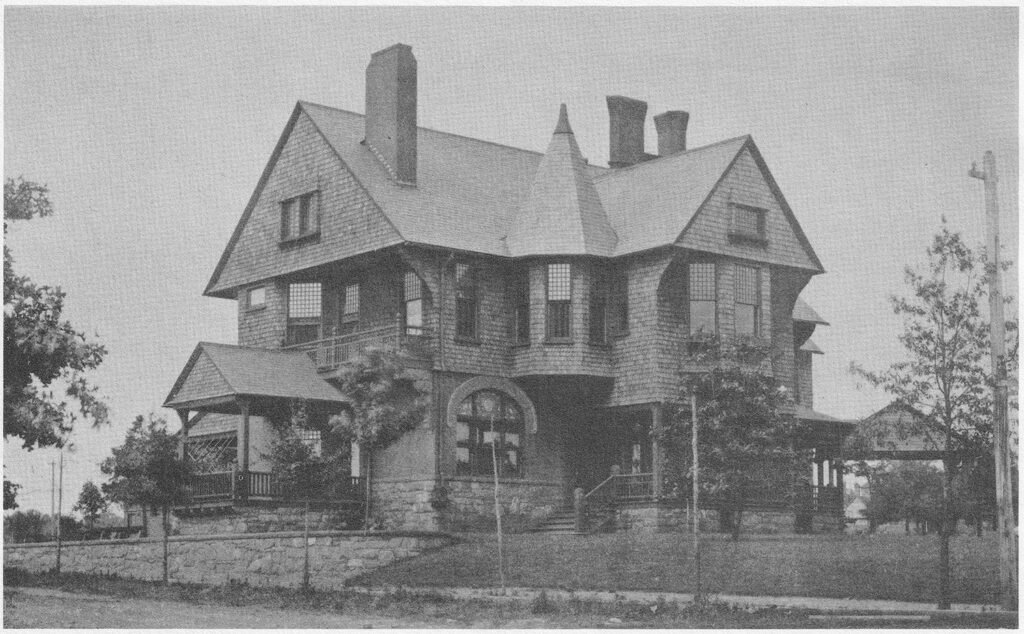
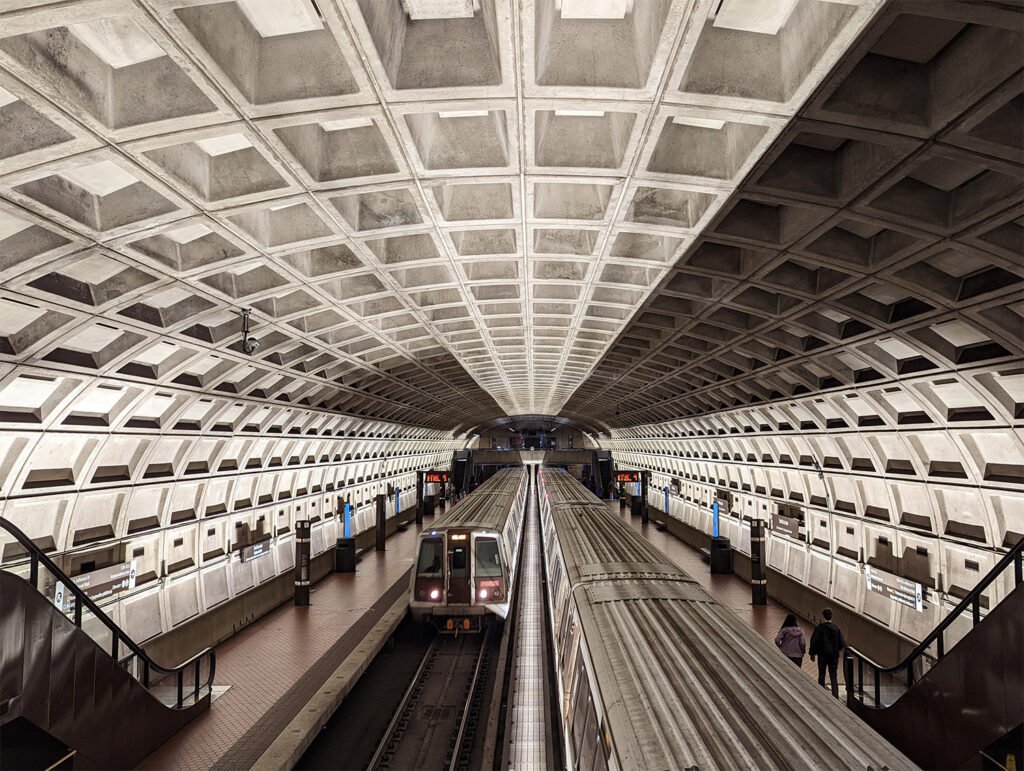
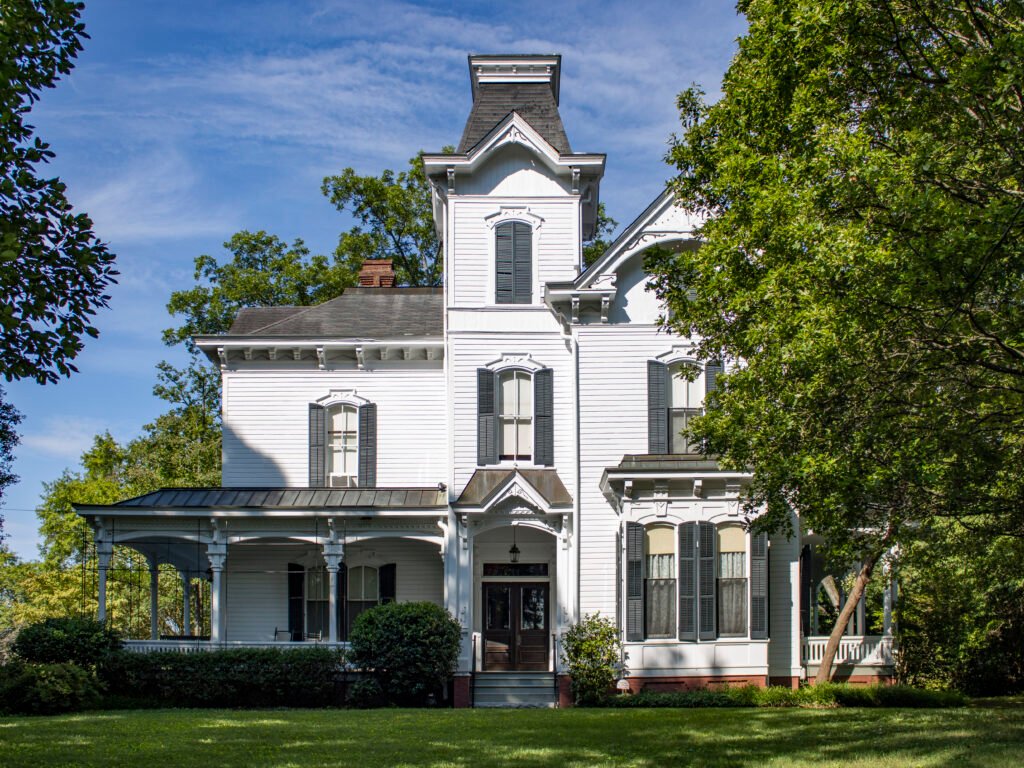
L.B. Wheeler. Clarence Knowles House (1886, demolished after 1933).123456Atlanta.7
The Background
This is the first in a series of five articles on home decoration written by L.B. Wheeler (1854-1899), an architect who practiced in Atlanta from 1883 to 1891. The articles were published in The Atlanta Constitution in December 1885 and January 1886.
Here, Wheeler introduced the seriesand pontificated in a somewhat circuitous manner on the origins and meaning of taste, the fickle nature of fashion, and ill-proportioned rooms, among other things.
However, it appears his main objective for the article was to rant about that most contentious of topics: wallpaper. Wheeler offered choice words on the subject and invoked the name of William Morris, an influential British textile designer, to argue against the “cheap, flashy appearance” of gold in wallpaper.
It truly was the Gilded Age.
Home Decoration.
The First of a Series of Interesting Papers.
By L.B. Wheeler, Architect of the New H.I. Kimball House.
It seems to me that if a knowledge of the truths and principles, the observance of which are essential to the production of all good decorative to other art work, could become general, it would greatly raise the standard of excellence in those productions. It is my purpose, from time to time, to offer through The Constitution suggestions for thought upon the following subjects: Halls, fireplaces, yards and fences, convenience and arrangement of rooms, carpets, tapestries, bricabrac, furniture, style, fashion, etc. If any interest is thereby awakened in those subjects, and a desire for their further investigation created, my object will have been accomplished.
L.B. WHEELER
Decoration and Furniture.
It is essential that the arrangement, decoration and furniture of a room should be suitable for its purposes. However beautiful a room or an object may be in itself, if it fails to accomplish the purpose for which it was intended, it is a failure.
It would seem that practical application of truth so plain must be universal, but when we look around us, we find chairs which are uncomfortable to sit upon; rooms without suitable places for furniture, fireplaces so arranged that the back of the shivering applicant for warmth, receives a constant draught; sitting rooms, where the colors should be quiet and unobtrusive, the walls, forming a harmonious background for the occupants, and for the objects of interest and beauty that accumulate in such a place, having walls covered with paper, ablaze with Dutch gold, glaring red and black, thus forcing itself upon our notice, to the exclusion of all that is truly beautiful, refined and modest in the room.
Gold is very seldom used in the best designed papers. It is not introduced by William Morris into more than half a dozen of all the beautiful papers designed by him, and in these in such a manner that you are scarcely conscious of its presence. Gold, when it becomes too conspicuous in a design, gives it a cheap, flashy appearance, very objectionable in most of the papers used in house decoration; the figure is so strong that it destroys the effect of whatever is brought into contact with it or relieved against it: the colors are too bright and too many, and they are seldom harmonious; the general effects obtained, unless large quantities of Dutch gold are used, being some dirty gray. The tones, with a few exceptions, are never good and positive. The patterns are still worse, made without any regard to fitness of effect or the nature of the materials and processes at command. Attempts are frequently made to imitate nature, where the representation of some vine, flower or leaf is attempted you will probably find most of the laws which govern the direction of growth in nature and ornament violated.
Where figure subjects are aspired to, the results compare very favorably with the chromo-lithographic work on the bills heralding the approach of traveling shows. With such material at command, without any knowledge training, study or experience, their only stock in trade being their supposed inheritance of what is called good taste; “something with which, by the way, every true American is abundantly provided, and in which his neighbor is sadly deficient” it is not surprising that so many fail in the attempt to make their homes attractive and beautiful.
Many persons have selected beautiful papers for the walls, a lovely pattern for the frieze, but somehow when they were sent home and put up, the effect was not just what was expected, in fact it was disappointing, and their attempt at decoration proved a failure. They have yet to learn that colors, forms and objects are of as much importance, and require as great skill in their introduction and arrangement in a room as they do in a picture. Very few would think themselves capable of creating a work of art or making a change for the better in an existing one, yet they would not hesitate to destroy the effect of a beautiful room by the introduction of some inharmonious object or color.
The contents of our homes are usually chosen because we like them, but when we think of the effect fashion has upon our likes and dislikes, that the thing we thought perfectly beautiful last year, is perfectly hideous this year, how our so-called good taste is constantly changing, it is simply a matter of different influences brought to bear upon an immature education.
When we think of this, would it not be wise to use a little more judgment and less taste in the selection of things of so much importance to our welfare and happiness as the furniture and decoration of our homes? A form or color that is beautiful once is beautiful forever.
Who ever tires of the masterpieces of art, Beethoven‘s symphonies, or the scenes and beauties of nature familiar from childhood? Rather does not the pleasure derived from these things increase with continued acquaintance? That some people are more susceptible to the influence of the beautiful than others, and that they acquire more readily, though, perhaps unconsciously, an education from the objects by which they are surrounded, is true, but the value of this education depends upon their opportunities for observation. The definition of taste, according to the common conception, is this:
Taste is an inherited faculty to judge of the right and wrong a thing, about which we know nothing. The reputation of having this faculty, is often very cheaply obtained. The frequent and persistent assertion of your opinion upon matters of art, a month’s trip to to Europe, the ability to copy a few flowers indifferently well with the assistance of a teacher, or the having been connected in some distant way with art, perhaps a dealer in art materials, giving one a clear title to judge of the masterpieces in architecture, sculpture, painting, music and poetry.
Among a few of the mistakes made by amatures [sic] is the common one of failing to pay proper regard to the proportions of a room. Owing to the almost universal custom of making the ceilings of our homes a uniform height, regardless of the dimensions of the rooms, it happens that very few rooms only are of agreeable proportions. As it is of the first importance to the effect of a room that its proportions should be pleasing, this opportunity should be taken to correct any errors originally made in this respect by a proper arrangement of the decorations.
If we look around us we shall find this very seldom done. Rooms already too small are made to appear still smaller, by using too large and strong a pattern upon the walls, and by the introduction of clumsy excrescences in the finish and furniture. Ceilings, which are too high, are made to look still higher, and when too low to appear still lower, and many other mistakes are made by the failure to use the numerous expedients available for correcting such faults in the arrangement of decorations.
The walls are often so light in color that objects hung upon or relieved against them have a spotty appearance, destroying all repose and breadth of effect. Sometimes the effect produced is gloomy and cheerless, owing to the absence of a principal light where the general tone is dark.
In selecting wall papers those patterns which are pronounced or peculiar should be avoided. When we go into our neighbors’ houses and find the walls covered with a novel and striking paper, we come away with the impression that the paper in Mrs. So-and-So’s house is beautiful. Our admiration is somewhat dampened when on the day following we find the same paper at another friend’s, and by the time we have seen it in several different houses, it affects us as being very commonplace. This feeling is in direct proportion to the power with which the paper first challenged our attention.
As manufacturers produce large quantities of each design, and frequently dispose of them to the same dealers, we take considerable risk in using those of a striking and novel design.
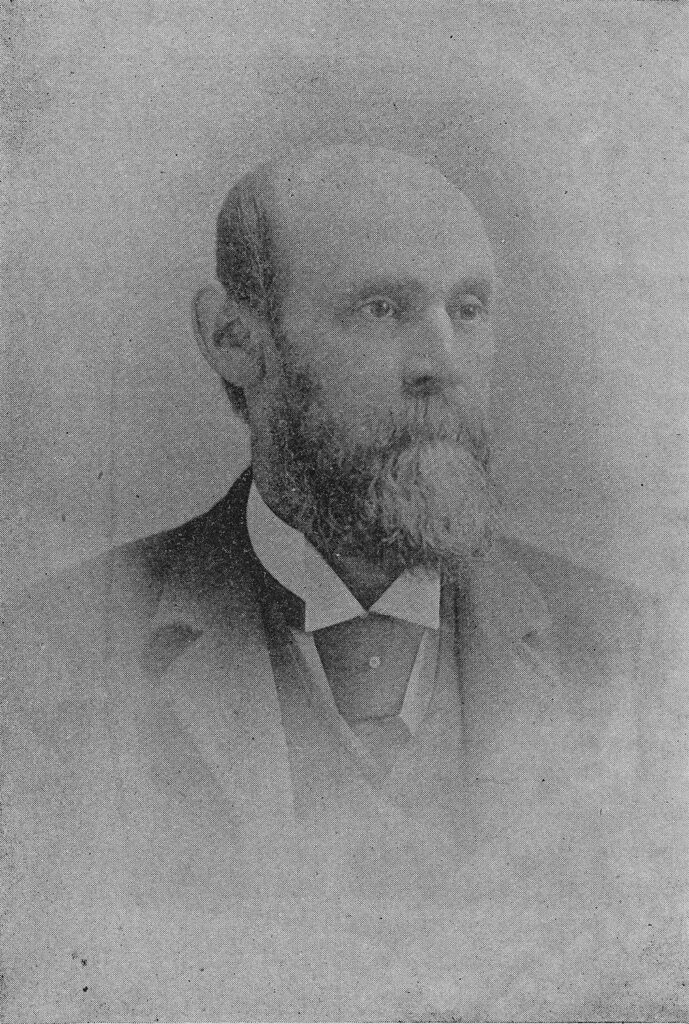
A.C. Bruce (1835-1927) was a founding partner ofBruce & Morgan, the most prolific architectural firm in Atlanta and the Southeast in the late 19th century.
Bruce (picture here1) was born in Fredericksburg, Virginia, and raised in Nashville,2 and although he had no formal architectural education, he claimed to have trained under H.M. Akeroyd,3 a British-born architect who practiced in Nashville from 18554 to 1867.5
The son of a contractor,6 Bruce started a carpentry business in 1865,7 and in 1870, he moved to Knoxville, Tennessee, where he began billing himself as an architect.8
In 1879, he moved to Atlanta to partner with W.H. Parkins,9 Atlanta’s first professional architect, in the short-lived firm of Parkins & Bruce. Finally, in 1881, Bruce partnered with his longtime draughtsman, T.H. Morgan.1011
One of only 5 architectural firms in Atlanta in 1881,12Bruce & Morgan quickly established the largest and most successful practice in the Southeast, producing hundreds of government, commercial, and residential structures across every state in the region for the next 23 years.
The sheer volume and rapidity of their output ensured a certain consistency of design: their buildings were rarely great, but seldom terrible either.
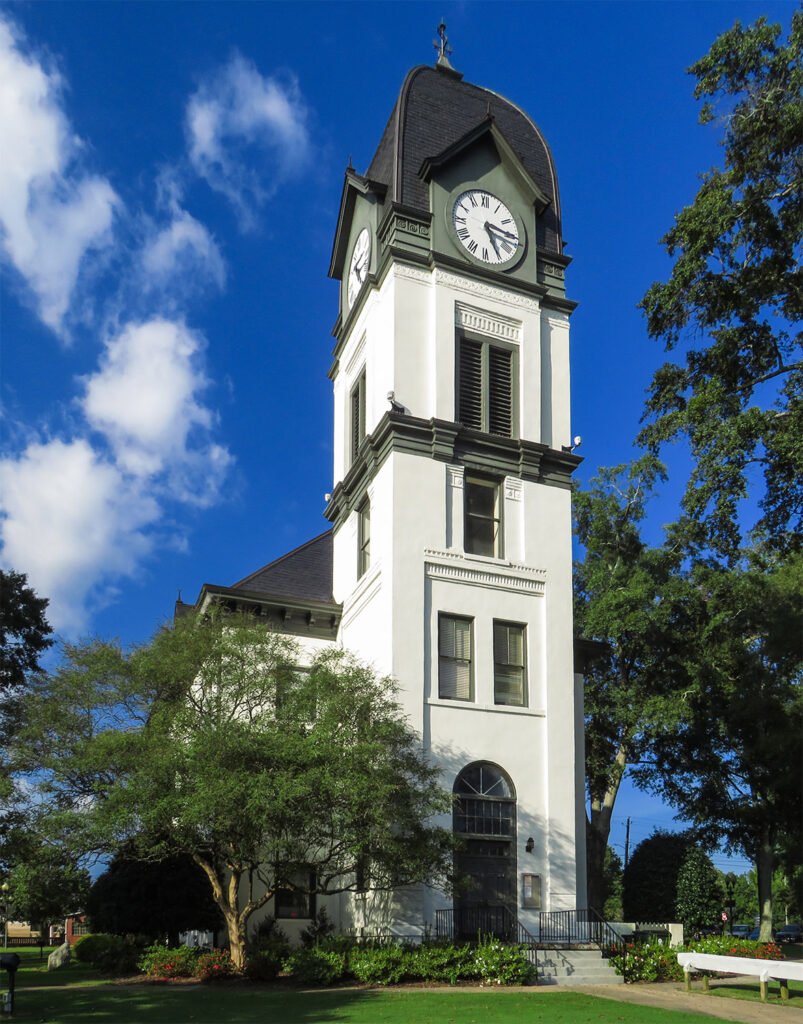
Bruce & Morgan. Renovation and expansion of the Fayette County Courthouse (1888). Fayetteville, Georgia.1314
Past historians postulated that Bruce primarily handled design duties while Morgan attended to business affairs. However, I’ve found ample evidence that Morgan also consistently designed projects, if not to the same extent as Bruce — at least in the firm’s early years.
By the time Bruce & Morgan began producing Atlanta’s first skyscraper office buildings in the late 1890s, Morgan had clearly become the lead designer,151617 and when Bruce retired from the firm in 1904, Morgan partnered with John R. Dillon for the successor firm, Morgan & Dillon, which continued until 1935.18
Bruce’s initial retirement was brief, and from 190519 to 1908, he joined with A.F. N. Everett in the firm of Bruce & Everett,20 specializing in churches and school buildings, although he also continued to design homes and apartment houses.
Public buildings were always Bruce’s forte, however, and it’s no surprise that many of his residential projects look suspiciously similar to his designs for county courthouses.
While he never exceeded the limits of his vernacular training, Bruce was a competent designer who admirably attempted to evolve with changing tastes. The residue of his Italianate designs from the 1860s and 70s still appeared in his work from the 1880s into the early 20th century, but he made good-faith efforts at more sophisticated styles like the Romanesque and Classical Revival, if not always successfully.
Bruce rarely produced any writing of significance, and you’ll find nothing especially revelatory in this short letter published in The Southern Architect journal in February 1893. The journal, incidentally, was founded by T.H. Morgan in 1889.22
Here, Bruce shares a common lament among architects of the time, criticizing people who attempted to design their own homes instead of hiring a professional.
Since architects were the journal’s primary audience, Bruce was essentially preaching to the choir, and while it may have been more effective to share his sentiments in a public newspaper like The Atlanta Constitution, he was clearly a shrewd businessman who took pains to avoid offending potential clients.
Compared to another of Atlanta’s leading architects of the era, G.L. Norrman — whose tendency toward brash public outbursts made him a lightning rod for disputes (and undoubtedly affected his business) — Bruce & Morgan were skilled diplomats who rarely attracted controversy. Note that Bruce even discreetly signed the letter with his initials only: A.C.B.
There’s a reason he had the top firm.
“I Am My Own Architect”
The expression “I am my own architect,” is frequently used by men and women who are about to undertake the erection of a residence, either in the city or country.
People who are guilty of indulgence in this form of vanity may be divided into two classes. The first are those who, as they express it, draw their own plans and employ an architect only for the purpose of designing the elevations and other “unimportant” matters. They are frank enough to confess that, while they have large ideas, their ability as draughtsmen is not worth mentioning. They disdain to cultivate such mere mechanical skill.
The second class comprise those gifted individuals who are able to draw the entire set, which are handed over to the unfortunate builder securing the contract.
In reality the tragedy of the transaction does not fall upon the builder, whose life is made miserable during the work, but upon the neighbors and residents of the locality, before whose horror-stricken faces are constructed the hideous exteriors that result necessarily from the barbaric practice of the fine art. How much better would the building look if designed by a skillful architect in charge of the work?
Norrman & Falkner.E.W. McCerren Apartments, “The Chester” (1907). Atlanta. 12
The Background
The September 1907 edition of The Inland Architect and News Record published the following remarks from G.L. Norrman expressing his dissatisfaction with the compensation structure for architects at the time.
Norrman’s was one of multiple letters from architects across the United States calling for changes to the “Institute Schedule of Charges”, which was established by the American Institute of Architects and set a standard 5 percent fee for architects regardless of project cost or size.
Norrman’s remarks:
Atlanta, Ga. June 29th, 1907.
“The past year we have been as busy as we could be. We could not have done any more if we had attempted it, and yet we have made comparatively very little. This, I think, goes to show that the present schedule of charges is too small for work which cost from $10,000 to $50,000, which is the average cost of houses in small towns. I think that for large buildings running up into the millions, the present rate would be fair renumeration; but for work done in small towns it seems that it is entirely inadequate to the training an architect must have, to the attention he must give his work and to the responsibility involved.”
It’s astounding that I’m still discovering works designed by G. L. Norrman, decades after I first began looking for them. Just this week, another one revealed itself, bringing my total count of Norrman’s projects to about 425.
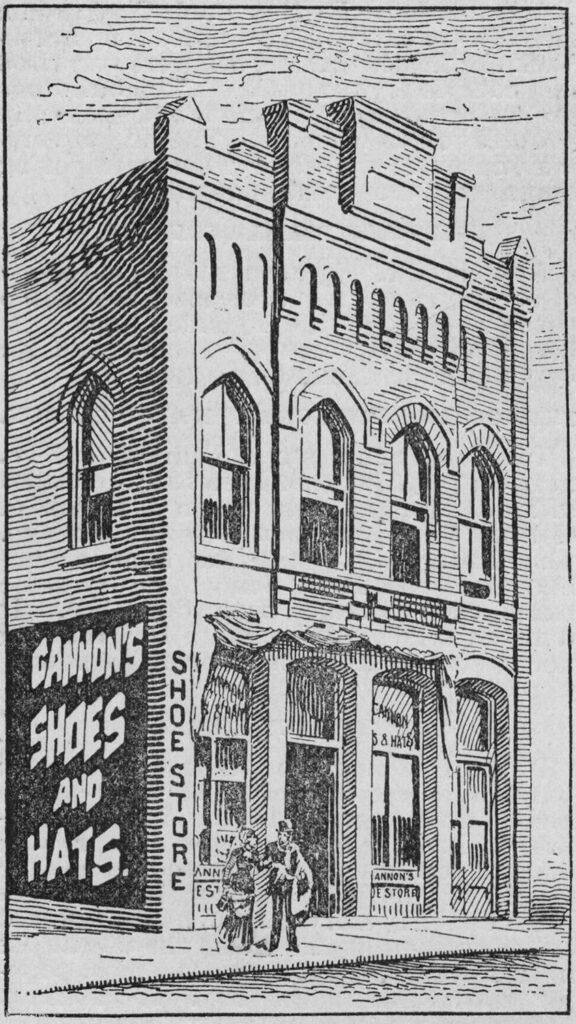
In an article from the February 6, 1927, issue of The Spartanburg Herald, the author recounted the history of the Kennedy Free Library in Spartanburg, South Carolina. The library’s first building was completed in 1885 — “Norman was the architect“, the writer casually notes.2
As Norrman practiced in Spartanburg between 1878 and 1881, and continued to return there for work throughout his career, “Norman” undoubtedly refers to him.
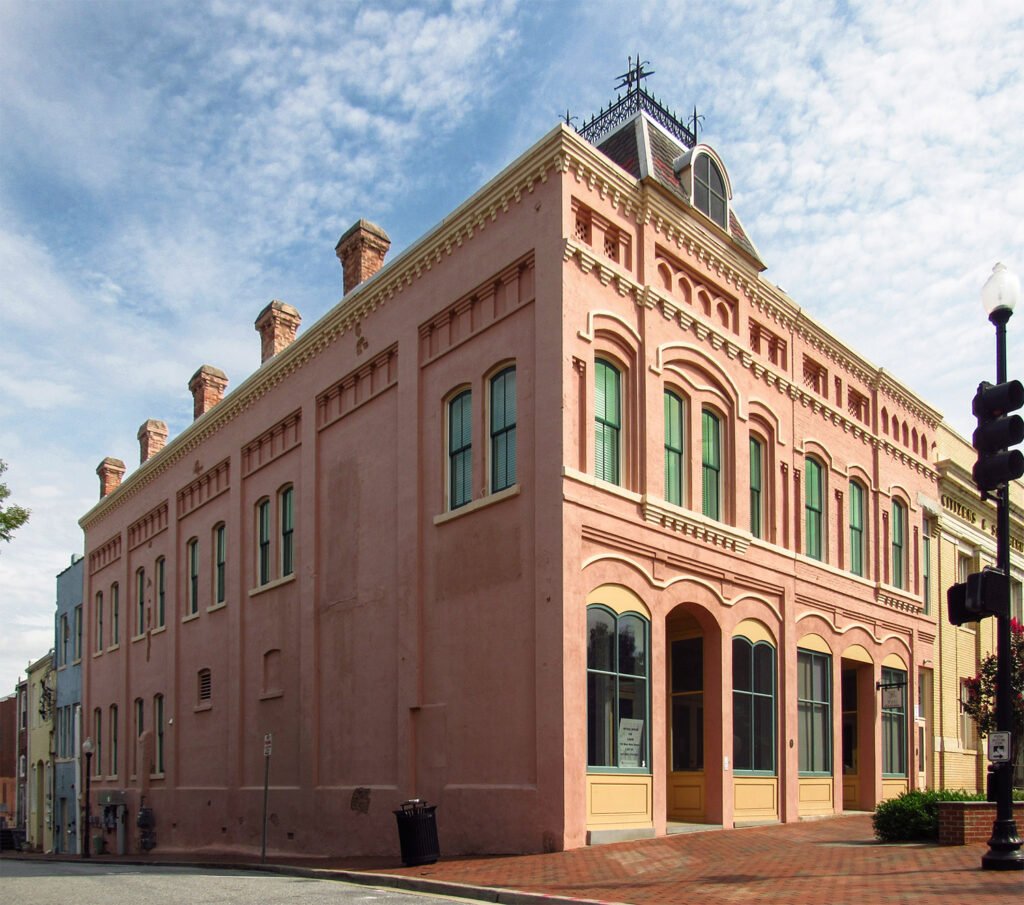
The above illustration shows the 2-story building, which was located just off the northeast corner of Spartanburg’s public square on a short street initially named Kennedy Place, and later Dunbar Street.
A Sanborn fire insurance map from 1888 indicates that the library was housed on the second floor, with retail space on the first,3 confirmed by the shoe store advertised in the illustration.
The building intrigues me for several reasons:
It’s a rare example of Norrman incorporating Gothic styling in one of his designs, which it appears he largely disfavored, even for churches and school buildings. Ina 1892 interview, he stated: “I prefer the classic for libraries…”
The building’s cornerstone was laid in June 1883, a full 2 years after Norrman relocated from Spartanburg to Atlanta in April 1881,45 allegedly because he was upset by the “cheap construction” of his Spartan Inn project.6 Although Norrman owed the bulk of his professional success to Atlanta, I suspect his heart always belonged to Spartanburg: he maintained lifelong friendships in the town, and it was there where he became a United States citizen (his naturalization papers were still held there in 1909).7 Norrman must have visited South Carolina in 1882, when the Newberry Opera House was completed, and there were multiple residences in Spartanburg built between 1882 and 1884 (all demolished) that appear to have been his designs. This discovery adds further evidence that Norrman never entirely abandoned the Upcountry.
Norrman didn’t truly come into his own as a designer until his 1886 plan for the W.W. Duncan Residence — fittingly, also located in Spartanburg. Anything from what I consider Norrman’s juvenilia period (1876-1885) is interesting because very little of it is immediately recognizable as his work, unlike most of his projects from the late 1880s onwards. I’ve seen the library illustration many times before, but never considered that he designed the building.
The library’s appearance shared some similarities with another building in Spartanburg that I have long suspected may be of Norrman’s design, although I can’t find conclusive proof. The building at 154-156 West Main Street (pictured below) was built in 18828 and is notable for the quirky little Second Empire-style cupola on its roof. It’s just a hunch.
Architect unknown. 154-156 West Main Street (1882). Spartanburg, South Carolina.
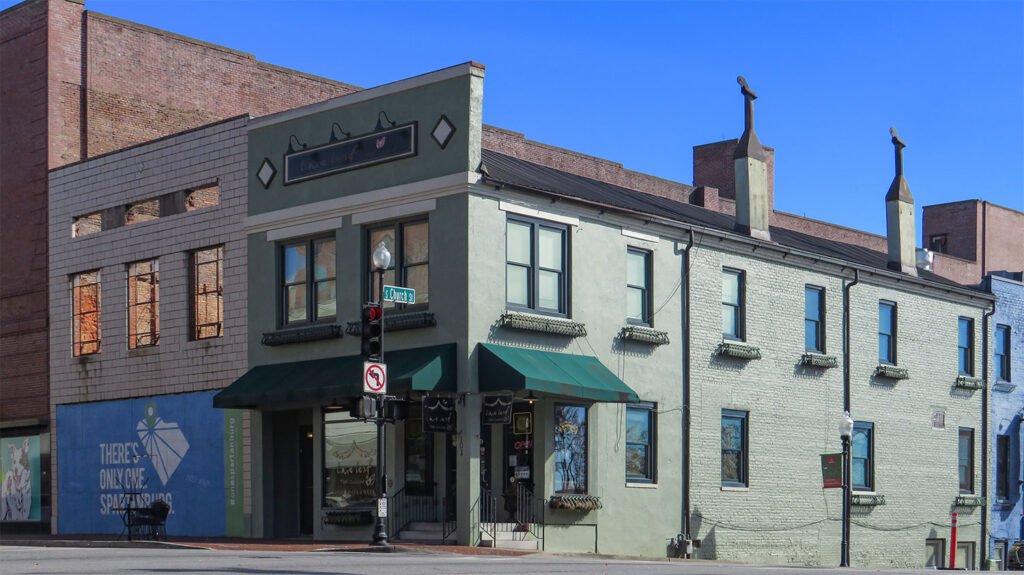
As it stands, the only extant store building in Spartanburg that I feel confident attributing to Norrman is the unremarkable structure at 101 East Main Street (pictured below).
The building was originally one-half of a block of 2 adjoining storerooms and is likely a project designed by Norrman for A.G. Owens of Mississippi in 1879.9 The neighboring space was later gutted by fire, although its facade (not original) is intact, and the remaining half has been significantly altered.
G.L. Norrman (attributed). 101 East Main Street (1879, altered). Spartanburg, South Carolina.
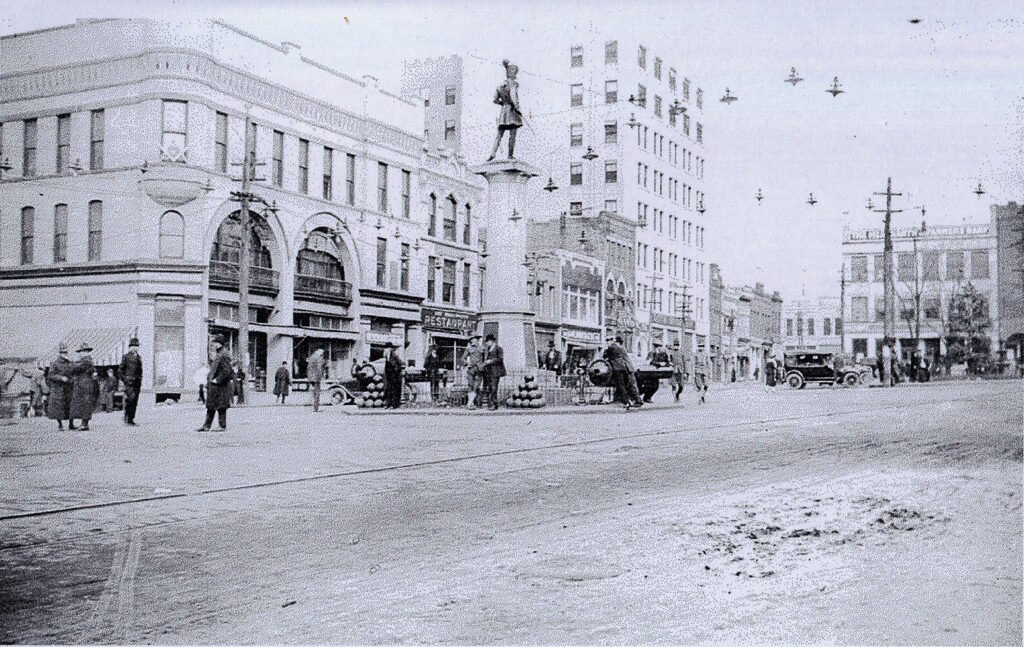
It appears the 1885 building that housed the Kennedy Free Library was demolished in 1974 for the widening of Dunbar Street,101112 one year before the demolition of the nearby Duncan Building13 (pictured below), which Norrman designed14 in 1891.15
Both structures were victims of Spartanburg’s attempt to convert its downtown into a “mall”, following a plan by Skidmore, Owings, and Merrill that called for the creation of one-way streets and the wholesale demolition of historic buildings to lure savvy shoppers back to a modernized central core.16
As with the hundreds of other U.S. cities that “malled” their downtowns in the 1970s, Spartanburg’s effort was an abject failure,17 and a planned 15-story hotel and civic center complex that was to be built on the “Opportunity Block” that included both the library and Duncan Building failed to materialize.18
And thus does America continue to destroy itself: through arrogant plans and empty promises.
G.L. Norrman. Duncan Building (1891, demolished 1975). Spartanburg, South Carolina.
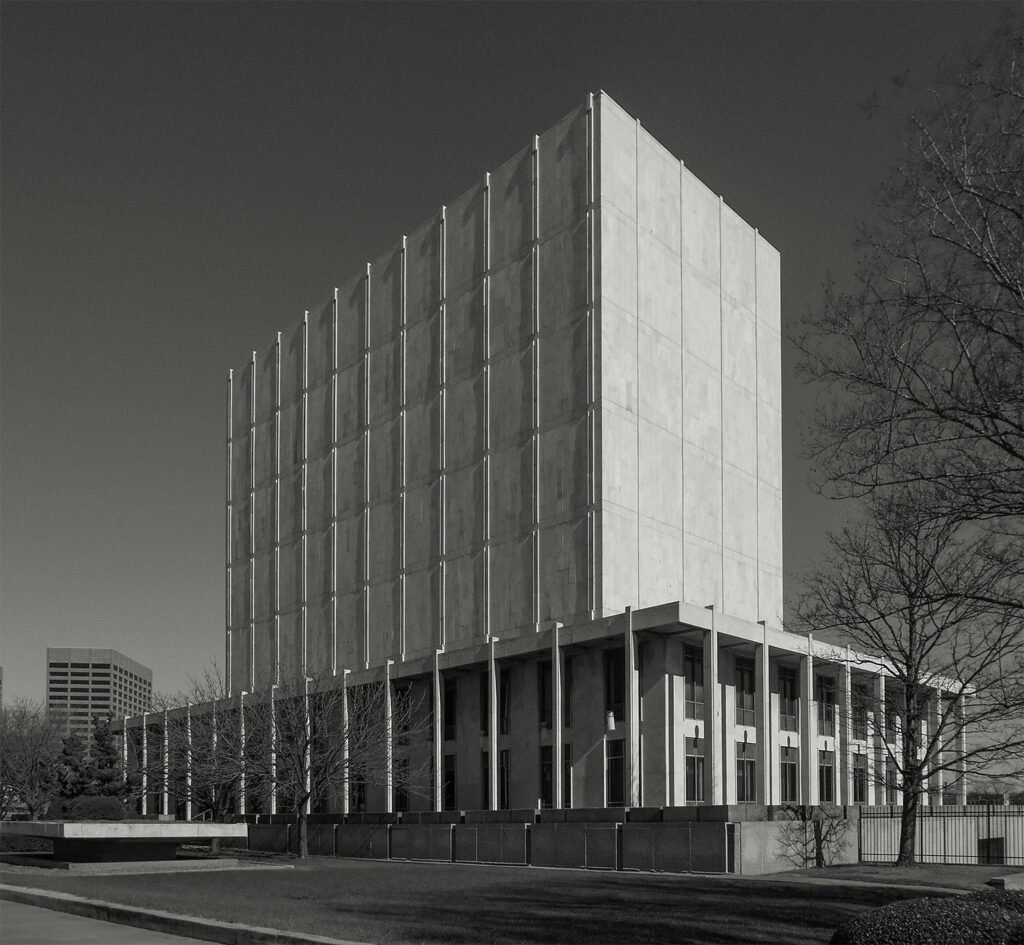
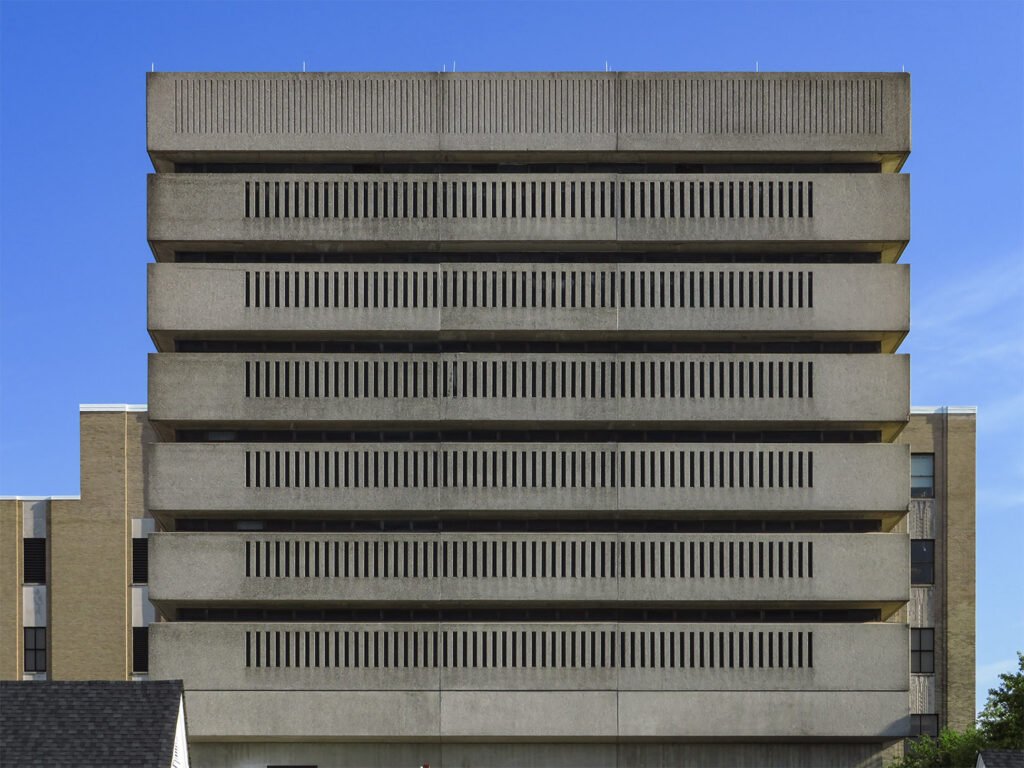
LBC&W Associates. Guilford County Law Enforcement Center (1975, demolished 2024). Greensboro, North Carolina.123
References
Weaver, Bill Rhodes. “Board Approves Preliminary Plan For County Jail”. Greensboro Daily News (Greensboro, North Carolina), September 17, 1971, p. B1. ↩︎
Weaver, Bill Rhodes. “Sheriff Gibson Had His Troubles”. Greensboro Daily News (Greensboro, North Carolina), September 30, 1975, p. B1. ↩︎
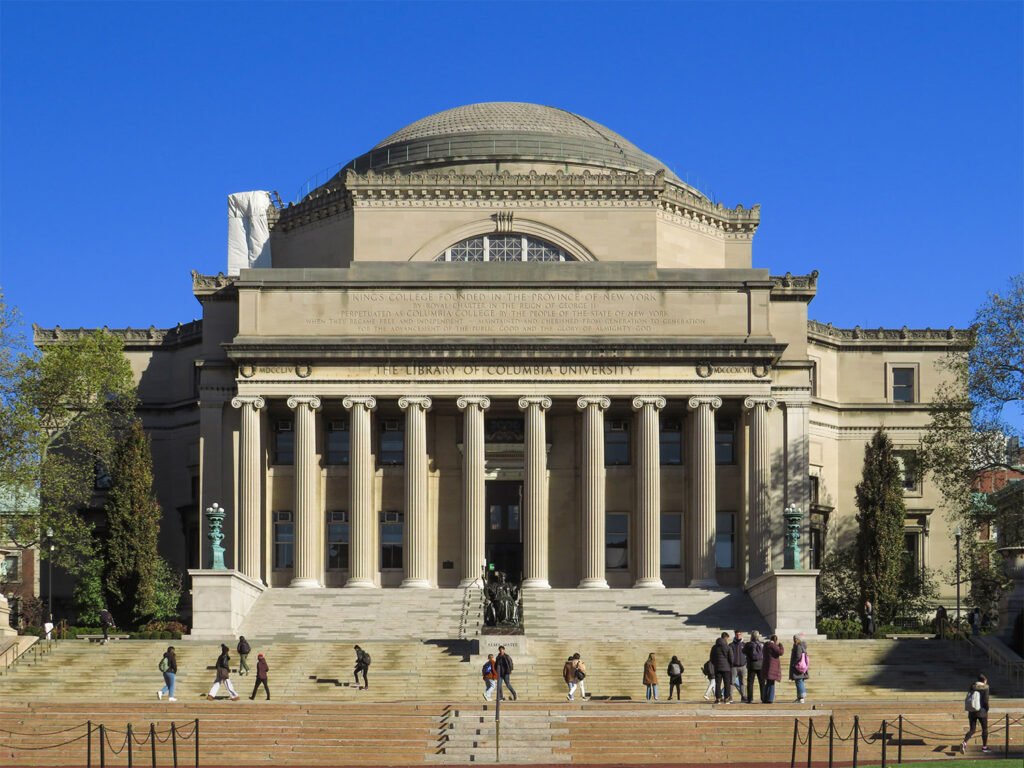
Charles McKim of McKim, Mead & White.Low Memorial Library at Columbia University (1897). New York.1
The Background
Stanford White was the lead designer for McKim, Mead & White, a New York firm that dominated American architectural design in the late 19th and early 20th centuries.
White was both an outstanding architect and a notorious public figure, already well-known for his wild philandering, excessive partying, and conspicuous overspending, when he was murdered on June 25, 1906, by the husband of one of his ex-lovers, Evelyn Nesbit, who was just 16 when White reportedly drugged and raped her.
Nesbit’s husband, Harry Thaw, shot White in front of a crowd of hundreds at New York’s Madison Square Garden — which White incidentally designed.
For more than a year, the front pages of American newspapers were covered in the lurid details of White’s seedy escapades, and the ensuing “Trial of the Century” ended when Thaw was declared not guilty by reason of insanity.
The day after White’s murder, The Atlanta Georgian newspaper published remarks by G.L. Norrman, who reportedly met Stanford White when they both “were on the committee of awards at the Chicago Exposition in 1893.” Details of this committee cannot be confirmed, but the report explained that: “Five other architects of the country were on the special committee that judged architectural drawings.”
Norrman was obviously an admirer of McKim, Mead & White’s work, and many of his projects drew extensive inspiration from their designs. Norrman claimed that he and White frequently met at the annual conventions of the American Institute of Architects, and touted him highly as a designer.
It should be noted, though, that the 2 projects for which Norrman praises White — the Low Memorial Library (pictured above) at Columbia University, and the Boston Public Library — are well-documented to be the work of White’s partner, Charles McKim.
Norrman was likely thinking of the Gould Memorial Library in the Bronx, which was designed by White.
Norrman’s remarks:
“I knew White well. His work placed him before the country as a great designer. The library at the Columbia library in New York was designed by his firm, but the magnificent front of the building was the work of Mr. White himself. His work on the Boston library was also of great note. I have known him quite a while and the news of his tragic death is a great shock to me.”2