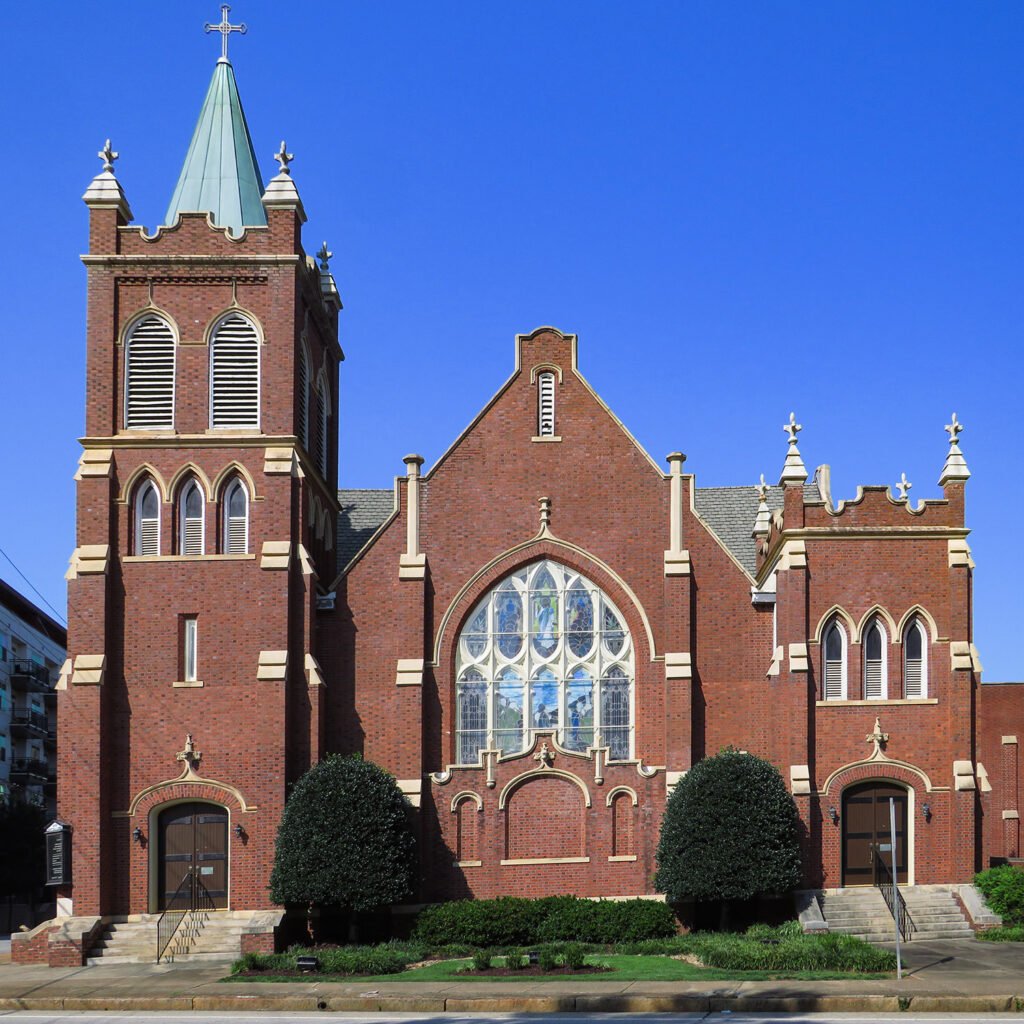
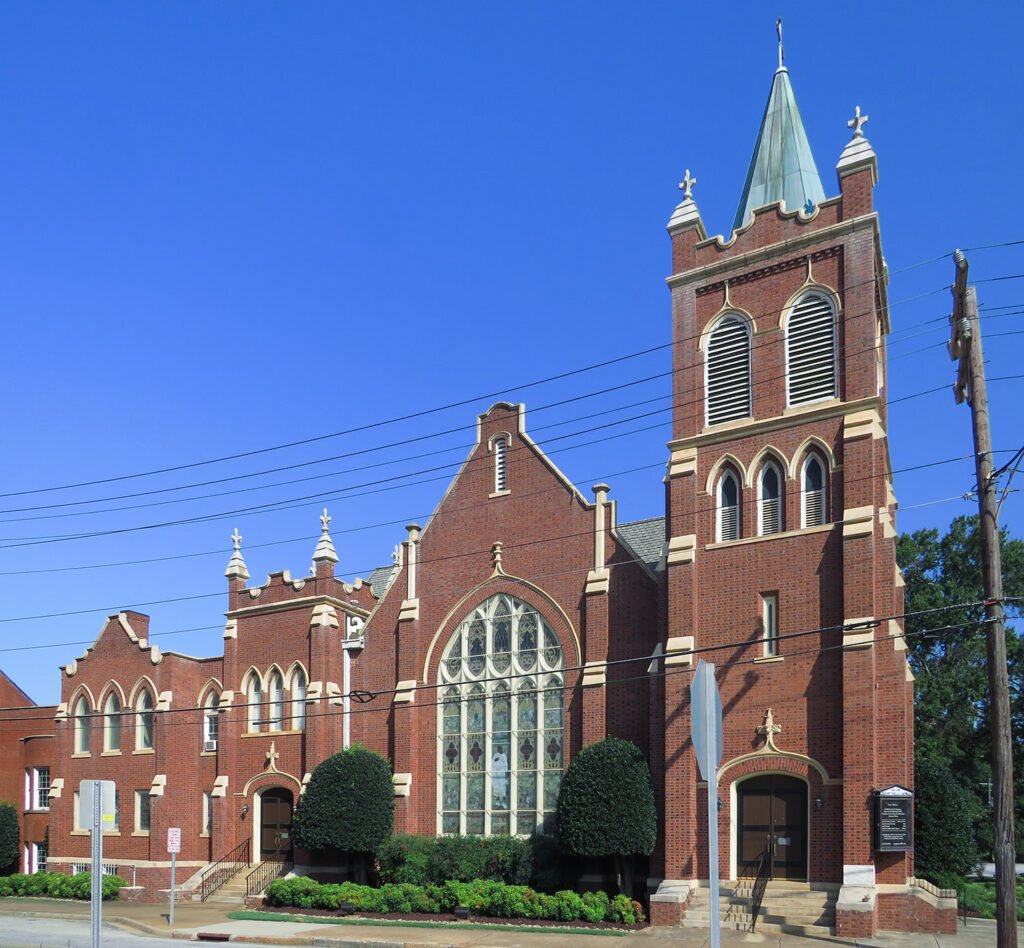
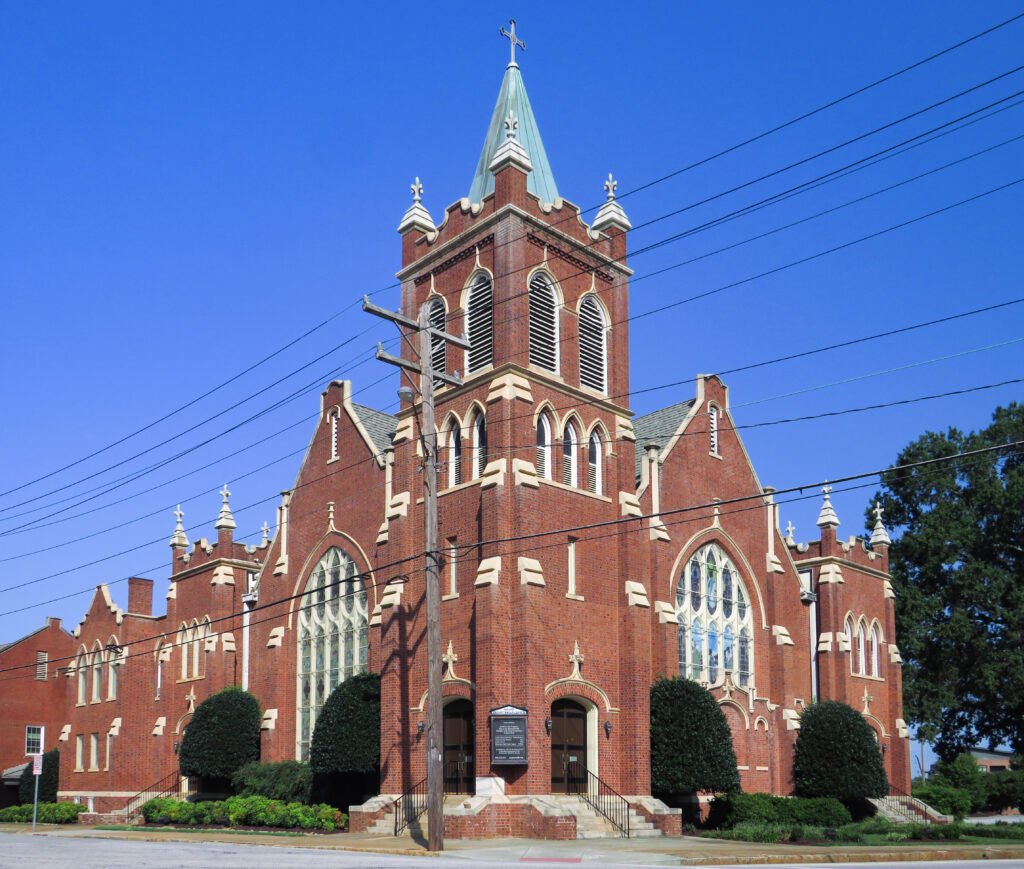
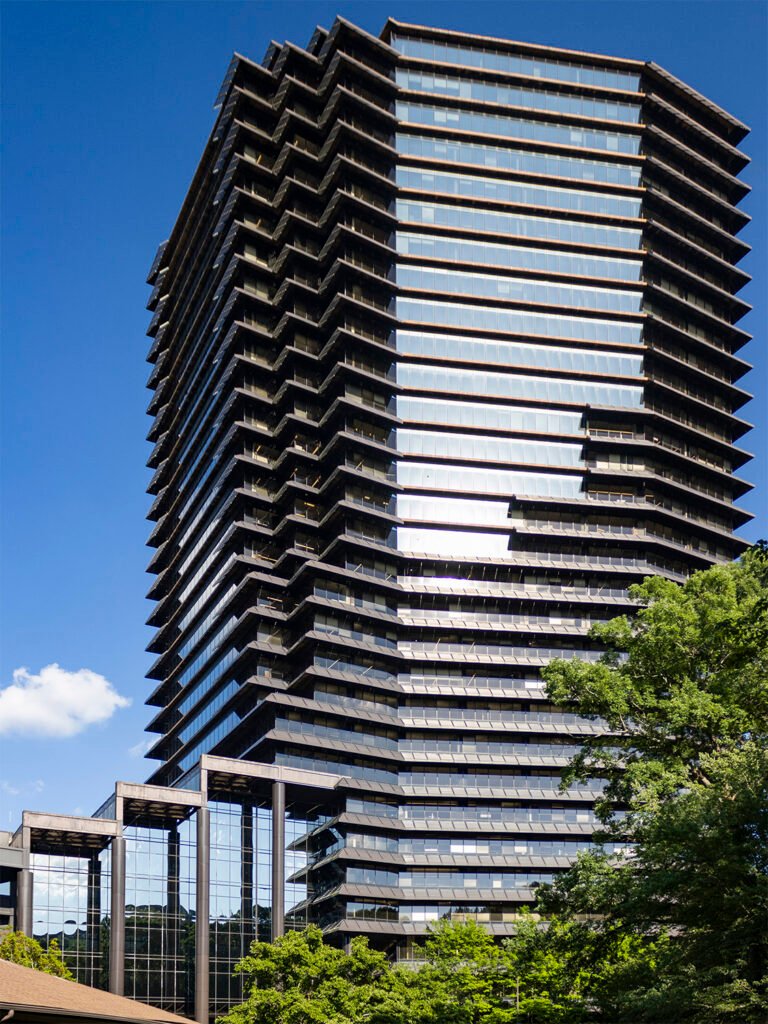
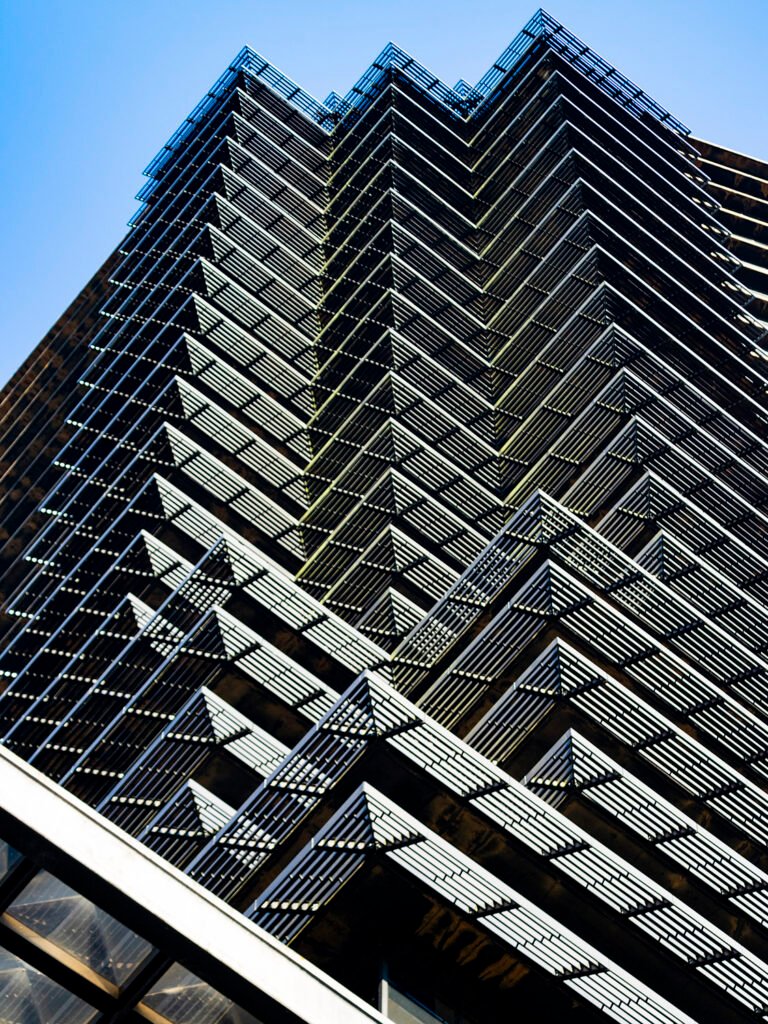
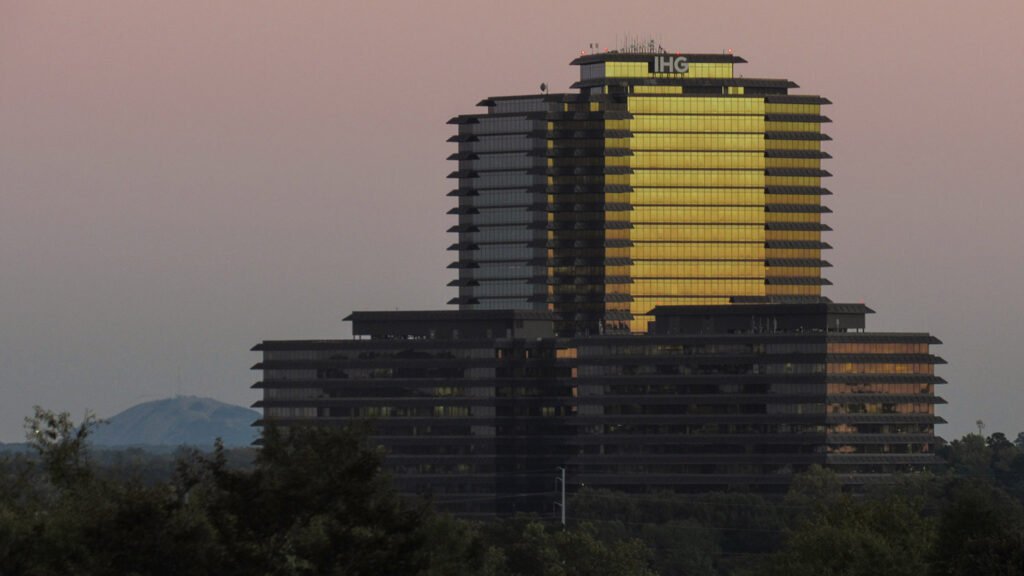
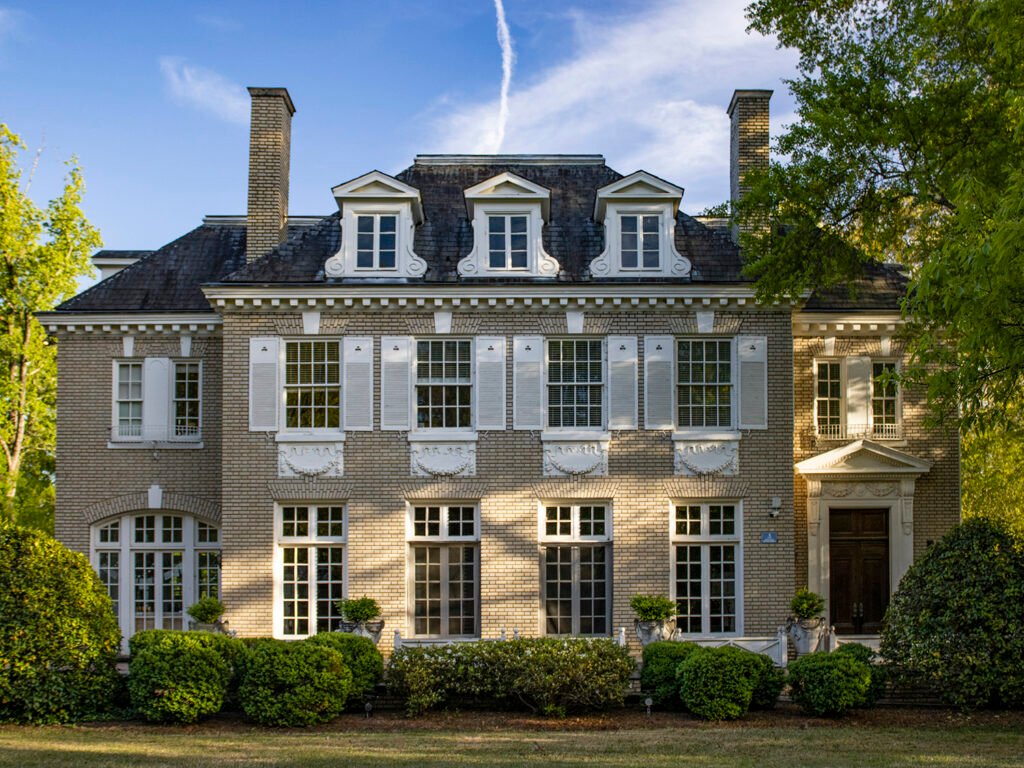
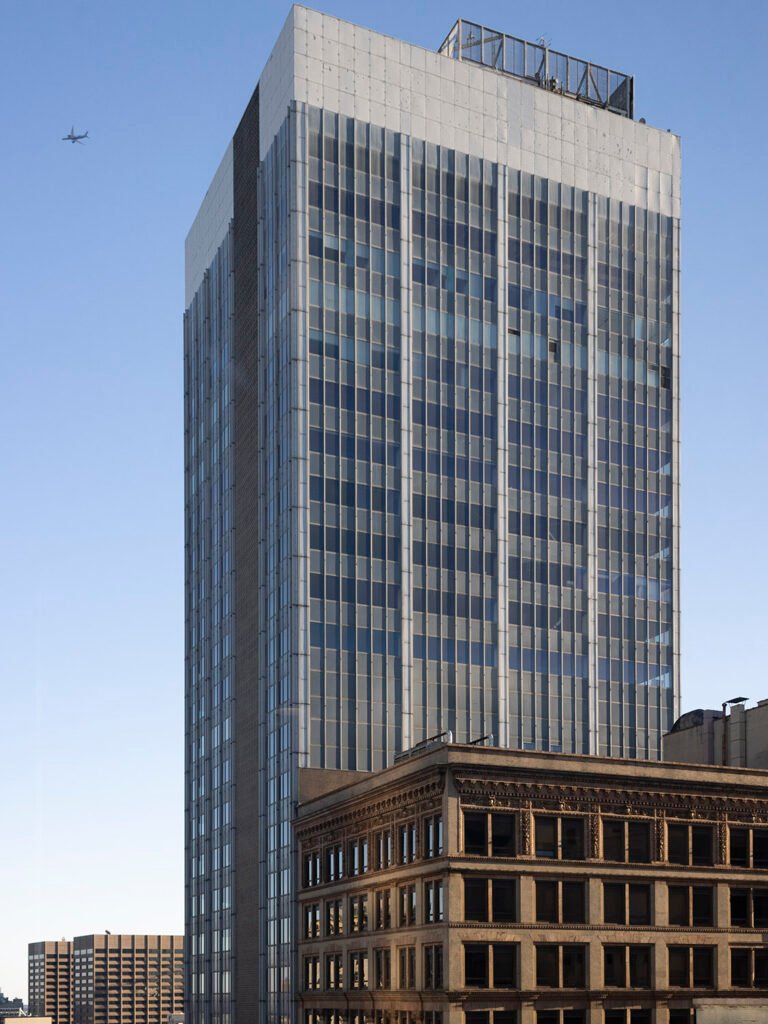
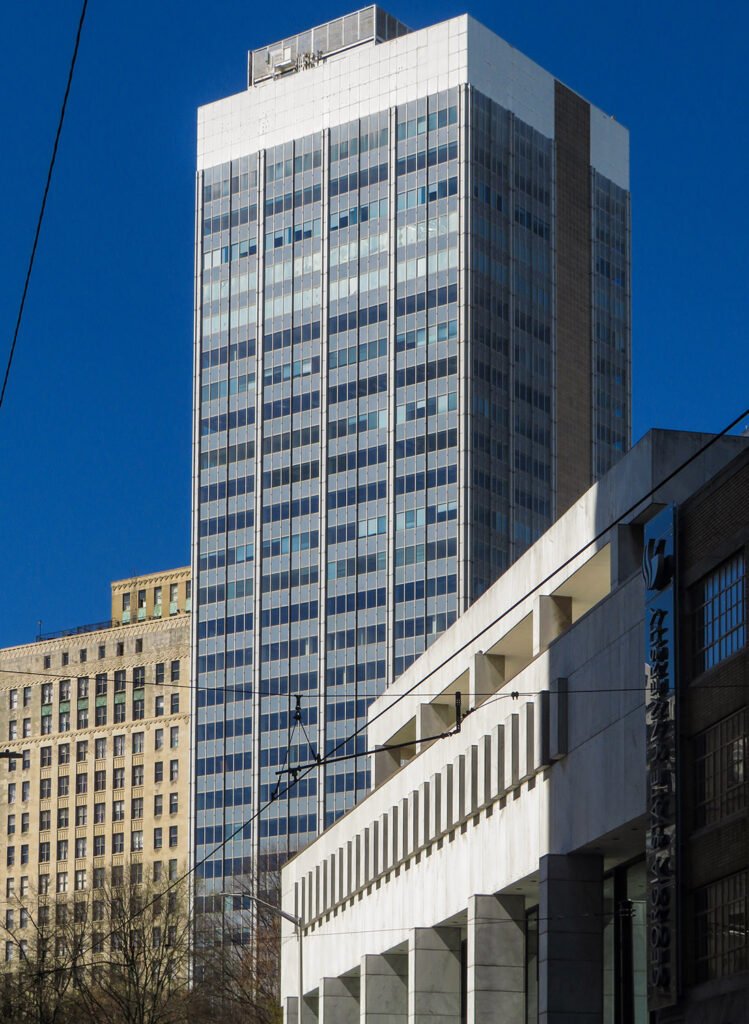
This 31-story International-style tower was arguably the first “modern” skyscraper in Atlanta, although it’s now pushing 70 years old and looks every day of it.
The tower opened in 1961 as the home of The Bank of Georgia and was purported to be the “tallest structure south of Baltimore,”4 surpassed a few years later by Atlanta’s First National Bank,5 6 built one block away.
It’s telling that the Bank of Georgia had to hire an out-of-town firm, Hedrick & Stanley of Dallas, to design the building — none of Atlanta’s architects at the time had the chops for such a large-scale project.
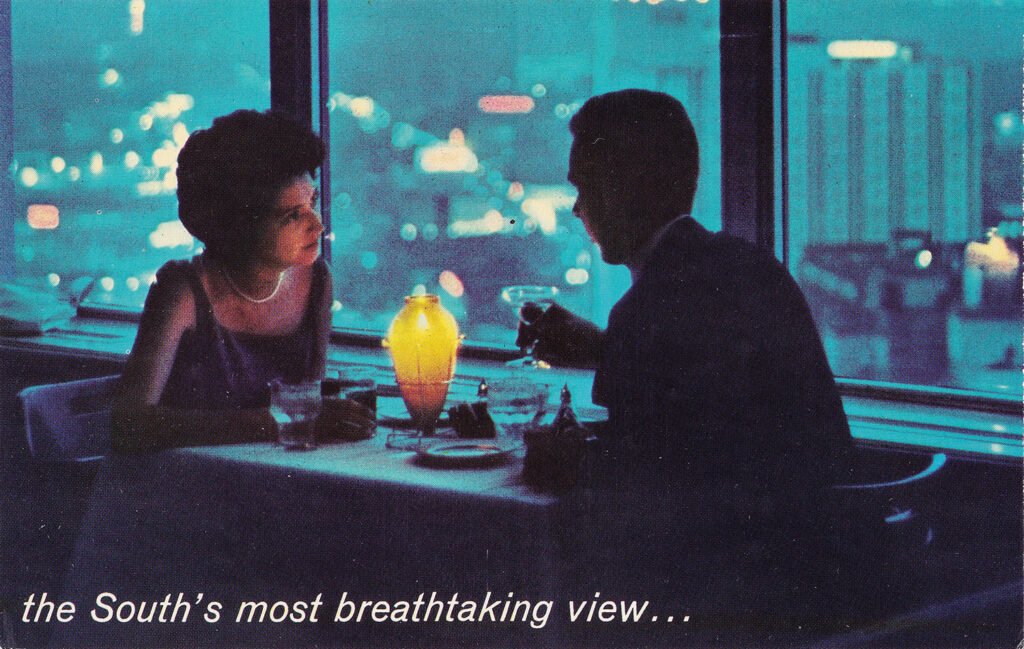
For the first 11 years, the 30th floor of The Bank of Georgia tower was occupied by the Top O’ Peachtree restaurant and “lookout lounge”, later described as ‘”the” place to go for dinner or drinks in its beginning.’7
Based on photographs, Top O’ Peachtree was no doubt an ideal rendezvous for married bank executives and their secretaries. Oh, come on, you know it happened.
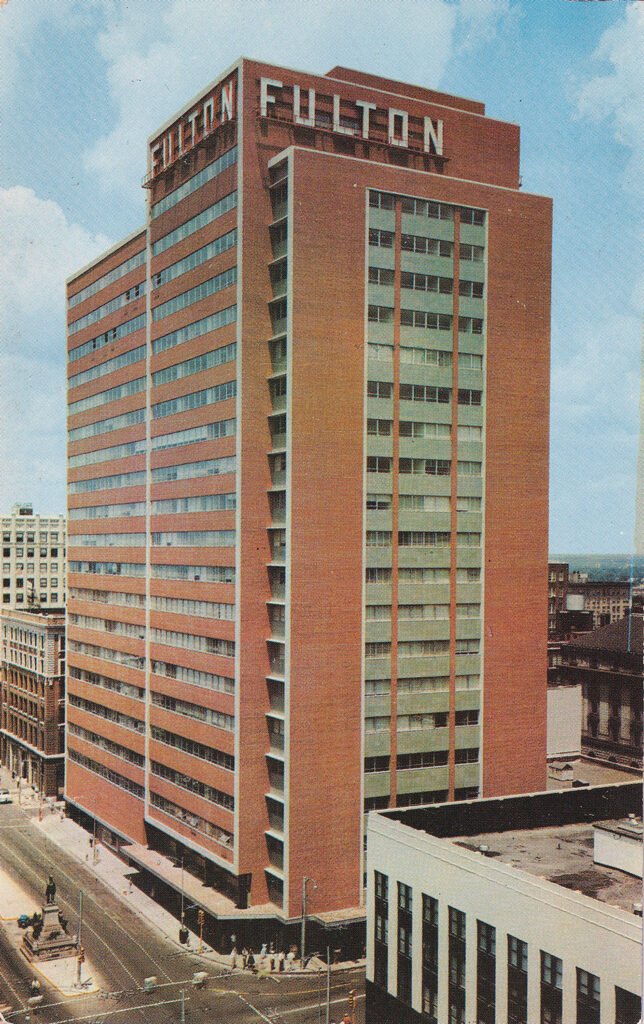
When the Bank of Georgia tower was sold in 1979, it was described as one of “the two homeliest buildings in town,” along with the nearby Fulton National Bank building (1955),10 which was entirely accurate — then and now.
Designed by Wyatt C. Hedrick Company of Dallas,11 which later became Hedrick & Stanley, the Fulton National Bank building has been renamed 55 Marietta and remains in active use, now serving as a data center. The Bank of Georgia, however, hasn’t fared as well.
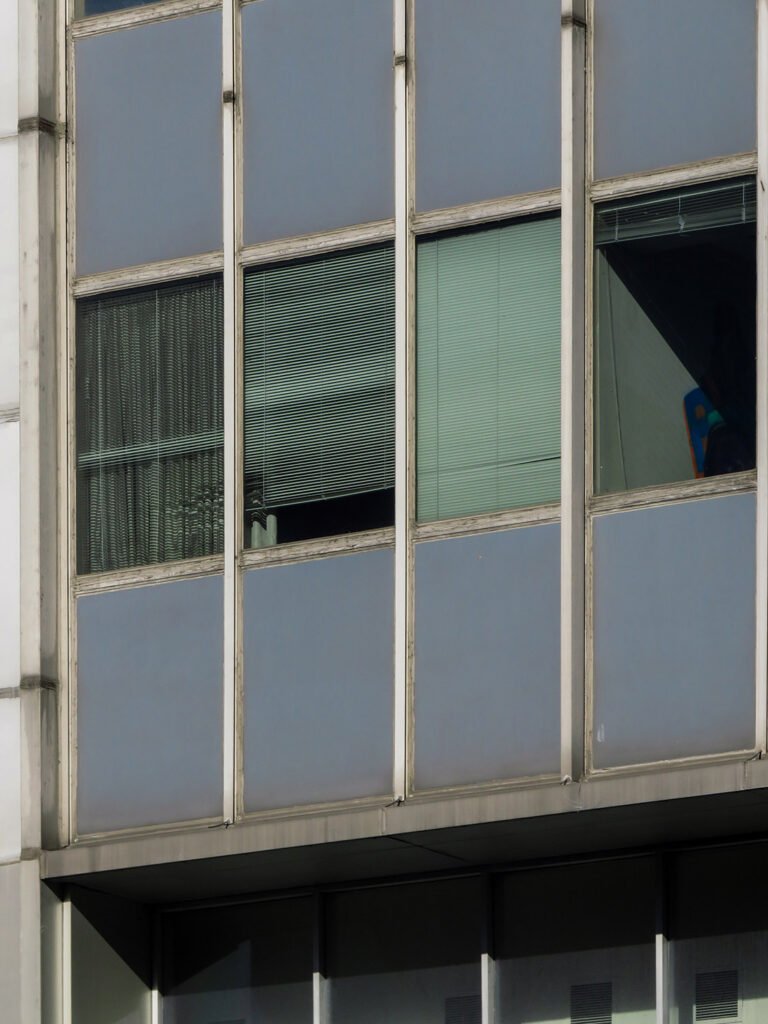
Later renamed 34 Peachtree, the former Bank of Georgia has passed through a succession of owners and is currently vacant, with missing windows on the upper floors and its street-level retail spaces obscured by brown paper.
A peek through the doors and windows at night reveals the dead escalators in the lobby and dangling ceiling tiles in the office spaces.
In 2017, pieces of the building’s facade fell to Peachtree Street during a bout of high winds, prompting the closure of several streets.12
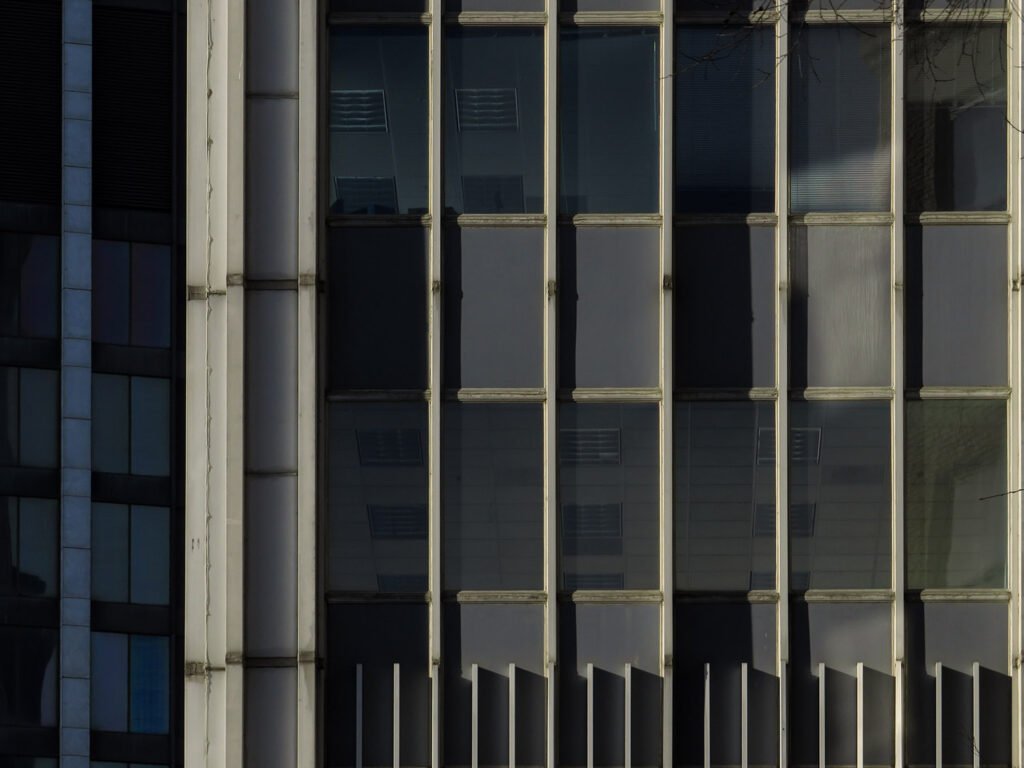
There have been empty promises to convert 34 Peachtree into residential units,13 but that’s just typical Atlanta bullshitting, quite unlikely to transpire, as the cost to renovate such behemoths is overwhelmingly prohibitive.
Office buildings are rapidly becoming a relic of the past, and as more skyscrapers begin to deteriorate, it will be interesting to see what cities like Atlanta do with them, particularly as the United States plunges headfirst into inevitable social and economic decline.
I suspect that in decades to come, many American cities will be filled with vacant, crumbling towers that no one will have the money to demolish or renovate — unsightly monuments from an age of decadence and arrogance best left forgotten.
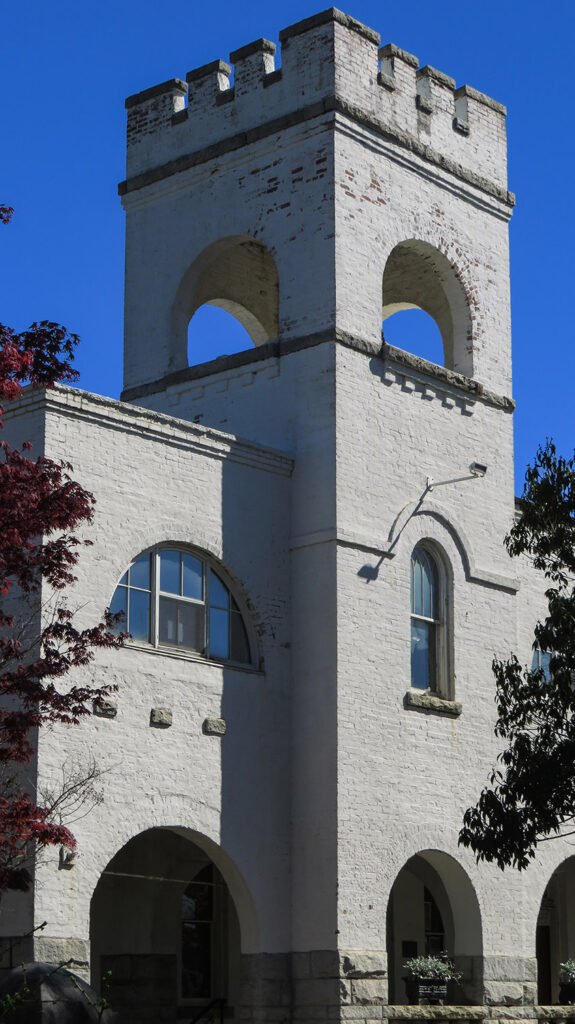
The Public Comfort Building in Oakland Cemetery is the only surviving work in Atlanta known to have been designed by C. Walter Smith (1865-1910), an architect who worked for at least seven years as a draughtsman and assistant for G.L. Norrman before embarking on a fairly unremarkable solo career.
Built on a small hill in the western portion of the 48-acre cemetery, this 2-story structure includes a full basement and totals 2,800 square feet.1 The exterior is faced in stucco-covered brick2 and rusticated granite trimmings, and marble flooring3 is used on the front porch and in the basement.
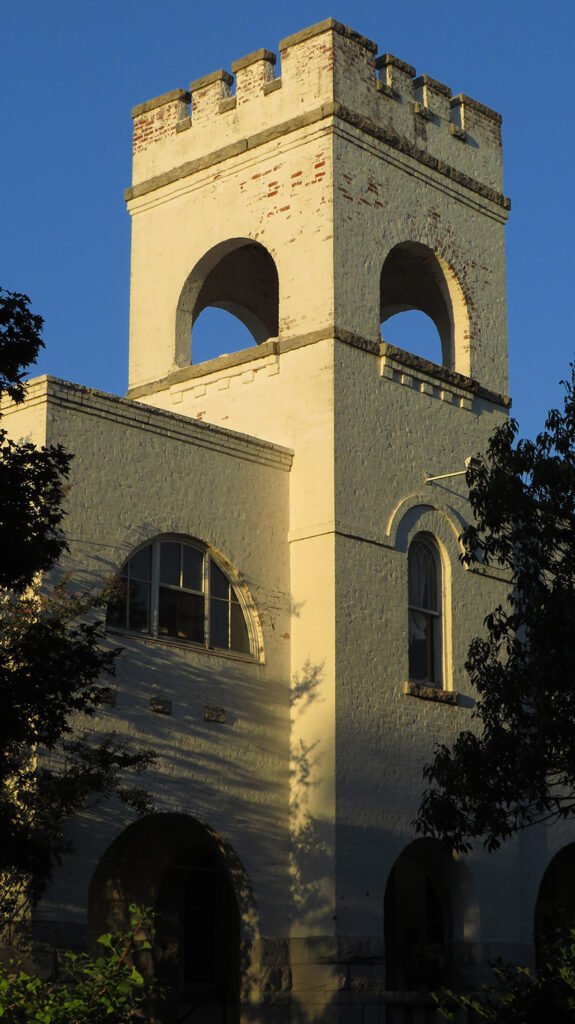
Modeled after “the old Norman and English castellated churches,”4 the building’s design can be broadly defined as Romanesque, and its focal point is a 50-foot-high crenellated bell tower,5 heavily inspired by similar designs from G.L. Norrman.
Today, Oakland Cemetery refers to the entire structure as the “Bell Tower”.
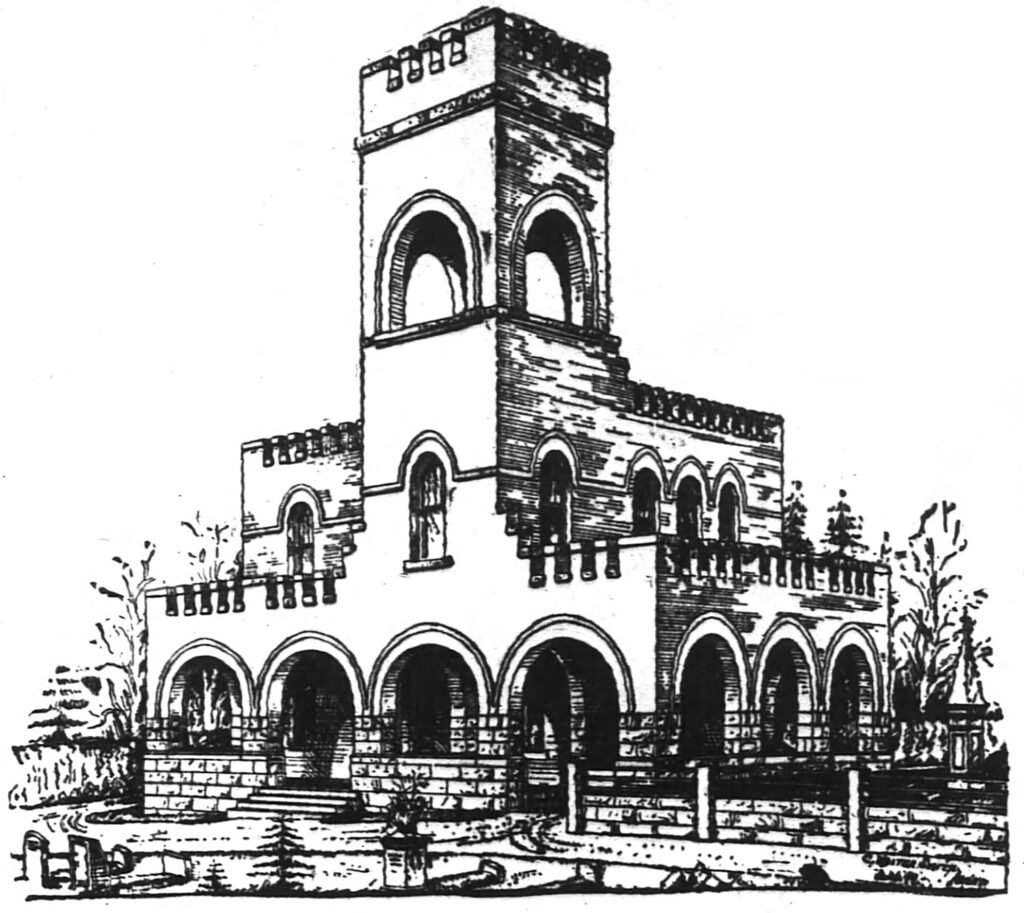
An illustration from 1899 (pictured above) reveals the building’s original design: a one-story porch topped by battlements originally flanked the south facade, and a porte-cochère to accommodate wagons was attached to the east side.
Curiously, the final design was reversed, with the porte-cochère moved to the west side of the structure, likely one of “a few slight changes” announced before construction began.7
Roman arches on the porch and bell tower, and Gothic-style arched windows on the second floor completed the appearance of a small, storybook castle — again, Smith borrowed significantly from Norrman for the aesthetic.
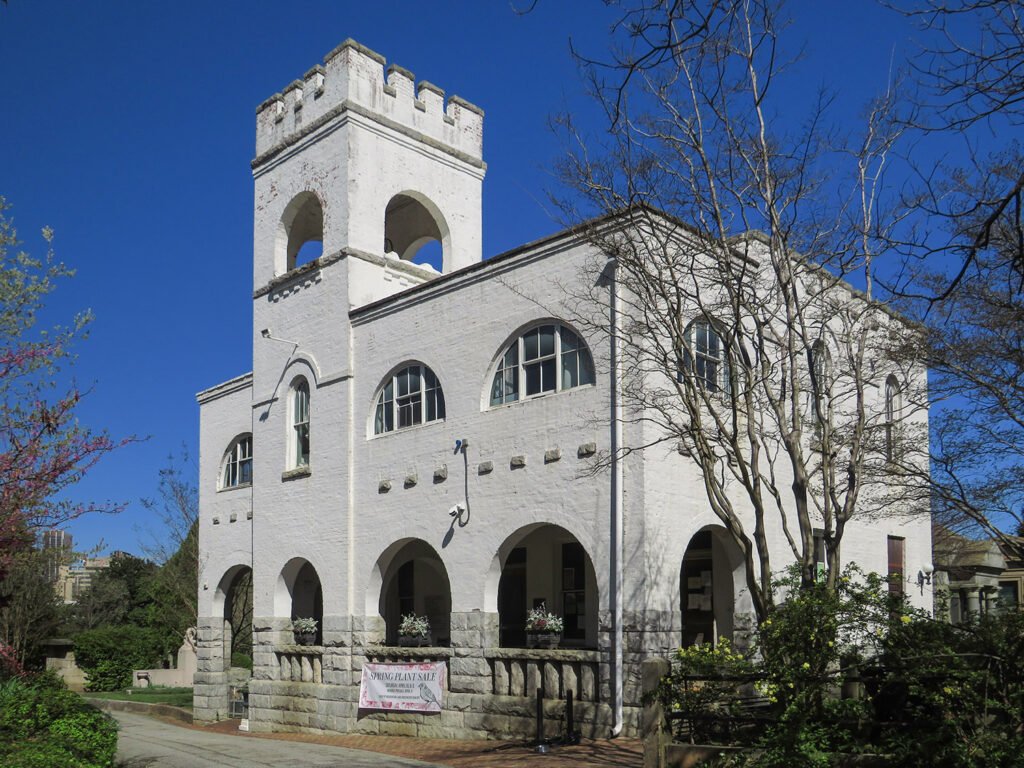
In its original conception, the building was one of Smith’s better designs. Despite years of training under “the South’s most prominent architect”8 — his words — Smith’s skill never came close to Norman’s high level of artistry, although his work here was at least intriguing.
Unfortunately, the initial vision was compromised by the later addition of second-floor porches over the front porch and porte-cochère, topped with flat roofs and punctuated by incongruent half-round openings.
I suspect the porches were added circa 1908, when the cemetery spent $5,000 on a range of improvements9 following its first annual report to the city, which requested $1,000 for “needed changes and repairs in the main building.”10
The effect of the alterations is detrimental: the upper porches add unnecessary visual mass to the structure and pull focus away from the bell tower, robbing the entire composition of the uplifting, monumental effect Smith originally intended.
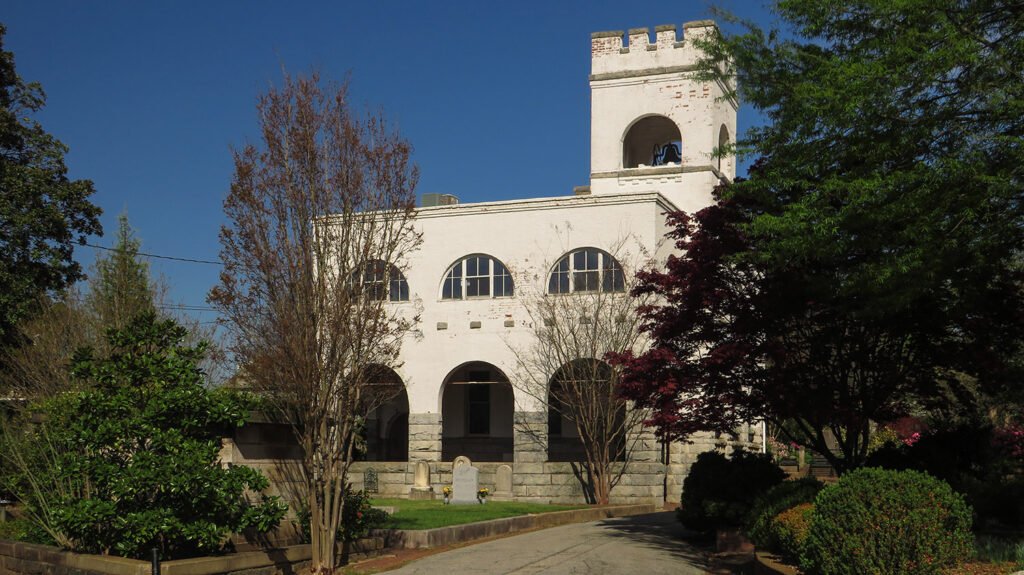
“Public comfort” was a polite 19th-century euphemism for restrooms, which were originally housed on the ground floor of the structure.
When the building was completed in October 1899, The Atlanta Journal delicately noted: “Here one now finds a convenience and comfort that was lacking for many years.”11 I guess early visitors just had to hold it — or maybe piss on a grave.
There were initially six rooms in the building, including a ladies’ parlor and an “apartment for gentlemen.” All six rooms had tiled mantels,12 which was apparently noteworthy. Two of the mantels remain intact.
The structure also included an office for the cemetery’s sexton,13 and Oakland Cemetery’s website claims the building contained a chapel, with the second floor used as the sexton’s residence. So many uses for such a small structure.
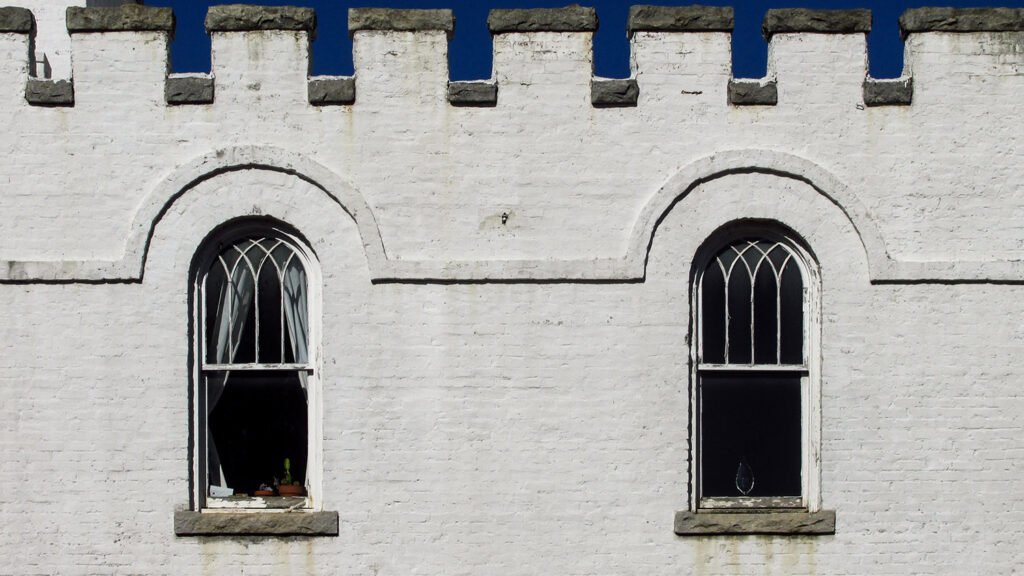
Despite its fanciful design, the building was, at heart, purely utilitarian, “suitable for the purposes for which it is intended,”14 as the Journal put it.
People need to pee, of course, but the building’s other raison d’être was concealed in the basement.15 The structure was built on the site of a converted 2-story farmhouse16 known as the “dead house”17 — you can see where this is going.
As the Journal explained:
“There is a vault with eight catacombs and sixteen racks. This is as strong and substantial as could be made. For the retention of bodies for any length of time the catacombs will answer every purpose, as they are built to be air-tight for years to come. The racks, as a matter of course, are intended as a temporary place of keeping and are conveniently arranged. When the iron gate to the vault is locked entrance is practically impossible.”18
Since Oakland is a public cemetery operated by the city of Atlanta, the building was funded by an appropriation from the city council.19 The Atlanta Building Company secured the contract with the lowest bid, and the project’s total cost was $4,600,20 with $650 spent on the stone.21
Construction on the building was initially slated to begin on April 27, 1899,22 but was apparently delayed until June and completed in four months.23
Although early plans called for the construction of one or two additional public comfort buildings in the cemetery,24 those never materialized, and this structure remained the only significant public building at the site, altered many times over by piecemeal repairs and alterations.
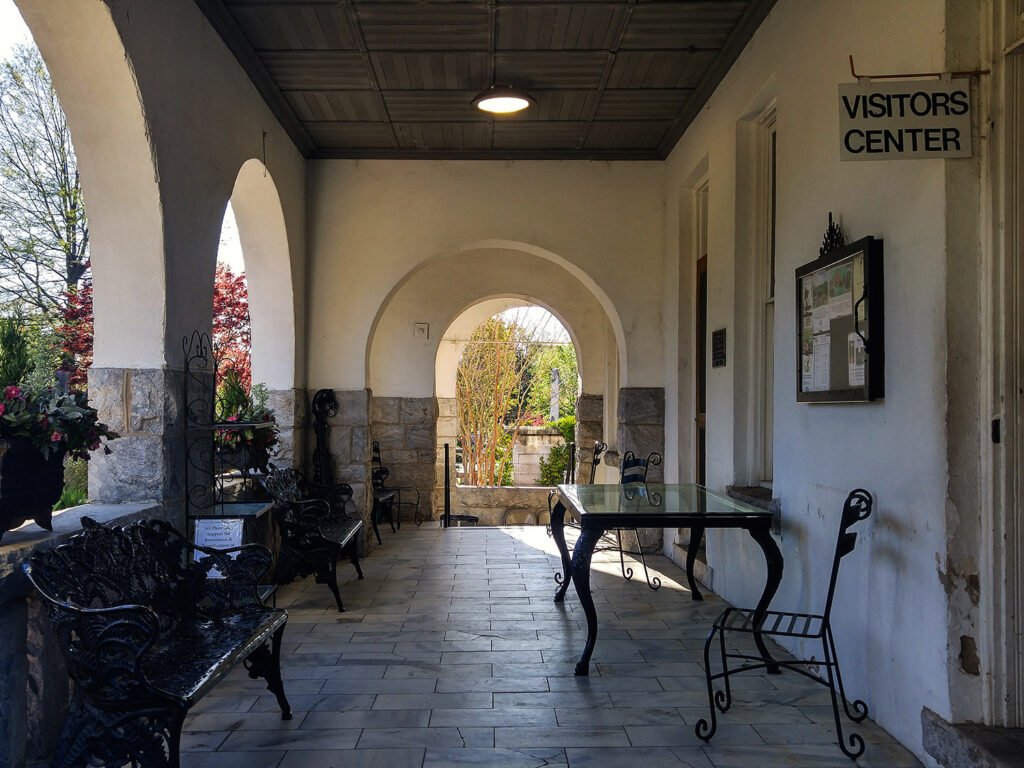
When the Historic Oakland Foundation was formed in 1976 to preserve and maintain the cemetery’s historic integrity, the building became office space for the organization, with the ground floor converted into a small visitors center,25 a function that it served for decades.
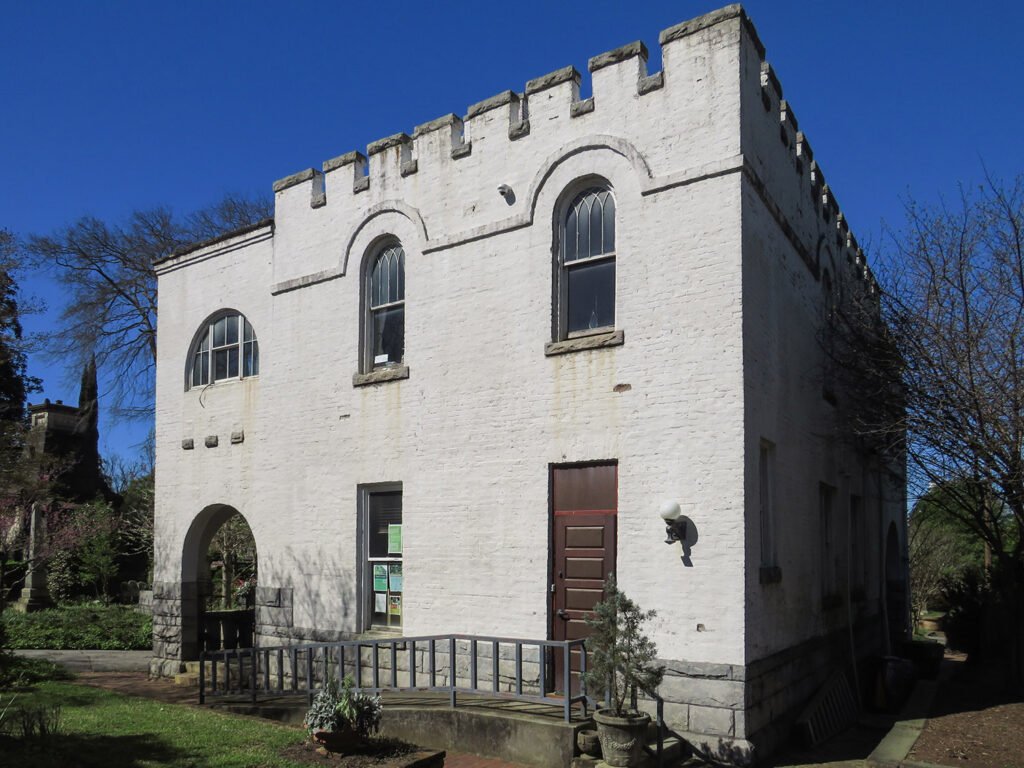
In 2022, as Oakland Cemetery prepared to build a much larger visitors’ center outside its main entrance, the former Public Comfort Building was given a gut renovation designed by Smith Dalia Architects, Atlanta’s finest firm for the adaptive reuse of historic structures.
The project included tearing out the hodgepodge of rooms on each floor for larger, open spaces, removing god-awful windows added to the second-floor porches, and making necessary accessibility alterations, which altered a portion of the front porch.26 27
The building reopened later that year28 as an event space: the fallback choice when owners don’t know what to do with a historic structure.
Following its renovation, the building now appears a little too clean and gleaming — I actually preferred it when it was worn and shabby — but it still has an undeniable anachronistic charm that’s uncommon in Atlanta.
And as one of just six known extant works by Walter Smith, it’s also a matter of curiosity, if nothing else.
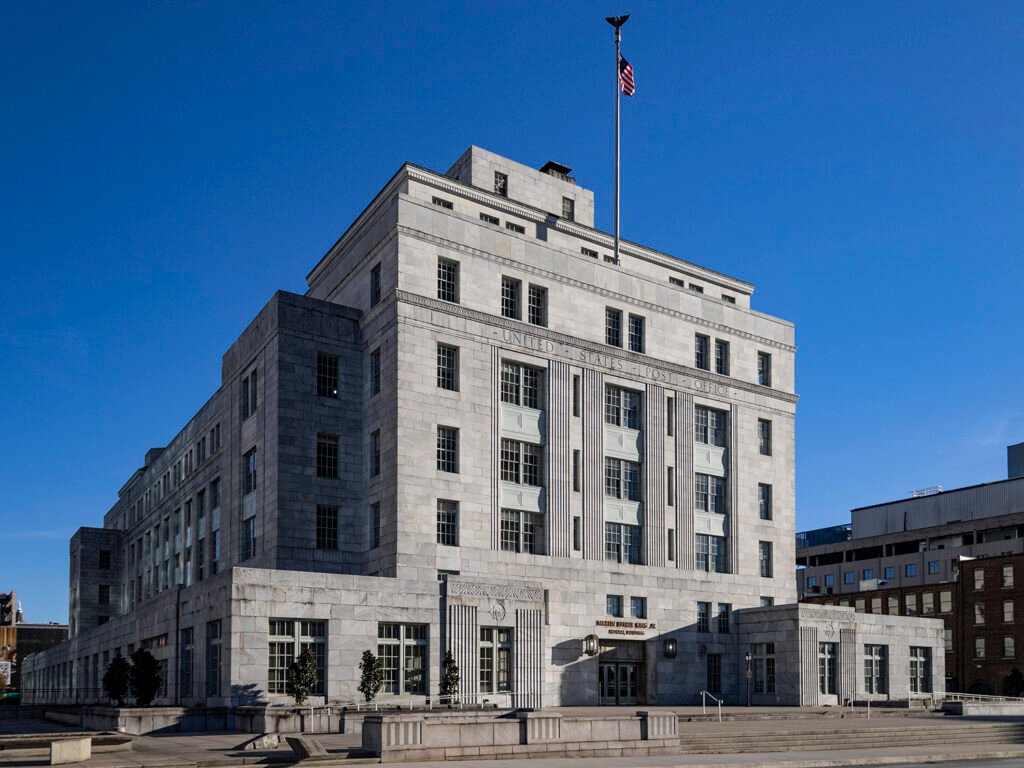
Don’t let Atlanta historians fool you: A. Ten Eyck Brown (1878-1940) likely had little to do with the design of this monumental structure, which ranks among the most exquisite buildings in the city.
Opened in December 19331 as the United States Post Office, it appears the project was primarily designed by Brown’s associate architects, Alfredo Barili, Jr., and J. Wharton Humphreys, who established their own firm a few years later.2
Compare the later works credited to Brown with those of his early years, and it’s clear that his own skills were inadequate for the more sophisticated designs that emerged from his firm in the 1920s onwards — this project is no exception.
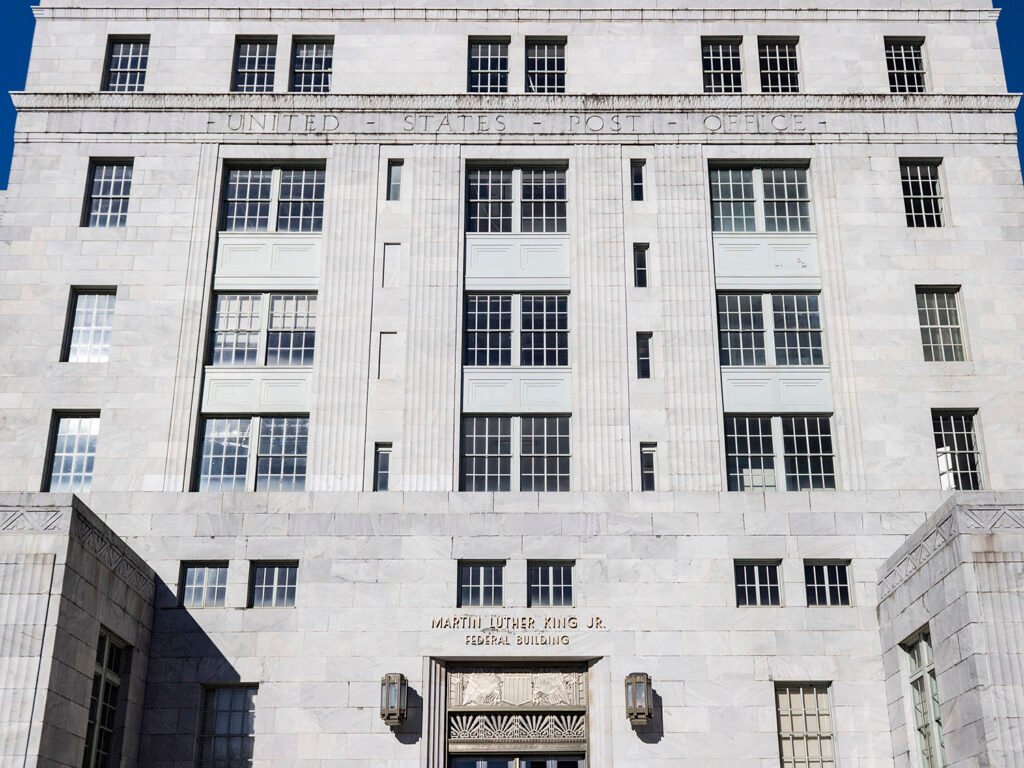
Designed in the Classical Moderne style, the building sits atop a base of Stone Mountain granite and is sleekly clad in Georgia marble.3
The structure’s otherwise smooth facades on the east and west are punctuated by a trio of slightly recessed bays that recall Brown’s earlier design for the Fulton County Courthouse, but the effect is much more successful here.
Indeed, the courthouse design is a joyless mess: the building’s facade is cluttered with windows of varying sizes, and the deeply-recessed center bay, supported by six multi-story columns, resembles a giant jail grating.
In this design, the variation of the bays is much more subtle, and the windows are given space to breathe, providing enough contrast and visual balance for a pleasing and cohesive composition.
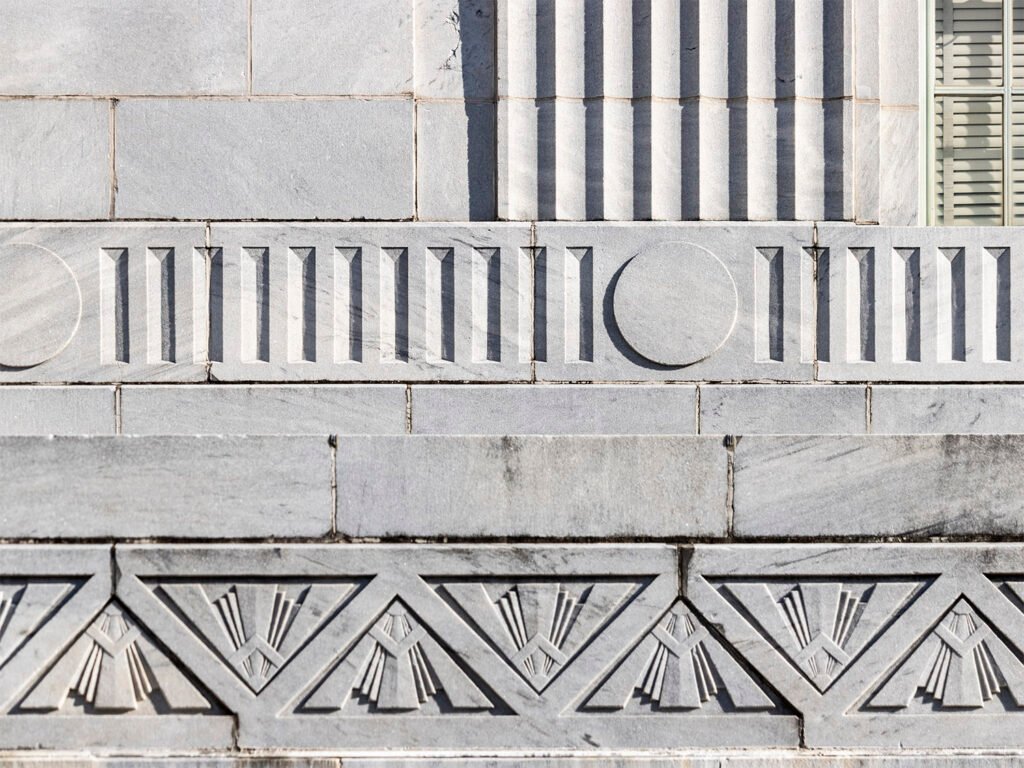
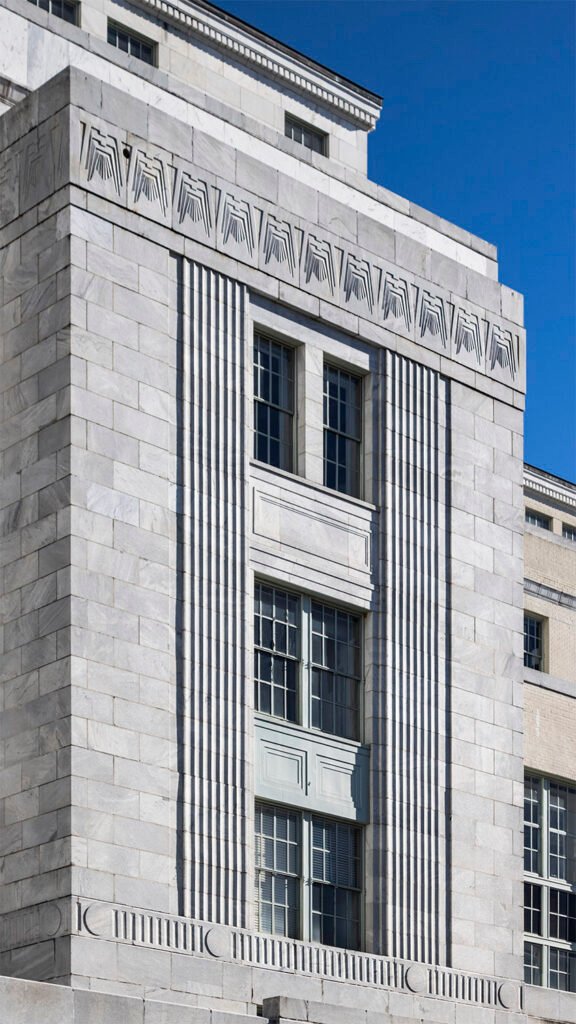
This building also shines in its incorporation of fine textural detail, trimmed with pilasters, friezes, and stringcourses in stark geometric patterns, many of pre-Columbian inspiration. Emphasizing the structure’s bold ziggurat form, the design evokes the image of some ancient American temple dropped into a modern metropolis.
The project was completed for the princely sum of $3 million,4 and the volume of materials used in its construction is staggering: the structure is composed of 12,222 pieces of marble totalling 4,798,404 pounds, with the largest block weighing 8,400 pounds.5
Atlanta, of course, never pays for quality architecture, and this bulwark of a building exists only because it was bankrolled by the United States government.
At the time, federal building projects were supervised by the U.S. Treasury, and Brown was a natural choice to pick as the lead architect, since he began his career in the office of the supervising architect of the Treasury.6 7
Brown was approaching the end of his life and career in the 1930s and was well-respected in Atlanta and the Southeast. Known as “Tony” to his friends,8 he became one of the city’s wealthiest architects in the early 20th century, with his firm designing dozens of large-scale public buildings across multiple states, although it appears his fortunes were greatly reduced during the Depression.
Preston Stevens of Stevens & Wilkinson described him as “debonair and attractive,” and recalled a claim by another architect, Francis P. Smith, who said that ‘”Tony” could almost hypnotize his clients by sitting across the table from them and sketching designs upside down.’9
I can’t criticize Brown too much for claiming primary credit on this project, as most architects of the era did the same. The myth of the lone designer had long become untenable, and by the turn of the 20th century, every Atlanta architect managed a team of design assistants.
As building projects grew increasingly larger, costlier, and more complex to manage, most prominent architects effectively became figureheads, promoting their businesses and securing commissions while delegating actual design work to their employees.
It’s well documented that numerous projects credited to Atlanta architects of the time, like W.T. Downing, Morgan & Dillon, W.A. Edwards, and Hentz, Reid & Adler — to name a few — were designed by assistants, many of whom went on to establish their own firms.
Brown at least had the decency to share credit with the actual designers of his projects — often listing them as associate architects or supervising architects — a practice he began in 1922, when he was appointed the supervising architect for more than twenty public school buildings in Atlanta,10 11 nearly all of which were designed by other architects.12 13
Contrast his approach with, say, G. Lloyd Preacher, who claimed credit for every work produced by his firm, although it’s abundantly obvious which projects weren’t his own. The most striking example is Atlanta’s fine neo-Gothic city hall, credited to Preacher but designed by one of his employees, George H. Bond,14 who was an infinitely more talented designer.
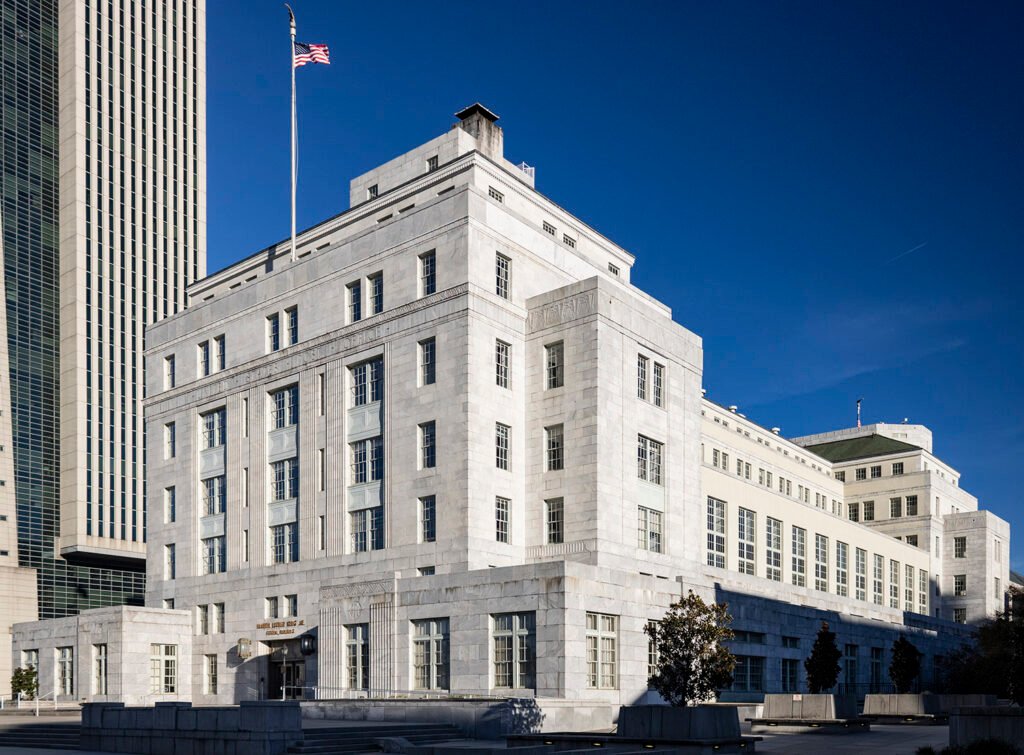
Questions of credit aside, the former United States Post Office (later renamed the Martin Luther King, Jr. Federal Building) is one of the few structures in the city with any actual design caliber, and its quality of craftsmanship and attention to detail are unknown to modern architecture, in Atlanta or elsewhere.
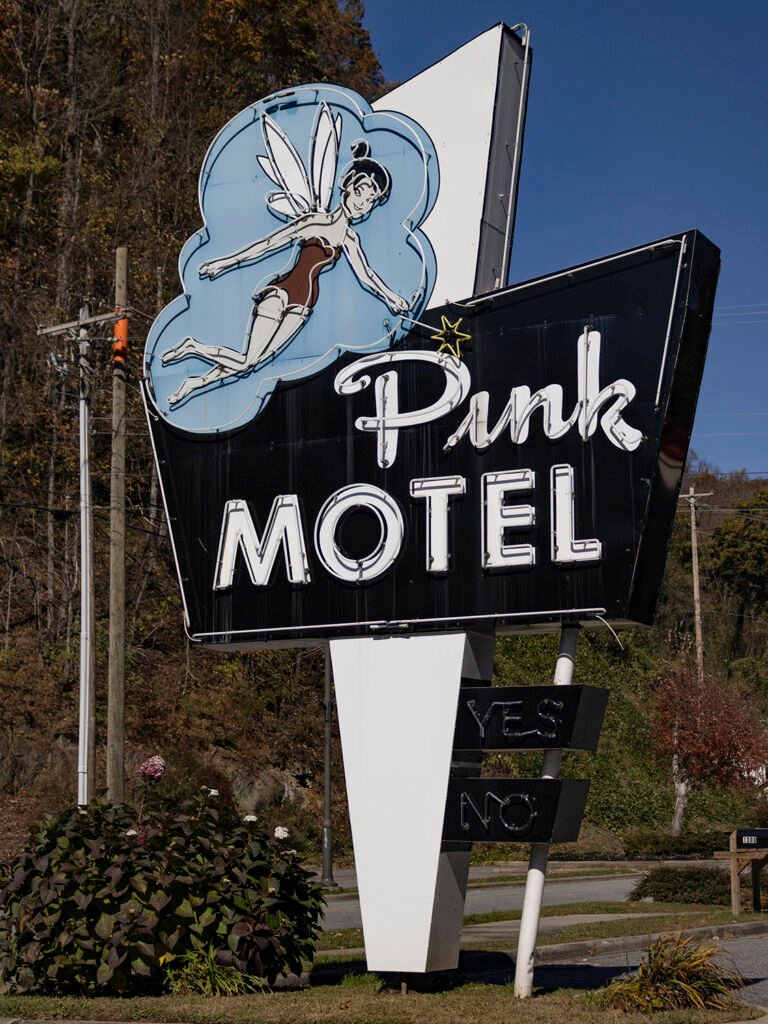
Nothing makes a night better than pink.
This sign in Cherokee, North Carolina, debuted at the Pink Motel’s opening in 1957. And if you’re wondering about the origin of the name, a newspaper report from the time helpfully explained:
If you are a motel operator, supplying your own linen, name-tagged and all, you will often get back from the laundry the linen of some other operator. So, if you have pink bed sheets and towels, how’s anyone but a colorblind person going to get your linens mixed-up with that of white-linen folks?
So, that’s how the name “Pink Motel” started. It was only logical to carry the pink idea still further until it was “done up pink.” The outside of the Pink Motel is painted pink. The walls, furniture, vertical venetian blinds, the bathroom tile, the furnishings…even the soap…are all pink.1