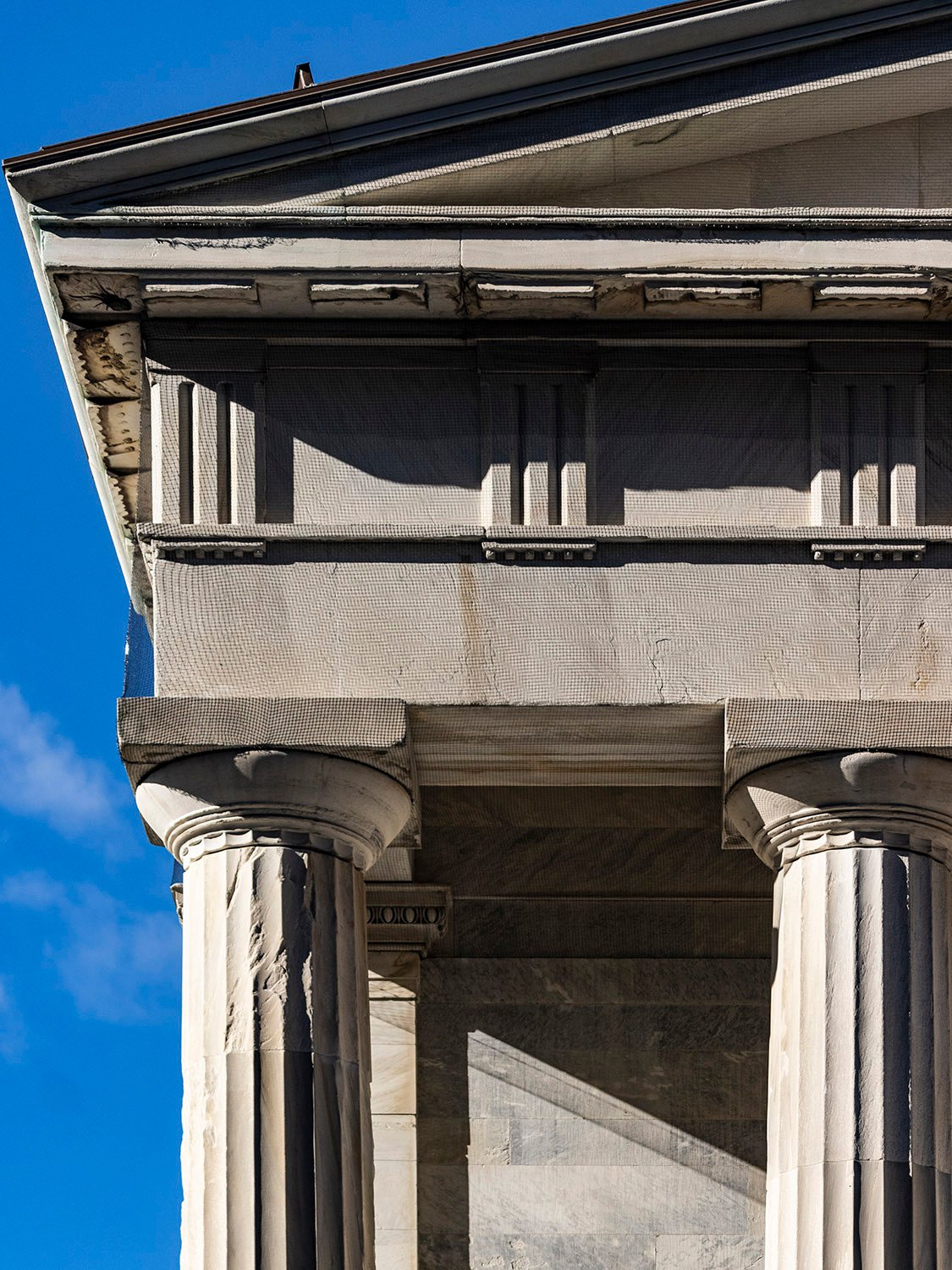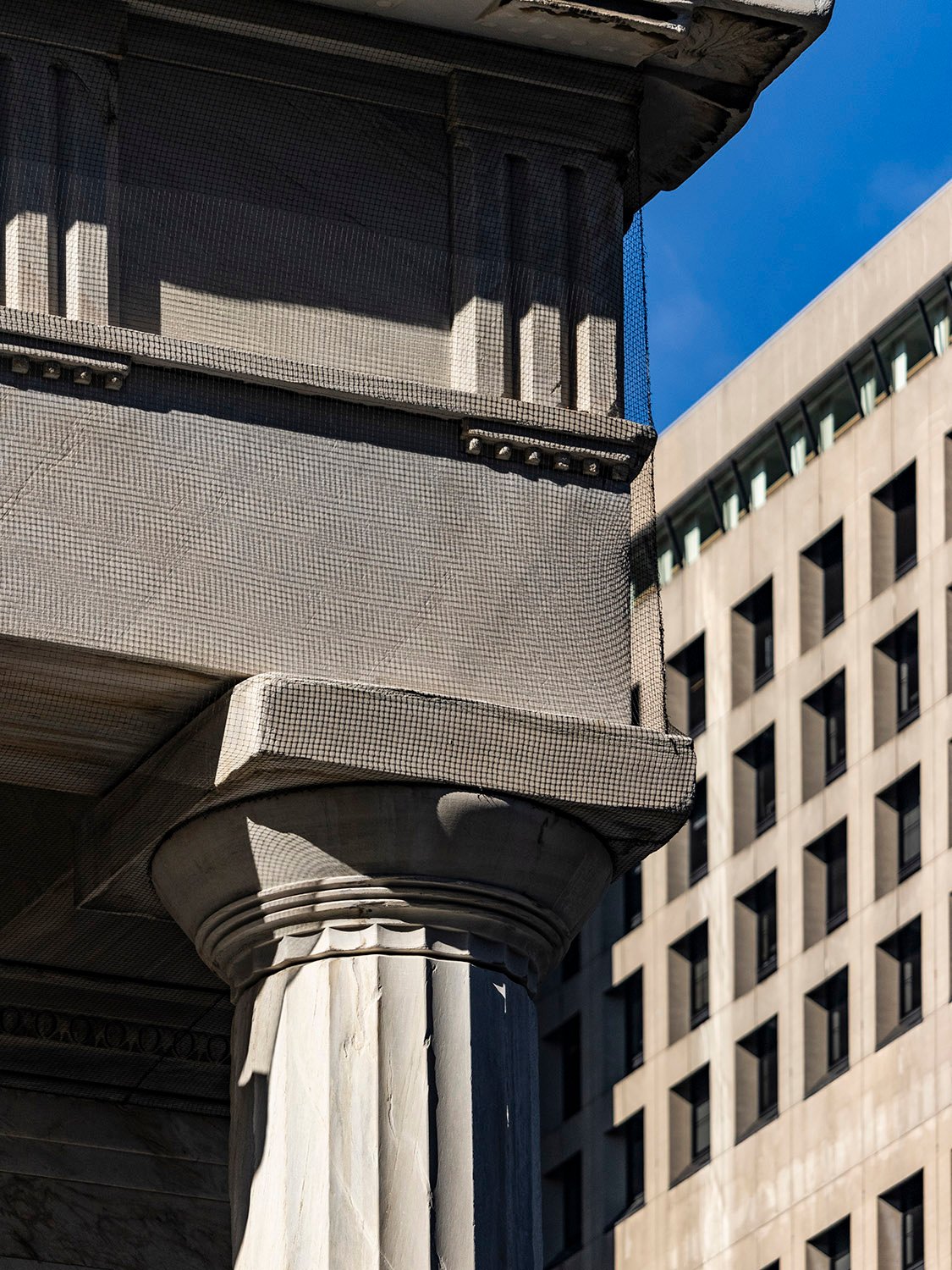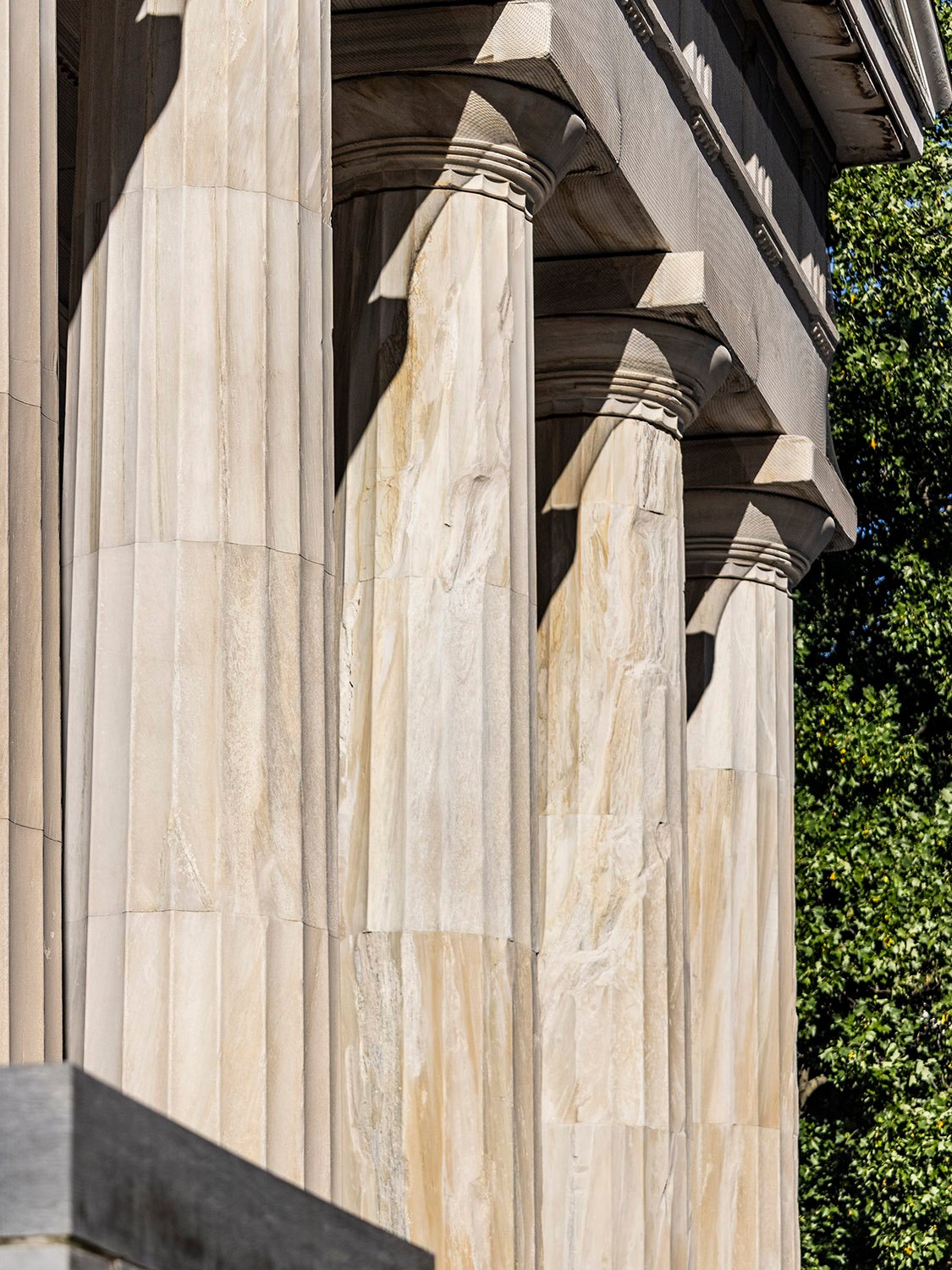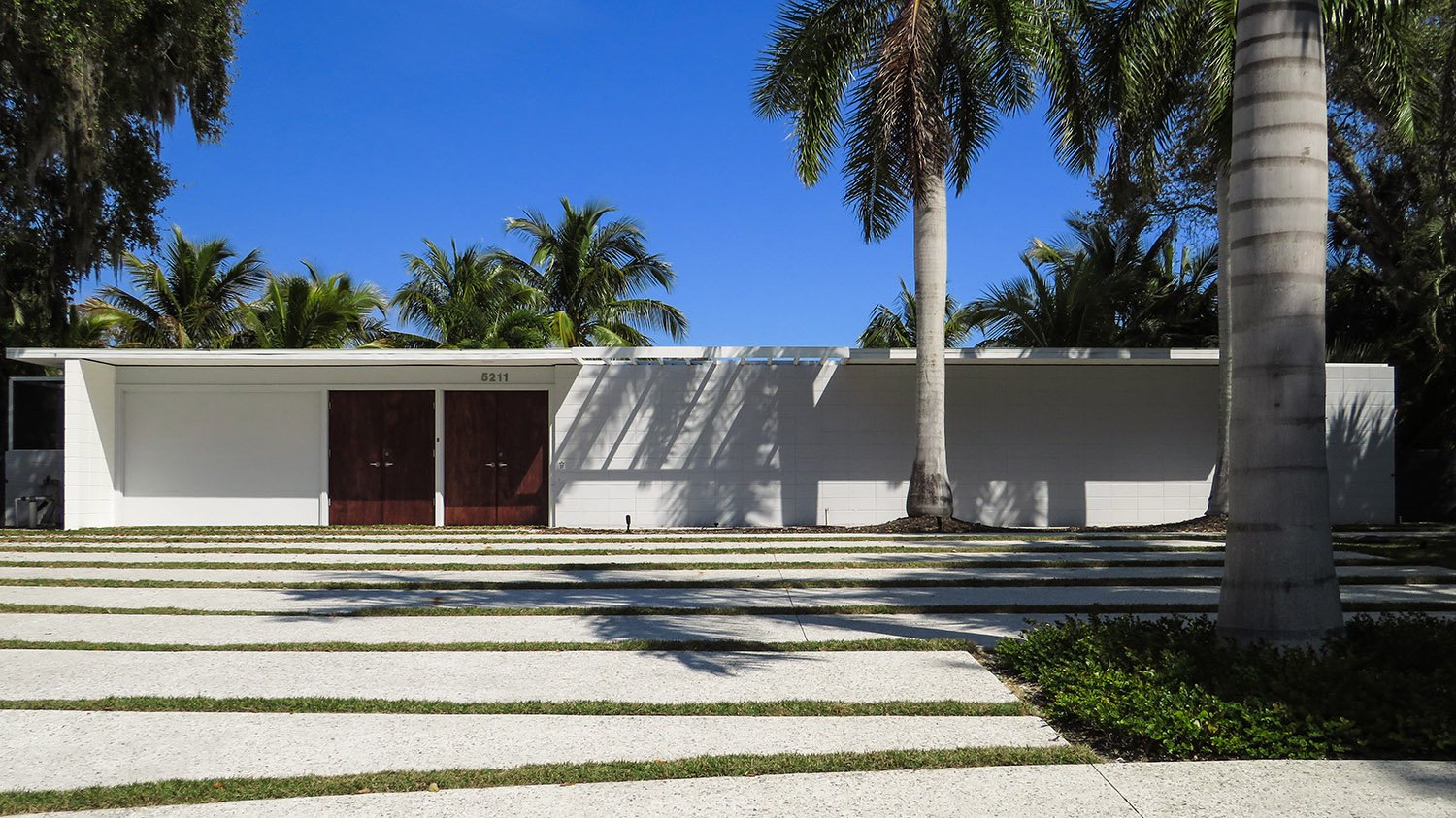
Category: Architectural Movements and Styles

  • Relic Signs: Mangel’s (1946) – Atlanta

    Mangel's (1946). 74 Peachtree Street, Atlanta.
    Mangel’s (1946). 74 Peachtree Street, Atlanta.

    This sign at 74 Peachtree Street in Atlanta (previously 74 Whitehall Street) likely debuted with the Mangel’s store, which opened in May 19461 in a portion of the two surviving floors from the former Hirsch Building.2

    Mangel’s was a New York-based retail chain3 that billed itself as “your headquarters for smart apparel at budget-saving prices,”4 and the Whitehall store was its second Atlanta location, with its first store in the city opening in 1919.5

    Mangel’s operated at this location for decades, but seems to have quietly closed sometime after 1988.6

    References

    1. Advertisement. The Atlanta Journal, May 24, 1946, p. 10. ↩︎
    2. “Realty Trades”. The Atlanta Constitution, August 24, 1935, p. 4. ↩︎
    3. “Anniversary Sale At Mangel Store First Of Its Kind”. The Atlanta Journal, May 3, 1929, p. 31. ↩︎
    4. Advertisement. The Atlanta Journal, May 24, 1946, p. 10. ↩︎
    5. “Anniversary Sale At Mangel Store First Of Its Kind”. The Atlanta Journal, May 3, 1929, p. 31. ↩︎
    6. “Retail Management” (advertisement). The Atlanta Journal and Constitution, October 2, 1988, p. 80-P. ↩︎
  • Miles Brewton Residence (1769) – Charleston, South Carolina

    Ezra Waite (attributed). Miles Brewton Residence (1769). Charleston, South Carolina.
    Ezra Waite (attributed). Miles Brewton Residence (1769). Charleston, South Carolina.1 2

    References

    1. National Register of Historic Places Inventory — Nomination Form: The Miles Brewton House ↩︎
    2. Ravenel, Beatrice St. Julien. Architects of Charleston. Columbia, South Carolina: University of South Carolina Press (1992), pp. 49-51. ↩︎
  • Second Presbyterian Church (1910) – Greenville, South Carolina

    Charles Edward Choate. Second Presbyterian Church (1910). Greenville, South Carolina.
    Charles Edward Choate. Second Presbyterian Church (1910). Greenville, South Carolina.1 2 3
    South elevation of Second Presbyterian Church
    South elevation of Second Presbyterian Church
    Looking at Second Presbyterian Church from the southeast
    Looking at Second Presbyterian Church from the southeast

    References

    1. “$90,000 To Be Spent In Church Building”. The Atlanta Journal, May 17, 1910, p. 6. ↩︎
    2. “Churches.” The Greenville Daily News (Greenville, South Carolina), June 12, 1910, p. 6. ↩︎
    3. “Initiatory Services”. The Greenville Daily News (Greenville, South Carolina), June 16, 1910, p. 8. ↩︎
  • NCAA Hall of Champions and NCAA Headquarters (2000) – Indianapolis, Indiana

    Michael Graves with Schimdt Associates. NCAA Hall of Champions (2000). Indianapolis, Indiana.
    Michael Graves with Schimdt Associates. NCAA Hall of Champions (2000). Indianapolis, Indiana.1 2
    South elevation of NCAA Headquarters
    South elevation of NCAA Headquarters
    Southwest corner of NCAA Headquarters
    Southwest corner of NCAA Headquarters
    East elevation of NCAA Headquarters
    East elevation of NCAA Headquarters

    References

    1. NCAA Headquarters and Hall of Champions – Michael Graves ↩︎
    2. NCAA Hall of Champions – Indiana Architecture Database ↩︎
  • Three Ravinia Drive (1991) – Dunwoody, Georgia

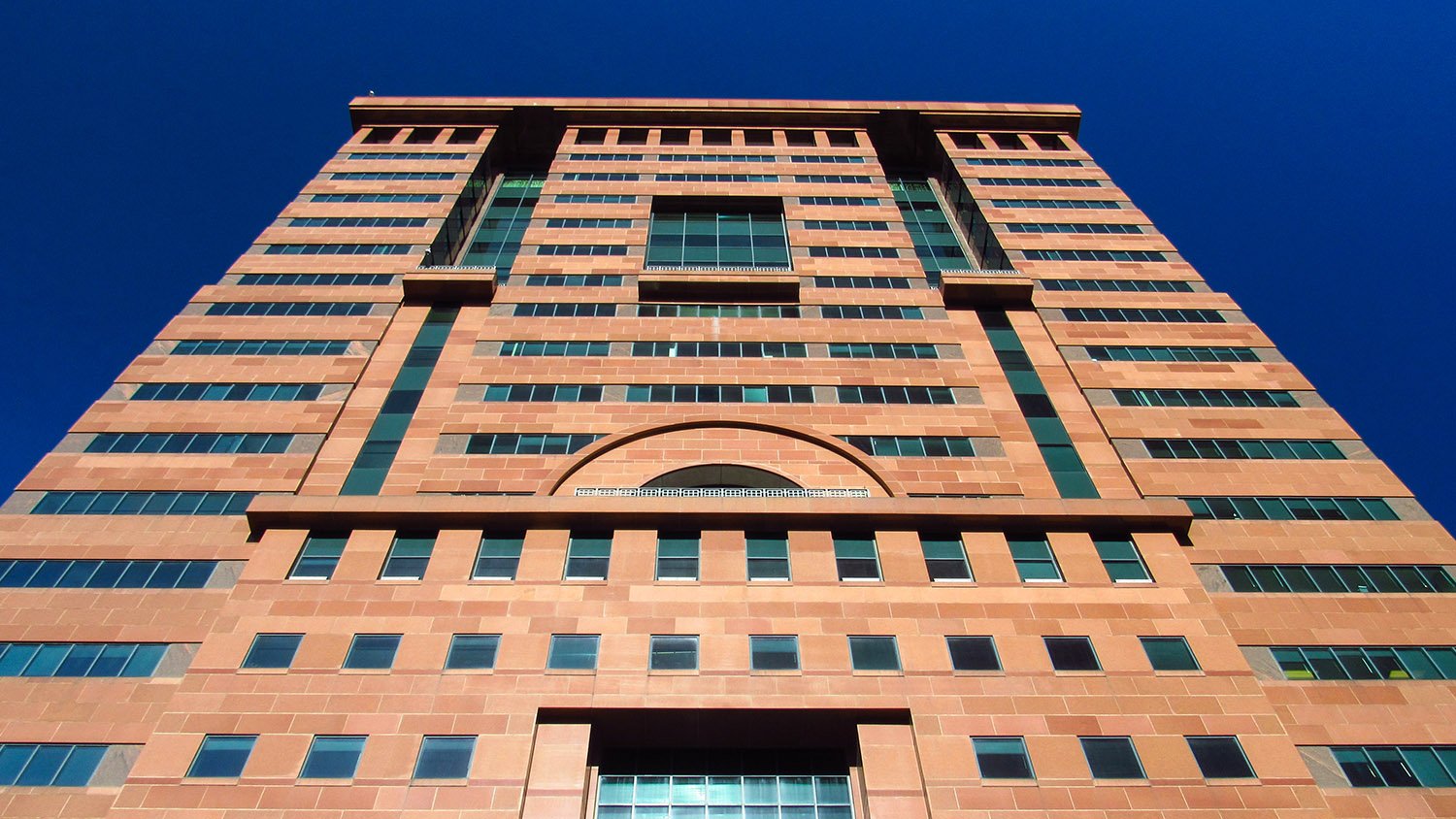
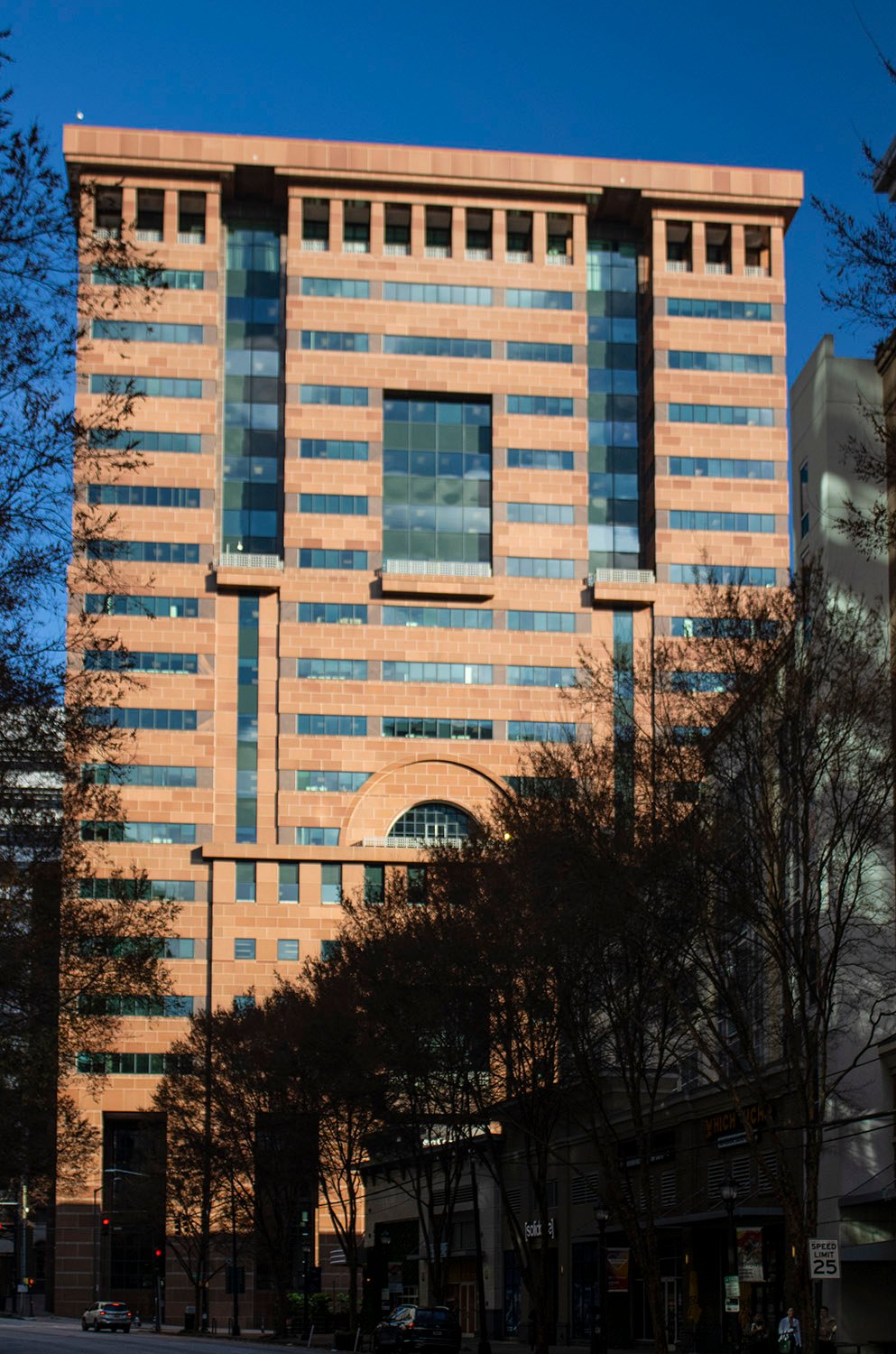
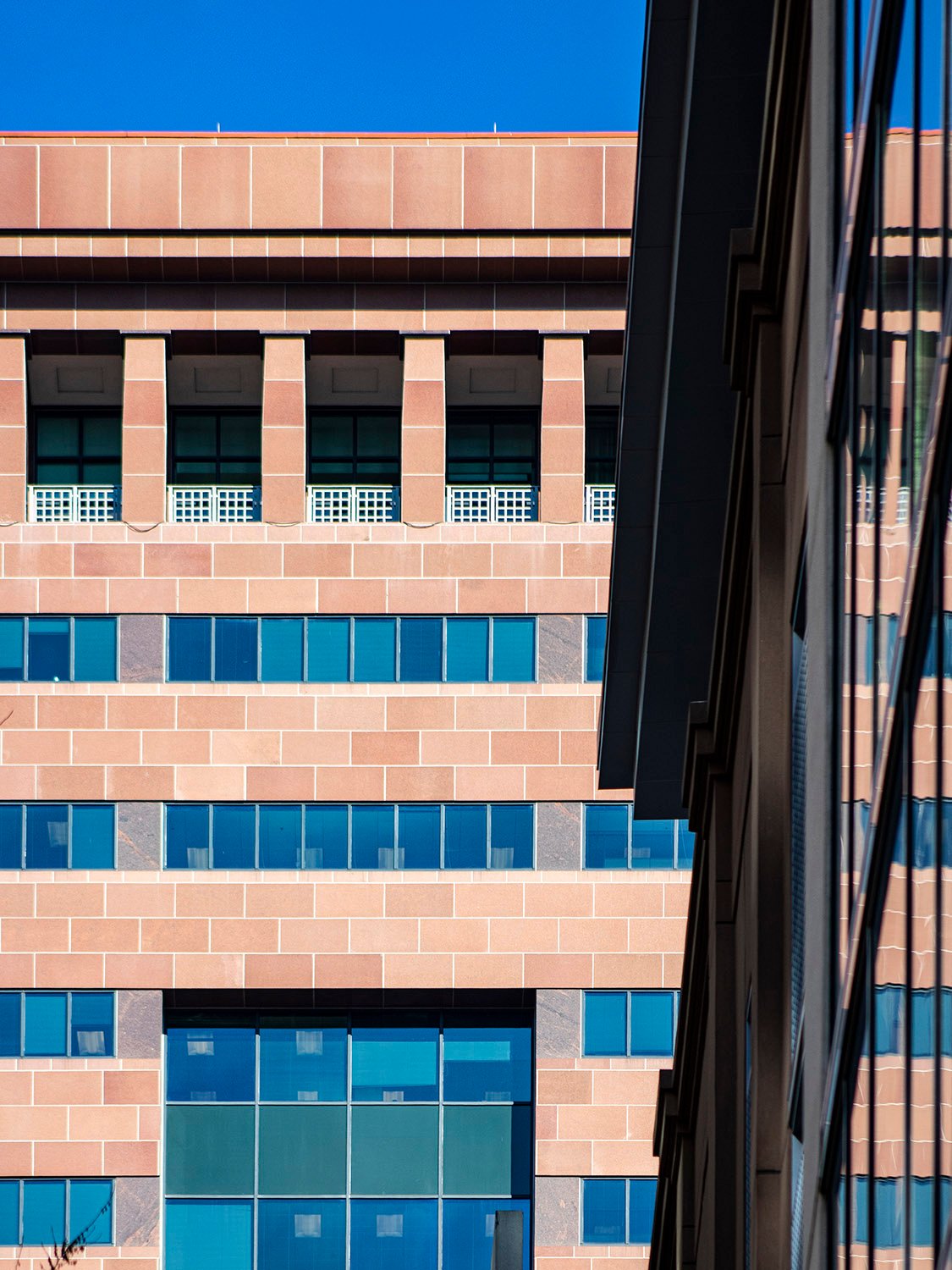
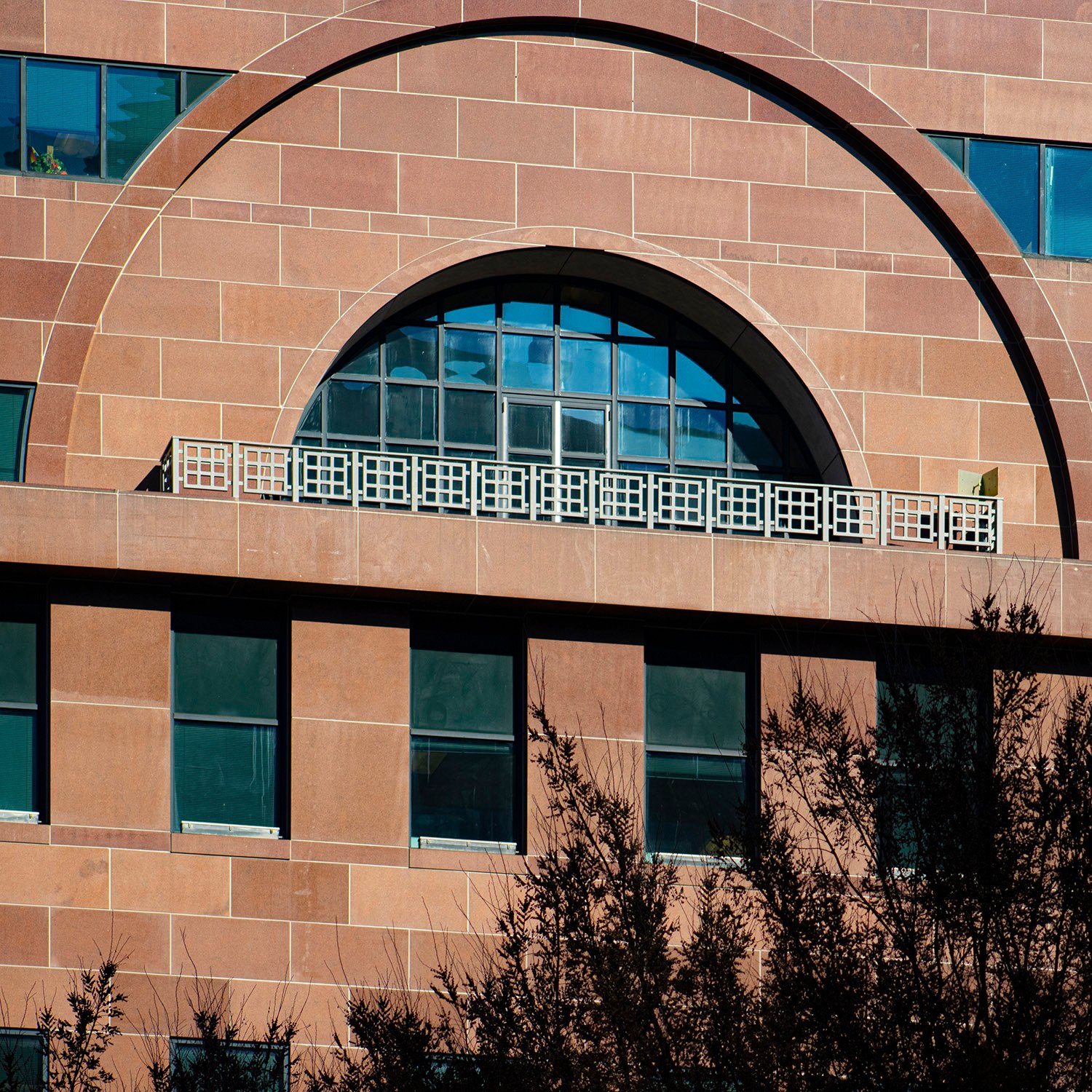
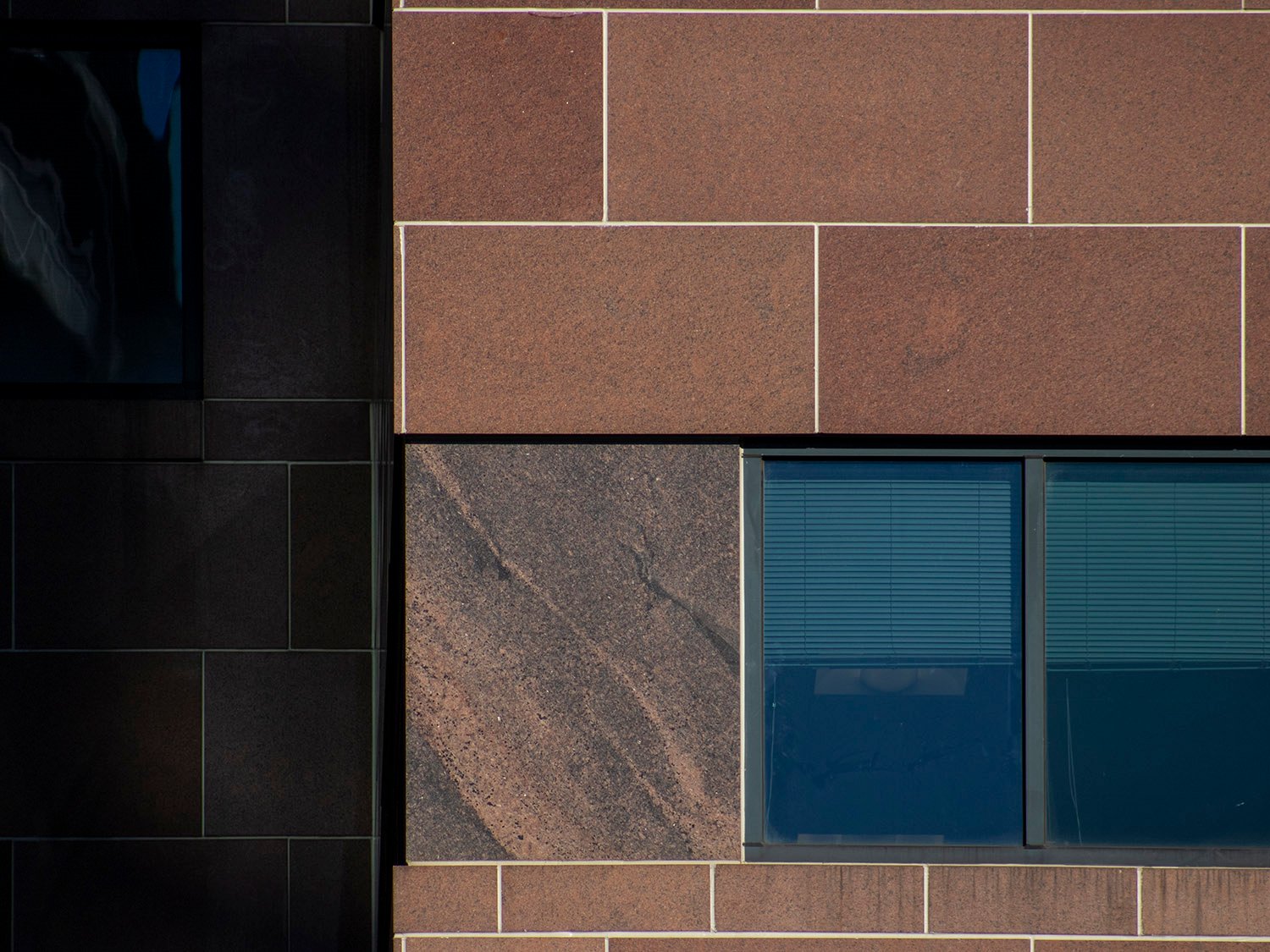
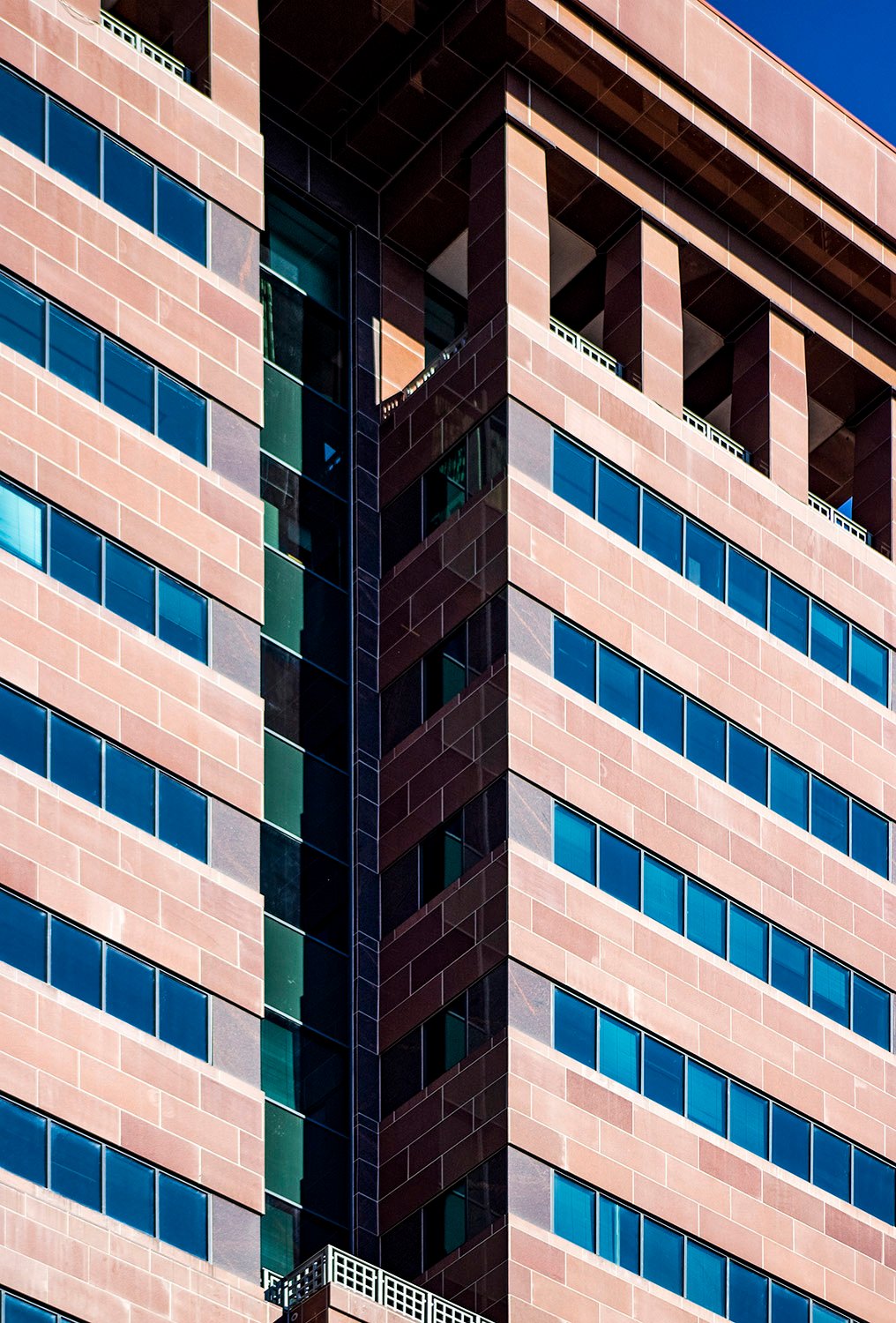
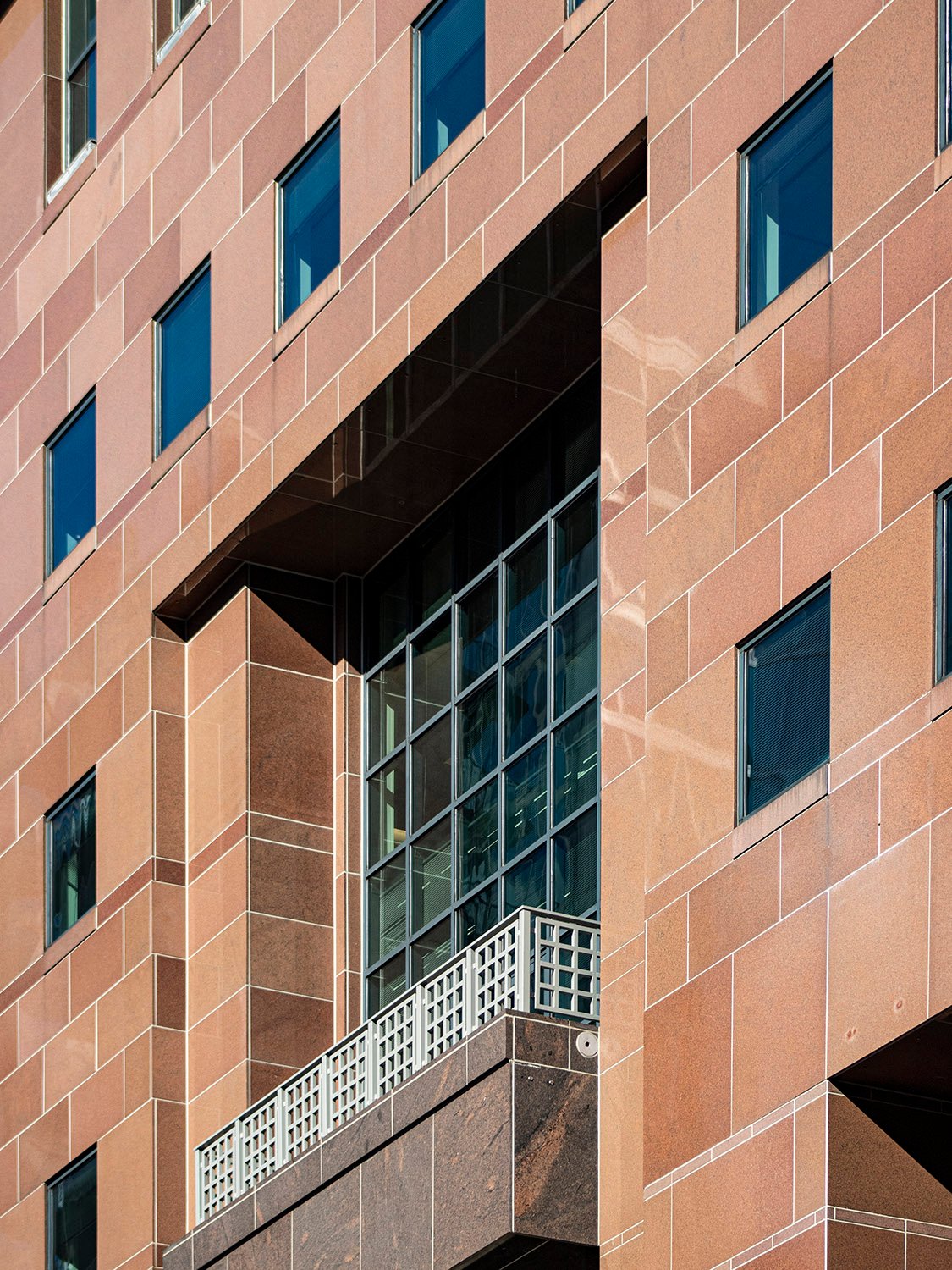
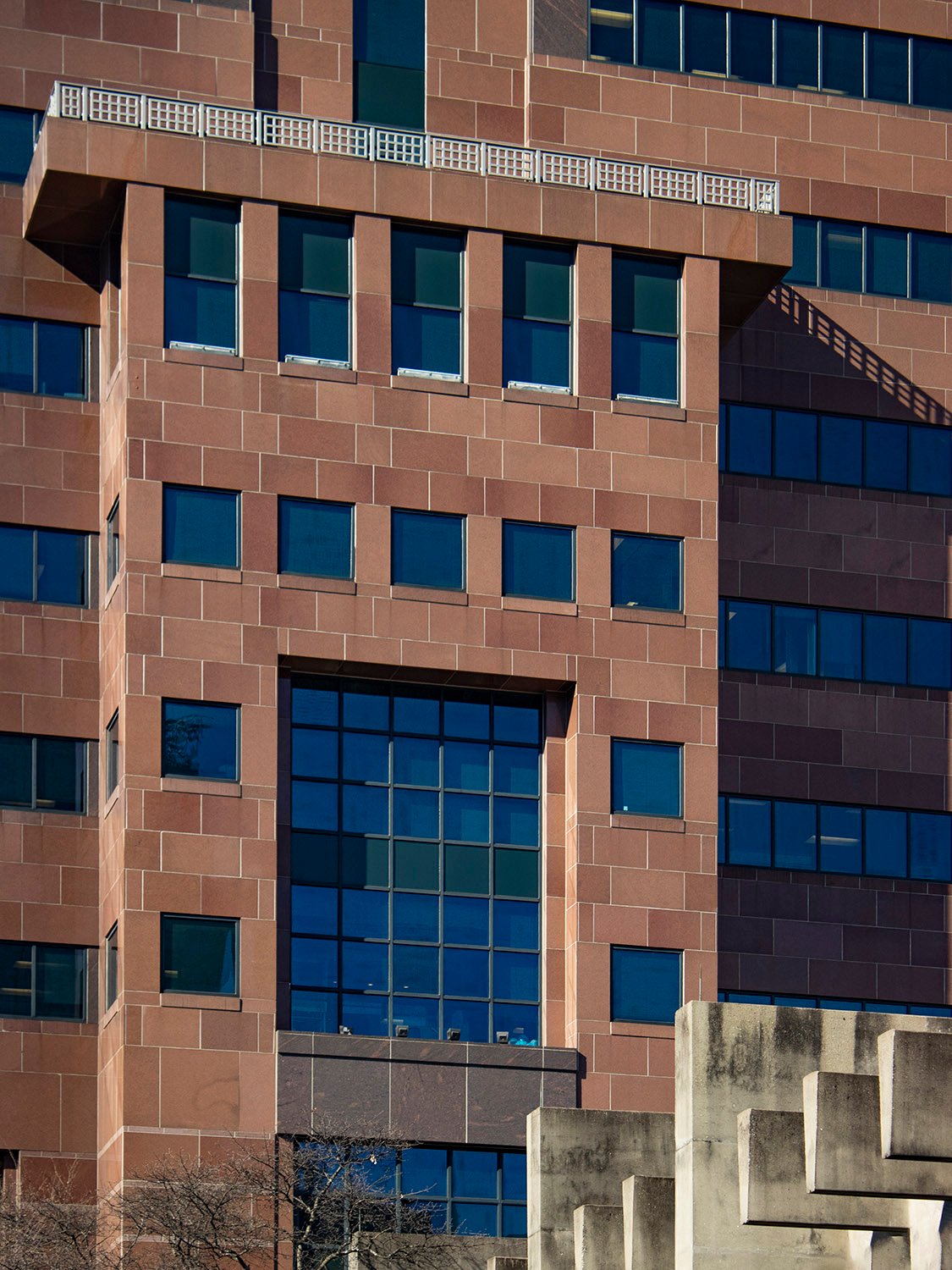
    Kevin Roche of Kevin Roche John Dinkeloo and Associates. Three Ravinia Drive (1991). Dunwoody, Georgia.
    Kevin Roche of Kevin Roche John Dinkeloo and Associates. Three Ravinia Drive (1991). Dunwoody, Georgia.1 2
    Looking up at the northwest corner of Three Ravinia Drive
    Looking up at the northwest corner of Three Ravinia Drive
    Looking at Three Ravinia Drive from the northwest, with Stone Mountain in the background
    Looking at Three Ravinia Drive from the northwest, with Stone Mountain in the background

    References

    1. “Design of Third Ravinia Tower Unveiled”. The Atlanta Constitution, October 11, 1989, p. B-2. ↩︎
    2. Three Ravinia Drive/MCI Center – Kendall/Heaton ↩︎
  • Frank Adair Residence (1913) – Atlanta

    Neel Reid of Hentz, Reid & Adler. Frank Adair Residence (1913) – Druid Hills, Atlanta.1 2 3 4 5 6 7

    References

    1. “The Real Estate Field”. The Atlanta Constitution, May 9, 1912, pp. 23-24. ↩︎
    2. “The Real Estate Field.” The Atlanta Constitution, June 13, 1911, p. 18. ↩︎
    3. “The Real Estate Field”. The Atlanta Constitution, June 22, 1912, p. 14. ↩︎
    4. “The Real Estate Field”. The Atlanta Constitution, July 9, 1912, p. 21. ↩︎
    5. “Personals”. The Atlanta Georgian and News, January 3, 1913, p. 9. ↩︎
    6. “Personal”. The Atlanta Georgian and News, March 11, 1913, p. 8. ↩︎
    7. Grady, James H. Architecture of Neel Reid in Georgia. Athens, Georgia: University of Georgia Press (1973). ↩︎
  • The Bank of Georgia (1961) – Atlanta

    Hedrick & Stanley. The Bank of Georgia (1961).
    Hedrick & Stanley. The Bank of Georgia (1961).1 2 3

    This 31-story International-style tower was arguably the first “modern” skyscraper in Atlanta, although it’s now pushing 70 years old and looks every day of it.

    The tower opened in 1961 as the home of The Bank of Georgia and was purported to be the “tallest structure south of Baltimore,”4 surpassed a few years later by Atlanta’s First National Bank,5 6 built one block away.

    It’s telling that the Bank of Georgia had to hire an out-of-town firm, Hedrick & Stanley of Dallas, to design the building — none of Atlanta’s architects at the time had the chops for such a large-scale project.

    Top O' Peachtree Restaurant. Photograph from an undated postcard published by Stein Craftsmen of Atlanta
    Top O’ Peachtree Restaurant. Photograph from an undated postcard published by Stein Craftsmen of Atlanta.

    For the first 11 years, the 30th floor of The Bank of Georgia tower was occupied by the Top O’ Peachtree restaurant and “lookout lounge”, later described as ‘”the” place to go for dinner or drinks in its beginning.’7

    Based on photographs, Top O’ Peachtree was no doubt an ideal rendezvous for married bank executives and their secretaries. Oh, come on, you know it happened.

    Wyatt C. Hedrick Company with Willner & Millkey. Fulton National Bank (1955). Atlanta. Photograph from an undated postcard published by Dexter Press, Inc. of West Nyack, New York.
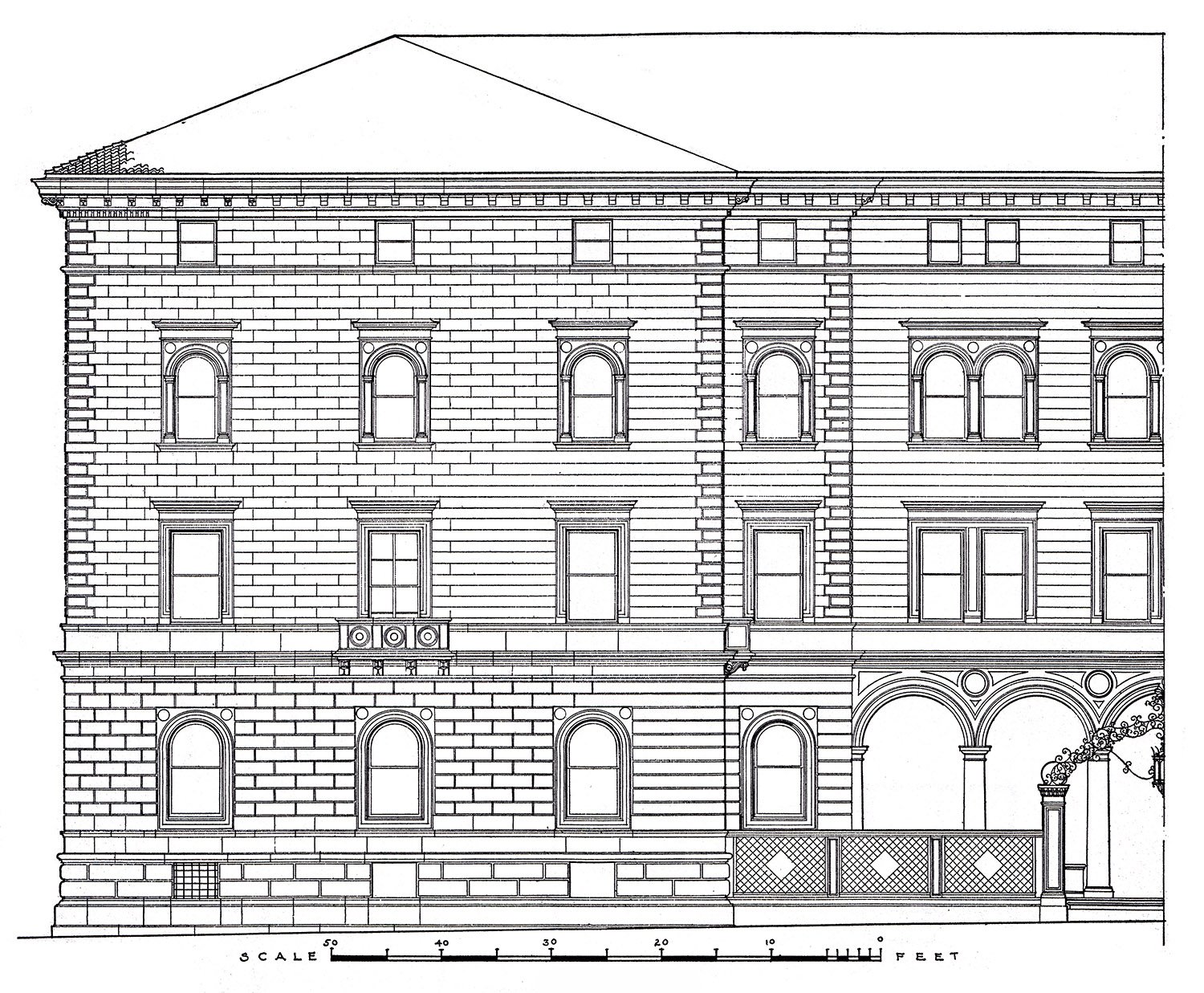
    Wyatt C. Hedrick Company with Willner & Millkey.8 9 Fulton National Bank (1955). Atlanta. Photograph from an undated postcard published by Dexter Press, Inc. of West Nyack, New York.
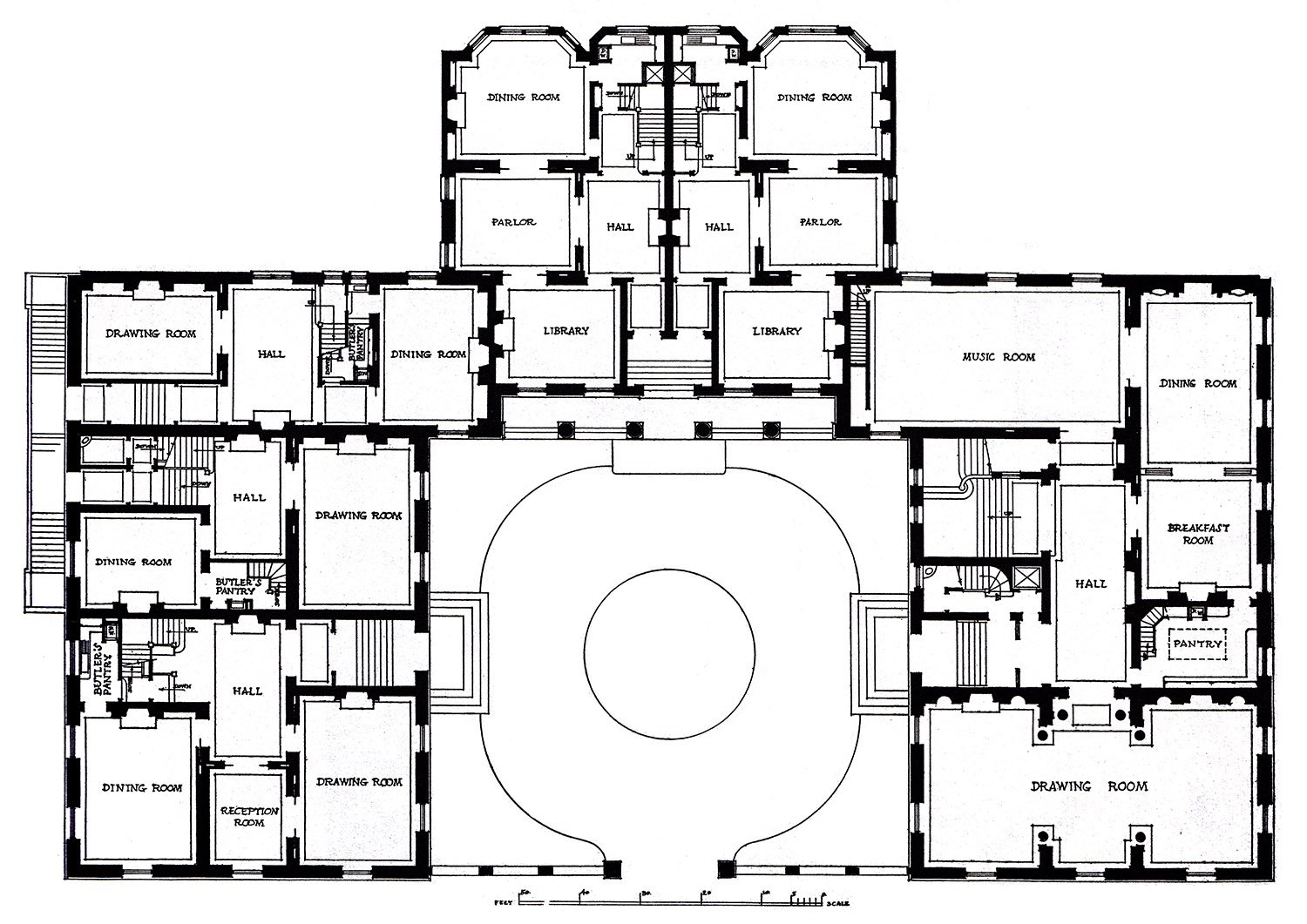
    When the Bank of Georgia tower was sold in 1979, it was described as one of “the two homeliest buildings in town,” along with the nearby Fulton National Bank building (1955),10 which was entirely accurate — then and now.

    Designed by Wyatt C. Hedrick Company of Dallas,11 which later became Hedrick & Stanley, the Fulton National Bank building has been renamed 55 Marietta and remains in active use as a data center. The Bank of Georgia, however, hasn’t fared as well.

    Windows on The Bank of Georgia (34 Peachtree)
    Windows on The Bank of Georgia (34 Peachtree)

    Later renamed 34 Peachtree, the former Bank of Georgia has passed through a succession of owners and is currently vacant, with upper-floor windows missing and its street-level retail spaces obscured by brown paper.

    A peek through the doors and windows at night reveals the dead escalators in the lobby and dangling ceiling tiles in the office spaces.

    In 2017, pieces of the building’s facade fell to Peachtree Street during a bout of high winds, prompting the closure of several streets.12

    Looking at the north elevation of The Bank of Georgia (34 Peachtree)
    Looking at the north elevation of The Bank of Georgia (34 Peachtree)

    There have been empty promises to convert 34 Peachtree into residential units,13 but that’s just typical Atlanta bullshitting, quite unlikely to transpire, as the cost to renovate such behemoths is overwhelmingly prohibitive.

    Office buildings are rapidly becoming a relic of the past, and as more skyscrapers begin to deteriorate, it will be interesting to see what cities like Atlanta do with them, particularly as the United States plunges headfirst into inevitable social and economic decline.

    I suspect that in decades to come, many American cities will be filled with vacant, crumbling towers that no one will have the money to demolish or renovate — unsightly monuments from an age of decadence and arrogance best left forgotten.

    Looking at The Bank of Georgia (34 Peachtree) from Edgewood Avenue
    Looking at The Bank of Georgia (34 Peachtree) from Edgewood Avenue

    References

    1. Erwin, George. “Bank Plans 31-Story Building At 5 Points, Costing 10 Million”. The Atlanta Journal, March 1, 1959, p. 1. ↩︎
    2. The Atlanta Journal and The Atlanta Constitution, April 2, 1961, Bank of Georgia Section. ↩︎
    3. “Bank of Georgia To Open Monday”. The Atlanta Journal, March 28, 1961, p. 33. ↩︎
    4. Veale, Frank. “35,000 Expected At Gala Opening Of New Building”. The Atlanta Journal, April 2, 1961, p. 2-F. ↩︎
    5. Crown, John. “40-Story Bank Building to Rise in Atlanta”. The Atlanta Journal, August 11, 1963, p. 1. ↩︎
    6. “Atlanta Reaches for the Sky–More Giants on Way”. The Atlanta Journal, May 17, 1966, p. 12. ↩︎
    7. Henderson, Barry. “Top O’ Peachtree Sale Set”. The Atlanta Constitution, September 23, 1972, p. 8. ↩︎
    8. “Equipment Came From All Over U.S., Materials From All Over The World”. The Atlanta Journal, October 18, 1955, p. 3-F. ↩︎
    9. “It’s the tops” (advertisement). The Atlanta Constitution, October 19, 1955, p. 2-F. ↩︎
    10. Kossoff, Evan. “New Owner Giving 2 Downtown Buildings a Facelift”. The Atlanta Constitution, December 10, 1979, p. 9-D. ↩︎
    11. “Company Completes 26-story Fulton National Bank Building on schedule!” (advertisement). The Atlanta Journal, October 18, 1955, p. 18-F. ↩︎
    12. Judd, Alan. “Georgia: Irma set to arrive today.” The Atlanta Journal-Constitution, September 11, 2017, p. A1-A6. ↩︎
    13. Torpy, Bill. “Can office conversions save downtown?” The Atlanta Journal-Constitution, July 31, 2023, p. A9. ↩︎
  • Robert W. Woodruff Library (1982) – Atlanta University Center

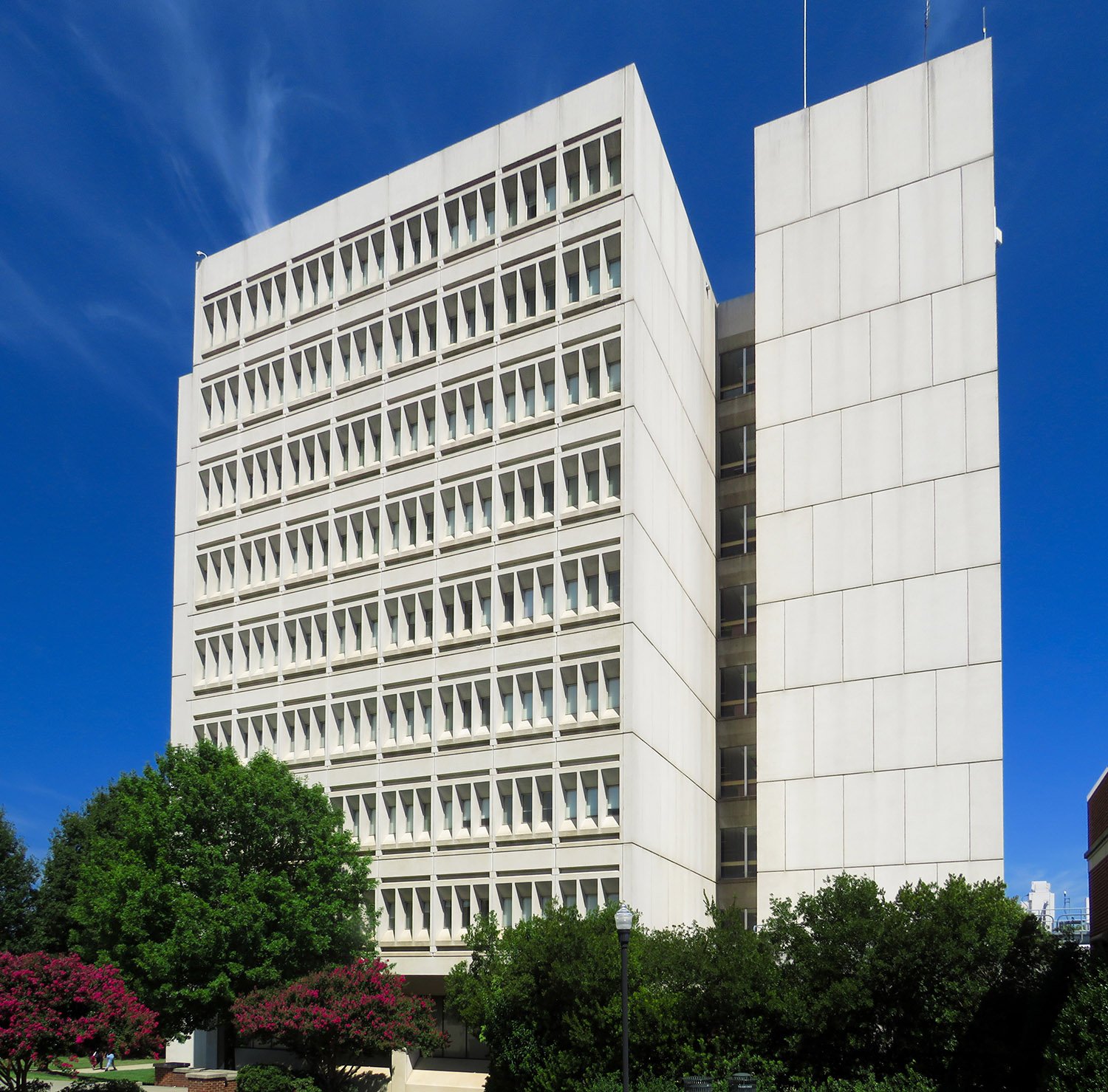
    Joseph Amisano of Toombs, Amisano & Wells with J.W. Robinson and Associates, Inc. Robert W. Woodruff Library (1982). Atlanta University Center.
    Joseph Amisano of Toombs, Amisano & Wells with J.W. Robinson and Associates, Inc. Robert W. Woodruff Library (1982). Atlanta University Center.1 2 3 4
    Looking at the Robert W. Woodruff Library from the southeast
    Looking at the Robert W. Woodruff Library from the southeast
    South elevation of the Robert W. Woodruff Library
    South elevation of the Robert W. Woodruff Library
    Windows on the south elevation of the Robert W. Woodruff Library
    Windows on the south elevation of the Robert W. Woodruff Library
    Skylight on the east facade of the Robert W. Woodruff Library
    Skylight on the east facade of the Robert W. Woodruff Library
    Looking at the Robert W. Woodruff Library from the northeast
    Looking at the Robert W. Woodruff Library from the northeast
    North elevation of the Robert W. Woodruff Library
    North elevation of the Robert W. Woodruff Library

    References

    1. Dees, Learned and Hunt, Eunice S. “New AUC Library To Open in Jan.” The Atlanta Voice, November 14, 1981, p. 1B. ↩︎
    2. Salyer, Sharon J. “Library Dedication Is Friday At AUC”. The Atlanta Constitution, April 22, 1982, p. 17-A. ↩︎
    3. Barnes, Beverly. “Woodruff Library Is Dedicated”. The Atlanta Journal-The Atlanta Constitution Weekend, April 24, 1982, p. 14-A. ↩︎
    4. Powell, Kay. “Joe Amisano, admired architect”. The Atlanta Journal-Constitution, April 21, 2008, p. B6. ↩︎

  • Public Comfort Building, Oakland Cemetery (1899) – Atlanta

    C. Walter Smith. Public Comfort Building at Oakland Cemetery (1899). Atlanta.
    C. Walter Smith. Public Comfort Building at Oakland Cemetery (1899). Atlanta.

    The Public Comfort Building in Oakland Cemetery is the only surviving work in Atlanta known to have been designed by C. Walter Smith (1865-1910), an architect who worked for at least seven years as a draughtsman and assistant for G.L. Norrman before embarking on a fairly unremarkable solo career.

    Built on a small hill in the western portion of the 48-acre cemetery, this 2-story structure includes a full basement and totals 2,800 square feet.1 The exterior is faced in stucco-covered brick2 and rusticated granite trim, and marble flooring3 is used on the front porch and in the basement.

    Modeled after “the old Norman and English castellated churches,”4 the building’s design can be broadly defined as Romanesque, and its focal point is a 50-foot-high crenelated bell tower,5 heavily inspired by similar designs from G.L. Norrman.

    Today, Oakland Cemetery refers to the entire structure as the “Bell Tower”.

    C. Walter Smith. Public Comfort Building at Oakland Cemetery (1899). Atlanta.
    C. Walter Smith. Public Comfort Building at Oakland Cemetery (1899). Atlanta.6

    An illustration from 1899 (pictured above) reveals the building’s original design: a one-story porch topped by battlements originally flanked the south facade, and a porte-cochère to accommodate wagons was attached to the east side.

    Curiously, the final design was reversed, with the porte-cochère moved to the west side of the structure, likely one of “a few slight changes” announced before construction began.7

    Roman arches on the porch and bell tower, and Gothic-style arched windows on the second floor completed the appearance of a small, storybook castle—again, Smith borrowed significantly from Norrman for the aesthetic.

    South facade of the Public Comfort Building
    South facade of the Public Comfort Building

    In its original conception, the building was one of Smith’s better designs. Despite years of training under “the South’s most prominent architect”8—his words—Smith’s skill never came close to Norman’s high level of artistry, although his work here was at least intriguing.

    Unfortunately, the initial vision was compromised by the later addition of second-floor porches over the front porch and porte-cochère, topped with flat roofs and punctuated by incongruent half-round openings.

    I suspect the porches were added circa 1908, when the cemetery spent $5,000 on a range of improvements9 following its first annual report to the city, which requested $1,000 for “needed changes and repairs in the main building.”10

    The effect of the alterations is detrimental: the upper porches add unnecessary visual mass to the structure and pull focus away from the bell tower, robbing the entire composition of the uplifting, monumental effect Smith originally intended.

    West elevation of the Public Comfort Building
    West elevation of the Public Comfort Building

    “Public comfort” was a polite 19th-century euphemism for restrooms, which were originally housed on the ground floor of the structure.

    When the building was completed in October 1899, The Atlanta Journal delicately noted: “Here one now finds a convenience and comfort that was lacking for many years.”11 I guess early visitors just had to hold it—or maybe piss on a grave.

    There were initially six rooms in the building, including a ladies’ parlor and an “apartment for gentlemen.” All six rooms had tiled mantels,12 which was apparently noteworthy. Two of the mantels remain intact.

    The structure also included an office for the cemetery’s sexton,13 and Oakland Cemetery’s website claims the building contained a chapel, with the second floor used as the sexton’s residence. So many uses for such a small structure.

    Second-floor windows on the Public Comfort Building
    Second-floor windows on the Public Comfort Building

    Despite its fanciful design, the building was, at heart, purely utilitarian, “suitable for the purposes for which it is intended,”14 as the Journal put it.

    People need to pee, of course, but the building’s other raison d’être was concealed in the basement.15 The structure was built on the site of a converted 2-story farmhouse16 known as the “dead house”17 —you can see where this is going.

    As the Journal explained:

    “There is a vault with eight catacombs and sixteen racks. This is as strong and substantial as could be made. For the retention of bodies for any length of time the catacombs will answer every purpose, as they are built to be air-tight for years to come. The racks, as a matter of course, are intended as a temporary place of keeping and are conveniently arranged. When the iron gate to the vault is locked entrance is practically impossible.”18

    Front porch of the Public Comfort Building
    Front porch of the Public Comfort Building

    Since Oakland is a public cemetery operated by the city of Atlanta, the building was funded through a city council appropriation.19 The Atlanta Building Company secured the contract with the lowest bid, and the project’s total cost was $4,600,20 with $650 spent on the stone.21

    Construction on the building was initially slated to begin on April 27, 1899,22 but was apparently delayed until June and completed in four months.23

    Although early plans called for the construction of one or two additional public comfort buildings in the cemetery,24 those never materialized, and this structure remained the only significant public building at the site, altered many times over by piecemeal repairs and additions.

    When the Historic Oakland Foundation was formed in 1976 to preserve and maintain the cemetery’s historic integrity, the building became office space for the organization, with the ground floor converted into a small visitors center,25 a function that it served for decades.

    East elevation of the Public Comfort Building
    East elevation of the Public Comfort Building

    In 2022, as Oakland Cemetery prepared to build a much larger visitors’ center outside its main entrance, the former Public Comfort Building received a gut renovation designed by Smith Dalia Architects, Atlanta’s finest firm for the adaptive reuse of historic structures.

    The project included tearing out the hodgepodge of rooms on each floor for larger, open spaces, removing god-awful windows added to the second-floor porches, and making necessary accessibility alterations, which altered a portion of the front porch.26 27

    The building reopened later that year28 as an event space: the fallback choice when owners don’t know what to do with a historic structure.

    Following its renovation, the building now appears a little too clean and gleaming—I actually preferred it when it was worn and shabby—but it still has an undeniable anachronistic charm that’s uncommon in Atlanta.

    And as one of just six known extant works by Walter Smith, it’s also a matter of curiosity, if nothing else.

    Bell tower on the Public Comfort Building
    Bell tower on the Public Comfort Building

    References

    1. Perspectives in Architecture: A new era for Oakland’s historic bell tower – Rough Draft Atlanta ↩︎
    2. “New Building To Be Erected At Oakland Cemetery”. The Atlanta Journal, April 14, 1899, p. 7. ↩︎
    3. “Big Improvement At The Cemetery”. The Atlanta Journal, October 13, 1899, p. 9. ↩︎
    4. “New Building To Be Erected At Oakland Cemetery”. The Atlanta Journal, April 14, 1899, p. 7. ↩︎
    5. ibid. ↩︎
    6. Illustration credit: ibid. ↩︎
    7. “Notice to Contractors.” The Atlanta Journal, April 4, 1899, p. 9. ↩︎
    8. “A Card.” The Atlanta Constitution, March 1, 1893, p. 10. ↩︎
    9. “Work Of Joyner For Last Two Years Reviewed”. The Atlanta Constitution, January 5, 1909, p. 4. ↩︎
    10. “Cemetery Commission Makes First Report”. The Atlanta Constitution, January 5, 1908, p. 8. ↩︎
    11. “New Building To Be Erected At Oakland Cemetery”. The Atlanta Journal, April 14, 1899, p. 7. ↩︎
    12. “Big Improvement At The Cemetery”. The Atlanta Journal, October 13, 1899, p. 9. ↩︎
    13. ibid. ↩︎
    14. ibid. ↩︎
    15. ibid. ↩︎
    16. Sections and Landmarks – Oakland Cemetery ↩︎
    17. “Big Improvement At The Cemetery”. The Atlanta Journal, October 13, 1899, p. 9. ↩︎
    18. ibid. ↩︎
    19. ibid. ↩︎
    20. “New Building To Be Erected At Oakland Cemetery”. The Atlanta Journal, April 14, 1899, p. 7. ↩︎
    21. “Mosley & Co. Get $390”. The Atlanta Journal, May 25, 1900, p. 5. ↩︎
    22. “New Building To Be Erected At Oakland Cemetery”. The Atlanta Journal, April 14, 1899, p. 7. ↩︎
    23. “Big Improvement At The Cemetery”. The Atlanta Journal, October 13, 1899, p. 9. ↩︎
    24. “Cemetery Commission Makes First Report”. The Atlanta Constitution, January 5, 1908, p. 8. ↩︎
    25. Perspectives in Architecture: A new era for Oakland’s historic bell tower – Rough Draft Atlanta ↩︎
    26. ibid. ↩︎
    27. Historic Oakland Cemetery Bell Tower – The Georgia Trust ↩︎
    28. Ribbon cutting to be held for Oakland Cemetery’s refurbished Bell Tower – Rough Draft Atlanta ↩︎
  • Bloch Building, Nelson-Atkins Museum of Art (2007) – Kansas City, Missouri

    Steven Holl Architects with BNIM Architects. Bloch Building (2007) at Nelson-Atkins Museum of Art. Kansas City, Missouri.
    Steven Holl Architects with BNIM Architects. Bloch Building (2007) at Nelson-Atkins Museum of Art. Kansas City, Missouri.1 2

    References

    1. STEVEN HOLL ARCHITECTS – The Nelson-Atkins Museum of Art ↩︎
    2. The Bloch Building – BNIM ↩︎