Category: Architecture of Atlanta and the Southeast

  • “Pretty Homes” (1891) by W.W. Goodrich

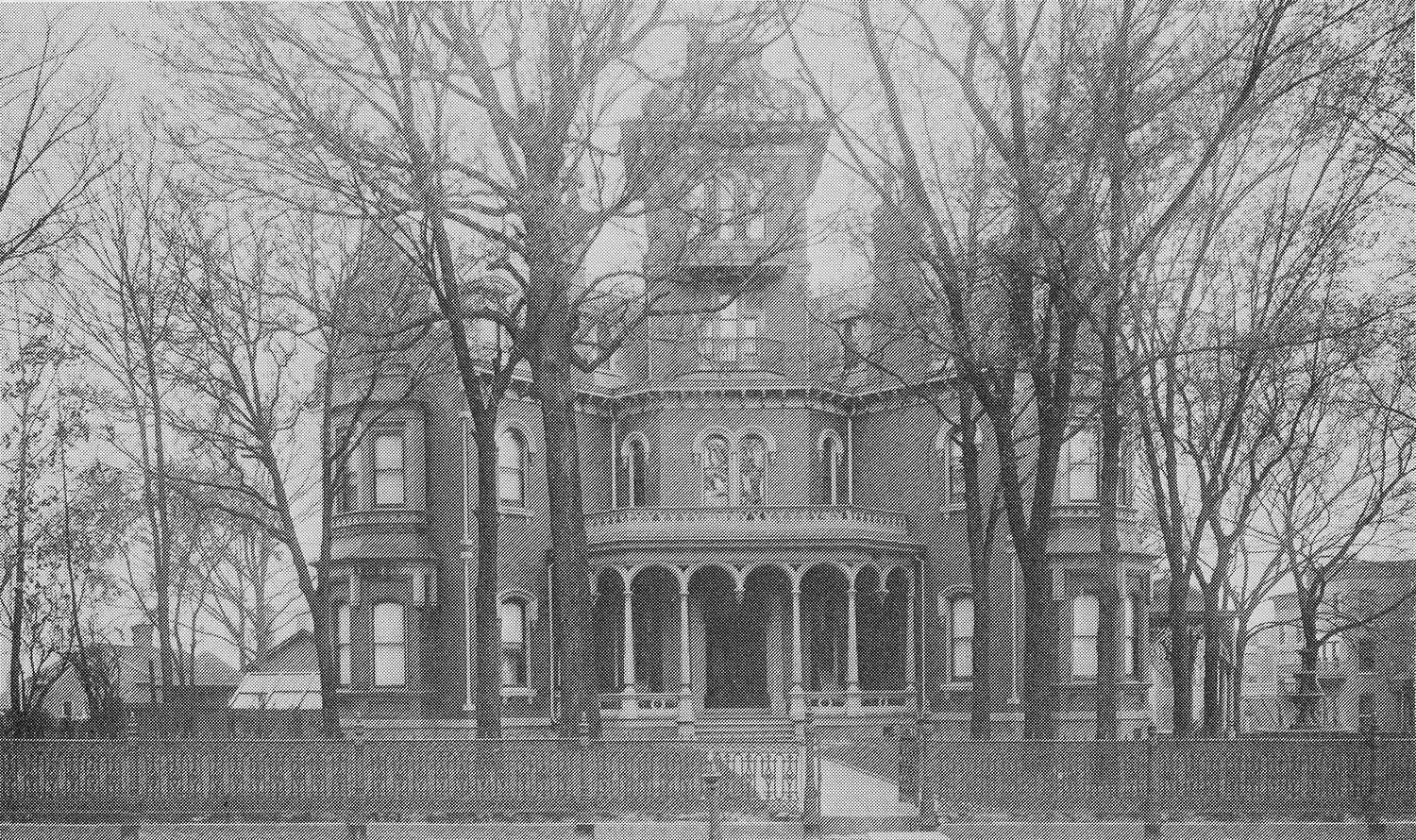
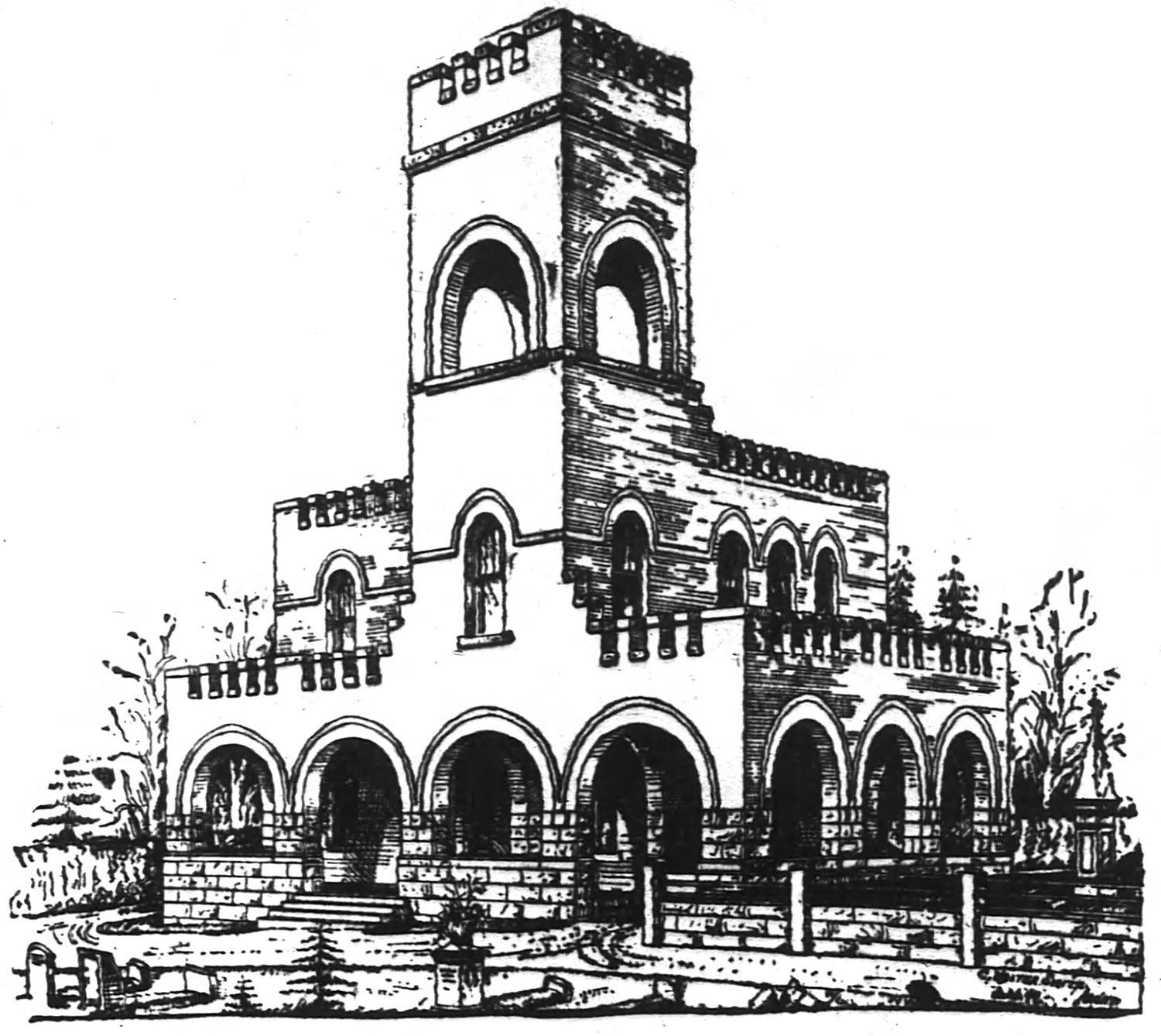
    W.W. Goodrich & Son. Leslie W. Dallis Residence (1891). LaGrange, Georgia.
    W.W. Goodrich & Son. Leslie W. Dallis Residence (1891). LaGrange, Georgia.1

    The Background

    This is the eighteenth and final installment in a series of articles written for The Atlanta Journal in 1890 and 1891 by W.W. Goodrich, an architect who practiced in Atlanta between 1889 and 1895.

    As in his 1890 article of the same name, Goodrich here describes the Colonial Revival style of architecture that was then gaining popularity in Atlanta. Hardly anything about the style was actually “colonial”, and in typical rambling fashion, Goodrich attempts to explain its finer points across multiple paragraphs — without success.

    Readers would have been better served by G.L. Norrman’s succinct definition a year earlier: “The so-called colonial style is barbarism of the Italian renaissance interpreted by Sir Christopher Wren.” Boom. Done.

    This article takes a bizarre turn when Goodrich describes matching a home’s furniture to the hair color and complexion of the woman who lives there, with corresponding fashion tips. I wish I were joking.

    “A brunette is never so exquisite as in cream color,” Goodrich writes, adding: “Women who have rather florid complexions look well in various shades of plum and heliotrope”. As for blondes? “Blondes look fairer and younger in dead black.”

    Notice, of course, that only light-skinned complexions are discussed.

    The article ends with a lecture for young women on buying furniture. “Each couch and footstool is an achievement”, Goodrich prattles, “each rug and curtain represents a triumph.” You can tell he was exhausting to be around.

    A few words in the article text have been lost due to faded ink on the original newspaper page. The missing portions are indicated by the [obliterated] tag.


    Pretty Homes

    Something About The Colonial Architecture.

    Many Specimens of the Style Found in the South.

    Adapting My Lady’s Boudoir to Her Own Tints and Tones.

    How to Buy Furnishings for a Home so as to Produce the Most Artistic effect.

    Written for The Journal.

    Through knickerbocker treatment we inherit architectural forms bequeathed to us from the Italian renaissance. To this we have given the name “Colonial”–developed, as it was, during our colonial existence and thereafter.

    The north and south are possessed of numerous examples of this style in the old homes on the farms and manors of New England, and on the plantations of the middle and southern states.

    This development is a growth with constant retrospection toward Greek art and an occasional treatment of forms, promoted or necessitated by existing conditions. The acanthus and the scallop shell are frequently met with, and a profusion of [obliterated], bead and fret mouldings, bands and [obliterated] are the proper ornamentation.

    This application of the ornament varies [obliterated]. Sometimes we see it in profuse [obliterated] and sometimes used sparingly with plain surfaces as better becomes Puritan taste. The southern colonial of Maryland, Virginia, South Carolina and Georgia verges almost on the rococo, in some cases, especially in the detail of the foliage. The towns of the south are full of exquisite examples of fine colonial ornament, exterior and interior.

    In most cases the metal work of old colonial houses is very simple, the surfaces being of plain polished brass and the edges [obliterated] ornamented with some of the characteristic fretwork of the exterior ornamentation. Where such ornament is found it is usually adapted from earlier renaissance examples, simplified to suit the occasion of the owner’s purse.

    A Colonial Revival.

    The colonial school has been recently revived in many parts of the country, more especially for suburban residences near large cities and for handsome country houses surrounded by broad landscapes. When consistently executed, it is most suitable for such buildings and the quaint outlines and soft colorings of some of the recent examples in this school are very attractive, making home dearer and more to be desired than any form of home construction.

    The colonial will always be memorable for the introduction of that unique style of furniture and coloring that has never ceased to be admired, having that about it which appeals to the most refined feelings of domesticity, and is strictly adapted to the occupants of the home in color, form and generally symphony; thus, for a blonde I would have a rose parlor, the woodwork of prima vara [sic], the glass of polished plate, the mantel of root ash, the facings of onyx. The walls should be hung with rose-colored silk in various rose designs, procaded [sic] with thistles; the furniture in rosewood covered with rose-colored velvets, embossed with roses; the portieres of rose-colored silks and satins, with heavy fringes in blue and gold.

    In the dining-room the hangings are of peacock blue, with a border of beetle’s wings, sewed on with jewels and pearls. The chairs of mahogany, covered with light, embossed terra cotta velvet.

    The ballroom is Moorish, designed from a room in the Alhambra, of tinges of blue and gold, in symmetrical designs of Greek Byzantium, with the draperies, hanging and divans of exquisitely oriental treatment.

    In the library the prevailing hue should be a soft brown with delicate blue and [obliterated] violets peeping out from grasses in various portions. And for the boudoir I would have a tulip room, old gold covering the walls and a dado of yellow and pale pink tulips reaching to the dulled gilt frieze.

    Matching the Fair Occupant.

    There can be no finer example of modern American furnishing than this idea, that the colors chose were those tints of which a duplicate were found in the hair, the eyes and the complexion of the lady herself.

    A woman with blue-gray eyes and a thin, neutral-tinted complexion, is never more becomingly dressed than in the blue shades in which gray is mixed, for in this complexion there is a certain delicate blueness.

    A brunette is never so exquisite as in cream color, for she has reproduced the tinting of her skin in her dress. Put the same dress on a colorless blonde and she will be far from charming, while in gray she would be quite the reverse. The reason is plain, in the blonde’s sallowness there are tints of gray, and in the dark woman’s pallor there are always yellowish tones, the same as predominate in the cream-colored dress.

    Women who have rather florid complexions look well in various shades of plum and heliotrope, also in certain shades of dove gray, for to a trained eye this color has a tinge of pink which harmonizes with the flesh of the face. Blondes look fairer and younger in dead black like that of wool goods or velvet, while brunettes require the sheen of satin or gloss of silk in order to wear black to advantage.

    The Charm of Colonial Houses.

    One of the greatest charms of colonial houses is found in the beams and panels which appear without disguise in the ceilings, and which are manifestly capable of supporting the floor above. They give a sense of fitness and security which one does not experience in the contemplation of the unbroken, and apparently unsupported, expanse of plaster, which forms the ceiling of the modern. Add to this bareness the two or three feet of unnecessary height, which we usually find in houses of the last decade, with no shape in the finish of the cornice to give an impression of support, or perhaps a meaningless cornice repeating the confused floral forms of the absurdity which forms the centre piece, and it is evident that innovation and reform in the matter have not come to soon.

    If a room be badly proportioned or too high, a good effect may be obtained by dividing the ceiling space by moulding of heavy wood–enough to give a feeling of stability.

    [obliterated] be frescoed or painted, and if the work be carefully considered, and not too intricate in pattern, the appearance of the room will be greatly improved.

    Some Specimens in Atlanta.

    The colonial school of architecture and ornament has proved to be so well adapted to modern uses and surrounding that many handsome residences of the kind are to be found in various parts of this city, and are coming in more general use in this country. While its prominent features are necessarily adaptations from earlier forms transplanted from across the sea, yet it has more of an historical claim to be considered an American style than almost any other, and as such is worthy of special study.

    From any point of view the colonial style is decidedly free from old-fashioned ideas, whilst it is distinguished not only for elegance, but comfort and convenience, thus being well adapted to modern adoption. The formation influences that led up to this remarkable development of artistic power, date from the Italian Renaissance, illustrating how subtle germs of thought, fed from various sources, and fructifying from generation to generation, are presently developed under favoring circumstances in original and attractive forms. The colonial style was not an electric, it was a positive creation, characterized by a charming individuality.

    Artistic Mantels.

    Colonial mantels, as constructive features of apartments, claim our first notice. If of hard wood the ornaments were curved or turned; if of plain wood, they were coated with a plastic composition, toned to yellow color, that presently assumed an adamantine hardness, and on which were formed in relief, figure groups, and floral garlands, and pendants, similar designs being carried out on the jambs and lintels of hardwood mantels.

    Pillars supporting the shelves would at times by mounted by brass capitals; but many of the pillared supports are fine examples of turnery, which was also applied to geometric ornaments on lintels. Much of the pleasing effect of the mantels is due the fine proportions maintained, and the delicacy of relief work in carvings and mouldings, made more effective by ample and well considered spacing. The mantel would be surrounded by a moderately high oblong mirror, metal lined, and running its whole length and this topped by shelves resting on brackets.

    In the colonial order of architecture, the home seeker can do better in buying pieces singly, rather than in sets, and to pick up said articles at various times, as the home progresses in being occupied, and as wants increase.

    How to Buy Furniture.

    It seems a pity that the young woman who is about to establish a home, and has a sum of money to spend for its garnishing, cannot be persuaded from laying it all out at once. She robs herself of so much future enjoyment. The spick and span sets of furniture which are carelessly ordered from an upholsterer, and carried home and stood around her parlors by his men, will never afford her half the satisfaction she can get in a room for which to-day she buys a chair, and the next week, seeing there must be a table to accompany the chair, she starts on a fresh shopping excursion, and finds a table which is exactly what she was looking for; and in another month, discovering the need of a bookcase or a screen she has again the delight of the hunt, and the gratification of obtaining the prettiest screen and bookcase in the city.

    Such a room is a growth, a gathering together of household treasures, little by little. Each article, bought only when the need arises, or when something is happily found to just meet the need, will have a family history which makes it an entertaining as well as a valuable possession. Each couch and footstool is an achievement; each rug and curtain represents a triumph. Such a home, built up gradually, with careful planning in each part, with thought and loving consideration in all its details, acquires a far deeper meaning than could be purchased by the longest purse from the most fashionable cabinet-maker.

    W.W. GOODRICH.2

    References

    1. “Building in LaGrange.” The Atlanta Constitution, December 13, 1890, p. 3. ↩︎
    2. Goodrich, W.W. “Pretty Homes.” The Atlanta Journal, December 5, 1891, p. 11. ↩︎
  • City Hall (1910) – Griffin, Georgia

    Haralson Bleckley. City Hall (1910). Griffin, Georgia.
    Haralson Bleckley. City Hall (1910). Griffin, Georgia.1 2
    Looking at City Hall from the southwest
    Looking at City Hall from the southwest
    Balustrade, cornice, and frieze on City Hall, Griffin, Georgia
    Balustrade, cornice, and frieze on City Hall, Griffin, Georgia
    Dentilled cornice on City Hall, Griffin, Georgia
    Dentilled cornice on City Hall, Griffin, Georgia
    Main entrance and second-floor window on City Hall, Griffin, Georgia
    Main entrance and second-floor window on City Hall, Griffin, Georgia
    Terracotta cartouche on the facade of City Hall, Griffin, Georgia
    Terracotta cartouche on the facade of City Hall, Griffin, Georgia
    First- and second-floor windows on the southwest corner of City Hall, Griffin, Georgia
    First- and second-floor windows on the southwest corner of City Hall, Griffin, Georgia
    Second-floor window and inscription on City Hall, Griffin, Georgia
    Second-floor window and inscription on City Hall, Griffin, Georgia
    Arch window over the main entrance of City Hall, Griffin, Georgia
    Arch window over the main entrance of City Hall, Griffin, Georgia
    Terracotta cartouche over frieze and architrave on the facade of City Hall, Griffin, Georgia
    Terracotta cartouche over frieze and architrave on the facade of City Hall, Griffin, Georgia
    Looking at City Hall from the southeast
    Looking at City Hall from the southeast
    First- and second-floor window and spandrel on the facade of City Hall, Griffin, Georgia
    First- and second-floor window and spandrel on the facade of City Hall, Griffin, Georgia
    Balustrade on the roof of City Hall, Griffin, Georgia
    Balustrade on the roof of City Hall, Griffin, Georgia
    Cornice, frieze, and second-floor window on the east elevation of City Hall, Griffin, Georgia
    Cornice, frieze, and second-floor window on the east elevation of City Hall, Griffin, Georgia
    First-floor window and spandrel on the facade of City Hall, Griffin, Georgia
    First-floor window and spandrel on the facade of City Hall, Griffin, Georgia
    West elevation of City Hall, Griffin, Georgia
    West elevation of City Hall, Griffin, Georgia
    Former fire engine doors on the west elevation of City Hall, Griffin, Georgia
    Former fire engine doors on the west elevation of City Hall, Griffin, Georgia
    Looking at City Hall from the east
    Looking at City Hall from the east

    References

    1. “Notice to Contractors.” The Griffin Daily News (Griffin, Georgia), March 5, 1910, p. 1. ↩︎
    2. “City Council Holds First Session In City’s Handsome New Home”. The Griffin Daily News (Griffin, Georgia), May 11, 1911, p. 1. ↩︎

  • “A Suggestion About Water” by W.W. Goodrich (1890)

    The Background

    July 1890 wasn’t a good time for Atlanta’s water supply. At the start of the month, a lack of rainfall caused the city’s reservoir to drop nearly 6 inches in 3 days. “This looks a little scary,” remarked The Atlanta Journal.1 By mid-month, the water was 27 inches below capacity.2

    Days later, the city’s artesian well failed, with the waterworks superintendent, W. G. Richards,3 quietly fashioning a makeshift connection between the well and the main hydrant. The Constitution later explained: “those who drank the water at the hydrants, soon detected the difference, and the failure of the well became public.”4

    Then on July 10, 1890, disaster struck: a nearby refinery burned to the ground,5 releasing over 200,000 gallons of refined oil — cottonseed oil, that is — into the reservoir.6 7 8 A 2 to 3-inch layer of cottonseed oil floated on the surface of the water, killing hundreds of fish,9 multiple birds,10 11 and possibly several cows.12 13

    The president of Atlanta’s board of health, Dr. James Baird, along with the state chemist, declared the municipal water was safe to drink as workers began pumping oil from the lake.14 15 An investigation later determined the oil never entered through the city’s supply filters, which were located 15 feet below the water’s surface.16

    Although public officials were as deceitful then as they are now, Dr. Baird was correct: Refined cottonseed oil is safe for human consumption, even if it isn’t especially healthy. Today, it’s commonly used in processed foods.

    However, that didn’t stop W.W. Goodrich — ever the attention-seeker — from claiming to have become severely ill after drinking a glass of tainted tap water at his office. He certainly felt well enough to run to theJournal, whose coverage of the waterworks incident was predictably more sensationalist than the rival Constitution.

    The Journal described Goodrich’s purported illness in robust detail:

    “In about half an hour, he had a violent attack of vomiting which lasted until he was almost completely exhausted. He then took the electric car for his home, when he began to vomit again.”17

    The Journal writer asked Dr. Baird about Goodrich’s illness and reported flatly: “The doctor thinks that the water could not have caused the sickness.”

    Atlanta was still a small city at that point, and if the doctor knew anything about Goodrich, he must have known the man was a gigantic bullshitter. Only a few weeks earlier, Goodrich claimed his entire family was poisoned by eating canned tomatoes and corn18 — two poisoning stories within a month is a little suspicious, don’t ya think?

    A few days after his so-called sickness, Goodrich wrote the following “suggestion” to the Journal about how to filter water with slabs of marble. Because, of course, he was also a hydrology expert.


    A Suggestion About Water.

    To the Editor of The Journal:

    Apropros of the waterworks question there is a remedy for aiding the filtration of water, in the use of thin slabs of marble hung on wire at the surface of the water level. The test of the effectual usefulness of this cure remedy has been proven to be a positive destroyer for all dust organisms that are in water. They are attracted to the marble, live in its pores. The gradual detrition of the marble by the action of the water causes the acid of the marble, which is carbonic, to kill all dust germs of dust germ life.

    Thus the gradual formation of that greenish fungoid growth which we see on marble, in water, or in damp places, is this same fungus. Settling basins of marble, and filters of marble slabs, perforated, with small holes between the regulation layers of filtration material, are of a more specific precipitate for foreign matter than alum. Whereas alum, while it is a specific in a certain sense, still it will permeate and be taken up in the water, and of course used by the public. There are stringent laws against the use of alum by bakers in the making of bread in many cities, on account of its action in the stomach. Alum is known to be a nerve destroyer, and if its use is persisted in the system soon becomes a subject of severe nervous prostration.

    W.W. GOODRICH.19

    References

    1. “The Water Falling.” The Atlanta Journal, July 2, 1890, p. 3. ↩︎
    2. “The City Water Is All Right.” The Atlanta Constitution, July 15, 1890, p. 7. ↩︎
    3. “At The Waterworks.” The Atlanta Journal, July 9, 1890, p. 2. ↩︎
    4. “The Water Failed”. The Atlanta Constitution, July 5, 1890, p. 5. ↩︎
    5. “A Fierce Fire.” The Atlanta Journal, July 10, 1890, p. 5. ↩︎
    6. ibid. ↩︎
    7. “$100,000 Fire”. The Atlanta Constitution, July 11, 1890, p. 4. ↩︎
    8. “Danger In Water”. The Atlanta Journal, July 11, 1890, p. 2. ↩︎
    9. “The Fish Are Dying.” The Atlanta Journal, July 12, 1890, p. 9. ↩︎
    10. “The Oil on the Water”. The Atlanta Constitution, July 13, 1890, p. 17. ↩︎
    11. “Removing The Oil”. The Atlanta Journal, July 14, 1890, p. 2. ↩︎
    12. ibid. ↩︎
    13. “About The Water.” The Atlanta Constitution, July 17, 1890, p. 6. ↩︎
    14. “The Oil on the Water”. The Atlanta Constitution, July 13, 1890, p. 17. ↩︎
    15. “Barrels Of Oil”. The Atlanta Journal, July 15, 1890, p. 2. ↩︎
    16. “The City Water Is All Right.” The Atlanta Constitution, July 15, 1890, p. 7. ↩︎
    17. “Made Sick By The Water.” The Atlanta Journal, July 15, 1890, p. 3. ↩︎
    18. “In Two Great States.” Weekly Columbus Enquirer-Sun (Columbus, Georgia), June 14, 1890, p. 3. ↩︎
    19. Goodrich, W.W. “A Suggestion About Water.” The Atlanta Journal, July 24, 1890, p. 1. ↩︎
  • Joseph E. Brown Junior High School (1923) – Atlanta

    Pringle & Smith. Joseph E. Brown Junior High School (1923). West End, Atlanta.
    Pringle & Smith. Joseph E. Brown Junior High School (1923). West End, Atlanta.1 2
    Original entrance of Joseph E. Brown Junior High School, Atlanta
    Original entrance of Joseph E. Brown Junior High School, Atlanta
    Globe pediment on Joseph E. Brown Junior High School, Atlanta
    Globe pediment on Joseph E. Brown Junior High School, Atlanta
    Looking at the facade of Joseph E. Brown Junior High School, Atlanta
    Looking at the facade of Joseph E. Brown Junior High School, Atlanta
    Cornice and ornamentation on the original entrance of Joseph E. Brown Junior High School, Atlanta
    Cornice and ornamentation on the original entrance of Joseph E. Brown Junior High School, Atlanta
    Belt course and ornamentation on the facade of Joseph E. Brown Junior High School, Atlanta
    Belt course and ornamentation on the facade of Joseph E. Brown Junior High School, Atlanta
    Ornamentation on the facade of Joseph E. Brown Junior High School, Atlanta
    Ornamentation on the facade of Joseph E. Brown Junior High School, Atlanta
    First-floor windows and ornamentation on the facade of Joseph E. Brown Junior High School, Atlanta
    First-floor windows and ornamentation on the facade of Joseph E. Brown Junior High School, Atlanta
    Etched granite ornamentation at the entrance of Joseph E. Brown Junior High School, Atlanta
    Etched granite ornamentation at the entrance of Joseph E. Brown Junior High School, Atlanta
    First-floor windows on the facade of Joseph E. Brown Junior High School, Atlanta
    First-floor windows on the facade of Joseph E. Brown Junior High School, Atlanta
    South wing of Joseph E. Brown Junior High School, Atlanta
    South wing of Joseph E. Brown Junior High School, Atlanta
    Looking at the facade of Joseph E. Brown Junior High School from the southeast
    Looking at the facade of Joseph E. Brown Junior High School from the southeast
    Gymnasium of Joseph E. Brown Junior High School, Atlanta
    Gymnasium of Joseph E. Brown Junior High School, Atlanta
    Cornice on the gymnasium of Joseph E. Brown Junior High School, Atlanta
    Cornice on the gymnasium of Joseph E. Brown Junior High School, Atlanta
    Entrance to the gymnasium of Joseph E. Brown Junior High School, Atlanta
    Entrance to the gymnasium of Joseph E. Brown Junior High School, Atlanta
    Cornice on the gymnasium of Joseph E. Brown Junior High School, Atlanta
    Cornice on the gymnasium of Joseph E. Brown Junior High School, Atlanta
    South elevation of Joseph E. Brown Junior High School, Atlanta
    South elevation of Joseph E. Brown Junior High School, Atlanta
    South elevation of the gymnasium of Joseph E. Brown Junior High School, Atlanta
    South elevation of the gymnasium of Joseph E. Brown Junior High School, Atlanta
    West elevation of Joseph E. Brown Junior High School, Atlanta
    West elevation of Joseph E. Brown Junior High School, Atlanta
    Looking at the southwest corner of Joseph E. Brown Junior High School, Atlanta
    Looking at the southwest corner of Joseph E. Brown Junior High School, Atlanta
    Windows on the west elevation of Joseph E. Brown Junior High School, Atlanta
    Windows on the west elevation of Joseph E. Brown Junior High School, Atlanta
    Chimney on the west elevation of Joseph E. Brown Junior High School, Atlanta
    Chimney on the west elevation of Joseph E. Brown Junior High School, Atlanta

    References

    1. “The New West End Junior High School”. The Atlanta Journal, May 27, 1923, p. F9. ↩︎
    2. “Public Is Invited To Opening Exercises At West End Church”. The Atlanta Journal, November 25, 1923, p. 6. ↩︎
  • “Fatal Mists” (1891) by W.W. Goodrich

    The Background

    This is the seventeenth in a series of articles written for The Atlanta Journal in 1890 and 1891 by W.W. Goodrich, an architect who practiced in Atlanta between 1889 and 1895.

    After nearly two years of stories, Goodrich’s billowing font of bullshit was clearly running out of steam.

    In the following article from November 1891, he once again draws inspiration from his brief residency in Washington state for another croaky blast of hot air, conjuring up a tale about a noxious “fountain of death” that kills every living creature near it — “one whiff of it is sufficient to extinguish life.”

    This toxic body of water never existed, of course, but that doesn’t stop Goodrich from crafting a macabre story about a little girl who wandered from home and died at the foot of the fountain “with a little dead bird clutched in her hand”. The Victorians were some twisted fuckers, no?

    Never content to stick with just far-fetched, Goodrich then dives into patently absurd, claiming that the ozone levels in the higher elevations of Washington are “so intense” that they eliminate all disease from the body (“Asthma is cured there in a few weeks”). Sure, Dr. Goodrich.

    He also claims to have sent a 20-ton “bowlder” rolling down a mountain, which absolutely didn’t happen. Incidentally, Goodrich misspells Mt. Tahoma as “Mt. Tacoma” and Mt. Saint Helens as “St. Helena”. Keep in mind that he lived in Washington for, at most, 6 months and likely never set foot in any of these places, so there’s a reason he can’t even get their names right.

    In addition to being an obvious prevaricator, Goodrich was a terrible orthographer, hence such spelling atrocities as “fissues” and “flou spar”.

    The remainder of the article is a string of anecdotes about other locations that never existed, complete with mummies and hieroglyphics (again), “an adult dwarf”, “an Indian of giant stature”, and a lake where giant animals were gathered up and drowned by the Paiute tribe — he mispells that name, too.

    By all accounts, 1891 was a banner year for Atlanta’s architects, with the city’s leading firms designing and supervising major works across the Southeast. Goodrich, however, still had plenty of time to spew his nonsense in the pages of the Journal. Read into that what you will.


    Fatal Mists.

    A Fountain Of Death On The Great Divide.

    A Spring Whose Noxious Fumes Kill All That Approach It.

    An Atlanta Man’s Visit to the Wonderful Geyser Basin.

    Digging Into the Graves of a Prehistoric Race–Curious Hieroglyphics on the Rocks–Interesting Tradition.

    Between the headwaters of the Nooksack and the Yakima, from out the side of a massive rock, spurts a spring of clear running water, intensely cold. By placing the edge of the hand in the pool the water can be turned into the Puget Sound basin by the Nooksack river, or into the Columbia river basin by the Yakima, so close together is the line that divides the two basins.

    What a panorama is here before the observer. To the north is Mt. Baker, to the south are Mts. Tacoma, St. Helena and Shasta, to the west the Pacific ocean, northward the British possessions and Alaska, South Oregon and California. To the east, as far as the eye can see, the Columbia river basin, and still farther, on the distant horizon, western Idaho, that gem of the mountains.

    The Fountain of Death.

    In a clump of stunted trees, at a point about three miles from the Nooksack, and about thirty feet from the trail, there bubbles a spring of the clearest sparkling water that one ever saw. The only thing peculiarly noticeable about the spring from a distance is the loud hissing sound it makes as it gushes up out of the gravelly soil. It sounds more like boiling water with occasional jets of steam escaping than the ordinary purling of a stream.

    Approach it and you will be startled to see lying around the spring hundreds of birds, scores of small animals, such as coons, foxes and the like. Nearly always there are bodies of birds or animals in a more or less advanced stage of decomposition near the edge of the spring. If a tourist is wise he will be content with an inspection of the unattractive spot from a distance, more especially if there happens to be the carcass of a steer lying beside it with the nose an inch or two from the water.

    A Noxious Gas.

    The fact is that there rises constantly from the spring a gas so noxious and so deadly that one whiff of it is sufficient to extinguish life.

    The terrible character of the spring is well known to all who reside in the neighborhood.

    One day the little six-year-old daughter of a farmer living near the spring wandered away from home. Her absence was not noticed for an hour or two, and then the parents went in search of the child. They found her lying dead beside the spring with a little dead bird clutched in her hand. She had evidently seen the bird lying beside the spring, and being attracted by the bright color of its plumage, had tried to pick it up, and in so doing had inhaled the gas rising from the water and died with the bird.

    Knelt to Her Death.

    Another time a squaw who was supposed to be recovering from a spree, wandered down by the spring. She probably started to the river to get a drink, when she discovered the spring and knelt beside it, dying in that position. A venturesome man once held his breath and nostrils and leaned over the spring to hear the noise it made, which he described as something terrible.

    The water is thought to be comparatively wholesome, but nothing is known positively about it, as it has never been analyzed. There can be no doubt, however, that the spring is certain and instant death to every living thing–insect, animal and human–that approaches it.

    Life Giving Ozone.

    Above the timber line is one of vast expanse of blue air. So intense is the ozone that its inhalation sends the blood through the system with accelerated quickness, its penetrating power rapidly revivifying the hemoglobin of the blood’s red corpsucles [sic], eliminating all diseases and rejuvenating the body. Indeed, if one afflicted with living or liver troubles could stay on the Divide and have the comforts of life at command at an altitude of 12,000 feet, he would be speedily healed. Asthma is cured there in a few weeks.

    On the Divide all is bare rock with stunted growth of buffalo grass in spots. Except for an occasional spring and the falling snows, there would be no water. Two thousand feet below, or 10,000 feet above the ocean we left all forms of trees and vegetation. What there was, was stunted, twisted, gnarled and dwarfed.

    Geysers in Ebullition.

    Looking toward the northeast is seen, far down the mountain’s side, in a grand canyon, vapor arising in puffs, some higher than others, toward which we wended our way, our guide telling us they were geysers in a state of ebullition.

    This is a peculiar rocky formation. On little mesas were huge bowlders [sic], brought there by glaciers and worn round like balls. One of these, near the verge of a declivity, weighing by observation some 20 tons, we undermined and started down the mountain’s side into a canyon below, a distance of a mile, with a descent of some 45 degrees. On it rolled, fast gaining momentum. Its flying force was terrific. It crashed through giant trees like as though they were pipe stems, starting over other stones, and they in turn others, until it seemed as though an awful avalanche was crushing and grinding the sides of the mountains into a mass of splinters and powder.

    It was a grand but a terrific sight. The noise was as the noise of the ocean waves against the rocks of the coast when there is an awful storm on old ocean and the seas are lashing themselves into foam.

    In the Basin.

    In the basin, there were several geysers in commotion, one throwing up mud, another hot water, still others mud and steam. By the sides of the geysers were crystals of sulphur in beautiful and fanciful shapes. Peculiar mineral waters came from the mountain’s sides, some salt, some lime and others in varied proportions of different salts and lime. The spouting of these geysers made peculiar rainbows of different colors and shadows.

    All about the basin, which was about twenty acres in extent, were skeletons of animals, from the hairy elephant to the human being, veritable valleys of bones, some petrified, some partly so, some embedded in the rocky formation by the sillification [sic] of the mineral waters.

    Mummies in Caves.

    Many caves of different sizes were all about the rocks, in which were mummies wrapped as are the Egyptians. Stalagmites and stalactites were seen in remarkable profusion and beauty.

    One [sic] one amesa [sic] some two hundred feet above the geysers were several mounds.

    The little hillocks were dug into and ghastly skeletons were brought to light, a strange revelation of an unknown race. Copper war weapons, shaped something like a harpoon, only much shorter and stouter, were beside each skeleton. Curious characters were etched on the blade of the instrument, and their had survived through centuries.

    Excavating a Prehistoric Grave.

    One of the mounds I excavated, exposing a flat stone of flou spar [sic]. It had been designed as a door to a sepulcher. After being raised, there was exposed a grave, walled on all sides and tightly cemented with sulphur. In it was a dwarfed body doubled up in a sitting position, a custom followed by the ancient Indian and Aztec tribes all along the Pacific slope. The formation of the skull was like that of a Chinaman. The body, though small, was that of an adult dwarf.

    Several other graves were opened and the bodies in all of them were similar in anatomical construction and size. In many of the graves were hewn utensils, evidently used for cooking, together with arrow heads, known to have been used by coast tribes for centuries.

    A Veritable Valley of Death.

    A remarkable formation was the canyon’s side walls; huge fissues [sic], emitting fumes and steam, of unknown depth, streams of hot water, from the tiny rill to the brook, coursing down the canyon’s sides. No life anywhere. All was solitude, save for the sound of the mud as the gases came to the surface, emitting strange and weird noises. The Indian never comes into this basin.

    The Earth Trembled.

    Occasional earthquakes shook the earth with violent convulsions. And the grim sentinel rocks at the mouth of the canyon waved spasmodically at each quake. Terrific rumblings and violent roars, as of terrible combat between Herculean giants, were constant. Nature here was grand, and a lover of nature could here see Sacra Tyhee in his might.

    To the eastward of this valley is a mixed formation of sandstone, carboniferous limestone, slate, igneous rocks and lava. Here is a hill called “Curious Butte.” It is composed of stratified material of several colors, bright blue and yellow predominating. Near this hill is a deposit of itacolumite or flexible sandstone, indicating that the region is diamoniferous [sic]. It is possible that the blue strata exposed in the hill are of the same nature as the “blue stuff” in which diamonds are found in the south African mines. No one has ever prospected the place for diamond.

    Much of the limestone in this region is fossiliferous, but near the plutonic rocks the fossils cannot be made out, owing to the metamorphosis of the limestone by heat. However, in several places have been found corals and sponges, and ammonites, tenenebratlas [sic] spirifers are often abundant.

    Hieroglyphics on the Rocks.

    Near a Galena mine, three miles from the spring, east of the valley, many hieroglyphics are carved on the rocks. It is a sort of picture writing, and is popularly supposed to have been the work of Aztecs. It is certain that the writing was not done by the present race of Indians of this basin. Similar hieroglyphics are found near Candelaria; also in Humbolt county, on Star Canyon, near the Sheba mine; on the Carson river, below Ragtown, and in many other localities.

    Legend of a Giant.

    The Indians have a tradition that extends they know not how far into “the long ago,” of an Indian of giant stature who gave them great trouble. They say that the giant warrior came from the north. He took up his abode near Pyramid Lake and made war on the Piutes, killing many of their men. The giant was finally slain by a Piute Cavid, who crept up behind him and drove a poisoned arrow into his body between the shoulder blades.

    Two or three of the giant’s tracks and his grave are shown to this day. The tracks are near the Truckee river, between Wadsworth and Pyramid Lake. They are in soft sandstone and are still kept clear of sand and soil. Every Indian that passes the spot stops and sweeps out any dirt that may have lodged in the big tracks.

    The Giant’s Grave.

    The giant’s grave is not far from where the tracks are seen. The grave is always kept clear of vegetation any grass or weeds seen growing on it are pulled up by the roots. In this way the spot has always been kept marked.

    The Indians also have a tradition of huge animals that roamed the country. They say the animals had horns with which they were able to uproot trees. To rid themselves of the great beasts, the whole Piute tribe turned out, surrounded the herd and drove them into Pyramid lake, where all were drowned. Even now, when the lake is rough and black waves are seen rolling about far out from shore, the Indians point to the waves and say they are the backs of the monster beasts.

    It may be that the big animals were the elephants that made the tracks at the Carson quarry, and that the supposed human tracks are the footprints of the Piute Goliath.

    W.W. GOODRICH.1

    References

    1. Goodrich, W.W. “Fatal Mists”. The Atlanta Journal, November 14, 1891, p. 9. ↩︎
  • “A May-Day Dance” (1891) by W.W. Goodrich

    The Background

    This is the fifteenth in a series of articles written for The Atlanta Journal in 1890 and 1891 by W.W. Goodrich, an architect who practiced in Atlanta between 1889 and 1895.

    Goodrich briefly lived in Boise, Idaho, from 1882 to 1883, and here, in 2 tediously long paragraphs, he paints an idyllic (and fabricated) portrait of the Shoshone people of Idaho celebrating the annual return of salmon to the Snake River.

    His description of the Shoshones strikes an admiring, although occasionally condescending tone — not unusual for Goodrich — and conspicuously omits any mention of the tribe’s tenuous plight at the time.

    After years of fighting the seizure of their lands by White settlers, in 1875, the Shoshones were restricted by a presidential executive order to the tiny Lemhi Reservation along the Salmon River. Ultimately, the federal government — backed by the area’s covetous settlers — wanted to force the tribe onto a different reservation at Fort Hall, more than 200 miles to the south.

    By the time Goodrich lived in Idaho, the Shoshones, cloistered at the Lemhi Reservation, didn’t have access to the Snake River, which thoroughly discredits this story as one drawn from first-hand observation.

    After years of failed negotiations, in 1907, the Shoshones were forcibly removed to the Fort Hall Reservation in what has been referred to as Idaho’s Trail of Tears“. The Shoshones merged with the Bannock tribe, and today the descendant Shoshone-Bannock Tribes remain based on the reservation.

    Although a fixture of popular imagination, the annual return of salmon to the Snake River is now in rapid decline, as a series of dams erected in the 20th century by the United States Army Corps of Engineers has decimated salmon populations in the river. So much for American progress, eh?


    A May-Day Dance.

    A Picturesque Indian Custom.
    How It Is Spent By The Shoshones.
    They Rejoice at the Return of the Delicious Salmon – Their Grotesque Revelings in Their Beautiful Home in the Mountains.

    Written for the Journal.

    Idaho, that gem of the mountains, was never more beautiful than at this time, in its gorgeous array of wild flowers. Seven moons had come and gone since the last salmon had descended the falls, speeding its way to the “salt chuck.” The Snake river, winds its sinuous way to the Oregon, whence it empties into the Pacific. Amid grand scenic changes, this mighty river, of several hundreds of miles in length, touching many states, is the outlet for the overflow of a vast territory of most fertile soil and most wondrous growths; here is the home of the best peaches, potatoes, apples and small fruits that our grand country produces. Their flavor is superb; nay, delicious in the extreme. Nothing grown in any part of our common country can excel them in flavor. Here the cayute is in his native element, the coyote and the jack rabbit run races. The gray wolf and grizzly bear snarl and treat each other with extreme discourtesy over the bones of a slain antelope or venison. Here the mountain lion and his mortal enemy, man, meet in desperate combat, and man is the winner. High upon the range flashes an instant, then out, the signal fire. Again it flashes, thence from adjoining peaks, thence along the whole range, presently high fires are burning in every direction. Thus the Shoshones show their joy and gratitude for the return of May; of its muck a muck from the “salt chuck.” Salmon are running, flashing beauties, whose scales glitter with many and varied colors of the rising sun, are easily speared as they dart over the riffles and through the shallow waters. The silent Indian medicine man follows up and down the stream making grimaces and gesticulating wildly to the Great Spirit his approval of the running salmon. Then comes the chief, in beads and feathers, in gaudy colors and buck-skin moccasins, trimmed out with beads, utterly silent, and as informal as a bronze statue, and as cold in gesture as yonder snow-clad peak. The falls of the Snake river are of perfect grandeur; Shoshone falls, so named after the Indians who live on the Snake, are of quartz, fluorspar, granite and sandstone. Occasionally thin seams of the precious metals are interlaced and intertwined in the different formations. In the river’s bed are excellent placer mines of gold. Agates, amethysts and emeralds are in profusion, and when polished are beautiful in all the colors conceivable, and when cut present scenic effects that outrival any artistic effect of brush of any metal, however prettily worked or arranged. All along the banks of the Snake at various altitudes are lost rivers, varying from several feet above high water mark to hundreds of feet above water level. These rivers rise in the mountains and follow the canyons to the plains, thence flow underground for miles in the lava, which is spread all over the country in various thicknesses. And it is no uncommon sight to be traveling along over these lava plains, to see great holes just ahead of you, perpendicular and of from few feet to hundreds of feet deep with the rushing waters below rumbling and roaring, and seething and foaming. Many an animal and man has fallen into these places and been carried underground never to be seen or to be heard from again.

    Slowly circling about the chief in concentric circles, led by the medicine man, were all the bucks. Breaking ranks, each for himself ran to his cayute and galloped away for a mile then stopped with backs to the chief in a circle. On came the Shoshone, dressed in buckskin, and all over her blanket were still gaudier colors than the chief, her face painted in stripes, circles and squares. At some distance behind her came her children still further behind; from out of each teepee came the squaws and their children. As they came up with the chief each threw before him a wild flower, and as the last child passed in review he waved his hands towards the eternal mountains and calling upon the Great Spirit poured out in the fervency of his soul’s fondest desires praises to God for the return of May and of the run of salmon. After his prayer the pappooses and young children were seated about him on all sides, the grown daughters forming a circle about the children; then the squaws in a circle; then the young bucks; and at a given signal in rode the bucks straight at the chief, and at a pace that was furious, but just as they would ride over the ones about the chief they swerved, and rushing about in a circle, each brandishing his tomahawk, uttering the Indian yell of defiance to winter, of contempt for old boreas, and of joy at the coming of May. Then the squaws, hand in hand, danced before the chief;—and such a dance, and such grotesque actions, and such peculiar gyrations, and such can-cans;—and as their joyousness was becoming more boisterous the children took up the Indian refrains, their sacred music, and soon the whole tribe was a whirling mass of beings that you could not tell where the affair commenced or ended, so great were the contortions. At another given signal all again was as quiet as the grave; each wended his way to his teepee. At another signal all appeared at the outside of their teepees, and then the bucks, in single file, came to the chief dressed in feathers, gaudy ribbons, painted faces, in hideous stripes from their hair to their breech clouts, their legs painted in circles. Building a great fire from resinous trees, burrs and dry wood, all formed in the famous buck dance, that is so hideous and so full of contortions, grimaces and peculiar evolutions, finally winding up in complete exhaustion and absolute temporary uselessness of the body for any labor or any physical endurance. The squaws would have to pick up their lords and carry them to their teepees, so completely worn out were the bucks from the dance. Thus the noble Red man showed his appreciation of the 1st of May, and of the run of Salmon, his favorite food.

    W.W. Goodrich1

    References

    1. Goodrich, W.W. “A May-Day Dance.” The Atlanta Journal, May 2, 1891, p. 14. ↩︎
  • “Science of Sounds” (1891) by W.W. Goodrich

    Thornton Dial. The Bridge (1997). Freedom Park, Atlanta.
    Thornton Dial. The Bridge (1997). Freedom Park, Atlanta.1

    The Background

    This is the fourteenth in a series of articles written for The Atlanta Journal in 1890 and 1891 by W.W. Goodrich, an architect who practiced in Atlanta between 1889 and 1895.

    By now, Goodrich’s approach to writing is fairly predictable: posit yourself as an expert on a specific topic, weave in a few technical terms faintly recalled from some book or article, sprinkle in several imagined anecdotes with a heaping scoop of condescension.

    It doesn’t have to make any sense as long as it sounds knowledgeable, right?

    And while we’re talking about sounds, here Goodrich pontificates on the limited range of sound detectable to the human ear — after all, he wasn’t just a fraudulent architect, but also an amateur acoustician.

    The article references several songs that would be mostly unfamiliar to modern readers — links to explanatory pages are provided.

    For some reason, Goodrich includes a fabricated story about encountering desert tarantulas in Arizona that would jump “by actual measurement eleven to fifteen feet to sting us with their deadly poisonous fangs”.

    That longstanding myth is false: tarantulas can generally only jump a few inches. And as for his claim that “we would beat them to death with beaver tails”, no comment is necessary.

    The article also references a minor character from an obscure fairy tale by the Brothers Grimm; and Goodrich theorizes that mules can hear quarter-tones and half-tones, based on a visual assessment of their “auricular appendages”, by which he means ears.

    Goodrich concludes with a description of the “multitudinous roar” and “brazen noises” of 1890s Atlanta: “braying mules”, “the negro driver upon his dray”, “steam whistles shrieking”, and so forth.

    He opines that the fictional Prince Fine Ear “would go stark staring mad” in the cacophony of a 19th-century city, then concludes discordantly: “The less we cultivate our sense of hearing, the better it will be for the condition of your nerves.” Say what?


    Science of Sounds.

    The Great Acoustic Possibilities.
    One of Humanity’s Finer Lenses.
    Do the Auricular Nerves Convey Sound More Distinctly in the Present Day Than When Pre-historic Man Inhabited Caves and Trees?

    Written for the Journal.

    Eight musical notes cover the entire range of harmonious sounds which we are physiologically capable of appreciating.

    It is true that this statement is to be modified, since music recognizes what are known as half tones, but they are only adjuncts or auxiliaries, and their general proposition is not affected materially by them.

    With the eight notes or sounds, sub-divided into half tones, “only by the clearest of voices,” all the music of the world has been sung, from the first gruesome sounds of the Adamite man to the exquisite renditions of Jesus, Lover of My Soul, of our superb prima donna and leading sopranos of our many charming choirs. With these few notes, or tones, all the music of the world has been played, from the most stately symphony to the tune of the ragged waif, as his puckered lips whistles the melodies of the minstrel’s lay, which have a certain crisp and charming rendition, at the gatherings of the street urchins. And who has not listened to these urchins’ happy styles of vocalization, as perchance some dozen of them were fishing on a wharf after nightfall, and the calliope of some passing steamer was playing Coming Through the Rye, or My Old Kentucky Home, Good Night. With these few tones the great masters of harmony and melody brought into existence, enrapturing, grand, noble, soul inspiring melodies that have awakened in the human brain such longing and intensified desires to be like the meek and lowly Savior, as no other agent could possibly produce.

    But suppose that by some process of cultivation or evolution, or electrical phenomena, the human ear should or could acquire such a delicacy and refinement of sensibility, as to be able to detect and classify quarter tones or eighth tones or tones beyond and outside of the present range of music. What a vast new field would be opened for the lover of music for music’s sake.

    The capacity of the composer would be increased in geometrical ratio, and the permeations and combinations which would be possible would baffle the skill of the most profound mathematician to compute.

    And such an idea is not visionary. We have abundant and positive reason to believe that many of the lower orders of animals can hear sounds that are entirely inaudible to us.

    There are insectoria that communicate with each other by means of sound, what we can not hear; and even mankind, in occasional instances, have acuteness of hearing which we believe prove that the auditory nerves have never been educated to their ultimate possibilities.

    The tarantulas of Arizona in frequent instances which we have seen, before we could possibly see them, would get in right angle positions to which we were coming, even with our moccasins treading on the softest possible places, would present a fighting front and would jump by actual measurement eleven to fifteen feet to sting us with their deadly poisonous fangs. Only raw hide leggings prevented them from killing us and our party. As they would fasten into the soft raw hide we would beat them to death with beaver tails.

    The fairy story of Prince Fine Ear, who could hear the grass growing, may be only a survival of an earlier age when the senses of mankind were unblunted by misuse or not dulled by disuse, and when there were myriads of sounds to which we are now wholly deaf.

    Surely the variety of sounds one hears in riding in our street cars, as the lazy mule and obnoxious car go jolting along, are not conducive to musical melody, yet quarter and half tones might possibly be distinguishable “to the mules,” judging from the way they lay their auricular appendages backward for sounds.

    There is, however, this objection to the acoustic evolution spoken of that in proportion of delicacy of hearing should be gained, the consciousness of discordant sounds would be greatly intensified, and probably the tension on the nerves would be vastly magnified.

    Imagine a musician of the future with an ear finely attuned to the sweet concourse of rounds and capable of distinguishing tones which to our ears are soundless and meaningless, compelled to listen to the multitudinous roar of this great city, with all its brazen noises, its braying mules, clashing and clanging of machinery and locomotive engines, the negro driver upon his dray furiously and vociferously caressing his team with a black rawhide whip, steam whistles shrieking, and bells tolling out their early morning harshness to awaken the sick and tired body of the overworked and careworn woman attending her sickly babe, wagons rumbling over our rough belgian blocks, dogs growling and snarling, thomas cats mewing for the zephyrs of symphony of mamma cat on the back yard fences, roosters crowing the rising sun. In such a babble as this, Prince Fine Ear would soon go stark staring mad. And have to be deported for his own safety. As a whole, we are better off as we are. We may miss the music of the unheard, but we would escape the sounds which would be acute agony to the more delicate and sensitive ear. Unless we can bring all varied noises of this city into concord. The less we cultivate our sense of hearing, the better it will be for the condition of your nerves.

    W.W. Goodrich2

    References

    1. Fox, Catherine. “Gratitude girds ‘Bridge’ for Lewis”. The Atlanta Journal-Constitution, September 10, 2005, p. A1. ↩︎
    2. Goodrich, W.W. “Science of Sounds”. The Atlanta Journal, April 18, 1891, p. 1. ↩︎
  • Hearst Tower (2002) – Charlotte, North Carolina

    Smallwood, Reynolds, Stewart, Stewart & Associates.Hearst Tower (2002). Charlotte, North Carolina. 
    Smallwood, Reynolds, Stewart, Stewart & Associates.Hearst Tower (2002). Charlotte, North Carolina.1 2

    Rise up, Charlotte.

    References

    1. Smith, Doug. “Hearst Tower built to charm pedestrians.” The Charlotte Observer (Charlotte, North Carolina), August 25, 2000, p. 1D. ↩︎
    2. Smith, Doug. “Say hello to 2nd-tallest building in town.” The Charlotte Observer (Charlotte, North Carolina), November 14, 2002, p. 1. ↩︎
  • “The Coming Metal” (1891) by W.W. Goodrich

    The Background

    This is the thirteenth in a series of articles written for The Atlanta Journal in 1890 and 1891 by W.W. Goodrich, an architect who practiced in Atlanta between 1889 and 1895.

    Ah, metal — that most riveting of subjects. Here, Goodrich extolls the virtues of aluminum, which began appearing in the manufacture of commercial products in the early 1890s, although it wouldn’t emerge as an architectural material until the mid-20th century.

    As Goodrich notes, the 19th century was the age of iron — cast iron, more specifically. Cast iron was employed extensively in the 1800s as an inexpensive decorative material for the facades of commercial, industrial, and public buildings, especially in Northern cities like New York and Philadelphia.

    In Southern cities like New Orleans, Savannah, and Charleston, hideous mass-produced cast-iron railings, posts, and fences became a defining architectural element of the mid-1800s, although the trend mercifully bypassed Atlanta.

    Cast iron architecture was already falling out of favor by the 1890s, although another alloy — steel — was becoming an essential element in commercial building construction.

    In 1892, the Equitable Building in Atlanta became the first major steel-framed structure in the Southeast,1 followed by buildings like G.L. Norrman‘s Citizens Bank in Savannah in 1896,2 and Atlanta’s English-American Building in 1897,3 designed by Bradford L. Gilbert of New York.

    Architecture isn’t mentioned much here, which might have made this article more interesting. Unsurprisingly, Goodrich’s history and description of aluminum is chock full of errors: it was discovered in 1825, not 1827, for starters. And many of his claims about aluminum’s “most surprising qualities” are incorrect. If you want a more accurate assessment, read the Wikipedia article.

    In one curiously prescient remark, Goodrich anticipates the role of aluminum in the development of airplanes, noting its potential importance “if the problem of aerial navigation should ever be seriously discussed”. Even a stopped clock and all that.


    The Coming Metal,

    Wonderful Possibilities of Aluminum.
    A Formidable Rival of Gold Itself
    With the Newly Discovered Cheap Process of Manufacture it will Revolutionize the Use of Metals in the Arts and Industries.

    Written for the Journal.

    Among the good qualities of Napoleon III, “the man of Sedan,” was a high degree of courage as a scientific pioneer. One of the Napoleonic ideas was the economical production of the metal aluminum. To bring this about the autocrat of the Tuileries, in 1858, expended hundreds of thousands of dollars in subsidizing the labors of Deville, a French chemist of note. Deville succeeded in producing aluminum in masses and ingots never before seen, but as a commercial proposition the thing was seen to be infeasible, and soon the Sadowa and the needle gun drove all the arts and science not directly leagued with the war out of the Napoleonic mind.

    It was only natural during the middle and ages for some centuries thereafter, when forests covered the greater part of Europe and nearly all the western continent, that wood should have been in such general use. Stone was naturally employed in the construction of the castles of the nobility, for the walls of cities and for the houses of the wealthy; but its use for fuel for ships, for the houses of the middle and lower classes, was so general that even in the sixteenth century, thoughtful statesmen foresaw the entire disappearance of this material unless measures were taken to preserve the forests.

    Colbert, the great minister of Louis XIV is credited with the prophecy, “France will one day perish for want of wood.” The fear that he expressed was later shared by the statesmen of all the continental countries, and resulted in the forestry laws, which, by protecting the remaining forests, planting new ones and limiting the consumption of wood, have postponed for some centuries the threatened evil.

    Colbert did not foresee the extent to which iron would take the place of the most perishable material. At that epoch it was chiefly used for the manufacture of engines of war, and for ornamental purposes it was wrought and chiseled into a thousand ornamental objects, some of which still remain to attest the mechanical skill and artistic taste of the golden age of France. Colbert never dreamed that the time would come when ships and buildings of all kinds would be constructed of iron, and when coal and mineral oils and gasses would be used for heating and generating steam – that motive power whose powers were then so imperfectly understood.

    The present age has been called the age of iron, and with good reason. Iron is used for everything, enters into everything. But it has its disadvantages, though, for most things that demand strength and durability they are less serious those of wood. Wood is an organic substance, and though it may resist for a long time the action of the atmosphere, eventually perishes by exposure to water or to the attacks of insects. Iron is also perishable. It is easily oxidized, and its elements pass into the earth, air or water. In the course of time, like wood, it returns to dust. It is difficult of extraction, heavy and of long and troublesome manipulation. It exists in deposits that we are wont to think inexhaustible, but are not so.

    A man need not be a confirmed pessimist to be convinced that the time will come when iron only be had in insufficient quantities and at a price that will practically exclude its general use. But even if that were not to be the case, a metal that will supply its place is greatly to be desired, and there are scientists that think that it has already been discovered, and that it is aluminum.

    Aluminum is found in common clay. It was discovered in 1827, but owing to the difficulties of its extraction, and its high price, it has only been put to comparatively trivial uses, such as the making of tubes for field and opera glasses, and similar objects requiring only a small quantity. Constant efforts have been made by chemists for the last fifty years to find processes that would cheapen its extraction, and alloys that would be of practical use in mechanics. One of these alloys, with bronze, is in use in the United States navy as a substitute for steel in the making of screws, and it is said to be much more durable.

    There is a manufacture of aluminum at Frankfort, in Germany, but the processes are kept secret. It was not until twenty-seven years after its discovery that a French chemist succeeded in producing it in a form that gives it its present practical value. Its price in Europe has never been less than $3 a kilogram (two pounds), but if it is true that an American has discovered a method of extraction and working that will enable it to be sold for a few cents a pound, the discovery is destined to work an industrial revolution.

    Aluminum is credited with the most surprising qualities. Its weight as related to silver is only 3.56. Its resistant power is said to be equal to that of iron. It is elastic and therefore easily worked. It can be used for soldering with itself or with cast or wrought iron. It does not oxygenize, and it is not affected by water or by sulphuric acid or sulphurated hydrogen. It is only slightly susceptible to the action of azotic and chlorohydric acid, all of which mean that it is practically indestructible. Used in the form of a thin plating it protects other metal from destruction, and it is possible it would protect a ship’s bottom from barnacles, though that point is merely theoretical.

    As clay is a substance universally disseminated over the surface of the globe in deposits of indefinite extent and thickness, which are constantly and will forever be in process of formation, the supply of aluminum is absolutely inexhaustible, even if it were used as an ordinary building material and for the construction of ships. In certain ways its lightness would be of the greatest advantage; in others, of doubtful utility. Houses built of it could not easily resist a high wind, unless securely anchored to solid foundations, while a lofty structure like the Eiffel tower would seem to be entirely impracticable.

    There are points, however, which only practical experience would determine. If it were once in general use the practical disadvantages offered by its extreme lightness would perhaps all be overcome by scientific means, or even if this were impossible, would be far outbalanced by the infinite number of applications which this very quality would render possible. For the moment, the practical value of aluminum rests within the domain of conjecture, but there is every reason to hope for its final triumph, which will have to be recorded as an additional triumph for modern science, the creation of a new material for the use of modern art, and a new convenience for nineteenth century civilization.

    The interesting feature of aluminum is that it combines the unchangeable qualities of gold with all the virtues of malleability, tenacity and ductility that belong to iron. In addition to these good qualities it is surprisingly light. A gun which, if made of iron, would require machinery to hoist it on its carriage and to put the trunions in place, might be carried under the arms of a man of ordinary strength. An iron pot of a capacity to hold three or four gallons, which would take a strong man to carry to and from the water faucet, could, if made from aluminum, be lifted on the forefinger or a child.

    At seven cents per pound aluminum would revolutionize the world in the matter of malleable and ductile metals. It would drive tin plate entirely out of the market. It would quickly replace chinaware, because it is practically incorrodible and unbreakable. It would replace glass for everything where transparency is not required. It would be the material of the guns, ships, buoys, etc., of the future. In alloys it would displace nickel and silver from favor. It would be a formidable rival to gold itself.

    Lastly, if the problem of aerial navigation should ever be seriously discussed the production of aluminum on a commercial and economical basis, will be the first step toward a solution of the question, for, be it remarked, aluminum is only two and a half times heavier than water. There is not a single metal in commercial use which comes near this standard, and common writing paper is the only practicable weight comparison for a sheet of metallic aluminum of corresponding thickness. The days of coats of mail are past, but it is certain that an overcoat of aluminum, thick enough to stop a bullet, would not oppress the wearer with its weight half so much as an ordinary winter overcoat. A helmet of aluminum would scarcely be felt by a cavalryman or a soldier of the line, certainly not more than a corresponding headgear of cork or pith, while no saber could cleave it.

    W.W. Goodrich4

    References

    1. “A Skeleton of Steel”. The Atlanta Constitution, April 12, 1891, p. 2. ↩︎
    2. “The Citizens Bank.” The Morning News (Savannah, Georgia), September 5, 1896, p. 8. ↩︎
    3. “The English-American Building Atlanta’s First 11-Story Structure”. The Atlanta Journal, November 6, 1897, p. 5. ↩︎
    4. Goodrich, W.W. “The Coming Metal”. The Atlanta Journal, April 4, 1891, p. 2. ↩︎

  • “Catherine Romeyn, Or The Bride’s Forgiveness” (1890) by W.W. Goodrich

    The Background

    This is the eleventh in a series of articles written for The Atlanta Journal in 1890 and 1891 by W.W. Goodrich, an architect who practiced in Atlanta between 1889 and 1895.

    Ever the delusionist, here Goodrich paints a story of himself as a school boy of Dutch descent. The story is set in the town of Kingston, New York, where Goodrich may have been raised, and practiced architecture from 18751 to 1878.2 In this story, Goodrich makes extensive use of place names from that area of Upstate New York. Fox Hall Road, for instance, still exists in Kingston as Foxhall Avenue.

    It is incredibly hard to nail down any firm details of Goodrich’s early life, but it appears that his family was from Kingston, while census records show a person of his name and birthdate living in different households in Harmony, New York, near Pennsylvania, in 1850,3 and New York City in 1860.4

    Goodrich uses his fictionalized reminiscence as a framing device for another tale — one just as terrible as any of his other stories, although it is notable for its unusually progressive central character: Catherine, a “brave, self-conscious and noble woman” who steers her fiancé’s sloop down the Hudson River on New Year’s Eve, racing past her bitterly jealous ex-suitor.

    For reasons unclear, Catherine’s ex-suitor sheds his anger upon being overtaken by her sloop and later asks forgiveness for his surly behavior. Having tasted independence by steering the ship, Catherine promptly goes to church and marries her fiancé at midnight. This was, after all, the 19th century.

    Goodrich was no doubt pleased to impress his readers with an arsenal of nautical terms: jib, belay, topsail, mainsail, and the like. The best of the bunch is — inarguably — lee scuppers. Look up the definition yourself.

    Goodrich seems to have had an affinity for the name Catherine — it may have been the name of his mother.5 In 1901, he wrote a poem called Cathrine, about a young girl of Scottish — not Dutch – descent. The poem was published in multiple newspapers across the country. A representative passage follows:

    “This little Miss, we’ve named her a dear,
    Old fashioned-name;
    ‘Tis sweet to call her Cathrine, for with
    her
    The fairies came.”6

    It isn’t very good.


    Catherine Romeyn,

    OR

    The Bride’s Forgiveness.

    A New Year’s Story of the Hudson River.

    Written for the Journal.

    On Fox Hall road, in Kingston, was a gothic church, whose pointed spire towering to the ethereal blue, that canopied the Katterskills, as well as the noble river of Hendrik Hudson, upon which Rip Van Winkle first looked when he opened his eyes from his long sleep. Upon the apex of the spire was the cross of the infinite Saviour, its golden letters “In Hoc Signo Vinces” assuring the observer that the Saviour was, and always will be, the divine mediator between finite and infinite.

    Dominee Fort ascended his pulpit, as the old chapel bell began to toll, its peal of silvery notes rang out upon the evening air, calling the old and young to witness that the scythe of Father time was speedily weakening in its efforts of destruction, and its arduous uses of, and during the first closing year were at the end. At midnight of each closing year, and at the first moments of the new, was always a marriage, most solemnly solemnized by the church and its communicants.

    Dominee Fort was a most striking figure, clothed in a long white silk gown, his long white hair and beard of snowy whiteness, falling way down upon his back and chest; with a pair of big, round, gold-rimmed glasses, which he always wore, made him at all times a figure awe-inspiring to the Knickerbocker youngsters. And we were no exception, although we had frequently been to New Amsterdam and did not think we were so green as the boys show had not yet taken the packet for the ocean’s entreport (New York city). The pulpit was perched up to the underside of the lower chords of the roof truss and could only be reached by a winding staircase at its back. As we look back upon those scenes of our youth, and see this good old man in his box looking down upon us, we can but think of how the back of our necks used to ache, after listening to his sermon of an hour or over, as we had to look up at an angle of forty-five degrees to see the dominee. And if we fell asleep by the way of showing our appreciation of the dominee that we were not afraid of his anathemas, we were sure to get the placky’s striking blows when we got home, and then the dominee would not fare so well in our minds, reasoning as we did that he had no right to talk so long or so loud on subjects that did not interest our youthful minds, nor could we understand.

    How quaintly we were dressed in those times! Long pants, home-made by mamma and home-spun caps with big ear-laps and sole-leather fronts; coats that would fit older and larger boys; home-made, that had done service to our elders; shoes with wooden soles and leather strings, worn only to church and Sabbath-school; as soon as boys could go alone, put in pants (either side was front), and long ones at that. And back in the Catskills to this day the old Holland people still adhere to the days of 1850.

    The business on the Hudson river was done by sailing vessels, mostly by sloops of one hundred tons. With their big jibs, flying jibs, main sail and top sail, they presented a dashing appearances that was exhilarating to the well wishes of each skipper’s admirers.

    The Addison had just been launched. As she left the ways, full rigged, for her trial trip, her skipper, Hans Van Schoonovan, with his affianced bride, stood on the knight heads. Catharine Romeyn, a proud Knickerbocker beauty, a stately brunette with true Dutch accent, christened the vessel the Addison by breaking a bottle of old Holland gin over her bow spirit. As she floated upon Esopus creek at Roundout, the ebb-tide just making, the skipper ordered the sailors to raise the jib, while Miss Romeyn took the wheel. “Clear away the mainsail! Hoist away! Belay all!” were the rapid orders of Hans, as the Addison made headway. She rapidly showed her heels. “Shake out the topsail! Run up the flying jib, belay all,” and sailed out Rondout creek. Miss Romeyn as “wheelsman and sailing master”, she kept her in the wind’s eye. As she turned the light house entering the Hudson river the crack sloops were in waiting to give her a brush to test her speed. Now, Hans had an enemy who had been an aspirant for the hand and heart of his affianced, who was the skipper and sailed the Hudson as her sailing master. She had been and was the crack sloop of the river, and her skipper, William Deitrich never forgot Hans for capturing the hand of Catharine Romeyn. As the two vessels came in stays, and Deitrich saw Kate at the wheel, he was furious at her audacity. Shaking out his kites he ordered a chase, the wind sou! sou! east! blowing twenty knots. The barometer was falling, and as the vessel rounded Esopus light, each staggering under full sail, the water rising in the lee scuppers. Hans ordered his hatches battered and his cabin locked. “We’ll see who is fastest;” taking one of his new brooms he ran it to the top mast-head, and closer hauled his sheets. Great white caps came bows on, the Addison rose on the crest of the waves like a duck, the Hudson fast falling behind in the wake of the Addison, buried her nose under each swell, this new greyhound of the Hudson, as she passed Hyde park, was the object of all eyes, as Deitrich had said in his braggadocia that he could not be beaten nor outsailed, and yet, here was a girl not twenty, sailing-master of her future husband’s vessel, she was keel hauling his vessel out of sight. Plucky girl! And there are thousands more like you when danger threatens, who can handle the wheel in all its watches with an expertness and dexterity that becomes a brave, self-conscious and noble woman. Poughkeepsie was soon passed, Newburg bay broadening out towards the highlands was entered. As Kate swept by the deck at Newburg the steamboats of that time rang their bells and whistled the brave girl a ringing salute, the Norwich giving chase under full steam. Sweeping close to Cornwall and tacking ship, she laid her course for New Hamburg. Dietrich, had tacked at Poughkeepsie and was sailing home, sadly and badly disappointed. Kate soon overhauled him a Esopus light bound up, the Addison prancing along like a race horse was a thing of life, and Kate was a sweet bareheaded girl. The thrill of joy could be seen in her eyes, her rosy cheeks kissed by the spray, her long trailing tresses flying in the winds, made her an object that excited the admiration of all the tars, and as she flew by them, her nostrils dilated, her grip on the wheel only intensified, she was the very personification of beauty, health and quiet determination – brave beautiful Kate. Deitrich dropped his colors and hauled down his broom that he had had at his mast head for years and as Kate swept by she waved her apron at him, crossed his bow and smiled. And Deitrich! He cried! Kate’s smile had melted his enmity towards her Hans, thereafter they were warm friends.

    Hans and Kate walked up the aisle, Kate between the elder and Hans between the deacons as the bell tolled twelve o’clock midnight. Ring out the old-ring in the new, chanted the old Dutch preacher. The flickerings of the tallow candles and whale oil lamps, making the gold rim of his glasses glint and shine. He said Hans Van Schoonoven, do you take Catherine Romeyn to be your only wife, and to love cherish, protect and support her, for and during your life? I do. Catharine Romeyn, do you take Hans Van Schoonoven to be your husband and he only to love for his natural life? I do. Has any one in this congregation any reason why these two, this man and woman, should not be united in the holy bonds of matrimony? Slowly there came forward a man, whilst all eyes were instantly upon him. He was William Deitrich. Stepping in front of the elders, he said, in a low, clear voice, with much emotion: “I love Catharine Romeyn. She does not love me. I have hated Hans Van Schoonoven. I am sorry I did so. I was wrong. As the New Year is here, I ask forgiveness of Hans and of his future bride. I know they will as fully forgive me as I have been in the wrong, nay more, they will never remember it against me. Dominee Fort at this frank confession asked the couple to signify their wishes. Hans quickly forgave with a firm grasp of the hand, and speechless, the tears coursing down his cheeks, he led Deitrich to Kate. She was too full of joy for utterance, but clasping their hands together, Dietrich blessed them and prayed God Almighty to witness that the future of Hans and Kate should be as the vier’s seins when drawn ashore – full of fish so that the meshes of the net break. Throwing some rice upon the new married couple, Dominee Fort blessed them, telling Kate that, as she was such an expert sailor, she had the ocean of life before her, and by her dexterity and alertness she can sail this life over and enter that future sea of golden beauty with her husband, and whether the barometer was falling or rising hers would be a tranquil life of Christian firmness and lovable charity.

    W.W. Goodrich7

    References

    1. Advertisement. The Daily Freeman (Kingston, New York), October 5, 1875, p. 1. ↩︎
    2. Advertisement. The Daily Freeman (Kingston, New York), December 9, 1878, p. 2. ↩︎
    3. 1850 U.S. Census, Harmony, Chatauqua County, New York, pop. sch., p. 85, William Goodrich. ↩︎
    4. 1860 U.S. Census, 2nd District, 7th Ward, New York City, New York, pop. sch., p. 138, William Goodrich. ↩︎
    5. “Death of C.E. Goodrich”. The Atlanta Journal, April 22, 1892, p. 5. ↩︎
    6. “Cathrine”. The Buffalo Sunday News (Buffalo, New York), October 13, 1901, p. 1. ↩︎
    7. Goodrich, W.W. “Catherine Romeyn, Or The Bride’s Forgiveness.” The Atlanta Journal, December 31, 1890, p. 2. ↩︎