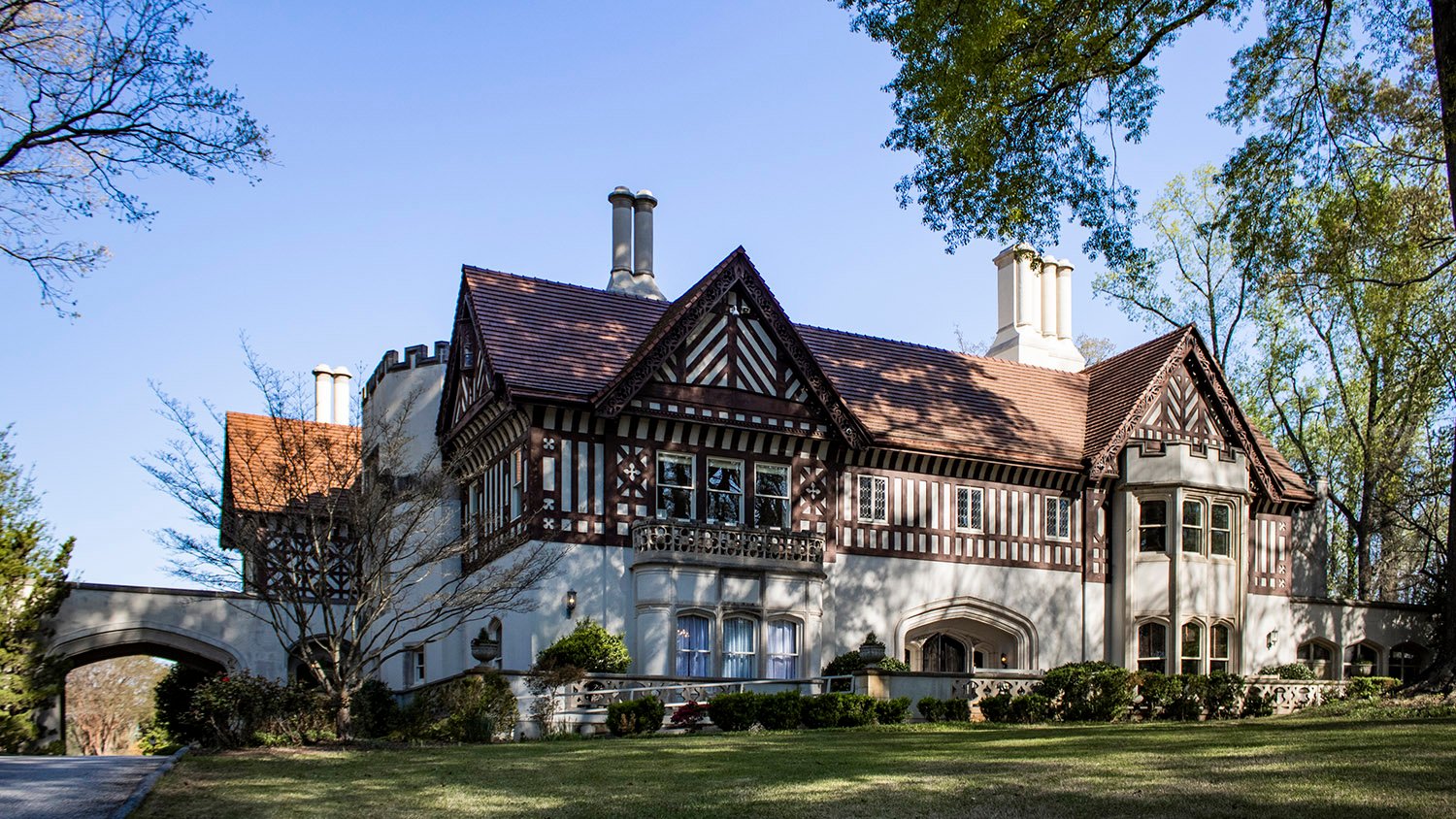
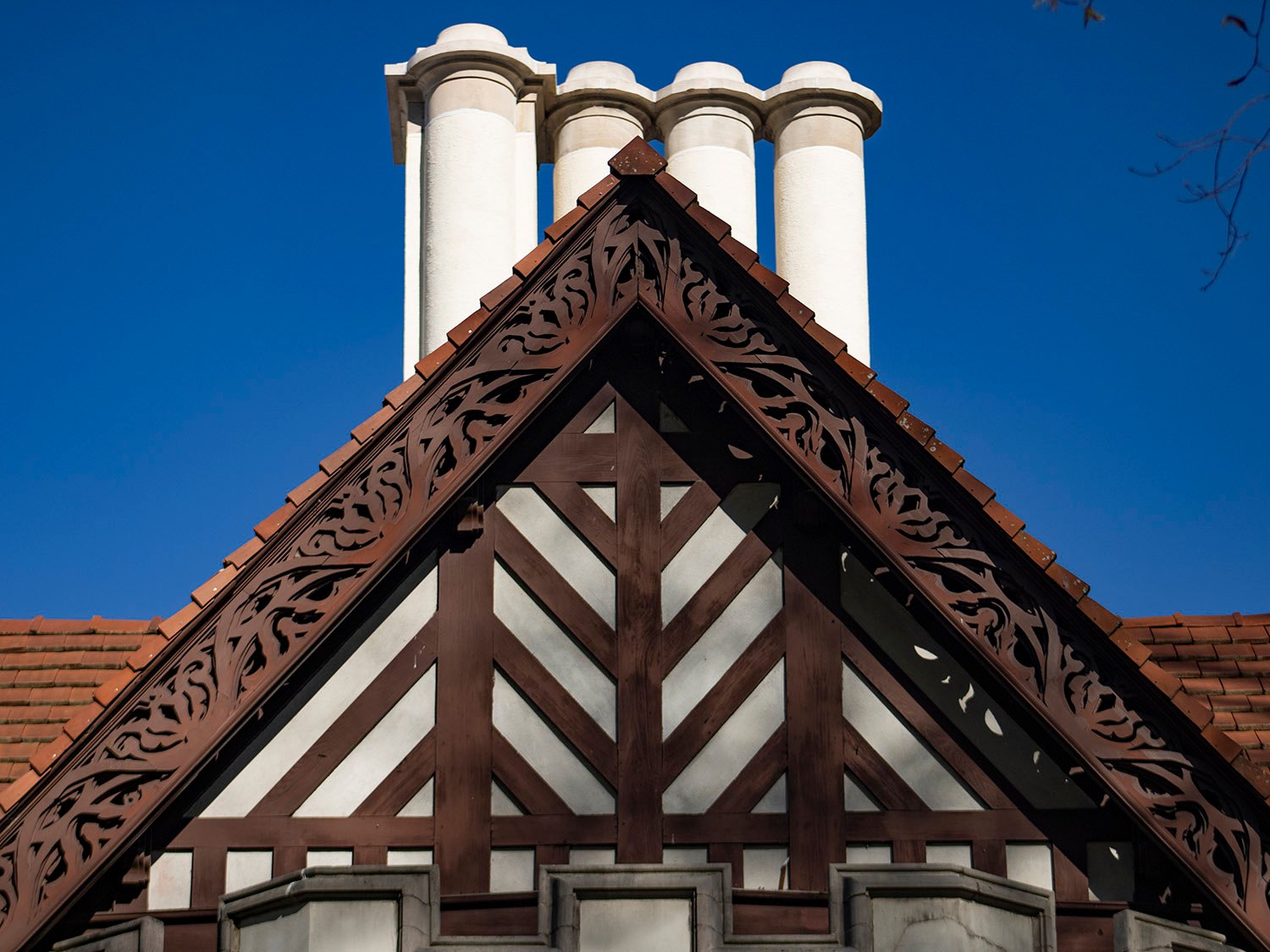
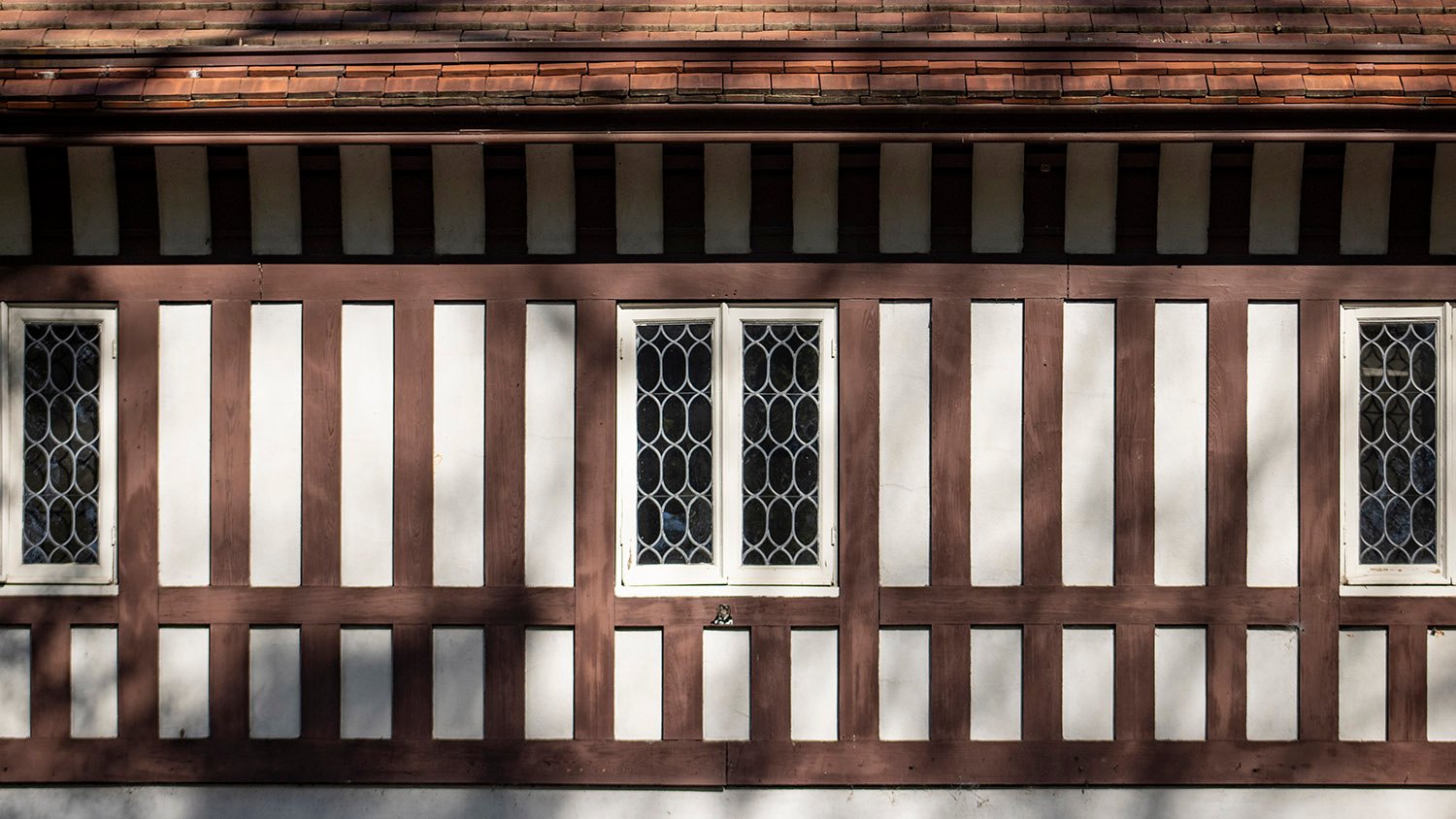
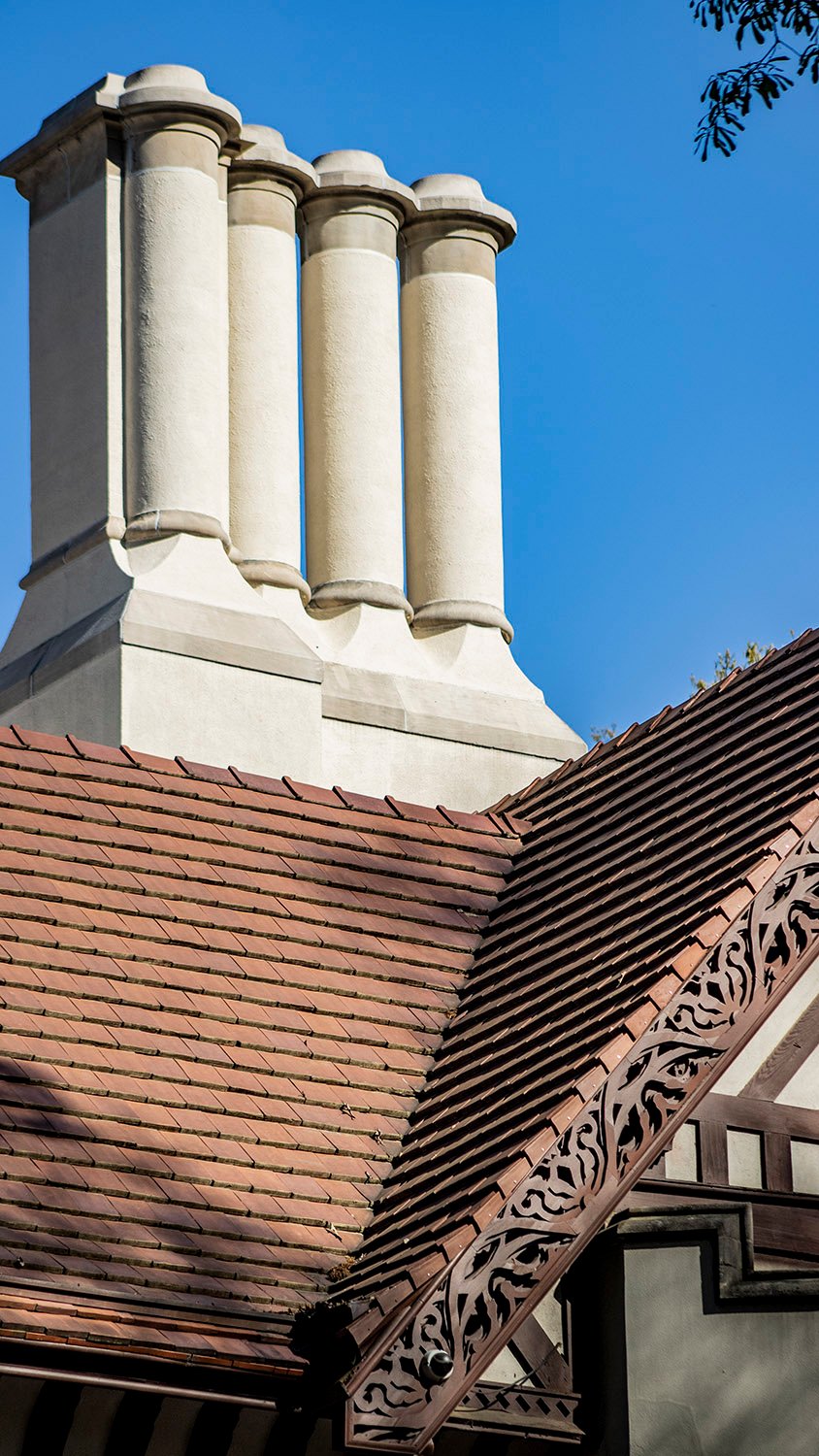
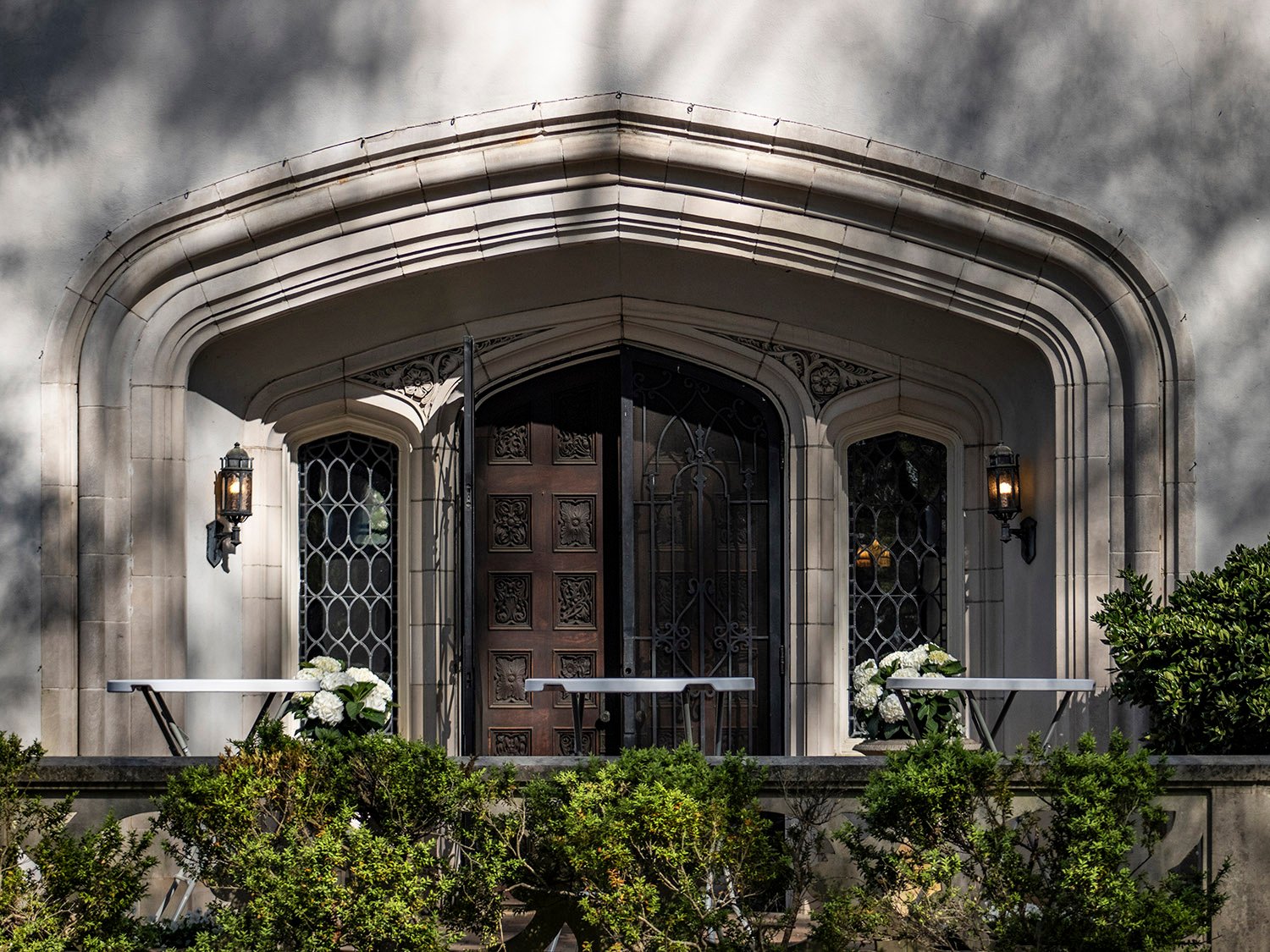
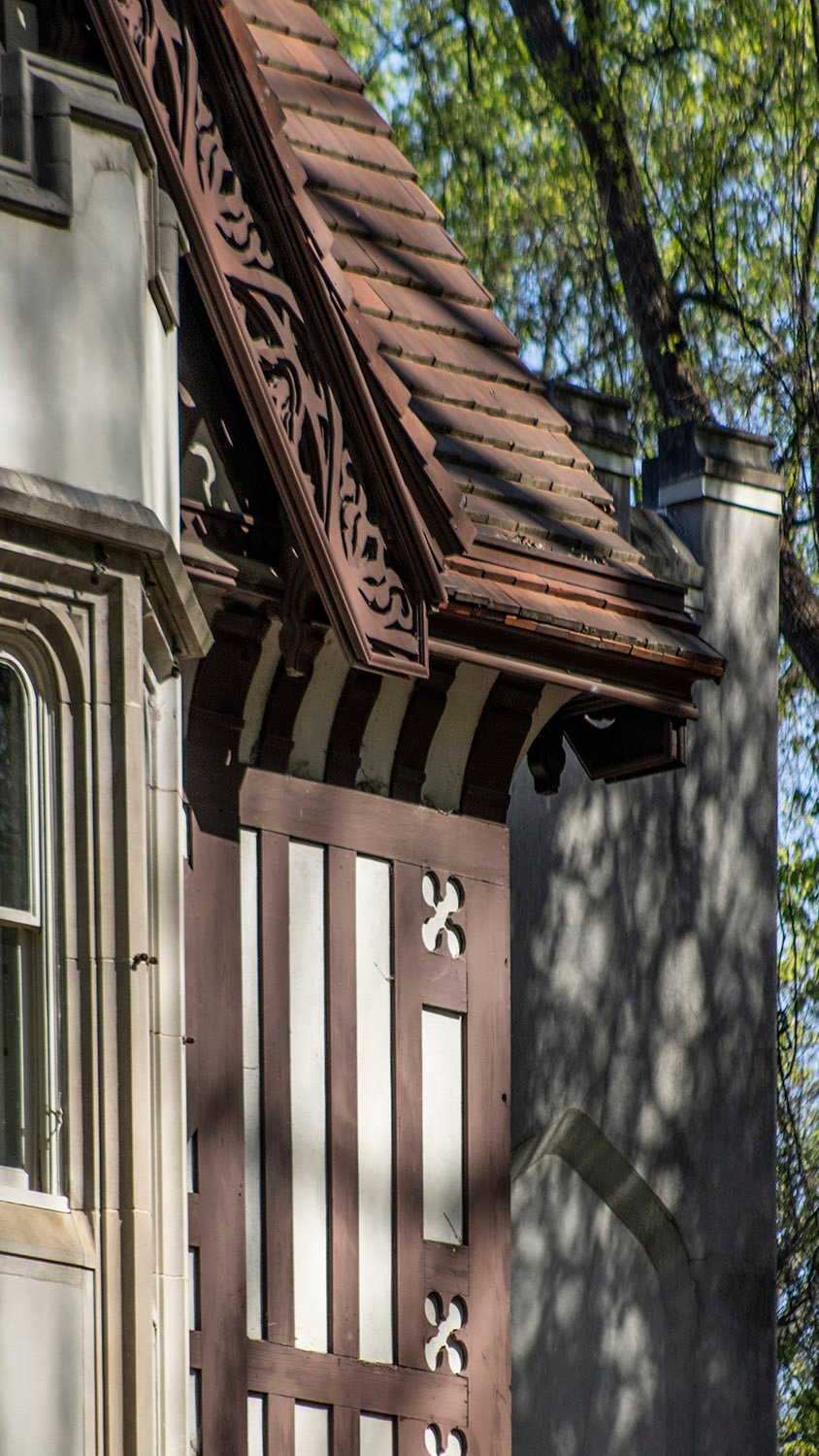
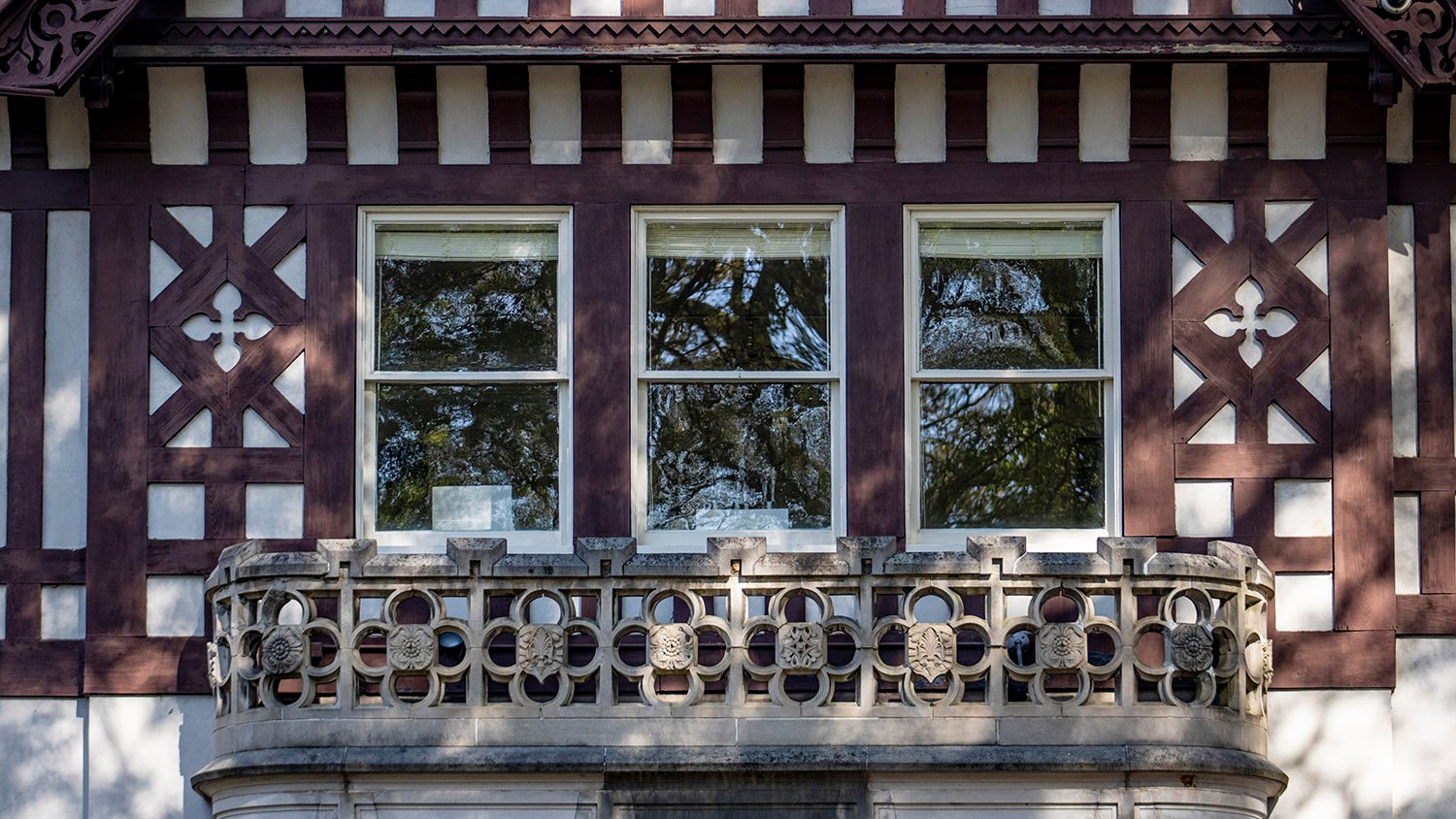
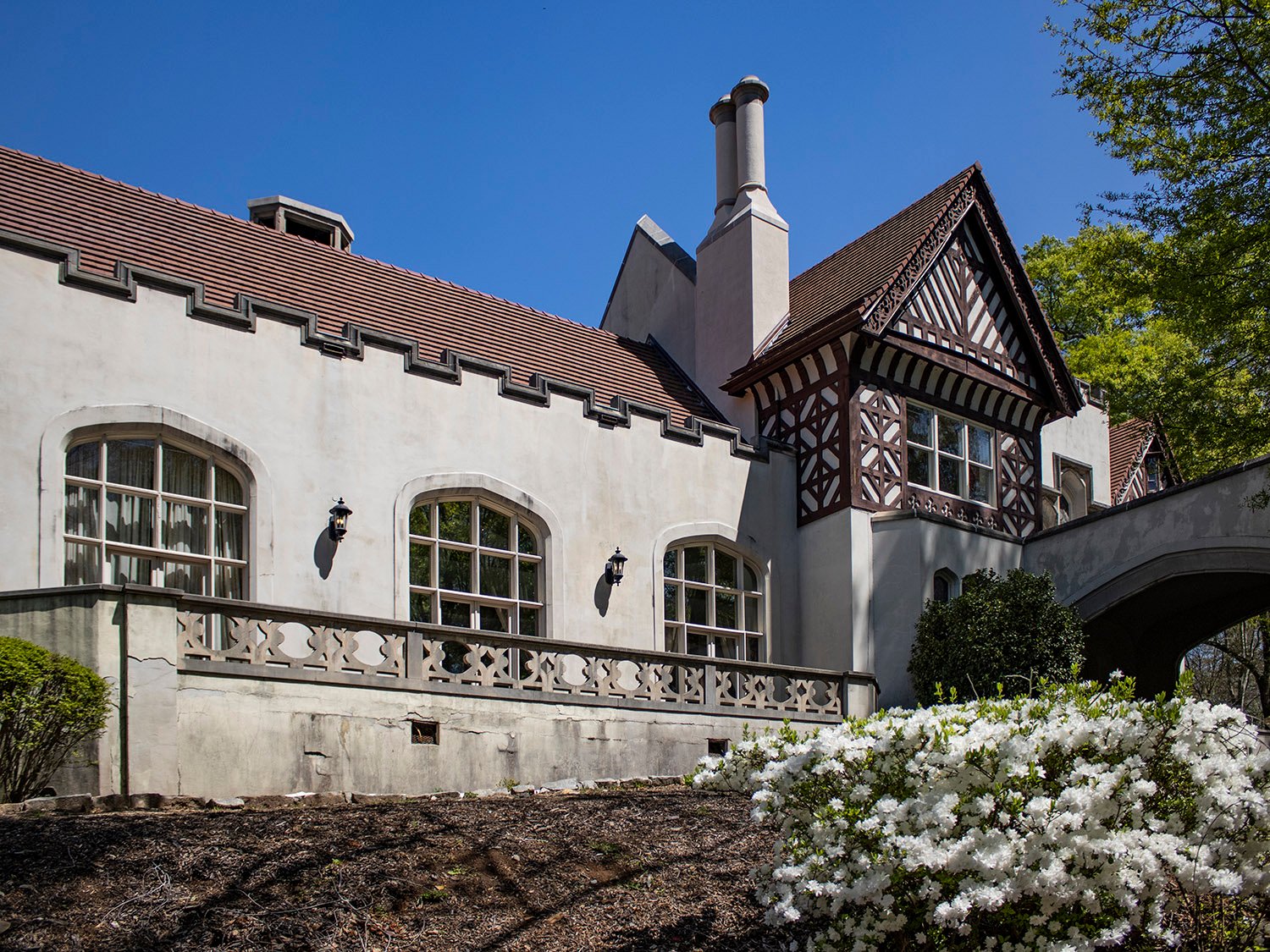
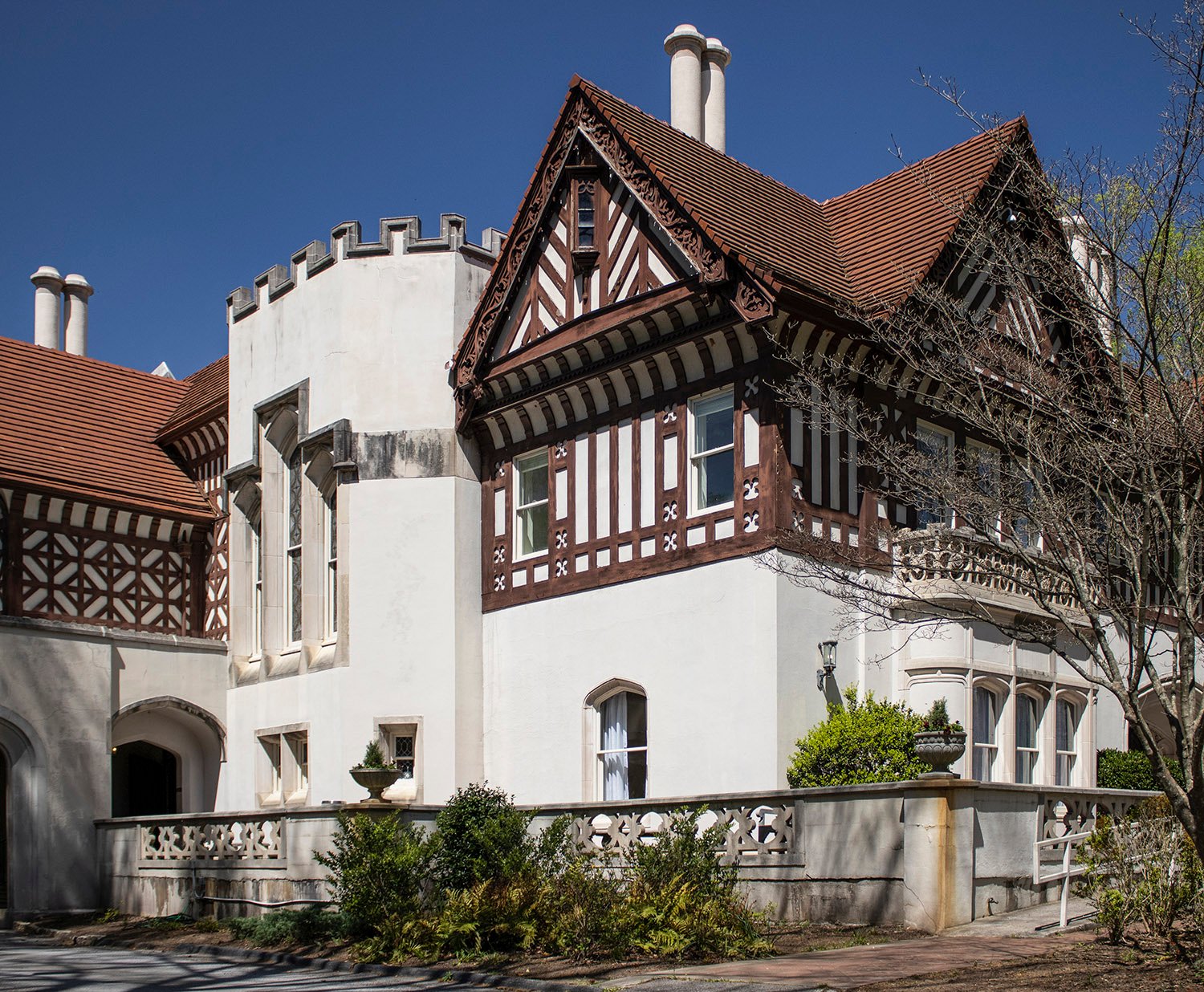
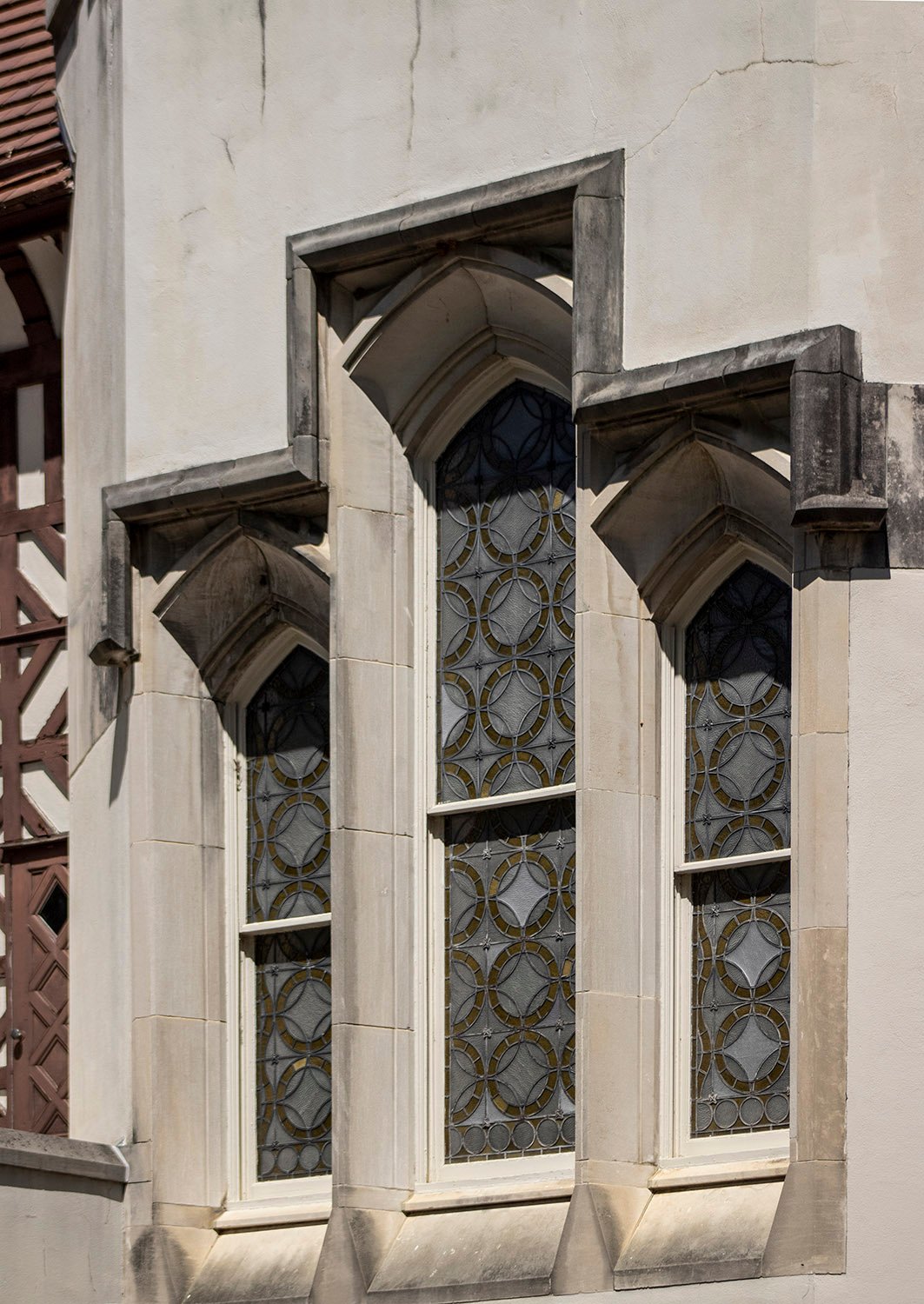
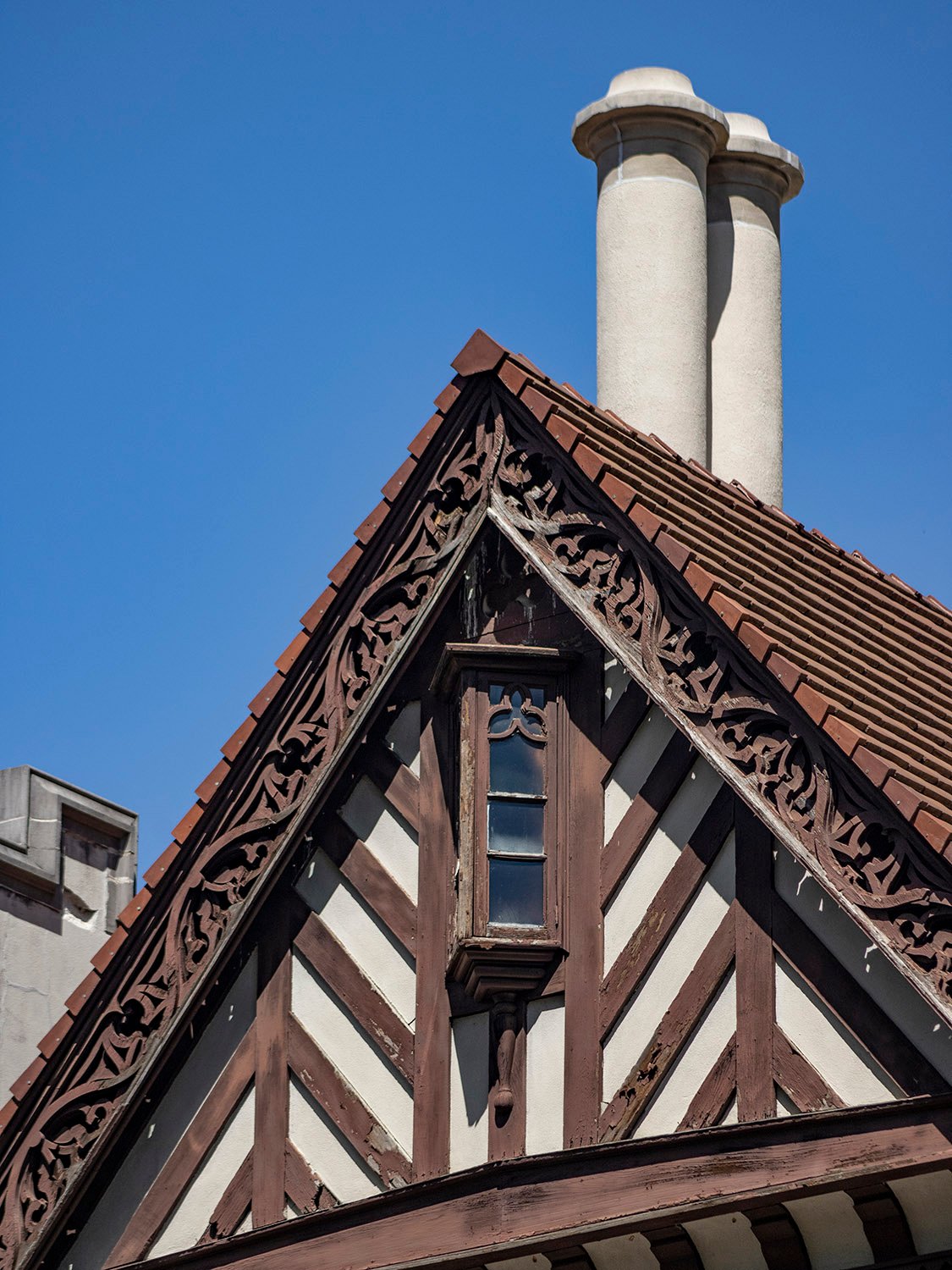
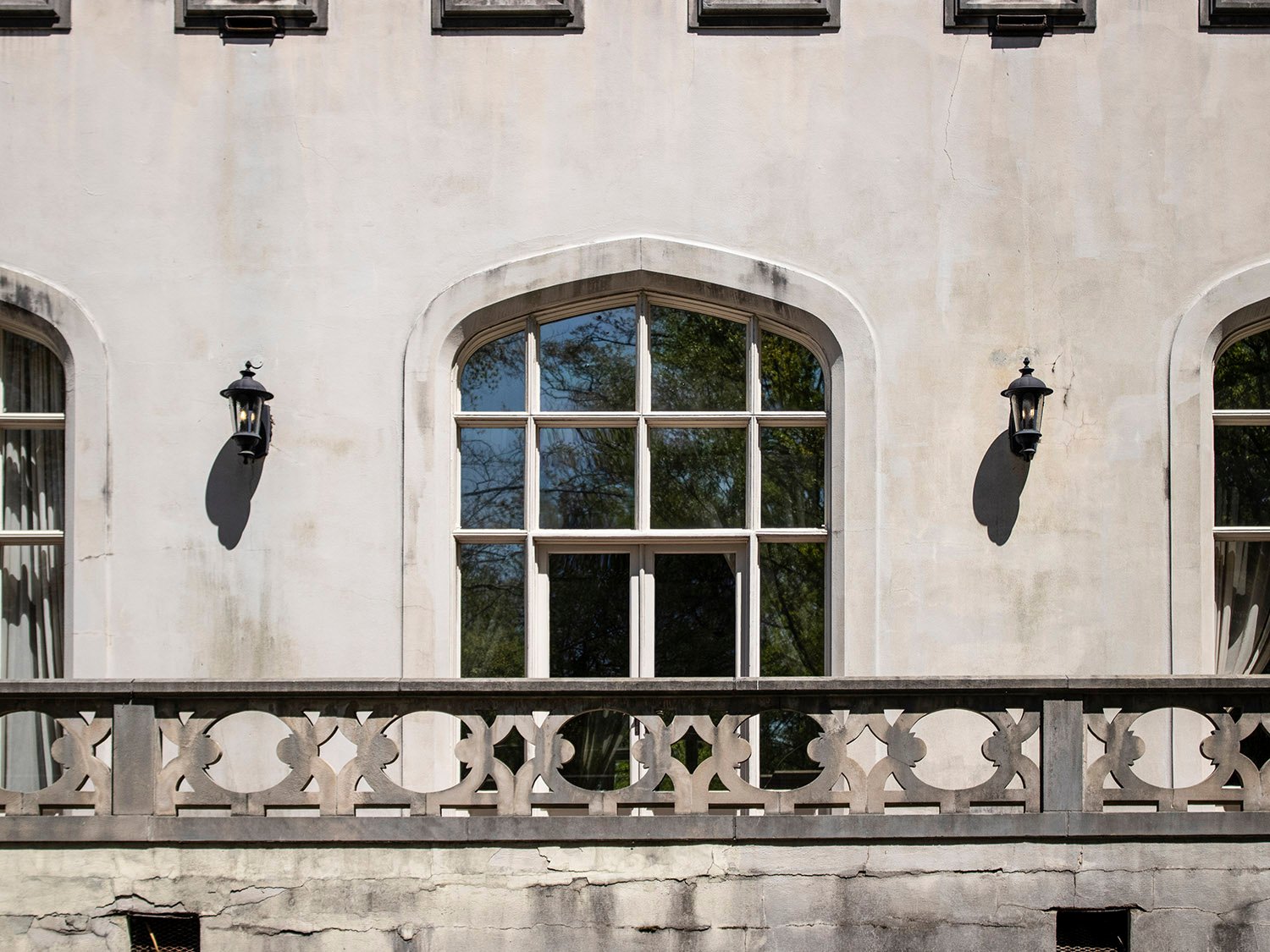
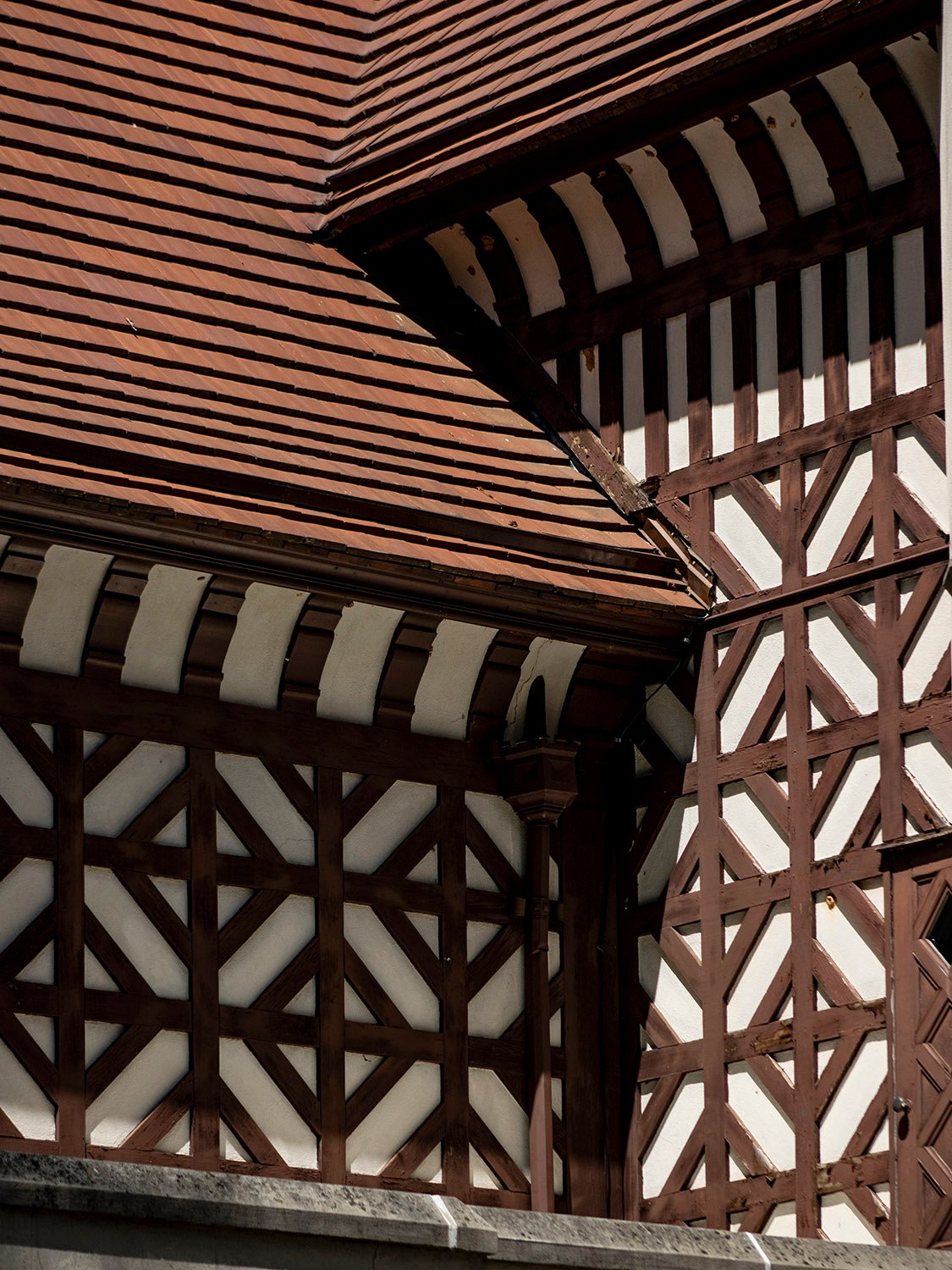
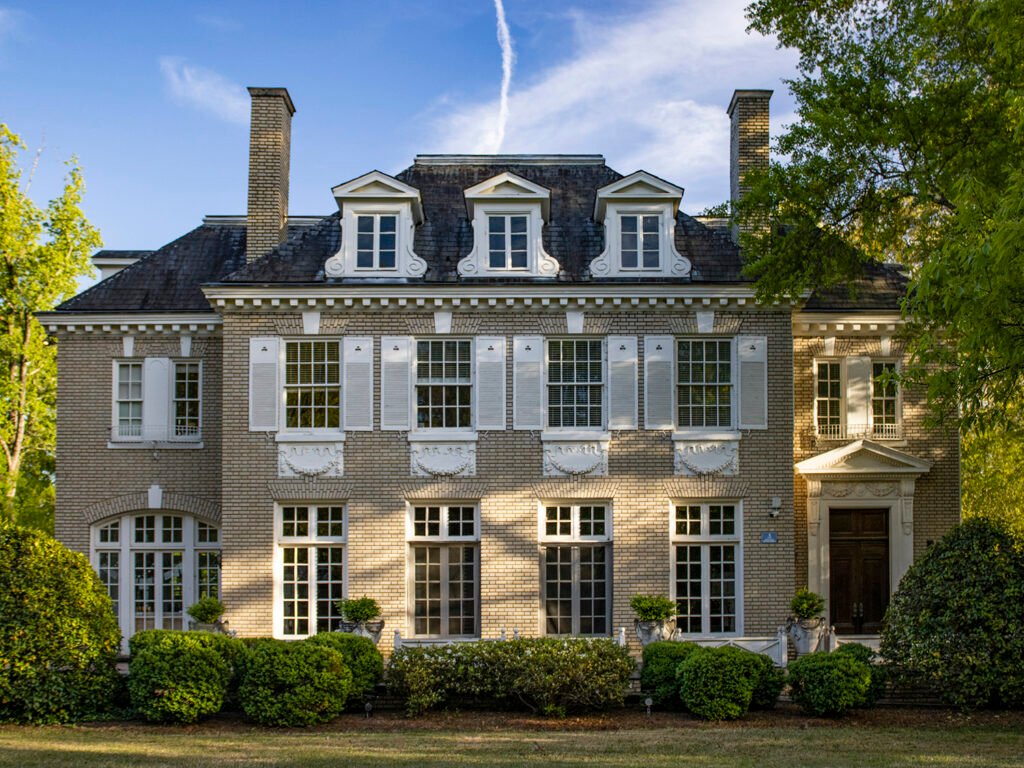
Henry Hornbostel.C. Howard Candler Residence, “Callanwolde” (1921). Druid Hills, Atlanta.12345Gable and chimney on the facade of Callanwolde, AtlantaSecond-floor windows and half-timbering on the facade of Callanwolde, AtlantaChimney and barge-board on the facade of Callanwolde, AtlantaFront entrance of Callanwolde, AtlantaHalf-timbering and strapwork ornament on the facade of Callanwolde, AtlantaSecond-floor windows and balcony on the facade of Callanwolde, AtlantaSouthwest elevation of Callanwolde, AtlantaLooking at Callanwolde from the westTriple window on the northwest elevation of Callanwolde, AtlantaGable and oriel window on the northwest elevation of Callanwolde, AtlantaFirst-floor windows and patio on the southwest elevation of Callanwolde, AtlantaStrapwork ornament on the southwest elevation of Callanwolde, Atlanta
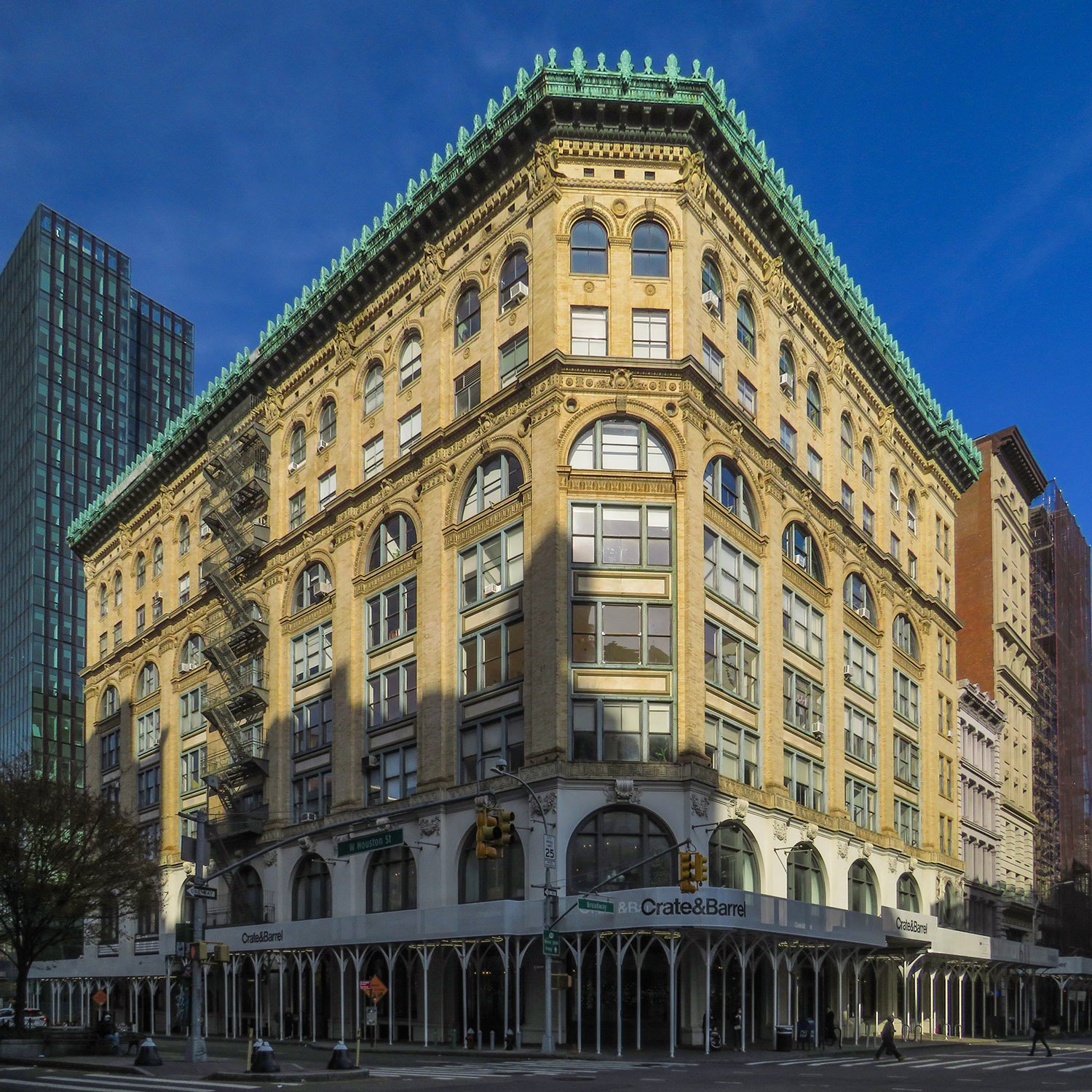
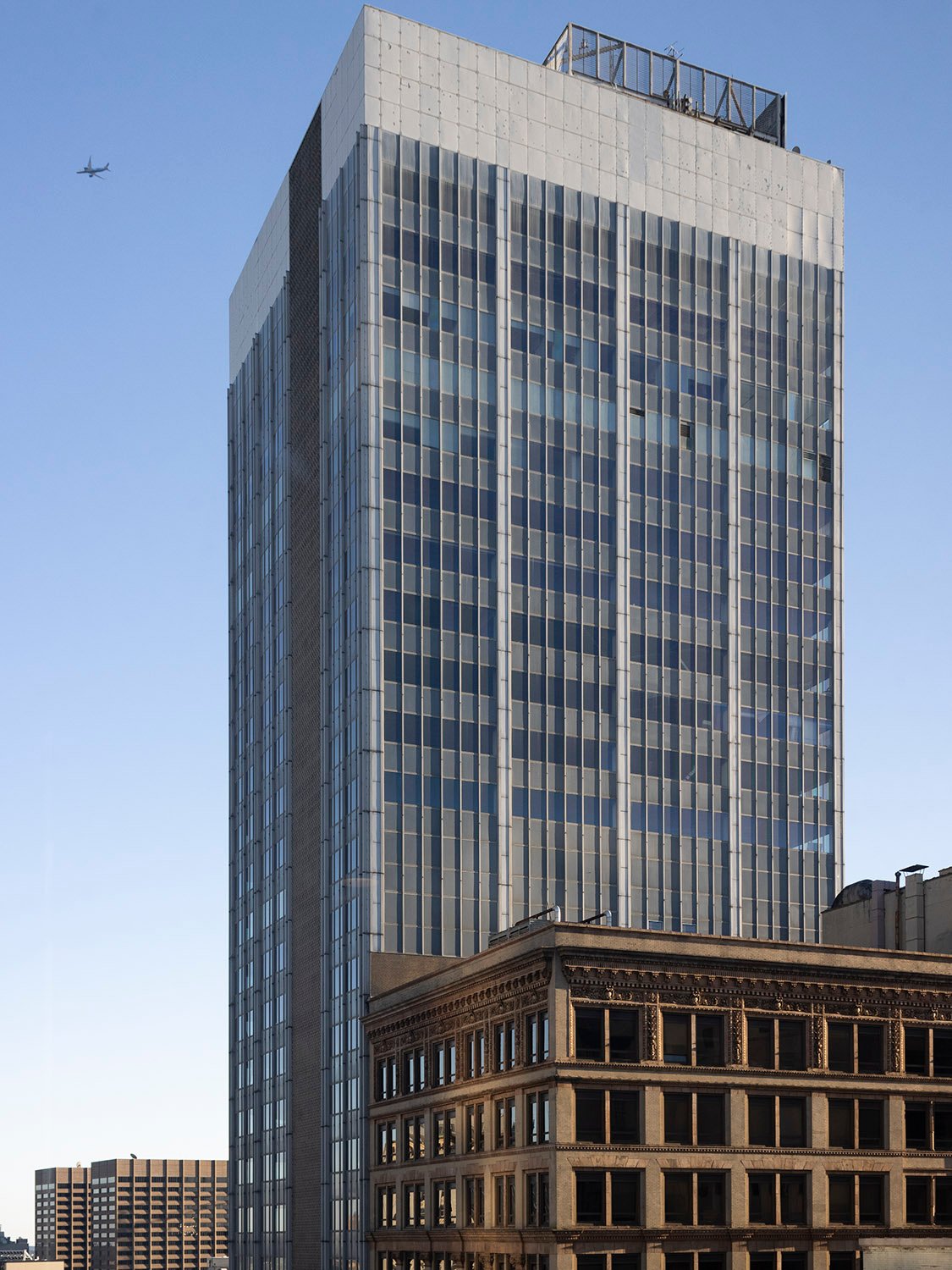
Stanford White of McKim, Mead & White. The Cable Building (1893). Greenwich Village, New York.
The Cable Building is one of my favorite New York structures, mostly because I have fond memories associated with it, including the quiet Thanksgiving morning when I took the picture shown above.
Completed around late 1893, this eight-story steel-framed building1 includes a full basement and fronts on Broadway, Houston, and Mercer Streets on the border of Greenwich Village and NoHo.
Location of the Cable Building
The Cable Building was designed for the Broadway & Seventh Avenue Railway Company by Stanford White of McKim, Mead & White,2 and is a very early example of the Beaux-Arts style.
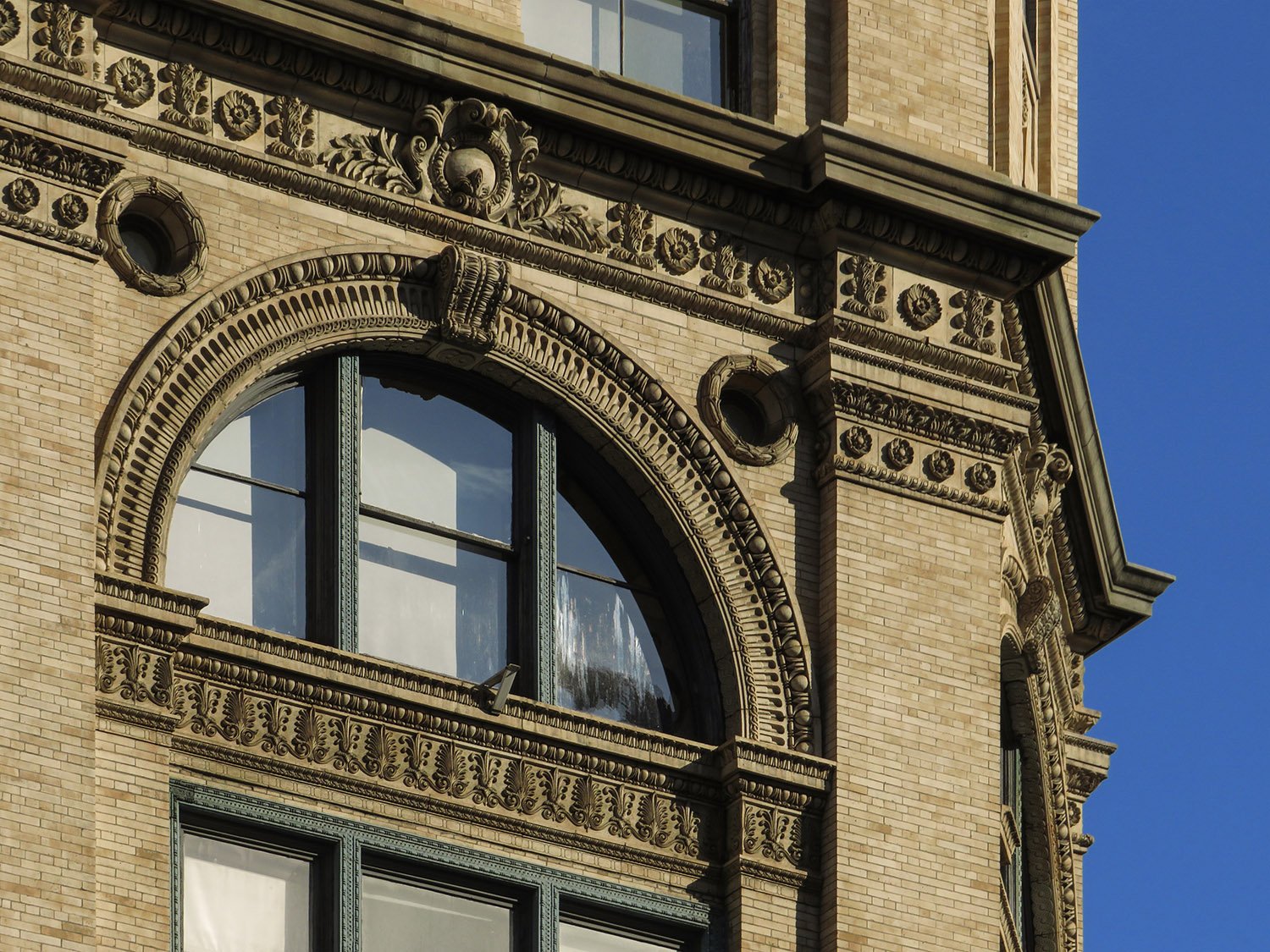
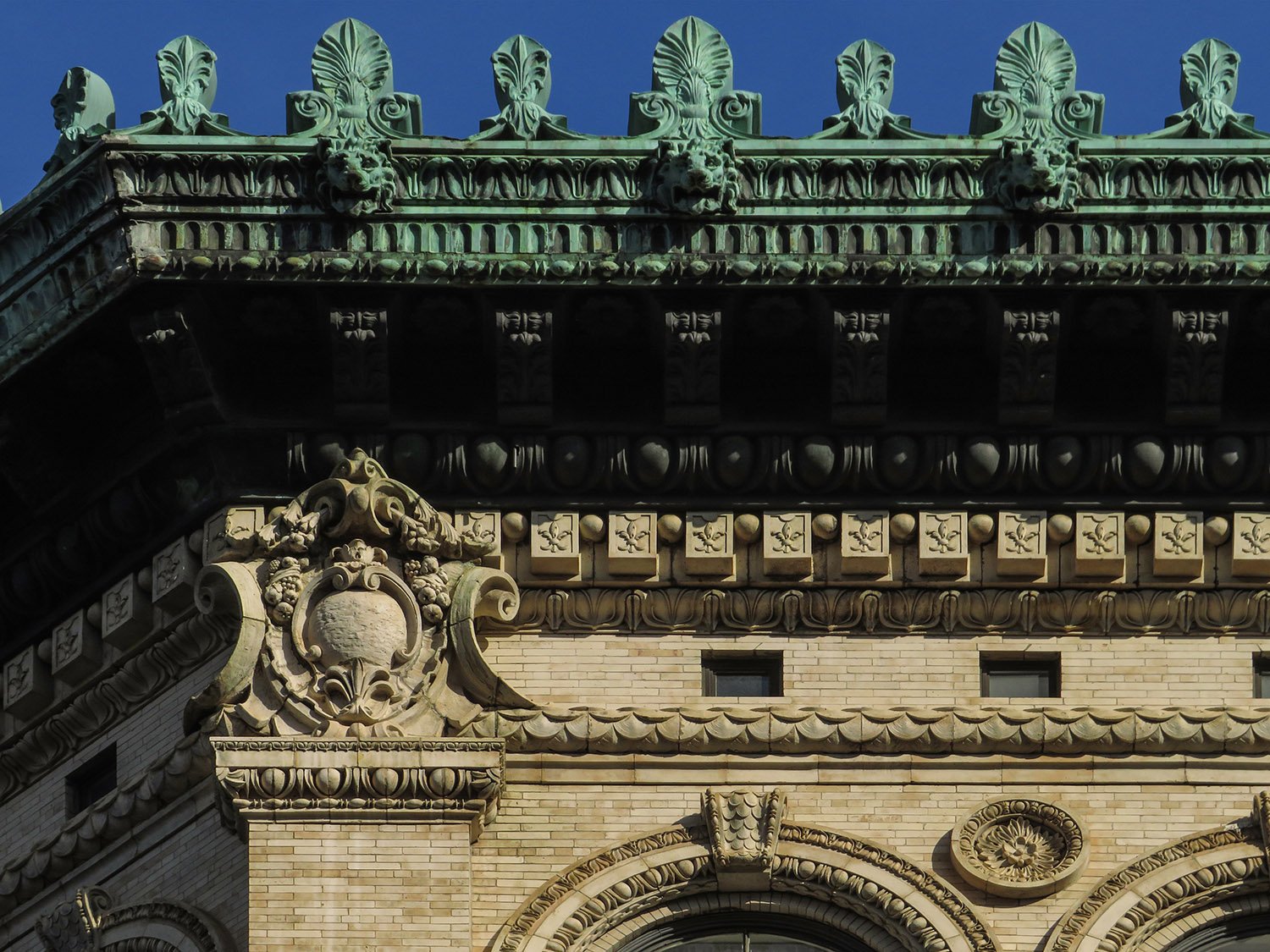
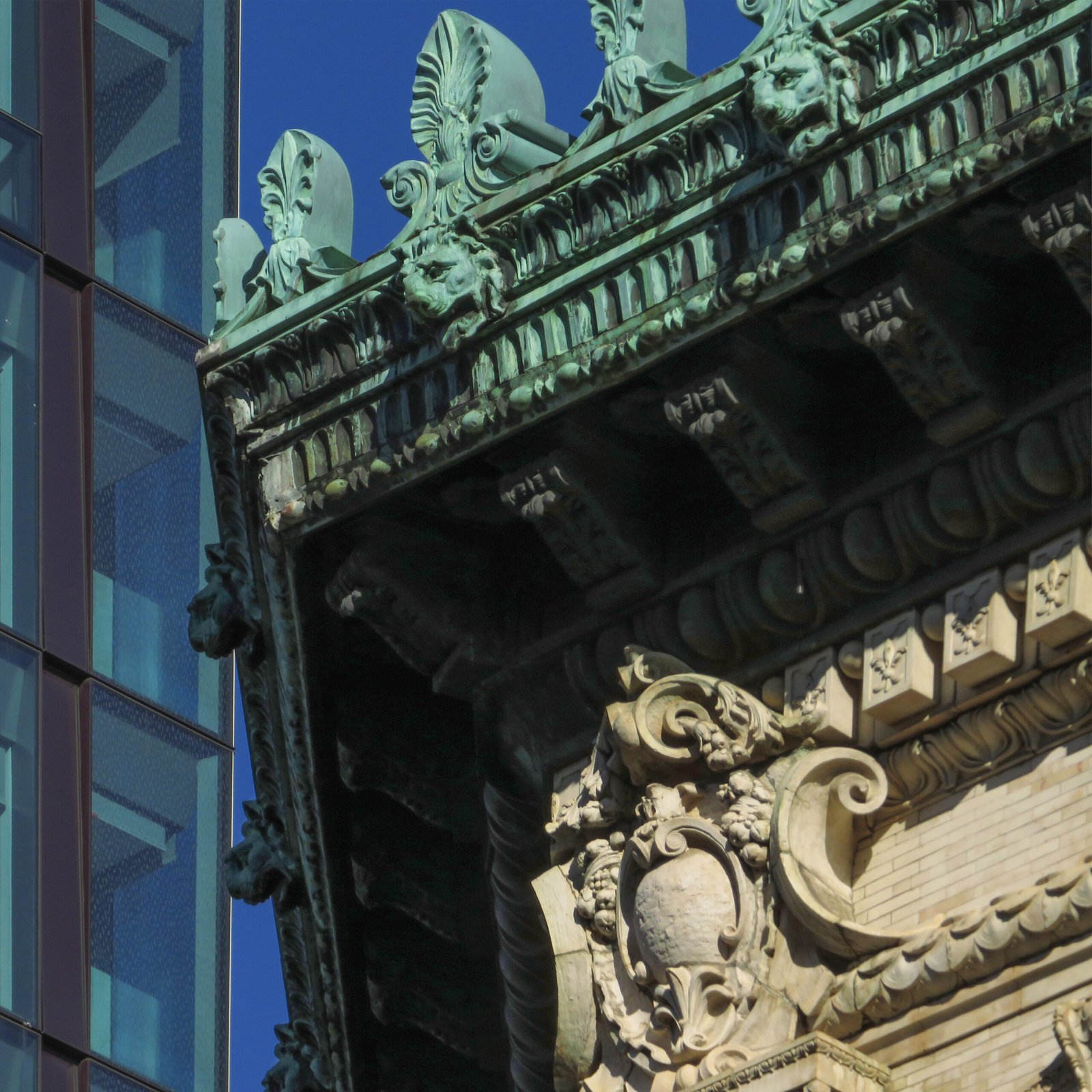
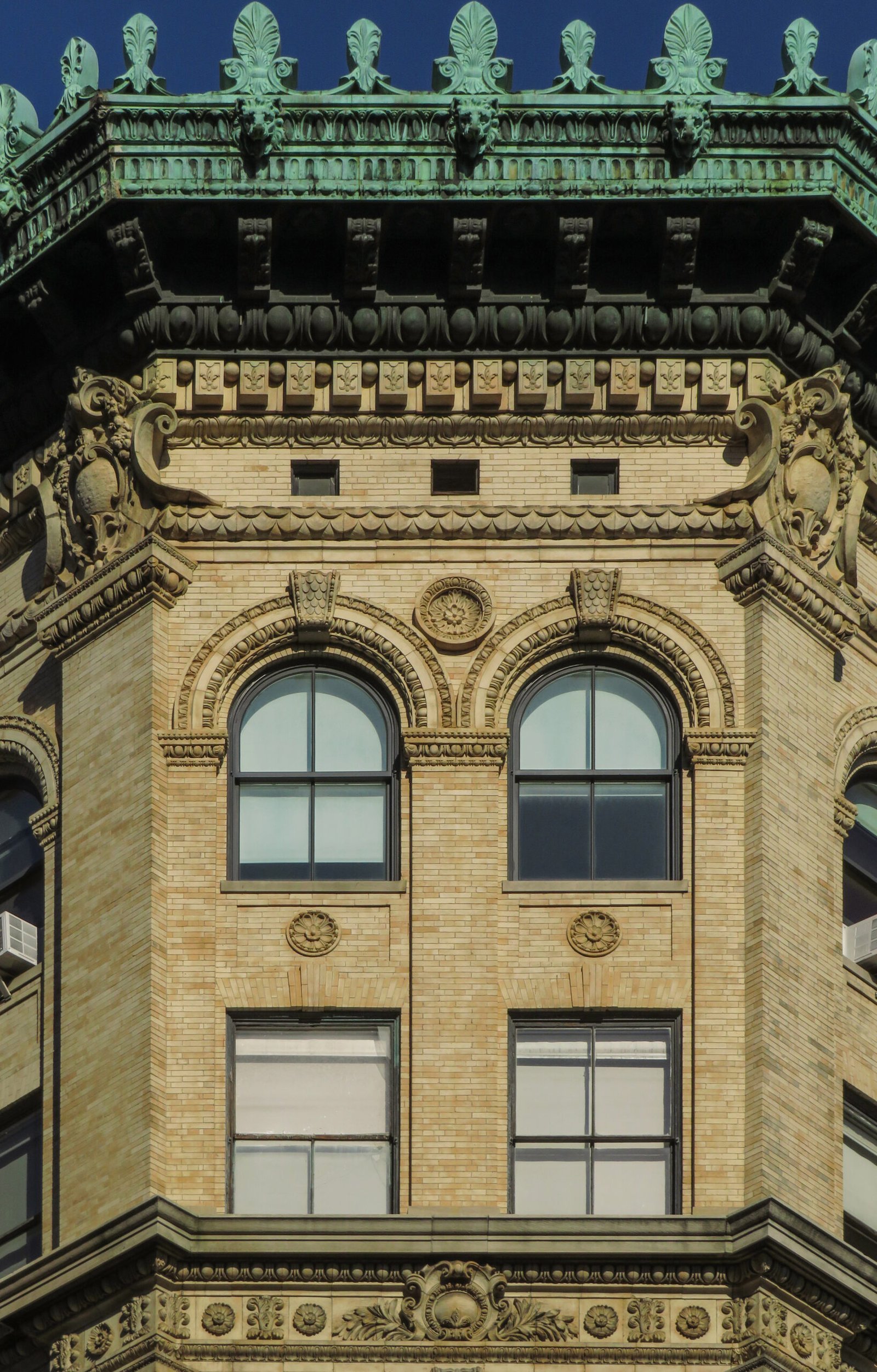
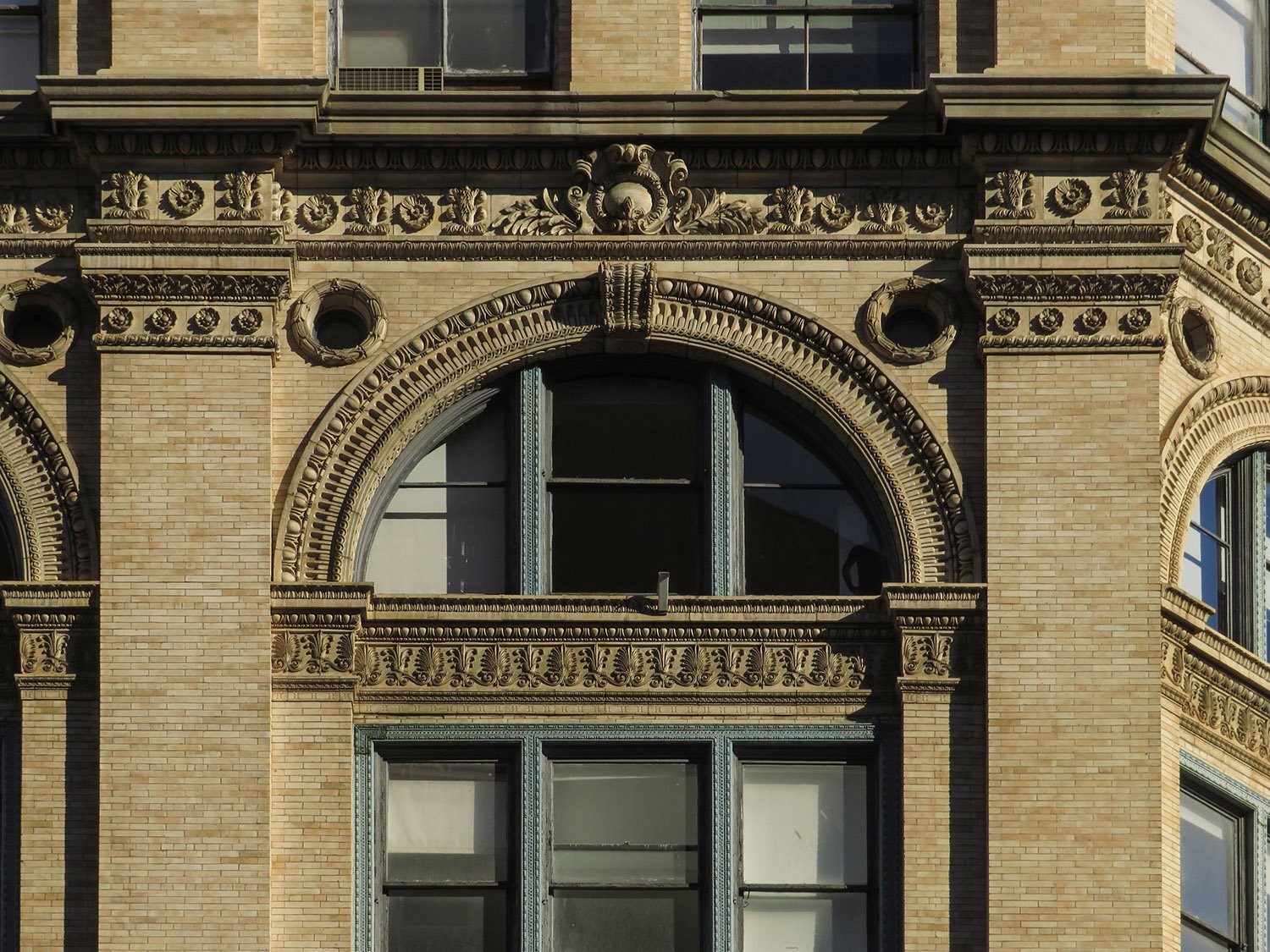
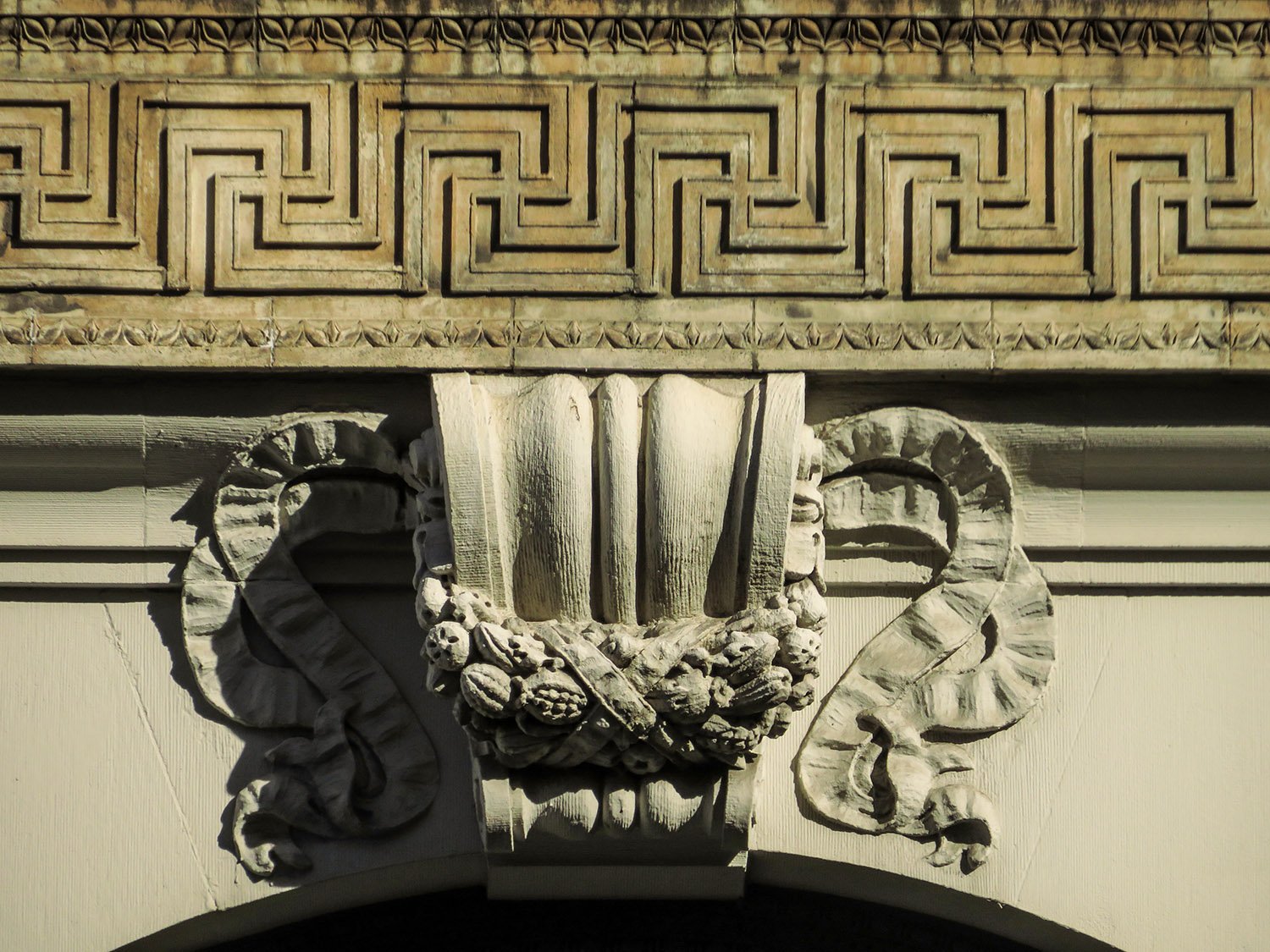
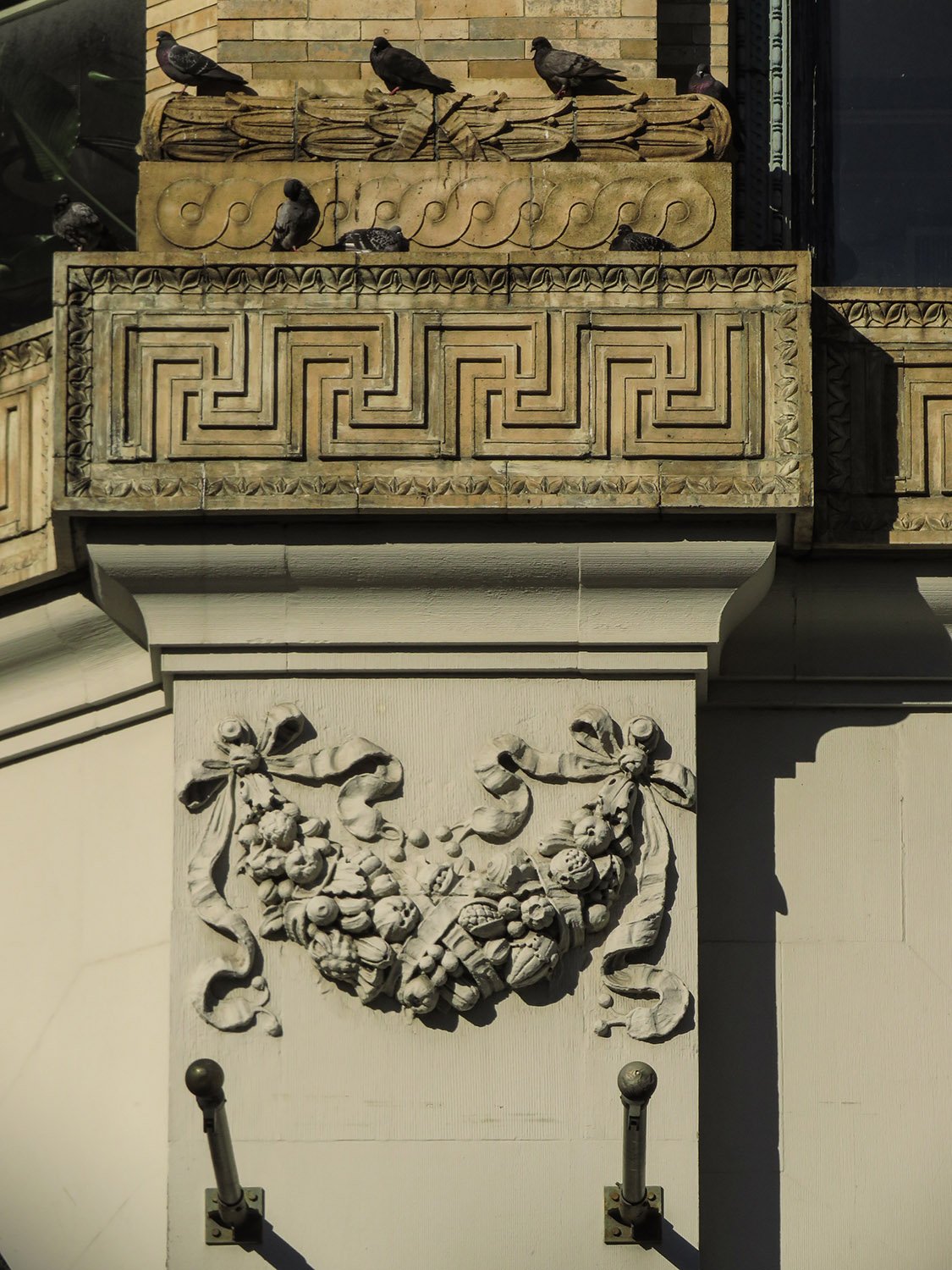
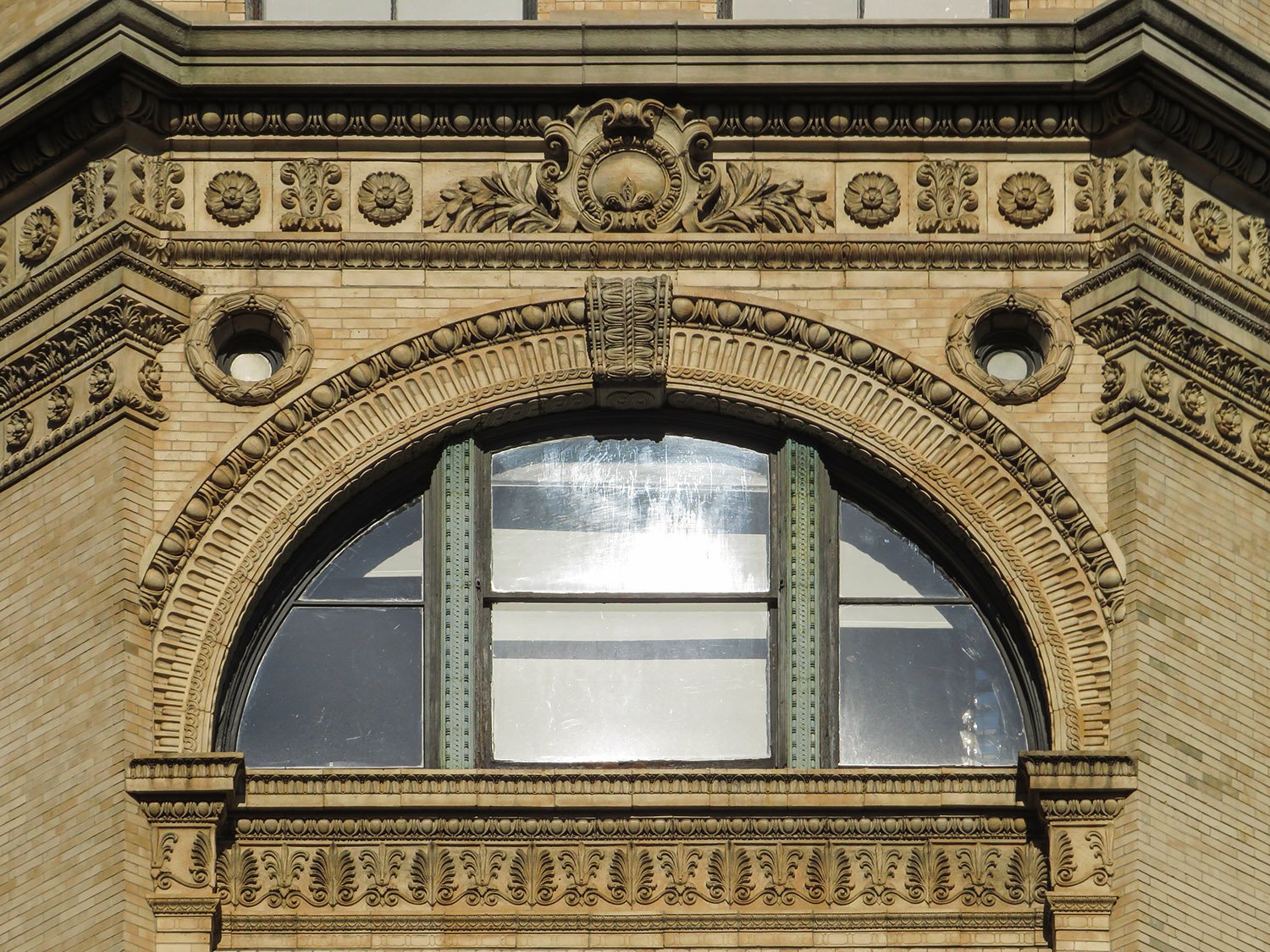
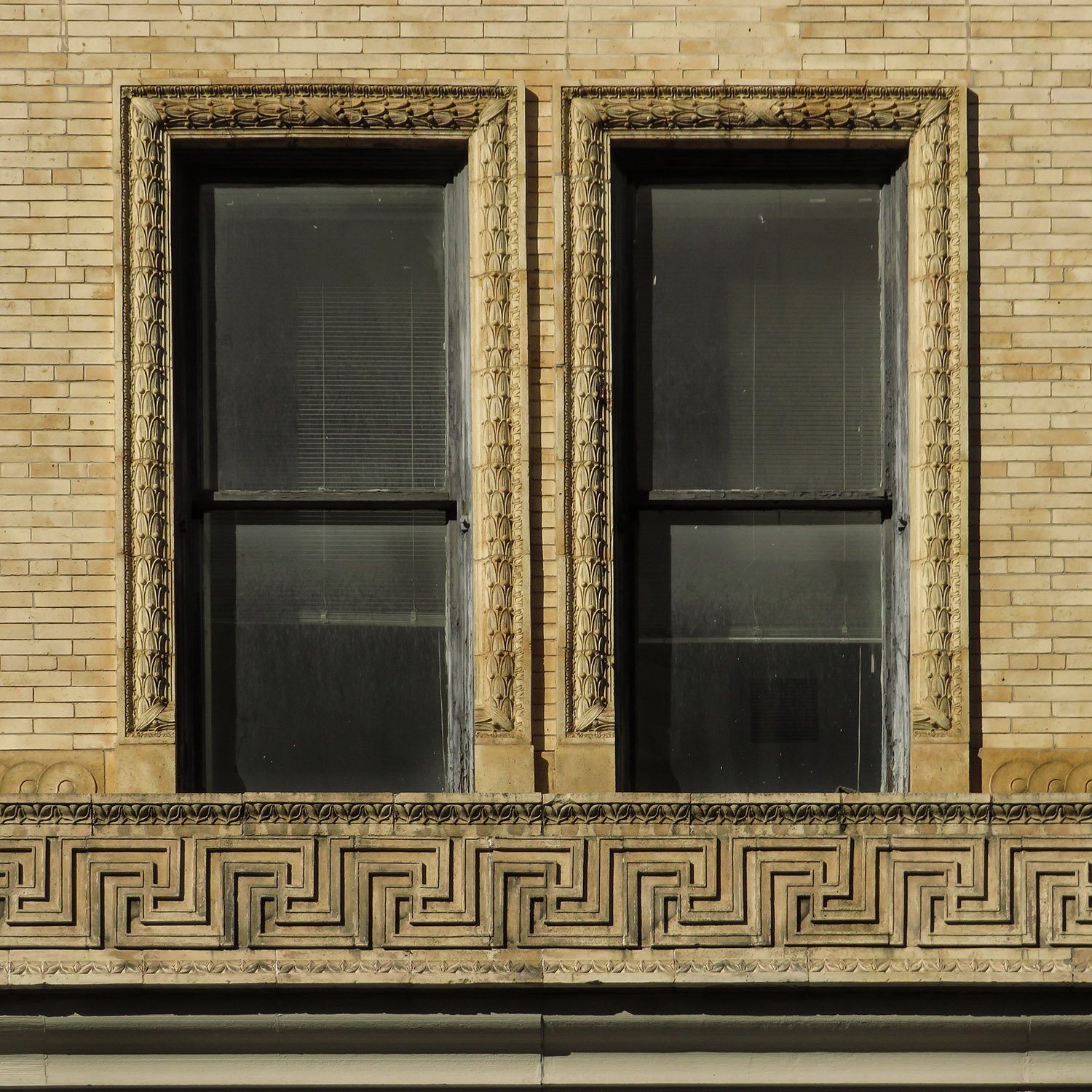
The building’s exterior was originally faced with Indiana limestone on the first and second floors, and the upper floors are covered in yellow brick and striking ornamental terracotta,3 topped by an elaborate copper cornice.
Southeast corner of the Cable Building, New York
Each floor encompasses nearly 20,000 square feet4 and encircles a central light court of more than 3,000 square feet.56 At its opening, the building’s first floor was designated for retail use, with the top three floors designed for offices and the middle floors reserved for warehouse space.7
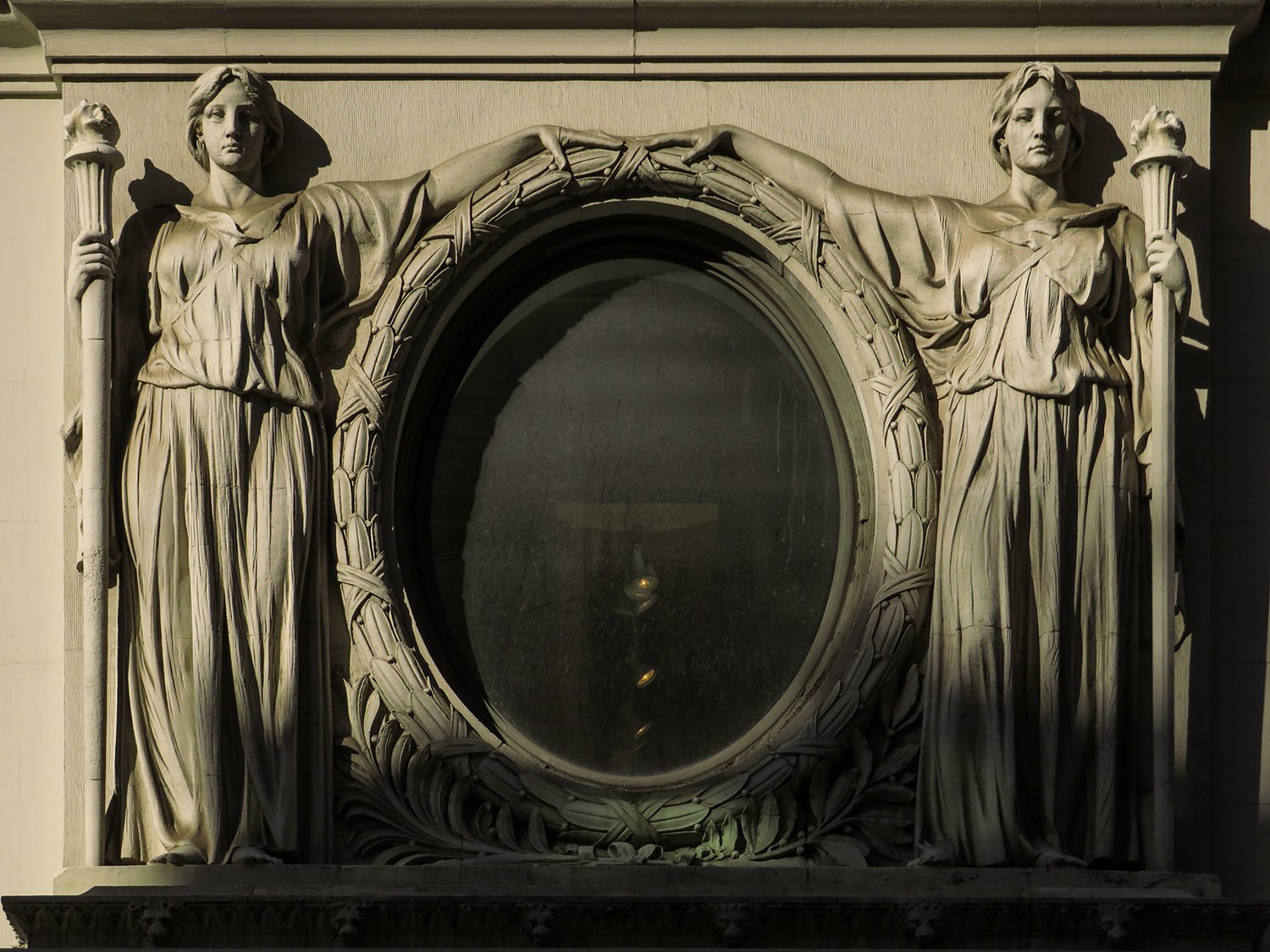
My favorite part of the exterior is the classically inspired sculpture of two robed women guarding the portico on the east facade, designed by J. Massey Rhind.8
J. Massey Rhind. Sculpture on the east facade of the Cable Building, New York.
That said, the building’s overall design isn’t White’s best: the chamfered corners temper the appearance of bulkiness and provide interesting focal points, but the many large windows on every side clutter the composition, making it look messy and overwrought.
What makes the Cable Building impressive, however, is that it was designed to conceal a power plant for the street railway company, effectively creating “a building within a building”.9
Reaching 46 feet below the street surface,10the building’s basement originally housed 550 tons of machinery that powered the company’s cable cars, including wheels measuring 32 feet in diameter and weighing 50 tons each.11
Cornice on the Cable Building, New York
The machinery has long since been removed, and today the Cable Building’s deep bowels house the Angelika Film Center, where there’s a chance you may find me some late evening, watching an indie flick as nearby subway trains rumble past.
Gallery
Cornice and terracotta ornamentation on the Cable Building, New YorkChamfered corner bay on the facade of the Cable Building, New YorkFifth and sixth-floor windows on the Cable Building, New YorkTerra cotta keystone and stringcourse on the Cable Building, New YorkStringcourse, pilaster, and terracotta ornamentation on the Cable Building, New YorkArched window on the sixth floor of the Cable Building, New YorkDouble windows on the third floor of the Cable Building, New York
References
“The Cable Building.” The New York Times, December 19, 1893, p. 9. ↩︎
Baker, Paul R.Stanny: The Gilded Life of Stanford White. New York: The Free Press (1989), pp. 213-14. ↩︎
“The Cable Building.” The New York Times, December 19, 1893, p. 9. ↩︎
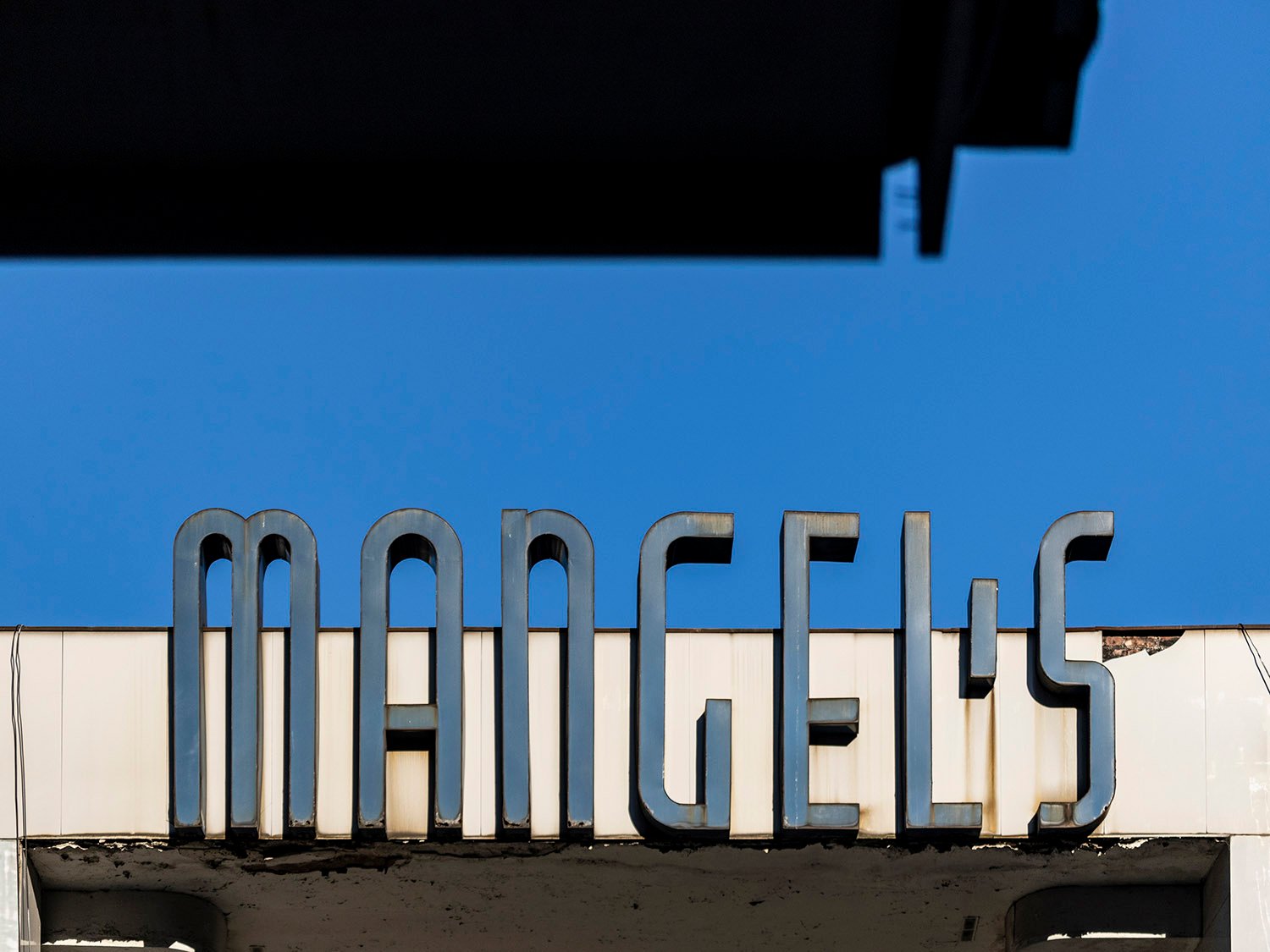
This sign at 74 Peachtree Street in Atlanta (previously 74 Whitehall Street) likely debuted with the Mangel’s store, which opened in May 19461 in a portion of the two surviving floors from the former Hirsch Building.2
Location of Mangel’s
Mangel’s was a New York-based retail chain3 that billed itself as “your headquarters for smart apparel at budget-saving prices,”4 and the Whitehall store was its second Atlanta location, with its first store in the city opening in 1919.5
Mangel’s operated at this location for decades, but seems to have quietly closed sometime after 1988.6
References
Advertisement. The Atlanta Journal, May 24, 1946, p. 10. ↩︎
“Realty Trades”. The Atlanta Constitution, August 24, 1935, p. 4. ↩︎
“Anniversary Sale At Mangel Store First Of Its Kind”. The Atlanta Journal, May 3, 1929, p. 31. ↩︎
Advertisement. The Atlanta Journal, May 24, 1946, p. 10. ↩︎
“Anniversary Sale At Mangel Store First Of Its Kind”. The Atlanta Journal, May 3, 1929, p. 31. ↩︎
“Retail Management” (advertisement). The Atlanta Journal and Constitution, October 2, 1988, p. 80-P. ↩︎
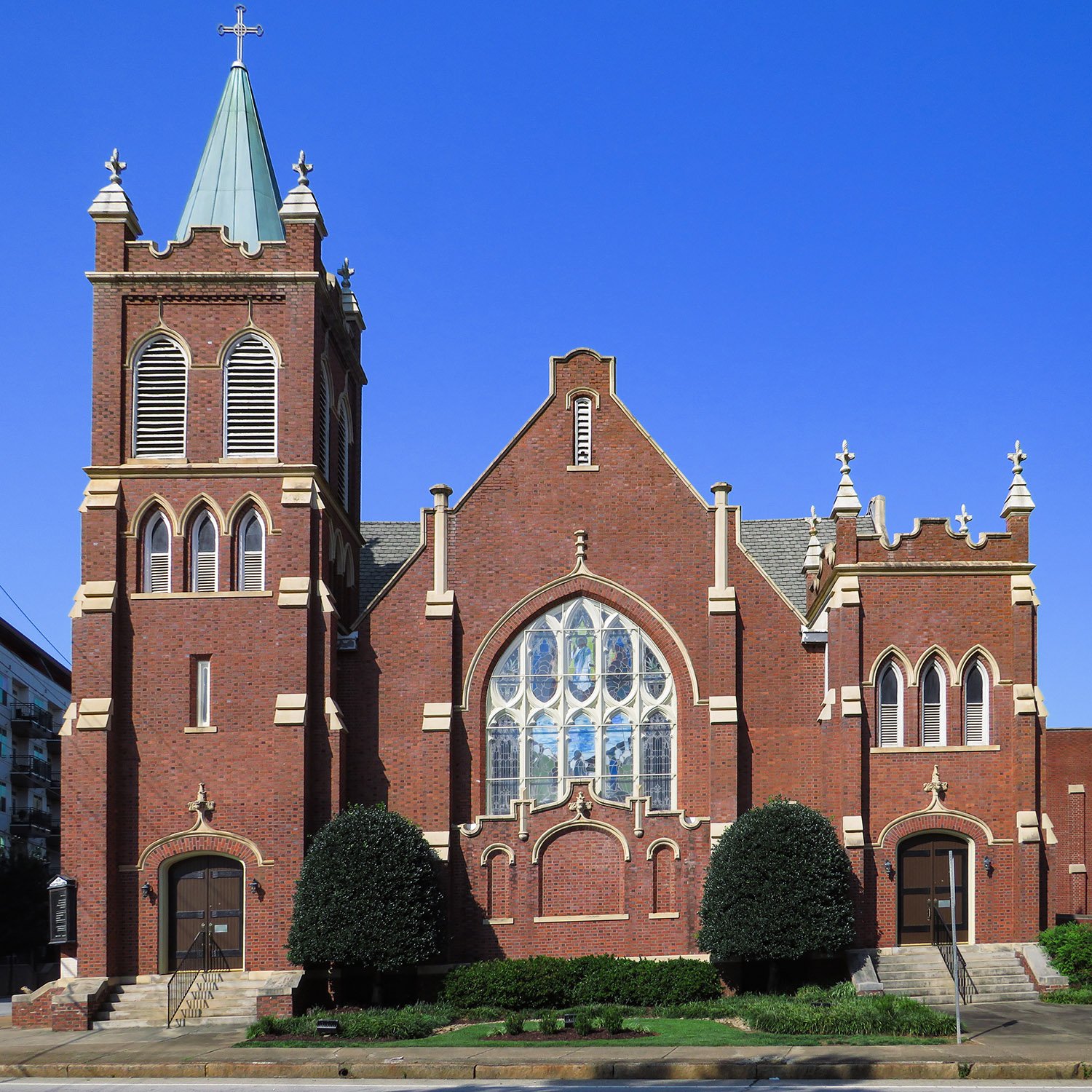
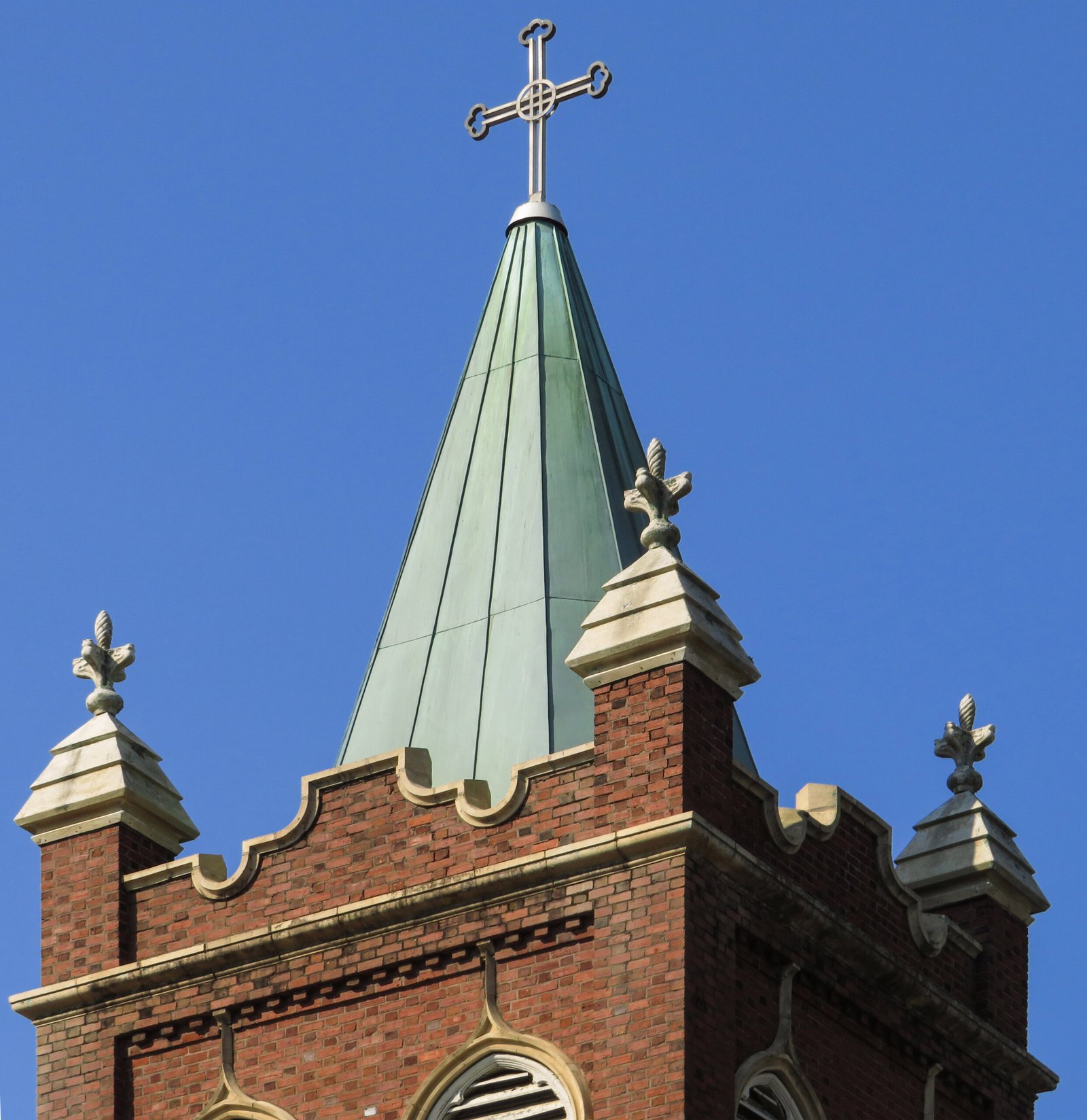
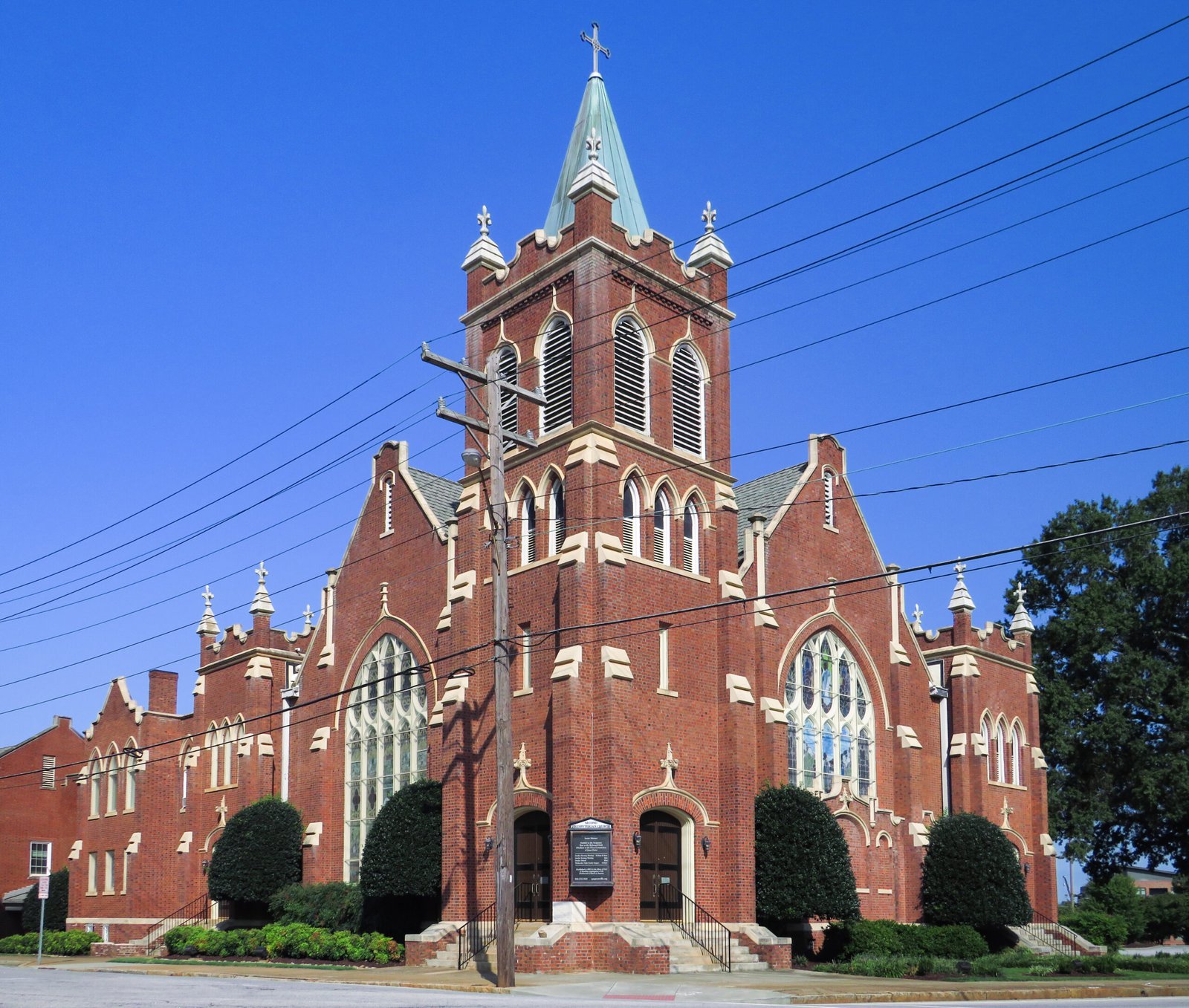
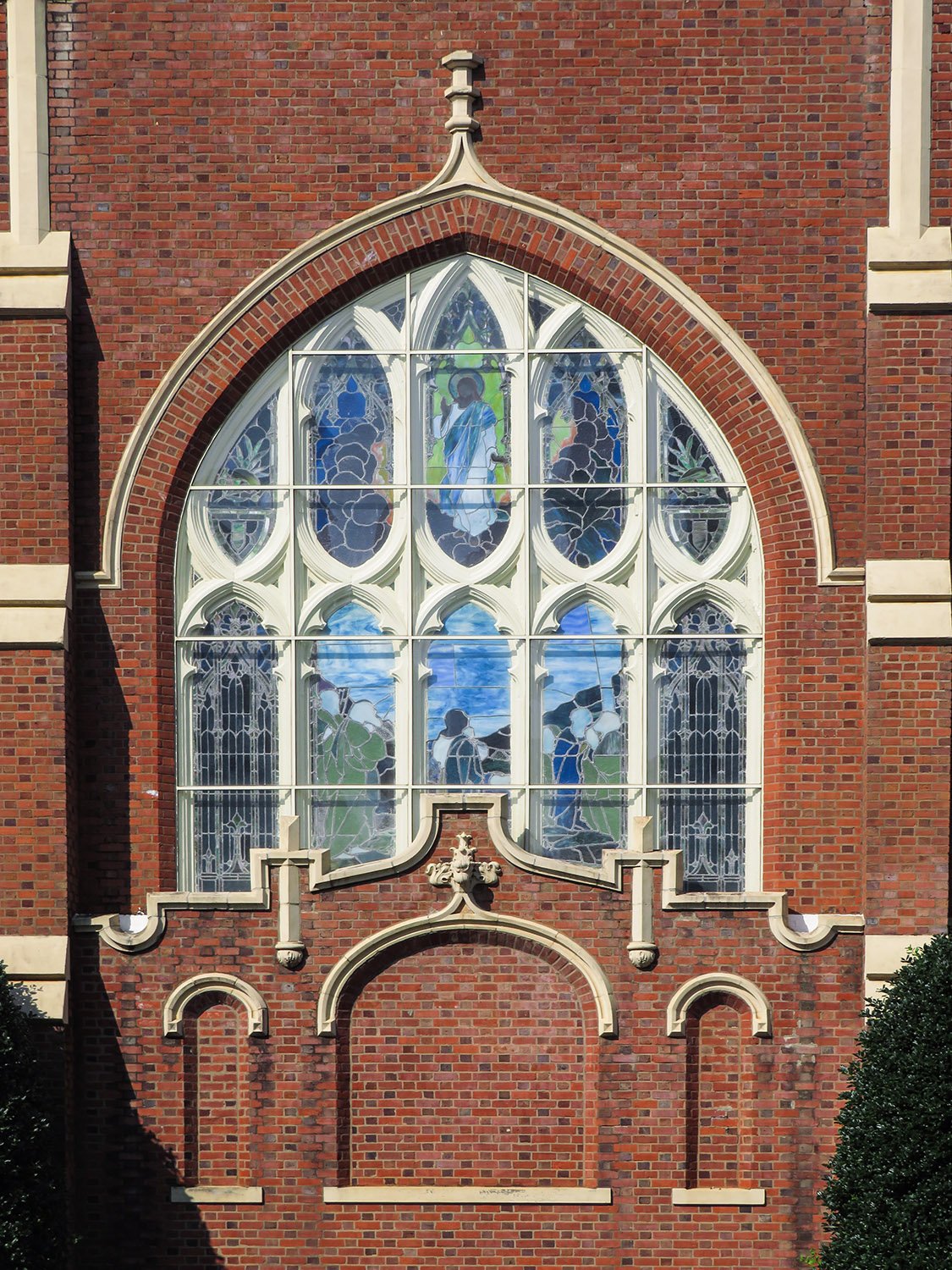
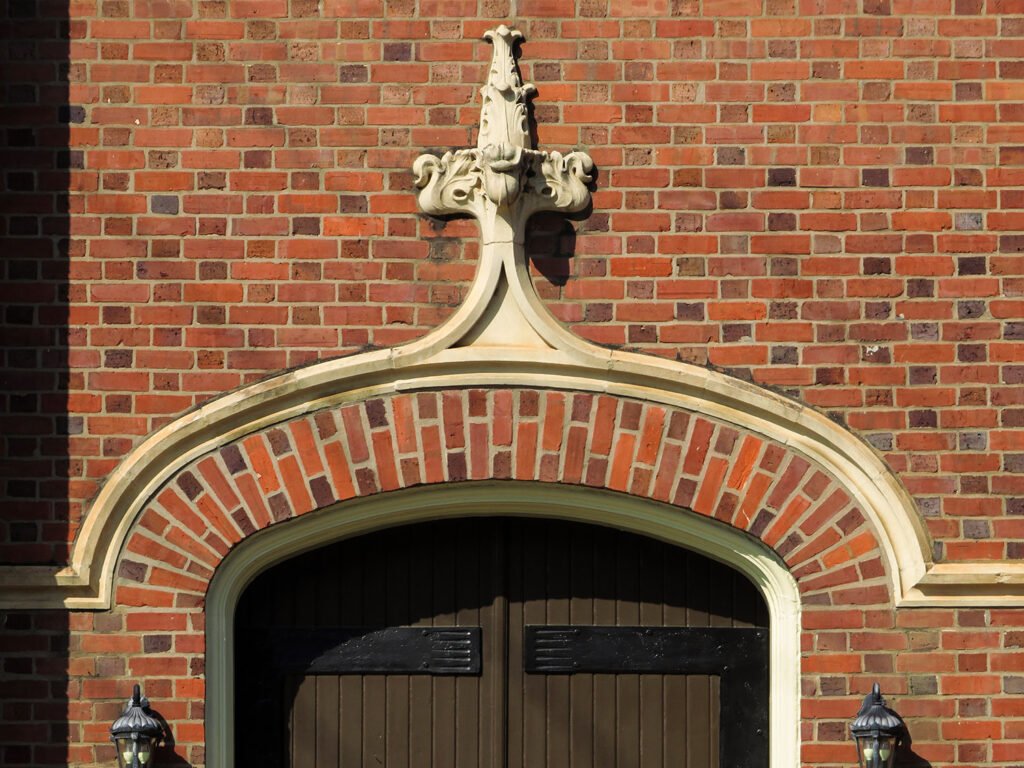
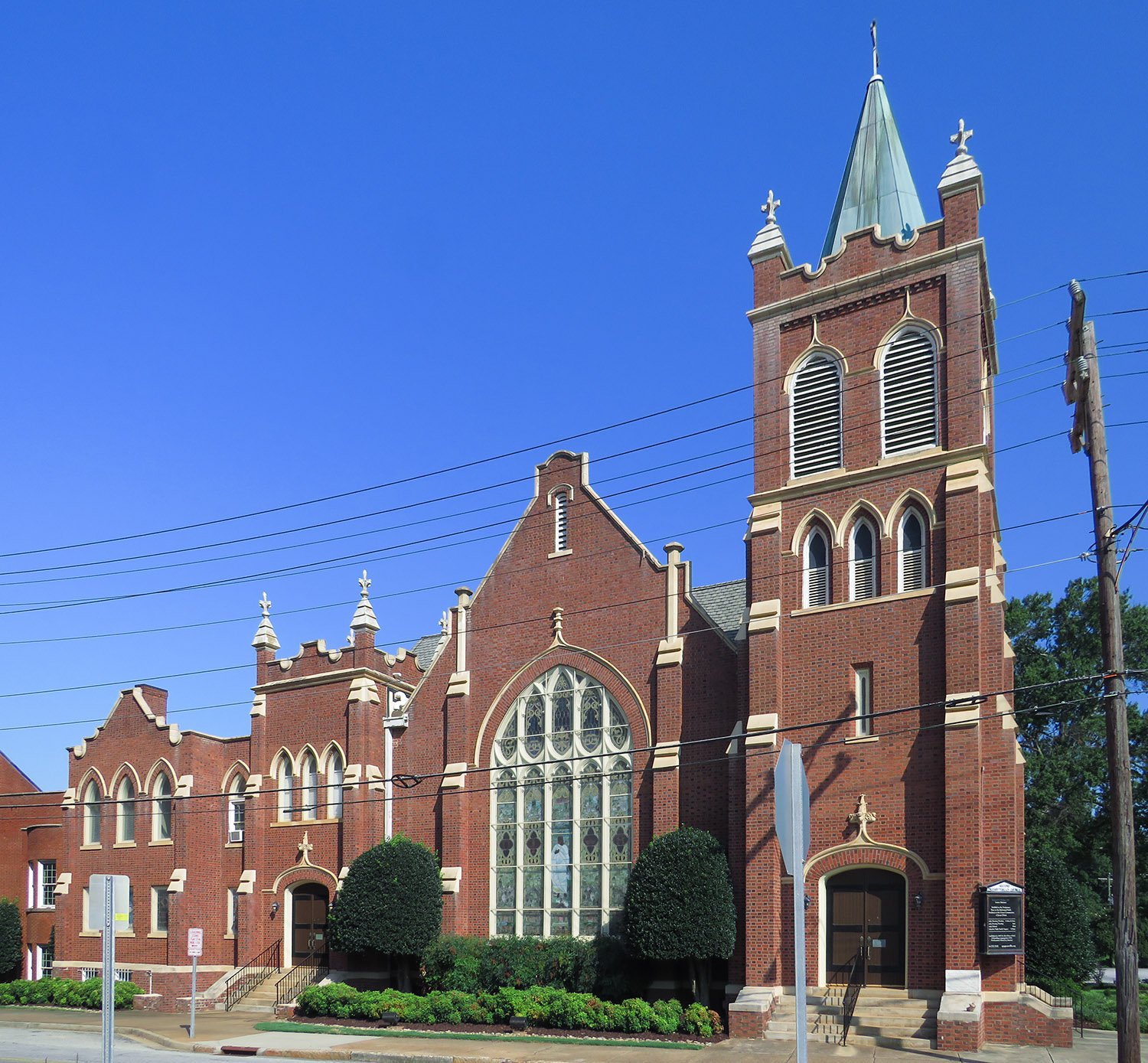
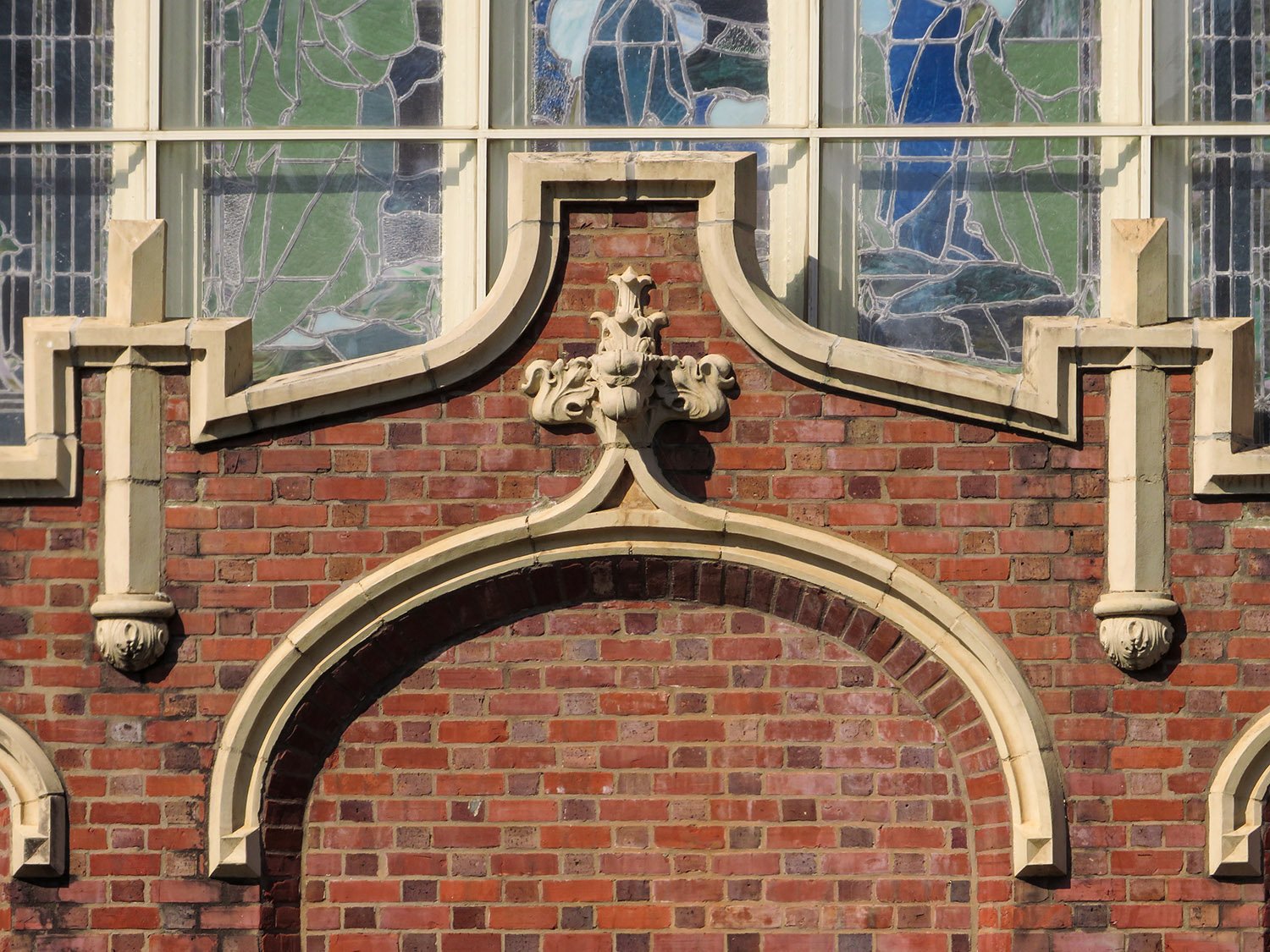
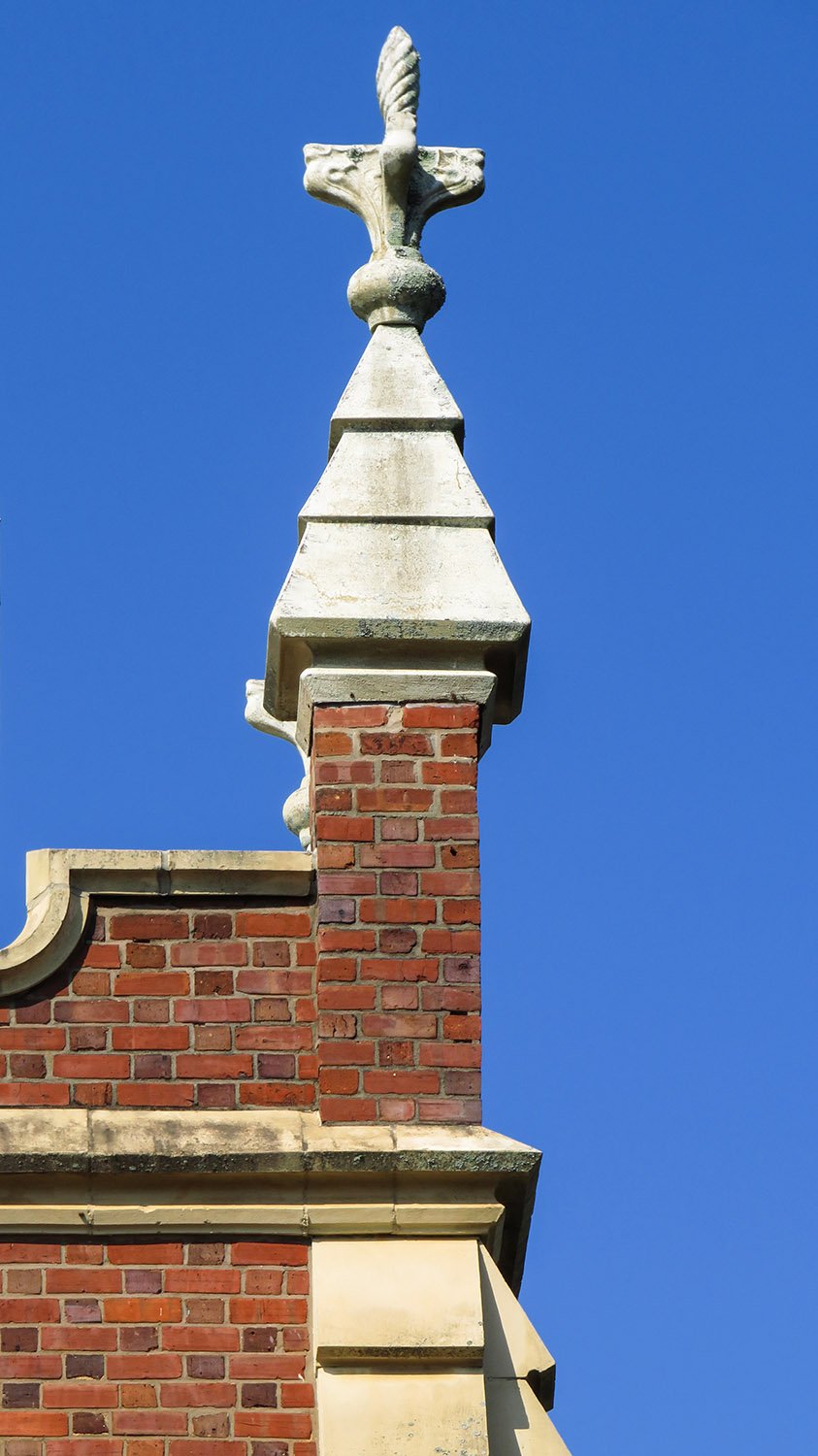
Charles Edward Choate. Second Presbyterian Church (1910). Greenville, South Carolina.123Steeple on Second Presbyterian Church, Greenville, South CarolinaLooking at Second Presbyterian Church from the southeastWindow on the east facade of Second Presbyterian Church, Greenville, South CarolinaTerracotta dripstone over the east entrance of Second Presbyterian Church, Greenville, South CarolinaSouth facade of Second Presbyterian Church, Greenville, South CarolinaBlind arch and terracotta ornamentation on the east facade of Second Presbyterian Church, Greenville, South Carolina Pinnacle on Second Presbyterian Church, Greenville, South Carolina
References
“$90,000 To Be Spent In Church Building”. The Atlanta Journal, May 17, 1910, p. 6. ↩︎
“Churches.” The Greenville Daily News (Greenville, South Carolina), June 12, 1910, p. 6. ↩︎
“Initiatory Services”. The Greenville Daily News (Greenville, South Carolina), June 16, 1910, p. 8. ↩︎
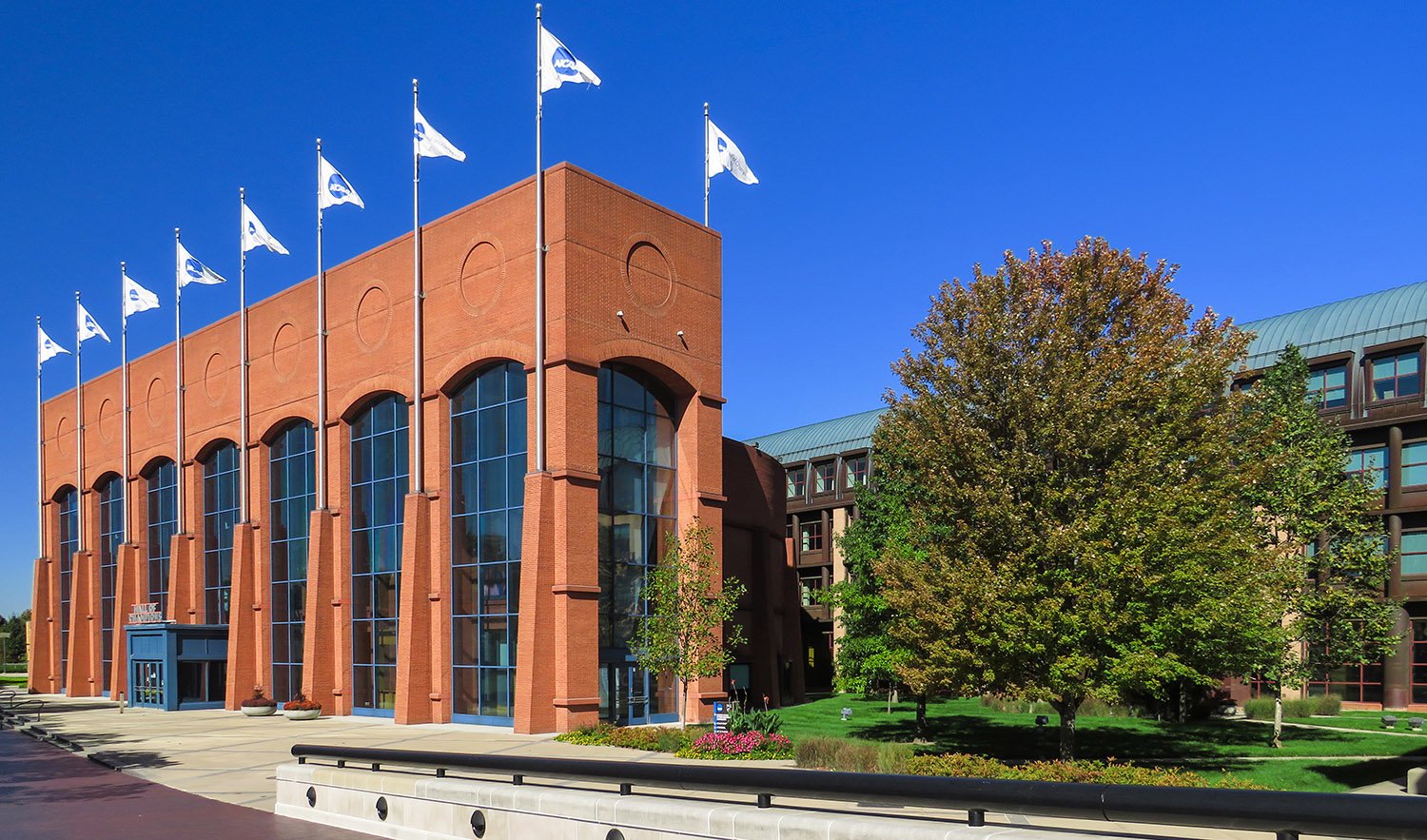
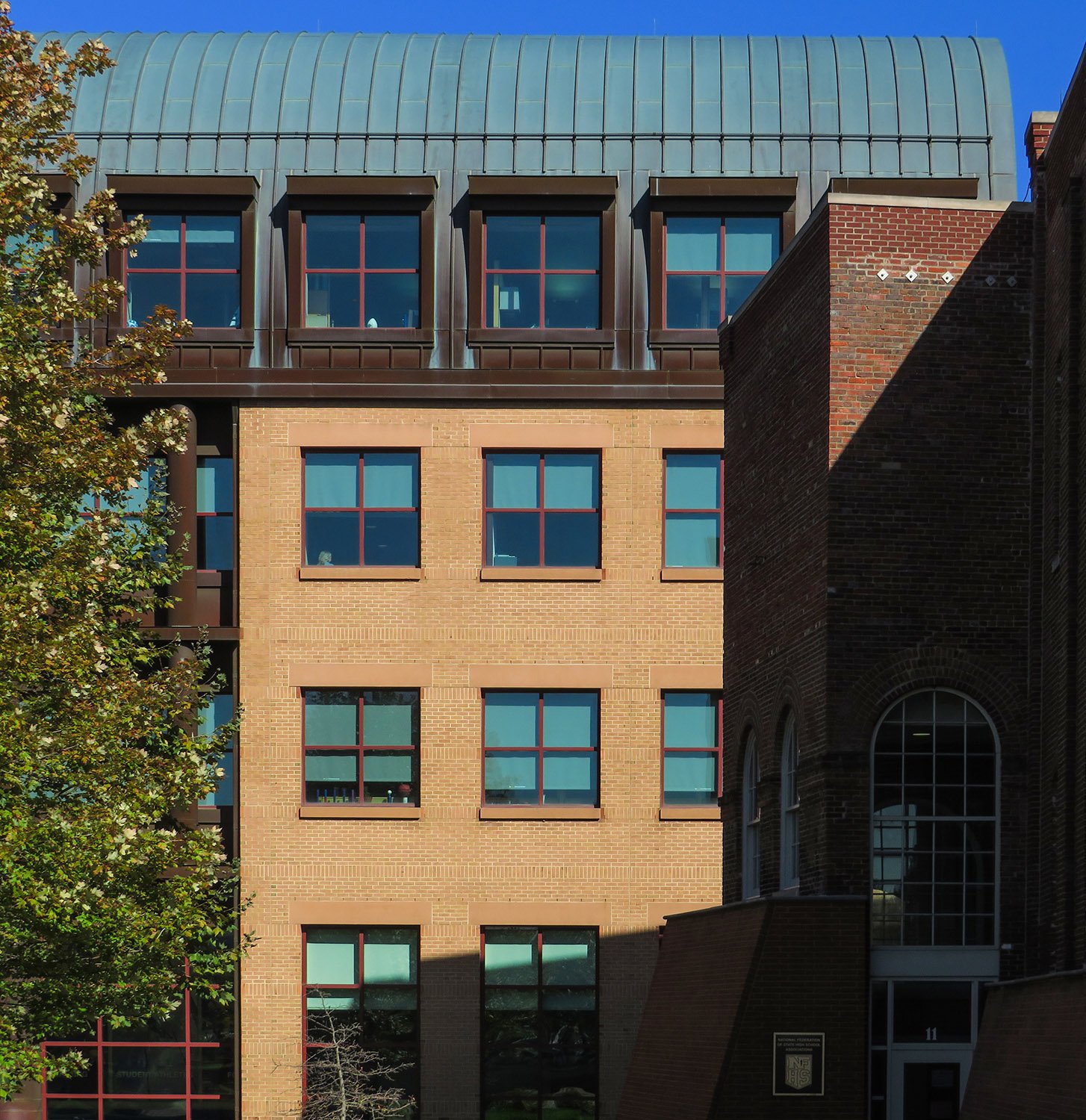
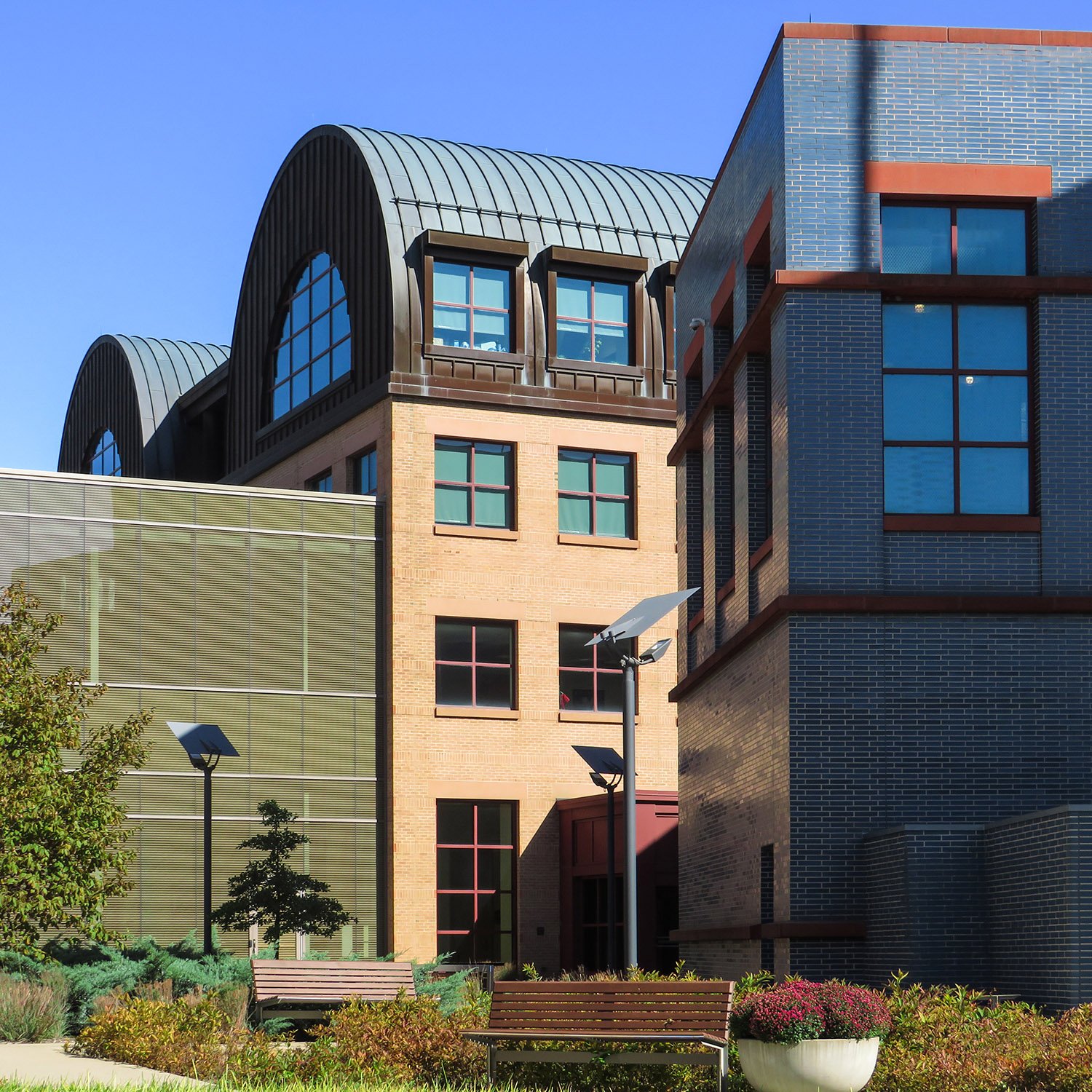
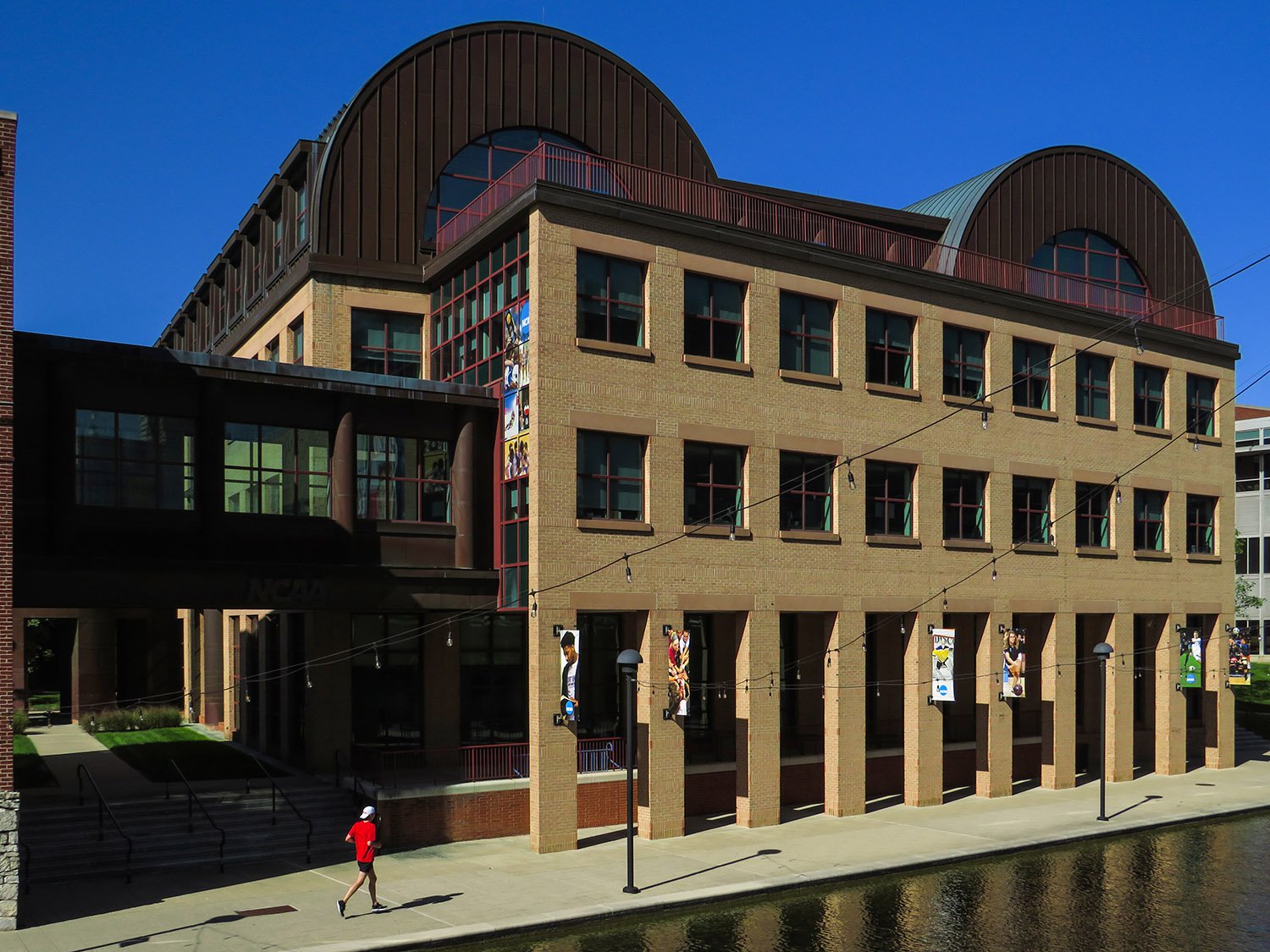
Michael Graves with Schimdt Associates. NCAA Hall of Champions (2000). Indianapolis, Indiana.12South elevation of NCAA HeadquartersSouthwest corner of NCAA HeadquartersEast elevation of NCAA Headquarters
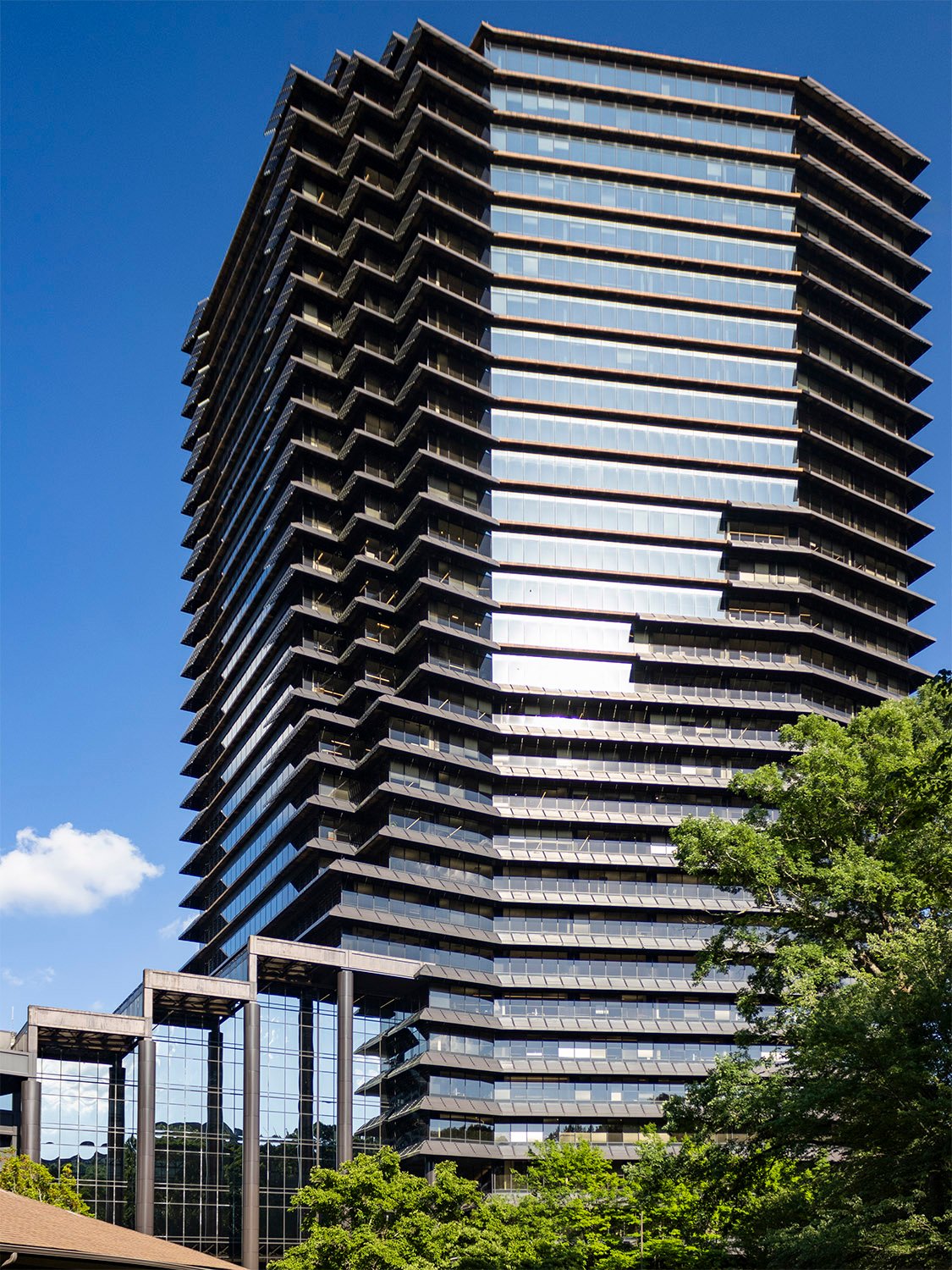
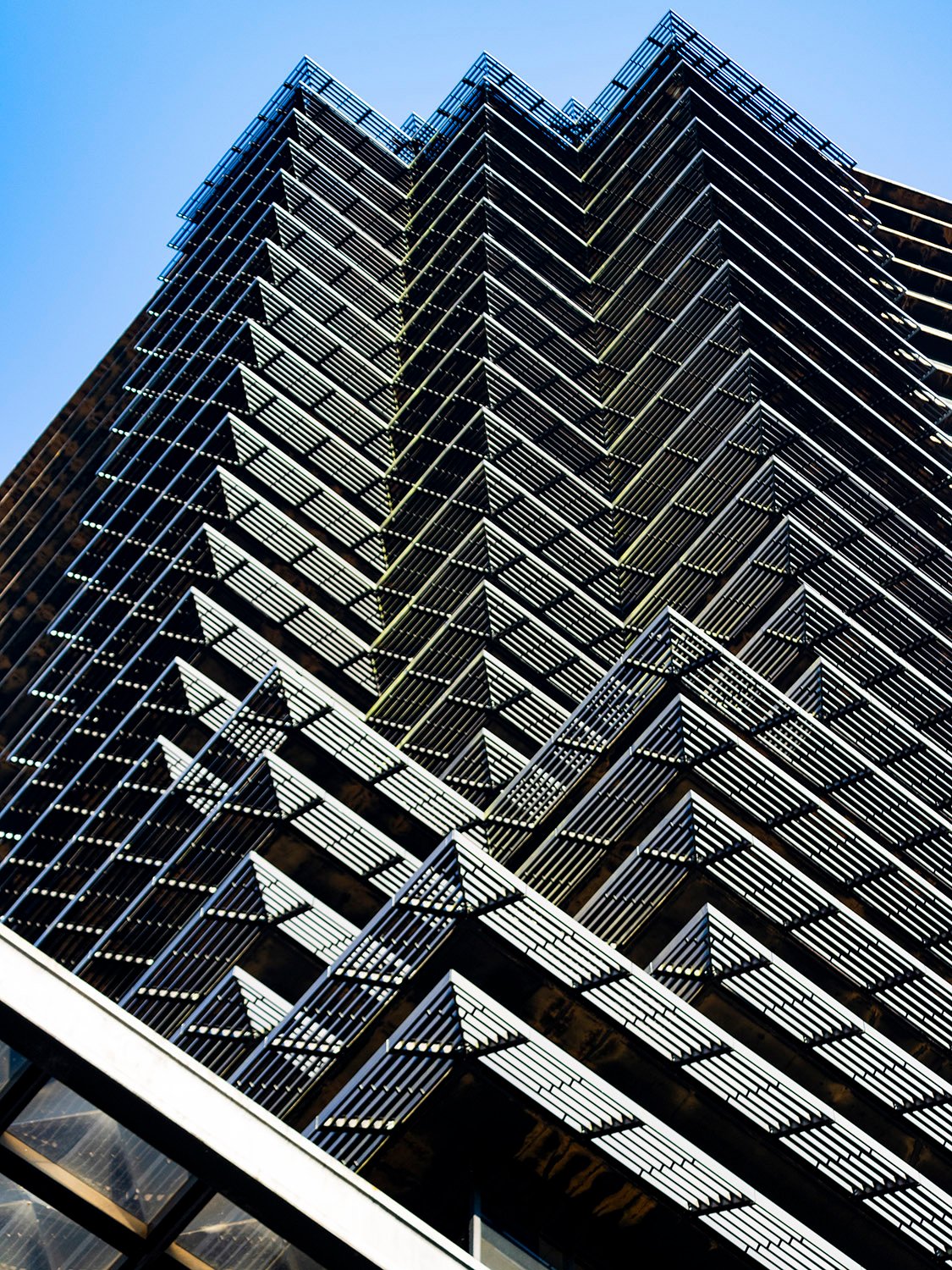
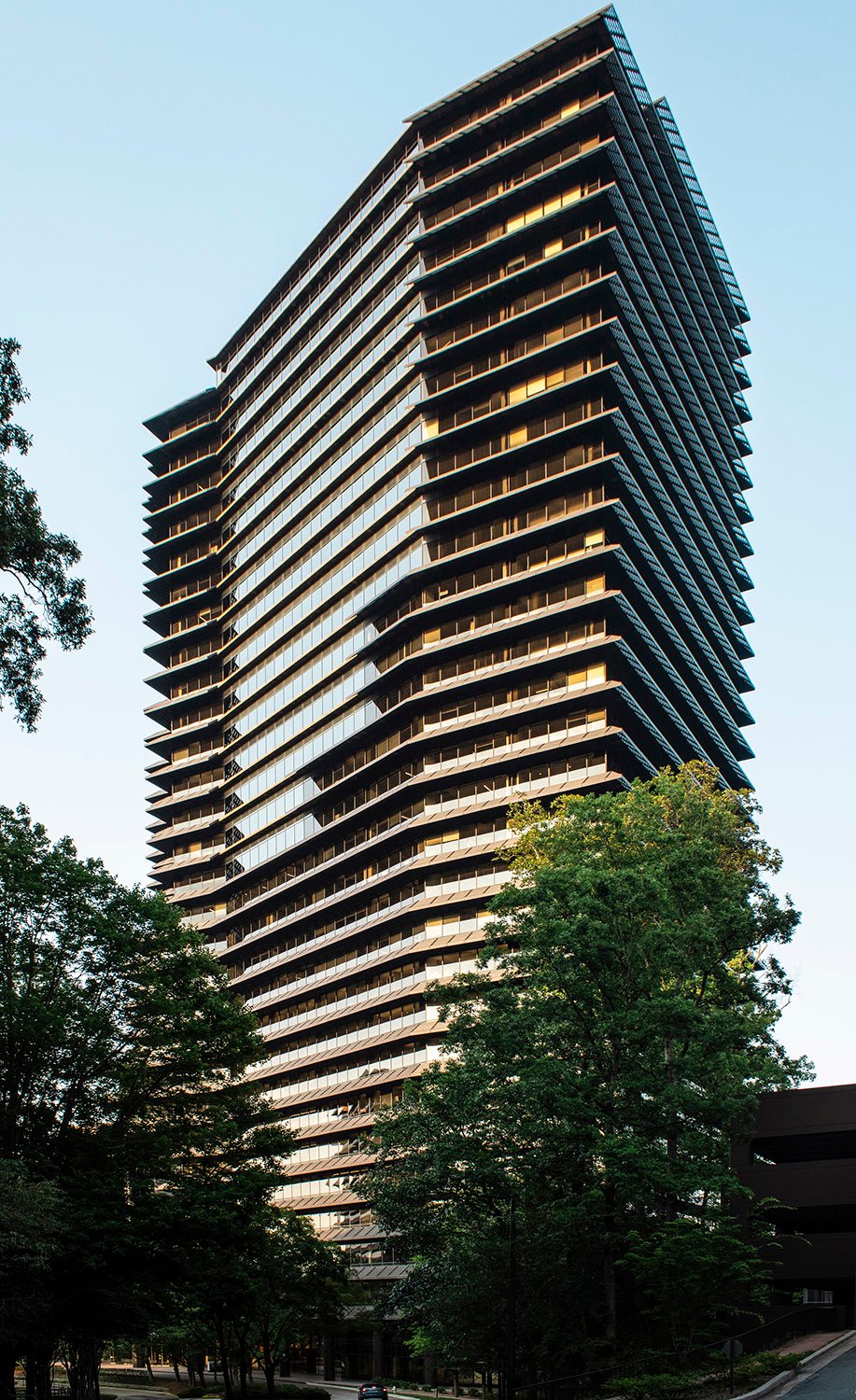
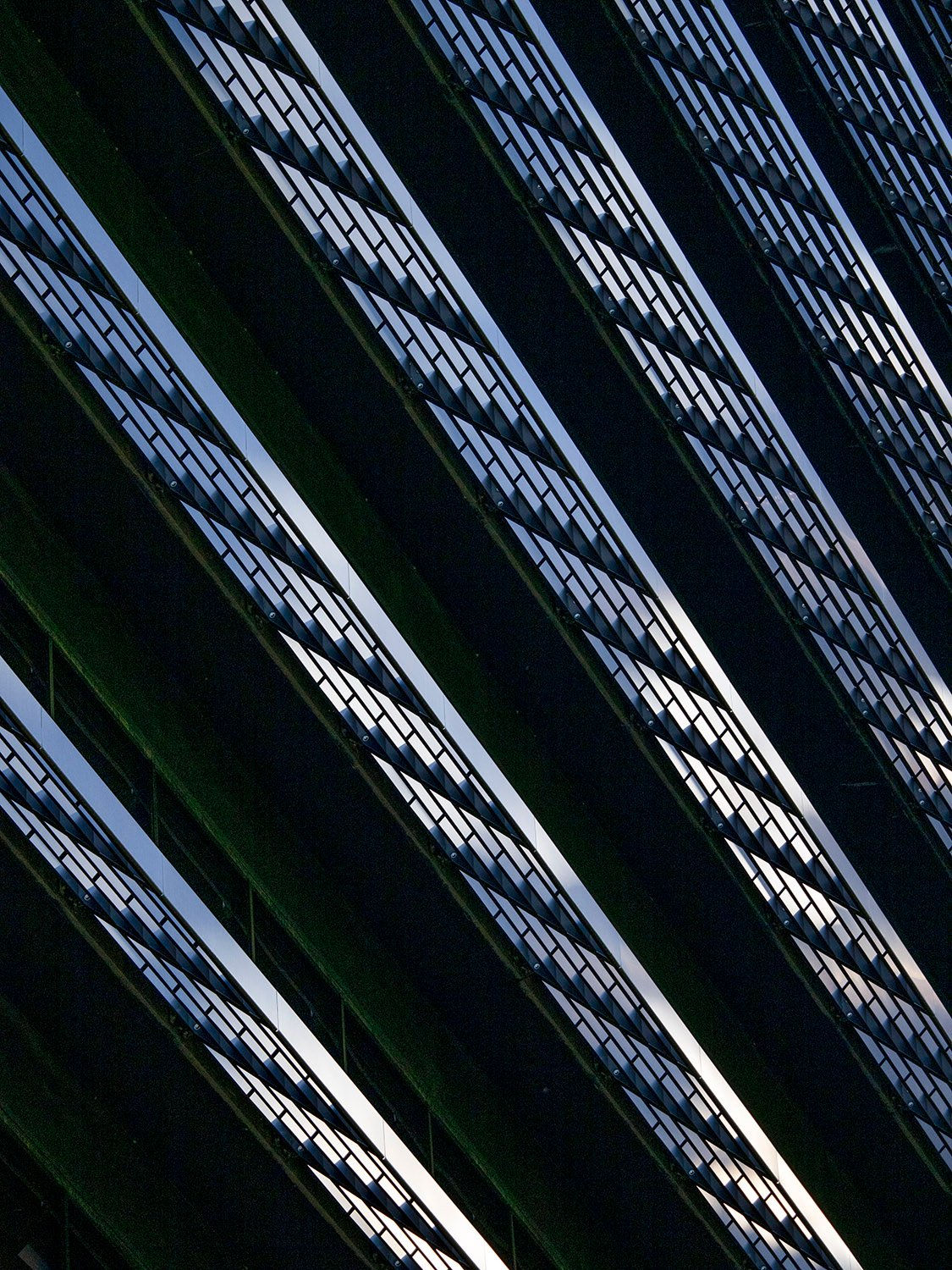
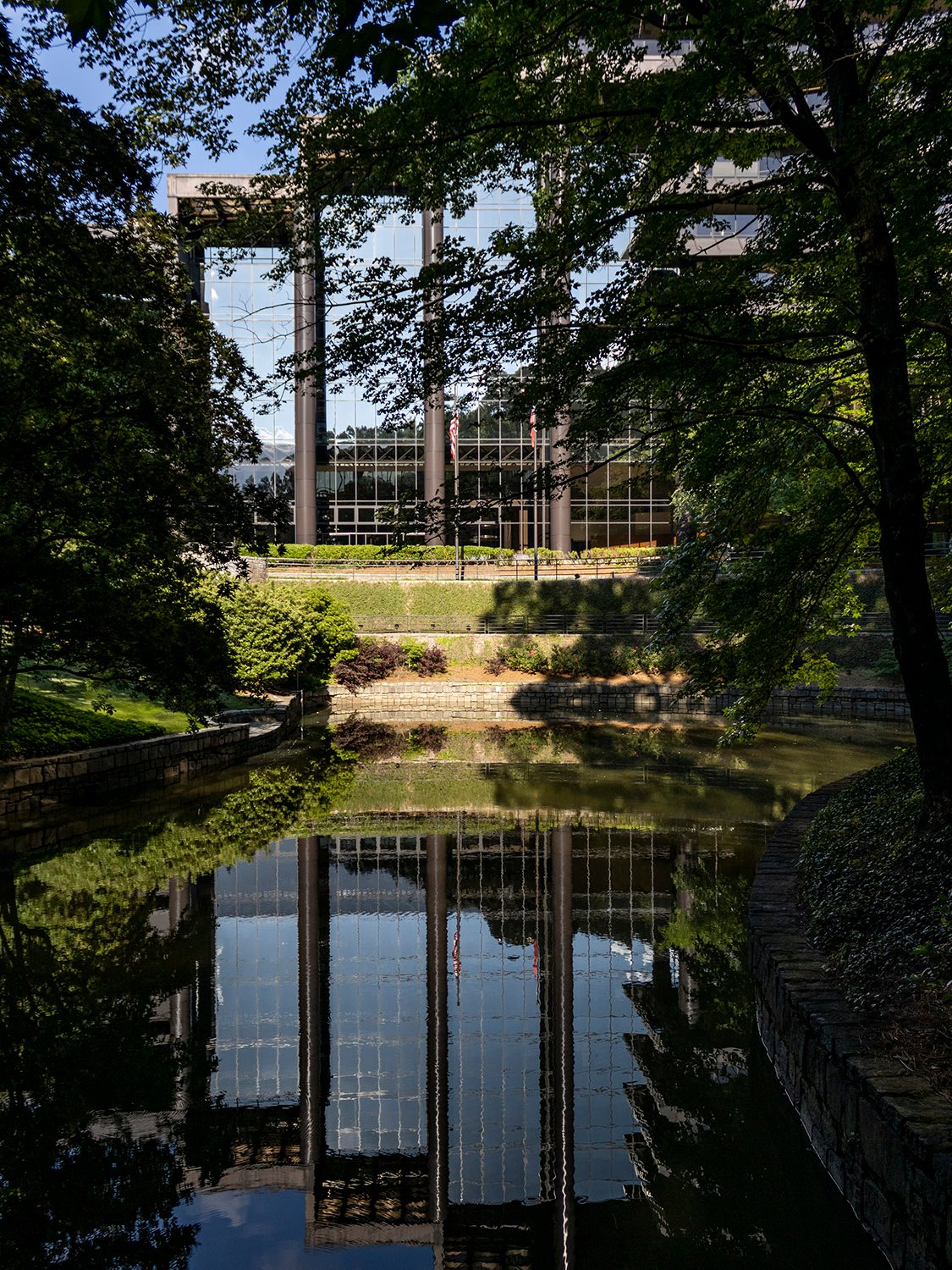
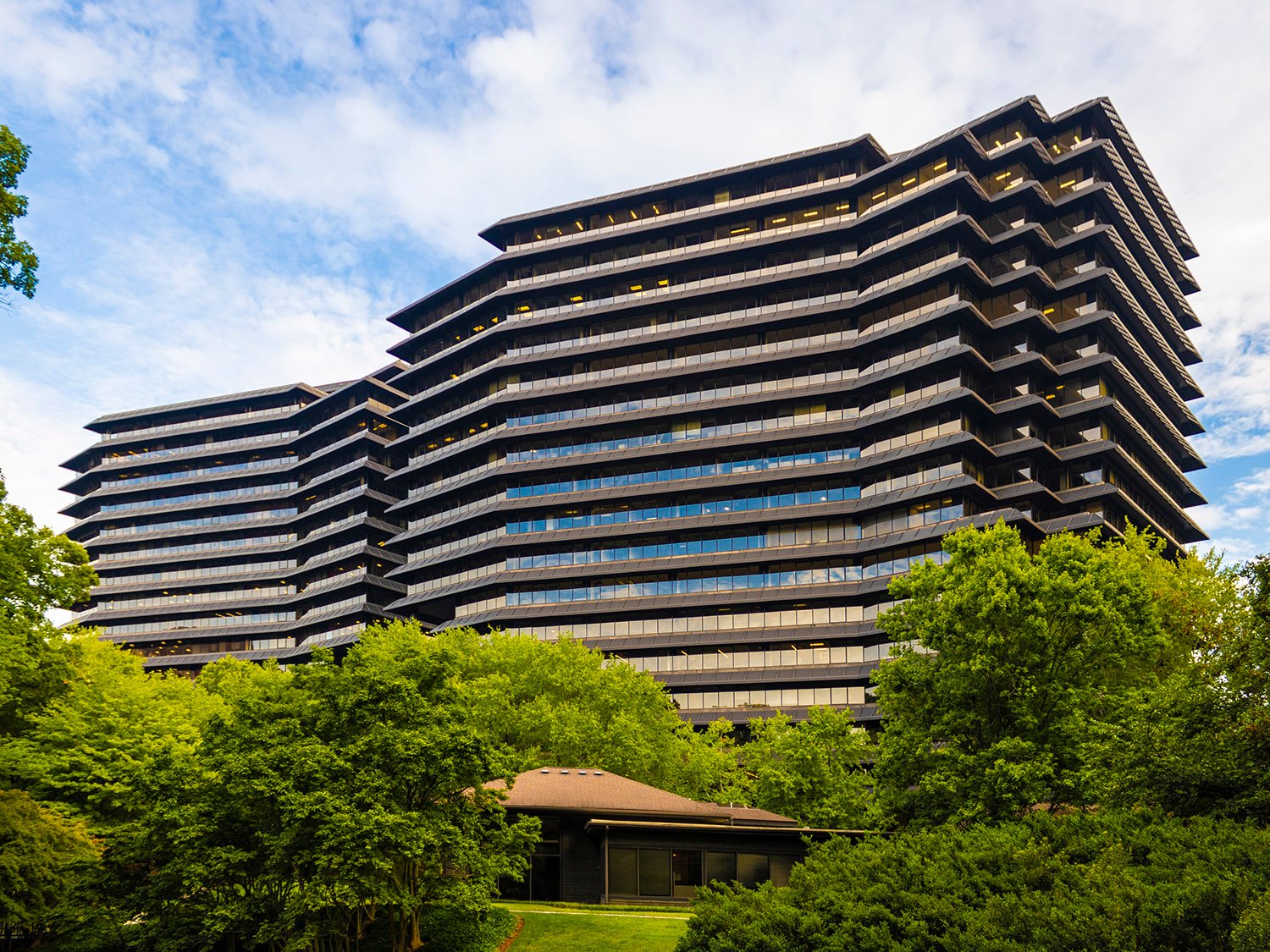
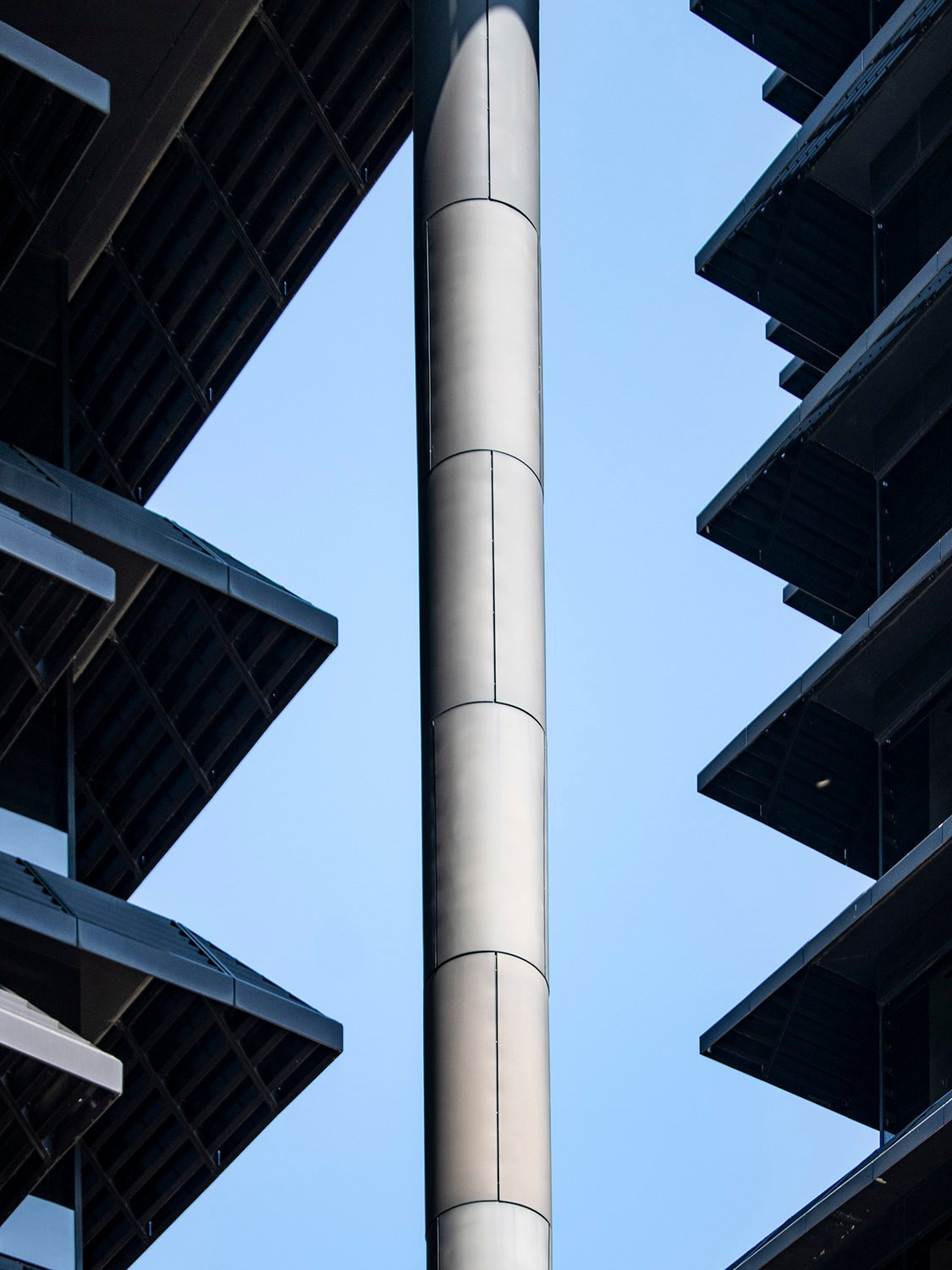
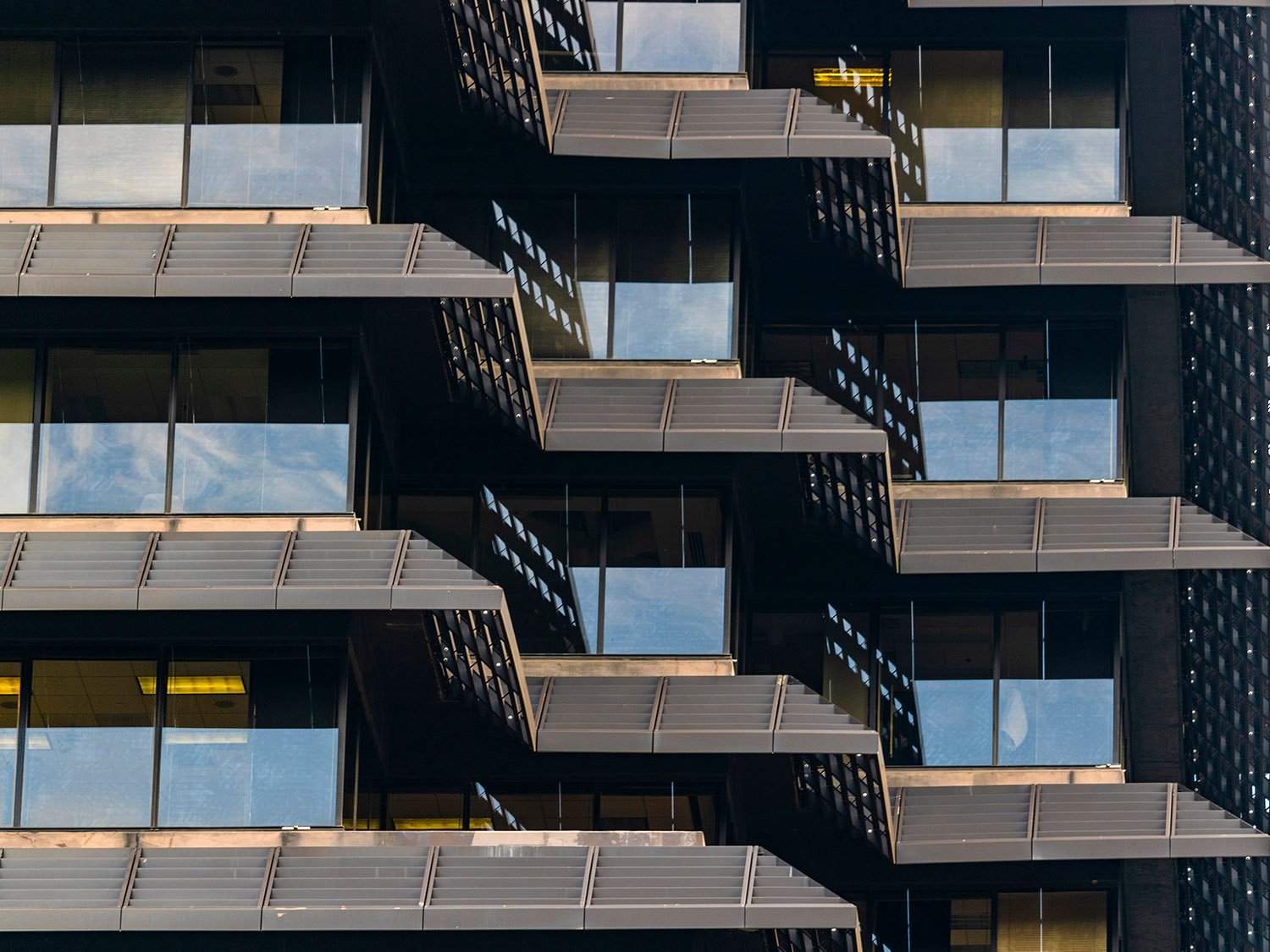
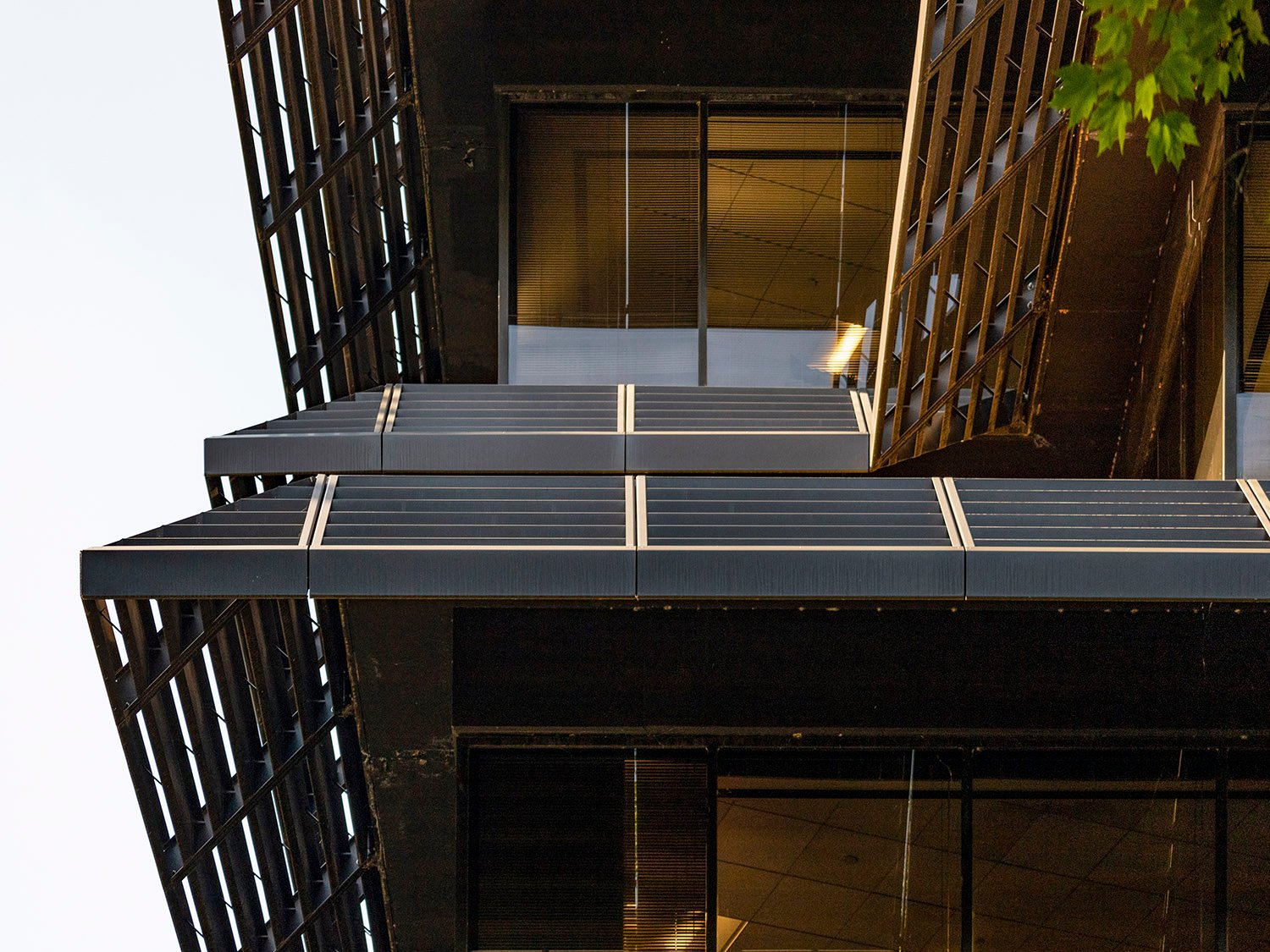
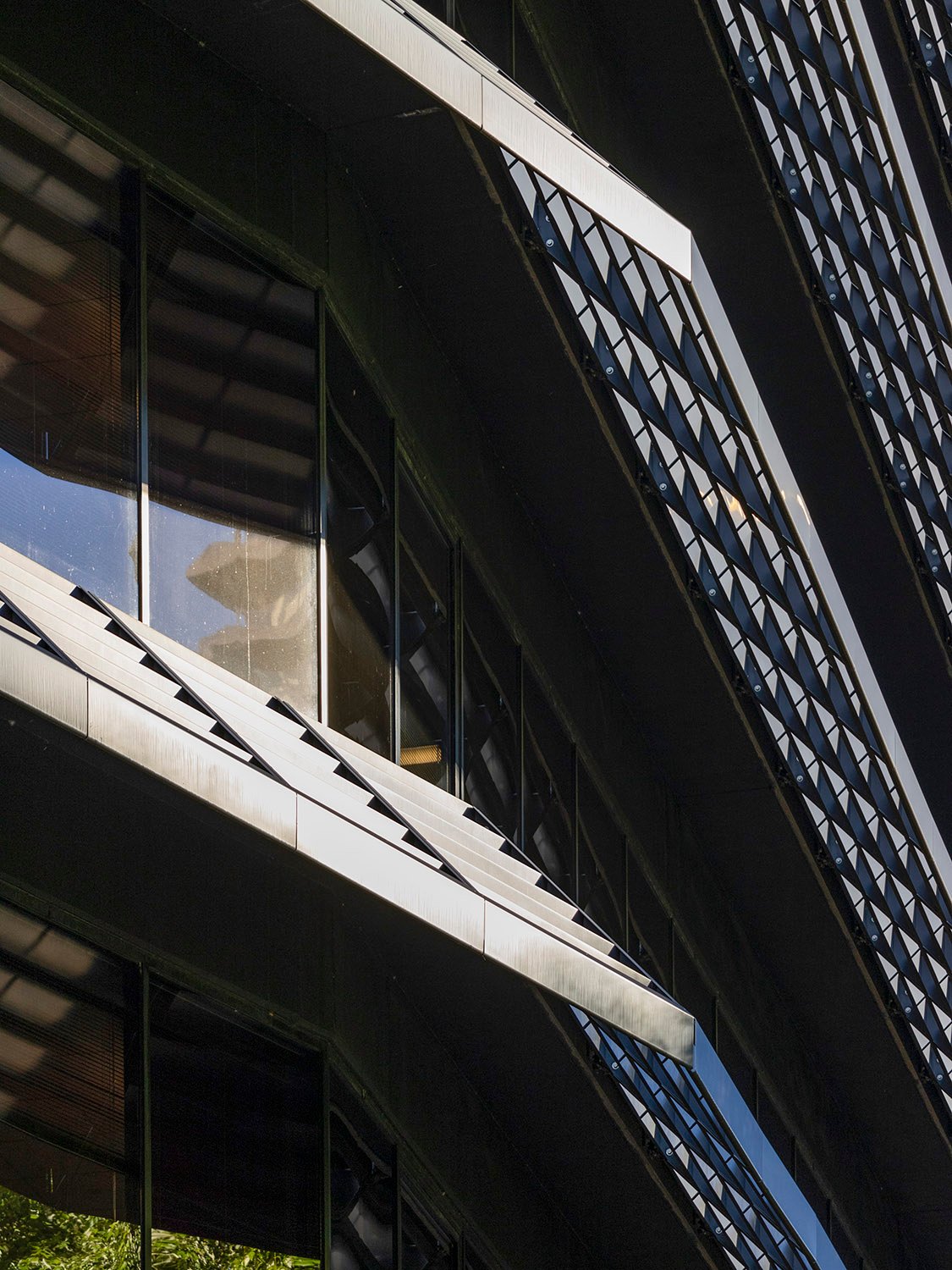
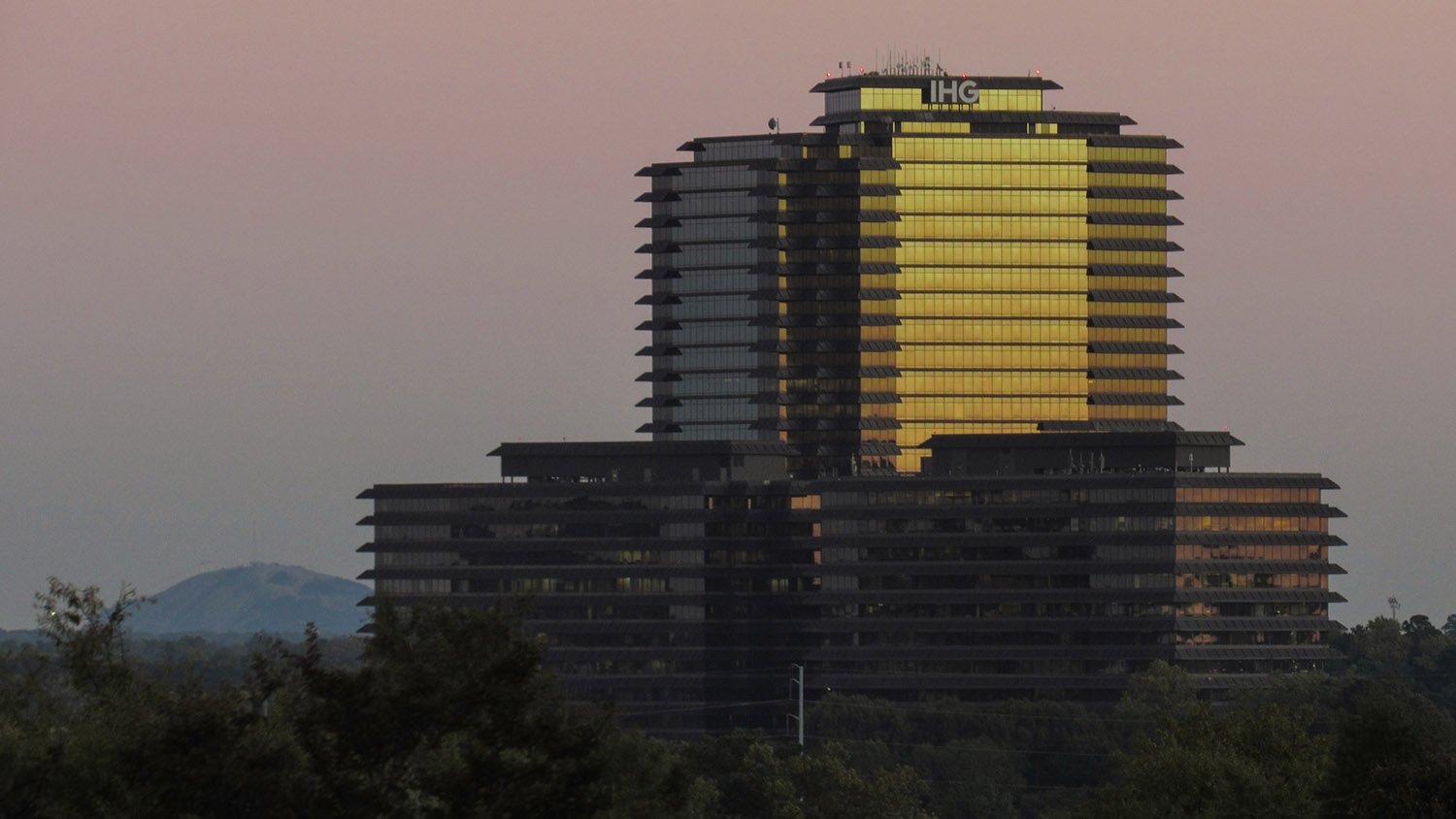
Kevin Roche of Kevin Roche John Dinkeloo and Associates. Three Ravinia Drive (1991). Dunwoody, Georgia.12Looking up at the northwest corner of Three Ravinia Drive, Dunwoody, GeorgiaThree Ravinia Drive, Dunwoody, GeorgiaSunshades on Three Ravinia Drive, Dunwoody, GeorgiaReflection of Three Ravinia Drive, Dunwoody, GeorgiaOne Ravinia Drive (1984) and Two Ravinia Drive (1986), Dunwoody, GeorgiaColumn and sunshades on One Ravinia Drive, Dunwoody, GeorgiaWindows and sunshades on Two Ravinia Drive, Dunwoody, GeorgiaWindows and sunshades on One Ravinia Drive, Dunwoody, GeorgiaWindows and sunshades on Three Ravinia Drive, Dunwoody, GeorgiaLooking at Three Ravinia Drive from the northwest, with Stone Mountain in the background
References
“Design of Third Ravinia Tower Unveiled”. The Atlanta Constitution, October 11, 1989, p. B-2. ↩︎
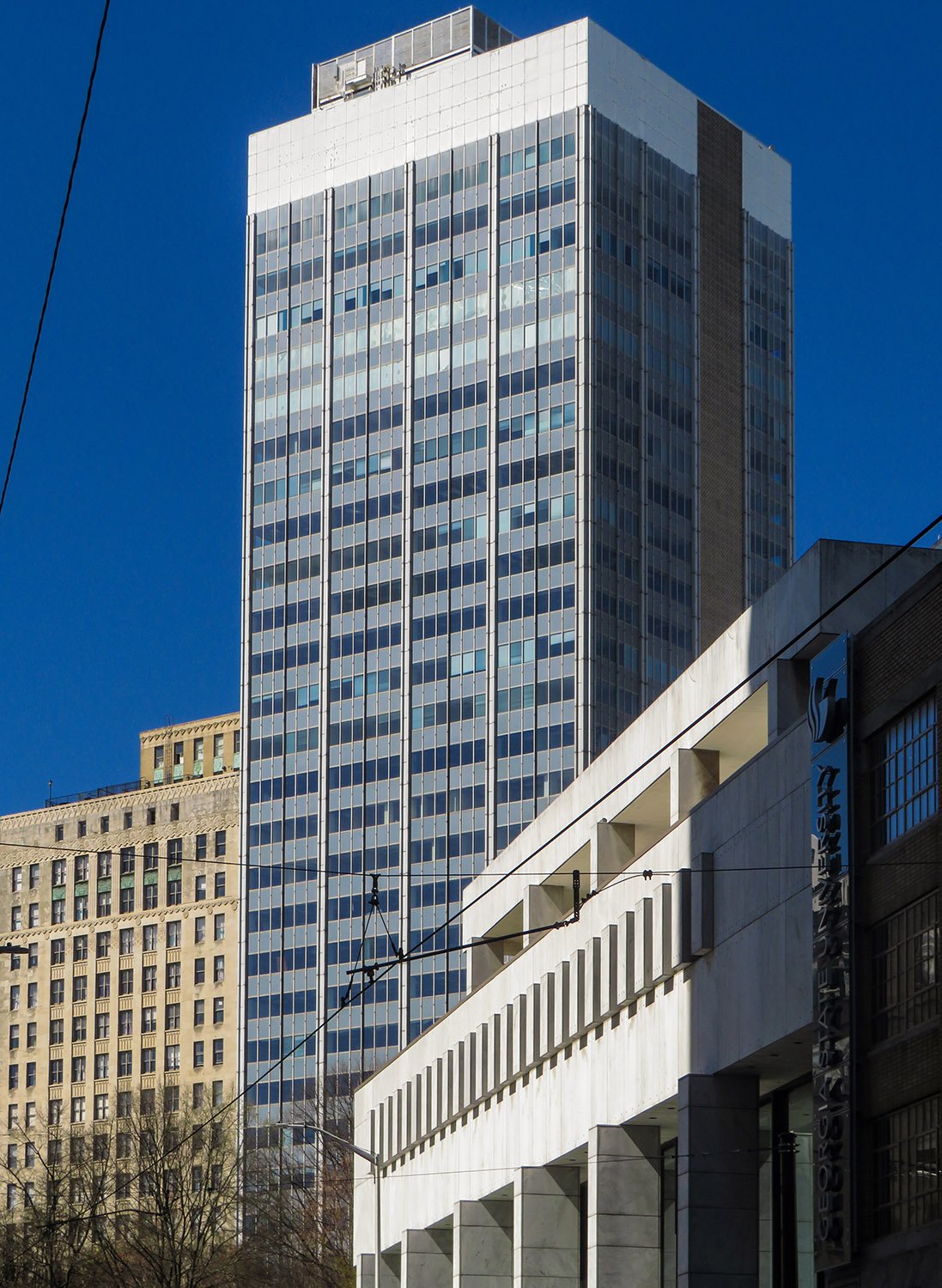
This 31-story International-style tower was arguably the first “modern” skyscraper in Atlanta, although it’s now pushing 70 years old and looks every day of it.
The tower opened in 1961 as the home of The Bank of Georgia and was purported to be the “tallest structure south of Baltimore,”4 but Atlanta’s First National Bank,56 built one block away, surpassed it a few years later.
It’s telling that the Bank of Georgia had to hire an out-of-town firm, Hedrick & Stanley of Dallas, to design the building—none of Atlanta’s architects at the time had the chops for such a large-scale project.
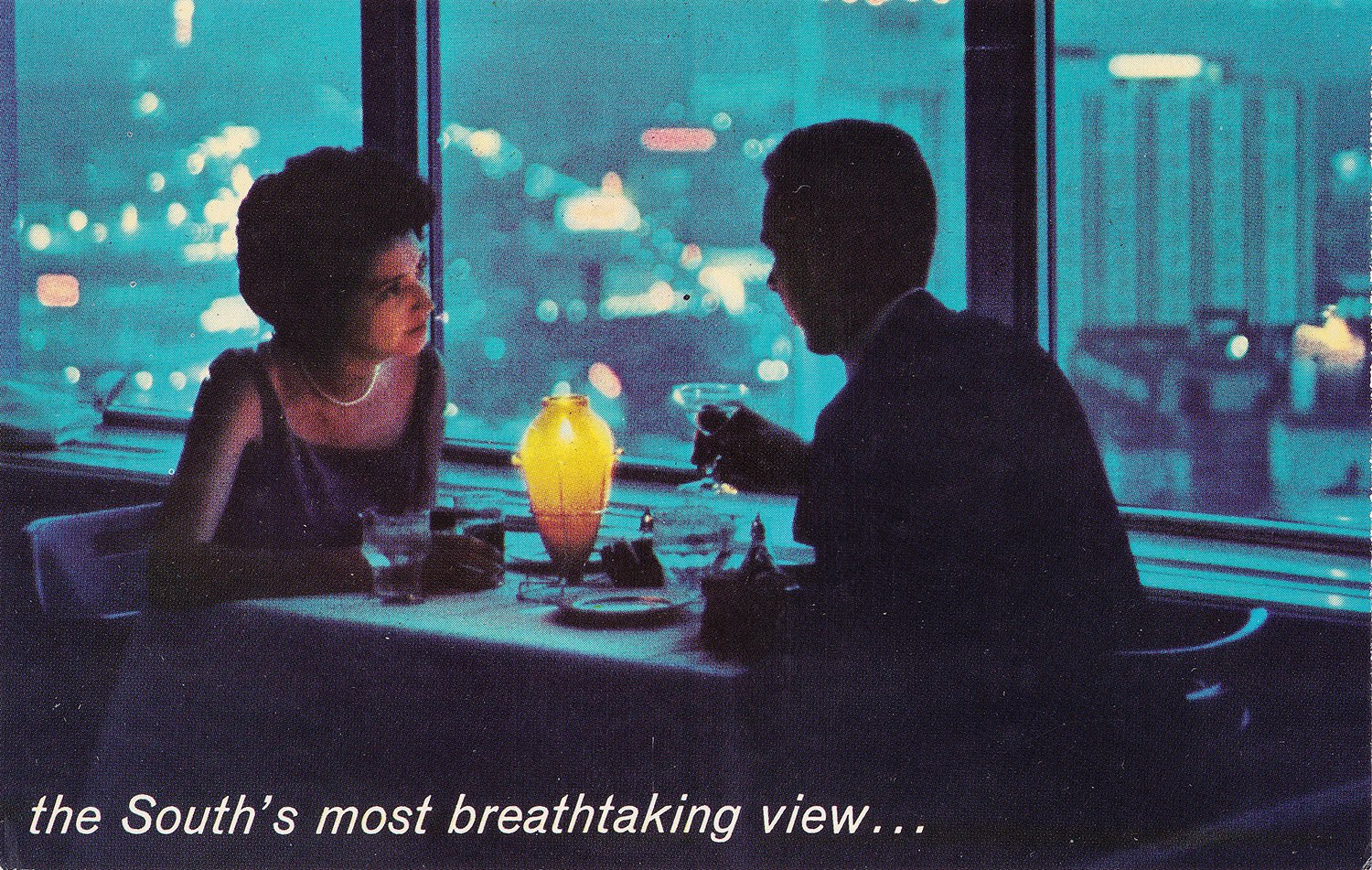
Top O’ Peachtree Restaurant. Photograph from an undated postcard published by Stein Craftsmen of Atlanta.
For the first 11 years, the 30th floor of The Bank of Georgia tower was occupied by the Top O’ Peachtree restaurant and “lookout lounge,” later described as ‘”the” place to go for dinner or drinks in its beginning.’7
Based on photographs, Top O’ Peachtree was no doubt an ideal rendezvous for married bank executives and their secretaries. Oh, come on, you know it happened.
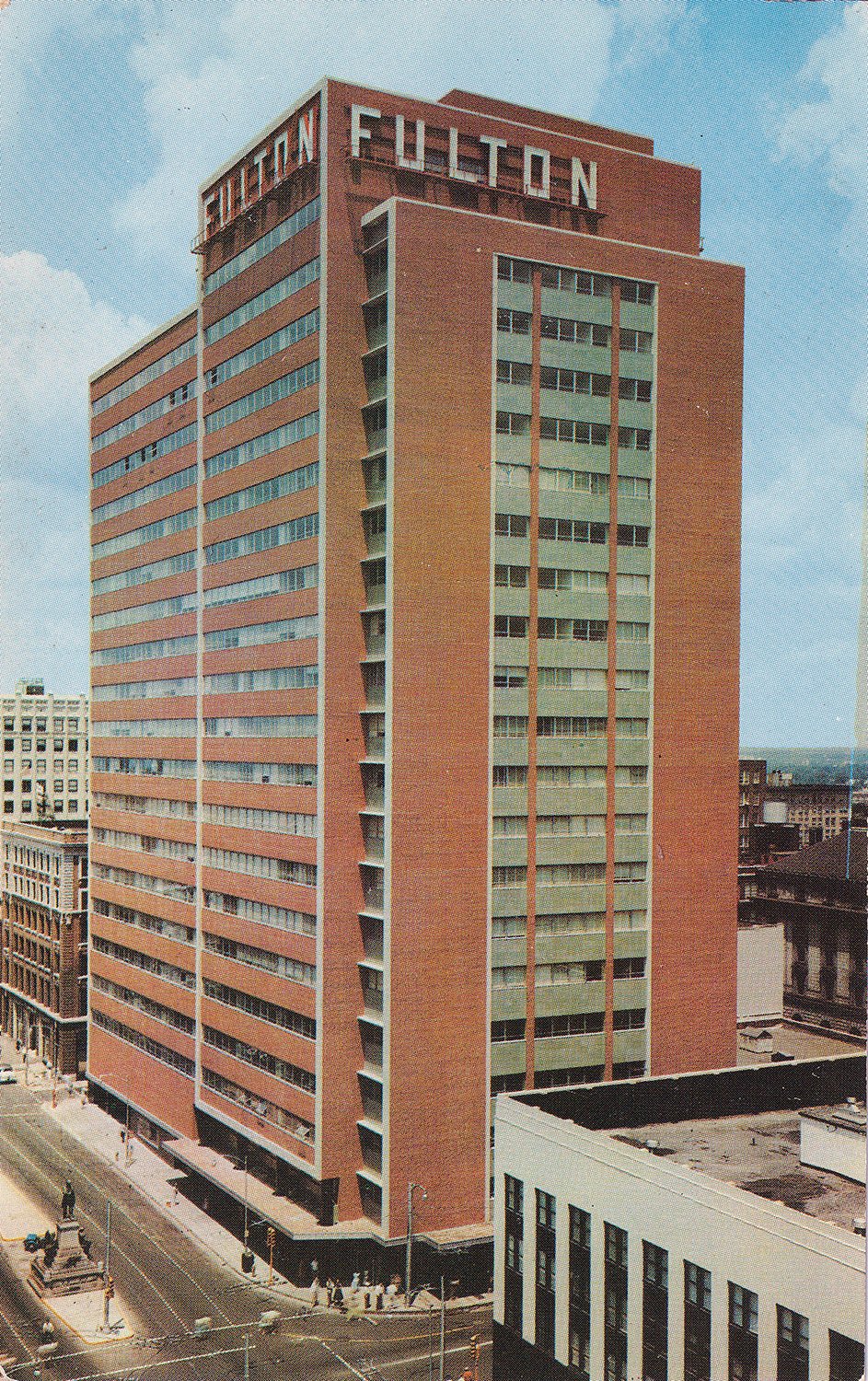
Wyatt C. Hedrick Company with Willner & Millkey.89Fulton National Bank (1955). Atlanta. Photograph from an undated postcard published by Dexter Press, Inc. of West Nyack, New York.
When the Bank of Georgia tower was sold in 1979, it was described as one of “the two homeliest buildings in town,” along with the nearby Fulton National Bank building (1955),10 which was entirely accurate—then and now.
Designed by Wyatt C. Hedrick Company of Dallas,11 which later became Hedrick & Stanley, the Fulton National Bank building has been renamed 55 Marietta and remains in active use as a data center. The Bank of Georgia, however, hasn’t fared as well.
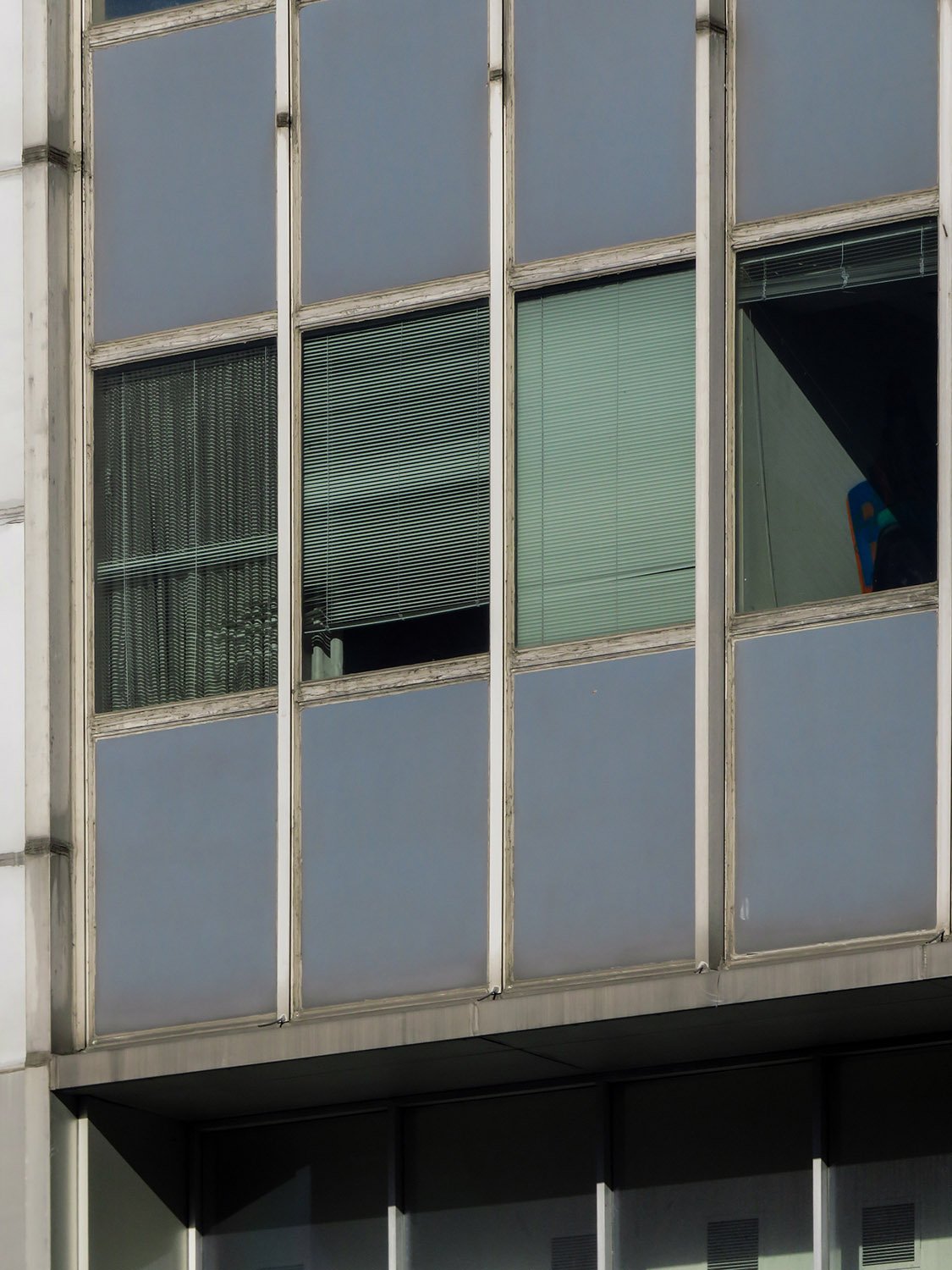
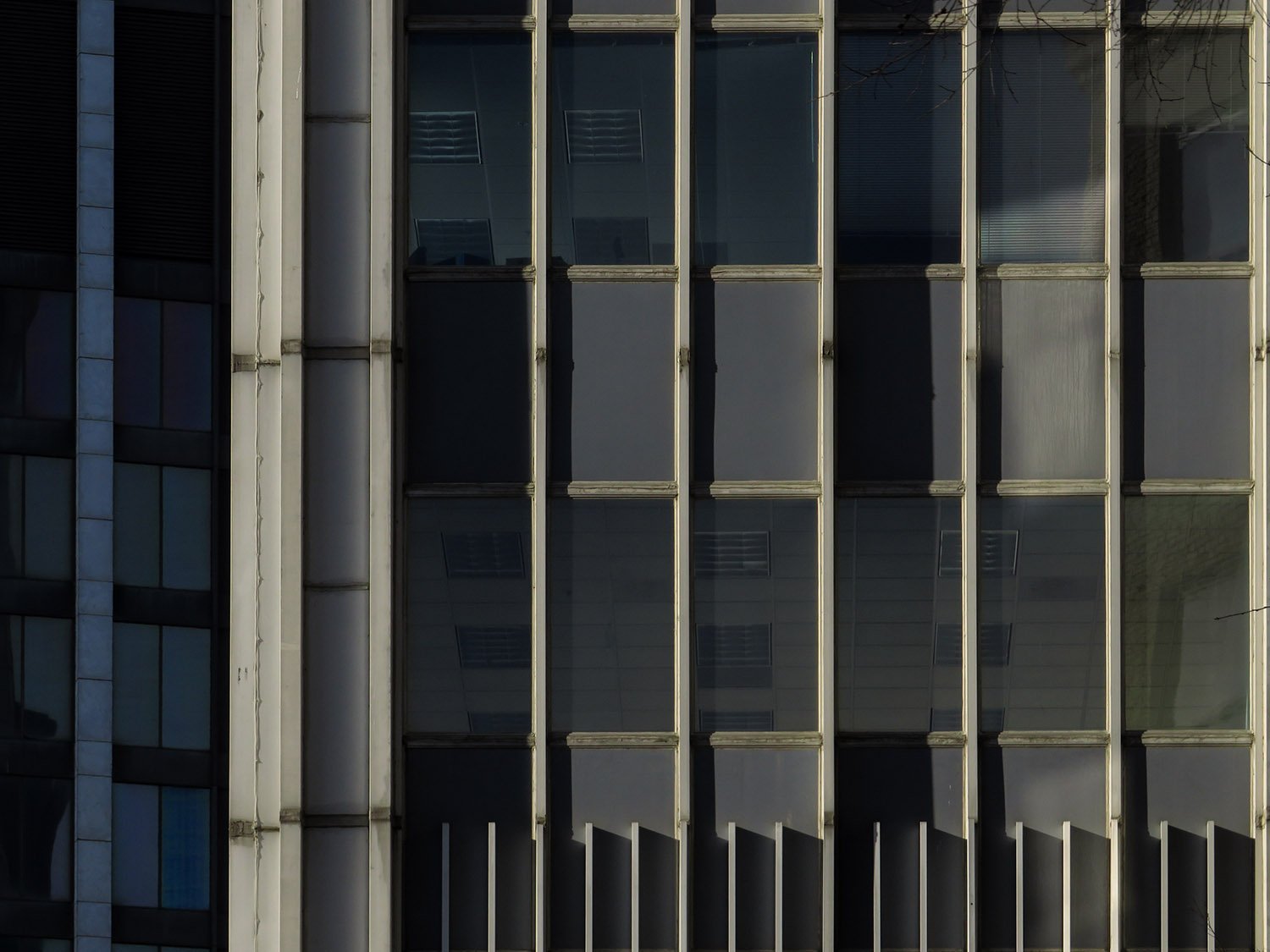
Windows on The Bank of Georgia (34 Peachtree)
Later renamed 34 Peachtree, the former Bank of Georgia has passed through a succession of owners and is currently vacant, with upper-floor windows missing and its street-level retail spaces obscured by brown paper.
A peek through the doors and windows at night reveals the dead escalators in the lobby and dangling ceiling tiles in the office spaces.
In 2017, pieces of the building’s facade fell to Peachtree Street during a bout of high winds, prompting the closure of several streets.12
Looking at the north elevation of The Bank of Georgia (34 Peachtree)
There have been empty promises to convert 34 Peachtree into residential units,13 but that’s typical Atlanta bullshitting and unlikely to transpire, as renovating such behemoths is overwhelmingly prohibitive.
Office buildings are rapidly becoming a relic of the past, and as more skyscrapers begin to deteriorate, it will be interesting to see what cities like Atlanta do with them, particularly as the United States plunges headfirst into inevitable social and economic decline.
I suspect that in decades to come, many American cities will be filled with vacant, crumbling towers that no one will have the money to demolish or renovate—unsightly monuments from an age of decadence and arrogance best left forgotten.
Looking at The Bank of Georgia (34 Peachtree) from Edgewood Avenue
References
Erwin, George. “Bank Plans 31-Story Building At 5 Points, Costing 10 Million”. The Atlanta Journal, March 1, 1959, p. 1. ↩︎
The Atlanta Journal and The Atlanta Constitution, April 2, 1961, Bank of Georgia Section. ↩︎
“Bank of Georgia To Open Monday”. The Atlanta Journal, March 28, 1961, p. 33. ↩︎
Veale, Frank. “35,000 Expected At Gala Opening Of New Building”. The Atlanta Journal, April 2, 1961, p. 2-F. ↩︎
Crown, John. “40-Story Bank Building to Rise in Atlanta”. The Atlanta Journal, August 11, 1963, p. 1. ↩︎
“Atlanta Reaches for the Sky–More Giants on Way”. The Atlanta Journal, May 17, 1966, p. 12. ↩︎
Henderson, Barry. “Top O’ Peachtree Sale Set”. The Atlanta Constitution, September 23, 1972, p. 8. ↩︎
“Equipment Came From All Over U.S., Materials From All Over The World”. The Atlanta Journal, October 18, 1955, p. 3-F. ↩︎
“It’s the tops” (advertisement). The Atlanta Constitution, October 19, 1955, p. 2-F. ↩︎
Kossoff, Evan. “New Owner Giving 2 Downtown Buildings a Facelift”. The Atlanta Constitution, December 10, 1979, p. 9-D. ↩︎
“Company Completes 26-story Fulton National Bank Building on schedule!” (advertisement). The Atlanta Journal, October 18, 1955, p. 18-F. ↩︎
Judd, Alan. “Georgia: Irma set to arrive today.” The Atlanta Journal-Constitution, September 11, 2017, p. A1-A6. ↩︎
Torpy, Bill. “Can office conversions save downtown?” The Atlanta Journal-Constitution, July 31, 2023, p. A9. ↩︎
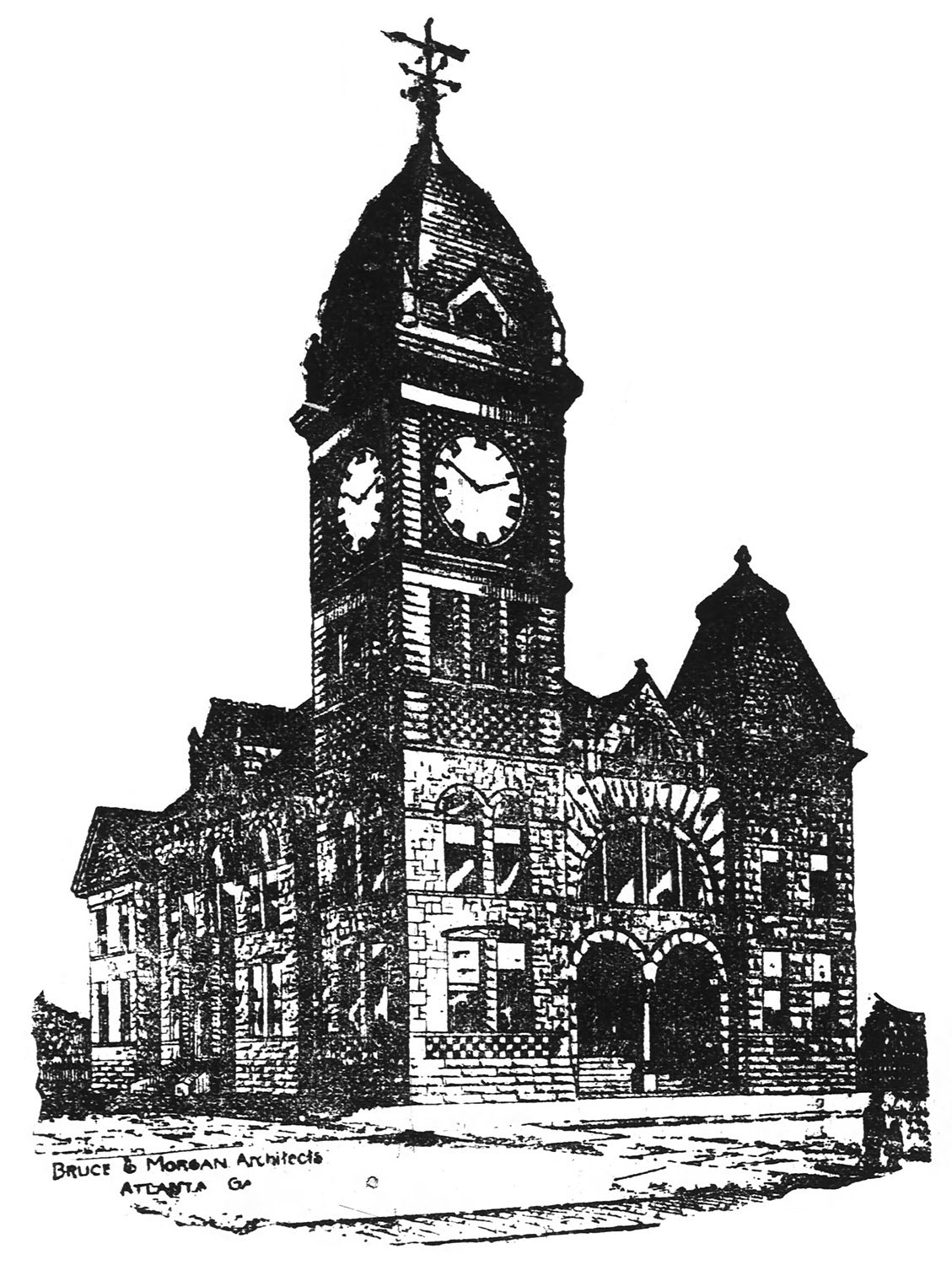
Bruce & Morgan. Cherokee County Courthouse (1892-1895). Murphy, North Carolina.
The Background
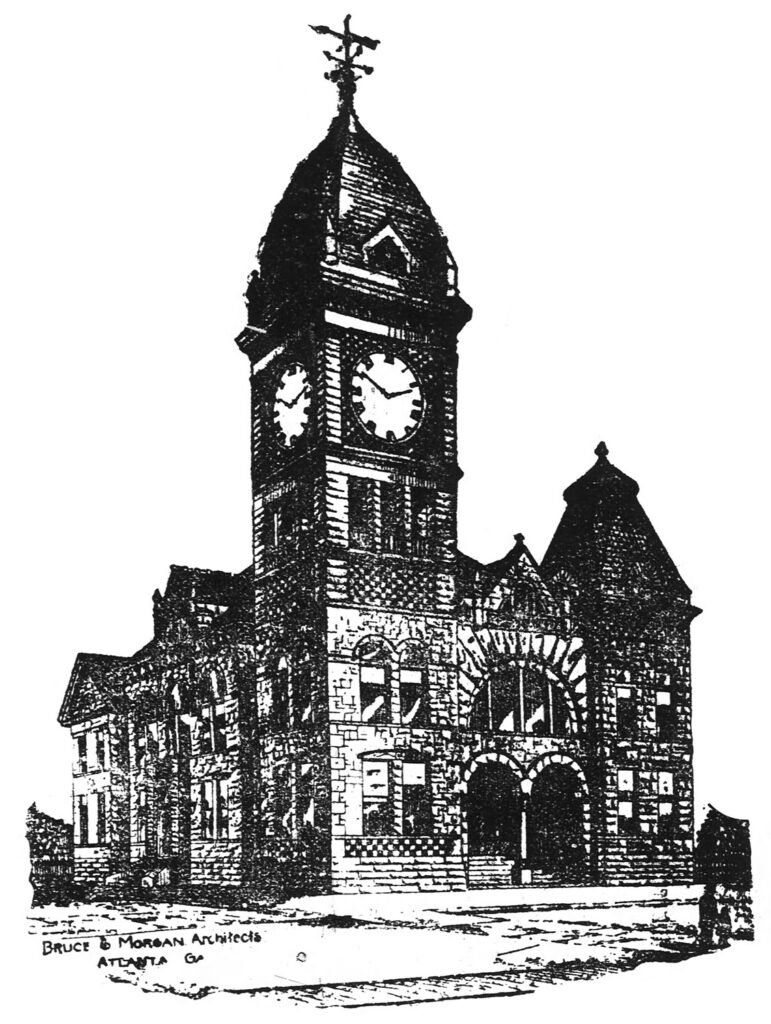
The following article, published in The State Chroniclein March 1890, includes an illustration and a description of the Cherokee County Courthouse in Murphy, North Carolina, designed byBruce & Morgan.
A vernacular interpretation of the Romanesque Revival style, the building depicted in the illustration appears to be a competent effort by A.C. Bruce, and an updated version of his plan for the Newton County Courthouse in Covington, Georgia, completed in 1884.
The only questionable elements in the otherwise cohesive composition are the odd pediment and oversized half-round window above the entrance portico. This wasn’t an exceptional design, by any means, but generally well-proportioned and tastefully executed.
Location of Cherokee County Courthouse
The article states that the county’s leaders were unsure whether the courthouse should be built of brick with marble trimmings or “an entire marble face,” a preposterous question for a rural jurisdiction in the Deep South.
Marble was so cost-prohibitive in the late 19th century that even Atlantans couldn’t afford it as a primary building material, much less the inhabitants of a dirt-poor county in the hills of Carolina.
Unsurprisingly, the finished courthouse was built primarily of pressed brick, while the foundation and steps were composed of marble.1 The initial cost of the project was reported as $21,5002 by one source and $22,5753 by another, but other reports estimated it at $40,000.456
It’s difficult to find a definitive completion date, but the cornerstone was laid in July 1891,7 and most sources say it was finished in 1892, which is a reasonable timeframe.
Despite this article’s claim that the courthouse would “stand the storm of ages”, the building was destroyed by fire on December 13, 1895,8 less than four years after its completion, although the outer walls were left intact.9
In early 1896, Bruce & Morgan were hired as architects for the building’s replacement,10 and it appears they essentially replicated the previous design.
The rebuilt courthouse was also destroyed by fire on January 16, 1926,1112and replaced with an entirely new structure.1314
So much for it being “a monument for centuries to come.”
Murphy’s New Court House.
The State Chronicle is glad to be able to present to its readers to day a picture of the new Court House which the Commissioners and Magistrates of Cherokee county have decided to erect at Murphy. It will be a handsome building and an ornament to the town and county, as well as its best advertisement. It is to have a face and trimmings of marble quarried from the Cherokee county quarries. Marble of almost every shade of color is found in Cherokee, and the Western North Carolina Railroad runs in such close proximity to the marble as to enable parties to load it directly from the quarries into the cars. A marble Court House will advertise this marble better than an hundred agents and an hundred newspapers. The Commissioners and Magistrates have not exactly determined whether it shall have an entire marble face, and have advertised for bids with the marble face and only with marble trimming. But they have decided to build it, and it is a decision in which the entire State is interested. It shows that we are going forward. As the Murphy Bulletin well and truly put it: “The Court House will stand the storm of ages and retain its original beauty and magnificence.” The Commissioners and Magistrates have acted wisely, and the Chronicle rejoices that a spirit of faith in the glorious future of their county has been present with them. This marble Court House will be a monument for centuries to come of the wisdom of the men now living in Cherokee.15
“Cherokee County Court House Swept By Disastrous Fire for Second Time In History, Damage Believed $100,000.” The Sunday Citizen (Asheville, North Carolina), January 17, 1926, p. 20. ↩︎
“Cherokee Courthouse Is Destroyed By Fire”. The Charlotte News (Charlotte, North Carolina), January 16, 1926, p. 1. ↩︎
“Cherokee County Court House Swept By Disastrous Fire for Second Time In History, Damage Believed $100,000.” The Sunday Citizen (Asheville, North Carolina), January 17, 1926, p. 20. ↩︎
“Start Plans For Cherokee Courthouse”. The Asheville Times (Asheville, North Carolina), January 22, 1926, p. 18. ↩︎
“New Courthouse Will Be Built In Cherokee County”. Salisbury Evening Post (Salisbury, North Carolina), January 28, 1926, p. 6. ↩︎